• anna j. clutterbuck-cook
  • contact
  • curriculum vitae
  • find me elsewhere
  • marilyn ross memorial book prize

the feminist librarian

the feminist librarian

Tag Archives: books

quick hit: "oh, inversion. how I shake my fist at you"!

24 Saturday Jul 2010

Posted by Anna Clutterbuck-Cook in linkspam

≈ Leave a comment

Tags

books, feminism, gender and sexuality, masculinity

Danika @ The Lesbrary has a fun post up sharing notes from a conversation between herself and a friend Cass about Radclyffe Hall’s The Well of Loneliness (1928).

C[ass]: The term ‘homosexuality,’ while in use in 1928, didn’t yet have its modern definition or its now understood division from gender. Inversion, on the other hand, completly tied sexual orientation to one’s gender and gender expression. A person labelled female at birth could not, by defition, be an invert without displaying masculine traits and masculine leanings. Therefore, in order to be a novel ABOUT inversion, Stephen has to be masculine. If we are using our modern lens here, then we can agree that, despite her masculinity, Stephen is not automatically male. The fact that her parents gave her a traditionally male name is out of her control. Lots of girls who continue to identify as women like to dress in pants rather than dresses because they are easier to walk and play in. Looking “like a man” or being masculine doesn’t make a person a man.

The conversation with her father is trickier, but if she has a crush on a girl, and thinks that only men and women can have relationships together, it’s logical that she would want to be a man in order to be happily in love with a woman.

D[anika]: True, but coming from a modern perspective, that assumes that you are by default the gender you were assigned at birth and only the opposite if there is overwhelming evidence. We don’t have overwhelming evidence that Stephen would identify as a man, but we have a lot less evidence than there is for Stephen identifying as a woman. She can’t stand to even be around women, except the ones she falls in love with.

That makes sense, but it isn’t just around having a partner that Stephen is frustrated at being labelled a girl. In fact, as some point she said “Being a girl ruins everything” (not an exact quote)

C: […] [H]er gender and gender expression can be on the trans-masculine spectrum without her necessarily being trans. In 1928(ish), being a girl DID ruin everything!

I think you are the gender you understand yourself to be, but sadly I can’t ask Stephen. 😉

Check out the whole thing at The Lesbrary (and if you enjoy part one, then check out part two posted by Cass @ Bounjour, Cass!).

reconsidering twilight fans: a couple of links

20 Tuesday Jul 2010

Posted by Anna Clutterbuck-Cook in linkspam

≈ 2 Comments

Tags

books, feminism, gender and sexuality


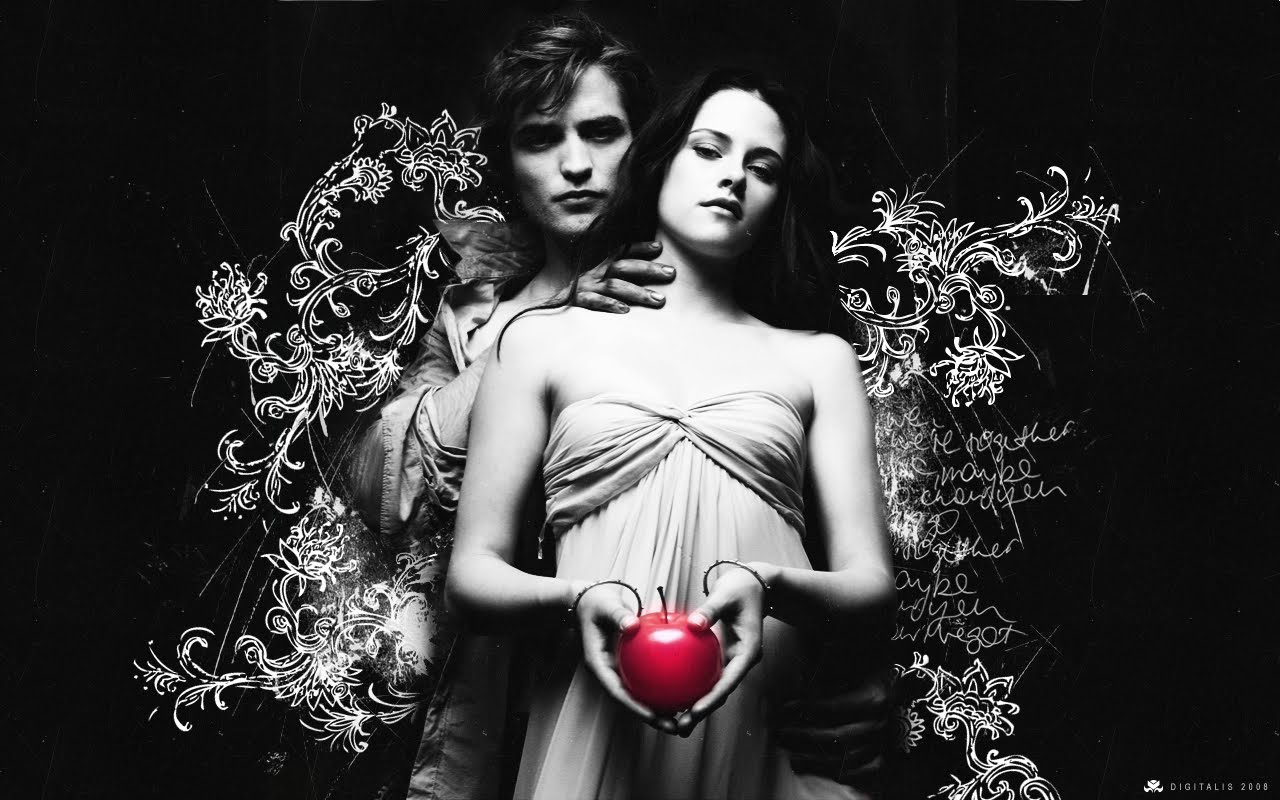
Feminists have a complicated relationship with the Twilight series and fandom, as I have previously documented on this blog. this morning, I’d like to share a couple of items that challenge us to remember that, however retrograde and problematic the series and its surrounding franchise are in terms of gender and sexuality, writing off the fandom as gullible or unenlightened is hardly helpful and (I would argue) hardly feminist.

First, Mathilda Gregory @ The Guardian (thanks to Hanna for the link) reminds us that fans are not necessarily passively imbibing the narratives handed to them — and it’s insulting to the fans (primarily teenage girls and women) to assume they are.

Has there ever been a franchise whose fan base has been so maligned? It’s starting to feel like some of the male critics of Twilight are just uneasy that, for once, something that isn’t aimed at them is getting such a big slice of the zeitgeist.

Meanwhile, instead of defending the film, some feminists aren’t happy either because of Bella’s passivity and the tale’s theme of abstinence before marriage. Well, OK, author Stephanie Meyer’s devout Mormonism does give weight to that reading of the text. But it’s not really as simple as that. We can presume a lot about the author’s intent, but that’s not necessarily the message the films’ fans are taking away from it.

The second story, from Amanda Marcotte @ RhRealityCheck comes in the form of a podcast interview with Tanya Erzen about the contours of Twilight fandom. Check out the podcast or, if you can’t access audio on your computer, this recent essay by Erzen @ The Revealer about the religion of Twilight fans. Here’s an excerpt.

In my interviews and survey of 3,000 fans, the majority express sometimes contradictory beliefs in the supernatural while asserting adherence to traditional religious institutions. Yet, while Twilight won’t replace organized religion, it reflects a longing for sacred and extraordinary experiences in everyday life that are perhaps missing in traditional religious venues. In pilgrimages to Forks, Washington, the setting for the books (in July 2009 alone, 16,000 fans trekked to Forks like supplicants at a holy site, more than the total number of visitors in 2008), fans indulge the fantasy that a supernatural world exists alongside our own, searching for vampires in the woods and lingering outside the re-imagined home of Bella. Rather than fueling interest in vampirism, a concern among some Christian critics of the books, the series provides what Laderman calls “myths that provide profound and practical fulfillment in a chaotic and unfulfilling world.” It’s also impossible to separate these moments of spiritual enchantment from the Twilight franchise, which ceaselessly offers consumption to women and girls as a way to retain the feelings of belonging, romance and enchantment. There are Edward and Bella Barbie dolls, lip venom, calendars, video games, graphic novels, and fangs cleverly promoted and eagerly purchased at conventions and online stores. Yet, the shrines attest to the way fans also transform these objects into something personally vital within the messy entanglements of commerce and enchantment.

The impulse of a lot of feminists (including myself!) is to act to protect young women from narratives we think are abusive by arming them with the skills to deconstruct the Twilight series’ sexism and anti-sex messages. However, to assume that young women don’t have those skills simply because they have appropriated the stories and continue to enjoy them smacks of misogyny. That is, it plays on the stereotype that women (and young women particularly) are shallow, flighty, clueless and particularly vulnerable to outside influences. That their sense of themselves as persons worthy of respect, as persons smart enough to challenge the messages they’re being fed by the media, is uniquely endangered. As Susan Douglas has pointed out recently, there are reasons to be concerned about assertions that young women don’t need feminism. But it is also important to make sure that feminism does not become as didactic and authoritarian as the sexist culture we’re challenging: exchanging one power-over system with another does not a revolution make.

So I’d argue: be wary of attempts to deride Twilight fans because of their age and/or their gender. And be aware of how criticism of fans — even if it’s not explicitly sexist — trades on negative and stereotypical constructions of femininity. Like criticizing Hot Girls for being Hot rather than criticizing the culture that rewards them for meeting gendered expectations, making teenagers feel shamed for their reading and viewing choices does little to support their sense of agency and critical self-awareness that (I believe) so essential to feminist consciousness.

multimedia monday: "my baby likes a bunch of authors"

19 Monday Jul 2010

Posted by Anna Clutterbuck-Cook in media

≈ Leave a comment

Tags

books, multimedia monday, web video

NPR’s On the Media recently did an hour-long show devoted to books, bibliophiles, and the future of the printed word. You can cherry-pick segments or stream the whole show over at their website; Unfortunately I can’t embed it here. To give you an idea of the content, here’s an excerpt from segment Books 2.0.

BROOKE GLADSTONE: Reading a book, losing oneself in the imagination of an author is usually a solitary enterprise. So, too, is writing a book, says author Neil Gaiman.

NEIL GAIMAN: Writing is like death, a very lonely business. You do it on your own. Somebody is always sitting there figuring things out. Somebody is always going to have to take readers somewhere they have never been before.

BROOKE GLADSTONE: But, as books move from printed page to networked screen, it grows easier for writers and readers to gather in the virtual margins to discuss the plot and characters and for readers to actually help shape them.

Crowd sourcing artistic expression in this way may seem contrary to the rules of creativity – books by committee? But Bob Stein, founder of the Institute for the Future of the Book, sees an inevitable merging of writer and reader.

As someone who for decades has experimented with new forms for books, he’s used to people who grew up with traditional books reflexively rejecting his ideas, as when he explained his vision to a group of biographers.

BOB STEIN: One of the people in the room was one of these writers who gets a two-million-dollar advance, goes away for ten years, literally, writes a book, sells a lot of copies and then does it all over again. So I said to him, instead of getting your two-million-dollar advance and going away for ten years, how about if your publisher announced to the world so-and-so is going to start work on a biography of Barack Obama, who’s interested?

And n-thousands of people say, yes, I’m interested, and they subscribe to your project and they pay two dollars a year, whatever it is. I said, at the end of ten years you’ll have a body of work, and you’ll have the same two million dollars.

The difference will be that you’ve done this in public and you’ve done this with a group of people helping you in various ways.

And he, of course, as I expected, you know, put his fingers up in a cross, saying, oh, my God, that’s the most horrible thing I’ve ever heard of, that’s the last thing I ever want to do.

And I said to him, I’m willing to bet you that there’s a young woman who’s getting her PhD right now who grew up in MySpace, in Facebook, somebody who is comfortable and excited about working in a public collaborative space. She is a seed of the future.

BROOKE GLADSTONE: But how do you make money in your vision, the subscription model?

BOB STEIN: It’s all subscription. The day that the

author is no longer interested, and she doesn’t want to work with the readers any longer, she stops getting royalties.

BROOKE GLADSTONE: You know, there are many authors who talk about a quiet place, a moment of inspiration, alone.

BOB STEIN: It’s very interesting. The very concept of an author, the very idea that somebody owned an idea, is extremely recent. Remix culture, you know, where something is constructed from lots of different parts, remix culture was actually the standard until print came along. Print actually changed everything because suddenly you weren’t relying on –

BROOKE GLADSTONE: An oral tradition.

BOB STEIN: – on the oral tradition.

BROOKE GLADSTONE: I’m simply raising the fact that whether or not the author holding up his hands in a get-thee-from-me-Satan position is a biographer or a philosopher or a novelist, there’s not necessarily a role, at least in the beginning of creation, for the reader.

BOB STEIN: I – we’re, we’re definitely in a space where it’s almost impossible to argue about this.

BROOKE GLADSTONE: Because you’re projecting into a future where that quiet place will no longer be necessary?

BOB STEIN: [SIGHS] Basically, yeah.

BROOKE GLADSTONE: What about the thingness of books?

BOB STEIN: I’ll miss it. I love holding the object in my hand. On the other hand, when I’m online and suddenly my daughter, who lives in London, shows up in the margin of something we’re reading together, chills go up and down my spine. Being able to share an experience of reading with people whose judgment I care about is deeply rewarding.

Here’s a wonderful sort of factoid which may be helpful: The western version of the printing press is invented in 1454. It takes 50 years for page numbers to emerge. It took humans that long to figure out that it might be useful to put numbers onto the pages.

[BROOKE LAUGHS]

We’re at the very, very beginning of the shift from the book to whatever is going to become more important than it. I realize that there’s a way to see what I’m saying and, and sort of say, there is a truly mad man, and, and in a lot of ways I, I can’t prove it, but – you, you understand the problem.

Listen or read the full transcript over at On the Media.

And something fun that I can embed, here’s the music video for a song they use on the show as a bridge between segments, the classic “My Baby Loves a Bunch of Authors,” by the band Moxy Fruvous.

Happy reading (however you choose to go about it)!

want.

15 Thursday Jul 2010

Posted by Anna Clutterbuck-Cook in library life

≈ 1 Comment

Tags

books


Via Lamdba Literary comes this awesome installation at the Victoria and Albert Museum (V&A) in London. It’s called “The Ark” and is part of the V&A’s 1:1 Architects Build Small Spaces exhibition.

Who doesn’t need a giant walk-inside bookcase? I mean, really!

"autobiography is an exercise in self-forgiveness"; should it always be so?

07 Wednesday Jul 2010

Posted by Anna Clutterbuck-Cook in think pieces

≈ Leave a comment

Tags

books, politics, religion

One of our post-graduation presents for Hanna, one which I also get to enjoy the benefits of, was a subscription to the London Review of Books. The most recent issue includes a review of Christopher Hitchin’s latest book, Hitch 22, a memoir. Hitchins, like other public personalities who trade in sensationalism and putting other people down, is easy to dislike for his self-absorption and snobbery. When the memoir first came out, John Crace @ The Guardian crafted a “digested read” version that played on this propensity and had Hanna and I falling off our chairs with mirth.

I find I have written nothing of my wives, save that they are fortunate to have been married to me, and nothing of my emotional life. That is because I don’t have one. The only feeling I have is of being right, and that has been with me all my life. I would also like to point out that drinking half a bottle of scotch and a bottle of wine a day does not make me an alcoholic. I drink to make other people seem less tedious; something you might consider when reading this.

David Runciman, whose review of Hitch 22 has been made available at the LRB website, offers much the same analysis — though in much more analytical a tone. He observes that Hitchins appears to have cultivated the personality of a “political romantic, as described by early-twentieth-century author Carl Schmitt.

For Schmitt, political romantics are driven not by the quest for pseudo-religious certainty, but by the search for excitement, for the romance of what he calls “the occasion”. They want something, anything, to happen, so that they can feel themselves to be at the heart of things.

The problem with this, morally speaking, is that a romantic whose raison d’etre is not his ideals but “the occasion,” the question of values is irrelavent. Say what you will about the political idealist (and, living with an historian of Northern Irish nationalism I know there’s plenty to say!), at least someone who acts violently for the sake of their convictions is a person who is clear about where they stand. They are willing to claim allegiance to a set of values, and to work (at times to the death) to see those values put into action.

Now there are (to a person of my proclivities towards nonviolent political change) better and worse ways of trying to live out one’s beliefs. But I also believe there is some intrinsic value in having beliefs: in having enough self-awareness that you feel comfortable owning your beliefs, saying “this is where I stand and why.”

You might think that a person who has written, among others, a book titled Why God is Not Great is not shy about taking a personal stand, even a highly controversial one. But being provocative, rhetorically and otherwise, is not necessarily the same thing as being self-revelatory. One can speak highly-charged words while never allowing anyone to see the emotionally-complex human being behind those words. I find other peoples’ interior lives fascinating; my obsession with understanding how other people understand the world around them — how they make meaning of their lives — is what led me to history as a scholarly pursuit. Runciman’s argument about Hitchins, however, is that he has no interior life, or at least not one of which he himself is very aware or willing to share with his readers.

It certainly sounds like it has all been a lot of fun. His has been an enviable life: not just all the drink and the sex and the travel and the comradeship and the minor fame (surely the preferable kind), but also the endless round of excitements and controversies, the feuding and falling-out and grudge-bearing and score-settling, the chat-show put-downs, the dinner party walk-outs, the stand-up rows. Christopher Hitchens has clearly had a great time being Christopher Hitchens. But – and I don’t want to sound too po-faced about this – should anyone’s life be quite so much fun, especially when it is meant to be a kind of political life? Hitchens admits to some regrets, including that he has not been a better father to his children (and by implication a better husband to his wives, though he doesn’t actually say that), but he doesn’t seem to have agonised about it much. In fact, he doesn’t seem to have agonised much about anything. He doesn’t rationalise his political shifts so much as acquiesce in them: if it feels like he has no choice, then he has no choice but to follow his feelings. He has seen his fair share of misery and despair, and may have caused a certain amount of it himself, but it is entirely unclear what this has cost him.

I believe in extending compassion and possibly forgiveness towards oneself in equal measure as toward other human beings — being kind to yourself as you are kind to others is, truly, one of the ways in which we can make the world a more kind, generous, compassionate place. Yet when “autobiography is an exercise in self-forgiveness” (to borrow a phrase Runciman quotes toward the end of his essay) while the autobiographer neglects to extend all but highly conditional forgiveness to anyone else, such self-adoration seems a shallow, fragile thing indeed.

Go enjoy the rest of Runciman’s review, It’s Been a Lot of Fun, over at the London Review.

evangelicals’ "defining story" = divine child abuse?: some reflections

25 Friday Jun 2010

Posted by Anna Clutterbuck-Cook in think pieces

≈ Leave a comment

Tags

books, religion, thesis

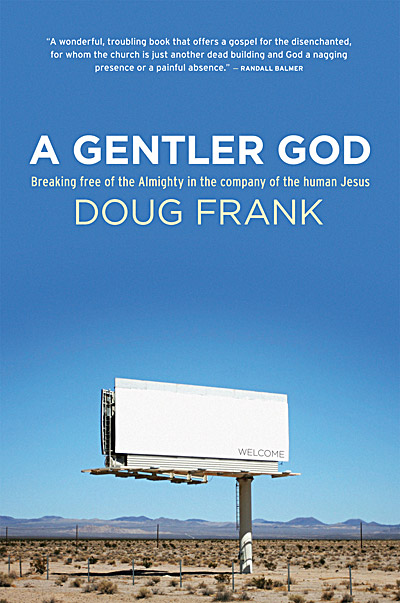
This is a rambling sort of post reflecting on Doug Frank’s recently-released A Gentler God: Breaking Free of the Almighty in the Company of a Human Jesus. Doug is one of the founding faculty members at the Oregon Extension, the community I am researching and writing about for my thesis. I might write a proper book review / booknote about A Gentler God at some point, but for now I want to share a story from my own history of interactions with the church — and Evangelicals particularly — that reading this book reminded me of, and helped me understand in a new light.

Despite growing up in culturally and religiously conservative Western Michigan, I was largely what they call “unchurched” as a child. My paternal grandfather was an ordained minister and professor of New Testament theology at Western Theological Seminary which is affiliated with the Reformed Church in America, a small but mainline protestant denomination. My father was, therefore, a preacher’s kid; my mother — raised by a lapsed Scotch Presbyterian and a Christian Scientist — was sent to Congregational Sunday school as a child and attended confirmation classes but never joined. My parents didn’t have us baptized and pretty much stopped attending church around the time my little brother was born (I was three) because the amount of nurturing they got out of church on Sunday wasn’t worth trying to parent small beings in a child-unfriendly space.

We didn’t return to Hope Church (my father’s childhood RCA congregation) until I was a teenager. We had a few reasons for doing so, including the fact that several of my more conservative, evangelistic friends had attempted to convert me (them: “have you accepted Jesus into your heart?” me: “uh … no.”) and my mother was hoping to inoculate us against fundamentalist, evangelistic theology by giving us a chance to learn the language and messages of Christianity and a scholarly, fairly liberal environment. To give you an idea of what this meant: the congregation had recently gone against denominational practice by ordaining a gay member as a church elder, they had already had a series of women ministers, they had an active pacifist group, and my feminist theology professor at college was a member.

I offer all of this as a preface to the story-story I’m going to tell you, which is about the husband and wife who served as youth group leaders for several years while I was attending Hope Church. This couple were way more theologically fundamentalist-evangelical and socially conservative than the majority of the congregation, and I’m not exactly sure how they landed the position of youth leaders (likely because they volunteered). I did childcare for the family regularly, but used to find myself at loggerheads with them (also regularly) about a number of issues including parenting, feminism, human sexuality, and theology.

And one day at either a youth group meeting or in a Sunday school class they offered — as if it were the best metaphor in the world for God’s love and the power of atonement (Jesus dying for our sins) — the following allegory (I’m paraphrasing from my own memory)

There’s a train full of passengers hurtling down a railroad track toward a bridge that has washed out. God is at the switchboard about to switch the rails so that the train goes onto a side rail (thus saving the passengers). But then suddenly his toddler son (Jesus) wanders out onto the side rail. God has to decide — train full of people or toddler son? And because God is so unselfish, he saves the train full of people rather than his own child.

What. The. Fuck.

That’s what you’re thinking, right? There are just so many things wrong with this story that it sort of stops you dead in your tracks.

This is the story that this couple — with three small children of their own, remember — told with passion and the clear expectation that we would be humbled by the boundless, sacrificial love of God. Whereas, of course, what character in this story is any human being (let alone a child!) going to identify with? The toddler! Whose own parent kills them in order to save a train full of unnamed, faceless persons. What child could possibly fail to be traumatized by a story that tells them the moral “right” is one in which their parent would not save them from death when they had the power to do so?

The take-away message regarding God and Jesus in this story is that God is a violent, murderous parent who has no overriding, irrational love for His own child. It’s a story of divine child abuse. And to me it was absolute crazy-talk.

Well, according to Doug, who describes this very story — or at least the collection of ideas embodied in this story — in the first part of A Gentler God, this is the “defining story” of modern American evangelism. Evangelical Christians, Doug argues, grow up in such close proximity to this story that they have trouble seeing its internal contradictions: the way in which a story that is trotted out to signify God’s boundless love for humanity actually tells a story about extremely conditional love and bloodlust. God demands bloodshed, which is why Jesus is required by God to die for our sins. How can we possibly square this with a God who cares for all of God’s creation unconditionally?

Well, you can’t, which is why Evangelicals (again, according to Doug and other scholars I’ve read) live on some level in perpetual fear of the wrath of an Almighty deity who — but for His willingness to murder his own son — would surely have come after you in vengance.

The story I heard in youth group displaces the personal wrath of God in favor of a fatalistic, mechanical failure — God isn’t causing the train to crash — God simply has to decide between God’s own child and the rest of humanity. But it still does no better at describing a loving, compassionate God — in fact, in my personal opinion it actually reifies the wrongness of the defining narrative by turning Jesus (a full-grown adult who, the Bible if pretty clear, makes the decision to die as a consequence of his actions) into a child who in no way chooses his own death. Instead, this story takes God and shapes Him (definitely “Him”!) into a monstrous parent. This is, I’d argue, even a step beyond the traditional Evangelical God of atonement whose divine sense of justice impersonally demands blood. This isn’t a God overly obsessed with justice at the expense of compassion — but a God who is simply uncaring, sociopathic even.

It appalls me, even all these years later, that this was the narrative of Christianity meant to excite conversion.

A Gentler God gave me a new perspective on the way this story, and its sister-stories in the Evangelical theological landscape, shapes how conservative Christians view their God — and how that view of the divine shapes their interaction with the world around them.

"bibliobimbo": pro-book pulp fiction posters

22 Tuesday Jun 2010

Posted by Anna Clutterbuck-Cook in library life

≈ 2 Comments

Tags

books, fun

Thanks to Anne Bentley, our art curator at the Massachusetts Historical Society for this link. Helfond Book Gallery, Ltd. offers a series of images from the underbelly of the rare book world, otherwise known as “bibliopulp” posters riffing on pulp fiction book covers from the mid-twentieth century. I’m personally torn between the “Bibliobimbo” (pictured above), “Rare Book Tramp” and — with a cover that would make Jack Harkness proud — “They Made Me a Book Collector.”

Happy Wednesday!

friday fun: robin hood (not that one)

28 Friday May 2010

Posted by Anna Clutterbuck-Cook in media

≈ Leave a comment

Tags

books, fun, movies

One more post before I have a mini blog hiatus for the Memorial Day Weekend.

What with the new Robin Hood film out, people have been harking back to versions of yore (see, for example, this episode of On Point from NPR in which film critic and historian David Thomspon and professor of English from Cardiff Stephen Knight discuss the legend of Robin Hood and its various incarnations in film). Hanna and I have been remembering with fondness the 1973 animated Disney version. My brother and I spent several years of our childhood — the ones in which we were not playing Redwall, Swallows & Amazons or Teenage Mutant Ninja Turtles — playing Robin Hood and Maid Marian (she kicked ass, in case anyone feels this is an open question), and our interpretation was heavily, heavily influenced by the singing animals in this particular adaptation.

I adored Maid Marian and at the time (I was maybe six or seven?) we had friends who were on sabbatical in England. So my father, an amateur calligrapher, penned a letter from Maid Marian of Sherwood Forest and mailed it to them to post back to me postmarked from England. It was on pink stationary, I remember, in an airmail envelope with a postage stamp bearing the head of Queen Elizabeth. I kept that letter in my treasure box for many, many years. In fact, it’s probably still filed away somewhere in my parents’ attic, in the box of Precious Things To Rescue In Event of Fire.

Ahem. Anyway. Hanna discovered earlier this week that she had part of the song (all she could remember) of “The Phony King of England” song stuck in her head — so here to make sure that everyone else gets it properly stuck in theirs as well is yours truly.

In addition to Disney’s retelling, of course, there are lots of other Robin Hoods to pick from — including (I’m a librarian after all!) book versions. Robin McKinley’s Outlaws of Sherwood is a classic, and I personally enjoyed Theresa Thomlinson’s Forestwife, which is a retelling of the legends from Marian’s point of view. For the “real,” legend cycle versions, my mother read to us from The merry adventures of Robin Hood of great renown, in Nottinghamshire, illustrated by Howard Pyle.

There was also the Song of Robin Hood, a songbook published in 1947 and illustrated in minute detail by Virginia Burton. My mother played and sang the songs for us, but as children we were most absorbed by the detailed picturework around each page of music, which dramatized the stories in sequential panels like tiny comic books without words.

So go forth and enjoy Robin Hood in all his many incarnations! Happy Friday and have a wonderful long weekend. I’ll be blogging again next Tuesday.

reading and gender: a couple of links

26 Monday Apr 2010

Posted by Anna Clutterbuck-Cook in linkspam

≈ Leave a comment

Tags

books, feminism, masculinity

Thanks to Hanna, I have a couple of book-and-gender-related links to share with you this afternoon, despite the fact I haven’t spent much time on the internet in the last few days.

George @ Bookninja shares a recent variation on the narrative-that-won’t-die, the libelous fiction (pun intended) that men don’t read. While admittedly I am not male-bodied, male-identified or even very butch or masculinely inclined, I know guys. And the guys I know read. At least, the guys I know read or don’t read in equal proportion to the women I know who read or don’t read. Their maleness has nothing to do with their interest (or lack thereof) in the printed word.

As an historian, I find it fascinating that our current cultural narrative around books and reading (possibly even writing?) is that it is a feminine pursuit: back in the late 18th century, polemicists fretted about girls being exposed to works of literature, particularly fiction, as fiction was seen as inherently libidinous in nature and might lead them to masturbation (Thomas Laqueur, Solitary Sex). In the 19th century, people worried about the power of a gothic romance to encourage girls’ imprudent liaisons (recall Catherine in Jane Austen’s Northanger Abbey?) and later on feared that too much reading led to neglect of household chores (Lydia Maria Child). By the late 19th and early 20th century, mental exertion (particularly reading and writing) caused concern among advice-givers to both women and men: Charlotte Perkins Gilman was, famously, denied writing and reading as part of her treatment for postpartum depression; male academics and clergymen fretted that their chosen professions doomed them to a life of effeminacy and poor health (Gail Bederman, Manliness & Civilization).

So, somehow, by the twentieth century, “manliness” and the life of the mind had evolved — at least in the humanities (as opposed to the sciences) — into something that was both the province of women as well as a threat to the health of “civilized” human beings, regardless of gender.

And now, today, we have folks wringing their hands over a culture of masculinity that discourages being smart, articulate, literary (except, perhaps, if you can use language to bully others in the manner of public intellectuals like Christopher Hitchens and Richard Dawkins — thus proving your uber-manliness by the way in which you wield language as a weapon with which to take down your opponents*). Whole books are written about encouraging literacy and reading among boys, and websites devoted to the subject exist on the internet.

My point is that this story we tell ourselves, about how boys (and the men who these boys become) are not readers, or only readers of very specific genres — technical manuals, graphic novels, thrillers for example — is just that: a story. It’s fiction. Or at the very least, it’s a sociological truth that we’ve mostly created through our formulation of what’s “manly” in our culture, and reinforcing that every chance we get.**

So where does this association of genders (masculine and feminine) with certain types of literary behavior fit in with this second story Hanna found me from Sharon Bakar @ bibliobibuli on a new “women concept” bookstore that just opened in Malaysia? As Bakar observes

I don’t like the cliched assumptions that women should like certain things whether in terms of decor (usually frilly, flowery pink things) or in the choice of books. The concept of women’s bookshops is nothing new, but around the globe most have been independents which promoted feminist and/or lesbian thought.

I’m with Bakar on this one. Women’s bookstores historically (and here we’re talking 1970s-present) have been associated with the underground feminist/separatist culture that grew up around the surge in feminist activism and lesbian visibility in the mid-twentieth century across the globe (and particularly in the West). These cultural institutions obviously have a long and complicated history, given that they often promoted the work of activists and artists who had no outlet in the mainstream (in my mind a positive) while also, at times, fostering a separatist, essentialist feminism that perpetuates bigotry in various forms (in my mind an obvious negative). While safe(r) spaces for the marginalized folks are, I would argue, absolutely essential, it’s also important to keep alive the conversation about how (in creating those spaces) whom we are excluding and why. And for what purpose.

A “women’s concept store” that — according to the news item Bakar links to — highlights “chick lit” (itself a problematic category!) and wedding stationary is a far cry from that sort of separate space. Space that by its very existence challenged (and occasionally continues to challenge) our assumptions about sex, sexuality, and gender. Instead, this space seems more like the homosocial spaces of yore, which reinforce oppositional gender stereotypes. In this instance, possibly reinforcing the stereotype that bookshops are for women, while dudes go off and do, well, more manly things.

Presumably not-with-books.

*I make no claim that women do not, also, use words to bully: I think it happens all the time. However, I do think men are encouraged in our culture to equate being “smart” with taking down the competition in a way that women, possibly, are not.

**Again, this is a story about guys and reading, but we could just as easily write a story about women and the gendered way they are marketed certain types of literature and not others: I’m a fan of graphic novels, for example, despite the fact that graphic novels and comic books are often seen as the province of boys, and in need of a make-over in order to appeal to girls.

on acquisitiveness: books I have known

22 Thursday Apr 2010

Posted by Anna Clutterbuck-Cook in Uncategorized

≈ Leave a comment

Tags

books, domesticity

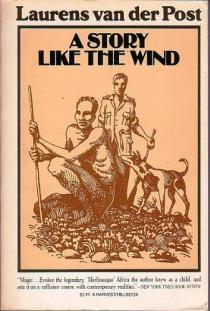
This morning, while waiting for the local Trader Joe’s to open, I found myself browsing the $1 cart at the brookline booksmith once again. This time, I found a copy of Laurens van der Post’s 1972 quasi-autobiographical novel A Story Like the Wind which my mother read to us when we were small. It is the story of Francois Joubert, a colonial child whose coming-of-age is disrupted by the political violence of the native community’s struggle for independence.

I haven’t read the book in ages and there is probably much to critique about it vis a vis the history of modern imperialism and post-colonial Africa. From what I do remember, the novel idealizes the native peoples and treads lightly over the political backdrop that gives rise to the violence that overwhelms the Joubert family.

But the point is: I bought it. Standing there, in the early morning sun, I saw this paperback book with the cover I remembered from my own childhood, and I had the sudden overwhelming urge to own the novel. Even if I never open it and read it again (possibly out of fear that, once re-read, I would no longer take the same child’s pleasure in the adventure story and instead read through the critic’s eye).

I wanted to own it. Needed to own it. Mostly because of a passage I remember in which the child, Francois, observes how his father — estranged from the colonial community for his critique of imperialism and from the native community for being European — falls ill in an adult version of what might be described as “failure to thrive.” Both communities have engaged in what Francois’ Matabele mentor terms “the turning of the backs,” a collective shunning of the outsider. The-turning-of-the-backs. It’s such a wonderfully descriptive phrase, somehow conveying the utter isolation — and eventual death — of the human being who is an outcast, who is rejected from human society.

So I bought the book. And now it is sitting here, on my desk, gazing up at me. And I somehow feel more at peace for having this book — with its little piece of wisdom, its kernel of human truth tucked away in its pages — physically on my shelves. Part of me feels bad about this: why buy the book, even at $1, if I’m unsure I’ll ever read it again — thus depriving someone else the chance to discover and enjoy it? But I do keep buying books, as much for their material objectness as for the ideas the contain. And I miss them as objects when they are not near me — as in the hundreds of volumes still stored at my parents’ house in Michigan.

I’m not sure this post has much more of a point than this: that the objectness of books still seems to matter, even in this age of the internet and the kindle, when a great deal of my reading and writing — let’s face it — happens in front of a computer screen. Some still, small part of my soul hears and responds to the printed word as something physically tangible, and different from all those words that flow by us every day in a long string of 0s and 1s rendered in text on the screen.

← Older posts
Newer posts →
"the past is a wild party; check your preconceptions at the door." ~ Emma Donoghue

Recent Posts

  • medical update 11.11.22
  • medical update 6.4.22
  • medical update 1.16.2022
  • medical update 10.13.2021
  • medical update 8.17.2021

Archives

Categories

Creative Commons License

This work by Anna J. Clutterbuck-Cook is licensed under a Creative Commons Attribution 3.0 Unported License

Meta

  • Create account
  • Log in
  • Entries feed
  • Comments feed
  • WordPress.com

Blog at WordPress.com.

  • Subscribe Subscribed
    • the feminist librarian
    • Join 37 other subscribers
    • Already have a WordPress.com account? Log in now.
    • the feminist librarian
    • Subscribe Subscribed
    • Sign up
    • Log in
    • Report this content
    • View site in Reader
    • Manage subscriptions
    • Collapse this bar