Tags

On the 4th of July we had steady rain for over twenty-four hours, and I took the opportunity to catch up on some computer work while Hanna napped. The cats were super helpful as they always are. Continue reading

16 Wednesday Jul 2014
Posted in our family
Tags
On the 4th of July we had steady rain for over twenty-four hours, and I took the opportunity to catch up on some computer work while Hanna napped. The cats were super helpful as they always are. Continue reading
14 Monday Jul 2014
Posted in book reviews
Tags
I’ve been on a kick lately reading about fanfiction and fandom — it’s what with that addictive habit of footnote mining we’re taught to do in academia? — which has been both inspiring and a little bit wistful in that the muse seems to have deserted me this year. Apparently I find time to write porn really easily when I’m procrastinating on graduate thesis revisions, but less so when I’m coping with family loss, moving house, and some major work responsibilities.
Not that I haven’t been thinking about a Miss Fisher’s Murder Mysteries Jack/Phryne three-parter, and a couple of Doctor Who Vastra/Jenny one-offs. Not to mention the outstanding sections of my Eureka series “25 Ways to Kiss a Naked Man.” I considered returning to that one back in the spring, but all I wanted to write was end-of-life fic involving hospice care … which I know would have been good but for which people would hate me eternally, and for which my wife would probably have divorced me. So. There’s that.

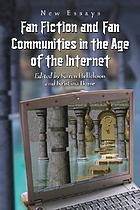
But in the meantime, I’ve been reading in the fan studies literature (it’s a thing! a wonderful, glorious thing!). The two latest books I’ve read were both anthologies: Fan Fiction and Fan Communities in the Age of the Internet, edited by Karen Hellekson and Kristina Busse (McFarland, 2006) and Henry Jenkins’ Fans, Bloggers, and Gamers: Exploring Participatory Culture (New York University Press, 2006). While both assembled by acafen — fans who are also academics; academics who embrace their identity as fans — and both well-worth the read, these are two quite different volumes.
Jenkins, whose seminal fan studies work Textual Poachers (1992) I have yet to read, is a skilled writer whose ability to own his expertise without appearing self-important is too rare and to be prized. Despite his renown in the field of popular culture studies, his work is approachable, readable even to those unfamiliar with every theorist or creator whom he cites, not to mention every popular cultural artifact. Fans, Bloggers, Gamers is a collection of essays written after Textual Poachers and before Convergence Culture (2006) and explore topics as diverse as women writing m/m slash (“Normal Female Interest in Men Bonking,” with Shoshanna Green and Cynthia Jenkins) the anti-gaming sentiments that flowered after Columbine (“Professor Jenkins Goes to Washington”), and the experience of parenting a teenager who met and courted his first girlfriend online (“Love Online”). Each essay is prefaced by a short introduction/reflection on the context in which Jenkins produced the piece — and how his thinking has changed (or not) since. Continue reading
09 Wednesday Jul 2014
Posted in a sense of place

As the early posts on this blog attest, I used to try and visit new corners of Boston on a weekly basis when I first started graduate school back in the distant period known as “2007.” This ambitious project foundered on research paper deadlines, work, grocery shopping, and relationship building. These days, I don’t get to new (for me) corners of the metropolis unless it comes by way of another life activity — a recent meet up with friends took me to Porter Square Books, for example.
At the end of June, Hanna had a meeting at the JFK Presidential Library on Columbia Point, so I trailed along and did my research and writing work there instead of at the local public library. Continue reading
08 Tuesday Jul 2014
Posted in our family
Tags

Image: Redwoods; Stout Memorial Grove, Jedediah Smith State Park (September 2013)
As some of you know, my maternal grandfather was diagnosed with lung cancer about a month ago, at the age of ninety-two. After a short, precipitous downhill slide, he passed away in the wee small hours of this morning at his home in Bend, Oregon. It’s exactly a month since his diagnosis which was, in turn, exactly a year after the death of my grandmother, his wife of over fifty years.
My thoughts are going to be with my mother and aunt today, as they make sense of the present. Though he was born and raised in Michigan, and in turn raised his daughters there, I’m glad my grandfather was able to die in the high desert country where he and my grandmother made their home in early marriage and returned in the 1980s upon his retirement.
07 Monday Jul 2014
Posted in our family
It’s been roughly five years since Hanna and I started snogging one another.
And, well, other things. It all happened in a bit of a rush; I never was a very patient person once I’d finally determined it was time to do something new. And for us, apparently, the time for sexytimes was late June 2009.
So yay anniversary!

Image via.
This weekend I was reading The Tolerance Trap: How God, Genes, and Good Intentions are Sabotaging Gay Equality by Susanna Danuta Walters (New York Univ. Press, 2014) and was reminded of the now anachronistic corollary to “coming out,” that of being “brought out” into the queer community by one’s first same-sex partner. Walters writes:
Being ‘brought out’ has within it that dual sense of sexuality and community. One is ‘brought out’ by another queer person and simultaneously brought into the queer community … coming out in these earlier and sometimes explicitly political iterations was understood as both a process personal and social, both confessional and performative, narrating a ‘shared fate’ but also an ‘imagined community .'(70)
This got me thinking about my own experience of coming out / being brought out into self-awareness and visible queer sexuality. My attitudes toward coming out as a helpful narrative (for myself; for others) have fluctuated a lot over the years. On the one hand, I definitely experienced the silencing pressure of presumptive heterosexuality, experienced the feeling of being closeted. People assumed I was straight and I mostly didn’t correct them.
For twenty-eight years. Continue reading
03 Thursday Jul 2014
Posted in a sense of place
Tags

As the weather gets steamy here in Boston (who was the bright spark who said, “Let’s build on a tidal swamp!”) I’m taking comfort in our airy bedroom with its new IKEA curtains — Hanna and I picked them out because they reminded us of Anne of Green Gables.

I’m also rather fond of my new IKEA lamp…

… as is Hanna of hers.
May your weekend, whatever the temperatures, be as spacious and lazy as ours.
30 Monday Jun 2014
Posted in book reviews
Tags

Because the Brookline Public Library is awesome (they even have an awesome box … shaped like a TARDIS!) someone on the staff ordered a copy of acafan Anne Jamison’s Fic: Why Fanfiction is Taking Over the World (Smart Pop, 2013). And there I found it, sitting innocently upon the new books shelves (have I mentioned how much I adore public libraries’ new books shelves? it’s like browsing in a bookstore except you can take everything home for free!). I’ve found so much eclectic good stuff on the new books wall at Brookline over the past few years, and Fic is no exception. Jamison is a literature professor with a background in English literature and culture, 18th century to the present. As an academic whose scholarly interest is in participatory literary culture, it is no surprise that fanworks captured her interest. This volume is one part narrative history of fanfiction from its “prehistory” in the 1800s to the present, and one part riotous celebration of various fan cultures through both Jamison’s own analysis as well as the contributions of fanfic and “profic” writers (at times one and the same!) and other acafen as well. Not quite an anthology, as Jamison’s narrative is the “spine” of the text, the contributions by others dodge and weave within the volume providing alternative perspectives, counternarratives, “missing scenes,” and many a reading recommendation for the fic-hungry fan. Continue reading
28 Saturday Jun 2014
Posted in think pieces
Tags
I spent today away from the computer, writing a letter to a friend and annotating another friend’s book manuscript by hand and reading a book and taking a walk around Columbia Point with Hanna. It was a good day. I also spent a lot of time thinking about some of the interactions I’ve had, and continue to witness, in professional arenas, that evidence a really strong element of dismissal or erasure of the basic fact of life that (as adults) most of us should have grasped by now: Our lived experience is not identical to other peoples’ lived experience.
I’ve seen a LOT of interactions lately — on the A&A listserv, around the SAA Code of Conduct, in some offline professional conversations, and in some blogging contexts — where the exchange comes down to Person A ignoring, questioning, dismissing, denying the experience of Person B because Person A has not experienced the same thing in exactly the same way.
There are variations, of course, but the basic theme is always roughly the same:
Person B: I propose that the group do X.
Person A: I don’t like that idea! Why would we do X? We don’t need to do X. We’ve always done Y. I’m perfectly happy with Y. Why aren’t you happy with Y? If only you understood / were more mature / more professional / acted more like me you would also appreciate the value of Y!
Person B (response 1): I wasn’t saying that Y is a bad option, but maybe we could try X also?
OR
Person B (response 2): Since you asked, here are the problems I see with Y. [lists them.] Maybe Y is comfortable for you, but it is causing the problems I just articulated for other people in this group / at this blog / in the world and I find that troubling. With the changes I have proposed in scenario X some if not all of these problems would be alleviated and more people would experience less stress / marginalization / suffering than currently do in scenario Y.
Person A: You are hysterical / delusional / idealistic / young and X would be impossible to implement / isn’t needed anyway / would silence people like me / make me feel uncomfortable.
Person B: Um, what? Look at these situations L, M, N, O, and P where the problems I have described occurred and are well documented. Can you not see that situation Y — while it may not be causing you any immediate problems — is, in fact, damaging a large number of people in ways Q, R, S, T, U, and V? Couldn’t we talk about solutions that would meet the needs of people like you and the needs of people like me in more equitable measure?
Person A: YOU ARE CLEARLY OFF YOUR ROCKER AND THREATENING TO TAKE THINGS AWAY FROM ME AND MY KIND YOU GREEDY UPSTART / VINDICTIVE OVERLORD.
Person B: Um, I — what? Look, we may not be on exactly equal footing here, but it’s more that you’re older / higher-ranking / socially privileged / TALKING IN ALL CAPS here and I’m trying to accommodate a broader range of voices. I’m trying to remain calm and reasonable here, but you’re pissing me off acting like a jerk. I find your aggressiveness pretty much the opposite of awesome here. Look. NO ONE IS TRYING TO TAKE YOUR TOYS. We’d just like to play too. SHARING IS THE DECENT THING TO DO.
Person A: Wow, you have a completely unhelpful attitude. Seriously. You should get some professional help because I don’t think we (I) should have to listen to you complain and abuse us (me).
I just keep turning these exchanges around and around in my head and feeling like I’m Finn, in the clip above, doing a little jig in front of Person A in a desperate plea for them to slow down and consider that regardless of whether they believe — and they may have a legitimate case to make — that Person B is asking for the impossible or the problematic, the request is coming from a legitimate real-life experience equally valid to the experience of Person A.
Person A doesn’t magically get to be the arbiter of what is Most True in the world. (Neither does Person B, but honestly? Most Person Bs in these situations have never labored under that particular illusion.) Both Person A and Person B matter. Equally. As human beings.
And Person A would, frankly, get a lot more empathy from me (and probably other people as well) if they showed any evidence of actually believing that Person B was a) a human being whose b) experience of the world mattered.
And, you know, might have ideas and suggestions and unique perspectives of value to Person A … if Person A would just take an effing moment to listen instead of shouting and shaming.
Is all I’m saying.
Now go have a restorative, empathy-filled weekend.
25 Wednesday Jun 2014
Posted in book reviews
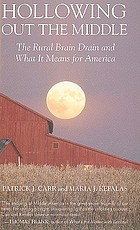
Footnote mining from Paying for the Party, I ordered Patrick Carr and Maria Kefelas’ Hollowing Out the Middle: The Rural Brain Drain and What it Means for America (Beacon Press, 2009) through ILL and read it last week. This slim volume is based on an ethnographic study Carr and Kefelas of three hundred high school graduates from a small, rural town in Iowa they call “Ellis.” With a population of about two thousand, Ellis’ economy is primarily agriculture and industrial; high school graduates who go on to college rarely return. Those who remain struggle with social isolation and financial solvency. Carr and Kefelas surveyed over three hundred Ellis high school graduates from the 1990s (who at the time of their study were about ten years out from the end of twelfth grade) and conducted approximately one hundred interviews of young adults who had either stayed in, left, or returned to their hometown. Hollowing Out attempts to describe the motivations and experiences of each group of individuals, and ends with some reflections on the role that social policy can (and cannot) play in supporting and reinvesting in rural life nationwide.
What Carr and Kefelas found was that high school graduates were tracked / self-sorted into a handful of broad categories: the Achievers and Seekers, the Stayers and Returners. Achievers were tracked from a very young age by their parents, school system, and socioeconomic status, to leave Ellis and attend a four-year college and possibly graduate school. Most will never return to live in their hometown, having built lives elsewhere with career opportunities and social connections. Seekers don’t have the resources to attend a four-year college, even a good state school, and so often join the military; they will leave to explore the world, but have limited socioeconomic mobility and often struggle to find a place in the world beyond the armed forces. Stayers have dropped out of high school or obtained limited qualifications, usually struggle with un- or underemployment, wed and/or become parents much earlier than those who leave. They, and the Returners, often have negative perceptions of the world beyond their small town community — either because they tried and failed to find a foothold there, or because they have no desire to leave the familiar. Returners are usually “Boomerang” individuals (often women) who may have relocated for an associates degree or attempted a four-year college education but never established connections that made them feel comfortable beyond Ellis. They can also sometimes be Achievers who, for a variety of individual reasons, return home (familial responsibilities, political ambitions, occasionally the right job at the right time). However, these “High Flyers” — the ones so desperately sought by states with struggling economies — are few and far between.
In the end, Carr and Kefelas encourage policy-makers to focus less on trying to lure these “High Flyers” back to their states, since individual motivations usually have little to do with initiatives to woo the Achievers into returning, and instead focus their resources on the Stayers and Returners who are already the backbones of their communities and remain an un- and undertapped social and economic resource.
The authors do, eventually, touch upon some of the non-economic reasons that Achievers and others who leave Ellis may resist returning — reasons such as prioritizing racial diversity or acceptance of queer identity and relationships — that I think should have been foregrounded a bit more. Granted, interesting work is currently being done to highlight the lives of queer folk in rural America. Rural Americans are not inherently more or less prejudiced toward Othered groups than urban or suburban Americans. However, smaller communities are often self-selecting and more homogeneous; they’re also often extremely isolating for those who are somehow different, even if they (we) don’t experience overt prejudice or violence. Simply put, it was harder for me, as a bi woman, to find potential female partners (and even potential male partners!) in a medium-sized Midwestern town than it is.
And now, as a married lesbian, I have structural as well as cultural reasons not to return to Michigan: our marriage would not be honored by the state government. So whenever I read about state campaigns for professional Michiganders to return and invest in the state where I grew up — and which I continue to love in many respects — I admit I’m not exactly feeling the love. Many of us Leavers have left precisely because our communities scarred us, deeply, and returning to live there would open old wounds.
But in the end, I was uneasy with the way in which the authors’ solution seems to encourage a “circling the wagons” approach to social policy, where the parochial reasons that people leave certain communities are glossed over rather than challenged. I wanted them to dig more into the ways, for example, racial prejudice, the gendered division of labor in working class communities, or anti-gay sentiment not only drives Achievers away but harms those who stay behind. Not every person who embodies a marginalized identity (queer, physically disabled, non-white, Muslim, etc.) has the resources to “get out of Dodge” even though we may have strong push-pull factors to do so. While I’m comfortable with studies of rural America that ask us to reconsider our prejudices toward “hicks” living in “flyover” states, the fact that homogeneity was a fact of small town life the authors’ touched on but never developed is something I found troubling.
Still, I’d recommend this book to anyone with an interest in how education and social policy reproduce class and cultural divides here in America. The personal narratives woven throughout the sociological analysis will resonate with many readers who grew up in rural or quasi-rural Midwestern communities (raises hand), and provoke reflection beyond personal experience toward broader social trends.
23 Monday Jun 2014
Posted in book reviews

Amanda Hess at Slate recently reminded me that I had meant to read Elizabeth A. Armstrong and Laura T. Hamilton’s longitudinal, ethnographic study of a cohort of undergraduate women, Paying for the Party: How College Maintains Inequality (Harvard Univ. Press, 2013). Armstrong and Hamilton’s research team spent a year in residence at “Midwest University” living with a group of first-year women assigned to one of the school’s party dorms; they continued to follow the cohort on their floor for five years — the typical four years to degree and one year after. What began as a study of young women’s sexual agency at a large public university quickly turned into a study of class, and how strongly pre-existing socioeconomic conditions in the lives of each student determined her trajectory through college and into her immediate post-college circumstances. Hess’ article at Slate highlights some of what the research team did discover about the sexualization of college women during their work; Paying for the Party delves into the class issues that define many young women’s path through university.
The central thesis of Party is that undergraduates at large state universities (the researchers hesitate to generalize from a single case study) are constrained by the available cultures of their schools — and often the specific dorms to which they are assigned — in ways that limit the ability of less privileged students to utilize college as a tool for class mobility.
What the researchers found was that the majority of students entered MU on course to take one of three readily-available “pathways” through the college years: the party pathway, the professional pathway, and the mobility pathway. The researchers acknowledge that other pathways exist, both at MU and elsewhere, but for the cohort they studied, these were the three dominant ways of approaching college. The dominant pathway was the “party” pathway; the elite and upper-middle-class women of the cohort arrived on campus with plans to strengthen their already-privileged social networks through the Greek system, tracked to areas of study that facilitated this way of life, and left college with low GPAs and degrees that would have been useless without their high-powered family connections and financial resources. Less privileged women who attempted to access the party pathway typically suffered a high loss of resources and low return. The party pathway also ruthlessly policed the performance of femininity according to a very specific set of elite standards which required money and time to cultivate and maintain.
In addition to the struggles of women on the party pathway who were unable to compete with the elite partiers in terms of time, resources, social connections, and conventional beauty, Paying for the Party also chronicles the way the party pathway culture encroaches on those beyond its borders. Even women who tried to follow the professional or mobility pathway found their efforts stymied by the dominant party cohort. The researchers argue that non-elite students need more robust support for non-party alternatives in order for college to be both cost effective and life enhancing.
There are limitations to the study. For example, I couldn’t help but feel that even taking broad social categories into account, the party/professional/mobility pathways schema left out crucial segments of the undergrad population. Perhaps because the research team chose a “party” dorm, or perhaps because they were at a land grant research university instead of a liberal arts college, they failed to identify the pathway that I and many of my closest friends were on: What I might call the “how to live” pathway. This is the pathway that treats learning as a goal in and of itself, and self-knowledge — as well as wider horizons — as a valuable part of the college experience on par with skill acquisition/job training. And it’s not a pathway exclusively available to the rich; I know students across the economic spectrum who used college as a step-stone to a meaningful life (not necessarily a well-heeled one). Armstrong and Hamilton hint at such rewards toward the end of the book when they profile a student who had limited economic resources, struggled in school, and yet one year after graduating is building a meaningful life for herself working as a ski instructor and living with her partner in the wilderness setting that drew them together.
They also suggest throughout the book that MU has other subcultures of students whose subcultures provide a robust alternative to the party pathway and help students succeed: the arts students, the African-American learning community, the LGBT group. But it seems that none of their cohort originally assigned to the party dorm found their way to these rich subcultures, a telling finding in and of itself that shows how segregated a campus can be, and how the crap shoot of first-year campus housing may make or break students. Particularly the most vulnerable ones whose families have little or no experience navigating higher education.
Despite the study’s necessarily narrow focus on its original cohort, I highly recommend Paying for the Party to anyone interested in higher education, economic inequality, and the ways in which gender plays out in specific ways in both social class and college contexts.
 the feminist librarian