
• anna j. clutterbuck-cook
  • contact
  • curriculum vitae
  • find me elsewhere
  • marilyn ross memorial book prize

the feminist librarian

the feminist librarian

Tag Archives: feminism

booknotes: "we’ll want the breasts exposed, and yet covered."

12 Friday Feb 2010

Posted by Anna Clutterbuck-Cook in book reviews

≈ Leave a comment

Tags

feminism, gender and sexuality, history, masculinity, thesis

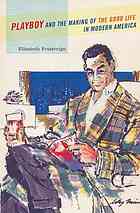
I love the things I can pick up and read in the name of thesis research. Take, for example, Elizabeth Fraterrigo’s Playboy and the Making of the Good Life in Modern America (New York: Oxford U.P., 2009). I saw the book by chance on the shelf at Borders a few weeks ago and while I would have read it eventually anyway (what’s not to like? sex! gender! money! drama!), I realized after pondering for a day or two that I could consider it background research on American postwar culture. So off to the library I trundled. (Or rather, off to the online catalog I clicked, forthwith to inter-library loan a copy through the Brookline Public Library).

And Ms. Fraterrigo did not disappoint. This dissertation-turned-book is a richly researched yet highly readable account of Hugh Hefner’s self-re-invention as the playboy of his dreams, a life he carved out for himself with relentless hard work and not a little luck after the dissolution of his youthful marriage and a series of unsatisfying desk jobs. Hefner, Fraterrigo convincingly argues, took various cultural elements in already in play (dissatisfaction with suburbia, anxiety about masculinity and women’s increased visibility in previously male spaces, a rise in consumer spending, postwar debates about what constituted the “good life,” and the scientific examination of human sexuality) and packaged them in a highly-successful formula that catapulted him to the top of a cultural and financial empire.

She draws two fascinating (if superficially unlikely) comparisons between Hefner and women writers of his day. First, she suggests a commonality in thought between Hefner and early feminist rhetorician Betty Friedan (author of The Feminine Mystique). Both Friedan and Hefner drew on their own personal experience to build a critique of the hegemonic postwar culture and its emphasis on the middle class, suburban nuclear family. In response to an unsatisfying homelife, both championed participation in the capitalist economy (as both worker and consumer) as a potential route to self-realization (see pp. 26-36).

Second, Fraterrigo points out the striking parallels between the ideal woman as articulated by Hefner in the page of Playboy (and in real life by the women who worked as Bunnies in the Playboy clubs) and Helen Gurley Brown’s “Single Girl,” found in the pages of Sex and the Single Girl first published in 1962. Both Hefner and Brown managed to carve out a place for singledom and pre-marital sex in culture dominated by the value of marriage and family. Yet they did so in ways that in no way challenged the status quo of inequitable gender relations or the notion of gender complimentarity (the idea that men and women “naturally” perform different, though complimentary, roles in society).

Brown’s Single Girl fit easily into the harmonious system of gender roles supported by Hefner. She made few demands on the male pocketbook [unlike a wife], aside from accepting the occasional gift or evening on the town, and instead made her own way as a working girl. Like the playboy, she strove to work hard and play hard too; yet she had no pretensions about achieving much power or earning vast sums of money through her role in the workplace. Instead, she accepted her marginal economic position and limited job prospects with a smile on her well-made-up face. Though she may not have enjoyed the same degree of autonomy and plentitude as the playboy, the Single Girl shared his sensibilities . . . [she] was both a handmaiden in the liberalization of sexual attitudes in the 1960s and the ascent of a consumer-oriented singles culture (132-33).

As the Swinging Sixties gave way to the cultural and counter-cultural revolutions of the early 1970s, Hefner found his idealized Playboy — once a symbol of avant garde youthful revolt against the status quo — derided by both men and women of the Movement cultures who critiqued his unabashed materialism and stubborn support of strictly segregated gender roles. He was taken aback by the “aggressive chicks” of the women’s liberation movement who pointed out that structural inequalities and oppositional gender typing (the strict separation of “masculine” and “feminine”) left women in a systematic disadvantage. Despite Hefner’s (and Playboy‘s) support of such feminist causes as women’s right to sexual expression, sex outside of marriage, access to abortion, and women’s participation in the workforce, he seems — according to Fraterrigo at least — to have balked at re-imagining a world in which the division of gender roles was less strictly dictated than it had been in the decades of his youth.

In this, Hefner is far from alone to judge by the continued popularity of “complementarian” arguments for “traditional” feminine and masculine roles among various conservative groups and even in some feminist circles — yet I am perennially puzzled by the amount of fear and resistance appeals to loosen gender-based expectations routinely encounter. While beyond the scope of Fraterrigo’s deftly-woven narrative about Playboy and the postwar culture of freewheeling consumerism it helped to legitimate, it is certainly a question which Playboy encourages us to ask: What, exactly, is at stake for individuals who defend complementary gender roles? The women’s liberationists of the 1970s thought they had the answer: unfettered male access to women’s bodies and the uncomplaining domestic support of housewives and secretaries. Fraterrigo’s tale, however, suggests that the answer is — while still containing those elements — far more complex (and more interesting!) than it appears at first glance.

language and authority: take two

11 Thursday Feb 2010

Posted by Anna Clutterbuck-Cook in think pieces

≈ Leave a comment

Tags

feminism, gender and sexuality, politics, web video

First, because Hanna (rightly) chided me for not including it the first time around, I bring you a clip from Doctor Who in which the Doctor (Christopher Eccleston) staunchly defends his non-BBC accent in the face of companion Rose’s skepticism. You can carry Leeds on your lips and still save the universe: take that language snobs! (Apologies: neither Hanna nor I could find an embeddable clip of the exact bit we wanted — maybe someday we’ll learn how to rip this stuff properly!)

And on a more serious note, the passionate and articulate Sady @ Tiger Beatdown writes at length on the power of words and the importance of context in “Inappropriate Language: Some Notes on Words and Context.” I cannot quote the whole piece here, but strongly urge you to click over to her blog and read the whole thing, since I admire the way she argues for a more complex understanding of how context shapes the meaning of certain terms, while not dismissing the idea that words have the power to harm — and that some epithets simply should not be used at all. While being funny to boot! I offer the following illustrative passage:

But language is also complicated. The reason a lot of people (thoughtful people, anyway) object to language debates is that they seem to oversimplify or misunderstand how language works. I’m sympathetic to that argument, to some degree. It’s undeniably true that words get re-purposed all the time – “gay” itself being a really prime example. But it takes a long time, or a major paradigm shift, or both, for semantic shifts on that level to occur. You need what would appear to be centuries of “gay” picking up steam as a euphemism for “slutty,” you need people slyly re-purposing the word for their own particular variety of socially-unapproved sexiness so that they can hint at their sexuality without getting in trouble, you need that usage in turn to pick up steam, and you need Stonewall, and you need the decision to go with “gay,” this by now much-evolved bit of sound and code, as an alternative to other labels that are openly pejorative, either because they used to be clinical diagnoses of mental illness or because they are just plain slurs. And then – and then! – this word “gay” becomes a pejorative itself, based on the new meaning.

It takes a while, is my point, for the phrase “my, don’t you look gay in your new ensemble” to go from “you look like you are ready for a party” to “you seriously look like you are ready to put out at that party” to “we are surrounded by a room full of people at this party, and thus cannot acknowledge the way you like to put out, but I happen to be down with putting out that way my very own self” to “I hate your t-shirt, but am for some reason talking fancy.” The meanings overlap in a lot of different ways throughout the history, and it gets tricky, but the overall shift in meaning is clear – we can’t get back to the first stop from the current one. There’s no return, “gay” as “totally and asexually ready for a festive occasion” is just done.

So go forth, read, talk (in whatever accent and using whatever words you feel are appropriate to your own context) and think.

*image credit: Xeyra @ Livejournal.

multimedia monday: "i can download protection for up to a thousand periods!"

08 Monday Feb 2010

Posted by Anna Clutterbuck-Cook in media

≈ 2 Comments

Tags

feminism, humor, multimedia monday, web video

TECH UPDATE: Reader Saskia Tielens alerted me to the fact that this video is marked “private” and will not play as an embed. I will try to locate a usable video! ~A.

Further tech update: Finally had a chance to find a YouTube version that wasn’t private. The embed should work now ~A.

After Apple announced that it’s latest gadget was going to be named the iPad, a number of my feminist blogs pointed out that “tablet computer” was not the first thing that came to mind when they heard the word. Turns out (hat tip to my friend Rachel for the video link) that MadTV was ahead of them.

I’ve seen critiques of the iPad/period jokes based on the fact that they’re predicated on the idea that periods (and by implication the working of women’s bodies) are gross and icky . . . and Hanna contends the joke is just a “groaner.” Personally, while I recognize the validity of both of these criticisms, I also think the MadTV video is making fun of the cheeriness of menstruation product and Apple product marketing than passing judgment on the inherent value of either.

Quick Hit: The Date that Never Was?

28 Thursday Jan 2010

Posted by Anna Clutterbuck-Cook in linkspam

≈ Leave a comment

Tags

feminism, gender and sexuality

I was catching up on my RhRealityCheck podcasts while doing data entry at work yesterday, and heard Amanda Marcotte do a great analysis of author Laura Sessions Stepp’s vision of ideal hetero romance, which basically imagines all people (and specifically adolescents and college-age young adults) to have the income levels of established, upper-middle-class adults:

Hey, I’ve seen movies about young adults in the 50s and 60s. It was mostly necking in the car, going to dances and bars, and getting cheap food. What Sessions Stepp is doing here is incredibly sleazy. She’s feeding young women an image of dating that’s borrowed from what people do now in their mid 20s and beyond, when they have jobs and feel less awkward wearing grown-up clothes. But she’s pretending that those kinds of dates are something very young women did in the past. In reality, dinner dates and high heels are part of the future, their futures. Everyone I know who was drinking beer and watching videos in their college years on dates, and most of us became the sort of people who go to concerts, drink liquor, and eat expensive food on dates when we had, you know, jobs.

I’d actually take the critique further and point out that even in one’s mid-twenties and beyond, the high-heels “dinner date” ideal Sessions-Stepp puts forward as the only legitimate scenario for courtship is hardly everyone’s ideal way to spend quality time with their significant other. Setting aside the question of disposable income (lots of adults don’t have that kind of money — whether because they’ve lost their job, are still in school, or are stretching their salaries to pay for necessary expenses) I’d like to ask Sessions-Stepp why I should want to grow out of an evening at home with my girlfriend cuddling in comfy clothes and watching the latest episode of Sarah Jane Adventures over an open bottle of Charles Shaw merlot?

booknotes: "virginity is not the opposite of sex"

27 Wednesday Jan 2010

Posted by Anna Clutterbuck-Cook in book reviews

≈ 1 Comment

Tags

feminism, gender and sexuality, history

On the last weekend before the official start of the semester (when one is “thesising” there really is not any official start . . . it just keeps on going ’til you turn in that final draft) I picked up what often consistutes my “non-required” leisure reading: nonfiction works on sex and gender. Not that it’s the only thing that catches my fancy; in the past couple of weeks, I’ve also dipped into Hanna’s manga collection (Fushigi Yugi and Revolutionary Girl Utena which I’d been meaning to read for going on four years) as well as Tom Stoppard and Andrea Barrett. But then I was at the bookstore the other day and Hanne Blank’s Virgin: The Untouched History (2007) caught my eye.

My historian’s heart is always warmed by the promise of de-normalizaton: the ability of an author to take an idea or practice so ubiquitous in our culture that it is considered inevitable, “natural,” and common-sensical and persuade us to ask “why?” Why do we believe there is such a state — physical and metaphysical — as virginity? What, exactly, do we believe constitutes virginity or proof of virginity? And what if it became clear that virginity, in fact, does not materially exist . . . but is, in fact, a conceptual way of organizing human sexuality that has varied in detail enormously across time and place? This is the story Hanne Blank sets out to tell (however briefly) in her three-hundred page book: the story of how the non-existent thing called “virginity” has nonetheless come to exert enormous power over human thought and practice concerning sexuality — and specifically female sexuality.

I can’t say this book offered any huge revelations to the reader (me); though I’ve not read any other book-length treatments of this specific subject, I’ve certainly read enough histories of human sexuality and women’s sexuality specifically to understand that much of what we consider to be immutable fact about sex actually resides, under closer examination, in the slippery realm of ideological work: the various systems of thought human beings construct to make sense of the world and their experience within it. As Blank notes in her opening sentence, “by any material reckoning, virginity does not exist.” Yet humans have, across the centuries and around the globe, devised elaborate methods for determining virgin status that made sense to them in the context of their own belief systems. Why they have felt compelled to do this is the recurring (possibly unanswerable) question at the heart of Blank’s narrative.

I think what I found most thought-provoking about Virgin was Blank’s suggestion that “virgin” is actually a sexual identity that is taken up and performed quasi-separately from the individual’s actual embodied sexual experience — and that that identity contains within it multiple and often contradictory meanings. Blank suggests that there is something of a “virginity void” that exists in the world, allowing the concept of virginity to flourish through lack of examination: it is presumed to exist and we all assume we understand how it works, so our beliefs about it remain unchallenged — yet if we start to ask “why” we realize how disparate and often contradictory our understandings of virginity really are. For example, what do we make of the story Blank tells of a young English woman, Rosie Reid, who — despite being open about her identity as a lesbian in a long-term relationship with another woman — auctioned her “virginity” off on eBay to the highest bidder, making $14,500 in exchange for sex with a man who, presumably, believed that despite a sexually-active relationship Reid was still a virgin because she had not experienced penetrative heterosexual intercourse (pp. 9-12).

Most interesting to me, as a feminist scholar, is Blank’s suggestion that what she terms “parthenophilia” — or the eroticization of sexual innocence — is so normalized in our culture that we fail to study it,

Despite the strength and breadth of the erotic interest taken in virginity in our culture . . . the erotic desire for virginity has been continually avoided as a subject of intellectual and clinical inquiry, as if there were no reason to ask and nothing that could possibly be learned by asking.

The virginity void exists on the other side of the fence as well. As little as we know about the erotic desire for virginity, we know even less about the erotic lives of virgins. Specifically, we know very little about how virgins themselves might understand themselves to exist as erotic objects or how they might themselves be erotically affected by the mythology of the erotic virgin that so permeates the culture. Virgins are not exempt from the mythologies of their own sexual status, after all. A virgin may well be every bit as erotically caught up in the implications of her own sexual status as the man who fantasizes about popping her cherry, but she is even less likely than he to be asked about it . . .

Virginity is not the opposite of sex. Rather, it is its own unique and uniquely troublesome sexual entity.

The idea that abstaining from sex is, in itself, a sexual practice has no doubt been argued before yet possibly it has not yet been examined in tandem with the closed-related (though not identical) concept of virginity.

On a related note: those of you interested in a more contemporary analysis of how virginity works in American culture would do well to check out Jessica Valenti’s The Purity Myth (2009) which focuses specifically on the policing of adolescent female sexuality — largely through narratives of virginity and sexual “purity.”

Call for Participants: Our Bodies, Ourselves revision

26 Tuesday Jan 2010

Posted by Anna Clutterbuck-Cook in linkspam

≈ Leave a comment

Tags

feminism, gender and sexuality

From Our Bodies, Ourselves:

Our Bodies Ourselves is seeking up to two dozen women to participate in an online discussion on sexual relationships.

Stories and comments may be used anonymously in the next edition of “Our Bodies, Ourselves,” which will be published in 2011 by Simon & Schuster.

We are seeking the experience and wisdom of heterosexual, lesbian, bisexual, queer and trans women. Perspectives from single women are encouraged, and you may define relationship as it applies to you, from monogamy to multiple partners. We are committed to including women of color, women with disabilities, and women of many ages and backgrounds.

In the words of the brilliant anthology “Yes Means Yes,” how can we consistently engage in more positive experiences? What issues deserve more attention? And how do we address social inequities and violence against women? These are some of the guiding questions that will help us to update the relationships section in “Our Bodies, Ourselves.”

The conversation will start Sunday, Feb. 14 (yes, Valentine’s Day) and stay open through Friday, March 12.

Please click through to the OBOS website for more details and contact information, and pass this call along to anyone you think would be interested.

Quick Hit: America’s Mary Wollstonecraft?

26 Tuesday Jan 2010

Posted by Anna Clutterbuck-Cook in Uncategorized

≈ Leave a comment

Tags

blogging, feminism, history, MHS

I have a new “lunch talk recap” up at the Historical Society’s blog that summarizes Eileen Hunt Botting’s recent talk about nineteenth-century author Hannah Mather Crocker and her Reminiscences and Traditions of Boston. Crocker was the granddaughter of Cotton Mather, a proud daughter of the Revolution, mother of ten children, poet, and author of an 1818 tract, “Observations of the real rights of women, with their appropriate duties, agreeable to Scripture, reason and common sense,” that holds the distinction of being the first book-length work on the subject of women’s rights to be published in America. You can read more over at The Beehive.

Blog for Choice: The Radical Act of Trusting Others

22 Friday Jan 2010

Posted by Anna Clutterbuck-Cook in think pieces

≈ 4 Comments

Tags

blog for choice, feminism, gender and sexuality, politics

Today is Blog for Choice Day 2010, coordinated by NARAL Pro-Choice America. I somehow missed the 2009 action day, but you can read my 2008 Blog for Choice post, The Radical Idea that I am a Person, in the blog archive.


So when I told Hanna that this year’s theme for Blog for Choice Day was “trust women,” her first response was “Are you fucking kidding me?! What a ridiculous statement! Jeeze — ask anyone who’s gone through a dyke break-up. Never trust women! Especially when they have the ability to make vital documents, irreplaceable vhs tapes, and cookbooks disappear!”

Which made me stop and think about what the theme implies. Because, to be honest, my own first response to the exhortation to “trust women” was not unlike Hanna’s: what do you mean “trust women”? Just . . . because? Because they’re women? Why should I? ‘Cause women are only human after all: some trustworthy, some profoundly not. Which, to me, is both [the most obvious and the most radical claim of feminism]: that women are only human. And human beings run the gamut from completely trustworthy to completely untrustworthy and every point between. Ergo women, as individuals, are only as worthy of trust as our individual past and present actions warrant.

So why, then, is it important for pro-choice activists to make the case for trusting women? And what, exactly, does it mean to “trust women” in the specific context of reproductive rights?

I would argue that it is precisely because women — particularly pregnant women — as a class are not really seen as fully human that the idea of trusting them with moral and medical decision-making continues to be such a radical notion. Setting aside for a minute the question of abortion per se, within the past week I have seen multiple stories about pregnant women’s right to bodily integrity and ability to consent to medical procedures challenged or violated with the support of the state. There was the story of Samantha Burton whose doctor got a court order to confine her in a hospital bed against her will when she disagreed with him about how best to proceed with her pregnancy care. A woman in Australia was visited by police when she resisted having her labor induced with the controversial drug pitocin. There have been a number of stories concerning the physical restraint of birthing women in prisons, who are often not able to labor in optimal positions because they’re shackled to their beds. As I’ve written previously, women shouldn’t have to give up their basic rights to bodily integrity and medical decision-making when they become pregnant, but the legal and cultural climate in the United States is such these days that many of us fear that’s precisely what will happen.

So when we chellenge folks to “trust women,” in part we’re demanding to merely be treated with the amount of trust that adult citizens in America have a right to expect: a legal and social framework that “trusts” individuals with decisions regarding their own personal physical well-being and medical decision-making. That trusts us to make informed decisions. Yet over and over again, anti-choice activists have made it clear that they don’t trust women. They fight to pass legislation that mandates physicians lie to us about our bodies, they harass us at clinics that provide health services and attempt to mislead us by dressing as clinic workers. If we trust women with the power to make decisions about their own well-being, these anti-choice activists seem to imply, the world will disintegrate before our very eyes.

Which brings me to the other implication of choosing to “trust women” with their reproductive agency. And I use the phrase “choosing to trust women” deliberately. Trusting other people with the agency to live their own lives is not necessarily something that comes easily to us: as human beings we often thrive on feeling in control of our environment (and by extension the people around us). Control can make us feel safe. But life simply doesn’t work like that: we could drive ourselves mad attempting to control the lives and decisions of others — and in the end, it would not make our lives richer or safer.

Choosing to “trust women,” then, is choosing to “trust others”: letting go of the burden of decisions that are not ours to make, and allowing those whose lives they directly affect (and who are best positioned to understand the ramifications of a given choice) to bear that responsibility. Because that’s what being human requires: rights and responsibilities.

Last sunday I shared a link to a beautiful essay from The Guardian by a vicar, David Bryant, who had recently counseled a woman trying to decide whether or not to seek an abortion. His essay is worth reading in full, but I would like to quote here the final two paragraphs,

One of the blessings of our humanity is that we have a conscience. To opt out of using such a priceless gift is irresponsible. Of course there are immense dangers here. We may make ill-guided decisions. Our thinking may be warped and skewed. On occasion we will follow a course of action so crass or unsociable that it brings us up before the magistrate. But if we allow the church, the nanny state, the media or popular opinion to become our conscience, we lose our moral integrity.

I had no easy answers for the woman. All I could offer was compassion in her grief and sympathy for the agony of choice that lay ahead. We fixed a meeting for the following day, but I never saw her again. True, I had been non-directive, but I could be none other. “I am responsible for my very desire of fleeing responsibilities,” said Jean-Paul Sartre. I believe he was right. That is why I could not decide the fate of the foetus for her.

What I appreciate so much about Bryant’s argument is that he refuses to retreat to the (legitimate, but limited) language of legal rights, instead challenging us to see that trusting women with the responsibility of making deeply challenging moral decisions is not only a legal imperative but a moral (dare I say “religious”?) one.

So when a pro-choice activist says to you “trust women,” pause for a moment and hear it for the truly radical challenge it is: a call to let go of the all-too-human impulse to control, and to allow some of the burden of responsibility to be lifted from your shoulders and taken on by someone else — someone whom you might not know enough to personally trust, but whom you must share this earth with, and who may well surprise you with her ability to make the decision that is, in the end, the most life-giving for us all.

After all: in the end, what other choice do we have?

*image credit: amor! by slickerdrip @ flickr.com.

Quick Hit: Blog for Choice 2010 (Jan 22nd)

15 Friday Jan 2010

Posted by Anna Clutterbuck-Cook in linkspam

≈ Leave a comment

Tags

blog for choice, blogging, feminism, gender and sexuality

I just signed up for NARAL Pro-Choice America’s Blog for Choice Day 2010. The theme for this year is “Trust Women” and bloggers are asked to write a post about what the statement means to them. Now I just have to think what I’m going to say! Check out NARAL’s information about the action day for guidelines and to register your blog.

mary daly: a shortish post and links

09 Saturday Jan 2010

Posted by Anna Clutterbuck-Cook in think pieces

≈ Leave a comment

Tags

feminism, gender and sexuality

You’ve probably heard or read by now that radical feminist theologian Mary Daly died this past week at the age of eighty-one.

Reflections on her life and work abound on my RSS feeds. See Feministe, Feministing, Feminist Law Professors, figleaf, Hippyish, Questioning Transphobia, Shakesville, and Women’s Space for a sample of the range of responses that are being generated out there on the interwebs.

I first came across Daly in a class on Christian feminism in which we were assigned part of her seminal (pun intended) work, Beyond God the Father, one of the first texts in modern feminist theology to systematically condemn the patriarchal underpinnings of Christian thought and practice. About ten years ago (my how time flies!) I drew on some of her later writing for undergraduate paper on the important work of feminists who assert different starting points, different roots (hence the term “radical”) than those provided by mainstream culture. Whether we agree or disagree with Daly’s conclusions, I believe her impulse to jettison that which she found harmful to women’s health and well-being is a useful example. Particularly for feminists who come from a religious background (which I sort of did and didn’t — my family wasn’t religious, but the community and college I lived and learned in was, so my experience of anti-feminism often came through the lens of religious belief), Daly’s early work can really resonate. Sady @ Tiger Beatdown (via Questioning Transphobia) has written a beautiful and astute analysis of Daly’s effect in her life from this perspective — one that also wrestles with the perennial issue of how to come to terms with the unsavory opinions of a person who, at one time, inspired you to positive, transformative action.

Unless a published retraction of her transphobia and other acts of privilege manages to surface, absolution will not come to the legacy of Mary Daly. None of this means that she was not important, or that she didn’t have anything to say: she was, she did, and it is a damn shame that her work is currently so obscure. She was important to me: I probably wouldn’t be a feminist without her influence. But I probably wouldn’t have been such a bad feminist without her influence, either. Like many people before her, she’s left the world as a human being, and remains with us now only as a legacy. It’s an important legacy – because of its accomplishment, because of its uniqueness, because of its tremendous potential to harm – that we cannot, and should not, ignore.

I never read — let alone made sense of — enough of Daly’s later work to reflect meaningfully here on the racism and transphobia expressed in her writing that justifiably angers so many folks. What is will say is that Daly’s writing (even I remember this) was incredibly solipsistic: she seems to have become increasingly enamored with the world of her own imagination, in which she alone battled the powers of patriarchal darkness beset on all sides by enemies. For people who struggle all their life as outsiders of one sort of another, injured deeply by their fellow human-beings, I feel that this is an all-too-common human failing, however inexcusable it may be in the final analysis. While Daly herself bore responsibility in the end for her own actions, we also, collectively, bear some measure responsibility for sustaining a world in which a tenured professor felt so threatened that she stopped listening to her critics — even when they had important perspectives to offer.

I thus have fond memories of her work and what it meant to me, even as I stand critically wary of her later myopia, self-aggrandizement and posturing. Jill @ Feministe comes closest to giving voice to my own response to Daly’s life and work when she writes “She was a foremother, but one who eventually revealed herself unprepared to embrace all of her children (especially the ones who failed to look or think like her). . . May she rest easy, and may the rest of us learn from her good works and leave her bad ones to dust.”

← Older posts
Newer posts →
"the past is a wild party; check your preconceptions at the door." ~ Emma Donoghue

Recent Posts

  • medical update 11.11.22
  • medical update 6.4.22
  • medical update 1.16.2022
  • medical update 10.13.2021
  • medical update 8.17.2021

Archives

Categories

Creative Commons License

This work by Anna J. Clutterbuck-Cook is licensed under a Creative Commons Attribution 3.0 Unported License

Meta

  • Create account
  • Log in
  • Entries feed
  • Comments feed
  • WordPress.com

Blog at WordPress.com.

  • Subscribe Subscribed
    • the feminist librarian
    • Join 37 other subscribers
    • Already have a WordPress.com account? Log in now.
    • the feminist librarian
    • Subscribe Subscribed
    • Sign up
    • Log in
    • Report this content
    • View site in Reader
    • Manage subscriptions
    • Collapse this bar