• anna j. clutterbuck-cook
  • contact
  • curriculum vitae
  • find me elsewhere
  • marilyn ross memorial book prize

the feminist librarian

the feminist librarian

Tag Archives: gender and sexuality

sunday smut: links on sex and gender (no. 33)

15 Sunday Aug 2010

Posted by Anna Clutterbuck-Cook in linkspam

≈ Leave a comment

Tags

gender and sexuality, sunday smut

Just the links this week, folks!

Also, please note that I’ll be taking a long weekend away from posting next week as my mother is in town … but Sunday Smut will be back the following weekend!

On Prop 8 ruling:

Cristian Asher @ Gay Rights Blog | Round Three in the Marriage Equality Wars.

Adam Serwer @ The American Prospect | Douthat On Prop. 8.

Amanda Marcotte @ Pandagon | Gay marriage and the patriarchy shell game.

Lisala @ That Gay Blog | A Rebuttal to Shulman.

Roxann MtJoy @ Women’s Rights Blog | Op-Ed Claims Marriage Is About Protecting Ladies, Not Love.

Will Neville @ RhRealityCheck | Prop 8 and the Future of Sex Ed.

Dana Rudolph @ Gay Rights Blog | American Bar Association Endorses Marriage Equality.

Ampersand @ Alas, a Blog | The Funniest Bits of Judge Walker’s Refusal To Stay Same-Sex Marriages.

The entire text of the Prop 8 ruling not enough for you? You can access all of the documentary evidence submitted at trial online. Oh god, the geekery overload!

Other news:

Emily Nagoski @ ::sex nerd:: | banging the effeminate drum.

Sadie Stein @ Jezebel | Pretty Women, Manly Jobs: We Do Hate You Because You’re Beautiful [Beauty Myth].

Rose @ Feministing | Why I’m skeptical about “negotiated infidelity” (comments are worth checking out if you’re interested in sexual ethics).

Lisa Wade @ Jezebel | Where Are Fashion’s Gender Neutral Clothes? [Clothes].

Ann Friedman @ The American Prospect | All Politics is Identity Politics.

Tracy Clark-Flory @ Salon | Massachusetts’ strict maternity leave ruling.

C.L. Minou @ Tiger Beatdown | Left Behind: About the Failures of Feminism.

rabbitwhite @ sexgenderbody | What I’ve Learned about Sex from Asexuality.

June Carbone and Naomi Cahn @ Jezebel | Chelsea/Marc vs. Bristol/Levi: Whose Kids Will Fare Better? [Family Values] (on the economics of parenting in the 21st century).

Elizabeth Kissling @ Ms. Magazine | The Leap from Younger Puberty to Fat Shaming.

Amie Newman @ RhRealityCheck | Does Refusing a C-section = Child Abuse?

Sharkfu @ Feministing | Notes from a bitch…a pondering on religious institutions….

Mitch Wagner @ tor.com | Heinlein: Forward-looking diversity advocate or sexist bigot? Yes.

Stacie Ponder @ Final Girl | A Waste of Time (or; why not to bother with the lesbian vampires).

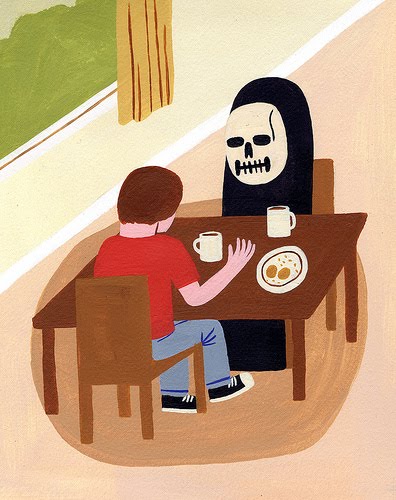
Steerforth @ The Age of Uncertainty | Jolly Queer (from which this week’s illustration is drawn).

wtf; or, anatomy of a blog comment thread

10 Tuesday Aug 2010

Posted by Anna Clutterbuck-Cook in think pieces

≈ 3 Comments

Tags

blogging, gender and sexuality, politics

I’ve been stewing about this comment thread over at emily nagoski :: sex nerd for about a week now, and in an effort to learn something from the process have decided to share my observations with y’all and ask for any tips you might have!

See, I generally enjoy being active in comment threads on topics that excite me. And I also try to cultivate openness to differing viewpoints and a willingness to engage in conversation with people whose beliefs are different (even diametrically opposite from!) my own. To me, conversation with people whose ideas I disagree with (and sometimes even abhor) is a way to cultivate compassion, empathy and lovingkindness. I also find it to be an interesting opportunity to people watch, and gather information on how folks interact, and particularly how they disagree, online. Hanna encourages me to save my energy for more important things than blog thread comment wars, and there are days when I completely agree with her. But I also feel like I do learn from them — even when I’m not sure what, exactly I learn. So I keep coming back to re-engage.

In this particular case, the post in question was on differential desire vis a vis sexual activity in a long-term relationship (an opposite-sex marriage). The husband had written in to a discussion forum asking for advice on how to re-open communication with his wife over relational sex — something they appear to have dramatically different levels of interest in. Emily, the blog author, pitched her response to the question of how the couple could work together to establish better channels of communication and discover where their common ground was in terms of making love. The post is a good one, and I recommend you hop on over if you want the full context of the conversation that followed.

See, the first comment out of the gate was by a man identifying himself as marriagecoach1 / John Wilder (warning: scary man profile!), in which he made the claim that “studies show that 60% of married women with children have their husbands on a starvation diet of sex once a week or less.” Which is, of course, levels of wrong. As Emily pointed out in her response, gently suggesting that “people vary too much to use national statistics to illuminate an individual case.” Girl Detective pointed out that “starvation diet” was a pretty loaded phrase. It implies a power differential in which the wife has power over the husband (the ability to put him on a diet) and also implies that sex “once a week or less” is a negative thing for all men, which — since human beings’ desire for relational sex varies widely by person and context — is a fairly irresponsible assumption to make.

If the desired end result is more pleasurable, relational sex with his wife (what the husband with the original question seemed to desire), then surely the best avenue toward that goal is making the environment as conducive to more sex as possible. Approaching the lower-desire partner with an accusation that they’re controlling their higher-desire partner with a “starvation diet” of sex: maybe not the best opening salvo. Just sayin’.

So, okay: combative commenter, a handful of measured responses. So far so good. Then Mr. Wilder returns further downthread to re-assert his position that “withholding” sex is a power grab.

You are violating marriage vows (well not if you are not married) but for marrieds, you vowed to satisfy the needs of your partner and it is considered unfaithful to those vows when you refuse.

Men get the bulk of their affectional needs met through sex with his wife. If she decides that she does not want to do that then she ought to file for divorce.

The old cliche about: “Behind every great man is a woman” implies that she keeps him centered and content by taking care of his sexual needs.

Ooooh boy. Issues just multiplied. So not only is this man approaching the question of differential desire by framing it as a question of gender (as becomes clear further downthread, he sees this as primarily a question of lower-desire women holding out on higher-desire men), he’s also framing the question as an issue of violating a clause (the “sex clause” if you will) of the heterosexual marriage contract.

This is the point at which I jumped into the frey and posed the question I saw as central to the problem with this kind of advice-giving comment. “How exactly is characterizing the wife as a manipulative bitch who’s using sex as a weapon going to help this couple?” To which he responded

Women bash men because they are not forthcoming with their feelings and yet you acknowledge that this man is really trying for which he should be commended. The wife is refusing to talk to him about it … It is frustrating to hear you women backing up the woman’s right to refuse the man like his wants and needs and desires have no concern. It is emotionally debilitating.

Since communication was Emily’s key theme in the original post … and all of the other commenters were backing her up on this point … we’re clearly having a reading comprehension issue. I also detect strong, strong whiffs of frustrated male privilege here: Mr. Wilder is pissed because he thinks he’s giving in to the “women [who] bash men” (code for “feminist”) by “really trying” to communicate, and instead of getting bountiful sex in return he’s still being told that no person is obligated to meet another person’s sexual needs.

He says “the woman’s right” but all of us were clear on this being a gender-neutral proposition. I pointed this out (“I don’t think partners of any sexual orientation, sex or gender are well served when the conversation about relational sexuality revolves around what is owed/deserved and how withholding the expected amount/type of sex is a ‘violation of marriage vows.'”) which is when the shit really hit the fan

I agree that is not necessarily men against women or women against men but a violation of the covenant of marriage. Sex is an integral part of marriage and yes it is an obligation that you incur when you take marriage vows, I don’t apoogize for that. It might not be politically correct, but I don’t hold with very many politically correct notions. To me, it is a pass on someone’s disloyal behavior.

. . . For the record, I have never had a man demand his right to refuse sex to their women, that is singularly a woman’s notion.

So in a way, it is women against men. I am not dealing with homosexual sex as that is not my area and what they do is up to them.

Religiously-grounded sexism and homophobia for the win!

*headdesk*

How to respond to this sort of comment, gentle readers? Of course (as Hanna so often reminds me!) option one is always simply not to engage. This guy has clearly made the decision to show up on a feminist-friendly, queer-friendly, sex-positive blog and promote ideas about heterosexual marriage with an authoritative air of moral righteousness. He persists on seeing the issue as a power struggle between women and men in which men (as supposedly higher-libido beings) are at the mercy of women. The posturing over not being “politically correct” signals to me that he realizes the other commenters on this blog won’t agree with him, and rather than simply persuasively advocating for his position he hides behind the pre-emptive accusation that anyone who dislikes what he has to say is being “politically correct” (a phrase that invokes, in the popular consciousness, all manner of negative imagery concerning the “thought police” and liberals elites who have the power to force people to self-censor their ideas and expressions for fear of social opprobrium).

He goes on to write

The only ones I hear demanding the right to deny their partners are feminists and so yes, I have a real problem with feminists. I believe in equality but by demanding your right to say no, you are not advocating equality but absolute dominance which makes feminists who espouse such notions rank hyypocrites.

Again: the basic argument this guy has is what I’ll call the Lysistrata gambit, the theory that differential desire in long-term sexual relationships is not a gender-neutral phenomenon with myriad causes and possible solutions, but rather that it is a systematic plot by women to gain power over men by withholding sex. Yeah, sure, once I bring it up he tosses a few sops to the queer community and admits that women may be the hornier member of a hetero couple occasionally (who still couldn’t win Mr. Wilder’s respect since they “complained louder and longer than most men”). But the through-line is clear: women have all the power and men are at their mercy — especially married men whose wives are using a bait-and-switch tactic of luring them into marriage and then changing the rules by deciding they’re no longer interested in relational sex.

In Mr. Wilder’s universe, there is no room for human beings to change, grow, or experience ups and downs in their sexual desires as in all other aspects of their lives. “Many people start out equally with sex but often the woman changes the deal after the fact. That is disnegnious.” To Mr. Wilder, this is sort of like reverse-rape.

For feminists to demand their right to deny it is as offensive to me as me suggesting that a man force a woman to have sex against her will. After all are you not forcing a man not to have sex against his will?

Because “forcing” someone not to touch you or not experience your touch is just the same as violating someone else’s bodily integrity by sexually assaulting them.

Yeah.

*headdesk*

What I finally wrote in response was this

Look, John. Here’s the thing.

You keep writing things like “you still have the obligation” like it’s a universal truth but you’re grounding it in Biblical scripture which is something not everyone in the world chooses as an authoritative text (and which not everyone interprets as you do).

If you don’t want to be in a partnership with someone who believes that partners retain the right, even within marriage, to negotiate sexual intimacy — how, when, with whom, how often, etc. — then awesome! Make that clear to your prospective partners and have that be a deal-breaker. And if your partner decides that’s not the kind of relationship they want, then you have the option of either rethinking your own position (perhaps reaching a compromise between the two of you) or walking away.

NO ONE IS FORCING YOU to be in relationship with people who don’t share your views on human sexuality, marriage, etc. What I object to is your instructional, combative tone and the way in which you are clearly laying out one set of (Biblically-based) rules for everyone.

You can read the full exchange over at ::sex nerd::.

Here’s the thing, o readers … I feel obscurely as if I’ve failed. And I know it’s not my responsibility (nor is it possible) to get this one, clearly rigidly-opinionated person in the blogosphere to suddenly go “aha! I get it! sexual relationships are complicated and there is no one-size-fits-all solution!” just because of some comment I’ve thrown into the mix.

But I find this sort of exchange extremely frustrating because I feel like I offer up these big fluffy eiderdown pillows of inclusion — no one’s saying you can’t live your life your own way! just acknowledge the glorious diversity in the world! — and this other person (Mr. Wilder is but one example of so many!) keeps coming back with what is essentially the same argument: “I will only feel good about life and safe in the world if everyone else conforms to my expectations for correct human behavior!”

Sometimes I just want to be like “grow up already!!”

Not to mention how sad it makes me that people who think this way must not find pleasure in discovering new ways of seeing the world like I do. So much of what I love about my research and about my blogging is the chance I have to experience what the world looks like from new perspectives. To greet those new perspectives not with a feeling of joy at the boundless possibilities of human existence but rather with the intense desire to change all people into replica-yous must be so limiting a life!

Anyway, this is all a very long-winded request for your own stories and tips for engaging in online conversation with people who hold rigid, conservative views. Is it even worth it? If it is, what strategies do you recommend? How do you pick your battles? When do you bow out? What mistakes have you learned from? I’d love to hear from you in comments!

quotes of the day: "the witness stand is a lonely place to lie"

09 Monday Aug 2010

Posted by Anna Clutterbuck-Cook in think pieces

≈ 2 Comments

Tags

gender and sexuality, human rights, politics

via Pam’s House Blend.

Chris Wallace [Fox News]: Where is the right to, you talk about the right to marriage, where is the right to same-sex marriage in the Constitution?

Ted Olsen: Where is the right to interracial marriage in the Constitution, Chris? The Supreme Court has said that marriage, the right to marry a person of your choice is a part of liberty, privacy, association, and spirituality guaranteed to each individual under the Constitution. When you say same-sex marriage, you’re saying a particular type of marriage, which the Supreme Court has looked at marriage and has said that the right to marriage is a fundamental right for all citizens, so you call it interracial marriage and then you can prohibit it? No, the Supreme Court said no. The same thing here. The judge, after hearing three weeks of testimony and a full day of closing arguments and listening to experts from all over the world, concluded that the denial of the right to marry to these individuals in California hurt them and did not advance the cause of opposite-sex marriage. This is what judges are expected to do. It is not judicial activism, it is judicial responsibility in its classic sense.

And

David Boies: Right. Well, it’s easy to sit around and debate and throw around opinions appear– appeal to people’s fear and prejudice, cite studies that either don’t exist or don’t say what you say they do. In a court of law you’ve got to come in and you’ve got to support those opinions. You’ve got to stand up under oath and cross-examination. And what we saw at trial is that it’s very easy for the people who want to deprive gay and lesbian citizens the right to vote, to make all sorts of statements and campaign literature or in debates where they can’t be crossexamined. But when they come into court and they have to support those opinions and they have to defend those opinions under oath and cross-examination, those opinions just melt away. And that’s what happened here. There simply wasn’t any evidence. There weren’t any of those studies. There weren’t any empirical studies. That’s just made up. That’s junk science. And it’s easy to say that on television. But the witness stand is a lonely place to lie. And when you come into court, you can’t do that. And that’s what we proved. We put fear and prejudice on trial, and fear and prejudice lost.

Happy Monday!

sunday smut: links on sex and gender (no. 32)

08 Sunday Aug 2010

Posted by Anna Clutterbuck-Cook in linkspam

≈ Leave a comment

Tags

gender and sexuality, sunday smut

Lesbian Zombie Wedding by flybaby
at Flickr.com

As y’all are no doubt already aware, United States District Chief Judge Vaughn Walker issued a kick-ass opinion this passed Wednesday that found Proposition 8 unconstitutional and that anti-gay marriage arguments were religiously, irrationally motivated and therefore held “essentialyl no weight” when it came to civil law. (If I didn’t have a girlfriend of whom I am so fond, I would kiss the man).

Spiffy @ Hippyish brought us my favorite “waiting for the ruling” post.

I read the opinion with great glee and will be offering some tasty highlights throughout next week. But in the meantime, you can find a 138-page PDF of the full decision available online for your own reading pleasure (and a pleasure it is!) or enjoy Dahlia Lithwick‘s observations over at Slate.com.

The supports of Prop. 8 have already filed an appeal of the ruling, but this particular decision is far from meaningless just because the case will continue to move through the court system. Thomas @ Yes Means Yes offers us a summary of the 80 “findings of fact” that make up a substantial portion of the ruling and explains why they matter into the future. Mac McClelland @ Mother Jones asks what’s next for the Prop 8 case?

A few more notable posts on the ruling:

Marty Klein @ Sexual Intelligence | Prop 8, Minority Rights, & American Democracy.

Andrew Belonsky @ Gay Rights Blog | Judge Vaughn Walker’s Prop 8 Decision Heralds New Age of Rationality.

Dana Rudolph @ Women’s Rights Blog | Prop 8 Ruling Highlights Crumbling of Gender Roles.

Jessica Arons @ RhRealityCheck | Prop 8 Court Victory: A Reproductive Justice Win Too.

Aaron Belkin @ Huffington Post | Prop 8 and the Politics of Paranoia.

In other news.

On Thursday, Elena Kagan became the fourth women ever to be confirmed as a Justice on the United States Supreme Court. Alex DiBranco @ Women’s Right Blog observes that now the Supreme Court is one-third female for the first time in history. Dahlia Lithwick @ Slate suggests we may be in for something of a ride.

A group of Republicans is apparently attempting to repeal the 14th Amendment. That’s right, the one that guarantees us all equal protection under the law. Amanda Marcotte @ Pandagon explains how this topsy-turvy (and not unfrightening) situation is tied to hysteria over non-white, foreign-born people. Xenophobia and bigotry = NOT COOL PEOPLE.

Another story in the annals of hate, Monica @ Transgriot points out that hypermasculinity is killing our kids. A 17-month-old toddler was killed by his father for not being manly enough.

Jessica Yee @ Ms. Blog writes about how native women were the movers and shakers behind the 2010 Tribal Law and Order Act (passed this week) which will help protect indigenous women from violence.

Ann Friedman @ The American Prospect consider the new workplace sexism and how, even though the more blatant paternalism of the 50s and 60s is a thing of the past, misogyny can still have a negative affect on women’s careers. “Often these are men who would never dream of groping, making unwanted advances, or bestowing inappropriate nicknames on their female co-workers, but behind-their-back comments are also intimidation and bullying of a sexual nature.”

The American Journal of Obstetrics and Gynecology published a “meta-analysis” of studies related to home birth recently, in which researchers concluded that while outcomes for mothers were good home birth (or rather, lack of intervention at home births) were supposedly related to significant increases in infant mortality. Amie Newman @ RhRealityCheck reports on how (much like with Prop 8!) bias, politics and sloppy research make this latest condemnation of home birthing unworthy of note, and also calls for an end to the “home birth vs. hospital birth” debate.

Where to give birth is hardly the only aspect of parenting that has political ramifications. Rachel White @ AlterNet provides a personal perspective on the kyriarchical elitism of the world of human egg donation.

And Belinda Baldwin @ Gay Right’s Blog suggests that the frustration among some queer folks over the portrayal of a lesbian couples’ infidelity in The Kids Are All Right might be misplaced. “What if,” she asks, “the price of fitting in is the loss of a cohesive group identity?”

The kids might be alright, but sluts, apparently, still don’t have a right to be happy. At least if one is to judge from the blowback from Jaclyn Friedman’s recent piece on discovering her inner slut — and enjoying it. Megan Carpentier @ Bitch Blogs muses about how it’s still culturally unacceptable for women who enjoy casual sex to, well, enjoy it. Heather Corinna @ Feministe riffs on a similar theme in the post about a one-line email she received which read: “her advice comes from fact that Heather Corinna is a SLUT.”

Consistently, it seems to me that one of the characteristics that divides the left from the right (at least in this historical moment) is that while folks on the left are primarily occupied with trying to protect the freedom of individuals to pursue happiness, as long as they aren’t hurting others, folks on the right expend freakish amounts of energy attempting to mould the world, pygmalian like, in their own image. You’d think the Christian god might have a thing or two to say about “false idols.” But I digress. As an example, Amanda Marcotte @ Pandagon shows how hysterical one conservative blogger got when Jaclyn Friedman wrote a piece about how she’d discovered the pleasures of more casual sex. Somehow, in the conservative mind the words “I enjoy this thing!” turn into “Everyone in the world must enjoy this thing just as I do!” Maybe they insert the chip when you register as a member of the GOP?

And finally: the GOP aren’t the only ones who want to stick their noses into other peoples’ personal choices. Apparently, there is a Queen’s English Society, and apparently they are annoyed by the nomenclature for women’s formal titles. Stupid women, for needing so many when men have just one! Let’s get rid of … the most universal of them? Wait! What? Courtney and Adrienne @ From Austin to A&M have more.

in love with new blogs: Natasha Curson – a trans history

05 Thursday Aug 2010

Posted by Anna Clutterbuck-Cook in linkspam

≈ 1 Comment

Tags

gender and sexuality, in love with new blogs

A while ago, I gave everyone a head’s up on the sunday smut list that my e-friend Tasha had started a new blog, Natasha Curson – a trans history where she is slowly but surely posting snippets of her personal history, one episode at a time. As she wrote in her most recent post, the first telling

I find it hard to recognize the person taking those first faltering (and in the end failing) steps outside of the closet at the age of 21. Or, to put it another way, there’s a lot I recognize about him – his taste in books and music for example – but not a lot I recognize about her, the woman struggling to emerge, the state she was in at the time. Even a few months after transitioning things felt so different to me that it quite quickly became hard to imagine how I had managed to cope with carrying that burden. Now it has started to become difficult to remember – not what happened, but how it felt sometimes.

The stories, for obvious reasons, often revolved around gender identity, but cannot be reduced to a single plotline. Take, for example, these snippets about her schooldays and move to university in Manchester.

From back to schooldays

Summer passes and I am, predictably, rejected by all my chosen universities because I only have two A-levels, one of them a bare pass. This is seen by all and sundry, including myself, as awful news. I have a summer job at the carpet department of Fishpools which, as you all now know, is not Selfridges to tide me over, and then I have to decide what to do next.

As the autumn of 1977 arrives I attempt to study History A-level by correspondence course. This is a dismal failure – sitting in my bedroom with the textbooks and tasks they send I just can’t motivate myself. At least I am sensible enough to figure this out by myself and realize that if I’m going to get to university I need to adopt another approach. I have no real idea why I want to go there. It is just expected, although I will be the first in my family to do so. I am hoping English Literature at university will be as exciting as the A-level was. When I finally get there, this turns out not to be the case …

And from college boy, girl included (apply within)

It’s now September 1978 and I’m not feeling especially cynical but possibly slightly Cynical. I’m looking forward to going to university to study English, my favourite subject. I’m hoping it will be as exciting to study it in Manchester as it was at A-level. I’m also looking forward to being away from home, although I have only the most tenuous understanding of what that may be like. Moving to a safe distance from the deteriorating relationship between my two parents, which also manifests in an increasingly problematic relationship with me, seems like a plan. I pack my trunk full of books and clothes and box up my hi-fi and they get sent slowly to Manchester by rail. I leave after them but arrive before them. Rail freight in those days is pretty slow and clunky.

. . . Teaching…is variable. Tutorials (again Oxbridge style) are often OK, depending on the tutor. Lectures are often dull. I remember one particular lecturer on Shakespeare, although I forget his name. He would read dialogue from the plays with his two index-fingers raised and proceeded as follows.

First speaker (male) – read speech in basso profundo voice, wiggle left finger.
Second speaker (female) – read speech in ridiculous high-pitched squeaky voice, wiggle right finger.
Ignore titters from audience as they will subside in successive weeks from sheer boredom.
Continue.

In tutorials, this same lecturer would sigh about Shakespeare and say “Well, I suppose we must see the plays performed sometimes”, i.e. he’d really rather that didn’t have to happen and we could just sit in our rooms and contemplate the texts. This kind of thing sets the tone for me – some (though not all) of the lecturers would really rather the rest of the world would just stay away. In my second year there is controversy along the departmental corridors when Monty Python‘s Terry Jones has the cheek to write a book on Chaucer. Dilletante. I remember one of my tutors talking angrily (and inaccurately) about that naughty man “Terry Palin.”

Partly, I think, I’m drawn in as something of an Anglophile by the every-day details, place names, and events that flesh out Tasha’s stories. For example, in flirting with the scene

I remember two shopping expeditions in particular – one to a shop on Walthamstow High Street, where the assistant asks whether I am buying these clothes for my girlfriend. Yes, I answer nervously and she replies (somewhat knowingly I think) that she hopes my “girlfriend” likes them. Some more relaxed purchasing takes place in Miss Selfridge on Oxford Street, where I feel more anonymous and less likely to bump into anyone I know. As is often the case with those who crossdress, I have a tendency to buy highly feminine clothes, and mostly evening or partywear. I make some dreadful mistakes but in Miss Selfridge I actually make some tasteful purchases. Wendy helps me buy some shoes by proxy – I am never brave enough to try anything on and draw the line at marching up to the checkout with a pair of high heeled shoes.

I mean, really. “Miss Selfridge on Oxford Street”? “Walthamstow High Street”? Even I might be cajoled into shopping for high heels in a location like that!

booksnotes: straight to jesus

02 Monday Aug 2010

Posted by Anna Clutterbuck-Cook in book reviews

≈ Leave a comment

Tags

gender and sexuality, religion

In which I review another one of what Hanna calls my “scary books.” This time, Tanya Erzen’s Straight to Jesus: Sexual and Christian Conversions in the Ex-Gay Movement. After hearing Tanya Erzen talk about her recent work on the religious experiences of Twilight fans on RhRealityCheck, I tracked down Erzen’s earlier work (originally her dissertation) based on a year-long ethnographic research project on New Hope, the United States’ oldest ex-gay ministry.

Straight to Jesus documents the personal experiences of those within the ex-gay movement and places their ideologies and practices within the context of the context of the religious, political and psychotherapeutic frameworks within which the ex-gay movement has come of age. Erzen argues that while gay rights advocates and the politicized Christian Right have become polarized over the question of whether sexual orientation is fixed or changeable, most ex-gay-identified individuals and their support networks resist the politicization of their sexual lives and instead focus on the spiritual transformation they experience through ex-gay programming. Just as Evangelical Christianity believes in the need for sinner to continually be born again and experience renewal in their relationship with Christ, so to (Erzen argues) ex-gay ministries see the process of becoming ex-gay as an ongoing cycle of confession and rededication which Erzen has termed “queer conversion.” She explains that

Although the political goals of the ex-gay movement and queer activists are radically distinct, by accepting that a person’s behavior and desire will not necessarily correspond with their new ex-gay identity or religious identity, ex-gay men and women enact a queer concept of sexuality (14).

What I found most fascinating in the book was the relationship between performing gender and straight sexuality. The gender and sexuality theorists of the ex-gay movement are, by and large, working with mid-twentieth century concepts of gender and sexual identity which associate homosexuality in men with what they see as effeminacy and homosexuality in women with characteristics they consider to be “butch” (like an interest in car repair). They also read male homosexuality as entirely physical — destined, regardless of the desire of the individuals involved to be a series of anonymous hook-ups — and lesbianism as entirely emotionally-driven — by its very nature “emotionally cannibalistic” because the women, rather than desiring each other sexually (women! wanting sex! don’t be ridiculous!), want to be one another (152).

Following this logic — that homosexuality is caused by a weak identification with one’s assigned gender — the ex-gay movement has incorporated lessons on gender performance into its therapeutic agenda. Women are taught to apply makeup and select clothing, men are taught how to interact with other men in a platonic fashion and play manly sports. In one particularly bizarre (to me, anyway!) exercise, the residents of New Hope’s “steps out” of homosexuality program are brought together with straight men and instructed to interview the straight men about how, essentially, to perform straight masculinity. Questions include “what physical aspect of the opposite sex turns you on?” and “Can a man ever fully understand a woman?” (108).

This approach essentially inverts the basic liberal-progressive concept of sex and gender, in which sex (one’s physical sex characteristics and sexual orientation) are biologically determined and “gender” refers to all of the ways we make meaning of those sexual differences, and the cultural roles we are expected to inhabit. Within the ex-gay movement, gender is the primary marker of identity, and deviating from the assigned gender roles of one’s sex is damaging to the very core of one’s identity — as opposed to one’s sexuality, which is seen as primarily about actions rather than core identity. (Obviously, there are lots of nuances and challenges to the sex/gender division within liberal-progressive circles, but I think the basic distinction here is valid, particularly when characterizing the mainstream liberal position).

I’m not particularly opposed to seeing sexuality as more mutable — indeed, many people within feminist, queer, pro-gay circles have been arguing for years that sexuality is much less set-in-cement than the simplistic biology-based way of understanding sexuality that the gay rights movement has so often chose (for strategic reasons) to emphasize. What seems harmful to me about the ex-gay position concerning sex and gender, however, is that they demand such rigid conformity when it comes to gender performance. This signals to me a fear of human diversity that will, in the end, become self-defeating … since human beings are, and (in my opinion) will continue to be a gloriously heterogeneous, both in sexual orientation and gender expression. To tell people who believe their non-straight sexual orientation and non-conforming gender identity endangers their relationship with God and Jesus is — to me — an act of violence. It is another instance in which the Evangelical God-as-abusive-parent narrative surfaces in a way that offers short-term relief (you can struggle with homosexual desires and not be exiled permanently from God’s love!) but ultimately the anguish of being judged and found wanting at the very core of your being.

sunday smut: links list on sex and gender (no. 31)

01 Sunday Aug 2010

Posted by Anna Clutterbuck-Cook in linkspam

≈ 1 Comment

Tags

gender and sexuality, sunday smut

Sorry for the sporadic posting this week folks; my life was unexpectedly hectic. Hopefully a return to normal (such as it is) next week! In the meantime, here are a few quick links I had a chance to note.

My hometown (Holland, Mich.) once again made the news (or at least one of my favorite blogs, Pam’s House Blend) in an unflattering way when the Family Research Council decided to publish a full-page anti-gay advert in the town newspaper, the Holland Sentinel. Thankfully, the newspaper has also created a dedicated webpage for the letters it got in response. I haven’t had a chance to read more than the headlines, but if they are anything to go by the response has been overwhelmingly negative.

Emily Nagoski @ ::sex nerd:: mused about the intersection of feminism and sexology and the “nerd voice” as identified and described by Sara Vowell in her essay of the same name.

Thomas @ Yes Means Yes talked about the two ways to disrupt the power of shaming labels (in this case “slut”): attacking the existence of the label and embracing it.

lis @ Sociological Images resposted the “findings” of a researcher who analyzed the messaging habits of those seeking women and men on the dating site OKCupid and … regurgitated some pretty simplistic (and damaging) stereotypes about bisexuality in his analysis. Commenters on this thread were pretty universal in decrying the shoddy research for what it was, so the comment thread is well worth reading.

In other flawed-yet-fascinating research results, Lisa Wade @ Jezebel shares the results of a poll conducted through a Christian website asking men what types of clothing and behaviors were considered “immodest” for women. Basically, to be modest apparently requires 24/7 policing of one’s appearance and physical movements. Finally: the answer to why I became a feminist — being a non-feminist was just too much effort!

Adrienne @ From Austin to A&M on the perils of being a feminist romance reader, and suggestions for where to go as a feminist for your romance fix (hint: paranormal romance features heavily).

Greta Christina has a piece up over at Alternet about five stupid, unfair and sexist things expected of men. File this one in your “the patriarchy hurts men too” (even though, I know, I know, it isn’t the patriarchy but the kyriarchy anyhow).

B @ Feminist Review reports on a new book coming out of the UK called Reclaiming the F-Word: The New Feminist Movement. Sounds like an interesting perspective from across the pond.

Molly @ first the egg asks for suggestions of your favorite feminist young adult books. Hop on over and share!

Cass @ Bonjour, Cass! has suggestions for non-fiction reading on trans issues. Looking for a refresher (or just some geeky summer reading? Check out the post!

Other folks looking to get themselves educated are medical students, who feel woefully ill-equipped to provide sexual health services to their patients, according to a new study. Kate Drummond @ Surge Desk has more.

s.e. smith @ FWD/Forward takes on uninformed advice from a different angle, this time a problematic response to a Miss Conduct etiquette column about touch, boundaries, and social spaces.

Last week, Dan Savage @ the New York Times observed that the new indie film, “The Kids Are All Right,” featuring a lesbian couple with two teenage children might not be the great progressive breakthrough it’s being touted as in many reviews. (Spoilers ahead in both links if you care!)

I realize this is the worst sort of film criticism (“Why did the filmmakers tell the story they told instead of the story they didn’t?”), but I couldn’t help feeling a little let down. There is, I think, just as much dramatic potential — just as many opportunities for crisis and conflict — in a story about two women who successfully incorporate the father of their children into their lives and into their family.

But maybe I have a bias.

Tonight we’re taking our son to the airport to pick up his mom, the woman who chose us, in an open adoption nearly 13 years ago, to raise her child. We didn’t have to slam a door in her face to become a family or to protect our family. We couldn’t have become a family without her.

Miriam @ Feministing also offers her own observations.

And finally, Abie Kopf @ Gay Rights Blog dissects the import of the wily quotation marks of homophobes.

Or should I say “wily” quotation marks?

quick hit: call for orgasm essays

28 Wednesday Jul 2010

Posted by Anna Clutterbuck-Cook in linkspam

≈ Leave a comment

Tags

call to participate, gender and sexuality

Via the Good Vibes blog.

From sexuality educator and columnist Midori.

I am collecting women’s accounts of the physical experience their orgasms. I’m really hoping that some of you can help me out with this. Feel free to pass it on to any women or lists with women who might be interested.

Details –

I am seeking first person descriptions from women about their orgasms.

Who: You are a woman, 18 years or older, who have experienced one or more variety of orgasms. (Transwomen! I want your unique perspectives too!)

What: Essay of clear and detailed description of your orgasm, from start to finish, focusing on the physical experience, expressed in your own words. When does it start? What’s the hint of it? Where does it start? How does it move through your body? What sort of sensations? Imagine trying to illustrate your orgasm to a person who’s never had it.

If you have more than one type of orgasm, each variety would be written in a separate essay piece. (The get-to-sleep quickie, the deep one, the surprise one, the long building one, solo-sex one, when getting oral sex, etc…)

How Long? As long as it takes for you to describe it. It may be a couple of paragraphs or couple of pages.

Credit line: How would you like your essay to be credited? You’ll have one or two lines.

Editing: At most I will edit for grammar, spelling and simple readability. I want to keep it as true to your original narrative and tone as possible.

When: No later than end of August

Send to midori AT fhp-inc DOT com

Please make sure that there’s an e mail I can reliable reach you at. I may have some questions around editing or some other detail.

I’m happy to answer any questions on this.

Thank you!

Midori

booknotes: her husband was a woman!

27 Tuesday Jul 2010

Posted by Anna Clutterbuck-Cook in book reviews

≈ Leave a comment

Tags

feminism, gender and sexuality

Cover art for Her Husband was a WomanA few weeks ago, when I was in Maine for the weekend I found time to read Alison Oram’s slim little volume on gender crossing in mid-twentieth century England (1920-1960s, roughly), as reported in the popular press. Her Husband Was a Woman!: Women’s gender crossing in modern British pop culture (New York: Routledge, 2007) explores how gender identity and sexual orientation was understood — or at least reported — in tabloid newspapers, and how it changed over time from the dawn of the twentieth century to the postwar era.

While clearly a scholarly monograph with a very narrow focus, Oram’s book does a nice job of historicizing how we understand the relationship between gender crossing behavior and sexual identity. She is careful not to read backward onto women in earlier eras categories of identity that did not exist (transgender, for example) or were understood differently then. At the same time, she describes how those categories emerged and how they, in turn, influenced how gender crossing was reported in the press and understood by the individuals featured in the stories.

She draws mostly on stories of women we would today likely understand as transgender or butch lesbian: women who were read as men in their society (through the clothes they wore and the social roles they fulfilled) and were partnered with women. Some women began crossing as a way of escaping the constraints of femininity (to see better-paying employment, for example) and found it suited them. Others seem to have been drawn for more nebulous reasons to identify as men.

Oram compares the stories of these on-the-street gender crossers with women who performed in drag on stage, in situations where the audience knew the actor was female but bought into the male persona on stage. These performers, who were well-known and adored throughout the late 19th century and into the 20th provided a framework for tabloid journalists to understand gender crossing as something that was not necessarily tied (as it would later become) to lesbianism — even though many of the real-life gender crossers were in same-sex relationships.

According to Oram, the early tabloid reports focused on the performance aspect of gender crossing, marveling (in a positive sense) at the women’s ability to succeed in moving about the world as a man. As the twentieth century wore on, and scientific models of gender and sexuality were more widely discussed, medical language about sex changes and lesbianism began to creep into the reports. Gender crossing became more closely linked to same-sex relationships (which in turn were suspect) and the theatrical element of women’s drag performances faded.

The book is a quick read, which I highly recommend to anyone with a particular interest in how cultural interpretations of gender expression and sexual identity have changed over time.

sunday smut: links on sex and gender (no. 30)

25 Sunday Jul 2010

Posted by Anna Clutterbuck-Cook in linkspam

≈ Leave a comment

Tags

gender and sexuality, sunday smut

bisou! by madefortvmovies @ Flickr.com

Welcome! This week in sex and gender …

New Blog: Anarcha-feminism: it’s about as scary as it sounds. Complete with rainbows and happy trees and coloring outside the lines!

Michaela Borg @ Ms. Blogs | Shoulder to Shoulder: UK Suffrage Postcards! The images are definitely worth the click-through if you’re into vintage postcards + feminism … I mean, really, what’s not to like??

Anna North @ Jezebel | Terrifying weight-loss ad will make you lose sleep. Video and commentary. “First of all, it’s obviously not true that fat people can’t tie their own shoes or lead exciting lives. But what kind of exciting life is depicted here anyway? Trench warfare? A firing squad? A bleeding knife? These are the worst reasons to lose weight we’ve ever heard (and we’ve heard some bad ones).”

Jacelyn Friedman @ Feministe & Yes Means Yes | On Sex and Compromise (Feministe) and On Sex and Compromise (Yes Means Yes). Cross-posted discussion about the ethics of sexual negotiation in relationships vis a vis the concept of “enthusiastic consent” as the ethical standard for relational sex. I share both posts because the comment threads on both are crucial to fleshing out the conversation as it evolved.

Minerva @ Hypomnemata | Armed and Alarmed [No Sex as Weapon]. My friend Minerva challenges Jacelyn’s reading of sexual negotiation and compromise from her perspective as someone with an asexual orientation.

Vexing @ Feministing Community | “I wouldn’t fuck a trans person.” On why saying this is transphobic. Full stop.

Richard Florida @ The Daily Beast | America’s Top 20 Gayest Cities (in pictures!). Shared mostly because my brother and his girlfriend (Portland, OR, #8), my sister and her boyfriend (Austin, TX, #7) and Hanna and I (Boston metro, MA, #4) all make the list. Coincidence? Likely not! Also, I find it fascinating that Florida is “surprised” that Columbus, Ohio, made the list (#16). If you’re from the Midwest and in the queer community this really wouldn’t come as a surprise at all!

Thomas @ Yes Means Yes | The Slut-Shaming Kind of Feminist. Really not much of a feminist at all.

Courtney @ From Austin to A&M | ForeverGeek does it again! On (once again) why personal experience — while legitimate — is not a replacement for analysis of larger patterns. “How has this adult geek woman never considered, when she writes for a blog where she is a token lady, that she is in a male-dominated culture? Seriously.”

Tracy Clark-Flory @ Salon | Transgender widow put on trial. Nikki Araguz is being sued by her husband’s family, following is death while on duty as a firefighter in Texas. The husband’s family claim the marriage was invalid due to Nikki’s trans status. Autumn Sandeen @ Pam’s House Blend has more.

Charlie Glickman @ Adult Sexuality Education | Shame as a Public Health Issue. He’s talking specifically about trans/queer youth and safer-sex practices, but I’d say shame itself is a public health concern, given the detrimental effect self-hatred and shame have on quality of life and the ability for someone to feel worthy of sexual pleasure.

And finally, Hanna @ …fly over me, evil angel… | friday fun times. Hanna has a round-up of the photographs from Comic Con of geeks counter-protesting the Westboro Baptist Church haters, who came to rain on the Comic Con parade. When in doubt, fight hatred with laughter. Humor always wins (or at the very least, has a good time!). Just sayin’.

← Older posts
Newer posts →
"the past is a wild party; check your preconceptions at the door." ~ Emma Donoghue

Recent Posts

  • medical update 11.11.22
  • medical update 6.4.22
  • medical update 1.16.2022
  • medical update 10.13.2021
  • medical update 8.17.2021

Archives

Categories

Creative Commons License

This work by Anna J. Clutterbuck-Cook is licensed under a Creative Commons Attribution 3.0 Unported License

Meta

  • Create account
  • Log in
  • Entries feed
  • Comments feed
  • WordPress.com

Create a free website or blog at WordPress.com.

  • Subscribe Subscribed
    • the feminist librarian
    • Join 37 other subscribers
    • Already have a WordPress.com account? Log in now.
    • the feminist librarian
    • Subscribe Subscribed
    • Sign up
    • Log in
    • Report this content
    • View site in Reader
    • Manage subscriptions
    • Collapse this bar