
• anna j. clutterbuck-cook
  • contact
  • curriculum vitae
  • find me elsewhere
  • marilyn ross memorial book prize

the feminist librarian

the feminist librarian

Tag Archives: politics

Anti-feminism ’08

12 Saturday Jan 2008

Posted by Anna Clutterbuck-Cook in linkspam

≈ Leave a comment

Tags

feminism, politics

So I still haven’t decided whom I would rather see win the Democratic Primary (since Michigan’s primary is so FUBAR-ed, it’s not really a question of who I actually ended up marking on my absentee ballot), but there’ve been some great on-line pieces regarding how Hillary Clinton did in the New Hampshire primary and the media’s reaction to it that I thought I would round up and post here for any of you who are interested (hi Lyn!).

Feminist activist Gloria Steinam wrote an op-ed in the New York Times that provoked a lot of blog discussion about the intersections of race, gender and age in the primaries. “What worries me,” she writes, “is that [Barack Obama] is seen as unifying by his race while [Hillary Clinton] is seen as divisive by her sex.”

Rebecca Traister of Salon.com wrote a powerful piece on the sexism directed toward the Clinton campaign and why it matters–whether or not you’re a Clinton supporter. Her conclusion?: “Here’s a message from the women of New Hampshire, and me, to Hillary Clinton’s exuberant media antagonists: You have no power here.”

And lest you think it’s only the women who have anything to say about the anti-Clinton hysteria, Jon Stewart has this observation: “I’m glad no one here ever sees me get a flu shot.”

Plus, I can’t shake the echo of this blog post by a father whose daughter asked him who the first woman president was. While I would not vote for a woman simply because she was a woman (I had zero interest in Elizabeth Dole’s candidacy), in a field where most of the Democratic front-runners seem basically acceptable, what weight should I give the chance to vote into office the first woman president–if only so the answer to this question won’t have to be “well, there hasn’t been one yet”?

I’m particularly troubled by the way “women voters” (who of course are a singular entity, ha ha) are being painted as wishy-washy, fickle (read: “hormonal”) girls who are reacting emotionally (read: “for shallow, irrational reasons”) to the sexism of the media and Clinton’s political opponents. The “women are voting for Hillary Clinton” post-NH storyline–regardless of whether it is true or not–has turned into another story about how reactive and emotional we women are, rather than a story about how legitimate our reaction against misogynist vitriol is, in the polls and elsewhere! The hatred directed toward Clinton as a woman is a stark reminder of the way all of us are still judged on the basis of our sex and gender. To respond to such hatred with anger, sadness, and activism is not irrational.
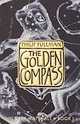
Golden Compass: Feminist Theology?

12 Wednesday Dec 2007

Posted by Anna Clutterbuck-Cook in think pieces

≈ 1 Comment

Tags

books, feminism, movies, politics

. . . Not if you see it on the big screen, at least according to Hanna Rosin’s review, “How Hollywood Saved God” in The Atlantic Monthly.

While I am very much looking forward to seeing the movie adaptation of The Golden Compass, by Philip Pullman, on the big screen this weekend (my first movie in the theater since . . . um . . . well, before I came to Boston, I swear on both volumes of my Shorter OED) it’s been interesting to hear some of the debate about the film, the books, and their treatment of religious issues. While I’m not sure I would go so far as to label it a “controversy,” as it was billed on this morning’s “On Point” discussion on NPR, it does seem to have stirred up a little, shall we say, dust in Catholic and Evangelical circles.

In the books on the other hand . . .

“On Point” actually had some extremely thoughtful guests (Ms. Rosin among them) who were discussing the theological themes in both His Dark Materials, the book trilogy, and the movie-makers decisions to elide most of the deeper re-workings of Biblical and spiritual themes. Professor of Religion Stephen Prothero won my heart with his passionate defense of literature as a way for young people to explore the Big Questions and engage in meaning-making for themselves, as well as his delight in Lyra, the series’ protagonist, as a feminist heroine:

My daughters get dressed up as Hermione for Halloween and for the Harry Potter parties, and you know Hermione is a wonderful character but she’s sort of carrying the water for Harry Potter, who gets to be the hero . . . and I love that about the books [that Lyra gets to be the heroine]. I think it’s wonderful to tell girls to question authority, to make a little trouble, to be suspicious when people talk in God’s name as if God is speaking to them through an earphone.

Even more radical, of course, is Pullman’s project of writing an “alternative Genesis” with Lyra as a new Eve whose initiation into sexual awareness is the catalyst for redemption. The narrative is an explicit “response to the church,” Rosin points out, drawing on her interviews with Pullman himself, “this idea of patriarchy and misogyny and the idea that she should be Eve, and she should re-write the story of Eve.”

“And I would argue,” Prothero follows up, “that what we have there is something quite like feminist theology . . . that we shouldn’t be thinking about God as this old man with a beard in the sky . . . why do we have to have the woman be the villain here? Why can’t she be the hero?” Amen.

Plus, I hear that seeing the daemons on screen is worth the price of a ticket. So see you at the theater!

As an aside: My one reservation about the books, incidentally, is the way they are being marketed–much like the Harry Potter books–to a pre-teen audience when they are actually much more dense and in some ways more frightening, than Rowling’s series.

Also, Tom Stoppard wrote one of the early screenplays–wouldn’t you love to have seen that version??!

Jesus Camp Grows Up

26 Monday Nov 2007

Posted by Anna Clutterbuck-Cook in book reviews

≈ Leave a comment

Tags

education, politics, religion

I spent part of this weekend reading God’s Harvard: A Christian College on a Mission to Save America, by Hanna Rosin. The book centers on Patrick Henry College, founded in 2000 by Michael Ferris, the fundi-gelical conservative Christian activist best known for his work leading the Homeschool Legal Defense Association. (Like it or not, he’s one of the reasons people like me got to have the childhood we got to have . . . even if our home education didn’t have quite the results Ferris is looking for!)

God’s Harvard tells a story that is the natural extension of the 2005 documentary Jesus Camp, which explored Christian evangelical culture as experienced by children ages 7-13. We’ve leapt over the mid-teen years, and are now introduced to an academically elite group of Christian homeschoolers ready to enter college. You can check out an early draft of a chapter from God’s Harvard, “God and Country”, which was published by Hanna Rosin in the New Yorker (27 June 2005).

As usual, it is extremely irritating to have “homeschooling” become conflated with conservative Christian homeschooling with barely an acknowledgment. John Holt (whose papers have just been donated to the Boston Public Library!!) and the free school movement are mentioned only in passing, rolled into the early history of “the movement” in such a way that it’s never clear there are other ways families choose to home educate besides plunking kids down in front of intelligent design videos, drilling them in the tenets of Christian nationalism, and preaching the evils of toxic popular culture, all the while enforcing dress codes and “courtship” standards.

At the same time, I always find an outsider’s perspective on homeschooler cultures fascinating; Rosin’s narrative is an ever-shifting mosaic of the familiar and the alien. Whether secular or sectarian, home-educated kids tend to have close relationships with their siblings and parents, be skeptical of mainstream culture and education, and enter their young adulthood with a disconcerting mix of maturity and naivete.

“Homeschooling families,” Rosin writes, “tend to judge each other by their views on structure and authority; the Patrick Henry families tend to fall on the strict end of that scale. Homeschool families have no school communities or obvious support system, so they tend to group around gurus or schools of thought” (90). The problem is, the only examples she gives are of the Patrick Henry variety, not the hippie home-educator “free schools, free people” types. Proof, I suppose, of our dwindling numbers. Rosin reports, with numbers similar to those in Jesus Camp, that of the estimated 1-1.5 million home educators (unclear whether she’s talking families or young people), a whopping 80% identify themselves as “evangelical Christian” (62).

Clearly, we home-educated feminists are outnumbered by the evangelicals; I guess we’ll just have to raise a little more hell!

Further Reading about the Religious Right

Here are a few other fascinating books on the subject of conservative Christian counterculture from the last few years.

1. Kingdom Coming: The Rise of Christian Nationalism, by Michelle Goldberg provides a good introduction to the political dimensions of the current conservative Christian counterculture.
2. American Facists: The Christian Right and the War on America, by Chris Hedges provides less journalism and more philosophy than Goldberg, suggesting parallels between current Christian political thought and twentieth-century European fascism.
3. Monkey Girl: Evolution, Education, Religion, and the Battle for America’s Soul, by Edward Humes and
4. The Kitzmiller v. Dover decision, which is brilliantly and lucidly written by Judge Jones, both document the recent ruling against the teaching of intelligent design in Dover, Pennsylvania schools.
5. God On Trial: Dispatches from America’s Religious Battlefields, by Peter Irons (I haven’t read this one yet, but it looks good!) provides historical-legal context for the current struggle over the relationship between religion and government.
6. Jon Krakauer’s Under the Banner of Heaven: A Story of Violent Faith goes beyond its story of Mormon fundamentalism to explore the thin line between faith and madness.
7. The Battle for God, by historian of religion Karen Armstrong, is a dense personal favorite, charting the rise of religious fundamentalism as a response to the modern era.

*Images from www.powells.com and www.amazon.com

From the (Daily Show & NPR) Archives

03 Saturday Nov 2007

Posted by Anna Clutterbuck-Cook in media

≈ Leave a comment

Tags

humor, politics, web video

I don’t have anything from the MHS for you this week, but I thought I’d share this video from The Daily Show instead.

I listened to a really difficult Diane Rehm show this week on the subject of our government’s refusal to accept internationally recognized definitions of torture, thus leaving open the possibility that we are torturing human beings in the name of national “security.”

The show left me feeling angry and frustrated that despite all the moral outrage and rational argument I hear against torture (from both the political left and right!), the administration carries on blithely ignoring us all. It’s difficult to feel ownership in a government in which I don’t see or hear myself meaningfully represented. And yet I believe we are all responsible, collectively, in some way, for the human rights abuses that our government perpetrates. I haven’t figured out how to live up to that responsibility yet, but I guess recognizing it is a small step in the right direction.

Anyway, here’s Jon Stewart on the language of the torture “debate.”

P.S. I recommend the Diane Rehm segment too, for anyone interested in a more in-depth discussion.

American Activism(s)

02 Monday Jul 2007

Posted by Anna Clutterbuck-Cook in book reviews

≈ Leave a comment

Tags

bn, feminism, politics


My colleague at Barnes & Noble, Tony, who runs the music department, has decided to set up a display in my honor come August, when I am abandoning the store and moving East. I was asked to come up with a theme. After some consideration, I picked (for obvious reasons) the theme of political rabble-rousers in twentieth century American history. The movies must be fiction (no documentaries), but be based on actual true-life people or events. It’s a completely subjective list of movies that I have enjoyed, and from which I learned something about our collective history.

In order of historical period, they are:

1. Newsies (1992)*
2. Iron-Jawed Angels (2004)
3. Reds (1981)
4. Entertaining Angels (1996)
5. Cradle Will Rock (1999)
6. Dash and Lilly (1999)
7. Good Night & Good Luck (2005)
8. Kinsey (2004)
9. Norma Rae (1979)
10. North Country (2005)

They are all worth watching . . . so add them to your Netflix queue!

*be warned, this is a (thoroughly enjoyable) Disney musical about the newsboy strike of 1899–okay, almost the 20th century–so if your taste doesn’t run to musicals, this may not be your first choice!

Reproductive Justice

13 Sunday May 2007

Posted by Anna Clutterbuck-Cook in think pieces

≈ Leave a comment

Tags

feminism, politics


I bought my copy of the most recent issue of off our backs this week, and it turned out to be an entire issue dedicated to “reproductive justice.” The concept of reproductive justice, it turns out, is a way to re-vision the depth and breadth of what we have conventionally thought of as “reproductive rights” or even more narrowly, “pro-choice” advocacy. It focuses not only on or legal access to reproductive choice, but also on the social and economic inequalities that make those “rights” the privilege of those with power and resources.

Loretta Ross, one of the guest editors of the issue, and a member of the SisterSong Women of Color Reproductive Health Collective, defines reproductive justice this way:

  • the right to have a child;
  • the right not to have a child;
  • the right to parent the children we have
  • the right to control our own birthing options

Her article does a beautiful job of broadening the conversation surrounding reproductive and sexual rights, calling on us to articulate the overarching values that lead us to a pro-choice position. “Reproductive justice,” she writes, “focuses on the ends [rather than the means]: better lives for women, healthier families, and sustainable communities.” Thinking in terms of reproductive justice “draws attention to cultural and socio-economic inequalities because everyone does not have equal opportunity to participate in society’s cultural discourses or public policy and economic values, such as abortion, midwifery, or mothering.”

I read Ross’ article, “Understanding Reproductive Justice: Transforming the Pro-Choice Movement,” just a few days after reading a lovely essay, “Being a Radical Doula,” by a Maria Perez, a young woman who works as a doula supporting women during pregnancy, childbirth, and early motherhood. In “Being a Radical Doula,” Perez articulates the fundamental connection between her pro-choice politics and her passion for working with pregnant and birthing women.

Both of these articles came across my desk just when I needed them, after several long weeks of going back and forth with anti-abortion folks about the abortion ban. It’s wonderful to know there are other people out there working hard to create a world in which reproductive justice is a basic human right for all.

And I keep thinking . . . perhaps in my grannyhood, I’ll become a radical, activist midwife myself!

Feminist Activism After Gonzales

29 Sunday Apr 2007

Posted by Anna Clutterbuck-Cook in think pieces

≈ Leave a comment

Tags

feminism, politics

It’s been an intense couple of weeks, from the feminist-activist perspective. Since the April 18th Supreme Court ruling (Gonzalez v. Carhart) upholding–with a 5-4 majority–the 2003 “partial birth” abortion ban, I’ve been giving myself a crash refresher course in the theory and politics of women’s right to reproductive choice–including the “basic human right to decide what to do about a pregnancy” (see “Is There Life After Roe?” by Frances Kissling).

The ruling, while not unexpected, still felt like a punch in the gut when it came down. It is dismissive of scientific evidence, medical consensus, women’s right to bodily integrity, and the centrality of family planning in women’s equal participation in society. It upholds a shoddy law that is constitutionally vague (there is no medical procedure known as “partial birth abortion”) and based on congressional “findings” with which the majority of the governments own expert witnessess disagreed. The anti-feminism, implicit and explicit, in the majority opinion made me (and many of my friends) feel almost personally physically violated.

The one bright spot, legally and morally speaking, was Justice Ruth Bader Ginsburg’s powerful dissent, which rooted its argument in a feminist ethic of women’s right to participate in the right “to participate equally in the economic and social life of the Nation.” Check out this awesome article describing how it could become the basis for future pro-choice law.

Serendipitously, a couple of weeks before the ruling was handed down, I got involved in the on-line community around feministing, a feminist blog. It’s been my first experience actively participating in on-line discussions (and at times the learning curve has been a little steep!), and it was incredibly helpful for my continued sanity that I was connected to the people who read and wrote on Feministing as the news was breaking. They have helped me to channel my rage into small, daily acts of useful protest. They even convinced me to phone my congressional representatives and ask them to support the Freedom of Choice Act (FOCA), now pending in both houses, which would protect women’s legal right to abortion. Those of you who know how much I hate/am terrified by the telephone will understand what a step that was!

All this political activity and feminist discussion has been a good reminder that, as I am sorting through career possibilities in the next few years, I need to be conscious about integrating my love of books and scholarship with my passion for feminist activism. Political involvement, and the community of (at least partially) like-minded individuals I become closer to as a result of being politically engaged, are necessary for my sanity and help me stay excited and hopeful about the future.

*and many thanks to all the Feministing bloggers and readers for pointing me toward most of the articles linked to this post.

Newer posts →
"the past is a wild party; check your preconceptions at the door." ~ Emma Donoghue

Recent Posts

  • medical update 11.11.22
  • medical update 6.4.22
  • medical update 1.16.2022
  • medical update 10.13.2021
  • medical update 8.17.2021

Archives

Categories

Creative Commons License

This work by Anna J. Clutterbuck-Cook is licensed under a Creative Commons Attribution 3.0 Unported License

Meta

  • Create account
  • Log in
  • Entries feed
  • Comments feed
  • WordPress.com

Blog at WordPress.com.

  • Subscribe Subscribed
    • the feminist librarian
    • Join 37 other subscribers
    • Already have a WordPress.com account? Log in now.
    • the feminist librarian
    • Subscribe Subscribed
    • Sign up
    • Log in
    • Report this content
    • View site in Reader
    • Manage subscriptions
    • Collapse this bar