• anna j. clutterbuck-cook
  • contact
  • curriculum vitae
  • find me elsewhere
  • marilyn ross memorial book prize

the feminist librarian

the feminist librarian

Author Archives: Anna Clutterbuck-Cook

Quick Hit: ‘Time poverty’

06 Monday Jul 2009

Posted by Anna Clutterbuck-Cook in think pieces

≈ Leave a comment

Tags

boston, domesticity, politics

Following a luxurious three-day weekend away from work and school, it seems appropriate to post this link from AlterNet, “Slow Down: How Our Fast-Paced World Is Making Us Sick,” in which Linda Buzzell argues that ‘time poverty’ is endemic in contemporary culture:

Time poverty is now a recognized psychological and social stressor. In a speeded-up, highly complex society, there just isn’t enough time for everything: our demanding jobs, our interlocking bureaucratic responsibilities (taxes, insurance, legal issues), our loved one, kids, our community (including the rest of nature), plus commuting and keeping up with traditional media and endless 24/7 online communications. Constantly rushing to keep up as we inevitably fall further behind, we find ourselves destroying not only our own health, but our habitat and the habitat of the people, plants and animals with whom we share the planet.

Juggling two part-time jobs, a library science class, thesis preparation, and home life this summer has given me a lot of opportunity to think about the importance of fighting against the relentless pressure to be “productive” by external standards, and to fill my life with activities our culture assigns value to — rather than the activities that I actually find pleasurable, nourishing and productive in a deep life-affirming sense of creating a life worth living.

I don’t necessarily buy into the idea that those activities necessarily take place out-of-doors, away from technology, but I also recognize the importance of remembering that information technology is a resource not an entity demanding my constant attention or embodying some inherent moral value (positive or negative). I’ve realized over the last two years in graduate school that as someone going into library & information services, information overwhelm and the pressure to be plugged into sources of information 24/7 is going to be a constant pressure in my working life, and it will be important to establish boundaries — to make sure there are places in my life where that tidal wave of sensory input is not allowed to intrude — times and spaces where I have time for reflection, reconnection, and restoration.

Happy 4th

04 Saturday Jul 2009

Posted by Anna Clutterbuck-Cook in our family

≈ Leave a comment

Tags

boston, domesticity

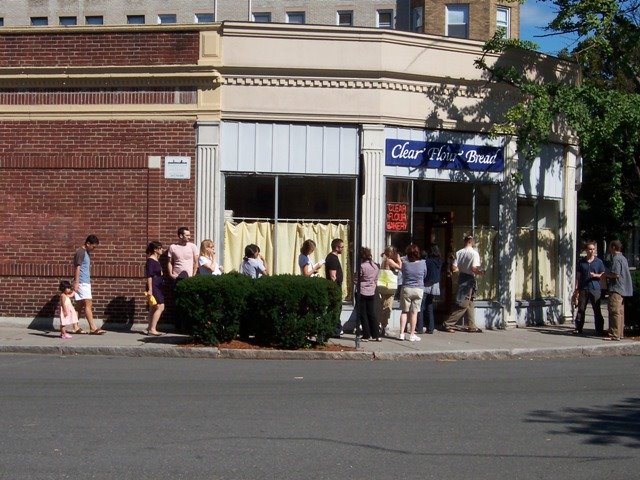
Happy 4th of July everyone; hope you’re finding ways to enjoy the holiday weekend. This morning was the first crystal clear day we’ve had in over a month here in Boston; I went out early to pick up croissants, baked currant donuts and onion foccacia at the bakery in our neighborhood. Clearly, a number of other people had the same idea.


On the way home, I saw groups of folks already headed down to the Charles with picnic baskets and blankets to stake out viewing spots for the Boston city fireworks & pops concert along the esplanade. Enjoy the day!

Holiday weekend puppy blogging

02 Thursday Jul 2009

Posted by Anna Clutterbuck-Cook in our family

≈ 1 Comment

Tags

addie, michigan, photos

Hard to believe tomorrow’s the beginning of the 4th of July weekend already! Here in Boston we’ve had the cloudiest summer on record since 1903 and this morning Hanna and I had on our overcoats as we stood in the mist waiting for the T. I hope those of you who live not-in-Boston have a more summery forecast for the next few days. Meanwhile, here’s the latest batch of puppy pictures to cheer those of you who need cheering, and charm all the rest.

links list: selected shorts

26 Friday Jun 2009

Posted by Anna Clutterbuck-Cook in linkspam

≈ 2 Comments

Tags

books, children

My friend Rachel’s coming to town for the weekend, so there will be no extended blogging for the next few days. Instead, I leave you with selected links from Google Reader and elsewhere in my online world.

Via MK, a story about why teenagers are still reading books — and might even be better readers than us grown up folks.

Nina Totenberg offers a review of the three rulings handed down yesterday from the U.S. Supreme Court (audio).

On a related note, Scott @ Lawyers, Guns and Money asks why some people are upset that the Redding ruling will make it harder for schools to violate the rights of young people.

And Alas, a Blog, offers a video clip of an interview with Savana Redding herself (now a college student), the young woman at the heart of the case.

Monica @ TransGriot offers some reflections on how the push to legalize gay marriage can have negative effects on already-legal trans marriages.

Rachel @ The Feminist Agenda, posts enthusiastically about a Swedish couple who have refused to identify the gender of their toddler. I’m conflicted about this story, because I firmly believe in the responsibility of parents to do what they can to shelter their children from the pressure to socially conform — while helping them discover their own ability to resist that pressure even while out in the real world. But the way the story has been politicized means the kid will likely feel tremendous pressure to be gender nonconforming to please the parents — or pressure to conform to a gender identity that is acceptable to the outside world. It seems sad that parenting inevitably becomes freighted with so much political baggage — and that it’s the kids who so often pay the price by having their lives dissected in public spaces. No person, regardless of how young, should have their own life co-opted by others as a political statement.

Finally, pspirro writes in praise of doing less @ her blog, over the wall, suggesting that “productivity” as a moral value — or even a survival skill — is over-rated. “Clever as you are, you’ll figure out how to do what needs to be done to obtain what needs to be obtained. All the rest of it be damned.”

hope you find some time this weekend to do less and enjoy the last few days of June.

Quick Hit: SCOTUS 8-1 against strip search of teen

25 Thursday Jun 2009

Posted by Anna Clutterbuck-Cook in linkspam

≈ 1 Comment

Tags

children, education, feminism, politics, scotus junkie

Speaking of teens, schools, and power relationships . . .

This morning, the United States Supreme Court ruled 8-1 in favor of Savana Redding, a young woman who was strip-searched at her middle school after being accused by a fellow student of being in possession of over-the-counter ibuprofen (which were banned by school regulation).

Redding, who now attends college, was 13 when officials at Safford Middle School ordered her to remove her clothes and shake out her underwear because they were looking for pills — the equivalent of two Advils. The district bans prescription and over-the-counter drugs and the school was acting on a tip from another student.

“What was missing from the suspected facts that pointed to Savana was any indication of danger to the students from the power of the drugs or their quantity, and any reason to suppose that Savana was carrying pills in her underwear,” Justice David Souter wrote in the majority opinion. “We think that the combination of these deficiencies was fatal to finding the search reasonable.”

Earlier this year, I posted a link to Dahlia Lithwick’s column following the oral arguments . . . I look forward to any further thoughts she might have in the wake of this decision.

Teens, schools, and power relations

25 Thursday Jun 2009

Posted by Anna Clutterbuck-Cook in think pieces

≈ 3 Comments

Tags

children, education, politics

Two recent stories out of the UK on young people in school environments have got me thinking (once again) about the way in which educational spaces are often much less spaces for genuine learning than they are spaces in which unequal power relationships between young people (students) and adult people (administrators and teachers) play out in mutually destructive ways.

First, a short piece from the “odd news” section of the UK-based website digitalspy on a school in somerset that banned snogging (kissing) on school grounds. Students who are caught “in the act” will be suspended from school. While the short piece at digitalspy gives no reason for the ban, a local Somerset paper reports the impetus behind the ban was a full-frontal snog witnessed by the headmaster. This type of reaction to students public displays of affection is reminiscent of the recent New York Times’ breathless report on the hugging “trend” in American schools. While there may be legitimate reasons for asking students to refrain from heavy or prolonged making-out on school grounds, an all-out ban seems like overkill destined to provide one more reason for students to (perhaps legitimately in this case!) believe adults are completely barmy.

In a more serious and lengthy report yesterday morning on the BBC news hour, I heard a story about online “cyber-bullying” of teachers by their pupils:

Teachers have always had to put up with personal jibes from kids.

Until very recently, however, malicious gossip and snide remarks have mostly been confined to the corridors or lunch queues.

But now with the explosion of websites like ratemyteachers.co.uk and bebo.com, teachers are suddenly finding themselves mocked in cyberspace, resulting in plunging morale and even threats to quit the profession.

. . .

Ms Wallis [a senior teacher from Cornwall] claims that the site is seriously damaging trust between students and teaching staff.

“When you’re facing a class five times a day, with 30 children at a time, and you don’t know who has actually written these things, you become far more guarded in everything you do.

“And the bottom line is you lose all trust in the students you’ve got sitting in front of you.”

What struck me about the report was the way students were portrayed as the bullies with the power to destroy teachers’ emotional well-being and reputation. Obviously mean-spirited gossip is hurtful, and adults are not invulnerable to personal slurs just because they originate from people younger than themselves. Bullying is not confined to childhood spaces, and can cross generational boundaries. Yet the journalists covering this story seemed oblivious of the complex power dynamics at play in an educational institution — power dynamics that privilege adult authority, embodied by teachers and administrators, over the authority of young people. Teachers in a classroom exercise the right to pass judgment on students in contexts that have real-life consequences for a child’s future (this is especially true in a school system, such as in the UK, with national curriculum and testing standards). And while some of the “rating” comments are cruel, the reasons for poor ratings are not necessarily just kids having a bit of fun at the teacher’s expense. As one student interviewed reflected,

“I know one teacher who I think is really rude,” says a 15-year-old boy at Haydon School in Pinner, north west London. “But there’s no-one who can tell him that so, in a way, if they look at the site, it’s good because they can change their attitude.”

In a school environment that operates on a top-down, hierarchical model, students may have no (or very few) opportunities to make their voices heard — or more importantly feel they are taken seriously when they do speak up — without fear of retribution . . . except anonymously, online. Another student interviewed said she didn’t feel bad about the negative comments she had posted online. “I rated my worst teachers,” she told the BBC, “I said they were rubbish and didn’t teach me anything.” The fact that children have found alternate ways to communicate with the world about their academic experiences is not necessarily “bullying” — it may simply be providing us with a more balanced picture of what young peoples’ lived experiences in school are actually like. I doubt it will lead to any serious soul-searching on the part of those invested in an hierarchical academic system, but it will certainly be interesting to see how the struggle plays out.

Movienote & Quick Hit: Frost/Nixon & Nixon-Nixon

24 Wednesday Jun 2009

Posted by Anna Clutterbuck-Cook in media

≈ Leave a comment

Tags

history, movies, politics

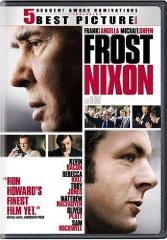
Yesterday, Hanna and I finally got around to watching the film adaptation of Peter Morgan’s 2006 stage play Frost/Nixon. Both the play and the film starred a perpetually startled-looking Michael Sheen as British talk show host David Frost and Frank Langella as a very sleepy-sounding Richard Nixon. The drama centers on an actual historical event: David Frost’s interviews with Nixon, broadcast in 1977, two years after Nixon resigned the presidency. It was a compelling film, paced very much as I imagine the original stage play ran, and aside from the two main actors sported several cameos by folks I enjoy, such as Oliver Platt and Matthew Macfadyen (disconcertingly blond). Since I know very little about the Nixon presidency or his political demise, beyond the broad brush strokes of our collective historical memory, the film has made me curious to check out the original interviews and compare the fictionalized version with the actual footage. Possibly more later if I (or Hanna) remain motivated enough to track them down.

Coincidentally, yesterday also saw the opening up of over 150 hours of tape and 30,000 pages of documents previously unavailable to the public by the Nixon Presidential Library. These new materials contain some choice sound bites concerning Nixon’s views on abortion and interracial relationships.

“There are times when an abortion is necessary. I know that. When you have a black and a white,” he told an aide, before adding, “Or a rape.”

As elle over at Shakesville points out (as do virtually all the feminist blogs I regularly read), interracial relationships are in no way shape or form analogous to rape . . . the first being, you know, a relationship and the other being a specific act of violence. The fact that this was the first circumstance that came to Nixon’s mind in 1973 as a situation warranting abortion — before he even thought to mention sexual violence, almost as an afterthought — is a fascinating example of the way he made sense of both race and abortion.

Anyway. May all the Nixon historians out there have fun and do good work with these new resources, many of which have been made available online.

LIS488 Current Awareness: Helping new computer users

24 Wednesday Jun 2009

Posted by Anna Clutterbuck-Cook in library life

≈ Leave a comment

Tags

blogging, education, simmons

This is the second in a series of posts required for my summer session class, Technology for Information Professionals. For the first post see here.

Jessamyn West at librarian.net posted a short reflection on a New York Times blog post, Offer a Digital Helping Hand, about the frustration that many (most?) of the world’s population can feel about “undigital these days. There’s a grating discomfort that comes from being left out of everyone else’s secret language.” The original post, on the New York Times’ GadgetWise blog, was written as a plea to the digitally-savvy to offer a helping hand to those for whom the latest internet tool — such as Twitter — or the task of accessing email, or even as basic a computing function as manipulating a mouse, are foreign territory.

A couple of years ago, just before moving to Boston and starting my library science program at Simmons, I helped my grandmother set up an email account and learn the basics of using a computer. Before my grandfather died rather suddenly of cancer, he was the one in their household who took primary responsibility for using the computer and navigating the internet; after he died, my grandmother was faced with learning how to use the computer literally from the ground up. I put together a how-to guide that gave her step-by-step instructions for turning the computer on and accessing her email and programs like Word. It was a fascinating and humbling exercise for me to sit beside her and watch her learn how make sense of the hand-eye coordination required for operating a computer mouse, and to realize what steps I had inadvertently left out of my instructions. Steps that, to me, seemed so intuitive I had forgotten they were even a step in the process.

I try to keep this experience in mind when I help patrons at the Historical Society, only some of whom are familiar with the internet or have online access to tools such as our online catalog or website. I try to remember both the skills I cannot take for granted, and also the way in which learning basic computing skills has made a genuine difference in my grandmother’s ability to stay connected to her family and friends. As West points out in her post, it is important for those of us who use such technology regularly in our everyday to remember that the terminology, the skills, and the power of these new tools are not self-evident. It is even more important for those of us who work in library and library-like environments, where our core mission is making information available and accessible to all, to be aware of the differing level of technology and computing skills among our user groups.

Happy Dad’s Day, Dad

21 Sunday Jun 2009

Posted by Anna Clutterbuck-Cook in our family

≈ Leave a comment

Tags

family, travel


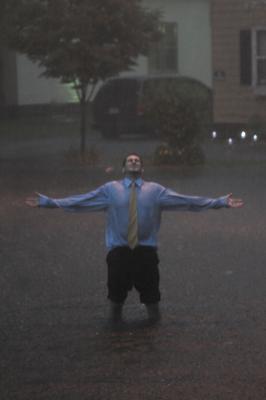
Dad has spent the weekend cleaning up his bookstore from the massive flooding they’ve had in West Michigan over the past couple of days. Hope he’ll be able to find some time during the weekend to get out and do some of that outdoorsy activity he enjoys so much. Meanwhile, here’s a picture from our 2004 father-daughter trek along the West Highland Way.

Happy Dad’s Day, Dad and thanks for all the memories!

links list: rainy sunday edition

21 Sunday Jun 2009

Posted by Anna Clutterbuck-Cook in linkspam

≈ Leave a comment


So clearly, I need to get my Google Reader habit under control before these link lists become ubiquitous (although they also offer me an excuse to use the word “ubiquitous” which, ever since reading the theologian William Stringfellow in undergrad has been a word of particular charm in my mind). But since it’s raining here in Boston this morning and I’m enjoying my coffee and strawberry cream cheese croissant, purchased rather damply from the clear flour bread bakery around the corner, I’m going to compile at least one more list for y’all before wandering off to read more about the history of the history of education.

We’ll start off with a column from the always-dependable Jon Carroll on Obama’s weak support of folks with nonstraight sexual orientations.

Followed closely (in case you need a fluffy antidote) with the Guardian on an art project to create books that don’t exist.

Mark Edmundson over @ The American Scholar on the dynamics of “conversation” with someone who never stops to take a breath.

Once again, “feminism” is being smeared as obsolete. The gals @ Pursuit of Harpyness weigh in, as does Mandy @ Bitch blogs.

Rachel @ The Feminist Agenda blogs about using vocabulary of human sexual orientation for other species, and how this (perhaps incorrectly) shapes our understanding of non-human sexuality.

Earlier this week, I linked to Dina Goldstein’s “fallen princess” photography series; Latoya Peterson @ Racialicious questions the portrayal of Jasmine (from Aladdin) in contrast to the other princesses in the series.

Arvan, over @ sexgenderbody, posts about a forthcoming Canadian documentary about the possibility of female-only reproduction.

Women In Technology, a UK-based blog, offers some thoughts on how playground-type bullying is prevalent in offices, between adults, not just among children.

Janice Formichella @ Feminist Review offers us a taste of the new book Making Marriage Modern: Women’s Sexuality from the Progressive Era to World War II, which is definitely on my reading list.

Kelefa Sanneh @ The New Yorker meditates on “fast bikes, slow food, and the workplace wars,” or one of the perennial questions of modernity: what makes work meaningful.

A lot of feminist blogs have posted in response to the BC Cancer Agency’s recent ad campaign promoting regular pap smears, but I especially enjoyed Cara’s post over @ Feministe: “The reason to prevent cervical cancer shouldn’t be seen as any different from the reason to prevent any other cancer. Which is . . . because we value human lives and think they’re worth living just because.”

zp27 @ Feministing Community asks “why won’t he stop writing about this?” in response to the latest installment in William Saletan’s “pro-choice” op-eds over at Slate.com that technically support abortion rights while disrespecting women who choose or must have abortions.

lisa over @ Sociological Images offers examples of a public service announcement campaign that equates penises with firearms. Note to psa authors: not okay to characterize the genitals of any human being as a dangerous weapon. (Graphic images, possibly not safe for work).

And finally, on a more positive note, Greta Christina @ Blowfish Blog on how sexual tastes could be seen as similar to musical tastes.

*Image of recent flooding in my home town by Dennis R.J. Geppert, from the Holland Sentinel website.

← Older posts
Newer posts →
"the past is a wild party; check your preconceptions at the door." ~ Emma Donoghue

Recent Posts

  • medical update 11.11.22
  • medical update 6.4.22
  • medical update 1.16.2022
  • medical update 10.13.2021
  • medical update 8.17.2021

Archives

Categories

Creative Commons License

This work by Anna J. Clutterbuck-Cook is licensed under a Creative Commons Attribution 3.0 Unported License

Meta

  • Create account
  • Log in
  • Entries feed
  • Comments feed
  • WordPress.com

Blog at WordPress.com.

  • Subscribe Subscribed
    • the feminist librarian
    • Join 37 other subscribers
    • Already have a WordPress.com account? Log in now.
    • the feminist librarian
    • Subscribe Subscribed
    • Sign up
    • Log in
    • Report this content
    • View site in Reader
    • Manage subscriptions
    • Collapse this bar