• anna j. clutterbuck-cook
  • contact
  • curriculum vitae
  • find me elsewhere
  • marilyn ross memorial book prize

the feminist librarian

the feminist librarian

Author Archives: Anna Clutterbuck-Cook

reading and gender: a couple of links

26 Monday Apr 2010

Posted by Anna Clutterbuck-Cook in linkspam

≈ Leave a comment

Tags

books, feminism, masculinity

Thanks to Hanna, I have a couple of book-and-gender-related links to share with you this afternoon, despite the fact I haven’t spent much time on the internet in the last few days.

George @ Bookninja shares a recent variation on the narrative-that-won’t-die, the libelous fiction (pun intended) that men don’t read. While admittedly I am not male-bodied, male-identified or even very butch or masculinely inclined, I know guys. And the guys I know read. At least, the guys I know read or don’t read in equal proportion to the women I know who read or don’t read. Their maleness has nothing to do with their interest (or lack thereof) in the printed word.

As an historian, I find it fascinating that our current cultural narrative around books and reading (possibly even writing?) is that it is a feminine pursuit: back in the late 18th century, polemicists fretted about girls being exposed to works of literature, particularly fiction, as fiction was seen as inherently libidinous in nature and might lead them to masturbation (Thomas Laqueur, Solitary Sex). In the 19th century, people worried about the power of a gothic romance to encourage girls’ imprudent liaisons (recall Catherine in Jane Austen’s Northanger Abbey?) and later on feared that too much reading led to neglect of household chores (Lydia Maria Child). By the late 19th and early 20th century, mental exertion (particularly reading and writing) caused concern among advice-givers to both women and men: Charlotte Perkins Gilman was, famously, denied writing and reading as part of her treatment for postpartum depression; male academics and clergymen fretted that their chosen professions doomed them to a life of effeminacy and poor health (Gail Bederman, Manliness & Civilization).

So, somehow, by the twentieth century, “manliness” and the life of the mind had evolved — at least in the humanities (as opposed to the sciences) — into something that was both the province of women as well as a threat to the health of “civilized” human beings, regardless of gender.

And now, today, we have folks wringing their hands over a culture of masculinity that discourages being smart, articulate, literary (except, perhaps, if you can use language to bully others in the manner of public intellectuals like Christopher Hitchens and Richard Dawkins — thus proving your uber-manliness by the way in which you wield language as a weapon with which to take down your opponents*). Whole books are written about encouraging literacy and reading among boys, and websites devoted to the subject exist on the internet.

My point is that this story we tell ourselves, about how boys (and the men who these boys become) are not readers, or only readers of very specific genres — technical manuals, graphic novels, thrillers for example — is just that: a story. It’s fiction. Or at the very least, it’s a sociological truth that we’ve mostly created through our formulation of what’s “manly” in our culture, and reinforcing that every chance we get.**

So where does this association of genders (masculine and feminine) with certain types of literary behavior fit in with this second story Hanna found me from Sharon Bakar @ bibliobibuli on a new “women concept” bookstore that just opened in Malaysia? As Bakar observes

I don’t like the cliched assumptions that women should like certain things whether in terms of decor (usually frilly, flowery pink things) or in the choice of books. The concept of women’s bookshops is nothing new, but around the globe most have been independents which promoted feminist and/or lesbian thought.

I’m with Bakar on this one. Women’s bookstores historically (and here we’re talking 1970s-present) have been associated with the underground feminist/separatist culture that grew up around the surge in feminist activism and lesbian visibility in the mid-twentieth century across the globe (and particularly in the West). These cultural institutions obviously have a long and complicated history, given that they often promoted the work of activists and artists who had no outlet in the mainstream (in my mind a positive) while also, at times, fostering a separatist, essentialist feminism that perpetuates bigotry in various forms (in my mind an obvious negative). While safe(r) spaces for the marginalized folks are, I would argue, absolutely essential, it’s also important to keep alive the conversation about how (in creating those spaces) whom we are excluding and why. And for what purpose.

A “women’s concept store” that — according to the news item Bakar links to — highlights “chick lit” (itself a problematic category!) and wedding stationary is a far cry from that sort of separate space. Space that by its very existence challenged (and occasionally continues to challenge) our assumptions about sex, sexuality, and gender. Instead, this space seems more like the homosocial spaces of yore, which reinforce oppositional gender stereotypes. In this instance, possibly reinforcing the stereotype that bookshops are for women, while dudes go off and do, well, more manly things.

Presumably not-with-books.

*I make no claim that women do not, also, use words to bully: I think it happens all the time. However, I do think men are encouraged in our culture to equate being “smart” with taking down the competition in a way that women, possibly, are not.

**Again, this is a story about guys and reading, but we could just as easily write a story about women and the gendered way they are marketed certain types of literature and not others: I’m a fan of graphic novels, for example, despite the fact that graphic novels and comic books are often seen as the province of boys, and in need of a make-over in order to appeal to girls.
sunday smut: links on sex and gender (no. 19)

25 Sunday Apr 2010

Posted by Anna Clutterbuck-Cook in linkspam

≈ Leave a comment

Tags

gender and sexuality, sunday smut

Just the links this weekend, folks!

Amy Romano @ Science & Sensibility | Why my first year blogging has changed how I see everything.

Ampersand @ Alas, a Blog | If you can’t switch to vegetarian, switch to chicken.

Amanda Hess @ The Sexist | With Great Cleavage Comes Great Responsibility.

Two posts from awesome sex blogger Greta Christina @ The Blowfish Blog | After You, My Dear Alphonse (on why speaking up for what you want in bed is not selfish) and Mis-Matched Libidos: Can Mixed Marriages Ever Work? (on why Dan Savage’s advice to couples with mis-matched libidos is lacking).

Melissa McEwan @ Shakesville | Two Days in the Life of Fatty Fatastrophe (on being shamed by one’s doctor about weight).

Gala @ Gala Darling | xox (on why slut-shaming and virgin-shaming are wrong). Via Spiffy @ Hippyish.

Also on the subject of virgins and whores: J Maureen Henderson @ Bitch Blogs | The Young and The Feckless: Casual Sex Meets Cognitive Dissonance.

Tracy Clark-Flory @ Salon | Viagra for women: The quest for the perfect orgasm.

Nancy Keenan @ Blog for Choice | Nancy Keenan Responds to Newsweek Article on Young Pro-Choice Activists (more on the question of young progressives/liberals/people generally and social responsibility later this week if I can carve out the time).

Annaham @ Tiger Beatdown | LADYPALOOZA PRESENTS! How Amanda Palmer Lost a Fan, or, My Own Private Backlash (more about internet bullying than Amanda Palmer, but don’t click through if you’d rather avoid someone being pissed at Neil Gaiman’s fiancee. just sayin’).

And finally, with amused befuddlement, I offer you Emily Votruba @ n+1 | Is Anal Sex Fair to Women? (complete with helpful comparative chart!)

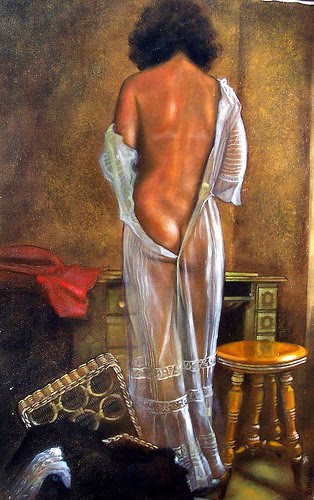
*image credit: Nude sheer by Bruce Mayer made available @ Flickr.com by V-Rider.

in words and pictures: asking trans folks questions

23 Friday Apr 2010

Posted by Anna Clutterbuck-Cook in Uncategorized

≈ 2 Comments

Tags

feminism, sexual identity

This new poster has been making the rounds on the blogs I read the last couple of weeks, and I actually think the title is somewhat misleading: it’s not so much about what specific words are verboten (for a glossary of terms surrounding transsexuality, check out the guide put together by the Gender Identity Project) but about why certain questions or turns of phrase are hurtful to trans people.


I appreciate that they include explanations along with each phrase, rather than just announcing “these words are transphobic!” When folks find themselves explaining over and over again that certain language is hurtful, the “why” often — understandably — gets lost in the shuffle. The “why” is often so obvious to those who are inside a given community that it can seem redundant to explain to those outside the loop why a question is hurtful. It can often be even more difficult to explain why it’s hurtful without making the person on the recieving end of the explanation feel defensive.

Obviously, it’s not the responsibility of those in the know to educate 24/7 about the things they’re knowledgeable about . . . which is why it’s handy to have infographics that do it for us!

via sexgenderbody and others.

on acquisitiveness: books I have known

22 Thursday Apr 2010

Posted by Anna Clutterbuck-Cook in Uncategorized

≈ Leave a comment

Tags

books, domesticity

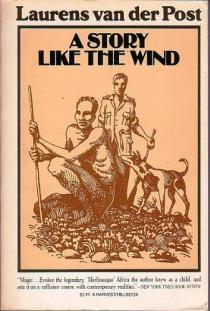
This morning, while waiting for the local Trader Joe’s to open, I found myself browsing the $1 cart at the brookline booksmith once again. This time, I found a copy of Laurens van der Post’s 1972 quasi-autobiographical novel A Story Like the Wind which my mother read to us when we were small. It is the story of Francois Joubert, a colonial child whose coming-of-age is disrupted by the political violence of the native community’s struggle for independence.

I haven’t read the book in ages and there is probably much to critique about it vis a vis the history of modern imperialism and post-colonial Africa. From what I do remember, the novel idealizes the native peoples and treads lightly over the political backdrop that gives rise to the violence that overwhelms the Joubert family.

But the point is: I bought it. Standing there, in the early morning sun, I saw this paperback book with the cover I remembered from my own childhood, and I had the sudden overwhelming urge to own the novel. Even if I never open it and read it again (possibly out of fear that, once re-read, I would no longer take the same child’s pleasure in the adventure story and instead read through the critic’s eye).

I wanted to own it. Needed to own it. Mostly because of a passage I remember in which the child, Francois, observes how his father — estranged from the colonial community for his critique of imperialism and from the native community for being European — falls ill in an adult version of what might be described as “failure to thrive.” Both communities have engaged in what Francois’ Matabele mentor terms “the turning of the backs,” a collective shunning of the outsider. The-turning-of-the-backs. It’s such a wonderfully descriptive phrase, somehow conveying the utter isolation — and eventual death — of the human being who is an outcast, who is rejected from human society.

So I bought the book. And now it is sitting here, on my desk, gazing up at me. And I somehow feel more at peace for having this book — with its little piece of wisdom, its kernel of human truth tucked away in its pages — physically on my shelves. Part of me feels bad about this: why buy the book, even at $1, if I’m unsure I’ll ever read it again — thus depriving someone else the chance to discover and enjoy it? But I do keep buying books, as much for their material objectness as for the ideas the contain. And I miss them as objects when they are not near me — as in the hundreds of volumes still stored at my parents’ house in Michigan.

I’m not sure this post has much more of a point than this: that the objectness of books still seems to matter, even in this age of the internet and the kindle, when a great deal of my reading and writing — let’s face it — happens in front of a computer screen. Some still, small part of my soul hears and responds to the printed word as something physically tangible, and different from all those words that flow by us every day in a long string of 0s and 1s rendered in text on the screen.

quick hit: a linguists delight

21 Wednesday Apr 2010

Posted by Anna Clutterbuck-Cook in Uncategorized

≈ 2 Comments

Tags

education, politics

CaitieCat @ Shakesville blogged last Friday about prescriptivism, classism, racism, otherwise known as three bad ideas that go poorly together. She writes

As many of you already know, I’m a linguist by training and vocation, as well as by avocation: I simply adore language and languages, always have. One of the first things one often hears when mentioning a background in linguistics is something along the lines of, “Don’t you just hate it when people say $EXPRESSION? Wouldn’t it be great if they had grammar?”

My answer is always, “Well, no, actually, I don’t just hate it; I find all forms of my native English delightful in the most literal sense, that is, they delight me. And further, every language and dialect has a grammar. If they didn’t, no one would understand anything anyone said, and they do, or they wouldn’t be talking that way.”

Because, like most linguists, I’m a fairly staunch descriptivist. In small words, what that means is that I believe language is what it is created to be, and that it changes, constantly, and that change in language is neither bad nor good: it simply is. As linguists, it’s not our job to tell people what is or is not “good $LANGUAGE_NAME”. It’s our job to study how and why language is what it is.

As a kid who struggled to see the point of standardized spelling (“but you know what I mean!” I would always point out stubbornly to my mother) I have always felt unjustly criticized by people schooled in more mainstream, socially acceptable American and/or British English for not using “correct” spelling and/or grammar. So I have to say, the five-year-old child in my soul was particularly delighted by this passage

When you deride someone else’s use of English for its “failure” to adhere to the “standard” variety, it’s not they who end up looking ignorant. Consider, next time, asking yourself about some “pet peeve” about a particular variety of English: Did the speaker achieve communication (the goal of language)? Were their goals achieved, in that you were able to understand what they said, their ideas successfully conveyed from their brain to yours? If so, then what grounds have you for complaint? [emphasis original]

Amen. And go check out the whole post over at Shakesville.

because I’m a lithwick groupie

20 Tuesday Apr 2010

Posted by Anna Clutterbuck-Cook in Uncategorized

≈ Leave a comment

Tags

politics

Legal affairs correspondent Dahlia Lithwick has a column up over at Slate.com about the liberal law student response to the prospect of a second Obama Supreme Court nominee.

They understand that it’s a foregone conclusion that there will be no risky pick for the court. They just aren’t sure what makes their heroes so risky. Supreme Court savant Tom Goldstein has laid out better than anybody why the Obama White House has no interest in picking a fight about the Stevens seat this summer. Emily Bazelon has argued that the White House may not even have the stomach to tap Diane Wood if it means offering up red meat to antiabortion groups. Liz Cheney contends that Elena Kagan’s participation in a broad national effort to ban military recruiters from campuses because of “don’t ask, don’t tell” makes her a “radical.” By calling even Obama’s moderate shortlisters unhinged, conservative judicial activists have knocked any genuine liberal out of play in advance of the game.

This has political implications, certainly, but my concern here is with the next generation of liberal law students, who continue to hear the message that their heroes are presumptively ineligible for a seat at the high court, whereas the brightest lights of the Federalist Society—Judge Brett Kavanaugh, professor Richard Epstein, Clarence Thomas, Theodore Olsen, Ken Starr, and Michael McConnell—are either already on the bench or will be seen as legitimate candidates the next time a Republican is in the White House. Look at the speakers list of the last national Federalist Society conference and tell me the word filibuster would have been raised if John McCain had tapped most of them. Not likely, because they’re all perceived as smart, well-respected constitutional scholars and judges.


Read the whole column over at Slate
. I find it incredibly dispiriting, but because I’m a Lithwick groupie, I’m willing to read pretty much anything she writes. And I couldn’t agree more on the cockamamie state of affairs that is our current notion of what constitutes the legal mainstream. Where, oh where, have the outspoken, articulate liberals gone?

Ampersand @ Alas, a Blog offers some further thoughts.

from the neighborhood: npr!

19 Monday Apr 2010

Posted by Anna Clutterbuck-Cook in our family

≈ Leave a comment

Tags

domesticity, hanna, random kindness


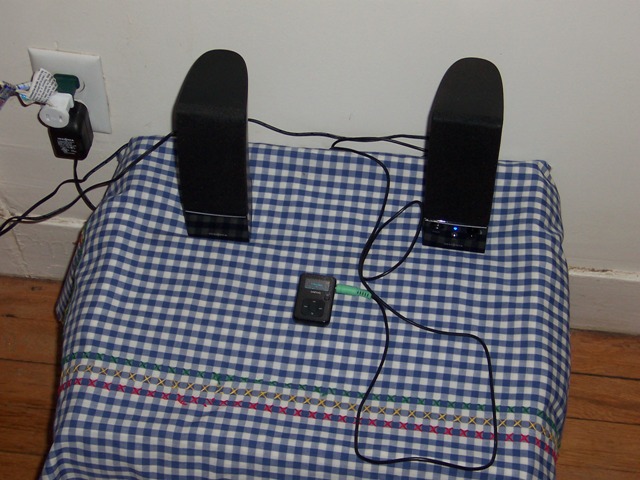
Ever since coming to Boston I’ve been frustrated by the inconsistency of the reception for NPR stations in the Boston area. Our apartment is wretchedly fickle about letting us get solid reception of WBUR or WGBH. But yesterday, Hanna had a brainstorm to hook up her Sansa MP3 player (which gets really good radio reception in our apartment) to a pair of computer speakers which we aren’t currently using — and voila! A 21st century radio! We were just in time to hear the Sunday Puzzle on Morning Edition.

Now I have NPR in the apartment and I am happy. My girlfriend is awesome.

a word from your blogger; or, how this blog has evolved

19 Monday Apr 2010

Posted by Anna Clutterbuck-Cook in admin

≈ Leave a comment

Tags

blogging, domesticity, family

A couple of members of my family have recently pointed out to me that, since I started this blog back in March 2007 on livejournal, it’s evolved from being mostly a chatty family-and-friends update-on-my-life sort of space into something more political in nature. Sure, I still throw on pictures from the neighborhood, talk about travel and Boston. But the majority of posts I put up here these days at the Future Feminist Librarian-Activist have to do with the scholarly and political issues I’m interested: sexuality, gender, feminism, books and reading, and political events.

This has happened for a number of inter-related reasons. Partly, because Boston and graduate school is no longer a new adventure, I have fewer “firsts” to share. I don’t carry my digital camera around these days when I run errands in order to take photographs of, say, the Boston Public Library or Trader Joe’s. I’m not moving to new living situations or starting new jobs.

At the same time, I’ve discovered that this blog is one of the few places in my life right now where I get to cogitate about the feminist and women’s studies issues near and dear to my heart. While elsewhere in my life I’m immersed in the History side of my brain, this blog is a place where I can do cultural analysis and engage (however lightly) in current politics. It operates as a much-needed pressure valve, of sorts, and helps me connect to the wider world of feminist activism and analysis via the feminist blogosphere. Since I don’t have as much time as I did pre-grad school to spend time on other blogs comment threads discussing these issues with other folks, posting on my own blog is a way of at least keeping my foot in the door and keeping my mind limber vis a vis feminist issues in a fashion that doesn’t (usually) turn into a black hole of Time Lost on the Internets.

And finally, as this blog as moved from being purely personal and pitched toward my family and friends to something that has an ever-so-slightly broader following, I feel it’s less appropriate to share some of the more personal facets of my life in this space. I am also mindful that these days a lot of my personal life overlaps with that of my significant other, who gets a say in what I share and don’t share online for other folks to see. Since this is new territory for me to navigate, I’ve often erred on the side of caution when recounting personal anecdotes in this space.

Why am I telling you all this? Well, as I said at the top of the post, a couple of family members have remarked recently that they feel less in touch with what’s going on in my daily life than they used to — and this blog is not as useful a tool as it used to be for checking in as it has been in the past. I have, actually, considered splitting the blog and starting one (like my brother Brian and his girlfriend Renee have) that’s personal news as opposed to quasi-professional in nature. And that’s probably a good idea, but something that I honestly don’t have the time and/or energy for at the moment. So while a new blog isn’t off the table for good, it’s been back-burnered until I finish up this grad school thing.

For now, I just wanted to let you folks who come here looking for personal news that I’ve heard your feedback and I’ll be working toward some sort of solution! In the meantime, I wanted to direct your attention to the blog function known as “tagging” which can help y’all navigate the blog for more personal news amidst the sunday smut lists and feminist soapboxing. You’ll notice at the bottom of each post I add a series of labels (on this post “blogging,” “family” and “domesticity”) that identify the basic content of the post. On the left-hand sidebar below the Archive (the list of posts in chronological order), you’ll see the list of labels I use in alphabetical order and the number of posts tagged with each label.

Clicking on a label will take you to all the posts, in reverse chronological order (newest at the top) that are tagged with that label. For example, domesticity. For those of you who know how to bookmark URLs, you should be able to bookmark a particular label to return to later, to see if there are any new posts under the label. The URLs for each label follow this pattern: http://annajcook.blogspot.com/search/label/LABEL NAME.

So “domesticity” will be found under http://annajcook.blogspot.com/search/label/domesticity. You should be able to bookmark that label and return to it later. While you can see that many of the tags overlap with more personal newsy items, the most frequent labels I use for personal posts are

boston
domesticity
from the neighborhood (photos)
and
travel

Obviously, any other tags you are particularly interested in you can likewise bookmark to check in on regularly. Or simply hop on over to the blog and click on the relevant tag in the list for up-to-date results.

I hope this helps y’all feel a little bit more able to navigate the Future Feminist Librarian-Activist for the posts you’re actually interested in without being overwhelmed. I promise more streamlined changes when I have some time to actually follow through on them. I fear at the minute I’d be setting up a new blog only to let it lie fallow for lack of material and time to devote to updating it.

And, as always, I love hearing personally from friends and family via email. I can’t always turn around and respond immediately to correspondence but I do keep mail in my Inbox until I’ve responded — so I promise you won’t be forgotten!

sunday smut: links on sex and gender (no. 18)

18 Sunday Apr 2010

Posted by Anna Clutterbuck-Cook in linkspam

≈ Leave a comment

Tags

gender and sexuality, links list, sunday smut


Divisions within sex and gender activism seem to have been in the virtual air this week across the feminist blogosphere. Yesterday, I linked to a few posts [discussing the use of trigger warnings]. That topic definitely took up a lot of bandwidth this week which, depending on how you want to look at it, either provided an opportunity for fruitful debate on the use of such warnings or simply upped the pageview stats of the original controvertista Susannah Breslin @ True/Slant. I’d like to think that even if it did the latter, it also prompted the former to net good effect.

Meanwhile, Ope Bukola @ Racialicious was observing another dust-up in the blogosphere, this time around the question of power and race within feminist activism.

Likewise, a number of blogs on my feeds covered the story of a British clothing chain, Primark, that has pulled padded bras for preteens after an outcry from consumer groups, many of whom took offense at the early “sexualization” of girls. Columnist Laurie Penny @ Guardian (clearly a young writer to watch closely!)argues that this is another misguided attempt by adults to police young peoples’ sexuality.

Padded bras for preteens are not the problem. The problem is a culture of prosthetic, commodified female sexual performance, a culture which morally posturing politicians appear to deem perfectly acceptable as long as it is not ‘premature’. By assuming that sexuality can only ever be imposed upon girl children, campaigns to ‘let girls be girls’ ignore the fact that late capitalism refuses to let women be women – at any age.

While I believe there’s a role for parents to play in creating a safe haven for children and teens to explore their own sexuality at their own pace, at least somewhat sheltered from the media and peer culture, I agree with Penny that yanking consumer products from the shelf is not the best way to do so.

Also at The Guardian, Corinna Ferguson asks “do teenagers have the human right to consensual sexual activity?” In my own opinion, the answer you’re looking for is yes. But, as Ms. Ferguson points out, the legal framework for adolescent consent in the UK is tangled at best.

While we’re on the subject of sex (although it’s hard to escape in these weekly posts for obvious reasons!), rabbitwhite @ sexgenderbody poses another question: what is sex? “As I counted cocks in order to lull myself to sleep, it inevitably got fuzzy. Did that one time in the cab count? Was there actual peen in vag penetration? This seem to stem from protecting the precious hymen, that invisible piece of skin elevated to such importance. That was what mattered right?”

Essin’ Em @ Sexuality Happens, meanwhile, voices frustration at the way physical issues and situational stress have recently lowered her sex drive, frustrating her and her partner, Q, as they struggle to adapt.

Is it any wonder that my sex drive seems to have taken a vacation? No, but it pisses me off.

Why? Because I LIKE sex. In my head, I still want to have it 6-10 times a week like we used to. I see Q, and she’s so hot, so sexy, so much deliciousness and I want her all the time. But physically, my sex drive has gone out the window.

Do we have sex? Yes, although definitely not as frequently, and not for as long of sessions. Do I wish we had more? Again…my head says yesyesyesyesyses, my body say whatever.

Sending good thoughts toward both Ess and Q in hopes that they find some less frustrating solutions soon.

Cara @ The Curvature ponders the importance of consent in everyday situations, not just when it comes to sex. Does it matter when you tell your hairdresser you don’t want shampoo and she goes ahead with the soap anyway, thinking she’s doing you a favor?

Last week, I posted a couple of links to feminist blogs discussing the advent of “male studies” as the Manly answer to the wussy discipline of Men’s Studies. A few more post on the topic for those who enjoy the horror: Amanda Hess @ The Sexist offers some helpful answers to pro-male-studies comments that have come her way since she wrote about the story; Pema Levy @ Women’s Rights Blog points out that for a discipline attempting to exist without reference to other disciplines, male studies seems to have a lot to say about feminism and women’s studies; and frau sally benz @ Feministe suggests 4 Ways NOT to Argue for Male Studies.

On a lighter, though no less amusing, note, guest blogger David Dismore @ Sociological Images offers a fascinating meditation on the rhetoric of suffragist postcards sent out in the early 20th century to secure the pro-suffrage vote.

To the delight of humorless feminist bloggers everywhere, Feministe will be hosting its annual Next Top Troll competition, in which odious, clueless, meanspirited, and often nonsensical comments left on Feministe posts are paraded by in a series of brackets and readers are asked to vote for their favorite troll, with explanations as to what tipped their vote in the comments (often well worth the read!)

And closing on an up note, Pilgrim Soul @ The Pursuit of Harpyness brings us the cheering news that the Obama Administration is moving to enforce hospital visitation rights for folks who wish to designate non-family members as their primary relationships. Obviously this is in part about queer families, but also includes the examples of religious folks who may wish the company of others in their order, or those with no close kin who wish to designate a close friend. Would be nice to see a bit more legal pressure put on institutions to recognize the variety of human relationships that exist in the modern world.

*image credit: gay art… by painting512 @ Flickr.com.

"spoiler alerts for the real world"

17 Saturday Apr 2010

Posted by Anna Clutterbuck-Cook in think pieces

≈ Leave a comment

Tags

blogging, feminism

So this week in the feminist blogosphere there’s been a lot of discussion about the practice of using trigger warnings. Some bloggers, particularly in the feminist blogosphere, who write a post on something that might trigger symptoms for those with PTSD (such as graphic descriptions of violence or sexual assault) label said posts with a trigger warning so that their readers can make an informed decision about whether to continue reading the post, pass it by completely, or save it for another day. Amanda Hess @ The Sexist has a good round-up of links from around the blogosphere on the subject, as well as her own reflections on the usefulness of trigger warning tags.

Melissa McEwan @ Shakesville makes an eloquent case for trigger warnings and explains why she uses them on her own blog posts.

A trigger is something that evokes survived trauma or ongoing disorder. For example, a person who was raped may be “triggered,” i.e. reminded of hir rape, by a graphic description of sexual assault, and that reminder may, especially if the survivor has post-traumatic stress disorder, be accompanied by anxiety, manifesting as anything ranging from mild agitation to self-mutilation to a serious panic attack.

Those of us who write about triggering topics (sexual assault, violence, detainee torture, war crimes, disordered eating, suicide, etc.) provide trigger warnings with such content because we don’t want to inadvertently cause someone who’s, say, sitting at her desk at work, a full-blown panic attack because she happened to read a triggering post the content of which she was unprepared for.

Matched only by her follow up, On Triggers, Continued.

[Susannah] Breslin [blogging at True/Slant] accuses feminist writers of “handing out trigger warnings like party favors at a girl’s-only slumber party,” which is certainly designed primarily to insult writers like me, but doesn’t say much for what she thinks of feminist readers, either. I don’t view my readers as children at a party. I respect them as adults, with autonomy, agency, and the ability to consent—their own best decision-makers, their own best advocates, and their own best protectors.

Not that trigger warnings are universally employed by feminist bloggers. Amanda Hess (above) and the group blog Jezebel both thoughtfully articulate their reasons for not using such tags on their posts. However, it seems odd that someone would so virulently object to their application. As Hanna said when I described the practice to her, “so it’s like spoiler alerts for the real world!”* which I have to say I think is an awesome description. That’s exactly what they are. And I think they can be a really useful tool.

Apparently blogger Susannah Breslin, writing for the online news magazine True/Slant, doesn’t think so. She thinks trigger warnings are a symbol of everything that is wrong and wussy about modern feminism.

Just to be clear here, we aren’t talking “trigger” as in “you might be annoyed by the sentiments expressed in this post.” At that rate, everything would be slapped with a flashing warning light. No, we’re talking “trigger” as in involuntary physical reactions like panic attacks and flashbacks. Post-Traumatic Stress Disorder territory. As commenter Li writes over at Feministe

I really like the part where she [Susannah Breslin] suggests that her previous post “triggered” feminists into being offended, cos I personally know that when I am offended it is exactly the same as when I am triggered and go into major motor function failure.

I was in a severe car accident over ten years ago, and to this day I find certain sounds and settings (such as emergency rooms, ambulance sirens, panic in peoples’ voices) slightly triggering. I’ve never actually suffered hard-core flashbacks or other incapacitating physical symptoms, but I’ve had enough experience navigating those waters to imagine how much it would suck to walk through the world wary that something you read was going to cause “major motor function failure.”

I find it incredibly dispiriting — not to mention bewildering! — that anyone would choose that sort of personal pain (and the corresponding courtesy that some of us are attempting to show, by equipping visitors to our blogs with the tools to navigate this space) as the avenue through which to attack feminist bloggers. Isn’t being courteous to well-meaning visitors to our blogs basic politeness? I make the effort to label my photographs, for example, and clearly identify my links so that my blog posts are more reader-friendly to those who use accessibility software. I try to provide transcripts when available to video and audio content. I consider “trigger warning” tags for stories with especially graphic content (such as Amanda Hess’s excellent, detailed account of a sexual assault victim’s quest for medical care) to be similarly courteous, and do my best to indicate when links contain graphic content.

If that’s what it means to be a feminist — even if that’s all it meant (as Ms. Breslin alleges) — I’m proud to consider myself a feminist. Because hopefully by extending courtesy and care to other human beings who visit my space, I’m helping to make the world a little bit better for all of us.

*Used to alert readers of your blog when you’re going to talk about plot details of a movie, television show, etc., that they may or may not have seen. That way, if readers care about not having the plot “spoiled” by knowing the ending, they can avoid reading the rest of the post until they’ve actually seen the show in question.

← Older posts
Newer posts →
"the past is a wild party; check your preconceptions at the door." ~ Emma Donoghue

Recent Posts

  • medical update 11.11.22
  • medical update 6.4.22
  • medical update 1.16.2022
  • medical update 10.13.2021
  • medical update 8.17.2021

Archives

Categories

Creative Commons License

This work by Anna J. Clutterbuck-Cook is licensed under a Creative Commons Attribution 3.0 Unported License

Meta

  • Register
  • Log in
  • Entries feed
  • Comments feed
  • WordPress.com

Blog at WordPress.com.

  • Follow Following
    • the feminist librarian
    • Join 36 other followers
    • Already have a WordPress.com account? Log in now.
    • the feminist librarian
    • Customize
    • Follow Following
    • Sign up
    • Log in
    • Report this content
    • View site in Reader
    • Manage subscriptions
    • Collapse this bar