• anna j. clutterbuck-cook
  • contact
  • curriculum vitae
  • find me elsewhere
  • marilyn ross memorial book prize

the feminist librarian

the feminist librarian

Author Archives: Anna Clutterbuck-Cook

in which I write letters: dear alma mater

06 Thursday May 2010

Posted by Anna Clutterbuck-Cook in think pieces

≈ Leave a comment

Tags

education, hope college, i write letters, michigan, politics, sexuality

Today, the Board of Trustees at my alma mater (Hope College) convenes for its spring meeting. On the agenda is the Insitutional Statement on Homosexuality (PDF), written by the college president in 1995 and formally adopted by the board in 2001. The statement basically affirms the position of the Reformed Church in America which condemns homosexual “acts” while “affirming the responsibility of Christians to be fair to and accepting of persons with a homosexual orientation” (yeah, don’t ask; I’m not sure how they expect anyone to actually carry this off).

Anyway, the Hope LGBT Alumni Association called on folks to write the Board a personal letter opposing the statement and calling for its repeal. And because I enjoy writing letters and welcome any opportunity to get up on my soapbox and declaim on issues near and dear to my heart, I jumped at the chance.

And because it’s a shame to share self-righteousness with only the Board of Trustees when you can spread it around the internet, I’m posting it here. I’ll let y’all know what happens in the weeks to come!
Anna J. Cook (’05)
XX Xxxxxxxx Xx Xxx #
Allston, MA 02134

16 April 2010

Joel G. Bowens, Chairperson
Hope College Board of Trustees
c/o Office of the President
141 East 12th Street
Holland, MI 49422-9000

To the Board of Trustees:

I am a third generation alumna of Hope College, a 2005 graduate (summa cum laude) in History and Women’s Studies, and daughter of Mark Cook, Director of the Hope-Geneva Bookstore. I was born and grew up in Holland, only blocks away from the Hope campus, and there are many reasons I am proud to recognize Hope College as part of my heritage.

Since I am also a feminist and in a committed relationship with another woman, the college’s Institutional Statement on Homosexuality is not one of them.

As I know that the Board of Trustees plans to review the Institutional Statement on Homosexuality at its May meeting, I would like to take this opportunity to share with you some of my experiences at Hope College as a non-heterosexual student and as someone who believes non-straight sexuality is completely compatible ethical sexual practice.

I started taking classes in the fall of 1998 as a seventeen year old, eager to explore the brave new world of higher learning, creative writing, and political engagement. In the fall of 1998 Hope College hosted a Critical Issues Symposium on “Feminism and Faith” that was, for me, an initiation into a world of scholarship that spoke directly to my values: I was introduced to a community of scholars and theologians who believed deeply in equality, justice, and the glorious chaos of human existence. In the wake of the Symposium, throughout the 1998-1999 academic year, various speakers came to campus to talk about human sexuality. During that time I witnessed first-hand a great deal of hostility, both among students and on an institutional level, to those values of equality and justice and to the acceptance of human diversity.

I thought seriously after that first year about leaving Hope and transferring to a more welcoming campus. To be honest, despite generous tuition benefits, I would probably not have stayed if it had not been for the Women’s Studies faculty who gave me the space to explore the world of human sexuality and human rights without limiting the possibility of sexual morality to heterosexual relationships. I will be forever grateful for that space in which the faculty at Hope encouraged me to develop my scholarship and articulate my values. Yet it was always clear to me that those values were not in line with the beliefs held by those who formulated institutional policy. The stories I hear from family and friends still involved on campus indicate to me that this situation has not materially changed.

As the Board revisits its support of the Institutional Statement on Homosexuality, I urge you to consider the possibility that a same-sex sexual relationship offers us manifold opportunities to bring joy, love, and well-being into the world – as does any sexual relationship between two enthusiastically consenting individuals. I would encourage you to imagine that Hope College’s role as an institution of higher learning, in the context of the Christian faith, could be to encourage its students to explore their sexual values and ethical sexual practices regardless of the gender of those individuals engaged in any particular sexual activity. This, it seems to me, would be a much more life-affirming than to sit in judgment, suggesting that non-straight people who act on their sexual desires, regardless of ethical practices, are unchristian and therefore marginal members of the Hope College community.

I cannot hope that by writing this letter I will be able to persuade any of you, single-handedly, that non-straight sexual intimacy is no more or less sinful than heterosexual sex. Nor can I claim to understand the myriad pressures that are brought to bear on the Board of Trustees by certain stakeholders to reaffirm the condemnation of a certain proportion of its student, faculty, staff, and alumni population (not to mention their families and friends) for the nature of their love relationships and sexual practices.

Speaking for myself, however, I would like to make it clear to the Board that unless the atmosphere at Hope regarding human sexuality demonstrably improves, I will not support the college as an institution, financially or otherwise. I was clear about that upon graduation, and I am even clearer about that now. I will not support an institution that does not recognize the legitimacy of my primary relationship and continues to create a hostile environment for faculty, staff, and students who are not straight or do not believe that non-straight sexuality is immoral. This makes me sad, since some of the most dedicated faculty and highest-quality teaching I have ever encountered have been at Hope College. However, in the end I am unwilling to support the institutional marginalization of some in the Hope community just for whom they have fallen in love, or share sexual intimacy, with.

To tell any person that being sexual and making positive, fully consensual, sexually intimate connections with another human being is destructive to their spiritual well-being is, in my opinion, an act of violence. To codify such a belief as an institutional statement makes it even more destructive, as it is amplified by the position of authority a college administration holds over its students and employees. I believe such an act of violence runs counter to the Christian message of increasing joy, love, and wholeness in the world.

Ultimately, you may well choose to uphold the current institutional policy. However, it is my hope that before you do, you reckon with the pain and alienation you have caused (and will continue to cause) some within the Hope College community by doing so.

Respectfully submitted for your consideration,

Anna Jane Cook
Allston, MA

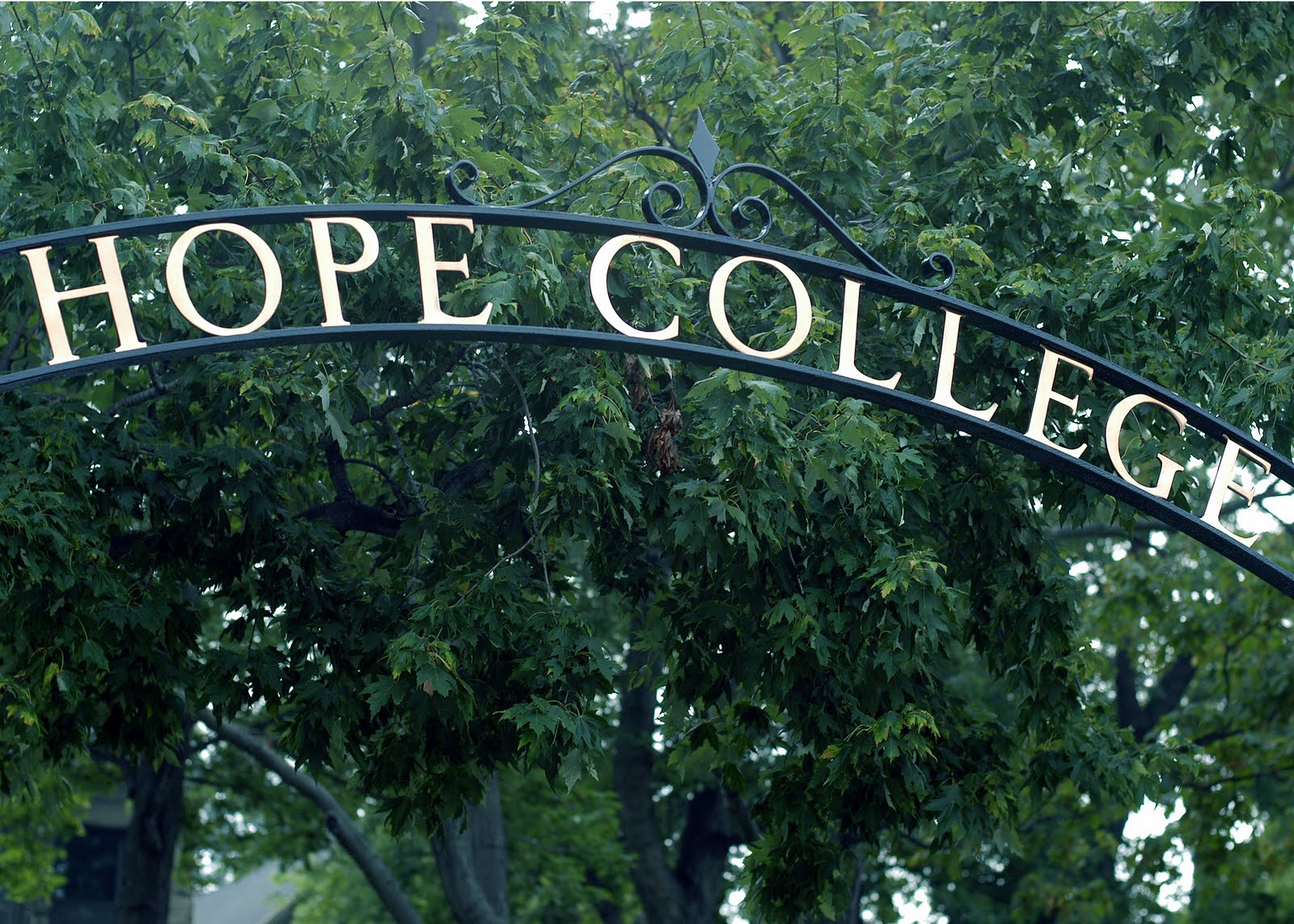
*image: Hope College Arch, made available through the public relations office website.
from the neighborhood: pancake day

05 Wednesday May 2010

Posted by Anna Clutterbuck-Cook in our family

≈ Leave a comment

Tags

domesticity, from the neighborhood, photos

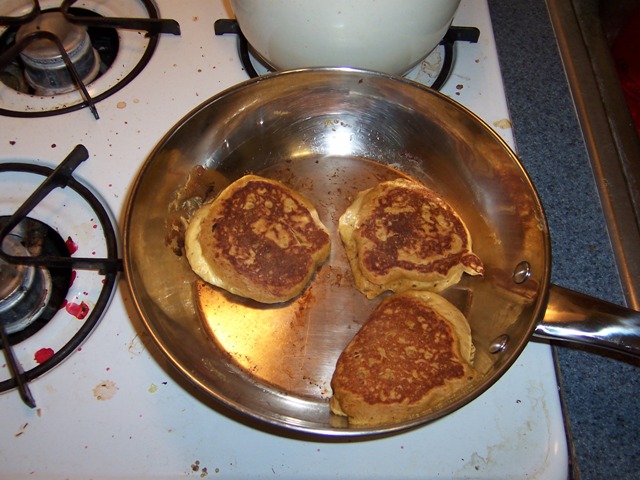
I piled a bunch of angst up in the early part of the week, and I thought y’all might be able to use a little break from my soapboxing. So here’s a picture of delicious corn molasses pancakes I made this morning. (Seriously: what could possibly be more anti-angst than pancakes??)

Wednesday is my thesis-writing day and so before Hanna and I take our morning constitutional and I drop her off at work before returning to craft eloquent sentences and pretentious footnotes, I get up and make pancakes. These particular pancakes are a recent find @ Joy the Baker and are awesome. Frankly, we can’t get enough of them.

not-so-quick hit: bigotry towards children

04 Tuesday May 2010

Posted by Anna Clutterbuck-Cook in think pieces

≈ 7 Comments

Tags

bigotry, children, feminism

Via Molly @ first the egg comes a passionate articulation of the right of children to be treated as human beings, rather than as a subspecies to be “liked” or “not liked” en masse. Sybil Vane @ Bitch PhD writes

Now, maybe I meet someone who doesn’t necessarily dislike Little V in a personal way but who is “not really a kid person.” And here I mean not necessarily someone who doesn’t want to have kids or who doesn’t have any experience being around kids or someone who lives a lifestyle that doesn’t produce any exposure to kids. I mean someone who is expressive about a “I don’t really like kids” attitude or a “I hate going to restaurants or museums where kids are making noise” attitude or a “of course it’s fine for other people to have kids but I don’t want to be around them” attitude. This sort of thing is a deal-breaker for me. I’ve gotten pretty rigid about it in recent years as I become more assured in my certainty that it’s an anti-feminist attitude and you suck if you hold it. Kids are a vulnerable, disempowered, inevitable portion of the human community and you do not get to “not like” them or to wish that weren’t a part of your public space. Not allowed. I invite you to swap out “kids” for any other disempowered community in the above phrases (“women,” “schizophrenics,” “hispanics,” “the blind”) and notice what an asshole you sound like.

You can read the whole post over at BitchPhD.

I’ve blogged about this before (last year in what turned into a two-part post here and here and in passing on Saturday in my blog against disableism post).

The first time I wrote about it, I realized I was coming down hard on someone who sounded like an asshole in comments (they’d left a post on my blog calling young people “feral, shrieking little carpet apes”). But I was largely unprepared for the backlash I got on the post, where people resisted mightily the possibility that there might be parallels between dehumanizing children (based on age) and dehumanizing other segments of society based on other group characteristics (such as race, national origin, gender, etc.). People made all sorts of assumptions about my socioeconomic status, my personal background, my status as a parent, and suggested that being an advocate of children’s humanity is only the province of privileged, solipsistic white mothers with ivy league educations.

So let me be clear, here. I’m not a parent. At this point, it’s unlikely that I will ever be a parent. The reasons for this are personal, relational, ethical, sociopolitical and economic in nature — too complicated to delve into in this post. But the point is: not a parent. And to tell you the truth (contrary to popular opinion re: women and infants) I’m okay with that.

There was a time (I won’t lie) when my fondest dream (at age nine) was to set up an orphanage with my best friend and spend my days nurturing a vast brood of Anne Shirleys who otherwise would not have caring adults to call their own. But I’ve grown and changed, tried quasi-parenting for a while (I spent a year as a live-in childcare provider), and realized that is not where my primary interest lies.

There are even days when I’m not just “okay” but incredibly relieved by the idea that I will never — unforeseen crises not withstanding — be the 24/7 primary caregiver of a young person. Even with a willing and able partner, that job seems prohibitively daunting. Particularly in a culture where meaningful support for caregivers (of the elderly as well as the young) is so thin on the ground.

But the point is: none of these personal decisions or experiences absolve me from the responsibility of including children in the human community. They don’t absolve me from the responsibility of treating them with the same courtesy and respect with which I expect folks to treat me, and with which I treat adult members of the human community. As Molly writes @ first the egg

I actually am not “a kid person” in any normal sense of the term — I’m not that whipped up about children just because they’re children, I’m generally much more interested in a puppy or kitten…or adult person…or this here computer screen…than a baby I don’t know personally — but they’re people.

The awesome thing about this is, in my experience, that young people thrive on being taken seriously. On being treated with a straight-ass, no bullshit attitude. Speaking from my own remembered experience as a child, I had zero interest in being fawned and fussed over, having my personal space invaded by adults who thought of themselves as “liking children” and were subsequently pissed when I failed to delight in their cosseting.

I wanted to be taken seriously, to be leveled with, and to be given a seat at the table with all the adults around me who discussed interesting and complicated things, had wicked skills for creating things and exploring the world, and who might possibly share that experience with me.

It’s true that children, by virtue of their still-developing brains and bodies, do not always meet the requirements set forth by our culture’s model of ideal able-ness and imagined self-sufficiency . . . but then, as I pointed out last Saturday, neither do we. Children need help meeting their material needs, need spaces and resources to explore the world and gain material, cognitive, and emotional skills to become more independent. Not every adult is prepared to provide on-the-ground assistance to children in this way, just like not every adult provides eldercare around the clock. But as members of the human community, citizens of the world, we can recognize that all of us matter — and treat those whose paths we cross accordingly.

And the sooner, the more ardently, we can impress upon young people that they matter just as much as the next person, the more likely it is that those young people will grow into older people who — no matter how privileged, how able, they become — will remember that their able-ness is not what imbues them with worth: it is their membership in the human community. Just as that membership in the human community grants the person sitting next to them on the subway, or standing in line behind them at the coffee shop, or playing on the swings at the park, intrinsic worth.

And hopefully, just maybe, this belief in the worth of humanity will make the world a richer, more compassionate, less threatening, less defensive, more bountiful world to live in for us all.

*image credit: Christmas Day Morning by Carl Larsson @ the Carl Larsson Gallery.

to be or not to be a "professional" (and does it matter?)

03 Monday May 2010

Posted by Anna Clutterbuck-Cook in library life

≈ 2 Comments

Tags

education, librarians

Blogger and librarian Ryan Deschamps @ The Other Librarian posted a thought-provoking piece last week, Ten Reasons Why ‘Professional Librarian’ is an Oxymoron. He introduces the list by writing

Before you comment, yes, this is an unbalanced look at professionalism. Yes, I am trolling a little bit – but with a heart that wants to lead discussion on the topic of library professionalism. Please do write a post about why these ten reason are bullocks.

On the other hand, I often see librarians and library school students that take professionalism as a given. I see this as unrealistic, especially in an era of rapid change . . . If librarians cannot personally address the following anti-professional assumptions as individuals, they cannot call themselves professional. What I am saying is that the MLIS or whatever equivalent a librarian has on their wall cannot count towards any status in society.

You can read the rest of the post at The Other Librarian.

I’ll be upfront about the fact that, while I am proud to call myself a librarian and to the work that I do in libraries and archive (and enrolled in my Master’s degree program in order to pursue work in this field that I love) I am not so hot about the idea of holding “status in society” as a “professional.” In fact, the idea that my MLS degree (when I complete my course this December) will signify some particular status in the world — one that sets me apart from my colleagues who do the same work but do not hold a library science degree — does not sit comfortably with me at all.

It wasn’t something that I thought about before starting graduate school: the fact that graduate school is, in large measure, about socializing workers into a particular professional identity. And to be quite honest, when it dawned upon me in the first few months of library school that this was part of the agenda, I kinda freaked out. The amount of angst among my fellow students and the faculty over defining and defending professional status makes me feel kinda claustrophobic. I hate drawing boundaries, boxing people in. Forget claiming “librarian” as a professional identity — try making the case for “archivist,” “records manager,” and other sub-fields being professional identities in their own right, distinct from the already-on-the-defensive identity of “librarian.” Sometimes I feel like folks spend more time worrying about their percieved status in society than they do just, you know, doing the job they feel called to do.

Being an historian, it’s really hard not to look at every identity or state of being in the world as contingent on specific historical forces having created it as such, for specific historically-relevant reasons that may or may not continue to have relevancy today. Take, for example, the concept of professionalism, and of workers belonging to particular professions for which they have recieved (in order to be deemed “professional”) advanced training, usually in an institution of higher education.

In our society, today, we consider “professional” jobs to be more credible — and able to command a higher level of income, at least in theory — than non-professional jobs. Believe me, as a pre-professional librarian (assuming librarianship is, indeed, considered a professional occupation) I am acutely aware of this. The thing is, we decided it should be this way. The notion of being a professional equaling status if actually a fairly recent development, starting in the late nineteenth century, back when people who were paid for the work that they did were considered of lesser status than, say, the “men of science,” the gentleman scholars whose accumulated wealth allowed them to pursue activities like history and scientific inquiry without worrying where the next meal was coming from. Slowly, claiming the identity of “professional X” became a way to claim a certain expertise, a certain skillset, that made you a credible source of information: even if you got paid for the work you did every day. (I’m totally over-simplifying, but you get the basic idea).

So (to return to Mr. Deschamps question), is “professional librarian” an oxymoron? His lists of reasons why they we (see? I work as a librarian in two separate libraries and still have to purposefully think in terms of a professional identity) are not certainly has merits. Though the arguments in favor are often equally compelling. My question is, do we really need to worry about fighting to preserve the status of “professional”? What are the benefits (and costs!) of understanding librarianship as a professional endeavor: when we are on the defensive, seeking to draw the boundaries between “librarian” and other identities and activities, what potentially valuable knowledge workers are we leaving out in the cold? What is the value of being exclusionary? If the work we do is valuable, it shouldn’t matter under what title (or identity, professional or non-) we do that work.

My thoughts on this are still muddled, often contradictory, and in constant flux and I plot my own trajectory moving forward (in work and in life). However, I do think it’s important not merely to examine the evidence for and against librarianship as a professional field, but also to ask why it matters that librarianship is considered a professional identity and whether those reasons (spoken and unspoken) are reasons we feel comfortable standing behind.

sunday smut: links on sex and gender (no. 20)

02 Sunday May 2010

Posted by Anna Clutterbuck-Cook in linkspam

≈ 1 Comment

Tags

gender and sexuality, sunday smut

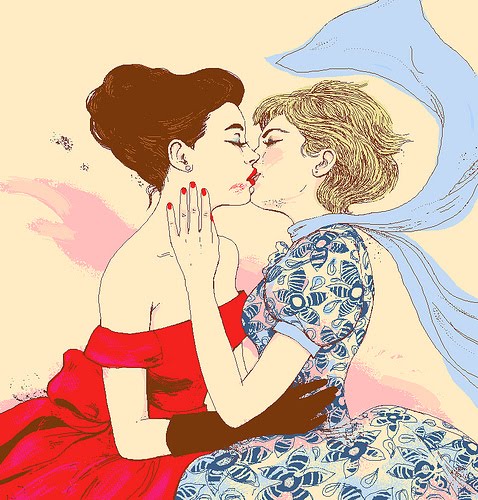
Incidentally, I am totally in love with this illustration (above) . . . I keep searching for nice pictures of women lovers on Flickr and this is the first time a search has actually yielded something I liked well enough to put on the Sunday Smut list. It’s an illustration for an article on lesbians in the Polish magazine Wysokie Obcasy (“High Heels”) which to my mind makes it even more awesome.

Speaking of women getting a little personal, there was a lot of angst this week about women showing emotion publically. Deborah Orr & Anne Perkins @ The Guardian both take women to task for such “feminine” displays of emotion as crying and giggling and sharing personal stories. Orr writes scathlingly of actress Gwyneth Paltrow’s recent disclosure that sometimes she cries at work while Anne Perkins derides female politicians for sharing personal anecdotes and giggling, suggesting “let’s keep the personal out of politics.” Aside from the obvious sexist double standard of equating femaleness with excessive emotion (who decides what’s excessive anyway??) I find it particularly offensive that Perkins co-opts the personal-political dyad of the feminist movement, in effect calling in coded language for the rejection of feminist sensibilities in political spaces. The suggestion that things associated with women are “unserious” is really irresponsible. And stupid to boot. Like me, Whitney Teal @ Women’s Rights Blog objected to this sudden hate on emotion, asking is crying at work so wrong? And in an article on “the art of confession,” Emily Gould @ New York Magazine points out that personal confessions are recieved differently by the public, depending on whether the confessor is male or female

If a woman writes about herself, she’s a narcissist. If a man does the same, he’s describing the human condition. But people seem to evaluate your work based on how much they relate to it, so it’s like, well, who’s the narcissist?

Jill @ Feminist deconstructs the cultural narratives surrounding the publication of Harvard Law School student Stephanie Grace’s racist email, pointing out that

Why should you be able not only to have the freedom to raise whatever issue you want, but also have the privilege to do so without offending anyone? That simply is not how the world works — ideas, as they say, have consequences, and part of the consequences of raising controversial (or idiotic) arguments is that people will become annoyed, angry or offended. I don’t think that people have a right to not be offended, but you also definitely do not have a right to demand that other people accept without emotion whatever ridiculous or hateful argument you make.

I think this story ties in with the story I wrote about earlier this week involving the desire of homophobic petition signers to keep their identity secret for fear they would have to have “uncomfortable conversations” with people who did not share their views. Freedom of speech does not mean you have the right to speak up without anyone disagreeing with you, people! Just like protection from violence and harassment does not equal never having to have a tense conversation about politics. Grow up already, people!*

So possibly, the Washington Times should not be surprised when people get a little, well, emotional in response to an editorial (yes, as in written-by-and-endorsed-by-the-Times) titled “Discrimination Is Necessary: Subjecting Kids to Weirdos Undermines Decency” (I mean, really, can you get any more appallingly bigoted? in a major print publication? wtf?) Via CaitieCat @ Shakeville comes an open letter in response to the editoral which I highly recommend reading: “Let’s talk about the consequences of teaching children that cruelty is acceptable as long as the victim is ‘not normal.'” Another open letter on the subject of transphobia at the national level comes from Autumn Sandeen @ Pandagon who writes about her experience in the hands of law enforcement after being arrested for protesting DADT outside the White House.

Also on the subject of transphobia, and its intersections with other types of bigotry, Kate Borstein @ Out reflects on the outrage over a recently-released film titled Ticked-Off Trannies With Knives, while intersectionality of another sort is the subject of a thoughtful, open-ended discussion between Latoya and Thea @ Racialicious. Not being a fan of any sort of oppression olympics (people who claim “my pain is more exquisite than your pain!” as a way of shutting someone up), I highly recommend the piece, even though it doesn’t offer simple solutions.

Women and breasts were also a popular topic this week, perhaps a side effect of the much-discussed “boobquake” protest? The protest’s originator, Jennifer McCreight @ The Guardian entertained us with what she learned from her quasi-scientific experiment; Amanda Hess @ The Sexist interviewed blogger C.l. Minou (The Second Awakening) about breast augmentation and feminine beauty standards while Rebecca @ The Thang Blog shares a conversation she had with her dad (a civil rights lawyer) about the possibility of getting herself arrested while going topless in public.

Two adoption-related blog posts this week, one from Harriet Jacobs @ Fugitivus, speaking out passionately in defense of her belief that adoption is always the second-best option, and Jill @ Feministe writes in defense of single fathers’ parental rights.

In other “think of the children!” news, Sinclair @Sugarbutch Chronicles shares some thoughts on why sex education is still a radical, controversial act and Margaret Eby @ Salon suggest that, despite hysteria in certain quarters preteen girls are not yet harlots. (Sad! Because “harlot” is an underutilized word).

Hanna Seligson @ The Wall Street Journal reports on the emerging ritual of pre-planned marriage proposals, where couples stage a proposal as if it were a surprise, even though they have had extensive discussions beforehand. I’m gonna admit right up front I don’t understand this: if you want to have an engagement party, awesome! But why stage this fake surprise where the man — and in hetero couples it always seems to be the man — “pops the question” to the woman, and she feigns surprise? Seligson has some intriguing theories, even though I’m not sure I agree with her in the final analysis.

And finally, congrats to Feministing’s founder Jessica and her partner Andrew who are expecting their first child on election day this November. I hope for you a nice, long bubble of privacy as you adjust to being a new iteration of your family together.

*Hanna points out that it is unclear whether the email (and original remarks) were intended to be between friends or sent out to a more public audience — say a study group — and how they ended up being made public. Jill’s point, however, is that having become public for whatever reason, the email is a legitimate subject of debate, as is Ms. Grace’s reasoning re: race and its implications for her legal work.

*image credit: kiss – illustration for an article about sex, Wysokie Obcasy #20 (523) 16 May 2009 made available by pixel endo @ Flickr.com.

today, I am able

01 Saturday May 2010

Posted by Anna Clutterbuck-Cook in think pieces

≈ Leave a comment

Tags

bigotry, blogging, human rights

I learned earlier this week via Brilliant Mind, Broken Body that today, in addition to being my parents’ wedding anniversary, is blogging against disablism day out there (out here?) in the blogosphere.

Blogging Against Disablism Day, May 1st 2010

At first, I wasn’t going to participate because I don’t think of myself as having a disability: I’m basically physically healthy and mobile, have never been diagnosed with cognitive or emotive impairments, and am mostly able to move through life on a day-to-day basis without special equipment, medication, or modification of my surroundings.

But then I thought a little more about the words “disability” and “ability,” and what they mean as we move through our daily lives. And realized I have some thoughts on the subject I want to share. (As I type these words, I can feel the rippling echoes of non-surprise from friends and relations emanating out across the internets).

So here’s what I’d like to talk about this day of blogging against disablism/ableism (depending on which side of the pond you’re on): the fact that, today, I am able, but I have not always been able, and I certainly won’t always be so.

And what that awareness, the fact of moving through the world as a person who is able (today), means to me.

As an historian, I am trained to be aware of changes over time, and of the ever-changing nature of “common sense,” of our understanding of the world around us and the categories in which we put things. Including things that we imagine to be immutable. In short, our understanding of what it means to be “able” and “dis-able” is fluid and contextual, rather than fixed. When we speak of ourselves or someone else being “disabled,” we conjure up in our minds, in collective understanding, what it means to be “able,” what it means to embody or emulate able-ness.

This is not to say that disability is an illusion. To me, disabilities are a complicated mix of self and society. They are made up of the gaps between the desires we have as individuals to be and live a certain way and the cognitive, emotional, and physical resources we have to fulfill those desires. They are made up of the gaps between the pressure we are under to be and live a certain way, and the resources we have to meet those expectations.*

But nevertheless, I think it’s incredibly important to remember how much we define “disability” by measuring individual people against our vision of “ability” — and how much “ability” is, in turn, defined in this day and age, but the ideal of a physically healthy (dare I say “flawless”), cognitively efficient and rational, and emotionally “well-adjusted.” That is to say a a youthful adult capable of being an efficient worker whose personal needs are such that minimal (if any) adjustments need to be made by the people or social and physical structures around them as they move through the world.

The “able” person in convenient. The “able” person is economically productive, appears entirely self-sufficient (an illusion, as every human being in modern society is in some measure dependent on other human beings), is uncomplaining, intellectually adept without being challenging, with a healthy respect for the Powers That Be.

Ableism is structural and cultural acceptance of this model.

Ableism means policing each other and policing ourselves to ensure that we continue to accept and strive toward that model of able-ness.

Ableism means that we punish each other and ourselves for failing to approximate this ideal of able-ness in our everyday lives.

When I move through the world thinking to myself “today, I am able,” I am trying to remember that ableism exists: that the messages I am inundated with, the pressures I feel, pushing me towards approximating that ideal are culturally created rather than immutable. That I have the freedom to accept or reject those expectations (though rejecting them does not come without social penalty, since we all police one another in this regard). That I can choose whether I police myself or other people according to those standards.

And here’s the kicker. Today, I am able. Today, I can more or less approximate able-ness. I am mostly physically healthy (and what physical ailments I suffer from, there are corrections and cures readily available to me). I am young (but not too young), and have socially-acceptable skills and aptitudes which give me access to respected institutions of learning and places of employment. I am able to meet the expectations of my employers and other people who hold positions of authority in my world, and can tailor my social demeanor in ways that make me unobtrusive and outwardly inoffensive to the majority of people.

But all of these things: they’re just luck of the draw. They’re highly contingent, fluid, liable to shift beneath my feet. Someday, inevitably, I will become less able to decide whether or not to approximate able-ness. Because I will lose my ability to approximate. The choice will be taken away.

In a blog post last year concerning the dehumanization of children in the feminist blogosphere, I quoted historian Gerda Lerner, who reflects, in her book of essays Why History Matters, on why all human beings should care about hate and discrimination in myriad forms. She writes

All of us, ultimately, will join one of the most despised and abused groups in our society–the old and the sick (17).

What does it mean, to me, to move through through the world with the awareness that I am (only temporarily) able? That I am (only temporarily) acceptable to those in power? It means that I carry with me an awareness of, and gratitude for, the way in which my able-bodiedness gives me access to the world in myriad ways. It means I am aware of the contingency of that access.

And, in what might seem to many of you a counter-intuitive leap of faith, the knowledge that I will lose access someday, no matter how much I scramble to preserve it, frees me from the existential anxiety of that failure.

Knowing already that I will means that it’s untenable to build my sense of self-worth on the foundations of able-bodied privilege, for if I do that, then knowledge of my worth will vanish the minute I develop a debilitating illness, lose my hearing or eyesight, lose mobility, experience diminished stamina, flexibility, memory — all of the things that (as an adult) I have come to take more or less for granted.

Knowing that we will all fail, in the end, to measure up to the imagined ideal of able-ness means that it is unconscionable for me to police and punish others for likewise falling short. Their humanity is so much more than their emulation of an impossible norm.

When I was a teenager, and attended church for a few years, there was a woman there whose son was struggling in the school system. He’d had been diagnosed with various social and learning disabilities and she was really anxious about his future growing into an adult who had to fend for himself. She tried hard to remember, she said, the words of the prophet Micah (6:8). I’m not usually prone to quoting the Bible, but I think this one is worth sharing

He hath shewed thee, O man, what is good;
and what doth the LORD require of thee,
but to do justly, and to love mercy,
and to walk humbly with thy God?

The Powers That Be in the world work hard encouraging us to forget that this is all that is required. That to be a worthy person, what counts is to be just, merciful, and humble. That everything else is, in the end, mere details.

And while we live every day with the reality of a world that forces us (in some measure) to comply with the expectations of the Ideal of Ableness, we can refuse to be held hostage by that ideal: we can name it, and recognize the limits of its power, and choose to focus instead on calling out and correcting injustice (including injustices wrought upon ourselves), on rewarding acts of mercy and compassion (including our own), and encouraging (and practicing) humility: the realization that, in the end, we are all unable to make it alone.

Today, I am able. Tomorrow, I will be no longer. But I will still be a person of worth. And so will you.

*What we do to bridge those gaps is likewise complicated, and not the subject of this post. I just want to say here that while I believe we in some measure construct disability and ability through cultural narratives, I absolutely do not mean to imply that medication, psychotherapy, and other personal solutions have no place. They are of incredible help to many people, and I have family and friends for whom such solutions have been essential to their wellbeing.

Happy 34th Anniversary, Mom and Dad!

01 Saturday May 2010

Posted by Anna Clutterbuck-Cook in our family

≈ 1 Comment

Tags

holidays


My parents aren’t the kind of people who go in for the big, splashy celebrations, but I think it’s definitely worth a mention that 34 years ago today, on May 1st, 1976*, my parents were married in the chapel at Western Theological Seminary (Holland, Mich.) by my grandfather, Jim Cook. This was followed by a reception in the lawn outside (if the photographs are any judge, it was a gorgeous sunny day) and a potluck picnic complete with bonfire at the beach that night.

All these years later, they’re still together and still very much a family (along with the addition of me and my sibs not to mention the cats, dogs, hamsters, birds, and other various wildlife that have passed through their home over the years). I’m so glad every day to have you two in my life!

*Bad daughter that I am, I originally indicated in this post that my parents were married in 1975, when it was actually 1976. What can I say: I’ve spent the last six months thinking about a educational program that began in 1975 and is celebrating its 35th anniversary this year . . . inexcusable grad-school related mindblip! Still, my point stands: 34 years of being a family is a pretty amazing thing.

from the neighborhood: i get birthday presents!

29 Thursday Apr 2010

Posted by Anna Clutterbuck-Cook in our family

≈ Leave a comment

Tags

domesticity, hanna, holidays, photos

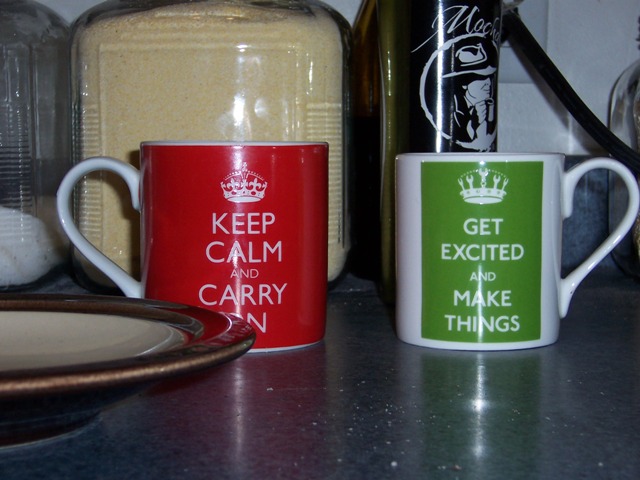
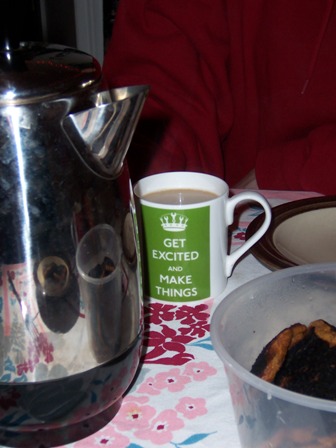
My 29th birthday (as many of you know) was at the end of March, and Hanna found this awesome coffee mug for me, all the way from McLaggan Smith Mugs in Jamestown Alexandra Scotland. It finally arrived yesterday, after a slight delay due to volcanic eruptions in Iceland

Regular readers of this blog may have realized that I am a longtime champion of nonstandard spelling, something which caused a great deal of tension between my mother and I during my early years (believe it or not, she had to work strenuously to convince me that writing was a worthwhile pursuit). “Excited” was one of the words she requested, eventually, that I learn how to spell the conventional way because I used it so often and she was getting tired of the variations on spelling I came up with.

The graphic is a riff on a 1939 British war propaganda poster that encouraged British citizens to “keep calm and carry on” in the face of German aggression. In recent years, lots of variations have cropped up, including Hanna’s favorite: “now panic and freak out” (featuring the royal crown, only turned upside down).

This morning I christened the mug with its first cup of coffee, made in our brand new percolator (Kenya AA from the Boston Common Coffee Co., also known affectionately as the Beanstock).

"i think i might be gay…now what do I do?"

29 Thursday Apr 2010

Posted by Anna Clutterbuck-Cook in my historian hat

≈ 1 Comment

Tags

gender and sexuality, history, northeastern

At one of my places of work, Northeastern University Archives & Special Collections, I’m in the early stages of processing the papers of Keri Lynn Duran (1962-1995), an AIDS activist and educator. On Tuesday, I came across two pamphlets from the mid-90s titled “I think I might be gay…now what do I do?: A Pamphlet for Young Men” and the corresponding “I think I might be lesbian…now what do I do?” (you can see updated versions of these — lesbian and gay — online at Advocates for Youth).

My reading of these was quite possibly colored by the fact I’d spent the afternoon reading literature on AIDS prevention and clinical drug trials . . . but I was struck by the muted tone of the pamphlets. They were in no way irresponsible or shaming: the text was affirming of non-straight sexuality, encouraged young people not to be pressured into settling on a single sexual identity, acknowledged the homophobia they may encounter, and provided additional resources.

But what I felt was missing was, you know, joy.

I’m far from the first person to suggest that our cultural attitudes toward the sexuality of children and young adults yo-yos back and forth from the clinical to the hysterical, from “just the facts” to “omg! think of the children!” without a lot of room left for pleasure. For embracing human sexual intimacy as one of the great joys in life. (See, for example, Jessica Fields, Judith Levine and Heather Corinna for starters.) And I understand the urge — particularly in the age of lethal sexually-transmitted diseases — to take a public health approach and deluge young people entering sexual maturity with the information to protect themselves from these infections (as well as from unintended pregnancy, physical and emotional abuse, etc.). But in dumping all of this cautionary information on top of them, while freaking out every two seconds about their sex lives (it constantly amazes me how much adults in the media enjoy speculating about the sex lives of youngsters), we somehow forget to talk about how freakin’ awesome sex is.

And I’m not talking about how “hot” or “sexy” sex is — as in “girls gone wild,” performative sex. I’m talking about, you know, why all of us everyday folks (the people who don’t look like the models in Vogue or GQ) enjoy sexual intimacy with our partners. We don’t talk about why sexual intimacy is, at the end of the day, worth pursuing if engaging in sexual activity truly entails all the risks we tell young people it entails: a broken heart, a viral infection, an unplanned pregnancy, possible death.

I believe this is because our culture views young people as sexually insatiable. We assume they’re perpetually horny. And we assume that, being horny, surrounded by other equally-horny teenagers, they automatically (magically?) know how to access all of the enthusiastic, joyful, athletic (dare we say “innovative, bordering on the avant garde”?) sex they want whenever and with whomever. We somehow (I guess?) imagine that young people have access to the language to talk about their desires, their loves, what turns them on, who turns them on, how to act on those feelings even though I doubt that picture of adolescence is one most people remember from their own teenage years.

Or possibly we don’t invoke pleasure, joy, and desire in these conversations because we often still struggle to articulate them for ourselves — let alone feel confident enough to speak of them to young people with less experience and even more questions than ourselves.

This silence makes me sad. Growing up, it seems to me, is scary enough without adults constantly taking it upon themselves to remind young people just how scary it is. Again, these pamphlets were providing encouraging information to young people they assumed were already struggling. And none of their advice seems, to me, particularly misplaced. They’re not wrong in what they do provide. But . . .

I just wish the answer to “now what do I do?” (for all teens, regardless of orientation) could be a little less like a public service announcement and a little more, well, more confident in teens ability to grow into their adult sexuality with grace — stumbling along the way, to be sure (we’re all human, after all, teenagers too) — but with generosity, tenderness, energy, creativity, passion, resilience, intelligence, and joy. Backed up by the message that we’re available in the background to listen, converse, support, and provide information and resources whenever they might need them.

But really, we shouldn’t forget to mention the joy.

on anonymity and political speech

28 Wednesday Apr 2010

Posted by Anna Clutterbuck-Cook in think pieces

≈ 3 Comments

Tags

gender and sexuality, politics, web audio, web video

Walking home this morning from dropping Hanna off at work, I happened to hear Nina Totenberg’s story on today’s oral arguments at the U.S. Supreme Court over whether the constitutional right to privacy protects petition signers from having their names made public.

Transcript available at NPR.

While the case before the court involves an anti-gay petition to repeal a same-sex “everything-but-marriage” law in the state of Washington, the issue before the court is not so much about homophobia, per se as it is about the right to anonymity in political speech: does someone who signs a petition for issue X have the right to keep that act private? In the Washington case, when advocates of the everything-but-marriage law requested to review the petitions in order to check for fraud, the petitioners claimed that the right to privacy protected them from having to make the lists public. They argue that privacy is necessary in order to protect petition signers from harassment by their opponents.

So here’s the thing. I realize that, in this country, we have a right to privacy when it comes to actual votes: I often talk openly about whom I am going to or did vote for, or where I stand on certain issues. But it is my right as a citizen not to be forced to show my hand if I choose not to. However, a petition is something different. I’ve signed a few petitions in my life: usually I’ve done so outside my hometown library, or via websites, or at the grocery store. I’m asked to include my name and address on the understanding that those who tally signatures have to determine — at least in the case of alleged fraud — that I am who I say I am. There’s no implied or expected right to privacy here. I’m putting my name on a form in broad daylight, right below the last person who signed the damn paper and right above the line where the next person will sign theirs. It seems really disingenuous to come up post facto with the argument that signers have a right to anonymity which they were never promised in the first place. You can’t sign a petition “X”.

Unless, of course, that’s your legal name.

What truly bothered me about the pro-privacy advocates in this story is their argument that acts of political speech need to be protected by anonymity so that people who speak up for a certain position can be shielded from having “uncomfortable conversations” with those who disagree with them.

“Uncomfortable conversations”?

Really?

We’re at a point where people who are against same-sex marriage want the right to defend their (in my opinion bigoted) point of view by protesting via a petition drive, but also want the right to remain anonymous so that they don’t have to have “uncomfortable conversations”?

Grow the fuck up already. Part of being a human being in this chaotic, messy, every-changing world of ours is, you know, sometimes interacting with people who hold different opinions from you. And possibly having conversation in which those different opinions come to light. Conversations that turn out to be awkward, stressful, painful, sometimes alienating.

Welcome to the world.

There’s tons of ways to deal with this diversity of opinion. Learn to be confident in your own opinion. Learn to be comfortable speaking up for yourself while also being a good listener. Find like-minded supporters. Possibly (god forbid!) re-evaluate your position in light of new interactions and learn something.

But if you’re going to sign a fucking petition asking voters to revoke the human rights of a certain proportion of the population, then I say you’d fucking well better be able to articulate your reasons. And be willing to do so in public. In the NPR piece, Washington State Attorney General Rob McKenna defends disclosure laws on these grounds (though with less swearing).

McKenna replies that only one blogger said he wanted to encourage uncomfortable conversations. And he adds, “I don’t think that encouraging uncomfortable conversations amounts to the kind of harassment or potential intimidation that would warrant keeping these petitions out of public view,” he says.

“In fact, in a democracy, there are supposed to be conversations which are occurring about difficult or contentious political issues,” McKenna says — even if those conversations are uncomfortable.

Yes, it’s important that you be protected from stalking behavior, from verbal abuse over the telephone or from (I’m speculating scenarios here) people who come to your place of business and interrupt your work to abuse you verbally or threaten physical violence. But this sort of behavior is already illegal. What’s not illegal (thankfully!) is the right of person X to criticize (privately or publicly) person Z for an action or opinion of Z’s that X finds misguided, hateful, or otherwise wrongheaded.

There are obviously more or less effective ways of having that conversation. I’m personally a fan of ill doctrine’s approach.

What I am not a fan of is people who try to reinforce systems of oppression and exclusion through law and then argue they have a right to do so without taking flack for it, and without being held accountable. Once you start trying to force everyone around you to accept your version of morality, you lose your right to privacy on that particular issue. If you wanted to keep that opinion private, you should have kept it to yourself.

← Older posts
Newer posts →
"the past is a wild party; check your preconceptions at the door." ~ Emma Donoghue

Recent Posts

  • medical update 11.11.22
  • medical update 6.4.22
  • medical update 1.16.2022
  • medical update 10.13.2021
  • medical update 8.17.2021

Archives

Categories

Creative Commons License

This work by Anna J. Clutterbuck-Cook is licensed under a Creative Commons Attribution 3.0 Unported License

Meta

  • Register
  • Log in
  • Entries feed
  • Comments feed
  • WordPress.com

Create a free website or blog at WordPress.com.

  • Follow Following
    • the feminist librarian
    • Join 36 other followers
    • Already have a WordPress.com account? Log in now.
    • the feminist librarian
    • Customize
    • Follow Following
    • Sign up
    • Log in
    • Report this content
    • View site in Reader
    • Manage subscriptions
    • Collapse this bar