• anna j. clutterbuck-cook
  • contact
  • curriculum vitae
  • find me elsewhere
  • marilyn ross memorial book prize

the feminist librarian

the feminist librarian

Category Archives: book reviews

$1 review: wise parenthood

31 Tuesday Aug 2010

Posted by Anna Clutterbuck-Cook in book reviews

≈ Leave a comment

Tags

children, feminism, gender and sexuality

$1 reviews are posts about books I find (or Hanna finds for me) on the $1 used book carts at the bookstores we visit around Boston.

Marie Stopes in her laboratory, 1904
Image made available through Wikimedia Commons

Last weekend, when my mother was here on a visit, Hanna and I took her to Brattle Book Store near the Boston Common to shop the glorious $1 and $3 book carts which they keep in the empty lot next door. There, much to my feminist sex geek delight, I found a copy of Marie Stopes’ 1918 classic Wise Parenthood (“The Treatise on Birth Control for Married People. A Practical Sequel to ‘Married Love'”) for a mere $1.00! By the time the twenty-first edition (my edition) appeared, the book had gone through sixty-eight printings and 626 thousand copies were in circulation.

Much to my everlasting sadness, I neglected to buy a copy of Married Love when I saw it at an antique mall last fall in Michigan — only going so far as to follow my mother around the shop reading hilarious passages aloud to her and giggling obnoxiously. So I have not read the the companion volume to Wise Parenthood. I thought I’d share this passage, however, since to at least it presages the current conversation about modern parenthood/reproduction as a conscious decision that a couple makes, as opposed to something that just “naturally” happens to opposite-sex couples when they enjoy an active sex life.

Nature herself provided that men and women should delight in meeting. Given a loving married pair in normal health, and unsophisticated in any way, there is seldom any lack of children around them after they have been wedded for some years. This is what is still described as the ‘natural’ condition of affairs, and in these days of sophistication in so-called ‘civilization,’ some reformers urge a return to Nature and an unregulated birth-rate.

If, however, the course of ‘nature’ is allowed to run unguided, babies come in general too quickly for the resources of most, and particularly of city-dwelling, families, and the parents as well as the children consequently suffer. Wide parents therefore guide nature, and control the conception of the desired children so as to space them in the way best adjusted to what health, wealth, and happiness they have to give. The object of this book is to tell prospective parents how best to do this, and to hand on to them in a concise form what help science can give on this vital subject.

Barrier methods, such as the sponge, rubber cervical caps, and condoms are covered, as are methods such as “coitus interruptus,” nursing after birth, and the “safe period” (the rhythm method). I like this objection Stopes raises to coitus interruptus:

The great majority of women whose husbands practise this method suffer very fundamentally as a result of the reiterated stirring-up of local nervous excitement which is deprived of its natural physiological resolution. Of the far-reaching effects on the woman’s entire organism of the lack of a proper [vaginal?] orgasm, which is generally the result of this method, this is not the place to speak … [however] the local support and nerve-soothing contact which are supplied mutually to both when the act is completed normally are destroyed.

She was also not a fan of “metal instruments” (a veiled reference to surgical abortion techniques?) and was firm in the advice that one should “NEVER PUT INTO THE VAGINA CHEMICALS YOU WOULD NOT PUT IN THE MOUTH.” which seems like fairly solid advice on the whole, particularly considered in the light of the era’s encouragement that women use such substances as lysol, carbolic acid as douching fluids.

Here’s hoping I can find a volume of Married Love on the $1 carts soon!

reading the (lesbian) classics: annie on my mind

28 Saturday Aug 2010

Posted by Anna Clutterbuck-Cook in book reviews

≈ 1 Comment

Tags

blogging, gender and sexuality, guest post, reading lesbian classics

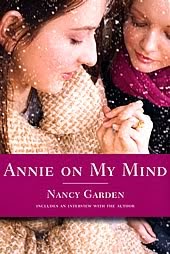
Welcome to the first installment of a new series, “reading the (lesbian) classics,” in which Danika Ellis of The Lesbrary and I read our way in a very haphazard manner through queer literature (our method is basically picking out the books that sound like a fun time and taking it from there!) and chat about it, and then post our conversations on the interwebs. So here’s the first installment. This time around, we read Annie On My Mind, by Nancy Garden, first published in 1982.

Warning! Mild plot spoilers ahead for those of you who care!

Anna: So [rubs hands together] … how shall we begin our conversation?

Danika: I’m not sure, I feel like I must have forgotten half the book… might as well start with first impressions and just see where it leads us.

Anna: [laughs] Had you ever read it before?

Danika: I have, once before. I remember when I first read AOMM I thought there was something a little bit off about their relationship. And now I think I know what bothered me. I don’t know if it’s because it’s set in the 80s, or if it’s Nancy Garden’s writing, but they both seem a lot younger than what they’re supposed to be.

Anna: Yes! They’re supposed to be, like, headed for college and they act like they’re in middle school.

Danika: I know it’s in a sort of self-conscious “girls our age aren’t supposed to do this” way, but I still liked it a lot better once I started thinking of them as 13-year-olds instead of 17-year-olds. And it’s not just them: even her little brother seems at least 4 years younger than his given age! And her classmates!

Anna: Yeah. I don’t think I noticed it so much when I was younger, because I read it when I was about thirteen myself? It was about the only lesbian YA novel my library had (early to mid-90s). To be fair, that was before the real boom in queer YA fiction. AOMM was probably one of the few available. And not a bad one to have if you’re only going to have one (no one dies!) … but yeah, I agree with you that, especially this time around I was left thinking, “wow, and these are supposed to be seniors?”

It’s not even Annie’s imaginary world … it’s more the school politics and so on. Like, no one has a real sense of a world beyond the microcosm of the prep school.

Danika: Yeah, the ear-piercing! Again, I was thinking “Well, maybe it’s just because this was 30 years ago…?” But it definitely seemed a bit off

Anna: Part of it probably is the era … and the fact that Nancy Garden was probably, on some level, harkening back to her own teen years which would have been in, what, the 1950s? 60s? When maybe ear piercing was more risque?

Danika: Aaah, yeah, that might have been part of it.
Anna: I also wondered if maybe part of it was an attempt to make the drama center around something other than the fact that Liza was discovering her sexuality? So she invented another drama about the prep school that seemed kind of forced?

Danika: Maybe, but it turns into it being about her sexuality anyway.

Anna: True.

Danika: I remember when I first read AOMM I thought the girls’ meeting seemed really forced. And I definitely agree with that the second time around. The singing, the sudden friendship… again, it’s the sort of way children interact, not teenagers.

Anna: Yeah — teenagers are more self-aware, and self … restrained? I made instant best friends with kids in art class when I was, maybe, six! Not when I was seventeen. At seventeen I was like, well, maybe going for coffee after class and see how that goes. But since NG wanted the girls not to be at the same school, she had to find a way for them to run into each other.

Danika: Still, I think she could have done better than “Don’t stop [singing]. Please.” “Oh, you startled me!” That just sounds really forced.

Anna: I’d forgotten how much class is an implicit part of the story. The way Annie comes from a “bad” part of town and everything.

Danika: I forgot that, too!

Anna: I was thinking, vis a vis reactions to queer teens, that it was interesting that Liza’s sexuality was more controversial in her upper-class world than it seems to be in Annie’s world.

Danika: Yes, because everything was controversial in Liza’s little world. The ear-piercing I guess was supposed to highlight that, but it seemed odd anyway. The only question with Annie was whether she was going to tell her family or not, so I don’t think we ever see how her school would have handled it, but presumably they have more important things to worry about.

Anna: It would have been irrelevent in Annie’s school (I’m assuming); no one cared about her there. I got the sense she was nervous about telling her parents, but her family was portrayed as fairly accepting and encouraging. I got the sense that they would have been baffled and maybe a little worried or hurt, but there wouldn’t have been all the drama that Liza had in her family and at the school.

It was interesting to me how it was almost reversed … or maybe that’s not quite what I’m thinking of. But today, we think of urban upper-middle-class folks as fairly cool about queer sexualities, etc. Whereas we think of lower-class people as reactionaries. Culturally. And in this story, the opposite was the case. I doubt those stereotypes would hold up [in real life], but it’s interesting that she chose to write it like that.

Danika: That is the framework we generally use. But Liza’s privilege paralyzed her. Her school was so caught up in itself that no one could step out of line. It was a weird relation between them.

Anna: Yeah. Maybe I’m just too midwestern to understand the world of elite prep schools!

Danika: Yes, it was really weird seeing into that strange boxed-off world.

On a slightly different note, I was writing down some thoughts as I went, and on page 49 of my version, I thought Garden was foreshadowing the reaction to her coming out. It was when the parents found out about the ear-piercing, and the mom is pretty accepting, but the dad freaks out. So it surprised me later when he was actually really great about it.

Anna: Good point. I was really intrigued by a number of the adults in the story, actually … and the way in which adults were portrayed in relation to the young people.

Danika: How so?

Anna: Well, I was impressed that the adults at the hearing were not portrayed as monoliths, as monsters, and that a couple were standing up to the schoolmistress, even if for their own reasons. And I thought it was an interesting (and positive) choice to give the girls such human mentors, themselves lesbians of an elder generation.

Danika: Yeah, that’s very true. The thing that stuck with me most about AOMM has always been the teacher couple (oops, spoilers).

Anna: (warning! warning!)

Danika: Actually, the thing that stuck with me the most was their book collection. Lesbian books inside my lesbian book! Wow! Their presence really made the story. (The teachers, not the books.)

Anna: I agree about the teachers. In contrast to the caricatured headmistress and the reactive parents, the two teachers came across really human, but also kind and supportive, generous, and sheltering without being controlling. I wondered in my notes whether this was a conscious attempt to counteract the specter of the gay/lesbian predator?

And yeah, it was fascinating to have the books play such a role in a couple of key scenes … from what I’ve heard from queer people of earlier generations, that was often the case! that they first discovered language for who they were from books … all the more reason to be a librarian-advocate for lgbtq teens!

Danika: Aaah, I hadn’t considered that! Of course! Because the lesbian teachers were fantastic teachers. If I may quote my favourite line from the dad’s reaction (though he goes on to say he doesn’t think gay people can be truly happy), “Oh, look. What difference does it make if a couple of teachers are lesbians? Those two are damn good teachers and good people, too, as far as I know.” I mean, wow! Surprise acceptance!

Anna: Hehe. Yeah, exactly. Because there’s that interesting conversation between the girls and the teachers. after the teachers have been fired. where the women acknowledge that if they don’t press charges, they should be able to get good references … because the school won’t want to admit that they fired the women for being lesbian … but they also fear for their ability to be hired if they were really out. So a real catch-22.

Since we’ve talked a lot about where the story felt kind of forced … one of the ways in which I was really impressed with it was the fact that it a) had a couple of really sweet scenes in which the girls clearly make love, even if off-screen (so to speak), and b) that this is really seen as 100% a good thing, despite what happened with their teachers. Their sexual exploration doesn’t spell doom for them as individuals or for their relationship. I don’t think many YA romances with straight couples were that whole-heartedly enthusiastic about young love back in the late 1970s … Even Judy Blume’s Forever, despite the positive sexual experience, ends with the relationship ending.

Danika: That’s true. It’s a bit of a bittersweet book, because Liza gets suspended, nearly expelled for being gay, the teachers get fired, and we know the whole time that they end up drifting apart after they leave for university. But it’s also a lot more positive than most of the queer books (YA or not) available at the time. They do end up together at the end, and there’s a lot of support of same-sex love. I also liked reading it for all the tropes and patterns that young queer love, young closeted love takes. Like how you could totally tell they were in love with each other before they knew. Like the classic game of “how much physical contact can we have before it means something?” (shoulders touching, hand holding, etc.)

Anna: Yes! Which I feel like is something that is still confusing to kids (or perhaps I only speak for myself) … since you’re trained, culturally, to expect that opposite-sex intereactions are laden, but not same-sex ones, so you aren’t so self-conscious and things kind of sneak up on you way more than with opposite-sex relationships.

Oh, and it was also nice that neither of them really “went straight”. Annie was pretty sure she was gay, and Liza wasn’t sure, but was definitely leaning towards accepting it.

Anna: I agree! That actually seemed a little dated (in a nice way?) to me, since I feel like if this book had been written today, you’d get this whole “am I bi? am I gay? am I just questioning?” thing going on. Which is absent entirely: Liza comes to the realization she’s “gay” full-stop.

Danika: That’s true, it definitely has that all-or-nothing mentality that we’ve (thankfully) shaken off a little more by now

(Oh, wait, I take it back: Annie did try to be straight! Back when she was younger. In her words: “It was ridiculous.” That made me laugh.)

They are super cute when they are together and happy.

Anna: Yeah, and as you say there was that added element of the reader being “in the know” in part because Liza’s spoilered it for us at the very beginning with the framing narrative.

What do you think of the function of the framing narrative as a literary device? Do you think it adds anything to the narrative that we kind of know it ends badly (at least in the short-term) before the story begins?

Danika: I was pondering that the whole book. I kind of get why she did it, because she needed the drama to keep the story moving through the happy couple parts, but it did add this element of doom that, frankly, no queer book really needs any more of. I guess it works overall, because we get the (spoilerspoiler) happily ever after following the long(ish) separation and we process it with Liza as she processes (and processing is a classic lesbian thing to do), but I’m a little divided on it. What did you think?

Anna: Hmm. Tough question. Retrospective narratives can sometimes work pretty well, but I agree with you that the last thing any queer teen book needs is more angst! That’s why I adore David Levithan’s work so much — his love stories are so ebullient. As a kid, I always felt like the way Liza blamed herself for the punishment exacted on the teachers (or, more accurately, for having made love in their home while she was house-sitting … what the hell was so shameful about that?) was really exaggerated. Like, shouldn’t she have been pissed at the secretary who had the vendetta? And the schoolmistress, etc.? But maybe that’s a personality thing — I always had an over-developed sense of self-righteousness as a child 🙂

Danika: Ah, I loved Boy Meets Boy for that! It’s like a combination of cotton candy and sinking into a hot tub. It’s just so refreshing to read a happy queer love story. I still want my lesbian version of that.

Anna: Totally! I feel like YA lesbian fiction is still waiting for its Daniel Levithan (if you have any recommendations, I’d love to hear them!)

Danika: I don’t know of anything quite so positive, though I have read some good ones. Hello, Groin by Beth Goobie is my favourite.

Well, I can see why they were a little ashamed. In the teachers’ bed…? That’s bad taste. What I couldn’t see, though, was why they opened the door! They didn’t have to answer! -sigh- The secretary was definitely over-the-top. The absolute poision she was spitting out was painful to read.

Anna: … I guess. I did a lot of house-sitting in high school and college and I always slept in the homeowner’s bed (clean sheets, granted) so it didn’t feel so weird to me. but that wasn’t in the deal Liza made with the teachers, so I guess that is a little different. Oh, totally with the door! [headdesk] Why oh why did she have to answer????

Danika: Especially before getting dressed!

Anna: Despite the secretary’s religiously-motivated poison, I was actually surprised by how little religious conservatives and the religious right as a force opposed to sexual expression appeared in the novel (contrasting, again, with the way it figures in some Levithan stories) … I think that’s another way this dates the story, since it was set just as that force was gathering.

Danika: True, I mean, when she faces the commitee/council/whatever that was, they basically say “Hey, this is none of our business”, which is pretty good for the circumstances.

Anna: Yeah, I think it’s interesting how the battle-lines are drawn ever-so-slightly differently than we’re used to in our generation. The religious element not quite so strong, the class element more so. Being queer still being a threat to one’s overall reputation/status even in secular society. (Not saying that’s totally gone away, but you wouldn’t think in Liza’s New York or at MIT it would be an issue!)

Danika: Hmmm, yeah, I can see that…

Honestly, I’m kind of surprised Liza wanted the school to survive. I know she has sentimental attachment to it, but even before they knew she was queer, Poindexter (go to love that name) was absolutely heinous, from the patronizing way of talking to running the meetings when Liza was supposed to be running them.

Anna: Yes. Again, another way in which they seemed young for their age. By 17, you’d think she’d have more perspective. I can see a younger child being invested in the school that had been a second home, but most seventeen-year-olds I’ve known (including myself!) are a bit more jaded!

Danika: Very true. By 17 I had distrust for all authority, definitely including my school.

I don’t know if you read my review and conversation about Well of Loneliness, but I saw a couple of comparisons between it and AOMM that surprised me.

Anna: Do tell!

Danika: Well, for one, both the protagonists were horrified at people hating them being gay, because they both felt that their love was the “best part” of themselves, or some variation on that. Also, both have a scene with the couple being happy that is described as an “illusion”. It’s just funny because WoL is mentioned in AOMM as part of the teachers’ book collection.

Anna: Yes, it was fun to see the lesbian classics appear on their shelves 🙂

Danika: Especially Patience & Sarah, because Liza and Annie read it, and this time I have, too!

Anna: I read once an essay that was talking about how generations of queer folks locate themselves in history through alternate means than family ties, since so many of them don’t come from families where the parents are themselves queer — and literature was one way.

Danika: That’s exactly why I feel that queer lit is so important. It is a foundation to the queer community.

Any last thoughts?

Anna: Not that I can think of — other than that I really enjoyed the chance to re-read this with someone else, and I’d totally be up for doing it again!

Cross-posted at: Danika @ The Lesbrary | Annie On My Mind Conversation.

Watch for the next installment in reading the (lesbian) classics sometime in late September of early October! At Danika’s suggestion, we’re reading Hello, Groin, by Beth Goobie (2006). We thought we could use the book as a chance to consider where lesbian YA fiction has come since the “early days.”
booknotes: fast girls

20 Friday Aug 2010

Posted by Anna Clutterbuck-Cook in book reviews

≈ 2 Comments

Tags

gender and sexuality, smut

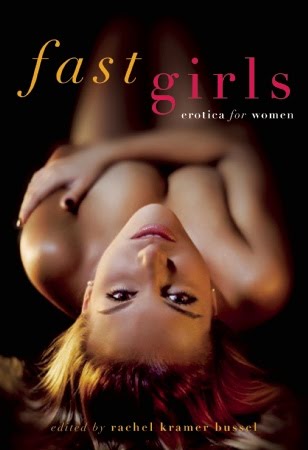
So I volunteered to review a copy of Rachel Kramer Bussel’s latest anthology, Fast Girls: Erotica for Women. Because let’s fact it: who doesn’t want a free book of erotic short stories sent to them? I mean, I’m a bibliophile, a feminist, and a sex nerd. It really it wasn’t an option to say no!

The thing is, as soon as I’d said “Oh, yes, please! Send me a copy!” and the book was on its way, I remembered this thing that librarian Nancy Pearl once wrote about erotica: that one of the places to go when you’re in the mood for something steamy is the stories that someone else has identified as the worst erotica of all time (I’m paraphrasing here, because my copy of Book Lust is on a shelf in my parents’ house back in Michigan). Because for every person who thinks that story is the libido-killer of the century, there’s going to be another who thinks that it’s the hottest sex scene they’ve ever read, and they’ll drop it halfway through to go find their significant other(s) in order to get their temperature back down to normal.

I’m a relativist when it comes to arts and culture (not so much when it comes to ethics and human rights): “good” art? “good” writing? who says there’s one right way of doing it! And human sexuality, particularly, seems like an area ripe for radical democracy: the best way to create “good” erotica in my book is simply to create it. Which is why I’m a big fan of erotic fan fiction and other amateur outlets for lustful creativity.

Which is a long-winded way of saying: dilemma. How the fuck are you supposed to review a book of erotica in any sort of meaningful fashion when my favorite story is likely to be someone else’s worst nightmare — or I might overlook the one scene that, for someone out there, is likely to make the whole book worthwhile?

I realize this is a dilemma faced for the reviewer of any book. But it seems uniquely acute when it comes to reviewing porn. Maybe because porn is so particular. And maybe also because, well, to it’s hard to talk about without giving slightly more … intimate details as to your own particular tastes. “I really liked the scene in Tristan Taormino’s ‘Winter, Summer’ where the narrator gets felt up at a bar by a butch she’s just picked up at the pool table”? “I went fever-hot all over sitting in the subway reading the penultimate bondage scene in D.L. King’s ‘Let’s Dance'”? “I must have some serious power issues, ’cause Ms. Bussel’s ‘Whore Complex’ resulted in the need for a new pair of knickers”?

See? It’s all slightly embarrassing, a little too clit-on-your-sleeve for my taste. So rather than attempt to pass judgment on the book qua book I’ll simply offer this: I’m am happy to live in a world in which erotica for women, Fast Girls included, exists. It makes my feminist heart proud that right here, right now, we are part of a culture that — despite its many, many shortcomings — includes a space for women writers who want to write smut to write it. And to get published. It warms my heart (and other bits of my anatomy) that not only are we women writing and published erotic texts — that is, texts written explicitly for the purpose of arousal — we’re writing and publishing erotic texts in which women have sexual agency. In which women identify and court (or just plain come on to) the objects of their lust. In which women take charge of the sexual encounter. In which women feel free to choose partners of any sex and pursue them expressly for the purpose of sexual pleasure. In which, sometimes, women explicitly consent to relinquish control because chosen powerlessness. So I don’t really have a stake in what porn you read (or whether, really, you have any personal interest in porn at all). But I encourage you all to revel in the fact that we have such literature available to us, in all its myriad flavors.

Fast Girls is now available to purchase and can be found online at Amazon, Powell’s and other online vendors. Rachel’s website provides a whole array of links to the online bookshop of your choice.

booksnotes: straight to jesus

02 Monday Aug 2010

Posted by Anna Clutterbuck-Cook in book reviews

≈ Leave a comment

Tags

gender and sexuality, religion

In which I review another one of what Hanna calls my “scary books.” This time, Tanya Erzen’s Straight to Jesus: Sexual and Christian Conversions in the Ex-Gay Movement. After hearing Tanya Erzen talk about her recent work on the religious experiences of Twilight fans on RhRealityCheck, I tracked down Erzen’s earlier work (originally her dissertation) based on a year-long ethnographic research project on New Hope, the United States’ oldest ex-gay ministry.

Straight to Jesus documents the personal experiences of those within the ex-gay movement and places their ideologies and practices within the context of the context of the religious, political and psychotherapeutic frameworks within which the ex-gay movement has come of age. Erzen argues that while gay rights advocates and the politicized Christian Right have become polarized over the question of whether sexual orientation is fixed or changeable, most ex-gay-identified individuals and their support networks resist the politicization of their sexual lives and instead focus on the spiritual transformation they experience through ex-gay programming. Just as Evangelical Christianity believes in the need for sinner to continually be born again and experience renewal in their relationship with Christ, so to (Erzen argues) ex-gay ministries see the process of becoming ex-gay as an ongoing cycle of confession and rededication which Erzen has termed “queer conversion.” She explains that

Although the political goals of the ex-gay movement and queer activists are radically distinct, by accepting that a person’s behavior and desire will not necessarily correspond with their new ex-gay identity or religious identity, ex-gay men and women enact a queer concept of sexuality (14).

What I found most fascinating in the book was the relationship between performing gender and straight sexuality. The gender and sexuality theorists of the ex-gay movement are, by and large, working with mid-twentieth century concepts of gender and sexual identity which associate homosexuality in men with what they see as effeminacy and homosexuality in women with characteristics they consider to be “butch” (like an interest in car repair). They also read male homosexuality as entirely physical — destined, regardless of the desire of the individuals involved to be a series of anonymous hook-ups — and lesbianism as entirely emotionally-driven — by its very nature “emotionally cannibalistic” because the women, rather than desiring each other sexually (women! wanting sex! don’t be ridiculous!), want to be one another (152).

Following this logic — that homosexuality is caused by a weak identification with one’s assigned gender — the ex-gay movement has incorporated lessons on gender performance into its therapeutic agenda. Women are taught to apply makeup and select clothing, men are taught how to interact with other men in a platonic fashion and play manly sports. In one particularly bizarre (to me, anyway!) exercise, the residents of New Hope’s “steps out” of homosexuality program are brought together with straight men and instructed to interview the straight men about how, essentially, to perform straight masculinity. Questions include “what physical aspect of the opposite sex turns you on?” and “Can a man ever fully understand a woman?” (108).

This approach essentially inverts the basic liberal-progressive concept of sex and gender, in which sex (one’s physical sex characteristics and sexual orientation) are biologically determined and “gender” refers to all of the ways we make meaning of those sexual differences, and the cultural roles we are expected to inhabit. Within the ex-gay movement, gender is the primary marker of identity, and deviating from the assigned gender roles of one’s sex is damaging to the very core of one’s identity — as opposed to one’s sexuality, which is seen as primarily about actions rather than core identity. (Obviously, there are lots of nuances and challenges to the sex/gender division within liberal-progressive circles, but I think the basic distinction here is valid, particularly when characterizing the mainstream liberal position).

I’m not particularly opposed to seeing sexuality as more mutable — indeed, many people within feminist, queer, pro-gay circles have been arguing for years that sexuality is much less set-in-cement than the simplistic biology-based way of understanding sexuality that the gay rights movement has so often chose (for strategic reasons) to emphasize. What seems harmful to me about the ex-gay position concerning sex and gender, however, is that they demand such rigid conformity when it comes to gender performance. This signals to me a fear of human diversity that will, in the end, become self-defeating … since human beings are, and (in my opinion) will continue to be a gloriously heterogeneous, both in sexual orientation and gender expression. To tell people who believe their non-straight sexual orientation and non-conforming gender identity endangers their relationship with God and Jesus is — to me — an act of violence. It is another instance in which the Evangelical God-as-abusive-parent narrative surfaces in a way that offers short-term relief (you can struggle with homosexual desires and not be exiled permanently from God’s love!) but ultimately the anguish of being judged and found wanting at the very core of your being.

booknotes: her husband was a woman!

27 Tuesday Jul 2010

Posted by Anna Clutterbuck-Cook in book reviews

≈ Leave a comment

Tags

feminism, gender and sexuality

Cover art for Her Husband was a WomanA few weeks ago, when I was in Maine for the weekend I found time to read Alison Oram’s slim little volume on gender crossing in mid-twentieth century England (1920-1960s, roughly), as reported in the popular press. Her Husband Was a Woman!: Women’s gender crossing in modern British pop culture (New York: Routledge, 2007) explores how gender identity and sexual orientation was understood — or at least reported — in tabloid newspapers, and how it changed over time from the dawn of the twentieth century to the postwar era.

While clearly a scholarly monograph with a very narrow focus, Oram’s book does a nice job of historicizing how we understand the relationship between gender crossing behavior and sexual identity. She is careful not to read backward onto women in earlier eras categories of identity that did not exist (transgender, for example) or were understood differently then. At the same time, she describes how those categories emerged and how they, in turn, influenced how gender crossing was reported in the press and understood by the individuals featured in the stories.

She draws mostly on stories of women we would today likely understand as transgender or butch lesbian: women who were read as men in their society (through the clothes they wore and the social roles they fulfilled) and were partnered with women. Some women began crossing as a way of escaping the constraints of femininity (to see better-paying employment, for example) and found it suited them. Others seem to have been drawn for more nebulous reasons to identify as men.

Oram compares the stories of these on-the-street gender crossers with women who performed in drag on stage, in situations where the audience knew the actor was female but bought into the male persona on stage. These performers, who were well-known and adored throughout the late 19th century and into the 20th provided a framework for tabloid journalists to understand gender crossing as something that was not necessarily tied (as it would later become) to lesbianism — even though many of the real-life gender crossers were in same-sex relationships.

According to Oram, the early tabloid reports focused on the performance aspect of gender crossing, marveling (in a positive sense) at the women’s ability to succeed in moving about the world as a man. As the twentieth century wore on, and scientific models of gender and sexuality were more widely discussed, medical language about sex changes and lesbianism began to creep into the reports. Gender crossing became more closely linked to same-sex relationships (which in turn were suspect) and the theatrical element of women’s drag performances faded.

The book is a quick read, which I highly recommend to anyone with a particular interest in how cultural interpretations of gender expression and sexual identity have changed over time.

"the scandal of our own non-necessity"

08 Thursday Jul 2010

Posted by Anna Clutterbuck-Cook in book reviews

≈ Leave a comment

Tags

politics, religion

On Tuesday, I posted a quote from Terry Eagleton’s On Evil. To risk appearing completely enthralled by Eagleton’s prose (which I admit are difficult not to delight in), today I’m sharing a passage from Holy Terror (Oxford: Oxford U.P., 2005), which Hanna recently finished and handed off to me.

I’ve talked briefly in a couple of recent posts about the meditation practice of metta, or “lovingkindness,” the Buddhist practice of extending intentions for well-being, peace, and and end to suffering toward all beings in the world. Even beings we do not like very much (or at all). Even ourselves. A friend of mine recently suggested this is similar to the Christian practice of “radical welcome” or “radical acceptence.” Both distinguish loving beings qua beings, so to speak, from loving individual beings in a more particular sense. I believe both types of caring — the more impersonal, unconditional love extended to all, and the particular liking of certain persons — are important. But I also believe that liking people, in a genuine way, really only takes root within the more disinterested, impartial sea of radical acceptence, or radical love.

Last week, I came across a passage in Holy Terror that speaks to the power of radical love. (Eagleton speaks from his background as a Catholic Christian, though I don’t believe the ideas need to be limited to Christian theology.)

Dionysus [in Euripides’ play The Baccae] offers men and women precious time off from their burdensome existence under the political law. We have seen already that such carnivalisque interludes are in the interests of the governing powers rather than an affort to them. As Olivia observes in Twelfth Night, there is no slander in an allowed Fool, no harm in jesters so long as they are licensed. When transgression is ordained, deviancy becomes the norm and the demonic finds itself redundant. This is why the devil finds himself with empty hands in the postmodern world. If Jesus’s law is light, however, it is not only because he, too, comes to relieve the labouring poor of their afflictions, but because God commands nothing more of his people than that they should allow him to love them.* Because he is the Other who neither lacks nor desires, unlike the Lacanian variety, he needs nothing from others, and his law is consequently free of neurotic compulsion and paranoid possessiveness. Ironically, it is God’s transcendence — the fact that he [sic] is complete in himself, has no need of the world, and created it out of love rather than need — that allows him to go so easy on his creatures.

God himself has the necessity of law, in that his being is not contingent. But this law, once again, is the law of love — for since nothing apart from God needs to exist, whatever does exist does so gratuitously, as a result of his unmotivated generousity. To say that things were created out of nothing means that they did not have to come about. The did not follow inexorably from some precedent, as elements of a causal or logical chain. Creation, in Alain Badiou’s terms, is an “event,” not a dreary necessity. The cosmos could quite easily never have happened. Instead, God could have devoted his considerable talents to, say, figuring out how to create square circles …

… Since religious fundamentalism is among other things an inability to accept contingency, the universe itself is a persuasive argument against such a creed. What fundamentalism finds hard to stomach is that nothing whatsoever needs to exist, least of all ourselves. For St Augustine, the fact that human beings are “created” means their being is shot through with non-being. Like modernist works of art, we are riddled from end to end with the scandal of our own non-necessity (p. 32-33).

*All bold passages are my emphasis, rather than Eagleton’s.

I am bewitched by Eagleton’s final passage here: “we are riddled from end to end with the scandal of our own non-necessity.” Why? Because our impracticality is the foundation upon which unconditional love is built: we do not have to be useful to be loved, we simply have to be. And this, indeed, is a radical claim.

A fuller meditation on both On Evil and Holy Terror will (knock on wood) be in a forthcoming booknote.

terry eagleton on the secret lives of children

06 Tuesday Jul 2010

Posted by Anna Clutterbuck-Cook in book reviews

≈ Leave a comment

Tags

children, politics, religion

I recently picked up Terry Eagleton’s book On Evil (New Haven: Yale U.P., 2010). I might at some point write a fuller “booknote” about the volume, and a related Eagleton book, Holy Terror (2005), which I am also reading. However, in light of some of my recent posts on children as people, I thought some of my readers might enjoy the following passage from the first chapter of On Evil.

We are ready to believe all kinds of sinister things about children, since they seem like a half-alien race in our midst. Since they do not work, it is not clear what they are for. They do not have sex, although perhaps they are keeping quiet about this too. They have the uncanniness of things which resemble us in some ways but not in others. It is not hard to fantasize that they are collectively conspiring against us, in the manner of John Wyndham’s fable The Midwich Cuckoos. Because children are not fully part of the social game, they can be seen as innocent; but for just the same reason they can be regarded as the spawn of Satan (2).

Setting aside the question of whether or not what he’s describing vis a vis actual children holds true — and whether, if it does hold true, to what extent such a situation is culturally created or “natural” — I think it’s fascinating to consider how strong our cultural perception of its reality is: children are read uas “other,” whether in the Romantics innocent ur-human sense or in the sense of Golding’s barely-repressed savage, “uncivilized” amoral bestiality.

"with all due respect, small children"

23 Wednesday Jun 2010

Posted by Anna Clutterbuck-Cook in book reviews

≈ 2 Comments

Tags

children, gender and sexuality

Let’s face it, we all have our favorite books from childhood. (I hesitate to call them “children’s books” because so many authors who write books children enjoy resist being ghettoized and too many children read books originally written for grown-up audiences). And let’s admit we are completely partisan about our golden oldies. I, for example, tend to evaluate any scholarly or reference work on children’s fiction by flipping to the index and discovering whether Arthur Ransome merits an entry. If not? You have to talk awfully fast if you want me to buy it. If Edward Eager is discussed your chances are upped, and Michelle Magorian is really required reading in anything purporting to discuss young adult lit.

Which brings me to this recent op-ed by Alison Flood @ The Guardian. The children of England recently voted Eoin Colfer’s Artemis Fowl, the first in a series featuring a young supergenius antihero. Flood disagrees. “With all due respect, small children,” she writes, “your choice of the admittedly excellent Artemis Fowl as the ‘Puffin of Puffins’ is deranged and wrong. It should clearly be MY choice: Goodnight Mister Tom.”

I also adored Magorian’s Back Home, another story of an evacuee. Rusty is sent to America, and the drama plays out around her return to England to a world and a family who feel like strangers. Anyone else remember that one? I loved the bit where Rusty escapes from boarding school to decorate her own little cabin in the woods.

But Goodnight Mister Tom is better. It should have been the Puffin of Puffins, and I think it has a good claim to be the children’s book of children’s books. (Now that’d be a fun vote, although we may have to exclude anything published after I graduated to grown-up books, else I’ll only get upset again.) I’m imagining that all you discerning adult readers will agree with me about Goodnight Mister Tom being the top Puffin – but please let me know either way. And I’ll try not to cry if you disagree.

I’m not going to weigh in on whether or not Goodnight Mr. Tom should or should not be the top Puffin — to me, book choices are personal, idiosyncratic things. My passion for particular books has (I suspect) less to do with any objective artistry — if any objective measure of artistry exists — than it is tangled up with where I was when I read the book (Our Arcadia) what questions I was asking about life (The Solace of Leaving Early), whom I read and shared the book with (The Blue Sword) and more often than not a single scene — a single passage — a single sentence — that seared itself into my psyche forever simply because it spoke to me. The rest of the book might be a shit book. I might never read it again except to open it up to that passage and remind myself once again why I fell in love so irrevocably with the text.

So here’s what I wanted to say about Michelle Magorian, ’cause I adore her too, and then I’ll open up the comment thread to any of you who feel like sharing your own well-worn favorites from childhood: I’d love to hear about the books you loved and why you loved them.

So: Magorian. Alison Flood leaves off Magorian’s third novel, Not a Swan which is difficult to find (unlike the other two) and, in the United State at least, out of print* (which accounts for, apologies, the sucky cover art image). But my public library had a copy in the young adult section, and I discovered it when I was about twelve. And promptly fell in love. Set during the waning days of the Second World War, in an English seaside town, it’s the story of a sheltered seventeen-year-old schoolgirl, Rose, who longs to be a writer.

There’s a whole long list of plot elements that combined to make this a story that enthralled me (I vividly remember, fifteen years later, the feeling of staying up until 3:00am to finish it because I could not put it down). It was an historical novel (1) set in England (2) during the Second World War (3). It was about an adolescent girl who rebelled against conventional expectations about what young ladies should be (4) and do (5), craved adult independence (6) and wanted to be a writer (6). There was the best friend, pregnant out of wedlock (7) whose birth scene — without giving too much away — was quite possibly what precipitated my adolescent interest in midwifery. There’s an historical mystery (8) involving archival documents (hidden diaries) and above all, there was Alec (9), the bookshop owner (10) who hires Rose as his shop assistant and encourages her in her writing.

And (11) there was sex. Gorgeous, glorious, enthusiastic sex. Tame, to be sure, by the standards of adult erotica, but still pretty damn steamy. Not a Swan, I would argue, is one of a slim, slim handful of novels written for young adults that embraces adolescent sexuality without shaming. Again, without giving details away, I will be forever grateful that one of the first genuinely “YA” novels I read was essentially a story about a young woman claiming her right to enjoy her sexuality on her own terms. (Actually, by my count, at least four women, all in very different circumstances, yet all asserting their independence and their right to happiness and sexual pleasure).

Depending on your perspective on human sexuality and the whole women-as-humans thing, you could say this was the beginning of my coming into myself as an adult woman who embraced feminism and the potential for joy in sexual relationships — or you could see it as the beginning of my long, slow decline into the life of a slutty teen-age bibliophile. Either way, there really was no turning back.

So take it away readers — what books do you enjoy championing and why?

*woodscolt in comments alerted me to the fact that in the UK Not a Swan has been republished under the title A Little Love Song. Thanks woodscolt!

booknotes: sexing the body

17 Thursday Jun 2010

Posted by Anna Clutterbuck-Cook in book reviews

≈ 2 Comments

Tags

gender and sexuality, science

I took a class as an undergraduate in the Cultural History of Victorian Science and Technology, which was one of the most awesome classes of my lengthy undergraduate career. One of the conversations I remember from that class was a discussion about how and why some new technologies and scientific theories succeed and some fail. We tend to have a merit-based vision of innovative success and failure: good ideas succeed, bad idea fail. But this isn’t necessarily so — you might have a bad idea but really good marketing skills. You might have a good idea but fail to file your patent paperwork at the right moment. Usually at the beginning of a new technology (take cars for example) the a multitude of products compete for the industry standard. The gasoline-powered internal combustion engine was only one of a number of automobile technologies developed around the turn of the twentieth century: its hegemony today had everything to do with marketing and the availability of cheap oil, rather than its inherent superiority to, say, an electric motor (which was on the scene simultaneously, even a little bit prior to, gasoline-powered motors).

What does this have to do with Anne Faustos-Sterling’s Sexing the Body: Gender Politics and the Construction of Sexuality (New York: Basic Books, 2000)? I thought of the story of the automobiles and its lesson about the interaction of science, technology, and culture while I was reading Sexing the Body because what my cultural history professor had done for modern technologies, Faustos-Sterling, a trained biologist, does for the scientific exploration of gender and sex in the human body. The work is now a decade old, but still reads (to my eyes anyway) as a fairly current account of how sex and gender have been understood through the lens of science, specifically intersexuality during the twentieth century and how the treatment of intersexual persons is shaped by larger cultural understandings of gender, sex and sexuality.

This exhaustively-researched, amply-footnoted book does a commanding job of balancing the important-yet-technical ins and outs of scientific studies involving rats and hormones with a compelling, readable narrative. Faustos-Sterling documents the way in which the production of scientific knowledge — specifically the knowledge related to human sex and sexuality — is inexorably shaped by the cultural understandings of what is normal sex and gender presentation. She begins with external markers of sexuality and a truly horrific chapter concerning how people with unacceptable genitalia have been treated by the medical establishment in the twentieth century. She then moves internally to look at the less visible ways in which scientists have identified the sex of persons, from gonads to hormones. As you might expect, her argument is that “sex” is far from easily established on a medical level, and the standards by which we have chosen to measure sex are hardly objective, unchanging scientific criteria but rather contingent on the narratives concerning sex and gender that scientists performing their laboratory tests take part in and are influenced by.

Warning to anyone who has experienced hospital or medical-related trauma: the descriptions of medical malpractice that included things like operating on infants without painkiller, operating on people of all ages without consent, and providing misleading or outright erroneous medical information to patients or the parents of underage patients are infuriating and painful to read. I find the idea of any medical professional performing invasive, medically unnecessary surgery on a person without their consent or with coerced consent so upsetting that I had to put the book down several times just to let my blood pressure drop.

Much like Hanne Blank’s history of virginity, Sexing the Body takes a concept (“sex”) that we have come to think of as biologically determined and physically identifiable and questions just how much we really know about what “sex” constitutes. Even if the components of our body that have become markers of “sex” (male or female) are, indeed, physical realities, the decision to establish those particular physical characteristics as markers of sex is, in the end, a socio-cultural decision we make, and one that we can change.

And this, in the end, is Fausto-Sterling’s hopeful call: for us all to look beyond the dualities of male versus female, masculine and feminine, and nature (what we have come to label “sex”) and nurture (what we have come to label “gender”) and acknowledge the reality that we are both and neither, that what we understand as sex and gender identity is both nature and nurture — and, in fact, more. That we cannot hope to gain more knowledge about human biology and behavior if we continue to constrain ourselves to limited, limiting categories and attempt to shoehorn the diversity of humanity into their narrow confines.

$1 review: portrait of a marriage

09 Wednesday Jun 2010

Posted by Anna Clutterbuck-Cook in book reviews

≈ Leave a comment

Tags

gender and sexuality, history

$1 reviews are posts about books I find (or Hanna finds for me) on the $1 used book carts at the bookstores we visit around Boston.

This past Sunday I happened, for one reason or another, to spend a lot of time in transit on the T here in Boston and anticipating this I had dropped a battered first edition of Nigel Nicholson’s Portrait of a Marriage (1973), about his parents Vita Sackville-West and Harold Nicholson. I had read it once before, a number of years ago, and have also seen the 1990 television adaptation starring Janet McTeer and David Haig (which I highly recommend). But it was fun to read the book again.

This time around, I was struck by a couple of things that I thought might interest y’all (mild historical spoilers ahead for those of you who care).

The first is that, reading with my historian’s (not to mention archivist’s) eyes, I am freshly astonished by the rich depth of the documentary record. Portrait of a Marriage, for those of you who don’t know or need a refresher, takes as its core text and autobiographical narrative written by Vita Sackville-West in her late twenties and discovered by her son, Nigel Nicholson, after her death. It tells the story of her early life, marriage to Harold Nicholson, and her tumultuous romance with Violet Trefusis that threatened to end their marriage but ended by confirming its centrality in her life. This autobiographical text, written when the crisis was still fresh in Vita’s mind, is placed in historical and biographical context by sections authored by Nigel Nicholson and drawn from a seemingly limitless supply of primary source material including family diaries, correspondence, newspaper accounts, photographs and paintings, and oral testimony. This is apparently a family that saved everything rather obsessively. I am not sure if this was because, as part of the titled classes in Britain, they felt somewhat obliged to document their private lives for the (eventually) public record, or whether Vita and Harold’s lives as writers and (in his case) a civil servant fostered the urge to record and preserve, but the Nicholson family has — in the generations since — given rise to a number of authors, many of whom have tackled autobiographical subjects and draw upon the family’s historical record. Portrait is an early example of this type of writing and I think as an example of family autobiography is a remarkable one.

My second observation, during this reading, was the way in which Vita describes her relationships with Violet and Harold, respectively, and the way they are compared within the sections written by Nigel — who is drawing heavily on family narratives concerning the events described. The marriage which this book seeks to provide a portrait of is the relationship between Harold and Vita — for it is that relationship which is seen to have endured and, in a sense, “won out” (maintained priority) in their lives in the face of competing sexual attractions: Vita’s to other men and several women, including Violet whose story is most central to this book (more below), and Harold’s relationships with men. These relationships were openly acknowledged between the couple and at times other family members, and appear to have in some measure been essential components of their shared life: some part of the glue that held them together.

The stability of this marriage — centered as it was around shared family life and a commitment to Knole and Sissinghurt Castle — is contrasted with the vicissitudes of Vita’s lesbian relationships (all comparatively short-lived), most notably her stormy relationship with Violet Trefusis whom she had known since childhood and loved passionately for a period of time in her twenties.

Vita and Violet fell deeply in love after Vita’s marriage to Harold and the birth of her children (according to Vita’s autobiography, Violet had been pursuing her since before the marriage, though Vita seems to have remained semi-oblivious, partially because she was involved in a relationship at the time with a woman named Rosamund (who was crushed when Vita announced her impending marriage). During the intense period of their relationship, Violet actively fantasized about the two going away together to the continent and living their lives together, free from Vita’s ties to family and to place and in an openly-acknowledged committed relationship. Vita, by her own account, seems to have been seduced willingly by this vision of a shared future and the couple ran off together for extended holidays on several occasions, living as a couple and ignoring the pleas of both families for them to return to England and the responsibilities that awaited them there.

It would be likely unfair to see Harold and Vita’s relationship as the key factor in putting an end to that alternate life; Violet sounds like a volatile person, impractically-minded and impatient, who tried a number of back-handed ways of separating Vita from her family life including a sham marriage to a man whom she made promise never to pressure her into sexual relations. But what I found myself wondering, as I read the story, was whether any of the players involved at the time could have imagined an end to the story that had involved Vita and Violet as the couple at the center of the tale. Whether the women, as a couple, could have — in another historical or cultural context — have been the pivotal relationship, the pairing at the center of domestic life.

As I say, it is perhaps an unfair question, given that Violet seems to have viewed Knole as a rival for Vita’s affections and had no interest herself in rural life. But aside from the specific personalities in question, I have a sense from the overarching family narrative that it never would have occurred at the time to this cast of characters (the drama played out in the late 1910s) that a solution might have been found that would not have forced Vita to make a choice between her familiar responsibilities (and, to be fair, clear desires) and her love for Violet. In another time and place it might have been more possible for the pair (and those around them) to incorporate Violet into family life rather than seeing her as a threat to it. And, too, if that had been more possible perhaps Violet would not have felt so desperate as to resort to the manipulative behavior she seems to have engaged in.

I don’t mean to belittle the love and liking that Vita and Harold clearly (through family testimony and personal correspondence) to have felt for one another — yet I mourn the fact that the love and liking of Vita and Violet faced such overwhelming odds — odds that likely contributed to its eventual unraveling.

image credit: image of Vita Sackville-West snagged from the blog Tasting Rhubarb which offers a review of a recent book on the Sissinghurst garden.

← Older posts
Newer posts →
"the past is a wild party; check your preconceptions at the door." ~ Emma Donoghue

Recent Posts

  • medical update 11.11.22
  • medical update 6.4.22
  • medical update 1.16.2022
  • medical update 10.13.2021
  • medical update 8.17.2021

Archives

Categories

Creative Commons License

This work by Anna J. Clutterbuck-Cook is licensed under a Creative Commons Attribution 3.0 Unported License

Meta

  • Register
  • Log in
  • Entries feed
  • Comments feed
  • WordPress.com

Create a free website or blog at WordPress.com.

  • Follow Following
    • the feminist librarian
    • Join 36 other followers
    • Already have a WordPress.com account? Log in now.
    • the feminist librarian
    • Customize
    • Follow Following
    • Sign up
    • Log in
    • Report this content
    • View site in Reader
    • Manage subscriptions
    • Collapse this bar