• anna j. clutterbuck-cook
  • contact
  • curriculum vitae
  • find me elsewhere
  • marilyn ross memorial book prize

the feminist librarian

the feminist librarian

Category Archives: book reviews

Booknotes: Anathem

06 Saturday Jun 2009

Posted by Anna Clutterbuck-Cook in book reviews

≈ Leave a comment

Tags

genre fiction

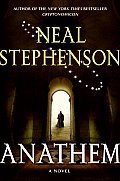
Ever since Hanna read Neal Stephenson’s latest tome, Anathem, over the Christmas holidays, she’s been telling me to kick it to the top of my reading list. Which I promised to do — as soon as I had enough brain cells available at the end of the academic year. Turned out “enough brain cells” required a few weeks post-semester to become available, and even then there was no way Anathem would be a quick read for me. I’ve previously encountered Stephenson in his mammoth Baroque Cycle, and know that — for me, anyway — pacing is key for both absorbing the story and being able to stick with it to the very end. Things definitely happen in Stephenson novels — usually brain-shattering, temporal-defying, chaos-inducing things — but in order to discern their true import, you usually have to experience them filtered through the exposition of the highly cerebral main characters.

Anathem is set in a world both familiar and utterly alien to us: is it Earth in the future? An alternate Earth of the past, present, or future? An entirely unconnected universe? Anathem‘s world is socially organized around the Saecular world and the “mathic” world, similar to a system of religious monestaries, in which particularly gifted individuals devote their lives to intellectual endeavors. Fraa Erasmus, a young member of one of the mathic communities, relates his experience of certain world-shaking events that take him out of his secluded community and into the Saecular world — and beyond.

I was sad, in reading Anathem to discover no character who would have matched wits with Jack Shaftoe, King of the Vagabonds, or Eliza of Qwghlm. But I realize they are a difficult duo to compete with. Erasmas, the narrator of Anathem, shares many characteristics of Daniel Waterhouse (of the Baroque Cycle) and Lawrence Pritchard Waterhouse, Daniel’s descendent, in the companion novel Cryptonomicon: He filters everything he experiences through his highly logical, straightforward way of thinking that only distantly registers his own (and others’) emotions or relational interactions. I grew fond of Erasmas, but I was never as heavily invested in his future well-being as I was in the welfare of Jack and Eliza and their cohort. Still: imbibed slowly and surely, like a really strong gin & tonic, it was an ultimately satisfying and thought-provoking summer read.

Booknotes: Girls on the Stand

31 Sunday May 2009

Posted by Anna Clutterbuck-Cook in book reviews

≈ Leave a comment

Tags

blog for choice, books, children, feminism, politics

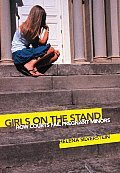
As news was breaking about the murder of Dr. George Tiller, and abortion provider and pro-choice activist, I sat down to read Helena Silverstein’s Girls On the Stand: How Courts Fail Pregnant Minors.

A professor of government and law, Silverstein details the real-world effects of parental notification and consent laws have on the ability of minors to exercise their rights to abortion access as currently granted under U.S. law. Specifically, Sliverstein is interested in the viability of the “judicial bypass” option that the U.S. Supreme Court requires such parental involvement laws to contain: that is, if a pregnant minor does not wish to inform her parents of her pregnancy, she must have the ability to petition, confidentially and with the help of court-appointed counsel, for an exception. Focusing on the practical workings of the judicial bypass procedure in three states, Alabama, Pennsylvania, and Tennessee, Silverstein found that pregnant minors faced ignorance, bureaucracy and outright ideological obstruction in their pursuit of timely and medically-safe abortions.

For example, after systematically phoning courts in her three targeted states for information on how to initiate a judicial bypass, Silverstein and her research assistants faced a wide range of responses, from the adequate to the under-informed to the intentionally misleading. Whether malicious in intent, answers to an initial query that fail to clearly affirm the minor’s right to confidentiality, a timely hearing, and most importantly free assistance in navigating the court system, “portray the bypass as a road the minor must travel alone and risk sacrificing the minor’s right to her own vulnerability” (61). Even more egregiously, some anti-abortion judges, with the discretion granted to them under current law, have employed such intimidation tactics as requiring pro-life, Christian counseling for all minors seeking the bypass, or even appointing a guardian for the fetus who has the responsibility of challenging the petitioner at the hearing and attempting to persuade her against choosing an abortion.

“The argument of this book,” Silverstein writes, “is directed at those who have made a good-faith compromise on the parental involvement issue,” seeking to ensure that minors wishing to terminate pregnancies are given the information and support they need, both pre- and post-abortion, while still protecting their constitutional rights to privacy and bodily autonomy (157).

Those compromisers, a group to which I once belonged, have in mind a picture of what a world with such mandates would look like. Pregnant minors will be encouraged to seek guidance from parents, and courts will protect those who choose otherwise. We have seen, though [in this book], that many courts are not prepared to do their duty, whether due to ignorance, recalcitrance, or incompetence. We have seen judges who are willing to employ hardball tactics to get minors to bend to their will. Whatever the Supreme Court might decide about how much implementation failure is too much or what obstacles too burdensome, it is up to the good-faith compromiser to decide whether the reality of parental involvement mandates sufficiently approximates her picture [of reality] to warrant continued support. This is a personal decision. To my mind the case is clear. I invite the reader to be her own judge (157).

Sadly, Silverstein’s book is not as narratively compelling as I would have hoped, even to someone like myself whose heart usually quickens a the prospect of a book or an article dealing with the intersection of feminism and the law. Her prose feels clunky, and the reporting of her research — while providing the evidence necessary to make her case — nonetheless caused me eyes to begin glazing over, even at a brief 180 pages (excepting endnotes and bibliography). Given its narrow scope, a meaningful reading likely requires a fair amount of background knowledge in recent abortion politics and law.

Still, I’m glad to add it to my repertoire of resources on reproductive health and rights. The struggle over women’s right to bodily autonomy is not going to disappear any time soon, as Tiller’s murder today dramatically and tragically illustrates — and young women are among those particularly vulnerable to having their reproductive choices taken from them, given their relatively lack of experience and financial resources. Silverstein reminds us not to assume that what looks good on paper will likewise be sound in actual practice.

Booknotes: Decline and Fall of the British Empire

27 Wednesday May 2009

Posted by Anna Clutterbuck-Cook in book reviews

≈ Leave a comment

Tags

feminism

The stuff you learn when you spend your weekends hanging out with another bookworm.

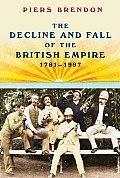
This isn’t strictly speaking a “booknote” in that I haven’t actually read the book in question. But this weekend, while I was reading Graceling, Hanna was reading (among other things), Piers Brendon’s Decline and Fall of the British Empire, 1781-1997. And along the way, via her viva voce renderings of the text, I learned a few valuable pieces of British Imperialism trivia.

  • While, from the standpoint of Western imperialism, I realize there are many things wrong with this concept, I was nevertheless quietly charmed by learning of the term sleeping dictionary which was slang for (according to the OED) “a foreign woman with whom a man has a sexual relationship and from whom he learns her language.” Perhaps it is my love of dictionaries that gives it an endearing feel; I also like the possibility, at least, that if a sexual relationship was sustained and mutual enough for one lover to learn the language of the other than it might in some ways defy the violence of imperial domination.
  • In a passage that begs for an illustration, Brendon writes that Warren Hastings, the Governor-General of India from 1773-1785, “was particularly indulgent towards his acquisitive and much-loved second wife Marian who dressed like ‘an Indian princess,’ braided her auburn ringlets with gems, and amused herself by throwing kittens into a bowl full of enormous pearls which slid under their paws when they tried to stand up” (36).
  • And finally, in a fashion moment one wishes the fug girls had been around to see, apparently British women of the late-nineteenth century could purchase bustles that, when sat upon, played “God Save the Queen” . . . a sort of patriotic whoopie cushion!

Long live the British Empire . . . at least in entertaining history books.

Booknotes: Graceling

25 Monday May 2009

Posted by Anna Clutterbuck-Cook in book reviews

≈ Leave a comment

Tags

genre fiction

Back in October, I had a very enthusiastic bookseller at Curious George Books in Harvard Square put a copy of Graceling, a debut fantasy novel by Kristin Cashore. She had seen me fondling a copy of Inkdeath and correctly presumed I’d be interested in expanding my young adult fantasy repertoire.

Of course, graduate school happened, and I never got around to reading it. Until this weekend, when I finally picked up a copy at the BPL and sat down to enjoy the luxury of reading a novel somewhere other than my morning commute.

It wasn’t a startlingly good read — I feel more deeply and instantly in love with, for example, Wicked Lovely and War for the Oaks than I did with Graceling — but I enjoyed it very much as a weekend read. In the spirit of Tamora Pierce’s Alanna adventures, Graceling is the story of a young noblewoman, Katsa, who is born “graced” with a particular talent and trained by her uncle, the king, as an assassin. When on a mission for her uncle, Katsa stumbles into another graceling, a young man named Po, from a rival kingdom, who challenges her re-imagine her future out from under the will of her tyrannical uncle. Soon, Po and Katsa are off on a quest to rescue one of Po’s relatives, a child named Bitterblue, from her father whose penchant for torture and particular grace for mind-manipulation makes him a formidable enemy. On the whole, Cashore maintains the delicate line of telling a story about a “strong female protagonist” without subsuming the story itself, and the particular characters she has created, beneath that aim. If you’re looking for fun fantasy reading for a summer afternoon, put this on your list — and enjoy the fact that the epilogue has “sequel” written all over it.

Booknotes: Status Anxiety

21 Thursday May 2009

Posted by Anna Clutterbuck-Cook in book reviews

≈ Leave a comment

Tags

economics, psychology

In Hamburg in 1834, a handsome young army officer, Baron von Trautmansdorf, challenged a fellow officer, Baron von Ropp, to a duel over a poem that von Ropp had written and circulated among friends about von Trautmansdorf’s moustache, stating that it was thin and floppy and hinting that this might not be the only part of con Trautmansdorf’s physique imbued with such qualities. . . thw two men met in a field in a Hamburg suburb early on a March morning. Both were carrying swords, both were short of their thirtieth birthdays, both died in the ensuing fight (115).

“Dueling symbolizes,” writes Alain de Botton, in his work of popular philosophy, Status Anxiety, “a radical incapacity to believe that our status might be our business, something we decide and do not revise according to the shifting judgments of our audience. For the dueller, what other people think of him will be the only factor in settling what he may think of himself” (116). I have been meaning to read de Botton’s book since it first appeared in 2004 — and have had even less of an excuse since finding it on the $1 cart at the brookline booksmith this past fall. So this week, as a break from the dense fictional narrative of Anathem and the ethical psychology of Erich Fromm, I finally pulled it off the shelf and read it in an afternoon.

Like de Botton’s other books (such as The Art of Travel and The Consolations of Philosophy), Status Anxiety takes a human experience or feeling and draws on the writings of philosophers, intellectuals, and artists to explore how human beings in diverse times and places have responded. In this case, the topic de Botton tackles it the question of what we make of what other people think of us, and how we measure the success or failure of our lives by the opinions of others.

The first half of the book details the “causes” of status anxiety, the second half it’s “cures,” or antidotes that people in different times and places have found effective in combating the anxiety of not meeting the expectations of others: philosophy (big surprise), art, politics (more below), Christianity (which could be expanded to religious traditions more broadly), and “bohemia.” Although de Botton’s narrative is, per his usual style, more anecdotal than argumentative, he offers a lot of food for thought.

For example: political consciousness, de Botton argues, serves to denaturalize whatever framework a given time and place has decided to use when judging someone’s social status — and ultimately their success and failure as a human being. “What the political perspective seeks above all is an understanding of ideology, to reach a point where ideology is denaturalized and defused through analysis–so that we may exchange a puzzled, depressed response to it for a clear-eyed, genealogical grasp of its sources and effects” (222). What he calls “political consciousness” here I would argue is more accurately historical consciousness: the knowledge that that which appears “normal” in one time and place is, in fact, contextual — and thus, it can be changed.

Likewise, while resistance to status anxiety often turns on our ability to self-determine whether we are a success or failure, the extent to which this resistance works is often related to the strength of alternative communities and friendships with which we have allied ourselves–whether they are religious (Christian), political (feminist) or cultural (bohemian, artistic, etc.). In fact, reading the “solutions” half of Status Anxiety the book reminded me of a paper I wrote in undergrad on pacifism during the American Civil War. I was interested in how men who chose to resist enlistment in the military defended their decision to practice nonviolence — and particularly how they understood themselves in relation to the mainstream concepts of manhood and masculinity, which were so deeply connected to participation in the war. What I discovered was that the men who resisted were most likely to be part of religious sects that practiced nonviolence, and had developed an alternative vision of what manliness entailed — a vision of manhood that actually supported, rather than conflicted with, a pacifist life.

Despite the anecdotal feeling of the book, I found de Botton as charming and thought-provoking as ever. I think it is particularly useful, in a world that is currently so preoccupied with economic concerns, to remember that material worth, though undeniably important for well-being in some respects, is not in any way analogous to moral worth. And that, if we care about having a life worth living, being mindful of what kind of success we actually wish to aspire to, and why, is a deeply relevant line of inquiry.

Booknotes: Stuff I’ve Been Reading

15 Friday May 2009

Posted by Anna Clutterbuck-Cook in book reviews

≈ Leave a comment

Tags

feminism

Another Friday rolls around, and in another “queue clean-up” move, I thought I’d consolidate some recent booknotes in a single post, rather than try to come up with coherent posts on each one (although several of them do, genuinely, deserve more thoughtful commentary — perhaps I can revisit them at a later date).

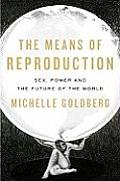
  • I’ll begin with Michelle Goldberg’s excellent The Means of Reproduction: Sex, Power and the Future of the World. Aside from the gorgeous cover art, I am completely in love with Goldberg’s ability to tell a compelling, humanized story about the global politics of feminism, reproductive rights and reproductive justice. She weaves together case studies of local, grassroots feminist activism (and anti-feminist activism) with the politics of national and international law, economics, and society. She argues that in our modern economy, globally, the ability of women to plan their families, and to make independent decisions about their health, education, and work lives radically improves the quality of life not only for the women themselves, but for their families and their societies. She suggests that the future of the world — economically, environmentally, politically — rests with the future of feminism as practiced by millions of on-the-ground individuals worldwide: “There is no force for good on the planet,” she writes, “as powerful as the liberation of women.”
  • This power to change the world is precisely what many interest groups (such as religious conservatives and those who benefit from highly patriarchal power structures) recognize and have rallied to combat, which is the story that Jennifer Butler tells in Born Again: The Christian Right Globalized. Born Again focuses specifically on the way in which the Christian right, traditionally wary of such international forums as the United Nations, has moved in the past couple of decades to influence policy on a global scale. Butler’s perspective is that of a progressive Christian activist who has spent years working in ecumenical organizations. Perhaps the most interesting piece of information I got out of Born Again was the fact that assertions of children’s rights in international forums are often vociferously opposed by a coalition of conservative “pro-family” activists who identify the enumeration of children’s rights, as distinct from family identity, a threat to the social structure and authority of families. Since they identify feminism as part of the same cluster of evils, once again my suspicion is confirmed that there’s a meaningful link between the argument that women are people and the argument that children, too, are human beings.
  • As I dive into the new Mary Russell/Sherlock Holmes mystery, The Language of Bees, as my post-semester pleasure reading, Hanna has encouraged me to try the Conan Doyle Sherlock Holmes again. I picked up “Study in Scarlet” a handful of years ago, thinking I’d start at the beginning, and was just not impressed. Reading about Holmes before he met Mary felt like reading about Peter Wimsey before Harriet Vane — somehow the story felt as though it lacked depth and weight. And I’m just not enough of a puzzle-solver to enjoy the nuts and bolts of the mystery itself. But I’ve been mixing Bees with stories from The Return of Sherlock Holmes, and find them on the whole charming. I particularly enjoyed the one involving a woman described as a “Solitary Cyclist”; it reminded me of a paper one of my undergraduate colleagues wrote on the history of bicycle advertisements targeting women (yes, I know, “history geek” is indeed tattooed in invisible ink on my forehead).
  • Bees I finished last night, and will refrain from commenting upon at length for fear of spoiling the plot for all those who have yet to read it (Hanna and Mom to name at least two). I will say that by chapter twelve Russell was out walking the downs and Holmes had disappeared on his latest hunt; life in Sussex seems comfortingly unchanged. That is: as full of violence, drama, disappearances, and potential murder as ever! And given the time, place, and subject matter, a great deal of real-life Bohemian personalities made cameos, so I recommend reading it with Among the Bohemians close to hand.
  • And finally, following Laurie King, I picked up once again the sumptuous edition of The Neverending Story that Hanna gifted me for my birthday, and in which I had become stuck about halfway through — academic reading always leaves me too distracted and analytical for the true enjoyment of being lost in a good book (both are pleasures, but require very different kinds of thinking, which I find difficult to switch between at a moment’s notice). It has been so long since I last read the novel that I honestly can’t recall if I ever gave it proper attention in the past — or only read bits — or only ever saw the film. It is a lovely paean to the power of fiction (aside from being a rolicking adventure yarn), and particularly the magic that books work in the lives of solitary children. Maureen Corrigan, in her memoir Leave Me Alone, I’m Reading, describes how reading, for her, has been both an escape from the world and her path into the world: it is that same journey that Bastian, the central character of this novel makes, with the help of bit of magic.

Now I’ll soon be heading home for the evening, where we plan to watch one of three movies Hanna has chosen for the weekend: Terminator, From Hell, and The History Boys (a delayed celebration of Alan Bennett’s 75th birthday on the 9th of this month). Happy weekending everyone!

Booknotes: Purity Myth

05 Sunday Apr 2009

Posted by Anna Clutterbuck-Cook in book reviews

≈ 3 Comments

Tags

books, feminism, gender and sexuality

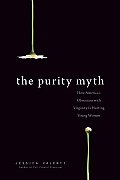
Just finished Jessica Valenti’s latest book, The Purity Myth: How America’s Obsession with Virginity is Hurting Young Women. It’s a quick read (really! I wasn’t shirking those reading assignments for class in favor of feminist political analysis . . . again!), and give a nice overview of some of the current conservative and mainstream trends for policing women’s sexuality: specifically, the use of the elusive notion of girlhood “purity” and “virginity.” She ranges widely over a constellation of cultural narratives about sexuality that all have at their heart a fear of mature adult women’s sexual pleasure and sexual agency. Whether it’s conservative purity balls and father-daughter dates or the mainstreaming of misogynist pornography and ubiquitous slut-shaming and sexual violence that punish women, the agenda, Valenti argues, is the same: propping up an oppositional view of gender (“men” and “women” are mirror opposites of each other, and blurring of the categories ‘male’ and ‘female’ is dangerous to society), often at the expense of women and girls.

I particularly appreciate the way Valenti foregrounds the importance of valuing the ability of women and girls as moral actors, capable of making decisions about their own sexual lives — particularly when given access to a full range of resources (as opposed to a one-size-fits-all “just say no until marriage” toolkit, which spreads misinformation and ignores anyone who does not fall into a narrow heteronormative model of human sexuality). In the chapter on sexual education she writes:

I’m not going to reinforce the “they’re [teens] are going to do it anyway” argument. I believe it’s time to take a stance on sex education that isn’t so passive–young people deserve accurate and comprehensive sex education not just because they’re going to have sex, but because there’s nothing wrong with having sex. [emphasis hers] Allowing educators to equate sexuality with shame and disease is not the way to go; we are doing our children a great disservice. Not only are we lying to them, we’re also robbing them of the joy that a healthy sex life (as a teenager or in adulthood) can provide (120).

She goes on to describe the profound distrust of women that has been written into state and federal laws that regulate specifically women’s sexual descision-making, effectively giving us the legal status of “moral children” (189).

Valenti provides, in the final chapters, practical suggestions for shifting this discourse of fear and proscription to one of sexual agency. Perhaps because I have been thinking a lot, lately, about what it means to approach fellow human beings with intrinsic respect for their personhood, even when we profoundly disagree with their values and choices, I was particularly struck by the way she frames her vision with the concept of trust:

Trusting women means . . . trusting them to find their way. This isn’t to say, of course, that I think women’s sexual choices are intrinsically “empowered” or “feminist.” I just believe that in a world that values women so little, and so specifically for their sexuality, we should be giving them the benefit of the doubt. Because in this kind of hostile culture, trusting women is a radical act (198; emphasis mine).

While obviously fighting for a healthier sexual climate for women and girls does not end with trust, I don’t know if there could be a much better beginning.

Booknotes: Five Lectures in Psycho-Analysis

31 Tuesday Mar 2009

Posted by Anna Clutterbuck-Cook in book reviews

≈ 2 Comments

Tags

books, gender and sexuality, history, simmons

In the few weeks since discussing Darwin, my Intellectual History class has moved through Nietzsche and Fin-de-siecle Vienna and arrived at Sigmund Freud.

I imagine there are few Women’s/Gender Studies students in the country who have not encountered Freud in their intro-level classes: I remember the director of my women’s studies program back at Hope College — whose training was in the field of psychology — suggesting that maybe, possibly, my response to Freud’s theory of sexual development and penis envy was a little too categorically dismissive (if I remember right, my scathing response paper admitted to having thrown our textbook across the room). So I will admit upfront I came to Five Lectures in Psycho-analysis prepared for weary frustration at Freud’s legacy, even as I was interested to see what a fresh reading ten years (yes, ten years!) since that first encounter might bring.

Five Lectures is a slim volume in which Freud recreated from memory five lectures he delivered at Clark University, Worchester, Massachusetts, in 1909 while visiting at the request of the university president, G. Stanley Hall. This fact alone gives me the creeps, since G. Stanley Hall had some heavily social darwinist theories of child- and adolescent development. Five Lectures is an extemporaneous-feeling overview of Freud’s development as a psycho-analyst, his theories of dream interpretation and sexuality, and his beliefs about the role of psychoanalysis human development. Only one of the five lectures focuses specifically on sexuality, although his beliefs about human sexual development are integral to his view of human nature and growth.

While none of his basic views were startlingly new to me, I was struck as I read this chapter by two things: 1) how closely Freud’s description of childhood sexuality corresponds with current, twenty-first century progressive, feminist views of human sexuality, and 2) how strongly Freud seems to feel the need to contain, organize, and channel that sexuality within the circumscribed space of heterosexual intercourse for the purposes of reproduction.

Of childhood sexuality he writes:

A child’s sexual instinct turns out to be put together of a number of factors; it is capable of being divided into numerous components . . . independent of the reproductive function . . . it serves for the acquisition of pleasurable feeling, which, basing ourselves on analogies and connections, we bring together under the idea of sexual pleasure.

He describes masturbation, dominance/submission activities, the “desire for looking,” fantasy, sexual play and emotional bonds all under this broad umbrella. He also points out that “at this early period of childhood difference in sex plays no decisive part.” In sum, “widespread and copious” is the sexual life of children, loosely organized around the principle of pleasure (p. 46-48).

It is only after this rich description of sexuality, replete with possibility for variation, fluidity, and individuality which (crucially, in my opinion) places the recognition of pleasure at the heart of sexual feeling, that Freud retrenches. In the paragraph immediately following the descriptions above, he suggests that all of this abundant energy must, in order for “mature” adult sexuality to emerge, be “brought together and organized” into genitally-centered, reproductive activity (p. 48).

. . . Why? What is so terrifying to Freud (and any others who resist it) the first, “childhood,” model of sexual-sensual experience? This week in class, I’m looking forward to sitting down with this fear and trying to understand what, exactly, is so freaky about “widespread and copious” pleasure.

Booknotes: Quiverfull

22 Sunday Mar 2009

Posted by Anna Clutterbuck-Cook in book reviews

≈ 8 Comments

Tags

books, education, feminism, politics

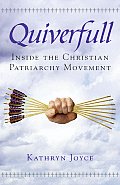
A couple of weeks ago, my own personal copy of Kathryn Joyce’s new book Quiverfull: Inside the Christian Patriarchy Movement arrived in the mail — just when I was looking for one more way to put off doing school-related reading over Simmons’ spring break. Joyce’s book documents the theology, politics and daily life of families (especially women and girls) who follow the loose collection of conservative ideas that fall under the umbrella of “quiverfull” thinking: a patriarchal family structure that demands wifely submission, opposition to all kinds of family planning, fears of a “demographic winter” for Western nations, home education, and often political alignment with the Christian reconstructionist agenda. Hanna flipped through my copy and asked me how it is I can read books like this and not feel my blood pressure skyrocket. Which challenged me to reflect a little on my addiction to reading books about the intersections of gender, sexuality, politics, home education, and the Christian right. This booknote, therefore, is less of a review and more a motley collection of observations inspired by Joyce’s journalism.

I think what I find most absorbing about the Christian right and the way they think about gender, sexuality, and education, is not their strangeness but their familiarity. And I’m not talking about familiarity due to close proximity (although growing up in a very religiously conservative area means I’ve been exposed to my fair share of right wing bigotry and fear-mongering). No: what I’m talking about is the fact that Christian right’s critique of the American mainstream begins with with many of the same critiques of modernity that leftists put forward. Many of the families profiled in Quiverfull are deeply ambivalent about modernity — about the rise of scientific rationalism at the expense of the irrational and sacred. They critique the way that a capitalist economic system, with its separation work and home spaces (and the resulting age-segregation of children and the elderly — nonworkers — from wage-earners).

As a result, they have created a vibrant counter-culture of their own that, as Joyce rightly points out, shares many of the same characteristics of the radical left. Home birth and midwifery activism among Quiverfull families, for example, “overlaps with back-to-the-land hippie counterculture in some ways. It’s a deliciously amusing irony to some Quiverfull moms, who stake out their territory of natural pregnancy in the odd company of feminist doulas and naturopaths opposed, as they are, to high rates of hospital cesarean sections” (164). Likewise, the modern home education movement, which began as a form of leftist activism (see: unschooling) has since become an overwhelmingly right-wing phenomenon. So much so that — although she makes passing mention of this history — Joyce is comfortable conflating “homeschool” with Christian conservatism throughout most of Quiverfull without specifying that she is, in fact, writing about a very particular subset of the home education population.

In fact, it is precisely the outward similarity of these profiles of radical right and radical left that I find both fascinating and deeply disturbing. For while on the surface quiverfull families and “back-to-the-land hippies” and feminists may make similar lifestyle choices, their reasons for doing so are often diametrically opposed. Whereas leftist, feminist advocates of low-intervention childbirth and home education ground their critique of modernity and counterculture activism in notions of gender equality, democratic social structures, and a commitment to individual human rights, those on the radical right pursue the same forms of activism but root them in notions of gender difference, social structures that unapologetically support the kyriarchy, and the subordination of individual persons to tyrannical group dynamics.

As most of you know, I grew up in a family that was part of the leftist home education tradition. My sibs mixed public schooling with home-based learning, and all of us have gone on to college-level institutional education (and beyond). At the same time, I am firmly committed to the continued legality, and minimal governmental oversight, of home education. In this, like the feminist doulas of Joyce’s book, I find myself in the uncomfortable company of groups such as the Home School Legal Defense Association. Because of this, I believe it is my responsibility to take a long, hard look at the beliefs and practices of those whose political and social agenda I (however occasionally) share — and whose right to continue living as they do I, however abstractly, defend.

Though there was nothing startlingly new to be found in the pages of Quiverfull if you’ve read other work in this area, Joyce does a thorough survey of the disparate strands of religious and political thinking that inform the movement, and remains sensitive to the nuances of class, race, gender, and theological difference that shape individual experience within it. I also enjoyed discovering that by cultivating close relationships with other women, I am apparently in danger of committing the sin of “spiritual masturbation” (which, sadly, is not nearly as kinky as it sounds).

Now it’s back to Carl Rogers’ Freedom to Learn (for my seminar paper in Intellectual History) . . . not to mention keeping an eye out for Jessica Valenti’s latest, The Purity Myth, and Michelle Goldberg’s sure-to-be-absorbing The Means of Reproduction.

Booknotes: Autobiography of Charles Darwin

02 Monday Mar 2009

Posted by Anna Clutterbuck-Cook in book reviews

≈ Leave a comment

Tags

history, science, simmons

This is Darwin week in my intellectual history class; we’re reading selections from On the Origin of Species, Malthus’ Essay on the Principle of Population, and finally Charles Darwin’s charmingly personal Autobiography, which he wrote for his family toward the end of his life. I don’t have any Big Thoughts to share with you on Darwin’s story, but there were a couple of passages from his recollections that I thought I would quote here, to give you a sense of his autobiographical writing and sense of himself as a human being.

On his education: “During the three years I spent at Cambridge my time was wasted, as far as academical studies were concerned, as complete as at Edinburgh and at school . . . I got into a sporting set, including some dissipated low-minded young men. We often used to dine together in the evening, though these dinners often included men of a higher stamp, and we sometimes drank too much, with jolly singing and playing at cards afterwards. I know that I ought to feel ashamed of days and evenings thus spent, but as some of my friends were very pleasant and we were all in the highest spirits, I cannot help looking back on these times with much pleasure . . . But no pursuit at Cambridge was followed with nearly so much eagerness or gave me so much pleasure as collecting beetles. It was the mere passion for collecting, for I did not dissect them and rarely compared their external characters with published descriptions, but got them named anyhow” (50-53).

On society: “Few persons can have lived a more retired life than we [he and his wife] have done. Besides short visits to the houses of relations, and occasionally to the seaside or elsewhere, we have gone nowhere. During the first part of our residence we went a little into society, and received a few friends here; but my health almost always suffered from the excitement, violent shivering and vomiting attacks thus being brought on . . . I have [thus] lost the power of becoming deeply attached to anyone . . . As far as I can judge this grievous loss of feeling has gradually crept over me, from the expectation of much distress afterwards from exhaustion having become firmly associated in my mind from seeing and talking with anyone for an hour, except my wife and children” (95).

One final note: For those of you who didn’t see this link earlier on my post about Darwin and Lincoln’s joint birthday, check out the beautiful online exhibition about Darwin’s life and work at Chicago Field Museum.

← Older posts
Newer posts →
"the past is a wild party; check your preconceptions at the door." ~ Emma Donoghue

Recent Posts

  • medical update 11.11.22
  • medical update 6.4.22
  • medical update 1.16.2022
  • medical update 10.13.2021
  • medical update 8.17.2021

Archives

Categories

Creative Commons License

This work by Anna J. Clutterbuck-Cook is licensed under a Creative Commons Attribution 3.0 Unported License

Meta

  • Create account
  • Log in
  • Entries feed
  • Comments feed
  • WordPress.com

Blog at WordPress.com.

  • Subscribe Subscribed
    • the feminist librarian
    • Join 37 other subscribers
    • Already have a WordPress.com account? Log in now.
    • the feminist librarian
    • Subscribe Subscribed
    • Sign up
    • Log in
    • Report this content
    • View site in Reader
    • Manage subscriptions
    • Collapse this bar