• anna j. clutterbuck-cook
  • contact
  • curriculum vitae
  • find me elsewhere
  • marilyn ross memorial book prize

the feminist librarian

the feminist librarian

Category Archives: book reviews

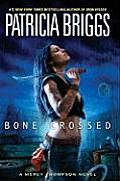
Booknotes: Bone Crossed

16 Monday Feb 2009

Posted by Anna Clutterbuck-Cook in book reviews

≈ 1 Comment

Tags

feminism, genre fiction

This past week, I took a break from academic reading to enjoy the fourth installment of the Mercy Thompson series, Bone Crossed, by Patricia Briggs. The series, if you haven’t already encountered it, is a fantasy series centered around a young woman who works as a car mechanic and happens to be a walker raised by werewolves. At the beginning of the series, Mercy is trying to avoid her supernatural past as much as possible, a goal that becomes increasingly untenable as she is drawn deeper and deeper into local politics and relationships with a cast of characters both human and non-human (and, often, somewhere in between).

I’ve been looking forward to this book since the last one came out, and I definitely wasn’t disappointed. The fourth installment is on par with the other three novels in the series (Moon Called, Blood Bound and Iron Kissed) and manages to balance Mercy’s newly-established significant-other relationship with a plot involving the local vampire seethe, a malevolent ghost, and tense inter-species politics. Furthermore, Briggs deserves major kudos for writing Mercy into an emotionally and physically intimate relationship with a super-dominant werewolf without finding it necessary to alter Mercy’s basic personality or downplay her established ability and willingness to stand up for herself and the people she cares about.

But (you knew there was going to be a “but . . .”), as the series moves forward I’ve become increasingly aware of a weird dynamic: the absence of other central women characters. Or, more specifically, the lack of central female characters with whom Mercy has primary relationships that aren’t either (1) protective, or (2) antagonistic. Jesse, the adolescent daughter of the local alpha werewolf, is a wonderful character — but of course she’s still a child to be cared for by the adults in her life. There are dominant female werewolves, but they’re jealous of the attention Mercy receives from the male werewolves and disdainful of her non-werewolf status. And Mercy’s human and other non-werewolf connections are pretty much exclusively male — at least the ones that make it into the narratives for more than a passing glance. This is a dynamic I’ve noticed in a few genre series lately, and reading this book is giving me the opportunity to throw a question out to all of you: what’s going on here?

It’s not her choice of a partner that’s a problem, or the fact that many of her close secondary friendships are with guys. The men in the story make up a great cast of characters. I realize that Mercy is straight, so her sexual relationships are going to be with men, and her strongest primary ties will be with her significant other. As the story stands, he’s not the sole focus of her life, but he’s a solid component of the core. In my opinion, Briggs is striking a successful balance on that score. What is striking to me isn’t the presence of men in Mercy’s (albeit fictional) life, it’s the absence of women.

Why? Is there something inherent to the genre that makes it particularly difficult to write a fully-realized female protagonist who isn’t a sort of token woman amid a cast of male characters? I don’t think so: consider Emma Bull’s War for the Oaks or Melissa Marr’s Wicked Lovely, both of which feature great women protagonists who are in primary relationships with male characters, but who nevertheless sustain relationships with other women too. Perhaps in this case, Briggs’ hands are somewhat tied by the fact that her werewolf society is deeply patriarchal — highly aware of gender and hierarchy. In fact, it’s the patriarchy of the pack dynamics that’s made Mercy wary of getting involved with werewolves (personally or politically) at the beginning of the series. Working within a patriarchal framework creates a situation where Mercy has to out-guy the guys a lot of the time, in order to make sure she isn’t dismissed. But surely Mercy isn’t the only woman in Briggs’ alternate universe bloody-minded enough to fall in love with a werewolf and fight to establish a relationship on equal terms . . . and what about the werewolf women? In short — where are Mercy’s female friends?

If you’ve read any of the Mercy Thompson novels, or any other fantasy/science-fiction novels that suffer from this problem (or are an example of how it could be done differently), I welcome your thoughts, and suggestions for further reading, in the comments!

Cross-posted at Feministing Community.

A few of my favorite (feminist) things

13 Friday Feb 2009

Posted by Anna Clutterbuck-Cook in book reviews

≈ 1 Comment

Tags

feminism, gender and sexuality

In honor of V-Day this year, the Feminist Review is doing a favorite feminist book photo contest. I was tempted to contribute, but since my number-one, all-time favorite feminist read is Our Bodies, Ourselves, I figured the picture would really best be done as a calender girls shot. And I will not be getting naked on the internet, even discreetly naked, until I have 1) a heck of a lot more job security — like, permanent feminist-friendly job security 😉 — and, 2) someone like Willy Ronis offers to do the photo shoot.

So as a second-best offer, here is a top five list. I say “a” top five list, since there are probably others I could have composed. I picked these for diversity of period, genre, and sentimental value. And they’re not in hierarchical best-worst/worst-best order: I’ve taken a page from Nick Hornby’s High Fidelity, and arranged them autobiographically.

1) Pippi Longstocking, by Astrid Lindgren (1945). There are many other children’s books I could have named here, with similarly awesome girl characters in them. But Pippi will always hold a special place in my heart. Maybe it was the fact that she, like I, never seemed to see the point of attending school — even if it meant you got summer vacation! She was bold, imaginative, physically daring, generous to her neighbors, and never let older people push her around simply because they were bigger or older than she. I also hold Pippilotta Delicatessa Windowshade Mackrelmint Ephraimsdaughter Longstocking responsible for my childhood desire (which still occasionally manifests itself) to be a redhead.

2) Our Bodies, Ourselves, by the Boston Women’s Health Book Collective (1970, and many subsequent editions). As promised above, a little about why I’d choose this book as my favorite feminist read: I think of this book as my introduction to modern political feminism. I first read my mother’s copy as a young adolescent, and I can’t think of a better way to learn about the possibilities of my (nascent) adult body than through the lens of the women’s health movement. This book was my introduction to my anatomy; to the experience of pregnancy and feminist parenting; to options for abortion and contraception; to masturbation; to the ways in which adults negotiate sexual relationships (both hetero and same-sex); to the concept of collective political action for social change. Out Bodies, Ourselves endures — from my perspective — as a feminist text because it foregrounds women’s voices in all their complexity. The book collective discovered, even in its earliest incarnations, that the best way to gather intelligence about how women experienced their bodies was to ask them. This remains, to me, the central tenant of any feminist practice: begin with the premise that each woman (and, yes, each human being) is the best authority on her own subjective experience.


3) The Seneca Falls Declaration, by Elizabeth Cady Stanton (1848). No, this is not really, strictly speaking, a book. But it’s one of the first primary source documents I read during my college-era women’s studies experience, and at seventeen I remember being absolutely blown away by how current it felt. How simple its demands seemed to be, and how little the goals of feminist activists had changed since 1848. Of course now, a decade further in my historical studies and feminist consciousness, I can add layers of critical awareness to this reaction — but I won’t ever forget the mix of awe and anger I felt when I read the Declaration for the first time and realized the long legacy of activism I could choose to claim as my own.

4) In Our Time: Memoir of a Revolution, by Susan Brownmiller (2000). From the heady days of consciousness-raising groups in the New Left, to the divisive, bitter turmoil surrounding anti-pornography campaigns in the early 1980s, Brownmiller’s deeply personal chronicle of the Women’s Movement came out just as I was struggling to find my voice, politically, as a feminist, on a conservative midwestern college campus. I devoured In Our Time with a passionate nostalgia for the political daring ideological radicalism, the daily intensity of Movement relationships, and the sense of possibility for revolutionary change Brownmiller describes. Even with a more circumspect, historical perspective, this first-person account of mid-century feminist activism remains a great read and a valuable resource.

5) Whipping Girl: A Transsexual Woman on Sexism and the Scapegoating of Femininity, by Julia Serano (2007). There have been some great recent works on feminism in the past ten years, many of which grace my shelves. However, few of them have rocked my world as brilliantly as Whipping Girl, Julia Serano’s collection of essays on sex and gender from both a trans and feminist perspective. I am absolutely blown away by her ability to take dense ideas about the biological and cultural experiences of sex and gender and make them understandable and politically compelling. Even though much of the book is an argument for awareness of trans issues within feminism, it is also the best nuts-and-bolts articulation of how sexism works — and harms people of all sexes and genders — that I have read in recent years.

Booknotes: Therese Philosophe

07 Saturday Feb 2009

Posted by Anna Clutterbuck-Cook in book reviews

≈ 5 Comments

Tags

feminism, gender and sexuality, history, simmons

Last Tuesday, in my intellectual history class (“The Modern Imaginary”), we discussed Therese Philosophe, a bawdy, “forbidden best-seller” of pre-revolutionary France. The novella is an erotic novel and philosophic treatise in which the titular character, a young woman named Therese, recounts her sexual and philosophic coming-of-age to her present lover, the unnamed Count. Not having previously read any one complete example of Enlightenment-era pornography, I had few pre-conceptions about the genre when I sat down to read Therese.

This is an anonymously-written work, published in 1740s, tentatively attributed to a marquis named Jean-Baptiste de Boyer and was a runaway best-seller, according to translator Robert Darnton. Yet even though the author is likely male, and his understanding of the pleasures of sexual activity is definitely phallo-centric, the novel presents us with a complex, possibly even (early) feminist, understanding of sexuality. The novel is told from the point of view of a woman who discovers that sexual fantasy and sexual activity (whether alone or with a partner) can be a “healthful” and deeply gratifying part of her life. Sexual activity is assumed to be pleasureable for both women and men, and there is little differentiation between how women and men experience that pleasure, at least physically. Women, as well as men, for example, are encouraged to masturbate. At the same time, the characters acknowledge the material vulnerability of women who engage in heterosexual activity: the fear of pregnancy and death in childbirth; potential loss of social standing which will threaten their ability to contract a financially stable marriage. Therese and her mentors negotiate with their sexual partners over what sexual activities are acceptable given these real-world constraints, and those conversations serve as both philosophical debates and integral to the erotic encounters themselves.

Some of the students in the class were skeptical that this text constituted “intellectual history,” and in addition there was a lot of resistance to reading the sexually-explicit passages as necessary or integral to the intellectual importance of the work. Their impulse was to argue that either the smut was a ploy to sell the philosophy, or the philosophy was an excuse to write the smut. Either way, they considered the sex was gratuitous to the historic or intellectual importance of the piece. I would actually argue the opposite. In Therese Philosophe, it’s not the sex or the philosophy that are the “real” reason for the novel’s existence — it’s the sex and the philosophy. Both are necessary to make the story work. More importantly, I would argue that it’s not just the philosophy that works better because of the sex, but the sex that works better because of the philosophy.

Reading this one example made me curious to sample more 18th-century erotica and see how gender and sexual negotiation are portrayed. Is Therese an exceptional voice? And is is possible to uncover why her story was so compelling to the readers who purchased it is such great numbers that it became a best-seller? I am also fascinated by the similarities, as well as the differences, I see between how human sexuality and sexual relations are portrayed in Therese and how they are written in modern-day erotica. Perhaps that project can be thesis number three or four . . . !

Cross-posted @ feministing community.

Newbery 2009: Neil Gaiman!

26 Monday Jan 2009

Posted by Anna Clutterbuck-Cook in book reviews

≈ 1 Comment

Tags

genre fiction

The American Library Association released their list of 2009 award winners today, and Neil Gaiman’s most recent book for middle grade readers (or readers of any age who know where to find the best fiction around), The Graveyard Book, topped this list as this year’s Newbery gold medalist. (Insert amazed and delighted swearing here). For once, I’ve actually read the winner prior to its, well, winning, and enjoyed it very much. In a creepy-crawly sort of way. Congrats Mr. Gaiman!

Monstrous Regiment(s) of Women!

23 Friday Jan 2009

Posted by Anna Clutterbuck-Cook in book reviews

≈ Leave a comment

Tags

feminism, history

Apparently, there’s a new anti-feminist documentary out, The Monstrous Regiment of Women, that — according to their own website — “goes all out to demolish the feminist worldview . . . from a consistently Christian perspective.”

*giggle*

Maybe it’s the fact that I’m still suffering from a head cold, which seems to leave me prone to the giggles, but I have to say I find this project really amusing.

You see, that particular quotation* has been used before . . . and to much better effect, at least in my humble opinion. In the interest of doing my part to maintain The Feminist Worldview (is that the same as having a Feminist Agenda?) I thought I would take this opportunity to highlight them here.

As it happens, just this past weekend Hanna bought me a copy of Terry Prachett’s discworld novel, Monstrous Regiment, which follows the adventures of the intrepid Polly who, under and assumed masculine identity, has enlisted as a private in a ragtag company of soldiers in order to find her brother Paul who’s gone missing at the front. I am only about seventy-five pages in, but so far I have enjoyed a great deal of satire, bawdy slapstick comedy, at least one vampire of ambiguous gender, and a very satisfying pub brawl.

A slightly more serious — though, I would argue, no less lighthearted — meditation on gender and politics can be found in Laurie R. King’s second installment of the Mary Russell/Sherlock Holmes series, A Monstrous Regiment of Women (to which I owe the source of the quotation — King is always scrupulous in her citations!). This chapter of the Russell-Holmes partnership sees Russell coming into her own in 1920s London as an academic and as a sleuth as she tracks down the person or persons responsible for a series of murders all related to the life of a charismatic feminist theologian.


*The quotation is taken from the title of a polemic by John Knox (1505-1572), The First Blast of the Trumpet Against the Monstrous Regiment of Women, an attack on the regime of Mary Tudor and Mary Stuart in Britain, published in 1558.

Booknotes: The Ghost in Love

19 Monday Jan 2009

Posted by Anna Clutterbuck-Cook in book reviews

≈ Leave a comment

On the recommendation of Nancy Pearl, I used some Christmas money to buy a copy of John Carroll’s novel The Ghost in Love. What with one thing and another, it’s taken me most of a month to finish reading this relatively slim novel — but I’m glad I had a chance to savor the experience. The novel is one of those books about which it is difficult to say “this is a story about . . . ” any one thing. The story begins when a man falls and hits his head on the curb — an act that is supposed to end in his death. Yet he fails to die. This glitch in the cosmic program (a sort of computer virus, suggests the Angel of Death) sets off a chain reaction of events that affect the lives of many people (and non-humans) around the man who failed to die. It’s sort of Terry Pratchett (Reaper Man) meets Audrey Niffinegger (The Time-Traveller’s Wife): not a shabby way to begin the the new year in books.

Booknotes: Locke & Key

14 Wednesday Jan 2009

Posted by Anna Clutterbuck-Cook in book reviews

≈ Leave a comment

Tags

genre fiction

One of Hanna’s Christmas presents this years was a recently-published graphic novel, Locke & Key: Welcome to Lovecraft, written by Joe Hill and illustrated by Gabriel Rodriguez. She read it over vacation and handed it off to me with instructions not to read it just before bed. The injunction was well-advised. Welcome to Lovecraft is creepy. It’s one of those graphic novels most decidedly not for written for young children, despite the fact that its main characters are three siblings: Bode (the canny elementary-school-age youngest brother), Kinsey (dreadlock-sporting middle sister with an enviable record in track), and Tyler, the moody eldest son. The story opens with a homicide and only gets bloodier from there — at the same time as our characters are becoming acquainted with the more supernatural elements of the family’s Gothic mansion in Lovecraft, Massachusetts. Yet the characters and the family secrets that lie at the core of the mystery make the story compelling beyond a simple “who’s going to bite the dust next?” I’m definitely looking forward to volume two.

Winter Break Booknotes

24 Wednesday Dec 2008

Posted by Anna Clutterbuck-Cook in book reviews

≈ 1 Comment

Tags

fun, movies

I’m headed off tomorrow morning to Logan Airport, for my Christmas Day flight back to Michigan. As Hanna remarked as we were hauling book-heavy her duffel bags down to the rental car last Saturday, “oh, the terrible cost of literacy!” My suitcase and carry-on will, similarly, bear an over-representation of books. A quick (and no doubt incomplete) survey of what’s on the reading agenda for my winter break:

  • Monster Island, and its two sequels — Monster Nation and Monster Planet — by David Wellington. These are apocalyptic zombie novels about what happens to earth after human beings, infected by a mysterious virus, stop staying dead and instead come back hungry for human flesh.

  • Good Omens, co-authored by Neil Gaiman and Terry Pratchett which Hanna has warned me to read with circumspection on the airplane, since spontaneous giggling has been known to occur during reading. Giggles will be welcome after a trilogy about zombies!
  • As will Little Women and Little Men which Hanna and another friend from Simmons, Laura, have impressed upon me the need to re-read and re-evaluate since I never enjoyed them much as a child. I have promised to give them a second pass . . . perhaps with an historians eye they’ll prove more enjoyable (who says scholarly analysis ruins literature?)
  • Perdido Street Station, by China Mieville. I bought this last summer after reading The Scar (set in the same world) but didn’t have the emotional energy to tackle it during the term (Mieville’s fantasy world is a dark one) . . . so I’ll be trying again!
  • On the non-fiction front, I have the new feminist anthology Yes Means Yes, edited by Jaclyn Friedman and Jessica Valenti, which asks its contributors to meditate on how a world that promotes authentic sexual pleasure and agency can help combat sexual violence.
  • Likewise, feminist Linda McClain’s book on the relationship between family relationships and politics, The Place Of Families, was cited in something I read recently on childhood and sexual agency (the exact reference is escaping me) and the copy I inter-loaned at the library has finally arrived — so I’ll get to indulge in my penchant for footnote wandering.
  • Finally, I practically had kittens when I was in the brookline booksmith a couple of weeks ago and saw that Nick Hornby’s third collection of “Stuff I’ve Been Reading” columns, Shakespeare Wrote for Money, is out. I’m saving this one for the airplane, though my seat-mates may not thank me.

And what winter break would be complete without a movies as well as books? My friend Aiden and I were thinking about trying to see Milk before he left town for the holidays, but it didn’t happen. I’m still hoping to catch it in the theater at some point, as well as the new Bond flick. Hanna and I are in the midst of Dr. Who (Season Four) with the second season of Torchwood in the offing as well . . . and it’s been called to my attention in recent days (as somehow we got involved in a debate about the morality of Vader’s death scene in Jedi) that I’m overdue for a review of the six Star Wars films. On a slightly more historical note, I have plans to show Hanna both Goodbye, Lenin! and The Lives of Others, both of which I think are interesting companion pieces to Tom Stoppard’s Rock ‘n Roll.

Booknotes: Stalin’s Russia

14 Sunday Dec 2008

Posted by Anna Clutterbuck-Cook in book reviews

≈ Leave a comment

Tags

history, politics


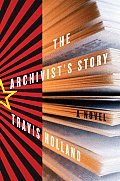
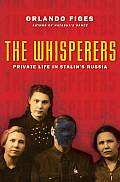
Before the end of the semester, in a burst of rebellious leisure-reading energy (read: procrastination), I began two books on Russian communism: Travis Holland’s 2007 novel The Archivist’s Story and historian Orlando Figes’ doorstop of a book, The Whisperers: Private Life in Stalin’s Russia. This was partly due to seeing, over the Thanksgiving weekend, a local production of Tom Stoppard’s play Rock n’Roll at the Huntington Theater. As is the case with all of the Stoppard plays I have seen or read, Rock n’Roll explores the complicated relationship between ideas and the people whose lives are affected by them: in this case, communism and a cast of characters caught up in the realities of life in Prague during the 1970s and 80s.

The devastating affect of Cold War communism on the lives of human beings is the subject of both of these books, one a work of fiction and the other of nonfiction. I am still reading both of them, but thought I would post a couple of quotations to give you a flavor of the texts and hopefully encourage you to check them out yourself.

Holland’s novel follows the story of Pavel, a widowed schoolteacher turned archivist, living in Moscow in 1939. In the opening pages, he is sent to interview the writer Isaac Babel, who has been arrested and taken to Lubyanka prison as an enemy of the people. During the course of their stiff conversation, Pavel tells Babel that his wife, Elena, has recently died in a train wreck caused by politically-motivated sabotage. “I can’t imagine people intentionally doing that,” Pavel says. “You’ve read my stories,” Babel replies:

“Your colleagues, when they came to arrest me at my dacha, they dragged my wife along. Did you know that? They made her knock on the door. In case I resisted. Can you imagine how she must have felt, to have to do that?” An edge of bitterness has crept into Babel’s voice. “You are not the only one who has lost his wife” (9-10).

In fact, as Figes tells us in The Whisperers virtually everyone in Russia during the Stalinist period lost at least one family member to violence perpetrated by the men whom the fictional Pavel is ordered to work for. For over six hundred and fifty pages he draws on diaries, oral histories, and other surviving primary sources in an attempt to piece together a picture of private life in a repressive regime. This picture is unquestionably grim. “For the mass of the population there were always two realities,” Figes observes writes:

Party Truth and truth based on experience. But in the years of the Great Terror, when the Soviet press was full of the show trials and the nefarious deeds of ‘spies’ and ‘enemies’, few were able to see through the propaganda version of the world. It took extraordinary willpower, usually connected to a different values-system, for a person to discount the press reports and question the basic assumptions of the Terror (273).

The strategies used by individual people to keep themselves from being submerged in Party Truth are both interesting, from a psychological and political perspective, and heartbreaking: “My inner self has not gone away — whatever is inside a personality can never disappear — but it is deeply hidden, and I no longer feel its presence within me” wrote Yevgeniia, a student of Leningrad Institute of Technology, in 1938, after both her parents had vanished into the Gulag (257). However difficult these stories of personal trauma are to read, I am looking forward to finishing both books for the powerful stories they tell about the behavior of human beings living in inhuman situations.

And Again With Twilight

09 Tuesday Dec 2008

Posted by Anna Clutterbuck-Cook in book reviews

≈ Leave a comment

Tags

feminism, gender and sexuality, movies, politics

Despite the fact that I am deeply suspicious of the book and have yet to see the movie, Hanna has decided to hold me personally responsible for the phenomenon of Twilight, and specifically the chivalrous male lead, Edward Cullen, whom she has taken to referring to as “your stupid vampire.”

Given that my name will thus inevitably–at least in our apartment–be linked to many adolescent girls’ (and adult women’s!) lust for “vegetarian” vampires with stalker tendencies, I figure it’s only fair that I get to post links here to some of the awesome (and hilarious) deconstruction of the series that’s taking place around the blogosphere.*

Thus, two links that came across my desk today:

The first is Amanda Marcotte’s rant on Pandagon,
Vampires, liberals, and blood-sucking pretend liberals, which manages to connect the hate-mongering commentary about Proposal 8 to reactionary adoration of Twilight (apparently, the popularity of the series “means feminism is bound to fail”) through the person of Caitlin Flanagan. I have to say, when I saw that Flanagan had reviewed Twilight over at the Atlantic this week I about popped a blood vessel. Anyone who declares halfway down the first page of a review of teen lit that “I hate Y.A. novels; they bore me” has absolutely no business reviewing (or claiming to understand the popularity of) young adult literature — let alone explaining with condescending smugness the desires of adolescent girls with such generalizations as “the salient fact of an adolescent girl’s existence is her need for a secret emotional life.” Thank you, Amanda, for giving this review the critical attention it deserved — and most importantly connecting it to larger themes of political conservatism.

And in case political analysis is not your bailiwick, commenter annejumps on the Pandagon thread provided a link to The Secrets of the Sparkle, a three-part (plus drinking game!) send-up of the series written by an ex-Mormon. (To explain title of the post: apparently, Edward Cullen sparkles in the sun. Like, literally. It’s a detail I sadly forgot from my reading of the novels last year. Damn.) It’s sort of like a picture book cliff notes version of the first three books . . . through the lens of LDS theology. Trust me.

Okay. That’s my fun for this evening. Back to editing the final draft of my history term paper! The semester’s almost over!

*I want to reiterate here that 1) my reservations about the series does not mean I think we should disparage the pleasure girls are getting out of the romance of the books–though we can encourage them to think critically about messages that Twilight conveys about sexuality and gender, and 2) that my reservations also don’t mean I fail to get pleasure myself out of stories about scary, sexy vampire bad boys. I just happen to like my heroines with a little more bite and my sex with a little less prudery.

← Older posts
Newer posts →
"the past is a wild party; check your preconceptions at the door." ~ Emma Donoghue

Recent Posts

  • medical update 11.11.22
  • medical update 6.4.22
  • medical update 1.16.2022
  • medical update 10.13.2021
  • medical update 8.17.2021

Archives

Categories

Creative Commons License

This work by Anna J. Clutterbuck-Cook is licensed under a Creative Commons Attribution 3.0 Unported License

Meta

  • Create account
  • Log in
  • Entries feed
  • Comments feed
  • WordPress.com

Blog at WordPress.com.

  • Subscribe Subscribed
    • the feminist librarian
    • Join 37 other subscribers
    • Already have a WordPress.com account? Log in now.
    • the feminist librarian
    • Subscribe Subscribed
    • Sign up
    • Log in
    • Report this content
    • View site in Reader
    • Manage subscriptions
    • Collapse this bar