• anna j. clutterbuck-cook
  • contact
  • curriculum vitae
  • find me elsewhere
  • marilyn ross memorial book prize

the feminist librarian

the feminist librarian

Category Archives: book reviews

booknotes: phyllis schlafly and grassroots conservatism

16 Monday Jun 2014

Posted by Anna Clutterbuck-Cook in book reviews

≈ Leave a comment

Tags

history, politics

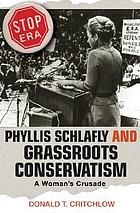
I’m back in encyclopedia entry writing mode this month, and one of the subjects I volunteered to tackle was the life and work of Phyllis Schlafly in 750 words. One of the things I have gathered from Donald Critchlow’s excellent Phyllis Schlafly and Grassroots Conservatism: A Woman’s Crusade (Princeton, 2005) is that Schlafly herself would likely approve of this creative discipline. She has, after all, built a career out of voraciously consuming and digesting the work of conservative intellectuals — and then translating them into a form easily communicable to the grassroots: speeches, pamphlets, articles, press releases, and runaway bestsellers.

Plus, did you know she comes from a family of lady librarians?

It is a mark of Critchlow’s excellence as a biographer that he is able to humanize his subject and make her interesting and compelling to even this lefty feminist who categorically disagrees with Schlafly on almost every political and social issue she has ever engaged on. Critchlow’s is an intellectual-political biography, touching on Schlafly’s personal details — family background, class status, marriage, children — as background for the larger points he wishes to make regarding her public career. Schlafly, he argues, is both a driving force behind — and emblematic of — the grassroots political organizing that flourished in America’s postwar years of supposedly “liberal consensus.” A voracious autodidact and driven student from a lower-middle-class background (she worked night to put herself through college), Schlafly completed a Master’s degree at Radcliffe in 1945 and took herself to Washington D.C. just as the Second World War was ending, landing a job at the fledgling American Enterprise Association (now Institute). By all accounts she had (and still has) a talent for digesting densely-written works of conservative political theory and translating them into vernacular, politically-motivating works. During the 1950s and ’60s her focus was on anti-communism, fiscal conservatism, and national defense; in the 1970s she discovered (anti)feminism and turned from international concerns to domestic policy and cultural issues — earning the hatred of many a committed feminist through her successful STOP ERA campaign, which killed what many had assumed was a foregone Constitutional amendment explicitly outlawing discrimination on the basis of sex.

I am too young to remember first-hand the bitter disappointment of the ERA’s defeat, or the shocked sense of betrayal I think many American feminist felt when she discovered that not all women believed in feminist goals. Perhaps because of this, I have the emotional distance to appreciate the way Critchlow is not overtly partisan — either for or against — the Schlafly perspective. Instead, he clearly articulates how her work connected, and continues to connect, to the concerns and goals of the resurgent political and cultural right during the latter half of the twentieth century. I cannot say I share those concerns or goals, but perhaps I understand where they came from and how they came to be articulated a bit better than I did before.

My only disappointment with Phyllis Schlafly and Grassroots Conservatism is perhaps an unfair one — that Critchlow only glosses events following the defeat of the ERA and Reagan’s rise to the presidency in the early 1980s. Since Schlafly and her Eagle Forum continue at a tireless pace today, a deeper analysis of Schlafly’s enduring influence would have been welcome. Too, I would have been interested in a more substantial tour of her opponents’ (often muddled) rebuttals and (often failed) strategies. One comes away from Critchlow’s examination with the sense that Schlafly was always effectively on-message. Surely even the most charismatic of public figures has an off day.

booknotes: otherhood

09 Monday Jun 2014

Posted by Anna Clutterbuck-Cook in book reviews

≈ Leave a comment

Tags

children, feminism, gender and sexuality

It’s been awhile, what with one thing and another, since I actually did a book review post. I’m hoping to get at least one per week posted during the summer, so to kick us off here’s this week’s title: Otherhood: Modern Women Finding a New Kind of Happiness by Melanie Notkin (Seal Press, 2014).

I ordered Otherhood through inter-library loan after seeing it mentioned in positive terms in a piece on how the media fuels women’s panic and self-judgement around pregnancy and fertility. From the gloss in the essay, I expected a study of women who found themselves single and/or childless as they reached the end of their fertility, and how they made peace with that circumstance. Perhaps it was poor or wishful reading on my part, because this book is not that book. Instead, this book is a hybrid personal memoir longform journalism piece in which Notkin seeks to connect her personal experience, and the experiences of her single, childless (but child-wanting) friends, to broader social and cultural narratives and trends about this demographic.

Apart from it not being the book I expected (which is hardly grounds for critique of the book it actually is), I had three major problems with Otherhood: its solipsism, its heterocentrism, and the way it embraced notions of gender complementarity and retrograde gender roles. All of these problems interconnect, because when one is writing about personal experience as universal experience, then obviously one’s own wants and needs eclipse the diversity of human desire. There’s nothing particularly wrong with Notkin yearning for a man willing to treat her to lavish dates, for example, but there is something very wrong about her making the argument that “we women” want a man who knows what kind of high-priced alcohol to order for every occasion. In Notkin’s world of high-powered New York businesswomen in their late thirties and early forties, all women are straight, looking for male booty, looking for a man interested in a long-term relationship and kids, expecting that man to fit a very specific type of masculinity, and unwilling to revisit those expectations when the world doesn’t deliver.

It’s not that I think Notkin and company are “too picky” or “desperate” and that’s what makes them unappealing. As someone who didn’t date at all for the first twenty-seven years of my life, because no one I met piqued my interest enough, I hardly have a leg to stand on. It’s just that I find Notkin’s list of priorities for a partner kind of obnoxious, and I find it even more obnoxious that she assumes we all (as “women”) share them.

Otherhood is also at war with its own thesis, which is that older single women (like Notkin) aren’t waiting around for Mr. Right but are instead focused on living otherwise fulfilling lives, even in the absence of the partner and/or children they have always desired. Most of the narrative is, in fact, taken up with stories about she and her friends working their asses off dating one guy after another — each of whom proves a disappointment — and obsessing about their decreasing fertility. I finished the book feeling more than a little whip-lashed.

At its best Otherhood argues that, in the fullness of any single life situation, sometimes the price just isn’t worth it. Even if you always imagined, and continue to desire, having children of your own. Notkin is trying to push back against the cultural narrative (of her elite circle) that single women nearing the end of their fertile years should just go it alone and get pregnant solo — or else they’re somehow less dedicated to their vocation as women than the ladies who freeze their eggs at twenty-five and start IVF at thirty-five whether they have a partner or not. There’s some really interesting stuff to unpack there, in the cultural pressure of women to become mothers at any cost because somehow it is our ladylike destiny. But Notkin doesn’t push her inquiry to the level where I would find it most interesting or pertinent — the level where the gendered framework of dating and parenthood is, itself, called into critical question.

In the end, I felt sorry for Notkin and her circle of friends for the way in which their narrow view of “male” and “female” gender performance seemed to be limiting their ability to build authentic relationships that went beyond judging themselves and their partners in relation to socialized gender expectations. The dating dance they describe is one I never participated in with men — or women for that matter — and it doesn’t sound like a very fun way to get to know someone. Notkin and her friends deride some of their potential dates for wanting casual hang-out time, or an evening in enjoying sex and a pizza — the sort of get-togethers that sound pretty awesome to me. I finished the book wishing I could just get all the people therein (women and men alike) to just relax around one another a little more.

Reading Otherhood I felt a flood of gratitude for queer visibility. For all the talk of a “gayby boom,” and the increasing normality of same-sex parenting, queer couples have a long and storied history of not parenting. Perhaps because our sexual intimacy doesn’t bring with it the expectation of pregnancy — because parenting must be deliberately pursued, often at a high price, and with legal and social roadblocks in our way — queer culture doesn’t demand that we make the pursuit of children a primary objective in life. Even before I felt able to identify as queer, I drifted toward lesbian and queer spaces for the alternate visions of family they offer up for consideration. These are visions I found world-expanding and life-affirming when I was “straight,” and I wish that more women like Notkin (and perhaps the men she is struggling to connect with) would turn to these examples for a renewed sense of possibility.

In short? If you’re interested in thinking about a life unpartnered and/or not parenting, ditch Notkin’s side-swipes at “spinsters” and women who don’t “keep up appearances” and go read some queer history instead. There’s lots of inspiration out there, if you know where to look.

booknotes: the accidental diarist

31 Monday Mar 2014

Posted by Anna Clutterbuck-Cook in book reviews

≈ Leave a comment

Tags

books, history, MHS, professional gigs

The latest issue of NEHA News (PDF) arrived in the post earlier this week. Actually, four copies arrived because for some reason Hanna and I are listed on the membership rolls twice each and can’t get the organization to fix the glitch.

Anyway. I have a review therein of Molly McCarthy’s most entertaining new monograph The Accidental Diarist: A History of the Daily Planner in America (University of Chicago Press, 2013)*: 

For nearly two decades, I have habitually carried a day planner in which to note future tasks and appointments, track expenses, and mark the passage of time. At the end of every year, I add the used-up planner to a box in the back of my closet before opening a fresh volume and starting anew. Until reading Molly McCarthy’s The Accidental Diarist, I had never considered this habit in historical context. Now I have. 

In five thematic chapters, loosely arranged in chronological order, McCarthy (Associate Director of the UC Davis Humanities Institute) explores the development of the modern day planner from early Colonial almanacs to the advent of the Wanamaker Diary in 1900. Combing through centuries of daily records kept by American men and women in pre-printed “blank” books, McCarthy documents the way in which Americans learned to use almanacs, diaries, and planners to both reflect on the past and plan for the future. She argues convincingly that the daily planner was a training ground for modern ways of organizing life. 

Read the full review at the NEHA website.

In the interest of full disclosure, Molly McCarthy is a former MHS research fellow, although her residence at the MHS was before my time, and I assisted her on obtaining images of materials at the Society to illustrate the book. Her project is, I would argue, an excellent example of the work historians can do with the seemingly opaque objects of history that, when put in context, are much more revealing than they first appear.

booknotes: for people, not for profit

03 Monday Mar 2014

Posted by Anna Clutterbuck-Cook in book reviews

≈ Leave a comment

Tags

boston, gender and sexuality, history

A few weeks ago, I was hunting for information on the Fenway Interagency Group (FIG), a coalition of neighborhood organizations that came together during the early 1970s in the Fenway neighborhood of Boston as background for a blog post I’m writing for the MHS. Thanks to full-text searching on Google Books, that search led me to Thomas Martorelli’s For People, Not For Profit: A History of Fenway Health’s First Forty Years (AuthorHouse, 2012). Hanna and I have been using Fenway Health, originally Fenway Community Health Center, as our “healthcare home” since 2009. We stumbled into it on the recommendation of a friend and, from the inside out, have slowly become more aware of its national and international renown in the fields of community-based, culturally-competent healthcare — particularly within the fields of lesbian, gay, bisexual, and more recently trans* healthcare.

For People, Not For Profit is an institutional history written from an insider’s loving perspective: Martorelli is former chair of the Fenway Board of Directors. Nonetheless, he doesn’t paper over the growing pains of an organization that grew from an all-volunteer collective of health activists into the established health and research center it is today. Like many activist groups that formed during the idealism of the late Sixties and early Seventies, Fenway Community Health Center initially relied on volunteer labor, with collective decision-making processes and interminable meetings. It offered walk-in clinics for target populations — namely women, gay men, and the elderly residents of the neighborhood. As it grew into a non-profit organization with a paid staff, successive directors arrived to find finances on shakey footing and physical space in chronic shortfall.

It was the AIDS/HIV crisis during the 1980s that became the fire that forged modern Fenway Health; already positioned to serve the gay male population of Boston, Fenway staff were on the front lines of the epidemic providing innovative care and conducting ground-breaking research that helped develop treatments to extend and enhance the lives of those with HIV and AIDS. Simultaneously, Fenway was also offering education and resources to single women and women with female partners on the options for getting pregnant (alternative insemination), and working with feminist-minded area women’s health organizations to reach women across the sexual orientation spectrum who might benefit from community health education and services. In the past decade, Fenway has also become a leader in providing respectful and effective care for members of the trans* community as well.

Martorelli documents each phase of Fenway’s growth in a series of chronologically-arranged chapters, each of which contain a section on care, education, advocacy, and leadership. Lengthy excerpts from interviews with key players provide insights into how people involved in Fenway’s various programs and projects view their work in historical and social context.

Future historians of queer experience and the history of medicine will have more work to do telling the story of Fenway Health in wider historical context; thankfully, the historical records of Fenway Community Health Center have been donated to Northeastern University’s archives and special collections (where Hanna had a hand in processing them in 2010!) and are available for research. When these historians get to work — and I hope some of them are already digging in! — For People, Not for Profit will be a valuable starting point for more in-depth studies that focus on specific aspects of the Fenway Health project, as well as explorations of Fenway’s participation in the tumultuous landscape of queer activism, AIDS/HIV politics and care, and the rich story of Boston’s neighborhood-based activism.

Meanwhile, Martorelli’s book has given me valuable background for my own participation in the Fenway Health project as a volunteer on the consumer/community advisory board. I’m grateful that such a resource is available — and am developing librarian-ish plans to make it (and other Fenway publications) more visible and available to the patients who utilize Fenway’s services.

booknotes: new deal & american way of poverty

24 Monday Feb 2014

Posted by Anna Clutterbuck-Cook in book reviews

≈ Leave a comment

Tags

economics, history, politics


I read Michael Hiltzik’a The New Deal: A Modern History (Free Press, 2011) and Sasha Abramsky’s The American Way of Poverty: How the Other Half Still Lives (Nation Books, 2013) in tandem, leading to a very strange stereovision of America’s twentieth-century successes and failures in delivering basic material security to its people. Hiltzik, whose reporting I first encountered last fall around the Obamacare rollout, offers us a detailed case history of the incomplete construction of America’s social safety net, while Abramsky details the ways in which even that open-weave net has been slashed and burned since the 1970s. Taken together, the two volumes chart a twentieth-century history of callous uncaring for the economically vulnerable, with a brief burst of effort during the Great Depression, and then again in the postwar era when America’s affluence made it seem, temporarily, like poverty could be eradicated without asking the other other half to give up that much, if anything. Did you know that during the Great Depression, relief workers were making the case that giving cash to people in poverty, no strings attached, was the most effective way to stimulate the economy and help them put their lives back together? And we act like we’ve just discovered that poor people are actually the experts on their own lives. Can you imagine a world where Richard Nixon floated the idea of a guaranteed universal income for every American? Because it existed. Briefly. It’s both refreshing to recover these histories of (dare I say it) socialist activism in American life, and also a real downer to realize that in every era political realists tempered their radical inclinations to better the well-being of Americans because they knew they would only be able to win lesser concessions from those who held the political power (and financial resources).

Hiltzik’s New Deal is straightforward political and economic history. In a sweeping chronological narrative he charts the Roosevelt administration’s efforts to resolve the crises of the Great Depression (banking, housing, jobs, food) from Roosevelt’s inauguration through to the eve of WWII. The story he tells is Washington-centric, a tale of New Deal politicians, those in their employ, and their adversaries. Those looking for a more grassroots narrative of the Great Depression and the effect of New Deal policies and programs should look elsewhere — but Hiltzik does provide a useful sense of the real politik required to push through programs such as Social Security. While those on the left wanted guaranteed pensions for all elder Americans, the program as finally designed — as we know it today — tied payouts to lifetime earnings:

The program’s near-total dependence on enrollee contributions has been both a blessing and a curse. (Economists consider the employer’s payments to be employee contributions under another guise, on the theory that if the employer tax were not levied the money would flow to the workers as wages instead.) Although the contributory element makes the program’s financing regressive — that is, wealthier Americans pay a smaller portion of their income than lower-paid workers to support a program of broad social utility — it has also helped protect it from political attack by giving its enrollees what appears to be a concrete stake in its survival (251).

In many ways, Saul Abramsky picks up where Hiltzik’s narrative leaves off, exploring American poverty and economic insecurity as it has manifested since the mid-twentieth century and the War on Poverty efforts of the ebullient 1960s and early 70s. The American Way of Poverty is a difficult book to read, in that it ruthlessly reminds us that we are all one or two or a series of three, four, five, instances of bad luck of poor decision-making away from material ruin. In a society that has only ever grudgingly supported social safety nets — and then only for the “deserving” poor. As the rich grow richer, we talk about slashing social security benefits, refuse to extend Medicaid to our nation’s poorest regions, and continue to see the socialized guarantee basic material security (health care, food, shelter, education, and work) as the flower-strewn path to slothful dependency.

As someone who believes that a life lived in basic faith that human beings seek to be creative in community with one another (recognizing there will be a few who take advantage of this trust) far outweighs the toxicity of a life lived on the premise that human beings require shock prods and chains to squeeze labor and “productivity” out of their souls, I found Abramsky’s reminder of how few Americans share my values possible to read only in small doses. Particularly (ironically enough) the final sections in which he offers solutions for the various problems of endemic poverty: a guaranteed minimum income, socializing the costs of higher education, reinvestment in Social Security, national healthcare, renewed support for unionization, a laundry list of practical steps toward a society oriented toward benefiting all not just the plutocratic few. That such a simple, modest list of steps toward the lessening of human suffering seems politically impossible leaves one with a creeping sense of apathetic despair.

I won’t stop at the apathy, of course (I suppose maybe not “of course”, but I’ve imbibed enough lefty theology in my time to believe that a meaningful life involves struggling for justice even when the possibility of success is vanishingly small). But it’s shocking every time to re-realize how willing we are to throw some people under the bus so the “right” sort of people can keep on hoarding the resources for themselves. And how we narrate those acts of violence as inevitable, natural, as “freedom” and “choice,” as the neutral forces of the universe, simply the way things are rather than the way we’ve decided things will be. Reading histories like Hiltzik’s are a good reminder that our present has been shaped by our past, and that the past is made up of concrete actions taken up by human beings. Human beings who could have made different decisions, taking us along different paths.

We always have choices. I do hope that, collectively, we can make ones that benefit the vulnerable, the marginalized, the trapped, and dehumanized, so that they too are free to make meaningful choices about their own lives.


booknotes: the hub’s metropolis

10 Monday Feb 2014

Posted by Anna Clutterbuck-Cook in book reviews

≈ 2 Comments

Tags

boston, history, move2014

Now that Hanna and I are new-apartment-hunting in earnest, my situational interest in the history of Boston’s development has come to have immediate real-world applicability as we look across the landscape of our greater metropolitan area for areas that might be affordable yet still within the walkable urban core. My latest reading in this area was particularly enjoyable in this way, as James O’Connell’s The Hub’s Metropolis: Greater Boston’s Development from Railroad Suburbs to Smart Growth (MIT Press, 2013) ends each chapter with concrete, extant examples of each phase he writes about. Guidebook-style he describes three-to-five locations or routes whereby one can explore the  nineteenth-century country retreats of the Boston gentry, the postwar automobile suburbs, or the sites of “smart growth” and the greening of Boston in this newest phase of regional planning. O’Connell (and his ever-patient wife) might be the only people whose idea of a good time is to visit surviving examples of 1980s strip malls, but I enjoyed reading about his enthusiasm nonetheless!

The Hub’s Metropolis sketches out, in roughly chronological order, the development of the Boston metropolitan region from 1800 to the present day, beginning when Boston was largely confined to the Shawmut peninsula and connected to surrounding villages in only tenuous trading and regional economic relationships. Prior to the railroad, people generally lived within walking distance of where they labored on a daily basis; deep into the twentieth century this held true for working-class families. (Only since the 1980s have the inner suburbs become locations for the impoverished and working poor who can no longer afford to live in the rapidly-gentrifying core of America’s largest cities.) One of the most interesting tidbits of information I learned from O’Connell is that the human tolerance for a daily commute has remained more or less static at 45 minutes and urban historians can trace the growth of cities out from business nodes based on transportation options. When people generally walked to work, residences were within 2.5 miles of their places of business. When streetcars and trains, and later the automobile pushed outward from that radius exponentially as workers were able to travel further and further in the same window of time.

Of course, now we’re coming full circle in the sense that “walkable urbanism” is the new hip thing. Hanna and I are both committed to finding an apartment within that 45 minute walking radius (for us 2.5-3 miles) from the neighborhood where we engage in our wage-work. Interestingly, we come to such a lifestyle from opposite ends of the spectrum: I grew up in a family where my father was a ten-minute walk from work and seek to replicate that sense of accessibility, while Hanna grew up an hour’s drive from most amenities and never wants to return to such an extreme rural mode of life. We currently live in what used to be a streetcar suburb of Boston, about four miles out from the Statehouse on Beacon Hill; our neighborhood of Allston was developed in the early 1900s as the streetcars made it possible for middle- and working-class families to escape inner-city tenements for newer apartment buildings further away from the noxious industries that clustered around the waterfront (or put them within walking distance of Brighton’s slaughterhouses and railroad yards). As we start looking at apartments within the old suburbs (Jamaica Plain, Roxbury, Brookline, Allston/Brighton) we’ll be crossing paths trod by generations of Boston workers before us.

subject/verdict: stuff I’ve been reading in two-sentence reviews [no. 5]

27 Monday Jan 2014

Posted by Anna Clutterbuck-Cook in book reviews

≈ 2 Comments

Tags

subject verdict

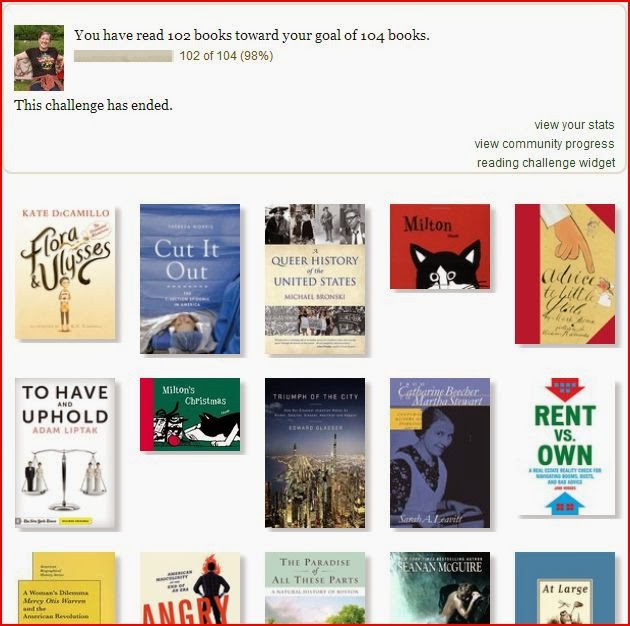
Here’s a peek at the books I read between mid-November and the end of the year. Exceeding my own expectations of finishing 2013 roughly 10% short of my goal of reading 104 books (two books per week), I actually came in at 102 by midnight on December 31st. Thanks to the polar vortex, I’ve started this year’s challenge at a good clip — more on the ones I haven’t yet reviewed in March.

In the meantime, to wrap the previous year’s reads, here are a handful of noteworthy titles (in alphabetical order by author).
Bronski, Michael. A Queer History of the United States (Beacon Press, 2011). Drawing upon several generations of historical scholarship on LGBT and queer history, Bronski traces the lives and experiences of queer Americans from early Euro-colonial history to the present. One of the things I particularly appreciated about his narrative is that it is not solely focused on sexual experiences or on the lives of high-profile non-straight and non-gender-conforming people — rather, it seeks to approach a broader view of American experience through a queer lens.
Cain, Susan. Quiet: The Power of Introverts in a World That Can’t Stop Talking (Crown, 2012). Cain’s work is a strong analysis of modern American culture as one which favors the strengths of a certain type of personality (here labeled “extroverted) and denigrates many of the strengths of another (“introverts”). Quiet is a good reminder to those of us who favor the quiet life to feel no guilt about working to organize our lives and spaces to play to our strengths.
DiCamillo, Kate and K.G. Campbell. Flora and Ulysses (Candlewick Press, 2013). I don’t read as many middle grade & young adult novels as I used to when I was working in a trade bookstore (for shame), but happily a friend of mine has a seven-year-old son who is a voracious reader, and buying this novel for him prompted Hanna and I to read it — and purchase a copy of our own! A delightful, if somewhat surreal, tale of a comic-loving girl, a poetry-writing squirrel, an errant vacuum cleaner, and a cast of family and friends.
Didion, Joan. The Year of Magical Thinking (Vintage, 2007). Didion’s memoir about the sudden death of her husband received much well-deserved press for its finely-tuned analysis of the process of trauma and grief. What struck me most about Magical Thinking was Didion’s internal conviction that death was something to be prevented and thus possibly, if the right combination of actions were performed, reversible.
Fadiman, Anne. At Large and At Small: Familiar Essays (Fararr, Straus, and Giroux, 2007). A dear friend of mine gave me this collection of essays as a present about five years ago, and I confess I only just this December got around to the act of reading them: they did not suffer for the wait! Fadiman is a master of creative nonfiction and her essays on everything from insect collecting to polar exploration, Charles Lamb to 9/11 to the joys of ice cream gave me pleasure to read and a yen to write deliberately once more.
Glaesser, Edward. Triumph of the City: How Our Greatest Invention Makes Us Richer, Smarter, Greener, Healthier, and Happier (Penguin, 2011). Glaesser makes a compelling, if slightly glossy argument in favor of dense urban centers as catalysts for creativity and an energy-efficient way to house the world’s population. While I agree with much of his argument, I do wish he had been more thoughtful in addressing how the needs of those for whom human density is a struggle will be met in a pro-urban future.
Hodges, Jane. Rent vs. Own: A Real Estate Reality Check for Navigating Booms, Busts, and Bad Advice (Chronicle Books, 2012). As Hanna and I dive into apartment-hunting this year, I borrowed this slim-yet-packed little volume from our local library. Hodges provides an excellent overview of the pros and cons of both renting and buying one’s place of residency and when the time came to return this one to the library shelves I felt a lot more equipped to think about options than I had before I borrowed it! (P.S. She also has an excellent “further reading” list.)
Kimmel, Michael. Angry White Men: American Masculinity at the End of an Era (Nation Books, 2013). I’ll admit that I read this book mostly because if you’re in any field that touches on masculinity studies, Kimmel is someone whose work you need to be familiar with (full disclosure: I had a lovely lunch with him once, as an undergrad, when he was a speaker at our campus). AWM explores the perspective of the titular angry white dude whose sense of aggrieved entitlement is familiar to all who spend time on the internet; it provides little fresh insight to those familiar with the issues at hand, but does bring good research to the table for us to mull over in the years to come.
Liptak, Adam. To Have and Uphold: The Supreme Court and the Battle for Same-Sex Marriage (New York Times, 2013). This brief e-publication is an excellent summary, with some analysis, of last year’s two same-sex marriage cases argued and decided before the Supreme Court. As someone who followed the cases fairly closely at the time, I can’t say I learned a whole lot that was new — but am still glad to know this source is out there in the event I need to refer back for details.
Mitchell, John Hanson. The Paradise of All These Parts: A Natural History of Boston (Beacon Press, 2008). A dollar-cart find, Mitchell’s “natural history of Boston” is more familiar essay than scholarly history, with few source notes and a conversational style. Nonetheless, I found it a pleasure to read — perhaps only in the way one can when a book charts the landscape which one navigates on a daily basis.
Morris, Theresa. Cut It Out: The C-Section Epidemic in America (New York University Press, 2013). The latest in a growing list of texts critiquing the American way of birth, Morris’ insightful analysis of the c-section epidemic in the United States draws on qualitative interviews with parents who had just given birth, nurses, midwives, and doctors to argue that neither pregnant women nor medical staff are to blame for the trend. Rather, she convincingly asserts, institutional cultures and the insurance industry push hospitals to define risk in terms of risk-of-lawsuit rather than risk-to-patients, leading to a deeply concerning trend away from centering best practices on the health and wellbeing of the pregnant parent and infant themselves.
Walker, Lisa. Looking Like What You Are: Sexual Style, Race, and Lesbian Identity (New York University Press, 2001). Recommended by a friend, I found this a useful exploration of what it has meant in the late twentieth, early twenty-first century to perform lesbian identity visually and bodily — Walker asks us to think about who is recognized (and trusted) as a lesbian, and why. As someone who has walked both sides of the queer-coded line (people have been both surprised I’m queer and told my parents they’d known all along [how could they when I didn’t myself, right??]) I found this a thoughtful reflection on the boxes we attempt to put people into, and how human diversity defies such categorization.

And for a sneak peek at what I’ve been reading this year, you can always find my current bookshelf in “real time” and my complete year-to-date list at the GoodReads 2014 reading challenge.

What’s on your (reading) plate this year?

booknotes: ‘bi’ and ‘a woman like that’

20 Monday Jan 2014

Posted by Anna Clutterbuck-Cook in book reviews

≈ Leave a comment

Tags

being the change, gender and sexuality, memoir

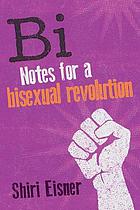
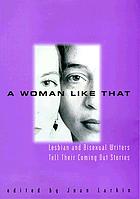
While we were snowbound in Michigan, I had time to do quite a bit of reading. Two of the titles I read were A Woman Like That: Lesbian and Bisexual Women Tell Their Coming Out Stories edited by Joan Larkin (Avon Books, 1999) and Bi: Notes for a Bisexual Revolution by Shiri Eisner (Seal Press, 2013). Separated by nearly fifteen years, and written for very different purposes, yet grappling with similar subject matter, it was interesting to read them back to back.

A Woman Like That is — at the subtitle implies — an anthology of personal essays by queer women describing their experiences of coming-to-awareness of their sexual selves. “Coming out” is a term we typically use for the process by which we (non-straight) people make public the shape of our sexual desires. While mainstream narratives generally pin-point a singular event (“When did you come out?”) what most of the essays in A Woman Like That make clear — and what most in the queer community already know — is that to come out is a verb, a process, and myriad. Reading these pieces challenged me to consider my own narrative of sexual awakening, and asked me to consider how I would organize it biographically. Does one begin with romantic/passionate friendships in childhood? With the acquired vocabulary that allows you to name yourself, or proscribes that ability (more on this below)? With a sexual debut? The first time you employed the word (bisexual lesbian dyke queer) to describe yourself to a (parent friend lover colleague medical professional) or on (on a form the internet) or in (an academic essay a job interview a survey response)?

The women in A Woman Like That, whose essays are arranged roughly chronologically featuring stories from the 1950s to the 1990s, use a variety of these definitions of “coming out,” often in combination. They describe childhood passions, first crushes, sexual initiations (good, not-so-good, violently non-consensual). They describe always knowing and coming to their realization later in life. They write a lot about the pain of living queer in an anti-gay world: of “reparative” therapies, of drugs, of physical abuse, of children taken away, of ruptured relationships, of fear and self-loathing. One of the things that startled me, in fact, and bogged me down in the reading, is how grim so many of these women’s narratives were. Hanna and I joked, as I kept reading her excerpts, that it should have been titled “The Unhappy Dyke Book.”

Still, as I said, the book made me think about the shape of my own story: the intense romantic friendships (same- and other-sexed); the inability to discern erotic from platonic attractions by gender in adolescence (I was told by multiple people “you’ll know” … what it turned out “I knew” was that gender was not a salient factor for me!); the internalized biphobia that caused me to de-legitimize my same-sex longings as invalid data; the sexual debut(s); the transition into a relationship, the describing of that relationship; the (mostly unruffled) reactions of people who found out I was dating a woman; the experience of getting married in a state where same-sex marriage is legally recognized.

Shiri Eisner, author of Bi would probably frown upon my brand of bisexuality. For one thing, I’m an “assimilationist” bisexual, perpetuating my own erasure by playing nice with the mainstream LGBT (or “GGGG”) movement, by often using language like “lesbian” to describe myself (even though I am, in fact, bi), and by marrying Hanna (“even if one particular marital arrangement doesn’t include any form of direct violence, marriage still constitutes symbolic violence against women in and of itself”). Bi: Notes for a Bisexual Revolution challenges those of us with bisexual desires and identities to push for an end to bisexual invisibility, and to recognize the radical challenge the organization of our sexual desires pose for the sex, gender, and sexual hierarchy of what Eisner refers to as minority-world culture (more commonly known as Western culture).

In eight chapters, Eisner explores what bisexuality is, how monosexism and biphobia work, bisexuality and the concept of “passing” and social privilege, and the intersection of bisexuality and feminism, trans* activism, racialization, and the mainstream gay movement. Overall, despite the fact that I suspect Eisner would take away my bisexuality card if she could, I thoroughly enjoyed this book. It’s accessibly written, deeply researched (I’m already mining its bibliography for further reading), and thoughtfully inclusive of many different peoples and communities.

At times I felt like the apparatus of inclusivity was top-heavy and slightly arbitrary. For example, Eisner had a habit of identifying authors’ nationalities which didn’t always seem any more relevant to the meaning of their work than, say, their marital status, or whether they were parents. Still, I think probably over-articulating subjectivity is probably better than assuming objectivity or universal applicability. The other stylistic challenge of the “big tent” work Eisner is attempting to write is the way the text sometimes got bogged down in enumerations of what could not be discussed, whom the next statements would not be relevant for, and whose voices might be in danger of erasure. As with the identity-markers, these provisos sometimes felt like they were undercutting the relevance of the forthcoming passages and/or assuming a readership that would be unable to discern for itself about whom the text was speaking. While I fully appreciate what Eisner was trying to do, I found myself as a reader getting impatient with too much telling and not enough showing (“I know that already! Get to the damn point!”). This is perhaps a personal limitation rather than an authorial flaw.

At the end of the day, I appreciate Bi as a call to stand up for bisexuality as an actual-factual way of being sexual in the world, and one which is not an attempt to cover one’s homosexuality or seek to gain heterosexual privilege. As an adolescent and young twentysomething, I needed someone like Eisner to come along and point out to me that my erotic interest in people with male parts and identities did not trump my erotic interest in people with other parts and identities. For too long, I assumed that as a woman who was capable of sexual attraction to men, my only social recourse was a heterosexual relationship.

(Because statistically speaking, in my hometown, what were the odds of finding a woman interested in me. Because lesbians would all hate and be suspicious of me. Because I was sexually inexperienced and too stupid to tell the difference between platonic and erotic interest; once I had sex with a man I’d suddenly realize what made that different from my same-sex romantic friendships. Because “everyone knows” that bisexuality is just a phase and that bisexual women are flakey, indecisive, and deceptive. Because no one believed me when I said I didn’t know what orientation I was. Because the default sexual orientation is always straight and monosexual.)

While A Woman Like That would likely only be of interest to people who like to think about the structure of coming-out narratives and about how the material experience of coming out has (and hasn’t) changed since the mid-20th century, I’d argue that Bi is absolutely essential reading for anyone who cares about keeping their fingers on the pulse of queer activism. As we look beyond, around, and through the mainstream gay rights issues that have preoccupied the most visible activists and activist organizations in recent years (i.e. as “gay” people become more accepted to the extent that they look and act like hetero, gender-normative folks), we need to remain committed to gender, sex, and sexual diversity beyond the hetero/mono and male/female binaries that obsess Westerners and others across the globe. Bi offers up a robust toolbox of concepts for doing so.

big book of orgasms book tour: interview with rachel kramer bussel!

06 Friday Dec 2013

Posted by Anna Clutterbuck-Cook in book reviews

≈ Leave a comment

Tags

gender and sexuality, interviews, smut

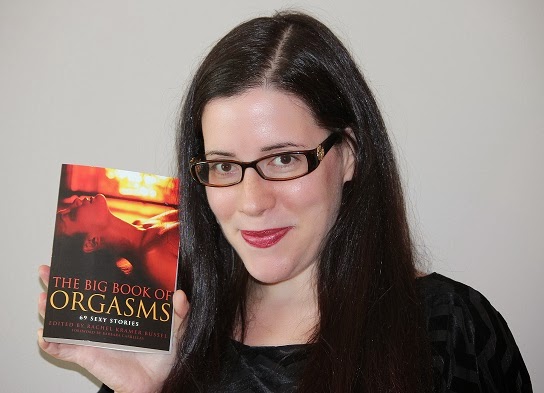
Today the feminist librarian is pleased to be hosting The Big Book of Orgasms (Cleis Press, 2013) book tour, featuring an interview with fabulous erotica anthology editor Rachel Kramer Bussel.

1. The Big Book of Orgasms is an anthology of erotic flash fiction at 1,200 words or fewer. What do you think are some of the biggest challenges and rewards of short-format erotica writing?

For some people, I think trying to tell a fully fleshed out story in 1,200 is difficult, especially if you’re used to having more room to set up the plot and develop your characters, but it’s certainly possible. For others, though, it’s a welcome challenge, and I get many more first-time authors submitting to my 69-story anthologies such as Gotta Have It and The Big Book of Orgasms than I typically do. The rewards are that you learn how to make every single word count; in my own writing, I’ve often had to pare down to get to the heart of what I want to say without giving up the heat and passion of a story. You learn how to write economically and it gives you an opportunity to write about things you may not otherwise devote time to. Flash fiction isn’t every reader’s or writer’s cup of tea, but I think it can be a good way to get yourself writing, especially if you don’t have a lot of time or are stuck agonizing over a given scene. Plus flash fiction can easily be expanded into a longer piece if that’s where the muse takes you; some of my longer stories started out with me trying to write to a shorter word count and getting sucked into the story, which is never a bad thing. As an editor, I appreciate the opportunity to publish three times as many authors’ work as I usually get, and I think it gives readers a wider range of choices.

2. I was impressed with the relative diversity of characters and story types in The Big Book. You have same-sex and different-sex couples, lesbian, gay, bisexual, and trans individuals, partnered and solitary sex scenes, and many flavors of sexual encounters. I often find erotic short-story anthologies to be fairly one-note, or featuring couples of mostly or entirely one variety (lesbian, gay male, straight, etc.), so this was a pleasant surprise. Did you make your selections with diversity in mind? Is the erotica market resistant to such “cross-genre” collections?

I definitely strive for as much diversity as I can get with each book, especially in The Big Book of Orgasms. I didn’t want readers to get bored, and I wanted to represent as broad a cross-section of what orgasms can look like and what they mean to various characters as possible. As an anthology editor I’m at the mercy of what’s in my inbox, so part of my job is making sure my public calls for submissions get spread as widely as possible and encouraging new writers to submit. In this case, there were a few elements I didn’t see as the manuscript neared completion, such a Tantric sex, that I felt were important, so I specifically asked a writer who I knew could write competently about that topic to write a story about it. In general, though, I try to create a whole that’s greater than the sum of its parts, with what I’m given. I wanted this book in particular to appeal to as many potential readers as possible, to be the one book I would recommend to new erotica readers and be the book of mine that is the most accessible, due to both the ultra short format and the breadth of it.

3. In an era when erotica is increasingly available in free or low-cost formats, what do you think readers of a print/ebook edited anthology like The Big Book of Orgasms get that they would be unable to find elsewhere?

From my job as anthology editor to Cleis Press’s ongoing commitment to publishing both highly edited and beautiful books, I think the final product is something that’s clearly been worked on with a lot of care. I love the print edition’s size for its compactness. It feels different than my books with 20 or 25 stories, and I like that it fits easily in purses and some pockets. In terms of quality, I think everyone has different tastes so I don’t necessarily think it’s a matter or choosing between cheaper books and this one, but with The Big Book of Orgasms every single story has been selected and placed with care. What readers will get out of this book is a range of voices, from vanilla to kinky, male to female, solo masturbation stories, which I don’t often get to publish, and very creative ways of looking at the topic of orgasm within an erotic framework. This is the book I’d recommend to new readers of the erotica, and to people looking for erotica to read to or with their partners, because there’s so much to choose from.

There’s room for self-published work about niche topics, as well as flash fiction and full-length works. One thing I personally love about the erotica genre, as a reader, writer and editor, is the abundance of short stories. That’s what I started out reading, in the Herotica and Best American Erotica series, and I always marveled at the authors’ ability to tell such riveting, memorable tales in a short space. The rise of e-publishing means authors can publish at varying lengths and aren’t as tied to the demands of print publishing, but because there is so much erotica out there, readers can be more discerning and demanding in terms of what they are looking for, both content-wise and style-wise. No fetish needs to go untouched or ignored.

4. Recognizing that what’s hot and sexy will always be subjective (and vary wildly among humans!), what is one theme or trope of erotica that you would be happy never to read again?

It’s hard to say because what may appeal to one person may not be my thing. I’m as fascinated as anyone else by the phenomenon of dinosaur erotica, which, if the media interviews this year are to be believed, is more popular than my books. It’s not my thing per se because I’m not usually into science fiction but I think it’s great that so many people are both writing and reading in that genre, and that the marketplace for ebooks exists to support it. I personally find the fetishization of extreme wealth of the billionaire hero, a la Fifty Shades of Grey, a bit overdone. I’m sure there are indeed billionaires out there, but it seems so over-the-top.

5. What is a theme or dynamic you would like to see writers explore more often in erotic writing?

I’d like to see more stories about couples, especially long-term couples, both having adventures and grappling with real-life sexual issues and situations. I see some of this, but I like the idea of couples exploring new things several (or many) years into their relationships. It’s hard to say what I’m looking for—part of what I love about editing anthologies is that every single time, authors manage to surprise and awe me with their creativity. I don’t like to say “I want more of X or Y” and then only get X or Y in my inbox. If I ever dare to think I’ve seen or read it all, putting out a call for writing lets me know I certainly haven’t!

6. What upcoming project(s) are you working on that you’re excited to share with your readers?

I’m teaching my first Portland, Maine erotic writing workshop at sex toy store Nomia, on December 3rd, which I’m looking forward to, then one January 17th at the New York Academy of Sex Education. Then I’m doing something I’ve never done: two three-hour workshops pre-CatalystCon on March 14th, on erotica writing and nonfiction sex writing, respectively (details are on my website). Those are more intensive courses and include individualized feedback. I’m hoping to teach more workshops as well and my upcoming erotica releases are Lust in Latex, about rubber and latex clothing, and Best Bondage Erotica 2014, both out in January from Cleis Press. I’m taking submissions through March 1st for Best Bondage Erotica 2015 and will be announcing a few more calls for submissions soon as well.

Thanks to Rachel for stopping by and taking the time to answer my questions. You can check out The Big Book of Orgasms at Amazon.com, Cleis Press, your local independent bookstore or library (if you’re lucky!), or Powell’s online.
booknotes: the new soft war on women

02 Monday Dec 2013

Posted by Anna Clutterbuck-Cook in book reviews

≈ Leave a comment

Tags

economics, feminism, politics

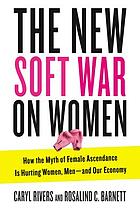
A few weeks ago, I was sent a review copy of Caryl Rivers and Rosalind Barnett’s latest collaboration, The New Soft War on Women: How the Myth of Female Ascendance is Hurting Women, Men – and Our Economy (Tarcher Penguin, 2013). I have read and appreciated the work of Rivers and Barnett before: their previous work has drawn on the latest in social science and psychological research to refute cultural narratives of gender difference that hurt us as children and as adults. This latest work treads little new ground. Rather, The New Soft War reminds us what we know (thanks to the research) about the continuing, pernicious discrimination against women in the high-powered workplace.

Such quantitative and qualitative research data run counter to recent anecdotal narratives (e.g. Hanna Rosin’s The End of Men) that predict in near-hysterical terms a present or future of gender imbalance in which domineering women run the world while emasculated men creep away into the shadows to nurse their wounds. Instead of “female ascendance,” Rivers and Burnett argue, female white-collar workers (virtually all of their examples come from the fields of business, finance, law, and corporate media, with a smattering of academics thrown in for good measure) continue to face gender stereotypes that impede their ability to succeed in their careers — while the gender stereotypes their male counterparts experience often boost their success out of proportion to their proven abilities. Individual mentoring programs and other exhortations for women to self-advocate (the “lean in” approach) fail, the authors argue, because placing the burden for change on professional women themselves ignores cultural biases and structural disadvantages that conspire to make many individual opportunities a no-win situation if the individual in question is a woman rather than a man.

The book was a useful review of what the research tells us — as far as it went. However, I found its overall narrative to be lacking in broader analysis and its ultimate conclusions (a reiteration of the need for systemic change, coupled with suggestions for how women can work within or game the current system) to be tepid. For two authors who have just spent over three hundred pages detailing how endemic sexism is in the white collar workplace, to have the final chapters focus largely on individual strategies would seem to undercut their argument for policy-level change.

I was also irritated by the focus on white collar professional women, most of whom were navigating a corporate culture I have little experience with and struggled to relate to. I would have appreciated a more class-inclusive approach: women working in less high-powered professions, including my own world of library science — not to mention women working in the service and retail industries — were barely mentioned. The focus was on women in traditionally male-dominated professions. Some of that data can no doubt be generalized to women in the workplace more generally, but I am wary of casually assuming that the experience of highly-educated (largely cis, het, white) professional-class women pulling down six-figure salaries can stand in for all of us.

Given, for example, the way recent scare stories about women dominating the new labor market often focus on working-class and poor women who are heads of household, it seems particularly important to push back against the notion that a first-generation female college graduate who earns a living wage as a pharmacist is “empowered” to the extent that she is immune from exploitation as a worker, sex discrimination as a woman, race discrimination if she is non-white, and ageism if this is a second career — the list could go on and on. Rivers and Burnett rarely complicate their picture of the ideal worker with any of these intersectional concerns … their analysis generally presumes a high-powered businesswoman who has learned (and is able) to play the corporate game, yet still finds herself passed over for a promotion, or condescended to after the birth of her first child.

In other words, a woman frustrated that all of her (acknowledged and unacknowledged) social privilege and personal gumption haven’t rewarded her as lavishly as they have rewarded the men in her graduating class at Harvard Business School. This woman’s concerns are not invalid ones — it is fair to ask why our society rewards some groups of people more lavishly than others — but the “new soft war on women” does not only affect her and her peers. It is part of an aggressive neo-capitalist campaign to dehumanize and disenfranchise employees and grant ever-more power to the plutocrat employers. Within this broader struggle between the (relatively) powerful and the (relatively) disempowered, gender discrimination is often but one of many battlegrounds. That Rivers and Burnett ignore this larger framework ultimately weakens their closing arguments for political and social change.

The kind of feminist analysis I appreciate most is the kind that does not ignore the complex differences that exist between women, but rather engages with them (even if only to say in one’s introduction that a given study out of necessity will narrow its focus to X and Y group). The New Soft War would have been a better book, in my estimation, if it had at the very least acknowledged that its study population (and intended audience) was but one specific group of upper-middle-class professional women — rather than women generally. And that its agenda for social change was one of limited reforms within the pre-existing system, rather than a more ambitious questioning of the economic status quo.

← Older posts
Newer posts →
"the past is a wild party; check your preconceptions at the door." ~ Emma Donoghue

Recent Posts

  • medical update 11.11.22
  • medical update 6.4.22
  • medical update 1.16.2022
  • medical update 10.13.2021
  • medical update 8.17.2021

Archives

Categories

Creative Commons License

This work by Anna J. Clutterbuck-Cook is licensed under a Creative Commons Attribution 3.0 Unported License

Meta

  • Create account
  • Log in
  • Entries feed
  • Comments feed
  • WordPress.com

Create a free website or blog at WordPress.com.

  • Subscribe Subscribed
    • the feminist librarian
    • Join 37 other subscribers
    • Already have a WordPress.com account? Log in now.
    • the feminist librarian
    • Subscribe Subscribed
    • Sign up
    • Log in
    • Report this content
    • View site in Reader
    • Manage subscriptions
    • Collapse this bar