• anna j. clutterbuck-cook
  • contact
  • curriculum vitae
  • find me elsewhere
  • marilyn ross memorial book prize

the feminist librarian

the feminist librarian

Category Archives: life writing

30 @ 30: chosen families [#3]

27 Wednesday Jul 2011

Posted by Anna Clutterbuck-Cook in life writing

≈ 2 Comments

Tags

thirty at thirty

What I’ve been trying to do in this series is reflect on the ways in which I have changed between “then” (my childhood and young adulthood) and “now” (at age thirty). Yet there are some aspects of my life that I think have maintained a strong consistency in terms of underlying values or inclinations. To some extent, I realize that we humans feel compelled to look back at our own autobiographies and seek continuity (thus the ever-popular emphasis on the innate nature of sexual orientation, which I’m going to tackle in a few weeks). However, our narratives of childhood development also often describe childhood as something of a foreign country, wholly different from the experience of being an adult. Obviously the truth lies somewhere murkily in between.

This post on chosen families explores the remarkable consistency of my own internal (not always entirely conscious) vision of what sort of family and community I long to be a part of as I grow up and grow older.

During the first year I was living in Boston (my first permanent move away from West Michigan), I had a particularly vivid dream. I don’t, as a general rule, have very exciting and/or deeply symbolic dreams. This one, however, I recalled with uncharacteristic clarity when I woke up. In the dream, I was a middle-aged woman with a teenaged son. I lived and worked in some sort of sprawling farmhouse doing some sort of social justice activism (the dream was unclear on exactly what, or I have forgotten). The dream centered around a dinner party at this house.

Maybe the house was something like this.
Lined with bookcases, obviously.

At the dinner table were myself and my son, a woman who in the dream was my closest friend from childhood, her children, the woman’s abusive husband — from whom she had come to my home to escape — and the father of my son, who had not been present in our lives for some years. Possibly since the child had been born.

Over the course of the dinner and the after-dinner mingling, a couple of important things happened. I told the abusive husband he was not welcome in my home if he intimidated his wife, and he left — leaving his wife and children to live with me. I also remember a conversation with the father of my child wherein it was clear we were on warm, companionable terms, but that he would not be staying with us or acting as a hands-on parent to the child we had brought into the world. In the dream, I was comfortable with that. What I remember more than anything else is the pride with which I presided over the home-space that was mine and served as a refuge for the people who came to stay with me, as long as they were kind to one another. Bullying behavior was not tolerated, and those who remained in the space were caring and supportive of one another. It didn’t matter that our made family was a household headed by two women (the implication was that my childhood friend — or possibly more than a “friend”? — would remain, with her children), with children at different life-stages and one father who would drift in and out of the home-space, both part of it and not entirely at home.

The dinner looked something like this.
Also imagine the final feast in “Mostly Martha”

Obviously this was just one dream, and its details make rather murky sense (if sense at all). I don’t read it as a portent of literal experiences to come. Yet part of why I took note of the dream at the time I had it was the way in which it fit in with a decades-long pattern of my imaginings in which my created family spaces are far from heteronormative.

As a child (say between ages of six and twelve), I wrote and told countless stories about chosen families. Some of these stories involved orphans banding together to establish a home. Some of these stories were more elaborate imaginings, proto-fan fiction if you will, in which I brought all of my favorite fictional characters together under one roof in a parallel world where we maintained a sprawling estate called Willowbanks. There were pairings within that parallel universe, and children conceived and birthed … but though in those days my conscious sexual pairings were all opposite-sex, just as important as the couplings were the same-sex intimate friendships and sibling bonds (I read a lot of British children’s literature that generally specializes in sibling groups … the Pevencies, the Walkers, the Blacketts, the Bastables, etc.). Ours was a world in which the adults all cooperatively parented the children and one was just as likely to fall asleep in the bed of an intimate female friend as with one’s husband.

As a teenager, I wrote fantasy novels. Long fantasy novels. In these novels, likewise, themes of sibling relationships, intimate female friendships, lovingly detailed descriptions of the home-spaces, and sprawling relationship networks dominated. I remember one particular saga (I wrote at least five novels in this universe) involved a pair of teenage protagonists, male and female (the girl was transparently me), who make their way into a fantasy world universe in which they have to save the heir to the throne blah blah blah your typical fantasy novel plot elements. What I spent the most time on, however, was describing in loving detail the time my two protagonists spent in the home of their mentor. She was a powerful mage who lived inside a gigantic living tree with a central staircase and rooms that moved and changed as needed. She lived alone, her husband having died in some magical battle (I forget the details), and was pregnant with their only child. The me-character was definitely as (if not more) interested in this mage than she was in her fellow protagonist whom I assumed the plot dictated her falling in love with. The mage, the two teenagers, the infant, and the mage’s relatives (who moved in and out of the story and the tree house) lived and supported one another as needed throughout the saga … and separation from the place and the group often meant intense agony for the characters involved.

Part of what has always drawn me to feminist and queer spaces has been the willingness of people in those spaces to question what constitutes a family. I’m not exactly sure where this interest in alternatives to the heteronormative family structure originates, since I come from (and thoroughly enjoyed being part of) a basically, well, heteronormative family. My dad was the full-time wage earner. My mother was the full-time parent. They’ve been married for over thirty-five years. I was the eldest of three kids and we lived in a home my parents bought just before they got married. Yet I’m going to go out on a limb here and argue that the way my parents chose to structure of family life (particularly as parents who chose to home educate their kids) actually encouraged me to seek out alternative structures. My childhood encouraged me to believe in the power of close sibling relationships and cross-generational relationships that weren’t necessarily dictated by hierarchical power dynamics. Our circle of close family friends included single adults, single-parent families, families with adopted children. We maintained a somewhat open-door policy when it came to folks moving in and out of our home, joining the core family members for dinner, etc.  (I mean this somewhat literally: I didn’t possess a house key until I was in my twenties because my parents never locked the door except when we went away on family vacations). Our household did have a clear sense of “parents” and “children,” with parents as care-takers and children as, well, children, who participated to the best of their abilities but were not expected to be adults.  Yet there was never the sense that in order to be a legitimate family, or a family that met the needs of every individual member, there had to be one father breadwinner, one mother caretakers, and children all with clearly delineated responsibilities. We kinda made it up as we went along, improvising as needs and abilities changed.

Which I think is why my (on the surface) heteronormative upbringing fostered openness in both my child-self and my adult-self to look beyond the expected structure of things and ask “what is the arrangement that would work well for all of the people involved here?” In fact, beyond a willingness to ask I’d say it was a nearly overwhelming impulse to come up with a circle of care that meets everyone’s needs — as long as they are willing to participate in the production and reproduction of that circle of care. (My mother would tell you this impulse to care was evident months after I was born and attempting to care for other infants our weekly playgroup.) The impulse recurs, resurfaces: in my childhood fantasies about the parallel universe of Willowbanks; in my adolescent fiction about magical families; in my subconscious dreamings about a future home in which all those who are willing to regard one another with lovingkindness are welcome.

30 @ 30: body modification [#2]

20 Wednesday Jul 2011

Posted by Anna Clutterbuck-Cook in life writing

≈ Leave a comment

Tags

fun, the body, thirty at thirty

or possibly a fourth earring?

I thought after my post last week that took on the fairly weighty question of identity, I’d turn to something comparatively lighter this week and talk about body modification. Why? Well, it’s actually something about which my personal feelings have changed substantially over time … in that as a child and young teenager I was pretty categorically opposed to any bodily alteration, and today I find myself trying to decide where exactly my second tattoo should go, and whether or not a nose or nipple piercing is a wise investment.

Mostly, my youthful opposition to such things was a pretty simple matter: I was not a fan of pain. I was not anti-girly things as a child (though I insisted they went hand-in-hand with traditionally unfeminine things; more on that later). I was in love with my grandmother’s clip-on earring collection, for instance. But pierced ears sounded to me like the quintessential example of a bad time. Voluntarily allow someone to punch holes in your ears with a staple gun type thingy? I think not.

But the summer I was twelve this friend of mine visited from Canada, a fellow homeschooler from whom I learned a lot of worldly things. Such as what exactly a hickey was, and why it would be uncool to ask your mother what it was, or allow her to see that you’d received one from your boyfriend with the purple hair. Actually, the hickey-and-hair incident wouldn’t happen until we were a year or two older. The summer of 1994 we were thirteen years old and still spending our lazy afternoons reading through the vast canon of L. M. Montgomery and arguing over which of the young men in the cast of Swing Kids made our hearts flutter most fervently (I had a soft spot for Arvid myself). The point, though, is that my friend was, to my mind, a more worldly adolescent. While I was not entirely sure I wanted to be more worldly myself, I also knew I wished to impress upon her the fact I was not un-worldly.

Which is where pierced ears come in, insofar as she convinced me that to grow any older in our sophisticated day and age without pierced ears was simply not to be tolerated. And therefore, I screwed up my courage and we trouped down to a local jewelry shop to have the deed done. (The shop is still there on 8th street and still pierces ears, I saw the sign in the window when I was back in Holland last May). I wave brave, and it hurt less than I anticipated. Though I didn’t repeat the process until the summer of 2009 when, almost completely on a whim, Hanna and I went into a Claire’s in Downtown Crossing here in Boston and added to the collection (two more holes in my left ear, one additional one in the right). I can’t say I do a lot with them, since I can’t be bothered to change out the rings, but I do take pleasure in the fact that I’m a professional librarian with five ear piercings.

there will be a no. 2
I’m just not sure where, what or when

And now a tattoo. I’ll be upfront and say I harbored, for way too long, social prejudice against tattoos as something tacky and faintly unhygienic and frighteningly permanent. In my early twenties a friend of a friend got an ankle tattoo for her sixtieth birthday and I thought that maybe I could picture something like that … far into the future … when I had a better sense of who I was, and what I might want to say with ink worked into the very fabric of my skin. Maybe.

But in my mid-to-late thirties, my opposition started to melt. In part due to exposure to some exceptionally gorgeous ink on friends and acquaintances. I won’t lie: beautiful tats are much more visible here in Boston than they were in West Michigan. I see them on co-workers, professional colleagues, the coffee shop baristas, commuters on the T. When you see that much beautiful art around you, it’s hard not to start thinking, “If I ever … then I might …”.

I figured completing graduate school was as good a place as any to start. You can read all about why, what and how here.

Maybe I grew into myself faster than I used to imagine I would. Or perhaps I’m more comfortable with the notion that we are continually changing but that it’s okay if our bodies carry the scars of our previous selves: joyful and visible ones as well as painful and/or invisible ones. Chosen as well as involuntarily acquired. Human-created rather than physiologically made.

I’m still wary of body modification, in part because I’m just not that into pain and also because I try to be as accepting as I can be of my body as it is, rather than attempting through intervention to make it conform to my own (or to societal) expectations of how a body should be.

But ink, particularly, is something I’ve grown to believe can serve to celebrate the body as it is. After all, it draws attention to one’s physical presence, and insofar as it is a self-chosen form of visual symbolism communicates aspects of ourselves that go far beyond what we have been trained to assess when we visually assess our fellow human beings on the street. Tattoos demand that we be understood not just as bodies of a certain shape, skin color, weight. They also demand that we be understood as bodies. As physical presences that have been purposefully decorated in ways that are meaningful to the individual body in question. Tattoos are a way of tying our metaphysical, meaning-making selves to our corporeal, physical, taking-up-space selves. Much of their power, I would argue, comes from the fact that they are an art form that bridges that boundary between metaphysical and material being-in-the-world, and grounds that bridge-building in individual human flesh.

Not sure where I’ll be inking (or piercing) myself next, but you’ll likely hear about it on this blog. So stay tuned!

30 @ 30: questions of identity [#1]

13 Wednesday Jul 2011

Posted by Anna Clutterbuck-Cook in life writing

≈ 1 Comment

Tags

history, thirty at thirty

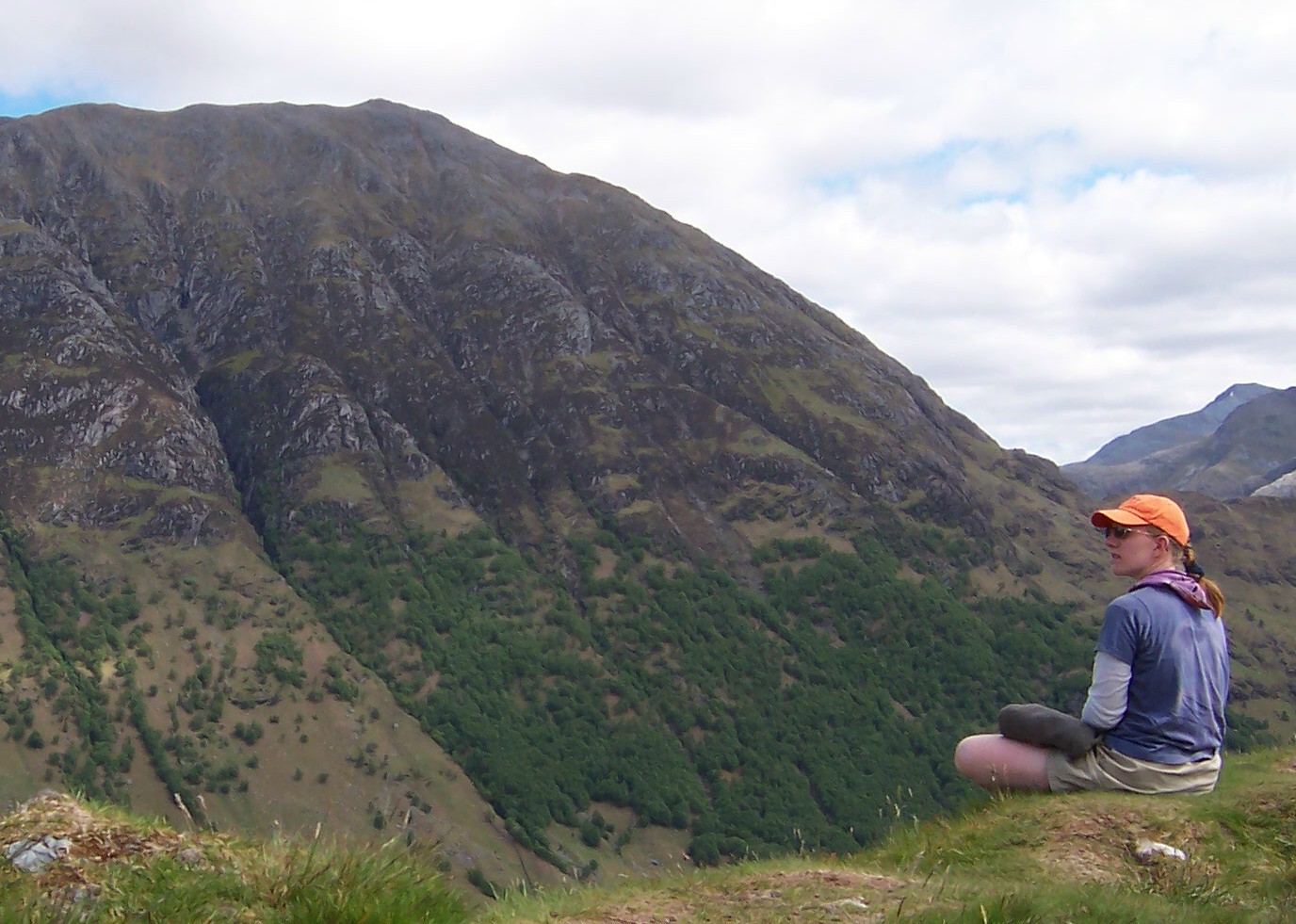
Glen Nevis, Inverness-shire, Scotland (May 2004)

When I was seventeen I enrolled in a college writing course the title of which was Questions of Identity. It was a required course intended to teach incoming first-year students what was expected of in terms of written work during their college years, but each faculty member was allowed a fair amount of autonomy in terms of content. My professor (for whom I harbored a major schoolgirl crush) framed it in terms of memoir. We read Annie Dillard’s An American Childhood and Tobias Wolf’s This Boy’s Life (I still remember the bit about the beaver in the attic). We read creative nonfiction essays about everything from the Holocaust to Italian cookery. We wrote autobiographical essays.

I loved it so much, I turned around and took another class from the same professor the following semester, where I wrote more memoir, and the semester after that as well.

What strikes me, looking back on the content of those essays is what the subjects of those papers reveal about my primary question(s) of identity. They were not questions of sex or gender, of religion or race … though I’m sure one could find markers of these aspects of identity throughout, they were not the categories I was then thinking in. I was simultaneously taking Christian Feminism and Feminist Theology, so sex and gender, sexual orientation and religion were very much on the table … but not what preoccupied me when it came to identity. I already took for granted being a feminist; sexual orientation was puzzling but not a burning concern. By 1998 I’d pretty much given up on the church, though I found theology a powerful language with which to discuss human rights and justice.

I didn’t choose these subjects to write about in English class. What I chose to write about, primarily, was friendship, family, and my experience with home education. Looking back, I would argue that these essays all implicitly explore how the experience of home education helped shape the nature of my closest relationships. As a teenager, I was working hard to establish relationships outside my primary kinship network (which I planned to maintain, but was ready to expand beyond). And I wasn’t particularly sure how — or, more particularly, how to do it well.

Two of my major papers during that academic year hinged on an examination of intense friendships — one a intimate childhood friendship that had ended painfully, another a portrait of a young man I had worked with the summer before and felt both attraction toward and irritation over. The following autumn brought a third paper that was a profile of my then-closest friend, a young man with whom I carried on a passionate correspondence (yes, these were the days when pen-pals actually used pens). I also authored two papers specifically about the history of home education — my own family’s experience and the broader movement — as well as pieces about my childhood family life and one paper for which I shadowed a friend who attended the local Christian high school.

Home education played a central role in all three friendship essays. The childhood friendship (looking back I would argue this was my first romantic female friendship) was with a girl from another family that home educated and our two families were extremely close until I was in my early teens. I made connections with my pen-friend (still a good friend today) through a long-distance homeschool writing group, and the man for whom I harbored complicated love-hate feelings was a grown homeschooler. Part of the attraction I had for him was the seduction of being close to someone seven years older than I who was an adult, but had had a (superficially) similar childhood experience to mine. While I didn’t necessarily conceptualize it this way at the time, looking back I would argue that part of the work these papers were doing was helping me to understand  how central my experience as a homeschooler had been to my childhood, and how central it would continue to be as I moved into adulthood. Would it color the relationships I formed? Would it be easier for me to form bonds with people who, like me, had grown up outside of institutional education? Would the experience of college alter my identity as a homeschooler, and if so what would that mean? What was my relationship as an individual to the larger (and wildly heterogeneous) community of other home-schooled people? To what extent did being a home-educated person make me “weird” or cause communication or cultural translation problems with my fellow students at college and the faculty under whom I studied? How would I be able to move into a culture (college) where I was no longer surrounded by like-minded individuals (fellow homeschoolers) and still retain those aspects of my identity that I felt were important?

When I was a young child my mother once asked me how many children  I thought were homeschooled like us. “Oh, about half,” I told her, after a moments consideration. This was an accurate reflection of the proportion of people we interacted with regularly who were home-educated or in more traditional situations. In other words, as a young child I assumed that my experience was normal. As I grew older and faced the skepticism and suspicion and saw friends approaching learning in radically different ways from my own family, I came to understand that our family’s choices were very different from those of the dominant culture. I realized that home education was something that marked me as an outsider. Those things that we feel mark us as different (from the implicit norm) are a more conscious part of our identity than those things that seem normal.

By the time I was seventeen, home education had become a self-conscious part of my identity, but also one that was precarious as I moved into college coursework. It became a project to understand what, exactly, that part of my identity meant to who I was as a whole person, and what it meant in terms of my relationship to others.

In some ways, this exploration is still ongoing. I don’t think it is a mistake that Hanna is also a grown homeschooler: in some ways our experiences were quite different, but nonetheless it is a part of our growing up that neither of us has to explain to the other, or defend to the other as an insider speaking to an outsider. While I’ve had close friendships over the years with people who never homeschooled, I continue to feel a particular kinship with those who have. And, as the subject of my Master’s thesis shows, my consideration of educational alternatives has continued to be central to my identity as a thinker and academic.

At the same time, the anxiety that attended my written exploration of my education and its connection to my intimate relationship bonds has abated considerably. I still think about how my growing up has shaped the person I’ve become (a lot!), but then I think a lot about most things in my life. It’s just the way I work. I still have a special place in my heart for home-based education, and feel that spark of automatic affiliation with folks who are homeschooled or homeschooling. Yet it isn’t so present in my life as it once was. At seventeen, it would have been one of the primary ways I introduced myself to others; now, new acquaintances often know me for months or years before, depending on the conversations we have, the topic arises. At seventeen, I likely would have felt unable to be known to others if home education remained undiscussed. At thirty, I am more relaxed about letting my personal history weave itself in to present-day narratives in its own time.

Recently, I’ve been thinking about what it would be like to mentor younger folks in the home education community; and I still have that oral history project with grown homeschoolers I’d love to complete! We’ll see in the next thirty, sixty, or ninety years how much it continues to play a role in my life.

You can read more about my reflections about home education in this interview I gave over at I’m Unschooled. Yes, I can Write.

30 @ 30: series introduction

06 Wednesday Jul 2011

Posted by Anna Clutterbuck-Cook in life writing

≈ 2 Comments

Tags

blogging, thirty at thirty

So back at the end of March I threatened more posts about turning thirty. I’ve finally decided to follow through on that threat (promise?) with a series of posts I’m going to call “30 @ 30.”

I’ve been thinking a lot these passed few months about the discourses surrounding childhood and adulthood, the supposed merits or limitations of each phase of life, and the markers of maturity or immaturity our culture fixates on (having a “real” job, being financially independent, owning a house, marrying and having children, etc.). At first I was thinking about writing a pair of posts talking about why being a child isn’t all it’s cracked up to be (in response to those who complain about how adult life sucks) and about the reasons I’m glad to be an adult and don’t auto-dread being called “ma’am” or turning forty.

But that seemed, in the end, too negative. And destined to make friends of mine who have more conflicted feelings about adulthood pissy. So instead, I’m going to try and write a series of posts reflecting on how my own thought and experience has evolved between my childhood and my (as-of-now) adulthood. Not necessarily in a better/worse way, but in more of a continuity-and-change way. Because that’s the sort of person I am: I tend to emphasize the constants while also thinking about the way the external manifestation of those constants can radically change over time. Maybe along the way I’ll discover some of the subjects on which my thought and experience has changed dramatically over the years. Some topics I plan to explore (in no particular order of importance):

  • food tastes
  • sexuality
  • pornography and feminism
  • favorite fictional characters
  • physical movement
  • gender
  • identity and labels
  • asking “why”
  • the internet
  • friendship
  • urban living
  • England
  • wearing jeans
  • coffee
  • french kissing
  • body modification
  • school
  • money
  • travel
  • work / vocation
  • children and childcare

Stop by each Wednesday for series installments. This is also part of my attempt to haul this blog back into being more diverse than a book  and fic review space. As enjoyable as that is (and I plan to continue, no mistake!), I’ve missed more narrative and personal writing.

the tattooed lady: or, more than you ever wanted to know about my first tattoo

19 Sunday Dec 2010

Posted by Anna Clutterbuck-Cook in life writing

≈ 6 Comments

Tags

children, domesticity, librarians, simmons, travel

Maggie (age 4), Anna (age 11), Brian (age 7), Holland, Michigan, Summer 1992

I promise this is about my new tattoo (!). So bear with me here.

In 1943 prolific journalist and novelist Arthur Ransome wrote to a young friend, Pamela Whitlock in an attempt to encourage her in her own endeavors as a writer — even as she was pulled into work for the war effort. “The training for your own private job is going on all the time,” he counseled her (Signaling from Mars, 301).

Stick to it, filling your notebooks. Nothing is odder than the way in which a big slice of life, vivid at the time, fades utterly away when you escape from it into something different. It’s like coming back from a year abroad. But notes, no matter how scrappy, are like stones dropped into a pool of still water. They stir up the whole picture and bring to life all sort of other things, including things you don’t happen to have written down at the time (Signaling from Mars, 307).

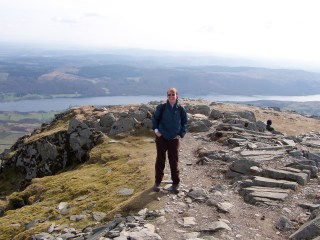
Coniston Water, Cumbria (30 March 2004)

Ransome knew of what he spoke, having started his own writing career as a young university drop-out, scraping by on the salary of an office boy while trying his hand at memoir and other miscellaneous bits of writing. His Bohemia in London (1907) is something of a classic in the genre of starving artist memoirs, recounting days spent shivering in unheated flats and surviving on apples for weeks at a time so that he had enough money to buy books.  From London — and his first, deeply unhappy, marriage — Ransome escaped to St. Petersburg where he witnessed first-hand the Russian Revolution and its aftermath, sending back dispatches to both newspapers and family members (his mother received regular reports on his digestive health, including harrowing tales of surgery in wartime medical facilities; his small daughter received letters adorned with illustrations of papa in great fur coats) and editing a collection of Russian folktales in translation.

Eventually, he abandoned Russia — taking with him one of Trotsky’s secretaries, Evgenia Shvelpina, whom he had to smuggle out of the country through the Mediterranean. The two later married and eventually retired to Ransome’s beloved Lake District in Cumbria where between 1931 and 1947 Ransome authored a series of adventure stories with child protagonists (Ransome himself always protested that he had not set out to write children’s stories, but rather wrote the stories that he himself most enjoyed). Set primarily in the Lake District — though later volumes take the cast of characters into Scotland, south to the Broads, and into the realm of half-fantasy — each book follows the adventures of several families of children who spend their school holidays sailing, camping, and spinning out all sorts of adventure stories that weave seamlessly between fiction and reality. As Ransome observed after completing Swallows and Amazons, the introductory tale,

I was enjoying the writing of this book more than I have ever enjoyed writing any other book in my life. And I think I can put my finger on the thing in it which gave me so much pleasure. It was just this, the way in which the children in it have no firm dividing line between make-believe and reality, but slip in and out of one and the other again and again (quoted in In Search of Swallows and Amazons, Roger Wardale, 32).

Above Coniston Water on my 23rd Birthday (30 March 2004)

While Ransome’s novels have become enduring classics in Britain and, oddly enough, have a devoted following in Japan, they are known only rarely here in the United States. When my family stumbled upon them in the early 1990s, they were unknown treasures. Treasures which we readily devoured, my parents reading them to us every night before bed. Treasures that turned into extended fantasy play of our own. Lacking an island or annual holidays in the Lake District, we turned our own urban landscape into a wilderness, camping in the backyard and repurposing the (profoundly unseaworthy) hull of an abandoned rowboat in which to play captain, first mate, and “ship’s girl” for hours on end.

Suffice to say, the series, its author, and its landscape (both fictional and actual) continue to signify, for me, profound ties to my childhood and my family of origin, as well as my particular affection for the landscape (both literary and actual) of Britain.

Ransome illustrated all of his own stories with whimsical pen and ink drawings … which is where this post finally makes its way back around to tattoos. Because when I began thinking about what sort of tattoo I was looking to acquire in celebration of my completion of library school, I knew I wanted something that was able to weave together in a particular image the part of myself that is at the fore when I am living that part of myself that sought out librarianship as a vocation. And that is the part of myself that is grounded in my childhood steeped in literature — the part of myself that does not distinguish between reading and living, between gaining knowledge and doing. As well as the part of myself that seeks both the comfort of the familiar and domestic … and the sharp edge of political analysis and social critique. And knowing what I know about Ransome as a person, while also relating to the novels he created very much as an ingenuous child, Swallows and Amazons offers just such a mix of the political and personal.

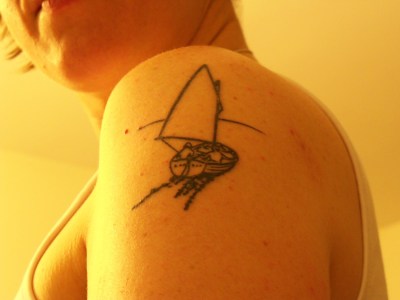
Amazon sails (photo by Hanna), ink done by Ellen @ Chameleon Tattoo Cambridge, Mass.)

It was my mother who suggested I look to AR’s illustrations — and she who finally located the illustration that became the basis for my finished tattoo. The sailboat is the Amazon, the boat belonging to Nancy and Peggy Blackett of Beckfoot Farm.

We are introduced to the Amazon sisters in the first novel of the series, Swallows and Amazons, and they remain central throughout. One of the strengths of Ransome’s series — which is indubitably visited by the British imperialist fairy on occasion, not to mention the overtly racist fairy — is his range of both male and female characters. He goes much further than his contemporary, C.S. Lewis (for example) in portraying girls who openly eschew gendered expectations — and who are celebrated for their agency. Nancy Blackett (who has changed her name from “Ruth” to a name she feels more aptly reflects her position as pirate captain of the Amazon) abhors wearing dresses is often de facto leader of the expeditionary forces. Neither does Ransome punish boys whose idea of a good time is less conquering and more conservation: The plot of Great Northern celebrates the ethic of preserving a rare species of bird in the wild, rather than harvesting its eggs for scientific study and prowess.

I close this post with the text of a telegram that, in Swallows and Amazons begins the whole adventure. The Walker children, on holiday in the Lake District with their mother, have been anxiously awaiting word from their father (serving in the Navy) who is to weigh in on the proposition that they be allowed to camp sans adult chaperon on an island in the middle of the (unnamed) lake.  In the opening pages of the book, young Roger is racing from the house across the headland to his siblings to deliver the final word:

BETTER DROWNED THAN DUFFERS IF NOT DUFFERS WONT DROWN.

On the one hand you can (and I often do) read this in a fairly harsh, survival-of-the-fittist, fashion (see? I said the British-imperialist fairy came to visit!). Yet on balance I prefer to imagine that the absent Walker parent is expressing trust in his children’s judgement and abilities — something I often find is uniquely in the power of a very small set of English literary parents (see E. Nesbit’s fictional parents for another example). These adults are always present — yet rarely intrusive. They engage with their children when called upon to do so, taking their children’s concerns seriously and often deferring to them as the experts of the moment.

It is this act of trust in their own children’s abilities to act independent of them in the world, and not only to survive but in fact thrive while doing so, that makes the wonderful adventures of the following thirteen novels possible.

Which (coming full circle) is precisely the same trust my parents placed in us as children — and made possible, for me, so many things that have led up to this moment.

So for all of those reasons let me say: I am very pleased with my first tattoo. And am already well on my way to envisioning a second!

"negotiation and compromise": reflections on my childhood outside of school

08 Wednesday Dec 2010

Posted by Anna Clutterbuck-Cook in life writing

≈ 5 Comments

Tags

children, domesticity, education, family, human rights, work-life balance

It seems fitting, in this last week of formal coursework in pursuit of my Master’s in Library Science, that I take some time out to reflect on a very different experience: that of growing up for the first seventeen years of my life outside of formal institutions of schooling. Those of you who follow my blog probably know that cultures of schooling, education, and learning are a topic of scholarly and personal concern to me. As I wrote on Saturday, Idzie @ I’m Unschooled. Yes I Can Write is running a series of interviews with grown unschoolers about their experience learning outside of school. I took some time out from wrapping up my coursework last week (read: spent time procrastinating like it was going out of style!) to respond to her questions. And yesterday Idzie published my responses.
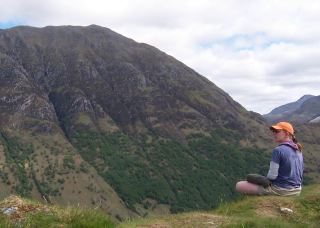


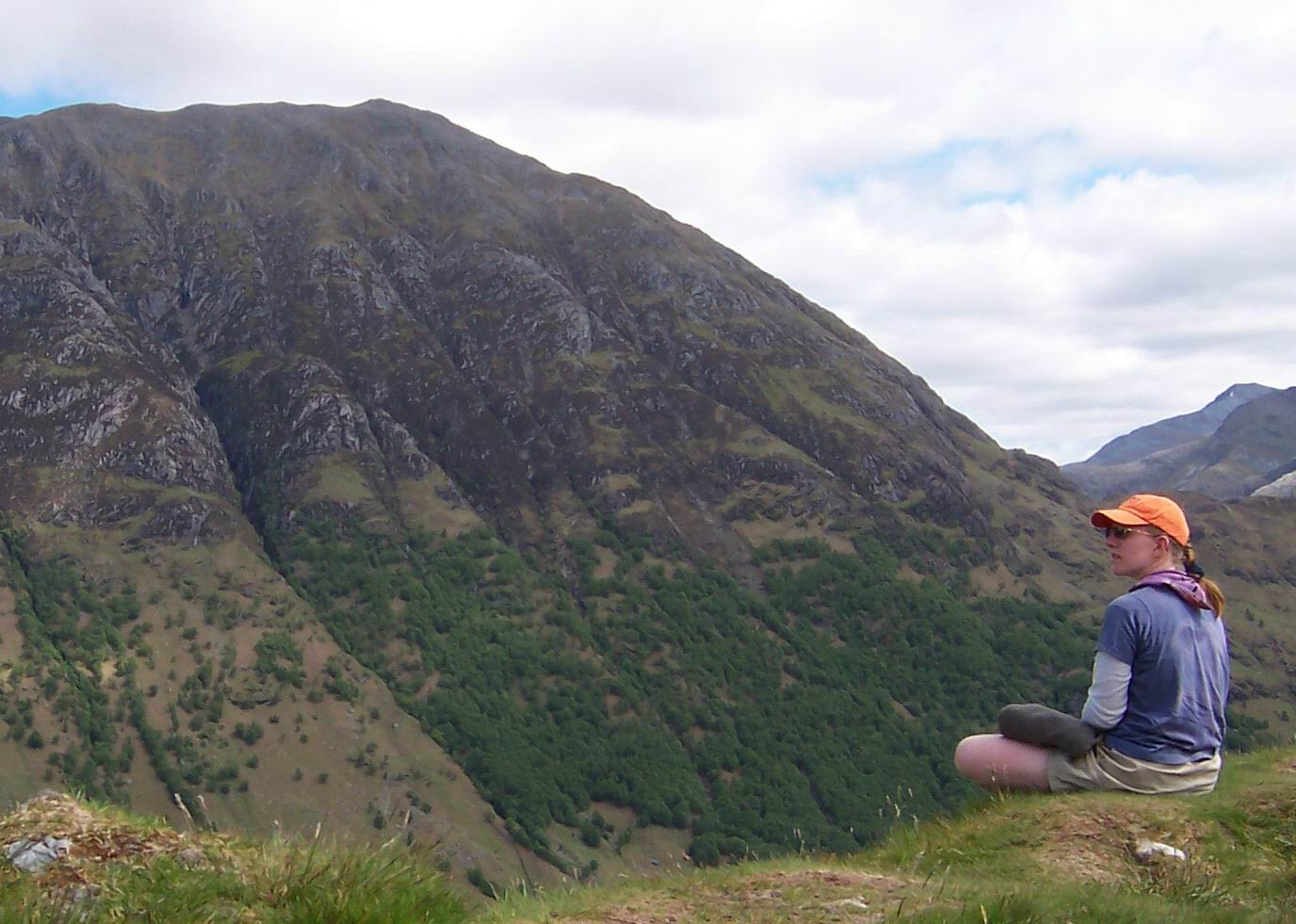
Glen Nevis, West Highlands, Scotland (May 2004)

Since I thought many of my readers would be interested in my responses, I’m cross-posting what I wrote here. But if you enjoy what you read, do check out Idzie’s blog since she publishes lots of awesome stuff — and promises an ongoing series of similar interviews.

The Basics

When did you become an unschooler?
birth (1981) and/or first year I was school age (1987)

How long have you/did you unschool?
Difficult question! I still think of myself as practicing the values of unschooling, even though I have had interactions with formal education and its institutions. I did not attend grade or secondary school at all (though my siblings did to varying degrees). I began taking courses at the college where my father worked when I was seventeen and continued there part time through 2005; until 2002 I was not a degree-seeking student, though I did take the courses for credit. During the seven years I pursued undergraduate coursework, I did lots of other things too, like work and travel. Since completing my B.A. I’ve moved on to graduate school (more below). However, I still feel very much an unschooler at heart.

How old are you now?
29, nearly 30.

The Decision to Unschool

If your parents chose unschooling, do you know how/why they made that decision?
My mother was, I think, the initiator of home-based education, since she was the primary at-home parent and also very interested in child development and early childhood education. She always preferred non-interventionist approaches, and when it came time to think about schooling for us kids she felt we were doing really well in our current environment — and that the schooling opportunities in our area were too conventional for our family’s needs. My father was completely on board with it, even though he usually took a back seat with the home-life arranging, given he was the parent with a full-time job.

My parents are not categorically opposed to working with formal institutions of learning. My father works at Hope College (where I eventually attended classes) and my siblings both expressed a desire to do some measure of formal schooling during their teen years. My brother attended some courses at the local public school, although he never enrolled as a degree-seeking student, and my sister went full-time to public high school. But the focus throughout was what worked best for our family as a whole and for each of us kids individually.

The Best and Worst

What do you think the best thing about unschooling is?
Speaking from the point of view of a unschooled child (rather than an unschooling parent), I would say that the experience of unschooling helped me to remain confident in myself: confident that I had the ability to learn new ideas and skills when I need them, confident I could find meaningful ways to occupy myself without a strict schedule, confident that I could navigate the world and find help when I needed it from people with particular expertise, or whom I had caring relationships with.

The worldview of unschoolers draws (in my opinion) on a specific understanding of human nature that is at odds with the beliefs of the dominant culture. In order to really practice unschooling, you have to trust in the human being to be interested in the world, to seek situations (physical, social, intellectual) in which that being will thrive in community with other beings. You have to trust that the being themselves — not external authorities — are the best source of information about what the being needs to thrive. Not to say that external feedback and expertise isn’t helpful — it’s often crucial. But at the end of the day, the individual themselves is the best authority on, well, themselves. And on what they need to feel nourished.

In society as a whole, children aren’t trusted to have that kind of knowledge about themselves. In part because children do often think and communicate in different ways than adults, given their stage of development, so children’s self-knowledge is often difficult for adults to access. But it’s there if we know how and where to look! And unschooling teaches us to cultivate that awareness in ourselves and others.

What do you think the worst (or most difficult) thing about unschooling is?
The most stressful thing about practicing unschooling in our culture is that it really is fundamentally counter-cultural. It challenges many of the hidden assumptions of our society about human nature, the nature of children, the purpose of education, the meaning of the “good life,” and so forth. I, personally, think people who unschool are on a much healthier track (by and large) than people who do not, because of their values and their orientation toward the world and the rest of humanity. But there’s definitely a cultural dissonance between the life we wish to lead as unschoolers, and the world in which we have to carve a space for ourselves beyond our families. It requires constant negotiation and compromise.

Beyond High School

Did you decide to go/are you going to college or university? If so, could you talk a bit about that experience?
I did go to college, both undergraduate and (currently) a graduate program. It’s always difficult to talk “a bit” about the experience, since my interest as an historian in counter-cultural education means I spent a lot of my waking moments thinking about the culture of institutional schooling, of teaching and learning, and about how “education” is framed in our contemporary cultural debates.

Casting my mind back to age seventeen, when I enrolled in my first college course — a first-year writing course — I remember how thrilling it was to be engaged in writing and thinking about ideas. At that point I wanted to be a creative writer and developed an enormous crush on my professor, a poet and photographer who had that rare ability to read one’s writing and discern what you meant to say, even if your early drafts were hopelessly muddled. At the same time, I felt like a foreign exchange student, struggling to assimilate to the academic culture that was invisible to most of my classmates. I cold be exhausting and isolating. The fact I was a politically and culturally progressive-radical student on a campus dominated by politically and culturally conservative students didn’t help to bridge the gap between me and conventionally-schooled peers. Nor did the fact I was a part-time, commuter student on a campus dominated by full-time, resident students.

I did not struggle with the coursework much at all. In the early years, I took courses that interested me without a thought toward graduation. Later on, when I was fulfilling requirements, I did take classes that were in subjects not of my instinctive interest (I wept through a one-month class in statistics, for example) … but by conventional measures (i.e., grades) I succeeded in conventional education despite my lack of formal training up to that point. And undergraduate college unquestionably opened doors for me — intellectually, socially, geographically — that might have been more difficult to open otherwise. I had access to off-campus programs and study abroad opportunities; I had faculty-student research opportunities and professors who I connected with and library resources, etc. The same can be said, to some extent, for my graduate work. The classes themselves have often been frustrating, inefficient, etc. But given the organization of our culture’s learning resources at institutions of education, it’s difficult to piece together a similar experience without being an enrolled student.

Difficult, but not impossible.

I never completely made peace with the structured nature of academic semesters, graded projects, competitive learning, being judged by external rather than internal expectations. It stressed me out on a pretty deep level; makes me feel like I’m complicit in a system that rewards some at the expense of the rest. which is something I have problems with, even if (especially if??) I’m one of those who gets rewarded. It’s complicated. I’m definitely looking forward to being done with formal academics for a while after I complete my current program (a dual-degree in library science and history).

Money Earning and Work

Are you currently earning money in any way?
Yes.

What jobs/ways of earning money do you, and have you, had?
Oh, gosh. I’ve been earning money since I was about nine. I started working seasonally for my father at the college bookstore he manages for pocket money and stayed there on and off throughout college. I also worked at a local children’s bookstore and a branch of Barnes & Noble. I did childcare as a teenager and worked one year as a nanny. I’ve served as teaching and research assistants for a number of college faculty. I spent a semester working as an office assistant for a study abroad program. I’ve also done a number of work-for-food-and-lodging type situations, sometimes in combination with other paid work and sometimes for short stints alone … like the month I spent at a women’s land trust in Missouri the summer after graduating from college.

When I moved to Boston, I was hired as a library assistant at the Massachusetts Historical Society, an independent research library in Boston that holds rare books and manuscript materials. It’s a wonderful way of being connected to a scholarly community without being tied to a college or university setting. For the past three years, I’ve worked there part time along with other part-time employment (in the field) and internships. I was just recently offered a promotion to full-time with enough wages and benefits to support remaining in Boston for the next few years, as my partner and I would like to do. It pays modestly well, and is definitely the type of work I was hoping to find when I began graduate school in library science.

Have you found work that’s fulfilling and enjoyable?
I won’t pretend that my partner and I don’t struggle with the question of balancing the need to earn wages to support ourselves in the short and long term. My partner, who also learned outside of school for much of her life (until going to public high school) resists, as do I, a culture that equates paid employment with identity and fulfillment. On the one hand, I do believe in seeking out ways to earn a living doing what you love … but I also resist creating a situation in which my life is defined by the work I do, or dictated by it. So that’s an ongoing balancing act. Even without children to care for, I find myself more and more appalled at how little flexibility our modern workplaces have for the rhythms of personal and family life.

Have you found that unschooling has had an impact on how hard or easy it is to get jobs or earn money?
This is a tricky question. I was very privileged in that I had a chance to work in the “family business” as a child and teenager prior to getting other jobs. Not being in school meant, too, that I could work in positions that school schedules could not accommodate easily, and gain really good work experience even before I started college. I had extensive volunteer experience, too, that filled out my resume. Another privilege was the fact that my father’s job at the college meant I got tuition benefits and could take classes without applying for a degree. By the time I petitioned to be a degree-seeking student I had a strong enough academic record they waived the requirements of national test scores or a high school diploma (a stumbling block for some unschoolers seeking to enter higher education). I have not felt limited by my lack of formal schooling pre-college. I do wish, sometimes, I had been braver about seeking alternatives to college and post-graduate schooling. I was tired of the effort it takes to forge the nonconventional path. And there are days when I’m not proud of that.

Do you feel that unschooling has had an impact on what methods of earning money or jobs you’re drawn to?
In a word: yes. In a few more words, I would argue that the worldview lying behind (my understanding of) unschooling supports de-emphasizing wage-work as either the primary mode of self-identification or as a measure of self-worth. Since unschooling encourages self-reliance and independence, being able to support myself — or, now, to contribute to the financial security of my newly-formed family — is a part of how I measure my success. However, it is one small part of my self-evaluation, all of which comes down to challenging myself to live in accordance with my values. Which would take a lot more than this questionnaire to explicate in depth! But in short, they can be summed up with the belief that all that 1) all life is of value, and 2) all that is required of humanity is “to do justice, love kindness and walk humbly.” (The original quote comes from the Christian Old Testament, Micah 6:8, and reads “walk humbly with God,” but I prefer leaving the question of whom or what one walks with up to the listener!)

General

What impact do you feel unschooling has had on your life?
The experience of growing up outside of the mainstream educational system colors virtually everything I do and the way I understand the world. I think it particularly shapes how I understand myself in relation to the mainstream culture and ways of thinking and being in the world. My family didn’t opt out of the mainstream to the extent that some unschooling families do: we had a television, we lived in an urban environment, we had friends who were schooled and so forth. We weren’t insulated from the mainstream and from the outside — except for the fact that we didn’t attend school — our family didn’t look that radical. But we were pretty damn radical anyway! So what I learned, growing up, was that individuals and families have choices. We can stand apart from some of the mainstream “common sense” beliefs about how people should grow and learn, what it means to be a functioning adult, what it means to be a family — but we don’t have to seek “purity” in pursuit of that. We can pick and choose, appropriate, make our own meanings of things, piecing together a life out of what we find to be beautiful and useful. It’s sort of a steampunk ethos, I guess.

If you could go back in time, is there anything about your learning/educational journey that you’d change?
I really wish I had been able to find practical alternatives to graduate school that gave me the same opportunities in the library/scholarly fields I’m interested in. Unfortunately library and archives training in the US takes place in the context of higher education, and most living-wage positions with opportunities for professional growth require an MLS.

If you were to have children, would you choose to unschool them?
I just recently read a blog post by Molly @ first the egg called parenting as holding the space in which she talks about how she and her husband don’t practice according to any particular parenting philosophy but that she’s come to realize that the way they parent is akin to the way in which doulas are trained to “hold the space” for women in labor. She writes, “the basic idea is that a calm, focused, loving person can protect a space in which the laboring/birthing person can do what she needs to do.” I think this is a really nice one-line description of what parents can and should provide their children — regardless of whether the decide they want (or are practically able) to unschool their children.

My partner and I are pretty sure we are not going to be parents, for a complex constellation of reasons. I won’t speak for her in this instance, but in my case I don’t want to have children unless I am able to unschool them — in spirit if not by actually keeping them out of institutional education altogether. I don’t want to take on a responsibility that I don’t have the resources — emotional, logistical, financial — to really follow through on according to my values. And my values would demand giving that small person in my care as much calm, focused loving as I could — and trying to surround them with adults and other young people who could support me, my partner, and our child(ren) in that endeavor. And right now we aren’t in a place to do that.

Advice

What advice would you give to teens looking to leave high school? What advice would you give to someone looking to skip, or to drop out of, college or university?
Since I didn’t ever leave high school and eventually ended up completing university and going on to do post-graduate work, I’m not sure how much I can speak to this. However, I would say this: in my experience, it pays to reject either/or thinking and be creative about how you use your available resources.

What advice would you give to unschooling parents (or parents looking into unschooling)?
In addition to what I wrote above about “holding the space,” I think it’s important — with all childcare, but particularly with unschooling — to emphasize that the choices you make about family life effect outcomes. That may sound elementary, but I’ve seen a lot of nominally “unschooling” or homeschooling families where the parents really, really want their kids to look and act like, and hold the same values, as their conventionally-schooled peers. Or even worse, they expect them to be conventional-PLUS: they think that unschooling their kids are going to make them even more successful than their peers by all the mainstream cultural standards.

It’s not an impossible goal … and it’s not that I think having goals and accomplishing them is a bad thing. But the “conventional-plus” approach to unschooling is, to my mind, a really impoverished approach … because it leaves behind the really radical aspect of unschooling, which is to question the foundational values of American culture concerning human nature, what it means to be a successful human being, what you need to thrive in the world, and how human relationships facilitate that process. If I had to offer advice in a nutshell to unschooling parents, it would be: Expect different outcomes — and try not to be afraid of them. Be clear about what your own values for “the good life” are and share them with your children, and then let your kids develop their own values from that foundation.

Also, don’t encourage your kids to see mainstream culture or conventional schooling as evil. There are good people who teach in schools, there are good people who send their children there, and there are children who thrive despite the many problems of institutional schooling. I’ve seen too many unschooling families turn their personal and familial choices into an “us vs. them” negativity that doesn’t encourage building alliances, accessing resources, and remembering to seek out support and learning in even the most unexpected places. Encourage your kids to remain open-minded about the mainstream, even as you challenge them to engage with it critically.

Is there anything else you’d like to talk about or add?
I think I’ve already said way more than is reasonable in terms of a blog post, so I’ll leave it there. Thanks so much for the opportunity to share my thoughts on being a grown unschooler and I look forward to reading what others have to say in response to these questions!

alma mater musings: individuals + institutions

18 Saturday Sep 2010

Posted by Anna Clutterbuck-Cook in life writing

≈ 3 Comments

Tags

education, gender and sexuality, hope college, religion

This past week, I had an exchange with one of my faculty mentors from undergrad who is currently collecting stories from queer students and allies about their experiences at Hope College (for previous posts on this topic go here). A group of faculty are hoping to collate these narratives and take them to the Board of Trustees on October 10th as part of a presentation on the hostile climate for non-straight folks at Hope College, in hopes that personal stories will help reshape the discussion around homosexuality on campus.

At first, I didn’t really think I had much to say beyond what I already put into my letter to the Board of Trustees. But since writing that letter in April I’ve been doing a lot of thinking about Christian higher education and about the intersection of organized religion, personal faith and values, and formal learning. This is going to be a rambling sort of post, but I wanted to share some of my in-process musings. I welcome responses and further thoughts in comments!

One of the things I think we often overlook when we view institutions like Hope College or Calvin College or even Patrick Henry College from the outside is that even the most close-minded institutions can be sites where individuals learn, grow, and can even become subversive. Sometimes, that subversive impulse is born of resistence to the oppressive nature of the institution and the subculture within which that institution is situated. But I don’t believe that’s the whole story. Often, some parts of the institution or the subculture themselves enable that growth and change within individuals who care to take advantage of it.

To take an obvious example, young people who grow up within the Christian subculture learn at a very early age what it means to move between cultures: their own and the dominant American culture. They learn the positive aspects of being bicultural, of having a critical perspective on mainstream values and beliefs, of being an outsider who belongs to an identity community. They know how to speak what my mother used to call “God talk” and they know how to edit those references out of their vocabulary when they know such language won’t help their cause. All of these skills and experiences are transferable to other sub- and counter-cultural experiences — including the experience of belonging to feminist or queer identity groups. To many of us, feminism and a more open concept of sexuality are, in fact, extensions of the values we saw modeled within some Christian communities. I know that, when I first discovered feminist theology as a first-year college student the possibility that Christianity could be reconciled with the values I held as a feminist brought me closer to religious faith than anything before or since. I came closer that year to joining a church than I had in all my years of teenage involvement with organized religion.

The fact that the values of feminist theology were viewed with skepticism by some and outrage by others within the college community was incredibly alienating to me (as a seventeen-year-old) … and yet at the same time, it was Hope College that had, however imperfectly, exposed me to those ideas in the first place. I was instinctively feminist before going to college — in my auto-didactic way I knew my feminist history — but it was at this religiously and politically conservative institution that I actually found the thinkers and activists of who helped me clarify those instincts and turn them into both meaningful scholarship and daily action. I was being marginalized by some people within the school for ideas and values I had been invited to explore by others at the same institution. Complicated? Complicated.

As I wrote in response to my friend’s email,

It was through Hope College that I was able to explore political feminism, feminist theology, non-straight sexuality, and connect with folks like Linda and Denslow [members of Aradia]; to ground myself in a network of intergenerational feminists who experience sexuality in myriad ways. It was an integral part of my growing into myself and arriving in a place where — when I decided to explore my own sexual desires and seek out sexual relationships — I was open to being with those human beings who turned me on, regardless of gender. Hope as an academic institution (and more precisely the faculty I worked with there) gave me a place to develop the intellectual and political framework to articulate myself and from that position of strength enter into a relationship that (ironically!) Hope College officially does not condone. It is sad, to me, that I can’t really celebrate that learning experience with Hope as an institution because it is a type of learning that isn’t valued — it doesn’t fit within the narratives of alumni achievement. The most valuable gifts that my Hope College education gave me are the things the college likes to keep at arms length. And I feel like that’s their loss.

And then in a follow-up email,

My experience at Hope has given me a uniquely personal perspective on the way individuals negotiate their personal life stories within religious and educational institutions … The fact that students and faculty at a socially and religiously conservative institution like Hope can manipulate the learning experiences in liberatory ways contradicts (in my opinion) the mainstream narrative that tends to downplay individual agency within religious/educational institutions and focus on the official message or the stories told by people with structural/social power and authority (usually not where the most interesting stuff is happening!). The complexity of the real lived experience is a difficult one to get across to people who haven’t grown up in that environment or been required to develop those skills for subversion.

[Since graduating from Hope, I have become more] aware of the complex sociocultural and structural reasons students choose to attend the institutions they attend (church connections, family relationships, friendships, finances, geography, etc.) and how so often those initial choices they make cannot begin to reflect the people they become during their tenure as students. It seems to me (idealist that I am!) that it is the responsibility of a college like Hope to acknowledge that even students who may come to the college as religiously conservative straight folks could discover their sexual fluidity or finally come to terms with their orientation during their time at Hope. And I think Hope College would benefit (as both an institution and as a community of individuals) from being the sort of environment where that personal journey was embraced as a mark of individual strength, openness to change, opportunity for developing personal ethics around sexuality and political identity. Right now, the institutional position seems primarily to be one of fear, which in turn communicates to students that exploration, questioning, and change are threatening to both personal and social well-being. Hardly an attitude conducive to meaningful learning!

I am reminded of a post by Sharkfu at Feministing on the complicated balancing act of being involved in religious institutions with which you do not wholly agree. Such relationships can often be a constant re-negotiation, an assessment of whether the benefit of being involved with the institution outweighs the cost of membership (both to the self and to society). From the outside, it is all too easy to condemn people who stay affiliated with such institutions, since it is difficult to see the complexity of the relationship that person has had with that community, with that space, with those ideas, over time. And I would like to emphasize once again: I don’t mean this in a purely negative way. Yes, sometimes being part of a subculture can cloud your perspective, isolate you from ideas and people that might otherwise give you a more meaningful life. But sometimes, those same subcultures can be the doorway (however inadvertently) into those very same ideas, into those very same communities, that “officially” the subculture/institution/community is attempting to police, control, or even eradicate.

In other words: while the social structure and official position of Hope College as an institution is homophobic, judgmental, and I would even say violent and anti-Christian … for an individual person? The space created by that structure existing, and the opportunities (intellectual and otherwise) that reside in that space, could well be the doorway they needed in order to discover a much more exhilarating, loving, hopeful, potential-filled sort of world.

Such liberating potential doesn’t in any way erase or mitigate the violence wrought by the official position of the college on human sexuality any more than the existence of pro-queer Catholic groups, liberation theology, and Catholic reproductive justice advocates erases or mitigates the homophobia and sexism of the institutional Catholic church. It doesn’t absolve the individuals supportive of the official position from their participation in that act of violence. It does, however, suggest that such violence is also tangled up with much more nuanced interpersonal relationships. That an official institutional stance — once you zoom it at a higher resolution — is riddled with tiny fissures. Fissures that represent opportunities for people to grow and change, and become themselves far beyond the wildest imaginings of the college administration.

Right now, it seems like the college officials fear that wildness — I do hope they come to embrace it for the hope and joy it can represent. Best wishes to all the folks at Hope College who are trying to help them see that possibility.

*Image credit: Nykerk Hall, Hope College, Holland, Michigan. Image from Hope College Public Relations (they keep this up and eventually I’m going to run out of scenic campus shots and have to start in on the student facebook photos ;)!).

on my plate: year three

11 Friday Sep 2009

Posted by Anna Clutterbuck-Cook in life writing

≈ 1 Comment

Tags

boston, MHS, northeastern, simmons, thesis

Today is the first official day of classes for me at Simmons, where I am entering my third year as a dual-degree student in the History and Archives Management Master’s program. So what does that mean in terms of the shape of my daily life?

Well, for starters, I continue to work four days a week at the Massachusetts Historical Society, with a great team of librarians and archivists who have been unfailingly supportive of my studies and given me the chance to learn the (shall we say) trade secrets of providing archival reference service. If you’re interested in the work that goes on at a place like the MHS (oldest historical society in the Western Hemisphere), check out my colleague & friend Jeremy Dibbell’s blog, the Beehive, hosted by the MHS website. I will also put in another plug for following John Quincy Adams on twitter, where he is tweeting posthumously his line-a-day diary entries from an 1809 voyage to Russia.

In addition, I have a very part-time job at Northeastern’s Archives and Special Collections, where I spend four hours a week slowly constructing a database of images from the scrapbooks of Marjorie Bouve, the founder of Northeastern’s Bouve School of Physical Education. Nothing has gone live online yet, but I can promise links when (fingers crossed!) the images are web-published. Lots of great early-twentieth-century snapshots of young women (and occasionally men) engaged in such activities as cycling, sailing, sight-seeing, and amateur theatricals.

As a graduate student, my work this year turns decisively toward my thesis research on the creation of the Oregon Extension program during the mid-1970s. I will be exploring the various cultural and educational threads that came together to shape the way in which the OE was developed as an educational program and a particular communal space. To that end, one of my two classes this fall is an independent study, which provides me with dedicated time to prepare logistically and theoretically for my oral history field work. If I can find ways to share this on-going project on the blog without a lot of additional time and mental strain, I will . . . if not, you should be seeing the fruits of my labors sometime in December of 2010 (again, fingers crossed!).

I am also in Archives, History, and Collective Memory, the dual-degree capstone course, of sorts. Since it focuses on “the relationship between historical events, the creation and maintenance of archival records, and the construction of collective memory” I look forward to applying the concepts we discuss in class to my own research: what is oral history, after all, but the creation of archival records and a collective construction of historically-minded personal narratives?

And finally, of course, come all of the continued pleasures and duties of domestic life: the morning and evening commute, leisure reading, movie watching, shopping and meal preparation, laundry, cleaning, weekend outings, keeping up with far-flung family members, and (above all) regularly-scheduled time with Hanna.

Given all of this real-world activity, I’m sure how much I’ll be blogging during the coming months. Obviously, home life, work, and school commitments come first. For those of you who follow my blog as a way of keeping up long-distance with what’s going on in my life, I’ll definitely try to post pictures and piffle as the opportunity arises. For those of you who check in from elsewhere in the blogosphere, I’m still reading your blogs, even if I lack the time to join in the conversation!

As always, shoot me an email or (gasp) put pen to paper and write me a letter and I will respond, later if not sooner (but hopefully sooner). You know where to find me! In the meantime, I do think of you all and hope your fall projects are getting underway with creativity, productivity, and pleasure. Don’t forget to enjoy the autumn weather, wherever you may be.

*photograph of the T crossing the intersection of Harvard and Beacon at Coolidge Corner by scleroplex @ Flickr.

And the world gets a little better . . .

29 Thursday Jan 2009

Posted by Anna Clutterbuck-Cook in life writing

≈ Leave a comment

Tags

feminism, politics, random kindness

So I don’t think the Obama administration is the Second Coming of Jesus Christ or anything, but I have to say the tension that has existed for the last eight years somewhere down near my uterus un-knotted a just wee small bit when I saw the juxtaposition of these two pictures.

Also: to the undergraduate standing in front of me in the coffee line who turned around after paying to say to me, “I saw you reading Feministe just now and I was so encouraged!” — it’s so nice to know there are other people out there in the real world who feel encouraged by the same things I do! You totally made my day.

Grad School: Year Two Begins

02 Tuesday Sep 2008

Posted by Anna Clutterbuck-Cook in life writing

≈ Leave a comment

Tags

domesticity, simmons

Here we are again, the first week of September; this time last year I was in the midst of GSLIS orientation, still unpacking in the dorm, and figuring out where to buy groceries. Today, I’m sitting here in my flat in Allston, having just come back from a grocery run at the Harvest Co-op, planning dinner for my roommate’s return from vacation tomorrow and enjoying the creep of the afternoon sun across the hard-wood floors. Yep, a lot has happened in the past year. And now with a new semester beginning, I’m looking ahead to year two . . . the same, with changes.

Work and school will definitely keep me busy this fall. I have on the docket:

  • Classes. I am taking two classes this term, Reference Services (a library science requirement) and American Renaissance (a history seminar). I’m particularly looking forward to the history class, which focuses on the Boston-area transcendentalist set: Emerson, Alcott, Hawthorne, Mann . . . I plan to do my research paper on the trans-Atlantic exchange of ideas on pedagogy during the early 19th century.
  • Teaching Assistantship. I have been awarded a teaching assistantship with Steve Ortega, who teaches world history, and will be working with him on the World Civilizations I course for undergraduates. Simmons is a small enough school that I won’t have a class of my own to lead, but have plans in the works to run some lessons over the course of the semester, including a workshop next week on using maps as historical sources.
  • Internship. After returning to Boston from Michigan a couple of weeks ago, I started an internship at Northeastern University’s archives processing collections that have not yet been opened for research. This is something I don’t get a chance to do at my regular job at the MHS, and I’m finding I enjoy the intellectual occupation it demands.
  • I’ll also continue to work at the Mass. Historical Society part-time through the school year and look forward to occasionally taking advantage of its seminar series offerings and other events — not to mention the kick-ass Christmas party the hold every year.

On the leisure side of things, I’m a firm believer in continuing to have a life while in graduate school. Since I now have an apartment with a fully functional kitchen and a roommate, this “life” thing means cooking meals, enjoying Tuesday night British Comedies with Hanna, Sunday strolls along the Charles (as long as the weather holds), and of course Thursday night episodes of a new season of The Office! Not to mention watching the political circus in the lead-up to November’s election and posting regularly on my blog.

Happy fall, one and all . . .


← Older posts
Newer posts →
"the past is a wild party; check your preconceptions at the door." ~ Emma Donoghue

Recent Posts

  • medical update 11.11.22
  • medical update 6.4.22
  • medical update 1.16.2022
  • medical update 10.13.2021
  • medical update 8.17.2021

Archives

Categories

Creative Commons License

This work by Anna J. Clutterbuck-Cook is licensed under a Creative Commons Attribution 3.0 Unported License

Meta

  • Create account
  • Log in
  • Entries feed
  • Comments feed
  • WordPress.com

Blog at WordPress.com.

  • Subscribe Subscribed
    • the feminist librarian
    • Join 37 other subscribers
    • Already have a WordPress.com account? Log in now.
    • the feminist librarian
    • Subscribe Subscribed
    • Sign up
    • Log in
    • Report this content
    • View site in Reader
    • Manage subscriptions
    • Collapse this bar