• anna j. clutterbuck-cook
  • contact
  • curriculum vitae
  • find me elsewhere
  • marilyn ross memorial book prize

the feminist librarian

the feminist librarian

Category Archives: linkspam

call to participate: preliminary survey on women & erotica use

08 Tuesday Feb 2011

Posted by Anna Clutterbuck-Cook in linkspam

≈ Leave a comment

Tags

call to participate, feminism, gender and sexuality

via Charlie Glickman

Are You a Woman Who Views, Reads, or Listens to Pornography, Erotica, Romance Novels, and/or any other Sexually Explicit Materials?

If so, please share your experiences!

Complete a Short Survey (30 min or less) and Contribute to a Scholarly Understanding of Women’s Experiences with Sexually Explicit Materials

My name is Kari Hempel and I am a female psychology graduate student who is doing my dissertation research on women’s experiences with sexually explicit materials. For too long women’s real experiences with these materials have been ignored. My goal is not to judge anyone’s experiences, but to accumulate surveys from as many women as possible around the country about their positive, negative, and/or mixed experiences with sexually explicit materials, and to present the differences and commonalities in a scholarly, respectful fashion.

Your Participation is Completely Confidential

Any identifying information that is asked for in the completion of this study will be kept completely confidential and will be destroyed once the study is complete.

You Qualify for Participation If:

  • You are a woman (at least 18 years old)
  • You currently view, read, or listen to any written, audio, visual, or audio-visual material that is sexually explicit (including but not limited to films, magazines, novels, and audio-recordings)
  • You currently live in the United States

To Participate Go To:

https://www.surveymonkey.com/s/womens_experiences

If you have any questions or concerns, please call or email me. I am happy to address them!
Kari Hempel, MA
503-208-4083
karihempel@yahoo.com

I just completed the survey myself this morning. Some of the questions are worded oddly … but I always think that with multple-choice questions! And there’s the opportunity at the end to sign up if you’re interested in being interviewed by Ms. Hempel more extensively as part of her research project.

harpy week: sex and identity, sex and the law, and asexual sensuality

06 Sunday Feb 2011

Posted by Anna Clutterbuck-Cook in linkspam

≈ 1 Comment

Tags

harpyness

This week at The Pursuit of Harpyness marked the start of my second month of group blogging. Not sure if these weekly round-ups are of any use to y’all … feedback is welcome!

I don’t want to be redundant if anyone who cares is just following the Harpy blog. But I also don’t want to leave folks out who want to keep up with what I’m writing, but don’t necessarily want to follow a group blog. So please do let me know if you have strong feelings one way or another!

  • Harpy reader Jess left a comment on my post from a few weeks back about sexual fluidity asking folks who identify as sex- or gender-exclusive in their sexual desires to talk a bit about what that feels like. I turned her question into a new post which generated a really interesting discussion in comments.
  • On Wednesday, I posted a review of From the Closet to the Courtroom, a book on LGBT rights and the law. I’m planning on making Wednesday a regular book review day for the forseeable future, as I’ve been reading a number of books that I think will be of interest to the gender/sexuality crowd.
  • And Thursday, I gave a signal boost to my friend Minerva who wrote an eloquent blog post about language and identity and how she understands sensuality in the context of her asexual identity.

The other Harpy writers were busy also, posting about separate sleeping arrangement for married couples (another really interesting comment thread) and the Republican’s attempt to legally narrow the definition of “rape” within the context of healthcare reform. Hop on over the The Pursuit of Harpyness and check out (or even become part of!) the conversations.

harpy week: of labor, tears, and joy

30 Sunday Jan 2011

Posted by Anna Clutterbuck-Cook in linkspam

≈ Leave a comment

Tags

harpyness

This week saw three new posts up at The Pursuit of Harpyness, all of which in some way connected to others whom I blog with and know on a personal level.

  • On Monday, I put up a post about work and identity that drew heavily on the reflections of my friend The Archivist who blogs over at Oh My Sainted Aunt. I asked folks to discuss in comments how their work fits into their identity, and how they feel about that relationship between who they are and what they do. Some really interesting themes emerged related to professionalization, career changes, and unemployment.
  • On Wednesday, thanks to a YouTube video Hanna found on Tumblr, I put up a post about movies and television shows that make us weep. My picks? “The West Wing,” Iron Jawed Angels, and A Single Man (even though I haven’t actually worked up the courage to see it). There was an overwhelming response in comments from people who shared their own top tear-jerkers, for reasons both happy and sad.
  • And on Friday, I contributed my first “Friday Fun Thread” to the blog with a post about the joys of fan-authored fiction (or “fanfic”), which friend Minerva has hooked Hanna and I back into after a bit of an hiatus by sifting through the burgeoning Sherlock fic out there on the internets and sending us the cream of the crop. Go forth and read the post for lots of linky goodness.

There were some fantastic offerings this week from other bloggers at Harpyness, including a guest post by regular reader Endora about the problem of gender essentialist thinking, a post by Marie Anelle on “martyr mom syndrome,” instructions for how to be a bitch on JDate by BeckySharper, and thoughts from foureleven about the questions she most often gets (and has come to dread) as a newlywed. Click on through to enjoy them all!

harpy week: sex, love and politics

23 Sunday Jan 2011

Posted by Anna Clutterbuck-Cook in linkspam

≈ Leave a comment

Tags

feminism, harpyness

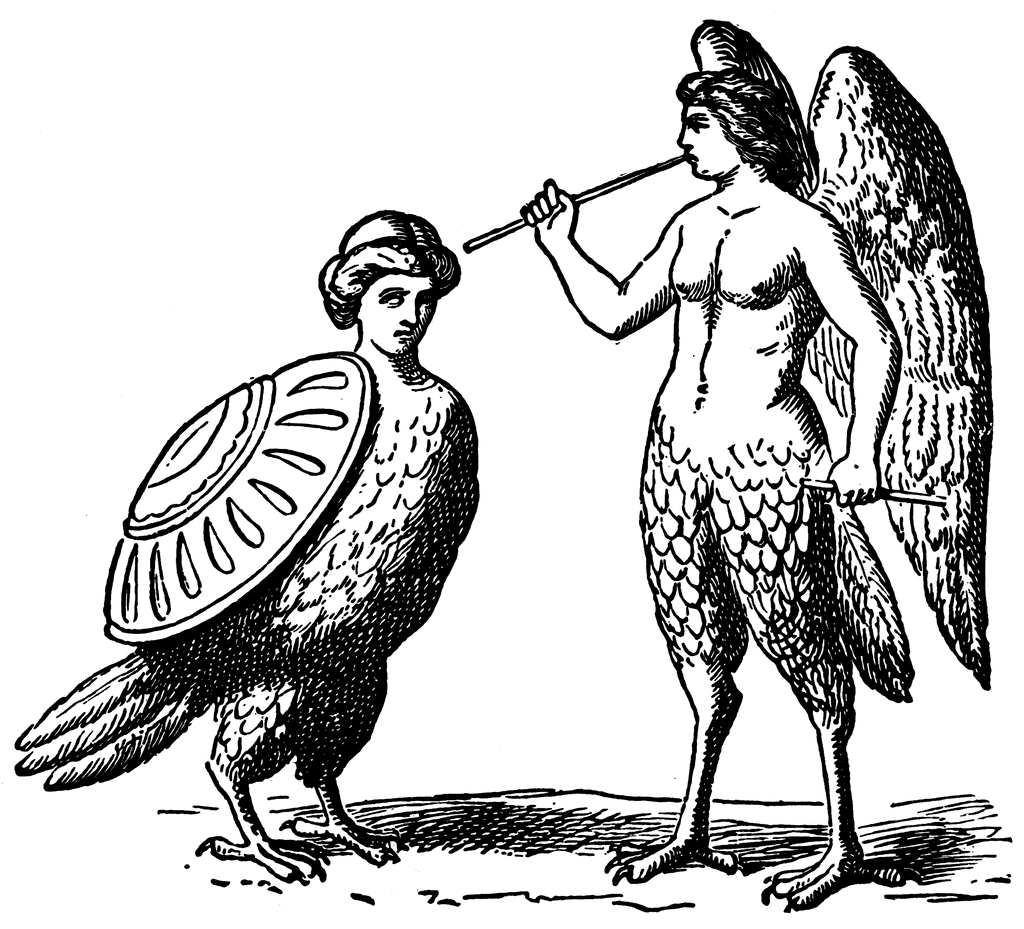
Bulfinch’s The Age of Fable

This week over at The Pursuit of Harpyness we had some exciting times with SQL queries (they apparently don’t mix with feminist blogging very well!), but despite some site down-time still managed to post some awesome things and provoke some good discussions.

  • On Monday, I posted a review of a new anthology of essays by women who had fallen in love with other women after a history of identifying as straight (and living heterosexual lives): Dear John, I Love Jane.
  • On Wednesday, I wrote a post about the attempts on the Religious Right to spin recent gains in LGBT civil and human rights as a loss of rights for Christians. Folks in comments shared personal anecdotes about people who had tried to argue this position. I’m eternally baffled by the way in which conservatives view the democratizing of rights as an infringement on their way of life. Newsflash: not everyone in the world is the same as you, get the fuck over it!
  • On Thursday, I indulged my ranty impulses in response to a recent op-ed column over at The Guardian in which columnist Maura Kelly dredged up the bullshit argument that women who have sex too freely will end up sad and sorry spinsters. (Watch for a Harpy Seminar on this topic next week!)

In addition, Marie Anelle wrote a great post on the negativity some feminists will express toward children and women who parent and PhDork wrote a post on the gendering of infants.

harpy week: introductions, parenting, and politics

09 Sunday Jan 2011

Posted by Anna Clutterbuck-Cook in linkspam

≈ Leave a comment

Tags

harpyness

This past week kicked off my tenure as a regular blogger at The Pursuit of Harpyness. I admit to some measure of anxiety going in (“will they like me?” “will my blog posts make sense and be interesting?”) and want to extend a heartfelt thanks to my fellow bloggers and the readers/commenters who made the experience a positive and truly energizing one. I’m very much looking forward to seeing what next week brings!

So as not to leave all you lovely folks who follow my personal blog in the dust, I plan to provide an (ideally) weekly round-up of the posts I write over at Harpyness, as well as some highlights from fellow contributors. Look for the post to go up on Sundays.

And as a reminder, I have replaced the Sunday Smut links list with a tumblr blog that I post to all week long. The ten most recent posts from that blog can be found here at the feminist librarian at the dedicated feminist librarian reads page. Folks who prefer to get those links and posts directly through their blog reader of choice, you can pick up the RSS feed directly at the feminist librarian reads (feministlibrarian.tumblr.com).

Without further ado, here’s the week at Harpyness.

  • On Monday, I put up an introductory post in which I interviewed myself about my background in blogging and my reasons for applying to be a blogger at Harpyness. Folks were so warm and welcoming, curious about my history work and eager to see more book reviews posted to the blog. I’m definitely going to take my cues from them moving forward as I pick and choose from my ever-expanding store of blog post seeds.
  • On Wednesday, I offered the first in what I hope will be a series of posts on reasons why the 1970s deserve a second (and more positive) look than the mainstream generally affords them. This post was a quasi-book review of a children’s story called Baby X about a child whose parents raised hir in a gender-neutral way. Commenters drew connections between this story and a real-life family in Sweden who are currently trying to raise their child Pop without indicating the child’s sex or gender.
  • Friday, I delved into the alternate world of fundamentalist history, reviewing historian Jill Lepore’s recent account of how the Tea Party utilizes the history of the American Revolution in aid of its political agenda (The Whites of Their Eyes) and sharing historian Sean Wilentz’s research into Cold- War-era conservatism’s use of history and how it has influenced present-day pundits such as Glenn Beck.

In addition to my posts, there were other great submissions by newbies foureleven and Marie Anelle.

  • Marie wrote about the frustration of having relatives who give her children toys that reinforce stereotypical gender roles (in addition to crapping fake poop and looking like something out of a bad Mystery Science Theater 3000 movie) and also posted a much-trafficked post on the social policing of, and judgment heaped upon, women who do not breastfeed … and those who do.
  • foureleven wrote a fascinating post about how one of her friends stopped speaking to her when … foureleven (gasp!) dared to travel without her husband. Discussion in comments revolved around the difference between choosing to travel in ways that bring the most happiness to you and your partner, or which are most practical given your economic and other obligations (vacation time, business travel, etc.) …. and feeling compelled to always travel together because a married woman alone is on some level viewed as a shameless hussy. File this one under, “and you thought feminism was dead!”

Looking forward to an equally stimulating week two and hope that some of you will join us there.

sunday smut: much-delayed women of who no. 2

05 Sunday Dec 2010

Posted by Anna Clutterbuck-Cook in linkspam

≈ Leave a comment

Tags

fun, movies, photos, whoniverse

I promised more Women of Dr. Who pictures a few weeks ago and then got busy with other things — plus Tumblr kinda failed me for a bit, not posting any inspiring stuff. But now I’m back with more lovelies for your Sunday viewing pleasure.


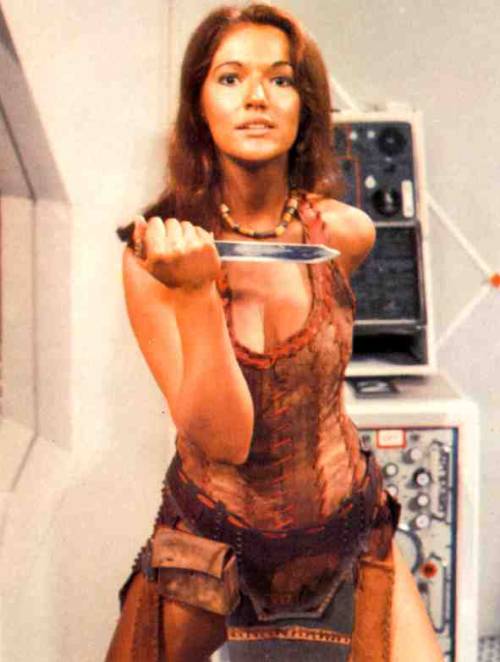
Leela (Louise Jameson)


Romana (Mary Tamm) with the Doctor (Tom Baker)
in The Armageddon Factor.


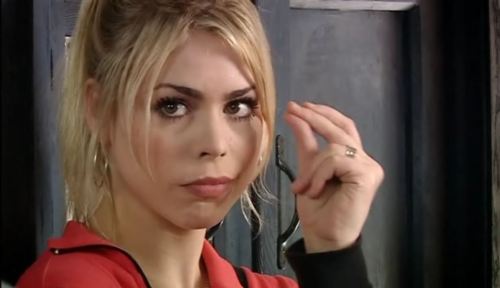
Rose (Billy Piper) in The Long Game.


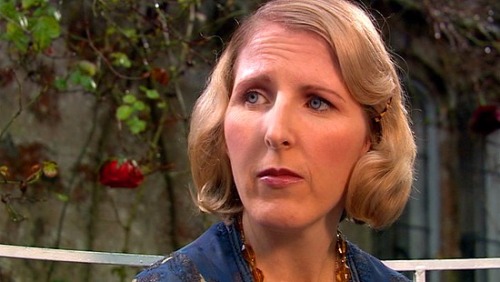
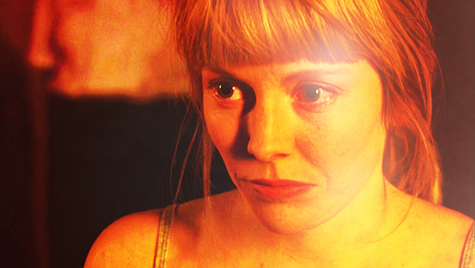
Agatha Christie (Fanella Wollgar) in
“The Unicorn and the Wasp” (new series 4.7)
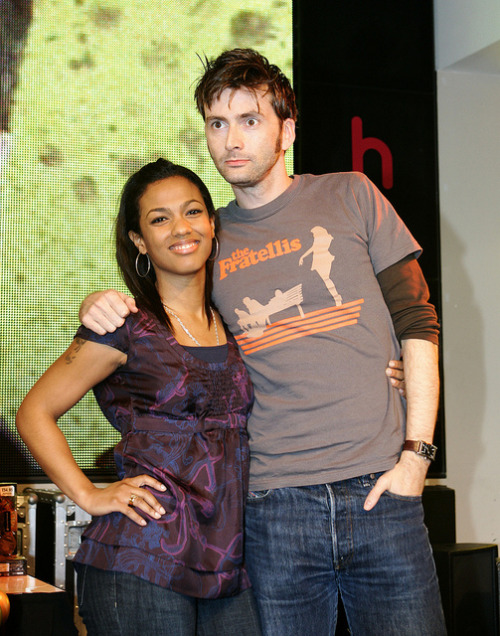
Freema Agyeman (Martha Jones)
and David Tennant (10th Dr.)
Jackie Tyler (Camille Coduri) and Mickey Smith (Noel Clarke) in
“Aliens of London” (new series 1.4)
Lucy Saxon (Alexandra Moen)
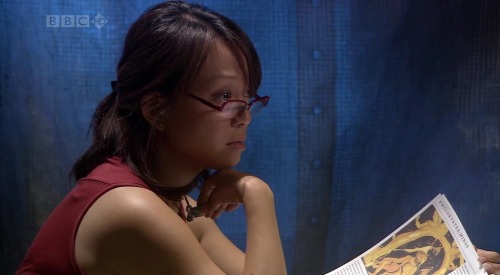
Toshiko Sato (Naoko Mori) from Torchwood
Amy Pond (Karen Gillan) with fiance Rory Williams (Arthur Darvill)
in “The Vampires of Venice” (new series 5.6)

All photos drawn from whoniverse, fuckyeahdrwho, karengillanlover, aimeesgonnaaim and whospam tumblr blogs.

You can see last week’s installment here.
I couldn’t find any satisfactory pictures of River Song … but the minute I do I’ll add them to the queue for the next installment.

Have a lovely Sunday … Hanna and I and a few of our fellow Whovians are off to the Brattle Theater in Cambridge tonight for a big-screen viewing of “The End of Time.” Hooray!

quick hit: interviews with grown unschoolers

04 Saturday Dec 2010

Posted by Anna Clutterbuck-Cook in linkspam

≈ 3 Comments

Tags

call to participate, children, education

Blogger Idzie @ I’m Unschooled. Yes, I Can Write is running a new (and hopefully ongoing) series of interviews with grown unschoolers. I sent her my responses on Saturday and look for a post later this week sharing what I wrote (and cross-linking with her blog).  In the meantime, here’s the first of the published interviews with one Hanna Thompson, as Idzie writes, is a “world traveler and aspiring medical doctor.”A few excerpts:

Have you found that unschooling has had an impact on how hard or easy it is to get jobs or earn money?
It’s much easier being unschooled to find a job than if I was attending school. One reason is that with unschooling you actually have time to have a job, and I’ve found that my interpersonal skills which I attribute to unschooling, have made me very marketable in the jobs that I’m working.

What impact do you feel unschooling has had on your life?
My unschooling experience has taught me to follow my passion without restraint. The freedom of this type of education has given me the time to explore interests and form concrete ideas about what I want to achieve.

What advice would you give to unschooling parents (or parents looking into unschooling)?
Unschooling is about helping your child grow and expand their horizons, institutionalized schooling is about prolonging childhood indefinitely, so be your child’s facilitator, get involved with them, find opportunities for them, and let them pursue their own. Just let them grow.

You can check out the whole response at Idzie’s blog and look for more installments in the future.

Also, if any of you reading this are or have been unschoolers, do participate in the series! You can find the original call for responses and the blank questionnaire by clicking through.

sunday links list: my friends write good stuff edition

21 Sunday Nov 2010

Posted by Anna Clutterbuck-Cook in linkspam

≈ Leave a comment

Tags

friends

via Into the TARDIS

This isn’t really, properly speaking, a “Sunday smut” list, seeing as not all of my friends have a filthy mind like I do. But they’ve been writing some good stuff lately, and I thought I’d share (and hopefully encourage a little blog hopping in my readers).

Hanna @ … fly over me, evil angel … composed a two-parter on the three episodes that comprise season one of the new Sherlock: “Catch you …” and “… later.” Pay particular attention to the awesome point she makes in the second half about the character of Holmes and the elusiveness of his emotional life.

What I think is interesting in the new Sherlock is how detached Sherlock has become. The Brett Holmes was distanced, uninvolved — but never unemotional. He had a sense of humor (albeit occasionally a peculiar one), a great deal of pride in his skill and accomplishments, a keen sense of class distinction, an ear for music, and rather snobby tastes in food and wine if I remember rightly. My point here in assembling this rather mongrel list is that Holmes never came across in the original Doyle stories as suffering from any kind of psychiatric condition: yeah, he was a bit weird, but it’s mostly the kind of weird you can write off as being genuine Victorian gentleman weirdness. (This is the same kind of weirdness that comes across with the father of the family in Doctor Who‘s “Tooth and Claw” episode, written off by the Doctor with, “I just thought you were happy!”)

This Sherlock is a little bit beyond that — this is sort of like what would happen if you took Conan Doyle’s Sherlock, crossed him with Cracker, and then added some of the late Prime Suspect Jane Tennison. He is not only distant, he is actually removed. We don’t know why — I would imagine speculation runs rife in fandom — but there are, presumably, reasons.

Tasha @ Natasha Curson – a trans history) has two pieces up that I like, one on the language we use to talk about trans issues, and one on body modification surgery. From the first post:

Ultimately, we all want to be ourselves and to be able, as  far as possible, to express ourselves freely. For trans people getting to that point can be a very difficult journey. I’m still on my journey, and it took me decades just to get on the right road. Many people struggle, or don’t make it at all. So where does this leave us when it comes to labels/names/words? I think labels can empower when we use them ourselves, or when others use them about us respectfully and affirmatively. If they are used in order to limit the ambition of others, or to direct hate towards them, the effect can be incredibly powerful.

Also on the subject of personal experience and the naming thereof, Minerva @ Hypomnemata offers some thoughts on emotional and physical intimacy in a post In Which the Gloves Come Decidedly OFF!

In a way, my asexuality has only made this habit more clear.  I spend so much of my time saying what I won’t do, that I’ve lost sight of figuring out what I will do or what I do want.  It’s rather ridiculous actually, since I make it a habit of telling people not to do what I’m doing, namely self-limiting.  I’m not sure how accurate my perceptions are, but I feel like this is a trend that’s not under-represented within the asexual community.  I see a lot of blog posts about the ways in which we are different from sexuals, the ways we won’t engage in intimacy, but I haven’t heard much about the ways in which we will.  Where are the discussions about our expressions of intimacy, the concrete nitty-gritty of what asexual relationship intimacy looks (would look) like, and not just in a theoretical fashion?

Diana @ The Waki Librarian has good thoughts to share on the relationship between academic discourse and professional conversations. While she’s talking specifically about the library-and-archives field, I’d say the same balancing act can be found around any area of interest: what is the relationship, in the end, between theory and practice, and how do we — as individuals and as colleagues in a given field — understand, articulate, and utilize that relationship?

For me, yes, there are differences between academic discourse and professional discourse that occurs via social media, but that doesn’t mean that there can’t and shouldn’t be overlap between the two discourses. I’m an academic and do quite a bit of research and writing in the formal, traditional academic model. It’s a very important discourse. Research is important for producing the kind of quality evidence available to use as a basis for decision-making and to further develop theory and models in our field. It is important to be able to write your results up in an article in such a way that it withstands peer-review and can be used as a credible source. No one, I think, would deny that. But it doesn’t do one lick of good just sitting in an article that few people will ever read–especially in our field which is an applied, practical, professional field. Keeping an academic discourse cloistered is silly and inhibits good ideas from spreading. I adore the intellectual stimulation of academia (and the excuse to do research), but I really don’t enjoy the concept (and practice) of academia as a world and conversation set apart from every other conversation happening in our field.

And my friend Lola @ Oh, My Sainted Aunt (her recently-launched tumblr blog), offers this gem of people-on-the-street observations

Overheard at the Museum:

Visitor [looking at photographs from 1918 influenza pandemic]: “I didn’t know they had an influenza epidemic in the 1600s.”

Well, I didn’t know they had photography either. Everyone learned something new today

Hope you’re having a lovely weekend … I don’t know about you, but I’m psyched for a nice long Thanksgiving holiday. Hanna and I are taking Tuesday afternoon through Sunday off from work, and plan to enjoy every damn minute of it.

call for participation: study of engaged couples

09 Tuesday Nov 2010

Posted by Anna Clutterbuck-Cook in linkspam

≈ Leave a comment

Tags

call to participate

Essin’ Em over at Sexuality Happens brought my attention to a study being done of couples who intend to get married within the next year. The researcher writes:

I am looking for volunteers for a study of attitudes towards marriage and parenthood among engaged couples. The study consists of a 25-30 minute online survey. To qualify for the study, you must be 20-35 years old, live in the U.S., and plan to marry or have a commitment ceremony within the next 365 days. You and your romantic partner must not have children, and this must be the first marriage for both of you.

The sex/gender of the individuals in the couple do not matter; no mention is made in the call for participants about poly relationships, but if you’re in one and otherwise fit the bill I’d encourage you to contact the researcher and offer yourselves as part of the sample. The more diverse the sample population, the more interesting the end result will be.

You can read a bit more about the study (and get contact details) over at Sexuality Happens.

sunday smut: tumblr highlights (no. 7)

07 Sunday Nov 2010

Posted by Anna Clutterbuck-Cook in linkspam

≈ Leave a comment

Tags

sunday smut, tumblr

Mostly, I’m posting some highlights this week so I have an excuse to share this picture with you. It makes me smile every time I look at it.

There were some wonderful posts this week on reaching outside ourselves with compassion and non-judgment. Since Hanna’s meditation homework for the week (she’s taking a series of classes on the eightfold path) was to only speak words which were “kind, true, and necessary,” I thought it would be appropriate to highlight the work of folks who are encouraging us in that direction.

Amanda Marcotte @ Pandagon mused on political dynamics of the bile directed at so-called “hipsters.”

What’s fascinating to me is that these narratives are so evocative in our culture, and the consequence of that is that the group being bashed as smug and elitist—hipsters, liberals—is assumed to be the ones that have to do the compromising and apologizing. The mainstream narrative in our culture is that hipsters have all these privileges of good taste and pleasure (which is impugned into money, though statistically, I’m guessing they’re no more or less middle class than their traditional bashers), and therefore they’re the ones who need to be taken down a peg, even though in the real world, the people bashed as “smug hipsters” are hardly exempt from being treated like shit for who they are, which is one reason they shun living in rural and suburban communities where they’ll be excluded and choose to live in urban areas where they can find people they get along with.

Read more at The Narrative of Inauthenticity.

Anna @ FWD/Forward writes about how the world-at-large continues to presume that only able-bodied folks participate in real life activities … until someone with disabilities has the temerity to ask to be included in everyday life.

What I end up getting out of this story is that the burden of pushing for something to be accessible pretty much consistently falls on people with disabilities themselves. We have to ask because no program, no building, no website, will be willingly designed with the idea that people with disabilities are part of a broader target audience. Only websites, buildings, and programs aimed right at people with disabilities will do so. (Until laws are passed, of course. And even then the law will be only grudgingly followed.)

Accessibility is often treated like a favour that non-disabled people do for (or even to) disabled people, one that is given out of the goodness of one’s heart. It’s an individual’s problem to bring up, and the solution is for individuals to come up with.

…We don’t act like putting a door in the front of our building is a favour we are doing. We assume that doors are necessary. And yet, people treat having a ramp to that door as a favour they are doing, when the ramp serves the same purpose: it allows people to come inside.

Read more at Accessibility is Not an Individual Problem.

Rachel @ The Feminist Agenda talks about how effortless it is to write with respect about transgender folks.

None of these things appear to have required a superhuman effort on the author’s part. None of this required arduous editing and rewriting. Perhaps this is because the author appears to have simply approached the story as if it were about a real human being, deserving of just treatment and human compassion.

I propose that this approach could serve as a model to guide you in your coverage of news stories involving transgender people. Just think of them as humans, and treat them with the kind of respect that you want to be treated with. I promise you, it’s not that hard.

Read more at How It’s Done.

Anna North @ Jezebel reflects on what it means to parent a child whose appearance or behavior is deemed “weird” by the majority of society.

…sadly, being a “weird” kid doesn’t always turn out so great. The father of bullying victim Asher Brown said of his son, “He was very different. He’s not the type of kid that would try to wear the newest clothes or try to do the coolest thing. He was an individual.” And for this, Brown was tormented until he committed suicide. Of course, some kids who act differently from the rest are embraced — but unfortunately, some suffer.

That doesn’t mean Asher Brown’s parents should have made him dress differently, any more than they should have made him pretend to be straight. The people who need to change are the perpetrators, not the victims of bullying. But at the same time, let’s not pretend that being the “weird” kid at school is easy. Parents need to support their kids’ individuality, but they also need to watch out for signs of bullying, and teach kids to talk to an adult if it happens. And, unfortunately, they may need to advocate strenuously for their kids’s safety, because schools don’t seem all that good at doing this on their own.

Read more at Should Parents Let Their Kids Act “Weird”?

Tumblr blogger lucy @happy monsters shared the following thought, which I will include here in its entirety.

Instead of judging someone, calling them slut or whore or dumbass or jerk or whatever, isn’t it easier to tell yourself you simply don’t understand their lifestyle and let it go? I’m something I used to dislike, only because I used to be ignorant. And now I understand. People have different lives and different upbringings, make different choices, like different things; to each and everyone of them their decisions are just as justified as yours are to you.

Next time you call someone a bad word, remember that there is someone out there who’s just as willing to judge you for what you do because they don’t know you. Then you complain about judgmental people? No one wants to be a bad person, honestly, but they’re deemed so by people who don’t understand them. No one. Furthermore, people are governed by emotions most of the time, just as much as you are yourself, so try walking in someone else’s shoes for once. Strong emotions almost always hinder rationality, just because you are more sober than someone at a given time doesn’t mean you’re any better at handling things.

I need to remember this, even if I’m not making sense, even if none of this is true. Because so far it’s working and I’m beginning to empathize with everyone around me better. Long way to go, though. Long way to go.

Check out the rest of lucy’s blog at happymonsters.tumblr.com.

And finally, Lisa Factora-Borchers @ My Ecdysis has written a follow-up post to her beautiful (and oft-cited) explanation of the term “kyriarchy” in which she challenges a recent mis-use of the term in an article published in The Guardian. The Guardian author suggested the term was about “individual liberation.” Lisa writes

The purpose and measure of kyriarchy – and feminism in general – is not to increase our time at the microphone so we can more accurately assign BLAME. The purpose and measure of kyriarchy is to further understand the power and crippling tendencies of the human race to push, torture, and minimize others. It is in our nature to try and become “lord” or “master” in our communities, to exert a “power-over” someone else. Kyriarchy does not exist to give us tools to further imprison ourselves by blaming our environment, upbringing, or social caste. It is the opposite. Kyriarchy exists to give us tools to liberate ourselves by understanding the shifting powers of oppression. It is not about passing the megaphone to men so they can be included in the oppression olympics. Simply check-marking our gender, sex, race, ablity, class, citizenship, skin color and other pieces of identity will not free us from the social ills of our stratified society. Kyriarchy is not the newly minted alarm clock to wake us up to what’s wrong. It exists to radically implement our finest strategies to deconstruct our personal and political powers for the liberation of self and community. For self AND community.

Which is why I so vehemently disagree with Hodgson who believes that the most helpful piece of kyriarchy is “its emphasis on individual liberation…”

Please indulge my own theory-making right now: There’s no such thing as liberation if the word ‘individual’ precedes it.

I cannot speak for Elisabeth Schussler Fiorenza. I cannot pretend to even guess what Hodgson herself means in writing that phrase “individual liberation.” However, in the spirit of feminist theology, in the spirit of radical understanding of power, I would argue with 100% confidence that the absolute LAST thing that kyriarchy strives for is individual liberation. Solely pursuing your own liberation often comes at the expense of others. That’s not liberation, that’s mainstream feminism.

Read more at Truthout About Kyriarchy: An Open Letter To “Feminist” Writers, Bloggers, and Journalists.

← Older posts
Newer posts →
"the past is a wild party; check your preconceptions at the door." ~ Emma Donoghue

Recent Posts

  • medical update 11.11.22
  • medical update 6.4.22
  • medical update 1.16.2022
  • medical update 10.13.2021
  • medical update 8.17.2021

Archives

Categories

Creative Commons License

This work by Anna J. Clutterbuck-Cook is licensed under a Creative Commons Attribution 3.0 Unported License

Meta

  • Create account
  • Log in
  • Entries feed
  • Comments feed
  • WordPress.com

Create a free website or blog at WordPress.com.

  • Subscribe Subscribed
    • the feminist librarian
    • Join 37 other subscribers
    • Already have a WordPress.com account? Log in now.
    • the feminist librarian
    • Subscribe Subscribed
    • Sign up
    • Log in
    • Report this content
    • View site in Reader
    • Manage subscriptions
    • Collapse this bar