• anna j. clutterbuck-cook
  • contact
  • curriculum vitae
  • find me elsewhere
  • marilyn ross memorial book prize

the feminist librarian

the feminist librarian

Category Archives: my historian hat

Quick Hit: The Case of the Slave-Child Med

22 Tuesday Dec 2009

Posted by Anna Clutterbuck-Cook in my historian hat

≈ Leave a comment

Tags

blogging, boston, history, MHS

I have another post up at the Beehive recapping the lunch talk given by MHS fellow Karen Woods Weierman on the 1836 court case, Commonwealth vs. Aves, in which abolitionists in Boston sued a Southern slave-holding family in order to free a 7-year-old girl they had brought North with them while visiting relatives.

On the Syllabus: The Great Crusade and After

24 Tuesday Nov 2009

Posted by Anna Clutterbuck-Cook in my historian hat

≈ Leave a comment

Tags

feminism, history, simmons

A few weeks ago, I posted an excerpt from Charles and Mary Beard’s The Rise of American Civilization on the women’s struggle for suffrage and the passage of the 19th amendment. Below is another version of this same story, offered in the twelfth volume of A History of American Life, a formidable accounting of American history edited by Arthur M. Schlesinger. This volume, The Great Crusade and After, 1914-1928, was written by Preston William Slosson and first appeared in 1930. In the section “Woman Wins Equality,” Slosson writes of female suffrage

The Nineteenth Amendment which extended the political franchise to American women, already emancipated in everything save politics, followed about half a year after the Eighteenth, prohibiting the sale of alcoholic liquors. The twin amendments–twin victories for feminism some would say–had much in common. Both prohibition and woman suffrage had roots deep in American history and represented a final triumph obtained after almost a century of continuous agitation. Both were attempted in many places on a state-wide scale before they forced their way to the front as national issues. Both were first mooted by Puritan reformed in Northeastern states, when actually carried into effect by their radical sons who had moved to the Western plains and mountains, and opposed almost to the last ditch by their conservative grandsons who had stayed in the East. (157)

Several things strike me about this framing of the 19th Amendment. Much like the Beards, Slosson writes of suffrage as the culmination of a century-long struggle of women for “equality,” possibly going even further than the Beards by explicitly describing enfranchisement as the last barrier to women who were “already emancipated in everything save politics.” Pairing the 19th Amendment with Prohibition places women’s suffrage rights in the context of nineteenth-century social reform movements. He is not wrong in making the case that Prohibition was seen, in many circles, as a victory for women generally and feminist activists particularly, since the evils of liquor were often characterized by prohibition activists as adversely affecting women and children by encouraging men to spend wages on drink and neglect their families in favor of the homosocial (largely-male) world of pubs and clubs where alcohol was served.

A few pages later, Slosson goes on to describe how the suffrage campaign was ultimately won, highlighting what he sees as “the almost complete absence of ‘militancy'” in the American campaign as opposed to the British.

In England a fairly large radical wing of the suffrage movement had tried to badger the government of the day into action by such means as broken windows, interrupting public meetings, destroying mailboxes, and other ‘nuisance tactics.’ Nothing so extreme occurred in the United States, the nearest approach to it perhaps being the picketing of the White House with banners denouncing President Wilson (himself already a convert to the cause) for not putting more pressure on Congress . . . Even this very mild form of militancy was frowned upon by the majority of American suffragists, who used no method except political organization and open discussion. Their speedy success seems to have been due in part to the skill of their political managers, in part to the chivalric tradition in American life which made it difficult to refuse any really sustained demand by women . . . and in part as a tribute to the indispensable services of American women during the World War. (160)

It is notable here that Slosson fails to mention that even the “very mild” tactic of picketing the White House led to the imprisonment of a number of suffrage activists, hunger strikes, and force feedings (see for example Doris Stevens’ account Jailed for Freedom). I also think it’s fascinating to see how he opposes militancy with “political organization and open discussion” in a way that not only favors the latter, but also implies that it was more feminine (appealing to the “chivalric tradition in American life”). I think a number of women activists would at the time have taken umbrage at the notion that one hundred years of agitation equaled “speedy success.” Many of the women who were among the first generation of modern women’s rights activists were no longer alive when the 19th Amendment became federal law. For them, the success was far from speedy: it was, in essence, non-existent.

"eleventh hour of the eleventh day of the eleventh month"

11 Wednesday Nov 2009

Posted by Anna Clutterbuck-Cook in my historian hat

≈ Leave a comment

Tags

history, politics, travel

Today, November 11th, is Armistice Day, the day 91 years ago when the First World War officially came to an end. As an undergraduate when I spent an academic year at the University of Aberdeen in Scotland, I was struck by the omnipresence of the World Wars on the landscape and architecture in Britain. Public memorials proliferated: in churches, schools, high streets, shops, public parks, town squares, train stations . . . name a space and somewhere there will be some sort of memorial plaque or monument or dedication to the fallen. Perhaps it was because of my status as a foreigner (one sees more as a visitor than as a resident in any space), but I did come away with the feeling that Britons co-exist with their collective memories of war and loss in a way that Americans, so often, do not. We remember war, sure, but we are uncomfortable facing the reality of violence, preferring instead to depict war as a triumphant enterprise.


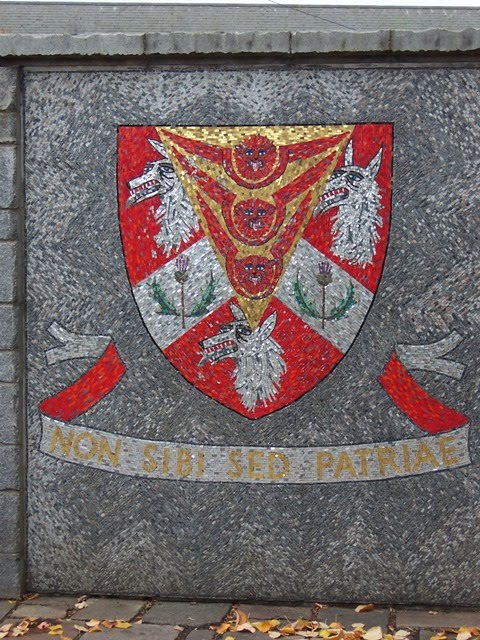
One of my favorite memorials from Aberdeen is this mosaic, funded by a woman who lost three sons during the Second World War, all pilots in the RAF. It is located on the King’s College campus in Old Aberdeen, and I used to walk passed it frequently on my way to and from classes, the library, and errands on High Street.

I don’t really have any Big Thoughts for today other than to encourage all of us to take a few minutes in the midst of whatever our regularly-scheduled plans are to reflect on how often humanity is, indeed, inhumane. And how we live with that reality every day — whether we choose to collectively memorialize it or not.

"What do you mean by counterculture?"

12 Friday Jun 2009

Posted by Anna Clutterbuck-Cook in my historian hat

≈ Leave a comment

Tags

education, history, thesis

One of the first tasks on my list at the end of the spring semester was to draft a proposal for an independent study in the fall that is designed to lay the groundwork for my history thesis (gulp!). The thesis is an oral history-based project documenting the early years of the Oregon Extension program, from 1975-1980, and placing the learning environment that faculty and students created there in a broader cultural context. One of my goals for this project is to incorporate some of my work into the writing I do for this blog, so that y’all can get a sense of what I do in my day job (or at least one of them) as an historian-in-training. With that in mind, here’s a blog post to get the ball rolling: a personal reflection on the language I use to describe what I research, and why I’ve settled on the terms I have.

Since starting graduate school, I’ve been asked far more often than I used to be to define my scholarly interests in ten-second, sound-bite terms (a task which, as those of you who know me well can attest, has never come easily to me). As an undergraduate, I always chafed against trying to encapsulate what I do as a thinker and writer in terms of a single academic discipline or area of interest. I am a historian by training, a feminist by political persuasion, with background in women’s studies, and a passion for thinking about how people make sense of the world. In the past, I have variously described this focus as an interest in intentional community, feminist activism, experiments in living, radical pedagogy, unschooling, radical, progressive, experimental education, and a number of other phrases.

More recently, when asked to give a short-hand version of my thesis research, I’ve been using the phrase “countercultural education” as the broad, umbrella term for where my academic interests lie. I used it just this week in an email to a researcher who contacted the Massachusetts Historical Society interested in the [[papers of nineteenth-century education reformer Horace Mann]]. The researcher wrote back and asked me, out of personal interest, to clarify what I meant when I used this term “countercultural.” Her question forced me to back up and reflect on why “counterculture” feels like the most appropriate, useful shorthand to me — and whether it serves me well in conversations with my colleagues, mentors, and friends.

What appeals to me about the term “counterculture” is that, in a single compound word, it identifies my interest in radical worldviews — worldviews that are fundamentally different from those espoused by the dominant educational culture — while also not limiting my focus to a single movement or ideological persuasion. Historian Ron Miller, in Free Schools, Free People: Education and Democracy After the 1960s, describes countercultural pedagogy as educational practices that seek to “educate children and young adults according to a set of attitudes, values, and beliefs in direct opposition to those of the predominant culture” (3). That’s a definition that goes beyond concepts of “left” or “right” political views, or particular historically-situated movements or schools of thought, like mid-twentieth-century home education, the early-twentieth-century progressive educators, or (to use Miller’s example) the short-lived free school movement of the 1960s.

While some of these historical movements represent countercultural values I strongly identify with on a personal and political level, my interest in educational practice goes beyond interest in a particular set of countercultural values. I am fascinated with the way in which education as an activity and the spaces in which educational activities take place are used as tools for training young people in different ways of being in the world, and in different ways of making sense of that world and their place within it. I am particularly interested in the instances in which the activities and spaces that individuals or groups of people find useful for this making-sense activity are different from the mainstream values and practices of their own context. What prompts them to seek alternatives? What methods do they choose? What vision for human growth and community do they see their educational practices resulting in, and why does that vision make sense to them? As I have written before, these critiques of mainstream culture can come from any point on the political spectrum, and the diversity of both educational practice and the expected results of those practices are dizzying in their variety.

The one reservation I have with identifying my work as the study of “countercultural education” is that it defines my research subject in terms of what it is not: predominant educational norms. The trap of defining oneself (or one’s topic of research) as “not thing X,” and forgetting what the subject is standing for, rather than against, is one I do not wish to fall into. However, thinking of what I am embarking upon as one chapter in the history of countercultural education in American history is, for now, a useful starting point. A starting point out of which, I hope, I can begin to discern what it is the specific individuals I am studying valued and believed important to share with following generations.

*Photo of school children Library of Congress flickr stream.

Student at Work: Intellectual History

04 Monday May 2009

Posted by Anna Clutterbuck-Cook in my historian hat

≈ Leave a comment

Tags

history, simmons

Occasionally here at the Future Feminist Librarian-Activist I try to give folks a sense of what kind of work I do in my academic and pre-professional life as opposed to my moonlighting life as a blogger and my leisure time. All semester long in my Intellectual History class, we have been writing reading responses to our weeks’ readings. This was my final response of the semester, which I enjoyed writing and thought I would share with you. I hints at some of the themes I’m currently developing in my final paper on holistic education, humanistic psychology during the 1960s and 1970s (more soon).

“The ‘I’ becomes part of a ‘we’ that, rather than erasing the sense of self, 

calls it fully into existence”: 
New Beings, New Ethics in a Postwar World [1]


Meditating on “the situation of history” in his 1950 essay of the same name, Fernand Braudel begins his analysis by referencing not only the most recent world war, but in broader terms the “events of the past forty years,” during which “experiences have been particularly harsh for all of us; they have thrown us violently back into our deepest selves, and thence into a consideration of the whole destiny of mankind.” [2] This relationship between the individual’s “deepest self” and “the whole destiny of mankind,” seems to be a common thread that preoccupies the authors we read for this week, though they are tackling such diverse problems as the future of historical study, the condition of women as a social class, and the ethics of existential philosophy. Each author – Braudel, Simone de Beauvoir, and Jean-Paul Sartre – begins with the specific and ends with the conclusion that the specific can only be understood in reference to the universal. Braudel’s vision of history in the longue durée is one in which true understanding can only come when one respects “the unity of history which is also the unity of life.” [3] Event-based history, or what he terms the “short time span” view of history, is too narrow a view: instead, “history is the total of all possible histories—an assemblage of professions and points of view, from yesterday, today, and tomorrow,” each individual point coming together as a whole, amorphous, possibly ungraspable vision of all time: past, present, and future.[4]

Similarly, Simone de Beauvoir, in her now-canonical work in feminist theory, The Second Sex (1949), begins with the singular: “A man would never get the notion of writing a book on the peculiar situation of the human male. But if I wish to define myself, I must first of all say: ‘I am a woman.’”[5] She is something specific: a woman. Yet her struggle with this situation comes from the fact that her singularity (her woman-ness) in some sense isolates her from identifying as part of the human species: Man, she writes, as the neutral sex, “thinks of his body as a direct and normal connection with the world, which he believes he apprehends objectively, whereas he regards the body of a woman as a hindrance, a prison, weighed down by everything peculiar to it.”[6] To de Beauvoir, her body – and the social narrative surrounding that body, the social narrative of “Other” as opposed to “human” – created a conflict between what she knows about herself, that she is “a free and autonomous being like all human creatures” and the way she is treated in society as not-human.[7] Opposed-to-human. “How can a human being in a woman’s situation attain fulfillment?” she asks.[8]

Finally, Jean-Paul Sarte, in Existentialism and Human Emotions, responds to the charge that existentialism is a despairing and hedonistic philosophy by arguing that in actuality, the recognition of human beings’ ultimate responsibility for their own (and collective) actions. Rather than an ethics of passive fatalism (as critics charged), existentialism, Sartre argues, is “an ethics of action and involvement” in life.[9] Although he argues against “human nature,” per se, Sartre affirms the essential commonality of the human condition: “the necessity for [man] to exist in the world, to be at work there, to be there in the midst of other people, and to be mortal there.”[10] Therefore, as human beings search for ethical responses to this human condition, they necessarily find that their lives are interconnected to the lives of others. “In wanting freedom,” Sartre writes, “we discover that it depends entirely on the freedom of others, and that the freedom of others depends on ours.”[11]

All of these narratives of the singular – whether it is a singular even in history or a singular being, or a singular class of being – affirm the existence of the individual event or person, but defy us to accurately understand it in the absence of the collective or the universal; in the absence of Braudel’s “total of all possible histories,” or Sartre’s image of an utterly self-responsible human being who nonetheless finds that her existence as an “I” depends entirely on the existence of “we” – on the existence of others. This vision of the individual in relation to society is radically different from the Enlightenment philosophers’ notion of the individual as the foundation of existence. Sartre criticizes the philosophy of Kant’s “I think therefore I am,” notion of human consciousness in isolation from any other “I,” suggesting instead that “we reach our own self in the presence of others, and the others are just as real to us as our own self.”[12] De Beauvoir’s analysis of gender as a social duality, something so fundamental that “the two sexes have never shared the world in equality,” places human relationships at the very root not just of Rousseau’s social contract (something into which fully-formed individuals enter), but at the root of being itself: man (de Beauvoir suggests) cannot understand himself to be without woman: “Otherness,” she writes, “is a fundamental category of human thought . . . no group ever sets itself up without at once setting up the Other over against itself.” Thus, human beings, as individuals, no longer enter into society as a matter of choice, of convenience, out of some sort of ulterior motive for individual gain. Rather, individuals require human relationships not to thrive, but to exist.

I am struck by the way historical period out of which these narratives of “I” and “we” emerged. Not only out of the extreme violence and chaos of two world wars, European imperialism and decolonization, the Great Depression, and bloody revolutions – but also out of the cultural and intellectual ferment of psychoanalysis and modernity, which we have been discussing over the past two weeks: the “Schorske decades”[14] and the years surrounding World War One, during which those who had believed in the liberal progressivism of Enlightenment political thought were beginning to question the efficacy of their method and the realistic nature of their utopian optimism. Last week, we discussed Freud’s essay “The Disillusionment of War,” in which he argues that “Peoples are more or less represented by the states which they form, and those states by the governments which rule them.”[15] I see echoes of this observation in all of the readings for today, particularly in de Beauvoir and Sartre, as they struggle to come to terms with a humanity far more complex and interconnected than Kant’s enlightened man. As we posed in class, it is possible to read Freud’s statement in two ways: first, that human beings are accurately represented by their governments, and second, that, regardless of accuracy, our governments (that is, the social organization in which we are embedded) become, in some measure, a representation of who we are – a “we” that may or may or may not, to borrow Carol Gilligan’s poetic phrase, “call [the I] fully into existence.” Sartre, arguing for human beings’ ultimate self-responsibility perhaps errs toward the first interpretation; de Beauvoir, wrestling with the limitations imposed upon her agency by the fact of her sex and gender identity, errs toward the latter. Braudel, with his ideal historian’s gaze, would likely say that the truth lies somewhere in a narrative which encompasses them both – and every other point between and beyond. “The total of all possible histories.”[16]

* * *Endnotes* * *

[1] Carol Gilligan, The Birth of Pleasure (New York: Knopf, 2002), 173.
[2] Fernand Braudel,
On History (Chicago: University of Chicago Press, 1980), 6.
[3] Braudel,
On History, 16.
[4] Braudel,
On History, 34.
[5] Simone de Beauvoir, in
Women, the Family, and Freedom: The Debate in Documents, edited by Susan Bell and Karen Offen (Stanford, CA: Stanford Univ. Press, 1983), 421.
[6] de Beauvoir,
Women, the Family, and Freedom, 422.
[7] de Beauvoir,
Women, the Family, and Freedom, 427.
[8] de Beauvoir,
Women, the Family, and Freedom, 427.
[9] Jean-Paul Sartre,
Existentialism and Human Emotions (New York: Philosophical Library, 1967), 36.
[10] Sartre,
Existentialism and Human Emotions, 38.
[11] Sartre,
Existentialism and Human Emotions, 46.
[12] Sartre,
Existentialism and Human Emotions, 37.
[13] de Beauvoir,
Women, the Family, and Freedom, 423.
[14] Carl E. Schorske,
Fin-de-Siecle Vienna: Politics and Culture (New York: Vintage, 1980).
[15] Sigmund Freud, “The Disillusionment of War,” 279.
[16] Braudel,
On History, 34.

Shameless Self-Promotion: Essays & Studies

16 Monday Mar 2009

Posted by Anna Clutterbuck-Cook in my historian hat

≈ 1 Comment

Tags

education, history, simmons

The Simmons College journal, Essays & Studies, has just published its Spring 2009 edition, in which I have an essay: ” ‘I have been more or less dissatisfied’: The Educational Project in the Oneida Community.” Also featured is my friend Rachel Searcy, also of the MA/MLS dual-degree program, with her paper ” ‘Seated at the Hearth-side’: The Prescriptive Tradition of Female Nationalist Involvement in Late 19th and Early 20th Century Ireland.”

Looking Back/Looking Forward: History

13 Tuesday Jan 2009

Posted by Anna Clutterbuck-Cook in my historian hat

≈ Leave a comment

Tags

children, history, simmons

As we enter 2009 — and before I get lost once again in the maze of a busy academic schedule — I thought I’d post a few items on the projects I completed this fall and the projects that are up for the spring semester.

As I wrote at the beginning of last semester, this past fall I took a history seminar in the “American Renaissance,” the era of great political and social upheaval took place during the decades leading up to the Civil War. The paper that came out of that course was “Inspiring ‘Right Feelings’: Children and Childhood in Lydia Maria Child’s The Mother’s Book.” Child was an author and activist whose parenting manual, The Mother’s Book, published in 1831, incorporated many of the latest ideas about human nature, development, and education emerging from the Romantic movement and also the social justice movements she was involved in. I was principally interested in the way Child did, and did not, make connections between her political activism children’s rights. As I wrote in my introduction:

I am interested in the central role of education as a means of both self-improvement and social control plays in the parenting model Child puts forward. Belief in education as a means of self-improvement and liberation from dependence was a common thread in many antebellum reform movements. Access to education, and the role of education in ending the intellectual and material dependence of blacks and women, was, for example, a central tenet of both the women’s rights and abolitionist movements—both of which Lydia Maria Child ardently supported. Yet within The Mother’s Book Child shies away from any radical challenge to parental authority, proscribing children’s moral and intellectual independence by casting adults—particularly mothers—in the role of vigilant guardians of their children’s innate good nature.

While I hesitate to say, at this point, whether the specific topic of this paper will be relevant to my thesis, the themes of political activism, education, and the position of children and youth in American culture are definitely recurring themes in my research and writing.

Up for next semester: I’m not sure what it says about me that my heart thrilled when I got the book list for my spring course in intellectual history and saw that we would be reading complete works by Darwin, Nietzsche, Freud, and Foucault — as well as (I am sure) selections of many other influential thinkers from the 19th and 20th centuries. I’ve encountered all of these crazy guys before and always walked away with something fascinating to ponder . . . even if Nietzsche makes me want to slap him and Freud did cause me to throw a book across . Hanna thinks I’m touched in the head for enjoying Foucault, but I’ve had a fondness for the man ever since using Discipline and Punish for my very first history/philosophy paper on children’s rights.* And then there’s the way he throws around words like panopticon with wild abandon . . . Stay tuned for what project emerges in May!

*Fall 2001, at the Oregon Extension program: “The Radical Belief that Children Are People.” Did I mention something about a through-line in my research . . .?

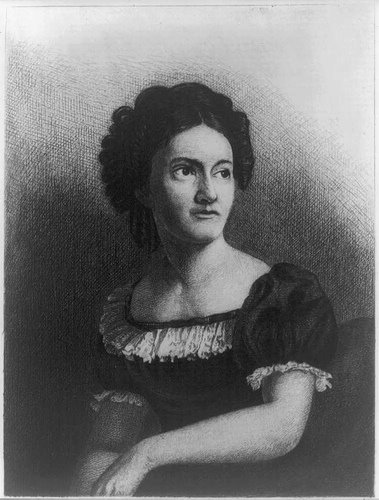
Image of Lydia Maria Child borrowed from Flickr.

Looking Back/Looking Forward: Teaching

11 Sunday Jan 2009

Posted by Anna Clutterbuck-Cook in my historian hat

≈ Leave a comment

Tags

education, history, simmons

As we enter 2009 — and before I get lost once again in the maze of a busy academic schedule — I thought I’d post a few items on the projects I completed this fall and the projects that are up for the spring semester.

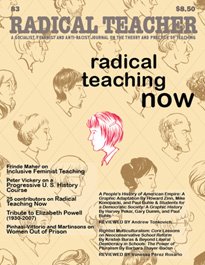
Teaching [will] need to be more boldly political than now, not less. And more seriously historical: things used to be different. They will be different again. — “Introduction Radical Teaching Now”, Radical Teacher #83

As with my internship at Northeastern (see below), I will be continuing my work as a teaching assistant for Professor Stephen Ortega in the Simmons history department this spring. Steve teaches Middle Eastern, Islamic and World history; I will be helping with the second half of the World Civilizations course we began in the fall. The autumn class ran from hunter-gatherer societies to the age of exploration (15th century), and this second semester we will pick up in the 1400s and continue on to the present day.

It was timely, therefore, to receive my most recent issue of Radical Teacher in the mail this past week, and find Peter Vickery’s essay “Progressive Pedagogy in the U.S. History Survey” inside. Vickery describes teaching a U.S. History survey course at a state college, to students for whom the class is a requirement, and many of whom are skeptical about the relevance of history — not to mention their own ability to actively participate in its creation. He writes:

In addition to skepticism, my students encounter an ongoing tension, namely the apparent contradiction between a key goal (finding out what actually happened and why) and a key lesson (history is constructed by historians). Far from being a source of despair or frustration, in my own mind the tension is integral to the joy of history. Learning and re-learning on the one hand the boundaries of possibility that inhere in the study and production of history and, on the other, the power of narrative, keeps history a stimulating field of endeavor.

Yet it can be difficult to convey the joy of that contradiction to students who are distracted and suspicious of the worth of such an open-ended quest. We’ll see what happens this spring!

UDHR at Sixty

10 Wednesday Dec 2008

Posted by Anna Clutterbuck-Cook in my historian hat

≈ 1 Comment

Tags

history, politics

Anita Sharma over at RhRealityCheck brought to my attention that the Universal Declaration of Human Rights, turns sixty today. It was constructed in the aftermath of the Second World War by an international team of philosophers and political leaders and draws on the core ethical principles found in the major philosophical and religious traditions on the world. So in honor of the anniversary, I’m going to take a moment to recommend, A World Made New: Eleanor Roosevelt and the Universal Declaration of Human Rights, written by legal scholar Mary Ann Glendon, which I read with great delight and interest when it came out a in 2002. It’s a fascinating story of an ambitious international project undertaken during the rise of the Cold War, and documents an important moment in the history of the recognition of human rights.

Karen Armstrong

24 Friday Oct 2008

Posted by Anna Clutterbuck-Cook in my historian hat

≈ Leave a comment

Tags

history, politics

Today in the world history class for which I am a teaching assistant, we discussed an excerpt from Karen Armstrong’s history of the axial age religions, The Great Transformation. The professor brought in this twenty-minute video clip of Karen Armstrong’s speech accepting one of the three 2008 TED Prizes “to change the world.” I thought it was a nice introduction to some of her recent thinking on religion.

← Older posts
Newer posts →
"the past is a wild party; check your preconceptions at the door." ~ Emma Donoghue

Recent Posts

  • medical update 11.11.22
  • medical update 6.4.22
  • medical update 1.16.2022
  • medical update 10.13.2021
  • medical update 8.17.2021

Archives

Categories

Creative Commons License

This work by Anna J. Clutterbuck-Cook is licensed under a Creative Commons Attribution 3.0 Unported License

Meta

  • Create account
  • Log in
  • Entries feed
  • Comments feed
  • WordPress.com

Create a free website or blog at WordPress.com.

  • Subscribe Subscribed
    • the feminist librarian
    • Join 37 other subscribers
    • Already have a WordPress.com account? Log in now.
    • the feminist librarian
    • Subscribe Subscribed
    • Sign up
    • Log in
    • Report this content
    • View site in Reader
    • Manage subscriptions
    • Collapse this bar