• anna j. clutterbuck-cook
  • contact
  • curriculum vitae
  • find me elsewhere
  • marilyn ross memorial book prize

the feminist librarian

the feminist librarian

Category Archives: think pieces

Best News of the Week

03 Friday Oct 2008

Posted by Anna Clutterbuck-Cook in think pieces

≈ 2 Comments

Tags

election08, michigan, politics


I talked to my parents last night back in Michigan — which has been a tight swing state in recent election cycles — and they reported that the McCain campaign is so far behind that they’re pulling out and leaving the state to Obama & co.! Aside from hearing that Brian and Renee have adopted a puppy, I think this might be the best news to come by way this week. Go Michiganders!

*image borrowed from handmade detroit via the sweetie pie press.

What Aaron Sorkin Said

26 Friday Sep 2008

Posted by Anna Clutterbuck-Cook in think pieces

≈ 1 Comment

Tags

election08, politics

As much as Maureen Dowd’s views on politics and feminism piss me off, I might consider forgiving her a teensy little bit because she called up Aaron Sorkin and had him write a Bartlet and Obama meeting for her column in the New York Times.

OBAMA They pivoted off the argument that I was inexperienced to the criticism that I’m — wait for it — the Messiah, who, by the way, was a community organizer. When I speak I try to lead with inspiration and aptitude. How is that a liability?

BARTLET
Because the idea of American exceptionalism doesn’t extend to Americans being exceptional. If you excelled academically and are able to casually use 690 SAT words then you might as well have the press shoot video of you giving the finger to the Statue of Liberty while the Dixie Chicks sing the University of the Taliban fight song. The people who want English to be the official language of the United States are uncomfortable with their leaders being fluent in it.

OBAMA You’re saying race doesn’t have anything to do with it?

BARTLET I wouldn’t go that far. Brains made me look arrogant but they make you look uppity. Plus, if you had a black daughter —

OBAMA I have two.

BARTLET — who was 17 and pregnant and unmarried and the father was a teenager hoping to launch a rap career with “Thug Life” inked across his chest, you’d come in fifth behind Bob Barr, Ralph Nader and a ficus.

OBAMA
You’re not cheering me up.

BARTLET Is that what you came here for?

OBAMA No, but it wouldn’t kill you.

I miss the West Wing every day . . .

via Jill at Feministe.

*image borrowed from tvsquad.com.

Twilight (Take Two)

25 Monday Aug 2008

Posted by Anna Clutterbuck-Cook in think pieces

≈ Leave a comment

Tags

books, feminism, gender and sexuality


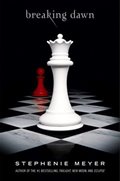
As an addendum to my earlier post about the Twilight saga, in the wake of the publication of Breaking Dawn — the fourth novel in the series –here are two more feminist perspectives on the series’ messages about sexuality, both brought to you by the RhRealityCheck site.

Sarah Seltzer provides a nice summary of some of the troubling aspects of the series, particularly as they surface in the final novel (spoiler warning for those who care!), and links to a lot of other commentary — only a few of which I’ve had a chance to peruse.

Meyers has tapped into a serious artery of the teen female psyche. Adding to the dynamic is the fact that Bella is a cipher whose only strong impulses are self-sacrifice and vampire lust. She has a glancing appreciation of classic novels and her family, but is easily projected upon by readers, who can imagine themselves in her place and be vicariously wooed by sexy succubi.

In Vampires And Anti-Choice Ghouls, her latest podcast, Amanda Marcotte gives her own take on the phenomenon (audio; partial transcript also provided).

God, you don’t even get close dancing or closed mouth kisses? Well, of course not. The point of this exercise is to set the standards so high that pretty much every girl is bound to fail and then hate herself for being a dirty girl. . . The important thing is that women learn that their bodies don’t belong to them, but should always be subjugated to the needs of the patriarchy.

Happy reading!

The View from Childhood?

23 Saturday Aug 2008

Posted by Anna Clutterbuck-Cook in think pieces

≈ Leave a comment

Tags

children, education, politics

Yesterday, I ran across an atrocious opinion piece in the New York City Journal, written by physician Theodore Dalrymple about a UNICEF report published last year on the well-being of children in industrialised nations. Britain came in twenty-first in the rankings (just behind the United States at twenty. (The Netherlands topped the list as the best country to be a child, followed by Sweden, Denmark, Finland, and Spain). With my own strong criticisms of attitudes toward children in the United States, and my more limited exposure to the educational system in the U.K., I am definitely willing to entertain the idea that British and American societies are toxic for children and their families. I haven’t read the UNICEF report in full, but the researchers looked at a broad spectrum of indicators, including

  • Material well-being
  • Family and peer relationships
  • Health and safety
  • Behaviour and risks
  • Own sense of well-being

The BBC report (linked above) and their related page of comments from British children about their lives contains a lot worth considering when it comes to assessing how children experience life in the modern world, even in countries that are materially rich and politically stable.

However, Mr Dalrymple does the UNICEF report a profound disservice by using it to support his socially conservative views about the British social welfare state and what he sees as “a culture of undiscriminating materialism, where the main freedom is freedom from legal, financial, ethical, or social consequences.” He relates a series of tabloid-style anecdotes about neglectful parenting and although he explicitly denies he is doing so, implies that women who have children with multiple partners and outside of marriage are unfit parents.

In my opinion, the most appalling argument appears about two-thirds of the way through the article, when he really starts to editorialize on report’s implications. He highlights the fact that many children do not experience regular family or group meal-times, and then writes:

Let me speculate briefly on the implications of these startling facts. They mean that children never learn, from a sense of social obligation, to eat when not hungry, or not to eat when they are. Appetite is all they need consult in deciding whether to eat—a purely egotistical outlook. Hence anything that interferes with the satisfaction of appetite will seem oppressive.

I invite you to consider for a minute, apart from whether you believe in the value of shared meals, the view of young people — and of people in general — that Dalrymple betrays here. “Children never learn . . . to eat when not hungry, or not to eat when they are.” What: we should be teaching children to ignore the messages their bodies give them about hunger? There are profound consequences in championing this concept of healthy socialization, when it comes to our experience of embodiment, for example. We should be instructing children to put conforming to social convention above attending to their own intuition? I was struck by how many children put the problem of bullying at the top of their list of worries when asked by the BBC what would make their lives better. Being taught to discount their own hungers (more broadly speaking, their own needs and desires) in the interest of social obligation would only exacerbate this problem.

Children deserve protected, nurturing space to be children — and I agree with Dalrymple that even in the most privileged of nations they don’t often have it, or have it for long enough. The solution, however, is not to cut them off from their own intuitive selves, but rather to give them the tools to care for themselves and for others around them in responsible ways. The fatal misperception in Mr Dalrymple’s essay is the belief that social obligation and self-care are mutually exclusive activities, when in fact I would argue they are mutually dependent — we thrive as individuals best when in a web of supportive relationships, and our relationships with fellow human beings are at their strongest when we know and attend to who we are as individuals — as well as attending to those around us. Unlike many material resources, emotional and social resources are not in limited supply, but endlessly renewable.


"Best" Books?

15 Friday Aug 2008

Posted by Anna Clutterbuck-Cook in think pieces

≈ 1 Comment

Tags

books

While I’m unashamed of my love of lists, I’m always skeptical of lists that attempt to assign the status of “best of . . .” in any genre, whether it’s a vacation destination, restaurant, or the artistic value of a movie or book. For example, take a look at this Unified List of the Best 100 Novels (via), which merges the “top” lists from the UK, US, Australia and Canada. In a personal sense, I’m happy to see that personal favorites Possession (#59), A Passage to India (#55), Anne of Green Gables (#38), and The Lion the Witch and the Wardrobe (#14) made it on to the list . . . but find myself slightly irritated that, for example, my favorite Austen novel (Persuasion) only squeaked on at #94). “Why did they pick X over Y?” I find myself thinking impatiently. I would argue that in the end such lists are intimately subjective, and I wish they would acknowledge that (“favorite” rather than “best” anyone?). Yet at the same time they’re compulsively readable, and the bookworm in me can’t help noticing how many I can or cannot check off as already read . . .

More stories like this . . .

18 Wednesday Jun 2008

Posted by Anna Clutterbuck-Cook in think pieces

≈ 3 Comments

Tags

education

. . . and I might just be driven into teaching out of sheer outrage.

Jon Carroll of the San Francisco Chronicle reports in his June 18 column Trauma Techniques:

One day last month, representative of the California Highway Patrol visited classrooms [in Oceanside, CA] to deliver some bad news: Some classmates of theirs had been killed in traffic accidents. Alcohol apparently was involved. The students, as might be expected, were stunned. Many wept. Some screamed. School stopped as people comforted each other.

Then, a few hours later, the administrators announced that it was all a joke. Well, not a joke – it was an educational experience. The administrators had set up the stunt to make the students understand how very sad death is, and how drinking booze and driving is a bad thing. It was something the students will never forget, the administrators said, and oh how true that is.

[. . .] These are professional educators, and they are comfortable with the following pedagogic theory: Trauma is good for kids. It’s an effective teaching tool. Why not teach American literature the same way? Harpoon a real whale and watch it die – “Moby-Dick” brought to life! They’ll remember that.

[. . .]Have we really forgotten our own teenage years? Grief and death and desperate unhappiness were not strangers to us then. Those dark feelings were fueled in part by a sense of powerlessness. So maybe the children of Oceanside thought they were getting a handle on things – bam, the teachers play a joke. Although, as school Superintendent Larry Perondi said, “We did this in earnest. This was not done to be a prankster.”

Oh, like that makes a difference.

There are so many things wrong with this incident (to paraphrase Dianne Wiest from “Parenthood”) that the more I think about it, the angrier I get. Exactly how many adults did this idea get run passed and approved by in order for this school-wide charade to play out? Even in a smallish school, it would take a fair number. That means there are a lot of grown-ups charged with caring for young people who hold a number of insulting assumptions about them beginning with the belief that unless they are put through false suffering children and young people, categorically, don’t understand the reality of suffering and death.

I guarantee you that there were many, many kids in that school who had already lost parents, lost friends, faced life-threatening illness and injury, the violence of war, or other traumas. Teenagers don’t need adults to playact “real life” for them–they’re already living it just like the Big Kids (who in this instance exercised the sort of poor judgment our society often casually attributes to the young).

Instead of achieving their goal of teaching teens about the dangerous consequences of drinking and driving, I’m betting the adults in that high school taught their students never to trust another word that comes out of their teachers’ mouths from now until graduation day.

Getting My Legal Fix

15 Thursday May 2008

Posted by Anna Clutterbuck-Cook in think pieces

≈ Leave a comment

Tags

feminism, politics

Last week, when the Michigan Supreme Court upheld the ban on same-sex partner benefits, I was so tired from the end of term I didn’t have the energy to care much (and really, it wasn’t that unexpected). However, this Thursday brings happier news: the California Supreme Court has ruled their own state’s ban on same-sex marriage unconstitutional. The legal junkie in my is having fun perusing some of the coverage. I love it when people (most especially those I agree with!) get snarky in legalese:

Furthermore, the circumstance that the current California statutes assign a different name for the official family relationship of same-sex couples as contrasted with the name for the official family relationship of opposite-sex couples raises constitutional concerns not only under the state constitutional right to marry, but also under the state constitutional equal protection clause. . . the purpose underlying differential treatment of opposite-sex and same-sex couples embodied in California’s current marriage statutes–the interest in retaining the traditional and well-established definition of marriage–cannot properly be viewed as a compelling state interest.

Couldn’t have said it better myself.


Oh, and my favorite legal news story of the week* might be this one:
NPR’s On the Media reported that Scott Bloch, the head of the Office of Special Counsel, whose office was raided this week by the FBI amid allegations of corruption, accused the Bush Administration of “being part of a gay rights conspiracy to persecute him.” Who knew?

(*via the blog Pandagon)

Home Education in CA

27 Thursday Mar 2008

Posted by Anna Clutterbuck-Cook in think pieces

≈ Leave a comment

Tags

education, politics

In the midst of the midterm crunch, I don’t have a chance to reflect on this at great length, but I saw via the NPR website this week that a California appellate court recently ruled that home education in the state may be vulnerable to legal challenges:

The court ruling that declared some home schooling unconstitutional, Huerta says, seemed to indicate that California regulators’ occasional monitoring of the family’s home efforts was deemed insufficient to qualify children as being enrolled in a school.

Huerta says the ruling is an unprecedented decision, and one that has prompted an uprising not just among home schoolers but also among privacy advocates. “This is an issue that’s going to be taken all the way to the Supreme Court,” he says. “It’s going to open a Pandora’s box of issues the court may not want to address.”

Diane Rehm also did an hour on the subject this week, a show that I plan to listen to and report back on when I have a chance.

I’ll be interested to see both how this actual legal case develops and how the media covers it.

Separate But Equal?

07 Friday Mar 2008

Posted by Anna Clutterbuck-Cook in think pieces

≈ 3 Comments

Tags

education, feminism

A few days ago, my friend Joseph sent me a link to this New York Times article on sex-segregated public schooling. Aside from the fact that I thought we’d sorted out a long time ago that segregation in schools does not lead to greater social equality, there seem to me to be an overall assumption here about children that I find highly suspicious–namely, that they can be sorted into two groups of like individuals based on gender behavior. As Joseph pointed out in his email to me:

I think it is reasonable to accept that, on average, males and females tend to react differently to different teaching styles, but treating those rather small differences as the basis for segregating class rooms seems dangerous, because one ends up implying that ALL males want to draw pictures of cars going fast and girls want to draw pictures of people interacting. The goal of improving teaching by making a classroom more homogeneous seems to be a hopeless one — rather, it seems one should be focusing on teaching each student as an individual and meeting their needs rather than trying to break children up into supposedly homogeneous groups.

By separating children into gender-based groups, we are encouraging children to accept stereotypical generalizations about the opposite sex–the boys in the article are quoted as saying, for example, that they like being in an all-boys classroom because girls don’t like snakes. Well, I happen to know several girls who love reptiles. But because these boys aren’t seeing girls get friendly with snakes in class, they can more easily continue to believe that no girls share their interest.

Not only does this model of “girls” vs. “boys” reinforce gender stereotypes, it also assumes that all children naturally fall into these two categories, and that they thrive better when socializing primarily with members of their assigned sex/gender. It neatly elides the existence of queer and trans children, who may not be sure where they fall in the female/male spectrum–and shouldn’t be forced to decide (or have their parents decide for them). Joseph also pointed out that some situations that we generally think are more comfortable for children as a single-sex environment can be more awkward for gay and lesbian kids than mixed company:

The one point where it seemed to make a little sense was when a female teacher was saying that she felt much more able to discuss sexuality in the literature they read in class in an all-female setting, which I can certainly imagine. Though that, of course, leaves the homosexuals in a more awkward position . . . I also have this really negative — bordering on fearful — reaction to all-male settings . . . settings where there is the implicit understanding that females are excluded because that type of space [locker rooms, etc.] only works where no one is sexually attracted to anyone else in the space.*

While it may solve some shorter-term problems (such as girls’ reluctance to speak up in science class, or boys’ reluctance to join the choir because it’s too “girly”) establishing a same-sex education program does so at the expense of already vulnerable children, whose sense of exclusion may only get stronger with increasing emphasis on the homogeneity of the environment in which they are placed.

Ann, over at feministing, has written a post on this article and linked to several other sources discussion the supposedly “scientific” basis for same-sex education. Check it out if you’re interested!

*Thanks Joseph for the permission to use your email in this post :).

Image lifted from the NYT article

The radical idea that boys are people

20 Wednesday Feb 2008

Posted by Anna Clutterbuck-Cook in think pieces

≈ Leave a comment

Tags

feminism, gender and sexuality

In the same vein as the post I wrote on teen fatherhood a couple of weeks ago, Jill over at the blog Feministe has written about a recent study on how teenage boys understand their sexual and romantic relationships. Results? Contrary to popular “common sense” assumptions that boys are driven by their physical sexuality and interested in girls only as sexual objects, the teenage participants in the study indicated that they value relationships in a much more holistic way.

Go check out the post!

← Older posts
Newer posts →
"the past is a wild party; check your preconceptions at the door." ~ Emma Donoghue

Recent Posts

  • medical update 11.11.22
  • medical update 6.4.22
  • medical update 1.16.2022
  • medical update 10.13.2021
  • medical update 8.17.2021

Archives

Categories

Creative Commons License

This work by Anna J. Clutterbuck-Cook is licensed under a Creative Commons Attribution 3.0 Unported License

Meta

  • Create account
  • Log in
  • Entries feed
  • Comments feed
  • WordPress.com

Create a free website or blog at WordPress.com.

  • Subscribe Subscribed
    • the feminist librarian
    • Join 37 other subscribers
    • Already have a WordPress.com account? Log in now.
    • the feminist librarian
    • Subscribe Subscribed
    • Sign up
    • Log in
    • Report this content
    • View site in Reader
    • Manage subscriptions
    • Collapse this bar