• anna j. clutterbuck-cook
  • contact
  • curriculum vitae
  • find me elsewhere
  • marilyn ross memorial book prize

the feminist librarian

the feminist librarian

Category Archives: think pieces

yep, I’m pro-porn. like I’m pro-fiction and pro-food.

16 Sunday Jun 2013

Posted by Anna Clutterbuck-Cook in think pieces

≈ 5 Comments

Tags

feminism, politics, sexuality, smut

Having just submitted my first work of original erotica for consideration for a Cleis Press anthology, I decided it was apropos to work out the writerly shakes by posting a bit of a rant about the recurring moral panic around pornography.
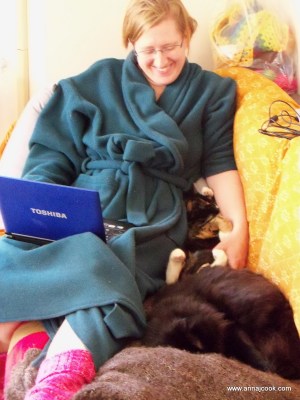
This is what a pornographer looks like.

That is, the idea that a body of work (sexually-explicit material created with at least a partial intention to arouse the consumer) might be studied using diverse methods of data collection and analysis, a wide range of primary source material within the genre, and theoretical lenses, adding to our body of knowledge about the human condition or the world we inhabit.

Last night as I was going through my RSS feeds, I noticed that The Guardian has discovered that some scholars study porn and that others object to the idea that porn can be studied as one studies, say, English poetry, American history, or cellular biology.

And they’ve discovered that some of those scholars who study porn have decided to start a journal dedicated to the subject (PDF), to be published by Routledge starting in 2014, and that anti-porn activists have accused these journal editors of being “biased” and “pro-porn”:

The journal, which announced its call for papers a month ago, and will be published by Routledge next year, marks a turning point in the academic study and treatment of pornography. It is the first peer-reviewed journal dedicated to the subject and its editors – Feona Attwood, professor of cultural studies at Middlesex University, and Clarissa Smith, a reader in sexual cultures at Sunderland University – say it will offer a fresh cross-disciplinary approach and provide a focus for researchers working on porn.

However, a petition accusing the journal of bias, and demanding that Routledge either change its editorial board or rename it “Pro-Porn Studies” has attracted 888 signatures, including from senior academics in North America and Europe, people working with the victims of sexual and domestic violence and health professionals.

Gail Dines, a British professor of sociology at Wheelock College, Boston, and the author of Pornland, said that, while it was vital that pornography was studied and research published, she had grave concerns about the editorial direction of the journal.

Some of you may remember Gail Dines from my 2012 series on her Boston University appearance along with Carol Queen at a screening of The Price of Pleasure. It’s my personal opinion that she does nothing to enhance the discussion around the ethics of sexually explicit material because her own position has become so dogmatic that she is uninterested in genuine conversation with those who think about pornography in more nuanced ways.

I’m honestly kind of creeped out that she teaches and lives here in the same city I do. But that’s life.

I want to offer two inter-related thoughts about the anti-porn faction’s framing of Porn Studies as biased because it’s “pro porn.”

1) Pornography is a genre, nothing more. “Pornography” is the word we use to describe sexually-explicit materials, most often visual materials, created or used at least partially for the purpose of arousal. Pornography is a genre, just like fiction or poetry is a genre. We can talk about porn being unethically or shoddily made, or we can talk about porn that didn’t do it for us — I’m honestly not that into Longfellow’s epic poems or anything by Ian McEwan. I think Phillip Pullman let his atheist agenda impede good storytelling toward the end of His Dark Materials and after reading a couple of reviews of Lionel Shriver’s latest it sounds to me like she’s given in to unacceptable fat hatred.

But that doesn’t mean I’m “anti-poetry” or “anti-fiction,” and I certainly wouldn’t accuse my father-in-law who loves Ian McEwan of “pro-fiction” bias because he loves an author whose characters give me hives.

This is the sort of nuance that Feona Attwood, Clarissa Smith, Tristan Taormino, Violet Blue, and the others involved in Porn Studies, scholarship on pornography, and creating porn are advocating. There’s crap porn out there, I don’t think anyone is denying that — though like with fiction we’re all going to disagree on what constitutes “crap.” (As librarian Nancy Pearl once reminded her readers, one reader’s bad sex award-worthy scene is another person’s hottest fantasy.) There is also unethical porn, which “pro-porn” feminists have been vigorously discussing and working to advocate for decades — for the most recent discussions, check out The Feminist Porn Book and associated website.

If I had to sum up what I see as the “pro-porn” feminist stance on bad and exploitative porn, it would be the following: make better porn, and empower workers in the porn industry (including your own, if you’re a porn creator) to demand (and achieve) non-exploitative working conditions.

Dines and company, on the other hand — apparently over eight hundred people! — don’t see porn as a genre. They see porn as a single, monochromatic thing which in its entirety is harmful. They see pornography as a public health harm much like smoking while the Porn Studies folks see it more like pastry or even alcohol. Inhalation of smoke increases your risk of cancer; there’s nothing you can really do to make smoking healthy. Eating a brioche, on the other hand, or enjoying a glass of wine at dinner or a cocktail at a party is not per se a self-destructive activity. It’s all about how individuals relate to the food or drink. Do you eat compulsively? Do you shop at a bakery that sells stale rolls? Pays its employees under the counter with no benefits? Are you using whiskey to mask your depression? Has the chardonnay you opened last week gone off in the interim? Wine tastings and French pastry-making classes abound in our neighborhood, testament to the fact that people see alcohol and baked goods as two classes of foodstuffs that can be made well or poorly on a number of levels.

Which brings me to point number two…

2) Scholars are nerds, and we’re generally passionate about our subjects of study. You say “pro-porn” like it’s a bad thing. If pornography is a genre, like poetry or fiction, then it stands to reason that the people who  choose to study it — to build a scholarly career out of studying it — and/or are creating it are “pro” the genre. Don’t we want them to be? Accusing a pornographer or porn scholar of being “pro-porn” is like complaining Seanan McGuire is “pro-fantasy fiction” or the people on “America’s Test Kitchen” are “pro-food.”

Uh … yes? You’re point being…?

Back in the 18th century, there was, in fact, a moral panic about the effects of reading fiction — particularly its effects on girls and women (we’re flightly like that). Fiction, of any sort, inflamed the imagination and the imagination turned to sex. Reading fiction, in other words, led straight to masturbation and other lewd behaviors.

When I listen very long to those who protest against the production of porn, any porn, regardless of the context of creation, quality of production, or content, I admit that they sound about as shrill as the eighteenth-century moralizers with their warnings about how reading fiction leads to depravity.

It’s disappointing to me that so many people continue to take them seriously, instead of re-framing pornography as a genre like any other … one which we can choose to shape and reshape as we please. And study endlessly, like we study Shakespeare’s corpus or Buffy or the human genome.

post eleventy-hundred: nerd blessings

01 Saturday Jun 2013

Posted by Anna Clutterbuck-Cook in think pieces

≈ Leave a comment

Tags

being the change, blogging, fun, random kindness, thankfulness

Today, after making a trek to Harvard’s library privileges office in the middle of the first heat wave of the summer to apply for spousal library privileges (what could be nerdier than that?) I finally made the time to watch Wil Wheaton’s message to a baby nerd, which Hanna sent to me several weeks ago via the Mary Sue.

I thought it was appropriate to share as my 1100th post here at the feminist librarian.

Stay cool, everyone, and spend some time this weekend loving your favorite things as hard as you can.

"homosexual marriage?" (1953) & "the gay guide to wedded bliss" (2013)

26 Sunday May 2013

Posted by Anna Clutterbuck-Cook in think pieces

≈ 1 Comment

Tags

books, gender and sexuality, marriage equality, politics

(via)

This weekend, I’m reading several chapters of Tracy Baim’s Gay Press, Gay Power: The Growth of LGBT Community Newspapers in America (Prairie Ave. Productions/Windy City Media, 2012) for the New England Archivists LGBTQ Issues Roundtable quarterly discussion group (say that five times fast). One of the best things about the book is that between each chapter comes a long section of press clippings illustrating some of the publications, articles, and events they discuss in the text. Paging through one such section I noticed the cover pictured above.

Many opponents of same-sex marriage talk as if the quest for marriage equality is some latter-day issue invented around 1995 by activist judges. Even some queer rights activists assume that the push for marriage rights either came out of the AIDS crisis of the eighties (which certainly gave it a boost), and/or is a domestication of the movement — something palatable for mainstream America to swallow (also a partial truth). In light of those attitudes, I think it’s interesting to see that as early as 1953 — sixty years ago — the LGBT community was exploring the question of same-sex marriage.

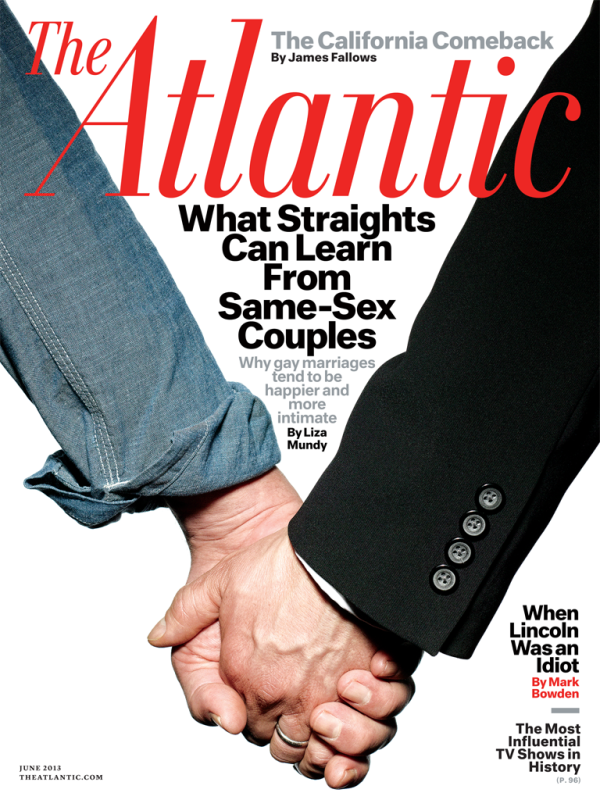
Relatedly, anyone else notice the cover story in the latest issue of The Atlantic?

In “The Gay Guide to Wedded Bliss,” Liza Mundy asks, “What can gay and lesbian couples teach straight ones about living in harmony?” and “What if same-sex marriage does change marriage, but primarily for the better?” She points out (as many feminists and queer folks have been doing for, um, decades):

Same-sex spouses, who cannot divide their labor based on preexisting gender norms, must approach marriage differently than their heterosexual peers. From sex to fighting, from child-rearing to chores, they must hammer out every last detail of domestic life without falling back on assumptions about who will do what. In this regard, they provide an example that can be enlightening to all couples. Critics warn of an institution rendered “genderless.” But if a genderless marriage is a marriage in which the wife is not automatically expected to be responsible for school forms and child care and dinner preparation and birthday parties and midnight feedings and holiday shopping, I think it’s fair to say that many heterosexual women would cry “Bring it on!”

I have to say, painting a picture of same-sex couples “hammering out” our domestic lives makes it sound like we’re drawing up intensive prenups and chore charts. Perhaps some people do (and if it helps you, go for it)! In my experience, it’s more just the freedom from falling into cultural patterns of “wives cook, husbands wash up” (my grandparents’ pattern), or “husbands wash the car and mow the lawn, wives do laundry and remember family birthdays.” In our case, we’re also aided by the fact that both sets of (hetero) parents were mindfully and/or of necessity non-traditional in their spousal roles — something that I think is often overlooked when people ask why some relationships are more egalitarian than others: parental modeling! (Perhaps because, sadly, it’s still a rarity.)

I have grumbles about The Atlantic penning this article as if it’s a possibility that’s just occurred to them — what queer folk might have something to offer the wider world! And I’m also slightly irritated (paradoxically, it seems) for the framing of marriage equality as a “control group” for heterosexual marriage. Um — don’t we get to simply exist without being one half of a scientific experiment.

Also, what’s up with the sudden resurgence in mainstream articles hauling up the myth of “lesbian bed death” from the murky depths? First last week’s woefully glossy and irritating NYT magazine article on female arousal, and now this, where a researcher suggests that the “lesbians [in her study] may have had so much intimacy already that they didn’t need sex to get it.”

… O_O

That suggestion implies a) that women use sex to gain intimacy or they don’t need it and therefore, b) there may be such a thing as “so much intimacy” that you kill your sex life.

O_O …

This is just such a limited understanding of the role of sex in human life that I can’t even.

But I’m also struck by the fact that a publication as culturally staid, if not hard-core conservative, as The Atlantic, has published such an article — a mere sixty years after the August 1953 issue of ONE Magazine was held for three weeks by the post office while they tried to determine whether it was violating U.S. obscenity laws.

Anyway. Have you read the Atlantic piece? If so, what did you think of it?

a few more thoughts + cats and flowers

20 Saturday Apr 2013

Posted by Anna Clutterbuck-Cook in think pieces

≈ 9 Comments

Tags

boston, cat blogging, family, photos, politics, the personal is political

kumquats and plants in the kitchen window

Hanna and I are both finding today much more difficult, emotionally, than yesterday. Yesterday was a day of waiting: between 6am and about 7pm we were asked to stay indoors and essentially nothing happened apart from rampant media speculation.

Then at around eight in the evening, law enforcement officials caught the young man they were looking for hiding in a boat in Watertown.

He was taken to the hospital, injured, and will not be read his Miranda rights before being questioned.

this day needed flowers, so I went out and took pictures

Let me say, first, that I am grateful no more blood was spilled; no more life lost. I am glad that whatever threat this young man and his brother, killed in the chase, represented to the world is no more. I support preventing harm. I also support holding people responsible for their actions, though not through execution, so if Dzhokhar Tsarnaev is, in fact, responsible for the marathon bombings I hope he is tried and a just verdict rendered. I also understand why many, many people are angry and afraid — and why their first reaction is the desire for vengeance.

It’s just that I rarely think we should act on our first reactions, or even our second. Perhaps our third or forth thoughts ought to be listened to, but sometimes we must practice patience longer than that. And Hanna and I find ourselves dispirited by the amount of anger and vitriol being spewed across the Internet toward this wounded teenager who — presuming they have the right man — did monstrous things, but is also currently alone, in pain, and no doubt terrified.

magnolias outside our apartment building

We’ve had people tell us we are monstrous ourselves for trying to practice empathy for both victims and perpetrators simultaneously; for suggesting that just because someone has done evil deeds does not mean they deserve questionably legal treatment or abuse. Suffering is sometimes necessary, but never justified, never right. And I question the wisdom of wishing it hatefully upon another human being, even if he himself has allegedly inflicted vast amounts of suffering upon others.

We do not wish to become a mirror to the very violence we profess to abhor.

teazle in the sun

I realize I am a minority voice, at this moment, and that my desire to practice nonviolence is no doubt seen by many as foolish, a position born of privilege.

Perhaps this is so. I am a Bostonian: I work half a mile from Copley Square, the marathon finish line, and live in a neighborhood just across the river from Watertown. I am not speaking from a place of geographical abstraction from the events of yesterday. Yet I was lucky enough that everyone I knew running the marathon escaped unscathed; I did not spend yesterday with tanks or SWAT teams in my street.

But I believe it is part of what I can offer, in these troubling days: mindfulness, and attention to the fact that all of us are flawed and broken. That law enforcement can make mistakes and act violently, that the civil rights of murderers should not be treated lightly, and that even those who inflict suffering can suffer in turn.

I have been trying hard (and believe me — it is a discipline) to hold all those suffering, and all those struggling to make ethical decisions right now, in my thoughts and in my heart.

May we all move forward toward less hate and suffering.

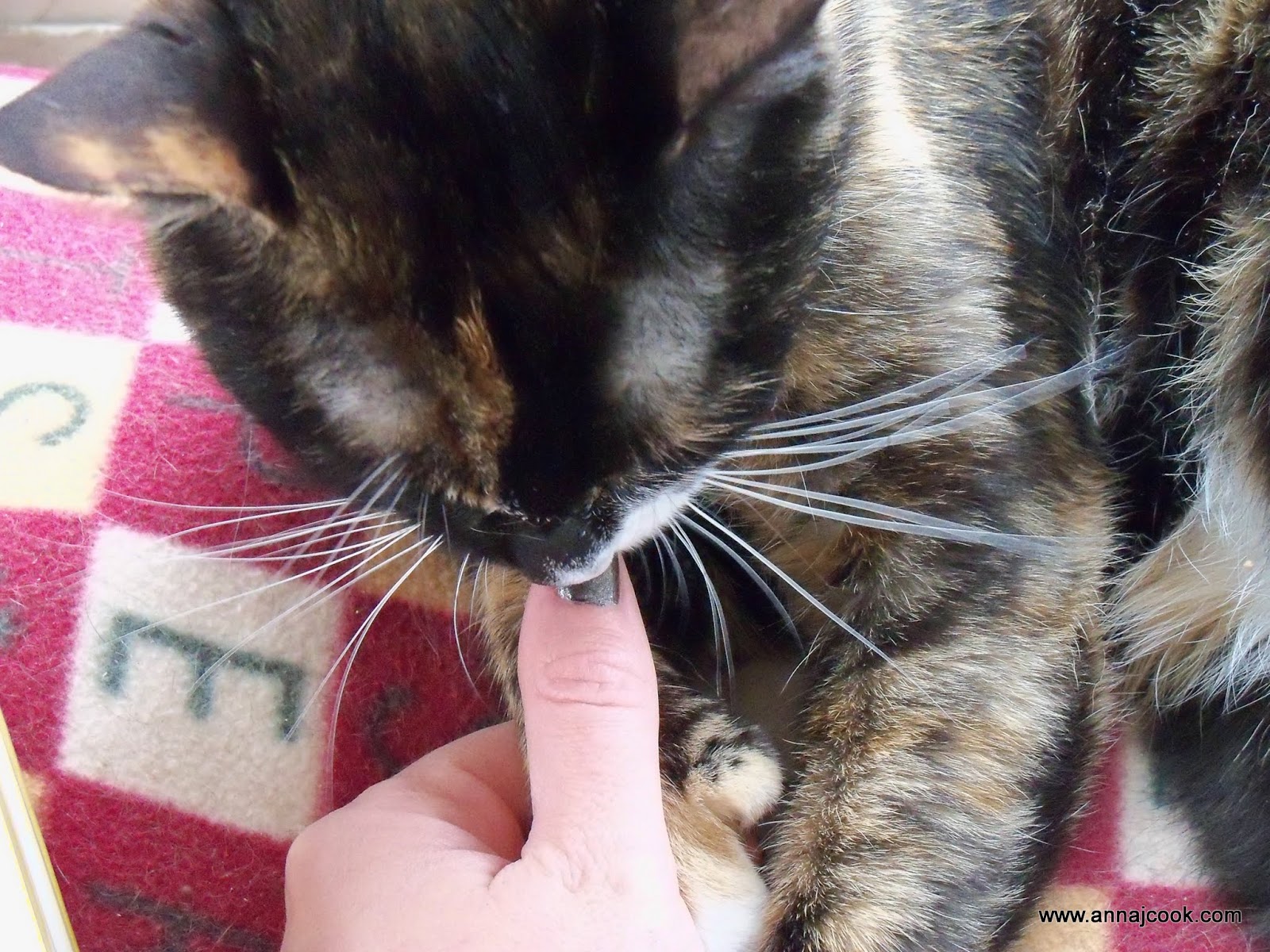
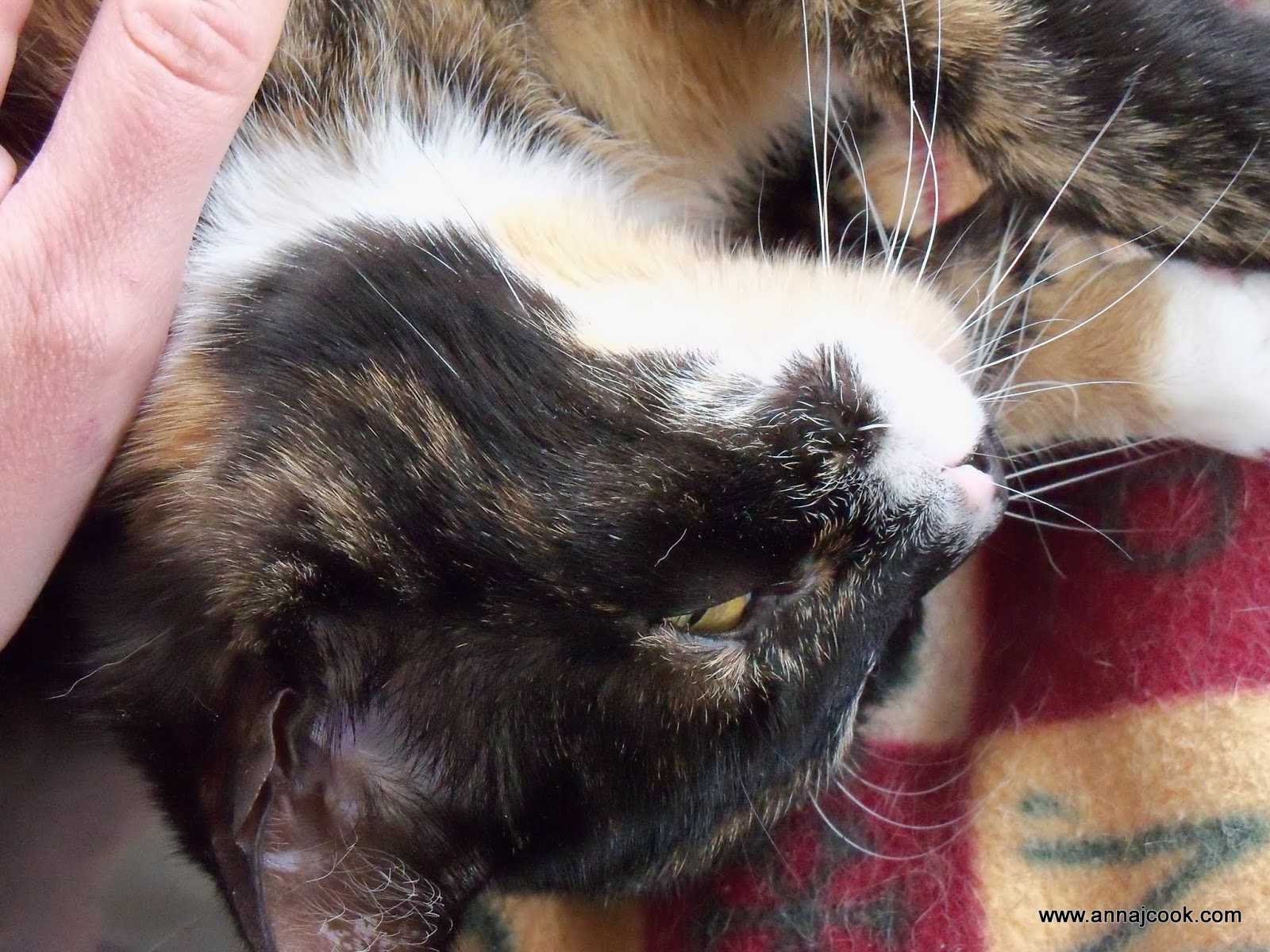
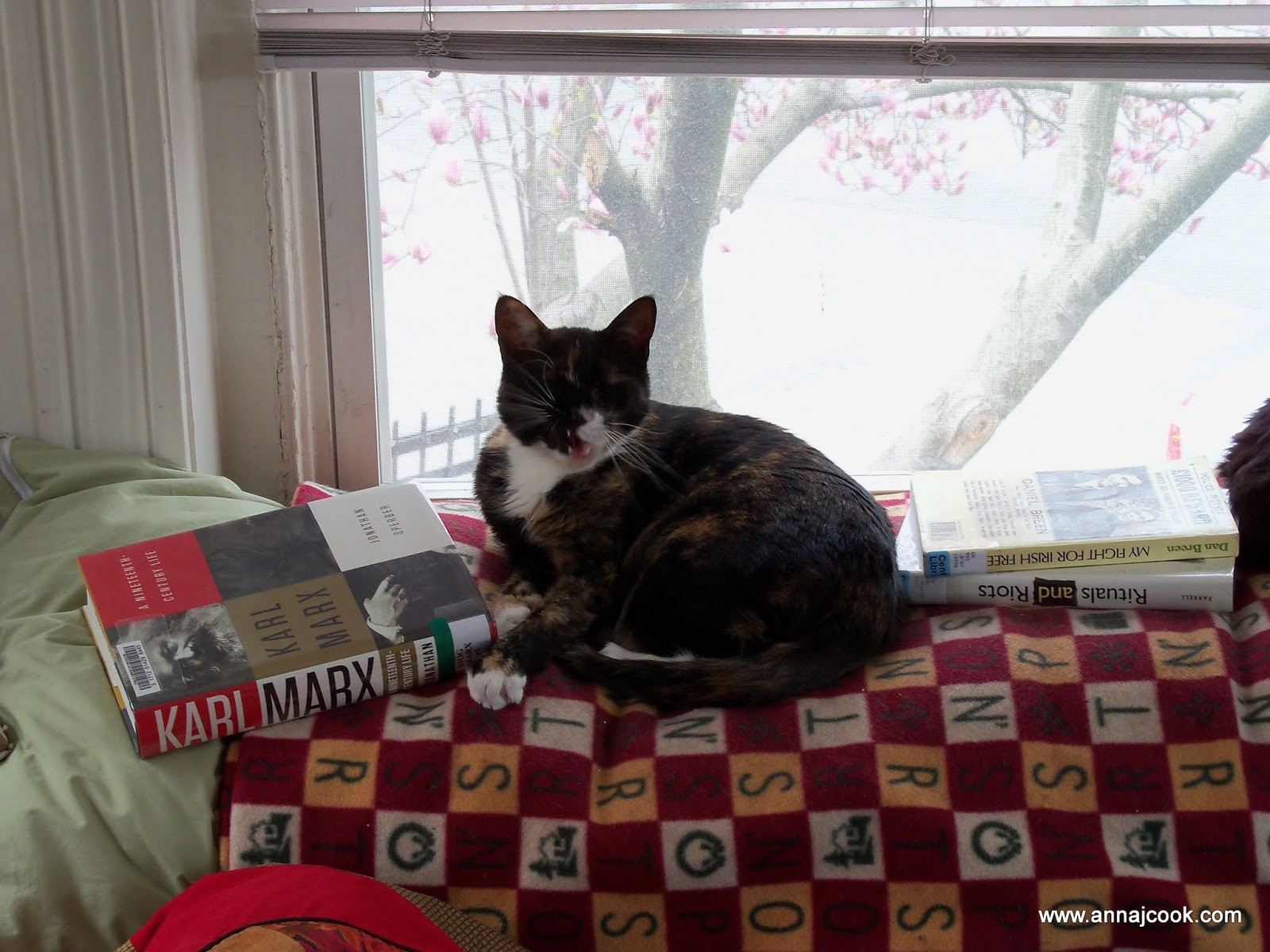
And obviously, more kittens.

 And books.

some thoughts

19 Friday Apr 2013

Posted by Anna Clutterbuck-Cook in think pieces

≈ Leave a comment

Tags

boston, domesticity, family, politics, the personal is political

flowering trees on the Charles River esplanade (May 2012)

Shortly before midnight last night Hanna and I started getting automated calls from Harvard University (Hanna works in their medical library) alerting staff to security concerns around MIT and in Cambridge and Allston-Brighton. Between midnight and six this morning we had maybe ten to a dozen such calls, making for a fitful night of interrupted sleep — as helicopters droned overhead and sirens wailed in the night air.

A phone call just before six announced the University closed for the day; when WBUR clicked on at six o’clock, we heard our neighborhood of Allston-Brighton was one of the communities in lock-down, with residents asked not to leave their homes, and all public transit was suspended until further notice.

As most of you have probably heard by now, during the night two young men robbed a convenience store near MIT and shot an MIT security guard who attempted to intervene. The two suspects in the robbery — now believed to be the suspects sought in relation to the Monday bombings at the Boston marathon — escaped in a hijacked SUV to Watertown where there was an exchange of gunfire and some explosives thrown from the vehicle. One of the young men was shot by law enforcement officers and died in hospital. The other is still at large — hence the city-wide shutdown as police attempt to track him down.

Hanna and I will be at home today. We are safe, with our cats, and the weather is beautiful. There is a coffee cake baking in the oven as I write this post.

The media, including NPR, are all going wild with speculations and scraps of information, so I’d like to take this opportunity to ask everyone to exercise patience as we wait. Patience, and hopeful intention that violence will not begat more violence.

Initially, people — at least three of them — died in the bomb blasts on Monday; the first act of violence. Over one hundred were injured, and currently struggling to heal.

One of those hundred-plus injured was a young man from Saudi Arabia whose ethnicity and presence at the scene of the blasts (“running while Saudi”) led to further acts of violence: instead of being offered help and care for his injuries he was tackled to the ground, his apartment searched aggressively by investigators. It took them hours to clarify that he was not a suspect while the media coverage ran with the story of Islamic terrorists — our favorite scapegoat du jour.

Then we had a high school track star, also darker skinned, who was the media’s latest potential threat. His crime was, also, existing in public while young and male and not White.

Now we have these two young men, reportedly Chechen (the original Caucasians!), whose actions — taken in a metropolitan area on edge — have begat more violence. Obviously, their killing of the MIT security guard was wrong, and their actions in the wake of being caught in the midst of a robbery are only furthering the damage done.

But I worry about the way in which they’re being so strongly linked to the marathon bombings.

I worry about the fact that one of the men — said to be brothers — has already been killed, in turn, by law enforcement.

I worry about what investigators, in their drive to find the bombers, will do in haste and violently.

I worry about the violence that may come from individuals and families that feel cornered.

While it is plausible, certainly, that these two young men from the 7-11 robbery were somehow involved in Monday’s bombings, let’s imagine for a second that they were not. Let’s imagine they were out on a Thursday night and decided to rob a store (poor plan, but hardly an act of terrorism). Because they had guns, when they got caught by a guard one of them panicked and shot — and killed. Now, of course, they’re in deep shit on a number of levels, so the panic escalates … and things get worse from there.

Again, perhaps the investigators have the right people. And regardless, even unconnected to the bombings, the young man still alive has participated in violence that warrants his arrest and trial for murder.

But I am skeptical enough of state power and the abuse of authority — and the mobthink that happens when a community reacts defensively against a (real or perceived) threat — that I will spend the day worried. And probably many days to come.

Today, I am going to try and hold in my thoughts all of the people caught up in this outbreak of violence. My hope is that we can prove the terrorists of the Boston marathon wrong by not becoming the world they sought to create: one in which violence begats violence and, exponentially, the trauma rises. My hope is that we will work with determination not to respond with force that mirrors the violence of those who maimed and killed less than a week ago.

I’d like to feel proud of my country and my adoptive city in a way I wasn’t, so much, in the wake of 9/11 when our response was to go bomb Afghanistan and then start a war with Iraq.

So I will try to sit with hopeful intention, and work toward building a better — less violent — world.

adventures in being (gay) married: filing our tax returns

15 Monday Apr 2013

Posted by Anna Clutterbuck-Cook in think pieces

≈ Leave a comment

Tags

married life, politics

As we were married in September, this was our first tax year filing as (gay) married folks instead of white bread single people. And basically, it’s a mess. It’s such a mess that when you Google “same sex marriage tax filing” or similar, you get directed to a bunch of information by sites like H&R Block and TurboTax that describe the situation and basically end up saying, “We don’t exactly know — but it’s complicated.”

So I thought I’d share a little about our process: how it worked, what my frustrations (as the preparer for our household) were, and how we actually came out in the tax department as a (gay) married couple versus what the numbers would have been like had we been possessed of more, shall we say, diverse anatomy.

(via)

THE PROCESS:

We talked to a bunch of people, and poked around online, and basically it boiled down to this:

1. We each had to prepare and file federal tax returns “as if” single, because thanks to DOMA the federal government thinks we are single — or is at least legally bound not to recognize our marital status.

2. Then, we had to prepare a third federal tax return as a married couple — but not file it. This return provided the calculations for completing…

3. … our forth form, the state return, for which we could file as married (because we are). We could have chosen “married, filing jointly” or “married, filing separately.” This year, we chose to file jointly. To be certain whether this was the optimal choice, we would have had to complete two additional forms and I just didn’t have it in me.

So once we’d gathered all the necessary forms and numbers (W-2s, 1099-Misc, 1098-Es, proof of health insurance, professional expenses, etc.) it was time to get started.

I chose to go with TurboTax again, as I have for the past five years or more, mostly because I’m familiar with the interface and I didn’t want one more new variable to work with. I use the online version, Free Federal and Basic editions (we had to use Basic for Hanna’s federal and our joint return because some of Hanna’s income is technically self-employment income).

TurboTax does offer a desktop edition that, they claim, can streamline all of this same-sex marriage filing hijinks, but I was wary of upselling — if you’ve ever used TurboTax, you’ll know they take every opportunity to promote the next level of service / additional products that add to your bill. We could have saved some fees this way, so if we’re still in DOMAland next year, I’ll probably go with the desktop version.

In order to file while (gay) married online you have to open three separate accounts: one for each of your federal returns, and one for the married state return. Each of these will entail fees based on the level of complexity of your return. For ours, we paid for one Free Federal ($32.99) and two Basic ($56.98), for a total of $146.95.

Remember: TurboTax charges for preparing not filing your taxes, so in all cases you’ll be paying the fees for both federal and tax forms, even if though you will not be filing half the returns prepared.

As a straight-married couple, we would have paid only $56.98 to file a joint return through TurboTax online.

I won’t go through the step-by-step of entering your information — y’all know how to do this. TurboTax is occasionally over-helpful, occasionally under-helpful when it comes to the same-sex marriage situation. The interface repeatedly reminded me not to file the “dummy” state and federal returns, but when it came time to actually file them, I had to check and double-check and force them to let me “print to file by mail” the returns we weren’t actually filing. There was no option to simply not file due to being gay married. And, as I pointed out above, even though there’s no need to prepare or file individual state returns, TurboTax wouldn’t let us not prepare them alongside our individual federal returns (an option which would have saved us about $65.00).

So that was the TurboTax experience; what about the actual tax cost/benefit of being gay married?

THE NUMBERS:

Without getting into the tedious details, Hanna and I — as a couple — made a little over $54,000.00 this year as a household. I brought in slightly more and Hanna slightly less, a fact that only really matters (since we pool all our earnings in shared accounts) because at some point our marital status could determine which tax bracket we fall into — and if DOMA is still in place, we won’t be able to take advantage of that marriage entitlement.

For example, according to Wikipedia, as a single person (my federal legal status under DOMA), my tax rate jumps from 15% to 25% once my annual income is above $36,250 — which it will be for the 2013 tax year. As a married couple, our tax rate would stay at 15% until our combined income rose above $72,500. This difference was established back when the majority of married couples had one earner (usually the husband) who brought in the primary income, while the other earner (usually the wife) brought in supplementary income. It’s an attempt to recognize that a married wage-earner with dependents to support, even if only a spouse with a lower income, often has more cost-of-living expenses than a single person: that $36k or $76k per annum has to go further.

Of course, at the level of income Hanna and I are bringing it, we aren’t seeing a yawning chasm between what we would have paid and what we actually paid. Between deductions for student loan interest payments, retirement savings, and health insurance premiums, the difference between our federal “as married” and “single” tax returns amounted to about $200.00.

In other words, without DOMA on the books we probably could have bought that armchair from IKEA we’ve got our eye on.

According to TurboTax, our “effective tax rate” (once all our deductions and credits are taken into account) as a married couple would have been 7.66%. Hanna’s “as single” effective tax rate this year was 6.08% this year and mine was 9.09%. Basically, for our household, filing as married would be the most accurate reflection of the fact that our financial resources are pooled, supporting two adults (and two cats!) equally rather than one individual and another individual

There are people who argue that such marriage-based tax benefits (or, for some, “penalties”) should be abolished. They certainly have a case to make. But the point is that under current tax law and DOMA, Hanna and I are treated differently from other married couples solely on the basis of our sex.

what matters in "gay marriage" – "gay" or "marriage"?

02 Tuesday Apr 2013

Posted by Anna Clutterbuck-Cook in think pieces

≈ 2 Comments

Tags

doma, family scholars blog, gender and sexuality, marriage equality, scotus junkie

cross-posted from the family scholars blog. 

I often joke with friends and family about how my wife and I are “gay married,” as if this is something different from being … “married.” Perhaps we same-sex couples do everything with our sexual orientation front and center? In that case, this past weekend I celebrated a gay birthday by going gayly out to dinner at a restaurant. I did some gay crocheting, took a gay nap, and wrote a few gay letters to friends.

https://i0.wp.com/24.media.tumblr.com/tumblr_lx4wi10i1b1qk6ktto1_500.jpg
(via)
This is, by and large, a lighthearted amusement. But the “joke” is also grounded in our bone-deep recognition that some people do view every aspect of our lives as unalterably tattooed by our sexual “perversions.” Our being gay — or practicing gay sex — is the attribute that marks us out for differential treatment. Some people would argue it requires differential treatment.

I thought of this other, less amusing use of the phrase “gay marriage” or “same-sex marriage” last Friday when I listened to an On Point news hour reviewing the Supreme Court oral arguments on DOMA and Proposition 8.  The host, Tom Ashbrook, spoke with two guests — law professors Suzanne Goldberg (pro-marriage equality) and Teresa Collett (anti-) — about the arguments. In discussing DOMA, Collett followed the lead of defense lawyer Paul Clement, representing BLAG, in arguing that what the DOMA law sought to achieve was not any sort of discrimination between gay and straight marriages, but rather to impose legal uniformity.

From the oral argument transcript (p. 62-63):

Mr. CLEMENT: … Ms. Windsor wants to point to the unfairness of the differential treatment of treating two New York married couples differently, and of course for purposes of New York law that’s exactly the right focus, but for purposes of Federal law it’s much more rational for Congress to — to say, and certainly a rational available choice, for Congress to say, we want to treat the same-sex couple in New York the same way as the committed same-sex couple in Oklahoma and treat them the same. Or even more to the point for purposes -­

JUSTICE SOTOMAYOR: But that’s begging the question, because you are treating the married couples differently.

I want to point out a couple of features of this exchange.

The first is that Clement (and Collett, on air) are attempting to erase the anti-gay sentiment that animated the passage of DOMA, something which Justice Kagan highlighted when she read aloud from the House Report during the argument (see p. 74 of the transcript). This “softer” argument makes the case that what the federal government really wanted was sameness — equality if you will! — so that despite marital diversity at the state level, the federal government would only recognize certain types of marriage as actually legal nationwide.

I find this in itself disturbing, in that it attempts to turn DOMA into something that’s almost supposed to benefit same-sex married couples rather than harming them — as if we’re supposed to be comforted, somehow, that our citizenship rights will be the same nationwide … by ensuring that no matter what level of relationship recognition our state of residence provides us, we’ll be firmly denied recognition at the federal level. Consistently.

Equality! Yay! …. oh, wait.

The second (and I think key) feature of this uniformity framing, and the exchange Clement had with Justice Sotomayor above, is that Clement is emphasizing the gay part of being “gay married” and Sotomayor is emphasizing the married part of being “gay married.”

Clement is arguing that regardless of whether a same-sex couple lives in Massachusetts (where we can legally marry), in Illinois (where they have civil unions) or in Michigan (where same-sex couples are denied any form of legal recognition), we will be met with federal uniformity … in that we won’t be recognized, regardless of our state-honored status.

Based on the fact that we’re gayly married, instead of straight married.

Sotomayor pushes back against this emphasis, asking instead “isn’t this treating the married couples differently”? Placing the emphasis on marriage, Sotomayor is correctly pointing out that we do not seek to treat all straight couples similarly, regardless of relationship status. We treat a cohabiting straight couple differently from a married straight couple differently from a divorced straight couple. One might ask, following Clement’s line of argument, why the federal government distinguishes between an unmarried cohabiting couple in Wyoming and a married couple in Maine — shouldn’t they be concerned about uniformity in the treatment of straight couples on a national level?

(As an aside, I actually think this is a legitimate line of questioning — the differential treatment of married and unmarried partnerships — but that is not, realistically speaking, the argument Clement was making. So it is the topic of another post.)

This is not to say that understanding LGBT* identities as political in nature, as social class identities, is never legitimate. Identity politics — coming together with a group of people based on some facet of your identity in order to effect political change — is, of course, sometimes a necessary thing. Often, such class consciousness is made necessary by the way we are targeted as a group by those who hold anti-gay beliefs or take anti-gay actions. I move through my life aware that my bisexuality and my lesbian relationship are key components of my self-conception — and also aspects of my self by which other people both understand and judge me.

I am proud of being both “gay” and “married.”

But I do think that when it comes to marriage law, it should be the married part of that equation that has bearing, not the gay. As someone who is legally married, under laws that pertain to marriage it should be that status which determines whether I am a person to whom the law applies or not.

politics, pornography, and combating queer isolation

28 Thursday Mar 2013

Posted by Anna Clutterbuck-Cook in think pieces

≈ Leave a comment

Tags

education, family scholars blog, gender and sexuality, politics, smut

cross-posted from the family scholars blog.

Conner Habib, an actor who performs in gay male pornographic films, was recently invited by a student group at Corning Community College (Corning, NY) to speak on sex and culture. When the college president found out that Habib, in addition to being a thoughtful and articulate human being, had appeared in erotic film, she took steps to cancel Habib’s talk and has apparently moved to further obstruct attempts to host the talk in a non-college-sponsored locale.

Habib has written an excellent piece about his own perspective on these events which can be read in full over at BuzzFeed. In the essay he reflects on the place pornographic materials have in mitigating the isolation sexual minorities can experience, particularly in rural areas. He writes:

Where I grew up, just outside of Allentown, PA, I watched, right through my adolescence into adulthood and early college years, while straight people paired off and experienced sex. They were able to engage with a basic aspect of human life that seemed unavailable and distant to me. Unlike today, there was no discussion about gay marriage, nor were there many gay characters on TV. But even if there had been, neither would have rounded out my experience as a man with homosexual feelings because so many of those feelings were — unsurprisingly for a young man — sexual. Gay sex was a lonely venture. It wasn’t easy to find, and was only mentioned in slurs and the butt of jokes. … Whether I bought it from the adult video store or, later, downloaded it, gay porn helped me encounter positive images of gay men enjoying the act of sex. Gay porn was a window into gay sexuality that was free of shame and guilt, and revealed a different world where sex wasn’t a lonely prospect, confined to the shadows or just my imagination.

Habib describes how, being a man of Arab descent, he receives fan mail from gay men in Middle Eastern countries who “[express] gratitude and relief for my having portrayed gay sex in a positive light on camera.”

Continue reading →

comment post: friendships, "crushes," and heteronormativity

26 Tuesday Mar 2013

Posted by Anna Clutterbuck-Cook in think pieces

≈ 2 Comments

Tags

comment post, gender and sexuality

About a year ago, I had the pleasure of being interviewed by London-based journalist Rachel Hills for her forthcoming book, The Sex Myth (Simon & Schuster, 2014). Last week, she was in touch with some of us to ask a follow-up question about “boy talk.” For those of us who grew into our sexuality desiring women, or who didn’t identify as female, Rachel wanted to know what such “boy talk” girl bonding rituals felt like to us.

Here are the thoughts I sent in response.


when you do a Google image search for “sleepover”
you get a bajillion images like this (via)

What an interesting question you pose, Rachel!

I have several distinct-yet-inter-related thoughts and memories:

First, I did not attend gradeschool (I homeschooled until college). Because of this, I don’t recall a lot of intense pressure to perform gender in the “boyfriend”/”crush” way in my pre-adolescent years. I remember pressure from my childhood friends to pick a “best friend” among them, and feeling confused about how to handle that without hurt feelings. I remember lots of gender play in terms of dressing up and playing princess and “runaway princess” (which usually involved setting up house together, as sister-princesses, in the “woods”).

It’s true that, apart from my younger brother and his little group of male friends, I didn’t have male friends who survived much into gradeschool. When I was very young, I remember playing with the children in my mother’s circle of friends irrespective of gender, but when those children started attending school the boys were definitely under pressure NOT to be friends with girls (and vice versa, I imagine), so we drifted apart. The boys I knew in the neighborhood were more casual acquaintances, and even then they tended to be identified as my brother’s friends, even if we all played together outside.

Second, I remember being intensely embarrassed and upset when older people (babysitters, adult friends of the family) framed my relationships, celebrity interests, etc., as (sexualized) “crushes.” I vividly remember in the 9-10-11-year-old period specific instances of being teased — I’m sure in a well-meaning way! — about my passion for the tennis player Andre Agassi whom I idolized when, for a brief while, I was into tennis. Perhaps some of the intensity I felt about him WAS pre-pubescent romantic interest, but I really hated the teasing because I was confused by my own feelings, didn’t identify them as romantic or sexual, and didn’t like the feeling that other people were assigning terms to my feelings that I didn’t agree to. It also felt like very private feelings were then being hauled into public in ways that were potentially embarrassing.

So during that period, the framework of “the crush” actually served the opposite purpose from bonding with my peers or same-gender compatriots: it made me feel uncomfortably singled out and limited in my passions. It served to make it clear that I needed to police my feelings (and the expression of those feelings), particularly about boys and men, if I didn’t want to come under unwanted scrutiny.

As I’m typing this, I’m thinking about the way in which my passions for same-gender friendships were NOT similarly sexualized or policed by others, and the freedom that allowed me to develop emotional intimacy with my close female friends during pre- and early adolescence.

Third, I definitely remember the way in which my teenage friendships with other girls organized themselves around “boy talk.” Our “boy talk” manifested in two distinct ways (as I recall), one of which I felt comfortable engaging in and the other of which I didn’t. I do remember enjoying “boy talk” that circled around fictional characters in films and books. My girlfriends and I would read novels and portion out who had the “rights” to certain dashing heroes (or anti-heroes). We gossiped about what was happening between our favorite (hetero) couples in these fictional narratives and celebrated the successful marriage plots for the characters we felt were deserving and well-suited to one another. All of this I very much enjoyed.

What I felt more uncomfortable about, and artificially performative of, as time went on, was the more personal boy-crazy talk about crushes within my friendship circle. It felt awkwardly forced — particularly for the friends (and we were a shy group of girls) who never acted on their supposed crushes by initiating a relationship with the person in question. It very much felt like an activity engaged in to earn points with other girls. You talked about who you had a crush on because it was what everyone was supposed to do.
I remember really hating the awkwardness of this period (adolescence), and the way in which girls and boys were relentlessly sorted into same-gender groups, and their mixed interactions chaperoned with the expectation on all sides that such mixed-gender interactions (whether single-y or in groups) were going to be fraught with sexual tension. I didn’t like the way you suddenly were supposed to be aware of your bodily boundaries, who was touching whom, and how things that seemed nice (and possibly proto-sexual) were suddenly inappropriate. Like, I remember once being on a camping trip and helping a boy wash his hair in the river. We were both wearing bathing suits and I didn’t touch anything other than his head, to help with the shampoo, and it was really nice to be enjoying ourselves. But afterwards, there was this clear message from some of the camp counselors (and later, parents) that this interaction was somehow fraught and potentially worrisome in a way that it would never have worried anyone if I’d helped a same-gender friend wash her hair.

Thoughout my adolescence, I kept asking people what was difference about sexual attraction versus intense, passionate friendship and they kept telling me that I’d understand when I had the experience. What I eventually figured out (embarrassingly enough, not until my mid-twenties!) was that the reason I couldn’t decipher the difference was that I in fact had the potential for sexual desire for both men and women. My attraction to women had been burbling along all throughout my childhood and adolescence and had simply been allowed to run its course through passionate friendships — without all of the constraints imposed upon interactions with boys.

The one passionately intimate friendship I developed with a boy in my adolescence was with a young man who eventually came out as gay. We’re still very close friends, but it’s definitely illustrative to look at the way he and I navigated our friendship in the context of heteronormative culture. While my passionate same-gender friendships were just as intense and intimate as my relationship with this boy (part of the patchwork of clues that finally led me to understand my bisexuality / sexual fluidity), those girls and I never problematized our relationship — and neither did our families or wider circle of friends. In contrast, this male friend and I were both very aware of the emotional intensity of our relationship, and about the expectation that we needed to police the boundaries of that passionate relationship in order to respect one anothers’ (emerging) sexual identities and to manage the expectations of our respective social circles. Our letters (for much of our relationship during that period we were long-distance correspondents) are full of discussion about the nature of our relationship, whether or not we felt a sexual relationship was in the cards, why or why not, how we might piece together a continued friendship even if one of us was sexually attracted to the other and the other did not reciprocate. We looked for models in history and literature for passionate, non-sexually-active, cross-gender relationships like ours. All of this activity was never explicitly prompted by our peers or the adults around us, but was definitely something we felt we needed to do. While no analogous process ever took place between me and the young women I was close to, despite the fact that I would (looking back now) argue the emotional intensity of female-female relationships were commensurate to what I felt with this male friend.

My point in recounting this story is that as a woman who grew up queer in heteronormative culture, I still felt pressure to sexualize cross-gender relationships and the absence of pressure to sexualize same-gender relationships. This meant that I was often bewildered and frustrated by the way cross-gender relationships that did NOT feel particularly sexual to me were nonetheless inscribed with those feelings from the outside, and simultaneously it delayed my recognition of the sexual potential within same-gender relationships because no one in the culture around me was encouraging me to think in those terms. While I’m glad for the protected, private space that gave me to explore my same-sex desires without the social scrutiny I would have endured for cross-gender desires (if/when they became socially visible), heteronormativity also meant I had a lack of language to speak about those desires even when I had begun to acknowledge them.

Whew! More thoughts than I anticipated when I started this reply … I’ll leave it there. Good luck with the final week of revisions, and thank you so much for staying in touch! I’m looking forward to reading and reviewing the final work.

Best,
Anna

it’s not just about marriage law

16 Saturday Mar 2013

Posted by Anna Clutterbuck-Cook in think pieces

≈ Leave a comment

Tags

children, family scholars blog, gender and sexuality, michigan

cross-posted from the family scholars blog.


April DeBoer (second from left) sits with her adopted daughter Ryanne, 3,
and Jayne Rowse and her adopted sons Jacob, 3, and Nolan, 4,
at their home in Hazel Park, Mich., on Tuesday.

We’ve been talking a lot lately, at the Family Scholars Blog, about the upcoming DOMA/Prop 8 cases before the Supreme Court and debating the cases for and against marriage equality. Sometimes “gay marriage” can seem like the only or most important issue for LGBT folks. In fact, many of us have had the experience of talking with someone who assumes that once gay marriage is legal then anti-gay prejudice and marginalization will — poof! — be a thing of the past. We’ll be able to put down our “activist” hats and embrace our mainstream status.

But the marginalization of LGBT individuals and families goes a lot deeper than marriage law. One such example comes from my home state of Michigan, which has some of the most restrictive laws in the nation regarding recognition of same-sex relationships — including a ban on same-sex partners adopting together. While heterosexual couples and single people are welcomed as prospective adoptive parents, gay and lesbian couples are explicitly denied the ability to provide their children with two legal parents.

 A lesbian couple who are parenting three adopted children have sued the state for the right to co-adopt. From the NPR story on their case:

As foster parents, Rowse and DeBoer shared legal guardianship of Jacob. When they decided to adopt the boy, they faced the same decision they’d faced with the two other children: which of them would be the legal parent. They chose Rowse, who is also Nolan’s legal mother. That meant DeBoer actually lost legal rights she had as a foster parent.

“I lose the right to make medical decisions for my boys,” DeBoer says. “I can’t enroll my boys in school. I am on an emergency card at school — I am listed as just an emergency contact person. I am not a parent. I am nothing.”

You can read the whole story over at NPR.

There have been a number of people at the Family Scholars Blog who have expressed varying degrees of concern about the sanctioning of same-sex relationships through marriage because they feel this legitimizes gay and lesbian parents as procreative partners in some way.

What I think gets lost in such abstract discussions — about same-sex couples somehow, in future, creating new life together — is the fact that LGBT parents are already parenting without the full legal recognition that, in hundreds of little ways, ties parents to their children and ensures kids will have their parents or guardians present for them — advocating and decision-making as necessary — throughout their childhood. Statistically speaking, LGBT parents are also generally caring for their own biological children or adopting children who would otherwise spend their lives in the foster system. Parents (straight, gay, lesbian, or otherwise) who have used assisted reproductive strategies, too, are parenting children who — regardless of their origins — deserve the security of knowing they will have access to their parent-carers when they need them.

The argument that legalizing same-sex marriage gives social approval to all manner of assisted reproductive practices glosses over the fact that by supporting restrictive adoption laws, marriage laws, and other legal restrictions on the recognition of same-sex families, those who oppose recognition of same-sex relationships  are actively marginalizing existing children and their parents.  You aren’t stopping future families from being created; people of all sexual orientations have, and will continue, to create families irrespective of the law. Instead, you’re stopping already-established families from accessing the full range of social supports that, as a nation, we’ve decided interdependent couples and parents with dependent children need to thrive.

Maybe your concerns regarding reproductive ethics are strong enough that such a cost is worth it to you. But I don’t think it’s honest or responsible to simply ignore the human cost of such discriminatory practices.

← Older posts
Newer posts →
"the past is a wild party; check your preconceptions at the door." ~ Emma Donoghue

Recent Posts

  • medical update 11.11.22
  • medical update 6.4.22
  • medical update 1.16.2022
  • medical update 10.13.2021
  • medical update 8.17.2021

Archives

Categories

Creative Commons License

This work by Anna J. Clutterbuck-Cook is licensed under a Creative Commons Attribution 3.0 Unported License

Meta

  • Create account
  • Log in
  • Entries feed
  • Comments feed
  • WordPress.com

Blog at WordPress.com.

  • Subscribe Subscribed
    • the feminist librarian
    • Join 37 other subscribers
    • Already have a WordPress.com account? Log in now.
    • the feminist librarian
    • Subscribe Subscribed
    • Sign up
    • Log in
    • Report this content
    • View site in Reader
    • Manage subscriptions
    • Collapse this bar