• anna j. clutterbuck-cook
  • contact
  • curriculum vitae
  • find me elsewhere
  • marilyn ross memorial book prize

the feminist librarian

the feminist librarian

Tag Archives: feminism

On the Syllabus: Growing Up Absurd

18 Friday Sep 2009

Posted by Anna Clutterbuck-Cook in book reviews

≈ 2 Comments

Tags

education, feminism, history, thesis

So I might not have a lot of time to post this year, but one thing it occured to me to do is post selections from some of my thesis-related reading for those of you who are interested in what I’m doing on the intellectual/history front. Since I’m enrolled in an independent study this semester, I have the luxury of designing my own schedule of reading in preparation for my oral history fieldwork. The reading I’ll be doing this semester is in part theoretical/methodological (how I’ll be doing my oral history collecting and thesis writing, and why I chose to do it that way) in part a review of the existing historical literature on the period and topics I am studying, and in part primary sources that help provide contemporary context for the beginnings of the Oregon Extension program.

One of the books I’ve been reading this week, Paul Goodman’s Growing Up Absurd: Problems of Youth in an Organized Society. The prolific Goodman wrote one of the earliest post-war critiques of 1950s American conformity, first published in 1957, which later became a “must read” for countercultural activists during the 1960s and 70s. The basic argument of Growing Up Absurd is that the post-war society is depriving youth (specifically boys, see below) of meaningful work opportunities — leaving them with the option of unfullfilling factory of office jobs that do not contribute (in Goodman’s view) to the betterment of society. While his argument has faults, he is also making key observations about the fault-lines in American society during the era of post-war conformity. The priceless bits, however, are the sections in which he defends his focus on “young men and boys” as a stand-in for “youth.” When I began reading, I figured he was using masculine pronouns as a stand-in for humanity in general (it’s the 1950s after all). Not so according to this parenthetical found at the end of his introduction:

(I say the “young men and boys” rather than “young people” because the problems I want to discuss in this book belong primarily, in our society, to the boys: how to be useful and make something of oneself. A girl does not have to, she is not expected to, “make something” of herself. Her career does not have to be self-justifying, for she will have children, which is absolutely self-justifying, like any other natural or creative act. With thie background, it is less important, for instance, what job an average young woman works at till she is married. The quest for the glamour job is given at least a little substance by its relation to a “better” marriage. Correspondingly, our “youth troubles” are boys’ troubles — female delinquency is sexual: “incorrigibility” and unmarried pregnancy. Yet as every woman knows, these problems [I am writing about] are intensely interesting to women, for if the boys do not grow to be men, where shall the women find men? If the husband is running the rat race of the organized system, there is not much father for the children.) [13]

I would love to write an entire essay at some point unpacking the layers of cultural “common sense” packed into this one single paragraph of Goodman’s polemic. He continues this way of raising the question of women in a tangential, completely un-analyzed way. In the section where he discusses the Beats, he critiques their cultural dissent at length and then eventually gets around to the question of “What is in it for the women who accompany the Beats?” (185)

There are several possible sexual bonds . . . Her relation to him is maternal: she devotes herself to helping him find himself and become a man, presumably so that he can then marry her. . . Another possible relation is Muse or Model: her Beat is her poet and artist and makes her feel important. This is a satisfaction of her feminine narcissism or penis envy.

So mother or virgin/whore: those are our options girls. But wait! There’s more (185-187).

One sometimes sees a pathetic scene in a bar. Some decent square young workingmen are there, lonely, looking for girls or even for a friendly word. They feel they are “nobodies”; they are not Beats, they are not artists. They have nothing to “contribute” to the conversation. The girls, meantime, give their attention only to the Beats, who are sounding off so interestingly. But these Beats will not make any life for the girls, whereas the others might make husbands and fathers.

Amazing what a long history the Nice Guy ™ vesus Bad Boy ™ mythology has, isn’t it? One might, of course, ask if there are any female Beats — in spirit if not in historic fact (there were very few women who were part of the core movement). Goodman does actually mention such women, at the tail end of his analysis:

Finally, of course, there are the young women who are themselves Beats, disaffected from status standards. Perhaps they have left an unlucky marriage, have had an illegitimate child, have fallen in love with a Negro, and found little support or charity “in” society. They then choose a life among those more tolerant, and find meaning in it by posing for them or typing their manuscripts.

So even the women “Beats,” who fit his earlier definition of “incorrigibility,” end up being not so much artist-activists themselves, but rather a sub-species of the Muse and Model he defines earlier. As women artists and activists pointed out at the time — most loudly and concertedly during the 1960s and 1970s — this was in fact far from the truth of their own lived experience.

That’s it for this week’s “on the syllabus” dispatch . . . look for more next weekend!

Quick Hit: SCOTUS 8-1 against strip search of teen

25 Thursday Jun 2009

Posted by Anna Clutterbuck-Cook in linkspam

≈ 1 Comment

Tags

children, education, feminism, politics, scotus junkie

Speaking of teens, schools, and power relationships . . .

This morning, the United States Supreme Court ruled 8-1 in favor of Savana Redding, a young woman who was strip-searched at her middle school after being accused by a fellow student of being in possession of over-the-counter ibuprofen (which were banned by school regulation).

Redding, who now attends college, was 13 when officials at Safford Middle School ordered her to remove her clothes and shake out her underwear because they were looking for pills — the equivalent of two Advils. The district bans prescription and over-the-counter drugs and the school was acting on a tip from another student.

“What was missing from the suspected facts that pointed to Savana was any indication of danger to the students from the power of the drugs or their quantity, and any reason to suppose that Savana was carrying pills in her underwear,” Justice David Souter wrote in the majority opinion. “We think that the combination of these deficiencies was fatal to finding the search reasonable.”

Earlier this year, I posted a link to Dahlia Lithwick’s column following the oral arguments . . . I look forward to any further thoughts she might have in the wake of this decision.

stuff I’ve been reading: weekend links

13 Saturday Jun 2009

Posted by Anna Clutterbuck-Cook in linkspam

≈ Leave a comment

Tags

children, feminism, gender and sexuality

I’m off to the first of my all-day Saturday summer session class (LIS488: Technology for Information Professionals). I leave you with a short list of some of the stuff I’ve been reading online the last couple of weeks.

Back at the end of May, Hanna sent me this column by William Zinsser at the Powells’ Book Blog. “the national epidemic that’s most on my mind right now,” Zinsser writes, “isn’t swine flu. It’s the slow death of sequential thinking. My students, especially younger ones, go out on a story and come back with a million notes and a million quotes and absolutely no idea what the story is.” Having just finished a year’s stint as a teaching assistant with undergraduate students, I definitely sympathize with his sense that students are very reluctant to make an original argument (or, as Zinsser puts it, tell a coherent story). Yet in unoriginal contrarian fashion, Zinsser locates the cause of this “epidemic” in new technology — a model of causality that seems to me simplistic and potentially even entirely wrong. Online environments, for example, can be sites for quick-hit, disconnected thoughts and responses that have little or no through-line. They can also provide platforms for the rich interlinking of ideas and dialogue in a way that sustains dynamic, thoughtful conversation. Check out his post and see what you think.

Jesse, over at Pandagon, blogged about the conservative outrage that apparently erupted online when Google decided, on June 6th, to use their logo to commemorate the 25th birthday of the computer game Tetris instead of the 65th anniversary of D-Day. Aside from being an amusing opportunity to snark about conspiracy-minded conservatives, I think it’s a really good example of a way of thinking that seems much more prevalent on the right than the left (although, to be fair, I’ve spent much more time, geographically, around hard-right conservatives than I have around hard-left liberals): the inability to separate out their own personal preferences or ethical decisions from the preferences or decisions of the society at large. So much conservative social policy seems aimed at protecting themselves from people who have different priorities and preferences from their own — as if the mere existence of different-thinking and differently-acting people threatens their own survival. As Jesse writes, “If these fine Americans find themselves unable to handle the fact that Google may not at all times reflect their particular preferences in logo design, may I recommend using the power of the market to use any of the other dozen search engines available.” Instead, conservative folks seem to feel so besieged by non-conservative values that they’ve forgotten they have the power to “just say no,” get up and walk away.

Thanks to my mother, Janet, for passing along Ellen Goodman’s editorial about Dr. Tiller’s murder (and for being unequivocally pro-choice; I don’t take it for granted Mom!). I haven’t been able to formulate a coherent response to William Saletan’s column kinda-sorta supporting abortion access in the wake of Dr. Tiller’s assassination, while at the same time drawing moral parallels between Tiller’s medical practice and the convictions that drove his killer to murder — but Amanda Marcotte’s latest edition of the RhRealityCheck podcast helped clarify some of what I found so problematic about his language. It’s a really strong episode of the series, and includes not only a round-up of evidence of the broad anti-choice vendetta against Dr. Tiller, but also a kick-ass interview with sex educator Heather Corinna about post-abstinence-only sexuality education that provides a nice counterpoint to extremist violence and bigotry.

Rebecca Traister’s husband, Aaron, offers a witty reflection on his adjustment to stay-at-home parenting, and what it felt like to shift from parenting as a “break” from “real life” as an employed adult to realizing parenting was his life for the foreseeable future, and a necessary contribution to his family’s economic survival. I, selfishly perhaps, haven’t been able to spare a lot of emotional energy for digesting economic news lately, but the women’s studies scholar and feminist in me is really interested by the way in which material economic circumstances seem to be prompting critical re-evaluation of concepts like masculinity and work in pro-feminist ways. Also: points for describing the pregnant Rebecca (with, I can only assume, her blessing) a “giant breadwinning turtle woman.”

On the question of children and our cultural conceptions of children and childhood, yesterday morning Hanna sent me Ann Billson’s column from the Guardian online about the meaning of children in horror/thriller films:

For us non-parents, children in real life are frequently “just there” like that, buzzing around just below our radar, occasionally getting our attention by screaming, whereas children in science fiction or action movies tend to be vital narrative devices, not so much characters in their own right . . . In thriller terms, children are shorthand for something to be preserved at all costs, and we’re expected to take it on trust that one sprog is worth a hundred adults.

I would argue that, in real life, there is a huge and meaningful middle ground between seeing children as “just there” unless they hit the radar in negative terms, and seeing them as worth one hundred adults put together . . . but Billson’s analysis of the way young people are used as characters in certain genre films is certainly thought-provoking. As Hanna pointed out, Billson collapses together the treatment of children from infants to teenagers with little differentiation, a move that seems problematic for her purpose of character analysis since obviously a fourteen-year-old teen means very different things to us, culturally, than a newborn infant or toddler.

Hanna also passed on a Guardian op-ed about the murder of a museum guard at Washington, D.C.’s holocaust museum this past Wednesday. It’s a thoughtful piece that is much more articulate than I feel I could be about the need to reject both hatred and reactionary violence against those who hate — and seek a broader, more humanistic response to acts of terrorism that affirm the essential interdependence of the worlds’ human beings.

And finally, because all good things come in threes, another Guardian article — this time, hilarious columnist Stuart Jeffries on how the rich pretend they’re toughing out the recession: “Are you seriously telling me that you aren’t worrying about how your Jerusalem artichokes are faring in the new vegetable plot dug by your Lithuanian au pair at the back of your five-figure designer minimalist garden? (Don’t pretend you aren’t.)”

Quick Hit: "Someone you raise" vs. "something you have"

06 Saturday Jun 2009

Posted by Anna Clutterbuck-Cook in linkspam

≈ Leave a comment

Tags

children, feminism, gender and sexuality, politics

In response to a blog post up at Feministe on radio shock jocks leveling insults at gender-nonconforming children, commenter preying mantis writes,

“I always have a hard time with stories like this one, because I just can’t understand why. What’s the point of terrorizing children?” [–Jill, in the original post]

I think it goes back to the “someone you raise” vs. “something you have” attitudes people have towards children. If you’re raising your kids with the idea that your job is to bring up a happy, healthy person capable of independent functioning and a successful life of their own with as little unnecessary baggage as possible, there’s pretty much zero point to engaging in abusive behavior toward them.

If you’re raising your kids with the idea that they exist for your benefit, they’re your property, and/or their primary function is to act as a status symbol for you, you’re probably going to feel entitled to act against their best interests to a much greater degree. If you see them as a reflection or extension of yourself, and you’re deeply invested in gender roles, you’re more likely to take it personally if your children fail to be sufficiently masculine or feminine, especially if they do it in public.

The question of adult attitudes toward young people — especially the children in their care — is obviously a complicated one, with lots of nuance and complexity dependent on particular situations. But I really like the way she articulates the distinction between these two attitudes and the quality of the interactions that follow from them.

Quick Hit: I <3 Katha Pollitt

04 Thursday Jun 2009

Posted by Anna Clutterbuck-Cook in linkspam

≈ 1 Comment

Tags

feminism

As I believe I’ve said before on this blog, I’ve long been deeply skeptical of the so-called generational schism between “second wave” and “third wave” feminist thinkers and activists. A lot of ink (and maybe even a little blood!) has been spilled over the supposed age-based animosity between younger feminists and their elders. It’s a narrative that neatly fits into American conceptions of coming-of-age rebellion and feeds the media need for drama (preferably drama with the possibility of naked mud wrestling!)

Well, Katha Pollitt, over at The Nation deconstructs this story of parents, grandparents, and children intractably at odds, in her column Subject to Debate.

Can we please stop talking about feminism as if it is mothers and daughters fighting about clothes? Second wave: you’re going out in that? Third wave: just drink your herbal tea and leave me alone! Media commentators love to reduce everything about women to catfights about sex, so it’s not surprising that this belittling and historically inaccurate way of looking at the women’s movement–angry prudes versus drunken sluts–has recently taken on new life, including among feminists. Writing on DoubleX
.com, the new Slate spinoff for women, the redoubtable Linda Hirshman delivered a sweeping attack on younger feminists for irresponsible partying, as chronicled on Jezebel.com, a Gawker-family blog devoted to “Celebrity, Sex, Fashion for Women. Without Airbrushing.” Likewise, a silly “debate” over whether Sex and the Single Girl did more for women than The Feminine Mystique followed the release of Jennifer Scanlon’s Bad Girls Go Everywhere: The Life of Helen Gurley Brown. As Naomi Wolf wrote in the Washington Post, “The stereotype of feminists as asexual, hirsute Amazons in Birkenstocks that has reigned on campus for the past two decades has been replaced by a breezy vision of hip, smart young women who will take a date to the right-on, woman-friendly sex shop Babeland.” Pick your caricature.

What’s wrong with parsing feminism along a mother/daughter divide? Everything.

She obviously can’t tackle in a single column all of the ways this “mother/daughter divide” is inaccurate — but I think she makes a great start. You can read the whole thing here.

via Courtney @ Feministing.

Repro rights for geese?

02 Tuesday Jun 2009

Posted by Anna Clutterbuck-Cook in think pieces

≈ 1 Comment

Tags

boston, feminism

Last spring, Hanna and I had lots of fun on gosling spotting on our frequent walks along the Charles esplanade. As April came to a close and we cruised into May, we were looking forward to more baby geeses! Except . . . none were to be found. We were confused. Had we forgotten when the hatchlings appeared? We were worried. Was some virus wiping out the populations of Canadian geese? Except we saw plenty of adult geese and adult ducks all over the city, so some sort of bird pandemic didn’t seem to be the case.

Then, finally, we stumbled onto the answer in a Boston Globe article. Among the tactics city officials are using to keep the goose population down is an effort to keep eggs from hatching by coating them in corn oil, which according to the Canada Goose Hall of Shame website is called “egg addling” and is considered by many animal rights organizations to be a favorable alternative than slaughter or gassing. Which, okay, I can kinda buy. But after a couple of weeks of stewing about the story Hanna and I keep coming back to it and feeling peeved. It seems stingy of us humans to aggressively control the population of birds in our public parks just because we don’t like walking in bird poo; the geese have a right to enjoy our green spaces as much as we do! And while I’m, you know, for family planning I’m not for coercive population control measures — don’t geese have reproductive rights too? And don’t those reproductive rights include not having their eggs destroyed without their consent? I ask this sort of tongue-in-cheek, but not entirely . . . how are we as feminists committed to reproductive rights and justice to think about population control of non-human species?

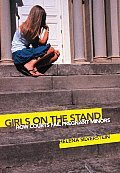
Booknotes: Girls on the Stand

31 Sunday May 2009

Posted by Anna Clutterbuck-Cook in book reviews

≈ Leave a comment

Tags

blog for choice, books, children, feminism, politics

As news was breaking about the murder of Dr. George Tiller, and abortion provider and pro-choice activist, I sat down to read Helena Silverstein’s Girls On the Stand: How Courts Fail Pregnant Minors.

A professor of government and law, Silverstein details the real-world effects of parental notification and consent laws have on the ability of minors to exercise their rights to abortion access as currently granted under U.S. law. Specifically, Sliverstein is interested in the viability of the “judicial bypass” option that the U.S. Supreme Court requires such parental involvement laws to contain: that is, if a pregnant minor does not wish to inform her parents of her pregnancy, she must have the ability to petition, confidentially and with the help of court-appointed counsel, for an exception. Focusing on the practical workings of the judicial bypass procedure in three states, Alabama, Pennsylvania, and Tennessee, Silverstein found that pregnant minors faced ignorance, bureaucracy and outright ideological obstruction in their pursuit of timely and medically-safe abortions.

For example, after systematically phoning courts in her three targeted states for information on how to initiate a judicial bypass, Silverstein and her research assistants faced a wide range of responses, from the adequate to the under-informed to the intentionally misleading. Whether malicious in intent, answers to an initial query that fail to clearly affirm the minor’s right to confidentiality, a timely hearing, and most importantly free assistance in navigating the court system, “portray the bypass as a road the minor must travel alone and risk sacrificing the minor’s right to her own vulnerability” (61). Even more egregiously, some anti-abortion judges, with the discretion granted to them under current law, have employed such intimidation tactics as requiring pro-life, Christian counseling for all minors seeking the bypass, or even appointing a guardian for the fetus who has the responsibility of challenging the petitioner at the hearing and attempting to persuade her against choosing an abortion.

“The argument of this book,” Silverstein writes, “is directed at those who have made a good-faith compromise on the parental involvement issue,” seeking to ensure that minors wishing to terminate pregnancies are given the information and support they need, both pre- and post-abortion, while still protecting their constitutional rights to privacy and bodily autonomy (157).

Those compromisers, a group to which I once belonged, have in mind a picture of what a world with such mandates would look like. Pregnant minors will be encouraged to seek guidance from parents, and courts will protect those who choose otherwise. We have seen, though [in this book], that many courts are not prepared to do their duty, whether due to ignorance, recalcitrance, or incompetence. We have seen judges who are willing to employ hardball tactics to get minors to bend to their will. Whatever the Supreme Court might decide about how much implementation failure is too much or what obstacles too burdensome, it is up to the good-faith compromiser to decide whether the reality of parental involvement mandates sufficiently approximates her picture [of reality] to warrant continued support. This is a personal decision. To my mind the case is clear. I invite the reader to be her own judge (157).

Sadly, Silverstein’s book is not as narratively compelling as I would have hoped, even to someone like myself whose heart usually quickens a the prospect of a book or an article dealing with the intersection of feminism and the law. Her prose feels clunky, and the reporting of her research — while providing the evidence necessary to make her case — nonetheless caused me eyes to begin glazing over, even at a brief 180 pages (excepting endnotes and bibliography). Given its narrow scope, a meaningful reading likely requires a fair amount of background knowledge in recent abortion politics and law.

Still, I’m glad to add it to my repertoire of resources on reproductive health and rights. The struggle over women’s right to bodily autonomy is not going to disappear any time soon, as Tiller’s murder today dramatically and tragically illustrates — and young women are among those particularly vulnerable to having their reproductive choices taken from them, given their relatively lack of experience and financial resources. Silverstein reminds us not to assume that what looks good on paper will likewise be sound in actual practice.

Booknotes: Decline and Fall of the British Empire

27 Wednesday May 2009

Posted by Anna Clutterbuck-Cook in book reviews

≈ Leave a comment

Tags

feminism

The stuff you learn when you spend your weekends hanging out with another bookworm.

This isn’t strictly speaking a “booknote” in that I haven’t actually read the book in question. But this weekend, while I was reading Graceling, Hanna was reading (among other things), Piers Brendon’s Decline and Fall of the British Empire, 1781-1997. And along the way, via her viva voce renderings of the text, I learned a few valuable pieces of British Imperialism trivia.

  • While, from the standpoint of Western imperialism, I realize there are many things wrong with this concept, I was nevertheless quietly charmed by learning of the term sleeping dictionary which was slang for (according to the OED) “a foreign woman with whom a man has a sexual relationship and from whom he learns her language.” Perhaps it is my love of dictionaries that gives it an endearing feel; I also like the possibility, at least, that if a sexual relationship was sustained and mutual enough for one lover to learn the language of the other than it might in some ways defy the violence of imperial domination.
  • In a passage that begs for an illustration, Brendon writes that Warren Hastings, the Governor-General of India from 1773-1785, “was particularly indulgent towards his acquisitive and much-loved second wife Marian who dressed like ‘an Indian princess,’ braided her auburn ringlets with gems, and amused herself by throwing kittens into a bowl full of enormous pearls which slid under their paws when they tried to stand up” (36).
  • And finally, in a fashion moment one wishes the fug girls had been around to see, apparently British women of the late-nineteenth century could purchase bustles that, when sat upon, played “God Save the Queen” . . . a sort of patriotic whoopie cushion!

Long live the British Empire . . . at least in entertaining history books.

Quick Hit: Feminism, YA booklists, and troublesome authors

22 Friday May 2009

Posted by Anna Clutterbuck-Cook in linkspam

≈ Leave a comment

Tags

books, feminism

MK blogged about creating booklists for her school library, and how she ran into trouble when it came time to categorize Meg Cabot. I promised is she blogged it, I’d link it, so here’s the post. Check it out and leave her booklist category suggestions in the comments!

stuff and things to read

22 Friday May 2009

Posted by Anna Clutterbuck-Cook in linkspam

≈ 1 Comment

Tags

children, feminism

Been a slow couple of weeks for the blog; I’ve realizes that the energy of the semester bleeds over into my blog posts and then post-semester I somehow can’t gather the momentum to write original content very coherently for a while. But here are some ‘net links for stuff I’ve been reading in the meantime.

Once more, with feeling: the sexist world of Twilight from the pages of Ms. Magazine. (And ’cause I used the title, Hanna will now absolutely require me to watch the Buffy episode).

My friend mk, a fellow fledgling librarian, wrote a nice post over on the YALSA blog about the fuzzy line between business and pleasure reading for those of us in the words and ideas business.

If you know any women age 60-75 who might be interested in participating in a survey on women’s sexuality, point them toward this post on Our Bodies, Our Blog.

I’ve been thinking a lot about language and the way it creates insider/outsider groups, whether it’s the language of a particular academic discipline (say library science) or the language of a political movement (say feminism). I might be blogging my own thoughts later on, but in the meantime Questioning Transphobia (here followed by here) and canonball at Feministing Community have thoughtful posts on the subject.

When Hanna sent me the link to this article at the Guardian last week, I took one look at the headline and knew I didn’t have enough energy to enumerate its faults and logical fallacies as they should properly be enumerated: “Sex, drink and fashion. Is this the new face of American feminism?” Luckily, Jessica at Feministing offers a concise smackdown.

Meanwhile, as if blogging while at work weren’t proof enough of my adult-onset inability to pay meaningful attention to any one thing for long periods of time, Hanna has instructed me to bone up on my multitasking skills and forwarded this helpful article on the art as homework.

The latest addition to my expansive reading list (thanks to Hanna for the link) is The Philosophical Baby, by Alison Gopnik. From an interview with the author:

One of the ideas in the book is that children are like the R&D department of the human species. They’re the ones who are always learning about the world. But if you’re always learning, imagining, and finding out, you need a kind of freedom that you don’t have if you’re actually making things happen in the world. And when you’re making things happen, it helps if those actions are based on all of the things you have learned and imagined. The way that evolution seems to have solved this problem is by giving us this period of childhood where we don’t have to do anything, where we are completely useless. We’re free to explore the physical world, as well as possible worlds through imaginative play. And when we’re adults, we can use that information to actually change the world.

I suggested to Hanna that, actually, this sounded an awful lot like the two of us, and that perhaps one of the unheralded qualities of the graduate student mind was our ability to access the learning and imagining skills we used so tirelessly as small units.

← Older posts
Newer posts →
"the past is a wild party; check your preconceptions at the door." ~ Emma Donoghue

Recent Posts

  • medical update 11.11.22
  • medical update 6.4.22
  • medical update 1.16.2022
  • medical update 10.13.2021
  • medical update 8.17.2021

Archives

Categories

Creative Commons License

This work by Anna J. Clutterbuck-Cook is licensed under a Creative Commons Attribution 3.0 Unported License

Meta

  • Create account
  • Log in
  • Entries feed
  • Comments feed
  • WordPress.com

Blog at WordPress.com.

  • Subscribe Subscribed
    • the feminist librarian
    • Join 37 other subscribers
    • Already have a WordPress.com account? Log in now.
    • the feminist librarian
    • Subscribe Subscribed
    • Sign up
    • Log in
    • Report this content
    • View site in Reader
    • Manage subscriptions
    • Collapse this bar