• anna j. clutterbuck-cook
  • contact
  • curriculum vitae
  • find me elsewhere
  • marilyn ross memorial book prize

the feminist librarian

the feminist librarian

Tag Archives: feminism

Goodbye Global Gag Rule!

24 Saturday Jan 2009

Posted by Anna Clutterbuck-Cook in think pieces

≈ Leave a comment

Tags

blog for choice, feminism, politics

I didn’t participate in the 2009 Blog for Choice event this year, marking the 36th anniversary of Roe v. Wade. However, following quickly on its heels comes a reason to celebrate: President Obama has signed an executive order reversing the Bush policy of denying U.S. funding to international health and family planning organizations that provided any information, counseling, or referrals related to abortion. Lifting the gag order will save women’s lives.

Oh, and have a mentioned recently how much I love Frances Kissling?

To ask . . . women to wait another day for Obama to reverse this policy in order to satisfy the fake “common ground” prolife religious progressives suggest – prevention without contraception – is disrespectful of women’s lives, let alone their moral autonomy.

Monstrous Regiment(s) of Women!

23 Friday Jan 2009

Posted by Anna Clutterbuck-Cook in book reviews

≈ Leave a comment

Tags

feminism, history

Apparently, there’s a new anti-feminist documentary out, The Monstrous Regiment of Women, that — according to their own website — “goes all out to demolish the feminist worldview . . . from a consistently Christian perspective.”

*giggle*

Maybe it’s the fact that I’m still suffering from a head cold, which seems to leave me prone to the giggles, but I have to say I find this project really amusing.

You see, that particular quotation* has been used before . . . and to much better effect, at least in my humble opinion. In the interest of doing my part to maintain The Feminist Worldview (is that the same as having a Feminist Agenda?) I thought I would take this opportunity to highlight them here.

As it happens, just this past weekend Hanna bought me a copy of Terry Prachett’s discworld novel, Monstrous Regiment, which follows the adventures of the intrepid Polly who, under and assumed masculine identity, has enlisted as a private in a ragtag company of soldiers in order to find her brother Paul who’s gone missing at the front. I am only about seventy-five pages in, but so far I have enjoyed a great deal of satire, bawdy slapstick comedy, at least one vampire of ambiguous gender, and a very satisfying pub brawl.

A slightly more serious — though, I would argue, no less lighthearted — meditation on gender and politics can be found in Laurie R. King’s second installment of the Mary Russell/Sherlock Holmes series, A Monstrous Regiment of Women (to which I owe the source of the quotation — King is always scrupulous in her citations!). This chapter of the Russell-Holmes partnership sees Russell coming into her own in 1920s London as an academic and as a sleuth as she tracks down the person or persons responsible for a series of murders all related to the life of a charismatic feminist theologian.


*The quotation is taken from the title of a polemic by John Knox (1505-1572), The First Blast of the Trumpet Against the Monstrous Regiment of Women, an attack on the regime of Mary Tudor and Mary Stuart in Britain, published in 1558.

Obama the (Im)perfect Feminist . . .

14 Wednesday Jan 2009

Posted by Anna Clutterbuck-Cook in think pieces

≈ Leave a comment

Tags

election08, feminism, politics

. . . Just like the rest of us!

I like this post by Jill over at Feministe discussing the Ms. magazine cover featuring Barack Obama in one of their “This is what a feminist looks like” t-shirts, a graphic that has caused some controversy in the feminist blogsophere (then again, what doesn’t cause controversy in the feminist blogosphere?) As Jill points out,

Obama has reportedly self-identified as a feminist, and has the legislative record to back it up. Is he a perfect feminist, or a perfect progressive? Not by any stretch of the imagination. Is he going to disappoint us over and over? Yeah, he’s already started. But he’s still pretty damned good, especially for a mainstream, center-left politician elected to the highest office, and I don’t really see the point in kicking him out of the club just yet.

Yup. I’m definitely looking forward to inauguration day!

UPDATE: There’s also a nice post on this over at Bitch Magazine.

Monday Morning Melange

12 Monday Jan 2009

Posted by Anna Clutterbuck-Cook in media

≈ 2 Comments

Tags

boston, feminism, movies

It’s a snowy Monday morning in Boston and I’m sitting at the MHS enjoying my London Fog latte and checking out my iGoogle blog feeds. Here are some links of note.

Thanks Michigan for once again making me proud of my home state. Sigh.

Hanna has a new blog which I’ve added to my blogroll, and she’s already put up a few fun links! If nothing else, you should go check out her beautiful design. The photograph is one of my favorites that she took last summer on a foggy day down in the North End.

I still remember vividly the first time I ever saw Christina Hoff Sommers interviewed on a documentary about contemporary feminism. I had no idea who she was, and my seventeen-year-old, newly-political feminist self was utterly taken aback by her anti-feminism-in-the-name-of-feminism outrage. Ten years later, she’s still at it.

I see that over the weekend Kate Winslet won Golden Globes for Revolutionary Road (which I have neither seen nor read) and The Reader (which I have read but not seen). While checking out the news coverage over at The Guardian online, I stumbled into Ann Billson’s joint review Films for people who don’t really like films. I can’t speak to the validity of her reviews, but I thought the overall point was an interesting one.

Finally, for those of you who wonder what this Dr. Who thing is I occasionally witter about on this blog, Wired magazine has put together a gallery of images following the many actors who have played the character over the years. I’m still working my way through the back catalog, so have only seen four of the eleven incarnations.* I told Hanna she needs to make me flash cards!

*For those of you who are/were fans of the BBC Chronicles of Narnia, Tom Baker (Dr. Who from 1974-1981) is also known for his turn as the Marshwiggle Puddleglum in Silver Chair.

"No shit" headline of the week

29 Monday Dec 2008

Posted by Anna Clutterbuck-Cook in think pieces

≈ Leave a comment

Tags

children, feminism

The “no shit” headline of the week award goes to National Public Radio for this story:

Study: Tolerance Can Lower Gay Kids’ Suicide Risk

Gay, lesbian and bisexual teens and young adults have one of the highest rates of suicide attempts — and some other health and mental health problems, including substance abuse. A new study suggests that parental acceptance, and even neutrality, with regard to a child’s sexual orientation could have a big impact in reducing this rate.

The study, published in the journal Pediatrics, found that the gay, lesbian and bisexual young adults and teens at the highest risk of attempting suicide and having some other health problems are ones who reported a high level of rejection by their families as a result of their sexual orientation.

“A little bit of change in rejecting behavior, being a little bit more accepting,” says lead researcher Caitlin Ryan, “can make a significant difference in the child’s health and mental health.”

You think? I guess I’m glad that this study was done, and that it’s getting airtime on All Things Considered — but it’s amazing to me that this is noteworthy: that loving your kid unconditonally and accepting them regardless of their sexual identity could, you know, improve their health and well being.

Christmas (Un)cheer

23 Tuesday Dec 2008

Posted by Anna Clutterbuck-Cook in think pieces

≈ Leave a comment

Tags

feminism, politics

Not that I expect anything different from Pope Benedict, but c’mon dude. It would be nice if around the Christmas holidays you could show a little more compassion and demonstrate that you’re not completely out of touch with real-world problems. But no.

Gay groups and activists have reacted angrily after Pope Benedict XVI said that mankind* needed to be saved from a destructive blurring of gender. Speaking on Monday, Pope Benedict said that saving humanity from homosexual or transsexual behaviour was as important as protecting the environment.

And a note to the TimesOnline: why oh why have you decided that now is the time to re-hash this tired old story about inter-generational feminist conflict?

“One of the most unappealing things about the feminist movement right from its inception was its tendency to judge other women,” says Roiphe. And, given the polarising of opinion between old-school feminists and modern young women engaged with popular culture — which, like it or lump it, is obsessed with celebrity, consumption and youth — there is much room for judgment. (See The Guide Association’s new manifesto on the sexualisation of young girls and Germaine Greer’s recent berating of Cheryl Cole as “too thin to be a feminist” as yet more proof.)

“I do feel it’s time for those feminists to step aside,” says Frangoul. “It’s like, we’re grateful for what you did, but it’s time for you to hand over. We’ve got a different world-view, and we might have something different to say.”

It drives me crazy that news stories like this don’t see the irony in painting young feminist women as paragons of openness and multiplicity when they turn around and cherry-pick quotes from young women willing to dismiss their elders as has-beens. This does not have to be an either/or proposition. The existence of young feminist activists does not mean that it’s time for women older than, say 25, to give up, be silenced, or silence themselves. As Deborah Siegel argues in Sisterhood Interrupted, this persistent narrative of feminist in-fighting does more harm than good, obscuring the many valuable contributions women of all ages have — and will continue to make — in the realm of feminist activism.

At least they linked to the F-word, which is one of my favorite places to get UK-based feminist analysis. In fact, speaking of: here’s the F-word on Pope Benedict’s speech.

*I guess we womenkind get to enjoy the blurring of gender as much as we like. Ecological disaster be damned!

Children Are People: Take Two

17 Wednesday Dec 2008

Posted by Anna Clutterbuck-Cook in think pieces

≈ 12 Comments

Tags

children, feminism

It’s been a few days since my last post on this subject, which seems to have struck a nerve with many readers who found their way to my blog. A big thank you to all of the readers who have engaged in thoughtful and detailed conversation (critique included). It does not seem like good blog policy to try and respond to each comment individually (nor do I have the time!). But there were a few themes – particularly issues raised in dissenting comments – that I want to reflect on with more depth. So here is “take two.”*

One of the oddest complaints, it seems to me, is the charge that calling attention to the dehumanizing language adults often use toward children as children is somehow indicative of white, elite, academic, heterosexual, privilege.

Um.

Last I checked, childhood is about as universal an experience as we human beings can claim. It is not as if children are only born to white, upper-class heterosexual adults with advanced degrees. The assumption that because I write about young people I belong to these categories says more, it seems to me, about the invisibility of the world’s children than it does about my own identity.** If “child” to a person who reads this blog automatically means white, rich, ivy-league-destined, non-queer child raised by white, rich, straight, ivy-league-educated parents, where does that leave the children who do not fit into that identity? Invisible? Irrelevant?

Children are a prime example of what feminist scholars sometimes refer to as intersectionality: they belong, as all of us do, to multiple human groupings, none of them mutually exclusive. Children are born into families of all income brackets and into families of all racial and ethnic backgrounds; children are born with all gender identities and sexual orientations. The argument that children are people, and deserve our respect as such, in no way implies that they are more marginalized because of their age than they (or an adult) may be marginalized by any other “ism.” That is not the point. Instead, being mindful of the ways children are marginalized because of their age can help us to be mindful of the many other forms of discrimination they contend with. Just because a child experiences hatred or dismissal because of their age, does not mean they do not also experience hatred or dismissal in other ways. Being aware of children’s rights, and challenging ourselves to think about children as part of the human community, means we should be paying more attention, not less, to all kinds of oppression.

Likewise, I am confused by the number of comments that suggest I am playing Oppression Olympics (a game of my-oppression-is-greater-than-your-oppression) or somehow belittling the experience of those who struggle with sexism, racism, or homophobia by using these examples as an analogy for the way I see children treated. By using these widely familiar types of othering, I am suggesting that the framework we use to understand those types of marginalization is also useful in understanding the experience of children as children, and childhood as a culturally-constructed space and set of social expectations. This is not a game of either/or but of both/and.

It is also important to remember that children are institutionally disenfranchised because of their age – there are many privileges of adulthood that we only grant to children when they reach a certain age (and, presumably, maturity), such as the right to vote. We also recognize the power differential between adults and children by writing protective legislation in areas such as child labor and sexual consent. Regardless of whether or not we believe these laws to be appropriate, their existence does mean we do treat children, legally, as a separate class of persons who have to earn many of the privileges adults take for granted.

Therefore, I don’t believe it is somehow wildly inappropriate to think about children as a group of people who are vulnerable to stereotype and marginalization based on their shared characteristic: age.

Finally, I would point out that my original post was not written in defense of particular parenting choices. I have my own very strong feelings about what children need from adults who care for them in order to thrive. From the examples given by many of you, I imagine we may disagree about what the best choices are. Yet regardless of the quality or kind of parenting they receive, children deserve – as do all human beings – our compassion and respect. Children have no control over what families they are born into, or what sort of adult modeling they see in the world around them. If they are on the receiving end of some of the anger expressed on this blog, I invite you to think about how that interaction will shape their idea of what it means to be a grown-up.

*Takes three, four, five, etc. may appear as invited or conceived of.

**Which, I would like to point out, most of you who posted are not in a position to make knowledgeable comments about. Like most of you, I am made up of a complex mix of insider/outsider identities and experience. Some of those are evident on this blog, some are not.

"Is There a Name For It?"

15 Monday Dec 2008

Posted by Anna Clutterbuck-Cook in think pieces

≈ 7 Comments

Tags

children, feminism

The following question was just posted on the Teaching Moment thread by theczech and I thought it was worth pulling out and highlighting:

Thanks for this post. It really put some pieces together for me… where do you think these child insults common in internet comments are coming from? It seems like there is a larger group of people on the web who discuss their hatred for children and exchange acidic insults that they all laugh at together. What is it that links these people together? Is there a name for it?

The closest I have come to in terms of finding a name for this type of rhetoric is “ageism,” which can apply equally to our elders as well as our youngers. In a broader sense, we could also think of it as misanthropy: hatred of people. But both concepts fail to get at the very specific issues people seem to have with children and young people. The fact that we don’t have a specific name for hatred of children and the perceived threat or inconvenience they cause to their elders is noteworthy. Whenever our language lacks a word to describe a phenomenon, that means the phenomenon itself is less visible.

Thoughts?

Teaching Moment: Children Are People Too

12 Friday Dec 2008

Posted by Anna Clutterbuck-Cook in think pieces

≈ 61 Comments

Tags

children, feminism, politics

Yesterday, the following comment was submitted on this post from November concerning fear of children in Britain [1]:

Someone obviously needs to re-read Lord of the Flies.

On a more prosaic level, I’d argue that people’s feral, shrieking little carpet apes — oh, excuse me, Precious Darling Children — are a great argument for doing as many errands online as possible.

My first impulse was to delete the comment. Then I realized that it is a perfect example of the sort of casual dehumanization of young people that the original article highlighted. I am therefore going to use this as a teaching moment: an opportunity to explain a few things about why I believe the hatefulness that adults like b.g. feel free to express toward children in our culture is not acceptable.

The casual dehumanization of children is one of my research interests as a master’s candidate in history; it is something I am both fascinated with as an historical and political phenomenon, and passionately opposed to in practice. Children are people. As someone who is opposed to hatred and fear of any group of people based on innate characteristics (skin color, ethnic background, sexual orientation, gender) it appalls me how acceptable adults find it to express hatred and fear of children based solely on their age, or for behaviors that can be traced back to their developmental abilities. I see this among a wide range of adult populations, from feminists to Christian fundamentalists — it’s a form of bigotry that is in evidence across the political spectrum.

In part, I believe that this intolerance of young people is one symptom of the way, in modern culture, we have ghettoized many people who make us uncomfortable, or whom we perceive as an inconvenience. Those who slow down our over-burdened lives with their complicated needs or awkward social behavior. People whom, by their very presence, raise uncomfortable questions about our own values and our competence in a complicated, competitive society. People who are mentally ill, physically disabled, people who are struggling with poverty and old age. People who are made vulnerable by circumstance make us uncomfortable. As historian Gerda Lerner writes, in her book of essays Why History Matters [2]: “All of us, ultimately, will join one of the most despised and abused groups in our society–the old and the sick” (17). We would do well to remember, as well, that we all began life as members of a similarly vulnerable and dependent group: children.

This is not to argue that children are innately better than adults. Children are human: ergo, they are capable of human cruelty [3]. That is not the question at issue here. The question here is why people such as b.g. feel perfectly free to refer sneeringly to young human beings as “feral . . . apes” in a public space (this blog) when presumably, they would not feel free to make a similar remark about a black person. Or if they did, they would be held accountable. I have seen on countless feminist blog threads, self-identified feminists who are outraged about hateful speech directed toward women and other groups turn around and use offensive language to speak about the children.* Feminists have long argued that ostensibly “positive” ideals about women and femininity are just as dehumanizing as outright misogyny. Both obscure the complex humanity of the individual person before us. Similarly, characterizations of children as “precious little darlings” or “shrieking little carpet apes” are two sides of the same coin: neither recognize children as persons worthy of our respect. Yet as a culture, we have been reluctant to recognize these parallels.

I have read Lord of the Flies, William Golding’s novel about marooned British schoolboys who resort to terror and violence in the absence of external social structure [4]. Lord of the Flies is a commentary on the nature of humanity more than it is about the innate character of children or the particular environment of childhood. Remember that the boys who have been shipwrecked in Golding’s book are not, in fact, free of socialization: they have already lived upwards of a dozen years in families, and in a British boarding school, in which adults have taught them quite thoroughly what is to be expected from them as human beings. I would argue that the book demonstrates quite well the violence that has been done to these children previous to the shipwreck, in addition to offering a chilling reminder of the sort of evil that all of us, regardless of age, are capable of.

Language matters. Language can affirm the humanity of each individual being on this planet, or language can create a climate in which individual people — or groups of people — become easy to discount or view as unworthy of love, kindness, respect, or understanding. I will not be deleting b.g.’s comment because I think it offers us a valuable example of exactly the kind of hatred children in our lives experience on a daily basis. But let me be absolutely clear: from now on, anyone who leaves a comment on this blog using language like “carpet apes” to describe people whose sole “offense” is their youth will have their comments deleted. You may disagree with me that children constitute a marginalized group in our society. You are welcome to argue your point in comments with pertinent examples and other evidence. You are welcome to use strong language to express your feelings. You may not resort to insults. If the language you use would not be acceptable as a way to describe racial or ethnic groups, women, or queer folks, I will consider it similarly unacceptable as a way to describe young people. Because children are people too.

*It is important to recognize that many feminists do not use this language of dehumanization when speaking of children and youth, and in fact there are countless feminist activists and organizations who have placed the well-being of children and adolescents (regardless of gender) at the heart of their work. My argument here is that alongside this work there still exists a consistent current of hatred and fear directed toward young people, and that feminists are not always willing or able to see the applicability of their critique of inequality in other arenas to a critique of discrimination based on age.

And Again With Twilight

09 Tuesday Dec 2008

Posted by Anna Clutterbuck-Cook in book reviews

≈ Leave a comment

Tags

feminism, gender and sexuality, movies, politics

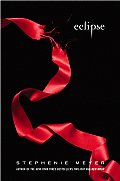
Despite the fact that I am deeply suspicious of the book and have yet to see the movie, Hanna has decided to hold me personally responsible for the phenomenon of Twilight, and specifically the chivalrous male lead, Edward Cullen, whom she has taken to referring to as “your stupid vampire.”

Given that my name will thus inevitably–at least in our apartment–be linked to many adolescent girls’ (and adult women’s!) lust for “vegetarian” vampires with stalker tendencies, I figure it’s only fair that I get to post links here to some of the awesome (and hilarious) deconstruction of the series that’s taking place around the blogosphere.*

Thus, two links that came across my desk today:

The first is Amanda Marcotte’s rant on Pandagon,
Vampires, liberals, and blood-sucking pretend liberals, which manages to connect the hate-mongering commentary about Proposal 8 to reactionary adoration of Twilight (apparently, the popularity of the series “means feminism is bound to fail”) through the person of Caitlin Flanagan. I have to say, when I saw that Flanagan had reviewed Twilight over at the Atlantic this week I about popped a blood vessel. Anyone who declares halfway down the first page of a review of teen lit that “I hate Y.A. novels; they bore me” has absolutely no business reviewing (or claiming to understand the popularity of) young adult literature — let alone explaining with condescending smugness the desires of adolescent girls with such generalizations as “the salient fact of an adolescent girl’s existence is her need for a secret emotional life.” Thank you, Amanda, for giving this review the critical attention it deserved — and most importantly connecting it to larger themes of political conservatism.

And in case political analysis is not your bailiwick, commenter annejumps on the Pandagon thread provided a link to The Secrets of the Sparkle, a three-part (plus drinking game!) send-up of the series written by an ex-Mormon. (To explain title of the post: apparently, Edward Cullen sparkles in the sun. Like, literally. It’s a detail I sadly forgot from my reading of the novels last year. Damn.) It’s sort of like a picture book cliff notes version of the first three books . . . through the lens of LDS theology. Trust me.

Okay. That’s my fun for this evening. Back to editing the final draft of my history term paper! The semester’s almost over!

*I want to reiterate here that 1) my reservations about the series does not mean I think we should disparage the pleasure girls are getting out of the romance of the books–though we can encourage them to think critically about messages that Twilight conveys about sexuality and gender, and 2) that my reservations also don’t mean I fail to get pleasure myself out of stories about scary, sexy vampire bad boys. I just happen to like my heroines with a little more bite and my sex with a little less prudery.

← Older posts
Newer posts →
"the past is a wild party; check your preconceptions at the door." ~ Emma Donoghue

Recent Posts

  • medical update 11.11.22
  • medical update 6.4.22
  • medical update 1.16.2022
  • medical update 10.13.2021
  • medical update 8.17.2021

Archives

Categories

Creative Commons License

This work by Anna J. Clutterbuck-Cook is licensed under a Creative Commons Attribution 3.0 Unported License

Meta

  • Create account
  • Log in
  • Entries feed
  • Comments feed
  • WordPress.com

Blog at WordPress.com.

  • Subscribe Subscribed
    • the feminist librarian
    • Join 37 other subscribers
    • Already have a WordPress.com account? Log in now.
    • the feminist librarian
    • Subscribe Subscribed
    • Sign up
    • Log in
    • Report this content
    • View site in Reader
    • Manage subscriptions
    • Collapse this bar