• anna j. clutterbuck-cook
  • contact
  • curriculum vitae
  • find me elsewhere
  • marilyn ross memorial book prize

the feminist librarian

the feminist librarian

Tag Archives: feminism

Fear of Children

19 Wednesday Nov 2008

Posted by Anna Clutterbuck-Cook in think pieces

≈ 11 Comments

Tags

children, feminism

The British charity Barnardo’s, released a poll indicating that a substantial number of British adults fear children and characterize their behavior as animal-like.

Martin Narey, the charity’s chief executive, said: “It is appalling that words like ‘animal’, ‘feral’ and ‘vermin’ are used daily in reference to children. These are not references to a small minority of children, but represent the public view of all children.

As historical examples of the use of animalistic language an imagery to describe the poor, non-white races, enslaved peoples, women, and other marginalized groups shows, describing any group of human beings in non-human terms is a powerful rhetorical weapon that encourages bigotry and denial of basic human rights. This is an incredibly blatant example of prejudice against some of the most vulnerable members of our world community. And I don’t believe these sentiments are particular to the British alone. Hatred, neglect, and fear of children is equally common in the United States, despite all of the political talk about “family values.”

Thanks to Hanna for the link.

Prop. 8: Was it all about sexism?

18 Tuesday Nov 2008

Posted by Anna Clutterbuck-Cook in think pieces

≈ 1 Comment

Tags

feminism, gender and sexuality, politics

An interesting article on the politics of Proposition 8 by Slate.com’s Richard Thompson Ford, in which he argues against seeing inconsistency in voter’s acceptance of Barack Obama for president, yet rejection of same-sex marriage. Homophobia, he argues, is closer to (perhaps even part of) gender-based sexism than it is analogous to race and civil rights discrimination:

After all, traditional marriage isn’t just analogous to sex discrimination—it is sex discrimination: Only men may marry women, and only women may marry men. Same-sex marriage would transform an institution that currently defines two distinctive sex roles—husband and wife—by replacing those different halves with one sex-neutral role—spouse. Sure, we could call two married men “husbands” and two married women “wives,” but the specific role for each sex that now defines marriage would be lost. Widespread opposition to same-sex marriage might reflect a desire to hang on to these distinctive sex roles rather than vicious anti-gay bigotry. By wistfully invoking the analogy to racism, same-sex marriage proponents risk misreading a large (and potentially movable) group of voters who care about sex difference more than about sexual orientation.

On the one hand, the pernicious relationship between rigid, oppositional conceptions of gender and homophobia is familiar to a lot of us. Obviously, the anti-same-sex marriage activists have been hugely successful by framing their campaign in terms of “protecting” hetero marriage — and this is one possible answer to the question “what do they think they’re protecting hetero marriage from?” On the other hand, I guess I’m skeptical that there is a large group of straight voters who aren’t anti-gay but still uber-defensive about their own sexuality and gender identity.

UPDATE 11/19: Amanda Marcotte over at Pandagon has a more thorough analysis of the article. Check it out.

Ref. Book of the Week: Dictionary of Bias-Free Usage

10 Friday Oct 2008

Posted by Anna Clutterbuck-Cook in library life

≈ Leave a comment

Tags

feminism, politics

I have a mountain of sources to review and annotate for my reference class this semester, and I thought it would help to keep myself on task if I got to choose a particularly interesting, amusing, and/or valuable book each week to highlight on the FFLA. So here’s installment number one: The Dictionary of Bias-Free Usage. (This was going to go up on Monday, but as you can see I’m already lagging behind on my self-assigned task!)

So, confession of a word nerd: I love dictionaries. Looking up an unfamiliar word is usually a welcome excuse to browse in my Shorter Oxford English two-volume dictionary. So one of the greatest perks of being a librarian — and a reference librarian in particular — is the pleasure of mucking about in dictionaries. So I knew I was going to have fun when one of the dictionaries on our review list for Reference was Rosalie Maggio’s 1991 Dictionary of Bias-Free Usage: A Guide to Nondiscriminatory Language.

This dictionary is actually a combination style guide and thesaurus along with a dictionary of some 5,000 word entries. Rather than being a straightforward “meaning and etymology of this word” dictionary, Bias-free attempt to provide cultural context for how the word has been used and why people object to it. In example:

LADYLIKE. Avoid. The word lady is generally unacceptable, and ‘ladylike conveys different meanings according to peoples’ perceptions of what a woman ought or ought not to do, say, think, wear, feel, look like . . . (159)

Or this one, even more strongly worded:

SLAVE GIRL. Never use. In addition to its unpleasant associations with slavery, this sexist, racist term perpetuates the false notion that women secretly enjoy being enslaved (252)

Maggio also includes definitions for terms related to discrimination (“sexism,” “homophobia”), demographic information in relation to professions and experiences — so that chosen pronouns can accurately reflect reality — and “key concept” entries which read more like short encyclopedia articles (the entry on “rape” for example, provides statistics and discusses cultural narratives surrounding rape). Her overall goal is to assist writers in editing their work for language and metaphor that is rooted in discrimination of one sort or another (sexism, racism, etc.).

It’s easy to make fun of the earnestness with which this guide was put together, as well as the author’s obvious value-judgements which are contained within each entry. Skeptic that I am, it is difficult to see how such injunctions as “never use” are applicable for any word, because words change their meaning according to context. While “slave girl” would be a highly inappropriate description of, say, a modern-day woman, if one is an historian (coughcough) writing about a child who was enslaved, “slave girl” may simply be a description of the individual based on age and class status. Similarly, because of the historically-specific context in which all printed dictionaries are compiled, usage and cultural meaning can quickly become out-dated. This is particularly true of politically-charged language such as is found in the Bias-Free dictionary. The use of the word “queer” in relation to sexual identity and action had a not-unrelated but significantly different cultural meaning in 1991, for example, than it does seventeen years later.

All of its shortcomings aside, the word-nerd within me enjoys reading the Bias-free in order to think about how words were perceived at this one particular moment in language and political history (during the late 1980s and early 1990s). And my feminist self applauds the intention behind the work, if not its somewhat clumsy execution.

Booknotes: Harmful to Minors

23 Tuesday Sep 2008

Posted by Anna Clutterbuck-Cook in book reviews

≈ Leave a comment

Tags

children, feminism, gender and sexuality

It isn’t exactly hot off the presses, but I was following citations in Jessica Fields’ book on sex education and discovered Judith Levine’s 2002 work Harmful to Minors: The Perils of Protecting Children from Sex. Levine is a feminist activist and journalist, and her analysis of the political, adult framework for both understanding and dealing with childhood sexuality is heavily weighted toward the legal-political framework. However, she does the deeper understanding of childhood and sexuality (separately and entwined together) that permeates our cultural narratives about situations such as sexual consent and sex education.

A common thread running through many books I read on human sexuality and American culture, from Ariel Levy’s Female Chauvinist Pigs (2005) to Heather Corinna’s s.e.x. (2007) and Fields’ Risky Lessons is the discomfort Americans have with sexual pleasure and joy, despite the proliferation of hyper-sexual imagery. We are told through educational and entertainment mediums that sex is both highly dangerous and highly compelling — but we’re not so good at (or are frightening of) articulating sexual joy. Levine considers what this cultural skittishness means for children and young adults, who are bombarded with message of self-defense against sexual activity, but provided with few resources or protected, private, spaces in which to develop their own bodily knowledge, and consider the way in which sexuality can be an expression of positive human connection and physical embodiment.

In her epilogue, she pulls back to place the specific concern about children’s sexual agency within a larger framework of children’s rights as human rights:

When we are ready to invite children into the community of fully participating citizens, I believe we will respect them as people not so different from ourselves. That will be the moment at which we respect their sexual autonomy and agency and realize that one way to help them cultivate the capacity to enjoy life is to educate their capacity for sexual joy.(224)

These connections between embodiment, pleasure, childhood, education, and human rights are some of the threads I’m hoping to tease out in my history research this term, as I explore the counter-cultural (and establishment) educational endeavors of early-19th century thinkers and activists such as Bronson Alcott and Horace Mann. Levine’s research is largely contemporary, but the themes she teases out are recurring tensions in attitudes toward children and the educational project.

Quote(s) of the Week: What Ann & Rebecca Said

19 Friday Sep 2008

Posted by Anna Clutterbuck-Cook in linkspam

≈ Leave a comment

Tags

election08, feminism, politics

In response to charges of sexism against feminist activists from the right-wing media (what alternate universe have we wandered into?), Ann over at feministing writes:

The real sexism against Palin . . . has been the flip-side of the sexism against Hillary Clinton. A sadly perfect illustration of the Catch-22 women face. You’re either a scary, ugly, old, mannish harpy. Or a ditzy, perky, fuckable bimbo. . . The sexist remarks about Clinton and Palin are like our hate mail (“you ugly man-hater!” followed by “gimme a blow job!”) writ large.

Rebecca Hyman, writing at AlterNet, expands on these same themes:

It’s obvious that the caricature of Palin to which we’re being exposed is the inverse of the caricature of Hillary Clinton. Even if you’d missed the first half of the campaign, all you’d have to do is flip the script. If Palin is “better suited to be a calendar model for a local auto body shop than a holder of the second-highest office in the land,” then Clinton is a dumpy, frigid, post-menopausal, castrating bluestocking who only got women’s votes because she was a victim of her husband’s indiscriminate — but hell, with that kind of wife? — sexual transgressions. At least the Right gets the “sexy librarian”; those of us on the other side are stuck with the saccharine Sisterhood of the Traveling Pantsuits.

There are many reasons to be against McCain/Palin as the presidential ticket — not the least of which is their own sexist politics — but I’m proud that feminist writers are insisting on a more nuanced understanding of how sexism is playing out in this race, and how all women — Sarah Palin included! — are judged according to narrow, gender-based stereotypes.

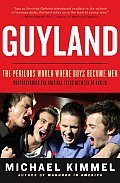
Booknotes: Guyland

16 Tuesday Sep 2008

Posted by Anna Clutterbuck-Cook in book reviews

≈ Leave a comment

Tags

feminism, masculinity, sociology

Over the weekend, I read Michael Kimmel’s recently-released book on the sociology of young adult masculinity: Guyland: The Perilous World Where Boys Become Men. As an undergraduate, I had the privilege of meeting Kimmel when he was in the process of his research for this book, and I really enjoyed listening to him talk about men, masculinity, and feminism. So I’ve been looking forward to reading the finish product.

My response, however, is mixed. Partly, I suspect, I am in a poor position to judge the accuracy of his narrative about normative masculinity in 16-26-year-old young adult culture. The men I am closest to eschew and/or are disqualified from the hetero, privileged, masculine identity he describes; I was never a resident on an American college campus, so always had a certain amount of distance from undergraduate norms; and I never negotiated the dating-relationship scene as a student. So while I recognize some of the features of the landscape Kimmel describes, I suspect there are nuances to, and gaps in, his argument that I am missing. However, I’ll share a couple of observations.

What Kimmel is describing — though perhaps he doesn’t underline this enough — is the normative culture of elite (male, white) power and privilege that all of us, regardless of gender, race, economic class, sexual orientation, contend with. Whether we are marginalized by it, choose to reject it, or are forced to interact with it, it is one part of the American landscape that does shape adolescent and young adult experience for many young people in powerful ways.

One of the most important things feminism has done for women in the last half century is to open up the possibilities for what it means to be female and feminine. There is still work to be done, to be sure. But as Kimmel points out, when he asks college-age women today what it means to be “feminine” their answers are as varied as their lives. No comparable political and cultural sea-change has taken place for men, maleness, and masculinity. Young men still come of age in a world where what it means to “be a man” is rigidly defined, the boundaries of acceptable behavior carefully policed: whether they are in or outside those boundaries, they are still judged by them.

I am familiar with the power of normative cultural expectations, and largely agree with Kimmel about their harmful effects. If his portrait of American guyhood is accurate, then there is cause for concern. What disappointed me in Guyland was the lack of creative thinking about what a new and more varied understanding of male adulthood might look like. While he pays lip-service to the value of queer sexualities and relationships, and counter-cultural resistance to the “guyland” paradigm, alternative masculinities exist on the edge of Kimmel’s narrative. He often falls back on vague notions of “responsibility”, on the need for young people — young men particularly — to “grow up, settle down, get a life” (p. 15). What it means to take responsibility or “settle down” is left to the reader to interpret — although in his examples it often seems to mean the job-marriage-house-kids markers which characterize the very notions of masculinity he sets out to criticize.

American parents are faulted for both hovering “overinvolvement” with and of neglectful “absentee parenting” of their children. Both of these notions bear further examination, since I would argue parent-child relationships aren’t best characterized by how much but what kind of involvement they represent. Similarly, the chapter on pornography suffers from a failure to adequately articulate what type of erotic materials he’s writing about, although he does have some interesting observations about possible generational differences when it comes to making meaning of sexual imagery.

Overall, while I appreciate Kimmel’s perspective as a sociologist, and his ability to describe the powerful social norms of masculinity, I hope that Guyland is only the beginning of a much-needed conversation about how young men can (and are!) re-inventing masculinity for themselves in the 21st century in ways that make life better for us all.

Quote of the Week(end): "Zombie Feminists"

13 Saturday Sep 2008

Posted by Anna Clutterbuck-Cook in linkspam

≈ Leave a comment

Tags

election08, feminism, politics

From Rebecca Traister over at Salon.com:

The pro-woman rhetoric surrounding Sarah Palin’s nomination is a grotesque bastardization of everything feminism has stood for, and in my mind, more than any of the intergenerational pro- or anti-Hillary crap that people wrung their hands over during the primaries, Palin’s candidacy and the faux-feminism in which it has been wrapped are the first development that I fear will actually imperil feminism. Because if adopted as a narrative by this nation and its women, it could not only subvert but erase the meaning of what real progress for women means, what real gender bias consists of, what real discrimination looks like.

I’m torn between terror that she’s got it right and thankfulness that so many feminist writers and activists are speaking out on behalf of a feminist ethic that encompasses all women’s human rights. Go read the whole thing.

Quote of the Week: Politics & Privacy

12 Friday Sep 2008

Posted by Anna Clutterbuck-Cook in linkspam

≈ 1 Comment

Tags

election08, feminism, politics

From this week’s RhReality Podcast, hosted by Amanda Marcotte:

I can’t reiterate enough—every single person declaring that the Palin family deserves privacy on this needs to answer for the privacy of all other women in this country. Do I have privacy? Do I get a right to make my own decisions about my body away from the prying eyes and grabby hands of right wingers? Anyone who supports restrictions on women’s access to birth control and abortion has forsaken the right to hide behind privacy on this. I’m sorry, but that’s how it is. Anything short of that is saying that people in power have privacy and rights, but the rest of us don’t, which is un-American.

I really have nothing more to add, except go listen to the podcast, which is excellent as always.

Dahlia Lithwick on Republicans & Choice

08 Monday Sep 2008

Posted by Anna Clutterbuck-Cook in linkspam

≈ Leave a comment

Tags

election08, feminism, politics

There’s so much great stuff out on the ‘net being written about Sarah Palin and her stance on issues important to feminist activists that I can’t hope to link them all here. But I can’t resist posting a note on this column from the ever-insightful Dahlia Lithwick of Slate on republicans and the illusion of reproductive choice. I think it’s important to respect Bristol Palin’s personal privacy when it comes to her pregnancy, but as many feminist writers have been pointing out, it’s a personal privacy that the Republicans don’t want any other woman to have. That’s what makes the Palin’s family decisions worthy of political attention.

Teen Sexuality & Agency

04 Thursday Sep 2008

Posted by Anna Clutterbuck-Cook in book reviews

≈ 2 Comments

Tags

children, election08, feminism, gender and sexuality, politics


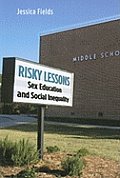
This weekend, while Governor Palin’s nomination as Republican Vice-Presidential Candidate, her hard-line conservative positions on human sexuality, and her daughter’s pregnancy were making headlines, I was reading sociologist Jessica Fields’ insightful new book Risky Lessons: Sex Education and Social Inequality. As Courtney Martin posted over at Feministing (in a review that prompted me to run out and buy the book), Fields “basically lays out a liberation philosophy for sex education.” Reflecting on the fieldwork Fields conducted in sex education classes during the mid-1990s, Courtney writes:

Young women learn to see their bodies as ticking time bombs and young men to see theirs as the uncontrollable fire that could lead to explosion. Instead of promoting self-awareness, responsible exploration, respect for the diversity of sexualities, or compassionate communication, we teach them that their bodies are dangerous. Conservatives want that danger staved off until marriage, where it suddenly becomes holy, and liberals want it staved off along the way — through the use of accessible contraception.

While I obviously advocate safer sex, I also feel like progressives have let ourselves (as per the usual) be only reactive, instead of re-authoring the questions. We must not only ask how we can protect young Americans from unwanted pregnancy and STIs, but how we can encourage them to be self-aware, healthy, and happy. How can we inspire them to author their own questions?

As political commentators discussed teenage pregnancy, marriage, and parenthood, comprehensive vs. abstinence-only sex “education” (I offer a few examples here, here, here and here for those interested), Fields’ book offered a what I thought was a fascinating counterpoint to the conventional wisdom. What struck me most about the political coverage was that the majority of Americans — whether they identify as liberal, conservative or somewhere in between — assume teenage sexuality is something dangerous, unhealthy, morally wrong. To be a sexually aware and engaged teenager in America is to be held suspect by the majority of adults as irresponsible and the result of bad parenting. As previously noted on here at the FFLA, this isn’t the only attitude adults can take about teenage sexual expression, and (in my opinion) far from the ideal. In Risky Lessons, Fields prompts us to re-visit this common-sense assumption and ask ourselves how we might better support young peoples’ exploration of the physical, emotional, and political pleasures and perils of their emerging adult sexuality.

In the early 21st century, “Sex education” has been reduced to risk reduction (if you believe in “comprehensive” sex ed) or eradication (if you believe in the abstinence-only doctrine). Young people deserve sexuality education that provides them with intellectual and emotional resources for making sense of their adult bodies, relationships, and agency in the world as sexual beings. And I hope that (if anything good can possibly be said to come from a Republican ticket so deeply opposed to providing those resources to all of America’s teenagers) the Palin nomination and the resulting debates over teenage sexual expression can provide us a critical moment of reflection on these issues and a chance to consider the liberatory potential sexuality education.

← Older posts
Newer posts →
"the past is a wild party; check your preconceptions at the door." ~ Emma Donoghue

Recent Posts

  • medical update 11.11.22
  • medical update 6.4.22
  • medical update 1.16.2022
  • medical update 10.13.2021
  • medical update 8.17.2021

Archives

Categories

Creative Commons License

This work by Anna J. Clutterbuck-Cook is licensed under a Creative Commons Attribution 3.0 Unported License

Meta

  • Create account
  • Log in
  • Entries feed
  • Comments feed
  • WordPress.com

Create a free website or blog at WordPress.com.

  • Subscribe Subscribed
    • the feminist librarian
    • Join 37 other subscribers
    • Already have a WordPress.com account? Log in now.
    • the feminist librarian
    • Subscribe Subscribed
    • Sign up
    • Log in
    • Report this content
    • View site in Reader
    • Manage subscriptions
    • Collapse this bar