• anna j. clutterbuck-cook
  • contact
  • curriculum vitae
  • find me elsewhere
  • marilyn ross memorial book prize

the feminist librarian

the feminist librarian

Tag Archives: feminism

booknotes: birth matters

02 Friday Sep 2011

Posted by Anna Clutterbuck-Cook in book reviews

≈ Leave a comment

Tags

books, children, feminism, human rights, sexuality

I must have hallucinated starting the review of this book, because I have a clear memory of doing so but now cannot find the draft anywhere. Och, well. We’ll just have to begin again.

I need to admit upfront that I’m an entirely biased reviewer of anything Ina May Gaskin writes. My mother’s copy of Spiritual Midwifery was, along with Our Bodies, Ourselves, one of my adolescent introductions to feminism, as well as to female bodies and the amazing things they’re capable of. I think what Gaskin and the other midwives at The Farm have been doing for the past forty years is hands-down one of the most awesome things to come out of the 1960s, the women’s health movement, and feminist activism. So when my friend Molly offered up Ina May Gaskin’s Birth Matters: A Midwife’s Manifesta (New York: Seven Stories Press, 2011) as one of the reading options for her GoodReads reading group on feminist pregnancy, birth, and parenting, I jumped at the chance.

UPDATE: You can read Molly’s review over at first the egg.

That having been said, I also approached the Gaskin’s memoir with some trepidation: how would her work and her writing come across in a new book, one that would be impossible to read through the filter of “that’s just how they talked about things back in the 70s…”? I was a little bit worried about being let down, much in the same way one’s favorite books from childhood often feel a bit tarnished upon re-reading.

My fears, however, were (mostly) all for naught. Birth Matters is highly readable, compelling, contemporary, and unapologetically feminist in its approach to the political and cultural barriers to high-quality pregnancy, birth, and parent-and-child care in our society. “The way a culture treats women in birth is a good indicator of how well women and their contributions to society are valued and honored,” Gaskin argues in chapter one, “The Importance of Birth and Birth Stories”:

My intention in this book is not to persuade those women who want to avoid pregnancy to change their minds — far from it. But I do want to convince even women with no interest in motherhood that the right to a positive and safe birth is just as important as the right to choose whether or not to have a child (7).

She gently points out that the often bitter divisions between parents and non-parents is an unhelpful model for making our world a better place for all humanity: “It is time for feminists to realize that pitting the needs of nonmothers against those of mothers is a way of weakening — not strengthening — women. Women should not lose their human rights when they become mothers” (41). Beyond looking at women and mothers, she articulates what I think should be shouted from the rooftops by us all: that the way we welcome children into the world speaks volumes about how we value humanity — and as such, birth matters to all of us simply because we are part of that human community. The way we were welcomed into the world and cared for as infants and children is part of that story, even if we don’t ever plan on becoming parents ourselves.

Gaskin has been in the enviable (for most midwives) position of enjoying strong, positive working relationships with practicing OB/GYN physicians throughout her tenure as a midwife at The Farm, and her belief in the ability of medical doctors and lay or nurse-midwives to work together to foster positive birth experiences for families is evident throughout the book. I really appreciated the way she highlighted the work of medical doctors who trust birthing parents’ bodies and offer their expertise without trying to direct the process or fueling fear of the body’s work during pregnancy. Yes, sometimes life-threatening complications develop during pregnancy and birth — but too often in our culture we attempt medical interventions in childbirth that end up being detrimental to the health and well-being of both infants and their birth parents. Gaskin offers an alternative vision of how birth practices can be (and have for the nearly three thousand births Gaskin and her team have overseen in the forty years between 1970-2010). Indeed, it is the outcomes of Gaskin’s practice that will likely be most compelling for skeptics of out-of-hospital childbirth: of the 2,844 births attended at the Farm 94.7% were completed at home with a maternal death rate of 0% and a neonatal death rate of 1.7 deaths per 1,000 births. The Farm’s rate for c-sections stands at 1.7% which nation-wide hovers between 30-50% (far exceeding the World Health Organization’s recommendation of 5-10% of all births*).

Most of what Ina May Gaskin has to say will sound familiar to anyone who has read recent books on pregnancy and birth, particularly Born in the USA by Marsden Wagner and Pushed by Jennifer Block (I highly recommend them both). However, there is some valuable material here that even those familiar with the arguments for the midwifery model of care will likely be interested in. Interspersed throughout are birth narratives written by women who have given birth at The Farm. From my point of view, there can never be too many birth narratives out there for us to draw upon. It’s particularly useful to read how different each person’s story is, even though they have made some of the same basic choices about the type of care they want to receive. I was also glad to see a chapter on sexuality and childbirth — something I wish Gaskin had done more with. The midwives at the farm have long advocated for sexual interaction between a laboring woman and her partner(s) as a way of facilitating a less painful, more effective labor. The idea of “orgasmic childbirth” might seem obscene to some, idealistic to others, but even if you don’t want to think about childbirth itself as a sexual experience, I think Gaskin has some important points to make about the way medicalizing childbirth (treating it as an illness) has removed women’s bodies and their physical presence — sexual and otherwise — from the active birth process.

My one frustration with Birth Matters is the consistency with which Gaskin’s language choices and examples reinforce the assumption that all birthing takes place within the context of heterosexual, gender-normative lives. The birth parent is consistently a woman/mother and is never identifiably partnered with a woman, although in several stories it is unclear whether the birth parent is single or has a partner. This seemed like an odd oversight for someone who is otherwise so clearly open to the possibility that families come in many shapes and sizes. At times, Gaskin also over-simplifies the history of midwifery and falls into the trap of romanticizing the sacred feminine and female bodies — something that makes me slightly uncomfortable since I try to avoid essentializing femininity/femaleness. I’d recommend, as a supplement to reading this, the wonderful essay “The Manly Art of Pregnancy,” by j wallace (found in Gender Outlaws: The Next Generation, edited by S. Bear Bergman and Kate Bornstein, 2010) which just might be my favorite thing written about pregnancy ever. And I would hope that future editions of this work acknowledge more overtly that people with many different sex and gender identities and family contexts become pregnant and wish to give birth in supportive, low-intervention settings such as The Farm.

The final verdict: Read this book if you care about the cultural and political contexts in which we come into the world, and if you question — even a little bit — the medicalization of pregnancy and childbirth that has become the norm in our country at this point in history. Gaskin’s memoir-manifesta is a beautiful testament to how there is a different way — not just in the future, but here and now.

*See the WHO report The Global Numbers and Costs of Additionally Needed and Unnecessary Caesarean Sections Performed per Year: Overuse as a Barrier to Universal Coverage [PDF]
booknotes: the truth about boys and girls

26 Friday Aug 2011

Posted by Anna Clutterbuck-Cook in book reviews

≈ 1 Comment

Tags

children, education, feminism, masculinity, science

I have recently discovered NetGalley, an online resource for requesting e-book versions of forthcoming titles from a wide variety of publishers. As a blogger and librarian, I was able to sign upi for an account and I’ve requested a handful of titles. It’s my first true foray into the work of e-book reading. Verdict so far: meh on e-books in general, but I’m totally down with electronic advance review copies. It makes distributing ARCs so much more cost effective for publishers, which in turn makes it much more likely they’ll be willing to share them with bloggers who might review the book but have no purchasing budget.

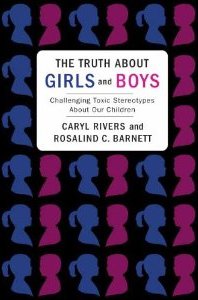
The first galley I read was The Truth About Boys and Girls: Challenging Toxic Stereotypes About Our Children (New York: Columbia University Press, 2011), by Caryl Rivers and Rosalind C. Barnett. Rivers and Barnett are the team that brought us Same Difference (2004), which tackles the work of scientists who claim that men and women are innately different in their psychological makeup. The Truth About Boys and Girls picks up this same subject, but focuses specifically on the way claims about innate gender difference are a) unsupported by rigorous scientific research, and b) continue to have potent persuasive power among parents, teachers, policymakers, and others involved in shaping the everyday life of children. This thesis is not going to be news to anyone who moves in feminist circles, so I would caution that unless you want to stay current on all the publications in this area, a quick skim of this book is likely all that is in order. Maybe I’m biased toward the overly technical and detailed, but when it comes to reviews of the relevant scientific research on this subject, I’ve found Rebecca Jordan-Young’s Brainstorm and Cordelia Fine’s Delusions of Gender to be the best critiques out there.

Still, this is a highly-readable book that might serve as an introduction to the topic, particularly those who feel at sea fairly quickly amidst scientific jargon. The chapters are arranged to take on the major areas of supposed gender difference: ability with maths, ability with language, empathy and caring, physical aggression, and several chapters at the end specifically targeted toward the rising popularity of sex-segregated classrooms (and the myth that sex-segregation enhances learning for both boys and girls).

The most frightening take-away from this book, I found, was the reminder that our world is becoming more not less invested in the idea of innate gender difference. As Barnett and Rivers point out in their introduction, “It’s ironic that as neuroscience tells us more and more about the similarity of our brains, popular culture incessantly beams the opposite message, drowning out the real story” (5). Both girls and boys are harmed by these difference stereotypes (girls consistently being told they will under-perform in math and science, for example, thus increasing the likelihood due to stereotype threat that they will meet those low expectations). However, it’s particularly striking to see how — in our current cultural climate, at least — boys are particularly vulnerable to the straightjacket of gendered expectations. Girls, at least, have alternate and fairly prominent voices advocating for them: they might get relentlessly marketed to by the Disney princess line and told they can’t do math because their brains don’t work that way … but they also (most likely) have adults in their lives who encourage them to play soccer, ride bicycles, or take on leadership roles. The “boy crisis” panic of recent years, rather than focusing on the harm that gender stereotyping does to boys has actually focused mostly on reinforcing those stereotypes in ever-more extreme ways:

Out of this crucible of alarm, a particular image of the ‘typical’ boy has emerged in many media reports: he’s unable to focus, can’t sit still, hates to read, acts up in class, loves sports and video games, and gets in trouble a lot. Indeed, such boys do exist — it has long been established that boys suffer more from attention deficit disorder than girls do — and they need all the help they can get. But research shows that this picture does not reflect the typical boy. Boys, in fact, are as different from one another as they are from girls. Nonetheless, some are advocating boys-only classrooms in which boys would be taught in boot-camp fashion (78).

And a few pages later, summarizing the recommendations of author Leonard Sax:

A boy who likes to read, who does not enjoy contact sports, and who does not have a lot of close male friends has a problem, even if he thinks he is happy (89).

Although the authors don’t overtly connect such panic about masculine behavior to homophobia, I have to say the above sentence fairly screams with “oh my god what if he has teh gay!” Later on, in the chapter about “rough and tumble” play, the authors do note that adult interpretation of children’s play as conforming to gender stereotypes might actually be subverting them or otherwise working around those expectations in interesting ways. Rough and tumble play, they suggest “gives boys an acceptable medium for being physically close in cultural or social environments that otherwise discourage such behavior” (114). Obviously this doesn’t mean that all physical closeness is homoerotic to the participants, but it does suggest that in a society that discourages boys from physical intimacy with one another and/or with girls — physical closeness that most human beings need regardless of gender — play that adults read as “masculine” and aggressive might actually be a way of meeting the human need for touch.

Like Cordelia Fine in Delusions of Gender, Rivers and Barnett emphasize the degree to which children perform gender based on the modeling and perceived expectations of the adults around them. For example, they note that the majority of research of the group behavior of children is conducted in school settings — sites where adults are constantly reminding children that they are gendered beings (from the greeting of “good morning boys and girls!” to sorting children into male and female groups for recess).  Recent research on play behavior among children has found that in spaces where gender is not brought to the fore by adults — for example in unstructured neighborhood play — children are less likely to fall into gendered patterns of behavior, and to seek playmates across gender lines.

“In short,” Barnett and Rivers write toward the end of The Truth, “the differences within each sex are greater than the differences between the sexes. It makes no sense to talk about boys and girls as if they were homogeneous groups that are different enough to warrant separate educational treatment” (180). “Not only do single-sex public schools violate constitutional principles, but they deprive our children of important learning opportunities and run the very real risk of reinforcing the toxic sex stereotypes that are rampant in our society” by encouraging children to think that boys and girls are so wholly alien from one another they can’t even learn side-by-side.

Hopefully our society will get the message sooner or later. In the meantime, I can only say that I’m glad that there are so many feminist parents out there who are encouraging their daughters and sons to carry on bravely being who they are rather than what the outside world insists they ought to become.

booknotes: compulsory heterosexuality and lesbian existance

19 Friday Aug 2011

Posted by Anna Clutterbuck-Cook in book reviews

≈ 2 Comments

Tags

feminism, gender and sexuality, reading lesbian classics

I recently unearthed a pamphlet copy of Adrienne Rich’s “Compulsory Heterosexuality and Lesbian Existence,” originally written in 1977 and published in Signs in 1980 (vol. 5, no. 4). “Compulsory Heterosexuality” is one of those essays that more or less permanently altered the way we think about the cultural discourses surrounding women’s sexuality and women’s relationships. It’s the essay that brought us the term “the lesbian continuum,” and — although it doesn’t use the term — described the forces of heternormativity [link] which foster queer invisibility in mainstream culture.

It does not age particularly well.

Well, that’s not entirely fair. The language of “Compulsory Heterosexuality” is the language of the mid- to late-1970s lesbian feminism. On one level it speaks to a very specific set of issues within the feminist and gay liberation movements of the period. By the time the essay was re-published in pamphlet form by Antelope Publications in 1982, Rich herself felt compelled to write a forward in which she discussed “the way [the essay] was originally conceived and the context in which we are now living.” In the span of a few short years the context had shifted to such an extent the essay appeared to need an explanatory (and somewhat apologetic) preface. At the same time, if a contemporary reader (in this case, me) can look below the anachronistic language and consider — in historical context — the argument Rich is making, there are some important and still relevant points for us to consider.

So in the spirit of civic duty, I’ve read it so you don’t have to!

(Though if you’re interested in knowing this piece of feminist and lesbian history first-hand, I do actually recommend you go straight to the source and not rely on my own note-taking abilities.)

Let’s look at the good stuff first, and then tackle the not-so-good later on.

Rich wrote this essay, as I mentioned before, with a very specific audience in mind: feminist scholars and activists who were interested in thinking about the place of lesbians (I’ll discuss definitions in a minute) within the women’s movement of the 1970s. Rich argues that within the mainstream feminist movement, lesbian lives are rendered invisible — and that by erasing lesbians from feminist activism, feminist activists are cutting themselves off from an important source of female solidarity, which in turn is an important resource for combatting gender-based oppression. As long as women percieve heterosexual partnerships as their only option, they will avoid intimate female friendships that might become a basis for emotional and material support in opposing sexism. To support her argument, Rich draws on a number of contemporary examples of feminist writing in which women are presumed heterosexual, or in which the existence of non-straight women is acknowledged but then glossed over. This heterocentrism within feminist writing is still an issue, though the situation has (I would argue) grown far less dire over the intervening decades — straight feminists are less defensive about being percieved as lesbians, and gay rights have definitely become part and parcel of mainstream feminist activism, even though we can debate endlessly which issues get the attention and why (trans rights anyone?).

A secondary point Rich is trying to make is that because of their experience as women, the lives of lesbians are not adequately represented by a discussion of “gay” (implicitly male) experience. This was particularly true during the 1970s when the gay male and lesbian subcultures had significantly diverged — the men towards pre-AIDS bar and bath-house culture, the women toward lesbian-separatist “women’s” culture. Obviously the separation was far from total, but it was still significant. Even if gay male and lesbian lives had been more similar than not, Rich’s basic point that discussions of gay male experience don’t substitute for actually considering lesbian experience is still a relevant one — similar to the by now familiar argument that one can’t make generalizations about “human” physiological experience or health when one’s sample population is entirely male.

And finally, I think that Rich’s emphasis on the “lesbian continuum” of female relationships, and her attempt to include as wide a range as possible of relationship types in her definition of what “lesbian existence” constitutes, in some sense presages our early-twenty-first-century discussions concerning the wide variety of intimate relationships and how individual our sexual identities and practices are. While she assumes on some level an innate sexual orientation, Rich also suggests that heteronormative pressures mask the full range of women’s desires, and artificially push them toward heterosexual partnerships to the exclusion of other relationship formations that might suit them better … whether that means a lesbian sexual relationship or something else.

The not-so-good parts are those which are mired in 1970s-era feminist discussions of hetero sex as an oppressive institution (which makes theoretical sense if you’re thinking in structural terms, but has limited application to individual relationships), the gender essentialism, and the bias toward all-female spaces that creep in to her argument. “Women-identified women” is the concept we get in to here: to be “women-identified,” and part of the lesbian continuum, is “a source of energy, a potential springhead of female power, violently curtailed and wasted under the institution of heterosexuality” (29). This argument makes sense if one is looking at the relationship between men/maleness and women/femaleness in terms of oppressors and victims (yes, those in power benefit when those being oppressed are kept divided from one another, are kept from forming alliances). However, I would argue that we understand more clearly today that people of all genders suffer under the inequality of kyriarchy and that simply coming together as women will not automatically give us access to “female power” … there are plenty of “women-identified women” who have a vested interest in promoting existing injustices. Plenty of women with strong female friendships have zero interest in seeing themselves as part of a “lesbian continuum.”

And of course the problem with a reliance of all-female spaces and gender essentialism to make your case for feminism and lesbian politics is that it grounds your argument in an understanding of sex and gender that makes no room for non-binary understandings of gender. Rich opens the possibility for a non-binary understanding of sexuality, arguing that “as the term ‘lesbian’ has been held to limiting, clinical associations … female friendship and comradeship have been set apart from the erotic, thus limiting the erotic itself” (22). Yet she remains committed to an understand of maleness and femaleness, male and female sex and gender, that position men as the beneficiaries and women as the victims — with no interrogation of who, exactly, constitutes these categories and what happens when we muddy the gender waters.

And I think I’ll leave it there. Check out “Compulsory Heterosexuality” one of these days when you have an hour and the patience to wade through some fairly dense and historically-situated theory. You can access the text online at the University of Georgia.

booknotes: the price of salt

15 Monday Aug 2011

Posted by Anna Clutterbuck-Cook in book reviews

≈ 4 Comments

Tags

books, feminism, gender and sexuality, reading lesbian classics

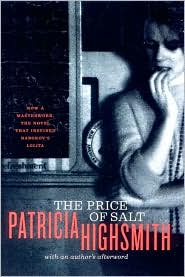
While on vacation at my in-laws’ in Maine a couple of weeks ago, I spent an afternoon reading Patricia Highsmith’s 1952 novel The Price of Salt (New York: W.W. Norton, 1990), originally published under the pseudonym “Clare Morgan.” I’d read recently that it was noted for being one of the first works of lesbian fiction with a happy ending so I thought “why not!” and ordered it interlibrary loan from our local public library.

Spoiler alert.

Romance? Well, yes. Happy ending? …. Not so much. I mean, okay, technically, yes, the two main characters end up together. So if your definition of “happy” is “two characters of the same gender/sex choose their relationship despite social prejudice and do not end up in mental institutions and/or dead” then this fits the bill. If your definition of “happy” is “two people who actually love each other establish a mutually fulfilling relationship” then … not so much.

The plot in a paragraph: Therese, an emotionally-starved young woman in her twenties, is living in New York City and working at a department store while trying to break into the theater industry as a set designer. She rather listlessly dating a man who assumes that since they’ve had sex they will eventually get married. One day at the department store Therese assists Carol, an affluent suburban housewife who is there to purchase a Christmas present for her daughter. Captivated by Carol’s presence, Therese can’t get the woman out of her mind. She sends Carol a Christmas card and when Carol receives it, she phones Therese to thank her. The two women slowly begin seeing more and more of each other until they decide to take off on a cross-country road trip while Carol’s soon-to-be-ex-husband has their daughter for three months. During the roadtrip the two women finally have sex (and pretty nice, if not very graphic, sex, actually … they’re relationship is most loving when they’re in bed). The husband has hired a private investigator to follow the two women and gather evidence of the affair to use against Carol in the divorce proceedings (to try and gain full custody of the daughter; in 1954 a completely realistic situation for women in same-sex relationships). Carol leave Therese to return to New York and try to fight for her visitation rights; when this fails she ends up returning to Therese and asking to resume their relationship. Therese initially refuses, but the novel ends with Therese being drawn back to Carol. We’re clearly meant to celebrate that Carol prioritized Therese over visitation rights with her daughter (her lesbian “record” precluded actual custody) and that Therese is not left alone, or left feeling her lesbianism is somehow dirty or unsuccessful.

The positive: So the obvious positive here is that this is a novel in which a sexual relationship between two women is central to the plot and, in the end, central to the lives of the two women involved. They defy the pressures of a world in which Therese is expected to marry the man with whom she’s had (supremely unsatisfying) sex. A world in which Carol is expected to capitulate to the demands of her husband’s family (essentially that she act straight for the rest of her life) in order to see her daughter — even in highly supervised annual visitations. The novel situates these women as heroines, and their enduring relationship as a triumph. It also doesn’t shie away from the fact that their relationship is sexual — as I said above, the scene in which Therese and Carol make love for the first time is tame and “off stage” by fanfic standards, but sweet all the same. Since a number of the “lesbian classics” I’ve read fall down in this regard (satisfying sex scenes) this is a definitely plus.

The negatives: The overarching “negative” from my perspective is that the question remains throughout the whole damn novel why Therese wants to be with Carol. Her infatuation with Carol is understandable at first as a revelation — an understanding that the way she feels drawn to Carol is wholly different from desire of the platonic sort. It provides her with some pretty clear insight into why her relationship with the boyfriend has been unsatisfying. The trouble is that Carol is manuipulative, withholding, and cruel. She entertains Therese when it’s convenient and amusing for her to do so, but drops her the minute something else catches her attention. She makes fun of Therese’s set designs and aspirations in the theater. When she returns to Therese after months of estrangement she basically assumes Therese will take her back no questions asked, and is hurt when this isn’t (initially) the case. Carol is at the center of her own personal drama and Therese is just part of the supporting cast.

Also, there was a friend of Carol’s (whose name I’m currently blanking on) who plays intermediary between Carol and Therese and is also clearly jealous of Therese’s intimacy with Carol. There’s clear intimations that the two of them were involved at some point and I kept waiting for the revelation that they were still involved behind Therese’s back. I bet you anything they were.

I was definitely left hoping, at the end of the novel, that a year or two down the road Therese — with a bit of sexual experience behind her and a more solid sense of herself as an artist and as a queer woman — would get over her obsession with Carol and find someone who, you know, actually showed some affection for her. Who loved and enjoyed Therese for Therese’s sake, rather than just as a plaything.

multimedia monday: cambridge porn debate

25 Monday Jul 2011

Posted by Anna Clutterbuck-Cook in media

≈ Leave a comment

Tags

feminism, sexuality, web video

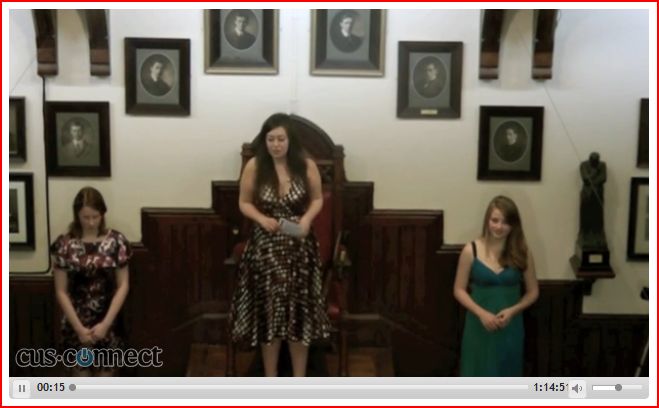
The author of one of the sexuality education blogs I follow, The Sexademic, was invited to Cambridge (England) to debate the pros and cons of pornography. Specifically: Does pornography perform a “good public service” yay or nay?

I would totally debate pornography in a room like this.

The full debate was recently made available by the Cambridge Union Society. You’ll have to click through the link for the actual video as it won’t let me embed (it’s over an hour long, too, so be forewarned!). If you can’t or don’t want to be bothered watching the whole thing, The Sexademic provides her own commentary on/synopsis of the event in a post written back in February before she realized the event would be made available online.

Again: Click through to the Cambridge Union Society for the full video.

booknotes: queer (in)justice

30 Thursday Jun 2011

Posted by Anna Clutterbuck-Cook in book reviews

≈ Leave a comment

Tags

books, feminism, gender and sexuality, human rights, masculinity, politics

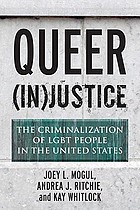
The third installment in Beacon Press’s Queer Action/Queer Ideas series, edited by Michael Bronski, Queer (In)justice: The Criminalization of LGBT People in the United States is co-authored by law professor Joey L. Mogul, police misconduct attorney Andrea J. Ritchie, and community organizer Kay Whitlock. Hanna saw it on the new book wall at the library and correctly ascertained it was the sort of title I’d be interested in. So she brought it home, I read it, and now I’m gonna blog about it.

Queer (In)justices is far more than an examination of the ways in which our legal system polices “deviant” gender and sexuality qua gender and sexuality. Yes, the authors look at the laws and policing practices related specifically to penalizing folks who engage in (publicly or privately) non-heteronormative sexual practices, or whose appearance suggests that they identify outside the gender/sex/sexuality binary. However, their analysis goes much deeper than these targeted laws. Instead, they argue that “the policing of sex and gender ‘deviance’ is central to notions of crime, and serves both as a tool of race-based law enforcement and as an independent basis for punishment” (xiii). In other words, notions about the relationship between non-normative sex and gender expression and criminality influence the way in which the legal system treats people perceived to be queer whether or not they are caught in the system specifically because of sex- or gender related policing. As they argue:

As queer identities substituted for individual perverse acts [in the late nineteenth century]  the process of criminalizing sexual and gender nonconformity was facilitated through the construction of ever-shifting and evolving archetypal narratives [of deviance]. Rooted in historical representations of Indigenous peoples, people of color, and poor people as intrinsically deviant, fueled and deployed by mass media and cultural institutions, these narratives now permeate virtually every aspect of the criminal legal system (19).

They make a compelling case for us to question the usefulness of narrowing our focus specifically on anti-gay laws, and on enacting new laws seeking to protect LGBT people from homophobia … particularly when the very law enforcement officials meant to ensure those laws are respected are among the primary culprits when it comes to bigotry and violence around sexual and gender nonconformity.  In chapters on gender and sex policing on the street, in the courtroom , in prison, and in uneven police responses to violence against LGBT people, we see how presumptions of criminality systematically influence how queer people are treated in the context of the legal system, whether they are perpetrators, victims, or both. They make the particularly important point that, regardless of what laws are officially on the books, “police and other law enforcement agents are given considerable latitude in deciding which laws to enforce, how to enforce them, and which people to target for law enforcement” (48).*

Being queer, or being perceived as queer can cause law enforcement officials to treat individuals as criminally guilty whether or not they actually are — and can bring harsher punishments (when compared to those perceived as straight and gender conforming) when those individuals are sentenced. Likewise, criminal behavior is often associated — implicitly or explicitly — with sexual depravity. Using examples that will be familiar to anti-sexual harassment or anti-sexual violence activists, Mogul, Ritchie, and Whitlock describe how individuals known or perceived to be queer are treated by law enforcement officials as if they are incapable of being victims of sexual violence. They describe victims of same-sex domestic violence who themselves were put in jail or ruled incapable of being abused because of their orientation or gender identity.

Ultimately, Queer (In)justice argues that LGBT activists must take a much more comprehensive approach to their agitation for change within the framework of law and law enforcement. While much of the mainstream LGBT work in this area in recent years has involved the quest to enact anti-discrimination and anti-hate crime legislation, and to grant same-sex couples the right to marry, Mogul, Ritchie, and Whitlock point out that a much broader cultural shift within law enforcement must take place in order for such changes in the law to have an on-the-ground effect. As they write, “The hate crime framework is … compromised by placing primary responsibility for preventing violence in the hands of a criminal legal system that is itself responsible for much LGBT violence” (129). We would do well, they seem to be pointing out, to pay closer attention to the experiences of those most vulnerable to police brutality, discrimination and abuse sanctioned by the legal system, and persecution based on presumptive criminality … not just because of their sexual identity, but because their mere presence as a non-conforming body evokes powerful notions of danger and violence whether or not these reactions are warranted in specific instances. Comprehensive reform is needed before the passage of laws will have real-world implications for the majority of the LGBT population.

Queer (In)justice is a must-read for anyone who wants to re-consider the current LGBT approach to legal reform.

*This point is exactly why I am uneasy with Jim Wallis’ argument that police force is preferable to military force. Wallis’ assumption that police only use force when it is necessary to enforce agreed-upon laws ignores all of the situations in which law enforcement officials abuse the power vested in them … something which, as a person who works in anti-poverty and anti-racism circles, Wallis ought to know full well.

booknotes: arms wide open

23 Thursday Jun 2011

Posted by Anna Clutterbuck-Cook in book reviews

≈ 2 Comments

Tags

children, feminism, gender and sexuality, history, memoir

There is a point toward the end of Patricia Harman’s Arms Wide Open: A Midwife’s Journey (Boston: Beacon Press, 2011) when author offers us another of the many particular birth scenes that punctuate the overarching narrative. It is the late 1970s and, after nearly a decade delivering babies as a lay midwife, Harman has entered medical school to become a Certified Nurse-Midwife. She describes the labors of a woman named Carla who will eventually deliver a son whom she names Joe. As the child is about to crown, the following scene takes place:

M.R. [Mary Rose, Harman’s mentor] lets go of my hands and reaches for a pair of scissors. At first I assume she’s getting ready to cut the cord, though the head’s not out yet, but she nudges me with her elbow and forces the scissors into my hand, then injects Xylocaine into our young patient’s perineum. Now I know what she wants me to do … cut an episiotomy.

So here I sit. The head of a dark-haired infant crowning before me. I know how to get this baby out without a laceration or episiotomy in two minutes, if Mary Rose and the enthusiastic nurse would leave me alone, but I am the student, enrolled to learn.

I take the scissors and cut, feel the skin crunch between the blades, see the blood ooze … and deliver the baby. It’s not a good feeling, but it’s done. The very pink body swivels out, Mary Rose cuts the cord, and the RN takes the tiny boy to the infant warmer.

“If the heart rate’s down, you have to cut an episiotomy right away,” Mary Rose whispers, “The OBs watch us, and if you hesitate, they’ll start coming in to every delivery to supervise.” She looks at the door. “We don’t want that” (246).

This scene is, I would argue, the hinge upon which this memoir turns. Arms Wide Open is a memoir in three parts. Part one (“Little Cabin in the North Woods, 1971-1972”) and part two (“Commune on the Ridge, 1977-1978”) are episodic accounts of Patricia Harman’s decade of experiments in communal, backwoods living. From an isolated cabin outside of Duluth, Minnesota to an intentional community in South Carolina, we follow Patricia Harman, her lover, her future husband, her sons, and a motley group of fellow-minded travelers through the ups and downs of community life. “Commune on the Ridge” ends with Patricia and her husband Tom’s joint decision to pursue medical degrees (he in women’s health, her as a midwife) — a decision which took them away from the commune and back into the mainstream frameworks of institutional education, hospital-based medicine, and city life. Part three (“Cedar House on Hope Lake, 2008-2009”) jumps ahead to the present, with reflections back upon some of Harman’s training and the years she and her husband worked together running a women’s health clinic. Each section is, in some ways, in dialogue with the other sections as the reader is invited to compare and contrast each location and living arrangement Patricia and her family create for themselves with their previous and future locations and arrangements.

The strength of Arms Wide Open is the immediacy of its narrative. In recreating her personal history, Harman has drawn heavily on journals she kept during the years she describes, and the resulting text bears the marks of that internal narrative: we experience the events in the book through Patsy’s senses, and what meaning is made of those events is made less through present-day commentary than with the voice of (possibly imagined) Harman’s younger self. Arms Wide Open is executed with loving care, and provides an unvarnished look at the struggles and disillusionment, as well as the joys of communal experimentation. For anyone interested in experiencing communal life vicariously through personal narrative, Arms Wide Open comes highly recommended.

It is this very sense of immediacy, however, that contributes to what I felt was one of the book’s central weaknesses: the lack of any larger framing narrative, any strong present-day voice that would exert autobiographical force upon these episodic scenes and encourage us to understand not only how Patsy-of-the-moment made sense of her life, but how Patricia Harman presently understands her past experience. I finished the book with lots of unanswered questions about how Patsy of the backwoods commune became Patricia the Certified Nurse Midwife working in a women’s clinic. It is possible that some of those questions may be answered in Harman’s first memoir, The Blue Cotton Gown (2008). At some point I may go back and read that volume. However, the point remains that readers coming to Arms Wide Open without the background of Cotton Gown are left wondering at the underlying values and choices that led Harman first in to, and then away from, the backwoods communal life. She hints around the edges about a background in New Left political action, anti-war protests, and even some jail time. The narrative implicitly endorses a very specific vision of responsible living on the earth, of childbirth and childcare, of gender and sexuality — yet the narrator never steps back from the moment to write in more overarching ways about how her politics and values have (or have not) changed over time.

I would have been very interested to know how she sees her present-day work connected (or not) to her earlier experiences, philosophically and practically. The final section, particularly, contains a lot of sadness and sense of displacement — while Harman and her husband seem to have found ways to live out their values in a more mainstream context, there is also a pervading wistfulness and at times outright pain at the way in which their lives have not played out as they hoped or expected. There is a sense that, having given up the communal way of life, Harman is not sure how to live out her most deeply-held values in a less unconventional context. Although she describes interacting with anti-war protestors and midwives who are a generation or two her junior, she seems profoundly isolated from the counter-cultures of the present day (of which, I would argue, there are plenty!). This loss of fellow travellers within the narrative speaks to me particularly, since I have spent many hours interviewing counter-culture-leaning folks from Harman’s generation about their past and present lives … and how they do and do not forge connections across age cohorts. In such an age-stratified society such a project can be difficult — even radical — but I would argue that to tie radicalism to a particular generation or stage in life is a deadly impulse if what we want to create is lasting social change.

On a similar note (although I imagine it is not her story to tell), I would also have been interested in her children’s reflections on the experience of early childhood in a communal household — and how they feel it shaped their own values and expectations as they grew into adulthood. From passing references toward the end, it sounded as though all three of Harman’s sons had chosen outwardly conventional life paths. Outward appearances can be deceptive (I could write my own biography to sound exceedingly conventional), but I would have liked further exploration into the whys and wherefores of Harman’s family as it came of age.

Ultimately, this is recommended reading for anyone who is interested in counterculture living, midwifry and childbirth, the historical period of the 1970s, and the art of memoir. If you’ve read The Blue Cotton Gown I’d be interested to hear your views on how the two books work together, and whether any of the silences I have mentioned above continue throughout.

quick hit: I’m live-blogging ‘feminism for real’

07 Tuesday Jun 2011

Posted by Anna Clutterbuck-Cook in book reviews

≈ Leave a comment

Tags

blogging, feminism, harpyness, live-blogging

This morning over at The Pursuit of Harpyness, I started a series of 22 “live blogging” posts on Jessica Yee’s new anthology Feminism For Real: Deconstructing the Academic Industrial Complex of Feminism (2011). I’ll be posting my reading notes for each chapter on Tuesday mornings for the next few months.

Please do join us!

required reading: jill @ feministe on "call-out culture"

02 Monday May 2011

Posted by Anna Clutterbuck-Cook in linkspam

≈ 1 Comment

Tags

blogging, feminism, harpyness

Cross-posted @ The Pursuit of Harpyness.

I’m sending y’all on over to Feministe to read a post that Jill published this morning on the dynamics of “calling out” the “big feminist blogs” for being less-than-perfect on the issues you care about.

[In some ways,] online feminism is worse for wear. Part of that is what Florence is talking about above — blogs, and especially the “big blogs,” are perceived as institutions rather than collectives of people writing about something they’re interested in when they have time, in order to facilitate a conversation among like-minded people. With the perception of institutionalization comes expectations — that a blog will not only cover about what you think it should cover, but will also cover it in the way you think is most appropriate, using the words you think are the best. Which isn’t totally unfair, but which segues from potentially productive into poisonous when the method of conveying those expectations is Calling Out.

I’m as guilty as anyone else when it comes to partaking in feminist Call-Out Culture. Calling Out, I think, is part of any activist’s growing pains. We all want to do right. We all feel like we’re doing more right than some other people who we perceive as having more power (or influence or airtime) than we have. We all want to be a good _____: feminist, ally, woman, activist. Part of that, if you love an idea (and I think most of us do love the idea of feminism, even if we don’t always love how it plays out in real life), is saying something when you see someone else Doing It Wrong. There should be space for that. We should keep each other in check; we should all want to be better.

But in the feminist blogosphere, “calling out” has increasingly turned into cannibalism. It’s increasingly turned into a stand-in for actual activism. We have increasingly focused on shutting down voices rather than raising each other up. Pointing at the gap has replaced doing the hard, often thankless work of filling it.

I mean it: go read the whole thing.

"all of the slurs we called each other were gender neutral"

03 Thursday Mar 2011

Posted by Anna Clutterbuck-Cook in media

≈ 1 Comment

Tags

feminism, humor, web video

May I say: Vag Magazine FTW!

Vag Magazine Episode 1: “Fumbling Toward Ecstasy” from Vag Magazine on Vimeo.

My latest issue of Bitch magazine contained an interview with two of the creators of the online serial “Vag Magazine,” which follows the internal politics of a group of young women who have taken over a mainstream women’s magazine in an effort to subvert the patriarchy.

Hilarity ensues. Hope y’all enjoy!

← Older posts
Newer posts →
"the past is a wild party; check your preconceptions at the door." ~ Emma Donoghue

Recent Posts

  • medical update 11.11.22
  • medical update 6.4.22
  • medical update 1.16.2022
  • medical update 10.13.2021
  • medical update 8.17.2021

Archives

Categories

Creative Commons License

This work by Anna J. Clutterbuck-Cook is licensed under a Creative Commons Attribution 3.0 Unported License

Meta

  • Create account
  • Log in
  • Entries feed
  • Comments feed
  • WordPress.com

Create a free website or blog at WordPress.com.

  • Subscribe Subscribed
    • the feminist librarian
    • Join 37 other subscribers
    • Already have a WordPress.com account? Log in now.
    • the feminist librarian
    • Subscribe Subscribed
    • Sign up
    • Log in
    • Report this content
    • View site in Reader
    • Manage subscriptions
    • Collapse this bar