• anna j. clutterbuck-cook
  • contact
  • curriculum vitae
  • find me elsewhere
  • marilyn ross memorial book prize

the feminist librarian

the feminist librarian

Tag Archives: gender and sexuality

Links to some stuff, various

15 Sunday Feb 2009

Posted by Anna Clutterbuck-Cook in linkspam

≈ Leave a comment

Tags

books, feminism, gender and sexuality, politics

Stuff I haven’t had a chance to blog about in detail:

Courtney E. Martin on Why Love is Our Most Powerful Form of Activism.

Tkingdoll, over at Skepchick, on the historical moment we’re living through and why, despite all news headlines to the contrary, we might be lucky to be alive in the midst of it.

Race and Gender in Coraline, over at FilthyGrandeur (via Feministe).

Ariel Levy’s review of the new edition of The Joy of Sex. Let it be noted I take issue with her characterization of both Our Bodies, Ourselves and the Moosewood Cookbook — both are just fine without the bacon, thank you very much!

Some thought-provoking coverage of Ruth Bader Ginsburg’s role on the U.S. Supreme Court as well an analysis of the court’s current composition.

“No one expects e-books to overtake printed books as rapidly as digital music overtook CDs and albums” . . . but will they ever?

Dancing Backwards in Heels offers some reflections upon reading Michael Kimmel’s Guyland (2008).

And finally, if you’re feeling strong, the wrongness that is Obama slash fanfic (commented on, with excerpts, at Bitch blogs), and Pilgrim Soul, at The Pursuit of Harpyness on the creepyness of America’s obsession with the Obama family’s “hotness.”

A few of my favorite (feminist) things

13 Friday Feb 2009

Posted by Anna Clutterbuck-Cook in book reviews

≈ 1 Comment

Tags

feminism, gender and sexuality

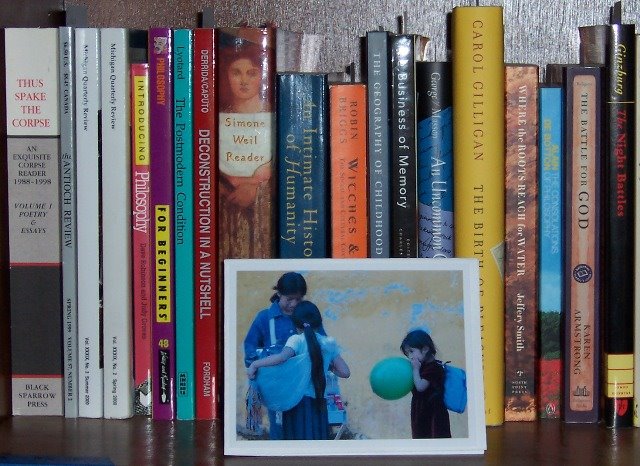
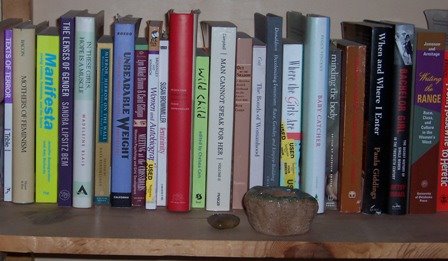
In honor of V-Day this year, the Feminist Review is doing a favorite feminist book photo contest. I was tempted to contribute, but since my number-one, all-time favorite feminist read is Our Bodies, Ourselves, I figured the picture would really best be done as a calender girls shot. And I will not be getting naked on the internet, even discreetly naked, until I have 1) a heck of a lot more job security — like, permanent feminist-friendly job security 😉 — and, 2) someone like Willy Ronis offers to do the photo shoot.

So as a second-best offer, here is a top five list. I say “a” top five list, since there are probably others I could have composed. I picked these for diversity of period, genre, and sentimental value. And they’re not in hierarchical best-worst/worst-best order: I’ve taken a page from Nick Hornby’s High Fidelity, and arranged them autobiographically.

1) Pippi Longstocking, by Astrid Lindgren (1945). There are many other children’s books I could have named here, with similarly awesome girl characters in them. But Pippi will always hold a special place in my heart. Maybe it was the fact that she, like I, never seemed to see the point of attending school — even if it meant you got summer vacation! She was bold, imaginative, physically daring, generous to her neighbors, and never let older people push her around simply because they were bigger or older than she. I also hold Pippilotta Delicatessa Windowshade Mackrelmint Ephraimsdaughter Longstocking responsible for my childhood desire (which still occasionally manifests itself) to be a redhead.

2) Our Bodies, Ourselves, by the Boston Women’s Health Book Collective (1970, and many subsequent editions). As promised above, a little about why I’d choose this book as my favorite feminist read: I think of this book as my introduction to modern political feminism. I first read my mother’s copy as a young adolescent, and I can’t think of a better way to learn about the possibilities of my (nascent) adult body than through the lens of the women’s health movement. This book was my introduction to my anatomy; to the experience of pregnancy and feminist parenting; to options for abortion and contraception; to masturbation; to the ways in which adults negotiate sexual relationships (both hetero and same-sex); to the concept of collective political action for social change. Out Bodies, Ourselves endures — from my perspective — as a feminist text because it foregrounds women’s voices in all their complexity. The book collective discovered, even in its earliest incarnations, that the best way to gather intelligence about how women experienced their bodies was to ask them. This remains, to me, the central tenant of any feminist practice: begin with the premise that each woman (and, yes, each human being) is the best authority on her own subjective experience.


3) The Seneca Falls Declaration, by Elizabeth Cady Stanton (1848). No, this is not really, strictly speaking, a book. But it’s one of the first primary source documents I read during my college-era women’s studies experience, and at seventeen I remember being absolutely blown away by how current it felt. How simple its demands seemed to be, and how little the goals of feminist activists had changed since 1848. Of course now, a decade further in my historical studies and feminist consciousness, I can add layers of critical awareness to this reaction — but I won’t ever forget the mix of awe and anger I felt when I read the Declaration for the first time and realized the long legacy of activism I could choose to claim as my own.

4) In Our Time: Memoir of a Revolution, by Susan Brownmiller (2000). From the heady days of consciousness-raising groups in the New Left, to the divisive, bitter turmoil surrounding anti-pornography campaigns in the early 1980s, Brownmiller’s deeply personal chronicle of the Women’s Movement came out just as I was struggling to find my voice, politically, as a feminist, on a conservative midwestern college campus. I devoured In Our Time with a passionate nostalgia for the political daring ideological radicalism, the daily intensity of Movement relationships, and the sense of possibility for revolutionary change Brownmiller describes. Even with a more circumspect, historical perspective, this first-person account of mid-century feminist activism remains a great read and a valuable resource.

5) Whipping Girl: A Transsexual Woman on Sexism and the Scapegoating of Femininity, by Julia Serano (2007). There have been some great recent works on feminism in the past ten years, many of which grace my shelves. However, few of them have rocked my world as brilliantly as Whipping Girl, Julia Serano’s collection of essays on sex and gender from both a trans and feminist perspective. I am absolutely blown away by her ability to take dense ideas about the biological and cultural experiences of sex and gender and make them understandable and politically compelling. Even though much of the book is an argument for awareness of trans issues within feminism, it is also the best nuts-and-bolts articulation of how sexism works — and harms people of all sexes and genders — that I have read in recent years.

Womyn’s Land (Take Three)

09 Monday Feb 2009

Posted by Anna Clutterbuck-Cook in think pieces

≈ Leave a comment

Tags

feminism, gender and sexuality, guest post

My friend Linda Smith, who is a resident at Hawk Hill Community Land Trust and was a part of the Aradia oral history project (see post one), read my thoughts on the recent article about lesbian communities in the New York Times. (See post one and post two here.) She wrote me an email in response, which I am posting here with her permission. Thanks Linda!

Hi Anna,

Nice to hear from you! I just read your blog entries on the article in the NY Times. I too hope there will be more “conversation between generations of women who are intrigued by the idea of communal life, and spark creative, contemporary approaches to experiments in living that will help our elders and youngers improvise lives worth living.”

For me, as a feminist in the 70’s, separatism was a strategy not a political position or a life style. I think it is sometimes important for women (or blacks, or other oppressed peoples) to separate from the oppressive culture in order to discover who we are apart from the stereotypes imposed on us. To contact our own power and source of being. Remaining separate and at odds with the dominant culture isn’t the goal. Most of us involved in feminist consciousness raising and women-only groups in the 70’s have chosen to act out our truth in the world. To contribute to the culture and the evolution of our species. This is a spiritual question for me. One of the major problems in the world today is the false belief that individuals and groups are in fact separate – we are all connected, men/women, Jews/Christians/Muslims, and all living beings.

I think a healthy community grows organically and changes with the times. I live on an environmentally protected landtrust. There are five households and six lesbians living here. We are not a commune – we have no community buildings and do not share our income. In many ways our community includes our neighbors and the surrounding environment. We do not own our land but have 99 year leases. By signing our leases we agreed to specific “covenants” designed to protect this land, the waterways, and all the creatures living here. There have been many changes in the world since the first lesbian land groups formed. If younger women (or perhaps men, or ?) are going to come and take care of this land after we are gone we’ll have to be more flexible and learn from each other as you suggest! At Hawk Hill, as far as I’m concerned, it’s really about the land, all the creatures living here, and our relationships to these and each other – not about lesbian separatism.

Thanks for you thoughtfulness.
Linda

Booknotes: Therese Philosophe

07 Saturday Feb 2009

Posted by Anna Clutterbuck-Cook in book reviews

≈ 5 Comments

Tags

feminism, gender and sexuality, history, simmons

Last Tuesday, in my intellectual history class (“The Modern Imaginary”), we discussed Therese Philosophe, a bawdy, “forbidden best-seller” of pre-revolutionary France. The novella is an erotic novel and philosophic treatise in which the titular character, a young woman named Therese, recounts her sexual and philosophic coming-of-age to her present lover, the unnamed Count. Not having previously read any one complete example of Enlightenment-era pornography, I had few pre-conceptions about the genre when I sat down to read Therese.

This is an anonymously-written work, published in 1740s, tentatively attributed to a marquis named Jean-Baptiste de Boyer and was a runaway best-seller, according to translator Robert Darnton. Yet even though the author is likely male, and his understanding of the pleasures of sexual activity is definitely phallo-centric, the novel presents us with a complex, possibly even (early) feminist, understanding of sexuality. The novel is told from the point of view of a woman who discovers that sexual fantasy and sexual activity (whether alone or with a partner) can be a “healthful” and deeply gratifying part of her life. Sexual activity is assumed to be pleasureable for both women and men, and there is little differentiation between how women and men experience that pleasure, at least physically. Women, as well as men, for example, are encouraged to masturbate. At the same time, the characters acknowledge the material vulnerability of women who engage in heterosexual activity: the fear of pregnancy and death in childbirth; potential loss of social standing which will threaten their ability to contract a financially stable marriage. Therese and her mentors negotiate with their sexual partners over what sexual activities are acceptable given these real-world constraints, and those conversations serve as both philosophical debates and integral to the erotic encounters themselves.

Some of the students in the class were skeptical that this text constituted “intellectual history,” and in addition there was a lot of resistance to reading the sexually-explicit passages as necessary or integral to the intellectual importance of the work. Their impulse was to argue that either the smut was a ploy to sell the philosophy, or the philosophy was an excuse to write the smut. Either way, they considered the sex was gratuitous to the historic or intellectual importance of the piece. I would actually argue the opposite. In Therese Philosophe, it’s not the sex or the philosophy that are the “real” reason for the novel’s existence — it’s the sex and the philosophy. Both are necessary to make the story work. More importantly, I would argue that it’s not just the philosophy that works better because of the sex, but the sex that works better because of the philosophy.

Reading this one example made me curious to sample more 18th-century erotica and see how gender and sexual negotiation are portrayed. Is Therese an exceptional voice? And is is possible to uncover why her story was so compelling to the readers who purchased it is such great numbers that it became a best-seller? I am also fascinated by the similarities, as well as the differences, I see between how human sexuality and sexual relations are portrayed in Therese and how they are written in modern-day erotica. Perhaps that project can be thesis number three or four . . . !

Cross-posted @ feministing community.

Womyn’s Land (Take Two)

04 Wednesday Feb 2009

Posted by Anna Clutterbuck-Cook in think pieces

≈ Leave a comment

Tags

feminism, gender and sexuality

I didn’t have any big, new reactions after reading the New York Times article about lesbian communities. It felt a bit superficial and simplistic to me, but most newspaper articles on subjects one cares deeply about seem reductive. It turns out that some of the women I met in the course of our oral history project were interviewed for the piece. I spoke with one woman yesterday who’d spoken with them and reported that the collective response to the finished piece was, predictably, mixed. Meanwhile, the article has, also predictably, been fodder for debate on some of the blogs I regularly read. I particularly wanted to highlight a post up at the new blog In Persuit of Harpyness, What We Should Talk About When We Talk About Lesbian Separatism. In reflecting on both the article and the conversation generated about it, the blogger writes:

As a feminist it is my job to recognize that such experiences exist, that it is important to listen to the women who lived through them, and not try to shame them or make their choices about mine. It is important to listen because they have something to contribute to my feminism, these lesbian separatists.

. . . I can cut their critics some slack, but only a little. Sometimes, when I am in the heat of an internet argument, I start to forget how much of my devotion to feminism is rooted in good old boring ordinary compassion. Because I am a person who enjoys talking about ideas abstractly, I can sympathize with those who want to synthesize the contributions of these women . . .

But those discussions, they aren’t the whole truth of the matter. They aren’t about the women themselves. And though I’m always going to keep talking about feminism abstractly, I often wish everyone would keep their eyes on the ball.

As someone who has spent time on womyn-only land, and has listened extensively to the life stories of the women who were kind enough to let us ask nosy questions about their lives as lesbians and as feminists, I think this post gets to the heart of the matter here. Communal living arrangements, sort of like feminist thinking and activism, is a response to a particular historical context and personal experiences, and like feminism communal living is an organic, fluid project that constantly grows and changes to meet new challenges. Hopefully, the New York Times article will spark conversation between generations of women who are intrigued by the idea of communal life, and spark creative, contemporary approaches to experiments in living that will help our elders and youngers improvise lives worth living.

Womyn’s Land in the NYT

02 Monday Feb 2009

Posted by Anna Clutterbuck-Cook in think pieces

≈ 4 Comments

Tags

feminism, gender and sexuality, hope college

I don’t have time right now to write a longer reflection on this article in the New York Times about lesbian communities and women-only land — but I wanted to post a link to it because it quotes my women’s studies professor and from undergrad, Jane Dickie, with whom I collaborated on an oral history project involving a group of women who have ended up living on a women-only land trust in Missouri.* As Joseph (who forwarded the link to me) says, “it’s the first time I’ve ever read the NYT and gone, ‘Hey! I’ve met that person!’ and it is kind of a strange feeling.”

Miriam, over at feministing, has already posted her reflections on the story and on the phenomenon of lesbian communities. If I have any Big Thoughts after sitting down to read the piece, I’ll be sure to follow up with a “take two.”

*You can read about the research project we did in the essay “The Heirs of Aradia, Daughter of Diana: Community in the Second and Third Wave” published in the Journal of Lesbian Studies (vol 9, no. 1/2, 2005) also published as Lesbian Communities: Festivals, RVs, and the Internet, edited by Esther Rothblum; also in “Responding to Aradia: Young Feminists Encounter the Second Wave” by Leslie Aronson, Adrienne Bailey, Anna Cook, Jane Dickie, Bethany Martin, and Elizabeth Sturrus, published in Iris: A Journal for Women (issue 47, Fall/Winter 2003).

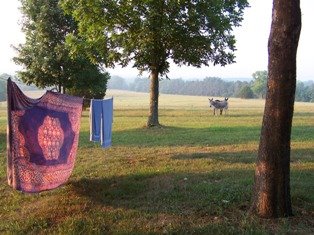
Image from Hawk Hill Community Land Trust, Missouri, Summer 2005 (personal photo)

Why does it have to be either/or . . .?

26 Monday Jan 2009

Posted by Anna Clutterbuck-Cook in think pieces

≈ 1 Comment

Tags

feminism, gender and sexuality

. . . Can’t it be both/and?

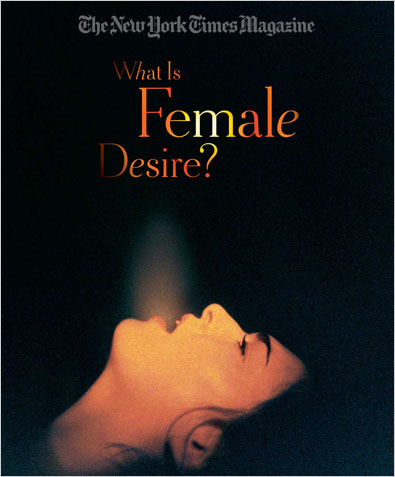
Meghan O’Rourke, over at Slate’s xx factor blog has a post up, The Sexual Fluidity of Women about this weekend’s article on sexuality research and women’s desire in the New York Times Magazine. In the post, O’Rourke argues that the implicit question of the article is this: “Are contemporary women doomed to experience a schism between what their bodies lust for and their minds tell them they want?”

Don’t you just love it when questions and answers are framed in terms of what “women” (as a single corporate entity) experience or desire? The article itself, which appears to be an interesting round-up of contemporary research of women’s sexuality (I’ll have to sit down and read it more carefully when I have the time — alas, assigned reading takes priority this morning), poses the tiresome “what do women want?” question . . . as if we, as a some inexplicable half of the human species, are a problem to be solved. Women (unlike men, the question implicitly suggests): They’re so complicated and confusing! They confuse us with their sexuality!! Isn’t the answer to the question “what do women want?” self-evidently “each one of us wants something slightly different”? While I’m glad people now recognize that generalizations about human sexuality made from studying primarily male subjects is inadequate, redressing the problem by making generalizations about “women” doesn’t seem like a very useful response.

I also do not understand why it’s useful to recycle the body/mind dichotomy when talking about sexual desire and experience. Regardless of gender, sexual orientation, or any other factor you can think of. Our bodies and our minds desire different things in different contexts, at different points in our lives. In my experience (in sex as well as elsewhere) it’s quite possible to desire two seemingly contradictory things at the same time — without losing your mind or your integrity. Framing a so-called dissonance between physical arousal and self-reported desire (an example O’Rourke highlights from the article) as a “schism” imagines that, just because our bodies and minds operate on different levels simultaneously, they are in opposition to one another — why should this be the case? Sexuality is beautifully complicated. Human beings are beautifully complex. In sex, as in everything else, our Selves — both body and mind — act and react in an ever-shifting composition of ways that scientific studies will likely never be able to fully document and explain.

For other bloggers’ thoughts (updated as I find them):

Bethany L. @ feministing community
StreetScholar @ feministing community
Elizabeth @ sex in the public square
Amanda @ pandagon
Jill @ feministe, cross-posted at yes means yes
Courtney @ feministing
Figleaf @ real adult sex
Vanessa @ alternet

Looking Back/Looking Forward: Library Science

15 Thursday Jan 2009

Posted by Anna Clutterbuck-Cook in library life

≈ Leave a comment

Tags

children, gender and sexuality, librarians, simmons

As we enter 2009 — and before I get lost once again in the maze of a busy academic schedule — I thought I’d post a few items on the projects I completed this fall and the projects that are up for the spring semester.

Enrolled as a part-time student, I’m attempting to balance three different sets of course requirements: those for my history degree, those for my general library science degree, and those for my archives management focus within the library science program. This fall, I took a haitus from the archives management courses and took LIS 407 (Reference Services). I had the usual frustration with Reference that I have with all introductory-level survey courses: they try to do too much in too little time, and as a result skim the surface of a great deal of information that could potentially take a lifetime (or at least a career) to explore. That pedagogical frustration aside, it was a good class taught by a knowledgeable, enthusiastic professor (thanks Rex!). I particularly enjoyed putting my annotated bibliography together on the topic of providing children and young adults with reference services in the area of human sexuality. For the bibliography, I surveyed the library science literature for articles and books on the topic (slim pickings) as well as poking around the internet for useful resources. Below are the internet sources I ended up listing in the finished project.

Internet Resources

A number of organizations provide a wealth of resources on their websites for sexuality education that would be of use in a reference setting. Below I provide a sampling of organizational websites and selected page descriptions that highlight some of the resources available that may be of particular interest in a library reference setting:

1. Internet Public Library’s TeenSpace. The Internet Public Library (based out of the University of Michigan and Drexler University schools of information) has a portion of their website dedicated specifically to resources for adolescents, which includes resources related to sexuality. Two pages of particular note:

Frequently Asked (Embarrassing) Questions. On this page, a list of links are provided for issues such as dropping out of school, medical questions, mental health, and social issues (“what do I do if my friend says something racist?”) as well as sexuality information. Also linked to this page is:

Health & Sexuality Links. This is an annotated list of websites that cover a range of issues on the topics of health and sexuality. These links are further divided into sub-heading categories such as “LGBT” and “Abuse and Exploitation.”

2. Scarleteen: Sex Education for the Real World. The web-based iteration of Heather Corinna’s S.E.X., Scarleteen.com provides message boards, sexuality Q&A, writing by young people, and a variety of other interactive resources and informational content. One of the values of Scarleteen, I believe, is its holistic approach to sexual health and orientation, not assuming its readership is in any one place in the orientation spectrum and emphasizing mutuality and health rather than condemning particular sexual desires or practices.

For Parents. The “for parents” section that explains the philosophy of the site and suggests some further reading for adults who are seeking to support the young people in their lives.

Start Your Sexuality Canon. This bibliography is Scarleteen’s own bibliography of essential books on human sexuality, starting out with the famous Hite Report and making suggestions on topics of gender identity, media depictions of sexuality, as well as providing a list of basic sexual health handbooks.

3. SIECUS (Sexuality Information and Education Council of the United States). SIECUS was founded in 1964 by Dr. Mary Calderone, a former medical director for Planned Parenthood. Believing in the lifelong right of all human beings to comprehensive sexuality information, SIECUS provides a plethora of free web-based resources and publications. They are also an advocacy organization for greater access and outreach on issues of sexuality, and press releases on their website can be a useful way to stay informed about current controversies over providing sexuality information to the public. A few specific items of interest:

Bibliography – Books for Young People. This bibliography provides a short list of age-appropriate books for young people, sub-divided into age categories from pre-school to high school.

On the Right Track (PDF). This 78-page booklet makes suggestions specifically for adults who work in youth development organizations on how to integrate sexuality education into their work.

SexEdLibrary. SexEd Library is a database of lesson plans from various sources pulled together and vetted by SIECUS and made available online. Categories include things like “Relationships,” “Personal skills,” “Sexual Health,” and “Society & Culture.”

4. Young Adult Library Services Association (YALSA), hosted by ALA. For obvious reasons, YALSA’s website can be a useful place to research the intersection of sexuality information access and youth library services. They offer numerous booklists that often feature fiction and nonfiction books on themes of romance and sexuality, support a blog that reports on current issues and a host of other electronic resources for librarians. One example of the sort of resources available would be their “Healthy Relationships for Teens” booklist, which provides web-based and traditional resources on sexuality for young adults and the librarians who serve them.

5. Teenwire.com/Planned Parenthood. Teenwire is Planned Parenthood’s site geared specifically to a young adult audience. Much like Scarleteeen, Teenwire provides multiple avenues for accessing information on sexual health and relationships. There are topical sections, question & answer features, and information about sexual health services. Much of this information is also made available in Spanish.

Parents & Professionals. This portion of the site explains Planned Parenthood’s approach to adolescent sexual health and offers links to Planned Parenthood’s publications specifically for youth advocates.

Next semester, it’s back to the archives with LIS440: Archival Access and Use.

And Again With Twilight

09 Tuesday Dec 2008

Posted by Anna Clutterbuck-Cook in book reviews

≈ Leave a comment

Tags

feminism, gender and sexuality, movies, politics

Despite the fact that I am deeply suspicious of the book and have yet to see the movie, Hanna has decided to hold me personally responsible for the phenomenon of Twilight, and specifically the chivalrous male lead, Edward Cullen, whom she has taken to referring to as “your stupid vampire.”

Given that my name will thus inevitably–at least in our apartment–be linked to many adolescent girls’ (and adult women’s!) lust for “vegetarian” vampires with stalker tendencies, I figure it’s only fair that I get to post links here to some of the awesome (and hilarious) deconstruction of the series that’s taking place around the blogosphere.*

Thus, two links that came across my desk today:

The first is Amanda Marcotte’s rant on Pandagon,
Vampires, liberals, and blood-sucking pretend liberals, which manages to connect the hate-mongering commentary about Proposal 8 to reactionary adoration of Twilight (apparently, the popularity of the series “means feminism is bound to fail”) through the person of Caitlin Flanagan. I have to say, when I saw that Flanagan had reviewed Twilight over at the Atlantic this week I about popped a blood vessel. Anyone who declares halfway down the first page of a review of teen lit that “I hate Y.A. novels; they bore me” has absolutely no business reviewing (or claiming to understand the popularity of) young adult literature — let alone explaining with condescending smugness the desires of adolescent girls with such generalizations as “the salient fact of an adolescent girl’s existence is her need for a secret emotional life.” Thank you, Amanda, for giving this review the critical attention it deserved — and most importantly connecting it to larger themes of political conservatism.

And in case political analysis is not your bailiwick, commenter annejumps on the Pandagon thread provided a link to The Secrets of the Sparkle, a three-part (plus drinking game!) send-up of the series written by an ex-Mormon. (To explain title of the post: apparently, Edward Cullen sparkles in the sun. Like, literally. It’s a detail I sadly forgot from my reading of the novels last year. Damn.) It’s sort of like a picture book cliff notes version of the first three books . . . through the lens of LDS theology. Trust me.

Okay. That’s my fun for this evening. Back to editing the final draft of my history term paper! The semester’s almost over!

*I want to reiterate here that 1) my reservations about the series does not mean I think we should disparage the pleasure girls are getting out of the romance of the books–though we can encourage them to think critically about messages that Twilight conveys about sexuality and gender, and 2) that my reservations also don’t mean I fail to get pleasure myself out of stories about scary, sexy vampire bad boys. I just happen to like my heroines with a little more bite and my sex with a little less prudery.

Prop. 8: Was it all about sexism?

18 Tuesday Nov 2008

Posted by Anna Clutterbuck-Cook in think pieces

≈ 1 Comment

Tags

feminism, gender and sexuality, politics

An interesting article on the politics of Proposition 8 by Slate.com’s Richard Thompson Ford, in which he argues against seeing inconsistency in voter’s acceptance of Barack Obama for president, yet rejection of same-sex marriage. Homophobia, he argues, is closer to (perhaps even part of) gender-based sexism than it is analogous to race and civil rights discrimination:

After all, traditional marriage isn’t just analogous to sex discrimination—it is sex discrimination: Only men may marry women, and only women may marry men. Same-sex marriage would transform an institution that currently defines two distinctive sex roles—husband and wife—by replacing those different halves with one sex-neutral role—spouse. Sure, we could call two married men “husbands” and two married women “wives,” but the specific role for each sex that now defines marriage would be lost. Widespread opposition to same-sex marriage might reflect a desire to hang on to these distinctive sex roles rather than vicious anti-gay bigotry. By wistfully invoking the analogy to racism, same-sex marriage proponents risk misreading a large (and potentially movable) group of voters who care about sex difference more than about sexual orientation.

On the one hand, the pernicious relationship between rigid, oppositional conceptions of gender and homophobia is familiar to a lot of us. Obviously, the anti-same-sex marriage activists have been hugely successful by framing their campaign in terms of “protecting” hetero marriage — and this is one possible answer to the question “what do they think they’re protecting hetero marriage from?” On the other hand, I guess I’m skeptical that there is a large group of straight voters who aren’t anti-gay but still uber-defensive about their own sexuality and gender identity.

UPDATE 11/19: Amanda Marcotte over at Pandagon has a more thorough analysis of the article. Check it out.

← Older posts
Newer posts →
"the past is a wild party; check your preconceptions at the door." ~ Emma Donoghue

Recent Posts

  • medical update 11.11.22
  • medical update 6.4.22
  • medical update 1.16.2022
  • medical update 10.13.2021
  • medical update 8.17.2021

Archives

Categories

Creative Commons License

This work by Anna J. Clutterbuck-Cook is licensed under a Creative Commons Attribution 3.0 Unported License

Meta

  • Create account
  • Log in
  • Entries feed
  • Comments feed
  • WordPress.com

Create a free website or blog at WordPress.com.

  • Subscribe Subscribed
    • the feminist librarian
    • Join 37 other subscribers
    • Already have a WordPress.com account? Log in now.
    • the feminist librarian
    • Subscribe Subscribed
    • Sign up
    • Log in
    • Report this content
    • View site in Reader
    • Manage subscriptions
    • Collapse this bar