• anna j. clutterbuck-cook
  • contact
  • curriculum vitae
  • find me elsewhere
  • marilyn ross memorial book prize

the feminist librarian

the feminist librarian

Tag Archives: gender and sexuality

Booknotes: Bonk

30 Tuesday Sep 2008

Posted by Anna Clutterbuck-Cook in book reviews

≈ 2 Comments

Tags

gender and sexuality, science

A few weeks ago, the Boston Public Library finally notified me that a reserve copy of Mary Roach’s latest book, Bonk: The Curious Coupling of Science and Sex, was on hold for my reading pleasure. “Hooray!” I thought, “another fun book about sex!” . . . so I checked it out and read it.

I’ve heard wonderful things about Mary Roach’s science writing over the years, from a variety of bibliophile friends, but have not read either of her previous books (Stiff and Spook). They were about death. But, I mean, who wouldn’t be entertained by the shenanigans of researchers who dress rats in polyester knickers to test the effect of artificial fabrics on libido? Or pause to consider why in a study “of male and female genital slang carried out at five British universities, respondents came up with 351 ways to say penis . . . and only three for clitoris”? And really, who could resist the knowledge that in the Middle Ages witches were thought to be the cause of impotence: “witches with no formal training in andrology could employ a [simple] approach. They made the man’s penis disappear.”

Her descriptions of some of the bumbling medical interventions in humans sex lives are often not for the faint of heart, but I found them fascinating in a train-wreck sort of way: so many of our attempts to make sense of human sexuality through the lens of science have been simultanouesly terribly earnest and woefully misguided. In the end, even the most enthusiastic scientists, it seems, have come to the conclusion that what turns people on (or off) is unpredictable, varied, and irreducibly complex.

Roach ends her book with a description of one of Masters and Johnson’s later works, published in 1979, which describes the experiences of a group of lesbian, gay, and straight couples, committed and not, whom they invited to their labs and put under the microscope:

Ultimately, [Masters and Johnson] set aside their stopwatches and data charts and turned a qualitative eye upon their volunteers. What emerged were two portraits. There was efficient sex — skillful, efficient, goal-directed, uninhibited, and with a very low “failure incidence” . . . gay, straight, committed or not . . . [they] tended to have, as they say, 100 percent orgasmic return.

But efficient sex was not amazing sex. The best sex going on in Masters and Johnson’s lab was sex being had by the committed gay and lesbian couples. Not because they were practicing special secret homosexual techniques but because they “took their time” (301).

What strikes me is that Masters and Johnson found this simple observation worth noting (and italicizing) in their book . . . isn’t time and attention an obvious cornerstone of relational sex? Apparently, for many of the hetero couples Masters and Johnson observed in the late seventies, whatever goal they had in mind (orgasm? procreation?) eclipsed the far richer process of togetherness that the lesbian and gay couples foregrounded in their interactions. The impish side of my soul wonders what the religious right would make of that . . .

Booknotes: Harmful to Minors

23 Tuesday Sep 2008

Posted by Anna Clutterbuck-Cook in book reviews

≈ Leave a comment

Tags

children, feminism, gender and sexuality

It isn’t exactly hot off the presses, but I was following citations in Jessica Fields’ book on sex education and discovered Judith Levine’s 2002 work Harmful to Minors: The Perils of Protecting Children from Sex. Levine is a feminist activist and journalist, and her analysis of the political, adult framework for both understanding and dealing with childhood sexuality is heavily weighted toward the legal-political framework. However, she does the deeper understanding of childhood and sexuality (separately and entwined together) that permeates our cultural narratives about situations such as sexual consent and sex education.

A common thread running through many books I read on human sexuality and American culture, from Ariel Levy’s Female Chauvinist Pigs (2005) to Heather Corinna’s s.e.x. (2007) and Fields’ Risky Lessons is the discomfort Americans have with sexual pleasure and joy, despite the proliferation of hyper-sexual imagery. We are told through educational and entertainment mediums that sex is both highly dangerous and highly compelling — but we’re not so good at (or are frightening of) articulating sexual joy. Levine considers what this cultural skittishness means for children and young adults, who are bombarded with message of self-defense against sexual activity, but provided with few resources or protected, private, spaces in which to develop their own bodily knowledge, and consider the way in which sexuality can be an expression of positive human connection and physical embodiment.

In her epilogue, she pulls back to place the specific concern about children’s sexual agency within a larger framework of children’s rights as human rights:

When we are ready to invite children into the community of fully participating citizens, I believe we will respect them as people not so different from ourselves. That will be the moment at which we respect their sexual autonomy and agency and realize that one way to help them cultivate the capacity to enjoy life is to educate their capacity for sexual joy.(224)

These connections between embodiment, pleasure, childhood, education, and human rights are some of the threads I’m hoping to tease out in my history research this term, as I explore the counter-cultural (and establishment) educational endeavors of early-19th century thinkers and activists such as Bronson Alcott and Horace Mann. Levine’s research is largely contemporary, but the themes she teases out are recurring tensions in attitudes toward children and the educational project.

Teen Sexuality & Agency

04 Thursday Sep 2008

Posted by Anna Clutterbuck-Cook in book reviews

≈ 2 Comments

Tags

children, election08, feminism, gender and sexuality, politics


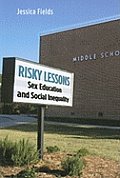
This weekend, while Governor Palin’s nomination as Republican Vice-Presidential Candidate, her hard-line conservative positions on human sexuality, and her daughter’s pregnancy were making headlines, I was reading sociologist Jessica Fields’ insightful new book Risky Lessons: Sex Education and Social Inequality. As Courtney Martin posted over at Feministing (in a review that prompted me to run out and buy the book), Fields “basically lays out a liberation philosophy for sex education.” Reflecting on the fieldwork Fields conducted in sex education classes during the mid-1990s, Courtney writes:

Young women learn to see their bodies as ticking time bombs and young men to see theirs as the uncontrollable fire that could lead to explosion. Instead of promoting self-awareness, responsible exploration, respect for the diversity of sexualities, or compassionate communication, we teach them that their bodies are dangerous. Conservatives want that danger staved off until marriage, where it suddenly becomes holy, and liberals want it staved off along the way — through the use of accessible contraception.

While I obviously advocate safer sex, I also feel like progressives have let ourselves (as per the usual) be only reactive, instead of re-authoring the questions. We must not only ask how we can protect young Americans from unwanted pregnancy and STIs, but how we can encourage them to be self-aware, healthy, and happy. How can we inspire them to author their own questions?

As political commentators discussed teenage pregnancy, marriage, and parenthood, comprehensive vs. abstinence-only sex “education” (I offer a few examples here, here, here and here for those interested), Fields’ book offered a what I thought was a fascinating counterpoint to the conventional wisdom. What struck me most about the political coverage was that the majority of Americans — whether they identify as liberal, conservative or somewhere in between — assume teenage sexuality is something dangerous, unhealthy, morally wrong. To be a sexually aware and engaged teenager in America is to be held suspect by the majority of adults as irresponsible and the result of bad parenting. As previously noted on here at the FFLA, this isn’t the only attitude adults can take about teenage sexual expression, and (in my opinion) far from the ideal. In Risky Lessons, Fields prompts us to re-visit this common-sense assumption and ask ourselves how we might better support young peoples’ exploration of the physical, emotional, and political pleasures and perils of their emerging adult sexuality.

In the early 21st century, “Sex education” has been reduced to risk reduction (if you believe in “comprehensive” sex ed) or eradication (if you believe in the abstinence-only doctrine). Young people deserve sexuality education that provides them with intellectual and emotional resources for making sense of their adult bodies, relationships, and agency in the world as sexual beings. And I hope that (if anything good can possibly be said to come from a Republican ticket so deeply opposed to providing those resources to all of America’s teenagers) the Palin nomination and the resulting debates over teenage sexual expression can provide us a critical moment of reflection on these issues and a chance to consider the liberatory potential sexuality education.

Twilight (Take Two)

25 Monday Aug 2008

Posted by Anna Clutterbuck-Cook in think pieces

≈ Leave a comment

Tags

books, feminism, gender and sexuality


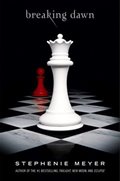
As an addendum to my earlier post about the Twilight saga, in the wake of the publication of Breaking Dawn — the fourth novel in the series –here are two more feminist perspectives on the series’ messages about sexuality, both brought to you by the RhRealityCheck site.

Sarah Seltzer provides a nice summary of some of the troubling aspects of the series, particularly as they surface in the final novel (spoiler warning for those who care!), and links to a lot of other commentary — only a few of which I’ve had a chance to peruse.

Meyers has tapped into a serious artery of the teen female psyche. Adding to the dynamic is the fact that Bella is a cipher whose only strong impulses are self-sacrifice and vampire lust. She has a glancing appreciation of classic novels and her family, but is easily projected upon by readers, who can imagine themselves in her place and be vicariously wooed by sexy succubi.

In Vampires And Anti-Choice Ghouls, her latest podcast, Amanda Marcotte gives her own take on the phenomenon (audio; partial transcript also provided).

God, you don’t even get close dancing or closed mouth kisses? Well, of course not. The point of this exercise is to set the standards so high that pretty much every girl is bound to fail and then hate herself for being a dirty girl. . . The important thing is that women learn that their bodies don’t belong to them, but should always be subjugated to the needs of the patriarchy.

Happy reading!

Gene Robinson on Fresh Air

17 Thursday Apr 2008

Posted by Anna Clutterbuck-Cook in media

≈ 1 Comment

Tags

feminism, gender and sexuality, politics

Mom pointed me toward yesterday’s interview on NPR’s Fresh Air with Bishop Robinson, who was ordained four years ago this spring. Listening to him talk about Christianity and the contention over sexual orientation and identity always makes me want to cry because he’s just so articulate.

The whole interview was interesting, but I was particularly struck by his story about a recent media kerfluffle over a joking remark he made about the civil union he and his long-time partner are planning for this summer in New Hampshire. He told someone he had “always wanted to be a June bride.” Apparently, this got out on the internet and people were quite wound up about it. Anyway, Terry Gross asked him about it, and his response was really striking in its feminist perspective:

I think part of why that [comment] raced around the world in no time flat due to the magic of the internet has to do with misogyny and its connection to homophobia. I think the thing that really irritates the world about refering to myself as a “bride” is that I’m supposed to be privileged because I’m male, not female, and to refer to myself with a feminine word like bride offends the patriarchal system that I think is beginning to come apart–and gay and lesbian people, I believe, are helping to begin the deconstruction of patriarchy [begins at 26:10].

He also had some trenchant thoughts on the way he negotiates living in Christian community with people who are not accepting of homosexuality and other sexual orientations and identities without either walking away from them or compromising himself or the lives of other marginalized people.

Yup

13 Thursday Mar 2008

Posted by Anna Clutterbuck-Cook in media

≈ Leave a comment

Tags

feminism, gender and sexuality, humor, movies

Thanks to Jesus Camp, I was expecting this one, but it’s still depressing and kinda creepy: Sarah Seltzer over at RH RealityCheck illuminates the connection between Horton Hears a Who! and anti-choice activists.

The radical idea that boys are people

20 Wednesday Feb 2008

Posted by Anna Clutterbuck-Cook in think pieces

≈ Leave a comment

Tags

feminism, gender and sexuality

In the same vein as the post I wrote on teen fatherhood a couple of weeks ago, Jill over at the blog Feministe has written about a recent study on how teenage boys understand their sexual and romantic relationships. Results? Contrary to popular “common sense” assumptions that boys are driven by their physical sexuality and interested in girls only as sexual objects, the teenage participants in the study indicated that they value relationships in a much more holistic way.

Go check out the post!

What Women Want: Insecure Men?

14 Thursday Feb 2008

Posted by Anna Clutterbuck-Cook in think pieces

≈ 5 Comments

Tags

feminism, gender and sexuality

don’t worry boys: we’ll be your interpreters for the evening

Just in time for Valentine’s Day, the Wednesday edition of the Boston Globe had a feature story on the website www.hertaste.com, the gist of which is summed up in their tagline: “you are being overlooked by women for details you didn’t even know mattered.” The Globe explains:

“Guys think it looks good,” says [site co-founder] Panagopoulos . . . “But what men think looks good and what women think looks good are two different things.” Adds [co-founder] Kassner: “What guys miss is that women are picking up on little details. It’s like a secret world that guys don’t have a clue about.“

And what, pray tell, are the the “little details” men know nothing about? The categories on the Hertaste homepage are “fashion,” “garage,” “pad,” and “gifts.” That’s right: guys categorically, it seems, don’t know how to 1) dress themselves, 2) purchase the right car or car accessories, 3) furnish a house or apartment, or 4) shop for gifts that say “I actually know and really like you.” Those life skills are all part of the secret world we women live in that guys are clueless about. So the women of Hertaste are here to save the day.

I find this incredibly offensive to women and to men alike.

The premise of the website is this: That men must—but don’t know how to–make themselves attractive to (hot) women (as evidenced by the chicks lounging on the homepage). This narrative of male incompetence at understanding women draws on the tired pop psychology theory that “men are from Mars and women are from Venus.” Such thinking dehumanizes women by suggesting they are so different from normal human beings (men) that they aren’t even from the same planet. It also belittles men by suggesting that they’re such idiots that they’re incapable of actually relating to their fellow human beings (women) without an intermediary to translate women’s mysterious feelings and motives.

Specifically, in this case, Hertaste deploys this pervasive narrative of gender difference as part of a time-honored marketing strategy: building on, or manufacturing, insecurities in order to sell stuff. Dudes! Women will think you’re a loser if you don’t buy expensive clothes, electronics, drive a suave car, or give her expensive jewelry. What ever happened to romantic notions like–uh–having a real conversation? Enjoying a shared interest in literature or movies? Or even–more prosaically–simply prioritizing student loans over a black leather couch?

Fundamentally, my problem with this website is summed up in its very name: her taste. This isn’t a website about learning how to better express who you really are, but rather a site that encourages people to perform the sort of gendered identity they think “women” as a group will have the hots for. I can’t speak for all women out there, but let me just say that’s about one of the biggest turn-offs I can think of.

Dr. Victoria and Her Frankenstein*

13 Wednesday Feb 2008

Posted by Anna Clutterbuck-Cook in book reviews

≈ Leave a comment

Tags

gender and sexuality, genre fiction, science

I was just talking to Hanna last night about what a time travel junkie I am: if the novel has time travel in it, I’m there. I blame this on Jack Finney’s Time and Again, although it’s possible that exposure to the chronological idiosyncrasies in The Chronicles of Narnia as a child weakened my immunity.

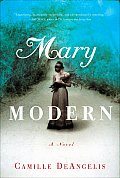
Over winter break, I picked up entirely by chance a first novel by author Camille DeAngelis, which is, in its own way, a story of time-displacement. Mary Modern, a beautiful and heartbreaking re-telling of Mary Shelley’s Frankenstein, is set in the near future. Lucy Morrigan, a brilliant young geneticist, turns to her father’s mysterious basement laboratory when all attempts to conceive a child with her boyfriend Grey fail. She successfully clones her grandmother Mary, but instead of an infant she ends up with a twenty-two year old woman with memories of a life she never lived and a husband who is long dead.

It is Lucy’s irrevocable actions that drive the narrative forward, but it is Mary’s voice and strength of character that capture our attention as she wrestles with the unutterable solitude of her existence and the question of how to move forward into an unknown future.

*Thanks to brother Brian for the title of this post, which is shamelessly stolen from the “Girlz n’ Monsterz” series by J. Scott Cambell.

Teen Fatherhood: The Cautionary, the Quirky

05 Tuesday Feb 2008

Posted by Anna Clutterbuck-Cook in book reviews

≈ Leave a comment

Tags

children, gender and sexuality, genre fiction

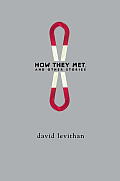
Recently, I’ve been thinking a lot about representation of teen sexuality, particularly in young adult literature, and what those representations say about how adults interpret, fear, and attempt to contain teen access to erotic material. In the course of this research, I’ve become aware of the dearth of male narrators in young adult novels that revolve around romantic and sexual relationships. There are exceptions of course, such as the work of David Levithan, one of my oft-cited favorite authors who has just come out with a new collection of love-themed short stories, many of which are narrated by boys. But the majority of YA literature about relationships is written about young women.
There are reasons for this, of course, many having to do with the way American adults have come to understand American teenagers: girls, the narrative goes, are primarily interested in love, while boys are on the lookout for sex. Social science research, not to mention the flesh-and-blood boys and men in my life, leave me disinclined to believe that male human beings are any less interested in, or capable of, forming intimate human relationships than female human beings. Therefore, I’ve been on the lookout for books that actually describe adolescent romance and sexual exploration from a guy perspective (if any of you have favorites, please leave them in the comments!).

At this point in my thought and research process, two relatively new novels aimed at the adolescent set and narrated by boys landed on my bedside table. Both of them are narratives of teen parenthood, though these narratives unfold in very different settings and contain radically different messages about what it means to take on the adult responsibility of fatherhood.
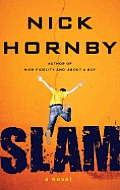
Slam, by Nick Hornby, is a contemporary story about a fifteen-year-old named Sam whose girlfriend of a few brief weeks, Alicia, gets pregnant after the pair fail to use their birth control correctly. When Alicia decides to carry the pregnancy to term, Sam struggles to incorporate his impending parenthood into the life he has hitherto only hazily planned.

While I adore Nick Hornby’s nonfiction, I have always had difficulty getting into his fiction, and have, I admit, never actually finished a Hornby novel (an approach to reading that he himself advocates quite persuasively in the introduction to his second volume of essays). However, from my incomplete experience, it seems to me that Sam, the protagonist of Slam, bears an intense resemblance to a the lead characters in other Hornby novels, the only difference being his younger age. He moves through the narrative in a fog of befuddlement, more acted upon than acting, a message reinforced by sequences in which he is mysteriously transported forward in time, where he is suddenly thrust into his parental role without the faintest idea what is expected of him. While Sam genuinely comes to love his son, and do his best to support Alicia, the overall effect of the tale is Cautionary with a capital P: have sex with your girlfriend and the next thing you know, she could be Pregnant and you could become a Parent.

There is truth to this message, of course–it is, and should be, Alicia’s decision whether or not to go through with the pregnancy (though there is, sadly, little real discussion between the two about their options). Yet I couldn’t help feeling that Hornby was, well, doing his bit to prop up the stereotype of adolescents as impulsive, hormone-driven beings incapable of a) using birth control, b) knowing and listening to their own instincts. The real tragedy of the story, to me, is not that the pair end up having to deal with an unplanned pregnancy, but that their sexual relationship has little to do with the feelings they have for each other. Alicia’s motives for sexual intimacy appear largely driven by unresolved issues with her ex-boyfriend. Sam, for his part, ignores his intuitive sense that he’s not ready: “When I’d worked out what was going on, it didn’t feel right,” he tells us, “There were three of us in her bedroom that night, me, her and him, and I decided that because it was my first time, I’d prefer to keep the numbers down” (44). Yet he fails to act on this self-awareness, and ends up a father.

Jake, the protagonist in Robin McKinley’s latest novel, Dragonhaven, also ends up a parent–though in this instance it is the result of acting on his instincts rather than ignoring them. Dragonhaven is roughly contemporary, but set in an America in which dragons are an extant species kept on reservations and largely invisible to the human public. On his first solo overnight trek into the park (as son of the park director, he’s grown up on the reservation) Jake stumbles upon a mother dragon murdered by a poacher and commits the federal crime of rescuing the one dragonlet still alive. I doubt that Robin McKinley was writing Dragonhaven as a story about teen fatherhood, but since I picked it up at the same time as I was reading Slam, what jumped out at me from its pages (aside from the realization that I will happily read anything she ever writes) is that it is, in part, a coming-of-age story about a teenage boy who, overnight, becomes a parent.

When Jake adopts the dragonlet, whom he names Lois, the illegal nature of the act–combined with the fact that the orphan bonds with him in lieu of her dead mother–means that Jake is the primary parent of a very needy infant. He has other residents on the reservation to support him, but the fact remains that Jake is the one responsible for feeding, cleaning, nurturing this totally dependent infant creature. And as Lois grows, he’s also the parent who has to learn how to let her become her own, independent being.

This isn’t a book primarily about sexuality or romantic relationships–though they aren’t entirely absent from the plot–but I was struck nonetheless with the portrait of adolescence Dragonhaven presents, juxtaposed against the fogged-in bumbling awareness of the teenagers in Slam–particularly Sam, the teenage boy. Throughout Slam, Sam’s behavior is subtly contrasted with Alicia’s, and Sam’s immaturity and inability to comprehend what Alicia is experiencing–as his girlfriend, as a pregnant woman, and later as young mother–are integral to his character development.

Dragonhaven, meanwhile, refuses this stereotypical “teenage boys are idiots” frame of reference. Jake is a boy, yes, but he’s first and foremost a person struggling to come to terms with the overwhelming responsibility that circumstance has presented him with. It’s a responsibility that, more often than not, resembles our conception of new motherhood: the sporadic sleep schedule, the inescapable necessity of being physically tied to a dependent infant, and over-riding all the discomfort and exhaustion, Jake’s irrational adoration and urge to protect his charge. If, at times, he appears a little slow at connecting the dots, the reason is not his age or his hormones, but rather circumstance: he’s a sleep-deprived new parent. No one, over the course of the novel, ever suggests he is less ready, able, or willing to take on the responsibility just because he’s a boy.

I’d like to think that some of Jack’s self-possession, even in the face of such unexpected and life-altering experiences, comes from his home-based (or, in this case, reservation-based) education and childhood experience. He’s spent his life in community with adults who, while they make allowances for youth, also forget to talk “down” to the few children at Dragonhaven. Unlike Sam, Jake hasn’t learned what it means to be a teenage boy by our cultural standards–instead, he’s learned what it means to be a human being who cares the vulnerable beings (animal orphans, children, dragons) who cross his path. Regardless of where Jake’s compassion, self-awareness and responsibility comes from, however, I think Dragonhaven is a thoughtful (and fun and fantastical!) story about a young man learning, however quirkily, what it means to be a parent.

And I think it has a lot of respect for teenage boys and their ability to be human beings.

Newer posts →
"the past is a wild party; check your preconceptions at the door." ~ Emma Donoghue

Recent Posts

  • medical update 11.11.22
  • medical update 6.4.22
  • medical update 1.16.2022
  • medical update 10.13.2021
  • medical update 8.17.2021

Archives

Categories

Creative Commons License

This work by Anna J. Clutterbuck-Cook is licensed under a Creative Commons Attribution 3.0 Unported License

Meta

  • Create account
  • Log in
  • Entries feed
  • Comments feed
  • WordPress.com

Blog at WordPress.com.

  • Subscribe Subscribed
    • the feminist librarian
    • Join 37 other subscribers
    • Already have a WordPress.com account? Log in now.
    • the feminist librarian
    • Subscribe Subscribed
    • Sign up
    • Log in
    • Report this content
    • View site in Reader
    • Manage subscriptions
    • Collapse this bar