• anna j. clutterbuck-cook
  • contact
  • curriculum vitae
  • find me elsewhere
  • marilyn ross memorial book prize

the feminist librarian

the feminist librarian

Tag Archives: michigan

alma mater update: in other unsurprising news…

08 Saturday May 2010

Posted by Anna Clutterbuck-Cook in think pieces

≈ 2 Comments

Tags

bigotry, education, gender and sexuality, hope college, human rights, michigan

Here’s the promised update re: Hope College and its Institutional Statement on Homosexuality, which I wrote about on Thursday.

The group Hope Is Ready, which has been one of those petitioning to have the statement withdrawn by the Board of Trustees, shared (through their Facebook page; apologies if this means you can’t follow the link) the following letter from Hope College President James Bultman yesterday afternoon.

May 7, 2010

Dear Members of Hope is Ready:

Thank you for your interest in Hope College and for the time and effort committed to sharing your concerns with the Board of Trustees. Your insights were helpful in our discussions. Those elected to hold the college in their trust have thoughtfully, thoroughly, and prayerfully considered your petition.

Relative to your petition, the Trustees have taken these actions:

1. The Board of Trustees denied your request to remove the 1995 Institutional Statement on Homosexuality

2. The Board of Trustees appointed a Trustee committee to expand the college’s 1995 position statement in the larger context of all human sexuality in such a way that the Hope community is called to a renewed encounter with the clear, demanding, and healing biblical witness regarding human sexuality.

The college’s current position on homosexuality is based on its interpretation of scripture. It is recognized that well-intentioned Christians may disagree on scriptural interpretation. Still, humbly and respectfully, the college aligns itself in its interpretation with is founding denomination, the Reformed Church in America, the orthodox Christian Church throughout the ages, and other Christian colleges and universities.

On behalf of the Hope College Board of Trustees, I thank you for your concern for the college we love and respectfully ask that you accept these decisions in the spirit with which they are rendered.

Cordially,

James E. Bultman
President

In short, it basically says nothing that hasn’t already been said, and the fact it was up on the web by 2:33pm yesterday afternoon makes it pretty clear that the Board of Trustees didn’t spend much time deliberating on their course of action.

Sad, despiriting, but unsurprising.

I’ll be thinking today about all those folks in the Hope College community — many of whom I’ve known my whole life — who do not think this way, and who work hard everyday to make sure the official college position is not the only one that gets heard.

I said in my letter to the Board, and I’m going to repeat it here: to tell any person that being sexual and making positive, fully consensual, sexually intimate connections with another human being is destructive to their spiritual well-being is an act of violence. To codify such a belief in an institutional statement makes it institutionalized bigotry, giving that belief the authority of college administration that has the power to materially effect the lives of students and employees.

I absolutely believe that such an act of violence runs counter to the Christian message that we are all called to increase joy, practice love, and work toward wholeness in the world. I don’t see how this decision by Hope’s Board of Trustees does any of that. So it sure as hell doesn’t seem very Christian to me.

*image credit: Hope College Voorhees Hall, made available through the public relations office website.

in which I write letters: dear alma mater

06 Thursday May 2010

Posted by Anna Clutterbuck-Cook in think pieces

≈ Leave a comment

Tags

education, hope college, i write letters, michigan, politics, sexuality

Today, the Board of Trustees at my alma mater (Hope College) convenes for its spring meeting. On the agenda is the Insitutional Statement on Homosexuality (PDF), written by the college president in 1995 and formally adopted by the board in 2001. The statement basically affirms the position of the Reformed Church in America which condemns homosexual “acts” while “affirming the responsibility of Christians to be fair to and accepting of persons with a homosexual orientation” (yeah, don’t ask; I’m not sure how they expect anyone to actually carry this off).

Anyway, the Hope LGBT Alumni Association called on folks to write the Board a personal letter opposing the statement and calling for its repeal. And because I enjoy writing letters and welcome any opportunity to get up on my soapbox and declaim on issues near and dear to my heart, I jumped at the chance.

And because it’s a shame to share self-righteousness with only the Board of Trustees when you can spread it around the internet, I’m posting it here. I’ll let y’all know what happens in the weeks to come!
Anna J. Cook (’05)
XX Xxxxxxxx Xx Xxx #
Allston, MA 02134

16 April 2010

Joel G. Bowens, Chairperson
Hope College Board of Trustees
c/o Office of the President
141 East 12th Street
Holland, MI 49422-9000

To the Board of Trustees:

I am a third generation alumna of Hope College, a 2005 graduate (summa cum laude) in History and Women’s Studies, and daughter of Mark Cook, Director of the Hope-Geneva Bookstore. I was born and grew up in Holland, only blocks away from the Hope campus, and there are many reasons I am proud to recognize Hope College as part of my heritage.

Since I am also a feminist and in a committed relationship with another woman, the college’s Institutional Statement on Homosexuality is not one of them.

As I know that the Board of Trustees plans to review the Institutional Statement on Homosexuality at its May meeting, I would like to take this opportunity to share with you some of my experiences at Hope College as a non-heterosexual student and as someone who believes non-straight sexuality is completely compatible ethical sexual practice.

I started taking classes in the fall of 1998 as a seventeen year old, eager to explore the brave new world of higher learning, creative writing, and political engagement. In the fall of 1998 Hope College hosted a Critical Issues Symposium on “Feminism and Faith” that was, for me, an initiation into a world of scholarship that spoke directly to my values: I was introduced to a community of scholars and theologians who believed deeply in equality, justice, and the glorious chaos of human existence. In the wake of the Symposium, throughout the 1998-1999 academic year, various speakers came to campus to talk about human sexuality. During that time I witnessed first-hand a great deal of hostility, both among students and on an institutional level, to those values of equality and justice and to the acceptance of human diversity.

I thought seriously after that first year about leaving Hope and transferring to a more welcoming campus. To be honest, despite generous tuition benefits, I would probably not have stayed if it had not been for the Women’s Studies faculty who gave me the space to explore the world of human sexuality and human rights without limiting the possibility of sexual morality to heterosexual relationships. I will be forever grateful for that space in which the faculty at Hope encouraged me to develop my scholarship and articulate my values. Yet it was always clear to me that those values were not in line with the beliefs held by those who formulated institutional policy. The stories I hear from family and friends still involved on campus indicate to me that this situation has not materially changed.

As the Board revisits its support of the Institutional Statement on Homosexuality, I urge you to consider the possibility that a same-sex sexual relationship offers us manifold opportunities to bring joy, love, and well-being into the world – as does any sexual relationship between two enthusiastically consenting individuals. I would encourage you to imagine that Hope College’s role as an institution of higher learning, in the context of the Christian faith, could be to encourage its students to explore their sexual values and ethical sexual practices regardless of the gender of those individuals engaged in any particular sexual activity. This, it seems to me, would be a much more life-affirming than to sit in judgment, suggesting that non-straight people who act on their sexual desires, regardless of ethical practices, are unchristian and therefore marginal members of the Hope College community.

I cannot hope that by writing this letter I will be able to persuade any of you, single-handedly, that non-straight sexual intimacy is no more or less sinful than heterosexual sex. Nor can I claim to understand the myriad pressures that are brought to bear on the Board of Trustees by certain stakeholders to reaffirm the condemnation of a certain proportion of its student, faculty, staff, and alumni population (not to mention their families and friends) for the nature of their love relationships and sexual practices.

Speaking for myself, however, I would like to make it clear to the Board that unless the atmosphere at Hope regarding human sexuality demonstrably improves, I will not support the college as an institution, financially or otherwise. I was clear about that upon graduation, and I am even clearer about that now. I will not support an institution that does not recognize the legitimacy of my primary relationship and continues to create a hostile environment for faculty, staff, and students who are not straight or do not believe that non-straight sexuality is immoral. This makes me sad, since some of the most dedicated faculty and highest-quality teaching I have ever encountered have been at Hope College. However, in the end I am unwilling to support the institutional marginalization of some in the Hope community just for whom they have fallen in love, or share sexual intimacy, with.

To tell any person that being sexual and making positive, fully consensual, sexually intimate connections with another human being is destructive to their spiritual well-being is, in my opinion, an act of violence. To codify such a belief as an institutional statement makes it even more destructive, as it is amplified by the position of authority a college administration holds over its students and employees. I believe such an act of violence runs counter to the Christian message of increasing joy, love, and wholeness in the world.

Ultimately, you may well choose to uphold the current institutional policy. However, it is my hope that before you do, you reckon with the pain and alienation you have caused (and will continue to cause) some within the Hope College community by doing so.

Respectfully submitted for your consideration,

Anna Jane Cook
Allston, MA

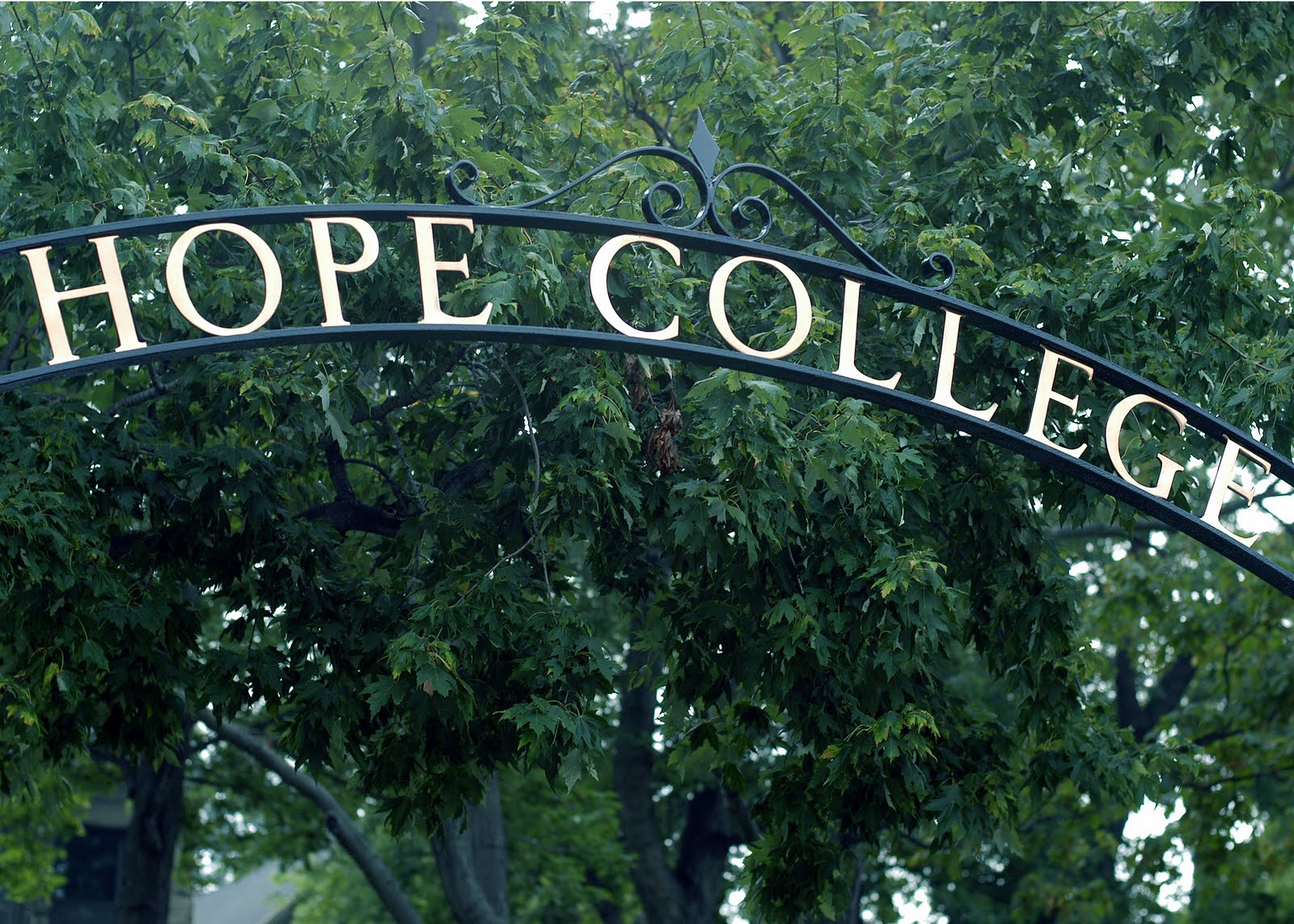
*image: Hope College Arch, made available through the public relations office website.

the logic of children & other thoughts on learning

17 Wednesday Feb 2010

Posted by Anna Clutterbuck-Cook in think pieces

≈ 2 Comments

Tags

children, education, michigan

My mother, now that we kids are all long out of the house (my youngest sister is a senior in college this spring), works as a childcare provider for a family in the neighborhood. Both parents are teachers in the public schools, and this past weekend my mother sent this great anecdote that I thought I would share with y’all.

K [the mother] told me a hilarious story about science lessons in her kindergarten. They had apparently finished a mandated unit on the concept of “force.” And there was a test at the end. One of the questions asked them what would they use to get a ball to move, the answer being “force,” but overwhelmingly the kids said she would need a dog. I love it. Interestingly, K was discouraged by this. But I said, just refuse the grounds of the test. They can’t identify something as vague as “force,” even if they can talk about it. The demand is inappropriate. Nothing is wrong with exposing them to the vocabulary, but expecting them to manipulate so abstractly is maybe useless to them.

I actually think the kids provided a perfectly logical response to the question posed, given their experience in the world (and, I would bet, the illustrations in the teaching packet used). So they actually have the answer correct: want the ball to move? You need something to move it! It’s not going to leap into action on its own (that is, it requires outside “force” to give it momentum). What have you seen make a ball move? A dog playing fetch!

This story reminded me of a story in New York Magazine that I saw while browsing at the newsstand in Trident Booksellers, “Junior Meritocracy,” by Jennifer Senior, which explores the (apparently highly competitive?) world of kindergarten entrance exams. The article is interesting (though, if you’re a test-skeptic like me, somewhat stressful to read) and I recommend clicking through. In a nutshell, Senior describes the culture of competitive kindergarten and then talks to sociologists who point out what (to me, anyway) seems like the obvious:

“People have the idea that with these tests you can cancel out socioeconomic background and get to some real thing in the kid,” agrees Nicholas Lemann, dean of the journalism school at Columbia and author of The Big Test, a history of the SAT. “That’s a chimera. If you’re a 4-year-old performing well on these tests, it’s either because you have fabulous genetic material or because you have cultural advantages. But either way, the point is: You’re doing better because of your parents.”

Rather than promoting a meritocracy, in other words, these tests instead retard one. They reflect the world as it’s already stratified—and then perpetuate that same stratification.

Since getting involved in the debate at Yes Means Yes over the culture of home education last week, I’ve been thinking a lot about the powerful assumption made by Americans (and Americans of the liberal persuasion particularly, I venture to suggest) that education (specifically universal public education) is the solution to all of the inequality that exists in our country. This was certainly the point of view Gregory Butler (commenter “Movies, Reviewed”) put forward over at Yes Means Yes: that mandatory public schooling would guarantee universal cultural harmony . . . or at the very least, protect us from the stress of living in a society in which not everyone shares identical values. The idea that education (in the specific package of schooling) is the key to life success has the status of common sense: we seldom question this notion, and therefore scramble — like these parents of prospective kindergarten students — to give children the advantage of what is seen as the best schooling (whatever we feel that to be).

I’m skeptical. While I value learning deeply, I am also wary of buying into the notion that schools are the best educative space in which to invest as a solution to the inequities that (yes, absolutely) exist in our culture. If nothing else, I am mindful of the legacy of turn-of-the-twentieth-century progressive educators like Jane Addams and John Dewey who (while, don’t get me wrong, put forward many wonderful ideas about how to reshape learning environments to better suit the children who inhabited them) held up public schooling as a way to Americanize the influx of immigrants who were seen as jeopardizing America’s social stability and national character.

Possibly more thoughts to come on this. Meanwhile, rest easy in the knowledge that when faced with the task of how to move a ball, you know what to do: go find the nearest golden retriever!

*image credit: Dienstelle 75 @ New York Magazine.

guest post: holland, hope & homosexuality

13 Wednesday Jan 2010

Posted by Anna Clutterbuck-Cook in think pieces

≈ Leave a comment

Tags

gender and sexuality, guest post, michigan

A couple of weeks ago I wrote a response to Dustin Lance Black’s op-ed, describing his experience this past fall in my home town of Holland, Michigan. I also invited one of my sister’s friends, Arin Fisher — a Hope College senior in creative writing (poetry) and self-described “closet pamphleteer” who was involved trying to bring Black to campus to write a guest post about his own experience of how Holland and Hope College deal with homosexuality. Without further ado, here’s Arin.

I’m a gay cliché, especially recently. I’m now the gay who quotes Harvey Milk, gestures always with endearing melodrama, and isn’t afraid to wear ivory post-Labor Day. As you may assume, my behavior is a red-flag to hicks everywhere, especially at home in Indian River, that I’m a goddam homsexshul. I make trite jokes about the gay agenda and how, due to mail-error, the conservos always receive my copies. Fuck me.

But I wasn’t always so gay. I was the kid whose first very secret crush committed suicide, who went on short term mission trips with Global Expeditions, whose reorientation therapy failed (whose therapist’s son was gay, too, and who taught me a few of the tricks I now know), and who applied to all the conservative colleges in Michigan, including Hillsdale, and was accepted with enormous scholarships because of my promise in right-wing politics. But I chose Hope for the mentors who, like me, struggled to come to terms with their sexuality and who married women and led what many believed to be perfectly normal straight lives.

Freshman year I followed my RA, Erin, to a Gay Straight Forum meeting at a wee white house just off-campus, but then I passed the house, peaking as covertly as possible through cracks in the lacy curtains before looping back toward my dorm, spooked by the perceived threat of association and other threatening receptions from the gay people in the house. I thought quietly [righteously] that had I gone there to listen to the conversations, they’d know that I’m queer. Gawd.

Growing up in northern Michigan, I was skilled — I skirted every gay man I encountered. Those gays whose friendship I began to value, I diligently offended. All those whom I crushed on, I cut out of my life because I was Christian, and you know the story. I elegantly employed these hard-learned skills. I learned that to avoid other gay men, I must avoid situations where gay men would be present. All to say: I’m unaware of any concerted effort to dialog about sexuality apart from the Mel White battle in the late 90s as I spent a majority of the past three years praying the gay away.*

You might aim blame at me for Lance’s misinformation. I briefed him from my experience which was teleologically sub-gay until fall 2008. Now that I’m more on the front-lines in terms of having “friendly” conversations with the Dean of the Chapel and “friendly” discussions with the Dean of the Students and organizing 501c3 LGBT groups, I’m doing more research, both personal and academic, in hopes of self-informing enough to competently reflect informed LGBT students to the higher-ups at Hope and in the community. I’m happy that I’ve been able to contribute a little to the conversation, if not always in the most informed way, at least in a way that adds Dustin Lance Black and my supreme penchant for melodrama to the coveted repertoire of Hope’s self-consciousness of diversity.

~Arin Fisher.

*Editor’s footnote: “the Mel White battle” Arin refers to is the period I described briefly in an earlier post. Former Christian right activist turned gay Christian author Mel White was invited by a coalition of campus groups to speak at Hope in response to another guest speaker, Mario Bergner, a conservative ex-gay therapist, brought in by the campus ministry as part of a chapel series on Christian love.

holland, hope, and homosexuality: some reflections

30 Wednesday Dec 2009

Posted by Anna Clutterbuck-Cook in think pieces

≈ Leave a comment

Tags

gender and sexuality, hope college, michigan, politics

Just before Christmas my friend Rachel sent me a recent column by screenwriter Dustin Lance Black about his experience filming in Holland, Michigan (my hometown) and being invited to speak at Hope College (my alma mater). As I wrote here in October, Black was extended and invitation to speak at the college and then the invitation was withdrawn by the administration. Later arrangements were made for Black to speak at an off-campus venue.

Black’s column, reflecting on his experience in Holland and at Hope is clearly written in a well-meaning spirit of reconciliation in a situation where hurt feelings abounded. It is also written from the personal perspective of an outsider who visited Holland for a short period of time to do a specific project and became tangled up in one chapter of the ongoing saga that is West Michigan’s religious, social and political conservatism. More specifically, he walked into a situation colored indelibly by Hope College’s struggle to decide where it stands in relation to the Reformed Church in America, a denomination currently divided (as most mainline Christian denominations are) in regards to their official stance and everyday practice concerning sexual orientation.

Unfortunately, I think Black, with the myopia of a visitor — misses the mark when it comes to understanding the particular context for — and history of — his own slice of experience in West Michigan and with Hope College. He characterizes Holland (a metropolitan area of roughly 95,000) as a “small Midwestern town” and describes his encounters with the local populace as if his presence was somehow a catalyst for the city and college to wrestle with issues of sexual orientation that they had heretofore complacently ignored. “I don’t think the town was homophobic,” he writes, “I think they had simply never discussed gay rights openly before, and here I was, an interloper, threatening to thrust this hot-button issue into their community.”

Well . . . yes and no. Clearly, I have my moments of profound antagonism toward the conservatism of place and people that characterizes the West Michigan region. There are reasons I felt it necessary to become a self-identified feminist, reasons that I decided to move elsewhere for graduate school, and reasons I will think long and hard before supporting my alma mater financially or otherwise. There have been times when I experienced the majority culture of West Michigan like a physical weight on my chest, an asthma attack waiting to happen.

Yet on the other hand, I think it’s important — and I speak here as a feminist, as someone who’s bisexual and in a same-sex relationship, and as a Midwesterner — to resist the easy dichotomy of “Midwest” versus “coast,” and “small town” versus “urban” that become stand-ins for talking about political and social conservatism and liberalism. West Michigan was where I became the person I am today partly in spite of yet just as much because of the people around me: West Michigan’s politics and majority culture are conservative, but that conservatism does not thrive in a vacuum free of liberal, leftist pushback. West Michigan conservatism is perennially contested by those who disagree with the premises of a conservative Church and Republican party politics. (Consider, for example, that my senior project in the Women’s Studies program at Hope was a multi-year group research project on a predominantly lesbian, feminist organization and community that thrived in West Michigan during the 1970s and early 1980s.) I would argue that Black served less as a catalyst for new awakening and more as the latest spark to reignite the antagonism between these two indigenous forces: dominant culture and counter-culture.

Those outsider-sparks can serve as personal awakenings, sure: it was a similar series of events in 1998 that were my own adult initiation into the world of feminist and LGBT politics — but I think the important thing to remember is that even if the immediate impetus for such community reflection comes from outside, myriad resources with which to challenge the conservative status quo are rooted deep in local, Midwestern soil.

I grew up a crazy-ass liberal in what (as Black points out) is the most Republican-leaning county in Michigan — yet I found a tenacious network of like-minded folks within that community who have helped me to grow, often to thrive, and always to explore a world beyond the boundaries of fear-driven, narrow-minded conservatism. And many of those people hail from (and continue to live in more or less uneasy relationship with) the very groups of folks that Black imagines to be so well-meaning yet clueless about queer politics. Among the folks who helped me grow into the woman I am today are Holland natives, Hope College faculty and staff, and deeply religious folks whose Christianity informs their political liberalism.

And those folks deserve to reside in the “small Midwestern town” of our collective imagination just as much as (if not more than) those who resort to fear and exclusion.

gelukkig sinterklaas nacht*

05 Saturday Dec 2009

Posted by Anna Clutterbuck-Cook in our family

≈ 4 Comments

Tags

domesticity, holidays, michigan

Tomorrow is St. Nicholas Day, what in my family growing up was the true beginning of the Christmas season. Every year on the night of December 5th we’d put out our shoes for St. Nicholas, and on the morning of December 6th we’d wake up to shoes full of chocolates, marzipan, and and other small holiday treats.

In fond remembrance of the holiday, I bring you Six to Eight Black Men, by David Sedaris, is perhaps my all-time-favorite commentary on the holiday; you can also listen to Sedaris read this piece in an episode of This American Life as part of one of my all-time favorite episodes, “Them.” (Bonus: “Them” also features Jon Ronson of men-who-stare-at-goats fame reading an excerpt from his book Them: Adventures With Extremists). For anyone who has tried to fathom the holiday celebrations of an unfamiliar culture: this essay is for you.

*dutch for “happy st. nicholas eve”
**Image credit: Susan Seals @ The St. Nicholas Center.

Quick Hit: Congrats Arin!

02 Wednesday Dec 2009

Posted by Anna Clutterbuck-Cook in linkspam

≈ Leave a comment

Tags

education, family, gender and sexuality, hope college, michigan

Back in October I wrote a post venting about the immaturity exhibited by the administration of my alma mater over a student-issued invitation to screenwriter Dustin Lance Black to speak at the college in conjunction with a screening of his film Milk. Via my Dad (and our hometown newspaper) comes the news that after a long delay and a change of venue, the talk will be held at an off-campus location.

Hope College is not involved with the event.

“Although the college did not choose to invite Mr. Black to speak in an open forum on campus, the film ‘Milk’ raises a variety of moral and social issues and questions,” school spokesman Tom Renner said. “Many of these and other challenging issues have been and will continue to be discussed in a variety of college courses and in other events on campus.”

Hope College student Arin Fisher is among those in the grassroots group Hope Is Ready, which is sponsoring the event.

“Hope Is Ready is just a group of concerned students, faculty, staff and community members who want Hope to know that we as a community are more than ready to discuss questions about the LGBT community, the church and any other relevant issue,” Fisher said.

I’d just like to say congratulations to my sister Maggie’s friend Arin (quoted above), whom I know has been working hard for this all semester long. Hope College is a better place for having you there, and I hope at some point down the road they recognize that!

Hope you all have fun at the screening.

have a restful thanksgiving

26 Thursday Nov 2009

Posted by Anna Clutterbuck-Cook in our family

≈ Leave a comment

Tags

addie, family, holidays, michigan, photos


Hanna and I are planning to enjoy the day sans things academical and plus Charles Shaw merlot and a Tofurky roast from our local Trader Joe’s.

Bonus Radical Feminist Link: Women Postpone Thanksgiving Dinner to Meet Militant Feminist! a 1909 news story via Sociological Images.

not cool, alma mater: a bit of a rant

30 Friday Oct 2009

Posted by Anna Clutterbuck-Cook in think pieces

≈ Leave a comment

Tags

education, family, feminism, gender and sexuality, hope college, michigan

My alma mater, Hope College, has been making minor waves in the news recently due to the administration’s unwillingness to approve an invitation by students to screenwriter Dustin Lance Black (who won an Oscar last year for Milk) to join in a roundtable discussion on human sexuality. Since Hope is a college with strong ties to the Reformed Church in America (RCA), and the denomination — like most Christian denominations — is currently split over the issue of homosexuality, this not really a surprise to anyone who knows the campus: the invitation was bound to be controversial.

Since the late 1990s (as I was starting to take classes on campus as a teenager), sexuality and gender in the context of Christianity have been a flash point at Hope, much like they are in the wider culture. During the 1998-1999 academic year, when I was taking first-year courses in English and Religion, the campus was rocked by explosive debates over feminism, sexuality, and the place of Christianity in higher education. My own adult political awareness — the decision to identify myself politically as a feminist, and my engagement with the politics of human sexuality — has its roots in that formative adolescent experience. Thankfully, as a seventeen-year-old, I saw faculty, staff (including my own father) and students speak out forcefully against bigotry at the same time that I was witnessing the intolerance that characterizes certain conservative Christian worldviews.

The exhilaration and pain I experienced that school year of 1998-99 profoundly shaped my relationship with Hope: from that point forward, I knew that however supportive and intellectually challenging my professors were (you were awesome, folks!), Hope College as an institution was not interested in championing an open and affirming vision of Christianity or of a broader human community. Because of that, the school has never truly earned my trust or my allegiance. In conversations I’ve had this week with my sister (a current student) and some of her friends, I can see a similar trajectory in the growth of a whole new generation of students.

I know first-hand how painful and personal the politics of these denominational and institutional conflicts can be, and I recognize the powerful sway of conservative donors and the strength of religious convictions — even when I believe those convictions to be theologically misguided and inhumane. It’s complicated, and I’m usually the first to admit that. But damn, Hope. You guys gotta learn. And you really need to quit hiding behind the waffling of the church and the fear of losing donors. ‘Cause you’re sure as hell losing future donors now. Not to mention doing a patently crap job of modeling civil discourse and educated, educative discussion.

How old are we — two? Is it impossible to imagine students having thoughtful conversations about issues they have deep personal convictions or questions about? If they can’t have those conversations on a fucking college campus where can they have them, exactly? Can we please exhibit some mature behavior here and demonstrate that thoughtful people can disagree without chewing each others’ arms off? And can we please, please pause for a moment to consider what sort of message non-conversation is sending? Possibly (shock! horror!) recognize that certain members of the Hope College community, past and present, have felt “hurt and marginalized” by the institutional reluctance to have open conversation? Not talking does not make the scary bad feelings go away. It just puts them (all too often) on the shoulders of people with less political and financial clout. Which is not an unexpected tactic, but still deserves to be called out and identified as the sort of immature abuse of institutional power it is.

I’ve been thinking a lot this week about the folks I know who continue to work and learn in that sort of environment, and I’m sending good vibes their way. I learned ten years ago that I, personally, have limited energy for front-line action in these sorts of political and educational battles. But I deeply respect the people — including many friends and family — who have the guts to keep on speaking up day after day after day in less-than-perfect situations, doing their best to make the next day a little bit better. So thank you all for being there for me, when I was a student, and to all of you — faculty, staff, and students alike — who are continuing to make Hope a place where marginalized folks who are there can, despite the odds, find emotional and intellectual support, and forge a worthwhile learning experience for themselves.

To the folks who didn’t, and aren’t, I realize this probably means little to you, but you are on my shit list and I will see to it in my own behind-the-scenes way that you have as little power to fuck with peoples’ well-being as possible. End of story.

links list: off to michigan edition

26 Monday Oct 2009

Posted by Anna Clutterbuck-Cook in linkspam

≈ Leave a comment

Tags

family, michigan


As this posts, I’ll be in the air somewhere between Boston and Grand Rapids, Michigan, where I’m going for an all-too-brief rendezvous with my parents, youngest sib, a few close friends . . . and of course Toby the cat (see above). Meanwhile, here are a few of the week’s internet finds to keep your brains active!

On a personal note, I’ve been cajoled into participating in National Novel Writing Month (or NaNoWriMo; please repeat seven times fast) in which writers around the globe feverishly churn out prose and log words written with the organization, which tracks the mountain of creative effort expended (no actual skills needed, thankfully, other than the ability to produce a great volume of words — something I have always been fairly adept at). Writing starts November 1st with a goal of 50,000 words (1,666 per day) by the 30th.

Coolest news item of the week: San Francisco now requires composting as well as recycling. While I’m not holding my breath, I’d love to see Boston follow suit!

Least-cool news of the week award is split between the judge in Louisiana who denied a mixed-race couple a marriage license (“I’m not a racist, I just play one on the bench”??) and Jan Moir, the UK columnist, who wrote a truly nasty, homophobic column for the Daily Telegraph and (cool news again) was called out by Stephen Fry, and a record 22,000 others.

Also worth reading was Charlie Brooker’s op-ed in response:

It has been 20 minutes since I’ve read her now-notorious column, and I’m still struggling to absorb the sheer scope of its hateful idiocy. It’s like gazing through a horrid little window into an awesome universe of pure blockheaded spite. Spiralling galaxies of ignorance roll majestically against a backdrop of what looks like dark prejudice, dotted hither and thither with winking stars of snide innuendo.

While we’re on the subject of right-wing wackaloonery, commentator Debbie Schlussel recently got all bent out of shape about (of all things) Disney’s re-design of Tinker Bell’s costume, which she claims “masculinizes” the otherwise appropriately-feminine “nymph.” This gave Jeff over at Alas, a blog, a wonderful opportunity to snark.

Maybe Ms. Schlussel would be happier if everyone lived according to the rules of this 1962 marriage manual, helpfully scanned and annotated by Gwen of Sociological Images.

I am probably not a nice person for finding fundamentalist Christians funny as well as scary — chalk it up to necessary self-protection growing up in a conservative area where my childhood friends were convinced I’d end up in hell because I wasn’t baptized. So on that note — and in celebration of Halloween — a church-sponsored book burning (story via Hanna) that will include translations of the bible (wrong translations obviously) and the face of Jesus which has been spotted on a toilet-stall door at an IKEA in Glasgow (via Melissa at Shakesville).

Hanna’s new group blog, paper not included, is still in the planning stages, but until the official launch of the project, let me share a review she wrote recently of David Wellington’s vampire thriller 99 Coffins, the sequel to 13 Bullets (I guess we’re going for a number theme). I can’t comment yet as I’m not finished with 99, but I thought the first one was great and am still rooting for the protagonist halfway through the second.

And before I sign off, two great library- and archives-themed jokes: the definition of “oldgasm” and a great shelf tag from Hanover, New Hampshire (if you don’t get it right away, read the text out loud).

← Older posts
Newer posts →
"the past is a wild party; check your preconceptions at the door." ~ Emma Donoghue

Recent Posts

  • medical update 11.11.22
  • medical update 6.4.22
  • medical update 1.16.2022
  • medical update 10.13.2021
  • medical update 8.17.2021

Archives

Categories

Creative Commons License

This work by Anna J. Clutterbuck-Cook is licensed under a Creative Commons Attribution 3.0 Unported License

Meta

  • Create account
  • Log in
  • Entries feed
  • Comments feed
  • WordPress.com

Blog at WordPress.com.

  • Subscribe Subscribed
    • the feminist librarian
    • Join 37 other subscribers
    • Already have a WordPress.com account? Log in now.
    • the feminist librarian
    • Subscribe Subscribed
    • Sign up
    • Log in
    • Report this content
    • View site in Reader
    • Manage subscriptions
    • Collapse this bar