• anna j. clutterbuck-cook
  • contact
  • curriculum vitae
  • find me elsewhere
  • marilyn ross memorial book prize

the feminist librarian

the feminist librarian

Author Archives: Anna Clutterbuck-Cook

Midweek MewMew Post

18 Wednesday Feb 2009

Posted by Anna Clutterbuck-Cook in media

≈ Leave a comment

Tags

humor

Instructions for playing the iPhone application MewMew Tower.

The “MewMew Tower” is the game that is accumulating a lot of cats highly the sky in a line.

You will stack a cat straightly so that balance may not worsen.

If iPhone is leaned, a cat will collapse easily.

Oppositely, let’s incline iPhone and balance when becoming ill-balanced.

It is a fun game to be able to enjoy from a child to an adult.

Thanks again to Hanna for the amusement.

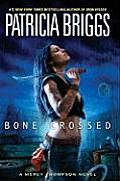
Booknotes: Bone Crossed

16 Monday Feb 2009

Posted by Anna Clutterbuck-Cook in book reviews

≈ 1 Comment

Tags

feminism, genre fiction

This past week, I took a break from academic reading to enjoy the fourth installment of the Mercy Thompson series, Bone Crossed, by Patricia Briggs. The series, if you haven’t already encountered it, is a fantasy series centered around a young woman who works as a car mechanic and happens to be a walker raised by werewolves. At the beginning of the series, Mercy is trying to avoid her supernatural past as much as possible, a goal that becomes increasingly untenable as she is drawn deeper and deeper into local politics and relationships with a cast of characters both human and non-human (and, often, somewhere in between).

I’ve been looking forward to this book since the last one came out, and I definitely wasn’t disappointed. The fourth installment is on par with the other three novels in the series (Moon Called, Blood Bound and Iron Kissed) and manages to balance Mercy’s newly-established significant-other relationship with a plot involving the local vampire seethe, a malevolent ghost, and tense inter-species politics. Furthermore, Briggs deserves major kudos for writing Mercy into an emotionally and physically intimate relationship with a super-dominant werewolf without finding it necessary to alter Mercy’s basic personality or downplay her established ability and willingness to stand up for herself and the people she cares about.

But (you knew there was going to be a “but . . .”), as the series moves forward I’ve become increasingly aware of a weird dynamic: the absence of other central women characters. Or, more specifically, the lack of central female characters with whom Mercy has primary relationships that aren’t either (1) protective, or (2) antagonistic. Jesse, the adolescent daughter of the local alpha werewolf, is a wonderful character — but of course she’s still a child to be cared for by the adults in her life. There are dominant female werewolves, but they’re jealous of the attention Mercy receives from the male werewolves and disdainful of her non-werewolf status. And Mercy’s human and other non-werewolf connections are pretty much exclusively male — at least the ones that make it into the narratives for more than a passing glance. This is a dynamic I’ve noticed in a few genre series lately, and reading this book is giving me the opportunity to throw a question out to all of you: what’s going on here?

It’s not her choice of a partner that’s a problem, or the fact that many of her close secondary friendships are with guys. The men in the story make up a great cast of characters. I realize that Mercy is straight, so her sexual relationships are going to be with men, and her strongest primary ties will be with her significant other. As the story stands, he’s not the sole focus of her life, but he’s a solid component of the core. In my opinion, Briggs is striking a successful balance on that score. What is striking to me isn’t the presence of men in Mercy’s (albeit fictional) life, it’s the absence of women.

Why? Is there something inherent to the genre that makes it particularly difficult to write a fully-realized female protagonist who isn’t a sort of token woman amid a cast of male characters? I don’t think so: consider Emma Bull’s War for the Oaks or Melissa Marr’s Wicked Lovely, both of which feature great women protagonists who are in primary relationships with male characters, but who nevertheless sustain relationships with other women too. Perhaps in this case, Briggs’ hands are somewhat tied by the fact that her werewolf society is deeply patriarchal — highly aware of gender and hierarchy. In fact, it’s the patriarchy of the pack dynamics that’s made Mercy wary of getting involved with werewolves (personally or politically) at the beginning of the series. Working within a patriarchal framework creates a situation where Mercy has to out-guy the guys a lot of the time, in order to make sure she isn’t dismissed. But surely Mercy isn’t the only woman in Briggs’ alternate universe bloody-minded enough to fall in love with a werewolf and fight to establish a relationship on equal terms . . . and what about the werewolf women? In short — where are Mercy’s female friends?

If you’ve read any of the Mercy Thompson novels, or any other fantasy/science-fiction novels that suffer from this problem (or are an example of how it could be done differently), I welcome your thoughts, and suggestions for further reading, in the comments!

Cross-posted at Feministing Community.

Links to some stuff, various

15 Sunday Feb 2009

Posted by Anna Clutterbuck-Cook in linkspam

≈ Leave a comment

Tags

books, feminism, gender and sexuality, politics

Stuff I haven’t had a chance to blog about in detail:

Courtney E. Martin on Why Love is Our Most Powerful Form of Activism.

Tkingdoll, over at Skepchick, on the historical moment we’re living through and why, despite all news headlines to the contrary, we might be lucky to be alive in the midst of it.

Race and Gender in Coraline, over at FilthyGrandeur (via Feministe).

Ariel Levy’s review of the new edition of The Joy of Sex. Let it be noted I take issue with her characterization of both Our Bodies, Ourselves and the Moosewood Cookbook — both are just fine without the bacon, thank you very much!

Some thought-provoking coverage of Ruth Bader Ginsburg’s role on the U.S. Supreme Court as well an analysis of the court’s current composition.

“No one expects e-books to overtake printed books as rapidly as digital music overtook CDs and albums” . . . but will they ever?

Dancing Backwards in Heels offers some reflections upon reading Michael Kimmel’s Guyland (2008).

And finally, if you’re feeling strong, the wrongness that is Obama slash fanfic (commented on, with excerpts, at Bitch blogs), and Pilgrim Soul, at The Pursuit of Harpyness on the creepyness of America’s obsession with the Obama family’s “hotness.”

A few of my favorite (feminist) things

13 Friday Feb 2009

Posted by Anna Clutterbuck-Cook in book reviews

≈ 1 Comment

Tags

feminism, gender and sexuality

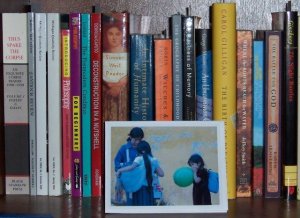
In honor of V-Day this year, the Feminist Review is doing a favorite feminist book photo contest. I was tempted to contribute, but since my number-one, all-time favorite feminist read is Our Bodies, Ourselves, I figured the picture would really best be done as a calender girls shot. And I will not be getting naked on the internet, even discreetly naked, until I have 1) a heck of a lot more job security — like, permanent feminist-friendly job security 😉 — and, 2) someone like Willy Ronis offers to do the photo shoot.

So as a second-best offer, here is a top five list. I say “a” top five list, since there are probably others I could have composed. I picked these for diversity of period, genre, and sentimental value. And they’re not in hierarchical best-worst/worst-best order: I’ve taken a page from Nick Hornby’s High Fidelity, and arranged them autobiographically.

1) Pippi Longstocking, by Astrid Lindgren (1945). There are many other children’s books I could have named here, with similarly awesome girl characters in them. But Pippi will always hold a special place in my heart. Maybe it was the fact that she, like I, never seemed to see the point of attending school — even if it meant you got summer vacation! She was bold, imaginative, physically daring, generous to her neighbors, and never let older people push her around simply because they were bigger or older than she. I also hold Pippilotta Delicatessa Windowshade Mackrelmint Ephraimsdaughter Longstocking responsible for my childhood desire (which still occasionally manifests itself) to be a redhead.

2) Our Bodies, Ourselves, by the Boston Women’s Health Book Collective (1970, and many subsequent editions). As promised above, a little about why I’d choose this book as my favorite feminist read: I think of this book as my introduction to modern political feminism. I first read my mother’s copy as a young adolescent, and I can’t think of a better way to learn about the possibilities of my (nascent) adult body than through the lens of the women’s health movement. This book was my introduction to my anatomy; to the experience of pregnancy and feminist parenting; to options for abortion and contraception; to masturbation; to the ways in which adults negotiate sexual relationships (both hetero and same-sex); to the concept of collective political action for social change. Out Bodies, Ourselves endures — from my perspective — as a feminist text because it foregrounds women’s voices in all their complexity. The book collective discovered, even in its earliest incarnations, that the best way to gather intelligence about how women experienced their bodies was to ask them. This remains, to me, the central tenant of any feminist practice: begin with the premise that each woman (and, yes, each human being) is the best authority on her own subjective experience.

3) The Seneca Falls Declaration, by Elizabeth Cady Stanton (1848). No, this is not really, strictly speaking, a book. But it’s one of the first primary source documents I read during my college-era women’s studies experience, and at seventeen I remember being absolutely blown away by how current it felt. How simple its demands seemed to be, and how little the goals of feminist activists had changed since 1848. Of course now, a decade further in my historical studies and feminist consciousness, I can add layers of critical awareness to this reaction — but I won’t ever forget the mix of awe and anger I felt when I read the Declaration for the first time and realized the long legacy of activism I could choose to claim as my own.

4) In Our Time: Memoir of a Revolution, by Susan Brownmiller (2000). From the heady days of consciousness-raising groups in the New Left, to the divisive, bitter turmoil surrounding anti-pornography campaigns in the early 1980s, Brownmiller’s deeply personal chronicle of the Women’s Movement came out just as I was struggling to find my voice, politically, as a feminist, on a conservative midwestern college campus. I devoured In Our Time with a passionate nostalgia for the political daring ideological radicalism, the daily intensity of Movement relationships, and the sense of possibility for revolutionary change Brownmiller describes. Even with a more circumspect, historical perspective, this first-person account of mid-century feminist activism remains a great read and a valuable resource.

5) Whipping Girl: A Transsexual Woman on Sexism and the Scapegoating of Femininity, by Julia Serano (2007). There have been some great recent works on feminism in the past ten years, many of which grace my shelves. However, few of them have rocked my world as brilliantly as Whipping Girl, Julia Serano’s collection of essays on sex and gender from both a trans and feminist perspective. I am absolutely blown away by her ability to take dense ideas about the biological and cultural experiences of sex and gender and make them understandable and politically compelling. Even though much of the book is an argument for awareness of trans issues within feminism, it is also the best nuts-and-bolts articulation of how sexism works — and harms people of all sexes and genders — that I have read in recent years.


Moviesnotes: Coraline

13 Friday Feb 2009

Posted by Anna Clutterbuck-Cook in media

≈ 2 Comments

Tags

books, michigan, movies

These “movienotes” posts seem to take me about a week to actually get around to finishing. Last Sunday, we went to see the new Henry Selick feature, Coraline, which is a stop-motion animated film based on the novella by Neil Gaiman. Despite being an animated movie based on a book marketed to middle-grade readers, like other Selick films (eg Nightmare Before Christmas and Corpse Bride) Coraline is not a film for younger children (unless you know said children very well and have pre-screened the film yourself with them in mind). It is about a child who, moving into a new house, stumbles into an alternate version of reality controlled by an evil spirit, the Belle Dame, who devours children and kidnaps her parents, all the while insisting she is Coraline’s “other mother,” her better mother, and becomes very, very nasty when canny little Coraline resists her attempts at seduction.

The book is a deeply scary, compelling read; and with that version of the tale in the back of my mind, I’m sorry to say I wasn’t that caught up by the narrative of the film. They shifted locations from London to southern Oregon, and added characters that leeched away the ingenuity of Coraline-the-book-character. I was also disappointed by the film version of the cat, whom I remember playing a more central role in the novel (although to be fair, it’s been a few years). The women at Pursuit of Harpyness have a round-table discussion going about the film that likewise raises some questions about how the story adaptions changed the nature of the story and, in some ways, made the central narrative of a girl who successfully combats an ancient evil confused and unsatisfying.

Yet all is not lost!! Taken on its own terms — particularly as a visual accomplishment — the film was totally worth seeing. Whether you end up seeing it in 3D or regular format, it’s overflowing with color and spectacle, and manages to walk a line between whimsical and eerily wrong quite adeptly. It was the small details in the film that, for me, made it worth watching. The switch from England to America was jarring, but I was won over by the fact that Coraline’s family (in the film) moves to southern Oregon, to the outskirts of a town boasting a Shakespeare festival — the town is unnamed, but is obviously an allusion to Ashland, near where I went to school for part of my extended undergraduate career. Not only did they move to a place I know and love, but they also moved from a place I know and love: Michigan! Coraline and her parents relocate from Pontiac, Michigan, and her father sports a Michigan State sweatshirt for most of the film. This is apparently a wink to one of the producers, who graduated from the school, and it led to an entertaining game of spot-the-Michigan-references. I was also charmed by the song written and performed by They Might be Giants, even though it was part of the “other mother”‘s not-quite-right world.

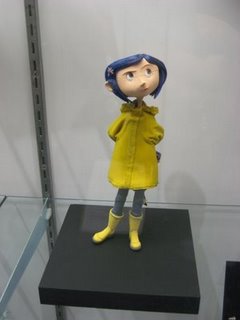
Oh, and I totally want Coraline’s yellow slicker and galoshes for Boston’s rainy season.

Image nicked from Grow Wings.

For Hanna’s take, see “coraline”

Midweek Bicentennials Post

12 Thursday Feb 2009

Posted by Anna Clutterbuck-Cook in library life

≈ Leave a comment

Tags

history, MHS

Today marks the 200th anniversary of the births of Abraham Lincoln and Charles Darwin. Although I only know as much about Lincoln as someone who has grown up in America imbibes with the air and water, I have had a soft spot for Darwin since taking a cultural history class at the University of Aberdeen on Victorian Science and Technology. We will be revisiting some of his writings and ideas in my intellectual history course this spring, and I am looking forward to considering again how he was both influenced by the ideas and events of his time, and how he and his work have continued to inspire and trouble many people over the past two hundred years. One of my regrets about my year in Aberdeen was that I never made it to Down House, Kent, the Darwin family home, which is supposed to be both beautiful and historically fascinating. However, the Chicago Field Museum recently hosted a stunning exhibition, that includes many documents and objects from Down House.

My friend and colleague Jeremy has a note over at his blog, PhiloBiblos, about some of the celebrations taking place in the Boston area. Our own exhibition, coordinated by our head reference librarian, the amazing Elaine Grublin, documents Lincolns ties to Massachusetts, and opens today. It will be open daily, 1-4pm, through the end of April.

Womyn’s Land (Take Three)

09 Monday Feb 2009

Posted by Anna Clutterbuck-Cook in think pieces

≈ Leave a comment

Tags

feminism, gender and sexuality, guest post

My friend Linda Smith, who is a resident at Hawk Hill Community Land Trust and was a part of the Aradia oral history project (see post one), read my thoughts on the recent article about lesbian communities in the New York Times. (See post one and post two here.) She wrote me an email in response, which I am posting here with her permission. Thanks Linda!

Hi Anna,

Nice to hear from you! I just read your blog entries on the article in the NY Times. I too hope there will be more “conversation between generations of women who are intrigued by the idea of communal life, and spark creative, contemporary approaches to experiments in living that will help our elders and youngers improvise lives worth living.”

For me, as a feminist in the 70’s, separatism was a strategy not a political position or a life style. I think it is sometimes important for women (or blacks, or other oppressed peoples) to separate from the oppressive culture in order to discover who we are apart from the stereotypes imposed on us. To contact our own power and source of being. Remaining separate and at odds with the dominant culture isn’t the goal. Most of us involved in feminist consciousness raising and women-only groups in the 70’s have chosen to act out our truth in the world. To contribute to the culture and the evolution of our species. This is a spiritual question for me. One of the major problems in the world today is the false belief that individuals and groups are in fact separate – we are all connected, men/women, Jews/Christians/Muslims, and all living beings.

I think a healthy community grows organically and changes with the times. I live on an environmentally protected landtrust. There are five households and six lesbians living here. We are not a commune – we have no community buildings and do not share our income. In many ways our community includes our neighbors and the surrounding environment. We do not own our land but have 99 year leases. By signing our leases we agreed to specific “covenants” designed to protect this land, the waterways, and all the creatures living here. There have been many changes in the world since the first lesbian land groups formed. If younger women (or perhaps men, or ?) are going to come and take care of this land after we are gone we’ll have to be more flexible and learn from each other as you suggest! At Hawk Hill, as far as I’m concerned, it’s really about the land, all the creatures living here, and our relationships to these and each other – not about lesbian separatism.

Thanks for you thoughtfulness.
Linda

Booknotes: Therese Philosophe

07 Saturday Feb 2009

Posted by Anna Clutterbuck-Cook in book reviews

≈ 5 Comments

Tags

feminism, gender and sexuality, history, simmons

Last Tuesday, in my intellectual history class (“The Modern Imaginary”), we discussed Therese Philosophe, a bawdy, “forbidden best-seller” of pre-revolutionary France. The novella is an erotic novel and philosophic treatise in which the titular character, a young woman named Therese, recounts her sexual and philosophic coming-of-age to her present lover, the unnamed Count. Not having previously read any one complete example of Enlightenment-era pornography, I had few pre-conceptions about the genre when I sat down to read Therese.

This is an anonymously-written work, published in 1740s, tentatively attributed to a marquis named Jean-Baptiste de Boyer and was a runaway best-seller, according to translator Robert Darnton. Yet even though the author is likely male, and his understanding of the pleasures of sexual activity is definitely phallo-centric, the novel presents us with a complex, possibly even (early) feminist, understanding of sexuality. The novel is told from the point of view of a woman who discovers that sexual fantasy and sexual activity (whether alone or with a partner) can be a “healthful” and deeply gratifying part of her life. Sexual activity is assumed to be pleasureable for both women and men, and there is little differentiation between how women and men experience that pleasure, at least physically. Women, as well as men, for example, are encouraged to masturbate. At the same time, the characters acknowledge the material vulnerability of women who engage in heterosexual activity: the fear of pregnancy and death in childbirth; potential loss of social standing which will threaten their ability to contract a financially stable marriage. Therese and her mentors negotiate with their sexual partners over what sexual activities are acceptable given these real-world constraints, and those conversations serve as both philosophical debates and integral to the erotic encounters themselves.

Some of the students in the class were skeptical that this text constituted “intellectual history,” and in addition there was a lot of resistance to reading the sexually-explicit passages as necessary or integral to the intellectual importance of the work. Their impulse was to argue that either the smut was a ploy to sell the philosophy, or the philosophy was an excuse to write the smut. Either way, they considered the sex was gratuitous to the historic or intellectual importance of the piece. I would actually argue the opposite. In Therese Philosophe, it’s not the sex or the philosophy that are the “real” reason for the novel’s existence — it’s the sex and the philosophy. Both are necessary to make the story work. More importantly, I would argue that it’s not just the philosophy that works better because of the sex, but the sex that works better because of the philosophy.

Reading this one example made me curious to sample more 18th-century erotica and see how gender and sexual negotiation are portrayed. Is Therese an exceptional voice? And is is possible to uncover why her story was so compelling to the readers who purchased it is such great numbers that it became a best-seller? I am also fascinated by the similarities, as well as the differences, I see between how human sexuality and sexual relations are portrayed in Therese and how they are written in modern-day erotica. Perhaps that project can be thesis number three or four . . . !

Cross-posted @ feministing community.

YouTube "Kidsploitation"?

07 Saturday Feb 2009

Posted by Anna Clutterbuck-Cook in media

≈ Leave a comment

Tags

children, web video

I ran across this comment by Hanna Rosin at Slate about a YouTube video that’s making the rounds on the internet. It is of a kid recovering from dental surgery and still not completely in touch with reality (as any of us who have ever had dental surgery can identify with!):

It’s taken me a while, and a schooling from a couple of Slate men, to figure out what’s wrong with David’s dad. As anyone online this afternoon knows, his dad posted a video of him freaking out after getting anesthesia at the dentist . . . Probably, in that car, what Dad and David were doing made some kind of sense. But from the outside, here’s what it looks like: David is sitting in the back of the car, suffering.

While Susanna Breslin, also at Slate, disagrees with Rosin, her main argument in support of the video seems to be that “kids say the darnedest things” is a justification for making children’s experience of the world the fodder for adult amusement. The missing element here is knowledgeable participation (informed consent, if you will) of the kids in question: they are being laughed at for experiences and reactions they are often taking utterly seriously. As a former child myself, I can remember vividly the feeling of humiliation that accompanies hearing the laughter of grown-ups over something you’ve done that, to you, is not the least bit funny. I’m not saying that being charmed by the logic of children is never acceptable, but I do think we owe it to them to not turn their lives into public spectacle.

Movienotes: Inkheart

06 Friday Feb 2009

Posted by Anna Clutterbuck-Cook in media

≈ Leave a comment

Tags

books, children, movies

Hanna beat me to a review of Inkheart, which we saw last week at the cinema down on the Boston Common, which offers morning tickets at $6 a pop (Sunday morning is the new “movie night” at our apartment). Check out what she has to say, since I agree with her assessment that it lacked a certain depth of character (in spite of a brilliantly-cast cast), and a satisfying quotient of wonder and peril, all of which are found in abundance in the original novel. The novel actually moved me to tears in places, and I find the relationship between Meggie and Mo, her father, one of the most satisfying parent-child relationships I’ve seen in children’s fiction in recent years. So often, authors feel compelled to make their child-protagonists orphans or otherwise removed from the family sphere in order for them to be an independent actor. Meggie, on the cusp of adolescence — though still very much a child — insists on her autonomy while simultaneously clinging tenaciously to her relationship with her father. She holds her own alongside (rather than against) Mo, her great-aunt Elinor, and other adults to rescue her missing mother. If you’re looking for a fun fantasy film, I’d encourage you to consider seeing the film version, but before or after you see the movie, be sure to check out the book (and as extra incentive, the book has sequels!)

As another small item of note: This is my 200th blog post!

← Older posts
Newer posts →
"the past is a wild party; check your preconceptions at the door." ~ Emma Donoghue

Recent Posts

  • medical update 11.11.22
  • medical update 6.4.22
  • medical update 1.16.2022
  • medical update 10.13.2021
  • medical update 8.17.2021

Archives

Categories

Creative Commons License

This work by Anna J. Clutterbuck-Cook is licensed under a Creative Commons Attribution 3.0 Unported License

Meta

  • Create account
  • Log in
  • Entries feed
  • Comments feed
  • WordPress.com

Blog at WordPress.com.

  • Subscribe Subscribed
    • the feminist librarian
    • Join 37 other subscribers
    • Already have a WordPress.com account? Log in now.
    • the feminist librarian
    • Subscribe Subscribed
    • Sign up
    • Log in
    • Report this content
    • View site in Reader
    • Manage subscriptions
    • Collapse this bar