• anna j. clutterbuck-cook
  • contact
  • curriculum vitae
  • find me elsewhere
  • marilyn ross memorial book prize

the feminist librarian

the feminist librarian

Author Archives: Anna Clutterbuck-Cook

thanksgiving, alone and together [weekend musings]

28 Thursday Nov 2013

Posted by Anna Clutterbuck-Cook in our family

≈ Leave a comment

Tags

domesticity, holidays

As I said on Twitter earlier today, I hope all of you are celebrating Thanksgiving in ways you enjoy — and that if that isn’t possible, that you are doing what you need to do by the way of self care to keep yourself healthy and sane.

Hanna and I are enjoying the weekend together this year — together, and alone. We went out for coffee this morning at our local Peet’s, and sat with our respective books (hers on Irish nationalism, mine on American Transendentalism) until the dregs of our eggnog lattes grew cold and people in line at the counter were starting to eye our table covetously.

Then we walked back home the long way around Corey Hill, admiring all of the electric menorahs with their first-night candles lit and standing sentinel over sparsely-populated city streets.

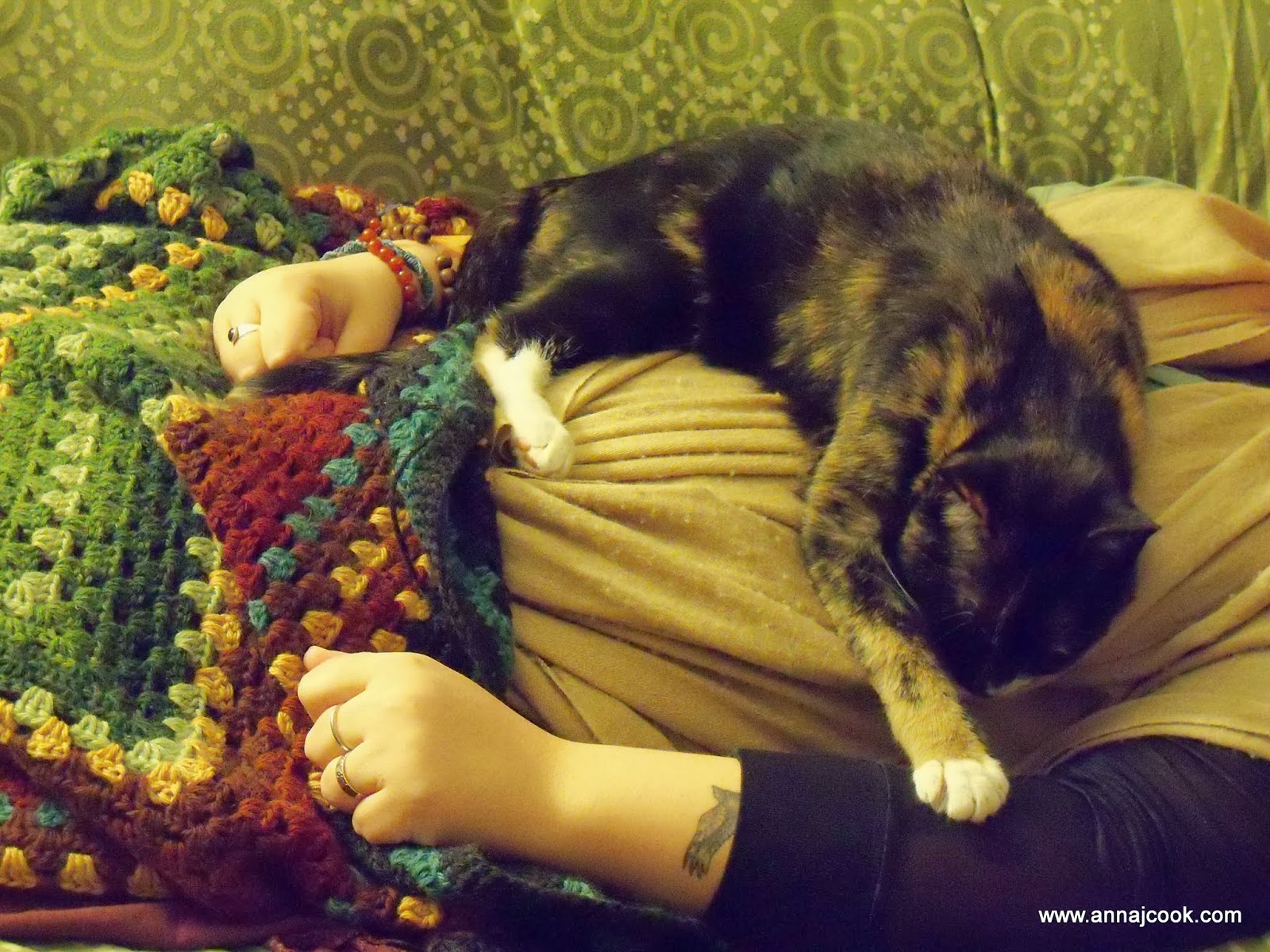
Now Hanna’s napping on my chest as I balance the laptop on her shoulder and type out this blog post, cuddled up under the down comforter, listening to old episodes of “The Goon Show” online.

We’re thinking about making a pumpkin pie later, and maybe canning some applesauce.

Over the past week we’ve gotten a wide range of reactions from people who, upon asking our Thanksgiving plans, hear that they amount to “Not much,” and “About the usual.” Colleagues with packed multi-household schedules, friends with travel plans, often respond with envy: That sounds so peaceful to just stay home and go nowhere! A few have given me the look of baffled disbelief: What’s Thanksgiving without a turkey? Without an extended family gathering?

My first Thanksgiving in Boston, I rented a Zipcar and spent the night at a hostel in Harvard, Massachusetts, near Walden Pond. The hostel was a big rambling farmhouse, and when I arrived I walked in on the remains of the potluck family dinner. I spent the evening in my room reading God’s Harvard and enjoyed myself thoroughly, probably with a bottle of wine and crackers and cheese from Trader Joe’s.

In some ways, this Thanksgiving is radically different than that: instead of spending the day on grad school homework and then retiring to rented rooms in the countryside, I’m cozying up with the wife and cats after a morning out at one of our many neighborhood coffee shops.

Of course, looked at in another light, you might say the two Thanksgivings are more similar than they are different: A day spent reading and writing, books and quiet time. Two solitary women being solitary … together. With our solitary cats.

It seems we are, the four of us, well matched. I hope you and your people are too.

from the archive: if only she had lived to see the A.C.A…

26 Tuesday Nov 2013

Posted by Anna Clutterbuck-Cook in my historian hat

≈ Leave a comment

Tags

history, MHS, politics

I’m working on a blog post about children’s health diaries in MHS collections and I came across the following in a letter from Dr. Mary Putnam to Helen C. Morgan, 10 December 1923:

Tell me how [Carter, Helen’s son] is and what you do, and don’t work too hard. I don’t see how Peggy gets her health insurance! Two companies turned me down, without looking at me, because I have had grippe twice! I decided to be satisfied with accident!*

Ninety years later, on 10 December 2013, a pediatrician like Mary, buying health insurance on her own, would be protected from denial of coverage based on pre-existing conditions.The Affordable Healthcare Act is far from perfect, but I’m surely glad that we’re better able to provide for many more Mary Putnams of this world so that they no longer have to be “satisfied with accident.”

Now let’s fix the coverage gap so that everyone can access healthcare when they need it, without going bankrupt.

*Mary Putnam to Helen C. Morgan, 10 December 1923, Allen H. Morgan Papers, Massachusetts Historical Society.

mid-week cat blogging [photo post]

20 Wednesday Nov 2013

Posted by Anna Clutterbuck-Cook in our family

≈ Leave a comment

Tags

cat blogging, domesticity, move2014, photos


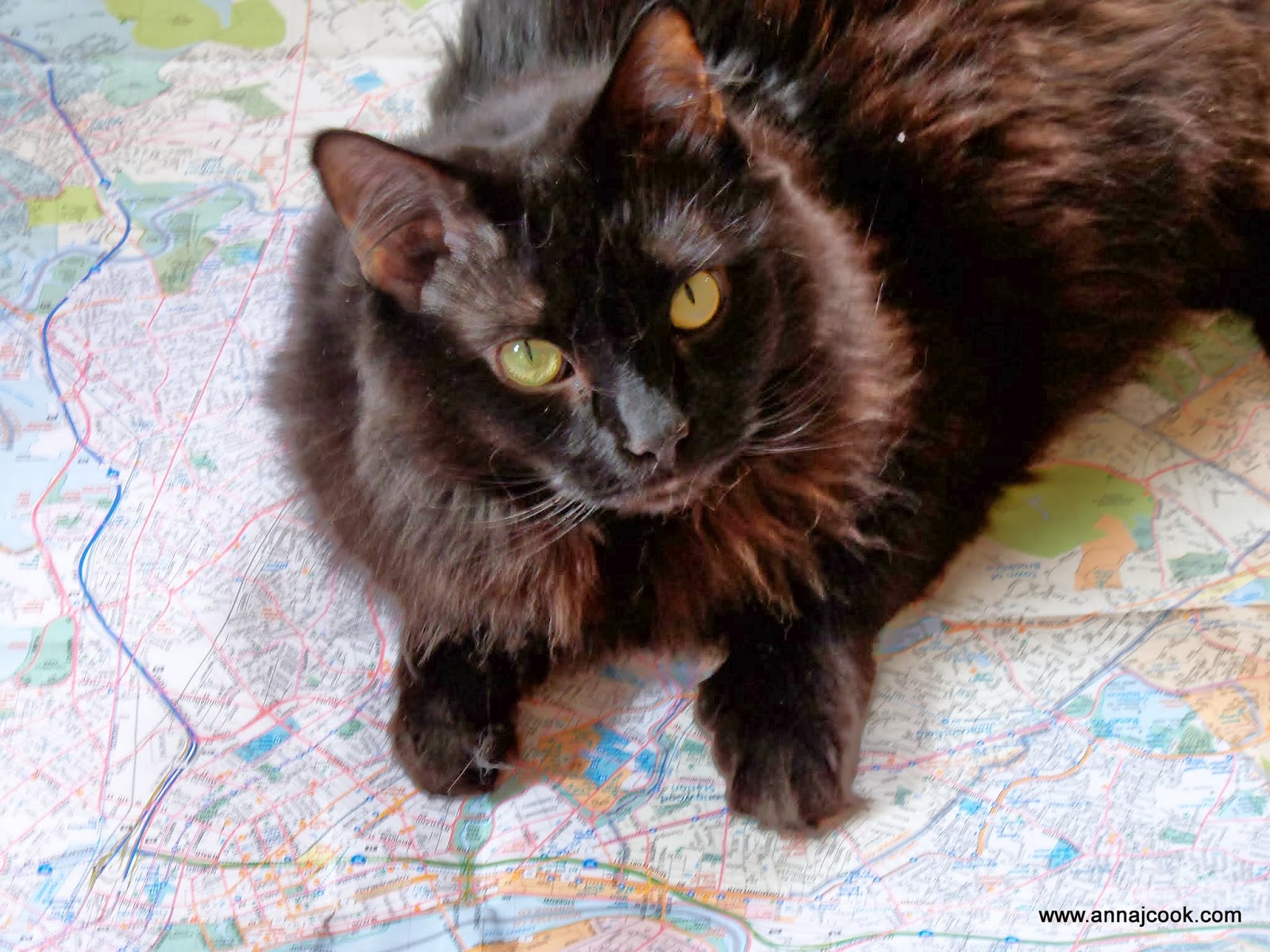
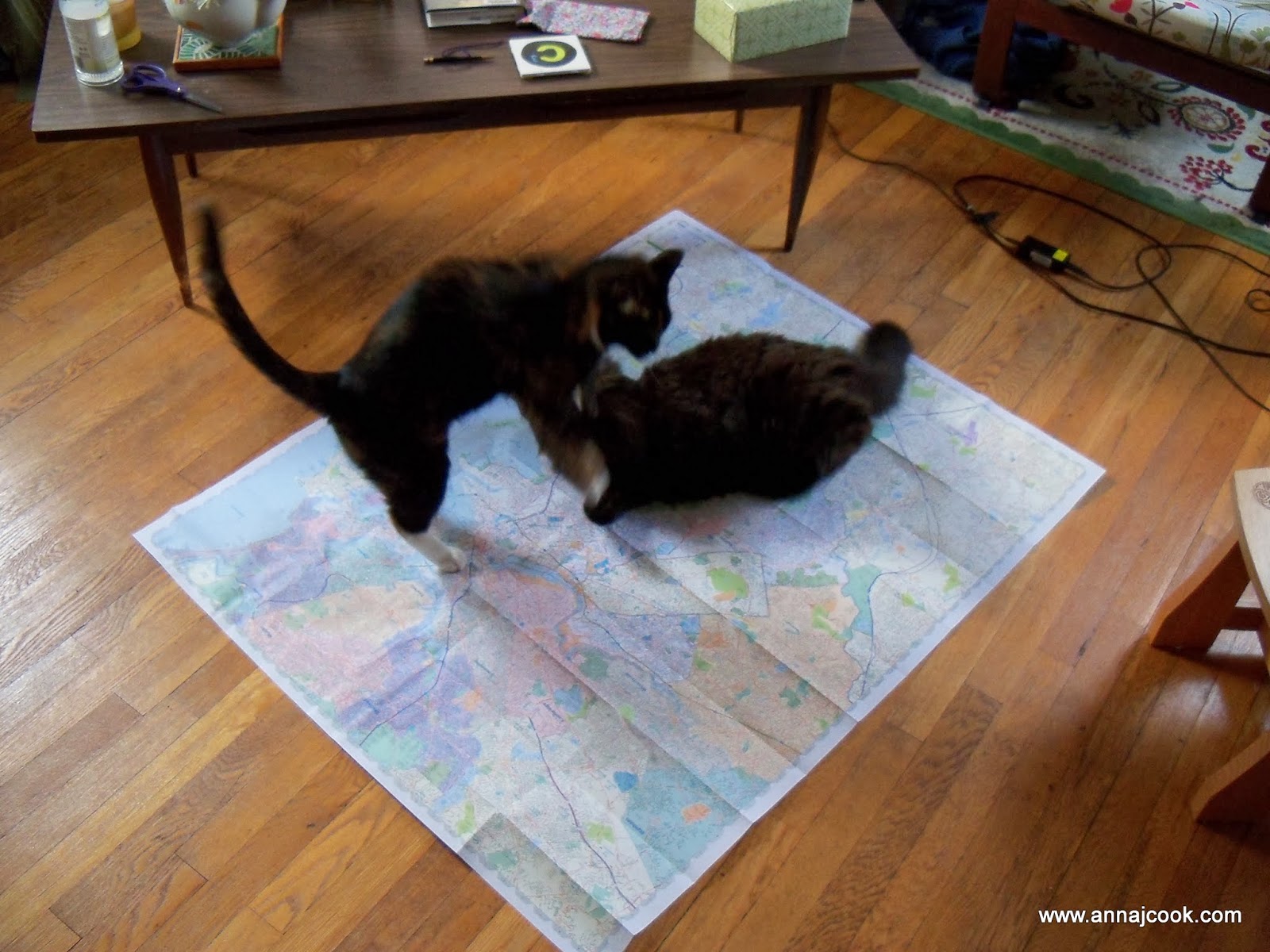
A couple of weekends ago, Hanna and I got out the map of Boston so we could draw a three-mile radius from Hanna’s workplace in Longwood so that we could get a sense of what neighborhoods our likely-next-year new apartment search might encompass.

Geraldine had a few ideas.

Most of them involved scratching her between the ears.

Teazle had other plans, as she so often does.

When I was finally able to achieve access to the map without feline assistance, we determined that our “within walking distance of work” primary criterion gives us Allston-Brighton, Brookline, Jamaica Plain, Dorchester, the North End, Somerville, Cambridge, and all of central Boston (though most of that is not affordable/unattractive to us for a variety of reasons.

Gerry seems to be voting for Chestnut Hill/Newton — too far, little kitten! Your mommies would not appreciate the commute (and you would have to wait even longer for evening tuna).

Stay tuned in 2014 as the Clutterbuck-Cook family starts looking for new digs!

subject/verdict: stuff I’ve been reading in two-sentence reviews [no. 4]

17 Sunday Nov 2013

Posted by Anna Clutterbuck-Cook in book reviews

≈ Leave a comment

Tags

subject verdict

I’m hovering at 10% behind on my GoodReads goal of 104 books for the year, which means I’m on track to accomplish 90% of my annual reading goal (go me!). Here’s what I’ve been reading since the last installment of subject/verdict in mid-August.

Presented in order read.

Haskell, Molly. My Brother, My Sister: Story of a Transformation (Viking, 2013). As readers of this blog are already aware, this is a memoir by film critic Molly Haskell about her experience during her sister’s transition from her gender assigned at birth (male) to her experienced gender (female). I was not impressed.

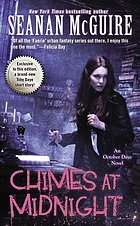
McGuire, Seanan. Chimes at Midnight (DAW Books, 2013). The seventh installment in the October Daye series (my personal favorite of Seanan McGuire’s many projects) centers around the trafficking of faerie fruit and the overthrow of a kingdom. Toby and company naturally save the day, with the introduction of several delightful new characters, including a fae librarian!

Joyce, Kathryn. The Child Catchers: Rescue, Trafficking, and the New Gospel of Adoption (PublicAffairs, 2013). The author of Quiverfull returns to the topic of family formation and religious belief in her latest work on the adoption industry. While The Child Catchers is not a wholesale condemnation of modern adoption practices, it does challenge all of us to cast a critical eye on the rescue narrative that sanctifies adoptive parents and the industry that serves them — often at the expense of children and birth parents.

Erzen, Tanya. Fanpire: The Twilight Saga and the Women Who Love It (Beacon Press, 2012). Erzen is a compassionate and insightful ethnologist of American subcultures, having last cast her eye on the experience of Christian women and men who participate in ex-gay ministries. In Fanpire she explores the fan experience of Stephanie Meyer’s Twilight novels and the associated films, holding us to account for too-easy a dismissal of female fans.

McCarthy, Molly. The Accidental Diarist: A History of the Daily Planner in America (University of Chicago Press, 2013). This excellent cultural and material history of personal record-keeping traces the development of the daily planner from Colonial almanacs through advertisement-laden Wanamaker planners popular into the mid-twentieth century. McCarthy skilfully blends in-depth research with a lively storytelling voice to produce a thought-provoking read.

Baumgardner, Jennifer and Madeline Kunin, eds. We Do! American Leaders Who Believe in Marriage Equality (Akashic Books, 2013). This brief collection of primary source documents (speeches, testimony, op-ed articles, interviews) tours through the history of American political leaders and social activists speaking out in favor of marriage equality. Beginning with a stump speech of Harvey Milk’s from 1977 and President Bill Clinton’s mea culpa regarding DOMA, penned in 2013, this collection would be a useful one for current affairs classes or adult study groups to discuss. Its brevity will be frustrating to the historians (many pieces are heavily excerpted), and it was strangely lacking in gender diversity. Out of 33 pieces, only eight were by women (including two appearances by Hillary Clinton). While the women they picked were undeniably well-spoken, high-profile leaders I can’t help but wonder why the imbalance — women like E.J. Graff and Urvashi Vaid were conspicuously absent. (Full disclosure: Early Reviewer copy from LibraryThing)

Jenkins, Philip. Decade of Nightmares: The End of the Sixties and the Making of the Eighties in America (Oxford University Press, 2006). This history of the long 1970s makes the argument that Reagan’s presidency was not the radical, reactionary break many view it to be but in fact built upon a number of conservative (often fearful) American impulses that have their roots in the decade before. I appreciated his re-examination of what have become historical commonplaces, but felt at times he over-reached the evidence and/or justified the conservative response without fairly considering voices of dissent.

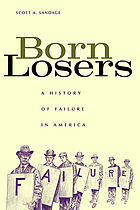
Sandage, Scott. Born Losers: A History of Failure in America (Harvard University Press, 2005). Sandage traces the development of “the loser” as a character type in America, tying it to the nineteenth-century shift from an economy where low-risk conservation of family assets gave way to the ideal of endlessly-upward mobility: the opportunity of great gains also opened up the possibility for extreme loss. As the nineteenth century gave way to the twentieth, Sandage convincingly argues that Americans more and more ascribed economic failure as an innate character flaw rather than an inevitability of the larger system — though individuals would continue to push back against this hegemonic model.

Yglasias, Matthew. The Rent is Too Damn High: What to Do About It and Why It Matters More Than You Think (Simon & Schuster, 2012). This slim e-book makes the argument that most American housing policy — particularly zoning regulations and rent controls — have only conspired to increase rather than decrease the astronomical rents in areas where the majority of Americans are drawn by economic opportunity (Boston, New York, Chicago, L.A., San Francisco…). I remain skeptical of his optimism in the housing market to solve this problem (freed from regulations, he argues, they would build more high-density housing in high-demand areas and help bring the middle class back from the suburbs),  but I appreciate his thoughtful and well-argued analysis.

Roose, Kevin. The Unlikely Disciple: A Sinner’s Semester at America’s Holiest University (Grand Central Publishing, 2009). When, as an undergraduate at Brown University, Roose decided to attend Liberty University as an unconventional off-campus semester many of his family and friends thought he was going to regret that decision: why spend a semester with religious fundamentalist evangelicals? Roose persevered, and wrote a soul-searching and at times quite funny (without being cruel) book about the subject that is generous to its conservative-Christian subjects without, I did not think, ultimately excusing the real harm their values can end up directly or indirectly supporting.

Satel, Sally and Scott Lilienfeld. Brainwashed: The Seductive Appeal of Mindless Neuroscience (Basic Books, 2013). This brief book examines the growing trend of attributing all matter of social phenomenon — from crime to business administration — to brain chemistry as “proved” by fMRI imaging. While fMRI scans have value, the authors argue, too often their highly-qualified results are taken as “proof” of things they prove not at all: their cautionary warning should be well-heeded.

Johnson, Colin. Just Queer Folks: Gender and Sexuality in Rural America (Temple University Press, 2013). Too often, histories of non-normative sexuality focus on urban centers, suggesting that rural America is a place of repression in which few “queer folks” survive — let alone thrive. Johnson re-frames the story of queer American sexuality in the twentieth century with a series of case studies in rural sexual expression, offering us an under-explored piece of the puzzle of human sexual variety across the sweep of time and place.

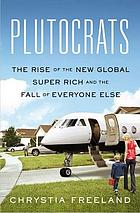
Freeland, Chrystia. Plutocrats: The Rise of the New Global Super-Rich and the Fall of Everyone Else (Penguin: 2012). Canadian economic journalist Chrystia Freeland offers both a window into and critique of the lives of those whose wealth puts them in the 1% of the 1% — and how they understand their position of power and privilege relative to the rest of us. While Plutocrats offers no easy answers to the global problem of hyper-stratification, it does offer a compelling argument that we ignore the accumulation of extreme wealth in the hands of a few at our own peril.

Morgan, Keith, Elizabeth Hope Cushing, and Roger Reed. Community by Design: The Olmsted Firm and the Development of Brookline, Massachusetts (University of Massachusetts Press, 2013). In my haphazard quest to learn more about the history of my adopted habitat, I picked up this volume at the Brookline Public Library: Morgan, Cushing and Reed explore the Olmstead firm’s influence in the development of one of Boston’s oldest and most illustrious “suburb” villages (now surrounded on three sides by the city of Boston itself). More analysis could have been given to the class-consciousness woven into community development in the village, but overall it was a pleasure to get a better sense of how and when the neighborhoods we walk through every day came to be.

Mantel, Henriette, ed. No Kidding: Women Writers on Bypassing Parenthood (Seal Press, 2013). As someone who will not (life-altering unknowns aside) be parenting, I approached this anthology with both interest and trepidation: too often, women are interrogated endlessly (in a way men are not) about their reproductive lives — would this be another wince-inducing platform for the same? Like all anthologies, this one varies wildly from wince-inducing to humorous to insightful; while I didn’t find myself experiencing any new insights, I do appreciate the attempt to normalize non-parents as part of the human family.

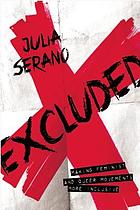
Serano, Julia. Excluded: Making Feminist and Queer Movements More Inclusive (Seal Press, 2013). By now, Julia Serano is on my “automatic buy” list, and her latest work — a compilation of previously-published pieces and new sections elaborating on the arguments those pieces are fumbling toward — was well worth the self-indulgence. While at times her experiences of feminist- and queer-community exclusion made me want to suggest different friends, I also recognize that the identity-based “us” and “them” dynamics she incisively identifies and suggests alternatives to are systemic social justice activism problems.

McGuire, Seanan. Indexing (Kindle Serial, 2013). I gave this foray into novel serialization a try through our Kindle, with wholly satisfactory results. Seanan McGuire’s lighthearted dark-and-heavy-if-you-squint tale of a crime-fighting unit who mop up after fairy tale “memetic incursions” introduces a whole new and compelling cast of characters to her repertoire — looking forward to future installments!

Jordan, Pete. In the City of Bikes: The Story of the Amsterdam Cyclist (Harper Perennial, 2013). When Pete Jordan and his wife, both avid cyclists, move to Amsterdam so Pete can complete an urban planning degree, they fall in love with the city and its cycling culture — Pete’s wife even apprentices as a bike mechanic and eventually opens her own bike shop. In the City of Bikes weaves this personal story together with a fascinating history of cycling culture in Amsterdam — and the Netherlands more broadly: a must-read for any cyclist in your life.

Knight, Sarah Kemble. The Journal of Madam Knight (D. R. Godine, 1971). In 1704, Boston businesswoman Sarah Knight traveled on horseback from Boston to New London, Connecticut, and on to New York City, to settle the estates of her brother and brother-in-law; pon her return she wrote up her experiences in a diary first published in 1825. Knight is one of the subjects of a series of encyclopedia articles I am writing this fall, and her diary was intriguing background research for her biographical entry.

Williams, Susan Reynolds. Alice Morse Earle and the Domestic History of Early America (University of Massachusetts Press, 2012). Another biographical entry for the encyclopedia, Alice Morse Earle was a nineteenth-century historian of American social and material history; Williams her most recent and comprehensive biographer. Despite the “assigned reading” aspect of picking up this title, I enjoyed the thoughtful exploration of a Gilded Age woman writer and the context in which she practice historical research and analysis.

Smith, Fran and Sheila Himmel. Changing the Way We Die: Compassionate End of Life Care and the Hospice Movement (Viva Editions, 2013). This slim volume written by two journalists explores the recent history and current practices of the hospice movement in America: non-profit and (more recently) for-profit organizations that assist individuals and their families experience holistic end-of-life palliative care. As an historian, I longed for deeper analysis of hospice’s emergence in the mid-twentieth century, but overall this is a quick read that offers much food for thought and pointers for further research and contemplation.

Bronski, Michael, Ann Pellegrini, and Michael Amico. “You Can Tell Just By Looking”: and 20 Other Myths About LGBT Life and People (Beacon Press, 2013).  This quick read does not attempt any original or overarching argument, but rather repackages pro-LGBT talking points in plain language myth-and-discussion format, perhaps with the notion of offering a useful reading selection for an adult reading group or Sunday school series. I found the format slightly unwieldy, given the way anti-sexual-diversity scare stories build upon and reinforce one another symbiotically, but appreciate how nuanced and inclusive the authors nevertheless managed to be in their explanatory sections within the necessary limitations of the project.

Weil, Francois. Family Trees: A History of Genealogy in America (Harvard University Press, 2013). If there was one avenue into genealogy that was guaranteed to spark my interest, it would be a cultural historical analysis of the practice of family genealogy in America — and Weil’s detailed study did not disappoint. Weil explores the genealogical practices of Americans from the Colonial period to the late 20th century, neatly walking the tightrope of tension between genealogy-as-pedigree (a practice that seeks to reinforce privilege) and genealogy-as-identity (an assertion of more democratic familial allegiance or curiosity).

Bush, Karen, Louise Machinist and Jean McQuillian. My House, Our House: Living Far Better for Less in a Cooperative Household (St. Lynn’s Press, 2013). This how-to guide tells the story of three women approaching retirement who decided to pool their resources and become householders in common. While their story did not offer me anything I didn’t already know about cooperative housing opportunities and trends, it is always useful to read about cooperative housing schemes that have proven successful — another blueprint to keep in our back pockets for the future.

Whew! That’s all folks … stay tuned in January for the next installment. Meanwhile, back to our regularly scheduled programming.

on dying well [a book and a radio show]

10 Sunday Nov 2013

Posted by Anna Clutterbuck-Cook in book reviews

≈ Leave a comment

Tags

being the change, big ideas, web audio

This past week I received and read an advance review copy of Changing How We Die: Compassionate End of Life Care and the Hospice Movement by Fran Smith and Sheila Himmel (Viva Editions, 2013). The reading involved a lot of spontaneous weeping on public transit, which I tried not to feel ashamed about: Big emotions are pretty appropriate where end-of-life narratives and choices are concerned. I couldn’t even tell you what emotion I was feeling that prompted tears other than BIG — it was joy, grief, surprise, longing, anger, fear, gratitude, all wrapped up in the moment at hand.

My paternal grandfather died at home in hospice care, and the whole family was grateful that they made it possible for him to die well in many respects.

I hadn’t thought about it before reading Changing How We Die, but the modern hospice care  movement– having grown out of the countercultural moment of the 1970s in many ways — shares a lot with the homebirth/midwifery/doula and homeschooling/unschooling movements. No wonder it feels like “of course” to me in many ways: an impulse toward low-intervention, person-centered care; placing the individual (laboring mother, learner, dying person) in the decision-making role; providing mindful, non judgmental support; holistic attention to all aspects of being; a preference for home-based rather than institutional care. I’m curious whether anyone has thought to look at the homebirth/homeschool/hospice movements as a continuum of care across the lifecycle, and what placing these movements side-by-side might teach us about lessons learned and possible future directions.

Food for thought.

Then, the radio came on this morning in time for “On Being” with Krista Tippett and it was an interview with Dr. Ira Byock who works in palliative medicine and hospice care. If you’re interested in the question of how we die — and what it might look like to die well — I highly recommend listening to the podcast or reading the transcript.
Audio here.

Transcript here.

from the neighborhood: autumn sights

03 Sunday Nov 2013

Posted by Anna Clutterbuck-Cook in a sense of place

≈ Leave a comment

Tags

boston, cat blogging, domesticity, family, outdoors, photos

A few photos I took last weekend.

Afternoon sunlight on the fresh flowers we bought to put in the flower vase / tea pot brought home from the Thormoto wedding.

Shortly after I took these photos, of course, Teazle discovered the flowers and the vase had to be removed to higher ground.

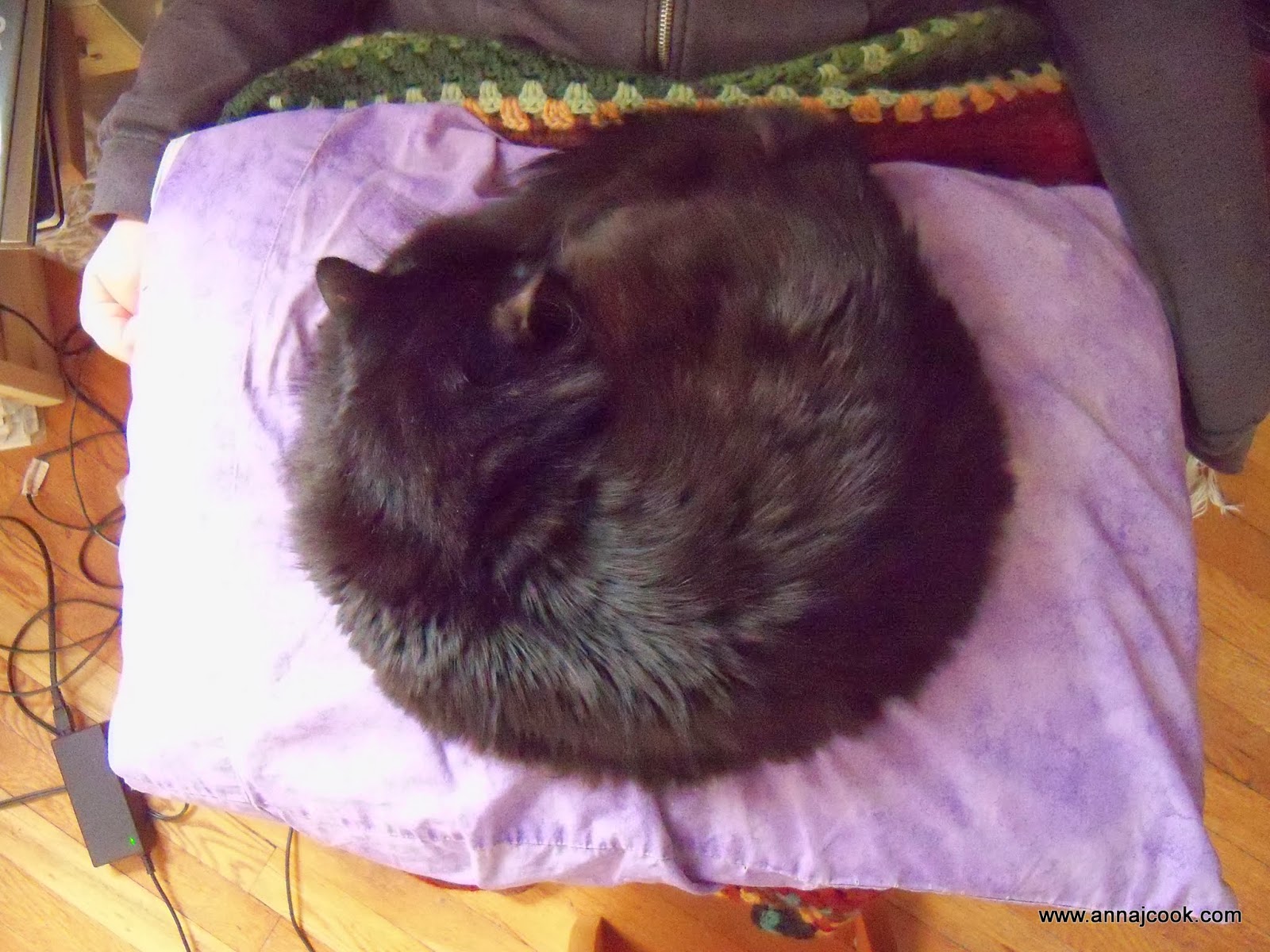
Geraldine, on the other hand, couldn’t have cared less. Why should she, where there are laps/pillows available to sleep upon?

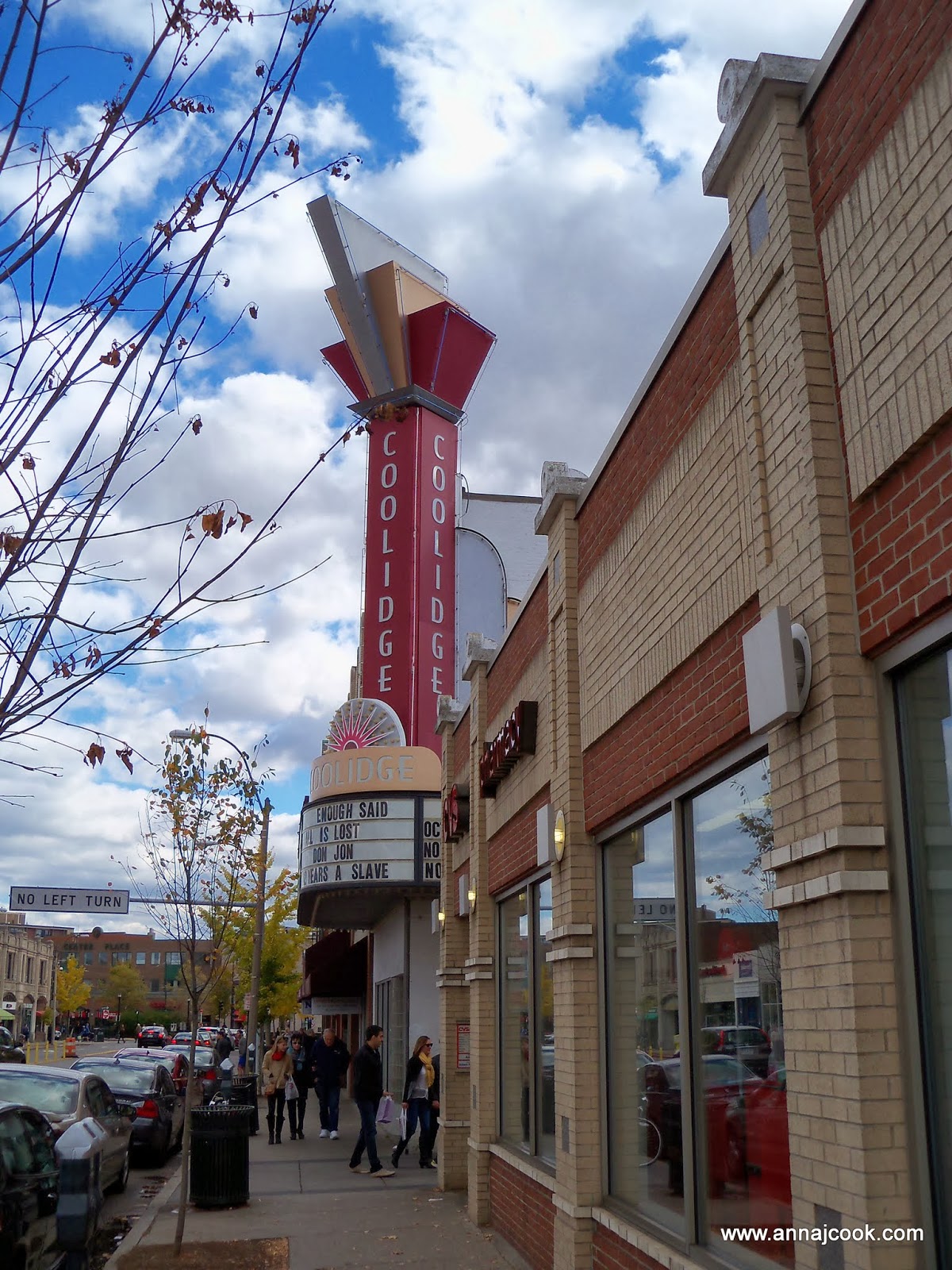
The house with the abundant garden on our walk to Coolidge Corner is settling in for the winter season.

The Hubway bikes will soon be put into storage to make way for snowplows and snowbanks, but for now they’re still available to take out for a spin!

A couple of months ago, Hanna and I realized that the central marquee on the Coolidge Corner movie theater often makes amusing found poetry. This is the latest iteration.

Enough said.
All is lost,
Don Jon:
12 years a slave.

from the archives: anti-suffrage gossip

31 Thursday Oct 2013

Posted by Anna Clutterbuck-Cook in my historian hat

≈ 1 Comment

Tags

feminism, history, MHS, politics

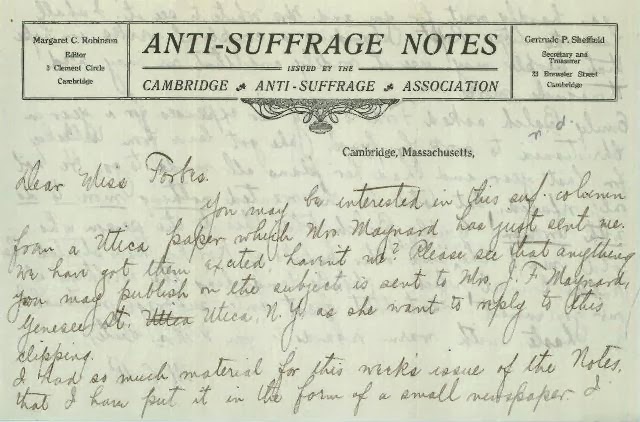
I had a blog post up yesterday at The Beehive (the Massachusetts Historical Society blog) sharing an item from our collections authored by anti-suffrage activist Margaret C. Robinson:

Margaret C. Robinson to Mary Bowditch Forbes, [1917],
Mary Bowditch Forbes Papers, Massachusetts Historical Society,

I didn’t include a full transcript of the item in my final blog post, but I thought readers here might be amused. So before or after you read my post contextualizing the item, here is the full letter. Margaret Robinson’s note (pictured above) reads:

[n.d.]

Dear Miss Forbes.

You may be interested in this suf. column from a Utica paper which Mrs. Maynard has just sent me. We have got them excited haven’t we? Please see that anything you may publish on the subject is sent to Mrs. J.F. Maynard, Genesee St., Utlca Utica, N.Y. as she want[s] to reply to this clipping.

I had such material for this week’s issue of the [Anti-Suffrage] Notes, that I have put it in the form of a small newspaper. I can hardly wait for you and Mrs. White to see it. I shall have the type left standing a couple of weeks in hope that people may use it widely and that we may need thousands more.

Emily Balch asked Ford to pay her expenses for a year in Christianin to work for peace. She got leave from Wellesley for last year and had her plans all made to go. He not only refused but told her he wanted nothing more to do with women! Emily Balch told this to the person who told me! She ^(Miss Balch) and other pupils of Rosika [Schwimmer] have started the People’s Council which is openly demanding the overthrow of our government! Isn’t that great anti-suffrage material?

In haste, with warm regards to you & Mrs. White,

M.C.R.

In addition to what I write at the Beehive, I think I particularly enjoy the image of Robinson being so excited about the latest edition of her newsletter that she’s going to leave the type set to print even more copies once the initial run is fully distributed. If I ever track down a copy of that particular document I’ll be sure to share it here at the feminist librarian!

comment post: erotic expression and vulnerability

28 Monday Oct 2013

Posted by Anna Clutterbuck-Cook in think pieces

≈ 2 Comments

Tags

comment post, feminism, gender and sexuality

You may have heard about the teaching assistant who recently accidentally sent a nude photograph of herself to her students in lieu of the attachment she meant to send.

I’ll let you all cringe in sympathy for a minute, because let’s admit we’ve all been there — maybe not in the nude photo sense, but in the “impolitic electronic communication” sense.

Done? Okay, good. Now the larger conversation in this instance is what lesson we might take away from these types of mistakes. That’s what Claire Potter of the Tenured Radical and I have been discussing in comments over the past few days. My original comment was prompted by this passage in Claire’s piece:

Herein lies a lesson for all of us: accidents happen to the best of people, so caution in the matter of nude selfies is advised. Things like this, and revenge porn, wouldn’t happen if people didn’t take nude pictures of themselves, and either give them away to boyfriends who they think are going to love them forever, or keep them on their computers. 

In response, I wrote:

I get where you’re coming from on the “don’t take nude pictures” line. However, I think a better approach would be to recommend more exacting privacy practices when it comes to erotic images and text you wish to keep between yourself and your intimate partners. Good practice: Not keeping nude photographs of yourself on your workplace computer. (Unless your work involves creating/disseminating nude photographs of yourself, obviously.) Bad practice: Keeping your naked photos in the same “Downloads” folder as the cat pictures you want to send to mom (and not labeling each set clearly, and double-checking all attachments before hitting “send”).

Sure, the accidental sending off of the wrong photograph was inappropriate. Probably the TA’s supervisor needs to have a conversation with her about working in less haste and keeping her private images private. But the real problems here in my opinion are a) a culture that shames women who leave evidence of their erotic lives that others accidentally or purposefully discover, and b) the students and administrators who see the sexual content of the accidental file transfer as grounds to blow this incident out of proportion.

Claire pushed back, writing in part:

But like the rule on secrets (information is no longer secret when two people know it), it is really unwise to give a photograph of yourself to *any*one that will shame you if it exceeds its intended audience. One person’s erotic gift is another person’s har-de-har-har or porn/revenge fantasy.

 To which I responded:

Thanks for the response. Again, I take your point in that caution is generally good advice.

I think where we (might?) differ in weighing the tricky balance is that I believe it is misplaced to offer advice like ” it is really unwise to give a photograph of yourself to *any*one that will shame you if it exceeds its intended audience.” We aren’t prescient beings. We can’t read the future. Sometimes we date asses who don’t overtly advertise themselves as such. Sometimes a breakup is unintentionally messy and in a moment of pique the angry ex posts something they shouldn’t.

I would argue that, as a society, we should not then turn around and blame the person who shared the image in a moment of private pleasure in the first place. We should blame the individual who shared that image of their ex without that person’s consent.

In the balance, I think pushing individuals to err on the side of super-uber-never-share caution when it comes to erotic expression ends up reinforcing a culture of silence around pleasure. I can see it reinforcing women’s sense that their sexual expressions and pleasures are invalid, shameful, and something not to share — even with those whom they are sexually intimate with! That seems like a recipe for sexual mis-communication, as it fosters a climate of self-censorship rather than self-expression of desire.

Again, I realize you are NOT advocating for women (particularly) to stop speaking, writing, or enacting sex across the board. I think what I am observing is that such advice as you give above might unintentionally contribute to a culture-wide, persistent shaming of individual people daring to claim a sexuality that is personal and authentic to themselves through creating (among other things) images that speak of that desire, and sharing them with the people they wish to communicate that desire to.

Claire was gracious enough to continue the conversation, writing among other points:

I honestly don’t think we are helping women by either saying they don’t have to think about this, or that they should not distrust the capacity of other people to do them harm. It’s not a moral issue from my perspective: it’s a question of maintaining control if and when that is important to a person. I’m also a little curious about how it is that sharing a nude selfie is authentic and desiring in a different way than showing up in person and removing one’s clothes, but that’s another conversation, and this may be a generational distinction more than anything else.

To which I responded:

Thanks again for your thoughts.

I think to the extent we disagree it’s a matter of emphasis rather than a more substantial philosophical divide. Like you, I would certainly counsel mindfulness about how, where, when, and with whom we share our most intimate selves. At the same time, none of us are omniscient and none of us are responsible (or can control) the actions of people who mishandle those parts of ourselves. If we withhold those parts of ourselves out of fear that we will get hurt … chances are we won’t get hurt, but we also won’t have had that chance to share either.

Re: “I’m also a little curious about how it is that sharing a nude selfie is authentic and desiring in a different way than showing up in person and removing one’s clothes, but that’s another conversation, and this may be a generational distinction more than anything else.”

I hesitate to attribute things too reflexively to a generational divide. There are likely people in your age cohort who have (or will) share erotic images of themselves; there are likely many my age (mid-30s) and younger who would recoil from that impulse.

I didn’t mean to make it sound like the “nude selfie” is somehow a sacrosanct category of erotic expression — but I think historically speaking we could probably find the rough equivalent of “the nude selfie” in virtually any generation. In the 1920s perhaps you and I would have been discussing the advisability of college girls going to dance halls, in the 1890s perhaps the advisability of girls sending erotically-charged letters to their beaus for fear they would fall into the wrong hands. I think that erotic self-expression is often a razor-thin balancing act of (on the one hand) sharing one’s self with enough vulnerability with one’s lovers for a successful, mutual relationship and (on the other hand) policing the boundaries of that intimacy against unwanted intrusion.

So yeah, I think we could haggle endlessly in this situation (or any other situation X) whether in the balance responsibility for breaching those boundaries falls more heavily with the individual or society (and what the consequences of that breach should be). But I don’t think our readings are wholly incommensurate.

Any thoughts, readers?

writer, respect thyself [rambling thoughts on undervaluing scholarly labor]

26 Saturday Oct 2013

Posted by Anna Clutterbuck-Cook in library life

≈ Leave a comment

Tags

history, MHS, professional gigs, random ranting

To interrupt the recent run of photo and video and cat related posts with something a bit more library-professional about the place, I’ve been thinking a lot this week about the tendency of many historians, both amateur and professional, to undervalue their intellectual labor.

Amateur writers do this by, well, framing their labor as “a labor of love”: something they’ve undertaken in their own time, funded out of their own (often shallow) pockets, because of their passion for a particular historical story and their desire to share it with the world. Professional academics do this by, well, framing their work within the context of their academic careers: emphasizing the often grim realities of contracting faculty salaries, vanishing funding in the humanities, and the “non-profit” (at least for the author) structure of most academic publishing. 

Neither of these frames are factually incorrect. We are often underpaid professionals who continue to do the work we’re qualified to do out of personal passion and a belief that what we research and share with the world matters in some “greater good” sort of way.
Yet practically, this attitude toward our own work erases the necessity of, well, paying rent. It also colludes with a culture that equates cost with value to erase the work that goes into our creations. By romanticizing the historian (or any other intellectual or artist) who labors with little expectation of financial solvency, let alone reward, we contribute to a culture that devalues what we do. A culture that allows the institutions that employ many of us to pay wages that leave us perpetually financially insecure.
I have a couple of good blog posts on this subject — by people more eloquent than I — that I’d like to share, but first let me describe the situation that sparked these reflections.
As Reference Librarian at the Massachusetts Historical Society, one of my primary responsibilities is facilitating all of the requests for images of material in our collections for use in publications and other projects like documentary films, exhibitions, websites, and so forth. It’s one of my favorite parts of the job: it allows me to stay in touch with what use people are making of the resources we make available, and increasingly means (as I pass the six-year mark!) that I see researchers whom I worked with at the beginning of their project finally completing their PhDs or winning a book contract or having an article accepted for publication.
(via Massachusetts Historical Society)
Images you can pull off our website, are available to re-purpose in certain exempt contexts — classroom lecture, conference presentation, personal blog — free of charge. The image above is a letter I wrote about for our February 2011 object of the month series.
For made-to-order high resolution images (the file type most professional projects require) incur fees. We charge for this service along two scales. There are reproduction fees, which cover the cost of the labor in producing the image; people are required to pay this fee regardless of how they are using the image — even if they’re just going to hang it on their bedroom wall. Then there are licensing fees, which are charged based on the nature of the publication; we license the images we create that people go on use in their own creations as a way to earn some income from our own creations (the digital reproductions of material in our collections) and pay not only staff salaries, but also for the ongoing care and keeping of these valuable historical documents and artifacts. 
This can be expensive. Images cost $45-60 per file in reproduction fees, and anywhere from $0-450.00 per image in licensing fees. If you are an author seeking to use multiple images in your forthcoming book this can add up fast. I’ve worked with several authors in the past year who, despite small academic press print runs, have faced over $1,000 as a quote for obtaining the images they would ideally like to use. Our fees are steeper than some independent research libraries charge, but also more sensitive to the scale of individual projects than others. In short, we’re balancing the desire to provide access with the need to pay our staff for the work that they do and all of the not-inconsiderable overhead of preservation, storage, and security.
While most people understand this, I do have the occasional individual who tries to haggle with me to get the prices reduced or eliminated. They cite a series of potentially mitigating factors: their relationship with the Society, the fact that they’re paying out of pocket for the images, the fact that they’re retirees on fixed incomes, that they’re academics on tight incomes, that other institutions have offered them lower rates or waived the fees, that the author will not be making only — sometimes, in fact, they’re losing money — on this project, and so forth. 
I’m sympathetic. I really am. I also understand completely when people decide they can’t afford our prices and seek cheaper images elsewhere — I likely would in their shoes if the cost was prohibitively high. I wish them the best and honestly mean every word that I type. 
But having had several exchanges along similar lines in the past few weeks, I’ve been wishing I could have slightly more meta conversations with some of these people. “If you’ve spent ten years writing and researching this book on your own dime,” I was to ask them, “why for all that you hold holy have you signed a contract with a for-profit press that is requiring you to pay upfront for all of the production costs?” 
Or, sometimes, when they get sniffy about how steep our fees are, I want to lean a little heavier on the words labor and staff time in my replies. “Why,” I want to ask them, “do you feel entitled to obtain something from us for free, even after I explain to you that creating this product takes the time and effort of half a dozen people who work at our library?” 
In these exchanges, I sometimes see an altruistic competitiveness creep in that’s really unattractive: I’ve labored over this work for years without complaint, expecting little reward, some people seem to imply (likely not consciously), and because I’m not benefiting financially from this project — in fact, I’m losing money! — you should be likewise generous to the cause of History and give these images to the project for free. 
Sometimes, there’s even the implication that we’re somehow holding these digital photographs hostage, selfish money-grubbing institution that we are.
The librarian part of my soul certainly kens this argument. If our society was structured differently, with robust socialized funding for cultural heritage institutions and a guaranteed national income for all citizens that provided me and my family (and everyone!) with food security, housing security, and healthcare, then I would absolutely advocate we digitize and make freely available the images our scholars want to use. They are smart, articulate, energetic, diligent, and prolific people — and the wide range of stories they come up with to tell using the rich materials in our collections are part of what make my job a daily joy. 
But we don’t currently live in that world, and in the world we do live in we should not undervalue our own already culturally devalued work by setting ourselves up pre-emptively as martyrs.
Think carefully before you give your work away, particularly to others who will make a profit from it. 

Even if you decide to give your own work away, recognize that this does not give you the right to expect others to provide you goods and services for free. Factor in that even on projects you are doing for the pleasure of the work, you will need to pay people fairly for the work they contribute.

Sometimes people will charge what you feel is too much for their labor or products. It’s certainly fair to decline their goods and services and go elsewhere. If they care about keeping your business, or if too many people decline what they offer because the price is too steep, they will probably decide to lower their prices. 
What you should never do is try to shame or guilt scholars or artists for earning a living doing the work that they love. 
You also shouldn’t be ashamed or feel guilty for trying to earn a living doing the work that you love. 

One of the best pieces of advice I ever got as an early professional was to be sure to not undervalue my work, and to charge an hourly rate for free-lance research that, at the time, seemed scandalously high to me (used, as I was, to student stipends). But the higher hourly fee we negotiated demanded that both my employer and myself take the project seriously as a professional endeavor. In the two years since then, I have given several colleagues who asked me for free-lance advice the same nudge: “Ask for what you feel would make the job worthwhile,” I tell them. Or, “Think about what you believe your time is worth, and then ask for a third again more.”

I also remind them to calculate in any expenses they may incur on their way to completing the job they’re being asked to do: transportation, equipment, service fees, etc.

My current free-lance rate starts at $25.00/hour, exclusive of expenses, though I do negotiate based on the nature of the project. I always advise emerging professionals who ask what to charge that they should never accept less than $15.00/hour for their research or scholarly work.
I promised you links. 
Writer John Scalzi has an excellent round-up of posts he wrote about how to spot an exploitative book contract (and why he would never sign one). If you read only one of the posts, I would recommend “New Writers, eBook Publishers, and the Power to Negotiate“:

People: Unless the publisher you’re talking to is a complete scam operation, devoted only to sucking money from you for “publishing services,” then the reason that they are interested in your novel is because someone at the publisher looked at it and said, hey, this is good. I can make money off of this. Which means — surprise! Your work has value to the publisher. Which means you have leverage with the publisher.

And on a more academic note, Sarah Kendzior asks at the Chronicle of Higher Education, “Should Academics Write for Free?“

Academics entering the media world tend to move from one exploitative arena (low-wage academic work) to another (unpaid freelance writing). But writing must never be an act of charity to a corporation. Ask for what you are worth—and do not accept that you are worth nothing. Insisting on payment for your labor is not a sign of entitlement. It is a right to which you are entitled.

We all labor for free, at times. I’ve been writing this blog on an unpaid, voluntary basis for over six years; I won’t be stopping any time soon. Yet I’ve just spent three hours writing this post. That’s $75.00 I owe myself. I also write book reviews, for free (or in exchange for a book). This fall I’m working on a series of seriously under-paid encyclopedia articles, which I chose to take on for the experience. I will probably negotiate for better terms next time, or decline the next call for authors that comes my way.

There is nothing intrinsically bad about voluntarism. But it does not follow, therefore, that there is something intrinsically virtuous about volunteering your time (or asking another person or institution to volunteer their labor and resources) rather than asking for recompense.

Think carefully about how, why, for whom, and on what terms you will labor for free.

And respect the right of others to determine for themselves how, why, for whom, and on what terms they will do the same.

teazle vs. the top shelf

25 Friday Oct 2013

Posted by Anna Clutterbuck-Cook in our family

≈ Leave a comment

Tags

cat blogging, domesticity, web video

Last week I shared a video of Teazle perched on the drying rack in our living room and snatching a little stuffed critter from the bookshelf. Since this is not one of her toys, we moved the critter to the top shelf of the bookcase and moved the drying rack away from the shelving.

Since then she’s been doing complex mathematical modeling in her tiny kitty brain, and tonight she put her latest model to the test.

Successfully.

← Older posts
Newer posts →
"the past is a wild party; check your preconceptions at the door." ~ Emma Donoghue

Recent Posts

  • medical update 11.11.22
  • medical update 6.4.22
  • medical update 1.16.2022
  • medical update 10.13.2021
  • medical update 8.17.2021

Archives

Categories

Creative Commons License

This work by Anna J. Clutterbuck-Cook is licensed under a Creative Commons Attribution 3.0 Unported License

Meta

  • Create account
  • Log in
  • Entries feed
  • Comments feed
  • WordPress.com

Blog at WordPress.com.

  • Subscribe Subscribed
    • the feminist librarian
    • Join 37 other subscribers
    • Already have a WordPress.com account? Log in now.
    • the feminist librarian
    • Subscribe Subscribed
    • Sign up
    • Log in
    • Report this content
    • View site in Reader
    • Manage subscriptions
    • Collapse this bar