• anna j. clutterbuck-cook
  • contact
  • curriculum vitae
  • find me elsewhere
  • marilyn ross memorial book prize

the feminist librarian

the feminist librarian

Author Archives: Anna Clutterbuck-Cook

west coast trip [no. 4]: sylvia beach hotel

19 Saturday Oct 2013

Posted by Anna Clutterbuck-Cook in a sense of place

≈ 1 Comment

Tags

photos, travel, west coast

On our way back up the coast from Hayward to Portland, Hanna and I celebrated our first wedding anniversary (a few calendar days early) at the Sylvia Beach Hotel — one of my favorite retreat spots on the West Coast.

It probably tells you all you need to know about my relative level of irredeemable nerdiness that it was in the Alice Walker room at the Sylvia Beach Hotel the summer after my 21st birthday, on a solo road trip vacation, that I enjoyed my first “hard” liquor (a Smirnoff Ice — I know, right? So daring!).

If memory serves, it put me to sleep.

This was the morning view from our bedroom window this time around.

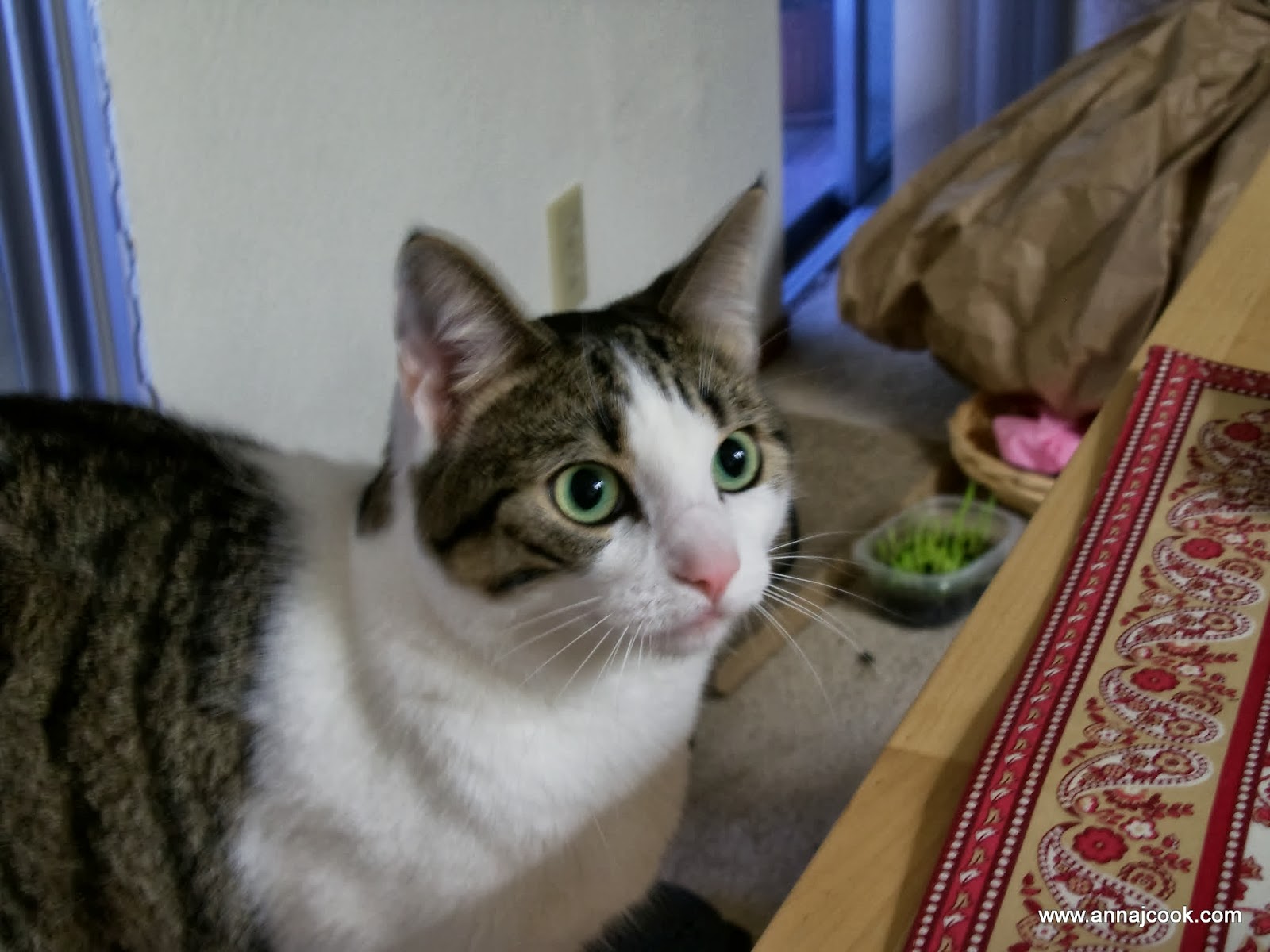
We had less than twenty-four hours in Nye Beach, but we definitely want to go back. Particularly given the friendly company of hotel cat Shelley.

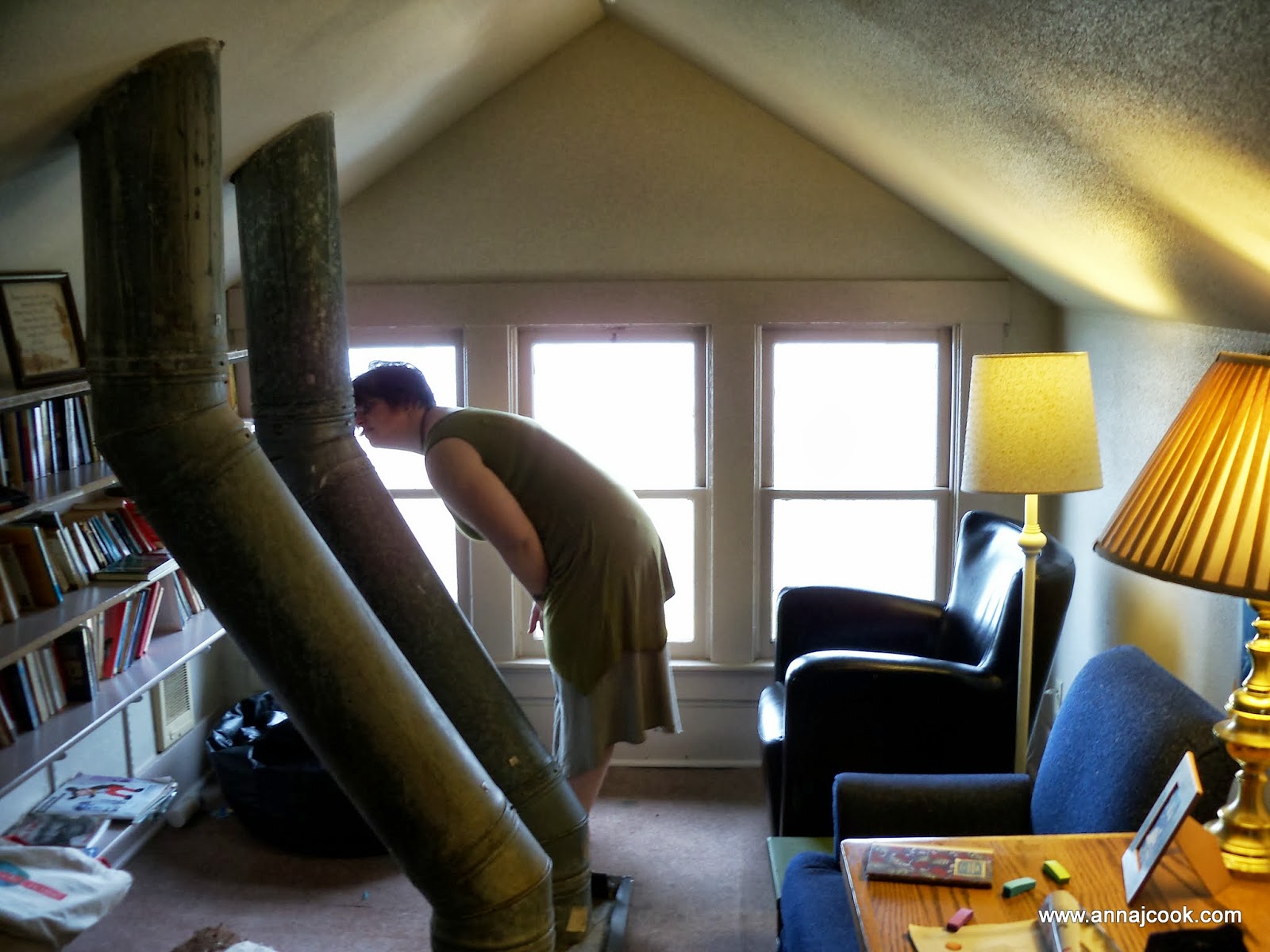
Sylvia Beach hotel is a book-themed locale with each bedroom named and decorated after a particular author. We were in the Emily Dickinson room. On the third floor is a cozy library space with a kitchenette for coffee and tea and lots of chairs with glorious ocean views.

In the morning after our night over, we soon hit the road for Portland — but not before stopping at Carl’s Coffee for, well, coffee and Books on Beach for a great selection of higglety-pigglety books. Including a number of H.P. Lovecraft collections that Hanna was particularly delighted to find.

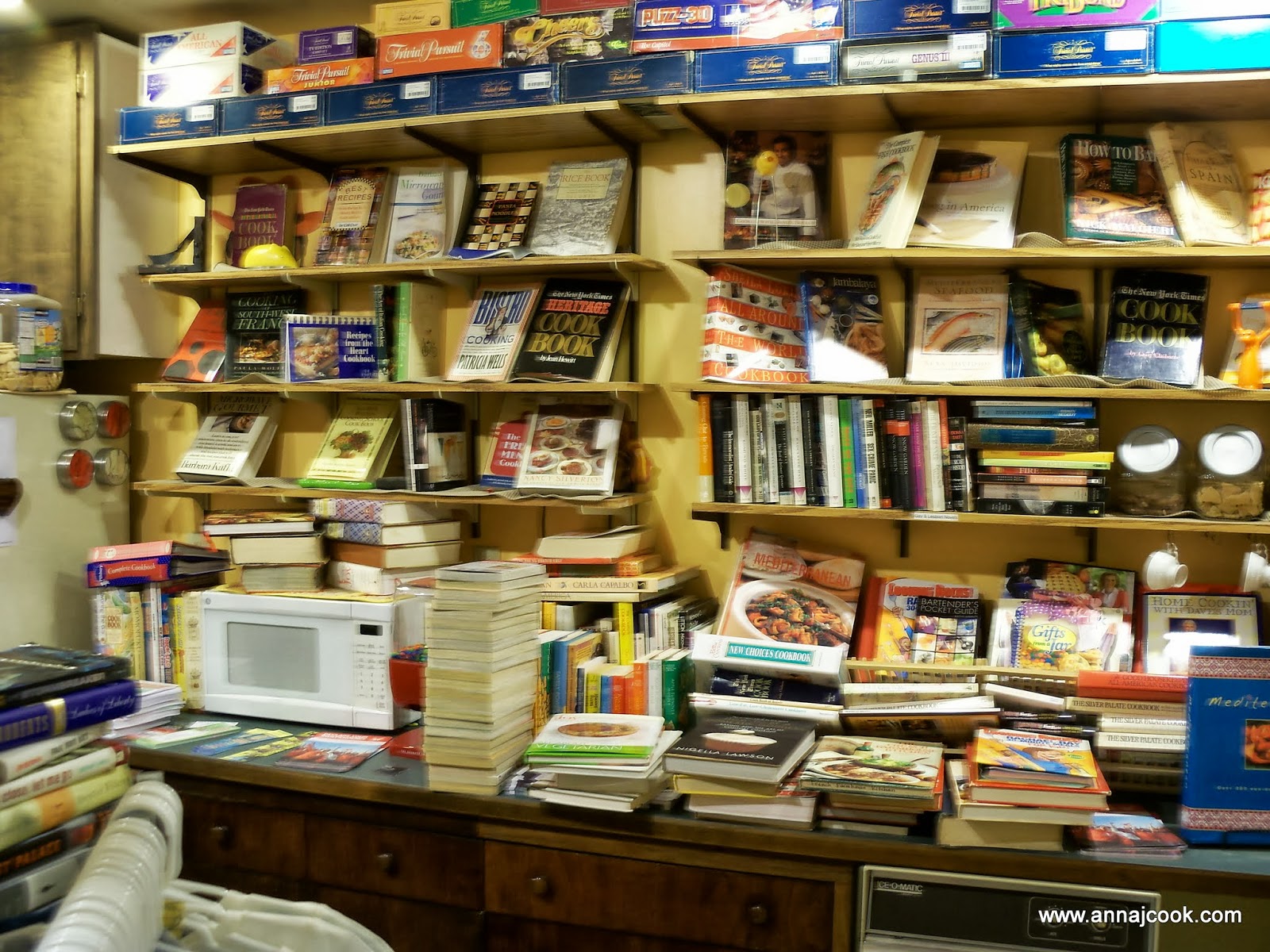
The store was a converted tea shop, and this was their “waiting to be shelved” system.

Through most of adolescence, it was a pretty specific dream of mine to end up living on the Oregon Coast running an independent/used bookstore like this in one of the tiny towns along Route 101. I’d sell books to the tourists in the summer and the locals in the winter, filling the long periods between wintertime customers (or the days when the storms blowing in off the ocean made going outside a formidable option) hunkered over my notebooks writing novels and drinking tea in front of a crackling fire.

As you can tell, even then I had no head for business.

We were sorry to leave, and we’re both looking forward to going back!

cats with new tricks [photos]

17 Thursday Oct 2013

Posted by Anna Clutterbuck-Cook in our family

≈ Leave a comment

Tags

cat blogging, domesticity, photos, web video

We’ve been chilling at home a lot the past two weeks, even more than usual, due to Hanna’s convalescence (she’s on the mend, but under strict instruction to keep on resting through the weekend).

The cats are delighted. Also worried. Worrlighted?

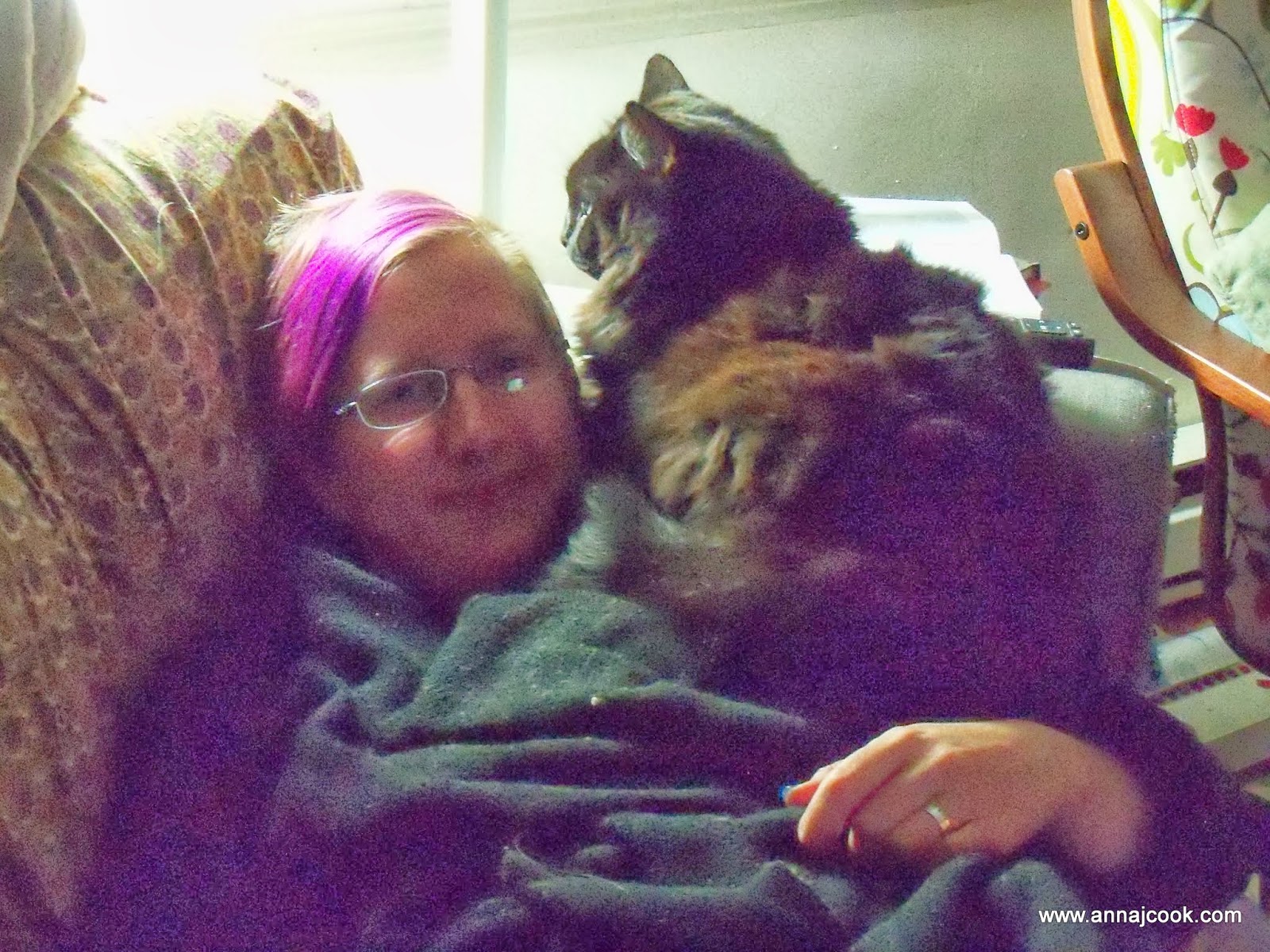
Gerry has decided, around the third anniversary of her joining our family, to become an intensely human-centric companion. As I type this, she is hunkered down between me and Hanna on the bed.

Teazle, on the other hand, has gone the opposite route: instead of crowding closer, she’s taken the opportunity to get up to no good. She’s like her own walking, talking marauder’s map.

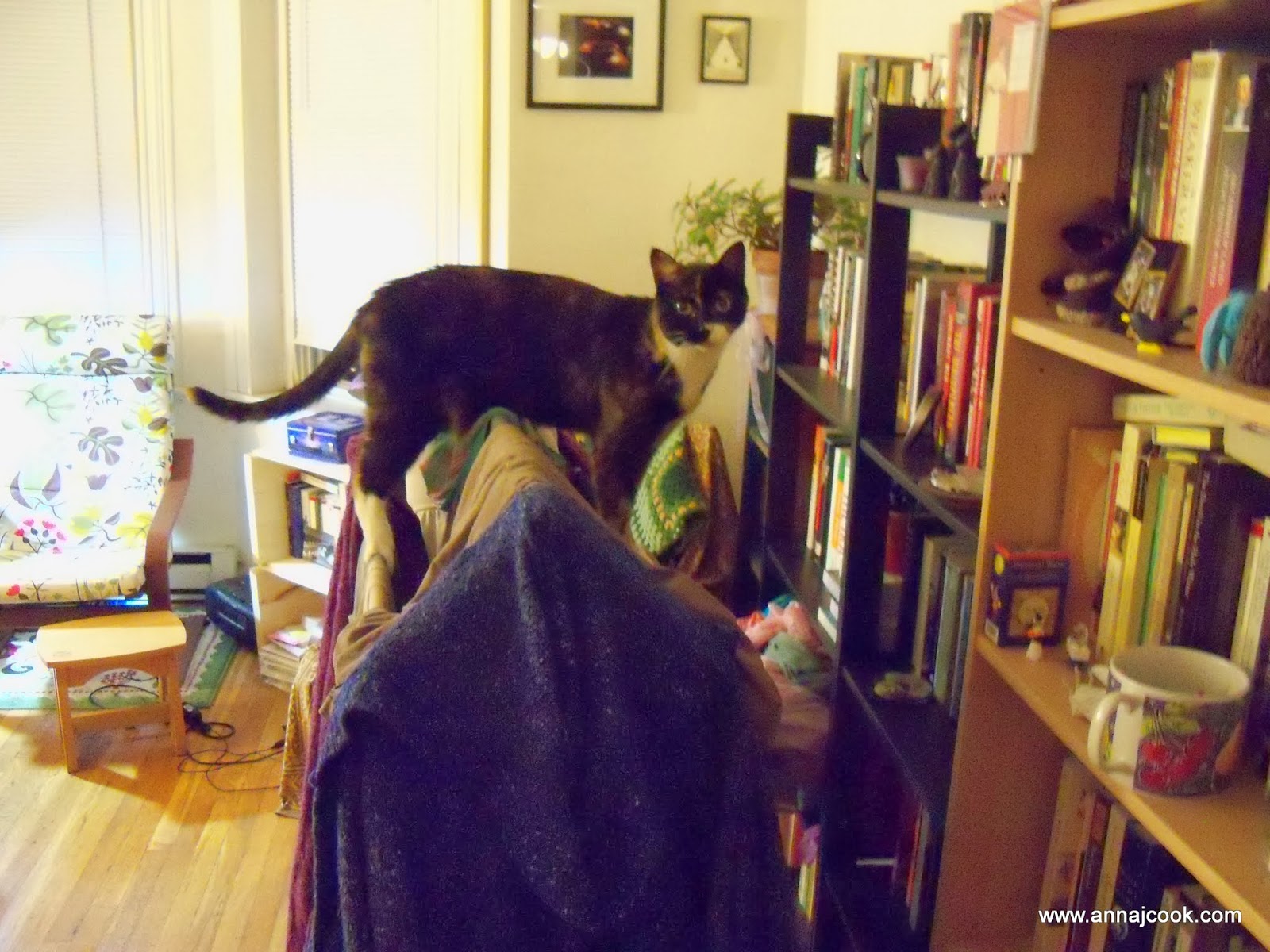
This is her latest trick. She’s been trying for months to figure out how to scale the drying rack, and just this week mastered the act. 

She’s so proud.

Here it is in video form:

on being out day [a belated post]

13 Sunday Oct 2013

Posted by Anna Clutterbuck-Cook in life writing

≈ Leave a comment

Tags

being the change, gender and sexuality, hanna

This Friday, October 11th, was International Coming Out Day.

I thought, in passing, about writing something but I was distracted by trying to get things done at work and by the fact my wife was getting a chest x-ray for pneumonia. And then picking up antibiotics (thank goddess for antibiotics) for her. And remembering to feed the cats. And pick up something for dinner.

Hanna in the redwoods (Sept. 2013)

So this is a belated post on the theme of coming/being out. I don’t have anything particularly original to say, except that I am grateful to all of the people throughout history, past and present, who have conspired to make International Coming Out Day an unremarkable occasion in our day lives. Hanna and I live in a time and place where our bisexual inclinations and same-sex relationship are known and largely honored structurally in our workplaces, with our landlord, at our health center, in our city, state (and now, finally, the federal government), by our friends and relations. We hold hands and kiss in public, speak of things sexual while dining out, review queer porn, blog about being dykes.

We don’t fear being evicted, fired, blacklisted, jailed, physically attacked, disowned or disinherited, treated as sick because of our sexual selves, or otherwise grossly discriminated against. And if any of these things were top happen to us, we would have advocacy organizations and a network of supporters to turn to for aid.

In many ways, our security is exceptional: many queer folks still live in the toxic closet, or cover aspects of their identities, for fear of social and material marginalization. The young and the old, the gender non-confirming, trans folks, queer people in nations that still actively persecute sexual minorities.

There is obviously still work to be done.

But this week, I’m grateful in my own small domestic way for the work of activists and the kindness of those people in our lives who together made it possible for my Friday to be, in part, a story about leaving work half an hour early so I could get to the pharmacy and pick up Hanna’s antibiotics. A story about a boss and colleagues who sent well-wishes for Hanna’s quick recovery. A story about a health clinic that knows were a couple and has no problem letting me pick up her medications.

A story about going home to my wife.

some stuff we’ve been watching

09 Wednesday Oct 2013

Posted by Anna Clutterbuck-Cook in Uncategorized

≈ Leave a comment

Tags

arts and culture, domesticity, television, web video

Hanna’s in the third week of what’s just been formally diagnosed as bronchitis, so between her feeling crap and me keeping the household running (and Gerry getting a cold somewhere in there) none of us have a lot of energy for much beyond work except watching telly.

Thank the goddess for WGBH.

One thing we’ve gotten sucked into is Last Tango in Halifax. Let’s just say we stopped by for Derek Jacobi and hung around for the lesbian sex (NO REALLY).

And then on a lighter note:

Watch The Cafe on WGBH 2 on PBS. See more from WGBH.

The Cafe is a truly delightful little twenty-minute comedy about the denizens of a small seaside village in southwest England. I think my favorite episode might be the one featuring the Hellboy living statue…

Meanwhile, we’re thinking good thoughts for all of our friends and fellow citizens affected by the government shutdown (not surprisingly, a fair number of museums, archives, and other cultural institutions are federally funded) and hoping the anti-ACA faction don’t get their way at the expense of the rest of the world.

More when things are a bit less of a muchness around here.

west coast trip [no. 3]: hayward

06 Sunday Oct 2013

Posted by Anna Clutterbuck-Cook in a sense of place

≈ Leave a comment

Tags

photos, travel, west coast

Hanna and I just returned from Connecticut last night, where we enjoyed a brief overnight stay in Storrs so Hanna could deliver a conference paper on late 18th & early 19th century English travel narratives of Ireland, and then yesterday had lunch with friends. If only travel were less expensive, we’d do it more often!

Meanwhile, here are some photos from the wedding leg of our west coast trip.

We were in Hayward, California, to participate in the wedding of Chloe’s parents: now Diana and Collin Thormoto.

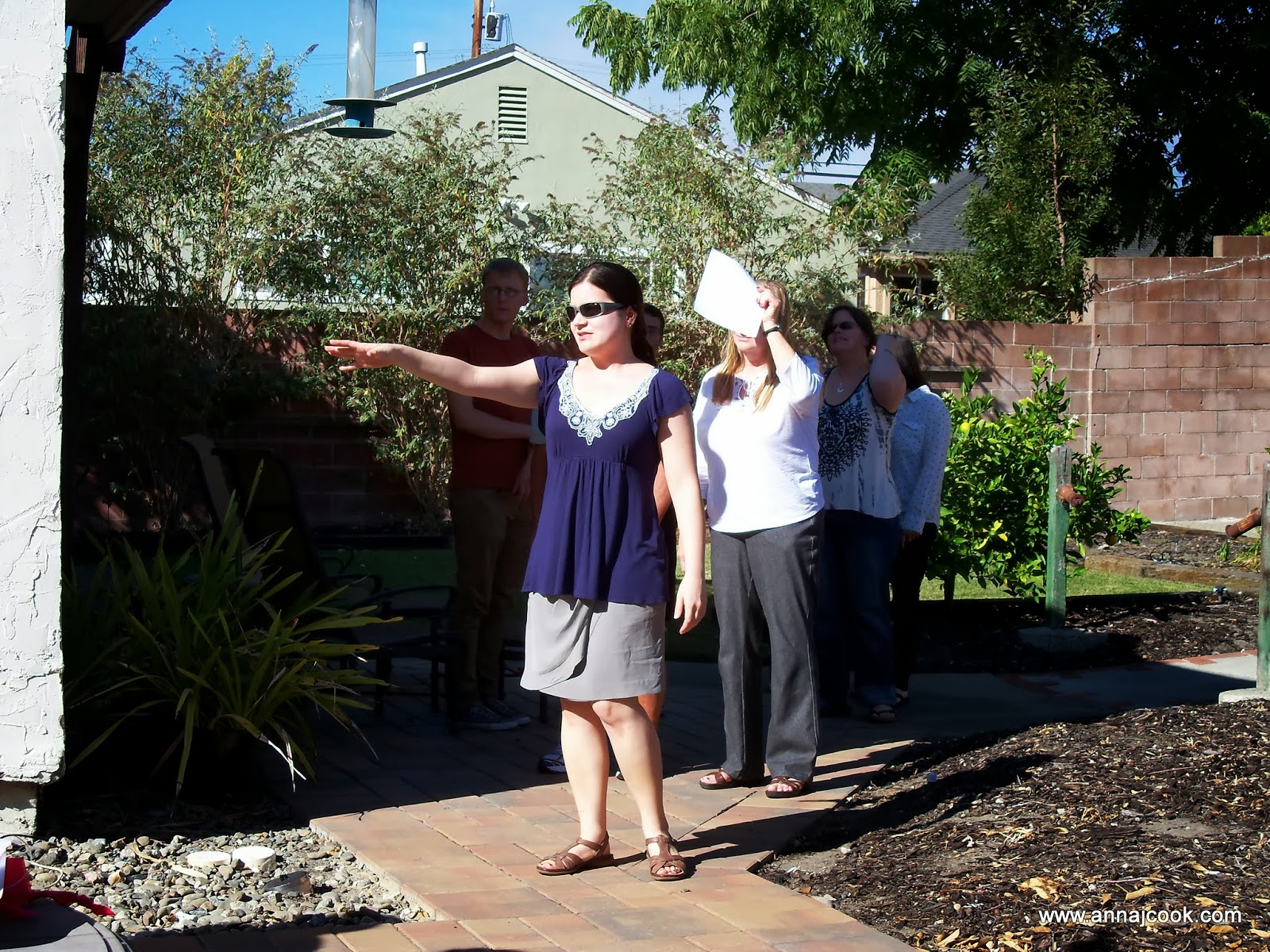
The night before the wedding, we held the rehearsal on the back patio of Collin’s parents’ home.

We had to calm down nervous Pastor Dan, who was thrown off-guard by the super-organized bride and groom.

Hanna, one of the three wedding attendants, got to practice her paces on the arm of Collin’s brother David.

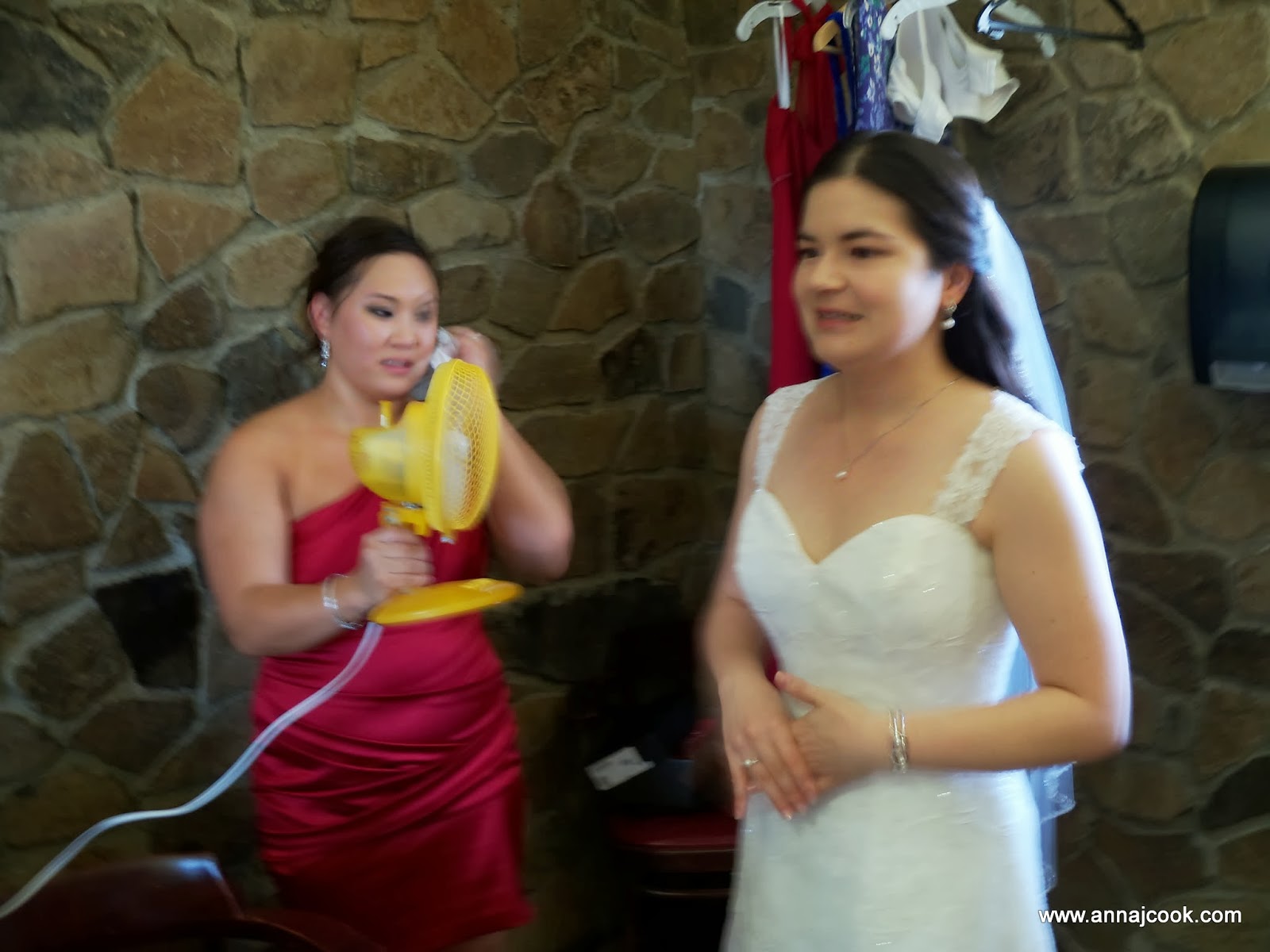
The wedding was on a Monday in Tilden Park at the Brazilian Room. Despite being September, the afternoon was brutally hot and we had to keep everyone as cool as possible before the ceremony!

The wedding had a bunch of awesome nerdy touches, from the TARDIS cake topper and Sting cake knife to the Star Wars processional music and Lord of the Rings-themed reception tables. You can see lots of beautiful photographs by the professional photographer here.

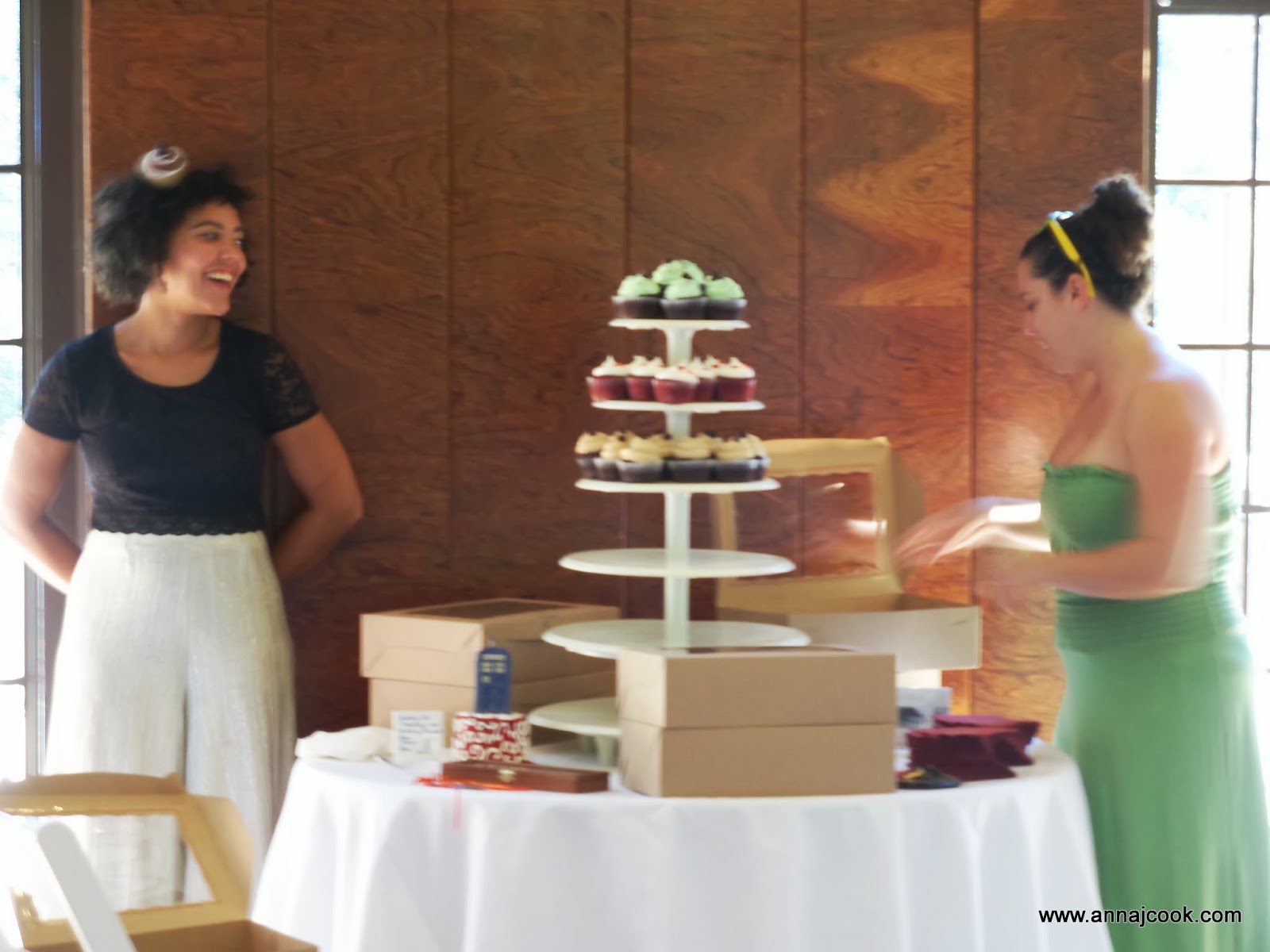
The wedding “cake” was actually a tower of cupcakes catered by James and the Giant Cupcake, brought in and arranged by these to enthusiastic women (one of whom was wearing a cupcake on her head!).

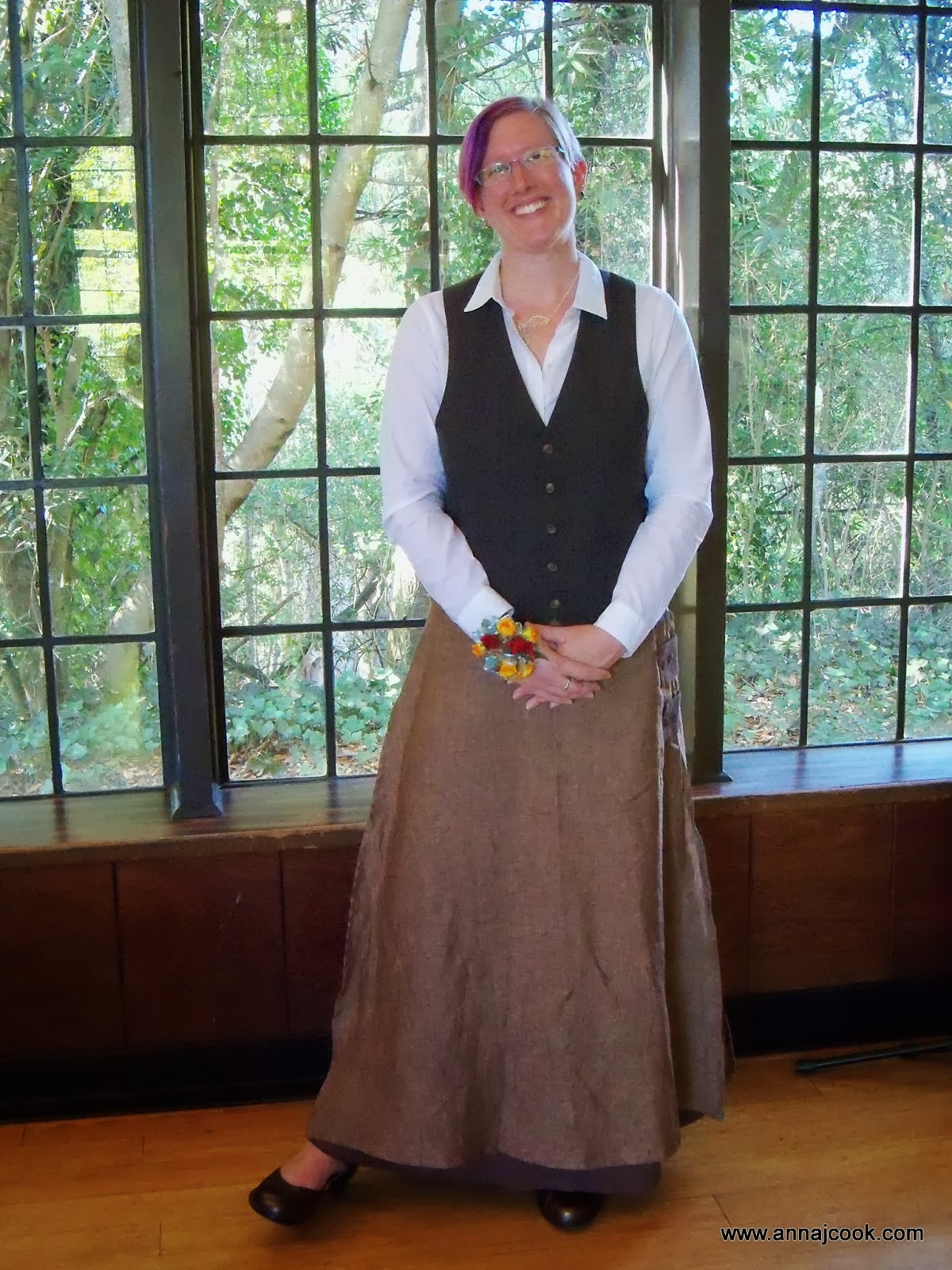
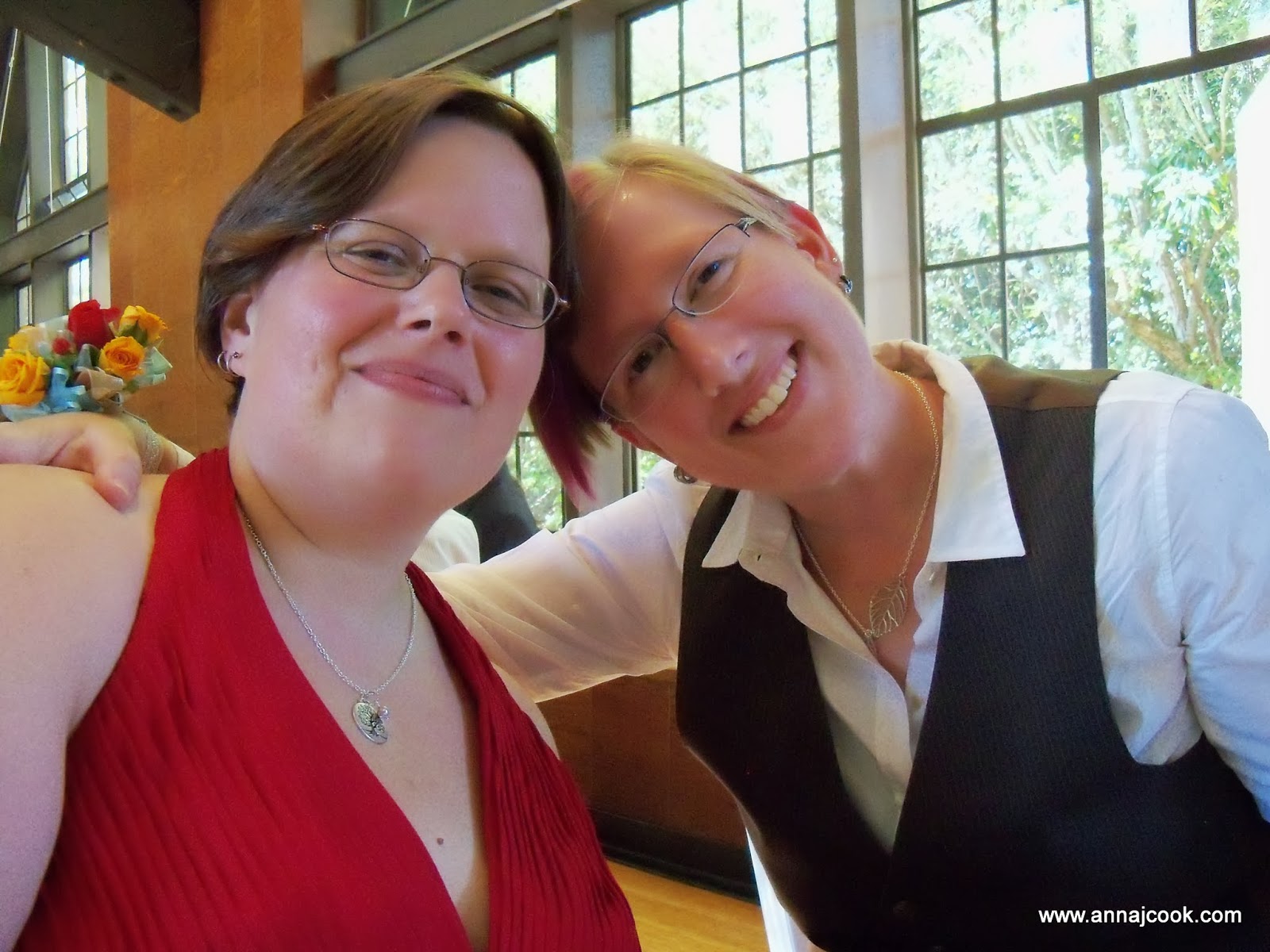
While not officially part of the wedding party, I was asked to help out and invited to sit at the head table (Bag End) with my own most fabulous spouse. The skirt I wore was sewn for the occasion by my colleague Andrea, who moonlights as a costumier.

(If you squint you can see our bridesmaids gifts — gorgeous silver necklaces!)

Less than a week after this extravaganza, Hanna and I got to celebrate our own first anniversary while the newly minted wife and husband were off on their honeymoon on Kauai. We silently wished them many happy returns of the day — and then snuggled up under the comforter and fell back asleep!

Next up, redwoods and ocean views … we take in a bit of the Oregon Coast before catching our flight back to Boston.

in praise of obamacare [because experience]

01 Tuesday Oct 2013

Posted by Anna Clutterbuck-Cook in think pieces

≈ Leave a comment

Tags

boston, politics

As we are all well aware by now (unless you’ve been living in a media blackout), the Affordable Care Act-mandated healthcare exchanges — the websites that will enable uninsured folks and people paying for individual plans to enroll in health insurance plans and gain access to government subsidies — open today.

Much has been written about the political right’s hysteria about the ACA, or Obamacare, and their effort to deter the eligible from using these exchanges to gain access to affordable medical services. For the past few weeks the freak-out has only gotten worse.

So I thought, on this auspicious day of an important piece of the Obamacare roll-out, I’d offer up a big “thank you!” for my own experience with Obamacare’s more local predecessor, Romneycare.

When I moved to Massachusetts in 2007, I had been paying independently for health insurance since graduating from college in 2005 and becoming ineligible for my parents’ workplace-sponsored healthcare coverage. I paid to extend that coverage for several months through COBRA at the price, if memory serves, over $300/month. As that cost was unsustainable, even living in my parents’ household, I switched to a catastrophic-coverage plan through Michigan’s Blue Cross, Blue Shield. The monthly payments weren’t too bad, about $50, but the deductibles were so high that I was paying out of pocket for all of the routine, preventative care that I actually needed: primary care, medications (I’m on several ongoing prescriptions), as well as dental and eye care. Actually, before moving to Massachusetts, I had never had coverage for dental, or eye care. I was used to paying $90-180 per appointment for regular dental cleanings.

Mental health care, too, was something that my family had never had coverage for — counseling appointments were strictly out of pocket, if we were lucky reimbursable through the flexible spending account (FSA) my parents paid into every year.

Between 2005-2007 I worked a number of part-time positions for between $7-10 per hour. My last pre-library school job was at Barnes & Noble where I worked 15-30 hours/week for minimum wage. I started there at $7.50/hour and when I quit the job to take a position at the Massachusetts Historical Society I was making around $9.00/hour.

At the MHS I earned $14.00/hour, which was more than I’d ever made in my life. But at 21 hours/week only came to roughly $15,300/year … before taxes. In order to buy into the Simmons-sponsored student health plan, I would have had to take out additional student loans to cover the premiums.

Thankfully, as a part-time graduate student I qualified for the Massachusetts state-subsidized healthcare program. After submitting an application, providing proof of income and lack of insurance options through work, and waiting for the bureaucracy to churn away I was approved for Commonwealth Care. Hanna was also approved as well, after many years of being uninsured during periods of low- and unemployment in states without comprehensive health insurance programs.

bDuring the rest of my part-time employment/graduate student days — until I transitioned to full-time professional employment with work-sponsored healthcare coverage — I had Commonwealth Care to thank for access to a primary care provider, to eye- and dental care (for which I paid only co-pays for the first time in my life) and, wonder of wonders and miracle of miracles mental health coverage.

Let me repeat this for you:

For the cost of between $0-$100/month in premiums, and $0-20/visit in co-payments, scaled as our income changed, Hanna and I had access to comprehensive medical care. Thanks to Romneycare. 

Between 2007-2011, while we pieced together part-time work for living expenses and shouldered the burden of student loans to cover tuition, we had the peace of mind that our medical needs wouldn’t go by the wayside due to our inability to pay.

our awesome health center

Romneycare paid for us to go for our annual physicals and our ladybit exams.

Romneycare paid for my thyroid medication and all of Hanna’s prescriptions, sometimes with no co-pay.

Romneycare gave Hanna access to psychiatric and counseling services when she needed them to combat depression.

Romneycare brought us eye exams and low-cost prescription lenses.

Romneycare funded dental cleanings, x-rays, and repair work.

There’s been a lot of talk about how young adults, supposedly healthy, have little incentive to engage in these health insurance marketplaces. Yet there are plenty of young adults out there who have chronic health conditions (or are working to prevent chronic health conditions toward which they would otherwise be trending). Apart from anything else, how many of us need glasses or contacts? Despite America’s love affair with youthful bodies, young bodies are not always healthier bodies. And the struggles of those bodies are not always within our powers to ameliorate or eliminate without access to health care professionals.

I can’t create the synthetic hormones that make up for my lack of a functioning thyroid.

I can’t grind the glass to create the lenses that allow me to work and drive safely.

I can’t manage my migraines without assistance from my primary care provider.

Hanna needs ongoing support to navigate her depression and anxiety.

We’ve both, in the past two years, needed diagnostic tests and physical therapy to prevent chronic injury.

In 2011 we both transitioned into professional positions that offered robust health plans as part of the benefits package. Today, we pay roughly $120/month (pre-tax) in premiums through our employers to continue our access to medical, mental, dental, and eye care. Most appointments come at a $15-20 co-pay; prescriptions are $5-20 per refill. We are able to utilize flex spending accounts, and thanks to a strong union, Hanna’s co-payments annually top out at $135 for her wage bracket.

Last year we were reimbursed about $800 by Harvard for prescriptions and co-payments.

I haven’t done the math for all our medical services, but without insurance our counseling appointments alone would cost $10,800 as billed … about 2/3 what we pay in rent annually.

While we’re lucky to have workplaces that offer these benefits, it’s also reassuring to know — in this age of uncertain employment — that if one or the other of us needs Commonwealth Care again, it will be there to access. I’ve referred friends the program. And I’m glad to know that many, many others in the state of Massachusetts have been able to access care like we did, supported by our tax dollars.

(According to one subsidy calculator, if Hanna and I needed to purchase
private insurance, even at our current income we’d get $900 annually
in federal subsidies to help make that more affordable.)

This coming year, I’m going to feel a little bit better about being an American citizen in a nation where people in Michigan, Texas, Oregon, and elsewhere can access care also.

Supported by our tax dollars.

I believe this is (the beginning of) government as it could and should be.

Thank you, Obamacare, for taking a step in the right direction.
west coast trip [no. 2]: bend & ashland

29 Sunday Sep 2013

Posted by Anna Clutterbuck-Cook in a sense of place

≈ Leave a comment

Tags

photos, travel, west coast

Leaving Portland, we drove down past Mt. Hood and through the Warm Springs reservation, home of the Confederated Tribes of Warm Springs, to the city of Bend in central Oregon.

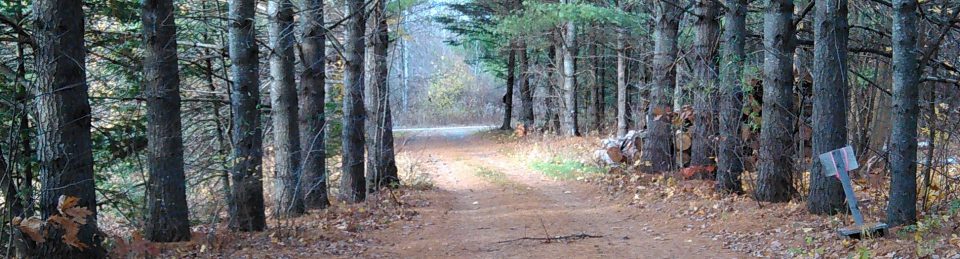
In 1984 my maternal grandparents retired to Bend, where we visited them throughout my childhood. This past May, my grandmother passed away there, and Tumelo Creek in the photograph above is where my grandfather, mother, and aunt, scattered her ashes.

We also visited the public library where my grandma volunteered for many years. She was responsible for selecting and mailing books to far-flung readers who were unable to visit the library in person very often (or at all). In ranching territory, this was not an insignificant group of people! She developed correspondence relationships with many of them, and was particularly proud of her ability to introduce her readers to new authors, occasionally sneaking in something they professed disinterest for. I remember one man, particularly, who refused to read women authors — until my grandmother got him hooked on the mystery writer P.D. James!

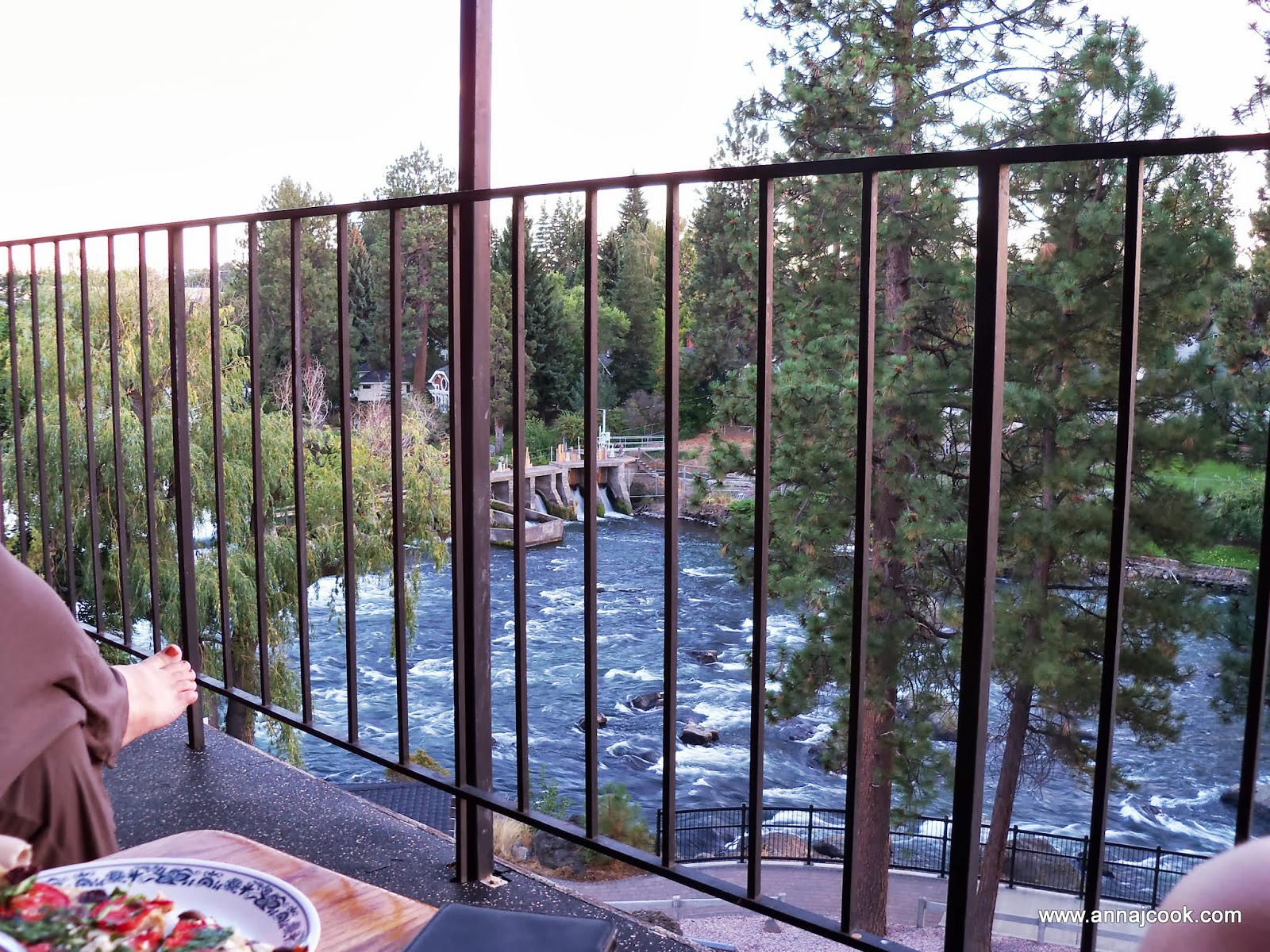
We stayed at the hotel we nearly always stayed in when I was a child, but to which I hadn’t been in over a decade: The Bend Riverside Inn & Suites. My mother had given us some money from her inheritance from my grandmother so we splurged on two nights in literally riverside accommodation on the Deschutes.

We ate well, lunching with my grandpa at the Victorian Cafe and discovering a coffee favorite of the trip, thump coffee.

thump had wooden shingles for customers to draw on, which they then hung up in the rafters — great decor! Hanna and I each contributed one to the collection.

We left Bend after a two-night stay and drove south to Ashland. Hanna had never been to Crater Lake, so we took a detour and drove through the park. It was incredibly foggy, but there were still amazing views!

The incoming clouds, portending fog at higher elevations.

Ashland — as long-time readers of this blog may remember — is the town near where the Oregon Extension program is located (about which I wrote my thesis). We actually stayed at the Greensprings Inn, twenty miles up in the mountains.

It was gloriously dark and quiet. We would have stayed longer, but we had a wedding to attend!

The next morning we had breakfast at the Greenleaf and merged back onto the I-5.

Mt. Shasta from the road…

booknotes: my brother, my sister

25 Wednesday Sep 2013

Posted by Anna Clutterbuck-Cook in book reviews

≈ Leave a comment

Tags

feminism, gender and sexuality, memoir

Molly Haskell at a book signing for
My Brother, My Sister (via)

Just before leaving on vacation, I was asked to review the new memoir My Brother, My Sister: A Story of Transformation by Molly Haskell (Houghton Mifflin, 2013). I spent the flight from Boston to PDX reading … and taking increasingly irritated notes. While I didn’t actively seek out this book to review, I had slightly higher hopes for a memoir that promised in its ad copy to be a “candid” and self-critical memoir by a “feminist academic” who not only seeks to describe her own journey to understanding but also to “chart the cultural map … of gender roles and transsexualism.” I had hopes for a memoir that evidenced both better understanding of the trans issues its author attempts to outline for readers — one that hadn’t fallen into some of the most basic traps of our problematic cultural narratives about trans lives.

Part of my disappointment comes from the fact that cis* family members and friends of trans individuals often struggle to get up to speed on trans issues after a loved one opens up about their experience — and there is a need for personal narratives by individuals who have struggled through ignorance and misconception into better understanding. Such stories don’t need to paper over the messy reality of feeling that often accompanies such a journey. I have a friend whose spouse came to the realization of their transness within the last two years, and as a partner my friend struggled with many of the same feelings a major life change will bring: grief over the loss of “before,” fear about what the future will bring, uncertainty about what this change meant for their relationship and family life, sometimes anger at their spouse for being at the epicenter of this upheaval — and for mostly not sharing in the grieving process. Like many trans individuals, the partner was mostly elated and relieved to be finally bringing their self-presentation into alignment with their interior self: to no longer be living a dissonant life. To my friend, whose emotions were much more ambivalent, it often felt like there was no safe or sanctioned place to process their complexity of feeling. With economic barriers to therapy and other social supports often prohibitively high, books like Transitions of the Heart (written by parents of trans and gender-nonconforming children) can help mitigate what could otherwise be intense isolation.

My Brother, My Sister could have been an addition to this small but growing list of literary offerings. In my estimation, it was not.

Let’s begin with the most basic trap of all, the way the memoir’s narrative is structured around and saturated in the physical aspects of transition, most particularly fixated on gender confirmation surgery and Haskell’s assessment of how well or appropriately she believes her sister is presenting as a woman. While acknowledging that authors sometimes have little control over book jacket design, the plain red cover with a youthful photograph of Ellen “before” and a current “after” photograph invites the reader to center Ellen’s appearance and physical transition rather than Haskell’s experience as the cisgendered sister having to assimilate her sibling’s late-in-life changes. A set of photographs at the center of the volume likewise foreground the “before” and “after” images.

As authors like Julia Serano and S. Bear Bergman have pointed out, the narrative of “passing” places the onus on a trans person to conform to the world’s high expectations of gendered behavior rather than demanding that the world accept a person’s self identification regardless of presentation. A trans person — just like any of us — may be a butch or lipstick lesbian, a twink or a jock, a sorority girl or tomboy. Bodies come in all shapes and sizes, and sartorial taste ranges across a field of more-gendered and less-gendered style choices. Historically, we (the public) have required a high level of stereotypical gender performance from trans women — at the same time as we (feminists) blame trans people for perpetuating sexism through that same exploration of femininity.**  Haskell perpetuates this scrutiny by making physical transformation the benchmark of transition, and by dwelling on the surgeries, the clothing choices, the gender-coded vocal and physical mannerisms, and other aspects of her sister’s self-presentation.

While her sister’s pleasures and anxieties around offering up her newly-visible self to the world are understandably preoccupying, Haskell’s perspective is more often one of harsh judgment than it is attempt to follow where her sister leads. She frets that her sister will be unattractive, considers her clothing choices too slutty, and considers anyone who can’t or is unwilling to fit into her neat categories of gender to be somehow at fault. For example, she writes of a trans woman her sister knows, “One man, though convinced he’s a she, refuses to do anything to alter his rough male appearance” (158). As if this “refusal” to care about her appearance somehow invalidates the woman’s self-articulated gender identity. She also offers unsolicited opinions on the femininity of other high-profile trans women:

From photographs, Jennifer [Finney Boylan], being younger and more typically feminine, seems to have made an attractive looking female, while [Jan] Morris by most accounts, before settling into dignified-dowdy, went through a grotesquely awkward wannabe-girl period (122).

I scribbled in the margins “seriously. out. of. line. judgy.”

When Ellen visits Haskell after a period of cloistered transformation, Haskell nervously invites friends over and then grills them afterward on Ellen’s ability to perform femininity: “The verdict … she’s very convincing. I said the hair’s too blond, and Lily and Patty agree, the hair is too blond, but they’re surprised at how good she looks” (146).

I think possibly a large part of my irritation is that I couldn’t find Molly Haskell very likable, as a sister or as a feminist. She’s critical of other women’s appearances, ageist towards both the old (women who might be unable to catch a man) and the young (who are too slutty in appearance and too casual about identity), and hews close to gender expectations. One of her first reactions to her sister’s coming out as trans is to fear that the tech- and number-savvy brother she relied on will no longer be good at computer repair or math. While she sidles up to the notion that this first reaction was unfounded, she never demonstrates for her readers that she has since come to revise her binary thinking when it comes to girl brains and boy brains.

At what might be a low point of the book, she even suggests that Brandon Teena, the trans man who was the subject of the biopic Boys Don’t Cry somehow “asked for it” by dressing in clothing appropriate to his gender and not disclosing his trans status:

Yes, the yahoos were uptight and murderous, but she in some sense invited the violence by taunting their manhood, pulling the wool over their eyes, and acting in bad faith (106).

Yes, she willfully mis-genders him. To fall back on the trope of the deceptive transsexual (who supposedly invites violence through the act of passing) in a throwaway comment, in a book pitching itself as one about understanding trans lives, seems to me a fairly basic mis-step that, again, both Ms. Haskell and her editor should have caught before the manuscript went to press. That they did not suggests neither understood how problematic it was.

Which in turn calls the entire project into question, at least as far as its worth as a positive contribution to trans literature goes.

At the end of the day, I am glad that Molly and her sister have remained in good relationship, and I am glad that Molly gained more understanding of trans experience and trans history than she had when her sister first came out to Molly and her husband. I imagine that, at the end of the day, there are far worse reactions to have had from one’s family upon coming out trans (see: transgender remembrance day). Yet I also wish that Haskell had let her own learning process cook a bit longer before publishing a book on the subject. As it stands, My Brother, My Sister is a tepid-at-best, damaging-at-worst popular memoir that does little to invite a more complex understanding of trans people or sex and gender identity more broadly. I expected better from a self-identified feminist author, although I’m sure trans feminists would laugh at my (cis-privileged) wishful thinking.

For those interested in learning more about trans lives, I would recommend The Lives of Transgender People by Genny Beemyn and Susan Rankin, Whipping Girl by Julia Serano — who has also just published a book on trans-inclusive feminism that I can’t wait to get my hands on — and also Anne Fausto-Sterling’s excellent Sexing the Body.

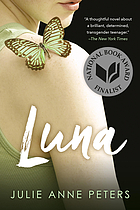
Luna, a young adult novel by Julie Ann Peters, is also an intimate fictional portrait of a sister coming to terms with her siblings trans identity.


*Cis or cissexual refers to individuals whose gender assigned at birth (usually based on external sex characteristics) matches their internal sense of their own physiological sex and gender identity.

**Trans men have, historically, had a very different socio-political experience within both mainstream culture (where they are often rendered invisible) and mainstream feminism (where they are more often embraced while trans women are actively marginalized).

west coast trip [no.1]: portland

21 Saturday Sep 2013

Posted by Anna Clutterbuck-Cook in book reviews

≈ Leave a comment

Tags

photos, travel, west coast

As promised, here are some photos from our two-week trip to Oregon & California. We flew into Portland, Ore., where my brother and sister-in-law live. One of our first stops was Powell’s City of Books, over sixty-eight thousand square feet of new and used titles, as well the in-store coffee shop (pictured above) where we obviously stopped for our morning espresso.

The store map (PDF) offers some sense of scale, although it’s hard to grasp until you actually walk in the door.

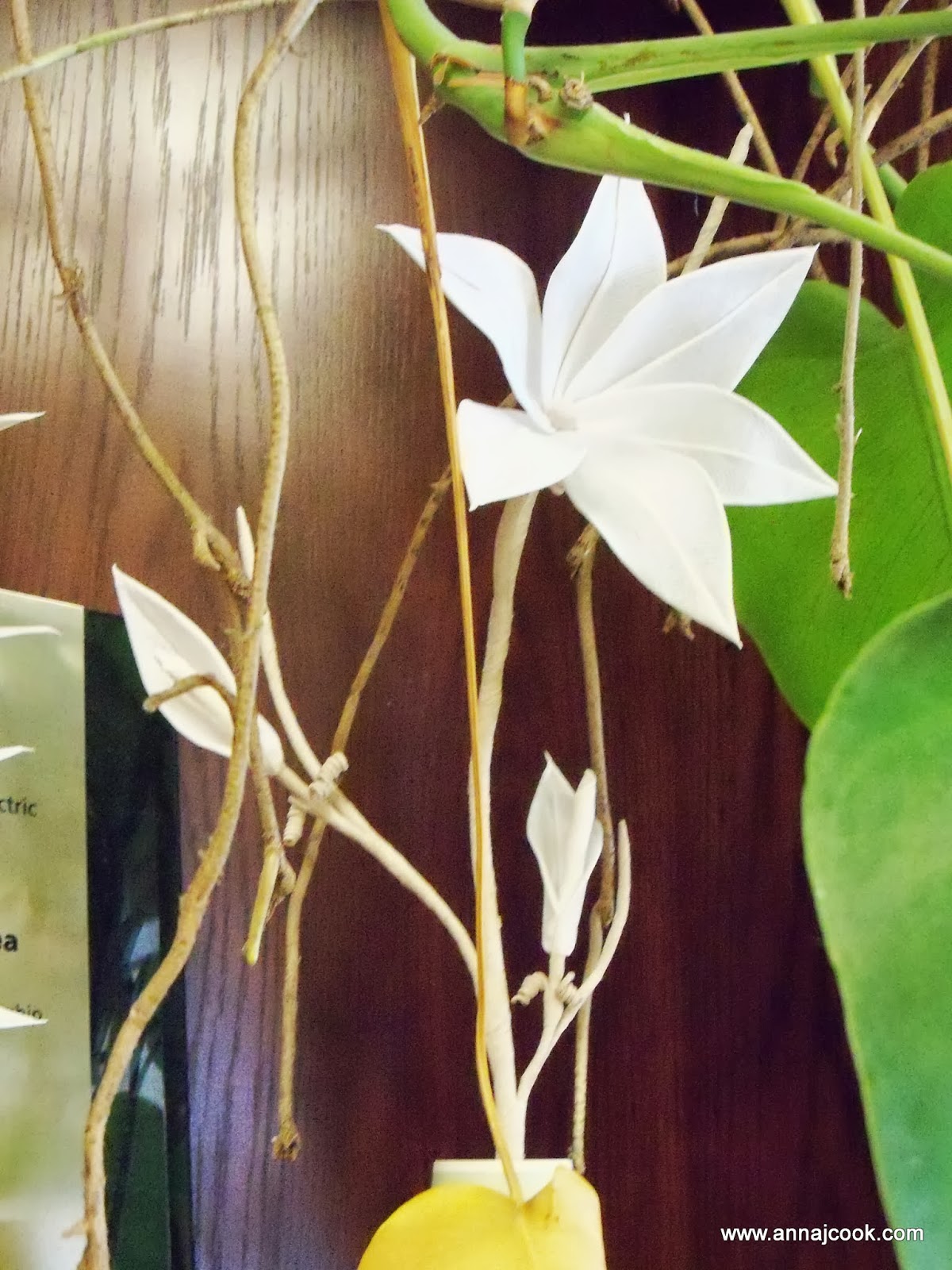
On our first morning, the artist sitting behind Hanna’s left shoulder was constructing paper flowers out of waxed drinking cups. The next day, his handiwork was on display at the cafe counter:

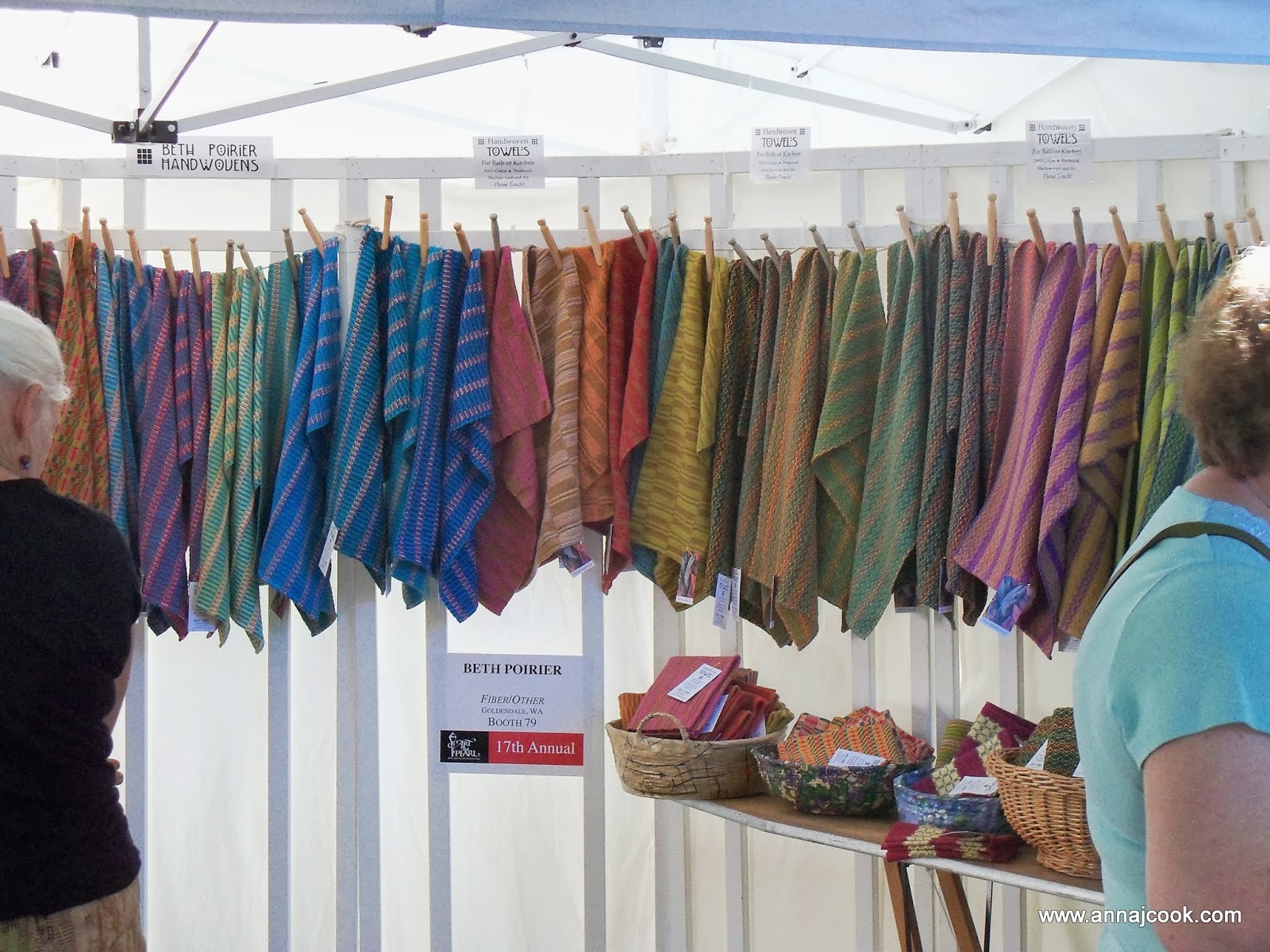
Portland is city full of artists, including my sister-in-law Renee! On the Saturday of Labor Day weekend, Renee was participating in an art fair — painting to advertise an upcoming open studio tour. Hanna, Brian and I wandered the fair and also stopped by to visit with Renee.

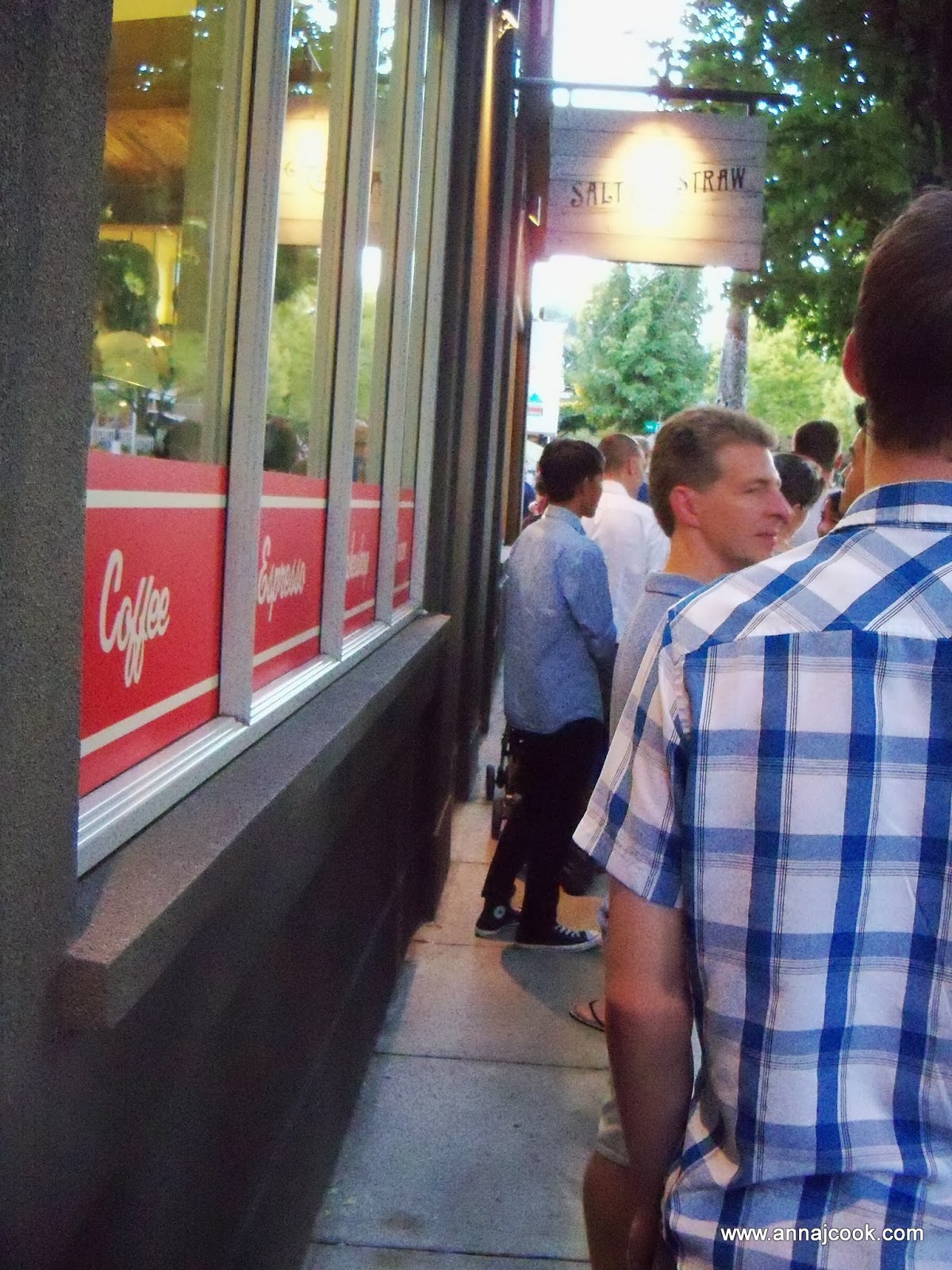
That night, we waited in a long line for the Most Amazing Ice Cream Ever at Salt & Straw on NW 23rd. I had a split cone featuring pear and Gorgonzola and olive oil flavors. Both sound weird, but were incredible.

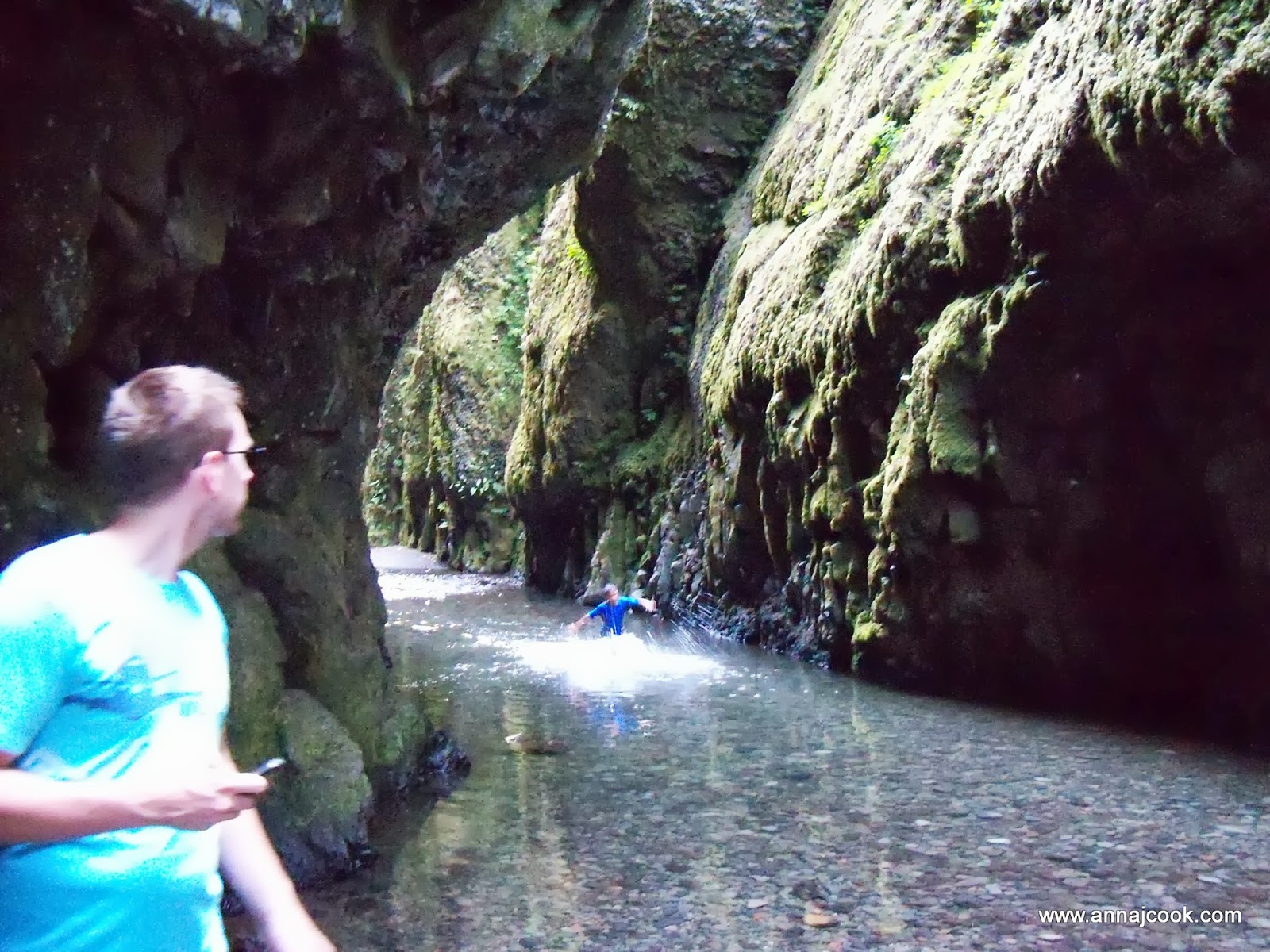
Sunday, Brian and I drove out the Columbia River Gorge to the Oneonta falls. Labor Day weekend proved a busy time to visit, even though the falls are difficult to get to. In order to reach the actual waterfall, you have to wade through chilly water that was as deep as my rib cage in places!

But first, a logjam …

… which opens up to the ravine cut by centuries of rushing water …

… with the waterfall payoff at the end!

People had left little cairns of river rocks at the base of the falls.

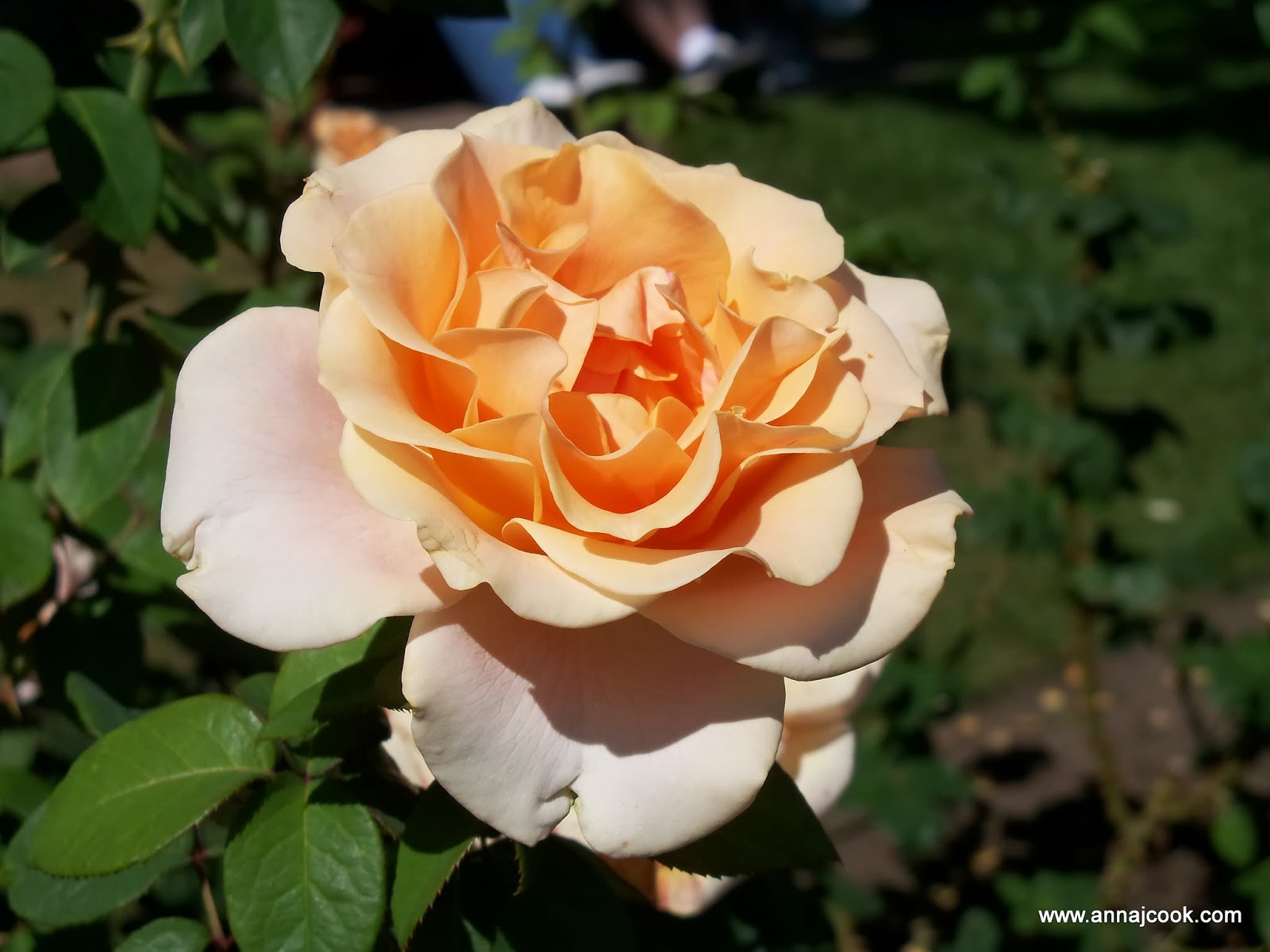
On our last day in Portland, before heading south toward Bend and Ashland, we went to the International Test Garden for roses in Washington Park.

The Tuesday after Labor Day, after Brian had left for his first day teaching middle school art (God bless him!), we rented a car, caffienated up, and headed up over the Mt. Hood pass to central Oregon on the next stage of our travels.

the statement on trans-inclusive feminsm and womanism [signed!]

19 Thursday Sep 2013

Posted by Anna Clutterbuck-Cook in think pieces

≈ Leave a comment

Tags

being the change, bigotry, feminism, gender and sexuality, i write letters

I’ve been seeing this statement coming through on my RSS and Twitter feed for the last few days, and have finally had a moment to sit down and sign it. 

It should be upsetting to us all that the need to specify trans-inclusive feminism and womanism exists, but it does so I want to spell out my support. I also want to take this opportunity to thank the trans people and allies who have pushed me — in person and in print — over the past ten years to learn about trans issues and un-learn toxic myths and stereotypes. You have immeasurably enriched my life and my feminism. I will do my best to live up to the vision all you have challenged us to fulfill.

[text via feministsfightingtransphobia]

We, the undersigned trans* and cis scholars, writers, artists, and educators, want to publicly and openly affirm our commitment to a trans*-inclusive feminism and womanism.

There has been a noticeable increase in transphobic feminist activity this summer: the forthcoming book by Sheila Jeffreys from Routledge; the hostile and threatening anonymous letter sent to Dallas Denny after she and Dr. Jamison Green wrote to Routledge regarding their concerns about that book; and the recent widely circulated statement entitled “Forbidden Discourse: The Silencing of Feminist Critique of ‘Gender,’” signed by a number of prominent, and we regret to say, misguided, feminists have been particularly noticeable.  And all this is taking place in the climate of virulent mainstream transphobia that has emerged following the coverage of Chelsea Manning’s trial and subsequent statement regarding her gender identity, and the recent murders of young trans women of color, including Islan Nettles and Domonique Newburn, the latest targets in a long history of violence against trans women of color.  Given these events, it is important that we speak out in support of feminism and womanism that support trans* people.

We are committed to recognizing and respecting the complex construction of sexual/gender identity; to recognizing trans* women as women and including them in all women’s spaces; to recognizing trans* men as men and rejecting accounts of manhood that exclude them; to recognizing the existence of genderqueer, non-binary identifying people and accepting their humanity; to rigorous, thoughtful, nuanced research and analysis of gender, sex, and sexuality that accept trans* people as authorities on their own experiences and understands that the legitimacy of their lives is not up for debate; and to fighting the twin ideologies of transphobia and patriarchy in all their guises.

Transphobic feminism ignores the identification of many trans* and genderqueer people as feminists or womanists and many cis feminists/womanists with their trans* sisters, brothers, friends, and lovers; it is feminism that has too often rejected them, and not the reverse. It ignores the historical pressures placed by the medical profession on trans* people to conform to rigid gender stereotypes in order to be “gifted” the medical aid to which they as human beings are entitled.  By positing “woman” as a coherent, stable identity whose boundaries they are authorized to police, transphobic feminists reject the insights of intersectional analysis, subordinating all other identities to womanhood and all other oppressions to patriarchy.  They are refusing to acknowledge their own power and privilege.

We recognize that transphobic feminists have used violence and threats of violence against trans* people and their partners and we condemn such behavior.  We recognize that transphobic rhetoric has deeply harmful effects on trans* people’s real lives; witness CeCe MacDonald’s imprisonment in a facility for men.  We further recognize the particular harm transphobia causes to trans* people of color when it combines with racism, and the violence it encourages.

When feminists exclude trans* women from women’s shelters, trans* women are left vulnerable to the worst kinds of violent, abusive misogyny, whether in men’s shelters, on the streets, or in abusive homes.  When feminists demand that trans* women be excluded from women’s bathrooms and that genderqueer people choose a binary-marked bathroom, they make participation in the public sphere near-impossible, collaborate with a rigidity of gender identities that feminism has historically fought against, and erect yet another barrier to employment.  When feminists teach transphobia, they drive trans* students away from education and the opportunities it provides.

We also reject the notion that trans* activists’ critiques of transphobic bigotry “silence” anybody.  Criticism is not the same as silencing. We recognize that the recent emphasis on the so-called violent rhetoric and threats that transphobic feminists claim are coming from trans* women online ignores the 40+ – year history of violent and eliminationist rhetoric directed by prominent feminists against trans* women, trans* men, and genderqueer people.  It ignores the deliberate strategy of certain well-known anti-trans* feminists of engaging in gleeful and persistent harassment, baiting, and provocation of trans* people, particularly trans* women, in the hope of inciting angry responses, which are then utilized to paint a false portrayal of trans* women as oppressors and cis feminist women as victims. It ignores the public outing of trans* women that certain transphobic feminists have engaged in regardless of the damage it does to women’s lives and the danger in which it puts them.  And it relies upon the pernicious rhetoric of collective guilt, using any example of such violent rhetoric, no matter the source — and, just as much, the justified anger of any one trans* woman — to condemn all trans* women, and to justify their continued exclusion and the continued denial of their civil rights.

Whether we are cis, trans*, binary-identified, or genderqueer, we will not let feminist or womanist discourse regress or stagnate; we will push forward in our understandings of gender, sex, and sexuality across disciplines.  While we respect the great achievements and hard battles fought by activists in the 1960s and 1970s, we know that those activists are not infallible and that progress cannot stop with them if we hope to remain intellectually honest, moral, and politically effective.  Most importantly, we recognize that theories are not more important than real people’s real lives; we reject any theory of gender, sex, or sexuality that calls on us to sacrifice the needs of any subjugated or marginalized group.  People are more important than theory.

We are committed to making our classrooms, our writing, and our research inclusive of trans* people’s lives.

Signed,

Anna J. Clutterbuck-Cook (librarian, historian, writer)
Allston, Massachusetts
USA

[click through for the full list of signatories]

← Older posts
Newer posts →
"the past is a wild party; check your preconceptions at the door." ~ Emma Donoghue

Recent Posts

  • medical update 11.11.22
  • medical update 6.4.22
  • medical update 1.16.2022
  • medical update 10.13.2021
  • medical update 8.17.2021

Archives

Categories

Creative Commons License

This work by Anna J. Clutterbuck-Cook is licensed under a Creative Commons Attribution 3.0 Unported License

Meta

  • Register
  • Log in
  • Entries feed
  • Comments feed
  • WordPress.com

Create a free website or blog at WordPress.com.

  • Follow Following
    • the feminist librarian
    • Join 36 other followers
    • Already have a WordPress.com account? Log in now.
    • the feminist librarian
    • Customize
    • Follow Following
    • Sign up
    • Log in
    • Report this content
    • View site in Reader
    • Manage subscriptions
    • Collapse this bar