• anna j. clutterbuck-cook
  • contact
  • curriculum vitae
  • find me elsewhere
  • marilyn ross memorial book prize

the feminist librarian

the feminist librarian

Author Archives: Anna Clutterbuck-Cook

movienotes: footloose and flashdance

16 Tuesday Apr 2013

Posted by Anna Clutterbuck-Cook in media

≈ 2 Comments

Tags

friends, gender and sexuality, movies, politics

This weekend, Hanna and I had a 1980s dance (movie) party with friends A’Llyn, Nathan, and their 1-year-old sprog who — if his living room moves were any indication — is going to grow up to be the next generation’s Ren McCormack. We watched Footloose (1984), which has stood up surprisingly well, and Flashdance (1983), which has very much not — although maybe I shouldn’t talk since I never saw it in the actual 1980s and this was my first viewing. But those in the audience who had seen it as children confirmed that from an adult perspective it was even creepier than they remembered!

A few observations about first Footloose and then Flashdance. Spoilers below, fairly obviously, if you care.

Footloose I first saw at some point in my pre-adolescent period. The two things I remembered most vividly were John Lithgow’s performance as the small-town pastor (whom child-me loved to hate) and the scene where Lori Singer, playing the preacher’s daughter, climbs between her friend’s car and her boyfriend’s truck while they’re driving down a two-lane highway. It’s a scene meant to impress upon us that Ariel (Singer) is a thrill-seeking teenager, but mostly just terrifies me every time I have to watch it! Still, as I said above Footloose still has charm and, think time around, I was struck by a few things I hadn’t noticed, or experienced differently, as a child.

  • John Lithgow’s pastor, Rev. Moore is less fire-and-brimstone than he is sad as a character. In fact, we took to referring to him as “sad John Lithgow” every time he showed up in a scene. The film-makers couldn’t seem to decide whether they wanted to make him a petty tyrant or a fearful father … and ended up trying to go for both with only middling success.
  • Kevin Bacon’s Ren is, like, the most polite Big City Rebel ever. Seriously. He wears a suit and tie to school on his first day, and when he decides to enlist the high school seniors to defy the town prohibition against dancing he … wears the suit and tie to a town council meeting and reads a speech in defense of their case. He refuses to smoke pot, even when a local bad boy foists a joint on him, and chills with his little cousins. 
  • Domestic and intimate partner violence get a look-in, although not much of a mention. On the one hand, we have John Lithgow’s character smacking his daughter across the cheek for talking back to him (probably part of what cemented him in my childhood head as an Evil Character). On the other, we have Ariel’s truck-driving boyfriend who beats her up when she breaks up with him. She takes a pipe out of the back of his truck and smashes his windshield and headlights. He gives her a bloody nose and a black eye. The situation is clearly being set up as the negative contrast to Ariel’s eventual relationship with Ren, but it’s also treated like a weird side-point that’s never substantively addressed.
  • The teenagers get a surprising amount of support from the surrounding adults — for a town where supposedly dancing is Of The Evil. Ren’s mother is fired from her job at one point because her son is causing trouble, and the relatives they’re staying with get momentarily judgy. But, like, the mill owner Ren works for after school offers his building for the dance, and Mrs. Moore sticks up for her daughter and the other students at a couple of key points. 
  • Reverand Moore draws the line a burning books from the library, which is sweet but also makes his prohibition against dancing as a sin nonsensical. He’s set up at the beginning of the film as the Big Baddie, only to emerge toward the end as one of the primary advocates for the teens. It’s disconcerting.
  • And Ren McCormack has more chemistry with his new BFF, Willard, than he ever has with Ariel. The scenes where Ren is teaching Willard to dance have more spark in them than any other scene in the film, frankly, and I’m started to find that there is no fan fiction fleshing this romance out on AO3. Fan writers, you’ve let me down!

So overall, Footloose is dated and cheesy — but aged surprisingly well.

The same can most decidedly not be said for Flashdance, which sadly starts out with the promising fact that its female lead, Jennifer Beals plays a welder named Alex Owens who — in addition to holding down a solid, skilled (and I’d bet unionized) working-class job — dreams of successfully applying to the Pittsburgh Conservatory of Dance. Even the fact that Alex moonlights as an “exotic dancer” (but OMG not a stripper!!) wouldn’t on the face of it be enough to kill the film — this could have been one of your predictable “triumph over obstacles”-cum-marriage-plot movies, wherein the girl wins the guy and the chance to study ballet at the school of her dreams.

But.

BUT.

  • There’s this small problem with the love interest being her boss at the building site where she’s working. And, like, a major stalker with the world’s creepiest vibe ever. Starting with the fact that he approaches her at work the day after having seen her dance at the dive bar where she works. So, you know, his interest in her as a person has this double creeptastic factor of “I’ve seen you dance practically naked and I thought that was hot, wanna date?” blended with, “I’m your boss and I’ve just disclosed to you, on the job where I’m supervising you, that I showed up to watch you dance practically naked and I thought that was hot and want to date you.”
  • Ms. Owens (yay feminism!) tells him quite firmly no, she doesn’t date the boss. So he follows her home from the site at night in his car, while she’s riding her bike, and propositions her again. When she insists she doesn’t date the boss he fires her so they can do on a date together the following night.
  • Although she blows him off, she apparently thinks better of it ’cause the following night they’re on a date!
  • And on that “first date” there’s this truly excitingly horrible you-can’t-look-away-from-it scene wherein Alex takes Mr. Manager back to her (loft porn!) apartment for pizza and walks back into the living area in a black negligee and grey warm-up sweater (see DVD cover photo) and proceeds to take her bra off from under her sweatshirt. Our entire audience sort of couldn’t believe it was happening. Not that slutting it up for your partner isn’t fun sometimes, but this was a first date with a stalker boss and the whole thing felt way too close to a professional strip tease. (Needless to say, they proceed to have sex.)
  • Long story short, she continues to perform sexually for him (and I’m framing it like this deliberately — all of their private interludes are echoes of her on-stage performances) and lo and behold he has connections at the Conservatory. So he makes a few calls and she gets an audition!
  • Although Alex protests, nominally, over the wheeling and dealing, in the end she goes to the audition anyway and presumably wins a spot in the Conservatory. We never actually get to find out, since the closing shots are of her making out with her sugar daddy.
I think what was so frustratingly, jaw-droppingly bad about Flashdance was that with a few tweaks it could have been a charming, though obviously cliched, romantic comedy. Make the love interest someone other than her boss. Make him someone who didn’t proposition her after seeing her perform. Make it clearer what dancing means to her, and dis-entangle the patronage from the romantic relationship. Could her boss at the construction site see her perform and, oh, incidentally, know someone who knows someone … without sex being used as such overt currency? So it was like two degrees away from being a movie that was meh but not actually cringe-inducing, and ended up just being bad. No cookies, people. No cookies.
Next time around, I think we’re gonna go with Alien and Terminator.

adventures in being (gay) married: filing our tax returns

15 Monday Apr 2013

Posted by Anna Clutterbuck-Cook in think pieces

≈ Leave a comment

Tags

married life, politics

As we were married in September, this was our first tax year filing as (gay) married folks instead of white bread single people. And basically, it’s a mess. It’s such a mess that when you Google “same sex marriage tax filing” or similar, you get directed to a bunch of information by sites like H&R Block and TurboTax that describe the situation and basically end up saying, “We don’t exactly know — but it’s complicated.”

So I thought I’d share a little about our process: how it worked, what my frustrations (as the preparer for our household) were, and how we actually came out in the tax department as a (gay) married couple versus what the numbers would have been like had we been possessed of more, shall we say, diverse anatomy.

(via)

THE PROCESS:

We talked to a bunch of people, and poked around online, and basically it boiled down to this:

1. We each had to prepare and file federal tax returns “as if” single, because thanks to DOMA the federal government thinks we are single — or is at least legally bound not to recognize our marital status.

2. Then, we had to prepare a third federal tax return as a married couple — but not file it. This return provided the calculations for completing…

3. … our forth form, the state return, for which we could file as married (because we are). We could have chosen “married, filing jointly” or “married, filing separately.” This year, we chose to file jointly. To be certain whether this was the optimal choice, we would have had to complete two additional forms and I just didn’t have it in me.

So once we’d gathered all the necessary forms and numbers (W-2s, 1099-Misc, 1098-Es, proof of health insurance, professional expenses, etc.) it was time to get started.

I chose to go with TurboTax again, as I have for the past five years or more, mostly because I’m familiar with the interface and I didn’t want one more new variable to work with. I use the online version, Free Federal and Basic editions (we had to use Basic for Hanna’s federal and our joint return because some of Hanna’s income is technically self-employment income).

TurboTax does offer a desktop edition that, they claim, can streamline all of this same-sex marriage filing hijinks, but I was wary of upselling — if you’ve ever used TurboTax, you’ll know they take every opportunity to promote the next level of service / additional products that add to your bill. We could have saved some fees this way, so if we’re still in DOMAland next year, I’ll probably go with the desktop version.

In order to file while (gay) married online you have to open three separate accounts: one for each of your federal returns, and one for the married state return. Each of these will entail fees based on the level of complexity of your return. For ours, we paid for one Free Federal ($32.99) and two Basic ($56.98), for a total of $146.95.

Remember: TurboTax charges for preparing not filing your taxes, so in all cases you’ll be paying the fees for both federal and tax forms, even if though you will not be filing half the returns prepared.

As a straight-married couple, we would have paid only $56.98 to file a joint return through TurboTax online.

I won’t go through the step-by-step of entering your information — y’all know how to do this. TurboTax is occasionally over-helpful, occasionally under-helpful when it comes to the same-sex marriage situation. The interface repeatedly reminded me not to file the “dummy” state and federal returns, but when it came time to actually file them, I had to check and double-check and force them to let me “print to file by mail” the returns we weren’t actually filing. There was no option to simply not file due to being gay married. And, as I pointed out above, even though there’s no need to prepare or file individual state returns, TurboTax wouldn’t let us not prepare them alongside our individual federal returns (an option which would have saved us about $65.00).

So that was the TurboTax experience; what about the actual tax cost/benefit of being gay married?

THE NUMBERS:

Without getting into the tedious details, Hanna and I — as a couple — made a little over $54,000.00 this year as a household. I brought in slightly more and Hanna slightly less, a fact that only really matters (since we pool all our earnings in shared accounts) because at some point our marital status could determine which tax bracket we fall into — and if DOMA is still in place, we won’t be able to take advantage of that marriage entitlement.

For example, according to Wikipedia, as a single person (my federal legal status under DOMA), my tax rate jumps from 15% to 25% once my annual income is above $36,250 — which it will be for the 2013 tax year. As a married couple, our tax rate would stay at 15% until our combined income rose above $72,500. This difference was established back when the majority of married couples had one earner (usually the husband) who brought in the primary income, while the other earner (usually the wife) brought in supplementary income. It’s an attempt to recognize that a married wage-earner with dependents to support, even if only a spouse with a lower income, often has more cost-of-living expenses than a single person: that $36k or $76k per annum has to go further.

Of course, at the level of income Hanna and I are bringing it, we aren’t seeing a yawning chasm between what we would have paid and what we actually paid. Between deductions for student loan interest payments, retirement savings, and health insurance premiums, the difference between our federal “as married” and “single” tax returns amounted to about $200.00.

In other words, without DOMA on the books we probably could have bought that armchair from IKEA we’ve got our eye on.

According to TurboTax, our “effective tax rate” (once all our deductions and credits are taken into account) as a married couple would have been 7.66%. Hanna’s “as single” effective tax rate this year was 6.08% this year and mine was 9.09%. Basically, for our household, filing as married would be the most accurate reflection of the fact that our financial resources are pooled, supporting two adults (and two cats!) equally rather than one individual and another individual

There are people who argue that such marriage-based tax benefits (or, for some, “penalties”) should be abolished. They certainly have a case to make. But the point is that under current tax law and DOMA, Hanna and I are treated differently from other married couples solely on the basis of our sex.

friday morning cats … and birthday gifts! [photo post]

12 Friday Apr 2013

Posted by Anna Clutterbuck-Cook in our family

≈ Leave a comment

Tags

cat blogging, domesticity, family, photos

I started the week out with a photo post, so I thought I’d round the week out with one as well.

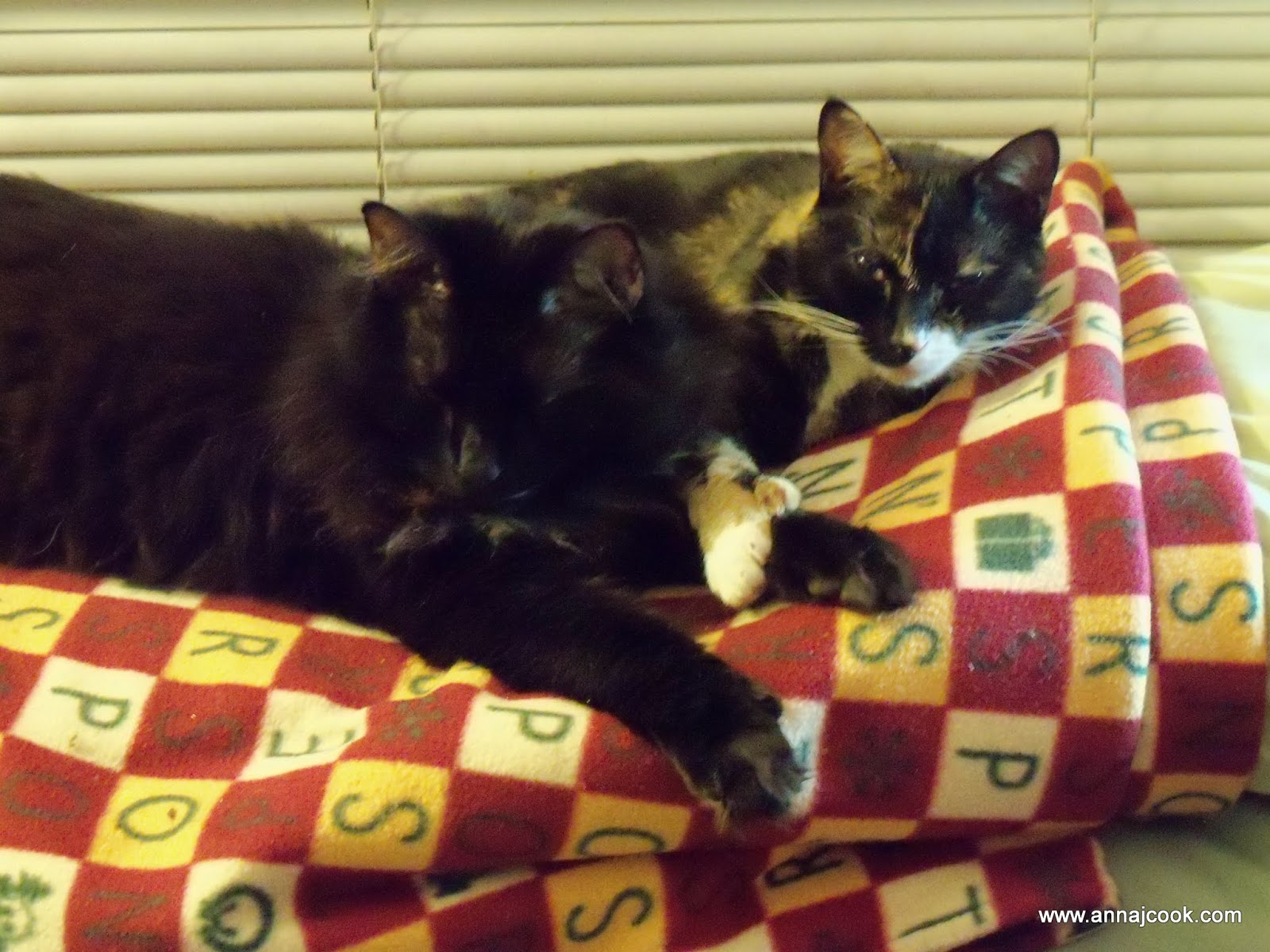
Gerry and Teazle have taken to our new couch set-up with alacrity.

We put a long pillow and blanket along the back of the couch / window sill and they snooze there all the time in the sun (when not stalking birds through the glass!).

Teazle’s latest trick is to scale the scratching post and balance there; on Wednesday she became all entranced by a nature special on PBS featuring wolves … perhaps she is a were-cat?

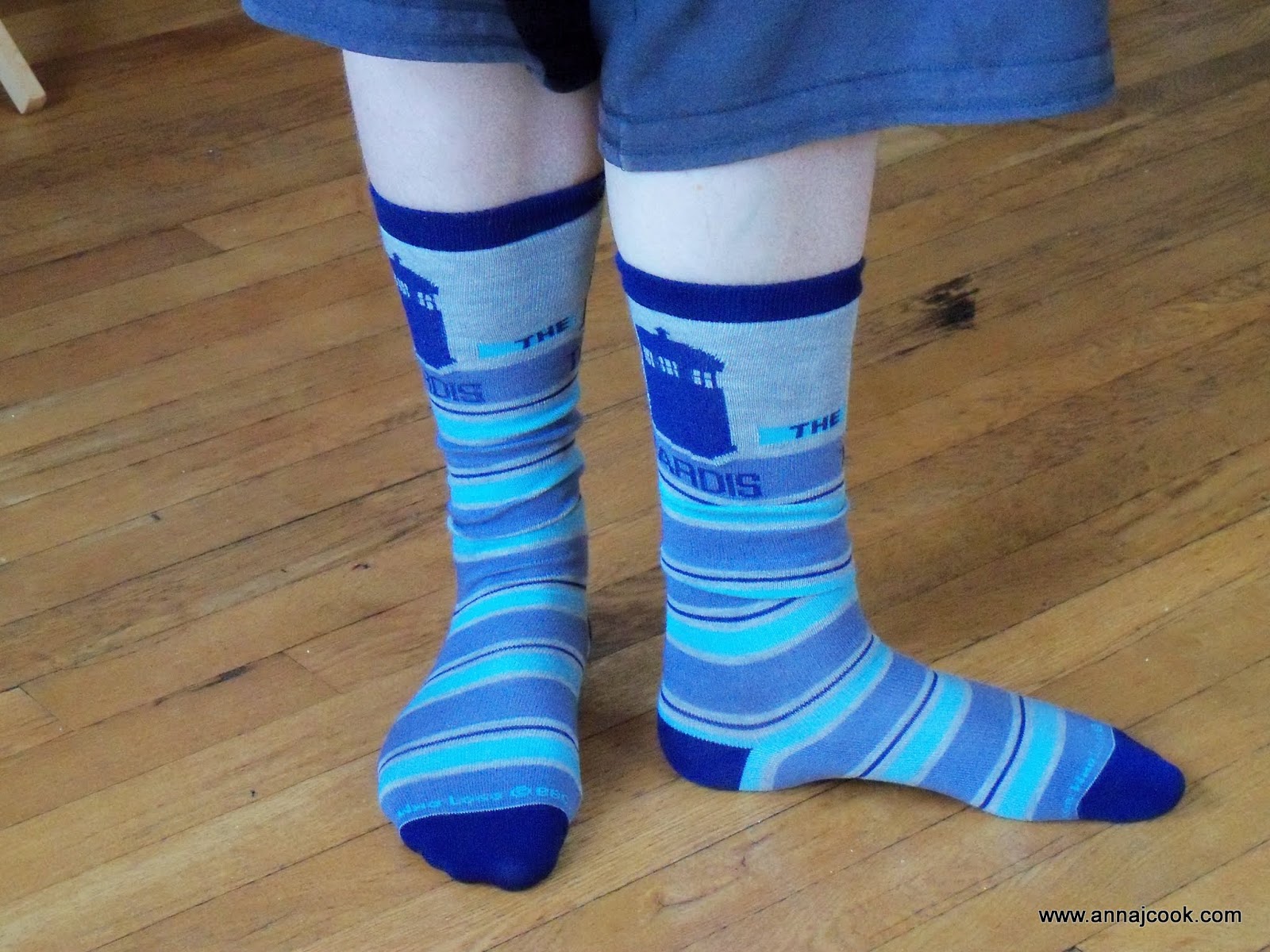
As you know, it was my 32nd birthday at the end of March, and I am still celebrating as sweet gifts arrive. Look! I have TARDIS socks!

… and my first-ever pair of Doc Martens! (thanks Grandma!)

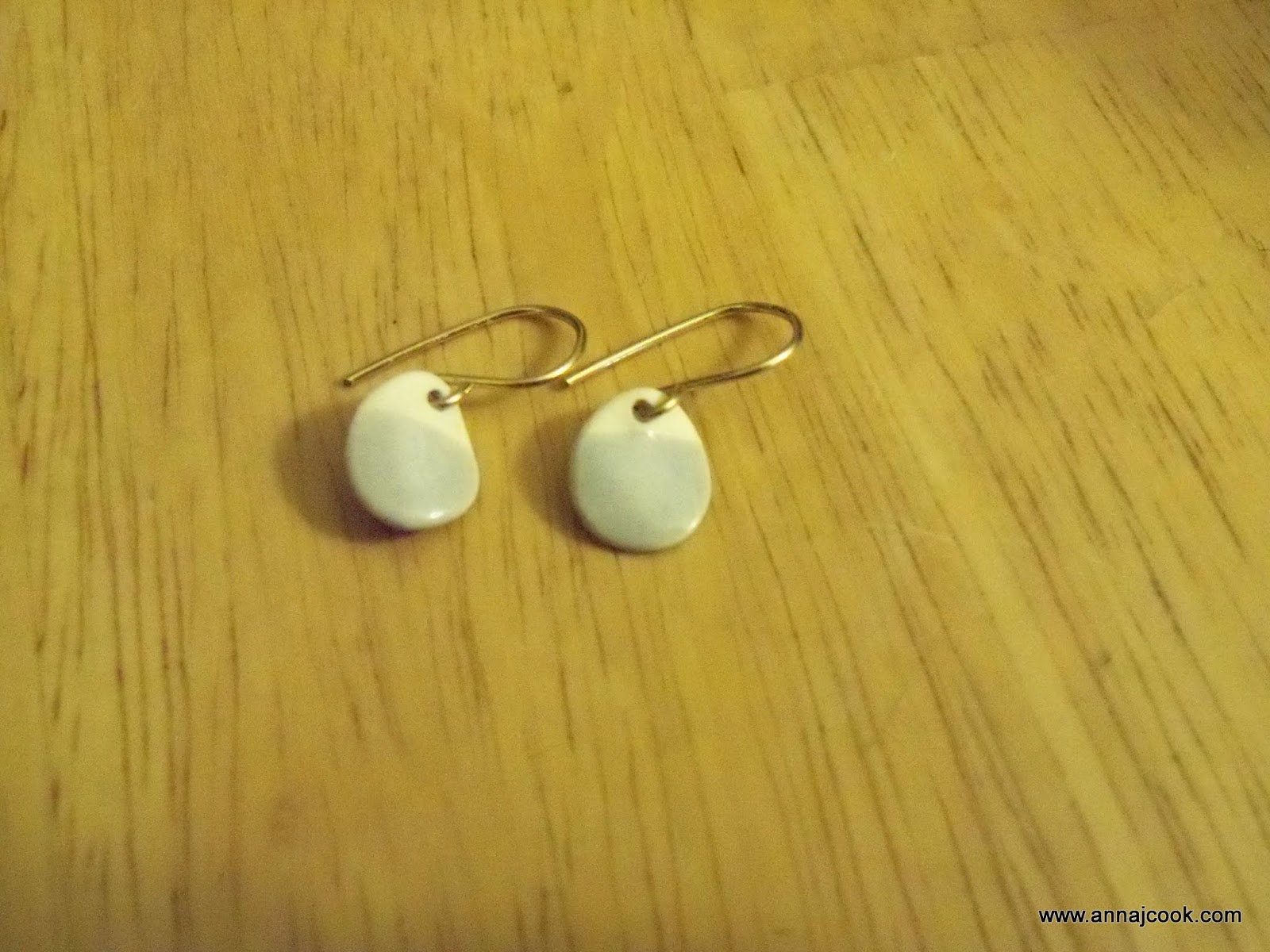
And from Austin, Texas, a beautiful pair of ceramic earrings from my sister:

Spring is here, and yesterday’s warm weather prompted the dogwoods outside our apartment building to hint at blooms …

I with you all a restorative weekend, wherever you may be.

the feminist librarian’s bookshelf: five women’s lives

11 Thursday Apr 2013

Posted by Anna Clutterbuck-Cook in book reviews

≈ 2 Comments

Tags

family scholars blog, feminism, history, the personal is political

cross-posted from the family scholars blog.

March was women’s history month and this post was supposed to go up the week of March 25 … but the last couple of weeks have gotten away from me. So here is the second installment of The Feminist Librarian’s Bookshelf — the March edition in April!

The theme this time is women’s history and I chose to highlight five biographies or autobiographies by and about women whose lives and work have left an impression upon my own sense of “how to live?”

If I had to draw out some common themes from across these women’s lives I would say that some of the characteristics that unite this women are: leftist-radical politics, a vision for more equality and well-being (of many kinds)  in the world, and unconventional personal and family relationships.

Sylvia Pankhurst, 1909

Sylvia Pankhurst (1882-1960). Sylvia Pankhurst: A Crusading Life by Shirley Harrison (Aurum Press, 2003). An often-overlooked member of the notorious Pankhurst family, Sylvia Pankhurst was the second daughter of women’s rights activists Emmeline and Richard Pankhurst. Her elder sister Cristabel would become famous on both sides of the Atlantic for her political theater. Sylvia was deeply involved in her family’s feminist activism, but eventually loosened her ties with them as Britain’s entry into the First World War exacerbated their differences over tactics and priorities. Sylvia pursued her own work in London’s impoverished East End, publishing a journal called the Women’s Dreadnaught, providing affordable meals and health services as well as supporting efforts to organize labor unions. Further radicalized by the Great War, Sylvia became an increasingly outspoken peace activist and also a critic of British imperialism. In the 1930s she became involved in anti-colonization activism, principally in support of Ethiopian independence; she would eventually make her home in Ethiopia. 

Sylvia never married, though she sustained two long-term relationships: the first with Labour Party founder Keir Hardie (though there is no conclusive evidence the two had a physical relationship), and the second with Italian anarchist Silvio Corio. Sylvia and Silvio lived together for over thirty years (until his death) and Sylvia gave birth to their son, Richard, in 1927. Reportedly, it was Sylvia’s refusal to marry Silvio which caused the final rupture with her parents and elder sister Cristabel. I am fascinated by the way the story of this particular radical Pankhurst daughter is so often eclipsed by the high-profile lives of her mother and sister who were radical on the subject of suffrage but reactionary and chauvinistic in many other ways.

Dorothy Day (1897-1980). The Long Loneliness (Harper and Row, 1952). Catholic activist Dorothy Day began her career in political struggle as a journalist  in the Lower East Side of New York City where she covered labor and feminist activism for such eminent socialist newspapers as The Liberator and The Masses. During this period Day was in a serious relationship with fellow leftist Forster Batterham, though her increasing interest in Catholicism put a strain on their relationship and by the time Day gave birth to their daughter, Tamar, she and Batterham were no longer a couple. Several years after Tamar’s birth, in the depths of the Great Depression, Day met French emigre and eccentric intellectual Peter Maurin; the two formed a friendship which would become the foundation from which Dorothy Day pursued her social justice work. Together, they began publishing The Catholic Worker and eventually expanded their efforts to provide meals and shelter to the destitute in a communal setting.  The Catholic Worker Movement is still extant today, maintaining uneasy ties to the Catholic church.

Throughout the Second World War, Day and her fellow Workers maintained a commitment to pacifism, and following the war Day was arrested numerous times while on nonviolent protest against the Cold War and nuclear proliferation. They also became involved in the Civil Rights movement. There is a movement within the Catholic church to have Dorothy Day canonized as a saint, although throughout her life she resisted efforts to describe her work as somehow super-human, miraculous or otherwise noteworthy. I am a troubled admirer of Dorothy Day, whose complicated relationship with the feminist activism of her day makes her a difficult ally in many ways — even as she dedicated her life to lessening human suffering of many kinds.

Eleanor Roosevelt (1884-1962 ). A World Made New: Eleanor Roosevelt and the Universal Declaration of Human Rights by Mary Ann Glendon (Random House, 2001). I have never been particularly interested in Eleanor Roosevelt as a public personage — though the two-volume biography by Blanche Weisen Cook is a tour de force — but a history professor at my undergraduate college once made me a gift of this slim historical study of Roosevelt’s role in the drafting of the Universal Declaration of Human Rights. It’s not a biography per se, but I include it here because I think it captures a unique historical moment in the twentieth century through the lens of one woman’s involvement. The UDHR was drafted by an international committee in the “pause” between World War Two and the height of the Cold War, and represents the hubris of the West (particularly the United States) in believing they could create a truly “new” internationalist, peaceful, humanitarian world — as well as the pragmatic reality of international politics which demanded compromise of that vision in order to produce anything of use.

Even if you are a skeptic of the United Nations, of internationalism, and/or not a fan of Eleanor Roosevelt, I think there is much to learn from this particular chapter in our political past.

Margaret Mead (1901-1978). Blackberry Winter: My Earlier Years  (William Morrow, 1972). I first encountered Mead’s story in college while working on an independent study on the first generations of women college graduates. Mead was the daughter of two academics — her father was a professor of economics and her mother a sociologist. Her childhood was spent in and out of formal schooling as her family moved around the country, and she spent a year at DePauw University in Indiana before transferring to Barnard College (then a young upstart of a women’s college in cosmopolitan New York). She went on from Barnard to study under anthropologists Franz Boaz and Ruth Benedict, earning her PhD from Columbia University in 1929. Mead is best known for her study of adolescent girls in Samoa, Coming of Age in Samoa (1928), although her anthropological curiosity ranged far and wide. While some of her frameworks for understanding feel outmoded today, she was instrumental in making the lives of women and children a legitimate field of study.

In Blackberry Winter Mead suggests a connection between her wide-ranging study of human cultures and her own exploration of relationships and family life, which took a decidedly unconventional path. Married while in graduate school (she refers in Winter to her “student marriage”), she and her first husband parted apparently amicable ways before she left for her fieldwork in Samoa. Her second marriage was equally short-lived and rocky by all accounts, ending in 1935. British anthropologist Gregory Bateson was her third husband, and the only spouse with whom she had children — a daughter, Mary, whom she gave birth to in 1939. Mead also had long-lasting, passionate relationships with Ruth Benedict and another anthropologist, Rhoda Metraux, although the extent to which either relationship was sexually intimate is up for debate.

Gerda Lerner and her husband Carl, 1966 (via)

Gerda Lerner (1920-2013). Fireweed: A Political Autobiography (Temple University, 2002). When historian Gerda Lerner passed away on January 2 of this year, her obituaries widely proclaimed her one of the founding mothers of the field of women’s and gender history. Without question, it is thanks to Lerner and her pioneering cohort of historians who insisted on gender as a valid category of analysis that I am able to do what it is that I do and be taken seriously as a scholar. Yet what I think is even more intriguing is the political and social milieu that such a scholar came out of — and it is this “pre-history,” if you will, that Fireweed sets out to tell.

Gerda Lerner (nee Kronstein) was born in Austria on the eve of the Second World War, was a student activist against the Nazi party (a form of political participation that landed her in jail when she was seventeen), and escaped to the United States as a refugee in 1939. She married the boyfriend with whom she had fled to America, but the marriage did not last by the mid-1940s she was married to Carl Lerner, a director in theater and later film, and an active Communist. Husband and wife shared a common political cause and throughout the 40s and 50s they worked side by side (with their children in tow) on behalf of labor, civil rights, peace, and against McCarthyism. Lerner did not return to school until she was in her 40s, earning her PhD from Columbia University in 1966 with a dissertation examining the work of Sara and Angelina Grimke, two white Southern women who had found it in themselves to agitate against slavery. Lerner was 46 years old.

I think what I find most compelling about Lerner’s biography is its testament to the human capacity for “second acts,” if you will — that a life so filled with political struggle and the daily grind of survival could change direction at the midpoint and channel that energy into scholarship that was, perhaps, quieter than high-stakes anti-Nazi activism or labor organizing (certainly involving less jail time!) but was just as revolutionary in its own way.

This list is obviously limited by my own inclinations and concerns. I am conscious that of these five women, all are white and middle class by upbringing and education if not by fiscal measures. Although only three of the five are American by birth, the other two are Western European. None lived the majority of their lives in a same-sex relationship, although at least two women (Mead and Roosevelt) appear to have “swung both ways,” holding passionate attachments to both women and men during their lives.

What biographies and autobiographies of and by women have you found meaningful in your own life? What women in history speak to you?

monday morning cats [photo post]

08 Monday Apr 2013

Posted by Anna Clutterbuck-Cook in our family

≈ Leave a comment

Tags

cat blogging, domesticity, photos

It’s gonna be a slow blogging week, folks, since I haven’t had the time recently to queue posts for publication. In the meantime, enjoy gratuitous cat pics (and the spring sunshine!)

Teazle loves to use our bedroom shelves as a jungle gym.

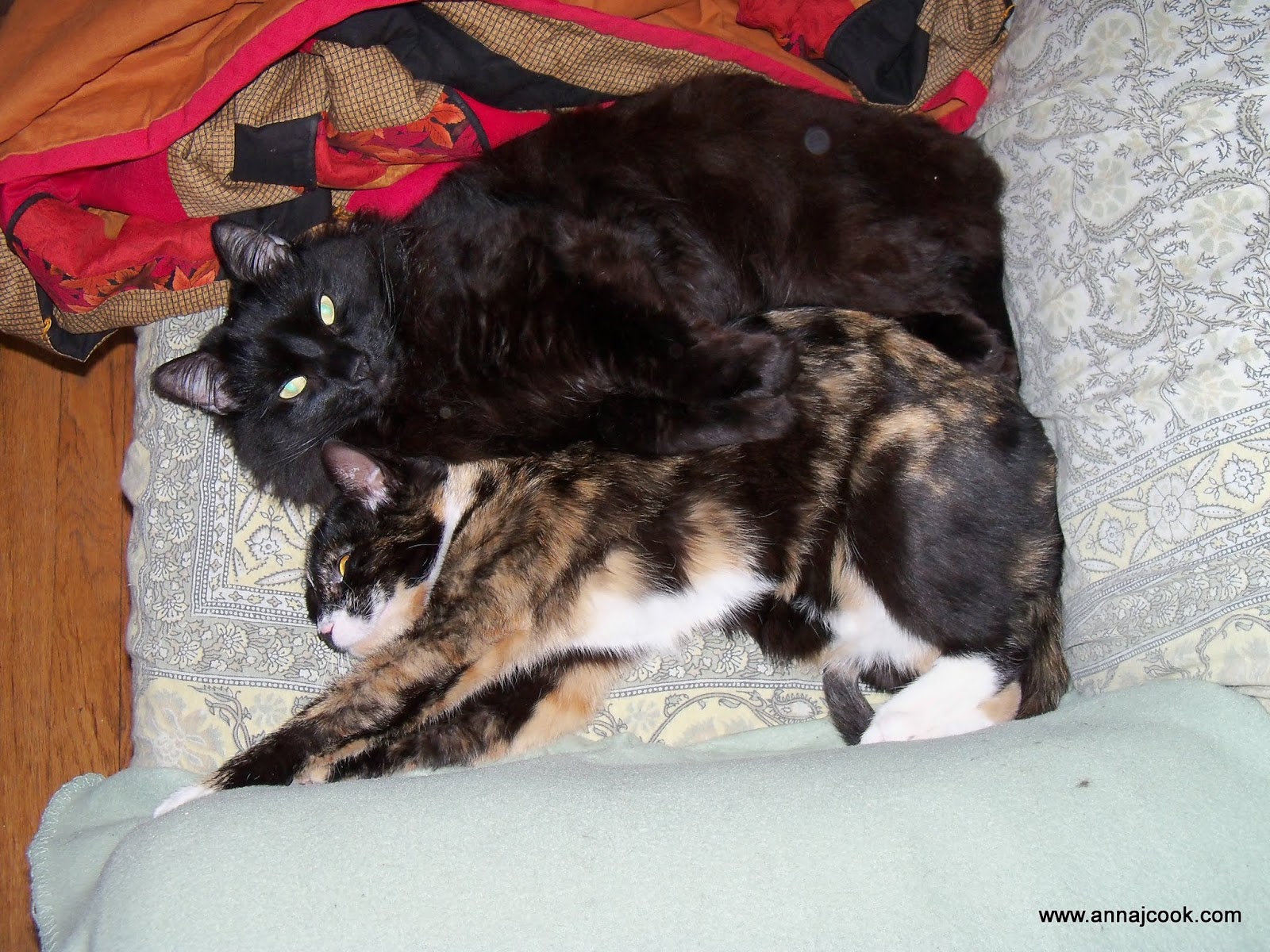
Teazle and Geraldine like to take every opportunity to steal the couch from us when we aren’t looking. Off to the kitchen to make dinner? The couch is ours!

And then, of course, they lull us into submission with their adorable nose-to-nose kitty napping.

Wiley cats.

subject/verdict: stuff I’ve been reading in two-sentence reviews

04 Thursday Apr 2013

Posted by Anna Clutterbuck-Cook in book reviews

≈ Leave a comment

Tags

subject verdict

Teazle likes to help me with my book reviews.

Despite the fact that my GoodReads reading goal is judging me fiercely (I’m a woeful books behind so far this year!), I have read a fair number of titles since January 1st that I simply haven’t had the chance to blog about. And those books, too, are judging me for the lack of reviews. Because time is short, here are my two-line summaries of the stuff I’ve been reading — one sentence for content, the other for my “verdict.” I hope those thoughts spur some of you to add a title or two to your “to read” list!

A couple of titles will get actual honest-to-god reviews in the fullness of time, and I’ve noted which ones those be.

Bell, Leslie C. Hard to Get: Twenty-Something Women and the Paradox of Sexual Freedom (University of California Press, 2013). Sociologist and psychotherapist Bell explores contemporary sex and relationship patterns among a group of young women in the Bay Area as a way of identifying larger themes of change and struggle in our half-finished revolution in gender role expectations and sexual mores. While necessarily limited in its scope, Hard to Get is refreshingly non-judgy about young women’s sexual practices and while Bell doesn’t articulate her findings in quite this way, I would argue that her subjects’ relationship success is strongly correlated with the degree of gender independence they and their sexual-romantic partners enjoy. [Review to come.]

Berebitsky, Julie. Sex in the Office: A History of Gender, Power, and Desire (Yale University Press, 2012). Historian Berebitsky has written an insightful and entertaining history of wanted and unwanted (hetero)sexual expression in white collar settings, 1860s to the present. Beginning with the entrance of women into office work, Berebitsky explores how the newly-heterosocial white collar workspace led to a reconceptualizing of the office as a space for flirtation, romance, and exploitation, as well as attempts to police heterosexual interaction in complex and evolving ways.

Boylan, Jennifer Finney. Stuck in the Middle With You: A Memoir of Parenting in Three Genders (Crown, 2013). A raw feeling memoir about parenting as a transgender person, Stuck in the Middle combines first-person narrative with transcripts of interviews Boylan conducted with friends and acquaintances about fatherhood, motherhood, and parent-child relationships. While I felt it could have used a stronger editorial hand and guiding purpose, I particularly appreciated the interview sections. [Reviewed in slightly more depth at LibraryThing.]

Brownson, James V. Bible, Gender, Sexuality: Reframing the Church’s Debate on Same-Sex Relationships (W. B. Eerdman’s, 2013). Brownson, a New Testament theologian, grounds his case for the inclusion of same-sex sexuality within the realm of Christian sexual ethics in a close reading of the Biblical texts from a historically-minded, broad-themes perspective. While he often concedes too much to anti-gay conservatives, in my opinion, and draws too little on the work of queer and feminist theologians who have gone before him, hopefully his skillful and compassionate hermeneutics will encourage some to rethink their faith-based condemnation of homosexuality. [Full disclosure: Jim is the father of a good friend of mine, and holds a faculty position at Western Theological Seminary named for my late grandfather James I. Cook, who I feel confident would approve of this book.]

Corvino, John. What’s Wrong With Homosexuality? (Oxford University Press, 2013). Corvino’s apologetic on the subject of homosexuality is at once personal, grounded in his own experience as a gay man, and theoretical, drawing on his training as a professor of philosophy and ethics. I appreciated that Corvino thoughtfully acknowledged his focus on gay male sexuality, and while I doubt his arguments will convince anyone with an emotional-personal stake in animosity toward queer folks it is enjoyable to have someone so articulate on our side. [To be reviewed.]

Grogan, Jennifer. Encountering America: Humanistic Psychology, Sixties Culture, and the Shaping of the Modern Self (New York: Harper Perennial, 2013). In a book I devoutly wish I could have read while crafting my thesis, cultural historian Jennifer Grogan explores the origins, insights, and effects of one of the partial revolutions of mid-twentieth-century America: the humanist psychologists’ campaign to re-form the practice of psychology and the modern concept of the human Self. Grogan is a skillful historian and writer who manages to write with deep sympathy for her subject without glossing over the limitations of her subjects’ vision and practice.

Kipnis, Laura. Bound and Gagged: Pornography and the Politics of Fantasy in America (Grover Press, 1996). In the wake of the “porn wars” of the 1980s and the resurgence of moral panic around sexual expression, Kipnis, a professor of media studies, pushed back against the conflation of fiction and reality in Bound and Gagged: how acceptable or tenable is it to police peoples’ fantasies, and to what extent is it fair to assume that peoples’ fantasies translate into real-world desires? In case-study fashion, Kipnis points to the way America in the mid-90s was (and still is) appallingly comfortable policing the imagination, particularly where sex is concerned.

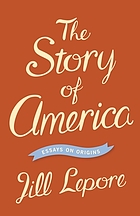
Lepore, Jill. The Story of America: Essays on Origins (Princeton University Press, 2013). Historian and masterful essayist Jill Lepore offers, in her latest book, a series of essays that first appeared in the New Yorker on various topics on American history. All revolving in some way around the printed word and the narratives we tell to make meaning of our lives, The Story of America explores how we have made sense of being American during the first 24 decades of our nation’s youthful existance.

Pleck, Elizabeth M. Not Just Roommates: Cohabitation after the Sexual Revolution (University of Chicago, 2012). Historian of human development Elizabeth Pleck explores an under-studied aspect of the mid-twentieth-century’s “sexual revolution”: the rise in cohabitation by sexually-intimate yet unmarried partners, and the continued discrimination unmarried couples face in our marriage promotion-happy nation. Roughly chronological in its organization, Not Just Roommates begins with the persecution of cohabiting interracial couples in the early 1960s and ends with activism around domestic partnership registration as a marriage alternative — laying out a convincing case for discrimination against the unmarried as pervasive and harmful in the lives of many. [Review to come.]

Speck, Jeff. Walkable City: How Downtown Can Save America, One Step at a Time (Farrar, Straus & Giroux, 2012). Urban planner Jeff Speck offers lessons from several decades of experience redesigning urban core areas on how to make our major metropolitan areas more environmentally sustainable and conducive to human well-being. While I quibble with some of his minor points (for example he finds extensive green spaces boring), his overall vision of a “walkable” urban environment is one I can get behind, and reading this book has prompted me to be more mindful of my own built environment — and proud of how walkable our Allston-Brighton-Brookline-Back Bay area of Boston truly is!

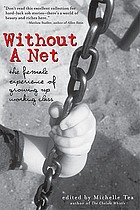
Tea, Michelle, ed. Without a Net: The Female Experience of Growing Up Working Class (Seal Press,  2003). This powerful anthology offers up diverse voices of women who experienced a working class, and sometimes destitute, childhood. Contributors’ stories range from stomach-turning accounts of abuse and neglect at the hands of healthcare providers to lighthearted tales bordering on the “we were poor but never knew it” to deeply thoughtful reflections on what it means to escape poverty even as you watch your parents continue to struggle: highly recommended.

Williams, Linda. Hard Core: Power, Pleasure, and the “Frenzy of the Visible” (University of California Press, 1989). Pioneering scholar in the field of pornography studies, film studies professor Linda Williams explores “hard core” moving image pornography through the lens of film conventions, asking how it might be understood as a genre in its own right (my favorite chapter was the one that explored pornographic film as a sister-genre to the movie musical, a bare-bones narrative punctuated by sexual “numbers”). While some of her observations feel outdated in this age of the Internet, and I’d argue she concedes too much to the anti-porn feminists, Williams’ work is still key in the field and offers much food for thought.

what matters in "gay marriage" – "gay" or "marriage"?

02 Tuesday Apr 2013

Posted by Anna Clutterbuck-Cook in think pieces

≈ 2 Comments

Tags

doma, family scholars blog, gender and sexuality, marriage equality, scotus junkie

cross-posted from the family scholars blog. 

I often joke with friends and family about how my wife and I are “gay married,” as if this is something different from being … “married.” Perhaps we same-sex couples do everything with our sexual orientation front and center? In that case, this past weekend I celebrated a gay birthday by going gayly out to dinner at a restaurant. I did some gay crocheting, took a gay nap, and wrote a few gay letters to friends.

https://i0.wp.com/24.media.tumblr.com/tumblr_lx4wi10i1b1qk6ktto1_500.jpg
(via)
This is, by and large, a lighthearted amusement. But the “joke” is also grounded in our bone-deep recognition that some people do view every aspect of our lives as unalterably tattooed by our sexual “perversions.” Our being gay — or practicing gay sex — is the attribute that marks us out for differential treatment. Some people would argue it requires differential treatment.

I thought of this other, less amusing use of the phrase “gay marriage” or “same-sex marriage” last Friday when I listened to an On Point news hour reviewing the Supreme Court oral arguments on DOMA and Proposition 8.  The host, Tom Ashbrook, spoke with two guests — law professors Suzanne Goldberg (pro-marriage equality) and Teresa Collett (anti-) — about the arguments. In discussing DOMA, Collett followed the lead of defense lawyer Paul Clement, representing BLAG, in arguing that what the DOMA law sought to achieve was not any sort of discrimination between gay and straight marriages, but rather to impose legal uniformity.

From the oral argument transcript (p. 62-63):

Mr. CLEMENT: … Ms. Windsor wants to point to the unfairness of the differential treatment of treating two New York married couples differently, and of course for purposes of New York law that’s exactly the right focus, but for purposes of Federal law it’s much more rational for Congress to — to say, and certainly a rational available choice, for Congress to say, we want to treat the same-sex couple in New York the same way as the committed same-sex couple in Oklahoma and treat them the same. Or even more to the point for purposes -­

JUSTICE SOTOMAYOR: But that’s begging the question, because you are treating the married couples differently.

I want to point out a couple of features of this exchange.

The first is that Clement (and Collett, on air) are attempting to erase the anti-gay sentiment that animated the passage of DOMA, something which Justice Kagan highlighted when she read aloud from the House Report during the argument (see p. 74 of the transcript). This “softer” argument makes the case that what the federal government really wanted was sameness — equality if you will! — so that despite marital diversity at the state level, the federal government would only recognize certain types of marriage as actually legal nationwide.

I find this in itself disturbing, in that it attempts to turn DOMA into something that’s almost supposed to benefit same-sex married couples rather than harming them — as if we’re supposed to be comforted, somehow, that our citizenship rights will be the same nationwide … by ensuring that no matter what level of relationship recognition our state of residence provides us, we’ll be firmly denied recognition at the federal level. Consistently.

Equality! Yay! …. oh, wait.

The second (and I think key) feature of this uniformity framing, and the exchange Clement had with Justice Sotomayor above, is that Clement is emphasizing the gay part of being “gay married” and Sotomayor is emphasizing the married part of being “gay married.”

Clement is arguing that regardless of whether a same-sex couple lives in Massachusetts (where we can legally marry), in Illinois (where they have civil unions) or in Michigan (where same-sex couples are denied any form of legal recognition), we will be met with federal uniformity … in that we won’t be recognized, regardless of our state-honored status.

Based on the fact that we’re gayly married, instead of straight married.

Sotomayor pushes back against this emphasis, asking instead “isn’t this treating the married couples differently”? Placing the emphasis on marriage, Sotomayor is correctly pointing out that we do not seek to treat all straight couples similarly, regardless of relationship status. We treat a cohabiting straight couple differently from a married straight couple differently from a divorced straight couple. One might ask, following Clement’s line of argument, why the federal government distinguishes between an unmarried cohabiting couple in Wyoming and a married couple in Maine — shouldn’t they be concerned about uniformity in the treatment of straight couples on a national level?

(As an aside, I actually think this is a legitimate line of questioning — the differential treatment of married and unmarried partnerships — but that is not, realistically speaking, the argument Clement was making. So it is the topic of another post.)

This is not to say that understanding LGBT* identities as political in nature, as social class identities, is never legitimate. Identity politics — coming together with a group of people based on some facet of your identity in order to effect political change — is, of course, sometimes a necessary thing. Often, such class consciousness is made necessary by the way we are targeted as a group by those who hold anti-gay beliefs or take anti-gay actions. I move through my life aware that my bisexuality and my lesbian relationship are key components of my self-conception — and also aspects of my self by which other people both understand and judge me.

I am proud of being both “gay” and “married.”

But I do think that when it comes to marriage law, it should be the married part of that equation that has bearing, not the gay. As someone who is legally married, under laws that pertain to marriage it should be that status which determines whether I am a person to whom the law applies or not.

thirty two [happy birthday to me + some photos]

30 Saturday Mar 2013

Posted by Anna Clutterbuck-Cook in life writing

≈ 3 Comments

Tags

domesticity, gender and sexuality, holidays, photos

Today’s my thirty-second birthday, in the event you didn’t already know that via all the over-helpful social media reminders!

Hanna bought me this lovely ceramic indoor water fountain as a present.

Ever since I was a small girlchild I have loved the sound of running water and used to fantasize about living in a house with a river running through its center. Short of that, I wanted to live in a cottage by the sea, on a river, or by the lake, where the sound of waves and rapids could be heard through the open windows.

Neither of these things is practical right now, but the fountain is a lovely “plan B.”

(photos by Hanna)

Making room for the fountain, despite its modest size, precipitated a major reorganization of the living room – a way of making the apartment few new and springy even though we’ve lived here nearly five years (and Hanna even longer).

We moved the couch from the inside wall out to a spot beneath our bay windows (the element that really “makes” our living room as a space). This shift necessitated consolidation of some bookshelves into a book wall … bonus points if you spot the TARDIS shrine!

We’re enjoying natural light that now falls on the couch, making for good reading into the evening without having to turn lights on.

The cats continue to be unimpressed by us, though we have clearly been setting a poor example in the lewd cuddling department…

Or a good example, depending on which way you think the bread is best buttered.

Enjoy your Easter weekend, folks — spring is slowly arriving!

politics, pornography, and combating queer isolation

28 Thursday Mar 2013

Posted by Anna Clutterbuck-Cook in think pieces

≈ Leave a comment

Tags

education, family scholars blog, gender and sexuality, politics, smut

cross-posted from the family scholars blog.

Conner Habib, an actor who performs in gay male pornographic films, was recently invited by a student group at Corning Community College (Corning, NY) to speak on sex and culture. When the college president found out that Habib, in addition to being a thoughtful and articulate human being, had appeared in erotic film, she took steps to cancel Habib’s talk and has apparently moved to further obstruct attempts to host the talk in a non-college-sponsored locale.

Habib has written an excellent piece about his own perspective on these events which can be read in full over at BuzzFeed. In the essay he reflects on the place pornographic materials have in mitigating the isolation sexual minorities can experience, particularly in rural areas. He writes:

Where I grew up, just outside of Allentown, PA, I watched, right through my adolescence into adulthood and early college years, while straight people paired off and experienced sex. They were able to engage with a basic aspect of human life that seemed unavailable and distant to me. Unlike today, there was no discussion about gay marriage, nor were there many gay characters on TV. But even if there had been, neither would have rounded out my experience as a man with homosexual feelings because so many of those feelings were — unsurprisingly for a young man — sexual. Gay sex was a lonely venture. It wasn’t easy to find, and was only mentioned in slurs and the butt of jokes. … Whether I bought it from the adult video store or, later, downloaded it, gay porn helped me encounter positive images of gay men enjoying the act of sex. Gay porn was a window into gay sexuality that was free of shame and guilt, and revealed a different world where sex wasn’t a lonely prospect, confined to the shadows or just my imagination.

Habib describes how, being a man of Arab descent, he receives fan mail from gay men in Middle Eastern countries who “[express] gratitude and relief for my having portrayed gay sex in a positive light on camera.”

Continue reading →

comment post: friendships, "crushes," and heteronormativity

26 Tuesday Mar 2013

Posted by Anna Clutterbuck-Cook in think pieces

≈ 2 Comments

Tags

comment post, gender and sexuality

About a year ago, I had the pleasure of being interviewed by London-based journalist Rachel Hills for her forthcoming book, The Sex Myth (Simon & Schuster, 2014). Last week, she was in touch with some of us to ask a follow-up question about “boy talk.” For those of us who grew into our sexuality desiring women, or who didn’t identify as female, Rachel wanted to know what such “boy talk” girl bonding rituals felt like to us.

Here are the thoughts I sent in response.


when you do a Google image search for “sleepover”
you get a bajillion images like this (via)

What an interesting question you pose, Rachel!

I have several distinct-yet-inter-related thoughts and memories:

First, I did not attend gradeschool (I homeschooled until college). Because of this, I don’t recall a lot of intense pressure to perform gender in the “boyfriend”/”crush” way in my pre-adolescent years. I remember pressure from my childhood friends to pick a “best friend” among them, and feeling confused about how to handle that without hurt feelings. I remember lots of gender play in terms of dressing up and playing princess and “runaway princess” (which usually involved setting up house together, as sister-princesses, in the “woods”).

It’s true that, apart from my younger brother and his little group of male friends, I didn’t have male friends who survived much into gradeschool. When I was very young, I remember playing with the children in my mother’s circle of friends irrespective of gender, but when those children started attending school the boys were definitely under pressure NOT to be friends with girls (and vice versa, I imagine), so we drifted apart. The boys I knew in the neighborhood were more casual acquaintances, and even then they tended to be identified as my brother’s friends, even if we all played together outside.

Second, I remember being intensely embarrassed and upset when older people (babysitters, adult friends of the family) framed my relationships, celebrity interests, etc., as (sexualized) “crushes.” I vividly remember in the 9-10-11-year-old period specific instances of being teased — I’m sure in a well-meaning way! — about my passion for the tennis player Andre Agassi whom I idolized when, for a brief while, I was into tennis. Perhaps some of the intensity I felt about him WAS pre-pubescent romantic interest, but I really hated the teasing because I was confused by my own feelings, didn’t identify them as romantic or sexual, and didn’t like the feeling that other people were assigning terms to my feelings that I didn’t agree to. It also felt like very private feelings were then being hauled into public in ways that were potentially embarrassing.

So during that period, the framework of “the crush” actually served the opposite purpose from bonding with my peers or same-gender compatriots: it made me feel uncomfortably singled out and limited in my passions. It served to make it clear that I needed to police my feelings (and the expression of those feelings), particularly about boys and men, if I didn’t want to come under unwanted scrutiny.

As I’m typing this, I’m thinking about the way in which my passions for same-gender friendships were NOT similarly sexualized or policed by others, and the freedom that allowed me to develop emotional intimacy with my close female friends during pre- and early adolescence.

Third, I definitely remember the way in which my teenage friendships with other girls organized themselves around “boy talk.” Our “boy talk” manifested in two distinct ways (as I recall), one of which I felt comfortable engaging in and the other of which I didn’t. I do remember enjoying “boy talk” that circled around fictional characters in films and books. My girlfriends and I would read novels and portion out who had the “rights” to certain dashing heroes (or anti-heroes). We gossiped about what was happening between our favorite (hetero) couples in these fictional narratives and celebrated the successful marriage plots for the characters we felt were deserving and well-suited to one another. All of this I very much enjoyed.

What I felt more uncomfortable about, and artificially performative of, as time went on, was the more personal boy-crazy talk about crushes within my friendship circle. It felt awkwardly forced — particularly for the friends (and we were a shy group of girls) who never acted on their supposed crushes by initiating a relationship with the person in question. It very much felt like an activity engaged in to earn points with other girls. You talked about who you had a crush on because it was what everyone was supposed to do.
I remember really hating the awkwardness of this period (adolescence), and the way in which girls and boys were relentlessly sorted into same-gender groups, and their mixed interactions chaperoned with the expectation on all sides that such mixed-gender interactions (whether single-y or in groups) were going to be fraught with sexual tension. I didn’t like the way you suddenly were supposed to be aware of your bodily boundaries, who was touching whom, and how things that seemed nice (and possibly proto-sexual) were suddenly inappropriate. Like, I remember once being on a camping trip and helping a boy wash his hair in the river. We were both wearing bathing suits and I didn’t touch anything other than his head, to help with the shampoo, and it was really nice to be enjoying ourselves. But afterwards, there was this clear message from some of the camp counselors (and later, parents) that this interaction was somehow fraught and potentially worrisome in a way that it would never have worried anyone if I’d helped a same-gender friend wash her hair.

Thoughout my adolescence, I kept asking people what was difference about sexual attraction versus intense, passionate friendship and they kept telling me that I’d understand when I had the experience. What I eventually figured out (embarrassingly enough, not until my mid-twenties!) was that the reason I couldn’t decipher the difference was that I in fact had the potential for sexual desire for both men and women. My attraction to women had been burbling along all throughout my childhood and adolescence and had simply been allowed to run its course through passionate friendships — without all of the constraints imposed upon interactions with boys.

The one passionately intimate friendship I developed with a boy in my adolescence was with a young man who eventually came out as gay. We’re still very close friends, but it’s definitely illustrative to look at the way he and I navigated our friendship in the context of heteronormative culture. While my passionate same-gender friendships were just as intense and intimate as my relationship with this boy (part of the patchwork of clues that finally led me to understand my bisexuality / sexual fluidity), those girls and I never problematized our relationship — and neither did our families or wider circle of friends. In contrast, this male friend and I were both very aware of the emotional intensity of our relationship, and about the expectation that we needed to police the boundaries of that passionate relationship in order to respect one anothers’ (emerging) sexual identities and to manage the expectations of our respective social circles. Our letters (for much of our relationship during that period we were long-distance correspondents) are full of discussion about the nature of our relationship, whether or not we felt a sexual relationship was in the cards, why or why not, how we might piece together a continued friendship even if one of us was sexually attracted to the other and the other did not reciprocate. We looked for models in history and literature for passionate, non-sexually-active, cross-gender relationships like ours. All of this activity was never explicitly prompted by our peers or the adults around us, but was definitely something we felt we needed to do. While no analogous process ever took place between me and the young women I was close to, despite the fact that I would (looking back now) argue the emotional intensity of female-female relationships were commensurate to what I felt with this male friend.

My point in recounting this story is that as a woman who grew up queer in heteronormative culture, I still felt pressure to sexualize cross-gender relationships and the absence of pressure to sexualize same-gender relationships. This meant that I was often bewildered and frustrated by the way cross-gender relationships that did NOT feel particularly sexual to me were nonetheless inscribed with those feelings from the outside, and simultaneously it delayed my recognition of the sexual potential within same-gender relationships because no one in the culture around me was encouraging me to think in those terms. While I’m glad for the protected, private space that gave me to explore my same-sex desires without the social scrutiny I would have endured for cross-gender desires (if/when they became socially visible), heteronormativity also meant I had a lack of language to speak about those desires even when I had begun to acknowledge them.

Whew! More thoughts than I anticipated when I started this reply … I’ll leave it there. Good luck with the final week of revisions, and thank you so much for staying in touch! I’m looking forward to reading and reviewing the final work.

Best,
Anna

← Older posts
Newer posts →
"the past is a wild party; check your preconceptions at the door." ~ Emma Donoghue

Recent Posts

  • medical update 11.11.22
  • medical update 6.4.22
  • medical update 1.16.2022
  • medical update 10.13.2021
  • medical update 8.17.2021

Archives

Categories

Creative Commons License

This work by Anna J. Clutterbuck-Cook is licensed under a Creative Commons Attribution 3.0 Unported License

Meta

  • Create account
  • Log in
  • Entries feed
  • Comments feed
  • WordPress.com

Create a free website or blog at WordPress.com.

  • Subscribe Subscribed
    • the feminist librarian
    • Join 37 other subscribers
    • Already have a WordPress.com account? Log in now.
    • the feminist librarian
    • Subscribe Subscribed
    • Sign up
    • Log in
    • Report this content
    • View site in Reader
    • Manage subscriptions
    • Collapse this bar