• anna j. clutterbuck-cook
  • contact
  • curriculum vitae
  • find me elsewhere
  • marilyn ross memorial book prize

the feminist librarian

the feminist librarian

Author Archives: Anna Clutterbuck-Cook

burnout: the thread

11 Friday Jan 2019

Posted by Anna Clutterbuck-Cook in life writing, think pieces

≈ Leave a comment

Below is a lightly modified long-ass Twitter thread that I wrote earlier this week about burnout. It got a high amount of traffic (for me) and I thought some might benefit from having it in blog post form, with some added citational links to other work on these subjects. The thread began as a riff on this Tweet from Anne Helen Peterson:

Common response to the burnout essay = “Just wait until you have kids,” which signals:

1) Sustained belief that millennials are still teens (1/2 the millennials I know have kids)

2) Unfamiliarity w/idea that many millennials aren’t having kids b/c of factors listed in piece

— Anne Helen Petersen (@annehelen) January 6, 2019

This response also suggests burnout only “counts” if you’re parenting. And normalizes burnout for parents. If you’re interested in the normalization of burnout for those doing reproductive and other types of care work, Laura Briggs’ How All Politics Became Reproductive Politics: From Welfare Reform to Foreclosure to Trump for more on this trap. And care work doesn’t begin and end with parenting either. As a thirty-seven year-old millennial not parenting, I still have non-waged kinkeeping that is chronically time-starved. Off the top of my head, kinkeeping activities beyond parenting:

  • Remembering/celebrating family & friends’ birthdays, holidays, etc.
  • Caring for an ill spouse
  • Caring for an ill parent or sibling
  • Caring for companion animals
  • Feeding, exercising, caring for your own body
  • Writing letters, emails, to long-distance friends and family
  • Meeting friends and family for coffee dates
  • Participating in community life (church, neighborhood, volunteer orgs.)
  • Participating in political life
  • Creative pursuits that make the world a more beautiful place

Feminist activists have been pointing out at least since the mid-20th century that when people who previously did unpaid kinkeeping labor (women, teenage daughters, spinsters, elders) are pushed into wagework the need for that labor doesn’t disappear. You either have to pay someone to do this work, or you do it yourself as “second shift” work (leading to burnout), or — because of burnout and a literal lack of time — it doesn’t get done.

(A bit later…) I read Anne’s newsletter on writing the burnout piece, which is all I could face today (So much irony in feeling too burned out to read about burnout…). Some lateral thoughts that bubbled up:

In the newsletter she quotes someone citing Chomsky on “efficiency” for business = extra labor for customers. I haven’t read the Chomsky analysis but I recall a great example of this presented in terms of retirement and pensions vs. 401(k) model. (I tried to find the example online while compiling this post and the Internet defeated me.) Pensions make the work of investing the responsibility of the company rather than the employee. You work, you retire, you get a set amount from your employer. You don’t need to make many complex high stakes choices to ensure the money is there for you. In the 401(k) model, the employee is responsible for ongoing, complex financial management. Most of us do not have expertise in this area, or money to pay independent experts, but WE are responsible and shoulder the risk even when we struggle to be “good” savers.

This shouldering of responsibility and risk — packaged for us as freedom of choice across many areas of life — means in practice that human rights become contingent on our ability to become experts in navigating countless complex systems.* If we don’t have money to outsource the labor of making informed, meaningful choices we are in practice held responsible for “choices” that are not, in fact, in our ability to actively make.**


*My reflections here are shaped by a reproductive justice framework, especially about the human rights problems created by “choice” rhetoric. So a shout out to those scholars. You can read an introduction to reproductive justice here and I also recommend this excellent book on the history and activism of the movement.

**Inserts obvious all caps footnote that along every vector the existing inequalities of race, class, gender, health, education, immigration status, disability, etc both create and amplify this responsibility trap.


On a less meta level than the risk/responsibility trap and its violation of fundamental human rights (YOU HEARD ME) My wife Hanna and and I experience decision fatigue so frequently we have a short-hand for it: “ferret shock”. (The internet informs me another term for this would be overchoice.) If we’re out running errands or standing in the grocery aisle and one of us asks the other to make a decision, that person often says “I”m ferret shocking” and the asker knows exactly what they’re talking about and we go home.

Another thing the burnout discussion is reminding me of Courtney Martin’s Perfect Girls, Starving Daughters (2007), my own reaction to it at the time of its publication, and the limits of countercultural lifeways. For those who haven’t read it, the nutshell argument was/is that for (white, middle-class, aspirational) women of my age cohort (b. 1981) had learned we could/should strive for perfection and it was killing us. When I read it in 2007, I didn’t see myself in this narrative. I knew the narrative, sure, but I had also been insulated from it in a variety of ways leading from my parents’ own countercultural decision to let me opt out of formal schooling until college, and do college extremely part-time as a commuter. Because I never socialized intensely with my cohort or with people drilling aspirational messaging into my cohort, I had some measure of distance from that narrative. I didn’t feel like a failure for opting out of many things my peers felt were obligatory.

(There’s a complicated side narrative here connected to queer identity, chronic illness, and religious subcultures but that’s for another thread.)

But the thing about structurally-created burnout is that you CANNOT opt out as a single person or even, in many cases, as a subculture or community of crunchy-granola-hippie types (I’m speaking of myself here, with a mixture of mild self-parody and entirely sincere commitment to crunchy granola). The same year Perfect Girls, Starving Daughters came out I moved to Boston for grad school and was structurally forced into a number of systems — graduate school, student loan debt, resume building, the cost of living where I attended school and worked etc. — that create burnout. For a lot of that first year in Boston and back in the formal school environment, I felt like an extreme failure for having been unable to find a countercultural alternative to the cross country move –> graduate school –> librarianship path to adulting. I knew that aspects of the systems I was becoming embedded within were actively toxic to me.

In the past (through social privilege and positive family support for those alternative choices) I had been able to create loopholes for myself. But loopholes don’t create long-term structural change; they don’t fix the problem that created the need for the loophole. And even for the people (like me) who had the resources to create them, they are typically temporary. What I’m groping toward here is that burnout gets spun as an individual mental-health, self-help problem, when burnout is a collective and structural problem. It’s been baked into a system that capitalizes (literally!) our burnout. That doesn’t mean subcultural attempts to address and assuage burnout are pointless — I would argue based on my own experience and my historical research that such subcultural attempts are vital in demonstrating that burnout is historically created and change is possible.

Jo Freeman’s work on the tyranny of structurelessness is also informative and applicable to the condition of burnout we are coping with, as a society as well as individually, in this historical moment. The essay’s basic point is all groups have a structure. Either the structure is explicit, rulebound, with pathways of power and accountability or the structure is denied, shadowy, with no accountability for those who gain power. (Sound familiar?) The language of libertarian freedom of choice so beloved by the GOP and many on left too becomes the tyranny of structurelessness. Sure, we technically all have “choices” … but we don’t all have the power to take meaningful advantage of those choices. And the illusion of everyone having equal agency, in reality, allows people uninterested in sharing power to seize control because they are loud and pushy and don’t care. There is no structural way to stop them.

(When I think about the tyranny of structurelessness, I often remember Angus Johnston’s piece on the value of using Robert’s Rules of Order as a collective decision-making process: “Remember that Robert’s Rules are there to protect your rights, and those of the other members of the group.” If you’re interested in how structure can facilitate inclusivity, I highly recommend reading it.)

So finally, let’s talk about the idea of a “millennial” cohort and whether cohort generalizations are at all useful in this conversation about burnout. Some framing statements: generational language, like decade language (“the Sixties”) is primarily a marketing concept not very useful for historical analysis. Nevertheless, the term is in widespread use. When I use it, I use the Pew Research Center definition: Those born between 1981-1996. A fifteen year spread. I will turn thirty-eight this year, the oldest “millennial” as I was born in 1981. Those born in 1996 will turn twenty-three. So by raw age, the millennials so defined are in middle adulthood. They have jobs, bills, kinkeeping responsibilities. Most are no longer their parents’ dependents. Many have dependents of their own. If I had become a parent at age eighteen, my child would be twenty, possibly in college, possibly a parent themselves. That’s the cohort we’re talking about.

So is the idea of a “millennial” cohort at all useful or are we just stuck with it? I think it can be useful as a concept with some important caveats. I would argue that “millennial is a narrative not an identity. It is a story we tell about the people who arrived in adulthood between the mid-1990s and mid-2000s. It is a normative force that helps organize the conditions of our adulthood. Like most normative forces it is less representative than it is pre/proscriptive. It tells us who we are expected to be. Which is why the archetype “millennial” is white, rich, able-bodied, etc. The archetype is tied to age, yes, but in a looser way than birth year. It is a story that lays out how our lives should be organized and also itemizes the ways in which we fail those benchmarks. As a “discourse” (theorists might say) the story about millennials activates when and where our lives intersect with that story. Regardless of our technical age.

Some aspects of the millennial narrative have to do with the big-picture national and world events that shaped our childhoods and early adulthoods: Reagan and Thatcher, globalization, the fall of the Berlin Wall, the gutting of the social safety net, Bush v. Gore (my first presidential election), and our endless wars of aggression in Iraq and Afghanistan (I was twenty on 9/11). Those things shaped the lives of everyone who lived through them or is now dealing with the consequences, but the idea of “millennial” argues that these things shape us uniquely depending upon our age and/or “stage of life”. But not everyone follows the middle class, orderly story we are sold (another narrative!) about what order we (are supposed to, ideally) live our lives. So the intersection of a world event with a stage of life gets messy super quickly.

Let’s take the 2008 economic crisis. In 2008, I was beginning my graduate program for library science. My wife, technically a Gen Xer was two years ahead of me in the same program. She graduated into a much more precarious job market than I did. But so did much younger and older graduate students! I was in the same program with people age twenty-one and people in their forties. As a group, our graduate school experience was shaped by the conditions of the millennial narrative with no regard to age. So, in sum, it can be useful to think about how the millennial narrative is both shaped by and shapes the stories that we tell about our lives, the order in which we do (and are supposed to do) things, and how it is used to penalize human beings who fail the narrative.
#TenDayMovieChallenge 2018

06 Thursday Dec 2018

Posted by Anna Clutterbuck-Cook in media

≈ Leave a comment

I was tapped by friend Brandy Schillace to do the Ten Day Movie Challenge on Twitter, which involves posting ten stills from ten movies that are meaningful to you with no further commentary. However, if you are interested in what ten movies I chose, here are the stills with film titles, directors, and year of release.

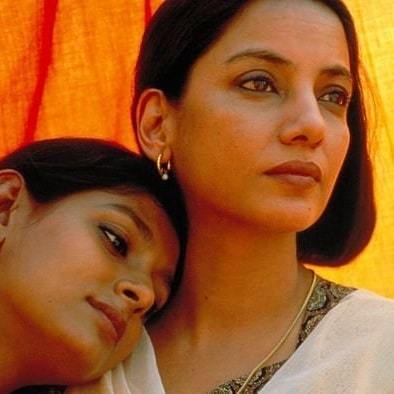
DtnybRSW4AEZFS2

Fire (1996)
Directed by Deepa Mehta

DtqWqaUXgAEUT97

Emma and Grandpa (1983)
Directed by Joy Whitby

strictly-ballroom

Strictly Ballroom (1992)
Directed by Baz Luhrmann

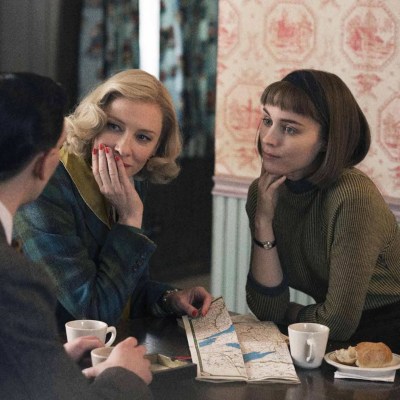
carol-blanchett

Carol (2015)
Directed by Todd Haynes

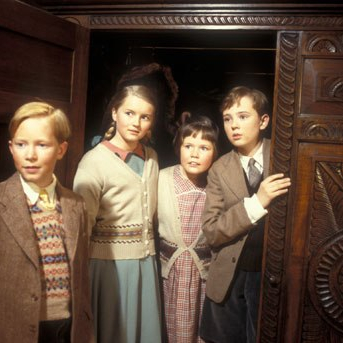
Narnia1

The Lion, the Witch, and the Wardrobe (1988)
Directed by Marilyn Fox

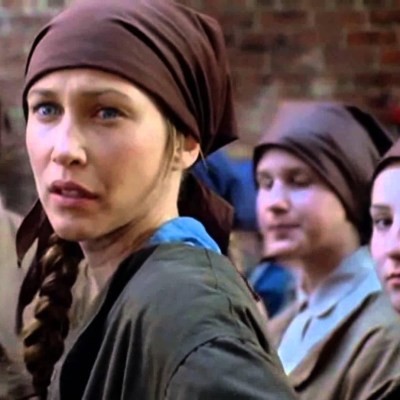
Iron_Jawed_Angels_TV-681633768-large

Iron Jawed Angels (2004)
Directed by Katja von Garnier

ladies-in-florence

A Room with a View (1985)
Directed by James Ivory

Crimson Peak Movie Film Trailers Reviews Movieholic Hub

Crimson Peak (2015)
Directed by Guillermo del Toro

75.0.0

Mad Max: Fury Road (2015)
Directed by George Miller

MV5BOWZkYzE3MWUtOGZmNC00ZjIzLTg2ZDMtMjZlODNiZTg1YTRmXkEyXkFqcGdeQXVyNjIzNTU5NTQ@._V1_

God’s Own Country (2017)
Directed by Francis Lee

more complicated than either/or

24 Saturday Nov 2018

Posted by Anna Clutterbuck-Cook in fandom

≈ Leave a comment

I have another short essay (essaylet?) on writing in the “Fic, Fandom & Sexuality” issue of Spark! (No. 43, 22 November 2018). I repost it here for those who may be interested. 

As a bisexual feminist, it’s been important to me from the beginning of my participation in fandom to write bisexual characters, particularly bisexual male characters. I do this for two reasons.

First, because bi erasure—particularly dismissal of bisexuality as a valid form of desire for cis men—is an ongoing problem in queer spaces.

Second, because it is a way of taking men with canonical m/f relationships and queering them without invalidating their past intimacy with women.

Currently, I’m working on a piece of Jimmy Perez/Duncan Hunter fic (Shetland) where I am navigating the fact that both Jimmy and Duncan have lost a wife and lover who was a woman, who was an important relationship in both of their lives, and figuring them both as bisexual means I can honour her place in their sexual histories while also bringing the two men together. I really like having the chance to make a narrative more complicated than either/or.

I also take particular pleasure in writing stories where older people discover that as they age their sexual desires shift in new ways—not in the sense of long-denied desire surfacing, but in the sense of recognised but marginalised desires taking on new salience, or surprising new desires taking shape.

I tend to write relationship-first stories, wherein the characters are more invested in nurturing relationships that feel right to them than they are in ensuring their relationships neatly map onto some sense of fixed orientation. And that, too, is a political decision (for me as a writer) because our culture is so strongly invested in “born this way” notions of sexual identity.

Such an understanding, requiring fixity of desire across a lifetime, does not accurately reflect the full range of human relational possibility. So I use fic whenever I can to advance a more fluid understanding of desire that focuses less on identity and more on individual people and the joy they bring to one another. And then I let the identity of each character grow out of those encounters.

don’t blame readers

11 Tuesday Sep 2018

Posted by Anna Clutterbuck-Cook in fandom

≈ 20 Comments

Tags

books, romance

My friends. My loves. My dudes.

If you want f/f books, you gotta buy books from creators who want to write f/f. That’s it. That’s literally the ticket. The more Queer books you buy from Queer authors who are doing the work — the more content there will be. The end.

Last night I saw this Tweet go by on my timeline. I let it go by and then scrolled back to find it because it was bothering  me. And then I wrote a thread about why.

I have screen-capped the Tweet for anonymity because, as I said in the original thread, the person is making a valid point about market-driven content and the need to support creators of the work we want to see out there in the world with our dollars. I also don’t want to pile on this person I have no prior relationship with. But this is a sentiment that circulates with moderate frequency in discussions about whither the f/f romance and I have some feels about shaming and blaming readers for the fact that they aren’t finding the f/f stories they want to read.

First, this argument doesn’t engage with the fact that f/f fiction is structurally more expensive than other kinds of queer romance. I can buy three m/m stories at $2.99 a pop from authors I trust or one $9.99 f/f book from an author I have never read before. Should I be willing to pay more for f/f to support emerging f/f writers? Maybe. But what about readers who only have the $2.99? Too bad for them? Readers don’t have unlimited budgets. We make choices. Cost is a real barrier to access.*

Second, this argument flattens f/f into a single type of story you either want or don’t. Most readers have more specific tastes. I like historicals and paranormals that grapple meaningfully with gender, class, race, include meaningful chosen family networks, and have narratively significant sex. So while I want f/f, I want a pretty specific type of story — a similar type of story to the m/m and f/m narratives I gravitate toward. My other preferences as a reader don’t just swirl down the drain the minute I start sorting by the f/f category tag. If authors writing f/f are not writing in the romance flavors I enjoy, I might feel strongly about the political value of supporting f/f writers in the abstract but as a reader I have low incentive to purchase. Do I pay $4.99 for an m/m or f/m histrom paranormal my trusted social-promotional networks are buzzing about … or $9.99 for a contemporary f/f, the blurb of which makes me feel meh?

And third, those social-promotional networks really matter! Right now, the social-promotional network for f/f seems to be almost entirely separate circle on the Venn diagram from the social-promotional circle of m/m and f/m. (Much like the fandom crossover between original media that inspire f/f pairings and original media that inspire m/m pairings seems to meet only rarely.) In addition to person-to-person recommendations, the algorithimic “readers also bought…” recs in Kindle and cross-promotions at the end of m/m works are rarely (never?!) f/f.** I would totally pay $2.99 to try a new-to-me f/f author with my romance specs if they’re recommended to me by a person whose taste I find reliable vis a vis my own. This ALMOST NEVER HAPPENS with f/f. I am a queer woman romance reader, who follows a lot of queer women readers, and I almost never see this type of squeeful signal boosting of good histrom or paranormal f/f that effectively handsells the author to me (which is how I find most of my m/m and f/m authors). So the books aren’t making it in front of eyeballs is my point. The ecosystem is broken.

In sum: “Pay authors to write f/f!” is not the simple feminist fix it seems. I mean, I would be 1000% happy to be proved wrong and to wake up tomorrow morning to my mentions full of histrom, paranormal, non-transphobic, diverse, sexually explicit f/f romances for $5 or less. (Narrator: This didn’t happen.) But when I ask for recs I mostly get crickets and sympathy.

I anonymized the original Tweet above because I don’t want to attack the person who is making an important point about labor and compensation and demand. However, I think the patronising tone of the message presumes we potential readers of f/f just want good stuff for free. That we’re lazy and cheap. In my experience, romance readers — perhaps particularly romance readers who care about more diverse romance, including queer romance — generally respect author labor and care about supporting the folks who write the stories we love to read. But our feminist political commitment to supporting queer f/f writers doesn’t mean we are all rich and it doesn’t mean we want ANY AND ALL f/f content as individual readers. We pick and choose the f/f stories we will take a chance on just like any other romance purchase. And, sadly, the more times I have chanced that f/f purchase and been disappointed, the more reluctantly I approach the next offer.

One more story. There was a great panel a few years ago about the early years of On Our Backs, the lesbian feminist porn magazine. They had a centerfold — in the great tradition of porn magazines — and one of the former editors on the panel, Susie Bright, told this wonderful story.  That they used to get letters from readers AGONIZING about their feelings of desire for the centerfold. “What are her politics?” they would write and ask:

“Dear “On Our Backs,” — one letter-writer would say– “I do not know how to feel about your centerfold model. What if she’s not a good person? I do not know her politics. I cannot decide whether I should attempt to jill off to this picture when I do not know where she stands on ecology, race relations, veganism.”

And the editor was like: “Here is the gift of a naked woman! Can you not just accept this gift if it makes you feel good??”

“But I don’t know how I’m supposed to feel if I don’t know her stance on nuclear proliferation!!!”

Women who desire women (cis and trans alike, though we experience cultural pressures differently) experience a lot of shame and anxiety about not getting desire “right”. Am I feminist enough? Am I gay enough? Should I enjoy penetration if I’m a lesbian and a feminist? If I’m not turned on by this woman is it a sign of internalized misogyny? When I speak with other queer readers yearning for f/f romance in the marketplace we acknowledge the shame and self-blame that happens every time we read an f/f story we feel less than enthusiastic about: Is this just not a story I like OR AM I A BAD QUEER FEMINIST??? 

So shaming queer women for not buying more f/f — and blaming them, as reader-consumers, for the lack of f/f stories being published — is all tangled up in this long history of queer, feminist women worried about getting our sexual pleasure correct politically. OF COURSE readers have absorbed all manner of biases (sexist and otherwise) as part of our cultural stew. Asking ourselves why we are compelled by certain narratives and not others is TOTALLY valid. But, “buy f/f and stuff you like will eventually be written!” is…not that call to self-reflection.

*I don’t talk about libraries in this post in part because they are another access point/barrier to reading queer romance. I have a library widget on my browser that tells me if a book is available at any of the three public library networks I have access to. Only rarely are the romance novels I am looking for available to me free from the library. So readers who cannot afford even the $2.99/book pricepoints have even more barriers to access.

**Unless it’s an f/f by the same author — thankfully an occurrance growing in frequency

Engaging in Critical Librarianship

06 Wednesday Jun 2018

Posted by Anna Clutterbuck-Cook in library life

≈ Leave a comment

I was invited to participate on a panel at the Tufts University Libraries staff development day, 6 June 2018, on the theme of critical librarianship. Before opening the panel to a more discursive question and answer period, each of the panelists — myself, Stacy Collins, and Liz Phipps-Soeiro — were asked to briefly speak about our own practices of critical librarianship. These were my remarks.

I decided to use my brief presentation time here today, before we move into a more conversational mode, to share three questions with you that I use to frame and reflect on the practice critical librarianship at my workplace and in the field more broadly. I want to note here, at the top of our discussion, that I received no formal training in critical theory when I was pursuing my MLS degree at Simmons College, between 2007 and 2011; last night, when I was preparing my remarks, I did a quick search and found that the #critlib Twitter chats go back to 2014, and the DERAIL Forum at Simmons — a student-led forum for “critical discussions of the intersections between social justice issues and our roles as students and information professionals” — began in 2016. Five years after I finished my graduate education.

As someone who entered the field of librarianship because I was seeking a way to put my leftist politics into practice, I am really excited that these discussions are happening — and often happening in ways that are accessible to library workers who are no longer students themselves (on Twitter, at professional conferences, in forums like this). While I love to read and think about critical theory, I want to underscore that you don’t have to be a theory nerd to think and act critically in library spaces. And I hope that these three questions, which I have found helpful in clarifying my role and responsibilities to work for social justice on the job, help you think about what you can do in your own work space to make our practices more inclusive.

Question One: What are my core values?

A key insight of critical theory is that power is distributed unequally in every area of our lives. Critical theory especially highlights the way that systems and structures — cataloging standards, workplace hierarchies, the physical organization of space — presented as objective, neutral, and natural that may appear “neutral” (in part because powerful people present them as such) in fact actively work to produce and reproduce power and privilege whether or not they are ultimately good for human flourishing.

Many of us became librarians because we are passionate about access to information — particularly access that is made available on an equal basis to everyone in the community (however defined) that the library serves. The hard lesson that critical theory teaches us is that the practice of librarianship is not inherently the practice of social justice. We learn that libraries, too, are sites of oppression. Of colonialism, of racism, of anti-gay, anti-Muslim, anti-fat, ableist, and sexist attitudes and exclusionary practices. And we learn that sometimes these harmful attitudes and actions are not incidental to librarianship but are, in fact, foundational to the history of our field and woven tightly (perhaps inextricably, in some cases) into our daily work.

This is why my first question — for myself, and for all of you — is: “What are my core values?” Current best practices, organizational mission statements, codes of ethics established by professional bodies — these may be useful, but they should not be your only way of holding yourself accountable for socially just practice. Instead, I encourage you to identify (or create) communities of accountability outside of your workplace, perhaps even outside of your field. In the months following the 2016 election, for example, it became clear to me that speaking out against GOP policies required more than the language of professional ethics and best practices. Identify those people and spaces that help you hold on to your deepest sense of justice and joy, and check in with those people, spend time in those spaces, purposefully reflect on how your daily work can better reflect those values you hold dear.

Question Two: Who is missing from this table?

The second question I encourage you to ask — and ask often — is “Who is missing from this table?” Who is missing from your conversations about policy, about access, about inclusion? When you post a job opening, who is applying for those positions, and who is invited for interviews? If those people all come from very similar backgrounds and all fit a very similar profile: Are they all (or almost all) white? Are they all from middle-class backgrounds? Are they all able-bodied?

Particularly when it comes to questions of power and agency in our institutions, getting into the habit of noticing who is and isn’t at the table when decisions are being made, when resources are being allocated, is a crucial step in taking action for change. Think critically about who serves (and who is asked to serve) on committees. Who has the financial resources to participate in professional development. Whose needs are framed as central in your workplace and whose comfort is considered as a postscript in event planning? And task yourself with documenting the exclusions you notice, and speaking up. To take one example, the Massachusetts Historical Society recently established a lactation space for staff and researchers, and when an email went out to staff announcing this the email referred to the space as a “Mother’s Room.” Not all parents who provide milk for their children identify as mothers, or as women — so I asked the facilities staff to consider more inclusive language for any signs or information text on our website.  In another case, a staff member noticed that our registration form offered no gender-neutral alternative to Mr. and Ms. — a careless oversight that was easily remedied once he brought it to our attention. While sometimes true ideological differences exist, and need to be dealt with, in many cases change can be made with minimal fuss institutionally and make a HUGE difference in how welcome staff and patrons feel.

Question Three: Where, and how do I have agency?

Once you start thinking about the (mal)distribution of power in your library, and once you start noticing who’s being excluded, and how, it’s time to think about where and how you have agency to make change. All of us carry complex identities that mean we have institutional and social power in some contexts and may be marginalized in others. It’s important to do the work of discerning where you, specifically, can bring insight to bear and where you have the power to act. When it comes to social privilege, for example, I am a white woman, I am able-bodied, I hold advanced degrees, English is my first language, I have birthright citizenship. Institutionally, I have the advantage of ten years’ tenure, a supervisor who supports me, and I’m salaried with benefits. On the other hand, I am queer and a woman; I’m not a department head, and in many cases am not at the table when institutional policy discussions take place. I am young compared to many of my senior colleagues. But that doesn’t mean I lack agency. In the comedy world, they talk about jokes that “punch up” rather than “punch down”: Jokes that punch down — fat “jokes” or rape “jokes,” for example — reinforce existing prejudice and police already-marginalized people further. Jokes that “punch up” work in the opposite way, naming and ridiculing those policing practices in a way that exposes their violence and hopefully helps turn the cultural tide. In a similar way, I have come to think about practicing critical librarianship “from the middle” of an institution as an exercise in sheltering down and amplifying up. Assess where you are in your organization, who your allies are, and who among those allies has more structural power and who has less. It’s your job to amplify the voices of those with less structural power. Remember those people not at the table? If you are at the table, do everything you can to bring those people to the table. And if they can’t be there in person, bring their concerns forward yourself. And in the other direction, identify the harmful ways power is being used against the vulnerable in your workplace — and do what you can to mitigate those harms, even if you are not in a position to unilaterally change policies or practices.

Critical race theorists assert (and here I am quoting from Richard Delgado’s Critical Race Theory: An Introduction) that society should “ ‘Look to the bottom’ in judging new laws [and] if they would not relieve the distress of the poorest group — or worse, if they compound it — we should reject them.” I argue that the practice of critical librarianship is the continual process of checking in with our most vulnerable, our most marginalized community members and challenging ourselves and our organizations to make their experiences, perspectives, and needs central to our policies and practices.


that is enough

08 Tuesday May 2018

Posted by Anna Clutterbuck-Cook in fandom

≈ Leave a comment

Tags

fanfic, writing

I spoke with Atlin Merrick on Twitter about my experience writing drabbles and was invited to lightly revise those observations for this piece. It appears under my nom de plume elizajane, in Spark! No. 29 (8 May 2018) the newsletter from Improbable Press.

For the past three years I’ve run a 14-day drabble challenge (#TwelvetideDrabbles) around Christmas time. It’s the only time I write 100-word stories, but I love the discipline of it.

The challenge of looking at the daily prompt and thinking about how to create and resolve narrative tension in a way that speaks to the prompt, is true to the characters and relationship I’m writing, and comes in at exactly 100 words (a personal challenge I set myself). Each year, I write the drabbles around a particular couple and post the individual drabbles as chapters of a 1,400 word story—but each chapter still has to stand on its own as a scene.

I usually begin with an idea, a moment, an interaction, that has to be trimmed away and trimmed away in both concept and language. An evening needs to be distilled into a moment; a post-coital conversation into a single exchange. The first draft will be three hundred words, easy, and then I have to go back make sure each word I keep is essential as I slash and burn.

I typically write much longer fic—it’s rare for me to drop below 1,000 words—so drabbles are a change of pace that I have come to look forward to, in the waning of the year. Sometimes they end up prompting something longer that I take up later, but not always. There’s a freedom in that, in writing an idea in such a compressed space, and letting it go, saying: that is enough.

write the sexual intimacy you want to read

27 Tuesday Mar 2018

Posted by Anna Clutterbuck-Cook in fandom

≈ Leave a comment

obergefell_smI was invited to write five hundred words on why I write erotic fanfic. This piece, under my nom de plume elizajane, originally appeared in Spark! No. 24 (27 March 2018) the newsletter from Improbable Press.

Some of my earliest memories from childhood involve the creation of stories involving my favorite characters from literature. Even at eight or nine I was weaving romance and sexual relationships (in the vaguest of terms) into those fanworks. As a teen reader I was often frustrated by the fade-to-black approach to sexual intimacy in published fiction, and spent many hours thinking (and sometimes writing) about what might have happened after that first-kiss moment. Fanfic, for me, has been an erotic experience from my earliest memories of fanwork creation. Continue reading →

NEA’s Contingent Employment Survey: A Presentation

23 Friday Mar 2018

Posted by Anna Clutterbuck-Cook in library life

≈ 2 Comments

In 2016, while I was serving as New England Archivists’ Inclusion and Diversity Coordinator, we conducted a survey on contingent employment in the archives/library field. I was asked to present the findings of this survey at NEA’s annual business meeting. Because of some time constraints, we ended up deferring the presentation from spring 2017 to spring 2018. I will be presenting a ten minute snapshot of finding at the business meeting held on Saturday, March 23, 2018 in New Haven, Connecticut during the New England Archivists/Archives Roundtable of Metropolitan New York Spring 2018 Joint Meeting (22-24 March 2018).

Because the presentation will be a brief ten minutes, I am making the slides available here for anyone who wishes to review them at their leisure.

You may also download a PDF of the presentation slides here.

The full data set (stripped of identifying information) will eventually be made available for researchers in some to-be-determined format through New England Archivists. I will update links when that transpires! In the meantime, I am happy to discuss these findings with anyone who has a further interest in this area. Contact me here or @feministlib!

UPDATE ONE: 2018-03-26.
At the request of a couple of folks who wanted the survey questions for possible reuse in their own region, I have made two Google Documents available:

Appendix 1: Survey Questions (Doc.)
Appendix 2: Semi-Structured Interview Questions (Doc.)

UPDATE TWO: 2018-08-18
I have finally completed cleaning up the footnotes on the final report (January 2017). Here is the report in PDF (via Google Documents), a folder of anonymized interview transcripts:

NEA Contingent Employment Study Final Report 2018-08 (PDF)
Anonymized transcripts of the qualitative interviews (PDF)

UPDATE THREE: 2018-TBD

Anonymized survey responses may be found here (Google Sheets) [Link to come]


gathered in love and service for justice and peace

10 Saturday Mar 2018

Posted by Anna Clutterbuck-Cook in life writing

≈ Leave a comment

Tags

ASCBoston

20170610_103421
Image: My rainbow scarf and mardi gras beads at Arlington St. Church, Boston Pride 2017.

Oh I am waking up, to find my world
Between the dying and being reborn
I see what is and I see what could be
Can’t close my eyes again, and go back to sleep. [Zo Tobi]

Tomorrow, I am formally joining the congregation of Arlington St. Church, a Unitarian Universalist congregation with roots that stretch back through Boston history to 1729. I have been attending services regularly since November 2016 and have known for about a year that I wanted to become a member, with a certainty that actually gave me pause and was part of what led me to delay joining until now. I wanted to make sure my commitment to this community was something more than a passing urgency borne of the national turning point of the Trump/GOP ascendency to power.

As part of the joining process, I was asked to reflect on what led me to Arlington St. Church; since I think best in writing, I wrote down some of the threads of my life that have led me to participation in this particular community, at this particular point in my own life and in this harrowing era we are living through. And, having done that, I thought I would share some thoughts here with all of you. Continue reading →

“The Service Begins When the Service Ends”: Toward a More Inclusive NEA

04 Sunday Mar 2018

Posted by Anna Clutterbuck-Cook in library life

≈ 1 Comment

This piece was written as a farewell when I stepped down from my three-year term as New England Archivists’ Inclusion and Diversity Coordinator. It first appeared in the October 2017 issue of  NEA News (44:4). As I have been following the #DERAIL2018 conversation on Twitter this weekend, it seemed like this reflection on the possibilities and problematics of institutional diversity work in the archives world might have broader applicability. So I’m reposting it here. 

I accepted the position of New England Archivists’ first Inclusion and Diversity Coordinator in November 2014 with some trepidation. With our recently-adopted Inclusion and Diversity Statement in hand, the leadership was ready to take action. But what would effective short-term and long-term action look like? Would I have support from the organization to institute change? How would I adequately assess and address the needs of New England’s archivists for a more just and inclusive professional environment? These were some of my initial reservations as a relatively young and newly-involved member of NEA, yet I felt it was important to work on these issues and was committed to charting out a path that future Coordinators might find useful to follow.

Over the past three years, I have been grateful to my fellow archivists within NEA for enthusiastically welcoming my proposals and bringing their own concerns forward that we might address them together. Thanks to the members who brought me ideas and requests, we have made structural changes to our Spring Meeting to ensure people of all genders feel welcome, that nursing parents have space to feed their children, people with a wide variety of dietary needs are fed, and that specific accommodations for participants with disabilities are advertised and provided. These changes have been institutionalized as part of the Spring Meeting planning guide. We are also in the second year of our three-year pilot program to encourage session proposals on social justice themes with the Inclusion and Diversity Travel and Session Award that funds travel expenses for the winning panel participants.

Thank you, also, to the membership for your overwhelming support for adopting our code of conduct that is the policy instrument backing up our stated commitment to building and maintaining an environment where members and guests are free from harassment. While this anti-harassment policy was not developed in response to any specific incident of exclusionary hostility, it does establish a framework through which we can handle any such incidents as they arise. Even more importantly, in my opinion, the code of conduct establishes a common expectation for all members and guest participants in NEA events that we respect the full humanity of one another, honor each others’ complex life experiences, and strive to learn how our multiple identities inform our perspectives both personally and professionally.

These are steps in the right direction, but we still have a long journey ahead to address the structural inequalities baked into our profession. Continue reading →

← Older posts
Newer posts →
"the past is a wild party; check your preconceptions at the door." ~ Emma Donoghue

Recent Posts

  • medical update 11.11.22
  • medical update 6.4.22
  • medical update 1.16.2022
  • medical update 10.13.2021
  • medical update 8.17.2021

Archives

Categories

Creative Commons License

This work by Anna J. Clutterbuck-Cook is licensed under a Creative Commons Attribution 3.0 Unported License

Meta

  • Create account
  • Log in
  • Entries feed
  • Comments feed
  • WordPress.com

Create a free website or blog at WordPress.com.

  • Subscribe Subscribed
    • the feminist librarian
    • Join 37 other subscribers
    • Already have a WordPress.com account? Log in now.
    • the feminist librarian
    • Subscribe Subscribed
    • Sign up
    • Log in
    • Report this content
    • View site in Reader
    • Manage subscriptions
    • Collapse this bar
 

Loading Comments...