• anna j. clutterbuck-cook
  • contact
  • curriculum vitae
  • find me elsewhere
  • marilyn ross memorial book prize

the feminist librarian

the feminist librarian

Author Archives: Anna Clutterbuck-Cook

booknotes: the perfect summer

20 Thursday Jan 2011

Posted by Anna Clutterbuck-Cook in book reviews

≈ Leave a comment

Tags

british isles, history

The Perfect Summer: England 1911, Just Before the Storm, by Juliet Nicolson (New York: Grove, 2006) reads like a cross between a gossip column and a cache of family letters — with a dash of historical analysis thrown in here and there. Nicolson has chosen as her subject the Season (May to September) of 1911, the summer before the Titanic would sink and three years before the conflagration that came to be known as The Great War (“the storm” of the title) would engulf Europe. Drawing on memoirs from multiple social strata (a butler’s tell-all narratives; a débutante’s diaries) Nicolson manages to piece together a remarkably non-hagiographic portrait of a summer, despite the fact that Perfect Summer reads like one long anecdote pieced together out of a series of little gem-like stories.

For example, we learn that Lady Diana Manners, who “came out” into society in the summer of 1911, was not as alarmed as her peers about the prospect of mixed-sex socializing, since she had an older brother and also because “her elder sister Marjorie had held hair-brushing sessions during her first season to which Diana and the young men who admired Marjorie were invited.”

Hair-brushing sessions? Does anyone else’s mind go to places you have the feeling it should not go with that phrase?

Okay. Just checking.

But we also get stories about the heat-wave and drought that enveloped England during much of the late summer, causing so many heat-related deaths that the newspapers stopped reporting them (they ceased being “news”) and crops failed. Industrial workers and schoolchildren went on strike (for better wages and better meals, respectively) and nation-wide people hotly debated the merits of a proposed National Insurance Act. In other words, the “perfect summer” may not have been so perfect after all.

On the one hand, there are certainly more comprehensive scholarly analyses of the era available, as well as texts that focus more specifically on particular aspects (the suffrage movement barely gets a look-in!). Still, the book is a quick read and a nice companion history to Masterpiece Theater’s current costume drama “Downton Abbey” — which opens with the sinking of the Titanic and will (I anticipate) close with the outbreak of the war. And Nicolson has followed the book up with a history of Britain between the wars, The Great Silence (2009) that I’m looking forward to picking up.

from the neighborhood: shark attack!

18 Tuesday Jan 2011

Posted by Anna Clutterbuck-Cook in a sense of place

≈ Leave a comment

Tags

boston, from the neighborhood, photos

Following the recent snow day here in Boston, Hanna and I noticed this snowman along our usual walk to work (outside an apartment building near Audubon Circle for those who know the area). Thought y’all would enjoy the creativity at work here!

Why is the snowman worried?
Snowsharks!

live-blogging "downton abbey" (episode no. 2)

17 Monday Jan 2011

Posted by Anna Clutterbuck-Cook in media

≈ Leave a comment

Tags

blogging, british isles, humor, live-blogging, movies

Lady Mary prepares to be unwise in her flirtations.

Following up last week’s live-blog of the first episode of Masterpiece Theater’s “Downton Abbey,”
Hanna and I, along with our friend Minerva, gave a repeat performance last night for the second episode (we’re halfway through the series, people! can you stand the drama?!)  You can read the whole blog post over at …fly over me, evil angel....
Obviously Spoiler Warning: Downton Abbey, Episodes One and Two. Return after you’ve seen it if you don’t want any plot points to be given away.
A few tantalizing tidbits …

9.23: [as Bates and Anna giggle] M: Kiss. Each. Other. Please, honey! Make him drop the cane! I’m sorry; I need some smexy times! A: Yeah, he needs to grab her ass… M: There’s a table right behind you!

9.24: [Harriet shows up] H: Go, Harriet! M: Oh, I like you!

9.25: [as Maggie shows up] M: Oh, Maggie — I don’t like you now! M: [as wife defends procedure] Oh, good for you! A: She [Maggie Smith] is so good at that “What? People are contradicting me?”-look.

9.26: [as procedure continues] M: Whoa — that so ain’t right! H&A: Hush!

And predictions for the second half …

Halfway through the show! Guesses all ’round…

A: So the little redhaired girl is going to go off to be a secretary.

M: Bates and whatsherface need to come to some kind of agreement. Understanding.

A: Yeah.

H: Thomas needs…a shagging or a comeuppance…

M: Thomas is going to blackmail his way out of that house.

A: He’s going to use that information to get himself leverage somewhere, somehow.

M: I do think it will backfire.

A: Yeah, he’s going to try. I don’t know what O’Brien wants…but she’s going to be there with him.

M: Her motivation, other than being spiteful, is…

A: If she was acting as if the family was under threat…but she hates everyone!

M: I think she just wants to see people ruined.

A: It’s a very malicious sort of…youngest daughter needs to find some sort of voice.

M: She’s gettin’ close. Middle daughter — all middle daughter is going to end up a little shafted in this story.

A: Which is sad. But yeah. I want to see Maggie Smith and Harriet Jones…

H: Go at it. Oh, god, yes.

M: …preferably in that little cottage parlor. Epic.

[General agreement and headnodding]

Head on over to Hanna’s blog for the full post.

harpy week: hurtful words, healing words, and sexy words

16 Sunday Jan 2011

Posted by Anna Clutterbuck-Cook in Uncategorized

≈ Leave a comment

Tags

harpyness, links list

Greek Harpy.
650 B.C.

This past week saw another two posts authored for The Pursuit of Harpyness in addition to participation in my first ever “harpy seminar,” or conversational group post, in which a number of us contribute thoughts on a given topic. This week’s seminar was on the topic of talk therapy and what it’s “for.” Is it a waste of time and money or a cure like no other? Is it an elitist indulgence or mental health necessity? What’s worked or not worked for you? We took a stab at it and then opened the floor for comments from our readers.

On my own, I wrote two language-related posts this week.

  • The first was on the new expurgated edition of Huckleberry Finn that has been making waves in the mainstream media (as well as in the blogosphere) the past couple of weeks. I shared a couple of my favorite commentaries on the topic, a few preliminary thoughts about censorship, racism, and the writing — or in this case re-writing — of history, and then asked readers for their thoughts and personal experiences studying Huck Finn in classroom settings.
  • My second post of the week was on sexual fluidity, and our culture’s struggle to understand the way in which human sexuality is sometimes dynamic, changing over time in response to our environment (both ecological and social). I meditate on the anxiety this fluidity causes people, and some of the possible causes of that anxiety. I also describe how the cultural narrative of an innate, fixed sexual orientation was a personal stumbling block as I grew into my adult sexual identity. Commenters shared some wonderful (and wonderfully varied) personal stories in the comment thread.

In addition to my work, obviously, other Harpies were equally busy!  SarahMC wrote a post about a recent “driveway moment” with NPR, listening the Delusions of Gender author Cordelia Fine discuss the (junk) science of sex-difference. Marie Anelle shared her struggle to balance her political values of fat acceptence with her personal anxieties over her health and appearance. foureleven revealed that she is a future librarian and discussed some of the common responses she gets when discussing her chosen field; the comments in this thread are particularly interesting as folks swap stories about translating their professional selves in mixed company.

Check out these stories and others over at The Pursuit of Harpyness. Hope you all had a restful weekend (and enjoy your holiday tomorrow, those of you who get an extra day off for MLK day)!

booknotes: same difference

13 Thursday Jan 2011

Posted by Anna Clutterbuck-Cook in Uncategorized

≈ Leave a comment

Tags

books, feminism, masculinity

Same Difference: How Gender Myths Are Hurting Our Relationships, Our Children, and Our Jobs, by Rosalind Barnett and Caryl Rivers (New York: Basic Books, 2004) is the latest in a series of books I’ve read in the past year on the science of quantifying and categorizing sex and gender difference. (For links to the other titles, see the end of the post). Written earlier than most of the others I’ve reviewed so far, Same Difference was also the least satisfying of all the books to date. While some of that may have to do with “subject fatigue” (that is, they’re going over ground that is now very familiar to me), I also felt that in their attempt to make a persuasive and readable argument concerning the mis-use of science to support the theory of innate sex and gender difference, they missed some key nuances and distinctions between what certain researchers claim and what the public hears.

For example, they open with a chapter on the work of Carol Gilligan, an extremely well-known and prolific research psychologist who, in the 1970s, was a pioneer in the field of women’s psychology. As a bit of historical background, it’s important to know that Gilligan began her academic career at a time when the majority of studies involving humans took men and male bodies as the starting point — the norm. Then, when female bodies failed to conform to predictions (made based on a pool of male research subjects), women would be classified as abnormal. It was also a period during which the influence of American Freudian psychology was only just starting to be challenged by alternative ways of understanding human behavior. Gilligan, in a break from the faculy supervisors with whom she worked as a graduate student, insisted that in order to make claims about women’s behavior and psychological health, actual women would need to be studied. Which is what she went on to do. She also argued that those aspects of humanity traditionally thought of as “feminine” (and often pathologized or otherwise denigrated) actually played an important role in society. Caring and empathy, for example, should not be seen as a sign of weakness — but a quality of human interaction that is as important as making rational judgments or prioritizing actions.  To us this sounds simplistic, but at the time Gilligan offered a psychological framework encouraged people to value behaviors that are disproportionately found among women, or associated with women.

Now, I should make it clear that I have only ever read excerpts of Gilligan’s most influential work, In a Different Voice (1982). But I have read her more recent The Birth of Pleasure (2002), and I have certainly read about her research. The distinction Barnett and Rivers fail to make in their assessment of Gilligan is between observations concerning human behavior or socialization and conclusions drawn from that behavior concerning innate preferences or abilities. In The Birth of Pleasure, Gilligan makes value judgments about certain types of behavior, and suggests that women have learned to be better care-takers then men (on average).  However, the whole point of the book — as I remember it — is to encourage men to value and learn from women these care-taking, empathic skills. Gilligan is therefore making an argument about socialization (nuture) rather than innate “hard-wiring” (nature). Yes Barnett and Rivers fail to distinguish the popularization of Gilligans work (which used it to support “hard-wiring” arguments) from Gilligan’s actual thesis.

Similarly, in the chapter on Mary Pipher’s Reviving Ophelia (1994), the authors blur the boundaries between Pipher’s own arguments and the public reaction to the book. Barnett and Rivers suggest that the evidence does not bear out Pipher’s “anecdotal” assessment of adolescent girls’ crisis in self-confidence. Now, I read the book when it first came out, as an adolescent girl myself – as well as two counter-publications, Ophelia Speaks and Sense of Self, both of which were “holla-back” type responses to Pipher’s characterization of young women under seige from a toxic, misogynist culture. (She doesn’t explicitly use feminist language in Reviving Ophelia, but her assessment of American culture is an essentially feminist one; I count RO as one of the texts that introduced me to feminist cultural analysis.)

So as a reader who at the time was a member of the very group Pipher was supposedly describing, I think Barnett and Rivers are ignoring or down-playing the key aspect of Pipher’s argument: i.e. that it was the toxic culture not the girls’ sex or gender identity that precipitated the crisis.  Whereas previous theories about teenage girls’ psycho-sexual development (Freud anyone?) might have characterized adolescent girls as problematic or vulnerable because of their inherent nature qua female, Pipher was saying: “Look at the toxic cultural messages these young women are getting about what it means to be female!”

I should be clear here that I certainly didn’t see myself in the “Ophelias” Pipher described — though I knew plenty of friends who were struggling with issues similar to Pipher’s troubled patients. And I identified with certain aspects of the young women whom she idenfied as having successfully distanced themselves from many of those toxic messages, and had found a way to thrive.  Once again, Barnett and Rivers are confusing the cultural reception of an author’s work — which really did verge on the hysterical and essentialist (“omg girls can’t handle the realities of the adult world! they must be sheltered!”) — from what the author is actually arguing. And what she argued was much less essentialist than it was a critique of misogyny in our culture, which (for obvious reasons) often comes down like a shit-ton of bricks on the backs of young women when they hit puberty and start moving through the world as more obviously female-bodied persons.

In addition to this skewed glossing-to-make-a-point reading of authors I am familiar with, it was frustrating to have sex and gender difference discussed so consistently in heteronormative terms. Assumptions of sex difference permeate our beliefs about sexual orientation and gender identity. It is beliefs about the innate and oppositional differences between “men” and “women” that feed the resistence to accepting trans* peoples’ self-definitions. Our cultural stereotypes of lesbian women as inherently more masculine and gay men as inherently more feminine derive from assumptions about how straight men and women behave (and the belief that if you’re attracted to men, for example, you must therefore resemble the profile of the prototype group that is attracted to men: straight women). Barnett and Rivers fail to address these issues entirely.

Which isn’t to say I did not enjoy the roasting Same Difference gave to many authors whose work is patently essentialist at its very core: John Gray (Men are From Mars, Women Are From Venus), for example, and Deborah Tannen (You Just Don’t Understand), both of whom take the idea of “difference” to such an extreme that they assume men and women cannot and never will be able to successfully communicate and have meaningful relationships. And people such as Lionel Tiger and David Blankenhorn who believe that the blending of gender roles (fathers taking a more active role in parenting their children, for example) will damage men and ultimately be the downfall of civilization. 

I also appreciated the fact that each chapter wraps up by talking in concrete terms about how these ideas about difference are influencing the way Americans live their lives, and often causing us real material harm. Often, analysis of scholarship can come across as squabbles between academics. By contrast, Barnett and Rivers take pains to point out that ideas have real-life consequences. For example, if a woman believes that she — and only she — is qualified to care for the children she gives birth to, it may cause her to give up a successfull and enjoyable career over the protests of her husband (who is willing to be the primary stay-at-home parent), making them both miserable and causing financial and emotional strain for the entire family. Powerful ideas — especially when they’re supposedly backed up by the cultural authority of “science” — can constrain peoples’ willingness to experiment with non-normative family arrangements that may suit individual couples better than a cookie-cutter approach.

The verdict? Worth skimming if this is an area of interest to you, but for an in-depth analysis of the actual research involved (and why it’s shite), I’d recommend any of the other books I’ve read so far. You can find all the links in my post about Cordelia Fine’s Delusions of Gender.

frabjous (snow) day!

12 Wednesday Jan 2011

Posted by Anna Clutterbuck-Cook in Uncategorized

≈ 1 Comment

Tags

boston, domesticity, family, outdoors

Thanks to a lovely winter storm, Hanna and I both have the day off from our respective places of work today. I’m working at home on the laptop in my pajamas (reading Juliet Nicholson’s The Perfect Summer and Judith Warner’s Perfect Madness while we wait for the power to come back on) … makes me feel so grown-up! And even better, Hanna made us carob chip muffins :). Here are some of her photographs of the Grand Weather Event.

Our power went out for several hours last night;
luckily our stove is gas-powered so we could make
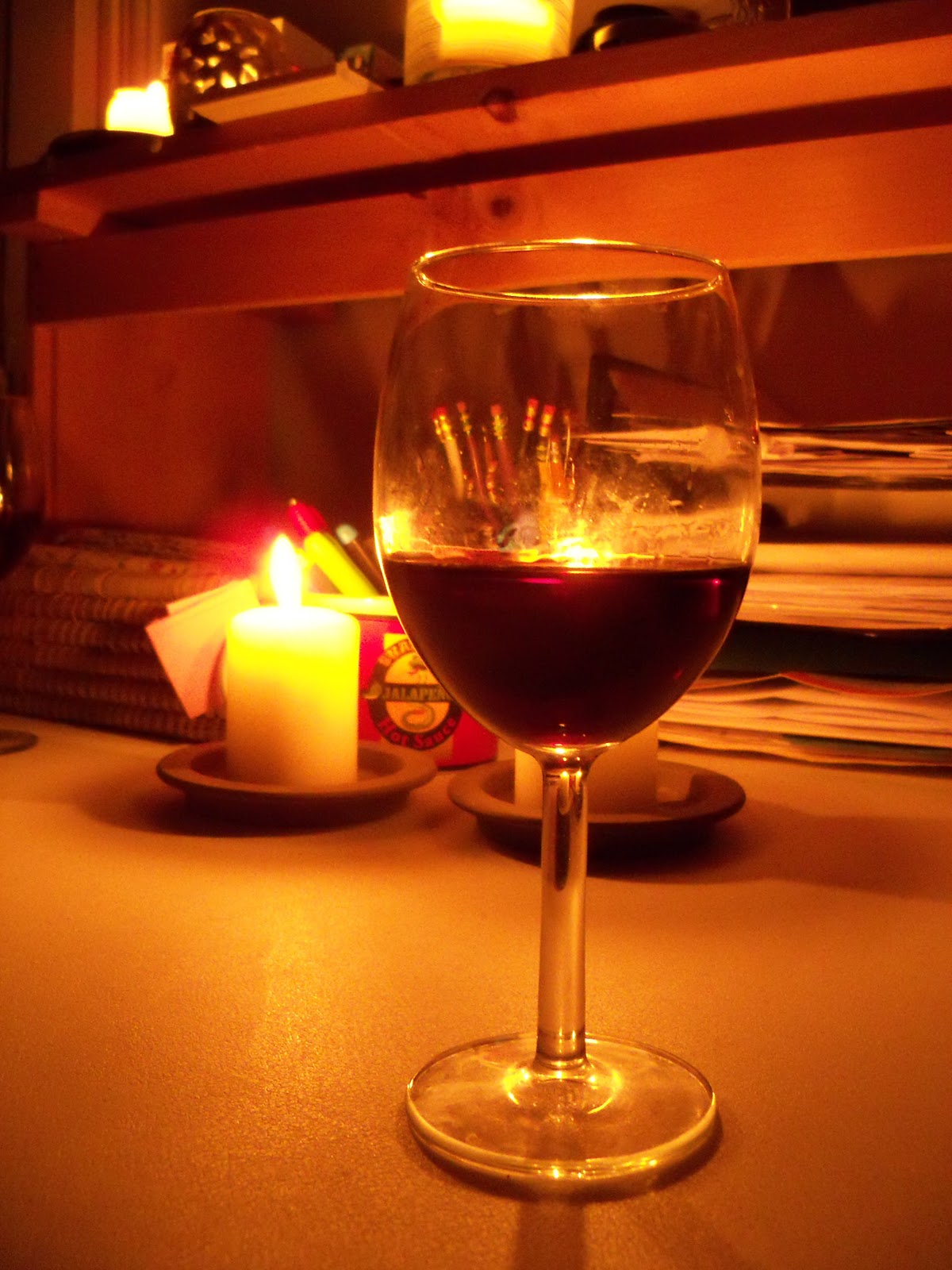
supper anyway! (And enjoy pre-dinner wine.)

Our street, with falling snow taken by Hanna just before the power went
out for about six hours.

reading the (lesbian) classics: beebo brinker

11 Tuesday Jan 2011

Posted by Anna Clutterbuck-Cook in book reviews

≈ 1 Comment

Tags

gender and sexuality, reading lesbian classics

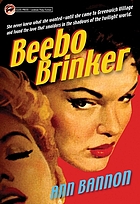
As explained in the first installment of this series, “reading the (lesbian) classics” is a series of posts in which Danika Ellis of The Lesbrary and I read our way in a very haphazard manner through queer literature. Our method is basically picking out the books that sound like a fun time and taking it from there!) and chat about it, and then post our conversations on the interwebs. For this third installment, we read the lesbian pulp classic Beebo Brinker by Anne Bannon.

Danika and I exchanged our thoughts via email and I’ve color-coded our contributions in hope that it makes the reading a little easier for y’all.

Also, I don’t hide the plot spoilers on my post, so consider yourself warned if you care about that sort of thing. Danika posts our conversation with the plot spoilers obscured (unless you highlight them), so head on over to The Lesbrary if you want the “safe” version.

Anna: As a starter question, I’d be interested to know what you thought about the way Bannon portrays her character’s discovery of her same-sex desires (especially the way it is mediated to some extent by her mentor/roommate). It was an interesting contrast to the way the girls in our YA novels came to terms with their sexual orientation — primarily through their interaction with other girls and their own internal self-reflections.

Danika: You’re right, Beebo Brinker does explore a different way of coming to terms with her sexuality. It reminds me of the Well of Loneliness-style inversion theory of lesbianism, because she seems to really see her own (masculine) body as almost dictating her sexuality, and femme lesbians in this book, too, seem to be at least a little bit doubted, or seen as less queer. Beebo seems to discover her sexuality because of her appearance, not so much in relation to other people, which is interesting from a modern perspective, because we’ve really been trying to separate sexuality from gender identity. These earlier novels don’t do that, and it’s hard to separate a character’s gender identity from their sexuality, especially since they don’t even have the vocabulary for it.

The roommate is interesting, too, because it offers another instance of queer community, which has had different portrayals in the joint reviews I’ve done. Beebo Brinker has a primarily positive portrayal of community, with Beebo’s roommate as a mentor and guide, but it may also be because her roommate was a gay man, and therefore wasn’t directly competition…?

Anna: I think you’re right about Beebo (the character) being written in a way that signals her sexual orientation through her gender identity. That is, she’s a tomboy therefore she’s going to be gay and like girls sexually. There’s a fancy term for that concept of gender and sexual identity that I’m completely blanking on right now, but basically it’s a way of mapping sexual orientation onto the binary system of gender so that lesbian women = masculine (male-identified) and gay men = feminine (female-identified). This even turns up in science — like actual scientific theories — about brain chemistry. The assumption is that the brains of lesbian women will be organized more like the brains of straight men than they will straight women. That was an assumption that was pretty popular in the mid-twentieth century (and still is today). I imagine Anne Bannon didn’t even notice she was making those assumptions when she wrote the character. Whereas to us they’re glaringly obviously and seem clunky and stereotypical.

The other thing that’s stirred into the mix, although Bannon doesn’t come out and use these terms (at least not that I remember) is the butch/femme subculture of the pre-Stonewall era. We still have butch/femme as a subculture today, but it’s only part of the much larger queer community. From what I understand, the lesbian subculture of mid-century America was pretty saturated with butch/femme identities and role-playing. Even if you didn’t necessarily feel comfortable with either of those roles, you sort of had to pick one in order to situate yourself within the lesbian subculture. I’m probably overgeneralizing … but as I was reading Beebo I did think of that, and about the way in which Beebo is set up from the beginning as a masculine-identified lesbian, whereas her lovers are all female-identified.

And at least two of them (as you point out) are bi- or fluid (in today’s terminology) … the femme fatale whose name I’m temporarily forgetting and Venus, the film actress. Paula, from what I remember, is pretty confirmed in her interest exclusively in women, and seems interested in both femme women and butch women. So there aren’t necessarily any hard and fast rules in Bannon’s literary world about butch women only dating femme women, or vice versa. But there does seem to be a fairly firm … shall we call it a “typology” of lesbians being outlined in the novel? It sort of reads as an identification guide in places. For young lesbians in New York: here are your options!

Placing so much emphasis on Beebo’s appearance and on other people reading her as a dyke even before she herself is consciously aware of her same-sex desires is in some ways distinctly at odds with our present-day understanding of sexual orientation — that it is something which we know from within ourselves, and that we each have the right to self-identify our orientation and gender. On the other hand, the willingness of outsiders to identify Beebo as queer is certainly a phenomenon that’s alive and well in our culture — both among the queer subculture and within the mainstream population. We still very much read gender as a mark of sexual orientation even if we distance ourselves from that sort of conflation of sex and gender. As much as we like to say we’re beyond assuming that queer people fit certain stereotypes, we still enjoy (as a culture) crowing “we knew it all along!” when someone who’s gender-nonconforming turns out to be queer, and, conversely, expressing our disbelief when someone who is very gender-conforming comes out as a person with same-sex inclinations.

While gay men didn’t figure so heavily in the novel, what did you think of the way Jack and his boyfriends were portrayed? Do you see similarities and/or differences between the portrayal of lesbian identity and gay male identity in the novel?

Danika: Yes, it’s funny how that theory seems to carry through that seriously flawed theory from the ’20s to the ’60s. And you’re right, we’re still seeing traces of that. Gender identity and sexuality continue to be tangled together, and that’s with our attempts to separate the two. Beebo Brinker was also still in the early days of lesbian literature/pulp, when you couldn’t really have cliches, because there wasn’t enough to compare to. In those days, that assumption didn’t need to be explained: it seemed like common sense. It definitely doesn’t look that way from 2011, though.

I definitely saw some underlying butch/femme dynamics in Beebo Brinker. Again, it just seemed like common sense at that point, I think. Beebo was really aligned more with straight men, so of course she’d want a feminine woman. That was the standard for lesbian pulp, from what I remember. They tended to put two very feminine women on the covers, but the stories inside would be strictly butch/femme. It sort of suggests that they found it difficult to really wrap their heads around same-gender relationships, and would therefore try to slot it into heterosexual frameworks. Of course, butch/femme relationships in reality are rarely mere imitation of heterosexual relationships (they have great potential to challenge and subvert heterosexual norms), but the fact that they didn’t seem to be able to imagine a same-sex relationship that wasn’t butch/femme seems to suggest that lesbian pulp tried to imitate.

Hmmm, you’re right that there were some bi/fluid/pansexual/who-can-really-assign-a-sexuality-to-a-fictional-character characters, but weren’t those characters portrayed fairly badly? The femme fatale (I’m blanking, too) is clearly a villain and Venus seems to be trying to get the best of both worlds: to hold onto a husband for security but still go out looking for women. It doesn’t seem to be a very positive portrayal of bisexuality.

I think femme/femme relationships are touched on, but I don’t think we saw any butch/butch ones. I think in that era butches were more common, but femmes were more desirable in the bar world? So a femme dating a femme would be fine, but according to that ranking system, a butch wouldn’t want to be with a butch? Maybe I’m reading in terrible messages that aren’t really there at this point.

There’s definitely a “The Lesbian Guide to Lesbians in NY” aspect to it. In fact, apparently lesbian pulp pushed that a lot: Greenwich Village was painted as this almost mythical, utopian place for queer people, where you could find your community and a partner and be accepted. It supposedly encouraged a lot of women (like Beebo) to leave their hometown and go on this pilgrimage to Greenwich.

I think it’s the that order is reversed in our current conception of gender/sexual identity versus appearance. For Beebo, her appearance determined and shaped her gender and sexual identity, whereas now we think of people are expressing their gender/sexual identity through their appearance. I say gender and sexual identity because there are many ways to be read as lesbian (or gay or queer) through appearance: shaving one side of your head, or having short hair, or wearing rainbow accessories, etc. Gender expression through appearance is pretty obvious.

“As much as we like to say we’re beyond assuming that queer people fit certain stereotypes, we still enjoy (as a culture) crowing “we knew it all along!” when someone who’s gender-nonconforming turns out to be queer, and, conversely, expressing our disbelief when someone who is very gender-conforming comes out as a person with same-sex inclinations.”

I agree completely. I’m not particularly femme (more a T-shirt/hoodie and jeans sort of person), but I’m far from butch, so I get a lot of disbelief when I come out, even to fellow queers. It gets old fast.

Jack as a character is positive: he’s sympathetic and seems real. As a representation of gay men, though, I’m not sure. He likes younger men, he takes in vulnerable people (which is kind, but also puts that person in a difficult spot, if he’s attracted to them), and he doesn’t seem to be able to have a long-term relationship. It’s odd, because he’s neither the stereotype of the white picket fence gay guy who’s been in a relationship for decades and had a kid, etc, or the stereotype of the complete sleeping around gay guy. He falls in love and he takes his relationships seriously, but they’re short. And they’re usually with younger, vulnerable men. I’m really not sure how I feel about it. What did you think?

Anna: Whew! Lots of good thoughts. I’ll try to take them in order.

On the subject of the prevelence of butch/femme dynamics in lesbian pulp specfically, I was thinking as I read about the tension between writing sexually-explicit lesbian stories for a lesbian audience, and writing novels that would get passed the censors … and which might possibly have a cross-over audience? I have no idea if lesbian-themed novels had any non-lesbian readers (i.e. straight men), the way girl-on-girl porn has today. But that might be one reason why constructing lesbian sex in a basically hetero fashion might be a selling point. And the same thing for the covers which show feminine women, regardless of the narratives inside them.

Reading Beebo has definitely made me interested in learning more about the history of lesbian pulps and the role they had in both queer and straight culture during the mid-twentieth century.

I agree with you that the bisexual (or similar; the labels were different back then) characters were depicted pretty shabbily in the narrative. This seems to me like an ongoing tension within lesbian subculture … that is, who “counts” as lesbian or whose sexual desires for women are legitimate (and why). We saw this to a lesser extent in the two previous books we’ve reviewed — both of which were coming out / coming-of-age narratives dealing with adolescents. Although Beebo is (I think?) a teenager, age eighteen or nineteen, she’s on her own with a job and everything — not a highschoolers, the way the girls in Annie on My Mind and Hello, Groin! are.

I felt like the character of Jack was even more of a charicature than the women in the story — he’s there as Beebo’s guide/mentor but his personality sort of melds with Greenwich Village. He’s a stereotype: “Gay Man of the 1950s” rather than a fleshed out character, I thought. Almost a metaphor for gay life in New York as it’s portrayed in popular culture? Less of a person than a literary trope.

I’m curious what you thought of the sex scenes in Beebo? I was particularly charmed by the first scene between Beebo and Paula, which actually read like it was written by someone who has had and enjoys lesbian sex! It was one of the scenes in which the butch/femme dynamic seems the least present, actually. Thoughts?

Danika: Yes, lesbian pulp was definitely aimed at a straight male audience in much the same way as girl-on-girl porn is now. Most lesbian pulp was written by straight men. And as for censors, lesbian pulp fiction (and gay pulp fiction and other queer pulp fiction) had to, by the end of the book, be read as condemning this behaviour in order to slip past the censors. Hence the usual story of one or both of the lesbian dying or going crazy or straight. I guess Beebo Brinker was a later pulp, and that’s how it got away with a fairly happy ending? The Price of Salt was the first pulp with a happy ending (though I didn’t find it particularly happy, since I wasn’t a big fan of the relationship), and it was written in 1952, so I guess by the time Beebo Brinker was written it was more acceptable. I do find pulp fascinating, not to mention entertaining in a totally over-the-top ridiculous way. I guess I can laugh at it now because I personally never had to deal with it being the main portrayal of lesbians, which would make it less funny.

That’s true, there does seem to be a sort of policing of the boundary around the label “lesbian” and who counts as a real lesbian. It reminds me of the inversion theory view of lesbians in Well of Loneliness and others, which looked down on feminine lesbians as not being as legitimate as butch lesbians in a similar way that bisexual/fluid characters don’t seem to be seen as legitimate in Beebo Brinker. I wonder if this has shifted in a different way in modern times, with the greater acknowledgement of trans* identities. I wonder if this policing takes place in the opposite way now, in which masculine lesbians may be seen as trans*, and therefore not “real” “legitimate” lesbians? I really am just wondering, because I have no idea if that is true, or if the same standards of femmes = not lesbian enough hold today. Or if maybe the label has gotten even narrower. I’m not sure. I think it probably depends on the community. Well, that was a bit of a tangent.

Beebo is supposed to be a teenager/young adult, yes, but I think we see a very different view of youth in Beebo Brinker than in Annie On My Mind or Hello, Groin. These more recent teen lesbian books seem to view being a young adult as a continuation of childhood. AOMM, especially, seemed to conceptualize the characters as being quite young and childish. In Beebo Brinker, and I think it’s probably a reflection of the time period, Beebo is really a young adult. She is an independent adult, though she is new to the situation. Of course, that might also be because she has struck out on her own and is not living with her parent. I’m not sure which direction causation is there.

That does make sense. I can definitely see how Jack is a personification of Greenwich Village.

I would hypothesize that the sex scenes in pulp are probably the easiest way to see whether the book was written by a Real Live Lesbian who has actually had sex with another women rather than a straight man who’s just imagining it. The sex scenes did seem quite sweet and without any troublesome power dynamics, from what I can remember. They just seemed to explore each other, which is refreshing. I also found it interesting that they contrasted each other’s bodies (I can’t remember which part of the book this was, though). Often in scenes of lesbian sex, there are descriptions of how similar the partners are, but in Beebo Brinker, Beebo’s body is seen as… not exactly male, but definitely masculine. So their bodies are seen as complementary, not identical. I’m still not sure how I feel about that (inversion theory peeking through again?), but it was sort of refreshing in that scene.

I think I’ll leave it to you to wrap it up, if that’s okay? I think we’ve given it a pretty good look. I really like doing these joint reviews with you; they always make me see new things in the books. Thanks again for the great discussion!

Anna: “I would hypothesize that the sex scenes in pulp are probably the easiest way to see whether the book was written by a Real Live Lesbian who has actually had sex with another women rather than a straight man who’s just imagining it.” 

I like the way you put this, and couldn’t agree more! Even in non-pulp fiction, I’ve read “lesbian” sex scenes in fiction written by people who clearly have no idea how women make love. It’s embarrassing to read! And indicative of how little folks in general seen to understand about women’s sexuality and women’s bodies. I often wonder if gay men have the same frustration when reading about sex between men written by non-queer authors?

Yes, I think we have plenty for a post! Thanks to you, as well, for taking the time during your midwinter break to have this conversation, even though we were both a bit rusty on the details of the book.

"live-blogging" downton abbey

10 Monday Jan 2011

Posted by Anna Clutterbuck-Cook in media

≈ Leave a comment

Tags

blogging, british isles, humor, live-blogging, movies

Hanna and I, along with our friend Minerva, watched the first episode of Masterpiece Theater’s “Downton Abbey” last night and live-blogged it for a post that Hanna put up this morning over at …fly over me, evil angel….

Obviously Spoiler Warning: Downton Abbey, Episode One. Return after you’ve seen it if you don’t want any plot points to be given away.

Because who doesn’t want to see Maggie Smith
play Dowager Lady Crawley?

Rather than post the whole thing here, I’m sending the blog traffic her way. But here’s a taste of the wit you have in store:

9.20: [Dowager Lady and Lady plotting to save money and estate] M: Granny is manipulative and awesome. A: Yeah, it would be a little frightening to be on her side — but it would be frightening to be on the side that wasn’t her!

9.21: [Daisy mooning over sulky footman] M: Daisy is going to end up in the family way… A: And not quite understand how it happened. H: Does she only have one dress? M: Yeah. She’s so going to end up pregnant.

9.22: [lawyer and Lord discussing new heir] Oh god, not Manchester! A: The midlands! “There are worse professions.” “…..Yes.” M: Oh — snap!

. . .

9.57: [Duke: “You might tell that footman I’ve gone up.”] H: Well, you’re not the game there, honey! M: God, how did women survive this time? H: Vibrators. A: I don’t know if vibrators would solve their financial problems…

9.58: [Thomas kneels in front of Duke] Moment of stunned silence. A: This is like slash that gives you the ‘no feeling.’ M: …this is still a little hot. This is like Upstairs, Downstairs with a gay twist! H: They’re…quite sweet? M: Oh — not sweet. H: Nope, not sweet. [as threats pass between footman, Duke] M: Oh, wait — I feel some angry sex coming on…maybe not…maybe…awwww…no slashiness. A: Well, he was being a bit of a bastard. H: Yeah…Maurice without the nice ending. M: Wow… [as footman tries to master his emotions.] H: Yeah…kind of touching.

Read the rest over at …fly over me, evil angel… and watch for the second installment next Monday.

harpy week: introductions, parenting, and politics

09 Sunday Jan 2011

Posted by Anna Clutterbuck-Cook in linkspam

≈ Leave a comment

Tags

harpyness

This past week kicked off my tenure as a regular blogger at The Pursuit of Harpyness. I admit to some measure of anxiety going in (“will they like me?” “will my blog posts make sense and be interesting?”) and want to extend a heartfelt thanks to my fellow bloggers and the readers/commenters who made the experience a positive and truly energizing one. I’m very much looking forward to seeing what next week brings!

So as not to leave all you lovely folks who follow my personal blog in the dust, I plan to provide an (ideally) weekly round-up of the posts I write over at Harpyness, as well as some highlights from fellow contributors. Look for the post to go up on Sundays.

And as a reminder, I have replaced the Sunday Smut links list with a tumblr blog that I post to all week long. The ten most recent posts from that blog can be found here at the feminist librarian at the dedicated feminist librarian reads page. Folks who prefer to get those links and posts directly through their blog reader of choice, you can pick up the RSS feed directly at the feminist librarian reads (feministlibrarian.tumblr.com).

Without further ado, here’s the week at Harpyness.

  • On Monday, I put up an introductory post in which I interviewed myself about my background in blogging and my reasons for applying to be a blogger at Harpyness. Folks were so warm and welcoming, curious about my history work and eager to see more book reviews posted to the blog. I’m definitely going to take my cues from them moving forward as I pick and choose from my ever-expanding store of blog post seeds.
  • On Wednesday, I offered the first in what I hope will be a series of posts on reasons why the 1970s deserve a second (and more positive) look than the mainstream generally affords them. This post was a quasi-book review of a children’s story called Baby X about a child whose parents raised hir in a gender-neutral way. Commenters drew connections between this story and a real-life family in Sweden who are currently trying to raise their child Pop without indicating the child’s sex or gender.
  • Friday, I delved into the alternate world of fundamentalist history, reviewing historian Jill Lepore’s recent account of how the Tea Party utilizes the history of the American Revolution in aid of its political agenda (The Whites of Their Eyes) and sharing historian Sean Wilentz’s research into Cold- War-era conservatism’s use of history and how it has influenced present-day pundits such as Glenn Beck.

In addition to my posts, there were other great submissions by newbies foureleven and Marie Anelle.

  • Marie wrote about the frustration of having relatives who give her children toys that reinforce stereotypical gender roles (in addition to crapping fake poop and looking like something out of a bad Mystery Science Theater 3000 movie) and also posted a much-trafficked post on the social policing of, and judgment heaped upon, women who do not breastfeed … and those who do.
  • foureleven wrote a fascinating post about how one of her friends stopped speaking to her when … foureleven (gasp!) dared to travel without her husband. Discussion in comments revolved around the difference between choosing to travel in ways that bring the most happiness to you and your partner, or which are most practical given your economic and other obligations (vacation time, business travel, etc.) …. and feeling compelled to always travel together because a married woman alone is on some level viewed as a shameless hussy. File this one under, “and you thought feminism was dead!”

Looking forward to an equally stimulating week two and hope that some of you will join us there.

friday fun: shaun the sheep

07 Friday Jan 2011

Posted by Anna Clutterbuck-Cook in media

≈ Leave a comment

Tags

fun, web video

This week, as a buffer between us and some stressful stuff that’s accompanied the start of the new year — not to mention the need to watch something that was diametrically opposite Torchwood‘s “Children of Earth” — Hanna and I have been watching episodes of Nick Park’s stop-motion animated series “Shaun the Sheep.”

Lots of full 20-minute episodes are available on Netflix instant and YouTube also has a bevy of clips … if you feel your day might be brightened by some claymation sheep. I particularly recommend anything involving Timmy (the lamb) and green aliens.

← Older posts
Newer posts →
"the past is a wild party; check your preconceptions at the door." ~ Emma Donoghue

Recent Posts

  • medical update 11.11.22
  • medical update 6.4.22
  • medical update 1.16.2022
  • medical update 10.13.2021
  • medical update 8.17.2021

Archives

Categories

Creative Commons License

This work by Anna J. Clutterbuck-Cook is licensed under a Creative Commons Attribution 3.0 Unported License

Meta

  • Register
  • Log in
  • Entries feed
  • Comments feed
  • WordPress.com

Create a free website or blog at WordPress.com.

  • Follow Following
    • the feminist librarian
    • Join 36 other followers
    • Already have a WordPress.com account? Log in now.
    • the feminist librarian
    • Customize
    • Follow Following
    • Sign up
    • Log in
    • Report this content
    • View site in Reader
    • Manage subscriptions
    • Collapse this bar