• anna j. clutterbuck-cook
  • contact
  • curriculum vitae
  • find me elsewhere
  • marilyn ross memorial book prize

the feminist librarian

the feminist librarian

Author Archives: Anna Clutterbuck-Cook

"i have scars on my hands from touching certain people."

02 Tuesday Feb 2010

Posted by Anna Clutterbuck-Cook in think pieces

≈ Leave a comment

Tags

books

Author J.D. Salinger died last week at the age of 91. An iconic American author best-known for his mid-century coming-of-age novel Catcher in the Rye, he seems from numerous reports to have been a troubled, unhappy soul. I have never systematically read his work, although I read the novella Franny and Zooey once for a college course, dipped into Catcher and also encountered a short story or two.

However, I once had a professor give a talk about . . . well, I forget exactly what it was about other than that during the lecture she spoke with tears in her eyes about her mother, who had recently died of cancer, and toward the end quoted the following passage from “Seymour, An Introduction,” from the collection Raise High the Roof Beam, Carpenter. The narrative voice in the passage is Seymour Glass, a recurring character in a number of Salinger short stories who ends up committing suicide.

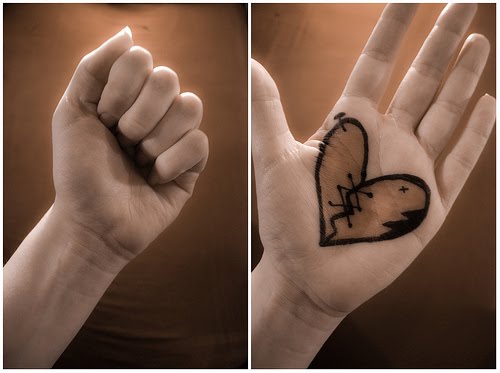
If or when I do start going to an analyst, I hope to God he has the foresight to let a dermatologist sit in on the consultation. A hand specialist. I have scars on my hands from touching certain people. Once, in the park, when Franny was still in the carriage, I put my hand on the downy pate of her head and left it there too long. Another time, at Loew’s Seventy-Second Street, with Zooey during a spooky movie. He was about six or seven, and he went under the seat to avoid watching a scary scene. I put my hand on his head. Certain heads, certain colors and textures of human hair leave permanent marks on me. Other things, too. Charlotte once ran away from me, outside the studio, and I grabbed her dress to stop her, to keep her near me. A yellow cotton dress which I loved because it was too long for her. I still have a lemon-yellow mark on the palm of my right hand. Oh, God, if I’m anything by a clinical name, I’m kind of paranoiac in reverse. I suspect people of plotting to make me happy (88).

It is a passage that is so powerful to me in its use of physical senses and the material world to convey the deep intangible “scars” (good and bad) that connections to other human beings inevitably leave on our souls, and I have never been able to forget it.

I really don’t have anything further to say, other than that I struggle with the complicated reality that someone who was deeply damaged (and damaged many people) could also write something so heart-stoppingly painful, life-affirming, and true. I hope in death Salinger finds whatever peace he hoped for after life.

*image credit: Holding your scarred heart in my hand by Angela Mary Butler @ Flickr.com.

multimedia monday: 9

01 Monday Feb 2010

Posted by Anna Clutterbuck-Cook in media

≈ 4 Comments

Tags

movies, multimedia monday, web video

As the semester gets underway, I’ve been trying to find ways to organize the links I’d like to share here on the blog and also write smaller posts so the blog stays fresh but I don’t begin to feel burdened by commentary. So in addition to the Sunday Smut list, I’m adding a “multimedia monday” weekly feature that’s going to highlight one of the online audio or video links I’ve listened to or watched during the previous week.

To start us off, then, here’s the trailer for the film 9, which was released last fall and which Hanna and I finally had a chance to watch this past Friday.


I really don’t understand how this film got so little press when it came out, since (along with Coraline) it’s easily the most magical bit of animation I’ve seen since Wall-E. Darker, perhaps. It certainly doesn’t end on a cheerful note. But visually, it’s a glorious piece of imagined reality: from the moment the story opens, you’re sucked into the world of these small created beings who are all of the (humanity? well, we aren’t quite sure) that is left on a post-apocalyptic world after the humans have destroyed themselves. All that’s left, that is, except for malevolent machines.

The only real flaw, I thought, in the film, was its ending, which was surprisingly pat given the inventiveness of the rest of the story (and the storytelling team that’s behind it). The surviving beings are left to make of the world what they will, hopefully doing a better job than those who came before. It’s not a bad message, just a little . . . simplistic? unreflective? I’m not sure. I was not left satisfied. It shoehorned in a sort of adam-and-eve theme that explained the need for the one female voice actor in film otherwise full of male voices — not that I opposed having a female character: I was kinda waiting for one to show up. But I also object to specifically creating one so that the end of the film contains the possibility of some sort of hetero reproductive model of future civilization. Personally? I’d put my money with the librarians.

That small critique aside, it was a gloriously realized world with great heroes and villains, and I heartily recommend it to y’all. Best wishes for the week ahead.

sunday smut: links list on sex and gender (no. 9)

31 Sunday Jan 2010

Posted by Anna Clutterbuck-Cook in linkspam

≈ Leave a comment

Tags

gender and sexuality, sunday smut


“I tried to give them an explanation that might actually sink in, something a little deeper than ‘Don’t say that.'” Pandanose @ Little Lambs Eat Ivy reflects on discussing the importance of language with her students in Out of the Mouths of Boys.

“Even in the relationships I had that didn’t have permanence as part of their raison d’être, I have regrets about too-free-sex.” Candelaria Silva @ BlogHer writes about her own coming-of-age during the mid-century Sexual Revolution in Rethinking the Sexual Freedom of My Youth.

“We have laws in place to prevent the exploitation of the vulnerable by the powerful. In other words, there’s a non-reciprocal relationship involved that heightens the risk of exploitation. So far so good. But in sexting cases, the non-reciprocal, exploitive relationship is posited to exist between the child and herself (or himself). And here’s where things start to become nonsensical.” Rachel @ The Feminist Agenda muses about the thought process that lies behind the prosecution of young adults discovered to have distributed naked or sexual photographs of themselves via the internet.

“‘It’s hard to sit and read the dictionary, but we’ll be looking to find other things of a graphic nature,’ district spokeswoman Betti Cadmus told the paper. Alison Flood @ The Guardian reports on a California school district that is pulling the Merriam-Webster Dictionary from its shelves in “Oral Sex” definition prompts dictionary ban in US schools.

(As of Wednesday, LIS News reported the book was back on the shelves.)

“These cynics are missing the point, because few things retain the ability to shock like the idea that a woman doesn’t necessarily float off on an iceberg of chastity after her 35th birthday.” Hadley Freeman, also @ The Guardian considers social outrage (and apparen terror) that still descends upon women in relationships with younger men.

“A pro-life, anti-abortion, pro-reproductive rights, pro-choice person joins the rest of the reproductive rights movement in trying to reduce the need for abortion, through actions such as increasing accessibility to birth control, addressing economic constraints, or supporting adoption.” Alex DiBranco @ the Women’s Rights Blog has a brilliant assessment of why pro-life and anti-choice are not synonyms, and why you can be pro-life and pro-woman but not anti-choice and pro-woman.

“If you’re opposed to porn, to the point where you’re not willing to be involved with someone who ever watches it, you need to seriously rethink whether that’s a reasonable thing for one adult to ask another.” Greta Christina @ The Blowfish Blog writes about porn, relationships, and what’s reasonable to ask of another partner regarding the enjoyment of erotic material.

“Basically, it’s classing a certain normal female body type as obscene. It’s declaring all flat chests to be automatically juvenile, something that should not be viewed by anyone.” In what might be the award-winning story of the week when it comes to blind panic and idiocy, Courtney @ Feministing linked to a story about Australian efforts to make pornography that depicts smaller-breasted women illegal on the grounds that small breasts = children and therefore people who enjoy watching small-breasted women be sexual beings are all pedophiles. Mike @ Someone Think of the Children! (an Australian-based blog) has more. May I just say: W.T.F.

“Yesterday at the Perry v. Schwarzenegger trial was the day you got to see David Boies set loose on a witness, and, to judge by the transcript, his cross-examination was a little like watching your cat play with his food before he eats it.” Margaret Talbot @ the New Yorker News Desk blogs about the latest from the Prop. 8 circuit court trial.

“For the Olson and Boies side, the key point was that whatever either woman actually did, what they felt inside was fundamental. ” Earlier in the week, Talbot also blogged about one of the core philosophical questions that faces both sides: is human sexual identity immutable?

“A trial that should have been a straightforward reinforcement that murder is the deliberate taking of human life instead will be remembered in part as the forum for justifying why a person’s life can be sacrificed to save a fetus.” Emily Bazelon @ Slate explains what went wrong at the trial of Scott Roeder, the man who murdered Dr. Tiller.

“I dread them getting sick not only because I want them healthy, but also because I have so little sick time.” Rachel @ Feministe blogs about a new series from Fem2.0 that tackles the work/life balance in America; meanwhile, Rachel @ The Feminist Agenda shares the good news coming from the UK that fathers in Britain are now eligible for six months paternity leave if the mother of their newborn goes back to work.

And on a final and fluffy, note, Hanna and I have been following with great amusement the story of a English woman who has been charged with an Anti-Social Behavior Order (or ASBO) for disturbing her neighbors with bouts of noisy sex. While on first blush the case seems like an outrageous infringement of the woman’s right to privacy, officials apparently put decibel meters in the building to test for sound levels and found her in violation of noise ordinances!

*image credit: Female nude from Channel 4 life drawing series by carolekeen @ Flickr.com.

"don’t ever link those two things again…" (2 of 4)

30 Saturday Jan 2010

Posted by Anna Clutterbuck-Cook in media

≈ 2 Comments

Tags

guest post, hanna, movies

guest post by Hanna, cross-posted at …fly over me, evil angel… if you haven’t already, you can see part one from last saturday.

a quick review from last week saturday: in the spirit of “don’t complain about something if you’re not prepared to do it better,” i noticed over the past couple of weeks two lists — one from wired and one from a blog i know not of called ink-stained amazon which i have to say is beautiful to look at it — that both purport to be ‘essential lists’ of ‘geek culture’ quotes.

ahem.
okay, so the wired list starts off with monty python and the holy grail and the amazon list includes the sarah jane adventures — but i’m still not wildly impressed with either one.
i figured i could do better.
then i thought about it and realised that, on my own, i didn’t have the time to do better so i roped in my ever-patient girlfriend to help me do better. 🙂
first off, a couple of notes:
1. this is for fun. if you’re not amused, go read something else. i won’t be offended, promise. that being said, suggestions and additions (politely phrased!) are welcome in the comments. but keep in mind this is installation 1 of 4! not everything will fit in here.
2. these are probably mostly going to be dredged out of my memory, anna’s memory, imdb, or official show/movie sites. inaccuracy is, therefore, almost inevitable. not to mention repetition of shows or characters. if this annoys you– well, make your own list. 🙂
3. i’m not aiming for some kind of “worst to best” or “best to worst” list. they’re here because the two people making the list think they’re fun or because one of us was able to strong-arm the other into including them. brief context is provided where anna or i thought it was necessary.
5. i am aiming for 4 posts of 25 quotes each over the next 4 weeks. tune in each friday/saturday for your new installment! and here’s the link to the first post way back there last week saturday. or sunday. or something.
okay, and that being said…

1. Evelyn Carnahan: “I — am a librarian!” The Mummy.

2. Stormtrooper: “Look, sir — droids!” Star Wars: A New Hope. [and a freebie ’cause i always think of it now when i have to find the sw movies by number — Eddie Izzard [re the Lucasian number scheme]: “He’s fucking with us numerically, you realise that, right? ‘Kids, count to 10!’ ‘4 5 6, 1 2 3, — uh –‘” Circle.]

3. Luke Smith: “I think I may have made a social blunder. I showed them how to destroy the world.” The Sarah Jane Adventures, “Revenge of the Slitheen.”
4. The Doctor: “Because I’m very clever.” , “Midnight.”
5. Dutch [to the Predator]: “You are one ugly mother-fu—” Predator.
6. Ellen Ripley: “This is Ripley, last survivor of the Nostromo, signing off.” ALIEN.
7. Red Queen: “You’re all going to die down here.” Resident Evil.
8. Mercedes[to Captain Vidal about his infant son]: “No. He won’t even know your name.” Pan’s Labyrinth.
9. Captain Jack Sparrow [to Kraken]: “‘Ello, beastie.” Pirates of the Caribbean: Dead Man’s Chest.
10. Eddie Izzard [re: the British Empire]: “We ruled the world through the cunning use of flags.” Dress to Kill.
11. John McClane: “Yippee-kay-yay, motherfucker.” DieHard.

12. Malcolm Reynolds: “Were there monkeys, Kaylee? Space monkeys?” Firefly, sorry, forgot which episode. Second or third, I feel…?
13. Chancellor Palpatine: “The Sith had many powers, some considered to be unnatural.” Star Wars: Revenge of the Sith.
14. Neo: “Whoa.” The Matrix.
15. The Doctor [immediately prior to regenerating]: “The end has come — but the moment has been prepared for.” Doctor Who, “Logopolis.”

16. Jozef Kastan: “You seriously drink this stuff? What is it — like, non-fat, vegan, soy blood?” Moonlight, no idea which episode.
17. River Tam: “I can kill you with my brain.” Firefly, no idea which episode. whoops.
18. James Bond [when asked how he would like his drink prepared]: “Do I look like I give a damn?” Casino Royale.
19. Alice [to the White Queen computer about the Red Queen]: “I knew your sister. She was a homicidal bitch.” Resident Evil: Extinction.
20. Capa: “When a stellar bomb is triggered, very little will happen at first -and then a spark, will pop into existance, and it will hang for an instant, hovering in space and then it will split into two, and those will split again, and again, and again… detonation beyond all imagining – the big bang on a small scale. – a new star born out of a dying one… I think it will be beautiful. No, I’m not scared.” Sunshine.

21. Captain John Hart: “Did I mention I’m armed?” Torchwood, “Kiss Kiss, Bang Bang.”
22. The Doctor [on Rose pointing out that he sounds North of England]: “Lots of planets have a north!” Doctor Who, “Rose.”
23. Riddick: “Anybody not ready for this?” Pitch Black.
24. Rygel: “I am Rygel the XVIth, dominar of over six billion people — I don’t have to talk to you!” Farscape, no idea which episode. something in the first season, i feel.
25. Buffy Summers: “You forgot about dawn. It’s in about six hours, idiot.” Buffy the Vampire Slayer, “Welcome to the Hellmouth.”

language and authority: two links

29 Friday Jan 2010

Posted by Anna Clutterbuck-Cook in linkspam

≈ Leave a comment

Tags

education, politics

Two stories have crossed my desk lately along themes of language and social hierarchy, which is something I find both endlessly fascinating and endlessly frustrating.

As a child who resisted standardized spelling for many years (I knew what I was saying, what was the point of spelling a word the way someone else wanted it spelled?) and who was close friends with a couple of wizard spellers (the kind of girls who were perfectionists about spelling and grammar and didn’t hesitate to point out where I deviated from the norm) I’m acutely aware of the way “correct” language use can be wielded as a social and political weapon. Steerforth at Age of Uncertainty writes about this very dilemma from the perspective of his own English, working-class childhood in A Touch of Class,

The unpalatable truth is that I harbour a prejudice – one that has its origins in early childhood.

My parents were both working class, but aspired to move up the social ladder and focused their aspirations on me. As a young child I wasn’t allowed to play with the “rough boys” and whenever we walked past Teddington Social Club, my mother would point to the women inside playing Bingo and tell me how “common” they were.

. . .

It’s complicated, but I think that my parents’ obsession with making me speak “properly” left me with a deep-rooted prejudice about the local accent. During my teens I successfully rejected my parents views on race, gender and politics and came to regard myself as a liberal (with a small “l”).

Little did I realise that beneath my enlightened exterior, there lurked a bigot!

Likewise, linguist Geoffrey Nunberg of NPR’s Fresh Air muses about the recent kerfluffle over Harry Reid’s use of the word “Negro” in reference to Barack Obama, and his suggestion that Obama was more palatable to the American electorate because he sounded “white” (7:53).

In our culture speaking and writing in “standard” English opens certain doors (and closes others). Depending on what your goal is, at least knowing how to speak and write in these ways can be a powerful tool at your disposal. At the same time, it’s important to remember that “standard” is not exactly the same as “right”: we choose to give authority to certain modes of communication (and certain spellings of a word) through widespread agreement that these modes and spellings are the preferred form. They are not inherently right, and the people who deviate from those forms are not lesser persons because of their failure to conform.

English is notorious for its plasticity: the way it constantly evolves over time, shaping and reshaping the boundaries of language and authority. Steerforth points out in “A Touch of Class” that “In the past, there was no such thing as received pronunciation. We know this, because before spelling was standardised, people wrote phonetically. Then, in the Victorian age, accents began to be linked to social background and that’s where all the trouble began.” The story is more complicated than that, of course (as crazy as the Victorians are, they cannot be blamed for all the ills of the modern age!). As Simon Winchester points out in his absorbing history of the Oxford English Dictionary, The Meaning of Everything, the OED was in many ways the quintessential exercise in Victorian classification — and yet it also broke from previous dictionary endeavors by basing definitions and pronunciation on usage rather than on what its editors considered “proper.”

When I’m frustrated by speech patterns or grammar that confounds, I try to remember this history and remain humble . . . as long as the individual at the other end of the pen or conversation genuinely seems to be using speech to communicate rather than obfuscate. While acknowledging we find different language patterns disconcerting or frustrating seems totally legit to me, insisting our way is better and that children people speak or write the way that we happen to prefer is really just a way of asserting our authority. Why not enjoy our glorious nonconformity instead?

Quick Hit: The Date that Never Was?

28 Thursday Jan 2010

Posted by Anna Clutterbuck-Cook in linkspam

≈ Leave a comment

Tags

feminism, gender and sexuality

I was catching up on my RhRealityCheck podcasts while doing data entry at work yesterday, and heard Amanda Marcotte do a great analysis of author Laura Sessions Stepp’s vision of ideal hetero romance, which basically imagines all people (and specifically adolescents and college-age young adults) to have the income levels of established, upper-middle-class adults:

Hey, I’ve seen movies about young adults in the 50s and 60s. It was mostly necking in the car, going to dances and bars, and getting cheap food. What Sessions Stepp is doing here is incredibly sleazy. She’s feeding young women an image of dating that’s borrowed from what people do now in their mid 20s and beyond, when they have jobs and feel less awkward wearing grown-up clothes. But she’s pretending that those kinds of dates are something very young women did in the past. In reality, dinner dates and high heels are part of the future, their futures. Everyone I know who was drinking beer and watching videos in their college years on dates, and most of us became the sort of people who go to concerts, drink liquor, and eat expensive food on dates when we had, you know, jobs.

I’d actually take the critique further and point out that even in one’s mid-twenties and beyond, the high-heels “dinner date” ideal Sessions-Stepp puts forward as the only legitimate scenario for courtship is hardly everyone’s ideal way to spend quality time with their significant other. Setting aside the question of disposable income (lots of adults don’t have that kind of money — whether because they’ve lost their job, are still in school, or are stretching their salaries to pay for necessary expenses) I’d like to ask Sessions-Stepp why I should want to grow out of an evening at home with my girlfriend cuddling in comfy clothes and watching the latest episode of Sarah Jane Adventures over an open bottle of Charles Shaw merlot?

booknotes: "virginity is not the opposite of sex"

27 Wednesday Jan 2010

Posted by Anna Clutterbuck-Cook in book reviews

≈ 1 Comment

Tags

feminism, gender and sexuality, history

On the last weekend before the official start of the semester (when one is “thesising” there really is not any official start . . . it just keeps on going ’til you turn in that final draft) I picked up what often consistutes my “non-required” leisure reading: nonfiction works on sex and gender. Not that it’s the only thing that catches my fancy; in the past couple of weeks, I’ve also dipped into Hanna’s manga collection (Fushigi Yugi and Revolutionary Girl Utena which I’d been meaning to read for going on four years) as well as Tom Stoppard and Andrea Barrett. But then I was at the bookstore the other day and Hanne Blank’s Virgin: The Untouched History (2007) caught my eye.

My historian’s heart is always warmed by the promise of de-normalizaton: the ability of an author to take an idea or practice so ubiquitous in our culture that it is considered inevitable, “natural,” and common-sensical and persuade us to ask “why?” Why do we believe there is such a state — physical and metaphysical — as virginity? What, exactly, do we believe constitutes virginity or proof of virginity? And what if it became clear that virginity, in fact, does not materially exist . . . but is, in fact, a conceptual way of organizing human sexuality that has varied in detail enormously across time and place? This is the story Hanne Blank sets out to tell (however briefly) in her three-hundred page book: the story of how the non-existent thing called “virginity” has nonetheless come to exert enormous power over human thought and practice concerning sexuality — and specifically female sexuality.

I can’t say this book offered any huge revelations to the reader (me); though I’ve not read any other book-length treatments of this specific subject, I’ve certainly read enough histories of human sexuality and women’s sexuality specifically to understand that much of what we consider to be immutable fact about sex actually resides, under closer examination, in the slippery realm of ideological work: the various systems of thought human beings construct to make sense of the world and their experience within it. As Blank notes in her opening sentence, “by any material reckoning, virginity does not exist.” Yet humans have, across the centuries and around the globe, devised elaborate methods for determining virgin status that made sense to them in the context of their own belief systems. Why they have felt compelled to do this is the recurring (possibly unanswerable) question at the heart of Blank’s narrative.

I think what I found most thought-provoking about Virgin was Blank’s suggestion that “virgin” is actually a sexual identity that is taken up and performed quasi-separately from the individual’s actual embodied sexual experience — and that that identity contains within it multiple and often contradictory meanings. Blank suggests that there is something of a “virginity void” that exists in the world, allowing the concept of virginity to flourish through lack of examination: it is presumed to exist and we all assume we understand how it works, so our beliefs about it remain unchallenged — yet if we start to ask “why” we realize how disparate and often contradictory our understandings of virginity really are. For example, what do we make of the story Blank tells of a young English woman, Rosie Reid, who — despite being open about her identity as a lesbian in a long-term relationship with another woman — auctioned her “virginity” off on eBay to the highest bidder, making $14,500 in exchange for sex with a man who, presumably, believed that despite a sexually-active relationship Reid was still a virgin because she had not experienced penetrative heterosexual intercourse (pp. 9-12).

Most interesting to me, as a feminist scholar, is Blank’s suggestion that what she terms “parthenophilia” — or the eroticization of sexual innocence — is so normalized in our culture that we fail to study it,

Despite the strength and breadth of the erotic interest taken in virginity in our culture . . . the erotic desire for virginity has been continually avoided as a subject of intellectual and clinical inquiry, as if there were no reason to ask and nothing that could possibly be learned by asking.

The virginity void exists on the other side of the fence as well. As little as we know about the erotic desire for virginity, we know even less about the erotic lives of virgins. Specifically, we know very little about how virgins themselves might understand themselves to exist as erotic objects or how they might themselves be erotically affected by the mythology of the erotic virgin that so permeates the culture. Virgins are not exempt from the mythologies of their own sexual status, after all. A virgin may well be every bit as erotically caught up in the implications of her own sexual status as the man who fantasizes about popping her cherry, but she is even less likely than he to be asked about it . . .

Virginity is not the opposite of sex. Rather, it is its own unique and uniquely troublesome sexual entity.

The idea that abstaining from sex is, in itself, a sexual practice has no doubt been argued before yet possibly it has not yet been examined in tandem with the closed-related (though not identical) concept of virginity.

On a related note: those of you interested in a more contemporary analysis of how virginity works in American culture would do well to check out Jessica Valenti’s The Purity Myth (2009) which focuses specifically on the policing of adolescent female sexuality — largely through narratives of virginity and sexual “purity.”

Call for Participants: Our Bodies, Ourselves revision

26 Tuesday Jan 2010

Posted by Anna Clutterbuck-Cook in linkspam

≈ Leave a comment

Tags

feminism, gender and sexuality

From Our Bodies, Ourselves:

Our Bodies Ourselves is seeking up to two dozen women to participate in an online discussion on sexual relationships.

Stories and comments may be used anonymously in the next edition of “Our Bodies, Ourselves,” which will be published in 2011 by Simon & Schuster.

We are seeking the experience and wisdom of heterosexual, lesbian, bisexual, queer and trans women. Perspectives from single women are encouraged, and you may define relationship as it applies to you, from monogamy to multiple partners. We are committed to including women of color, women with disabilities, and women of many ages and backgrounds.

In the words of the brilliant anthology “Yes Means Yes,” how can we consistently engage in more positive experiences? What issues deserve more attention? And how do we address social inequities and violence against women? These are some of the guiding questions that will help us to update the relationships section in “Our Bodies, Ourselves.”

The conversation will start Sunday, Feb. 14 (yes, Valentine’s Day) and stay open through Friday, March 12.

Please click through to the OBOS website for more details and contact information, and pass this call along to anyone you think would be interested.

Quick Hit: America’s Mary Wollstonecraft?

26 Tuesday Jan 2010

Posted by Anna Clutterbuck-Cook in Uncategorized

≈ Leave a comment

Tags

blogging, feminism, history, MHS

I have a new “lunch talk recap” up at the Historical Society’s blog that summarizes Eileen Hunt Botting’s recent talk about nineteenth-century author Hannah Mather Crocker and her Reminiscences and Traditions of Boston. Crocker was the granddaughter of Cotton Mather, a proud daughter of the Revolution, mother of ten children, poet, and author of an 1818 tract, “Observations of the real rights of women, with their appropriate duties, agreeable to Scripture, reason and common sense,” that holds the distinction of being the first book-length work on the subject of women’s rights to be published in America. You can read more over at The Beehive.

from the neighborhood: totally chav tv

25 Monday Jan 2010

Posted by Anna Clutterbuck-Cook in our family

≈ Leave a comment

Tags

domesticity, from the neighborhood, photos

So after a week of (mostly) ranty posts (excluding Hanna’s guest-blogging, obviously), here’s a little beginning-of-the-week fluff for this Monday morning.

My friends (and MHS colleagues) Jeremy and Jamie recently gifted Hanna and I — for the price of hauling — a gigantic television that Jamie’s parents had passed on to her and for which she had no further use. Replacing our previous, dying, TV/VCR, this ginormous set now graces the corner of the bedroom and must be kept in line by Derek the Dalek, who sits sternly upon it to keep it in check while we are not home. When it’s not in use we feel compelled to drape it in a colorful cloth in order to prevent the goblins who live inside it from spying on us in our sleep.


While larger than probably either of us would ever have voted for if purchasing a set, it’s in perfect working order and allows us to watch Mr. Izzard in fine style. We’ve decided it’s entirely chav and we kinda like it.

← Older posts
Newer posts →
"the past is a wild party; check your preconceptions at the door." ~ Emma Donoghue

Recent Posts

  • medical update 11.11.22
  • medical update 6.4.22
  • medical update 1.16.2022
  • medical update 10.13.2021
  • medical update 8.17.2021

Archives

Categories

Creative Commons License

This work by Anna J. Clutterbuck-Cook is licensed under a Creative Commons Attribution 3.0 Unported License

Meta

  • Create account
  • Log in
  • Entries feed
  • Comments feed
  • WordPress.com

Blog at WordPress.com.

  • Subscribe Subscribed
    • the feminist librarian
    • Join 37 other subscribers
    • Already have a WordPress.com account? Log in now.
    • the feminist librarian
    • Subscribe Subscribed
    • Sign up
    • Log in
    • Report this content
    • View site in Reader
    • Manage subscriptions
    • Collapse this bar