• anna j. clutterbuck-cook
  • contact
  • curriculum vitae
  • find me elsewhere
  • marilyn ross memorial book prize

the feminist librarian

the feminist librarian

Author Archives: Anna Clutterbuck-Cook

Tech Note

11 Thursday Feb 2010

Posted by Anna Clutterbuck-Cook in admin

≈ Leave a comment

Tags

blogging

UPDATE: we’re back online.

Just a quick tech note for anyone normally uses the http://www.annajcook.com URL for reaching this blog (possibly I’m the only one! but just in cases). Due to neglect on my part, my registration of that domain name expired on Tuesday and while I’ve now renewed it, I’m having some difficulty re-directed the URL to point to this page. Obviously (if you’ve found your way here) the Future Feminist Librarian-Activist blog is still up and running at the blogspot address, and I will get the re-routing activated from annajcook.com as soon as possible.

language and authority: take two

11 Thursday Feb 2010

Posted by Anna Clutterbuck-Cook in think pieces

≈ Leave a comment

Tags

feminism, gender and sexuality, politics, web video

First, because Hanna (rightly) chided me for not including it the first time around, I bring you a clip from Doctor Who in which the Doctor (Christopher Eccleston) staunchly defends his non-BBC accent in the face of companion Rose’s skepticism. You can carry Leeds on your lips and still save the universe: take that language snobs! (Apologies: neither Hanna nor I could find an embeddable clip of the exact bit we wanted — maybe someday we’ll learn how to rip this stuff properly!)

And on a more serious note, the passionate and articulate Sady @ Tiger Beatdown writes at length on the power of words and the importance of context in “Inappropriate Language: Some Notes on Words and Context.” I cannot quote the whole piece here, but strongly urge you to click over to her blog and read the whole thing, since I admire the way she argues for a more complex understanding of how context shapes the meaning of certain terms, while not dismissing the idea that words have the power to harm — and that some epithets simply should not be used at all. While being funny to boot! I offer the following illustrative passage:

But language is also complicated. The reason a lot of people (thoughtful people, anyway) object to language debates is that they seem to oversimplify or misunderstand how language works. I’m sympathetic to that argument, to some degree. It’s undeniably true that words get re-purposed all the time – “gay” itself being a really prime example. But it takes a long time, or a major paradigm shift, or both, for semantic shifts on that level to occur. You need what would appear to be centuries of “gay” picking up steam as a euphemism for “slutty,” you need people slyly re-purposing the word for their own particular variety of socially-unapproved sexiness so that they can hint at their sexuality without getting in trouble, you need that usage in turn to pick up steam, and you need Stonewall, and you need the decision to go with “gay,” this by now much-evolved bit of sound and code, as an alternative to other labels that are openly pejorative, either because they used to be clinical diagnoses of mental illness or because they are just plain slurs. And then – and then! – this word “gay” becomes a pejorative itself, based on the new meaning.

It takes a while, is my point, for the phrase “my, don’t you look gay in your new ensemble” to go from “you look like you are ready for a party” to “you seriously look like you are ready to put out at that party” to “we are surrounded by a room full of people at this party, and thus cannot acknowledge the way you like to put out, but I happen to be down with putting out that way my very own self” to “I hate your t-shirt, but am for some reason talking fancy.” The meanings overlap in a lot of different ways throughout the history, and it gets tricky, but the overall shift in meaning is clear – we can’t get back to the first stop from the current one. There’s no return, “gay” as “totally and asexually ready for a festive occasion” is just done.

So go forth, read, talk (in whatever accent and using whatever words you feel are appropriate to your own context) and think.

*image credit: Xeyra @ Livejournal.

Research @ Cornell’s Human Sexuality Collection

10 Wednesday Feb 2010

Posted by Anna Clutterbuck-Cook in library life

≈ Leave a comment

Tags

gender and sexuality

The Women’s Collections Roundtable of the Society of American Archivists reports that Cornell University’s Human Sexuality Collection is offering travel funds for researchers wishing to use the collections. Applications are due March 31st and guidelines for applying can be found on the HSC website. According to the collection website,

The Human Sexuality Collection seeks to preserve and make accessible primary sources that document historical shifts in the social construction of sexuality, with a focus on U.S. lesbian and gay history and the politics of pornography.

You can check out the awesome-sounding projects of previous awardees as well.

On a side note, the curator of the collection holds the title of “Curator, Human Sexuality Collection; Library Liaison to the Cornell Feminist, Gender, & Sexuality Studies Program” and someday I totally want her job.

from the neighborhood: mhs bouquet

09 Tuesday Feb 2010

Posted by Anna Clutterbuck-Cook in a sense of place

≈ Leave a comment

Tags

from the neighborhood, MHS


Last week, the Massachusetts Historical Society hosted a reception and lecture for a group called the Seminarians. They ordered this gorgeous bouquet of cherry blossoms and red roses and left it behind for us to enjoy. Cut flowers always make me a little sad, but while they last they are lending a much-welcome spot of color to our front foyer.

multimedia monday: "i can download protection for up to a thousand periods!"

08 Monday Feb 2010

Posted by Anna Clutterbuck-Cook in media

≈ 2 Comments

Tags

feminism, humor, multimedia monday, web video

TECH UPDATE: Reader Saskia Tielens alerted me to the fact that this video is marked “private” and will not play as an embed. I will try to locate a usable video! ~A.

Further tech update: Finally had a chance to find a YouTube version that wasn’t private. The embed should work now ~A.

After Apple announced that it’s latest gadget was going to be named the iPad, a number of my feminist blogs pointed out that “tablet computer” was not the first thing that came to mind when they heard the word. Turns out (hat tip to my friend Rachel for the video link) that MadTV was ahead of them.

I’ve seen critiques of the iPad/period jokes based on the fact that they’re predicated on the idea that periods (and by implication the working of women’s bodies) are gross and icky . . . and Hanna contends the joke is just a “groaner.” Personally, while I recognize the validity of both of these criticisms, I also think the MadTV video is making fun of the cheeriness of menstruation product and Apple product marketing than passing judgment on the inherent value of either.

sunday smut: links list on sex and gender (no. 10)

07 Sunday Feb 2010

Posted by Anna Clutterbuck-Cook in linkspam

≈ Leave a comment

Tags

gender and sexuality, sunday smut

“Turkish police have recovered the body of a 16-year-old girl they say was buried alive by relatives in an “honour” killing carried out as punishment for talking to boys.” Robert Tait @ The Guardian wins for “most horrific sexuality and gender related story of the week” with his story of a Turkish teenager who was killed by her family for transgressing their expectations of appropriately feminine behavior. I wish to point out that, rather than demonstrating some yawning chasm between “West” and “East,” this sort of action should be seen as a symptom of our global preoccupation with the purity and virginity of girls and women.

“It’s maddening that the people who want to take away women’s right to choose have annexed “choice” to their own cause. If the law compelled women like Sarah and Bristol Palin and Pam Tebow to continue problem pregnancies, there would be no heroism in doing so–you don’t get much credit for taking the difficult path if that’s your only option.” Katha Politt @ The Nation vents about the current politics of abortion in her latest “Subject to Debate” column.

“One of Blankenhorn’s leading concerns is with the well-being of children. He has argued, citing solid studies that corroborate this, that children raised by single parents are, as a group, at a disadvantage, and that having two married parents is a boon to children. But surely this raises the question: wouldn’t same-sex marriage help the children of same-sex couples…?” Margaret Talbot @ The New Yorker News Desk wonders why the pro-gay-marriage side in the Prop. 8 case hasn’t pushed the antis harder on the question of how gay marriage will hurt families in Gay Marriage and Single Parents.

And further, Talbot suggests that “You sometimes hear it said that a courtroom is not the best venue for playing out battles in the culture wars [yet] a courtroom can also be a great and theatrical classroom, where the values of thoroughness, precision in speech, and the obligation to reply have a way of laying bare the fundamentals of certain rhetorical positions.” See The Gay-Marriage Classroom.

“I’m not sure. Can your partner be your best friend? If so, can you still have other best friends? And if they can’t be your best friend, then what are they?” Essin’ Em @ Sexuality Happens muses about the delicate line between “friend” and “significant other” in My New Best Friend.

“When I close my laptop and head to work, I’m not exactly sure what’s going on in the world, but I do kind of question whether I’m pretty or young-looking enough to navigate it.” Christina C. @ the Women’s Rights Blog argues that science reporting on “studies” supposedly determining optimal human attractiveness are as biased as the advice columns in women’s fashion magazines in Sexy Science: From Lips to Hips to Cheeks, Studies Rank Women.

“Recent hopes that Apple was about to unveil an electronic device that could do absolutely anything were dashed when it became obvious that the iPad cannot in fact locate the G-spot. Nor can it fit in your handbag, which is another reason why women are disappointed by it.” The Independent weighs in on the kerfluffle about women’s sexual pleasure and “the geographical whimsy with which the mystical G-spot appears to operate (or not)” in Yes, Yes, Yes, No, Yes!

In other sex-meets-science news, Jill Filopovic @ The Guardian comments on the latest study on abstinence-until-marriage propaganda in sex education. “If there is one thing that has proven true throughout human history, it’s that people like – scratch that, love – to have sex…Of course, for a lot of us, the ‘going forth’ part is more desirable than the actual multiplying, and so human beings have also spent centuries trying to separate one from the other.”

And finally, for your “weird but true” story of the week: “Senator Saxby Chambliss, the Georgia Republican, warned [in Senate hearings] that ‘the presence in the armed forces of persons who demonstrate a propensity or intent to engage in homosexual acts’ would be likely to create an atmosphere susceptible to ‘alcohol use, adultery, fraternization, and body art.'” Lauren Collins @ The New Yorker News Desk reports on the Senate hearings about the military’s “don’t ask, don’t tell” policy concerning sexual orientation and kindly alerted me to the hitherto under-reported link between same-sex attraction and the desire for ink.

Note to self: must really see about getting that tattoo I keep talking about.

*image credit: Victoria – Nude woman painting at Whitebird Cafe by Tarjin Rahman @ Flickr.

"don’t ever link those two things again…" (3 of 4)

06 Saturday Feb 2010

Posted by Anna Clutterbuck-Cook in media

≈ Leave a comment

Tags

guest post, hanna, movies

guest post by Hanna, cross-posted at …fly over me, evil angel… if you missed the first two, read installment one and installment two.

a quick review from last week saturday: in the spirit of “don’t complain about something if you’re not prepared to do it better,” i noticed over the past couple of weeks two lists — one from wired and one from a blog i know not of called ink-stained amazon which i have to say is beautiful to look at it — that both purport to be ‘essential lists’ of ‘geek culture’ quotes.

ahem.
okay, so the wired list starts off with monty python and the holy grail and the amazon list includes the sarah jane adventures — but i’m still not wildly impressed with either one.
i figured i could do better.
then i thought about it and realised that, on my own, i didn’t have the time to do better so i roped in my ever-patient girlfriend to help me do better. 🙂
first off, a couple of notes:
1. this is for fun. if you’re not amused, go read something else. i won’t be offended, promise. that being said, suggestions and additions (politely phrased!) are welcome in the comments. but keep in mind this is installation 1 of 4! not everything will fit in here.
2. these are probably mostly going to be dredged out of my memory, anna’s memory, imdb, or official show/movie sites. inaccuracy is, therefore, almost inevitable. not to mention repetition of shows or characters. if this annoys you– well, make your own list. 🙂
3. i’m not aiming for some kind of “worst to best” or “best to worst” list. they’re here because the two people making the list think they’re fun or because one of us was able to strong-arm the other into including them. brief context is provided where anna or i thought it was necessary.
5. i am aiming for 4 posts of 25 quotes each over the next 4 weeks. tune in each friday/saturday for your new installment! and here’s the link to the first post and to the second…
okay, and that being said…
1. Madame Klara Goteborg: “I may have been a distraction to men — never a burden!” Journey to the Center of the Earth.


2. The Doctor: “What’s wrong with this jumper?!” Doctor Who, several episodes from Christopher Eccleston’s sole (bastard) season.
3. Eddie Izzard: “I grew up in Europe…where the history comes from.” Dress to Kill.

4. Pennywise: “Everything floats down here.” It.

5. Ianto Jones: “Lots of things you can do with a stopwatch.” Torchwood, “They Keep Killing Suzie.”
6. Peasant: “Help! Help! I’m being oppressed!” Monty Python and the Holy Grail.
7. Nanami Kiryuu: “Oneeeee-samaaaaaaaaaaa….” Shoujo Kakumei Utena, more episodes than I like to remember.
8. Jake of New York: “Go, then. There are other worlds than these.” The Gunslinger.

9. Bernard Woolley: “It used to be said that there were two types of chairs for two types of ministers. One sort folded up instantly; the other went round and round in circles.” Yes, Minister, “Election Night.”
10. Dave Lister: “Look out, Earth! The slime’s comin’ home!” Red Dwarf, “The End.”
11. Sarah: “You have no power over me.” Labyrinth.
12. The Ood: “Your song is coming to an end.” Doctor Who, “The Planet of the Ood.”
13. Sally: “I feel there’s something in the wind / That feels like tragedy’s at hand…” The Nightmare Before Christmas.
14. Tom Servo: “If you get near a song, play it!” Mystery Science Theatre 3000, “Mr. B Natural.”
15. Jeff Slater: “We’re entering a weird area, here.” Tootsie.
16. Bernadette: “I’ve said it before and I’ll say it again — no more fuckin’ Abba!” Priscilla: Queen of the Desert.

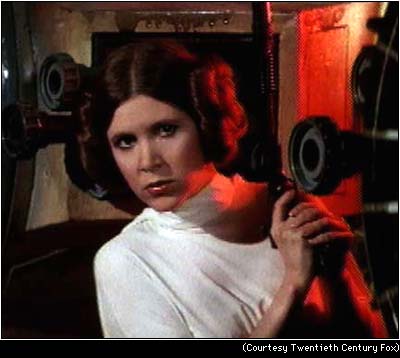
17. Leia Organa: “Aren’t you a little short for a stormtrooper?” Star Wars: A New Hope.

18. Don Logan: “You’ve got lovely eyes, Deedee. They real?” Sexy Beast.
19. Mau: “Does not happen!” Nation.
20. Granny Weatherwax: “I can’t be havin’ with this.” More or less any of the Witches books in the Discworld series: Wyrd Sisters, Witches Abroad, Lords and Ladies, etc.
21. Kyle Broflowski: “I learned something today…” Any episode of South Park between the 1st and 8th seasons…’cause that’s as far as I’ve seen!
22. Ray: “One gay beer for my gay friend and one normal beer for me ’cause I’m normal.” In Bruges.
23. The It Man: “It’s….” Monty Python’s Flying Circus.
24. Captain Jack Harkness: “Who looks at a screwdriver and thinks, ‘That could be more sonic?'” Doctor Who, “The Empty Child.”
25. Sullah and Indiana Jones: “What are you going to do?” “I don’t know — I’m makin’ this up as I go.” Indiana Jones and the Raiders of the Lost Ark.

in which I write comments on others’ blogs

05 Friday Feb 2010

Posted by Anna Clutterbuck-Cook in think pieces

≈ 2 Comments

Tags

children, education, politics

I’ve cut back on the amount of commenting I do on blog threads lately, mostly because I just don’t have the time to commit to serious reading and response and follow-up. But earlier this week I clicked on over to the interesting (read: heated) discussion going down at the blog Yes Means Yes on a thread written by Thomas about “Public School, Homeschool, Parents and Gender Roles.” The whole thread is a fun/irritating read (if you dislike generalizations, be warned); after reading through it I felt compelled to offer the following personal perspective (here slightly edited for clarity).

Movie, Reviewed asked: “I’ve heard accounts of homeschool kids having problems relating to their peers precisely because they didn’t have the social experience of school and were therefore isolated from the mainstream of American youth culture.

I’d be interested to hear from folks who were homeschooled about their experiences with that.”

My response:

I was home educated from birth on (and, as an older child, chose to continue learning at home until college) and while I can’t begin to tackle all of the stereotypes and generalizations Movie, Reviewed is making about a very heterogeneous subculture, I can speak about my own personal experience making social connections beyond my family.

I have always been a very intense one-to-one relationship sort of person. From a very young age I preferred time spent with one or two other people to large groups of folks, which I found overwhelming. I don’t believe this is because of my home education, but rather a personality thing that my home education allowed me to build on as a strength, rather than getting me stereotyped as “antisocial.” Throughout my life, I have been able to choose and invest in friendships with a diverse bunch of folks irregardless of age; I have always been confused by the emphasis in our society on fitting in with one’s age-peers; I prefer spending time with people at all different stages of life since in my experience it leads to much more diverse conversations and opportunities to see things from new perspectives.

My girlfriend and I have conversations about the relationship of homeschooled kids to mainstream youth culture. She learned at home until high school and then went to a public school in 9th grade. Somehow, we still manage to communicate successfully and have a meaningful relationship. True, she has certain cultural references from her youth that I don’t have (just as I have cultural references from mine she doesn’t). Much like if I had grown up in a different country, I have a different body of knowledge than she does that, in the end, just means we have a more diversified pool of experience to draw upon. I don’t feel that it means I have somehow lost out in some vital, debilitating way to “mainstream” adolescent experience.

I would make two further, relatively brief, observations.

The first is that unless you choose as a parent to remove your children from the society of others altogether and isolate them in a remote geographic location with no internet or media connections, there is little danger of them not imbibing some measure of dominant cultural understanding. By definition, dominant cultures demand some level of understanding even from those who are forced (or choose) to live on their margins. So I feel that the panic about home-educated kids not experiencing mainstream culture is at least overblown if not totally disconnected from the reality of a highly inter-connected world.

The second point I would make is to question the assumption that “relating” in the sense of “agreeing with” or “having the same experiences as” one’s peers is a worthy goal to have for one’s children. Many home educators choose to allow their kids to learn outside of the institution of school precisely because they are wary of the values that are imbued in institutional education, or wary of the lessons their children might learn about power and worth from the hidden curriculum of school spaces (for example from bullies whose manipulative behavior goes unseen and unchecked). Home education is often consciously, unabashedly counter-culture in its aims (although, as I suggested at the beginning of my comment, the direction of that counter-culture impulse is far from uniform). So to reiterate: Movie, Reviewed’s concern over home-educated children not meshing well with their schooled peers seems to assume that it is in the best interest of the home-educated kids to alter their behavior in the directed of the schooled kids; I would turn the question back around and ask why the change in behavior shouldn’t come from the other direction.

Stepping back even further from Movie, Reviewed’s framework, I would suggest that “relating” to others in the world is less about uniform experience and behavior than it is about the process of developing skills for encountering others different from ourselves. Skills such as listening, curiosity, empathy, patience, self-awareness, self-confidence, and humility. Taken together, these can help us learn from those whose background and life experiences are vastly different from our own. In that alternate frame of reference, the particular site in which those skills are learned (at home, in a school) are largely irrelevant: home-based education has potential to equip young people to venture out into the world curious about the diversity they will find there.

In my own experience, not being confined to a classroom for X number of hours a day socializing mostly with people of my same age actually broadened, rather than narrowed, the realm of my social relations. In contrast to my schooled friends, I spent much more time interacting with people who were younger and older than I, and who spent their days doing different things than I did. I don’t feel impoverished because of that, nor do I feel unequipped to navigate the realm of the “grown-up” world: it is the world in which I have lived my whole life.

I realize home education per se will not magically make this sort of openness to experience and social interaction happen . . . but I also think it is dangerous to assume that schools, public or private, will either. Neither are a panacea for addressing the inequalities of our society or the impoverishing social isolation that many people feel. I think the answers to those issues need to happen on a deep cultural level rather than putting our faith in one particular institutional framework (public schooling, after all, is a relatively recent invention!).


the books kids read: should we grown-ups care?

04 Thursday Feb 2010

Posted by Anna Clutterbuck-Cook in book reviews, think pieces

≈ Leave a comment

Tags

books, children

So I was poking around on the backlog of feeds today looking for something to write a quick post about and realized that in the last week, there have been two stories related to the idea of what children are/should be reading and who should (or should not) be writing for them in The Guardian this week. And since I rarely lack things to say about either books or “small units” (as Hanna calls them), I figured I’d put in my two cents.


Amelia Hill’s story, “Kids learn to love living on the edge,” charts the trans-Atlantic publishing success of a book called Fifty Dangerous Things (You Should Let Your Children Do). One of the book’s co-authors, Gever Tulley, defends the work this way:

Of course, we must protect children from danger – that’s the promise we make to them as a society. But when that protection becomes over-protection, we fail as a society, because children don’t learn how to judge risk for themselves. So we must help them understand the difference between that which is unknown – or unfamiliar – and that which is truly dangerous.

Meanwhile, Imogen Williams maintains that “adult” authors should refrain from writing books for children. “There really is a Great Divide between writing for adults and for children, and it’s a rare writer who can skim effortlessly back and forth between the two,” she passionately argues, pleading with authors to pick an age bracket and stay with it.

What I find noteworthy about both of these stories is the assumption on the part of the authors (and, presumably, the majority of the audience they are writing for) that a) adults have some measure of responsibility in policing the reading choices of the young, and b) that the books that will appeal one age group will not appeal to another.

While I am not opposed to the idea that parents attend to their children’s reading interest because, well, they’re interested in their children (I pay attention to what Hanna reads ’cause I’m interested in what she’s thinking about and more often than not something she picks up will end up on my own “to read” list) I’m opposed to any sort of censorship of children’s reading choices whether explicit or implicit: kids should have the right to pick up (and, it should be noted, put down again any book they take a fancy to (or lose interest in).

And as to the question of whether authors who are good at writing books that supposedly appeal to one age group over another, I’d like to be the first to raise my hand and suggest that some of the best genre literature I’ve read in recent years was marketed at a young adult audience. I remember, too, as a child, my aunt plumbing my brain on her semi-annual visits for book recommendations, as she liked to keep a stack of “children’s” books by the bathtub for leisure reading. The idea that there is some age-based dividing line between books for young people and books for older people is a cultural construction rather than an immutable fact. Some plots may appeal to us more or less depending on our own immediate circumstances, and what speaks to us may change over time. But any one book will speak to those for whom the story appeals, regardless of the age of the protagonist, the complexity of the language, or the number of illustrations.

The immortal Arthur Ransome, journalist, bohemian, novelist, fisherman, resisted the idea that he was a children’s author, despite the fact that his phenomenally popular Swallows and Amazons series has delighted young fans worldwide since they first appeared in the 1920s. He always maintained that although he wrote about children, he wrote — first and foremost — for himself: he wrote about the things that interested him, and gave him pleasure. “I was enjoying the writing of this book more than I have ever enjoyed writing any other book in my life” he once remembered about the experience of writing the first Swallows and Amazons novel. “And I think I can put my finger on the thing in it which gave me so much pleasure. It was just this, the way in which the children in it have no firm dividing line between make-believe and reality, but slip in and out of one and the other again and again.” Still, he maintained, this was not a quality limited to children as, “I rather fancy, we rather all of us do in grown-up life.”*

So go forth and read (or write) what you enjoy reading (and writing). I’d suggest the world might be that much better if we quit worrying so much about what other people choose to read and write.

That’s my thought for the day.

*Citation: Peter Hunt, Arthur Ransome (Boston: G.K. Hall, 1991): 149-50.

honestly not sure what to think

03 Wednesday Feb 2010

Posted by Anna Clutterbuck-Cook in think pieces

≈ Leave a comment

Tags

children, education, politics

So I saw this story come across my feeds last week, about a German family who’ve won the right to stay in the United States because of their decision to home educate their children.

A US judge has granted ­political asylum to a German family who said they had fled the country to avoid persecution for home schooling their children.

In the first reported case of its kind, Tennessee immigration judge Lawrence Burman ruled that the family of seven have a legitimate fear of prosecution for their beliefs. Germany requires parents to enroll their children in school in most cases and has levied fines against those who ­educate their children at home.

So on the one hand, let me make it clear that I’m absolutely behind the idea that parents have the human right to determine the education of their children (see Article 26.3 of the Universal Declaration of Human Rights). As long as the kids aren’t being abused — and I don’t believe the act of home educating alone constitutes abuse — than the reasons the parents choose to home educate are none of my beeswax. And I believe it’s wrong that school-based education is mandatory anywhere in the world.

However, I admit that my first reaction to this story was: aren’t there other people with more pressing need to escape human rights violations than a family from Europe who want to keep their children out of school? According to the Guardian story, there were over 40,000 applications for political asylum to the U.S. in 2008 and only one in four were granted. Surely some of those who were denied asylum were escaping horrors far worse than compulsory school-based education (and this is coming from someone with a confirmed allergy to institutional schooling).

The other thing that bugs me is the fact that the German family is identified in the story as Christians being “persecuted for their beliefs,” and were defended in court by a lawyer from the Home School Legal Defense Association, a conservative Christian organization. The founder of the HSLDA is also the founder of Patrick Henry College, a politically-conservative institution explicitly catering to Christian home-schooled teenagers who are interested in a career in politics. Patrick Henry College sent an unprecedented number of interns to the White House during the Bush administration, and involvement with a particular administration does not mean blanket approval of all of said administrations policies, I do not believe that the folks who support the HSLDA and Patrick Henry College are, say, big supporters of easing immigration restrictions generally. Would the HSLDA have been so quick to offer legal support to a Japanese family who practiced Shinto, or a Mexican family who Catholic, or a Scottish family who wanted to free range parent without reference to religion? I guess I’m just wondering how much this case of asylum is about education and how much it’s about the resonance of this particular family’s story with the story of many Euro-Americans (as well as the founding mythos of our nation as one established by Europeans fleeing religious persecution in their native land).

← Older posts
Newer posts →
"the past is a wild party; check your preconceptions at the door." ~ Emma Donoghue

Recent Posts

  • medical update 11.11.22
  • medical update 6.4.22
  • medical update 1.16.2022
  • medical update 10.13.2021
  • medical update 8.17.2021

Archives

Categories

Creative Commons License

This work by Anna J. Clutterbuck-Cook is licensed under a Creative Commons Attribution 3.0 Unported License

Meta

  • Register
  • Log in
  • Entries feed
  • Comments feed
  • WordPress.com

Blog at WordPress.com.

  • Follow Following
    • the feminist librarian
    • Join 36 other followers
    • Already have a WordPress.com account? Log in now.
    • the feminist librarian
    • Customize
    • Follow Following
    • Sign up
    • Log in
    • Report this content
    • View site in Reader
    • Manage subscriptions
    • Collapse this bar