• anna j. clutterbuck-cook
  • contact
  • curriculum vitae
  • find me elsewhere
  • marilyn ross memorial book prize

the feminist librarian

the feminist librarian

Author Archives: Anna Clutterbuck-Cook

sunday smut: links list on sex and gender (no. 12)

21 Sunday Feb 2010

Posted by Anna Clutterbuck-Cook in linkspam

≈ Leave a comment

Tags

gender and sexuality, sunday smut

The award for best critical book review this week goes to Ashley Sayeau @ The Guardian writing on Laurie Gottleib’s Marry Him: The Case for Settling for Mr Good Enough. She gets points for historical analysis (“The book’s jacket claims this is all new – the author, it states, has said “the unthinkable” – but of course nothing could be farther from the truth”) as well as attempts at finding a kernel of worth in an otherwise painfully anti-feminist screed (“This is frustrating for many reasons, but especially because Gottlieb’s subject – the question of compromise in modern relationships – actually deserves attention, just not of the sort she gives it”).

Bianca M. Velez @ RhRealityCheck wonders about the wisdom of consent laws which dictate to young women whom they can and cannot consent to sexual relationships with in Consenting to Sex: Yes, No, Maybe?

PhDork @ The Pursuit of Harpyness blogs about how olympic “human interest” reporting has subjected female athletes to shaming comments about their body weight and health in Female Olympians are Fat!(TW).

Ann Bartow @ Feminist Law Professors highlights the official opening of the Feminist Theory Papers at Brown University’s Pembroke Center. I seriously considered applying for a year-long processing position with the FTP a couple of years ago, and they are definitely on my watchlist as an Archive I would love to work with/at someday.

My “new blog” discovery of the week (well, one of them: the list of feeds on Google Reader is getting scary long!) was Sex and the Ivy, authored by Lena Chen. On said blog, I found this delicious analysis of a talk given last November by faux feminist Christina Hoff Sommers on why modern feminism has supposedly failed. I have a sick fascination with people who look at the world and see the things I believe are amazingly awesome as a sign of deep pathology.

Kinda like this guy (and his audience), posted by Melissa McEwan @ Shakesville who seem to believe that courses in feminist theory that incorporate issues of race and class are . . . antidiversity?

(Speaking of Melissa McEwan @ Shakesville, this week she also posted a thoughtful critique of the assumption that it takes having kids to become a family.)

Thanks to Sex and the Ivy I also discovered a couple of older (2005) blog posts on the subject of sex-positivity and pornography which I enjoyed reading. One is by Susie Bright @ Susie Bright’s Journal in which she responds to a Slate.com book club discussion of Pornified and Female Chauvinist Pigs which took place in 2005 involving Wendy Shalit (another faux feminist whom I find it easy to fixate upon), Meghan O’Rourke, and Laura Kipnis. The other is one of Laura Kipnis’ contributions to said bookclub discussion in which she points out that “people may like making their own preferences into norms, but that’s a bit monstrous in itself.” Well said, Ms. Kipnis. Read the whole thing over at Slate.

MandyG @ Feministing Community cross-posted an op-ed by Nancy Willard, Sexting: A Rational Approach, which discusses the adult hysteria over adolescents engaged in the exchange of self-created sexual images online.

A Georgia bill revives tired stereotypes about connections between family planning and eugenics. Planned Parenthood’s Kelley Robinson @ RhRealityCheck points out that, far from “targeting” minority women for abortions, clinics like Planned Parenthood are often the only sites where minority women are offered affordable reproductive healthcare.

Cara Kulwiki (of The Curvature) comments @ The Guardian on the results of a recent study showing that women are more likely then men to blame victims of rape for their assault. “When we say that women are less “forgiving” of rape victims, we ignore that being raped is not something for which one needs to be forgiven. And while being blamed for your own rape is an incredibly traumatising experience, we forget in this discussion that there would be no victim to blame if there wasn’t a rapist committing assault first.”

And just so we’re not ending on that important yet not exactly uplifting note, I will end this thread by introducing you to the mind-bending concept of cupcakes for men. You didn’t know cupcakes were a girly thing? Click through and gwen @ Sociological Images will enlighten you.

*image credit: Life Drawing by henrybloomfield @ Flickr.com. Thanks to Hanna this week for selecting the featured picture.


once again, we beg your indulgence

20 Saturday Feb 2010

Posted by Anna Clutterbuck-Cook in linkspam

≈ Leave a comment

Tags

movies, web audio, web video

Okay, okay, so it’s not like we think there are legions of fans out there waiting with baited breath for the forth installment of our 100 movie quotes endeavor (see parts one, two, and three for a refresher), but still: we apologize for the fact that we are delaying the post for another week. Hanna has been working industriously all week transcribing the terrible handwriting of ninteenth-century medical photographers and her wrist has become (as they would have said back then) overstrained. It needs bedrest and a cold compress. And a day or two away from typing — even fun typing.

So instead I bring you a few movie-related links that will hopefully brighten your weekend, and Hanna has volunteered to augment my ramblings with some deftly-chosen youtube clips (minimal typing required). So here we go.

If you’re looking for list-type things to read, wander on over to debontherocks @ Blogher, who put up a post this week of her nominations for “the Opposite Oscars,” where “we could call out the performances and films that aspired for greatness, but turned out to not even be worth the popcorn required to survive them.” While I am not particularly partisan in terms of the films she nominates (most of which I have not seen), I enjoyed this description of the ceremony:

Nominees could attend in their jeans or yoga pants, grab a boxed lunch from the folding table by the door, and wait expectantly to see who was dubbed worst. The loser could then tell off the people who led them to that bad performance, they could nurse their wounds, or just apologize. “I needed the money to pay a bad IRS debt/lift-tuck the twins after breastfeeding the real twins/buy back a digital video camera I inadvertently left in a South Beach hotel room,” they would say. And we might understand, or we might cluck and boo, but at least we’d have resolution.

debontherocks would probably appreciate (if she has not already read) what might just be the best movie review of the year, to date. Actually, I’m quite sure it’s the best movie review I’ve read several years running. Although I feel a bit diminished, as a human being, for writing that since it’s a total pan of a film that I haven’t even seen, the romantic comedy Valentine’s Day. Sady Doyle @ The Guardian writes:

The cumulative effect of Valentine’s Day is to make you feel that all human emotions are shameful. Have you ever been sad about a break-up? Had a crush on someone? Wanted your ex-lover back? Been happy to meet somebody promising? Wanted to have sex? You are terrible. You are feeling the same emotions portrayed in the movie Valentine’s Day. And these emotions, Valentine’s Day confirms, are cheap, and disgusting. For they make you like the characters in this movie.

I mean, wow. That’s quality panning.

If this is really the effect of Valentine’s Day then it deserves to be panned. Because, you know what? Human emotions aren’t shameful. And any movie that makes us feel they are is a disservice to the craft. In fact, I’m a firm believer in movies doing quite the opposite: giving us space in which to witness and experience human emotions (light, dark, and all the shades between) without embarrassment. For example, here’s some quality romance, brought to you by the team who were also responsible for that near-perfection of a film, Love Actually.

(Hanna says I am required to warn you that tissues will be needed to watch this scene.)

I will love John Hannah forever for this scene (well, and for his character in The Mummy, but this primarily since it was the first role I ever saw him in, and he made me cry).

Speaking of things that have made me cry recently (I didn’t realize this post was going to be so teary, but there we are — I promise to end with something more ebullient!), Terry Gross recently interviewed Colin Firth about his Oscar-nominated role in A Single Man.

This, like Valentine’s Day, is a film which I have neither seen nor heard very much about, but which after listening to said interview I fear I might never be able to watch. Not, however, because I fear it sucks, but because I fear it does not. In fact, I fear it is brilliant. It is the story of a professor who, in the opening scenes of the film, loses his lover in a car accident, and who struggles to go on living in the aftermath of that loss. Terry Gross plays, toward the beginning of the Fresh Air interview, the scene in which Firth’s character recieves word that his lover is dead. The audio alone was enough to make me tear up, sitting there at my desk at work.

Firth, in the interview, likens the story to Joan Didion’s memoir describing the loss of her husband, The Year of Magical Thinking, which I likewise know I would love and also know I may never have the strength to read. (For those of you who are tempted to think there’s some enobling purpose to suffering, go read Jonathan Romain’s recent commentary at the Guardian: “Let’s be very clear: there is no divine purpose in suffering whatsoever.”)

And because I can’t possibly leave you all on a note of such existential despair, here’s Colin the Sex God from the aforementioned Love Actually exploring the wilds of Milwaukee with a blackpack full of condoms and an openness to cross-cultural experiences.

Hanna reports there is an urban legend that Kris Marshall refused his paycheck for filming this scene on the grounds that it was just too much fun to count as actual work. I leave it to y’all to decide whether that’s true or not.

Have a good weekend. We’ll be back next Saturday with more movie fun (and possibly even some movie quotes!)

quick hit: "there is no alternative justice system"

19 Friday Feb 2010

Posted by Anna Clutterbuck-Cook in linkspam

≈ Leave a comment

Tags

npr, politics

Last week, Terry Gross interviewed journalist Jane Mayer about Attorney General Eric Holder and the politics of terrorism trials. The whole interview is worth listening to, although it’s upsetting to hear the extent to which Republican politicians basically don’t believe in the rule of law (at least the rule of law applying to people they’re scared of: read, terrorists). I always thought the point of the rule of law, at least in theory, is that it applies to people we don’t like as well as people we do: it’s impartial. That’s why it’s a legal system, not system of patronage. We can talk at length about how fucked up the American judicial system is, and how it falls far short of this ideal. But at least that’s an ideal I thought we could all agree on. Apparently not. As Jane Mayer points out:

Basically, the treatment of Abdulmutallab, the Christmas Day bomb suspect, was exactly like the treatment of every other terror suspect who’s been ever been captured inside the United States. It’s completely consistent with the Bush administration’s treatment of terror suspects and previous administration’s treatments of terror suspects. And there really wasn’t a question of sending in the Army or the, you know, the special forces or something and grabbing this man at the airport in Detroit.

A senior administration official in the White House said to me there’s, you know, that there is no alternative justice system. That’s a kind of fantasy that takes place in the show “24” or something. We the Constitution does not allow the military to just come in and take people away to some dark place without any kind of judicial supervision and make them talk – whatever that would really mean.

View rest of the transcript at NPR.

from the neighborhood: doughnut puffs!

18 Thursday Feb 2010

Posted by Anna Clutterbuck-Cook in our family

≈ Leave a comment

Tags

domesticity, from the neighborhood, photos

Hanna and I had lots of not-so-fun stuff to do this passed weekend (bill paying, errand running, paper writing, laundry,) but we did have the pleasure of exploring some of the recipes in a couple of vegetarian cookbooks we checked out of the library, principally the doughnut puffs in How to Cook Everything Vegetarian, by Mark Bittman.


The recipe feels really weird to prepare, but is super easy:

1) Preheat oven to 425 degrees.
2) In saucepan melt 8 tablespoons butter (1 stick), with 1 tablespoon sugar, 1/4 teaspoon salt and 1 cup water until boiling.
3) Turn heat down and add 1 cup flour all at once, stirring continually until dough thickens and pulls away from the sides of the pan to form a ball.
4) Remove pan from heat and add eggs, one at a time, mixing thoroughly after each egg.


5) Drop spoonfuls of batter on a greased pan, dust with cinnamon sugar, and bake for +/- 15 minutes (the book says 10-15; in our stove it took about 20).

Doughnut puffs, uncooked, on pan and topped with cinnamon sugar. Image by Anna Cook.
They kinda reminded me of a richer, smaller popover (also tasty!). You can also deep-fry them in oil, but given the amount of butter in the recipe itself this seems like overkill, and the baked versions were just as nice!

the logic of children & other thoughts on learning

17 Wednesday Feb 2010

Posted by Anna Clutterbuck-Cook in think pieces

≈ 2 Comments

Tags

children, education, michigan

My mother, now that we kids are all long out of the house (my youngest sister is a senior in college this spring), works as a childcare provider for a family in the neighborhood. Both parents are teachers in the public schools, and this past weekend my mother sent this great anecdote that I thought I would share with y’all.

K [the mother] told me a hilarious story about science lessons in her kindergarten. They had apparently finished a mandated unit on the concept of “force.” And there was a test at the end. One of the questions asked them what would they use to get a ball to move, the answer being “force,” but overwhelmingly the kids said she would need a dog. I love it. Interestingly, K was discouraged by this. But I said, just refuse the grounds of the test. They can’t identify something as vague as “force,” even if they can talk about it. The demand is inappropriate. Nothing is wrong with exposing them to the vocabulary, but expecting them to manipulate so abstractly is maybe useless to them.

I actually think the kids provided a perfectly logical response to the question posed, given their experience in the world (and, I would bet, the illustrations in the teaching packet used). So they actually have the answer correct: want the ball to move? You need something to move it! It’s not going to leap into action on its own (that is, it requires outside “force” to give it momentum). What have you seen make a ball move? A dog playing fetch!

This story reminded me of a story in New York Magazine that I saw while browsing at the newsstand in Trident Booksellers, “Junior Meritocracy,” by Jennifer Senior, which explores the (apparently highly competitive?) world of kindergarten entrance exams. The article is interesting (though, if you’re a test-skeptic like me, somewhat stressful to read) and I recommend clicking through. In a nutshell, Senior describes the culture of competitive kindergarten and then talks to sociologists who point out what (to me, anyway) seems like the obvious:

“People have the idea that with these tests you can cancel out socioeconomic background and get to some real thing in the kid,” agrees Nicholas Lemann, dean of the journalism school at Columbia and author of The Big Test, a history of the SAT. “That’s a chimera. If you’re a 4-year-old performing well on these tests, it’s either because you have fabulous genetic material or because you have cultural advantages. But either way, the point is: You’re doing better because of your parents.”

Rather than promoting a meritocracy, in other words, these tests instead retard one. They reflect the world as it’s already stratified—and then perpetuate that same stratification.

Since getting involved in the debate at Yes Means Yes over the culture of home education last week, I’ve been thinking a lot about the powerful assumption made by Americans (and Americans of the liberal persuasion particularly, I venture to suggest) that education (specifically universal public education) is the solution to all of the inequality that exists in our country. This was certainly the point of view Gregory Butler (commenter “Movies, Reviewed”) put forward over at Yes Means Yes: that mandatory public schooling would guarantee universal cultural harmony . . . or at the very least, protect us from the stress of living in a society in which not everyone shares identical values. The idea that education (in the specific package of schooling) is the key to life success has the status of common sense: we seldom question this notion, and therefore scramble — like these parents of prospective kindergarten students — to give children the advantage of what is seen as the best schooling (whatever we feel that to be).

I’m skeptical. While I value learning deeply, I am also wary of buying into the notion that schools are the best educative space in which to invest as a solution to the inequities that (yes, absolutely) exist in our culture. If nothing else, I am mindful of the legacy of turn-of-the-twentieth-century progressive educators like Jane Addams and John Dewey who (while, don’t get me wrong, put forward many wonderful ideas about how to reshape learning environments to better suit the children who inhabited them) held up public schooling as a way to Americanize the influx of immigrants who were seen as jeopardizing America’s social stability and national character.

Possibly more thoughts to come on this. Meanwhile, rest easy in the knowledge that when faced with the task of how to move a ball, you know what to do: go find the nearest golden retriever!

*image credit: Dienstelle 75 @ New York Magazine.

DADT on TOTN: nakedness vs. nekkidness

16 Tuesday Feb 2010

Posted by Anna Clutterbuck-Cook in media

≈ Leave a comment

Tags

gender and sexuality, npr, politics, web audio

I’ve been commuting more alone lately, since Hanna and I switched schedules due to the advent of the new semester and Hanna’s new job at the Countway Medical Library), and because of that and also because of metadata entry at Northeastern, I’ve been listening to a lot more NPR than I have had the chance to for a while. Last week, I happened to catch this segment on Talk of the Nation regarding the American military’s “don’t ask, don’t tell” policy regarding gay and lesbian service members.

Transcript available at NPR.

The strange history of “don’t ask, don’t tell” and the position of queer service members as openly closeted (is that the best way to describe it?) is probably not unfamiliar to y’all. The good news: I was impressed with the number of eloquent military folks who phoned into the show supporting the repeal and affirming that a person’s sexual orientation has no bearing on their ability to serve. Several spoke in no uncertain terms about the burden of responsibility should not be placed on queer folks, but upon the military structure for disciplining and educating folks who exhibit homophobic behavior.

The piece I actually want to comment (rant?) a little about in this post is the commentary of retired Lt. Col. Bob McGinnis, who was part of the task force that originally studied the issue in 1993. What he circled around, and didn’t quite actually say in several exchanges, was that he’s squeeked out by the idea of non-straight folks sharing dorms and showers with straight folks of the same sex.

I really don’t understand this. Or rather, I don’t understand how the solution of segregating folks by sexual orientation for sleeping arrangements makes sense to anyone. You feel uncomfortable around people who might find you sexually attractive? Okay, everyone’s allowed their own subjective experience. But what I find fascinating is that these folks don’t seem to understand that regardless of whether they know they move through a world of diverse sexual orientations they do: this is not about allowing non-straight folks to serve in the military. This is about allowing non-straight folks who already serve to be honest about their orientation without fear of official reprisal. Do guys like Lt. Col. McGinnis not understand that they shared dorms and showers with gay and bi men when they were active soldiers? Do they not understand that they share their swimming pool locker room, sauna, spa, with non-straight guys in various states of undress? I’m just . . . baffled.

I wonder, sometimes, if we grew up in a culture with more casual, non-sexualized nudity whether this would just not present as much of a problem. In America, so many people seem to think naked automatically equals “nekkid,” or nakedness in a sexual context. We strictly segregate men and women, boys and girls, from one another in any situation that might lead to nudity, the assumption being that only in homosocial space (among folks of the same sex/gender) can you be protected from the gaze of those who find you erotic (the idea that it’s good to have protection from that, as if it’s something harmful — even for adults — is also a particular cultural assumption). Nudity can be neutral. Physical closeness can be neutral. Only in the modern, relatively privileged world of the industrialized West have been been able to afford to segregate such activities as washing, dressing, sleeping (and even love-making!) in spaces of literal privacy. In the past, cultures have had to negotiate customs of “privacy” that supported the need of couples to have intimacy even within conditions of severe overcrowding. We might do well to consider how they did so, and how we might adapt some of these expectations to our world, with its fluid understanding of sexual orientation and gender (people!! there is no–nada-none!! feasible way we could provide separate facilities for every sub-group of human beings categorized by sex, gender, or sexual orientation. So we’re gonna have to learn how to be secure in our bodies and minds without being surrounded by folks whose bodies and minds work (or whose bodies we imagine work) precisely the same way as ours.

multimedia monday: stoned olympics

15 Monday Feb 2010

Posted by Anna Clutterbuck-Cook in media

≈ Leave a comment

Tags

humor, multimedia monday, web video

This week, in honor of the Olympics, I bring you the inimitable Eddie Izzard describing the (highly amenable) course of the Olympic games if everyone competed, well, stoned.

sunday smut: links on sex and gender (no. 11)

14 Sunday Feb 2010

Posted by Anna Clutterbuck-Cook in linkspam

≈ Leave a comment

Tags

gender and sexuality, sunday smut

Here’s a shorter-ish links list this weekend; anyone who can name all the musicals quoted here (without using the interwebs as a reference!) gets special mention in next weeks’ installment :). Leave your IDs in comments.

Marry the man today / and change his ways / tomorrow. Vanessa @ Feministing draws our attention to the publication of a new book urging women over thirty years of age to “settle” for “Mr. Good Enough.” While I’m 150% for not holding human beings to inhuman expectations, I find this idea insulting no matter what the age and/or sex of the parties in question. Who wants their life-mate to turn to them and say, “Gee, honey, I thought about it and decided you were adequate as a spouse…”

My white knight / not a Lancelot / nor an angel with wings. Kjerstin Johnson @Bitch Blogs also tackles the Gottlieb Question, concluding that the “take-home message isn’t that successful relationships (and yes, even those recognized by the government) rely on compromises; but that it’s your fault for being too picky to settle down.” Sarah Menckedick @ Women’s Rights Blog adds pointedly (in The Case for Settling for Mr. Good Enough) that media coverage is only “reinforcing the feminism vs. Gottlieb and feminism vs. marriage dichotomy, setting up feminists as reactive raging crusaders attacking the poor Gottlieb — who was only acknowledging the truth after all.”

Everything you can do / I can do better / I can do everything / better than you. Charlie Todd @ Urban Prankster posts a video and photo of counter-protesters who showed up outside Twitter headquarters to butt heads with protesters from Westboro Baptist Church (the group that tours the country virulently protesting homosexuality). This confirms my hypothesis that one of the most effective ways to combat hate and fear is through humor.

Princes wait there in the world, it’s true / Princes yes but wolves and humans too. Jessica Valenti @ her personal blog that anti-feminists over at the beatifically-named Network of Enlightened Women (NeW) hold feminist activists responsible for the commodification of female virgin status. As Jessica points out, methinks they need to do a little homework on the long history of commodifying women’s sexual status.

You wait, little girl, on an empty stage / For fate to turn the light on /Your life, little girl, is an empty page /That men will want to write on. BeckySharper @ The Pursuit of Harpyness blogs about a “Miss Manners” column in which a young man wrote in asking advice about following up on a meeting he had with the father of a prospective girlfriend.

I’ll teach you what shoes to wear / how to fix your hair / everything that really counts to be / popular!
Roxann Mt Joy @ the Women’s Rights Blog reports on the deceptive use of imagery by a conservative Focus on the Family affiliate in Florida to oppose gay parenting. Short version? 1) only straight folks who conform to our current definitions of optimal beauty can be parents and 2) women who conform to those current definitions can’t possibly be non-straight (’cause apparently everyone “knows” what lesbians look like). The mind boggles.

I need a place / where I can hide / where no one sees my life inside / where I can make my plans and write them down / so I can read them. Harriet Jacobs @ Fugitivus points out the monumental fuck-up that was Google’s roll-out of its new networking feature “Buzz” this weekend. Really, Google, please please please do not EVER automatically enroll me in a social networking site again. (Update: Fugitivus now requires a WordPress account to login; if you wish to read about the story without creating an account or logging in, you can visit TechCrunch, which covered the story in Google Buzz Privacy Issues Have Real Life Implications.)

Sentences of Amys / paragraphs of Amys / filling every book. And finally, totally “for the win” this week comes this proposed word-centric condom campaign from Durex as mst’d by Amanda Hess @ The Sexist. I can’t answer her question about what my boobs would say if they could talk, but I find myself mesmerized by the people made of words and what their boobs are saying.

*image credit: Lookout II by rivergalleryartist @ Flickr.

in leiu of part four, we bring you men in kilts!

13 Saturday Feb 2010

Posted by Anna Clutterbuck-Cook in media

≈ Leave a comment

Tags

fun, guest post, hanna, web video

So it’s been one of those weeks where every day seems to run from about six am to midnight without a lot of time to stop and pause for breath. Let alonge movie quote blogging. So Hanna and (much more tangentially) I are taking a pass this weekend on the final installment of the movie quotes post.

If you are absolutely positively dying to read lists of things related to film and our commentary about them, then you can enjoy last years’ list of twenty-nine of our favorite romantic movies.

Meanwhile, we were sucked into watching the latter half of the opening ceremony of the Olympics last night and were completely won over by these guys (and gals)


Who played fiddles, had GREAT body art, and did step dancing in doc martens to boot


And in case you happened to miss the show, here’s the answer to the mystery of who was going to carry the torch on its final leg to the stadium.

Enjoy the long weekend, sports (if you like that kind of thing) and movies (if you enjoy that). See you back here next Saturday for the concluding installment of “don’t ever link those two things again…”

*image credits: Winter Olympics – Opening Ceremony and 95658513PB085_Olympics_Open @ Flickr.com.

booknotes: "we’ll want the breasts exposed, and yet covered."

12 Friday Feb 2010

Posted by Anna Clutterbuck-Cook in book reviews

≈ Leave a comment

Tags

feminism, gender and sexuality, history, masculinity, thesis

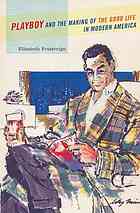
I love the things I can pick up and read in the name of thesis research. Take, for example, Elizabeth Fraterrigo’s Playboy and the Making of the Good Life in Modern America (New York: Oxford U.P., 2009). I saw the book by chance on the shelf at Borders a few weeks ago and while I would have read it eventually anyway (what’s not to like? sex! gender! money! drama!), I realized after pondering for a day or two that I could consider it background research on American postwar culture. So off to the library I trundled. (Or rather, off to the online catalog I clicked, forthwith to inter-library loan a copy through the Brookline Public Library).

And Ms. Fraterrigo did not disappoint. This dissertation-turned-book is a richly researched yet highly readable account of Hugh Hefner’s self-re-invention as the playboy of his dreams, a life he carved out for himself with relentless hard work and not a little luck after the dissolution of his youthful marriage and a series of unsatisfying desk jobs. Hefner, Fraterrigo convincingly argues, took various cultural elements in already in play (dissatisfaction with suburbia, anxiety about masculinity and women’s increased visibility in previously male spaces, a rise in consumer spending, postwar debates about what constituted the “good life,” and the scientific examination of human sexuality) and packaged them in a highly-successful formula that catapulted him to the top of a cultural and financial empire.

She draws two fascinating (if superficially unlikely) comparisons between Hefner and women writers of his day. First, she suggests a commonality in thought between Hefner and early feminist rhetorician Betty Friedan (author of The Feminine Mystique). Both Friedan and Hefner drew on their own personal experience to build a critique of the hegemonic postwar culture and its emphasis on the middle class, suburban nuclear family. In response to an unsatisfying homelife, both championed participation in the capitalist economy (as both worker and consumer) as a potential route to self-realization (see pp. 26-36).

Second, Fraterrigo points out the striking parallels between the ideal woman as articulated by Hefner in the page of Playboy (and in real life by the women who worked as Bunnies in the Playboy clubs) and Helen Gurley Brown’s “Single Girl,” found in the pages of Sex and the Single Girl first published in 1962. Both Hefner and Brown managed to carve out a place for singledom and pre-marital sex in culture dominated by the value of marriage and family. Yet they did so in ways that in no way challenged the status quo of inequitable gender relations or the notion of gender complimentarity (the idea that men and women “naturally” perform different, though complimentary, roles in society).

Brown’s Single Girl fit easily into the harmonious system of gender roles supported by Hefner. She made few demands on the male pocketbook [unlike a wife], aside from accepting the occasional gift or evening on the town, and instead made her own way as a working girl. Like the playboy, she strove to work hard and play hard too; yet she had no pretensions about achieving much power or earning vast sums of money through her role in the workplace. Instead, she accepted her marginal economic position and limited job prospects with a smile on her well-made-up face. Though she may not have enjoyed the same degree of autonomy and plentitude as the playboy, the Single Girl shared his sensibilities . . . [she] was both a handmaiden in the liberalization of sexual attitudes in the 1960s and the ascent of a consumer-oriented singles culture (132-33).

As the Swinging Sixties gave way to the cultural and counter-cultural revolutions of the early 1970s, Hefner found his idealized Playboy — once a symbol of avant garde youthful revolt against the status quo — derided by both men and women of the Movement cultures who critiqued his unabashed materialism and stubborn support of strictly segregated gender roles. He was taken aback by the “aggressive chicks” of the women’s liberation movement who pointed out that structural inequalities and oppositional gender typing (the strict separation of “masculine” and “feminine”) left women in a systematic disadvantage. Despite Hefner’s (and Playboy‘s) support of such feminist causes as women’s right to sexual expression, sex outside of marriage, access to abortion, and women’s participation in the workforce, he seems — according to Fraterrigo at least — to have balked at re-imagining a world in which the division of gender roles was less strictly dictated than it had been in the decades of his youth.

In this, Hefner is far from alone to judge by the continued popularity of “complementarian” arguments for “traditional” feminine and masculine roles among various conservative groups and even in some feminist circles — yet I am perennially puzzled by the amount of fear and resistance appeals to loosen gender-based expectations routinely encounter. While beyond the scope of Fraterrigo’s deftly-woven narrative about Playboy and the postwar culture of freewheeling consumerism it helped to legitimate, it is certainly a question which Playboy encourages us to ask: What, exactly, is at stake for individuals who defend complementary gender roles? The women’s liberationists of the 1970s thought they had the answer: unfettered male access to women’s bodies and the uncomplaining domestic support of housewives and secretaries. Fraterrigo’s tale, however, suggests that the answer is — while still containing those elements — far more complex (and more interesting!) than it appears at first glance.

← Older posts
Newer posts →
"the past is a wild party; check your preconceptions at the door." ~ Emma Donoghue

Recent Posts

  • medical update 11.11.22
  • medical update 6.4.22
  • medical update 1.16.2022
  • medical update 10.13.2021
  • medical update 8.17.2021

Archives

Categories

Creative Commons License

This work by Anna J. Clutterbuck-Cook is licensed under a Creative Commons Attribution 3.0 Unported License

Meta

  • Register
  • Log in
  • Entries feed
  • Comments feed
  • WordPress.com

Blog at WordPress.com.

  • Follow Following
    • the feminist librarian
    • Join 36 other followers
    • Already have a WordPress.com account? Log in now.
    • the feminist librarian
    • Customize
    • Follow Following
    • Sign up
    • Log in
    • Report this content
    • View site in Reader
    • Manage subscriptions
    • Collapse this bar