• anna j. clutterbuck-cook
  • contact
  • curriculum vitae
  • find me elsewhere
  • marilyn ross memorial book prize

the feminist librarian

the feminist librarian

Author Archives: Anna Clutterbuck-Cook

sunday smut: links on sex and gender (no. 8)

24 Sunday Jan 2010

Posted by Anna Clutterbuck-Cook in linkspam

≈ Leave a comment

Tags

gender and sexuality, sunday smut

To lead off, this past Friday (January 22nd) was the 37th anniversary of the Roe v. Wade decision and thus Blog for Choice day. I’m still reading my way through all the thoughtful, passionate posts that were written by participants, but in the meantime I thought I’d share some of the round-ups that highlight contributions from around the web.

The Blog for Choice website put together posts throughout the day that excerpted posts; see What We’re Reading, More and More Blogs for Choice, What NARAL Staff and Friends are Saying, More Pro-Choice Blogging, What “Trust Women” Means to Heidi from SisterSong and Posts Keep On Coming….

Vanessa did a similar round-up at Feministing as did Rachel at Women’s Health News (on a small full-disclosure note, they both linked to my own post from yesterday — thanks for the love ladies, and I’m glad what I said made sense to someone outside my own skull!).

I’m (fingers crossed!) going to read my way through all of these during the coming week, and hope to share some of my own favorites next weekend. Meanwhile, here are the rest of your “sunday smut” for this week.

Hanna read and reviewed a biography of Athenais de Montespan, mistress to Louis XIV, and writes in her post about how the author felt compelled to critique the physical appearance of her historical characters.

Steerforth @ Age of Uncertainty shares with us the nineteenth-century perils of novel reading for women.

Nathan Schneider @ Killing the Buddha ruminates on sexual privacy in the age of the internet, and how “changing the balance of what’s hidden and what’s seen will also change what’s hot.”

Jessica Valenti of Feministing, over at her personal blog, offered some great observations about the damage elitism can do, even in the name of values (for example, gender equality) we believe in: “And that’s what really irks me about this kind of elitism – how some people talk of breaking down power structures while simultaneously using feminist rhetoric to place themselves at the top of a new intellectual feminist hierarchy that does nothing to further justice.”

Coming & Crying: Real Stories About Sex From the Other Side of the Bed is the tentative title of a book project by Melissa Gira Grant and Meaghan O’Connell, described as “a collection of stories (and photographs) from the messy, awkward, hilarious, painful, and ultimately true side of sex.”

“When a friend is sick, you bring her soup. When she loses a loved one, you bring her flowers. But what do you do when she has an abortion?” Before Blog for Choice day, Chloe @ Feministing offered some thoughts on a new script for talking about abortion.

Hanna passed along this respone in the Guardian to a woman who wrote in asking about the ethics of sexual experimentation.

The BBC is trying to evaluate its GLBT programming; Stephen Brook lets us know what he thinks in a recent op-ed titled BBC to ask homophobes what they think of its coverage of gay people. As Hanna pointed out, if only they’d renew Torchwood for another season they’d have their bases covered!

The National Sexuality Resource Center posted a video of author Carol Joffe speaking about reproductive rights and justice in The Emotion Work of Reproductive Health Specialists (50:32 video).

Over at the New Yorker, Margaret Talbot writes about Perry v. Schwarzenegger (the Proposition 8 case headed to the Supreme Court) in A Risky Proposal. Terry Gross also interviewed Talbot on Fresh Air this week; if you have time the audio interview is worth listening to (a transcript is also provided).

EastSideKate @ Shakesville poses questions about the euphemisms for masturbation in our culture.

And finally, something to look forward to: The Guardian reports that Focus on the Family has bought time during the Superbowl to broadcast a reportedly anti-choice television ad. Stay tuned for further outrageous developments ;).

*image credit: Life drawing couple by Philip by life drawing london @ Flickr.com.

"don’t ever link those two things again…" (part 1 of 4)

23 Saturday Jan 2010

Posted by Anna Clutterbuck-Cook in media

≈ Leave a comment

Tags

fun, guest post, hanna, movies

cross-posted from …fly over me, evil angel…

Hanna’s recruited me to help her come up with the next 75 quotes for parts 2, 3, and 4 . . . problem is I have a really, really hard time remembering snippets of things. my brain doesn’t think in quotations very easily. so my contributions end up sounding a lot like, “oh! you need to include something from that scene with Jack and the Doctor and the banana” or “that bit from ‘Merlin’ where Arthur was harassing Merlin about the bedclothes.” Me <– Not very helpful.

Nonetheless, she gives me entirely undeserved credit below and has been generous enough to share html so I can cross-post it here. Enjoy the glorious depths of her encyclopedic memory and look here for further installments throughout the next four weeks.

okay, so in the spirit of “don’t complain about something if you’re not prepared to do it better,” i noticed over the past couple of weeks two lists — one from wired and one from a blog i know not of called ink-stained amazon which i have to say is beautiful to look at it — that both purport to be ‘essential lists’ of ‘geek culture’ quotes.

ahem.
okay, so the wired list starts off with monty python and the holy grail and the amazon list includes the sarah jane adventures — but i’m still not wildly impressed with either one.
i figured i could do better.
then i thought about it and realised that, on my own, i didn’t have the time to do better so i roped in my ever-patient girlfriend to help me do better. 🙂
first off, a couple of notes:
1. this is for fun. if you’re not amused, go read something else. i won’t be offended, promise. that being said, suggestions and additions (politely phrased!) are welcome in the comments. but keep in mind this is installation 1 of 4! not everything will fit in here.
2. these are probably mostly going to be dredged out of my memory, anna’s memory, imdb, or official show/movie sites. inaccuracy is, therefore, almost inevitable. not to mention repetition of shows or characters. if this annoys you– well, make your own list. 🙂
3. i’m not aiming for some kind of “worst to best” or “best to worst” list. they’re here because the two people making the list think they’re fun or because one of us was able to strong-arm the other into including them. brief context is provided where anna or i thought it was necessary. i also tried to find links for character images that were from the episode/scene/moment where the quoted line was spoken. this isn’t always possible but i’m fairly pleased with myself for getting as close as i did! fair warning: links may contain spoilers, particularly links to doctor who or torchwood episodes.
5. i am aiming for 4 posts of 25 quotes each over the next 4 weeks. tune in each friday/saturday for your new installment!
okay, and that being said…
1. Tim Latimer [talking about the Doctor]: “He’s like fire and ice and rage. He’s like the night and the storm in the heart of the sun. He’s ancient and forever. He burns at the centre of time and can see the turn of the universe…and… he’s wonderful.” Doctor Who, “The Family of Blood.”
2. Captain Jack Harkness: “Torchwood: outside the government, beyond the police. Tracking down alien life on Earth, arming the human race against the future. The twenty-first century is when everything changes. And you gotta be ready.” Torchwood, Season 1 opener on all episodes.
3. Brother Justin Crowe [talking about his upcoming radio broadcast]: “In a single coast-to-coast broadcast, I will speak to more souls than our Lord did in his entire lifetime. It’s going to be breathtaking.” Carnivale, “Ingram, TX.”
4. Dominic Toretto: “I retract my previous statement.” The Fast and the Furious.
5. Murtagh [in reference to a stone wall he and Eragon have run up against in their attempt to join the rebels]: “Tell me your vision looked something like this.” Eragon.

6. The Guide: “Don’t Panic.” The Hitchhiker’s Guide to the Galaxy.
7. The Doctor: “Don’t blink.” Doctor Who, “Blink.”
8. M [to James Bond as he almost says her real name]: “Finish that sentence and I’ll have you killed.” Casino Royale.
9. Captain Jack Sparrow [in reference to almost anything]: “Not good — not good!” Pirates of the Caribbean: Curse of the Black Pearl.
10. Alice [before killing the monster that used to be her work partner and “husband”]: “I’m missing you already.” Resident Evil.
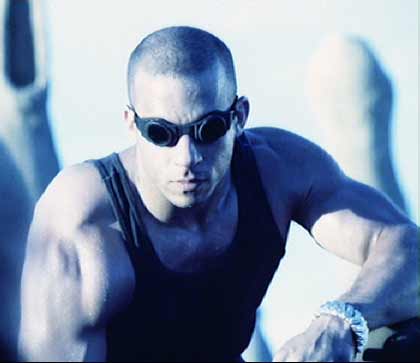
11. Riddick: “If you can’t keep up, don’t step up. You’ll only die.” Chronicles of Riddick.
12. “I’m going to curl up in his sock drawer and sleep for days.” MST3K riff in MST3K: The Movie: This Island Earth.
13. Dean Winchester: “Well, that’s healthy.” Supernatural, Pilot.
14. C-3PO: “Shutting up, sir.” Star Wars: A New Hope.
15. Dr. Frank N. Furter: “What ever happened to Fay Wray? That delicate satin-draped frame…how it clung to her thigh as I started to cry… ’cause I wanted to be dressed just the same…” The Rocky Horror Picture Show.
16. Jim [wandering in an empty London]: “Hello! Hello — hello! Hello!” 28 Days Later.
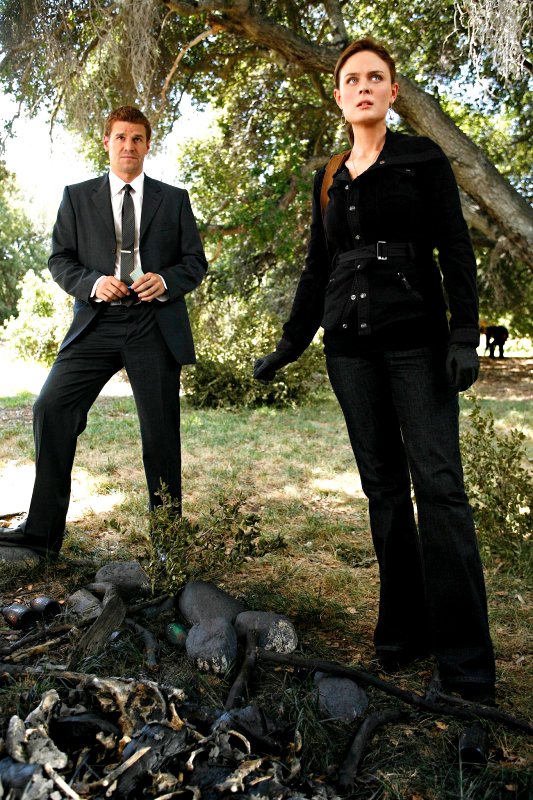
17. Temperance Brennan: “I don’t know what that means.” Bones, multiple episodes.
18. Plankton: “Well, goodbye, everyone. I’ll remember you all in therapy!” Spongebob Squarepants, “The Algae is Always Greener.”
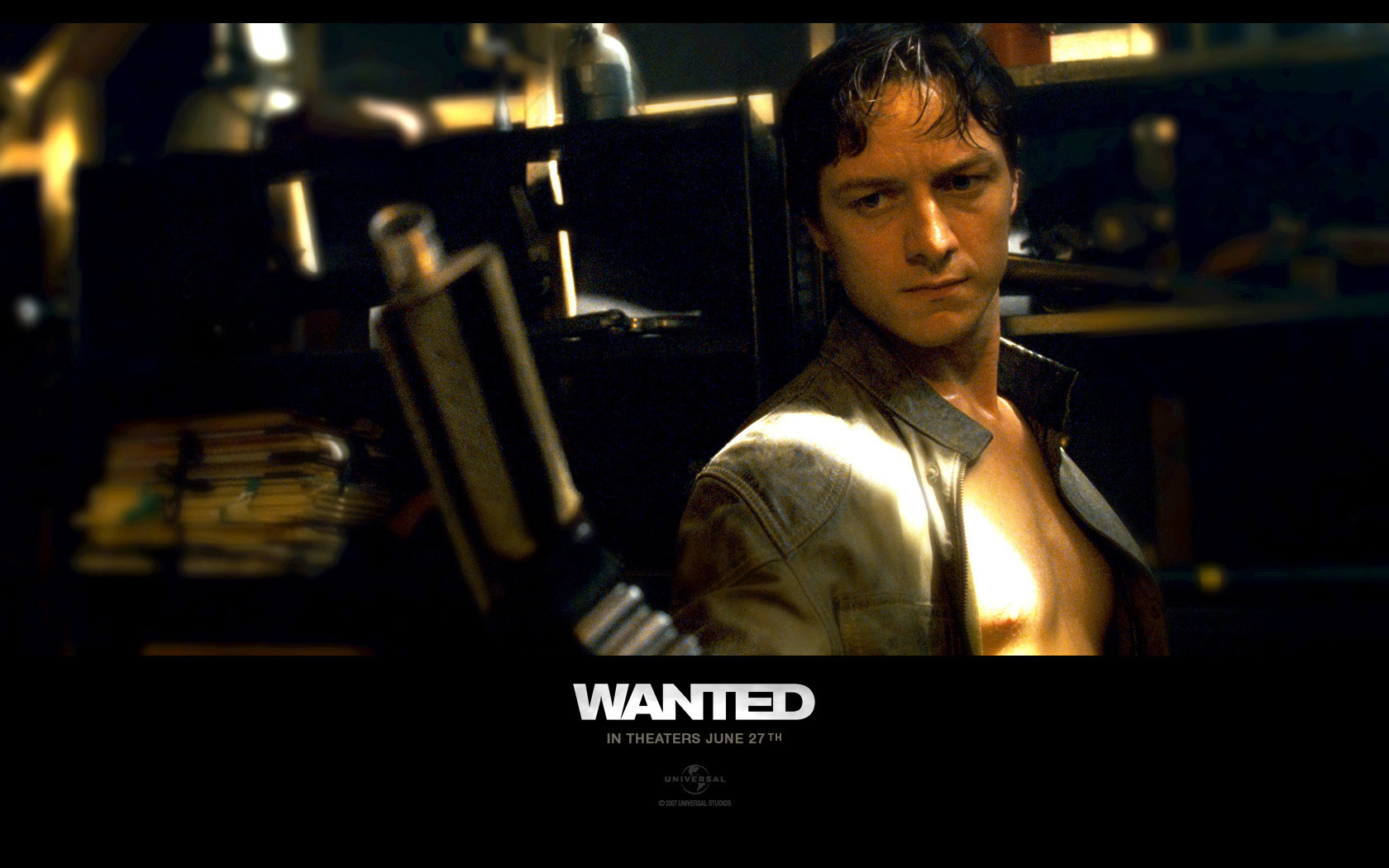
19. Wesley Gibson [talking to Sloan who may, or may not, be trying to induct him into a secret brotherhood of assassins]: “So do you make sweaters or do you kill people?” Wanted.
20. Toshiko Sato: “Because you’re breaking my heart.” Torchwood, “Exit Wounds.”
21. The Doctor: “Well, progress is a very flexible word. It can mean just about anything you want it to mean.” Doctor Who, “The Power of Kroll.”
22. Michael Corvin: “Are you fucking kidding me!” Underworld.
23. Mme. de Pompadour [talking to/about the Doctor]: “Such a lonely little boy. Lonely then and lonelier now.” Doctor Who, “The Girl in the Fireplace.”
24. Obi-Wan Kenobi, Anakin Skywalker: “We’re smarter than this!” “Apparently not.” Star Wars: Revenge of the Sith.
25. Marvin the Paranoid Android [about life in general…]: “I have this terrible pain in all the diodes down my left side…” The Hitchhiker’s Guide to the Galaxy.

Blog for Choice: The Radical Act of Trusting Others

22 Friday Jan 2010

Posted by Anna Clutterbuck-Cook in think pieces

≈ 4 Comments

Tags

blog for choice, feminism, gender and sexuality, politics

Today is Blog for Choice Day 2010, coordinated by NARAL Pro-Choice America. I somehow missed the 2009 action day, but you can read my 2008 Blog for Choice post, The Radical Idea that I am a Person, in the blog archive.


So when I told Hanna that this year’s theme for Blog for Choice Day was “trust women,” her first response was “Are you fucking kidding me?! What a ridiculous statement! Jeeze — ask anyone who’s gone through a dyke break-up. Never trust women! Especially when they have the ability to make vital documents, irreplaceable vhs tapes, and cookbooks disappear!”

Which made me stop and think about what the theme implies. Because, to be honest, my own first response to the exhortation to “trust women” was not unlike Hanna’s: what do you mean “trust women”? Just . . . because? Because they’re women? Why should I? ‘Cause women are only human after all: some trustworthy, some profoundly not. Which, to me, is both [the most obvious and the most radical claim of feminism]: that women are only human. And human beings run the gamut from completely trustworthy to completely untrustworthy and every point between. Ergo women, as individuals, are only as worthy of trust as our individual past and present actions warrant.

So why, then, is it important for pro-choice activists to make the case for trusting women? And what, exactly, does it mean to “trust women” in the specific context of reproductive rights?

I would argue that it is precisely because women — particularly pregnant women — as a class are not really seen as fully human that the idea of trusting them with moral and medical decision-making continues to be such a radical notion. Setting aside for a minute the question of abortion per se, within the past week I have seen multiple stories about pregnant women’s right to bodily integrity and ability to consent to medical procedures challenged or violated with the support of the state. There was the story of Samantha Burton whose doctor got a court order to confine her in a hospital bed against her will when she disagreed with him about how best to proceed with her pregnancy care. A woman in Australia was visited by police when she resisted having her labor induced with the controversial drug pitocin. There have been a number of stories concerning the physical restraint of birthing women in prisons, who are often not able to labor in optimal positions because they’re shackled to their beds. As I’ve written previously, women shouldn’t have to give up their basic rights to bodily integrity and medical decision-making when they become pregnant, but the legal and cultural climate in the United States is such these days that many of us fear that’s precisely what will happen.

So when we chellenge folks to “trust women,” in part we’re demanding to merely be treated with the amount of trust that adult citizens in America have a right to expect: a legal and social framework that “trusts” individuals with decisions regarding their own personal physical well-being and medical decision-making. That trusts us to make informed decisions. Yet over and over again, anti-choice activists have made it clear that they don’t trust women. They fight to pass legislation that mandates physicians lie to us about our bodies, they harass us at clinics that provide health services and attempt to mislead us by dressing as clinic workers. If we trust women with the power to make decisions about their own well-being, these anti-choice activists seem to imply, the world will disintegrate before our very eyes.

Which brings me to the other implication of choosing to “trust women” with their reproductive agency. And I use the phrase “choosing to trust women” deliberately. Trusting other people with the agency to live their own lives is not necessarily something that comes easily to us: as human beings we often thrive on feeling in control of our environment (and by extension the people around us). Control can make us feel safe. But life simply doesn’t work like that: we could drive ourselves mad attempting to control the lives and decisions of others — and in the end, it would not make our lives richer or safer.

Choosing to “trust women,” then, is choosing to “trust others”: letting go of the burden of decisions that are not ours to make, and allowing those whose lives they directly affect (and who are best positioned to understand the ramifications of a given choice) to bear that responsibility. Because that’s what being human requires: rights and responsibilities.

Last sunday I shared a link to a beautiful essay from The Guardian by a vicar, David Bryant, who had recently counseled a woman trying to decide whether or not to seek an abortion. His essay is worth reading in full, but I would like to quote here the final two paragraphs,

One of the blessings of our humanity is that we have a conscience. To opt out of using such a priceless gift is irresponsible. Of course there are immense dangers here. We may make ill-guided decisions. Our thinking may be warped and skewed. On occasion we will follow a course of action so crass or unsociable that it brings us up before the magistrate. But if we allow the church, the nanny state, the media or popular opinion to become our conscience, we lose our moral integrity.

I had no easy answers for the woman. All I could offer was compassion in her grief and sympathy for the agony of choice that lay ahead. We fixed a meeting for the following day, but I never saw her again. True, I had been non-directive, but I could be none other. “I am responsible for my very desire of fleeing responsibilities,” said Jean-Paul Sartre. I believe he was right. That is why I could not decide the fate of the foetus for her.

What I appreciate so much about Bryant’s argument is that he refuses to retreat to the (legitimate, but limited) language of legal rights, instead challenging us to see that trusting women with the responsibility of making deeply challenging moral decisions is not only a legal imperative but a moral (dare I say “religious”?) one.

So when a pro-choice activist says to you “trust women,” pause for a moment and hear it for the truly radical challenge it is: a call to let go of the all-too-human impulse to control, and to allow some of the burden of responsibility to be lifted from your shoulders and taken on by someone else — someone whom you might not know enough to personally trust, but whom you must share this earth with, and who may well surprise you with her ability to make the decision that is, in the end, the most life-giving for us all.

After all: in the end, what other choice do we have?

*image credit: amor! by slickerdrip @ flickr.com.

bullying = "childish"?: some reflections

21 Thursday Jan 2010

Posted by Anna Clutterbuck-Cook in think pieces

≈ Leave a comment

Tags

children, education, politics

Last week, Hanna found this story from the UK-based Independent on bullying at Universities and sent it to me (on the premise that I’m always interested in the education beat; see yesterday’s rant about “liberal” academies) and, indeed, I was interested and started drafting a post about the problem of bullying and what folks who report on and attempt to combat bullying might learn from feminists who talk about “rape culture.”

That’s still a post I might write, since I think the analogy — while imperfect — helps to illuminate the way in which bullying is a systemic problem, one that continues because it’s actually supported by a culture that condones and rewards bullying behavior.

But in the meantime, I kept coming back to the original Independent article because I was bothered by the way the problem of bullying was framed.

We all know bullying occurs in children’s playgrounds, inside and outside of secondary schools and sometimes even in the adult workplace, but what about University?

This supposed sanctuary of like minded scholars has become just another place in which people compete with each other for respect and social order, and bullying has followed with it.

A psychologist specialising in bullying, harassment and inter-personal relationships, Dr. Pauline Rennie-Peyton, recognises the possibility of being bullied in all stages of life, and confirms University is no exception.

“If people are taken out of their element, they become children,” she says.

“The problem with Universities and Colleges is that if we’re not careful, students there also become children. Just because bullying in Universities is not talked about, it doesn’t mean it is not happening. I have students [come to me] and they have to deal with racism, sexual and even intellectual jealousy.”

I think they get it right emphasizing that bullying behavior happens in many social environments and at all stages of life. What bothers me is the equation of bullying with a return to childhood. “If people are taken out of their element, they become children,” Dr. Rennie-Peyton says. And bullying is the natural result? Something just didn’t sit right with me there, and it kept getting in the way of the whole “rape culture” argument I was trying to make.

Luckily, a few days after the post had stalled, Idzie @ I’m Unschooled. Yes, I Can Write came to my rescue with a well-timed blog post on being “childish.”

When people use that word, when they say “childish”, what they mean is that anything a child comes up with, any thought, opinion, emotion, is absolutely worthless and discard-able. To be a child is to have nothing of worth to show for yourself. It’s an expression of ageism at it’s very worst!

So when someone tells me that I’m being childish, they’re not only insulting children everywhere, they’re also telling me that my opinions are worthless. That they’re short-sighted, uninformed, unimportant, and simply not worth paying any attention to.

So here’s what I want to say (for now) about bullying, about bullying being framed as a child-like behavior, and about the idea that “becoming children” being a bad thing.

We choose, as a culture, to de-value being child-like, and to denigrate those who we believe are being “childish” (that is “short-sighted, uninformed, unimportant, and simply not worth paying any attention to”). It’s certainly true that children can exhibit all of these behaviors — just like any human being. All of us are, at times, short-sighted and uninformed. We all walk into situations where we feel out of our element. Yet these human qualities become strongly associated — through language like “childish” — with childhood. And because they are qualities our culture looks down upon (and experiences that make us feel uncomfortable: most people don’t like to feel out of their element) children themselves become targets of suspicion, ill-temper, and blame simply for being young.

(The flip-side of the bundle of negative connotations associated with “childish” is, of course, that infants and children are also the venerated objects of adoration by our culture: the near-universal signifier of all things cute and precious, when in fact they are simply human. It’s the childhood version of the virgin/whore dichotomy: children are either angelic objects to be cherished and protected or unruly demons to be feared and controlled — neither approach considers children as human beings worthy of our individual respect as fellow-persons).

Bullying isn’t something that naturally occurs in childhood — it happens because young people learn that they can get what they want by manipulating power relationships. And that shrewd manipulation of power relations wins them respect and authority — not just among their peers but among adults as well. Bullying is successful because our culture as a whole — not just some segregated “childish” culture — rewards bullying. We reward people who abuse their authority, and anyone who professes shock that bullying exists in grown-up spaces like university or work environments has really been deluding themselves.

This doesn’t mean I don’t think bullying is simply “human nature” and that speaking up or acting to prevent is will be ineffectual. After all, human beings do horrible things to each other that it is clearly in our “nature” to do (that is, we’re capable of doing them), but which it is also in our “nature” to resist and condemn. People of all ages are capable of small-minded, vicious, and even evil acts; we are also all capable of empathy, compassion, love, and healing. Let’s quit dividing the full range of human capacity up into artificial categories by age, just as we’ve started resisting the divisions of “masculine” and “feminine” attributes that pigeonhole multi-dimensional people into cramped boxes of gender-based expectations.

The limits of the "liberal" academy?

20 Wednesday Jan 2010

Posted by Anna Clutterbuck-Cook in think pieces

≈ 1 Comment

Tags

education, politics

It’s that time of year when all things academical start to grate on my nerves. So when lisa @ Sociological Images put up a post earlier today about a recent study by researchers Neil Gross and Ethan Fosse that seems to confirm the “professors skew liberal” stereotype, I grumbled my way over to check it out.

As studies go, it’s making the relatively modest claim that about 43% of professors self-identify as “liberal,” only 9% as “conservative,” while the remaining are dumped in the “moderate” pot. As Lisa writes:

The study measured a number of reasons why college professors may be more liberal. Among others, they argued that already liberal people may be drawn to academia because they perceive that academics are liberal. That is, just as women are drawn to teaching and men to construction work because these jobs are gendered, academia is a politically-typed job that draws people who identify as liberal already.

They also speculate that the relative low pay, given the high educational attainment that the profession requires and high status that it brings, may lead professors to lean towards democratic principles of economic redistribution.

What caught my eye here was the emphasis on “democratic principles of economic redistribution.” While I’m not arguing this isn’t a laudable democratic concern, I notice that what is left out of the definition is any interest in deeper challenges to cultures of hierarchical authority (that is: a broader interest in small-d “democracy”). In fact, the argument seems to be that academics are pissed that “the high educational attainment that the profession requires and high status that it brings” result in professional academics who — far from being invested in anti-hierarchical, democratic politics, are instead simply pissed off that their “high status” profession isn’t rewarded financially.

Not that there isn’t a reason to be pissed off about a system that requires a relatively high initial financial investment (re: student loans) when compared to future income. I just think that to equate that economic frustration with a more general “liberal” outlook on life points toward a very narrow definition of what liberal politics is about. In fact, it suggests that people who are upset about the so-called “liberal” academy should be far less threatened by academics than they profess to be: according to this study, anyway, even those 43% of faculty who self-identify as liberal may be less interested in questioning the hierarchical structure of society than they are about gaining access to it’s upper economic echelons. In other words, they just want a bigger piece of the pie.

What this study tells me, actually, rather than confirming the “liberal” stereotype, is that if I want radical questioning of hierarchical power relations — particularly as they relate to knowledge, education, and worth — I’m probably going to have to look somewhere other than academe. (Or at least not expect to be welcomed with open arms when I keep asking “what legitimizes your authority?”) Folks who are invested in the high social status their chosen profession brings them aren’t going to be too excited about questioning whether that status has any deeper meaning or legitimacy.

You can read more about the study at Inside Higher Ed and find a PDF of Gross and Fosse’s working paper, which I look forward to reading when I have the chance, at Neil Gross’s web page.

from the neighborhood: january narcissus

19 Tuesday Jan 2010

Posted by Anna Clutterbuck-Cook in our family

≈ Leave a comment

Tags

domesticity, from the neighborhood, photos


It was a grey weekend here in Boston, and Hanna and I were both feeling a bit down, so when I walked up to Whole Foods for a few groceries and saw pots of yellow narcissus on sale, I decided we needed a pot. They always remind me of my grandmother’s yard, which turns into a profusion of blooms in the Michigan spring, even before the snow has melted. I brought this bunch home when they were still green shoots and by Monday morning they were already starting to bloom. (Ianto, our philodendron pothos* is keeping a close watch over it in this picture, as is Hanna’s crow who is currently perched between the alarm clock and Ianto and steadfastly refuses to reveal his true name.)

*corrected by my gardener friend Joseph; Ianto is now going through an identity crisis!

quick hit: dahlia does it again

18 Monday Jan 2010

Posted by Anna Clutterbuck-Cook in linkspam

≈ Leave a comment

Tags

gender and sexuality, politics

Dahlia Lithwick on the Supreme Court’s decision to ban broadcast of the circuit court trial of Perry v. Schwarzenegger, the legal challenge to Proposition 8 which overturned California’s earlier law legalizing same-sex marriage.

Perry v. Schwarzenegger promises to be a sprawling exploration of every aspect of the fight over gay marriage. But beneath all of the social-science testimony and constitutional nitpicking lies a deep institutional anxiety about whether California’s voters or unelected federal judges should be the arbiters of what marriage means. Opponents of liberal jurisprudence, and their pushy push to legalize gay marriage, have long argued against allowing unelected, sherry-sipping judges to substitute their values for those of the American people. As an argument, this has legs. It’s populist. It’s catchy. But it’s hard to take it seriously when the same people making it also come out strongly against letting the people watch trials.

. . .

The absurdity of the court’s meaningless distinction between broadcasting high-profile vs. low-profile cases is highlighted by the Supreme Court’s own broadcasting policy: The court only provides same-day audio-casting of its own oral arguments that are of major public importance, or, as the court puts it, if there is a “heightened public interest” in the case. So, to be perfectly clear: The court only provides same-day broadcast in its most contentious, hot-button cases, but when the 9th Circuit attempts to do the same, the justices run away shrieking.

. . .

Putting aside the merits of the gay-marriage trial itself, in this new decision the Supreme Court has revealed something profound about its view of the American people. One cannot argue that the majority of California citizens wanted to ban gay marriage and should be respected while also claiming that supporters of such an initiative are a fragile, oppressed minority who must testify in dark sunglasses in dark rooms. Opponents of gay marriage can’t have it both ways. If they want to say that unelected federal judges cannot subvert the will of John Q. Voter, then they cannot also insist that John Q. Voter be banned from witnessing federal judges at work.

On this Martin Luther King, Jr. day treat yourself to a mini civics lesson and go read the whole thing over at Slate.

sunday smut: links on sex and gender (no. 7)

17 Sunday Jan 2010

Posted by Anna Clutterbuck-Cook in linkspam

≈ Leave a comment

Tags

gender and sexuality, sunday smut

Last week, Hanna found a wonderful opinion piece @ The Guardian by a vicar reflecting on his experience ministering to a woman considering abortion.

In a piece that relates to both human sexuality and information science, figleaf @ Figleaf’s Real Adult Sex muses on the challenges of making research available for public analysis when so many journals are provided through astronomically expensive databases.

Miriam @ Radical Doula asks if “choice” is a poor frame for childbirth policy.

Jessica @ Feministing asks people who are against women’s rights to stop identifying as feminists. “I don’t believe that there’s one ‘true’ feminist platform,” she writes. “A huge part of the power of feminism today is its diversity of thought and the numerous intersecting political goals of the movement. But you have to draw a line somewhere. And women who actively hurt other women and aim to limit their choices and take away their rights are just not feminists.” I would re-write that last sentence to say that people who actively hurt women and aim to limit their choices and take away their rights are just not feminists since I believe anyone can be a feminist . . . but otherwise, I’d say spot-on.

Charlie Glickman @ the Good Vibrations Magazine blog offers his own answer to the question “why use the word ‘cisgender’?”

And while we’re on the question of words, the Simmons Graduate School of Library and Information Science (GSLIS) podcast series presents an hour-long research colloquium presentation on “the classification and language of gender.”

The Onion reports that a gay teenager in Louisville, Kentucky is worried he might be Christian. Setting aside the simplistic equation of “Christian” with “right-wing fundamentalist,” it’s a cute joke.

Linda Hirschman @ The Nation weighs in on the Supreme Court’s decision against televising the circuit court oral arguments over Proposition 8 (California’s same-sex marriage legislation). While tangentially a “gender and sexuality” story because of the nature of the case, I’m mostly just disappointed I won’t get to hear or see any audio or visual clips of the legal process. Let’s hope Nina Totenberg gets sent in to do NPR coverage!

Lisa @ Sociological Images points out that a stripped-down cell phone marketed for five-year-olds (yes, five-year-olds) assumes the child using the phone will be part of a two-parent, hetero family unit.

The anti-choice activist who murdered Dr. Tiller is being allowed to defend himself in court on the grounds that he killed Tiller out of the belief he was saving lives. Emily Bazelon @ Slate explains why this is a deeply problematic decision.

And Finally, Hanna and I commute passed the Planned Parenthood in our neighborhood every morning on the way to work, and often there are protesters outside — though rarely more than a handful, and often only one woman with her posters and pamphlets. Still, on the occasions when I’ve walked by at the same time as someone was trying to enter the clinic, the harassment of young women (as likely to be going in for pelvic exams and birth control as abortion services) feels invasive — even to me as a passer-by! It’s amazing to me that the folks who picket Planned Parenthood believe they are being helpful. And yet, as Jos @ Feministing wrote this week, protesters often (disturbingly) believe that’s exactly what they’re doing.

*image credit: charcoal by fairsquare @ Flickr.com.

guest post: "quod…….the fuck"

16 Saturday Jan 2010

Posted by Anna Clutterbuck-Cook in media

≈ Leave a comment

Tags

boston, guest post, hanna, humor, web video

Hanna reviews the Eddie Izzard show we saw on Tuesday. Cross-posted from …fly over me, evil angel…

so a few last thoughts on the eddie izzard “big intimacy” show and then i promise i’ll shut up about him for awhile.

as you may have noticed in my thursday post, anna and i had a phenomenal time at the show. neither of us are big on concerts, shows, or big arena-type events and it was the first time either of us had been at the banknorth garden. i have to say, though, for a relatively big event, the running of it was really smooth. the banknorth staff were really helpful and very polite. our tickets got upgraded very seriously at the last minute — not that we realised this until we were sitting down and triangulated where our original tickets would have placed us — and the process went really smoothly.
with the new tickets, we weren’t quite “stage-side” but we were way closer than we would have been which was originally somewhere in the nosebleeds of the nosebleed section. we wouldn’t really even have been able to see the jumbo-tron screens very well. as it was, we were about a dozen rows back from the seating on the actual floor and just about ideally placed to take advantage of the three gigantic screens on the stage. mr. izzard looked quite tiny by comparison to the giant digital versions of himself. he did realise this and made a point of telling the audience, particularly those in the front rows, that they weren’t to feel obligated to try and look at him: “because, really, that guy up there? he’s doing the exact same things as me. except — maybe a bit slower.”
honestly, i thought he was hilarious. three hours worth of pretty damn solid hilarious. when considering live performances, i try to take into account — for some strange reason — whether or not i could or would be willing to try and do the same kind of thing. in this case, hell, no. i am in awe of his skill at a) remembering material; b) handling an audience; and c) making them both seem effortless. i mean, i am sure he could recite this material if woken up out of a dead sleep he’s said it that many times — and it seemed new. it seemed as though he were just making some of it up for our benefit right then and there because he thought we’d think it was funny. making that kind of connection with an audience of several thousand people is a fucking impressive skill. this is why great rock band front men are great. the same skills apply here, i feel.
and you know what else is a fucking impressive skill? getting that same audience of several thousand people in tears of laughter over latin. latin, people. (i apologise for the sound quality on this one; it’s a little dodgy. but also lots of thanks to anna for digging up all the youtube clips for me when i didn’t have the time to do it in time to put this post up.)

i did have a moment or two of indecision when it came to using these at all since “no recording” rules were on the tickets. but then i decided…well, what the fuck. it really is too funny to give up the opportunity of illustrating my point with primary source material, so to speak.

the only real irritation in the show came from two young women seated behind anna and myself — they left just after the start of the “second act,” thank god, or i would’ve had to dopeslap them — who insisted on critiquing the show quite audibly and discussing their social lives when they weren’t commenting that, “oh, he’s done that joke before” or “that’s just what he did in st. louis.” well, yes, probably both true. two essential points that you’re missing here: a) he is here, now. why don’t you shut up and enjoy the show in front of you? and b) there’s a fine line between “recycled material” and “a long-standing joke with the fans” both of which he had but he mostly managed to keep the first feeling like the second. it has to do, i think, with the variety of characters he manages to summon up out of thin air to populate the stage and illustrate what he’s talking about:

Quick Hit: Blog for Choice 2010 (Jan 22nd)

15 Friday Jan 2010

Posted by Anna Clutterbuck-Cook in linkspam

≈ Leave a comment

Tags

blog for choice, blogging, feminism, gender and sexuality

I just signed up for NARAL Pro-Choice America’s Blog for Choice Day 2010. The theme for this year is “Trust Women” and bloggers are asked to write a post about what the statement means to them. Now I just have to think what I’m going to say! Check out NARAL’s information about the action day for guidelines and to register your blog.

← Older posts
Newer posts →
"the past is a wild party; check your preconceptions at the door." ~ Emma Donoghue

Recent Posts

  • medical update 11.11.22
  • medical update 6.4.22
  • medical update 1.16.2022
  • medical update 10.13.2021
  • medical update 8.17.2021

Archives

Categories

Creative Commons License

This work by Anna J. Clutterbuck-Cook is licensed under a Creative Commons Attribution 3.0 Unported License

Meta

  • Create account
  • Log in
  • Entries feed
  • Comments feed
  • WordPress.com

Blog at WordPress.com.

  • Subscribe Subscribed
    • the feminist librarian
    • Join 37 other subscribers
    • Already have a WordPress.com account? Log in now.
    • the feminist librarian
    • Subscribe Subscribed
    • Sign up
    • Log in
    • Report this content
    • View site in Reader
    • Manage subscriptions
    • Collapse this bar