
• anna j. clutterbuck-cook
  • contact
  • curriculum vitae
  • find me elsewhere
  • marilyn ross memorial book prize

the feminist librarian

the feminist librarian

Category Archives: book reviews

booknotes: "virginity is not the opposite of sex"

27 Wednesday Jan 2010

Posted by Anna Clutterbuck-Cook in book reviews

≈ 1 Comment

Tags

feminism, gender and sexuality, history

On the last weekend before the official start of the semester (when one is “thesising” there really is not any official start . . . it just keeps on going ’til you turn in that final draft) I picked up what often consistutes my “non-required” leisure reading: nonfiction works on sex and gender. Not that it’s the only thing that catches my fancy; in the past couple of weeks, I’ve also dipped into Hanna’s manga collection (Fushigi Yugi and Revolutionary Girl Utena which I’d been meaning to read for going on four years) as well as Tom Stoppard and Andrea Barrett. But then I was at the bookstore the other day and Hanne Blank’s Virgin: The Untouched History (2007) caught my eye.

My historian’s heart is always warmed by the promise of de-normalizaton: the ability of an author to take an idea or practice so ubiquitous in our culture that it is considered inevitable, “natural,” and common-sensical and persuade us to ask “why?” Why do we believe there is such a state — physical and metaphysical — as virginity? What, exactly, do we believe constitutes virginity or proof of virginity? And what if it became clear that virginity, in fact, does not materially exist . . . but is, in fact, a conceptual way of organizing human sexuality that has varied in detail enormously across time and place? This is the story Hanne Blank sets out to tell (however briefly) in her three-hundred page book: the story of how the non-existent thing called “virginity” has nonetheless come to exert enormous power over human thought and practice concerning sexuality — and specifically female sexuality.

I can’t say this book offered any huge revelations to the reader (me); though I’ve not read any other book-length treatments of this specific subject, I’ve certainly read enough histories of human sexuality and women’s sexuality specifically to understand that much of what we consider to be immutable fact about sex actually resides, under closer examination, in the slippery realm of ideological work: the various systems of thought human beings construct to make sense of the world and their experience within it. As Blank notes in her opening sentence, “by any material reckoning, virginity does not exist.” Yet humans have, across the centuries and around the globe, devised elaborate methods for determining virgin status that made sense to them in the context of their own belief systems. Why they have felt compelled to do this is the recurring (possibly unanswerable) question at the heart of Blank’s narrative.

I think what I found most thought-provoking about Virgin was Blank’s suggestion that “virgin” is actually a sexual identity that is taken up and performed quasi-separately from the individual’s actual embodied sexual experience — and that that identity contains within it multiple and often contradictory meanings. Blank suggests that there is something of a “virginity void” that exists in the world, allowing the concept of virginity to flourish through lack of examination: it is presumed to exist and we all assume we understand how it works, so our beliefs about it remain unchallenged — yet if we start to ask “why” we realize how disparate and often contradictory our understandings of virginity really are. For example, what do we make of the story Blank tells of a young English woman, Rosie Reid, who — despite being open about her identity as a lesbian in a long-term relationship with another woman — auctioned her “virginity” off on eBay to the highest bidder, making $14,500 in exchange for sex with a man who, presumably, believed that despite a sexually-active relationship Reid was still a virgin because she had not experienced penetrative heterosexual intercourse (pp. 9-12).

Most interesting to me, as a feminist scholar, is Blank’s suggestion that what she terms “parthenophilia” — or the eroticization of sexual innocence — is so normalized in our culture that we fail to study it,

Despite the strength and breadth of the erotic interest taken in virginity in our culture . . . the erotic desire for virginity has been continually avoided as a subject of intellectual and clinical inquiry, as if there were no reason to ask and nothing that could possibly be learned by asking.

The virginity void exists on the other side of the fence as well. As little as we know about the erotic desire for virginity, we know even less about the erotic lives of virgins. Specifically, we know very little about how virgins themselves might understand themselves to exist as erotic objects or how they might themselves be erotically affected by the mythology of the erotic virgin that so permeates the culture. Virgins are not exempt from the mythologies of their own sexual status, after all. A virgin may well be every bit as erotically caught up in the implications of her own sexual status as the man who fantasizes about popping her cherry, but she is even less likely than he to be asked about it . . .

Virginity is not the opposite of sex. Rather, it is its own unique and uniquely troublesome sexual entity.

The idea that abstaining from sex is, in itself, a sexual practice has no doubt been argued before yet possibly it has not yet been examined in tandem with the closed-related (though not identical) concept of virginity.

On a related note: those of you interested in a more contemporary analysis of how virginity works in American culture would do well to check out Jessica Valenti’s The Purity Myth (2009) which focuses specifically on the policing of adolescent female sexuality — largely through narratives of virginity and sexual “purity.”
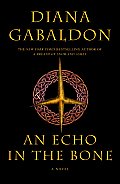
booknotes: echo in the bone

05 Tuesday Jan 2010

Posted by Anna Clutterbuck-Cook in book reviews

≈ 1 Comment

Tags

books, feminism, gender and sexuality, masculinity

It’s been a while since I wrote a proper “booknotes” post, but this weekend while Hanna was away in Maine I finally hunkered down and read Diana Gabaldon’s latest installment in the epic Outlander cycle (now clocking in at seven volumes each seven hundred to one thousand pages in hardcover), Echo in the Bone. (Warning: mild series spoilers ahead).

I was first introduced to Outlander under its British title, Cross Stitch in Aberdeen by my Glaswegian roommate, Vicki, who is (or at least was) an adoring fan. For those of you who aren’t familiar with the series, it centers on the relationship between Claire Beauchamp, a Second World War nurse, who accidentally time-travels back to eighteenth-century Jacobite Scotland and — also somewhat accidentally — marries a young Scottish fugitive named Jamie Fraser. The first book revolves around Claire’s attempts to return to her own time (1950s England) and the husband she left behind, while at the same time she finds herself falling passionately in love with Jamie. Without giving all the ins and outs of the romance and drama away, the saga weaves its way across Europe and America, the eighteenth and the twentieth century, and has expanded to encompass multiple generations of the Beauchamp-Fraser family and a sprawling cast of secondary characters. The science fiction / time-travel aspect of the narrative — while integral to the plot in many respects — also takes firm second-place to the political and personal dramas in which the characters get caught up as they move from one space/time context to the other.

An Echo in the Bone is a solid installment in the ongoing series, though Gabaladon’s expansive cast of characters has become increasingly difficult for her to manage — or at times hard for readers to follow, particularly if you don’t have the time to sit down and read the book in a marathon session (I tried the chapter-before-bed method during term-time and eventually gave up, setting it aside for vacation). There was speculation around the publication of A Breath of Snow and Ashes the sixth book would be the final volume, or be followed by a prequel or spin-off story, but she’s apparently decided to continue spinning the main narrative out, as Bone not only comprises of 800-plus pages of story but also ends with several cliff-hangers that I doubt will just be allowed to die. I have a slightly mixed feeling about this, since there was something bittersweet about reading Ashes as a final installment . . . but since Cross Stitch/Outlander was originally meant to be a one-off fantasy novel, Gabaldon fans have (I imagine, anyway) long since grown used to the idea that her sagas will inevitably be longer than originally predicted.

I’ve talked to a few friends who’ve had trouble with the sex and gender roles in the series — trouble enough that they’ve quit reading the books altogether. And as this is a blog with “feminist” in the title I figured I’d take a minute to reflect on how sex and gender (as well as sexual orientation) seems to play out in the series overall. Speaking for myself, I really had to make my peace with the series in this regard: I was really upset with the power dynamics between Claire and Jamie in the first book and by some of the sexual violence that went largely uncriticized within the stories. Gabaldon’s characters also have a really annoying habit of talking in gender essentialisms (i.e. “men are all X” and/or “women are all Y”). Most of the hetero relationships in the story (which is virtually all of them) are very male-as-protector and woman-as-nurturer. It’s explained away, in part, as historical accuracy (that is, Jamie as an eighteenth-century man has learned to think in certain ways about marriage, about sex, and so forth), and to be fair over the course of the series characters’ opinions are challenged and do change. However, certain behaviors continue to be explained away as grounded in innate characteristics based in sex, an explanation I find just as unsatisfactory in fiction as I do in real life. It seems to me a mark of lazy thinking on the part of the character and (by implication) their creator.

The violent sex and sexual violence are a bit more difficult to gloss over and/or explain away by historical context. I haven’t spoken to anyone who’s a survivor of sexual abuse or violence who’s tried the series, but I imagine that the graphic descriptions of rape and sexual violence could be unpleasant and/or impossible to read. One of the best parts of the series, at least in my mind, is Gabaldon’s penchant for writing erotic and and often light-hearted sex scenes (I was, in fact, disappointed that the most recent installment featured relatively few); the downside is that if you’re not into the kind of sex her characters are into, it can be difficult to make it through the graphic descriptions without feeling a bit icky about the relationship dynamics. Personally, though a few of the early scenes had me cursing and tossing the paperback edition of Cross Stitch across my dorm room, in the end I made the decision to let the characters have what is clearly a pleasurable and consensual sexual relationship without judgment from me.

Be warned, also, that the arch-villain in the first few books is a sadist with a taste for sexual violence, both hetero- and homosexual (he seems to fixate on individuals regardless of gender; both Jamie and Claire are assaulted by him in various contexts, with Jamie suffering the worst of the abuse). While Gabaldon (possibly in recompense?) has since written at least one gay male character who is one of the good guys — and actually features in his own series of stand-alone short stories — I was wary at first to have same-sex sex so closely associated with rape.

And as a final note, I’ve never been particularly irritated with historical fiction that plays lightly with the actual historical record, but those who care deeply about either eighteenth-century European or American history may be frustrated with the melange of historical detail and fiction that Gabaldon brings together for her time-traveling romps through the era.

My ultimate advice? Don’t take them too seriously, let the characters win you over, and have a great time.

looking forward in hope: books to read in 2011

02 Saturday Jan 2010

Posted by Anna Clutterbuck-Cook in book reviews

≈ 2 Comments

My RSS feeds have been rife with “best of” lists for the year, the decade, etc., the past few weeks. And given the nature of my feeds this often means “best books of…” lists. I haven’t been so much in the mood for summing-up lists this winter. Mostly because my reading right now is dominated by the demands of academic research which — though often pleasurable — does not lend itself to eclecticism and the sort of serendipitous finds that make such lists pleasurable to compose.

So instead of a “best of” list I’m going to put together a list of “hoping to…” books from my Goodreads “to read” list, all of which came out (or I first heard of) in 2009. I anticipate the list will just get longer of the next twelve months as the demands of my last year in graduate school overwhelm what leisure time I can spare, hence the expectation that I will probably get to tackling this list about this time next year.


In alphabetical order by author.

Boodram, Shannon T. Laid: Young People’s Experiences with Sex in an Easy-Access Culture. Berkeley, Calif: Seal Press, 2009.

Chambers, Roland. The Last Englishman: The Double Life of Arthur Ransome. London: Faber, 2009.

Dennis, Donna. Licentious Gotham: Erotic Publishing and Its Prosecution in Nineteenth-Century New York. Cambridge, Mass: Harvard University Press, 2009.

Feimster, Crystal Nicole. Southern Horrors: Women and the Politics of Rape and Lynching. Cambridge, Mass: Harvard University Press, 2009.

Gabaldon, Diana. An Echo in the Bone: A Novel. New York: Delacorte Press, 2009.

Harman, Patricia. The Blue Cotton Gown: A Midwife’s Memoir. Boston, Mass: Beacon Press, 2008.

Herdt, Gilbert H. Moral Panics, Sex Panics: Fear and the Fight Over Sexual Rights. New York: New York University Press, 2009.

Klepp, Susan E. Revolutionary Conceptions: Women, Fertility, and Family Limitation in America, 1760-1820.

Light, Alison. Mrs. Woolf and the Servants: An Intimate History of Domestic Life in Bloomsbury. New York: Bloomsbury Press, 2008. Chapel Hill: University of North Carolina Press, 2009.

Love, Heather. Feeling Backward: Loss and the Politics of Queer History. Cambridge, Mass: Harvard University Press, 2007.

Moreton, Bethany. To Serve God and Wal-Mart: The Making of Christian Free Enterprise. Cambridge, Mass: Harvard University Press, 2009.

Werth, Barry. Banquet at Delmonico’s: Great Minds, the Gilded Age, and the Triumph of Evolution in America. New York: Random House, 2009.

Williams, Linda. Screening Sex. Durham: Duke University Press, 2008.

Wrede, Patricia C. Thirteenth Child. New York: Scholastic Press, 2009.

~ ~ ~

*image credit: Colour coding the books on the Expedit! by A Cranmer @ Flickr.

booknotes: hunting ground

25 Wednesday Nov 2009

Posted by Anna Clutterbuck-Cook in book reviews

≈ Leave a comment

Tags

genre fiction

I find it difficult to read new fiction during the semester, and tend (if I have the time), to revisit old favorites rather than branch out in new direction . . . even new directions that take little intellectual or emotional effort. But this passed week, Patricia Brigg’s new installment in the Alpha & Omega series (werewolves; modern American West), Hunting Ground, so in the spirit of Hanna’s recent five-minute book reviews, I thought I’d offer a couple of reflections.

Warning: Mild plot spoilers for those who care.

So the Alpha and Omega series started out in a short story from a mass market paperback collection of supernatural romance stories, On The Prowl. Anna (cringe) is a recently-turned werewolf living in Chicago whose pack has been exploiting her. When the Marrok (head werewolf of North America) sends his son Charles to deal with the problem, Charles and Anna have a love-at-first-sight supernatural bonding thing and she ends up leaving Chicago and moving back to Montana with Charles to become part of his pack and (eventually, in the first novel-length book) his mate. So that’s the basic set-up.

While the first short story worked, I was disappointed with the first novel, Cry Wolf, since it felt like a long drawn-out love-at-first-sight-slash-recovery-from-sexual-abuse-via-sex plot (sans any satisfying sex, so what’s the point, really?). But I was willing to hang in there for the sake of the interconnected series, so when the second one came out this fall I put it on my reserve queue at the library.

And I’m happy to report that some improvement was made. Having gotten Charles and Anna together at the end of the first novel, we’ve moved on (mostly) from romantic angst to supernatural international political negotiation: the werewolves in the U.S. have decided to go public and some packs elsewhere in the world aren’t happy about it, so Bran, the Marrok, invites them for a diplomatic summit, held in Seattle, sending Anna and Charles as his delegates. Supernatural shenanigans and power-struggles ensue.

Things I’m pleased about:

Anna is developing a backbone, aided, in part, but her particular werewolf powers, which entail being somewhat outside of the normal pack structure and able to stand up to the Alpha wolves (she describes this at one point as being a “zen wolf” which I thought was kinda funny).

Briggs shifted the focus of the plot in this second book from Anna and Charles relationship to the political negotiations, which was a good decision. I’m not against relationships and sex — it’s okay to have both in the story, and in the Mercy Thompson series her ongoing negotiations with the guy she ends up involved with are a fun sub-plot/parallel-plot. But they are never THE plot, which they were in Cry Wolf. So side-lining them while simultaneously giving Anna a more active role in the relationship (as opposed to being the traumatized partner) was a good move.

Setting it in Seattle was fun — I like my urban fantasy out West, which is possibly just personal bias since I enjoy the landscape of the Pacific Northwest so much myself. And the coastal setting works in her favor in this instance.

Things not-so-pleasing:

Why does Briggs have to go and sexually traumatize her heroines before getting them connected with men (all her main female characters have so far been straight) who support their independence? Sexual trauma is less a feature of Mercy Thompson’s character as it is Anna’s, since she is raped in one of the later books when her character is pretty well-formed. With Anna, her history of sexual abuse at the hands of her first werewolf pack threatens to overwhelm other aspects of her character. I also resent the implication that for women trauma = sexual abuse. While obviously not minimizing (for women or men both) the violation that is sexual violence, I’d suggest there are other ways to signal “damaged female character” than have them be a survivor of rape.

Unsatisfying sex scenes. If you’re going to write sex scene that aren’t “off screen,” then have the guts to finish what you started. I felt like Briggs, in a couple of instances, was ramping up to a nice sweaty, satisfying bout of on-screen sex only to cut it off abruptly and imply that a “good time was had by all” without actually giving us details. It was weird. In my book, if you’re going to skirt around the sex by using that sort of maneuver, it’s best not to begin the scene as if you’re going to follow through.

On the whole, I’d say this is a middling-to-solid continuation of the series. So far still enjoy Mercy Thompson more as a heroine (begin with Moon Called), and hope to see a fifth installment in the near future. But if another Alpha and Omega book comes out, I’ll likely pick it up as well to see if she can build on the gains made in this one.

Related: My earlier reflections on Booknotes: Bone Crossed, the last Mercy Thompson novel.

On the Syllabus: The Survival of a Counterculture

06 Friday Nov 2009

Posted by Anna Clutterbuck-Cook in book reviews

≈ 2 Comments

Tags

children, history, random kindness

The book I’ve been reading this week for my thesis research, The Survival of a Counterculture: Ideological Work and Everyday Life Among Rural Communards, by Bennet M. Berger (Berkeley: University of California Press, 1981) was a find on the Brookline Booksmith $1 cart by Hanna while I was on vacation visiting family (thank you H, for thinking of me!). Even though it was published the year I was born, and written by a sociologist rather than an historian, I am still finding a lot of really good observations and theoretical musings that help me clarify my thinking about the interaction of philosophy and practice in human communities.

Berger set out to study the place of children within “hippie” communes, and although his observations range far and wide in this particular book — not focusing on children to the exclusion of other aspects of commune life, he still spends a good deal of time describing adult interactions with young people. The following excerpt is from his third chapter, “Communal Children: Equalitarianism and the Decline of Age-grading.”

In treating the history of the concept of childhood, social scientists have emphasized the differences between [the pre-industrial] status of children . . . where they are regarded simply as small or inadequate versions of their parents, totally subject to traditional or otherwise arbitrary parental authority . . . [and on the other hand] the modern, industrial, middle-class view of children [in which] children are increasingly treated as members of a distinctive social category, their social participation . . . increasingly limited to age-homogeneous groups.

. . .

The prevalent view of children at The Ranch (and other communes like it) fits neither of these models exactly. Rather than being members of an autonomous category of “children” or being inadequate versions of their parents, legitimately subject to their arbitrary authority, children and young people (or “small persons,” as they are sometimes deliberately, perhaps preciously, called) are primarily regarded as “persons,” members of the communal family, just like anyone else — not necessarily less wise, perhaps less competent, but recognized primarily, as my colleague Bruce Hackett put it, “by lowering one’s line of vision rather than one’s level of discourse.”

Berger’s later descriptions of adult-child interactions at The Ranch illuminate and refine this general philosophical approach to understanding young people in the context of the communal structure — obviously there are nuances to each portion of this description (how is the “less competent” aspect dealt with? what does it mean for children to be seen as potential sources of wisdom?). But I was struck by the re-orientation necessarily in a community where this is the starting point for adult-child interaction, rather than one of the first two positions described (and in our modern American society, the modern, industrial, middle-class ideal dominates, whether or not it is upheld religiously in daily practice). What would it be like to interact with kids primarily “by lowering one’s line of vision rather than one’s level of discourse”?

On the Syllabus: The Rise of American Civilization

04 Wednesday Nov 2009

Posted by Anna Clutterbuck-Cook in book reviews

≈ Leave a comment

Tags

feminism, history, simmons

In my class on archives and collective memory this semester, our final project is a group presentation of one particular case study in how an event or person or activity survives in collective memories over time. My small group chose to focus on female suffrage and the passage of the 19th Amendment. For my portion of the presentation, I am looking at how the American suffragists situated themselves in the context of American history, and subsequently how they moved to consolidate the public memory of suffrage activism in the 1920s and early 1930s.

One of the examples I’ve looked at is the 1927 second volume of history of America, The Rise of American Civilization: The Industrial Era, written by the prolific husband and wife team Charles and Mary Ritter Beard. The Beards’ account of American history was a linear, progressive narrative (as the title suggests); it foregrounded the economic and political contributions of everyday people in contrast to histories that focused on political and social elites. Mary Beard had, herself, been active in the suffrage movement, although she later criticized mid-twentieth-century feminists for focusing too heavily on women’s oppression at the expense of female contributions to “civilization” over the long duree. In The Rise of American Civilization they had the following to say about the push for enfranchisement.

Amid the turbulence connected with this reconstruction in political machinery, woman suffrage was once more brought out of the parlor and the academy, reviving an agitation which, after giving great umbrage to the males of the fuming forties, had died down during the Civil War . . . With a relevancy that could hardly be denied the feminists now asked why the doctrine [of universal suffrage] did not apply to women, only to receive a curt answer from the politicians that sent them flying to the platform to make an appeal to the reasoning of the public at large (562).

This is followed by a description of the state-by-state campaign, the winning of the vote in Western states, and the political tactics of the National Woman Suffrage Association and the National Woman’s Party (go see Iron Jawed Angels). The three-page section ends on the following triumphal note:

In September, 1918, with a congressional election at hand, [President Wilson] went before a joint session of the Senate and the House in person to urge the passage of the national suffrage amendment, yellow with age, as a measure “vital to the winning of the [First World] war.” By June of the following year, the requisite two-thirds vote was assembled and the resolution was sent to the states for ratification. After three-fourths of the commonwealths had approved it, the Nineteenth Amendment was proclaimed in the summer of 1920 a part of the law of the land. The fruit of a hundred years of agitation and social development had finally been garnered.

For the Beards, female suffrage was a naturally-evolving extension of “social development,” a process that extended an ever-increasing body of rights and privileges to Americans. Their worldview seems flawed today, when we harbor deep skepticism about the progressive, linear nature of history and change over time, but I find it noteworthy that they chose to include female suffrage within that picture of social development, however antiquated it may be. I also think it is worth highlighting the Beards’ sense that the battle was won: “the fruit of a hundred years” was now ripe to be plucked by women who chose to exercise their elective franchise. There were activists at the time who challenged this narrow, single-issue concept of turn-of-the-twentieth-century feminist activism — the decision to turn the Nineteenth Amendment into a definitive end point was a deliberate one on the part of Charles and Mary Beard (and it fit well with Mary Beard’s very individualistic notions of women’s power and oppression).

It’s also worth pointing out that there are people today who would agree with the Beards that the right to vote wiped sexism away once and for all, sounding the death knell of feminism (those of use who’ve come after are, as folks so often feel free to inform us, just deluded in our belief that the need for feminist activism remains alive today, nearly a century later). Similarly, there are folks who persist in insinuating (if not outright arguing) that the world might be a better place if women still remained disenfranchised. The suffrage movement might well be the most iconic image of the modern feminist movement, but the ubiquity of its public historical memorializing has hardly brought us to consensus as to its meaning.

On the Syllabus: Man For Himself

25 Friday Sep 2009

Posted by Anna Clutterbuck-Cook in book reviews

≈ Leave a comment

Tags

history, politics, thesis

This week for my independent study, I finally sat down and finished Erich Fromm’s 1947 treatise on humanistic ethics: Man For Himself: An Inquiry into the Psychology of Ethics. Erich Fromm, a prolific writer on psychology, philosophy, politics, and ethics, clearly can’t be adequately represented by a small excerpt from one published work . . . but I thought I would, nevertheless, give you a flavor of his thinking by sharing a passage from Man for Himself in which he responds to one of the criticisms of his humanistic philosophy which foregrounds the capacity (“potentiality”) of human beings: that is, “what about the problem of evil?”

“The opponents of humanistic ethics,” he writes, “claim that man’s [1] nature is such as to make him inclined to be hostile to his fellow man, to be envious and jealous, and to be lazy, unless he is curbed by fear. Many representatives of humanistic ethics [have] met this challenge by insisting that man is inherently good and that destructiveness is not an integral part of his nature” (213). As Fromm points out, this leaves us with the problem of what destructiveness and where it comes from, if we reject it as an inherent part of human nature (since, self-evidently, human beings demonstrate a capacity for violence).

Our first step in approaching the problem of destructiveness is to differentiate between two kinds of hate: rational, “reactive” and irrational “character-conditioned” hate [2]. Reactive, rational hate is a person’s reaction to a threat to his own or another person’s freedom, life, or ideas. Its premise is a respect for life . Rational hate has an important biological function: it is the affective equivalent of action serving the protection of life; it comes into existence as a reaction to vital threats, and it ceases to exist when the threat has been removed; it is not the opposite but the concomitant of the striving for life [which Fromm believes is the most fundamental human drive].

Character-conditioned hate is different in quality. It is a character trait, a continuous readiness to hate, lingering within the person who is hostile rather than reacting to a stimulus from without . . . [a phenomenon] of such magnitude that the dualistic theory of love and hate as the two fundamental forces [of human life] seems to fit the facts. (216-17, emphasis in the original).

Fromm asks then (somewhat rhetorically) whether, given the evidence, he is forced to concede that theories maintaining destructiveness is a fundamental part of human nature (he uses Freud’s work as an example) are, indeed, correct. No, he responds to himself, he is not. He posits that both capacities (creativity and destruction) are present in human beings as potentialities which need certain conditions to manifest; furthermore, he argues that the capacity for productive, life-promoting creativity, is a primary capacity, whereas the capacity for destruction is secondary, realized only when the conditions for the primary are not met:

Both the primary and the secondary potentialities are part of the nature of an organism . . . the “secondary” potentiality comes into manifest existence only in the case of abnormal, pathogenic conditions. . . . man is not necessarily evil but becomes evil only if the proper conditions of his growth and development are lacking. The evil has no independent existence of its own, it is the absence of good, the result of the failure to realize life (219-20).

While I am skeptical about the division between rational/irrational used here, and find Fromm’s reliance on psychoanalytic language frustrating at times, his basic concept of human beings has a lot of (ahem) potential for re-imagining our most basic assumptions concerning human nature.

In the wake of the Second World War, many people — across diverse fields of inquiry — were wrestling with the question of what “human nature” was — and could be — with a sense of great urgency. Fromm offers us one such example; I’ll look forward to sharing more with you in the weeks to come.

~~~footnotes~~~

[1] after my post on Goodman last week, it is worth noting that Fromm specifically, in the introduction to Man for Himself, defines his use of the word “man” as a universal pronoun for “human being.”

[2] Fromm uses “character” in a very specific sense, elaborated on elsewhere in the book and in his other work, and here is indicating a basic orientation toward life versus a reaction to a specific incident.

On the Syllabus: Growing Up Absurd

18 Friday Sep 2009

Posted by Anna Clutterbuck-Cook in book reviews

≈ 2 Comments

Tags

education, feminism, history, thesis

So I might not have a lot of time to post this year, but one thing it occured to me to do is post selections from some of my thesis-related reading for those of you who are interested in what I’m doing on the intellectual/history front. Since I’m enrolled in an independent study this semester, I have the luxury of designing my own schedule of reading in preparation for my oral history fieldwork. The reading I’ll be doing this semester is in part theoretical/methodological (how I’ll be doing my oral history collecting and thesis writing, and why I chose to do it that way) in part a review of the existing historical literature on the period and topics I am studying, and in part primary sources that help provide contemporary context for the beginnings of the Oregon Extension program.

One of the books I’ve been reading this week, Paul Goodman’s Growing Up Absurd: Problems of Youth in an Organized Society. The prolific Goodman wrote one of the earliest post-war critiques of 1950s American conformity, first published in 1957, which later became a “must read” for countercultural activists during the 1960s and 70s. The basic argument of Growing Up Absurd is that the post-war society is depriving youth (specifically boys, see below) of meaningful work opportunities — leaving them with the option of unfullfilling factory of office jobs that do not contribute (in Goodman’s view) to the betterment of society. While his argument has faults, he is also making key observations about the fault-lines in American society during the era of post-war conformity. The priceless bits, however, are the sections in which he defends his focus on “young men and boys” as a stand-in for “youth.” When I began reading, I figured he was using masculine pronouns as a stand-in for humanity in general (it’s the 1950s after all). Not so according to this parenthetical found at the end of his introduction:

(I say the “young men and boys” rather than “young people” because the problems I want to discuss in this book belong primarily, in our society, to the boys: how to be useful and make something of oneself. A girl does not have to, she is not expected to, “make something” of herself. Her career does not have to be self-justifying, for she will have children, which is absolutely self-justifying, like any other natural or creative act. With thie background, it is less important, for instance, what job an average young woman works at till she is married. The quest for the glamour job is given at least a little substance by its relation to a “better” marriage. Correspondingly, our “youth troubles” are boys’ troubles — female delinquency is sexual: “incorrigibility” and unmarried pregnancy. Yet as every woman knows, these problems [I am writing about] are intensely interesting to women, for if the boys do not grow to be men, where shall the women find men? If the husband is running the rat race of the organized system, there is not much father for the children.) [13]

I would love to write an entire essay at some point unpacking the layers of cultural “common sense” packed into this one single paragraph of Goodman’s polemic. He continues this way of raising the question of women in a tangential, completely un-analyzed way. In the section where he discusses the Beats, he critiques their cultural dissent at length and then eventually gets around to the question of “What is in it for the women who accompany the Beats?” (185)

There are several possible sexual bonds . . . Her relation to him is maternal: she devotes herself to helping him find himself and become a man, presumably so that he can then marry her. . . Another possible relation is Muse or Model: her Beat is her poet and artist and makes her feel important. This is a satisfaction of her feminine narcissism or penis envy.

So mother or virgin/whore: those are our options girls. But wait! There’s more (185-187).

One sometimes sees a pathetic scene in a bar. Some decent square young workingmen are there, lonely, looking for girls or even for a friendly word. They feel they are “nobodies”; they are not Beats, they are not artists. They have nothing to “contribute” to the conversation. The girls, meantime, give their attention only to the Beats, who are sounding off so interestingly. But these Beats will not make any life for the girls, whereas the others might make husbands and fathers.

Amazing what a long history the Nice Guy ™ vesus Bad Boy ™ mythology has, isn’t it? One might, of course, ask if there are any female Beats — in spirit if not in historic fact (there were very few women who were part of the core movement). Goodman does actually mention such women, at the tail end of his analysis:

Finally, of course, there are the young women who are themselves Beats, disaffected from status standards. Perhaps they have left an unlucky marriage, have had an illegitimate child, have fallen in love with a Negro, and found little support or charity “in” society. They then choose a life among those more tolerant, and find meaning in it by posing for them or typing their manuscripts.

So even the women “Beats,” who fit his earlier definition of “incorrigibility,” end up being not so much artist-activists themselves, but rather a sub-species of the Muse and Model he defines earlier. As women artists and activists pointed out at the time — most loudly and concertedly during the 1960s and 1970s — this was in fact far from the truth of their own lived experience.

That’s it for this week’s “on the syllabus” dispatch . . . look for more next weekend!

summer book review: the strain

24 Monday Aug 2009

Posted by Anna Clutterbuck-Cook in book reviews

≈ Leave a comment

Tags

family, guest post, michigan

While I’m enjoying the last few days of summer (I’ll be back blogging after the Labor Day weekend!) I thought I’d put up this little book blurb my father, manager of the Hope-Geneva Bookstore, wrote for the Michigan Association of College Stores newsletter when they called to ask what he’d been reading. The Strain was a novel that Hanna read and passed along to me earlier in the summer; I recommended it to my father who read it and passed it to my mother, who emailed me last week to tell me about this vampire novel she was reading . . . such is the, er, viral nature of good reads in a family of bibliophiliacs.

Without further ado, here’s Mark:

If you are looking for a summer read that will keep you turning pages (or refreshing screens) late into the night you could do worse than, The Strain, by Guillermo del Toro and Chuck Hogan. The first of a promised trilogy of vampire novels (forget the Twilight series), this worthy addition to the genre reads like a cross between Stephen King and Michael Crichton. While Spanish film maker del Toro (Pan’s Labyrinth) is not known as a novelist his storytelling ability is clearly on display. The novel starts out with a routine jumbo jet landing at New York’s JFK. The plane suddenly rolls to a stop and the lights go out. All communication with the tower cease. An investigation of the mystery reveals that everyone on board is dead including the pilot and co-pilot. The creepy action ramps up from there.

In a radio interview earlier this year del Torro described his effort in the book as wanting to take the modern romance and “sexiness” out the vampire legend and return to the concept of pure evil inherent in the blood-sucking parasites. I think he does a good job of honoring our core understanding of the mythology while combining it with the threat of a modern viral epidemic. His characters are familiar types but engagingly articulated and the close of the novel leaves us waiting for the next installments.

Booknotes: Nation

20 Saturday Jun 2009

Posted by Anna Clutterbuck-Cook in book reviews

≈ Leave a comment

Earlier this week, I came home from work to find Terry Pratchett’s Nation sitting on the kitchen table with firm instructions to “read.” So I did. I admit I was a teeny bit skeptical about the book, entirely based on the fact it’s set on an island following a tidal wave, is about survivors attempting to organize themselves into a successful community, and I have a highly contentious relationship with lord of the flies. But it was Hanna who left me the instructions, and Terry Pratchett who wrote the book, so I was willing to give it a go. And I’m glad I did — ’cause it was charming and funny and the end was even a teeny bit mind-bending.

Nation is set in a universe much like, but not quite, our own. It tells the story of two young people, Mau and Daphne, and the friendship they form in the wake of a natural disaster that ends up altering their lives — and the world — forever. Mau is the sole survivor of his island community when a tidal wave washes through his corner of the ocean; Daphne is the only human survivor of a ship from ‘England’ caught in the same tidal wave and washed up on Nation. The two have just begun to form a cautious friendship when other survivors of the disaster begin to arrive, drawn by the smoke of their campfire and the spiritual significance of Mau’s island home. Eventually, of course, the new community comes back into contact with the larger world and make a place for themselves within it — but not before they have been challenged to re-imagine history and the shape of the world around them.

And of course there’s the parrot. And the tree octopus that can count all the way to fifteen (and loves to eat crabs). And an evil man whose mere presence makes bunnies nibbling at seaweed start to fight one another. And Mrs. Gurgle, who gets a set of gold false teeth that shine like the sun. And Grandmother, who likes to say “Ahem” and is told off, in the end, in the most satisfying way.

← Older posts
Newer posts →
"the past is a wild party; check your preconceptions at the door." ~ Emma Donoghue

Recent Posts

  • medical update 11.11.22
  • medical update 6.4.22
  • medical update 1.16.2022
  • medical update 10.13.2021
  • medical update 8.17.2021

Archives

Categories

Creative Commons License

This work by Anna J. Clutterbuck-Cook is licensed under a Creative Commons Attribution 3.0 Unported License

Meta

  • Create account
  • Log in
  • Entries feed
  • Comments feed
  • WordPress.com

Create a free website or blog at WordPress.com.

  • Subscribe Subscribed
    • the feminist librarian
    • Join 37 other subscribers
    • Already have a WordPress.com account? Log in now.
    • the feminist librarian
    • Subscribe Subscribed
    • Sign up
    • Log in
    • Report this content
    • View site in Reader
    • Manage subscriptions
    • Collapse this bar