• anna j. clutterbuck-cook
  • contact
  • curriculum vitae
  • find me elsewhere
  • marilyn ross memorial book prize

the feminist librarian

the feminist librarian

Category Archives: library life

once upon a listserv: thoughts on professionalism, privilege, and power [#thatdarnlist]

29 Thursday May 2014

Posted by Anna Clutterbuck-Cook in library life

≈ 52 Comments

Tags

archivists, blogging, technology

Thank you to all whose thoughts helped form this post. 

Coincidentally, this is the 1200th post to go live at the feminist librarian. I’ve learned a lot from this idiosyncratic labor of love. It’s been great to have y’all along for the ride.

(via)

So a thing happened last week on one of the professional listservs I subscribe to. While I’m relatively new to this listserv, having been subscribed for roughly a year, I’ve been around long enough to know this is not an isolated happening in this particular online community. Similar incidents, involving many of the same players, have happened before. More importantly for this blog post, this thing that happened follows a wider pattern, one that will be familiar to most folks guilty of “blogging while female” or “blogging while queer” or “blogging while [insert marginalized identity group here].” As a veteran of the feminist blogosphere (at seven years and counting the feminist librarian is firmly middle-aged in Internet time) I’ve seen it happen before in other forums, and will no doubt see it again. It’s a worrying pattern, a pattern of unethically leveraged power and privilege, and I believe strongly that it needs to be named as such.

Thus, this post.

I’m going to tell the story of what happened without naming names or linking to specific emails in the listserv archive. Those of you interested in reading all 91 emails in the thread can find the archive here. Scattered additional responses can also be found seeded through the listserv archive from May 19 through May 23. Many of you will have already followed the exchanges in real time. Even so, I have chosen to describe what happened in archetypal terms because my goal here is not to reopen/rehash the details of specific exchanges. Rather, I hope to point out how the dynamic at play is a familiar one to many of us, particularly those of us on the receiving end of its toxic effect, and to bear witness to the way its poisonous effect ripples out under the guise of “professional” interactions. Continue reading →

writer, respect thyself [rambling thoughts on undervaluing scholarly labor]

26 Saturday Oct 2013

Posted by Anna Clutterbuck-Cook in library life

≈ Leave a comment

Tags

history, MHS, professional gigs, random ranting

To interrupt the recent run of photo and video and cat related posts with something a bit more library-professional about the place, I’ve been thinking a lot this week about the tendency of many historians, both amateur and professional, to undervalue their intellectual labor.

Amateur writers do this by, well, framing their labor as “a labor of love”: something they’ve undertaken in their own time, funded out of their own (often shallow) pockets, because of their passion for a particular historical story and their desire to share it with the world. Professional academics do this by, well, framing their work within the context of their academic careers: emphasizing the often grim realities of contracting faculty salaries, vanishing funding in the humanities, and the “non-profit” (at least for the author) structure of most academic publishing. 

Neither of these frames are factually incorrect. We are often underpaid professionals who continue to do the work we’re qualified to do out of personal passion and a belief that what we research and share with the world matters in some “greater good” sort of way.
Yet practically, this attitude toward our own work erases the necessity of, well, paying rent. It also colludes with a culture that equates cost with value to erase the work that goes into our creations. By romanticizing the historian (or any other intellectual or artist) who labors with little expectation of financial solvency, let alone reward, we contribute to a culture that devalues what we do. A culture that allows the institutions that employ many of us to pay wages that leave us perpetually financially insecure.
I have a couple of good blog posts on this subject — by people more eloquent than I — that I’d like to share, but first let me describe the situation that sparked these reflections.
As Reference Librarian at the Massachusetts Historical Society, one of my primary responsibilities is facilitating all of the requests for images of material in our collections for use in publications and other projects like documentary films, exhibitions, websites, and so forth. It’s one of my favorite parts of the job: it allows me to stay in touch with what use people are making of the resources we make available, and increasingly means (as I pass the six-year mark!) that I see researchers whom I worked with at the beginning of their project finally completing their PhDs or winning a book contract or having an article accepted for publication.
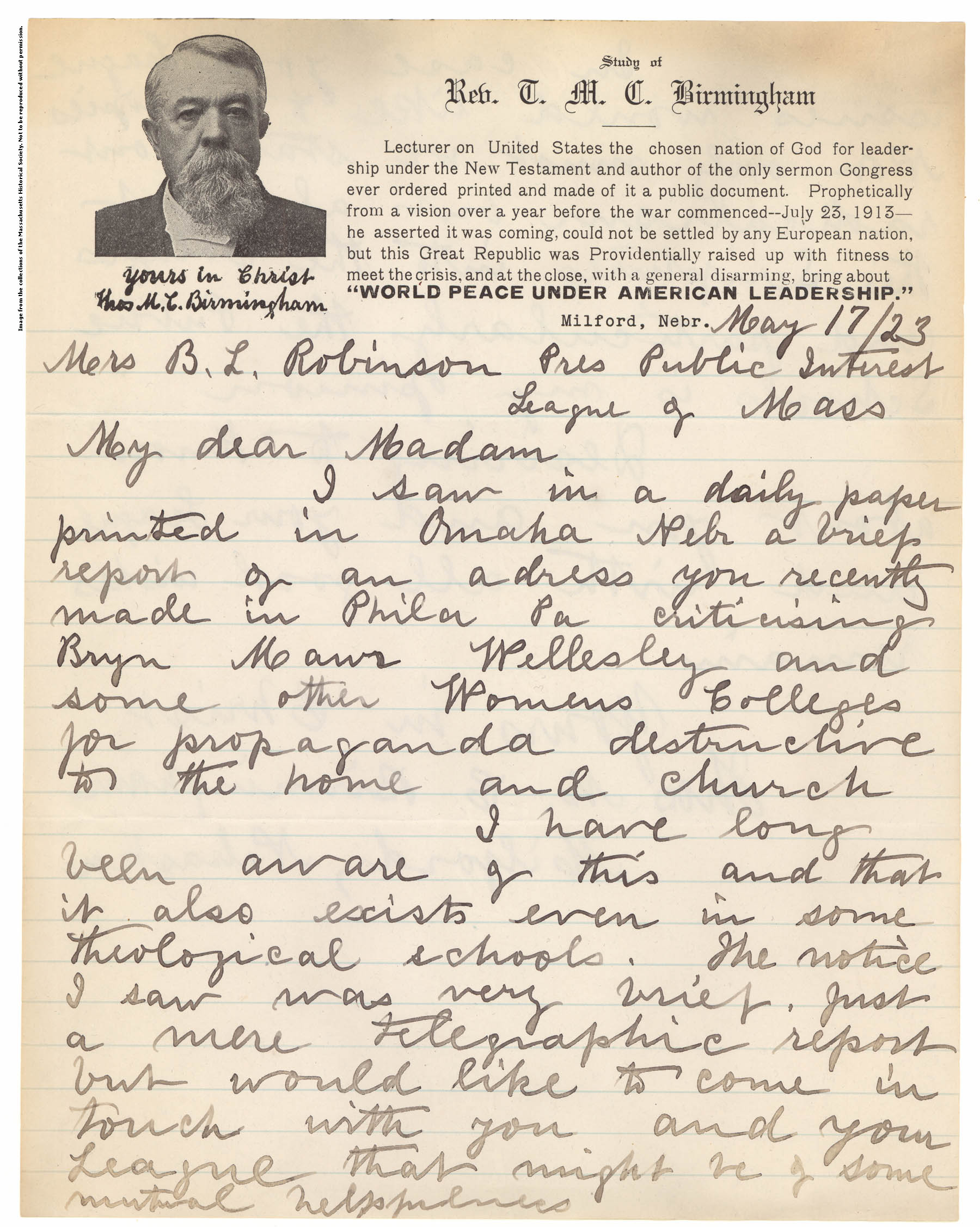
(via Massachusetts Historical Society)
Images you can pull off our website, are available to re-purpose in certain exempt contexts — classroom lecture, conference presentation, personal blog — free of charge. The image above is a letter I wrote about for our February 2011 object of the month series.
For made-to-order high resolution images (the file type most professional projects require) incur fees. We charge for this service along two scales. There are reproduction fees, which cover the cost of the labor in producing the image; people are required to pay this fee regardless of how they are using the image — even if they’re just going to hang it on their bedroom wall. Then there are licensing fees, which are charged based on the nature of the publication; we license the images we create that people go on use in their own creations as a way to earn some income from our own creations (the digital reproductions of material in our collections) and pay not only staff salaries, but also for the ongoing care and keeping of these valuable historical documents and artifacts. 
This can be expensive. Images cost $45-60 per file in reproduction fees, and anywhere from $0-450.00 per image in licensing fees. If you are an author seeking to use multiple images in your forthcoming book this can add up fast. I’ve worked with several authors in the past year who, despite small academic press print runs, have faced over $1,000 as a quote for obtaining the images they would ideally like to use. Our fees are steeper than some independent research libraries charge, but also more sensitive to the scale of individual projects than others. In short, we’re balancing the desire to provide access with the need to pay our staff for the work that they do and all of the not-inconsiderable overhead of preservation, storage, and security.
While most people understand this, I do have the occasional individual who tries to haggle with me to get the prices reduced or eliminated. They cite a series of potentially mitigating factors: their relationship with the Society, the fact that they’re paying out of pocket for the images, the fact that they’re retirees on fixed incomes, that they’re academics on tight incomes, that other institutions have offered them lower rates or waived the fees, that the author will not be making only — sometimes, in fact, they’re losing money — on this project, and so forth. 
I’m sympathetic. I really am. I also understand completely when people decide they can’t afford our prices and seek cheaper images elsewhere — I likely would in their shoes if the cost was prohibitively high. I wish them the best and honestly mean every word that I type. 
But having had several exchanges along similar lines in the past few weeks, I’ve been wishing I could have slightly more meta conversations with some of these people. “If you’ve spent ten years writing and researching this book on your own dime,” I was to ask them, “why for all that you hold holy have you signed a contract with a for-profit press that is requiring you to pay upfront for all of the production costs?” 
Or, sometimes, when they get sniffy about how steep our fees are, I want to lean a little heavier on the words labor and staff time in my replies. “Why,” I want to ask them, “do you feel entitled to obtain something from us for free, even after I explain to you that creating this product takes the time and effort of half a dozen people who work at our library?” 
In these exchanges, I sometimes see an altruistic competitiveness creep in that’s really unattractive: I’ve labored over this work for years without complaint, expecting little reward, some people seem to imply (likely not consciously), and because I’m not benefiting financially from this project — in fact, I’m losing money! — you should be likewise generous to the cause of History and give these images to the project for free. 
Sometimes, there’s even the implication that we’re somehow holding these digital photographs hostage, selfish money-grubbing institution that we are.
The librarian part of my soul certainly kens this argument. If our society was structured differently, with robust socialized funding for cultural heritage institutions and a guaranteed national income for all citizens that provided me and my family (and everyone!) with food security, housing security, and healthcare, then I would absolutely advocate we digitize and make freely available the images our scholars want to use. They are smart, articulate, energetic, diligent, and prolific people — and the wide range of stories they come up with to tell using the rich materials in our collections are part of what make my job a daily joy. 
But we don’t currently live in that world, and in the world we do live in we should not undervalue our own already culturally devalued work by setting ourselves up pre-emptively as martyrs.
Think carefully before you give your work away, particularly to others who will make a profit from it. 

Even if you decide to give your own work away, recognize that this does not give you the right to expect others to provide you goods and services for free. Factor in that even on projects you are doing for the pleasure of the work, you will need to pay people fairly for the work they contribute.

Sometimes people will charge what you feel is too much for their labor or products. It’s certainly fair to decline their goods and services and go elsewhere. If they care about keeping your business, or if too many people decline what they offer because the price is too steep, they will probably decide to lower their prices. 
What you should never do is try to shame or guilt scholars or artists for earning a living doing the work that they love. 
You also shouldn’t be ashamed or feel guilty for trying to earn a living doing the work that you love. 

One of the best pieces of advice I ever got as an early professional was to be sure to not undervalue my work, and to charge an hourly rate for free-lance research that, at the time, seemed scandalously high to me (used, as I was, to student stipends). But the higher hourly fee we negotiated demanded that both my employer and myself take the project seriously as a professional endeavor. In the two years since then, I have given several colleagues who asked me for free-lance advice the same nudge: “Ask for what you feel would make the job worthwhile,” I tell them. Or, “Think about what you believe your time is worth, and then ask for a third again more.”

I also remind them to calculate in any expenses they may incur on their way to completing the job they’re being asked to do: transportation, equipment, service fees, etc.

My current free-lance rate starts at $25.00/hour, exclusive of expenses, though I do negotiate based on the nature of the project. I always advise emerging professionals who ask what to charge that they should never accept less than $15.00/hour for their research or scholarly work.
I promised you links. 
Writer John Scalzi has an excellent round-up of posts he wrote about how to spot an exploitative book contract (and why he would never sign one). If you read only one of the posts, I would recommend “New Writers, eBook Publishers, and the Power to Negotiate“:

People: Unless the publisher you’re talking to is a complete scam operation, devoted only to sucking money from you for “publishing services,” then the reason that they are interested in your novel is because someone at the publisher looked at it and said, hey, this is good. I can make money off of this. Which means — surprise! Your work has value to the publisher. Which means you have leverage with the publisher.

And on a more academic note, Sarah Kendzior asks at the Chronicle of Higher Education, “Should Academics Write for Free?“

Academics entering the media world tend to move from one exploitative arena (low-wage academic work) to another (unpaid freelance writing). But writing must never be an act of charity to a corporation. Ask for what you are worth—and do not accept that you are worth nothing. Insisting on payment for your labor is not a sign of entitlement. It is a right to which you are entitled.

We all labor for free, at times. I’ve been writing this blog on an unpaid, voluntary basis for over six years; I won’t be stopping any time soon. Yet I’ve just spent three hours writing this post. That’s $75.00 I owe myself. I also write book reviews, for free (or in exchange for a book). This fall I’m working on a series of seriously under-paid encyclopedia articles, which I chose to take on for the experience. I will probably negotiate for better terms next time, or decline the next call for authors that comes my way.

There is nothing intrinsically bad about voluntarism. But it does not follow, therefore, that there is something intrinsically virtuous about volunteering your time (or asking another person or institution to volunteer their labor and resources) rather than asking for recompense.

Think carefully about how, why, for whom, and on what terms you will labor for free.

And respect the right of others to determine for themselves how, why, for whom, and on what terms they will do the same.

the librarian is in [from the archives]

20 Thursday Dec 2012

Posted by Anna Clutterbuck-Cook in library life

≈ Leave a comment

Tags

MHS, photos

A payment for reference scans arrived in the mail at work earlier this week in this envelope. I couldn’t not share.

(And yes, I’ve saved the envelope to frame and hang on my office door!)

"how I set out to become a librarian…": lis career talk

13 Tuesday Mar 2012

Posted by Anna Clutterbuck-Cook in library life

≈ Leave a comment

Tags

family, hope college, professional gigs

Van Wylen Library (Hope College, Holland, Mich.)

As promised, here’s the report from my presentation on 5 March at Hope College on how and why I became a librarian, what I do as a reference librarian, and further resources for exploring librarianship as a career. Since the talk was thirty minutes long, it’s a bit unwieldy for a blog post. Instead, I’ve made the talk, PowerPoint, and resource list available on a new page — librarianship links — where you can download the talk script and slides as PDF files and review them at your leisure.

I was kindly introduced by Priscilla Atkins, poet and head of reference and instruction at Hope’s Van Wylen Library. She put together my intro with help from Jackie Bartley, my very first creative writing professor at Hope — the one who inspired me to pursue non-fiction rather than fiction writing, and who could not have been a better entre into liberal arts education. Jackie was also at the talk, as were about a dozen former faculty of mine. I don’t think I’ve given or accepted so many hugs in the space of an hour since I stopped “passing the peace” at church in the mid-1990s!

There were also about a dozen librarians-in-the-making in the audience, which was gratifying to see.

You can access the resource handout I made, the slides, and the talk in PDF from here.

On Thursday, I’ll be posting the text from my talk from the Women’s Studies panel discussion, “How Has Women’s Studies Mattered in My Life.”

the feminist librarian is off to michigan!

01 Thursday Mar 2012

Posted by Anna Clutterbuck-Cook in library life

≈ Leave a comment

Tags

blogging, family, hope college, michigan, professional gigs, travel

So it’s that time of year again, and Hanna and I are off to Michigan for a week of vacation (for her) and vacation/work (for me). I’ve been invited to give a couple of presentations at my alma mater, Hope College, one on my life as a feminist and one about my life as a librarian. As my friend Molly pointed out on Twitter recently, I have a whole blog to pillage for subject matter!
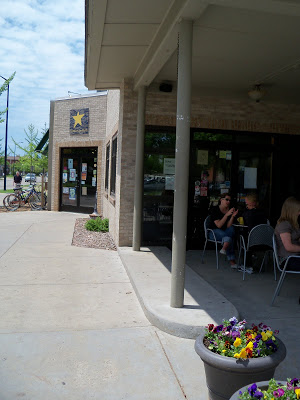
lemonjellos (holland, mich.), May 2011
Seriously, though. If you’re a Hope College community member, I’ll be on campus Monday, 5 March, 4:00pm, in the Granberg Room, Van Wylen Library, to give a talk on my emerging career as a professional librarian. Then on Tuesday, 6 March, 7:00pm, I’ll be part of a panel of Women’s Studies Program graduates discussing how the program affected our lives and our work. The Tuesday event is part of a longer program celebrating the 20th anniversary of the Women’s Studies program at Hope.

that would be me on the left, circa 2005

This is my first real visit back on campus since graduating, and while I have a contentious relationship with the college as in institution, I’m looking forward to getting a sense of how current students and faculty are feeling about the direction of the college and the role of feminist thought and practice in that space.

I’ll be taking lots of notes and look forward to sharing my reflections and experiences with y’all upon my return. In the meantime, I anticipate posting will be light-ish while we’re on the road.

quick hit: clover adams online exhibition

08 Wednesday Feb 2012

Posted by Anna Clutterbuck-Cook in library life

≈ Leave a comment

Tags

history, MHS, photos

Last week I wrote about my friend Natalie Dykstra’s new biography of Clover Adams. Today, the Massachusetts Historical Society is celebrating the book with a launch party and exhibition opening. If you’re not in the Boston area to visit the exhibition in person, you can check out our online exhibition which launched today!

pages from Clover’s photograph albums

I think our digital team has done an amazing job with the presentation of Clover’s work, which will now be available to anyone with access to the Internet, wherever in the world they happen to be.

Archivists and historians are awesome. That is all.

in which we write letters: stop SOPA

18 Sunday Dec 2011

Posted by Anna Clutterbuck-Cook in library life

≈ Leave a comment

Tags

blogging, i write letters, politics

via

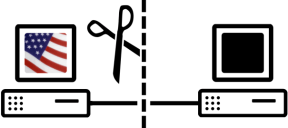
Depending on your level of involvement in things internet-political and techy, you may or may not be aware of the Stop Online Privacy Act (SOPA) now making its way through congress. Introduced by representative Lamar Smith (R-TX), this bill mandates widespread monitoring of internet activity and has the potential to cause the internets as we know them to be fundamentally altered as blogs and other social networking sites are shut down for supposed acts “piracy.” You can read more about the act at the Organization for Transformative Works, TechCrunch, and the American Library Association. The letter Hanna and I sent to our representatives is heavily cribbed from the ALA talking points.


Find your U.S. Representative here. 

Find your U.S. Senators here.


18 December 2011
Dear Representative Capuano,
As librarians, bloggers, and registered voters in Allston, Massachusetts, we are writing to ask you to vote against the proposed Stop Online Privacy Act (SOPA), H.R. 3261.
This bill, if it becomes law, will cause a widespread “chilling effect” on use of the Internet for commerce, communication, and participation in democratic society. The bill strikes at copyright protections currently granted to libraries and educational institutions by creating the possibility of criminal persecution of institutions and institutional representatives. for online streaming and other use of online resources in library and classroom space. SOPA’s requirements to monitor internet traffic violate free speech and privacy protections and may create new forms of government surveillance of private activities within and outside the United States. The predicted consequences of SOPA are far-reaching. If passed, the potential for new jobs, innovative new ventures, and economic growth will be stifled.
Citizen engagement in online spaces depends on the ability to share and discuss a wide variety of media content across multiple social networking and other Internet platforms. SOPA will effectively shut down the vibrant creativity and vital political discourse that has been made possible by the World Wide Web. On behalf of ourselves, our online community of bloggers, and our library patrons, we ask you to vote against H.R. 3261, and support alternative ways for protecting legitimate copyright interests online.
Sincerely,
Anna J. Cook & Hanna E. Clutterbuck

from the archives: historical games of telephone

26 Wednesday Oct 2011

Posted by Anna Clutterbuck-Cook in library life

≈ Leave a comment

Tags

archivists, history, humor, MHS

I don’t have the mental oomph this week for a thirty at thirty post, so I thought instead I’d offer you a little anecdote from the Reading Room of the Massachusetts Historical Society. It’s a fascinating example of how historical sources can be unreliable, and knowledge with think we all know turns out to be factually far more complicated than it appeared at first glance.

via

Yesterday afternoon I took a call from a researcher who was looking to source a quotation about Horace Mann. The researcher gave the quote to me over the telephone as follows

Education really consists of a student on one end of a log and Horace Mann on the other end of the log.

The researcher wanted to find out who had said this. I took their contact information and this morning when I was in the Reading Room I spent some time digging around to see what I could find.


My first stop was the online version of Bartlett’s Quotations, to look up any familiar quotations with “Horace Mann” in or associated with them, since this was my one concrete lead. (The MHS does, in fact, hold a large collection of Horace Mann papers, but since this was a quotation ostensibly about Mann rather than by Mann, I set aside the possibility of wading into those waters until later. Turns out this was a good call!). Bartlett’s didn’t yield anything. So I decided to begin by verifying the wording of the quotation via that wonderfully inexact crowd-sourcing tool known as The Internet.


I navigated to Google.com and typed in “education really consists of a student on one end of a log” and hit search.


Yes, Librarians do it too, and yes sometimes it can actually be an incredibly powerful entry-point for research of this kind.


What I discovered from scanning the first page of results for this phrase was that it wasn’t Horace Mann whose name was most frequently associated with phrases along these lines, but a man named Mark Hopkins, who was the president of Williams College (Williamstown, Mass.) from 1836-1872.


Re-running my search with the “education…” phrase and “Mark Hopkins” took me to a Wikiquotes article on education, where the quotation is given as: “My definition of a University is Mark Hopkins at one end of a log and a student on the other,” and the attribution is described thus:

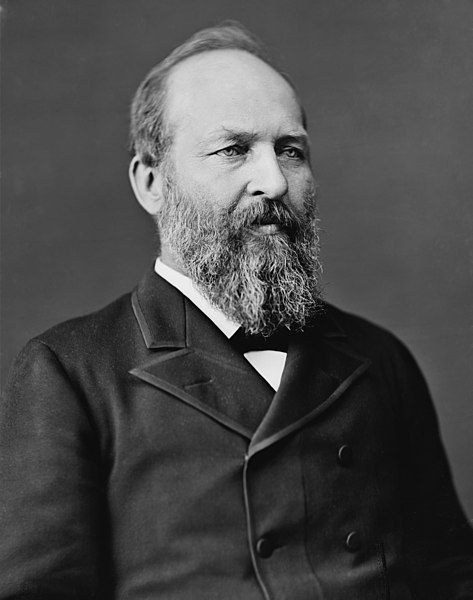
Tradition well established that James A. Garfield used the phrase at a New York Alumni Dinner in 1872. No such words are found, however. A letter of his, Jan., 1872, contains the same line of thought.

I now had a tentative identification for the individual named in the quotation as well as a possible identification for the individual who had spoken the words.

via

A search in Google Books and the Internet Archive for various combinations of keywords from the above yielded some fascinating permutations of the elusive quote on education:


The January 1902 issue of the Western Journal of Education contains an address by one E.F. Adams in which he claims, “When President Garfield said that when Horace Mann was on one end of a log and himself on the other there was a university he expressed the spirit of the old education” (p. 18).


In a 1966 issue of the education magazine Phi Delta Kappan, Arthur H. Glogau again attributed the quotation to President Garfield and writes “Garfield once said that a rotten log, with Mark Hopkins on one end of it, and himself on the other, would be a university” (Vol 48, p. 404). The date for the quotation is given in this instance as 1885.

Mark Hopkins was one-time president of Williams College and apparently a former professor of Garfield’s. In a footnote concerning Hopkins in The Collected Prose of Robert Frost, the editor formulates the quote as: “The ideal college is Mark Hopkins on one end of a log and a student at the other” (p. 266).

Since none of these sources either quote Garfield directly or provide a citation to his own writing or speeches, I turned to our own catalog, ABIGAIL, and called for a biography of Garfield from our reference collection.

Unfortunately, this didn’t exactly clear up the mystery.

Robert Granfield Caldwell’s James A Garfield: A Party Chieftain (1931), attributes the quote to another secondary source, B.A. Hinsdale’s President Garfield and Education (1882), and phrases it: “Give me a log hut, with only a simple bench, Mark Hopkins on one end and I on the other, and you may have all the buildings, apparatus and libraries without him” (p. 185). 


This citation appears to lead us back to a 4 February 1879 speech by Garfield before the National Education Association, the full text of which is reproduced in the Hinsdale publication. You can read it online at the Internet Archive. In his NEA address, Garfield articulated the idea in this way:

If I could be taken back into boyhood to-day, and had all the libraries and apparatus of a university, with ordinary routine professors, offered me on the one hand, and on the other a great, luminous, rich-souled man, such as Dr. Hopkins was twenty years ago, in a tent in the woods alone, I should say, ‘Give me Dr. Hopkins for my college course, rather than any university with only routine professors’ (338).

So now I have four dates upon which this sentiment was supposedly expressed (1871, 1872, 1879, and 1885) and as many venues (New York Alumni dinner, private correspondence, NEA address, and an unknown context for the 1885 attribution). 


What I find fascinating about all of these “quotations” is the aspects of the story that remain roughly constant: the presence of Hopkins, the image of one mentor and one student in dialogue, the language of wood: a log, a log bench, a rotten log, a tent in the woods. My speculative guess, based on the information I have in front of me, is that this was a well-worn anecdote that James Garfield told about his former professor in a number of settings, and that the image was such a striking one to his contemporaries that it was picked up and repeated over time with slight variation, like that game of telephone you’re forced to play as a child at birthday parties where you whisper a message from ear to ear around the circle and see whether the end result bears any resemblance to the original phrase.

So there you have it: an hour or two in the life of a reference librarian. 

releasing books into the wild

17 Tuesday May 2011

Posted by Anna Clutterbuck-Cook in library life

≈ Leave a comment

Tags

books, boston, call to participate, michigan, travel

Through the great apartment clear-out of 2011, Hanna and I built a rather substantial stack of books — mostly titles we’d acquired used on the $1 book carts in Boston, or have duplicates of from graduate courses, etc. — that we no longer felt the need to own. Previously when this has happened, we’ve donated them to Goodwill or the local library book sale or sold them on at one of the myriad used bookshops (all good options!) However, this time around, we’ve decided to try releasing them into the wild via the online book sharing project BookCrossings.

Here is one of the books we’re going to “release into the wild” in upcoming days.

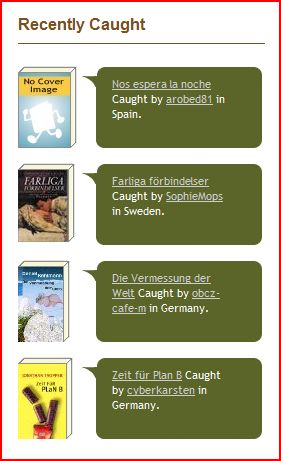
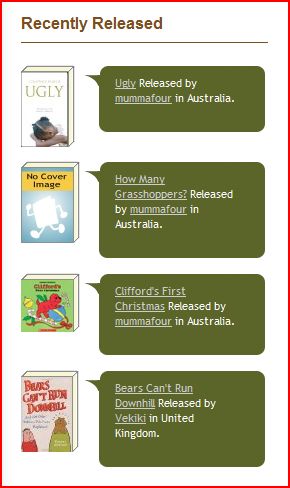
This was a fun memoir by comedian Hillary Carlip that Hanna bought me for $1 last spring to read while I was on my research trip in Oregon. It was great airplane reading. Now we’ve given it a “BCID” code number and written instructions in the front cover for whomever finds the book (once we’ve left it somewhere) to go to the website and enter the code, logging where the book was found and then, hopefully, where the discoverer eventually releases it.  One of the most charming features of the site that I’ve discovered so far is the side-bar widgets that highlight books recently “released” and “caught” around the world.
Since this is a brand-new experiment for us, I don’t have a lot more fun facts to add … but after we’ve released our first batch of 21 books in locations here in Massachusetts, in Vermont, New York, Ontario, and Michigan, and they’ve been out running about for a few weeks I’ll let you know what sorts of adventures they’ve been having. Stay tuned for the sequel!

from the archives: fun with reenactment photography

14 Thursday Apr 2011

Posted by Anna Clutterbuck-Cook in library life

≈ Leave a comment

Tags

family, history, humor, MHS, michigan, photos

Some things never change.

This passed week at the MHS, some colleagues and I posed for mock Victorian daguerreotype photographs to promote our new photography exhibit on the blog. Here I am with my awesome boss, Elaine:

Anna (standing) and Elaine (seated)
at the MHS, April 2011

(The shawls are courtesy of Hanna‘s mom Linda.)

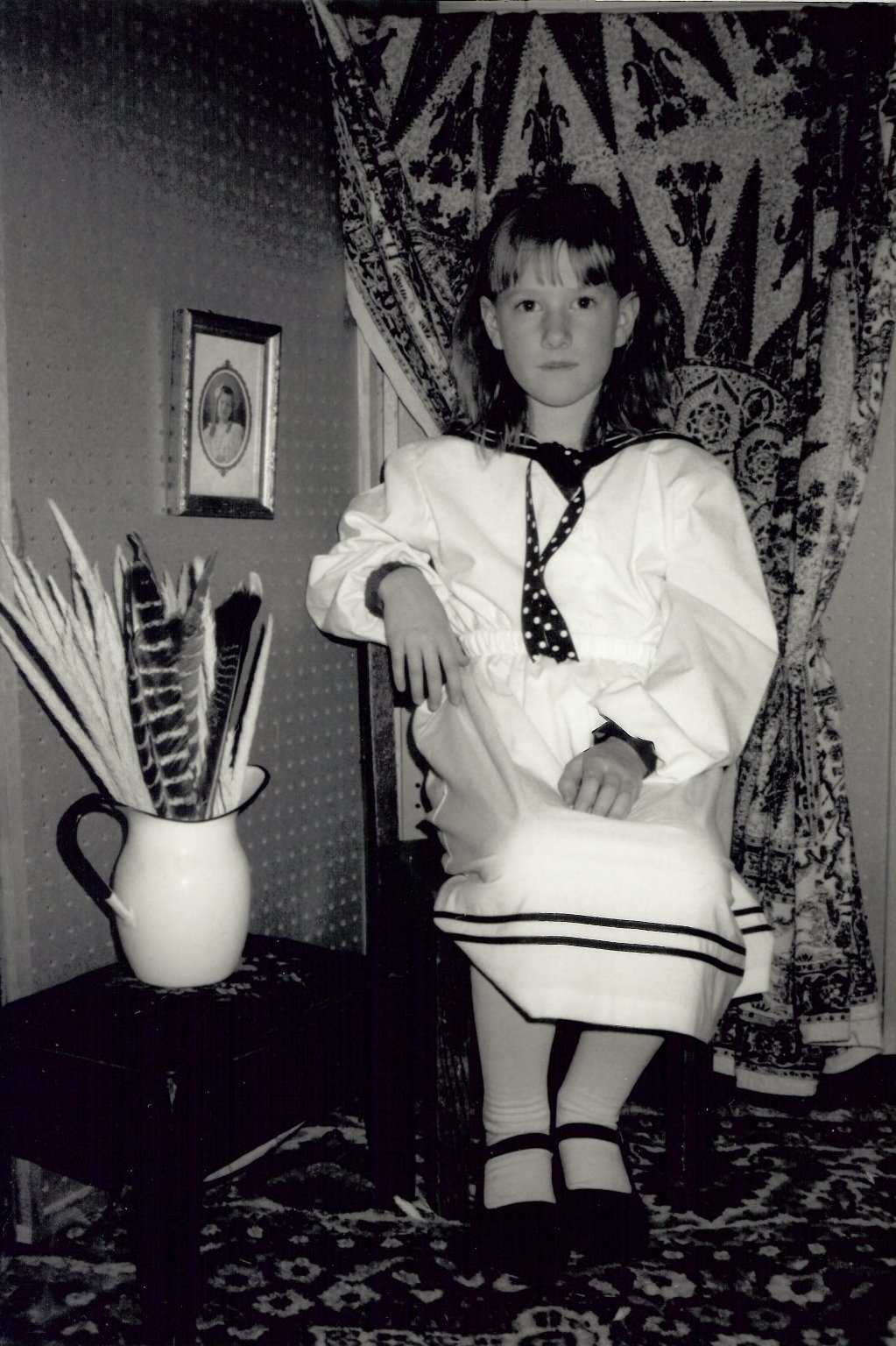
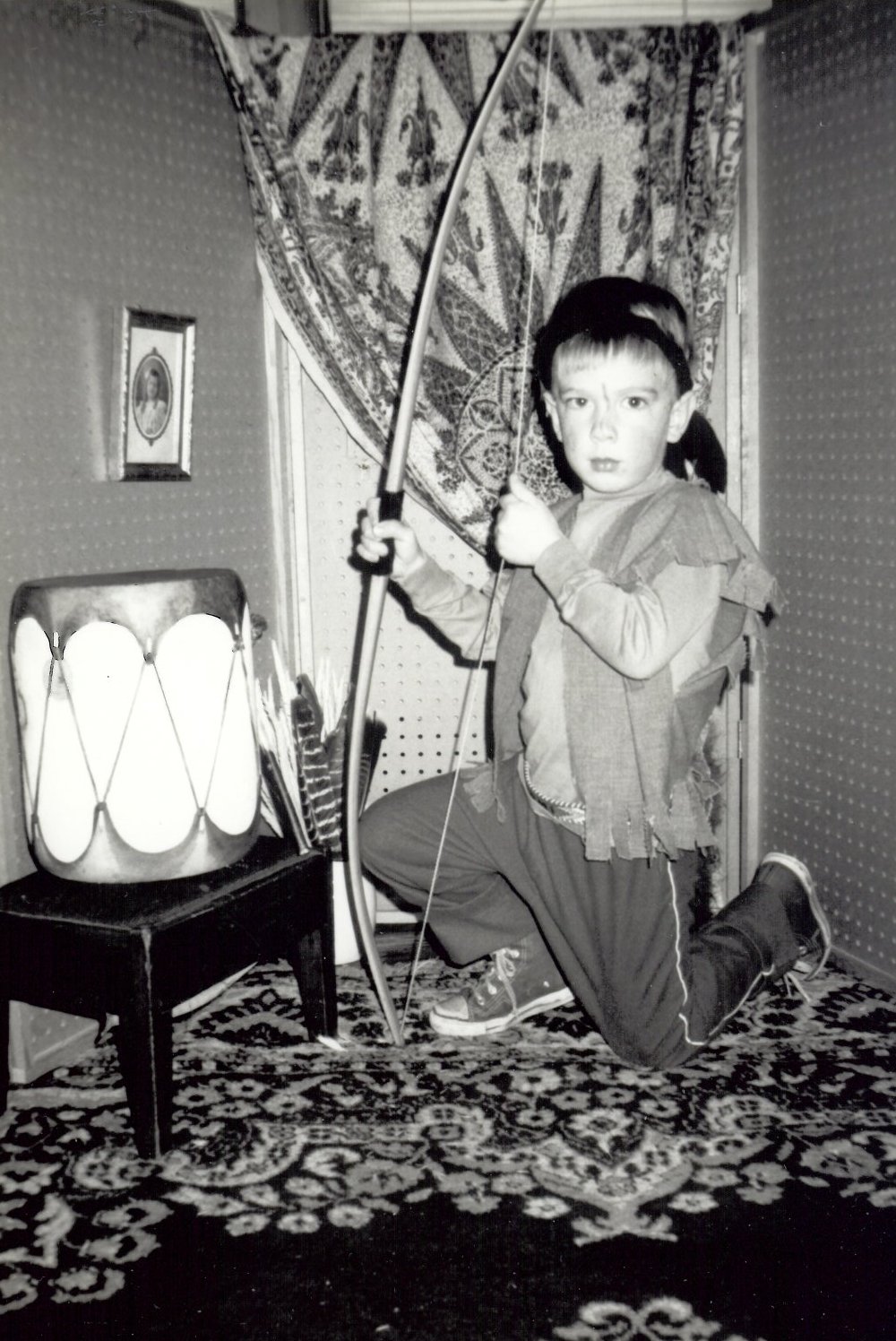
When I sent the blog post to my mother she responded by digging out these photographs, circa. 1988, when we created our own mock portrait studio and spent an afternoon posing for Edwardian-era black and white photographs.

Yes, before you ask, we were indeed that sort of homeschooling family.

Anna (age 7)
Brian (age 4)
Maggie (age 1)
← Older posts
Newer posts →
"the past is a wild party; check your preconceptions at the door." ~ Emma Donoghue

Recent Posts

  • medical update 11.11.22
  • medical update 6.4.22
  • medical update 1.16.2022
  • medical update 10.13.2021
  • medical update 8.17.2021

Archives

Categories

Creative Commons License

This work by Anna J. Clutterbuck-Cook is licensed under a Creative Commons Attribution 3.0 Unported License

Meta

  • Create account
  • Log in
  • Entries feed
  • Comments feed
  • WordPress.com

Create a free website or blog at WordPress.com.

  • Subscribe Subscribed
    • the feminist librarian
    • Join 37 other subscribers
    • Already have a WordPress.com account? Log in now.
    • the feminist librarian
    • Subscribe Subscribed
    • Sign up
    • Log in
    • Report this content
    • View site in Reader
    • Manage subscriptions
    • Collapse this bar