• anna j. clutterbuck-cook
  • contact
  • curriculum vitae
  • find me elsewhere
  • marilyn ross memorial book prize

the feminist librarian

the feminist librarian

Category Archives: media

multimedia monday: "my baby likes a bunch of authors"

19 Monday Jul 2010

Posted by Anna Clutterbuck-Cook in media

≈ Leave a comment

Tags

books, multimedia monday, web video

NPR’s On the Media recently did an hour-long show devoted to books, bibliophiles, and the future of the printed word. You can cherry-pick segments or stream the whole show over at their website; Unfortunately I can’t embed it here. To give you an idea of the content, here’s an excerpt from segment Books 2.0.

BROOKE GLADSTONE: Reading a book, losing oneself in the imagination of an author is usually a solitary enterprise. So, too, is writing a book, says author Neil Gaiman.

NEIL GAIMAN: Writing is like death, a very lonely business. You do it on your own. Somebody is always sitting there figuring things out. Somebody is always going to have to take readers somewhere they have never been before.

BROOKE GLADSTONE: But, as books move from printed page to networked screen, it grows easier for writers and readers to gather in the virtual margins to discuss the plot and characters and for readers to actually help shape them.

Crowd sourcing artistic expression in this way may seem contrary to the rules of creativity – books by committee? But Bob Stein, founder of the Institute for the Future of the Book, sees an inevitable merging of writer and reader.

As someone who for decades has experimented with new forms for books, he’s used to people who grew up with traditional books reflexively rejecting his ideas, as when he explained his vision to a group of biographers.

BOB STEIN: One of the people in the room was one of these writers who gets a two-million-dollar advance, goes away for ten years, literally, writes a book, sells a lot of copies and then does it all over again. So I said to him, instead of getting your two-million-dollar advance and going away for ten years, how about if your publisher announced to the world so-and-so is going to start work on a biography of Barack Obama, who’s interested?

And n-thousands of people say, yes, I’m interested, and they subscribe to your project and they pay two dollars a year, whatever it is. I said, at the end of ten years you’ll have a body of work, and you’ll have the same two million dollars.

The difference will be that you’ve done this in public and you’ve done this with a group of people helping you in various ways.

And he, of course, as I expected, you know, put his fingers up in a cross, saying, oh, my God, that’s the most horrible thing I’ve ever heard of, that’s the last thing I ever want to do.

And I said to him, I’m willing to bet you that there’s a young woman who’s getting her PhD right now who grew up in MySpace, in Facebook, somebody who is comfortable and excited about working in a public collaborative space. She is a seed of the future.

BROOKE GLADSTONE: But how do you make money in your vision, the subscription model?

BOB STEIN: It’s all subscription. The day that the

author is no longer interested, and she doesn’t want to work with the readers any longer, she stops getting royalties.

BROOKE GLADSTONE: You know, there are many authors who talk about a quiet place, a moment of inspiration, alone.

BOB STEIN: It’s very interesting. The very concept of an author, the very idea that somebody owned an idea, is extremely recent. Remix culture, you know, where something is constructed from lots of different parts, remix culture was actually the standard until print came along. Print actually changed everything because suddenly you weren’t relying on –

BROOKE GLADSTONE: An oral tradition.

BOB STEIN: – on the oral tradition.

BROOKE GLADSTONE: I’m simply raising the fact that whether or not the author holding up his hands in a get-thee-from-me-Satan position is a biographer or a philosopher or a novelist, there’s not necessarily a role, at least in the beginning of creation, for the reader.

BOB STEIN: I – we’re, we’re definitely in a space where it’s almost impossible to argue about this.

BROOKE GLADSTONE: Because you’re projecting into a future where that quiet place will no longer be necessary?

BOB STEIN: [SIGHS] Basically, yeah.

BROOKE GLADSTONE: What about the thingness of books?

BOB STEIN: I’ll miss it. I love holding the object in my hand. On the other hand, when I’m online and suddenly my daughter, who lives in London, shows up in the margin of something we’re reading together, chills go up and down my spine. Being able to share an experience of reading with people whose judgment I care about is deeply rewarding.

Here’s a wonderful sort of factoid which may be helpful: The western version of the printing press is invented in 1454. It takes 50 years for page numbers to emerge. It took humans that long to figure out that it might be useful to put numbers onto the pages.

[BROOKE LAUGHS]

We’re at the very, very beginning of the shift from the book to whatever is going to become more important than it. I realize that there’s a way to see what I’m saying and, and sort of say, there is a truly mad man, and, and in a lot of ways I, I can’t prove it, but – you, you understand the problem.

Listen or read the full transcript over at On the Media.

And something fun that I can embed, here’s the music video for a song they use on the show as a bridge between segments, the classic “My Baby Loves a Bunch of Authors,” by the band Moxy Fruvous.

Happy reading (however you choose to go about it)!

multimedia monday: the pre-roe politics of abortion

05 Monday Jul 2010

Posted by Anna Clutterbuck-Cook in media

≈ Leave a comment

Tags

feminism, history, web audio

Terry Gross and Linda Greenhouse @ Fresh Air | The Rhetoric That Shaped The Abortion Debate

To give you a taste, here’s Linda Greenhouse on the development of the rhetoric “the right to choose” and “pro-choice” for the advocates of abortion access:

Jimmye Kimmey was a young woman who was executive director of an organization called the Association for the Study of Abortion (ASA), which was one of the early reform groups and was migrating in the early 1970s from a position of reforming the existing abortion laws to the outright repeal of existing abortion laws, and she wrote a memorandum framing the issue of how the pro-repeal position should be described: ‘Right to life is short, catchy, composed of monosyllabic words — an important consideration in English. We need something comparable. Right to choose would seem to do the job. And … choice has to do with action, and it’s action that we’re concerned with.’

Introduction to book and full transcript of the show are available at the Fresh Air on website.

friday fun: my sister tells a story about street harassment

02 Friday Jul 2010

Posted by Anna Clutterbuck-Cook in media

≈ Leave a comment

Tags

blogging, family, feminism, web video

As @feministhulk observed this week, HULK TRY TO OPEN MIND, SMASH EPISTEMOLOGICAL FRAMEWORKS WHICH LIMIT HULK’S THOUGHT, BUT HULK WILL NEVER GET CAT-CALLING.

My sister, Maggie recently moved to Austin, Texas and started a personal blog to share pictures and videos with family members. Last week, she posted this story about two guys who harassed her at a local mall, trying to recruit her (they claimed) for a modeling agency.

Since Maggie is a great storyteller I mostly want to let this story stand on its own and let you make of it what you will.

I do want, briefly, to say this. What struck me when I watched the video is how important it is to remember that sexism and beauty standards end up hurting even the women who are supposedly privileged by them. In this situation, because Maggie’s harassers thought she looked “like a model,” they felt entitled to proposition her in the coffee shop at the mall. This is a different type of harassment, to be sure, than the ridicule we who don’t fit the norm experience. It’s easy (because women are encouraged to compete with each other when it comes to beauty) to resent the attention “hot” women receive from strangers. But those women I know who experience that attention usually don’t feel more than passingly gratified. Mostly, they feel under constant siege from people who act like their bodies are somehow public property, perpetually on show, simply because these women had the gall to walk out of the house in the morning in something other than their pajamas (and at times even then!).

My sister has learned how to reject these intrusions and even turn them into humor. She’s in a position to recognize the harassment for what it is and protect herself. But, as she points out some young women might not be so critical of the harassment disguising itself as flattery. Which is why raising awareness of the fact that this kind of harassment is not okay — particularly through humorous means such as the collaborative Hollaback! website — are such awesome resources. Make sure all the people in your life who experience this kind of public harassment know there are ways to speak up and fight back.

espresso AND a puppy: the consequences of free-range children?

30 Wednesday Jun 2010

Posted by Anna Clutterbuck-Cook in media

≈ 3 Comments

Tags

children, humor, politics

Via my friend Laura comes this warning from a coffee shop in L.A., posted online at The Consumerist.


I’m going to admit up front I find this funny. I think it’s a fairly light-hearted way to ask parents to be aware of their children in public, crowded spaces. And remind them not to assume that baristas and/or store clerks and/or other customers are available for free childcare. As a person who used to work at Barnes & Noble, I’ve experienced first-hand the frustration of adults who came in with the clear intention of dumping their kids in the children’s area and then going to meet their friends for an extended coffee klatch at the Starbucks across the store. It’s one thing to believe that “it takes a village to raise a child” (I do believe young people are our collective responsibility) and another thing to demand that “the village” suddenly add childcare to their list of work-related responsibilities.

There’s a big difference between asking a barista to politely take an order for chocolate milk from a three-year-old and asking them to supervise a gaggle of small people roughousing on the coffeehouse furniture. As Laura said to me in a follow-up email,

Whenever people ask me to take care of their children, I try to make it clear that they may not like the results. After thinking through this child-hate controversy for a long time (via your blog and elsewhere), I have come up with [the point that] us haters don’t actually hate children, we hate the parents. The parents who don’t respect their children or other people enough to to teach/guide/discipline their children within responsible boundaries. My own personal experience with this is primarily in stores and on the T [Boston subway], both places where it can be dangerous not to monitor children. Plus, I think most everyone could do with a teaching moment on respect, politeness, and kindness, and I think it’s a real problem that some parents think their children can’t learn it, or it will be stifling to their creative spirit to learn it. I mean, children are smart, you can teach them appropriateness in different circumstances.

To go back to the episode of My Family I wrote about for mother’s day, when Ben and Susan (the parents) are trying to speak with another couple about that couple’s son’s bullying behavior toward Ben and Susan’s youngest child. The parents of the bully are self-proclaimed advocates of “free range” children, which in their minds equates to being completely hands-off and allowing their child to run rough-shod over other young people. I have first-hand experience with this kind of parenting philosophy, which basically assumes that children should work out problems among themselves. What I find suspicious about this philosophy is that a) the parents espousing it are more often then not the parents of children who benefit from the playground hierarchy, rather than parents of victims; and b) it side-steps the question of how children are going to learn — particularly in a culture that’s so age-segregated as ours, where children spend the majority of their time with their age-mates — the skills to mediate and problem-solve. These are skills even adults with years of practice struggle with, and yet we assume children will magically acquire them?

I sense a disconnect.

Which is why I come back to observation “a”: radically hands-off parents* are more often than not bullies themselves, advantage-takers who are more than willing to step over others more vulnerable then themselves (whether it’s a polite stranger they cut in front of in the coffee line, or a colleague at work they systematically undermine, or a spouse whom they bully Hyacinthe style). They believe the world is a cut-throat, take-no-prisoners place in which their children will need to learn how to come out on top if they are to survive.

I realize I’ve wandered far away from “espresso and a puppy” here. I think what’s fascinating to me about the question of attended/unattended children in public spaces (and the related question of what type of “attending” said children require) is that rarely do we stop to assess what the stakeholders in the situation really need and how we might best arrange our public spaces in order to accommodate those needs. And I use the rather social-sciencey term “stakeholder” here as an umbrella term that encompasses all people involved: coffee shop employees, customers with children, customers without children, customers who are children … how often do we stop and ask, when there is a perception of a problem (i.e. unattended children) what the actual problem is, and how it might be fixed. It’s a possibility that rowdy, neglected children are symptomatic of something deeper, and that requiring children to be “attended” won’t necessarily fix that issue — which will manifest in some other way down the road.

Still, points to the sign-creators for naming the symptom at least — if not the cure. And doing it in a fairly benign fashion at that, with a clear sense of humor. I particularly appreciate that the consequences of the percieved problem, in this case, are couched in terms of consequences for the parents (your kid’s gonna learn the word “fuck”! and acquire a taste for coffee!) rather than abuse toward the children themselves, who are still learning, growing, and practicing what it means to be part of the social fabric of the world.

*Again, to be distinguished from parents who respect their children as human beings and care for them with unconditional love, something that is often also referred to as “free range parenting.” That’s a post for another day.

weekend fun: the world cup and twitter

26 Saturday Jun 2010

Posted by Anna Clutterbuck-Cook in media

≈ Leave a comment

Tags

fun, npr, web audio

Soccer self portrait by LBott @ Flickr.com. Link at bottom of post.We’re set for another weekend of soccer football at my house this weekend, particularly the Germany vs. UK game, about which I’ve heard via Hanna via StephenFry via CarlTidy on Twitter: “This world cup is like WWII: The French surrendered early the Americans turned up late leaving England to fight the Germans.”

So in honor of this international sporting event, to which I am neophyte follower (having been put through my paces by Hanna), I share this story from last weekend’s On the Media about the World Cup and that internet phenomenon known as Twitter, which is used by human beings worldwide communicating in a polyglot of languages — often (as this story shows) to unintended and, shall we say, très amusant results.

BOB GARFIELD: Carlos Eduardo dos Santos Galvao Bueno is a play-by-play announcer who calls the World Cup matches on Brazil’s largest TV network, Rede Globo. Last weekend, someone in Brazil offered a blunt critique of Galvao’s broadcasting style with a three-word Tweet in Portuguese: “Cala Boca Galvao,” or, in English, “Shut up, Galvao.”

The phrase quickly became one of the top worldwide trending topics in the Twittersphere, and what happened next, says Ethan Zuckerman of the Berkman Center for Internet and Society, was the result of a wired world eavesdropping uncomprehendingly on one another’s conversations.

ETHAN ZUCKERMAN: For the last three or four days, “Cala Boca Galvao” has been absolutely at the top of the topic list. And so, what happened was a lot of non-Portuguese speakers saw this phrase, didn’t know what it meant and started Tweeting, what does Cala Boca Galvao mean?

If there’s a new topic trending on Twitter, there’s probably a significant chance that it has something to do with Lady Gaga. So some of the Brazilians grabbed that idea and started telling the non-Portuguese speakers that Cala Boca Galvao is the new Lady Gaga single.

The fun doesn’t stop there! Sad to say there is no direct embed function for the audio, but you can listen to the story, download the mp3, or read a full transcript over at On the Media.

Have a great weekend!

image credit: soccer self portrait by LBott @ Flickr.com.

multimedia monday: new economy of the poor

21 Monday Jun 2010

Posted by Anna Clutterbuck-Cook in media

≈ Leave a comment

Tags

multimedia monday, npr, politics, web audio

My audio for the week is an interview by Terry Gross of journalist Gary Rivlin, whose new book Broke USA explores the world of marginal finance.

Full transcript available at NPR.

I particularly like the way Rivlin discusses exploitation without flatting out the narrative into one of class warfare. He talks about the ways in which institutions like payday lenders and rent-to-own businesses provide services to poor neighborhoods and rural areas that are often vital and welcomed by their clientele. He doesn’t come across as shaming poor people for being dupes of predatory loan companies or (for that matter) universally condemning financial institutions for providing services that are in high demand.

wilted teacakes and fried green tomatoes: summer movies (part one)

14 Monday Jun 2010

Posted by Anna Clutterbuck-Cook in media

≈ 1 Comment

Tags

fun, hanna, movies

Summer has well and truly arrived in Boston, which means days at a time where the humid heat rises into the 80s and 90s (Fahrenheit) and even after the sun goes down continues to radiate heat up from the ground where we’ve “paved paradise and put in a parking lot.” We don’t have a/c in our apartment, so weather like this means breaking out the fans, taking cold showers long and often, downing gallons of iced tea, and falling asleep with damp washclothes on our foreheads like I used to do as a child back in Michigan. The kind of weather that always makes me think of the passage on Harper Lee’s To Kill A Mockingbird in which Scout observes:

Somehow, it was hotter then: a black dog suffered on a summer’s day; bony mules hitched to Hoover carts flicked flies in the sweltering shade of the live oaks on the square. Men’s stiff collars wilted by nine in the morning. Ladies bathed before noon, after their three-o’clock naps, and by nightfall were like soft teacakes with frostings of sweat and sweet talcum.

How to combat the teacake-y feeling? Or at least distract when there’s nothing to be done but wait it out ’til the next thunderstorm blows through? (again: I’m reminded of Garnet in Elizabeth Enright’s Thimble Summer who lies in her bed every night listening to the distant echoes of thunder in the mountains, from rain that never makes it down to the shriveled plains) Why, watch movies, of course! Movies in which characters suffering from heat and humidity to a greater degree than you are suffering from heat and humidity (a little schadenfreude never hurt anyone, right?)! Movies in which characters are freezing their asses off and can only wish for the warmth you are currently enjoying in surfeit! And of course, for prolonged, multi-part distraction, television shows in which characters suffer heat and cold (sometimes both at once and more besides!)

Hanna and I have, accordingly, drawn up a four-part list of one hundred movies and television shows from which you can choose your distraction in the sweltering months to come. We’ll be delivering it to you in four installments over the next month broken down thusly (links to come as posts go live).

Week One: Movies Wherein Characters Are Hotter Than Blazes
Week Two: Movies Wherein Characters Are Totally Chill
Week Three: Television Shows Wherein Things Happen Which Are Hot
Week Four: Television Shows Wherein Things Happen Which Are Cold

Crandall’s Savoy Theatre

Photo from the Library of Congress Flickr Stream.

Obviously, as with previous such lists, the movies and/or television shows are chosen completely at our discretion and we reserve all rights to bend, twist, knot, reverse and otherwise alter the criteria of each week and the meaning of each movie to fit our desired titles on said list. We make no claims to comprehensiveness or gravity of thought — these lists pretty much end up on paper (er, web pixels) as they pop into our heads, with little by way of composition or editing.

Please feel free to add those titles which you feel we have unjustly overlooked — or merely those which you find help you out in an effort to beat the heat. In the meantime, we hope you enjoy!

Movies Wherein Characters Are Hotter Than Blazes

Jaws (1975)

H: jaws must be right up there in the …oh, the top three, i’d say, for “quintessential summer movie watching.” this first list is supposed to be “movies to watch when you want to feel hot” and this should do it for you. just when you’re thinking, “gosh, that water does look nice and cool—” nope, not so much. that water looks nice and sharky. yeah, i know the shark kinda sucks — it bounces and the teeth don’t look right and the tail is a little weird but if you don’t at least twitch when it rears up out of the water beside roy scheider, i think you’re probably wrong in the head on some level.

A: Hanna finally made me watch this on a warm night last summer during which, if I remember correctly, they were performing horrendous road construction activities outside the window. Luckily, the dialog isn’t all this has going for it — though Richard Dreyfuss does a thoroughly charming turn as the enthusiastic shark expert from out of town, brought in on consultation that quickly turns deadly.


Star Wars (1977)

H: well, the first third takes place in a desert. i think that’s reason enough, yes? beyond, you know, just everything else that’s right with the movie.

A: Apparently, being of the female persuasion, we’re supposed to be watching Sex and the City 2 this summer as the girl equivelant of the dudely Star Wars. Since I was pretty much hooked on the original trilogy the first time Leia appropriated Luke’s gun, I cry “foul!” and suggest re-watching all three episodes back to back on a hot summer weekend.

H: everybody remember that scene on the death star when luke approaches chewie with the cuffs and says, “now, i’m going to put these on you—” not his wisest move, right? yeah, picture my reaction to anyone trying to get me to watch s&tc. at least without a healthy dose of irony on hand and, probably, a bottle of wine.

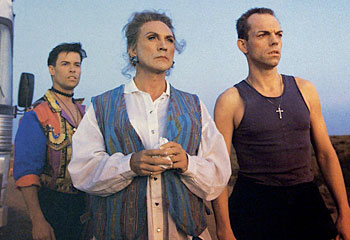
The Adventures of Priscilla Queen of the Desert (1994)

H: “Oh, Felicia. Where the fuck are we.” you want to know a fun way to make someone’s mind bend? find a genre fan; make sure this process won’t make them physically ill and then show them star wars: the phantom menace. then show them priscilla. then ask who they recognize. 🙂 it also works with lord of the rings fans, but often not quite so well.

A: I was introduced to the soundtrack of this movie back when I was about twelve and spent at least one summer listening to it fairly incessantly — on cassette tape no less! Likely on the Sony walkman I thought (when I got it for my ninth birthday) made me look like a totally cool teenager. Hanna (where would I be without her?) finally sat me down to watch the film last fall and I’m so completely glad I did. Really.

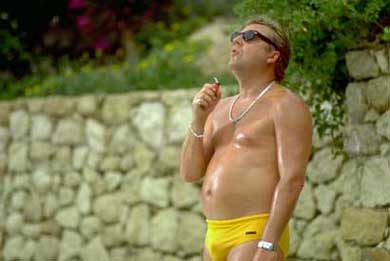
Sexy Beast (2000)

H: “But you’re dead. So shut up.” i’m tempted to say that i’d pay for someone to explain the bunny in this movie to me but…you know what? i’m not sure i want someone to explain the bunny to me. it’s weird and grisly and psychotic and kind of haunting and i think it’s fine just the way it is. i never fully realised how creepy the bunny is until i saw this movie on the big screen last year. not to mention how creepy ian mcshane is. ray winstone comes across as quite cuddly by comparison. ben kingsley as don logan is just so far out in left field it pretty much beggars description. really, the best description of his character is the chill that goes over the dinner table when h — not me — reveals logan’s imminent arrival. there’s a table of four adults who have been chatting about their approaching evening and the mere mention of this man who is coming the next day is enough to change all their expressions, body language, voices, the whole nine yards. to say nothing of the scene in ray winstone’s house in spain where kingsley and winstone are in the kitchen — kingsley is out of shot most of the time, an unseen harangue of profanity and accent from which winstone is physically flinching. he’s the bigger man — he outweighs kingsley by a solid 50 pounds; he has weapons all around himself; and he’s in his own damn house and he is flinching back as though kingsley is hitting him. it’s like watching a badly one-sided boxing match.

A: And Ian McShane is in it! Although only in the London bits. But his character is slightly more understandable than the character he played in the recently-released 44 Inch Chest which was good excepting we aren’t quite sure what the title refers to, what happened to the dog, or what the movie was about, really. So back to Sexy Beast which I promise I really did enjoy except that Hanna took me to see it in the Coolidge Corner theatre back when we were first dating? And to be honest, although I remember thinking the movie was brilliant, thinking back on it I mostly remember how thrilling it was that she let me hold her hand in the dark while we watched it.

To Kill a Mockingbird (1962)

A: This was a “me” addition to the list, and I added it mostly for the quote I referenced in our intro — since it takes places in the hot summer of the South, although that summer stretches into autumn. And when you ask children what they remember about the film, according to Robert Coles, what they remember is not the legal case or the commentary on American racism but the children’s relationship with Boo Radley, the reclusive neighbor next door whom they are frightened of and drawn to and who — in arguably one of the most gripping scenes in the story — rescues Scout on a stormy Halloween night.

H: to be honest, i’ve watched this movie only once, many years ago, and i remember very little about it. i remember the courtroom scene — i remember the last scene with boo radley — and that’s about it. um. this may make me a bad person.
The Fast and the Furious (2001)

A: I defer to Hanna on this one since she has a relationship with cars that, while I thoroughly admire and stand slightly in awe of, I do not intuitively share.

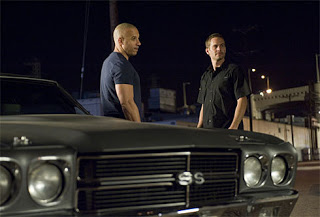
H: i have a theory about movies. it isn’t much of a theory but as far as it goes it runs as follows: every movie has a moment that makes it worthwhile. if you run across a movie that doesn’t, then you have found a true piece of cheese and you should be able to erase it from your brain. excellent movies, of course, are made up of more of these moments — you can see how the rule expands or contracts according to need or personal opinion. f&f has several such moments: brian’s lunch problems in the first half of the movie; dominic’s reaction to the car brian dumps in his garage (“i retract my previous statement.”); and much of the end of the movie. it’s cheesy, yes; it’s simple, yes; but, hey, there’s something likeable about these characters; there is something to watch for other than the tricked-out cars.
The Proposition (2005)

H: what a movie. hot. every frame of it leaches heat. it’s hot, it’s dry, it’s desert-baked in a way lawrence of arabia never thought of. it is hard to watch. the acting is sharp — there isn’t a dud note in it, down to the extras that populate the half-horse town. strange, violent, strangely violent, depressing, and hopeful.

A: Yeah, I’m with her on the hopeful, though you really, really have to hang in there till the end to get there. Through a really graphic rape scene (for those of you who can’t watch them) and brutal, brutal violence. It’s a movie that pulls no punches, but offers some really fascinating moral dilemmas for its characters to deal with — and refuses to let them off the hook. At all. Meathooks. And you can’t get away from the scenery, which is really a character all its own.

H: well, really, if you can’t handle the first scene, just don’t go further. really. honest advice here, folks. this movie is bloody. nasty. unpleasant. unpicturesque violence. the characters and the story coming through all of that are worth it in my book. the reaction of the townsfolk to the public punishment of an arrested boy alone makes much of the blood, sweat, and tears worthwhile, but there is no use in torturing yourself to get there.


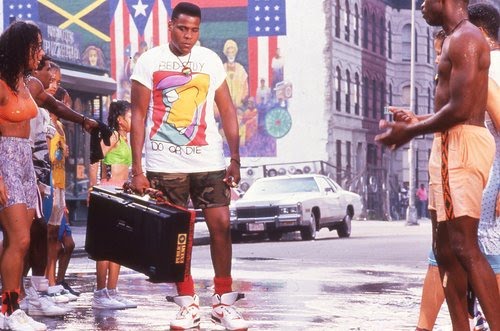
Do the Right Thing (1989)

H: never seen it. er. sorry.

A: This was my pick! My brother Brian, if memory serves, introduced me to this Spike Lee movie a handful of years ago. I’ve lost the specifics now, but remember the contours involving heat, heat in the city, and the short tempers that inevitably break when the heat is so damn hot you can’t remember what it felt like to be cool.
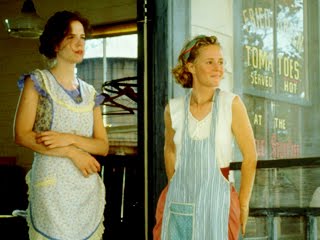
Fried Green Tomatoes (1991)

A: Mary Louise Parker is kick-ass, and really the reason to watch this movie. I mean, okay, there are lots of reasons to watch this movie, but as a young adolescent I mostly watched it to watch Mary Louise Parker kick ass. And cook the bad guy and serve him up for dessert.

H: oh! and there’s that great bit where the tiny little cook whangs the awful rapist child-thieving mean dude with the frying pan! i love that bit! so satisfying! plus the bit where ruth dies in the book made me cry when i read the book in college and understood what was actually happening.
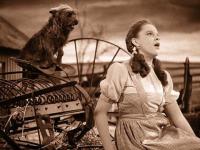

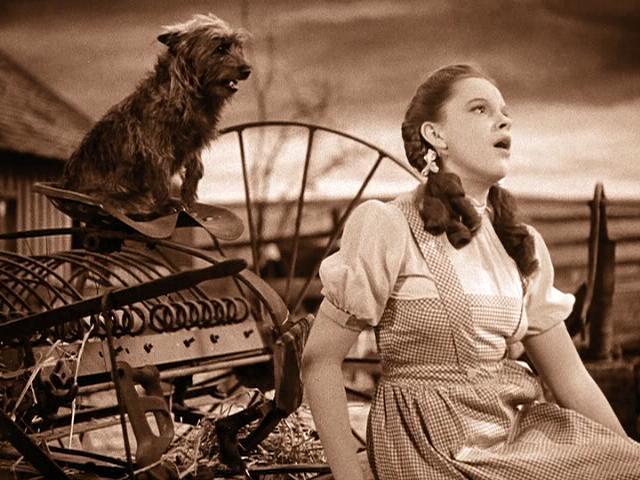
Wizard of Oz (1939)
A: To be honest, Oz scared me as a child — it comes from the same genre of out-of-kilter children’s fiction as Raggedy Ann and Andy stories, in which unhinged characters do things you really wish they wouldn’t, and punishment is meted out unpredictably and by some sort of foreign logic known only by the story creator themselves. L. Frank Baum was not a well man (possibly he spent too much time holed up in his summer cottage located in my home town, writing about the denizens of Oz). I’m with Gregory Maguire on this one: the Wizard of Oz is not a benevolent man, Oz is not a happy place, and the Wicked Witch of the West is not the one we should be frightened of. That having been said: it’s a classic MGM musical with all the bells and whistles, which starts and ends with a tornado in Kansas. What could be more summery than that? Just settle in with a emerald-colored Mojito and enjoy.
H: who wasn’t scared by oz as a kid? seriously — put up your hands so i can fail to believe you. if it wasn’t miss gulch, it was the tornado. if it wasn’t the tornado, it was the munchkins — or glinda — or the trees — or the witch — or — or — or — you gettin’ my drift here?
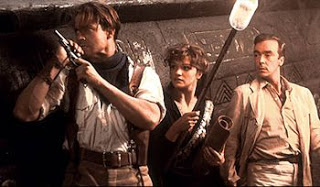

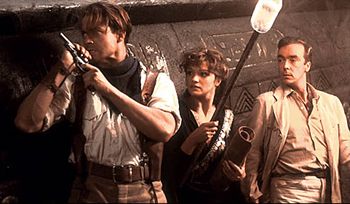
The Mummy (1999)
H: there is rachel weisz. there is brendan fraser. there is john hannah. there are just so many things that make this — and pretty much every other — stephen sommers movie a great ride. i’ve never been able to understand why so many people seem to hate what sommers does — why spend all that time and energy hating something that’s so much silly fun? and so good into the bargain? yeah, he clearly loves him the old universal monster classics — and what’s wrong with that? hell, if they really are going to go ahead with a remake of the gillman, i’d vote for sommers to do it any day. at least i could have faith that he’s seen it! A: What she said. There’s a librarian who (at least some of the time) saves the day, And John Hannah whom I will pretty much follow to the ends of the earth regardless of what he’s in, and Brendan Fraser who always looks like he’s having so much damn fun. And when you’ve finished this homage, go read Elizabeth Peters’ first installment of the Amelia Peabody mysteries, Crocodile on the Sandbank from which so much of these chracters were so obviously and lovingly pilfered.

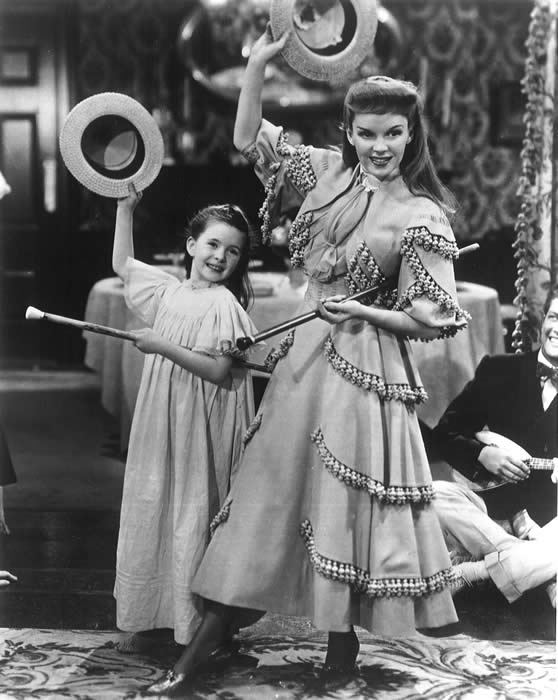
Meet Me In St. Louis (1944)
A: Strictly speaking, this a a film suitable for any season as it is set in four parts, Summer, Fall, Winter, and Spring. but again with the pull-all-the-stops MGM musical genre and it opens with an ice wagon, which is how people used to get ice for their refrigerators (ice boxes) way back when, which is fun. It pedals nostalgia like scalpers selling tickets, but as long as you know that’s what you’re getting it can be fun. And as a bonus, you get the winter bit too–so snow and ice and silly Christmas songs as well.
H: um. never seen this either. but i have seen the trolley song on some documentary about musicals somewhere! that counts, right? A: It totally counts — the trolley song is one of the best things about it. Oh, and little Margaret O’Brien doing soft-shoe.

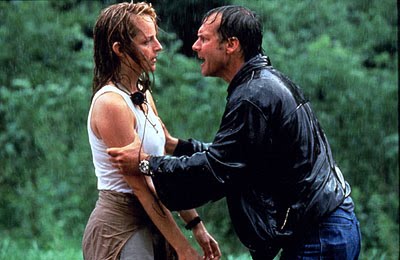
Twister (1996)
H: “we got cows!” oh, what a silly movie. what a deeply silly, very wrong movie. and yet somehow so deeply, deeply watchable. not least for helen hunt in a frequently soaked tank top but also for the group dynamic and the kind of cheerfully paced action movie that, lets face it, jerry bruckheimer does so well. does it make sense? well– -ish. does it follow established scientific fact? well, there’s that bit where– does a lot of shit go fast? and explode? yes. absolutely yes. and there is philip seymour hoffman. and, bewilderingly enough, cary elwes. and the guy from george of the jungle. explain that one.
A: I was traumatized by Cary Elwes being run through the head by an iron T-bar and can now never, ever drive behind trucks carrying long slender things which might fly off the back of said truck and through my windshield. Other than that, great summer fun and some totally adorable Movie Science(tm), including, if I remember correctly, something beautiful involving lots of ping-pong balls taking flight.
H: you do realize, anna, that you cobbled that scene together in your own head, right? it’s his driver who gets impaled. And it’s through the chest, if memory serves. A: Oh bah.

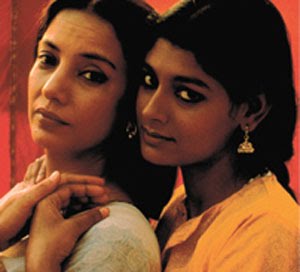
Fire (1996)
H: i’m out.
A: Oh, sweetheart, I should really sit you down and make you watch this one sometime :)! It’s the first of a triptych of films by Indian director Deepha Mehta (
Earth and Water being the other two, more historio-political, installments) and tells the story of a woman in a traditional Indian family who falls in love with her brother-in-law’s new wife. It’s a good messy family drama with, ultimately, a fairly happy ending.

H: oh, i’ve heard of it. i’ve just never watched it.
Murphy’s Romance (1985)
H: a romantic comedy from before the days when “romcom” had become one of the worst slurs in film reviewing. A: And at the end of that brief, sweet-sweet era in which gutsy women characters (in this case a woman who’s trying to make it on her own with her teenage son after walking out on an unhappy marriage) could win the man without losing the independence that made them great characters to begin with. Oh whither the day?
H: in all fairness, she hasn’t “walked out” — there has been a divorce. it isn’t like she’s hiding out from “Bad Husband ™.” A: Hehe. True, I was mostly remembering how he showed up later wanting to hang around and patch things up. The ex-who-would-not-leave…

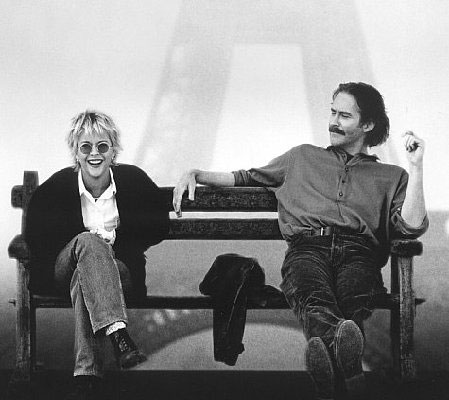
French Kiss (1995)
A: There’s sunshine, I remember that, and cheese. I’m leaving the rest to Hanna.
H: this isn’t a very “hot” movie. yes, there are some lengthy walks in the countryside of the south of france where our two protagonists — kevin kline and meg ryan — do look very warm, but that’s about it. no slogging across deserts; no thirst-defying treks. but it is a very sweet, very funny romantic comedy — absolutely perfect for a disgustingly hot evening in the real world when you just about have enough energy to get brie, crackers, and a cold beer (or glass of wine, if that’s your preference) and lie down in front of the tv with a fan blowing on your head. oh, and did i mention there’s a kick-ass soundtrack? and that kevin kline has a french accent? and a black leather jacket? now i have. 🙂
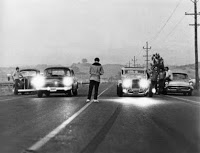
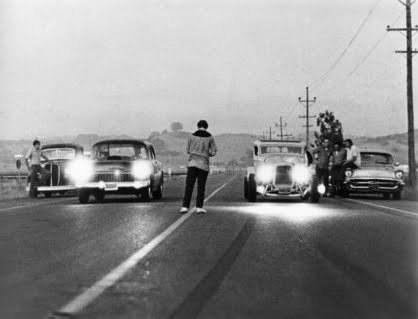
American Graffiti (1973)
H: god, i love this movie. i really should have been more suspicious of my last ex when i realised she didn’t care for it all that much. this should have been a clue. a lot of the people who started out in this movie now own large chunks of hollywood. really, very large chunks. you get to watch george lucas indulge his antique car fetish; his thing with the ’50s (which he doesn’t try to indemnify or make into a harmless place and time (entirely)); and his fascination with growing up, something i’m not entirely convinced he’s ever done which probably makes him a very happy, contented person.
A: It’s Wolfman Jack, really. Hallie Flanagan, one-time director of the Federal Theater Project during the great depression once said “The power of radio is not that it speaks to millions, but that it speaks intimately and privately to each one of those millions.” Somehow, Lucas makes that point through film, which really deserves a gold star.
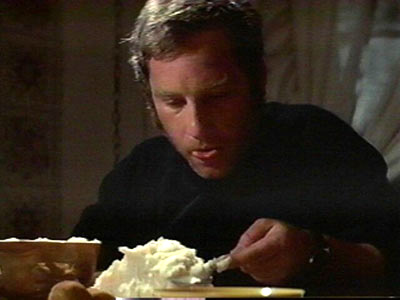
Close Encounters of the Third Kind (1977)
H: everyone in this movie is hot, almost 99.99% of the time. if there’s a frame where richard dreyfus isn’t sweating, i can’t remember where it is.A: Maybe they filmed in Texas in August?

Pan’s Labyrinth (2006)
A: This is a hard, hard movie to watch, but absolutely breathtaking in its brutality and (yes) hopefulness, I think. Hopefulness that despite all the overwhelming evil in the world there will be people — often unexpected people — who continue to perform small and courageous acts of kindness, justice, and bravery. “Heat” in this context could, I guess, stand for both the intensity of the situation and the burning passion of those survivors who carry on.
H: um. yes. that. go with that.
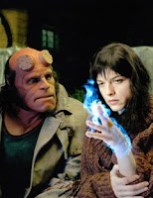

Hellboy (2004)
A: I’d say it was wrong of us to pack the list with two del Toro films, but really, can’t have too much of a good thing and aside from the unmistakable stylistic markers, it really is a world away from Pan’s Labyrinth in tone, though I suspect the same underlying fairytale morality underlies both films. Anyway, how could we possibly skip a film that involves a character who’s a demon from hell and a young woman with a talent for bursting into flames?
H: and the cats. don’t forget the cats. and john hurt. oh! and the seriously creepy clockwork bad guy. can’t forget him.

Gone in Sixty Seconds (2000)
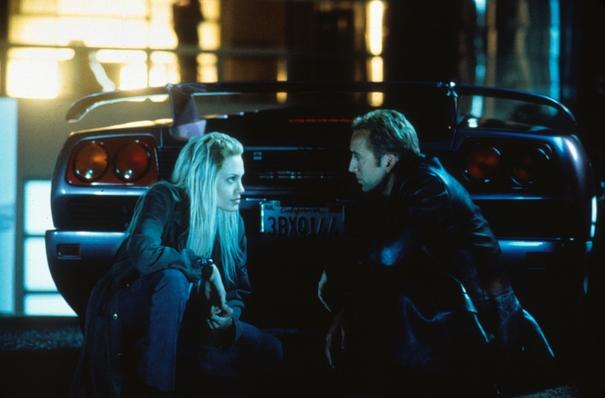
H: god bless this strange little remake. if i hadn’t gone to see it — in the theatre, no less — then when christopher eccleston was announced as the 9th doctor, i wouldn’t have been able to say: “wait — but wasn’t he the bad guy in gone in 60 seconds?” and thought: “oh my god we are so screwed.” and then have to eat both words and thoughts within, oh, approximately, 15 seconds of him showing up on screen in “rose.” anyway, the point here is not to hymn the wonders of christopher eccleston as doctor who (although that is always fun!) but if you’re in the mood for cheap one-liners, great cars and some unexpectedly good acting — mostly from eccleston, giovanni ribisi, vinnie jones, and angelina jolie (“hello, ladies—“) — see this. it is hot — it’s so-cal in the summer time: how much hotter do you want? — and there’s also timothy olyphant playing a gleefully numbskulled cop which, after watching him play an entirely ungleeful law enforcement man in deadwood is worth watching the movie for all on its own. there’s also a kick-ass soundtrack (“flower,” by moby; “too sick to pray,” a3, and “painted on my heart,” by the cult top the list, definitely) and more leather than you know what to do with. oh, and cars. did i mention the cars? this movie cemented my love affair with mustangs and the shelby. god bless eleanor. 🙂
A: I’m out on this one…Hanna hasn’t caught up with me on my delinquency yet!

Apocalypse Now (1979)
H: i’m out.
A: I’m in, mostly because of Martin Sheen whom I will follow to the ends of the earth in necessary (oh, President Bartlet, I do miss you!) and also because I associate
Heart of Darkness with this incredible history of the Belgian Congo I read in undergrad, by Adam Hochshield (Leopold’s Ghost) and the two together pushed me to finally watch this movie — which is basically a remake of Conrad’s novel set in Vietnam. With the heat and the subtropical humidity and the sick, twisted imperialism.
H: well, i’m only “out” because vietnam films make me uneasy. what i know about
apocalypse i know from film documentaries and jarhead which is deeply disturbing.

Predator (1987)
H: as far as atmosphere goes, note-perfect stifling, hot, and sweaty. about as macho as a movie can reasonably get without knotting itself up so tightly it can’t move. i haven’t seen rambo which i suspect might out-testosterone this. but this movie also has one of the all-time great, classic, world-beating creatures. who the hell puts together a sci-fi action thriller where you can’t see the monster for 3/4 of the movie?! john mctiernan and stan winston. of course, they also incidentally created a franchise with a 20+ year span, but we can’t hold them responsible for the second avp abortion. (and i use the word “abortion” advisedly. yuerrgh.) also, this movie falls under my previously mentioned movie rule — the key moment here is, i think, between, bizarrely enough, schwartzenegger as dutch, the nearly-mindlessly tough commanding officer and bill duke as mac, whose sidekick blain has been killed in an encounter with the predator. dutch, trying to make mac feel better, says of blain: “he was a good soldier.” mac pauses for a minute, thinks, looks up at dutch, and says, “he was my friend.” A: I remember lots of jungle and rain and cool hunting sequences.

The Painted Veil (2006)
H: out.
A: It’s a curious film, adapted from a 1925 novel by English author W. Somerset Maugham. It’s a story about an abusive, desperate marriage (adultery on her side, autocratic control on his) between an English debutant (Naomi Watts) and a doctor (Edward Norton) who takes his wife to a remote part of China where they encounter a cholera outbreak and are forced to come to terms with the expectations each of them brought into their hasty marriage. Toby Jones and Liev Schreiber do solid turns as secondary characters, and there is a wonderful cameo appearance by Diana Rigg, who plays a mother superior at a mission school.

multimedia monday: facebook privacy on ‘on the media’

07 Monday Jun 2010

Posted by Anna Clutterbuck-Cook in media

≈ Leave a comment

Tags

multimedia monday, web audio

While I mostly use facebook to occasionally look up contact information rather than do the sort of social networking it was designed for (that’s what email, blogger, and twitter are for in my humble opinion), I liked this recent interview with Ryan Singel on NPR’s On The Media about the dynamics of Facebook’s campaign for personal non-privacy on the internet.

Full transcript available at One The Media’s website.

What I particularly noticed is the point Singel makes about our society’s supposed desire for less and less privacy. There’s a lot of hand-wringing in the media about young people (“digital natives”) being less and less concerned about personal privacy. But what if it’s less a personal inclination and more that they (we) feel that loss of privacy is the price we pay for using the medium of the internet, which is inceasingly indespensible for moving through the world socially, politically, economically.

MARK ZUCKERBERG (audio clip): The Web is at a really important turning point right now. Up until recently, the default on the Web has been that most things aren’t social and most things don’t use your real identity. We’re building towards a Web where the default is social. Every application and product will be designed from the ground up to use real identity and friends.

RYAN SINGEL: Mark Zuckerberg likes to say that Facebook is just reflecting the changing privacy norms of the public, but Facebook is, I believe, forging that change, not so much reflecting it.

I think it’s a little self-serving of him to say that, you know, we’ve all become more public people. A large part of that has to do with default settings that Facebook gives us. We’re sort of being pushed into revealing more information. And now that Facebook is the place that these conversations happen, we kind of have to buy into that bargain just to be part of the conversation.

By and large I don’t move around the web anonymously: I blog under my own identity and comment on others’ blogs using my “annajcook” screen name which is just a mushed-together version of my real name. I use photos of my actual self in profile images.

However, I’m a big fan of this being my choice, and of knowing — when I sign up for a service — that I am able to understand the level of privacy or not-privacy that service is offering. And that I have a choice to opt in rather than opt out when those privacy settings change (which, let’s face it, on the web is pretty much inevitable).

I find it a real accessibility issue that we’re moving toward a web where “the default is social,” where the default is using one’s real identity, when more and more vital information is accessed through the internet — including information that people may not wish to seek out while embedded in real-life social networks. Information about getting out of an abusive relationship, for example, or answers to a question related to sexual activity or identity.

This is definitely a conversation taking place in the library community — how to help patrons navigate the new world of internet privacy concerns. I see it as a feminist issue as well, given the intersection of feminist politics with politics of vulnerable groups whose ability to maintain their privacy when desired is a legitimate safety concern in the real world (see the response to Gmail’s launch of Buzz earlier this year). Social networking on the web is an awesome tool, but it’s important that we enable folks to choose not to participate — without making them opt out of using the internet entirely.

Update: The week following the story shared above, On The Media again visited the issue of facebook and internet privacy, asking what the price of expecting anonymity of data might be.

The Cost of Privacy
May 28, 2010
Facebook changed their privacy settings this week after much vocal criticism. The settings are easier to control and more people will presumably change their settings to private. The media unanimously decided that this was a good thing, but Bob asks whether it’s that simple.

The two stories make an interesting comparison study, and once again I think OTM proves that it doesn’t settle for the media meme.

friday fun: robin hood (not that one)

28 Friday May 2010

Posted by Anna Clutterbuck-Cook in media

≈ Leave a comment

Tags

books, fun, movies

One more post before I have a mini blog hiatus for the Memorial Day Weekend.

What with the new Robin Hood film out, people have been harking back to versions of yore (see, for example, this episode of On Point from NPR in which film critic and historian David Thomspon and professor of English from Cardiff Stephen Knight discuss the legend of Robin Hood and its various incarnations in film). Hanna and I have been remembering with fondness the 1973 animated Disney version. My brother and I spent several years of our childhood — the ones in which we were not playing Redwall, Swallows & Amazons or Teenage Mutant Ninja Turtles — playing Robin Hood and Maid Marian (she kicked ass, in case anyone feels this is an open question), and our interpretation was heavily, heavily influenced by the singing animals in this particular adaptation.

I adored Maid Marian and at the time (I was maybe six or seven?) we had friends who were on sabbatical in England. So my father, an amateur calligrapher, penned a letter from Maid Marian of Sherwood Forest and mailed it to them to post back to me postmarked from England. It was on pink stationary, I remember, in an airmail envelope with a postage stamp bearing the head of Queen Elizabeth. I kept that letter in my treasure box for many, many years. In fact, it’s probably still filed away somewhere in my parents’ attic, in the box of Precious Things To Rescue In Event of Fire.

Ahem. Anyway. Hanna discovered earlier this week that she had part of the song (all she could remember) of “The Phony King of England” song stuck in her head — so here to make sure that everyone else gets it properly stuck in theirs as well is yours truly.

In addition to Disney’s retelling, of course, there are lots of other Robin Hoods to pick from — including (I’m a librarian after all!) book versions. Robin McKinley’s Outlaws of Sherwood is a classic, and I personally enjoyed Theresa Thomlinson’s Forestwife, which is a retelling of the legends from Marian’s point of view. For the “real,” legend cycle versions, my mother read to us from The merry adventures of Robin Hood of great renown, in Nottinghamshire, illustrated by Howard Pyle.

There was also the Song of Robin Hood, a songbook published in 1947 and illustrated in minute detail by Virginia Burton. My mother played and sang the songs for us, but as children we were most absorbed by the detailed picturework around each page of music, which dramatized the stories in sequential panels like tiny comic books without words.

So go forth and enjoy Robin Hood in all his many incarnations! Happy Friday and have a wonderful long weekend. I’ll be blogging again next Tuesday.

quick hit: jay smooth on rand paul and racism

27 Thursday May 2010

Posted by Anna Clutterbuck-Cook in media

≈ Leave a comment

Tags

politics, web video

I think in my ideal world, in which Dahlia Lithwick and Nina Totenberg would be on the Supreme Court and Jon Stewart would be President, I’m starting to think Jay Smooth would be Attorney General, or maybe Senate Majority Leader.

Does that prove he’s some hard-core racist that doesn’t care about Black people? No. But it does suggest that he’s such a hard-core purist libertarian that he cares more about this abstract set of principles than he cares about any actual people – that he’s more committed to these rigid abstractions than he is to protecting the basic rights of human beings in the real world.

← Older posts
Newer posts →
"the past is a wild party; check your preconceptions at the door." ~ Emma Donoghue

Recent Posts

  • medical update 11.11.22
  • medical update 6.4.22
  • medical update 1.16.2022
  • medical update 10.13.2021
  • medical update 8.17.2021

Archives

Categories

Creative Commons License

This work by Anna J. Clutterbuck-Cook is licensed under a Creative Commons Attribution 3.0 Unported License

Meta

  • Create account
  • Log in
  • Entries feed
  • Comments feed
  • WordPress.com

Create a free website or blog at WordPress.com.

  • Subscribe Subscribed
    • the feminist librarian
    • Join 37 other subscribers
    • Already have a WordPress.com account? Log in now.
    • the feminist librarian
    • Subscribe Subscribed
    • Sign up
    • Log in
    • Report this content
    • View site in Reader
    • Manage subscriptions
    • Collapse this bar