• anna j. clutterbuck-cook
  • contact
  • curriculum vitae
  • find me elsewhere
  • marilyn ross memorial book prize

the feminist librarian

the feminist librarian

Category Archives: think pieces

in which I write letters: dear alma mater

06 Thursday May 2010

Posted by Anna Clutterbuck-Cook in think pieces

≈ Leave a comment

Tags

education, hope college, i write letters, michigan, politics, sexuality

Today, the Board of Trustees at my alma mater (Hope College) convenes for its spring meeting. On the agenda is the Insitutional Statement on Homosexuality (PDF), written by the college president in 1995 and formally adopted by the board in 2001. The statement basically affirms the position of the Reformed Church in America which condemns homosexual “acts” while “affirming the responsibility of Christians to be fair to and accepting of persons with a homosexual orientation” (yeah, don’t ask; I’m not sure how they expect anyone to actually carry this off).

Anyway, the Hope LGBT Alumni Association called on folks to write the Board a personal letter opposing the statement and calling for its repeal. And because I enjoy writing letters and welcome any opportunity to get up on my soapbox and declaim on issues near and dear to my heart, I jumped at the chance.

And because it’s a shame to share self-righteousness with only the Board of Trustees when you can spread it around the internet, I’m posting it here. I’ll let y’all know what happens in the weeks to come!
Anna J. Cook (’05)
XX Xxxxxxxx Xx Xxx #
Allston, MA 02134

16 April 2010

Joel G. Bowens, Chairperson
Hope College Board of Trustees
c/o Office of the President
141 East 12th Street
Holland, MI 49422-9000

To the Board of Trustees:

I am a third generation alumna of Hope College, a 2005 graduate (summa cum laude) in History and Women’s Studies, and daughter of Mark Cook, Director of the Hope-Geneva Bookstore. I was born and grew up in Holland, only blocks away from the Hope campus, and there are many reasons I am proud to recognize Hope College as part of my heritage.

Since I am also a feminist and in a committed relationship with another woman, the college’s Institutional Statement on Homosexuality is not one of them.

As I know that the Board of Trustees plans to review the Institutional Statement on Homosexuality at its May meeting, I would like to take this opportunity to share with you some of my experiences at Hope College as a non-heterosexual student and as someone who believes non-straight sexuality is completely compatible ethical sexual practice.

I started taking classes in the fall of 1998 as a seventeen year old, eager to explore the brave new world of higher learning, creative writing, and political engagement. In the fall of 1998 Hope College hosted a Critical Issues Symposium on “Feminism and Faith” that was, for me, an initiation into a world of scholarship that spoke directly to my values: I was introduced to a community of scholars and theologians who believed deeply in equality, justice, and the glorious chaos of human existence. In the wake of the Symposium, throughout the 1998-1999 academic year, various speakers came to campus to talk about human sexuality. During that time I witnessed first-hand a great deal of hostility, both among students and on an institutional level, to those values of equality and justice and to the acceptance of human diversity.

I thought seriously after that first year about leaving Hope and transferring to a more welcoming campus. To be honest, despite generous tuition benefits, I would probably not have stayed if it had not been for the Women’s Studies faculty who gave me the space to explore the world of human sexuality and human rights without limiting the possibility of sexual morality to heterosexual relationships. I will be forever grateful for that space in which the faculty at Hope encouraged me to develop my scholarship and articulate my values. Yet it was always clear to me that those values were not in line with the beliefs held by those who formulated institutional policy. The stories I hear from family and friends still involved on campus indicate to me that this situation has not materially changed.

As the Board revisits its support of the Institutional Statement on Homosexuality, I urge you to consider the possibility that a same-sex sexual relationship offers us manifold opportunities to bring joy, love, and well-being into the world – as does any sexual relationship between two enthusiastically consenting individuals. I would encourage you to imagine that Hope College’s role as an institution of higher learning, in the context of the Christian faith, could be to encourage its students to explore their sexual values and ethical sexual practices regardless of the gender of those individuals engaged in any particular sexual activity. This, it seems to me, would be a much more life-affirming than to sit in judgment, suggesting that non-straight people who act on their sexual desires, regardless of ethical practices, are unchristian and therefore marginal members of the Hope College community.

I cannot hope that by writing this letter I will be able to persuade any of you, single-handedly, that non-straight sexual intimacy is no more or less sinful than heterosexual sex. Nor can I claim to understand the myriad pressures that are brought to bear on the Board of Trustees by certain stakeholders to reaffirm the condemnation of a certain proportion of its student, faculty, staff, and alumni population (not to mention their families and friends) for the nature of their love relationships and sexual practices.

Speaking for myself, however, I would like to make it clear to the Board that unless the atmosphere at Hope regarding human sexuality demonstrably improves, I will not support the college as an institution, financially or otherwise. I was clear about that upon graduation, and I am even clearer about that now. I will not support an institution that does not recognize the legitimacy of my primary relationship and continues to create a hostile environment for faculty, staff, and students who are not straight or do not believe that non-straight sexuality is immoral. This makes me sad, since some of the most dedicated faculty and highest-quality teaching I have ever encountered have been at Hope College. However, in the end I am unwilling to support the institutional marginalization of some in the Hope community just for whom they have fallen in love, or share sexual intimacy, with.

To tell any person that being sexual and making positive, fully consensual, sexually intimate connections with another human being is destructive to their spiritual well-being is, in my opinion, an act of violence. To codify such a belief as an institutional statement makes it even more destructive, as it is amplified by the position of authority a college administration holds over its students and employees. I believe such an act of violence runs counter to the Christian message of increasing joy, love, and wholeness in the world.

Ultimately, you may well choose to uphold the current institutional policy. However, it is my hope that before you do, you reckon with the pain and alienation you have caused (and will continue to cause) some within the Hope College community by doing so.

Respectfully submitted for your consideration,

Anna Jane Cook
Allston, MA

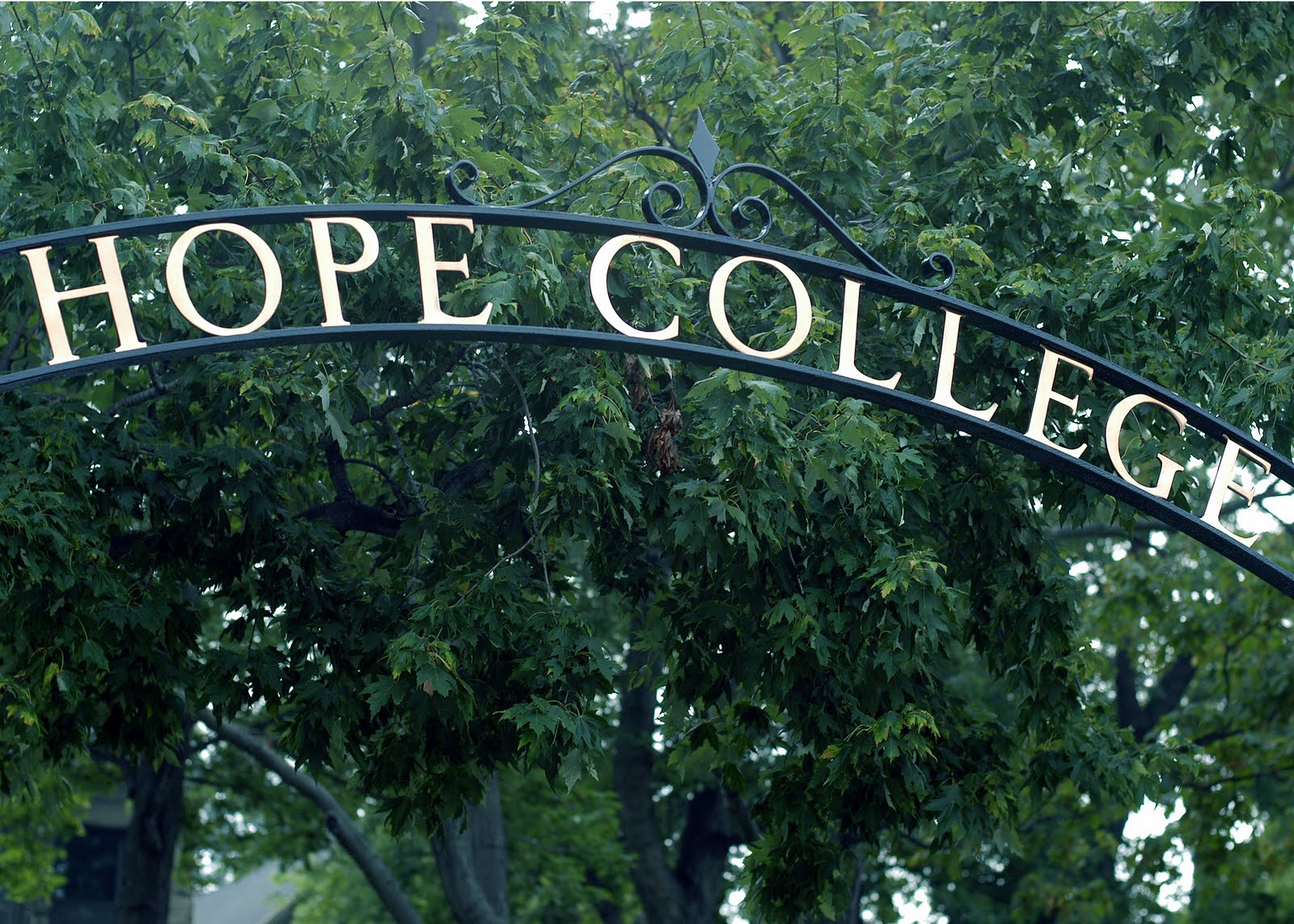
*image: Hope College Arch, made available through the public relations office website.

not-so-quick hit: bigotry towards children

04 Tuesday May 2010

Posted by Anna Clutterbuck-Cook in think pieces

≈ 7 Comments

Tags

bigotry, children, feminism

Via Molly @ first the egg comes a passionate articulation of the right of children to be treated as human beings, rather than as a subspecies to be “liked” or “not liked” en masse. Sybil Vane @ Bitch PhD writes

Now, maybe I meet someone who doesn’t necessarily dislike Little V in a personal way but who is “not really a kid person.” And here I mean not necessarily someone who doesn’t want to have kids or who doesn’t have any experience being around kids or someone who lives a lifestyle that doesn’t produce any exposure to kids. I mean someone who is expressive about a “I don’t really like kids” attitude or a “I hate going to restaurants or museums where kids are making noise” attitude or a “of course it’s fine for other people to have kids but I don’t want to be around them” attitude. This sort of thing is a deal-breaker for me. I’ve gotten pretty rigid about it in recent years as I become more assured in my certainty that it’s an anti-feminist attitude and you suck if you hold it. Kids are a vulnerable, disempowered, inevitable portion of the human community and you do not get to “not like” them or to wish that weren’t a part of your public space. Not allowed. I invite you to swap out “kids” for any other disempowered community in the above phrases (“women,” “schizophrenics,” “hispanics,” “the blind”) and notice what an asshole you sound like.

You can read the whole post over at BitchPhD.

I’ve blogged about this before (last year in what turned into a two-part post here and here and in passing on Saturday in my blog against disableism post).

The first time I wrote about it, I realized I was coming down hard on someone who sounded like an asshole in comments (they’d left a post on my blog calling young people “feral, shrieking little carpet apes”). But I was largely unprepared for the backlash I got on the post, where people resisted mightily the possibility that there might be parallels between dehumanizing children (based on age) and dehumanizing other segments of society based on other group characteristics (such as race, national origin, gender, etc.). People made all sorts of assumptions about my socioeconomic status, my personal background, my status as a parent, and suggested that being an advocate of children’s humanity is only the province of privileged, solipsistic white mothers with ivy league educations.

So let me be clear, here. I’m not a parent. At this point, it’s unlikely that I will ever be a parent. The reasons for this are personal, relational, ethical, sociopolitical and economic in nature — too complicated to delve into in this post. But the point is: not a parent. And to tell you the truth (contrary to popular opinion re: women and infants) I’m okay with that.

There was a time (I won’t lie) when my fondest dream (at age nine) was to set up an orphanage with my best friend and spend my days nurturing a vast brood of Anne Shirleys who otherwise would not have caring adults to call their own. But I’ve grown and changed, tried quasi-parenting for a while (I spent a year as a live-in childcare provider), and realized that is not where my primary interest lies.

There are even days when I’m not just “okay” but incredibly relieved by the idea that I will never — unforeseen crises not withstanding — be the 24/7 primary caregiver of a young person. Even with a willing and able partner, that job seems prohibitively daunting. Particularly in a culture where meaningful support for caregivers (of the elderly as well as the young) is so thin on the ground.

But the point is: none of these personal decisions or experiences absolve me from the responsibility of including children in the human community. They don’t absolve me from the responsibility of treating them with the same courtesy and respect with which I expect folks to treat me, and with which I treat adult members of the human community. As Molly writes @ first the egg

I actually am not “a kid person” in any normal sense of the term — I’m not that whipped up about children just because they’re children, I’m generally much more interested in a puppy or kitten…or adult person…or this here computer screen…than a baby I don’t know personally — but they’re people.

The awesome thing about this is, in my experience, that young people thrive on being taken seriously. On being treated with a straight-ass, no bullshit attitude. Speaking from my own remembered experience as a child, I had zero interest in being fawned and fussed over, having my personal space invaded by adults who thought of themselves as “liking children” and were subsequently pissed when I failed to delight in their cosseting.

I wanted to be taken seriously, to be leveled with, and to be given a seat at the table with all the adults around me who discussed interesting and complicated things, had wicked skills for creating things and exploring the world, and who might possibly share that experience with me.

It’s true that children, by virtue of their still-developing brains and bodies, do not always meet the requirements set forth by our culture’s model of ideal able-ness and imagined self-sufficiency . . . but then, as I pointed out last Saturday, neither do we. Children need help meeting their material needs, need spaces and resources to explore the world and gain material, cognitive, and emotional skills to become more independent. Not every adult is prepared to provide on-the-ground assistance to children in this way, just like not every adult provides eldercare around the clock. But as members of the human community, citizens of the world, we can recognize that all of us matter — and treat those whose paths we cross accordingly.

And the sooner, the more ardently, we can impress upon young people that they matter just as much as the next person, the more likely it is that those young people will grow into older people who — no matter how privileged, how able, they become — will remember that their able-ness is not what imbues them with worth: it is their membership in the human community. Just as that membership in the human community grants the person sitting next to them on the subway, or standing in line behind them at the coffee shop, or playing on the swings at the park, intrinsic worth.

And hopefully, just maybe, this belief in the worth of humanity will make the world a richer, more compassionate, less threatening, less defensive, more bountiful world to live in for us all.

*image credit: Christmas Day Morning by Carl Larsson @ the Carl Larsson Gallery.

today, I am able

01 Saturday May 2010

Posted by Anna Clutterbuck-Cook in think pieces

≈ Leave a comment

Tags

bigotry, blogging, human rights

I learned earlier this week via Brilliant Mind, Broken Body that today, in addition to being my parents’ wedding anniversary, is blogging against disablism day out there (out here?) in the blogosphere.

Blogging Against Disablism Day, May 1st 2010

At first, I wasn’t going to participate because I don’t think of myself as having a disability: I’m basically physically healthy and mobile, have never been diagnosed with cognitive or emotive impairments, and am mostly able to move through life on a day-to-day basis without special equipment, medication, or modification of my surroundings.

But then I thought a little more about the words “disability” and “ability,” and what they mean as we move through our daily lives. And realized I have some thoughts on the subject I want to share. (As I type these words, I can feel the rippling echoes of non-surprise from friends and relations emanating out across the internets).

So here’s what I’d like to talk about this day of blogging against disablism/ableism (depending on which side of the pond you’re on): the fact that, today, I am able, but I have not always been able, and I certainly won’t always be so.

And what that awareness, the fact of moving through the world as a person who is able (today), means to me.

As an historian, I am trained to be aware of changes over time, and of the ever-changing nature of “common sense,” of our understanding of the world around us and the categories in which we put things. Including things that we imagine to be immutable. In short, our understanding of what it means to be “able” and “dis-able” is fluid and contextual, rather than fixed. When we speak of ourselves or someone else being “disabled,” we conjure up in our minds, in collective understanding, what it means to be “able,” what it means to embody or emulate able-ness.

This is not to say that disability is an illusion. To me, disabilities are a complicated mix of self and society. They are made up of the gaps between the desires we have as individuals to be and live a certain way and the cognitive, emotional, and physical resources we have to fulfill those desires. They are made up of the gaps between the pressure we are under to be and live a certain way, and the resources we have to meet those expectations.*

But nevertheless, I think it’s incredibly important to remember how much we define “disability” by measuring individual people against our vision of “ability” — and how much “ability” is, in turn, defined in this day and age, but the ideal of a physically healthy (dare I say “flawless”), cognitively efficient and rational, and emotionally “well-adjusted.” That is to say a a youthful adult capable of being an efficient worker whose personal needs are such that minimal (if any) adjustments need to be made by the people or social and physical structures around them as they move through the world.

The “able” person in convenient. The “able” person is economically productive, appears entirely self-sufficient (an illusion, as every human being in modern society is in some measure dependent on other human beings), is uncomplaining, intellectually adept without being challenging, with a healthy respect for the Powers That Be.

Ableism is structural and cultural acceptance of this model.

Ableism means policing each other and policing ourselves to ensure that we continue to accept and strive toward that model of able-ness.

Ableism means that we punish each other and ourselves for failing to approximate this ideal of able-ness in our everyday lives.

When I move through the world thinking to myself “today, I am able,” I am trying to remember that ableism exists: that the messages I am inundated with, the pressures I feel, pushing me towards approximating that ideal are culturally created rather than immutable. That I have the freedom to accept or reject those expectations (though rejecting them does not come without social penalty, since we all police one another in this regard). That I can choose whether I police myself or other people according to those standards.

And here’s the kicker. Today, I am able. Today, I can more or less approximate able-ness. I am mostly physically healthy (and what physical ailments I suffer from, there are corrections and cures readily available to me). I am young (but not too young), and have socially-acceptable skills and aptitudes which give me access to respected institutions of learning and places of employment. I am able to meet the expectations of my employers and other people who hold positions of authority in my world, and can tailor my social demeanor in ways that make me unobtrusive and outwardly inoffensive to the majority of people.

But all of these things: they’re just luck of the draw. They’re highly contingent, fluid, liable to shift beneath my feet. Someday, inevitably, I will become less able to decide whether or not to approximate able-ness. Because I will lose my ability to approximate. The choice will be taken away.

In a blog post last year concerning the dehumanization of children in the feminist blogosphere, I quoted historian Gerda Lerner, who reflects, in her book of essays Why History Matters, on why all human beings should care about hate and discrimination in myriad forms. She writes

All of us, ultimately, will join one of the most despised and abused groups in our society–the old and the sick (17).

What does it mean, to me, to move through through the world with the awareness that I am (only temporarily) able? That I am (only temporarily) acceptable to those in power? It means that I carry with me an awareness of, and gratitude for, the way in which my able-bodiedness gives me access to the world in myriad ways. It means I am aware of the contingency of that access.

And, in what might seem to many of you a counter-intuitive leap of faith, the knowledge that I will lose access someday, no matter how much I scramble to preserve it, frees me from the existential anxiety of that failure.

Knowing already that I will means that it’s untenable to build my sense of self-worth on the foundations of able-bodied privilege, for if I do that, then knowledge of my worth will vanish the minute I develop a debilitating illness, lose my hearing or eyesight, lose mobility, experience diminished stamina, flexibility, memory — all of the things that (as an adult) I have come to take more or less for granted.

Knowing that we will all fail, in the end, to measure up to the imagined ideal of able-ness means that it is unconscionable for me to police and punish others for likewise falling short. Their humanity is so much more than their emulation of an impossible norm.

When I was a teenager, and attended church for a few years, there was a woman there whose son was struggling in the school system. He’d had been diagnosed with various social and learning disabilities and she was really anxious about his future growing into an adult who had to fend for himself. She tried hard to remember, she said, the words of the prophet Micah (6:8). I’m not usually prone to quoting the Bible, but I think this one is worth sharing

He hath shewed thee, O man, what is good;
and what doth the LORD require of thee,
but to do justly, and to love mercy,
and to walk humbly with thy God?

The Powers That Be in the world work hard encouraging us to forget that this is all that is required. That to be a worthy person, what counts is to be just, merciful, and humble. That everything else is, in the end, mere details.

And while we live every day with the reality of a world that forces us (in some measure) to comply with the expectations of the Ideal of Ableness, we can refuse to be held hostage by that ideal: we can name it, and recognize the limits of its power, and choose to focus instead on calling out and correcting injustice (including injustices wrought upon ourselves), on rewarding acts of mercy and compassion (including our own), and encouraging (and practicing) humility: the realization that, in the end, we are all unable to make it alone.

Today, I am able. Tomorrow, I will be no longer. But I will still be a person of worth. And so will you.

*What we do to bridge those gaps is likewise complicated, and not the subject of this post. I just want to say here that while I believe we in some measure construct disability and ability through cultural narratives, I absolutely do not mean to imply that medication, psychotherapy, and other personal solutions have no place. They are of incredible help to many people, and I have family and friends for whom such solutions have been essential to their wellbeing.

on anonymity and political speech

28 Wednesday Apr 2010

Posted by Anna Clutterbuck-Cook in think pieces

≈ 3 Comments

Tags

gender and sexuality, politics, web audio, web video

Walking home this morning from dropping Hanna off at work, I happened to hear Nina Totenberg’s story on today’s oral arguments at the U.S. Supreme Court over whether the constitutional right to privacy protects petition signers from having their names made public.

Transcript available at NPR.

While the case before the court involves an anti-gay petition to repeal a same-sex “everything-but-marriage” law in the state of Washington, the issue before the court is not so much about homophobia, per se as it is about the right to anonymity in political speech: does someone who signs a petition for issue X have the right to keep that act private? In the Washington case, when advocates of the everything-but-marriage law requested to review the petitions in order to check for fraud, the petitioners claimed that the right to privacy protected them from having to make the lists public. They argue that privacy is necessary in order to protect petition signers from harassment by their opponents.

So here’s the thing. I realize that, in this country, we have a right to privacy when it comes to actual votes: I often talk openly about whom I am going to or did vote for, or where I stand on certain issues. But it is my right as a citizen not to be forced to show my hand if I choose not to. However, a petition is something different. I’ve signed a few petitions in my life: usually I’ve done so outside my hometown library, or via websites, or at the grocery store. I’m asked to include my name and address on the understanding that those who tally signatures have to determine — at least in the case of alleged fraud — that I am who I say I am. There’s no implied or expected right to privacy here. I’m putting my name on a form in broad daylight, right below the last person who signed the damn paper and right above the line where the next person will sign theirs. It seems really disingenuous to come up post facto with the argument that signers have a right to anonymity which they were never promised in the first place. You can’t sign a petition “X”.

Unless, of course, that’s your legal name.

What truly bothered me about the pro-privacy advocates in this story is their argument that acts of political speech need to be protected by anonymity so that people who speak up for a certain position can be shielded from having “uncomfortable conversations” with those who disagree with them.

“Uncomfortable conversations”?

Really?

We’re at a point where people who are against same-sex marriage want the right to defend their (in my opinion bigoted) point of view by protesting via a petition drive, but also want the right to remain anonymous so that they don’t have to have “uncomfortable conversations”?

Grow the fuck up already. Part of being a human being in this chaotic, messy, every-changing world of ours is, you know, sometimes interacting with people who hold different opinions from you. And possibly having conversation in which those different opinions come to light. Conversations that turn out to be awkward, stressful, painful, sometimes alienating.

Welcome to the world.

There’s tons of ways to deal with this diversity of opinion. Learn to be confident in your own opinion. Learn to be comfortable speaking up for yourself while also being a good listener. Find like-minded supporters. Possibly (god forbid!) re-evaluate your position in light of new interactions and learn something.

But if you’re going to sign a fucking petition asking voters to revoke the human rights of a certain proportion of the population, then I say you’d fucking well better be able to articulate your reasons. And be willing to do so in public. In the NPR piece, Washington State Attorney General Rob McKenna defends disclosure laws on these grounds (though with less swearing).

McKenna replies that only one blogger said he wanted to encourage uncomfortable conversations. And he adds, “I don’t think that encouraging uncomfortable conversations amounts to the kind of harassment or potential intimidation that would warrant keeping these petitions out of public view,” he says.

“In fact, in a democracy, there are supposed to be conversations which are occurring about difficult or contentious political issues,” McKenna says — even if those conversations are uncomfortable.

Yes, it’s important that you be protected from stalking behavior, from verbal abuse over the telephone or from (I’m speculating scenarios here) people who come to your place of business and interrupt your work to abuse you verbally or threaten physical violence. But this sort of behavior is already illegal. What’s not illegal (thankfully!) is the right of person X to criticize (privately or publicly) person Z for an action or opinion of Z’s that X finds misguided, hateful, or otherwise wrongheaded.

There are obviously more or less effective ways of having that conversation. I’m personally a fan of ill doctrine’s approach.

What I am not a fan of is people who try to reinforce systems of oppression and exclusion through law and then argue they have a right to do so without taking flack for it, and without being held accountable. Once you start trying to force everyone around you to accept your version of morality, you lose your right to privacy on that particular issue. If you wanted to keep that opinion private, you should have kept it to yourself.

"spoiler alerts for the real world"

17 Saturday Apr 2010

Posted by Anna Clutterbuck-Cook in think pieces

≈ Leave a comment

Tags

blogging, feminism

So this week in the feminist blogosphere there’s been a lot of discussion about the practice of using trigger warnings. Some bloggers, particularly in the feminist blogosphere, who write a post on something that might trigger symptoms for those with PTSD (such as graphic descriptions of violence or sexual assault) label said posts with a trigger warning so that their readers can make an informed decision about whether to continue reading the post, pass it by completely, or save it for another day. Amanda Hess @ The Sexist has a good round-up of links from around the blogosphere on the subject, as well as her own reflections on the usefulness of trigger warning tags.

Melissa McEwan @ Shakesville makes an eloquent case for trigger warnings and explains why she uses them on her own blog posts.

A trigger is something that evokes survived trauma or ongoing disorder. For example, a person who was raped may be “triggered,” i.e. reminded of hir rape, by a graphic description of sexual assault, and that reminder may, especially if the survivor has post-traumatic stress disorder, be accompanied by anxiety, manifesting as anything ranging from mild agitation to self-mutilation to a serious panic attack.

Those of us who write about triggering topics (sexual assault, violence, detainee torture, war crimes, disordered eating, suicide, etc.) provide trigger warnings with such content because we don’t want to inadvertently cause someone who’s, say, sitting at her desk at work, a full-blown panic attack because she happened to read a triggering post the content of which she was unprepared for.

Matched only by her follow up, On Triggers, Continued.

[Susannah] Breslin [blogging at True/Slant] accuses feminist writers of “handing out trigger warnings like party favors at a girl’s-only slumber party,” which is certainly designed primarily to insult writers like me, but doesn’t say much for what she thinks of feminist readers, either. I don’t view my readers as children at a party. I respect them as adults, with autonomy, agency, and the ability to consent—their own best decision-makers, their own best advocates, and their own best protectors.

Not that trigger warnings are universally employed by feminist bloggers. Amanda Hess (above) and the group blog Jezebel both thoughtfully articulate their reasons for not using such tags on their posts. However, it seems odd that someone would so virulently object to their application. As Hanna said when I described the practice to her, “so it’s like spoiler alerts for the real world!”* which I have to say I think is an awesome description. That’s exactly what they are. And I think they can be a really useful tool.

Apparently blogger Susannah Breslin, writing for the online news magazine True/Slant, doesn’t think so. She thinks trigger warnings are a symbol of everything that is wrong and wussy about modern feminism.

Just to be clear here, we aren’t talking “trigger” as in “you might be annoyed by the sentiments expressed in this post.” At that rate, everything would be slapped with a flashing warning light. No, we’re talking “trigger” as in involuntary physical reactions like panic attacks and flashbacks. Post-Traumatic Stress Disorder territory. As commenter Li writes over at Feministe

I really like the part where she [Susannah Breslin] suggests that her previous post “triggered” feminists into being offended, cos I personally know that when I am offended it is exactly the same as when I am triggered and go into major motor function failure.

I was in a severe car accident over ten years ago, and to this day I find certain sounds and settings (such as emergency rooms, ambulance sirens, panic in peoples’ voices) slightly triggering. I’ve never actually suffered hard-core flashbacks or other incapacitating physical symptoms, but I’ve had enough experience navigating those waters to imagine how much it would suck to walk through the world wary that something you read was going to cause “major motor function failure.”

I find it incredibly dispiriting — not to mention bewildering! — that anyone would choose that sort of personal pain (and the corresponding courtesy that some of us are attempting to show, by equipping visitors to our blogs with the tools to navigate this space) as the avenue through which to attack feminist bloggers. Isn’t being courteous to well-meaning visitors to our blogs basic politeness? I make the effort to label my photographs, for example, and clearly identify my links so that my blog posts are more reader-friendly to those who use accessibility software. I try to provide transcripts when available to video and audio content. I consider “trigger warning” tags for stories with especially graphic content (such as Amanda Hess’s excellent, detailed account of a sexual assault victim’s quest for medical care) to be similarly courteous, and do my best to indicate when links contain graphic content.

If that’s what it means to be a feminist — even if that’s all it meant (as Ms. Breslin alleges) — I’m proud to consider myself a feminist. Because hopefully by extending courtesy and care to other human beings who visit my space, I’m helping to make the world a little bit better for all of us.

*Used to alert readers of your blog when you’re going to talk about plot details of a movie, television show, etc., that they may or may not have seen. That way, if readers care about not having the plot “spoiled” by knowing the ending, they can avoid reading the rest of the post until they’ve actually seen the show in question.

k.a.p.t: children as commodities

14 Wednesday Apr 2010

Posted by Anna Clutterbuck-Cook in think pieces

≈ Leave a comment

Tags

children, politics

Reminder: Kids Are People Too.

I often suspect that our outwardly child-centric culture (the one that obsessively tracks celebrity “baby bumps” and coos over the latest convert to parenthood, the one that freaks out when couples try to limit family size or seek permanent pregnancy prevention through surgery) is actually deeply allergic to the concept that children are, in fact, not accessories but actual human beings. I’ve argued before that our obsessive adoration of all things “cute” and child-like actually points toward a callous disregard for the actual lives of actual small human beings.

The recent case of a Tennessee mother returning her adoptive son to Russia with a note saying she no longer wanted to parent him (“I’ll remember you all in therapy!”) has given us an opportunity to consider a whole tangled web of complicated ethical issues such as the moral ins and outs of international adoption and the lack of structural support for parents with children they feel unequipped to care for. However, as Pilgrim Soul @ The Pursuit of Harpyness points out, it also suggests the level to which our culture has accepted the commodification model of parenting.

My question, you see, is this: what is our culture teaching people if they are consistently displaying the signs of believing that child rearing and child care is some kind of consumer lifestyle in which they will metaphorically purchase happiness by “selflessly” devoting themselves to a child? That the care of children is not viewed as a collective responsibility but rather an optional joy, and when it turns out that the experience isn’t joyful, that it’s too hard, you just, you know, go back to the store. Complain about the service you received. Call it a day. What happens or doesn’t happen to these kids when they are basically unwanted, no one talks about. That’s somebody else’s problem.

This manifests in more ways than clueless Tennessee women putting foreign children unaccompanied on planes. It manifests in the fact that foster care systems are often a disgrace, that school systems are a low funding priority, and that this country, for example, doesn’t have a functioning health care system to support people who do parent children of the non-Wheatabix-cereal-box-beauty commercial variety. These attitudes, I’m saying, have consequences. Generation after generation of these kids suffer both emotionally and materially from our habit of demanding certain habits from them, and no one really gives a shit. When was the last time you heard a politician get on his high horse about seriously reforming child services, and I mean, not in a “those social workers must be fired” kind of way, but in a “let’s have a conversation about whether this is the kind of society we want to be” way?

Go read the whole post @ Harpyness, since it’s totally worth it. And now I have to get back to polishing a presentation for Saturday’s conference.

feminist values: calling on people to have some thoughts

10 Saturday Apr 2010

Posted by Anna Clutterbuck-Cook in think pieces

≈ 3 Comments

Tags

feminism

Cross-posted at Feministing Community.

Hanna and I have been talking lately about feminism and feminist politics, comparing our very different experiences with various incarnations of feminist theory and feminism as a political movement. One of the things that we’ve been talking about is the question of hypocrisy: if someone (a feminist in this case) critiques a certain behavior, beauty ritual, book/song/movie, word/phrase, cultural belief, etc. and yet still engages in (possibly even takes pleasure in) said behavior/ritual/belief, does that make the person hypocritical? Or are they just being pragmatic or realistic? And if so, does that mean that there’s no point to engaging in critical feminist analysis, if in the end we all end up pragmatists: does that mean that the status quo wins out in the end anyway?

There was a time in my life when I would have answered with an unqualified “yes, absolutely.” I will always remember the conversation I had about shaving my first year taking college classes (I was seventeen) when I had just discovered theoretical and political feminism as something that — rather than being of historical interest — was of living, breathing political relevance. I had this Creative Nonfiction professor (whom in retrospect I would say I had a huge crush on) whom I met with to discuss an essay I was working on, and in the course of the conversation I said something to the effect of:

“Anyone who shaves their legs is supporting the patriarchy.”

Yes, I did. I really did.

And my professor, bless her heart, gently suggested that given that we live in a complicated, messy, real world in which actions have multiple meanings and sometimes you do a thing for complicated, messy, personal reasons — given all that maybe, just maybe, it was possible to shave your legs because it made you feel less self-conscious about your body, or shave your legs because you enjoy the ritual of shaving, or shave your legs because it makes it easier to lotion your dry skin and none of these things makes you less of a feminist. I was skeptical.

But I didn’t forget what she said. And, over time, I’ve learned to live with the dissonance that is a fucked up world that — try as hard as we might to improve — is never going to be perfectible (and we should probably be grateful for that!). And living “within and against the rules” of that imperfect world (to borrow a phrase from theorist Sidonie Smith) is hard. Because we’re at one and the same time unique individuals and products of our culture; our desires, our like and dislikes, or comforts and discomforts, they are often a confusing jumble of “me” and “society.” Figuring out when Society is worth resisting, because it compromises my Self too much to be borne — that’s practically a full-time job. An important one, but an endless struggle. Sometimes even more difficult are those times when my Self and Society appear to be in accord: do I just think they’re in accord? Do I want that because I’ve been encouraged to want it? Or do I want that because that luminescent Self at the center of my Being desires it?

Or is it a combination of both? And when, oh when, does it matter — discerning one way or another?

(See, for example, my reflections on the sex and gender roles in Diana Gabaldon’s Outlander series)

I’m pretty sure all of you thoughtful people out there on the internets have examples of these difficulties in your daily lives. And I’m curious how y’all manage to navigate the perilous waters of Self and Society, to make a meaningful life for yourself “within and against” the rules of to culture as-is, while you’re striving to live as if the world was the place you wanted it to be. Is living “as if” even practical? Is compromise always hypocritical? How do you have compassion for yourself (as a human being) who sometimes has to make the best of an imperfect situation? How do you hold on to your vision of a better world while slogging through the everyday? How do you make sense of the desires you have, or the actions you take that are, on some level, counter to your core values?

Please consider this an open thread for discussing any of these questions. I’d love to hear your thoughts on how you’ve brought together feminist values with life in the world.

feminist values: commenting on comments

01 Thursday Apr 2010

Posted by Anna Clutterbuck-Cook in think pieces

≈ 2 Comments

Tags

blogging, education, feminism, religion

Just before I left for Oregon, I got into a conversation with a commenter, aHuman, on my post about discussing feminism with anti feminists. The conversation got interrupted by my research trip, but this past week after I came home I stumbled across a comment thread at Feministe that touched on an issue similar to one that aHuman brought up toward the end of our exchange: what is the nature of a feminist value system?

More specifically, aHuman responded to an analogy I made about “feminist” being an umbrella concept kind of like “Christian,” in that self-identified feminists don’t necessarily agree with every single other feminist, yet they share a few core tenets (for more, see the comment thread). In response, aHuman wrote

I find it very revealing that you draw parallels between feminism and Christianity. Well there are very good reasons for why religion is kept strictly out of politics and law in all western democracies (certainly the USA). So I’d like to call for an equal treatment under the constitution of feminism with all other religions. That meaning mostly, that anyone can be a member and believe in it or not, but it cannot and should not have any say in politics or education.

Religions are belief systems, not a theory and not an academic discipline.

Actually I’m not that harsh with feminism. I don’t classify it as a belief system but as a political ideology. If anything, I’d compare it with Marxism. Either way, it certainly is not an academic discipline or even a theory.

And this underlines my point about the radical members of feminism. If feminism was an academic discipline or a scientific theory, then those radicals would have been treated far more harshly and critically than they have been. They would have never had enough attention to get a public voice.

There is a lot to unpack in this comment, obviously. For starters, in order to determine whether feminism is a “belief system,” “theory” or “academic discipline” we’d have to decide what we meant by each of those terms and whether they were mutually exclusive. I have no final word on this, but I do have a very personal response that has to do with how I think about feminism (my primary political identity) in relation to my academic work, and how I think about feminism in relation to metaphysical belief systems (religion). And I’m going to try and share some of them. But first, I offer a second comment from Jill over at Feministe who was responding to a commenter in the comment thread of a blog post on dating while feminist. The commenter asked

It’s an interesting point. Is feminism even more integral to feminists than their culture and their religion (or lack thereof)?

And Jill replies

I’m sure the answer to that question differs from feminist to feminist. For me, my culture and my religious beliefs have probably shaped me as a person more than or at least as much as feminism has. But when I’m looking for a partner, shared values vis a vis feminism are much, much more important to me than shared cultural or religious backgrounds/beliefs. Feminism is distinct from other opinions or traditions that I hold because it is a lens that I choose to use to view and pick apart and critique the world around me. It is, for me, the way in which I can maintain my sanity in a place that often feels really fundamentally unfair and ass-backwards. I need a partner to be able to understand that.

I particularly like Jill’s description of the feminist lens as what she chooses “to use to view and pick apart and critique the world around me. It is, for me, the way in which I can maintain my sanity.” I like it because, for me, this was why conscious, political feminism (a conscious critique of cultural frameworks and social structures, as opposed to my childhood “girls and boys are equally capable, worthy human beings” feminism) spoke to me as a teenager. I could feel what was wrong, but I didn’t have the language to articulate it effectively, particularly in the face of conservative Christian adults who were arguing that queer sexuality was immoral and women should be subservient to men, at least spiritually if not materially. Feminist theory provided me with a language to talk about these feelings, and a political framework through which to try and change what was making the world feel (on the worst days) uninhabitable.

My very first academic class that specifically incorporated feminist theory was an intro level theology class on Christian Feminism, taught by a member of my liberal arts college’s Religion department (mostly Reformed, protestant Christian theology and history, although with some ecumenical and world religion offerings). Because of this, I’ve always been kind of taken aback by people who suggest that feminism is a religion. I heard a conservative Catholic faculty member — at a different institution — once argue that feminists couldn’t possibly be Christian because they held heretical religious views that were oppositional to Christian values. However, most of the self-identified feminists I’ve known personally over the years would identify themselves as religious — and often that religious identity is distinct from their feminist identity (that is, when asked about their spirituality, they would say they are Christian or Jewish or Muslim, or Wiccan, agnostic or atheist — not Feminist).

Feminism, as a lens through which to understand the world, does not attempt to answer questions about the metaphysical realm (what happens to us after death, whether there is a God, etc.). Feminist theology, regardless of the religious tradition from whence it springs, tackles these questions from a feminist perspective — but it is not in itself a spiritual orientation toward the world. Or, at least, I have not yet come upon a feminist who understands it as such. Feminism, as a analytical tool, attempts to understand how women and men are constrained by various cultural assumptions of sex and gender; as a political movement, feminism seeks to counter inequalities between human beings related to sex and gender (as well as supporting a wider range of intersecting issues such as race, disability, age, etc.) It is a values system, in that feminists make certain judgments about what is right/wrong, healthy/unhealthy, moral/immoral (whatever terms you choose). For example, feminists belief that human beings should all be valued equally. That is a value judgment.

However, it is not an inherently religious value judgment: one could make such an argument without drawing on any metaphysical beliefs whatsoever.

When it comes to my feminist self and my academic self, I would say that feminism informs my academic work, and is often the subject of my academic work, although the methodologies that I use depend on the project at hand. aHuman suggests that religion (and feminism, if it is treated as a religion) has no place in schools, yet I would point out that the study of religion and theology are both important academic disciplines, as are political science and philosophy. All of these disciplines understand the world through a particular framework (or frameworks), and yet all of them are seen as legitimate fields of academic study. Feminism, to my mind, falls into this category of something that can both be studied and serve as an analytical framework through which to study other subjects. In this way, it is similar to, say, postmodern philosophy, liberal economic theory, or Marxist theory. So I disagree with aHuman that feminism is something ill-suited to intellectual inquiry or academic research.

Returning to Jill’s reflections on the primacy of feminist values, or a feminist orientation toward the world, I am reminded of a paper I had to write in undergrad for our mandatory Senior Seminar (a capstone seminar that was supposed to help all final-year students integrate faith, scholarship, and vocation) in which I basically argued that I hold religious practice accountable to my feminist beliefs: that is, in my worldview, feminist humanism trumps religion. I don’t care (at least not a lot) whether someone chooses “feminist” as a political identity — but if they’re not acting in ways I believe reflect a fundamental belief that women (and all human beings, no matter how marginal) are human beings worthy of our care and attention as fellow persons, then I’m not okay with that. The same goes for any other religious or political philosophy: does it incorporate a conscious critique of power relations and a belief in the worth of all human beings? If not, I’m out.

In that way, yes. Feminism, both as a theoretical framework and as a political stance, trumps my religious/spiritual beliefs and also my cultural background as a core part of my identity. At the same time (bear with me) I’d also argue it’s somewhat incidental: an accident of time and place. While I believe that culture is a powerful force in shaping our identities, I am not enough of a postmodern purist to argue that we bring nothing unique of ourselves into the world. Feminism, as I encountered it, spoke to me, my Self. It suggested a world in which I could thrive. And I have yet to encounter another theory or movement for social change that offered a similar world: a world in which I was invited to be my Self, in the company of other Selves. This includes religion, which often demands of us not compassion and attention to valuing individual human beings, but policing behavior and judgment that diminishes Selves and our connection to God (if you believe in God) or the metaphysical world.

This isn’t to say I believe feminism is the “final word,” as in a closed, finished philosophy — it is ever-evolving in both theory and practice, and I feel I continue to grow with it. But I will say that feminism is my starting place. And so far, it hasn’t disappointed.

more smart thoughts from the under-ten set

06 Saturday Mar 2010

Posted by Anna Clutterbuck-Cook in think pieces

≈ Leave a comment

Tags

children

In the spirit in which I brought you the questions of Molly’s inquisitive three-year-old, I bring you these stories of childhood logic.

aag @ aag writes wryly about her daughter’s suspicion in a post titled “and this is why we don’t homeschool“

Bear in mind that this is the child who, at the age of four, refused to believe my assertion that letters came in both capital and lowercase varieties. “You’re making that up, mommy!” she said, and would hear no more talk of such foolishness.

I’m sure my mother would sympathize, although in her case I think it was a similar pigheaded stubbornness on my part that convinced her I should not be inflicted on any public school teacher within spitting distance of our house.

The other, courtesy of Hanna who shared it with me on Google Reader, is Michael Holden @ The Guardian recounting a conversation between three children whom he overheard on a bus.

Girl 1 (loudly) “How does hair grow?”

Boy (with complete confidence) “Hair is like magic.”

Girl 1 “How do people grow?”

Boy “People grow at night. If you go to bed early, you will grow tall.”

Girl 2 “How do buses grow?”

Boy “Buses are just like buses. They don’t grow.”

Girls (in unison, having sensed an opportunity) “How do traffic lights grow?”

Boy (playing into their hands) “Traffic lights don’t grow.”

The parental unit in attendance finally got fed up with the entire exchange and called a halt to the proceedings. I don’t know . . . I was starting to wonder what pattern was going to emerge. I mean, if hair grows like magic, and people grow at night, what about cats? Is it the night-time that’s important, or the sleeping? So do cats grow in the dark, or do they grow when they are napping, even if they are sleeping during the day? These are the questions that must be answered.

In other questions that must be answered, is there a God? Mary Valle @ Killing the Buddha and her six-year-old daughter Margaret found themselves in a conversation about the existence of God over lunch with some friends. Margaret offered this possible solution to the spiritual dilemma of agnosticism: “Sometimes I just say: ‘Dear God, if you exist,I forgive you.’ “

And finally, not quite a story about the worldviews of the under-tens, but SarahMC @ The Pursuit of Harpyness blogged about a Discovery Health Channel program on “radical parenting,” profiling three families that engage in (the ad copy says) “extreme forms of parenting.” One of the families apparently engages in a form of unschooling, and I’m kinda tickled that my home-educated childhood could be seen as some sort of extreme sport. Olympics, here I come!

*image credit: candid child by mario bellavite @ Flickr.com

in which I offer some (solicited) advice

04 Thursday Mar 2010

Posted by Anna Clutterbuck-Cook in think pieces

≈ 6 Comments

Tags

blogging, feminism, masculinity, politics


Max @ Feministing Community posed a question last week which I was unable to respond to directly in comments (site malfunction). So instead, since I thought his question was an interesting one, I’m offering a response in the form of a post here on my own blog.

I recently got into a debate on Facebook with a woman who identifies very strongly as anti-feminist and who argues that 90% of what feminism does is detrimental to society. Although she advocates for gender equality and stiffer penalties against those whose commit violence against women, she considers most of the movement to be ridiculous. She also had this to say:

“I’m not marginalized anymore. I am a woman. I do not fucking belong to a marginalized group anymore.”

I just want to know how, as a man and therefore a member of the privileged class, I should go about tackling these issues appropriately. I mean, if she says she is not marginalized as a woman, it would be very paternalistic of me to deny her lived experienced.

There is the argument that I should not engage in these arguments at all for this reason. I’m mindful of some recent cases where members of a privileged class claimed to advocate for a minority’s rights but completely ignored their voices and thus further marginalized them. However, it also didn’t feel right to just ignore the very powerful anti-feminism, since I believe that feminism is very, very important to our society.

So what should I do in future cases like this one? Would the differing levels of privilege mean I should simply back away from this topic? Or was I right to engage her as long as I was careful to respect her lived experience?

Hi Max!

Hope you don’t mind that I’ve taken your question and turned it into a post on my own blog. I hopped on over to the Community blog from my Google Reader to respond to your question for a couple of reasons, and then the comment feature was disabled so I thought I would write back here.

First of all, I sympathize with the frustration that comes from trying to have debates with anti-feminists online, particularly women whose response to your arguments is “well, I haven’t experienced oppression as a woman and therefore this power imbalance you talk about doesn’t exist.” I’m not sure I can offer you any advice that will help you change this person’s mind (or the next person’s mind). I’ve had very little success in changing minds, at least in the short-term. In my experience, it’s only extended, personal relationships that have caused people to revisit their values and change over time. But reading your question I did have a couple of observations I wanted to share. Observations that might help you, at least, articulate your own beliefs in a way that doesn’t make you feel like you’re being paternalistic.

I’m most concerned about the fact that you don’t seem comfortable speaking from a feminist position because you’re a guy. You write that, as a man, you are “therefore a member of the privileged class.” Well, yes and no. Yes, you have certain privileges because you move about the world in a male body. And clearly, the framework of feminism has helped you be more aware of the way society confers those privileges on you. Kudos for paying attention to that. But there are ways in which binary, oppositional gender roles rigidly confine you as well. Think about the reasons you identify as a feminist or as pro-feminist. Not just because of how it might create a better future for the women you care about, but also because of how it might create a better world for you and other men.* You write that you believe feminism is “very, very important to our society.” Think about why it’s very, very important to you. That way, you are grounding your argument in your own lived experience of gender roles and their limitations, rather than talking about women’s experience in the abstract.

You write that “there is the argument that I should not engage in these arguments at all” because you, as a man, are in a position of privilege relative to women. I realize that is one way of looking at things that many feminists, particularly feminists in the mid-twentieth-century, articulated. And I think they often had valid personal reasons for making that claim. There is certainly a discussion to be had about whether or not it’s appropriate to make a time/place for women to discuss their experience as women. But if you were having a discussion with a self-identified anti-feminist on Facebook, I’d argue that you have every right to assert your feminist beliefs in response to her anti-feminist ones, regardless of your own gender. You weren’t walking into a space that was defined as for women only and asserting your right to speak authoritatively on feminist politics; you were engaging in a debate in an online networking space that was not specifically designated as women-only space (a concept I recognize is, itself, deeply problematic). I really encourage you, if you identify as a feminist or pro-feminist, to speak up for your beliefs. They are yours, and the fact of your gender doesn’t make you a less legitimate feminist (I realize not all feminist women agree with me here, but for what it’s worth I don’t think being a feminist is gender-specific).

Just because I’m a woman doesn’t mean that I necessarily have a right to make more abstract claims about gender oppression than you do — like you, I am constrained by the authority of my own experience. I can choose to make more abstract arguments about how institutionalized oppression works, but in making those arguments I’m in the same position you are: I am speaking beyond my own direct experience. Other women can (and have) stepped in and contradicted those arguments, refusing to accept my interpretation of how sexism works (or that it even exists!).

So, speaking as a fellow feminist, I’d like to say thanks for speaking and trying to refute anti-feminist rhetoric! I hope that you keep on talking while staying mindful of the power dynamics at play between people whose experience of privilege and marginalization are often radically different.

Peace,
Anna

← Older posts
Newer posts →
"the past is a wild party; check your preconceptions at the door." ~ Emma Donoghue

Recent Posts

  • medical update 11.11.22
  • medical update 6.4.22
  • medical update 1.16.2022
  • medical update 10.13.2021
  • medical update 8.17.2021

Archives

Categories

Creative Commons License

This work by Anna J. Clutterbuck-Cook is licensed under a Creative Commons Attribution 3.0 Unported License

Meta

  • Register
  • Log in
  • Entries feed
  • Comments feed
  • WordPress.com

Blog at WordPress.com.

  • Follow Following
    • the feminist librarian
    • Join 36 other followers
    • Already have a WordPress.com account? Log in now.
    • the feminist librarian
    • Customize
    • Follow Following
    • Sign up
    • Log in
    • Report this content
    • View site in Reader
    • Manage subscriptions
    • Collapse this bar