• anna j. clutterbuck-cook
  • contact
  • curriculum vitae
  • find me elsewhere
  • marilyn ross memorial book prize

the feminist librarian

the feminist librarian

Category Archives: think pieces

Actual class: Scotland trusts its midwives

06 Monday Apr 2009

Posted by Anna Clutterbuck-Cook in think pieces

≈ Leave a comment

Tags

children, feminism

Via Molly at Citizens for Midwifery, an article about the Scottish government shifting primary responsibility for care surrounding pregnancy and childbirth from medical doctors to midwives.

Classy, home state

06 Monday Apr 2009

Posted by Anna Clutterbuck-Cook in think pieces

≈ Leave a comment

Tags

gender and sexuality, michigan, politics

My old health insurance, Blue Cross Blue Shield of Michigan, has stopped providing coverage for sexual reassignment surgery for trans folks. This move was (sadly) part of larger cutbacks in coverage, due to a $133 million dollar loss in the past year. However, according to the Gale Encyclopedia of Surgery only 100 to 500 sexual reassignment surgeries are performed annually in the United States. Even with costs ranging from seven to fifty thousand dollars (depending on what medical procedures are done), I doubt this was a huge line-item in the BCBSM budget. Considering that the vast majority of health insurance companies already deny coverage to trans folks, it’s disappointing to see one more bite the dust. Not cool Michigan.

Refusing the Question

19 Thursday Mar 2009

Posted by Anna Clutterbuck-Cook in think pieces

≈ Leave a comment

Tags

children, feminism

Via a comment over at Pandagon, I discovered a brilliant op-ed by a post-partum doula working in California that takes up the issue of breastfeeding infants and the politics thereof. What I like most about this piece is that the author, Meredith Lichtenberg, refuses to accept the usual terms of this particular controversy.

In popular debates, the question of whether or not it’s preferable to breastfeed or bottle-feed infants and young children is often cast in starkly either/or terms. One camp argues that breastfeeding is of negligiable benefit to babies and a burden to mothers; the other camp argues that lack of breastmilk will do irreperable harm to infants.

Lichetenberg, rather than step into the frey on one side or another, asks us to re-frame the question. The important point is not whether one parenting choice is better or best for everyone, but what parenting choice is best for each individual family. In her column, she is responding to a recent article by Hanna Rosin in the Atlantic Monthly that explores the potential benefits of breastfeeding (and concludes they are minimal). Lichtenberg writes:

The reason [Rosin and I] part ways, ironically, is that she’s missing her own point. Rosin is enraged that Society told her she should breastfeed because it was healthy for babies. Society told her that her own wishes or needs didn’t factor in.

But instead of saying, “Hey, Society, don’t tell me what I need to do! I’m the mom here, and I’ll decide for myself what’s best for me and my baby!” she succumbed to the “pressure”. Three babies later, she’s really mad. And she thinks that that makes a case against breastfeeding.

Lichtenberg’s article is a great example of how to refuse the terms of debate on a controversial topic and re-frame the conversation in a way that is more holistic, more specific, and ultimately (I would argue) more feminist: she reminds women (and their partners) that they, too, can refuse the terms of debate and place the needs of their own families — including their own needs — front and center. That is a feminist position that can encompass all manner of individual parenting decisions, and one that I firmly believe is best for us all.


Because to someone like me that’s british for "eat me"

13 Friday Mar 2009

Posted by Anna Clutterbuck-Cook in think pieces

≈ 6 Comments

Tags

feminism, fun

There’s a little market down the street from the Massachusetts Historical Society that tends to stock random imported candies from the UK. For a few months, they were regularly carrying one of my favorite chocolates from my time in Aberdeen, minstrals, and every time I stop in for an iced tea or granola bar, I check to see if they have any. No luck in recent weeks, but their most recent shipment included one of the most intriguingly-marketed chocolate bars Britain has to offer: the Yorkie bar. As depicted above, its current packaging sports the slogan “it’s not for girls,” along with the appropriate signage for those not able to grasp the meaning of the text.

Hanna and I agree that the chocolate is quite tasty, and that our double-x chromosomes did not impede us in the least from enjoying it.

Graphic Art & Fair Use

27 Friday Feb 2009

Posted by Anna Clutterbuck-Cook in think pieces

≈ Leave a comment

Tags

art, election08, politics

Walking home from class last night, I happened to catch this set of interviews on Fresh Air with Terry Gross about a lawsuit currently in process over the now-iconic Obama Hope poster and artistic fair use. The poster artist, Shepard Fairey, used an AP photograph of Obama as the reference for his graphic, and people have raised questions about whether he was diligent enough in crediting his source — specifically his failure to track down the photographer, Mannie Garcia. The Associated Press approached Fairey for use fees and damages after the source of the image was identified, and Fairey has filed a pre-emptive lawsuit against the Associated Press arguing that his use of the original photograph image falls under the fair use protections of U.S. copyright law.

Coming, as I do, from a family of artists, mapmakers, academics, booksellers, and librarians, these issues are all intensely relevant to the work that the people in my life do on a daily basis. (Not to mention the part of my soul that moonlights as a legal junkie). I found Gross’s interviews with both artists involved fascinating. They gave me a lot to think about in terms of the nature of creative expression and what constitutes inspiration as opposed to plagiarism in visual mediums (most of my background is in text). My dad commented via email this morning, “I was thinking about how I would rule in such a case which is of couse now complicated by the lawsuits, etc. Personally, I thought the artist’s offer to pay the original liscense fee was fair but AP’s desire for ‘damages’ was too much given it was not a ‘for-profit’ undertaking.”

Anyway, check out the interviews and feel free to leave any thoughts comments.

Womyn’s Land (Take Three)

09 Monday Feb 2009

Posted by Anna Clutterbuck-Cook in think pieces

≈ Leave a comment

Tags

feminism, gender and sexuality, guest post

My friend Linda Smith, who is a resident at Hawk Hill Community Land Trust and was a part of the Aradia oral history project (see post one), read my thoughts on the recent article about lesbian communities in the New York Times. (See post one and post two here.) She wrote me an email in response, which I am posting here with her permission. Thanks Linda!

Hi Anna,

Nice to hear from you! I just read your blog entries on the article in the NY Times. I too hope there will be more “conversation between generations of women who are intrigued by the idea of communal life, and spark creative, contemporary approaches to experiments in living that will help our elders and youngers improvise lives worth living.”

For me, as a feminist in the 70’s, separatism was a strategy not a political position or a life style. I think it is sometimes important for women (or blacks, or other oppressed peoples) to separate from the oppressive culture in order to discover who we are apart from the stereotypes imposed on us. To contact our own power and source of being. Remaining separate and at odds with the dominant culture isn’t the goal. Most of us involved in feminist consciousness raising and women-only groups in the 70’s have chosen to act out our truth in the world. To contribute to the culture and the evolution of our species. This is a spiritual question for me. One of the major problems in the world today is the false belief that individuals and groups are in fact separate – we are all connected, men/women, Jews/Christians/Muslims, and all living beings.

I think a healthy community grows organically and changes with the times. I live on an environmentally protected landtrust. There are five households and six lesbians living here. We are not a commune – we have no community buildings and do not share our income. In many ways our community includes our neighbors and the surrounding environment. We do not own our land but have 99 year leases. By signing our leases we agreed to specific “covenants” designed to protect this land, the waterways, and all the creatures living here. There have been many changes in the world since the first lesbian land groups formed. If younger women (or perhaps men, or ?) are going to come and take care of this land after we are gone we’ll have to be more flexible and learn from each other as you suggest! At Hawk Hill, as far as I’m concerned, it’s really about the land, all the creatures living here, and our relationships to these and each other – not about lesbian separatism.

Thanks for you thoughtfulness.
Linda

Womyn’s Land (Take Two)

04 Wednesday Feb 2009

Posted by Anna Clutterbuck-Cook in think pieces

≈ Leave a comment

Tags

feminism, gender and sexuality

I didn’t have any big, new reactions after reading the New York Times article about lesbian communities. It felt a bit superficial and simplistic to me, but most newspaper articles on subjects one cares deeply about seem reductive. It turns out that some of the women I met in the course of our oral history project were interviewed for the piece. I spoke with one woman yesterday who’d spoken with them and reported that the collective response to the finished piece was, predictably, mixed. Meanwhile, the article has, also predictably, been fodder for debate on some of the blogs I regularly read. I particularly wanted to highlight a post up at the new blog In Persuit of Harpyness, What We Should Talk About When We Talk About Lesbian Separatism. In reflecting on both the article and the conversation generated about it, the blogger writes:

As a feminist it is my job to recognize that such experiences exist, that it is important to listen to the women who lived through them, and not try to shame them or make their choices about mine. It is important to listen because they have something to contribute to my feminism, these lesbian separatists.

. . . I can cut their critics some slack, but only a little. Sometimes, when I am in the heat of an internet argument, I start to forget how much of my devotion to feminism is rooted in good old boring ordinary compassion. Because I am a person who enjoys talking about ideas abstractly, I can sympathize with those who want to synthesize the contributions of these women . . .

But those discussions, they aren’t the whole truth of the matter. They aren’t about the women themselves. And though I’m always going to keep talking about feminism abstractly, I often wish everyone would keep their eyes on the ball.

As someone who has spent time on womyn-only land, and has listened extensively to the life stories of the women who were kind enough to let us ask nosy questions about their lives as lesbians and as feminists, I think this post gets to the heart of the matter here. Communal living arrangements, sort of like feminist thinking and activism, is a response to a particular historical context and personal experiences, and like feminism communal living is an organic, fluid project that constantly grows and changes to meet new challenges. Hopefully, the New York Times article will spark conversation between generations of women who are intrigued by the idea of communal life, and spark creative, contemporary approaches to experiments in living that will help our elders and youngers improvise lives worth living.

Womyn’s Land in the NYT

02 Monday Feb 2009

Posted by Anna Clutterbuck-Cook in think pieces

≈ 4 Comments

Tags

feminism, gender and sexuality, hope college

I don’t have time right now to write a longer reflection on this article in the New York Times about lesbian communities and women-only land — but I wanted to post a link to it because it quotes my women’s studies professor and from undergrad, Jane Dickie, with whom I collaborated on an oral history project involving a group of women who have ended up living on a women-only land trust in Missouri.* As Joseph (who forwarded the link to me) says, “it’s the first time I’ve ever read the NYT and gone, ‘Hey! I’ve met that person!’ and it is kind of a strange feeling.”

Miriam, over at feministing, has already posted her reflections on the story and on the phenomenon of lesbian communities. If I have any Big Thoughts after sitting down to read the piece, I’ll be sure to follow up with a “take two.”

*You can read about the research project we did in the essay “The Heirs of Aradia, Daughter of Diana: Community in the Second and Third Wave” published in the Journal of Lesbian Studies (vol 9, no. 1/2, 2005) also published as Lesbian Communities: Festivals, RVs, and the Internet, edited by Esther Rothblum; also in “Responding to Aradia: Young Feminists Encounter the Second Wave” by Leslie Aronson, Adrienne Bailey, Anna Cook, Jane Dickie, Bethany Martin, and Elizabeth Sturrus, published in Iris: A Journal for Women (issue 47, Fall/Winter 2003).

Image from Hawk Hill Community Land Trust, Missouri, Summer 2005 (personal photo)

Why does it have to be either/or . . .?

26 Monday Jan 2009

Posted by Anna Clutterbuck-Cook in think pieces

≈ 1 Comment

Tags

feminism, gender and sexuality

. . . Can’t it be both/and?

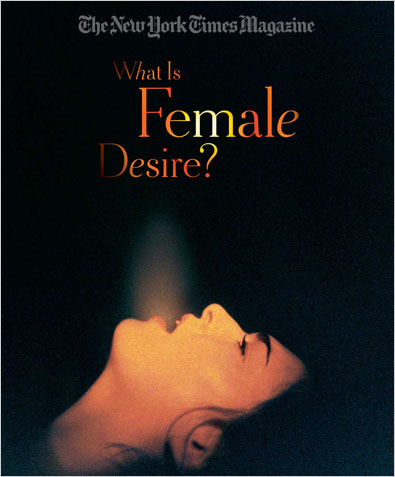
Meghan O’Rourke, over at Slate’s xx factor blog has a post up, The Sexual Fluidity of Women about this weekend’s article on sexuality research and women’s desire in the New York Times Magazine. In the post, O’Rourke argues that the implicit question of the article is this: “Are contemporary women doomed to experience a schism between what their bodies lust for and their minds tell them they want?”

Don’t you just love it when questions and answers are framed in terms of what “women” (as a single corporate entity) experience or desire? The article itself, which appears to be an interesting round-up of contemporary research of women’s sexuality (I’ll have to sit down and read it more carefully when I have the time — alas, assigned reading takes priority this morning), poses the tiresome “what do women want?” question . . . as if we, as a some inexplicable half of the human species, are a problem to be solved. Women (unlike men, the question implicitly suggests): They’re so complicated and confusing! They confuse us with their sexuality!! Isn’t the answer to the question “what do women want?” self-evidently “each one of us wants something slightly different”? While I’m glad people now recognize that generalizations about human sexuality made from studying primarily male subjects is inadequate, redressing the problem by making generalizations about “women” doesn’t seem like a very useful response.

I also do not understand why it’s useful to recycle the body/mind dichotomy when talking about sexual desire and experience. Regardless of gender, sexual orientation, or any other factor you can think of. Our bodies and our minds desire different things in different contexts, at different points in our lives. In my experience (in sex as well as elsewhere) it’s quite possible to desire two seemingly contradictory things at the same time — without losing your mind or your integrity. Framing a so-called dissonance between physical arousal and self-reported desire (an example O’Rourke highlights from the article) as a “schism” imagines that, just because our bodies and minds operate on different levels simultaneously, they are in opposition to one another — why should this be the case? Sexuality is beautifully complicated. Human beings are beautifully complex. In sex, as in everything else, our Selves — both body and mind — act and react in an ever-shifting composition of ways that scientific studies will likely never be able to fully document and explain.

For other bloggers’ thoughts (updated as I find them):

Bethany L. @ feministing community
StreetScholar @ feministing community
Elizabeth @ sex in the public square
Amanda @ pandagon
Jill @ feministe, cross-posted at yes means yes
Courtney @ feministing
Figleaf @ real adult sex
Vanessa @ alternet

Goodbye Global Gag Rule!

24 Saturday Jan 2009

Posted by Anna Clutterbuck-Cook in think pieces

≈ Leave a comment

Tags

blog for choice, feminism, politics

I didn’t participate in the 2009 Blog for Choice event this year, marking the 36th anniversary of Roe v. Wade. However, following quickly on its heels comes a reason to celebrate: President Obama has signed an executive order reversing the Bush policy of denying U.S. funding to international health and family planning organizations that provided any information, counseling, or referrals related to abortion. Lifting the gag order will save women’s lives.

Oh, and have a mentioned recently how much I love Frances Kissling?

To ask . . . women to wait another day for Obama to reverse this policy in order to satisfy the fake “common ground” prolife religious progressives suggest – prevention without contraception – is disrespectful of women’s lives, let alone their moral autonomy.

← Older posts
Newer posts →
"the past is a wild party; check your preconceptions at the door." ~ Emma Donoghue

Recent Posts

  • medical update 11.11.22
  • medical update 6.4.22
  • medical update 1.16.2022
  • medical update 10.13.2021
  • medical update 8.17.2021

Archives

Categories

Creative Commons License

This work by Anna J. Clutterbuck-Cook is licensed under a Creative Commons Attribution 3.0 Unported License

Meta

  • Create account
  • Log in
  • Entries feed
  • Comments feed
  • WordPress.com

Blog at WordPress.com.

  • Subscribe Subscribed
    • the feminist librarian
    • Join 37 other subscribers
    • Already have a WordPress.com account? Log in now.
    • the feminist librarian
    • Subscribe Subscribed
    • Sign up
    • Log in
    • Report this content
    • View site in Reader
    • Manage subscriptions
    • Collapse this bar