• anna j. clutterbuck-cook
  • contact
  • curriculum vitae
  • find me elsewhere
  • marilyn ross memorial book prize

the feminist librarian

the feminist librarian

Tag Archives: books

booknotes: contacts desired and recruiting young love

12 Friday Aug 2011

Posted by Anna Clutterbuck-Cook in book reviews

≈ 2 Comments

Tags

books, gender and sexuality, history, religion

Over the past few weeks, I’ve read two interesting — if somewhat academic — books about (loosely speaking) print culture and its intersection with queer communities and discourses about non-straight sexuality. The first was Contacts Desired: Gay and Lesbian Communications and Community, 1940s-1970s by Martin Meeker (Chicago: University of Chicago Press, 2006) and the second was Recruiting Young Love: How Christians Talk About Homosexuality by Mark D. Jordan (Chicago: University of Chicago Press, 2011). While the first book dealt largely with homophile organizations and the underground publications of the gay liberation and lesbian feminist movements, the second took up the various rhetorics deployed within Christian circles to speak and write about homosexuality (mostly gay male sexuality) from the turn of the twentieth century through the ex-gay activism of the 1990s. Despite the pro/con nature of these texts, what Contacts Desired and Recruiting Young Love share is an interest in how networks of communication spread ideas and inform opinions, actions, and identities.

“Adolescence is the possibility that desire could be different.”

Recruiting Young Love by Mark D. Jordan, focuses on what he calls “rhetoric” and I might term “discourse” concerning homosexuality — mostly (and he is upfront about this) gay male sexuality — in Christian circles over the course of the twentieth century. His interest is primarily in the 1950s forward, though he does begin in the early twentieth century with the emergence of professional discussion of healthy adolescent development (think G. Stanley Hall, the YMCA, Teddy Roosevelt, etc.) by way of providing background for later debates.

As the phrase “recruiting young love” suggests, Jordan is particularly interested in the way that Christian anti-gay voices expressed anxiety about adolescent sexual identity, and the fact that even today ex-gay therapy understands heterosexual and gender-normative identity to be both the most correct expression of sexuality and the most vulnerable. Teenagers, especially, are seen as vulnerable to recruitment and seduction. The examples of Christian rhetoric concerning homosexuality, then, focus on young people and at times seem to assume that all young men are in fact potentially gay — and that this potentiality is threatening to the moral order.

Although he focuses on anti-gay voices, Jordan also touches on some examples of what he calls “camp spirituality,” or appropriated religious imagery (i.e. the Sisters of Perpetual Indulgence), and upon Christian attempts to integrate gay identity and same-sex sexuality into their sexual ethics. He cites, for example, a 1963 Quaker pamphlet, Towards a Quaker View of Sex, that used Alfred Kinsey’s model of fluid sexual practice to argue that homosexual desire and expression, while not predominant, were healthy and normal within the human community. He writes:

For this model of development, most male adolescents are having same-sex relations or thinking about them. Bit by bit, most of them shift over a decade or more to heterosexual relationships. Some do not. The process is not so much an expression of nature as of circumstance or even chance. Indeed, the Quaker pamphlet accepts more fully than any earlier church text not just Kinsey’s terminological suggestion about how to speak of homosexuality as outlet rather than ontology, but his notion that homosexual acts vary with time. To think of yourself as a homosexual should mean no more than observing where you are in the arc of your life and with whom you are now spending it (89).

I was actually quite moved by the idea that one’s sexual “identity” was actually a question of observation and regard, suggesting change over time rather than fixity — though without the sense of enforced change, or charge from “unhealthy” to “healthy” that so many ex-gay narratives imply. Once again, Quakers FTW — and in 1963 no less!

One other aspect of anti-gay Christian rhetoric that Jordan takes note of is the fact that contemporary ex-gay ministries seem to be much more preoccupied with what we would consider gender performance than actual sexual identity, desire, or activity:

Gender matters more than sex [in many ex-gay ministries]. Marriage is the highest accomplishment not because it allows you to copulate naturally, but because it gives you the best stage for performing gender correctly … Indeed, ex-gays may actually be able to use marriage better for gender performance than heterosexuals can, since they are unlikely to enter into it on account of lust … the central category of ‘sexual identity’ means in the end only ‘roles as men and women’ (165).

In this, he relies a great deal on the research and writing of Tanya Erzen, whose recent book Straight to Jesus I reviewed here last August. I’d highly recommend her text if you’re interested in exploring this aspect of the ex-gay movement in more detail.

The weakness of Jordan’s work is one that he admits up-front in the introduction: that it is not meant to be a coherent or comprehensive historical narrative, but rather a series of proffered examples or touch-points meant to give readers a sense of the variety of discourses concerning homosexuality that have existed in Christian circles over the past half century, and some rough idea of where they sprung from, their similarities and their differences. Someone hoping for a more detailed history of anti-gay activism will have to look elsewhere.

“Homosexuals are discarding their furtive ways and openly admitting, even flaunting, their deviation” (Life, 1964).

Meeker’s Contacts Desired explores the ways by which gay- and lesbian-identified people established networks of communication in the decades before, during, and immediately after what we have come to term “the sexual revolution.” As previous scholars have pointed out, identity based on sexual orientation does not bring with it an automatic community affiliation. Unlike with racial, ethnic, religious, or even class, one rarely grows up in a family that shares one’s non-straight orientation. Particularly during the mid-century in America, where queer subcultures were obscured from public view for the safety of their members, a pervasive sense of isolation was often part and parcel to becoming aware of one’s same-sex desires. Contacts, originally written as Meeker’s PhD dissertation, documents the means by which gay and lesbian individuals made contact with the sexual underground and how they situated themselves within it through text: newsletters, interviews, press releases, pamphlets, “contacts desired” ads, guidebooks, and so forth.

Contacts bears the marks of its academic origins, and I’d suggest picking it up more for targeted rather than leisure reading. Those familiar with the history of mid-twentieth-century gay and lesbian activism will find many of the usual suspects here: the Daughters of Bilitis and the Mattachine Society, lesbian pulps and journalistic (outsider) coverage of gay lives — such as the 1964 Life photographic essay on the gay male subculture, from which the quotation above, and the cover art of Contacts, are drawn.

The primary sources I found most fascinating in Meeker’s work were actually these journalistic offerings from the 1960s, since they offered up a glimpse of (and yes, I know it’s cliche) how far we actually have come in the past fifty years in terms of de-pathologizing and de-criminalizing queer sexualities — even though it’s obvious we still have work to do. Meeker discusses popular book-length treatments of queer subcultures as well as newspaper and magazine exposés. What is clear is that “sympathetic” (straight or passing) writers understood that in order to write about homosexuality for the mainstream, it needed to be treated as a psychological disorder or as antisocial behavior. Understanding homosexuality did not mean reading it as normal. The Life article makes that clear from its sensationalistic opening sentences:

These brawny young men in their leather caps, shirts, jackets and pants are practicing homosexuals, men who turn to other men for affection and sexual satisfaction. They are part of what they call the “gay world,” which is actually a sad and often sordid world. On these pages, LIFE reports on homosexuality in America, on its locale and habits and sums up what science knows and seeks to know about it.

Homosexuality shears across the spectrum of American life – the professional, the arts, business and labor. It always has. But today, especially in big cities, homosexuals are discarding their furtive ways and openly admitting, even flaunting, their deviation. Homosexuals have their own drinking places, their special assignation streets, even their own organizations. And for every obvious homosexual, there are probably nine nearly impossible to detect. This social disorder, which society tries to suppress, has forced itself into the public eye because it dos present a problem – and parents especially are concerned. The myth and misconception with which homosexuality has so long been clothed must be cleared away, not to condone it but to cope with it.

As Meeker points out, these widely-disseminated treatments of homosexuality were often read subversively by those whose desires were the topic of discussion: gay and lesbian readers of Life who might otherwise be cut off from the networks of queer communication and community were given a roadmap to (at least some of) the popular gay and lesbian gathering places or geographic locations, thus offering hope that they were not alone. Articles that claimed to “not … condone [homosexuality] but to cope with it” actually did their part to strengthen the underground networks of queer communication that took a radically different view, at least in most cases, when it came to how sad their lives actually were and the extent to which what sadness there was came as a result of their sexual desires (versus the hostile climate in which they were forced to exist).

Reading these books has inspired me to explore some of the primary source material itself, so check back next week for reviews of Patricia Highsmith’s The Price of Salt (an early lesbian novel) and Adrienne Rich’s 1977 essay “Compulsory Heterosexuality and Lesbian Existence.”
booknotes: the clamorgans

15 Friday Jul 2011

Posted by Anna Clutterbuck-Cook in Uncategorized

≈ Leave a comment

Tags

books, history, racial identity

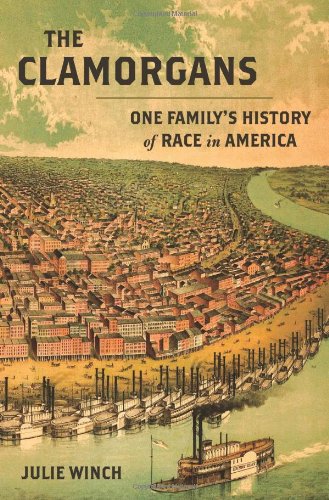
Last week, I picked up an advanced review copy of Julie Winch’s The Clamorgans: One Family’s History of Race in America (New York: Hill and Wang, 2011) from the free book cart at work. It was a relatively quick, though also a bit daunting, read. Winch, an historian based at the University of Massachusetts – Boston, focuses on the “lives and genealogies” of African-Americans in the Revolutionary War era and the period of the Early Republic. Her previous books focus on elite black families and individuals in Philadelphia; in The Clamorgans she turns her attention to a multiracial family based in St. Louis, beginning in the decades before the Louisiana Purchase (1803) and navigating its labyrinthian way to the mid-twentieth century.

The Clamorgan clan, at least as Winch documents it, began with a French entrepeneur (read: shady financial speculator) named Jacques Clamorgan in the 1780s, who settled in St. Louis when it was still (nominally) part of the Spanish empire. He had a number of children by three different women, all of whom were black and during one point during their lives were enslaved (some owned by Jacques himself). From this root, Winch traces in exhaustively-documented detail the fates of the descendents of this family tree. She is aided by the fact that Jacques Clamorgan was a litigious man who turned to the courts whenever he was unhappy with how his affairs (financial and familial) had been settled … and that his children and grandchildren and great-grandchildren followed suit. Jacques died in the early 1800s with extensive land claims, which he had finessed from the Spanish administrators, left unresolved following the Louisiana Purchase and the entrance of St. Louis and its environs into the expanding boundaries of the United States. For subsequent generations, these land claims became the promise of riches they turned to again and again whenever their (rapidly rising and falling) fortunes waivered.

The Clamorgan story is one not only of economic and social class but, inevitably, also a story of race, since all of Jacques Clamorgan’s descendents were in some measure mixed race, and often able to “pass” as white or of Native American ancestory. In a period where black and white society was so sharply divided, the relative ease of each Clamorgan descendent to move with ease in and out of white and black communities directed effected their economic and social fortunes. Some Clamorgans chose (or had no option other than) to rise to the top of the black elite in St. Louis or other locales around North and Central America. Other branches of the family were light-skinned enough that they attempted to cross the racial divide and pass themselves and their children off as “white,” usually for specific social and economic advancement (access to “white” jobs, schools, and neighborhoods).

The strength of this book is the sheer volume of research Winch has undertaken (I imagine with a bevy of student assistants and a very good data management system, though I could be mistaken!). Through the minute details offered up in court documents, newspaper columns, census records, and other archival sources Winch opens a window for readers onto the gritty details of how one specific American family struggled to gain a viable foothold in the volatile economic climate of the nineteenth century. Anyone who claims that our “addiction” to credit or predatory lending is an invention of our current epoch really just exposes themselves as a poor student of economic history: lines of credit, properties bought and sold on speculation, double-dealing lawyers — all of these make more than cameo appearances in The Clamorgans saga.

What I found myself wishing for more of, as both a reader-for-pleasure and an historian, was more analysis  and context. Winch provides us with a rich narrative of one family’s history … what I wanted to know was how their journey up and down the economic ladder and back and forth across the color line fit into broader national patterns. Was their story typical? Atypical? How so? Was their recourse to the law usual for the time and place in which they lived, or did it set them apart? What contribution does the Clamorgan family story make to our understanding of how race and class (and to a lesser extent, though indubitably present, gender) function in American society? How do all of the details Winch has uncovered about the Clamorgan clan inform the work of other historians on these topics? Do they fit into previous hypotheses about how social categories functioned during this period, or do they challenge those interpretations in new ways? It was this historiographical discussion that I found myself missing. I hope that historians who utilize Winch’s work in the future will be able to fill this gap in the scholarship.

Final verdict: Incredibly useful for historians who are studying this period or topics related to the history of race and class in America … engaging for anyone else who is willing to put in the effort to keep the sprawling clan Clamorgan straight for however long it takes to read the book!

booknotes: queer (in)justice

30 Thursday Jun 2011

Posted by Anna Clutterbuck-Cook in book reviews

≈ Leave a comment

Tags

books, feminism, gender and sexuality, human rights, masculinity, politics

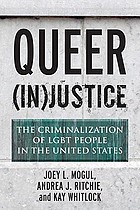
The third installment in Beacon Press’s Queer Action/Queer Ideas series, edited by Michael Bronski, Queer (In)justice: The Criminalization of LGBT People in the United States is co-authored by law professor Joey L. Mogul, police misconduct attorney Andrea J. Ritchie, and community organizer Kay Whitlock. Hanna saw it on the new book wall at the library and correctly ascertained it was the sort of title I’d be interested in. So she brought it home, I read it, and now I’m gonna blog about it.

Queer (In)justices is far more than an examination of the ways in which our legal system polices “deviant” gender and sexuality qua gender and sexuality. Yes, the authors look at the laws and policing practices related specifically to penalizing folks who engage in (publicly or privately) non-heteronormative sexual practices, or whose appearance suggests that they identify outside the gender/sex/sexuality binary. However, their analysis goes much deeper than these targeted laws. Instead, they argue that “the policing of sex and gender ‘deviance’ is central to notions of crime, and serves both as a tool of race-based law enforcement and as an independent basis for punishment” (xiii). In other words, notions about the relationship between non-normative sex and gender expression and criminality influence the way in which the legal system treats people perceived to be queer whether or not they are caught in the system specifically because of sex- or gender related policing. As they argue:

As queer identities substituted for individual perverse acts [in the late nineteenth century]  the process of criminalizing sexual and gender nonconformity was facilitated through the construction of ever-shifting and evolving archetypal narratives [of deviance]. Rooted in historical representations of Indigenous peoples, people of color, and poor people as intrinsically deviant, fueled and deployed by mass media and cultural institutions, these narratives now permeate virtually every aspect of the criminal legal system (19).

They make a compelling case for us to question the usefulness of narrowing our focus specifically on anti-gay laws, and on enacting new laws seeking to protect LGBT people from homophobia … particularly when the very law enforcement officials meant to ensure those laws are respected are among the primary culprits when it comes to bigotry and violence around sexual and gender nonconformity.  In chapters on gender and sex policing on the street, in the courtroom , in prison, and in uneven police responses to violence against LGBT people, we see how presumptions of criminality systematically influence how queer people are treated in the context of the legal system, whether they are perpetrators, victims, or both. They make the particularly important point that, regardless of what laws are officially on the books, “police and other law enforcement agents are given considerable latitude in deciding which laws to enforce, how to enforce them, and which people to target for law enforcement” (48).*

Being queer, or being perceived as queer can cause law enforcement officials to treat individuals as criminally guilty whether or not they actually are — and can bring harsher punishments (when compared to those perceived as straight and gender conforming) when those individuals are sentenced. Likewise, criminal behavior is often associated — implicitly or explicitly — with sexual depravity. Using examples that will be familiar to anti-sexual harassment or anti-sexual violence activists, Mogul, Ritchie, and Whitlock describe how individuals known or perceived to be queer are treated by law enforcement officials as if they are incapable of being victims of sexual violence. They describe victims of same-sex domestic violence who themselves were put in jail or ruled incapable of being abused because of their orientation or gender identity.

Ultimately, Queer (In)justice argues that LGBT activists must take a much more comprehensive approach to their agitation for change within the framework of law and law enforcement. While much of the mainstream LGBT work in this area in recent years has involved the quest to enact anti-discrimination and anti-hate crime legislation, and to grant same-sex couples the right to marry, Mogul, Ritchie, and Whitlock point out that a much broader cultural shift within law enforcement must take place in order for such changes in the law to have an on-the-ground effect. As they write, “The hate crime framework is … compromised by placing primary responsibility for preventing violence in the hands of a criminal legal system that is itself responsible for much LGBT violence” (129). We would do well, they seem to be pointing out, to pay closer attention to the experiences of those most vulnerable to police brutality, discrimination and abuse sanctioned by the legal system, and persecution based on presumptive criminality … not just because of their sexual identity, but because their mere presence as a non-conforming body evokes powerful notions of danger and violence whether or not these reactions are warranted in specific instances. Comprehensive reform is needed before the passage of laws will have real-world implications for the majority of the LGBT population.

Queer (In)justice is a must-read for anyone who wants to re-consider the current LGBT approach to legal reform.

*This point is exactly why I am uneasy with Jim Wallis’ argument that police force is preferable to military force. Wallis’ assumption that police only use force when it is necessary to enforce agreed-upon laws ignores all of the situations in which law enforcement officials abuse the power vested in them … something which, as a person who works in anti-poverty and anti-racism circles, Wallis ought to know full well.

releasing books into the wild

17 Tuesday May 2011

Posted by Anna Clutterbuck-Cook in library life

≈ Leave a comment

Tags

books, boston, call to participate, michigan, travel

Through the great apartment clear-out of 2011, Hanna and I built a rather substantial stack of books — mostly titles we’d acquired used on the $1 book carts in Boston, or have duplicates of from graduate courses, etc. — that we no longer felt the need to own. Previously when this has happened, we’ve donated them to Goodwill or the local library book sale or sold them on at one of the myriad used bookshops (all good options!) However, this time around, we’ve decided to try releasing them into the wild via the online book sharing project BookCrossings.

Here is one of the books we’re going to “release into the wild” in upcoming days.

This was a fun memoir by comedian Hillary Carlip that Hanna bought me for $1 last spring to read while I was on my research trip in Oregon. It was great airplane reading. Now we’ve given it a “BCID” code number and written instructions in the front cover for whomever finds the book (once we’ve left it somewhere) to go to the website and enter the code, logging where the book was found and then, hopefully, where the discoverer eventually releases it.  One of the most charming features of the site that I’ve discovered so far is the side-bar widgets that highlight books recently “released” and “caught” around the world.
Since this is a brand-new experiment for us, I don’t have a lot more fun facts to add … but after we’ve released our first batch of 21 books in locations here in Massachusetts, in Vermont, New York, Ontario, and Michigan, and they’ve been out running about for a few weeks I’ll let you know what sorts of adventures they’ve been having. Stay tuned for the sequel!

booknotes: making it legal

24 Thursday Feb 2011

Posted by Anna Clutterbuck-Cook in book reviews

≈ Leave a comment

Tags

books, gender and sexuality, human rights, politics

Through LibraryThing‘s Early Reviewer program I was sent an advance review copy of the second edition of NOLO’s Making It Legal: A Guide to Same-Sex Marriage, Domestic Partnerships & Civil Unions, by attorneys Frederick Hertz and Emily Doskow (Berkeley, CA: NOLO, 2009; 2011). The book aims to be a practical nuts-and-bolts guide for same-sex couples considering marriage. It offers a whirlwind tour of the history of same-sex marriage, the current international and domestic context for such marriages, and the nitty-gritty of marriage and divorce laws as they apply to all couples — as well as specific advice for same-sex couples who are considering forming legal relationships.

The authors go beyond describing legal rights and obligations and also discuss political activism and the emotional and sociocultural meaning — and potential downsides — of marriage commitments. Hertz, who appears to be the primary author of the text, describes himself as a cautious in his advice to couples seeking to enter marriage. “I’m often branded an antimarriage lawyer,” he ruefully admits, “because I tend to focus on the risks and downsides of this powerfully attractive institution.” He points out that “the legal structures of conventional marriage and the patchwork of nonrecognition by other jurisdictions create fairly serious legal problems for many couples, and it is just plain unwise for anyone to get married without understanding the potential risks and benefits” (3).

As someone in a lesbian relationship, and as someone who has actually discussed marriage with my partner, I found a lot of the practical legal information in this text helpful. Particularly useful are the state-by-state charts detailing what options, rights, and responsibilities same-sex couples have when entering into formal partnership agreements in different states. Hanna and I are fortunate enough to live in Massachusetts, one of the states that currently allows us to marry and enjoy all of the same state benefits as heterosexual married couples. However, these benefits do not extend to the federal level, nor would that marriage be considered valid in a number of other states (including my home state of Michigan) — that’s where the “nonrecognition” issue comes in. This means, practically, that same-sex marriage can be a bureaucratic headache. For example — since it’s that time of year — married same-sex couples in the state of Massachusetts file a joint tax return at the state level … but are single for the purposes of their federal tax returns. Which means creating a mock joint federal tax return and using those numbers for the state level returns. Even more tax paperwork — the joy!

And if we ever moved across state lines for work or family need (or hell, for the pleasure of it) then the state we moved to would get to determine whether we were married or not, based on their own local laws. Not to mention if we decided to move internationally.

I found Making It Legal at its most annoying when it shifted away from describing the practial ramifications of same-sex partnership options (both forming and dissolving those partnerships) and attempted to tackle the other aspects of marriage, such as “applying logic to picking a partner.” Wtf? Dude! You’re not a trained marriage counselor so back the fuck off!

On the whole, though, it was a highly readable guide to the legal landscape, and one which I definitely plan on consulting as Hanna and I move forward with the business of making our relationship into a long-term reality … however we decide to formally recognize it.

the language of love

14 Monday Feb 2011

Posted by Anna Clutterbuck-Cook in our family

≈ 1 Comment

Tags

books, domesticity, family, holidays

This one’s for Hanna.

They smiled, comforted, joyful, trembling, certain that they would never settle for a brief
adventure, because they were born to share life in its totality and to undertake together the
audacity of loving each other forever.

~ Isabel Allende, Of Love and Shadows (126).

booknotes: same difference

13 Thursday Jan 2011

Posted by Anna Clutterbuck-Cook in Uncategorized

≈ Leave a comment

Tags

books, feminism, masculinity

Same Difference: How Gender Myths Are Hurting Our Relationships, Our Children, and Our Jobs, by Rosalind Barnett and Caryl Rivers (New York: Basic Books, 2004) is the latest in a series of books I’ve read in the past year on the science of quantifying and categorizing sex and gender difference. (For links to the other titles, see the end of the post). Written earlier than most of the others I’ve reviewed so far, Same Difference was also the least satisfying of all the books to date. While some of that may have to do with “subject fatigue” (that is, they’re going over ground that is now very familiar to me), I also felt that in their attempt to make a persuasive and readable argument concerning the mis-use of science to support the theory of innate sex and gender difference, they missed some key nuances and distinctions between what certain researchers claim and what the public hears.

For example, they open with a chapter on the work of Carol Gilligan, an extremely well-known and prolific research psychologist who, in the 1970s, was a pioneer in the field of women’s psychology. As a bit of historical background, it’s important to know that Gilligan began her academic career at a time when the majority of studies involving humans took men and male bodies as the starting point — the norm. Then, when female bodies failed to conform to predictions (made based on a pool of male research subjects), women would be classified as abnormal. It was also a period during which the influence of American Freudian psychology was only just starting to be challenged by alternative ways of understanding human behavior. Gilligan, in a break from the faculy supervisors with whom she worked as a graduate student, insisted that in order to make claims about women’s behavior and psychological health, actual women would need to be studied. Which is what she went on to do. She also argued that those aspects of humanity traditionally thought of as “feminine” (and often pathologized or otherwise denigrated) actually played an important role in society. Caring and empathy, for example, should not be seen as a sign of weakness — but a quality of human interaction that is as important as making rational judgments or prioritizing actions.  To us this sounds simplistic, but at the time Gilligan offered a psychological framework encouraged people to value behaviors that are disproportionately found among women, or associated with women.

Now, I should make it clear that I have only ever read excerpts of Gilligan’s most influential work, In a Different Voice (1982). But I have read her more recent The Birth of Pleasure (2002), and I have certainly read about her research. The distinction Barnett and Rivers fail to make in their assessment of Gilligan is between observations concerning human behavior or socialization and conclusions drawn from that behavior concerning innate preferences or abilities. In The Birth of Pleasure, Gilligan makes value judgments about certain types of behavior, and suggests that women have learned to be better care-takers then men (on average).  However, the whole point of the book — as I remember it — is to encourage men to value and learn from women these care-taking, empathic skills. Gilligan is therefore making an argument about socialization (nuture) rather than innate “hard-wiring” (nature). Yes Barnett and Rivers fail to distinguish the popularization of Gilligans work (which used it to support “hard-wiring” arguments) from Gilligan’s actual thesis.

Similarly, in the chapter on Mary Pipher’s Reviving Ophelia (1994), the authors blur the boundaries between Pipher’s own arguments and the public reaction to the book. Barnett and Rivers suggest that the evidence does not bear out Pipher’s “anecdotal” assessment of adolescent girls’ crisis in self-confidence. Now, I read the book when it first came out, as an adolescent girl myself – as well as two counter-publications, Ophelia Speaks and Sense of Self, both of which were “holla-back” type responses to Pipher’s characterization of young women under seige from a toxic, misogynist culture. (She doesn’t explicitly use feminist language in Reviving Ophelia, but her assessment of American culture is an essentially feminist one; I count RO as one of the texts that introduced me to feminist cultural analysis.)

So as a reader who at the time was a member of the very group Pipher was supposedly describing, I think Barnett and Rivers are ignoring or down-playing the key aspect of Pipher’s argument: i.e. that it was the toxic culture not the girls’ sex or gender identity that precipitated the crisis.  Whereas previous theories about teenage girls’ psycho-sexual development (Freud anyone?) might have characterized adolescent girls as problematic or vulnerable because of their inherent nature qua female, Pipher was saying: “Look at the toxic cultural messages these young women are getting about what it means to be female!”

I should be clear here that I certainly didn’t see myself in the “Ophelias” Pipher described — though I knew plenty of friends who were struggling with issues similar to Pipher’s troubled patients. And I identified with certain aspects of the young women whom she idenfied as having successfully distanced themselves from many of those toxic messages, and had found a way to thrive.  Once again, Barnett and Rivers are confusing the cultural reception of an author’s work — which really did verge on the hysterical and essentialist (“omg girls can’t handle the realities of the adult world! they must be sheltered!”) — from what the author is actually arguing. And what she argued was much less essentialist than it was a critique of misogyny in our culture, which (for obvious reasons) often comes down like a shit-ton of bricks on the backs of young women when they hit puberty and start moving through the world as more obviously female-bodied persons.

In addition to this skewed glossing-to-make-a-point reading of authors I am familiar with, it was frustrating to have sex and gender difference discussed so consistently in heteronormative terms. Assumptions of sex difference permeate our beliefs about sexual orientation and gender identity. It is beliefs about the innate and oppositional differences between “men” and “women” that feed the resistence to accepting trans* peoples’ self-definitions. Our cultural stereotypes of lesbian women as inherently more masculine and gay men as inherently more feminine derive from assumptions about how straight men and women behave (and the belief that if you’re attracted to men, for example, you must therefore resemble the profile of the prototype group that is attracted to men: straight women). Barnett and Rivers fail to address these issues entirely.

Which isn’t to say I did not enjoy the roasting Same Difference gave to many authors whose work is patently essentialist at its very core: John Gray (Men are From Mars, Women Are From Venus), for example, and Deborah Tannen (You Just Don’t Understand), both of whom take the idea of “difference” to such an extreme that they assume men and women cannot and never will be able to successfully communicate and have meaningful relationships. And people such as Lionel Tiger and David Blankenhorn who believe that the blending of gender roles (fathers taking a more active role in parenting their children, for example) will damage men and ultimately be the downfall of civilization. 

I also appreciated the fact that each chapter wraps up by talking in concrete terms about how these ideas about difference are influencing the way Americans live their lives, and often causing us real material harm. Often, analysis of scholarship can come across as squabbles between academics. By contrast, Barnett and Rivers take pains to point out that ideas have real-life consequences. For example, if a woman believes that she — and only she — is qualified to care for the children she gives birth to, it may cause her to give up a successfull and enjoyable career over the protests of her husband (who is willing to be the primary stay-at-home parent), making them both miserable and causing financial and emotional strain for the entire family. Powerful ideas — especially when they’re supposedly backed up by the cultural authority of “science” — can constrain peoples’ willingness to experiment with non-normative family arrangements that may suit individual couples better than a cookie-cutter approach.

The verdict? Worth skimming if this is an area of interest to you, but for an in-depth analysis of the actual research involved (and why it’s shite), I’d recommend any of the other books I’ve read so far. You can find all the links in my post about Cordelia Fine’s Delusions of Gender.

"genitals as signifiers": when birth is a "social emergency"

07 Thursday Oct 2010

Posted by Anna Clutterbuck-Cook in think pieces

≈ 6 Comments

Tags

books, children, human rights, sexual identity, sexuality

Yesterday I started reading Katrina Karkazis’ book Fixing Sex: Intersex, Medical Authority, and Lived Experience (2008).  Based on ethnographic research and review of the existing literature, Fixing Sex traces the twentieth-century medical treatment of individuals whom the medical profession identifies as “intersex.” Part one of the book discusses the understanding of, and treatment for, intersex conditions in the past — with a focus on the late twentieth century — and Part Two explores the decision-making process for children who are born with what doctors feel are sex and/or gender atypical bodies. Since Karkazis draws heavily on interviews she conducted with the parents of diagnosed children and adults who had been treated for various conditions, I’m excited about getting into this second half of her study, which I have just started this afternoon.

What I really wanted to share with you in this post, though, is several paragraphs from the first chapter of Part Two in which Karkazis describes the way myriad ways in which children born with no immediately apparent sex identity are experienced as a matter of “social urgency” by their parents and the medical community. I realize it’s kinda academic and somewhat heavy on the specialized terminology. But I think she’s packing some pretty important stuff into these paragraphs (pp. 95-97). Reading this narrative, I just felt an overwhelming sadness in my chest for these tiny persons whose very being is somehow construed as problematic — who cannot be incorporated into the human community, it seems — because they lack a clear “girl” or “boy” box in which to be situated.

No sooner than a baby is born its sex is announced by the attending clinician, based on an inspection and understanding of the external genitalia as either male or female. The process of sex identification at birth is one in which genitals are granted the power of synecdochic representation. Genitals, and the sex designation to which they give rise, create gender expectations for almost every aspect of an individual’s life. Not only are they usually the sole factor of sex determination but they are also assumed to correspond with fully and uniformly differentiated internal sex organs and are further charged with the task of signifying and predicting gender (whether identity, role, or behavior) and even sexuality. Put another way, if a baby is labeled “female” at birth, it is assumed that that person will grow up to understand herself as a woman, to dress and act like a woman, and to desire and have sex with men. Because this is the usual course of events, it is assumed natural. At birth genitals are thus viewed as symbolically and literally revealing the truth of gender.

At no time are the connections between genitals and gender more evident than when the genitalia of an infant either do not signal or else missignal sex. In these instances, atypical or, in clinical terms, ambiguous genitals are seen not as the representation of sex, but as the signal of a misinterpretation of sex. Without legible genitals, and thus without an evident or stable sex, an infant with “ambiguous” genitals flutters not simply between sexes but between genders and sexualities: such infants are neither readily male nor female, neither masculine nor feminine, and consequently neither readily homosexual nor heterosexual. So-called ambiguity is posited as the ground of sexual and gendered difference: a prediscursive, precultural dimension of bodiliness rather than an effect of a social system that requires a binary and incommensurate set of two sexes.

In other words, the body is seen as problematic and wrong because it fails to match our expected (and culturally-created) binary categories, rather than such a situation causing us to reconsider our categories that fail to take into account the existence of bodies that do not readily fit into them.

Bodies with atypical or conflicting biological markers are troublesome because they disturb the social body; they also disrupt the process of determining an infant’s place in the world. Gender-atypical genitals (and bodies) create anxieties about the borders of properly gendered subjects and a desire to reaffirm those borders. In a culture that requires clear gender division — a culture in which, to paraphrase Michel Foucault, we truly need a true sex — gender-atypical bodies threaten an entire system of laws, rights, responsibilities, and privileges built on the notions of discrete and binary gender.

As a result, clinicians often rush to stabilize the sex of infants with intersex diagnoses. The urgency of this undertaking, to which parents no doubt contribute, all too often overrides the joy of the birth, as an infant may be whisked away for medical tests before the parents have had any chance to bond with their baby. Parents may be discouraged from naming their baby before a gender assignment is made. To avoid using gendered pronouns, clinical caregivers may refer to the newborn as “the baby.” Because the announcement of sex is usually considered a prerequisite to naming a child, which is in turn a prerequisite to filing a legal notice of the birth, there is a sense in which biology determines — or confuses — a newborn’s entire social and legal identity. Physically alive but denied a sex and a name, the infant has no social existence. Personhood depends on gender assignment.

This might seem like a somewhat silly comparison, but for some reason scenario — in addition to making me almost physically ill at the thought of newborns being kept from their parents and made to undergo invasive tests — reminds me of our new kitty, whom we adopted last weekend from a foster home. We know the cat is female from the rescue organization, but we have not yet settled on a name. This hasn’t stopped us from lavishing love and attention upon our kitty, showering her with endearments and otherwise trying to let her know in no uncertain terms that she is now part of our family.  While I understand that, in our culture, most names are imbued with gender, terms of endearment (“sweetheart,” “love,” “darling”) are pretty universal — and with a preverbal infant it’s the tone not the words that matter anyway. It’s the sound of a familiar voice and the warmth it conveys that matter. The fact that the adults in this scenario seem to have lost sight of this due to being wrapped up in their own cultural anxieties makes me sick to my stomach.

Monica Cole, whose daughter has CAH, describes living with this uncertainty after the birth of her baby: “The doctor said we needed an ultrasound to determine our baby’s internal sex organs, and a genetic test, which could take a week. Well, how could we not know the gender of our baby for a week? I had a hard time not being able to say ‘he’ or ‘she’ and ‘baby’ was so distant. The hospital had only blue-striped or pink-striped baby hats, and the nurse asked which we would like to use. I picked a blue hat and decided to use a male pronoun. The nurses followed our lead of what pronoun to use, but they also placed both an ‘I’m a boy’ and ‘I’m a girl’ cards on the baby tub.

“How could we not know the gender of our baby for a week?” Cole’s question is posed as if the answer is self-evident: it was impossible for her, and the hospital staff that surrounded their family, to allow the child to exist without categorizing it. The trappings of the hospital stay (the birth announcements, the labeling of the baby “tub,” the hats — all of these were predicated on a gender binary; there was no third — let alone forth, fifth, sixth — option).

The birth of a baby with an intersex diagnosis is thus considered a social emergency in which medical experts are called on to intervene. The entire process could be understood as what the anthropologist Victor Turner has called a “social drama” with four stages: breach, crisis, redressive action, and reintegration. The breach or schism in the social order caused by the birth of a baby with atypical genitals (and this no obvious gender assignment) produces a crisis that must be addressed because it threatens social norms. The redressive action is the culturally defined process through which gender is assigned. Although not all parties may agree about the correct gender assignment for a particular infant all agree that the resolution of indeterminate sex is necessary [emphasis mine], and thus some accept a particular decision as final simply to bring about closure. Reintegration eliminates the original breach that precipitated the crisis. Treatment decisions remove biological or phenotypic atypicality, recreated a particular gendered world.

As this chapter and the next will reveal, clinicians and parents typically share the same goal, though their opinions on how to attain it may be diametrically opposed: to use the best medical technologies available to adapt the infant to life within the binary gender model; living as much as possible as a “normal” male or female.

It’s not that I didn’t understand that gender anxiety exists, or that the desire to sort individuals into a binary gender system is extremely compelling in our culture. I am not particularly surprised by this description of events. This does not mean that it fails to distress me. What appalled me about this passage was the degree to which none of the adults in this situation seem capable to stepping back and letting the situation be a non-emergency. In most of these instances, a healthy child has been born. This child is not in pain; this child is not suffering from something that could threaten their existence. There is no need for immediate medical intervention in order for this infant human being to survive. So can’t we all celebrate this new life? Can’t we welcome this tiny new person into the human family? Does a person really require a gender identity in order to be welcomed and cherished and loved for who they are?

As evidenced by Karkazis’ account, it appears that they do. And that, in turn, seems like a pretty sick commentary on the relative importance of human beings vs. categories in our culture.

What I can’t help thinking as I read Fixing Sex is what sort of birth experience these children would have if, instead of a general consensus that they must be made to conform these children were simply welcomed? What if, instead of confirming the parents’ likely anxieties about the sex atypical nature of their child, clinicians were able to calm parents down and encourage them to get to know their child as an individual rather than as a “he” or a “she”? I can’t help thinking that this would be a phenomenal place of strength out of which a child would have the best possible opportunity to thrive and become themselves in the world, rather than being taught — physically, emotionally, and socially — from the first moments of birth that conformity is a priority, regardless of the cost.

quick hit: men + books

30 Thursday Sep 2010

Posted by Anna Clutterbuck-Cook in think pieces

≈ Leave a comment

Tags

books, masculinity


My friend Danika @ The Lesbrarian alerted me to this blog post at The New Yorker: What We Talk About When We Talk About Men Not Reading by Macy Halford @ The Book Bench. The post was written in response to a recent article in Publisher’s Weekly about the body count in the publishing industry: the fact that there are more women in the book trade then men. They speculate, “does the lack of men in publishing hurt the industry?” meaning, does the higher proportion of women in publishing mean that fewer books of interest to men will be published? (queue hand-wringing).


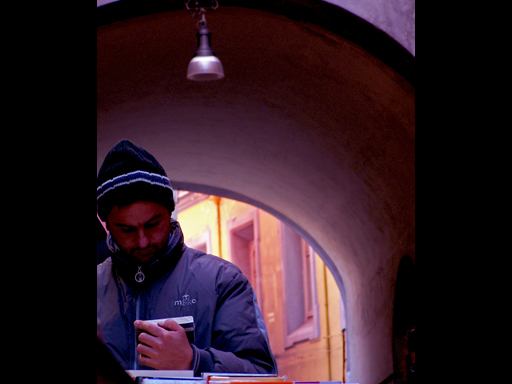
Man watching books
by Davide Rappucci @ Flickr.com

This anxiety, of course, could be situated within the context of conservative fears that feminism and/or economic and political gains for women equals a loss for men (as if it were a zero-sum game).  More specifically, though, Halford situates this article within late-twentieth century anxieties about whether boys and men, in fact, read books — and if they do, what kind of books they read. 

The article does nod at the problems of low pay and “gendered jobs” (and doesn’t nod at the fact that there are indeed many books “for men” published each year), but if we’re going to continue having this conversation, and it seems that we are, I think we should stop conflating the issues, of which there are four, at least:

  1. Reading practices among men.
  2. What gets published and what doesn’t (and the reasoning behind it).
  3. Low-paying, dead-end entry-level jobs in publishing (and the structuring of the entire industry).
  4. Women being willing to take these jobs and men not being willing and/or senior editors’ hiring practices.
Each of these needs more serious investigation before we can draw any conclusions, but I’m fairly certain that, however low reading rates among men are, the blame for them can’t be laid at the feet of the army of female assistants. So let’s stop talking about them as if they could.
A couple of observations I would add to Halford’s (really good) list of things we need to think about when we think about boys and men reading. 

The first is the fact that these conversations about boys and men reading are curiously separated from the conversations about men writing, and that both of these conversations about men + books are ahistorical.  With all the brouhaha recently surrounding Jonathan Franzen’s place in the American literary scene and the way we gender writing (by style, by genre, by level of “serious” literary merit), it seems clear to me that as a culture we sex-type the activities of writing and reading, expecting different types of writing and reading from individual people based on their gender.  Yet most of these conversations in the mainstream media take as a common sense fact that male and female human beings approach these activities differently, rather than questioning the belief that one’s sex, gender, and (implicitly) perhaps one’s sexuality shapes one’s reading and writing habits. In scholarly terms, this is known as “denaturalization”: taking something that we assume to be “natural” or “innate” and examining how and why we have come to this belief, and whether it is, in fact, true according to the evidence.

A little awareness of historical change over time might aid the cause of this denaturalization. Today, for example, it is “common sense” that men prefer non-fiction to fiction; in the late 18th and early 19th century fiction was considered dangerous for women’s physical and moral well-being. Reading was coded as a masculine activity; now it is coded feminine.  The fact that we have seen a shift over time in our understanding of how reading and gender relate suggests that what we believe to be true about men and their relationship (or non-relationship) to books and reading is at least in part culturally constructed.

Which leads me to my second observation: the fact that the assumption underlying the majority of these stories about men + books is that books for “men” and books for “women” are two distinct categories. Or, at the very least, that they are highly differentiated: perhaps overlapping a bit in the muddy middle, but on the whole make up an industry that is sex-typed by shelves of books for “him” and shelves of books for “her.” If we didn’t believe that gender mattered in relation to reading habits, then there would be no cause for alarm about the gender of the people involved in making publishing decisions — aside from a concern about economic inequality.

What if, instead of being preoccupied about the gender of the people choosing books, we asked (for example) about their expertise in certain fields of nonfiction and literature? Their depth or breadth of knowledge about (for example) science fiction and fantasy literature? graphic novels? genre romances? nonfiction military histories? science journalism? I have known women and men who read and enjoy all of these categories of printed matter, and who are knowledgeable about current trends. 

Yet despite our own anecdotal experience (which, I admit, cannot stand in place of solid social science analysis) that the individual men and boys in our lives do, in fact, read — and read across a great variety of publication type, writing style, and subject matter — the idea that men and women approach reading differently is a powerful narrative because gender in our culture is a powerful organizing narrative.  We take for granted that men and women are innately different, and so it makes “sense” according to our narrative of the world that women and men would read differently, and read different things.  Sadly (or happily, depending on your point of view!) the fact that this is a powerful story that we tell ourselves, and that it makes sense does not also make it right or useful. 

I just finished reading a book on brain organization theory by sociomedical scientist Rebecca Jordan-Young called Brain Storm: The Flaws in the Science of Sex Differences. I plan to write up a booknote on Brain Storm once I’ve digested it a little more, but for now the point I want to make is this: the scientific evidence we currently have to support the commonplace idea that male and female brains are differently organized (and thus process the world, including books and reading) differently because of their sex is weak at best and often poorly-conducted and poorly-reported science. This is not to say differences in brain organization have been categorically disproved — it simply means that there is no solid evidence to support what most Americans understand to be proven fact. 

Which brings me back to men + books. Since we’re primed to believe there’s a difference between men and women when it comes to reading habits, we see statistics like the gender imbalance in the publishing industry and it fits with our expectations concerning men and reading to interpret that imbalance as somehow related to men’s (supposed) disinterest in books, or interest in different books than those women are interested in. We construct a gender-based explanations, rather than stopping to ask a) if the imbalance is problematic, and b) if so, how is it problematic? rather than assuming we already know.

friday fun: marginalia

13 Friday Aug 2010

Posted by Anna Clutterbuck-Cook in think pieces

≈ Leave a comment

Tags

books, boston, family, fun

Hanna and I are headed across the river to Cambridge this evening to have dinner with our good friends Laura and Ashley at Veggie Planet in Harvard Square.

In honor of this rare bout of sociability, I’m going to share with you one of Laura’s favorite poems: Billy Collins’ “Marginalia” (from Sailing Around the Room: New and Selected Poems).

Sometimes the notes are ferocious,
skirmishes against the author
raging along the borders of every page
in tiny black script.
If I could just get my hands on you,
Kierkegaard, or Conor Cruise O’Brien,
they seem to say,
I would bolt the door and beat some logic into your head.

Other comments are more offhand, dismissive –
“Nonsense.” “Please!” “HA!!” –
that kind of thing.
I remember once looking up from my reading,
my thumb as a bookmark,
trying to imagine what the person must look like
why wrote “Don’t be a ninny”
alongside a paragraph in The Life of Emily Dickinson.

Students are more modest
needing to leave only their splayed footprints
along the shore of the page.
One scrawls “Metaphor” next to a stanza of Eliot’s.
Another notes the presence of “Irony”
fifty times outside the paragraphs of A Modest Proposal.

Or they are fans who cheer from the empty bleachers,
Hands cupped around their mouths.
“Absolutely,” they shout
to Duns Scotus and James Baldwin.
“Yes.” “Bull’s-eye.” “My man!”
Check marks, asterisks, and exclamation points
rain down along the sidelines.

And if you have managed to graduate from college
without ever having written “Man vs. Nature”
in a margin, perhaps now
is the time to take one step forward.

We have all seized the white perimeter as our own
and reached for a pen if only to show
we did not just laze in an armchair turning pages;
we pressed a thought into the wayside,
planted an impression along the verge.

Even Irish monks in their cold scriptoria
jotted along the borders of the Gospels
brief asides about the pains of copying,
a bird signing near their window,
or the sunlight that illuminated their page-
anonymous men catching a ride into the future
on a vessel more lasting than themselves.

And you have not read Joshua Reynolds,
they say, until you have read him
enwreathed with Blake’s furious scribbling.

Yet the one I think of most often,
the one that dangles from me like a locket,
was written in the copy of Catcher in the Rye
I borrowed from the local library
one slow, hot summer.
I was just beginning high school then,
reading books on a davenport in my parents’ living room,
and I cannot tell you
how vastly my loneliness was deepened,
how poignant and amplified the world before me seemed,
when I found on one page

A few greasy looking smears
and next to them, written in soft pencil-
by a beautiful girl, I could tell,
whom I would never meet-
“Pardon the egg salad stains, but I’m in love.”

To download an audio version of this poem, or see other works by Billy Collins, head on over to the billy collins website.

← Older posts
Newer posts →
"the past is a wild party; check your preconceptions at the door." ~ Emma Donoghue

Recent Posts

  • medical update 11.11.22
  • medical update 6.4.22
  • medical update 1.16.2022
  • medical update 10.13.2021
  • medical update 8.17.2021

Archives

Categories

Creative Commons License

This work by Anna J. Clutterbuck-Cook is licensed under a Creative Commons Attribution 3.0 Unported License

Meta

  • Create account
  • Log in
  • Entries feed
  • Comments feed
  • WordPress.com

Create a free website or blog at WordPress.com.

  • Subscribe Subscribed
    • the feminist librarian
    • Join 37 other subscribers
    • Already have a WordPress.com account? Log in now.
    • the feminist librarian
    • Subscribe Subscribed
    • Sign up
    • Log in
    • Report this content
    • View site in Reader
    • Manage subscriptions
    • Collapse this bar