• anna j. clutterbuck-cook
  • contact
  • curriculum vitae
  • find me elsewhere
  • marilyn ross memorial book prize

the feminist librarian

the feminist librarian

Tag Archives: books

Quick Hit(s): More on book-burning story

16 Tuesday Jun 2009

Posted by Anna Clutterbuck-Cook in linkspam

≈ Leave a comment

Tags

books, politics

Some further web commentary on the Wisconsin book-burning kerfluffle:

Burning Issue @ shakesville.

These folks have a lot to learn about civil liberties, not to mention a lot about Christianity, too.

Stamps, Bookburning, and Depth of Field @ Neil Gaiman’s Journal.

The sad thing is that these twerps are wasting the time and money of a town and its librarians with a nuisance suit. Well, that and giving sane Christians a bad name while doing their best to widdle all over the first amendment. You don’t burn books. And, well, you don’t sue for your right to burn a library book you don’t like. (And that’s not just because if you win, that means that people you don’t like now have the right to burn your books.)

. . . As I said on twitter, whatever side the “Christian Civil Liberties Union” is on, I’m now on the other one.

I’ll add more links to commentary here as I run across it and time and inclination allow, so check back if you’re interested.

UPDATE: More from Neil Gaiman @ More on Stamps and Bookburning:

And these two [emails] follow up from the Wisconsin would-be librarybookburners who feel that the existence of Francesa Lia Block books threatens their health and safety…

UPDATE: YALSA (young adult library services association) offers suggestions for Unburning Baby Be-Bop.

In praise of context

14 Sunday Jun 2009

Posted by Anna Clutterbuck-Cook in think pieces

≈ 2 Comments

Tags

books, gender and sexuality, librarians, politics

So far this month, two articles on a Milwaukee-area book-banning (and potential book-burning) kerfluffle have come across my virtual desk — a piece from the ALA website, and a more recent article from the books page of the Guardian. Particular points should be awarded to the Guardian, I feel, for their deadpan quotation of some of the more hyperbolic charges made by the Christian Civil Liberties Union about the threat certain young adult novels pose to the good citizens of West Bend, Wisconsin, simply by remaining accessible in the public library (more below). As the ALA reports:

Milwaukee-area citizen Robert C. Braun of the Christian Civil Liberties Union (CCLU) distributed at the meeting copies of a claim for damages he and three other plaintiffs filed April 28 with the city; the complainants seek the right to publicly burn or destroy by another means the library’s copy of Baby Be-Bop. The claim also demands $120,000 in compensatory damages ($30,000 per plaintiff) for being exposed to the book in a library display, and the resignation of West Bend Mayor Kristine Deiss for “allow[ing] this book to be viewed by the public.”

This claim follows unsuccessful attempts by area citizens to get the library trustees to remove the offending material from the library: in a June 2 vote of 9-0, the trustees decided to “maintain the young-adult collection as is ‘without removing, relocating, labeling, or otherwise restricting access’ to any titles.”

As Allison Flood at the Guardian reports in more detail, the offending title which the CCLU wishes to publically burn (publically burn!!!) is a young adult novel that deals with issues of nonstraight sexuality and violence inspired by homophobia and racism:

The offending book is Francesca Lia Block’s Baby Be-Bop, a young adult novel in which a boy, struggling with his homosexuality, is beaten up by a homophobic gang. The complaint, which according to the American Library Association also demands $120,000 (£72,000) in compensatory damages for being exposed to the book in a display at West Bend Community Memorial Library, was lodged by four men from the Christian Civil Liberties Union.

Their suit says that “the plaintiffs, all of whom are elderly, claim their mental and emotional well-being was damaged by this book at the library,” and that it contains derogatory language that could “put one’s life in possible jeopardy, adults and children alike.”

“The word ‘faggot’ is very derogatory and slanderous to all males,” the suit continues. “Using the word ‘Nigger’ is dangerously offensive, disrespectful to all people. These words can permeate violence.” The suit also claims that the book “constitutes a hate crime, and that it degrades the community”.

While I haven’t read this particular work by Francesca Lia Block, I have read others and Block’s characters are often struggling in very messy ways with marginalization, poverty, their own complicated sexualities, and histories as perpetrators or victims of violence in one form or another. Her work, while often lyrical, is not for the faint-of-heart. It has never particularly spoken to me, but as an author she commands a wide audience of teens and adults who find her characters compelling.

What I find interesting about this lawsuit — based, at least, on these two news stories — is the way in which the CCLU has (1) adopted the language of the political left to frame their complaint and (2) the way in which they conflate hateful actions with descriptions of hateful actions. While I suspect that what traumatizes the offended parties is Block’s affirmative depiction of characters with nonstraight sexual identities, and possibly (knowing her other works) instances of drug use, sex scenes, and the old standby, vulgar language, instead they claim to be concerned about the use of words such as “faggot” and “nigger.” This isn’t necessarily a surprising tactic, since the radical right has increasingly adopted leftist rhetoric in their effort to shift the culture wars in their favor.

What I find more stunning is their apparently inability to understand (or, possibly, their tactical decision to ignore) the difference between an actual, material act of violence or an act of speech that supports that violence and a work of fiction that depicts the reality of bigotry and violence in the lives of marginalized youth. Children face daily abuse at the hands of bullies for perceived or actual gender and sexual nonconformity; a novelist like Block, who depicts that violence in her work of fiction, is describing the reality of our children’s lives rather than advocating such abuse. If uttering the word “faggot” actually constituted a hate crime regardless of context, we would be incapable of speaking out against the use of that language by individuals who actually seek to do harm.

While this conflation of thought or depiction with actual illegal violent crime is not unique to the Right (Exhibit A: the campaign by some feminist activists during the 1980s to have pornography treated as violence against women, whether or not actual individuals had been harmed in the making of the piece), it seems to me that it displays a legalistic, overly-simplistic, atomized way of thinking that is more prevalent among conservatives than it is among those on the left. Another example that comes to mind is the approach of the MPAA rating board in assigning ratings to American films (see This Film is Not Yet Rated), and the members’ obsession with individual words or acts of sexual contact, rather than overall message conveyed. I find myself wondering if this is strategic blindness or an actual belief that a word or activity, devoid of its overall context, has a constant and unwavering effect (whether positive or negative).

As an historian (among other things) I have to cry foul and point out that context, while certainly not everything counts for a hell of a lot — and as a librarian-in-training (among other things) I have to point out that words themselves are never, ever “hate crimes.” Words are just words: it’s what we do with them that makes all the difference in the world. Francesca Lia Block has done many beautiful things with the words available to her, and in my opinion her work is the opposite of a hate crime: it has made the world a better place.

Photo credit: “Mercy! Books Burning” (c) Catherine Jamieson @ flickr.

Booknotes: Girls on the Stand

31 Sunday May 2009

Posted by Anna Clutterbuck-Cook in book reviews

≈ Leave a comment

Tags

blog for choice, books, children, feminism, politics

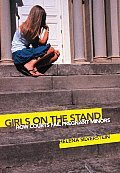
As news was breaking about the murder of Dr. George Tiller, and abortion provider and pro-choice activist, I sat down to read Helena Silverstein’s Girls On the Stand: How Courts Fail Pregnant Minors.

A professor of government and law, Silverstein details the real-world effects of parental notification and consent laws have on the ability of minors to exercise their rights to abortion access as currently granted under U.S. law. Specifically, Sliverstein is interested in the viability of the “judicial bypass” option that the U.S. Supreme Court requires such parental involvement laws to contain: that is, if a pregnant minor does not wish to inform her parents of her pregnancy, she must have the ability to petition, confidentially and with the help of court-appointed counsel, for an exception. Focusing on the practical workings of the judicial bypass procedure in three states, Alabama, Pennsylvania, and Tennessee, Silverstein found that pregnant minors faced ignorance, bureaucracy and outright ideological obstruction in their pursuit of timely and medically-safe abortions.

For example, after systematically phoning courts in her three targeted states for information on how to initiate a judicial bypass, Silverstein and her research assistants faced a wide range of responses, from the adequate to the under-informed to the intentionally misleading. Whether malicious in intent, answers to an initial query that fail to clearly affirm the minor’s right to confidentiality, a timely hearing, and most importantly free assistance in navigating the court system, “portray the bypass as a road the minor must travel alone and risk sacrificing the minor’s right to her own vulnerability” (61). Even more egregiously, some anti-abortion judges, with the discretion granted to them under current law, have employed such intimidation tactics as requiring pro-life, Christian counseling for all minors seeking the bypass, or even appointing a guardian for the fetus who has the responsibility of challenging the petitioner at the hearing and attempting to persuade her against choosing an abortion.

“The argument of this book,” Silverstein writes, “is directed at those who have made a good-faith compromise on the parental involvement issue,” seeking to ensure that minors wishing to terminate pregnancies are given the information and support they need, both pre- and post-abortion, while still protecting their constitutional rights to privacy and bodily autonomy (157).

Those compromisers, a group to which I once belonged, have in mind a picture of what a world with such mandates would look like. Pregnant minors will be encouraged to seek guidance from parents, and courts will protect those who choose otherwise. We have seen, though [in this book], that many courts are not prepared to do their duty, whether due to ignorance, recalcitrance, or incompetence. We have seen judges who are willing to employ hardball tactics to get minors to bend to their will. Whatever the Supreme Court might decide about how much implementation failure is too much or what obstacles too burdensome, it is up to the good-faith compromiser to decide whether the reality of parental involvement mandates sufficiently approximates her picture [of reality] to warrant continued support. This is a personal decision. To my mind the case is clear. I invite the reader to be her own judge (157).

Sadly, Silverstein’s book is not as narratively compelling as I would have hoped, even to someone like myself whose heart usually quickens a the prospect of a book or an article dealing with the intersection of feminism and the law. Her prose feels clunky, and the reporting of her research — while providing the evidence necessary to make her case — nonetheless caused me eyes to begin glazing over, even at a brief 180 pages (excepting endnotes and bibliography). Given its narrow scope, a meaningful reading likely requires a fair amount of background knowledge in recent abortion politics and law.

Still, I’m glad to add it to my repertoire of resources on reproductive health and rights. The struggle over women’s right to bodily autonomy is not going to disappear any time soon, as Tiller’s murder today dramatically and tragically illustrates — and young women are among those particularly vulnerable to having their reproductive choices taken from them, given their relatively lack of experience and financial resources. Silverstein reminds us not to assume that what looks good on paper will likewise be sound in actual practice.

Quick Hit: Feminism, YA booklists, and troublesome authors

22 Friday May 2009

Posted by Anna Clutterbuck-Cook in linkspam

≈ Leave a comment

Tags

books, feminism

MK blogged about creating booklists for her school library, and how she ran into trouble when it came time to categorize Meg Cabot. I promised is she blogged it, I’d link it, so here’s the post. Check it out and leave her booklist category suggestions in the comments!

Thursday video: digital emulation edition

01 Friday May 2009

Posted by Anna Clutterbuck-Cook in media

≈ Leave a comment

Tags

books, librarians, simmons, web video

In my archives class tonight (LIS440: Archival Access and Use) were were getting the cliff notes version of digital preservation, the future of archives. Because even though we will continue for the foreseeable future to have and acquire traditional materials in, say, paper form (or am I seriously the only person who still keeps my journal long-hand? writes actual pen-and-ink letters?), we’ll also get an increasing proportion of “born digital” materials — say drafts of a novel preserved in Word format, or an Excel file detailing travel expenses for a conference, or a computer program modeling data sets from a science experiment.

One of the concepts for preserving this data and making it available to researchers is “emulation.” Basically, it’s creating–using newer technology–a way of accessing older data that will re-create as closely as possible the original experience of accessing the data. For example, making it possible to run an old computer game (Donkey Kong anyone?) on newer technology, but maintaining the look and feel of the original game.

Our professor, Susan Pyzynski, showed us this digital archive, the agrippa files dedicated to Agrippa (a book of the dead), a sort of performance art collaboration created in 1992 by artist Dennis Ashbaugh, author William Gibson, and publisher Kevin Begos, Jr. It was a limited-edition book meant to be read for a limited time only before its text faded packaged with a diskette containing a digital file of a poem meant to be opened and read only once before it self-destructed.

the agrippa files managed to capture and emulate the experience of reading this poem, a process which they detail on the website and have made available through Google video with the permission of the original creators. Check out this experiment in 21st century archival access!

(note: if you actually care about reading the poem, you can find a higher-resolution Quicktime video on the agrippa file website)

Booknotes: Purity Myth

05 Sunday Apr 2009

Posted by Anna Clutterbuck-Cook in book reviews

≈ 3 Comments

Tags

books, feminism, gender and sexuality

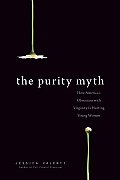
Just finished Jessica Valenti’s latest book, The Purity Myth: How America’s Obsession with Virginity is Hurting Young Women. It’s a quick read (really! I wasn’t shirking those reading assignments for class in favor of feminist political analysis . . . again!), and give a nice overview of some of the current conservative and mainstream trends for policing women’s sexuality: specifically, the use of the elusive notion of girlhood “purity” and “virginity.” She ranges widely over a constellation of cultural narratives about sexuality that all have at their heart a fear of mature adult women’s sexual pleasure and sexual agency. Whether it’s conservative purity balls and father-daughter dates or the mainstreaming of misogynist pornography and ubiquitous slut-shaming and sexual violence that punish women, the agenda, Valenti argues, is the same: propping up an oppositional view of gender (“men” and “women” are mirror opposites of each other, and blurring of the categories ‘male’ and ‘female’ is dangerous to society), often at the expense of women and girls.

I particularly appreciate the way Valenti foregrounds the importance of valuing the ability of women and girls as moral actors, capable of making decisions about their own sexual lives — particularly when given access to a full range of resources (as opposed to a one-size-fits-all “just say no until marriage” toolkit, which spreads misinformation and ignores anyone who does not fall into a narrow heteronormative model of human sexuality). In the chapter on sexual education she writes:

I’m not going to reinforce the “they’re [teens] are going to do it anyway” argument. I believe it’s time to take a stance on sex education that isn’t so passive–young people deserve accurate and comprehensive sex education not just because they’re going to have sex, but because there’s nothing wrong with having sex. [emphasis hers] Allowing educators to equate sexuality with shame and disease is not the way to go; we are doing our children a great disservice. Not only are we lying to them, we’re also robbing them of the joy that a healthy sex life (as a teenager or in adulthood) can provide (120).

She goes on to describe the profound distrust of women that has been written into state and federal laws that regulate specifically women’s sexual descision-making, effectively giving us the legal status of “moral children” (189).

Valenti provides, in the final chapters, practical suggestions for shifting this discourse of fear and proscription to one of sexual agency. Perhaps because I have been thinking a lot, lately, about what it means to approach fellow human beings with intrinsic respect for their personhood, even when we profoundly disagree with their values and choices, I was particularly struck by the way she frames her vision with the concept of trust:

Trusting women means . . . trusting them to find their way. This isn’t to say, of course, that I think women’s sexual choices are intrinsically “empowered” or “feminist.” I just believe that in a world that values women so little, and so specifically for their sexuality, we should be giving them the benefit of the doubt. Because in this kind of hostile culture, trusting women is a radical act (198; emphasis mine).

While obviously fighting for a healthier sexual climate for women and girls does not end with trust, I don’t know if there could be a much better beginning.

Booknotes: Five Lectures in Psycho-Analysis

31 Tuesday Mar 2009

Posted by Anna Clutterbuck-Cook in book reviews

≈ 2 Comments

Tags

books, gender and sexuality, history, simmons

In the few weeks since discussing Darwin, my Intellectual History class has moved through Nietzsche and Fin-de-siecle Vienna and arrived at Sigmund Freud.

I imagine there are few Women’s/Gender Studies students in the country who have not encountered Freud in their intro-level classes: I remember the director of my women’s studies program back at Hope College — whose training was in the field of psychology — suggesting that maybe, possibly, my response to Freud’s theory of sexual development and penis envy was a little too categorically dismissive (if I remember right, my scathing response paper admitted to having thrown our textbook across the room). So I will admit upfront I came to Five Lectures in Psycho-analysis prepared for weary frustration at Freud’s legacy, even as I was interested to see what a fresh reading ten years (yes, ten years!) since that first encounter might bring.

Five Lectures is a slim volume in which Freud recreated from memory five lectures he delivered at Clark University, Worchester, Massachusetts, in 1909 while visiting at the request of the university president, G. Stanley Hall. This fact alone gives me the creeps, since G. Stanley Hall had some heavily social darwinist theories of child- and adolescent development. Five Lectures is an extemporaneous-feeling overview of Freud’s development as a psycho-analyst, his theories of dream interpretation and sexuality, and his beliefs about the role of psychoanalysis human development. Only one of the five lectures focuses specifically on sexuality, although his beliefs about human sexual development are integral to his view of human nature and growth.

While none of his basic views were startlingly new to me, I was struck as I read this chapter by two things: 1) how closely Freud’s description of childhood sexuality corresponds with current, twenty-first century progressive, feminist views of human sexuality, and 2) how strongly Freud seems to feel the need to contain, organize, and channel that sexuality within the circumscribed space of heterosexual intercourse for the purposes of reproduction.

Of childhood sexuality he writes:

A child’s sexual instinct turns out to be put together of a number of factors; it is capable of being divided into numerous components . . . independent of the reproductive function . . . it serves for the acquisition of pleasurable feeling, which, basing ourselves on analogies and connections, we bring together under the idea of sexual pleasure.

He describes masturbation, dominance/submission activities, the “desire for looking,” fantasy, sexual play and emotional bonds all under this broad umbrella. He also points out that “at this early period of childhood difference in sex plays no decisive part.” In sum, “widespread and copious” is the sexual life of children, loosely organized around the principle of pleasure (p. 46-48).

It is only after this rich description of sexuality, replete with possibility for variation, fluidity, and individuality which (crucially, in my opinion) places the recognition of pleasure at the heart of sexual feeling, that Freud retrenches. In the paragraph immediately following the descriptions above, he suggests that all of this abundant energy must, in order for “mature” adult sexuality to emerge, be “brought together and organized” into genitally-centered, reproductive activity (p. 48).

. . . Why? What is so terrifying to Freud (and any others who resist it) the first, “childhood,” model of sexual-sensual experience? This week in class, I’m looking forward to sitting down with this fear and trying to understand what, exactly, is so freaky about “widespread and copious” pleasure.

Booknotes: Quiverfull

22 Sunday Mar 2009

Posted by Anna Clutterbuck-Cook in book reviews

≈ 8 Comments

Tags

books, education, feminism, politics

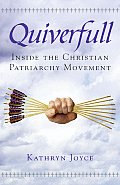
A couple of weeks ago, my own personal copy of Kathryn Joyce’s new book Quiverfull: Inside the Christian Patriarchy Movement arrived in the mail — just when I was looking for one more way to put off doing school-related reading over Simmons’ spring break. Joyce’s book documents the theology, politics and daily life of families (especially women and girls) who follow the loose collection of conservative ideas that fall under the umbrella of “quiverfull” thinking: a patriarchal family structure that demands wifely submission, opposition to all kinds of family planning, fears of a “demographic winter” for Western nations, home education, and often political alignment with the Christian reconstructionist agenda. Hanna flipped through my copy and asked me how it is I can read books like this and not feel my blood pressure skyrocket. Which challenged me to reflect a little on my addiction to reading books about the intersections of gender, sexuality, politics, home education, and the Christian right. This booknote, therefore, is less of a review and more a motley collection of observations inspired by Joyce’s journalism.

I think what I find most absorbing about the Christian right and the way they think about gender, sexuality, and education, is not their strangeness but their familiarity. And I’m not talking about familiarity due to close proximity (although growing up in a very religiously conservative area means I’ve been exposed to my fair share of right wing bigotry and fear-mongering). No: what I’m talking about is the fact that Christian right’s critique of the American mainstream begins with with many of the same critiques of modernity that leftists put forward. Many of the families profiled in Quiverfull are deeply ambivalent about modernity — about the rise of scientific rationalism at the expense of the irrational and sacred. They critique the way that a capitalist economic system, with its separation work and home spaces (and the resulting age-segregation of children and the elderly — nonworkers — from wage-earners).

As a result, they have created a vibrant counter-culture of their own that, as Joyce rightly points out, shares many of the same characteristics of the radical left. Home birth and midwifery activism among Quiverfull families, for example, “overlaps with back-to-the-land hippie counterculture in some ways. It’s a deliciously amusing irony to some Quiverfull moms, who stake out their territory of natural pregnancy in the odd company of feminist doulas and naturopaths opposed, as they are, to high rates of hospital cesarean sections” (164). Likewise, the modern home education movement, which began as a form of leftist activism (see: unschooling) has since become an overwhelmingly right-wing phenomenon. So much so that — although she makes passing mention of this history — Joyce is comfortable conflating “homeschool” with Christian conservatism throughout most of Quiverfull without specifying that she is, in fact, writing about a very particular subset of the home education population.

In fact, it is precisely the outward similarity of these profiles of radical right and radical left that I find both fascinating and deeply disturbing. For while on the surface quiverfull families and “back-to-the-land hippies” and feminists may make similar lifestyle choices, their reasons for doing so are often diametrically opposed. Whereas leftist, feminist advocates of low-intervention childbirth and home education ground their critique of modernity and counterculture activism in notions of gender equality, democratic social structures, and a commitment to individual human rights, those on the radical right pursue the same forms of activism but root them in notions of gender difference, social structures that unapologetically support the kyriarchy, and the subordination of individual persons to tyrannical group dynamics.

As most of you know, I grew up in a family that was part of the leftist home education tradition. My sibs mixed public schooling with home-based learning, and all of us have gone on to college-level institutional education (and beyond). At the same time, I am firmly committed to the continued legality, and minimal governmental oversight, of home education. In this, like the feminist doulas of Joyce’s book, I find myself in the uncomfortable company of groups such as the Home School Legal Defense Association. Because of this, I believe it is my responsibility to take a long, hard look at the beliefs and practices of those whose political and social agenda I (however occasionally) share — and whose right to continue living as they do I, however abstractly, defend.

Though there was nothing startlingly new to be found in the pages of Quiverfull if you’ve read other work in this area, Joyce does a thorough survey of the disparate strands of religious and political thinking that inform the movement, and remains sensitive to the nuances of class, race, gender, and theological difference that shape individual experience within it. I also enjoyed discovering that by cultivating close relationships with other women, I am apparently in danger of committing the sin of “spiritual masturbation” (which, sadly, is not nearly as kinky as it sounds).

Now it’s back to Carl Rogers’ Freedom to Learn (for my seminar paper in Intellectual History) . . . not to mention keeping an eye out for Jessica Valenti’s latest, The Purity Myth, and Michelle Goldberg’s sure-to-be-absorbing The Means of Reproduction.

Movienotes: Nick and Norah’s Infinite Playlist

03 Tuesday Mar 2009

Posted by Anna Clutterbuck-Cook in media

≈ Leave a comment

Tags

books, movies

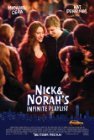
Okay, I’ll admit this right off the bat: I was ready to be disappointed by Nick and Norah’s Infinite Playlist. Despite my affection for Michael Cera as a comedic actor (due to being introduced by my brother to Arrested Development), it automatically starts out with a heavy handicap given that it’s a movie made of a book I have adored since it first came out and introduced me to the brilliant David Levithan, who co-authored with fellow YA author Rachel Cohn.

In the spirit of the film classic American Graffiti, Infinite Playlist tells the story of a group of teenagers poised on the thresh-hold of adulthood as they spend an endless night trailing around New York City in search of an elusive performance by the mysterious band Where’s Fluffy? Nick (Michael Cera) is the one straight guy in a queer-boy band, not yet over his traumatic break-up with manipulative queen bee Tris; Norah (Kat Dennings) is competent and quiet, used to spending her time at concerts watching out for her reckless friend Caroline and ignoring rumors she’s a frigid bitch.

Despite these obviously gender-specific social quandaries, the thing that really struck me while I was watching the movie is that the people involved (writers, directors, actors) have managed to tell a love story that’s not boy-meets-girl but person-meets-person. It’s a story that resists casting Nick and Norah into any stereotypical “teenage boy” and “teenage girl” roles — or at least making the story revolve around their performance in those roles.

On the downside, I missed the richess of the inner dialog inherent in first-person fictional narration (the novel is told in alternating chapters by Nick and Norah), and the more explicit sexuality that’s possible in fiction that can’t be translated onto movie marketed to a teen audience (thanks movie ratings board). While there’s a really sweet make-out scene — the details of which I will not spoiler ahead of time — I couldn’t help but notice that both the Tris-and-Norah snogging and the almost-oral sex scene didn’t make the cut in the film version. I iz suzpishus.

In the end though, I think they may have made up for it by writing solid new material and (more importantly) giving Salvatore his due; I would have been very, very sad if Salvatore had been entirely absent.

Links to some stuff, various

15 Sunday Feb 2009

Posted by Anna Clutterbuck-Cook in linkspam

≈ Leave a comment

Tags

books, feminism, gender and sexuality, politics

Stuff I haven’t had a chance to blog about in detail:

Courtney E. Martin on Why Love is Our Most Powerful Form of Activism.

Tkingdoll, over at Skepchick, on the historical moment we’re living through and why, despite all news headlines to the contrary, we might be lucky to be alive in the midst of it.

Race and Gender in Coraline, over at FilthyGrandeur (via Feministe).

Ariel Levy’s review of the new edition of The Joy of Sex. Let it be noted I take issue with her characterization of both Our Bodies, Ourselves and the Moosewood Cookbook — both are just fine without the bacon, thank you very much!

Some thought-provoking coverage of Ruth Bader Ginsburg’s role on the U.S. Supreme Court as well an analysis of the court’s current composition.

“No one expects e-books to overtake printed books as rapidly as digital music overtook CDs and albums” . . . but will they ever?

Dancing Backwards in Heels offers some reflections upon reading Michael Kimmel’s Guyland (2008).

And finally, if you’re feeling strong, the wrongness that is Obama slash fanfic (commented on, with excerpts, at Bitch blogs), and Pilgrim Soul, at The Pursuit of Harpyness on the creepyness of America’s obsession with the Obama family’s “hotness.”

← Older posts
Newer posts →
"the past is a wild party; check your preconceptions at the door." ~ Emma Donoghue

Recent Posts

  • medical update 11.11.22
  • medical update 6.4.22
  • medical update 1.16.2022
  • medical update 10.13.2021
  • medical update 8.17.2021

Archives

Categories

Creative Commons License

This work by Anna J. Clutterbuck-Cook is licensed under a Creative Commons Attribution 3.0 Unported License

Meta

  • Create account
  • Log in
  • Entries feed
  • Comments feed
  • WordPress.com

Create a free website or blog at WordPress.com.

  • Subscribe Subscribed
    • the feminist librarian
    • Join 37 other subscribers
    • Already have a WordPress.com account? Log in now.
    • the feminist librarian
    • Subscribe Subscribed
    • Sign up
    • Log in
    • Report this content
    • View site in Reader
    • Manage subscriptions
    • Collapse this bar