• anna j. clutterbuck-cook
  • contact
  • curriculum vitae
  • find me elsewhere
  • marilyn ross memorial book prize

the feminist librarian

the feminist librarian

Tag Archives: books

Moviesnotes: Coraline

13 Friday Feb 2009

Posted by Anna Clutterbuck-Cook in media

≈ 2 Comments

Tags

books, michigan, movies

These “movienotes” posts seem to take me about a week to actually get around to finishing. Last Sunday, we went to see the new Henry Selick feature, Coraline, which is a stop-motion animated film based on the novella by Neil Gaiman. Despite being an animated movie based on a book marketed to middle-grade readers, like other Selick films (eg Nightmare Before Christmas and Corpse Bride) Coraline is not a film for younger children (unless you know said children very well and have pre-screened the film yourself with them in mind). It is about a child who, moving into a new house, stumbles into an alternate version of reality controlled by an evil spirit, the Belle Dame, who devours children and kidnaps her parents, all the while insisting she is Coraline’s “other mother,” her better mother, and becomes very, very nasty when canny little Coraline resists her attempts at seduction.
The book is a deeply scary, compelling read; and with that version of the tale in the back of my mind, I’m sorry to say I wasn’t that caught up by the narrative of the film. They shifted locations from London to southern Oregon, and added characters that leeched away the ingenuity of Coraline-the-book-character. I was also disappointed by the film version of the cat, whom I remember playing a more central role in the novel (although to be fair, it’s been a few years). The women at Pursuit of Harpyness have a round-table discussion going about the film that likewise raises some questions about how the story adaptions changed the nature of the story and, in some ways, made the central narrative of a girl who successfully combats an ancient evil confused and unsatisfying.

Yet all is not lost!! Taken on its own terms — particularly as a visual accomplishment — the film was totally worth seeing. Whether you end up seeing it in 3D or regular format, it’s overflowing with color and spectacle, and manages to walk a line between whimsical and eerily wrong quite adeptly. It was the small details in the film that, for me, made it worth watching. The switch from England to America was jarring, but I was won over by the fact that Coraline’s family (in the film) moves to southern Oregon, to the outskirts of a town boasting a Shakespeare festival — the town is unnamed, but is obviously an allusion to Ashland, near where I went to school for part of my extended undergraduate career. Not only did they move to a place I know and love, but they also moved from a place I know and love: Michigan! Coraline and her parents relocate from Pontiac, Michigan, and her father sports a Michigan State sweatshirt for most of the film. This is apparently a wink to one of the producers, who graduated from the school, and it led to an entertaining game of spot-the-Michigan-references. I was also charmed by the song written and performed by They Might be Giants, even though it was part of the “other mother”‘s not-quite-right world.

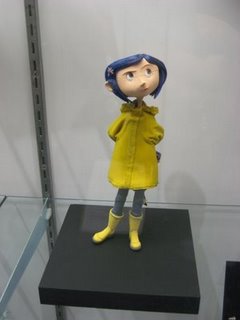
Oh, and I totally want Coraline’s yellow slicker and galoshes for Boston’s rainy season.

Image nicked from Grow Wings.

For Hanna’s take, see “coraline”

Movienotes: Inkheart

06 Friday Feb 2009

Posted by Anna Clutterbuck-Cook in media

≈ Leave a comment

Tags

books, children, movies

Hanna beat me to a review of Inkheart, which we saw last week at the cinema down on the Boston Common, which offers morning tickets at $6 a pop (Sunday morning is the new “movie night” at our apartment). Check out what she has to say, since I agree with her assessment that it lacked a certain depth of character (in spite of a brilliantly-cast cast), and a satisfying quotient of wonder and peril, all of which are found in abundance in the original novel. The novel actually moved me to tears in places, and I find the relationship between Meggie and Mo, her father, one of the most satisfying parent-child relationships I’ve seen in children’s fiction in recent years. So often, authors feel compelled to make their child-protagonists orphans or otherwise removed from the family sphere in order for them to be an independent actor. Meggie, on the cusp of adolescence — though still very much a child — insists on her autonomy while simultaneously clinging tenaciously to her relationship with her father. She holds her own alongside (rather than against) Mo, her great-aunt Elinor, and other adults to rescue her missing mother. If you’re looking for a fun fantasy film, I’d encourage you to consider seeing the film version, but before or after you see the movie, be sure to check out the book (and as extra incentive, the book has sequels!)

As another small item of note: This is my 200th blog post!

Librarians in film

18 Sunday Jan 2009

Posted by Anna Clutterbuck-Cook in library life

≈ Leave a comment

Tags

books, librarians, movies

It’s probably not entirely ethical to link to your roommate’s blog on a regular basis, but since I’m being held partially responsible for the existence of this post, I thought I would highlight it. Go check out the annotated list of ten librarians in film that Hanna put together for me.

Image from imdb.

OED: "Crime" against Children’s Humanity?

11 Thursday Dec 2008

Posted by Anna Clutterbuck-Cook in think pieces

≈ Leave a comment

Tags

books, children, politics

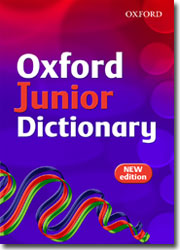
Every abridged dictionary makes choices about what to include or exclude. Andrew Brown, in an op-ed column over at the Guardian online, questions the selections made for the latest edition of the Oxford Junior Dictionary:

Imagine a childhood without gerbils, goldfish, guinea pigs, hamsters, herons, larks, or leopards; where even the idea of these things had been replaced by practical modern concepts like celebrity, vandalism, negotiate, interdependent, and creep. This is the world of the Oxford Junior Dictionary.

. . .

Dictionaries should be many things, but even the smallest should be a gateway into wonder. The child who doesn’t even know of the possibility of larks and leopards has been robbed. To offer them instead the grey bureaucratic porridge of the new words is a crime against their humanity.

I’m not sure that I share Brown’s level of disquiet over these particular words, but I do like the idea that to rob children of language to speak about nature is a “crime against their humanity.”

Thanks to Hanna, my source for all UK-related news :).

Reference 101: Source Evaluations

29 Monday Sep 2008

Posted by Anna Clutterbuck-Cook in library life

≈ Leave a comment

Tags

books, simmons

For my reference class, we’re required to review and evaluate many different types of sources throughout the semester. This week, we had a trial run: an assignment to choose a single work in the Simmons library reference collection and review it. This process is something that reference librarians do constantly, either systematically (in recommending acquisitions for reference collections) or more improvisationally (when assisting patrons in answering reference questions). At the MHS, all of us on the Reader Services Staff take our turn highlighting a reference work in our collection as part of an ongoing “reference book of the week” project. For those of you who are interested in what goes into such an evaluation, below is the assignment I did this week for class.

Walter, Lynn. The Greenwood Encyclopedia of Women’s Issues Worldwide. Westport, Conn.: Greenwood Press, 2003.

The Greenwood Encyclopedia of Women’s Issues Worldwide provides researchers with an easily-navigable overview of contemporary women’s issues across the globe. The work is organized in six volumes by geographical region (Asia and Oceania, Central and South America, Europe, The Middle East and North Africa, North America and the Caribbean, and Sub-Saharan Africa). Within each volume, the contents are arranged alphabetically by country, or group of countries, profiled. Each volume was edited by a scholar who is an authority on the region, and contributors are drawn from predominantly American universities, with a healthy representation of individuals at institutions of higher education across the globe.

Each contributor was asked to profile her or his assigned country, or group of countries, with an eye toward “locating women’s agendas,” “differences among women” within the region, and the activities of self-identified women’s movements and non-governmental organizations. Each author follows the same outline, covering uniform topics that fall under the broad categories of “education,” “employment and the economy,” “family and sexuality,” “health,” “politics and law,” “religion and spirituality,” “violence,” and “outlook for the twenty-first century.” The summary narrative is augmented by a selected bibliography and resource guide within each chapter that points the researcher to further information in suggested readings, audio-visual and Internet material, and organizations of note.

With each chapter laid out in the same basic pattern, it is fairly simple for the researcher to cross-reference subjects such as “contraception and abortion” to find out how access to birth control varies depending on whether one lives in Denmark, the United States, or South Africa. Each volume contains a subject and person index for that volume, with a comprehensive index found at the end of volume six. Maps and images are included, though not in color, and are not indicated in a separate index. Appendices in each volume provide statistical information on the education, health, economic status, and political participation of women in the region.

Reviewing the encyclopedia for Choice Reviews Online in May 2004, P. Palmer describes the work as “current, well written, and informative, providing scholarly content, useful detail, and sound documentation.” Sally Moffitt, reviewing for Reference & User Services Quarterly, highlights the ease of cross-country comparisons and points out that “it will be a matter of regret if its editors fail to bring out regularly updated editions.” Indeed, since it was published in 2003 the Encyclopedia of Women’s Issues is now five years out of date as a truly contemporary source of information on global women’s issues. However, it remains the most recently-published resource attempting this level of breadth and depth, and is a valuable tool for both entry-level students of women’s studies as well as higher-level researchers seeking comparative data the status and experience of women worldwide. The target audience is students and faculty in higher education, although high school students with a particular research need will also find it accessible and informative.

[1] P. Palmer, review of The Greenwood Encyclopedia of Women’s Issues Worldwide, by Lynn Walter, Choice Reviews Online (May 2004). Available online at http://0-www.cro2.org.library.simmons.edu/default.aspx?page=reviewdisplay&pid=2658010. Accessed 27 September 2008.

[2] Sally Moffitt, review of The Greenwood Encyclopedia of Women’s Issues Worldwide, by Lynn Walter, Reference & User Services Quarterly vol. 43, no. 4 (Summer 2004): 348-349.

Twilight (Take Two)

25 Monday Aug 2008

Posted by Anna Clutterbuck-Cook in think pieces

≈ Leave a comment

Tags

books, feminism, gender and sexuality


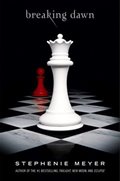
As an addendum to my earlier post about the Twilight saga, in the wake of the publication of Breaking Dawn — the fourth novel in the series –here are two more feminist perspectives on the series’ messages about sexuality, both brought to you by the RhRealityCheck site.

Sarah Seltzer provides a nice summary of some of the troubling aspects of the series, particularly as they surface in the final novel (spoiler warning for those who care!), and links to a lot of other commentary — only a few of which I’ve had a chance to peruse.

Meyers has tapped into a serious artery of the teen female psyche. Adding to the dynamic is the fact that Bella is a cipher whose only strong impulses are self-sacrifice and vampire lust. She has a glancing appreciation of classic novels and her family, but is easily projected upon by readers, who can imagine themselves in her place and be vicariously wooed by sexy succubi.

In Vampires And Anti-Choice Ghouls, her latest podcast, Amanda Marcotte gives her own take on the phenomenon (audio; partial transcript also provided).

God, you don’t even get close dancing or closed mouth kisses? Well, of course not. The point of this exercise is to set the standards so high that pretty much every girl is bound to fail and then hate herself for being a dirty girl. . . The important thing is that women learn that their bodies don’t belong to them, but should always be subjugated to the needs of the patriarchy.

Happy reading!

New Sarah Vowell coming soon!

21 Thursday Aug 2008

Posted by Anna Clutterbuck-Cook in library life

≈ Leave a comment

Tags

books, history, MHS

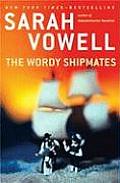
I (sadly! sadly!) wasn’t at work the day Sarah Vowell came to do research at the MHS last year, but we just recieved an advance review copy of the forthcoming book, The Wordy Shipmates, which is due out in October. My friend and colleague Jeremy makes a brief appearance.

"Best" Books?

15 Friday Aug 2008

Posted by Anna Clutterbuck-Cook in think pieces

≈ 1 Comment

Tags

books

While I’m unashamed of my love of lists, I’m always skeptical of lists that attempt to assign the status of “best of . . .” in any genre, whether it’s a vacation destination, restaurant, or the artistic value of a movie or book. For example, take a look at this Unified List of the Best 100 Novels (via), which merges the “top” lists from the UK, US, Australia and Canada. In a personal sense, I’m happy to see that personal favorites Possession (#59), A Passage to India (#55), Anne of Green Gables (#38), and The Lion the Witch and the Wardrobe (#14) made it on to the list . . . but find myself slightly irritated that, for example, my favorite Austen novel (Persuasion) only squeaked on at #94). “Why did they pick X over Y?” I find myself thinking impatiently. I would argue that in the end such lists are intimately subjective, and I wish they would acknowledge that (“favorite” rather than “best” anyone?). Yet at the same time they’re compulsively readable, and the bookworm in me can’t help noticing how many I can or cannot check off as already read . . .

Weird Web Widgets

16 Wednesday Jul 2008

Posted by Anna Clutterbuck-Cook in linkspam

≈ Leave a comment

Tags

arts and culture, books, fun, technology

My friend and MHS colleague Jeremy recently pointed me toward this fun site on the ‘net that generates word clouds from quotations that you supply. For example, here is the text of Rosalind’s epilogue to As You Like It, likes 1-19, thrown into Wordle:

(click on the image to view larger)

Here is one Jeremy did with the Declaration of Independence, in honor of the 4th of July:

have fun wordling!

When I’m done with the last paper . . .

02 Friday May 2008

Posted by Anna Clutterbuck-Cook in our family

≈ Leave a comment

Tags

books, fun, movies

This weekend, I’m working away on one final history paper on mid-twentieth century feminist historians and Native American women’s history–if you’re interested in details, check back in a month when I have more perspective! But in the part of my brain not preoccupied with academic writing, I’m happily assembling the beginnings of a summer reading/viewing list. At the top are . . .

  • Rapture Ready!: Adventures in the Parallel Universe of Christian Pop Culture, by Daniel Radosh. I don’t know what it says about me that at the end of term, what sounds most appealing to me is to pick up a rollicking bit of journalism that allows me to laugh at the “parallel universe” of Christian fundamentalist evangelicals . . . but this one’s at the top of my list.
  • My latest issue of the journal Radical Teacher, which just arrived in the mail this evening, is the first of a year-long subscription I picked up with Christmas money, and I look forward to perusing it. Ms. also has a new issue out I haven’t had a chance to look at.
  • Tasha Alexander’s latest mystery featuring you widow Emily Ashton, Fatal Waltz, is out in bookstores and I’m looking forward to a bit of historical-mystery-romance escapism if I do say so myself.
  • He’s a Stud, She’s a Slut, and 49 Other Double Standards Every Woman Should Know, Jessica Valenti’s latest, is unlikely to have anything terribly mind-blowing, but I’m looking forward to it nonetheless–when someone offers you astute feminist analysis in a book that doesn’t require note-taking to make sense of it, why not spend an afternoon enjoying yourself?
  • My friend Joseph gave me Anne Fadiman’s collection of essays, At Large and At Small, at Christmastime and I’m ashamed to say I haven’t yet found time to read it.
  • Plus, I still have the last four episodes of Torchwood, season one, waiting to be watched, and Hanna reports that Prince Caspian is opening in the weekend of Simmons’ graduation.

So I’m sure I will have no trouble filling my leisure time . . .

I have a few other more substantive post ideas that I hope to work on after my brain recovers–check back in a couple of weeks.

← Older posts
Newer posts →
"the past is a wild party; check your preconceptions at the door." ~ Emma Donoghue

Recent Posts

  • medical update 11.11.22
  • medical update 6.4.22
  • medical update 1.16.2022
  • medical update 10.13.2021
  • medical update 8.17.2021

Archives

Categories

Creative Commons License

This work by Anna J. Clutterbuck-Cook is licensed under a Creative Commons Attribution 3.0 Unported License

Meta

  • Register
  • Log in
  • Entries feed
  • Comments feed
  • WordPress.com

Blog at WordPress.com.

  • Follow Following
    • the feminist librarian
    • Join 36 other followers
    • Already have a WordPress.com account? Log in now.
    • the feminist librarian
    • Customize
    • Follow Following
    • Sign up
    • Log in
    • Report this content
    • View site in Reader
    • Manage subscriptions
    • Collapse this bar