• anna j. clutterbuck-cook
  • contact
  • curriculum vitae
  • find me elsewhere
  • marilyn ross memorial book prize

the feminist librarian

the feminist librarian

Tag Archives: boston

random access blogging

10 Monday Mar 2014

Posted by Anna Clutterbuck-Cook in Uncategorized

≈ Leave a comment

Tags

books, boston, domesticity, travel, vermont

Montague Bookmill, interior (December 2012)

I’m in the final stages of writing my conference paper, a week behind my self-imposed deadline. So no book review this week. I did, though, get a chance to read Violet Blue’s Smart Girl’s Guide to Porn (Cleis, 2006) this morning over breakfast, which I recommend for those interested in moving-picture porn. I personally have never done much with the genre, in large part because my interest in porn generally stops where the pay wall begins, and I’m not as willing to weed through the dross for the gold as I am with fan fiction. But Blue’s slim guide is a great introduction and guidebook full of suggestions for getting the most, well, bang for your buck in a feminist-aware sort of way.

The reason I had Smart Girl’s was that Hanna and I spent yesterday on a field trip to Montague Bookmill for lunch with friends, and then a subsidiary field trip to Brattleboro, Vermont, for weekly shopping at the Brattleboro Food Co-op. At the co-op, I spotted a gardening display featuring my friend Joseph’s book on plant breeding!

It is so much fun to know people who write books and publish them.

Spring is just around the corner here in Boston. I feel I can say this despite the fact that I’m typing this hunkered down under two comforters and as many cats because today, for the first time since November, we were able go the whole day without turning on the electric heaters. A real milestone.

Plus, I went out yesterday in just a heavy sweater. Liberating!

(And I can tell I’ve reached adulthood because my major concern is not how early I can get away with running around barefoot, but rather whether or not warmer spring temperatures will balance out the cold-weather electric bills before a new twelve-month cycle of payments begins.)

The “not renewing” notice to our current landlords is sitting on the table by my messenger bag ready to go in the morning’s mail. We have until March 31st to decide, but we talked it over on Friday and realized there was no point in waiting until the last minute: we know we’re ready for somewhere new. My colleagues are all gunning for us to move to Jamaica Plain, a serious contender, though we’re open to a broad swath of Boston within a three-mile radius of the Fenway where we both work. It’s an adventure, our first joint search for a home. I think of it as our “going to housekeeping” moment.

Though of course this spring marks the sixth anniversary of my moving in to this space.

The longest I’ve lived anywhere except my childhood home.

The rest of the month is busy for us, with both of us attending (with duties) New England Archivists and then the following weekend me presenting at the Biennial Boston College Conference on Religion and History (that paper I’m a week behind in finishing). I’m looking forward to celebrating my birthday on the 30th as a way to mark the end of a hectic season!

I hope all of you are well; and to everyone whom I owe an email (there are about half a dozen of you, I know!) please know I haven’t forgotten you and letters will be forthcoming once we’re on the other side of conference sessions and such.

booknotes: for people, not for profit

03 Monday Mar 2014

Posted by Anna Clutterbuck-Cook in book reviews

≈ Leave a comment

Tags

boston, gender and sexuality, history

A few weeks ago, I was hunting for information on the Fenway Interagency Group (FIG), a coalition of neighborhood organizations that came together during the early 1970s in the Fenway neighborhood of Boston as background for a blog post I’m writing for the MHS. Thanks to full-text searching on Google Books, that search led me to Thomas Martorelli’s For People, Not For Profit: A History of Fenway Health’s First Forty Years (AuthorHouse, 2012). Hanna and I have been using Fenway Health, originally Fenway Community Health Center, as our “healthcare home” since 2009. We stumbled into it on the recommendation of a friend and, from the inside out, have slowly become more aware of its national and international renown in the fields of community-based, culturally-competent healthcare — particularly within the fields of lesbian, gay, bisexual, and more recently trans* healthcare.

For People, Not For Profit is an institutional history written from an insider’s loving perspective: Martorelli is former chair of the Fenway Board of Directors. Nonetheless, he doesn’t paper over the growing pains of an organization that grew from an all-volunteer collective of health activists into the established health and research center it is today. Like many activist groups that formed during the idealism of the late Sixties and early Seventies, Fenway Community Health Center initially relied on volunteer labor, with collective decision-making processes and interminable meetings. It offered walk-in clinics for target populations — namely women, gay men, and the elderly residents of the neighborhood. As it grew into a non-profit organization with a paid staff, successive directors arrived to find finances on shakey footing and physical space in chronic shortfall.

It was the AIDS/HIV crisis during the 1980s that became the fire that forged modern Fenway Health; already positioned to serve the gay male population of Boston, Fenway staff were on the front lines of the epidemic providing innovative care and conducting ground-breaking research that helped develop treatments to extend and enhance the lives of those with HIV and AIDS. Simultaneously, Fenway was also offering education and resources to single women and women with female partners on the options for getting pregnant (alternative insemination), and working with feminist-minded area women’s health organizations to reach women across the sexual orientation spectrum who might benefit from community health education and services. In the past decade, Fenway has also become a leader in providing respectful and effective care for members of the trans* community as well.

Martorelli documents each phase of Fenway’s growth in a series of chronologically-arranged chapters, each of which contain a section on care, education, advocacy, and leadership. Lengthy excerpts from interviews with key players provide insights into how people involved in Fenway’s various programs and projects view their work in historical and social context.

Future historians of queer experience and the history of medicine will have more work to do telling the story of Fenway Health in wider historical context; thankfully, the historical records of Fenway Community Health Center have been donated to Northeastern University’s archives and special collections (where Hanna had a hand in processing them in 2010!) and are available for research. When these historians get to work — and I hope some of them are already digging in! — For People, Not for Profit will be a valuable starting point for more in-depth studies that focus on specific aspects of the Fenway Health project, as well as explorations of Fenway’s participation in the tumultuous landscape of queer activism, AIDS/HIV politics and care, and the rich story of Boston’s neighborhood-based activism.

Meanwhile, Martorelli’s book has given me valuable background for my own participation in the Fenway Health project as a volunteer on the consumer/community advisory board. I’m grateful that such a resource is available — and am developing librarian-ish plans to make it (and other Fenway publications) more visible and available to the patients who utilize Fenway’s services.

unfinished thoughts about putting down roots

21 Friday Feb 2014

Posted by Anna Clutterbuck-Cook in a sense of place

≈ Leave a comment

Tags

boston, domesticity, hanna, move2014

The Fens from Charlesgate, Boston
(December 2007)

As we lay the groundwork for locating and moving to a new apartment, and possibly a new neighborhood of Boston, later this year, I’ve been thinking a lot about what it means for Hanna and I to be putting down roots in this city. We both moved here for graduate school and have stayed for the professional opportunities Boston’s cultural institutions have offered. Moving within the city — out of the apartment Hanna originally selected with her grad school roommate — feels like choosing or re-choosing the city as a place we want to live in, make a life in.

I find myself inhabiting the city with new eyes and new investment. I’m no longer thinking about it as a space I move through as an observer. Rather, I’ve become a participant. Although I’m still learning what it means to me to participate in the life of this city that has become our chosen home.

A short list of things I’ve (we’ve) been doing that feel like part of that learning process:

  • Walking, biking, taking public transit. Hanna and I are both committed to using the city “at ground level” if we’re going to be living in it. We map the neighborhoods by foot and measure our progress in coffee shops passed. While I don’t think owning a car precludes one from belonging to the city (clearly many drivers are Bostonians!) not having a car means we’re more reliant on public infrastructure within the core urban area, and that space and time get measured differently. By necessity, we need to shop for groceries, pick up our library books, visit our doctor’s office, meet up with friends, get our hair cut, all within a three-mile radius and ideally between point A (home) and point B (work). This is a fundamentally different way of experiencing the geography of one’s life than when life requires daily driving — I lived the first twenty-seven years of my life in a car-dependent town, so I’ve experienced this shift first-hand.
  • Supporting local non-profit organizations. It probably says something fundamental about our socioeconomic backgrounds that as soon as Hanna and I reached a sustainable level of income and could start thinking about charitable donations, the first thing we did was become members of our two local NPR/PBS networks (WGBH and WBUR). It was reflexive: this is what adults do. Yes, National Public Radio is a nationwide network, but each station is local too. We wake up to the local weather forecast and enjoy the broadcasts of America’s Test Kitchen (filmed in studios next door to one of our favorite coffee shops!). We currently give (tiny!) monthly gifts to WGBH, WBUR, and Classical New England, all of which broadcast out of the Boston metropolitan area. We’ve also chosen to provide ongoing support to Black Cat Rescue, our favorite no-kill foster cat program here in Massachusetts and the Greater Boston Food Bank. I’m also starting to get involved on a volunteer basis with our community health center, Fenway Health, which provides nationally-renowned health services to LGBT folks, women, at-risk teenagers, and the elderly of the Fenway neighborhood and greater Boston.
  • Relying on local non-profit organizations. There’s a lot of high-level philanthropy around Boston, including at the institution where I work, and I’ve been thinking a lot lately about the notion of “charitable giving” and the distance it implies between those who selflessly give to those in need. That kind of giving (hopefully with no strings attached) obviously has its place, but I also like the immediacy and intimacy of providing support for those whose services we need now, or in the future: our health center, our public library, the social safety net. I’ve been doing a lot of research lately into housing programs here in Boston, both grass-roots advocacy organizations and government-funded programming. In doing so, I’ve have the opportunity to reflect on the importance of using as well as passively supporting social services of various kinds. Even though Hanna and I are (at least temporarily) middle class professionals, it seems important to me to know how my city cares for the marginalized; how we could be cared for if we became marginalized.
  • Learning local history. When in doubt, turn to books! I’ve been reading, reading, reading up on the history of the Boston area and learning how its past has shaped our present and will continue to shape our future in the decades to come. 
What are the ways that you’ve gotten to know the place(s) where you (have) live(d)? What components need to be in place for you to feel like you belong to and are invested in a place, a community?

romance & inequality: migraine listening

18 Tuesday Feb 2014

Posted by Anna Clutterbuck-Cook in Uncategorized

≈ Leave a comment

Tags

books, boston, gender and sexuality, web audio

I was going to write a joint book review this weekend of The American Way of Poverty and The New Deal: A Modern History, both of which I’ve read in the past month. But then I got socked with a two-day migraine, the kind that comes around about once a season and has me making friends with the toilet bowl, the ice pack, dark, dark rooms, and narcotics.

So writing didn’t happen. But to distract myself from the pain, listening did.

I started with this most enjoyable hour of On Point discussing the romance novel industry. It had surprisingly little condescension, and although I would have liked some acknowledgement of non-hetero markets and amateur writers (*kof*kof*fanfiction*kof*kof*), overall it was a thoughtful reflection on the enduring popularity of narratives that center around relationship formation.

Then I moved on to Boston and socioeconomic inequality, which has been in the news a lot recently due to the nationwide media attention and due to the fact we have a new mayor (Marty Walsh) assuming office who was elected in part because of his working-class background and pledge to make Boston more affordable for those of us not in the 1%.

And finally, an hour of the Diane Rehm show devoted to gay rights in “law and sports” (an opportunistic conglomeration if I ever saw one!). I can’t say I learned anything new during this hour, but did appreciate the articulate presence of the Department of Justice’s Stephen Delery (emphasis mine):

REHM

10:12:01
And you have the National Organization for Marriage, Brian Brown, the group’s president, saying, “The changes being proposed here to a process as universally relevant as the criminal justice system serve as a potent reminder of why it’s simply a lie to say that redefining marriage does not affect everyone in society.”

DELERY

10:12:37
Well, I do think, Diane, that, as the Supreme Court recognized in Windsor, the Defense of Marriage Act had real consequences for real people by denying a whole range of benefits to people in the course of many federal programs. Some of these programs are critical to people who need them for health insurance, for example.

DELERY

10:13:01
And so, if you look at what the agencies have done over the last few months, the same-sex marriages are now recognized for all federal tax purposes, including filing joint returns. Spousal benefits are now available to military service members who are serving overseas. Health insurance is available for same-sex spouses of federal employees.

DELERY

10:13:24
And citizens who are in same-sex marriages can now sponsor their spouses for immigration benefits. And the list goes on. All of these things are federal benefits, provided under federal law, and the agencies, like the Department of Justice, have concluded, following the Supreme Court, that the marriages that are lawful where they’re performed should be recognized for these purposes.

I hope y’all have a good week ahead, and — health willing! — I’ll be back next Monday with the promised book reviews.

booknotes: the hub’s metropolis

10 Monday Feb 2014

Posted by Anna Clutterbuck-Cook in book reviews

≈ 2 Comments

Tags

boston, history, move2014

Now that Hanna and I are new-apartment-hunting in earnest, my situational interest in the history of Boston’s development has come to have immediate real-world applicability as we look across the landscape of our greater metropolitan area for areas that might be affordable yet still within the walkable urban core. My latest reading in this area was particularly enjoyable in this way, as James O’Connell’s The Hub’s Metropolis: Greater Boston’s Development from Railroad Suburbs to Smart Growth (MIT Press, 2013) ends each chapter with concrete, extant examples of each phase he writes about. Guidebook-style he describes three-to-five locations or routes whereby one can explore the  nineteenth-century country retreats of the Boston gentry, the postwar automobile suburbs, or the sites of “smart growth” and the greening of Boston in this newest phase of regional planning. O’Connell (and his ever-patient wife) might be the only people whose idea of a good time is to visit surviving examples of 1980s strip malls, but I enjoyed reading about his enthusiasm nonetheless!

The Hub’s Metropolis sketches out, in roughly chronological order, the development of the Boston metropolitan region from 1800 to the present day, beginning when Boston was largely confined to the Shawmut peninsula and connected to surrounding villages in only tenuous trading and regional economic relationships. Prior to the railroad, people generally lived within walking distance of where they labored on a daily basis; deep into the twentieth century this held true for working-class families. (Only since the 1980s have the inner suburbs become locations for the impoverished and working poor who can no longer afford to live in the rapidly-gentrifying core of America’s largest cities.) One of the most interesting tidbits of information I learned from O’Connell is that the human tolerance for a daily commute has remained more or less static at 45 minutes and urban historians can trace the growth of cities out from business nodes based on transportation options. When people generally walked to work, residences were within 2.5 miles of their places of business. When streetcars and trains, and later the automobile pushed outward from that radius exponentially as workers were able to travel further and further in the same window of time.

Of course, now we’re coming full circle in the sense that “walkable urbanism” is the new hip thing. Hanna and I are both committed to finding an apartment within that 45 minute walking radius (for us 2.5-3 miles) from the neighborhood where we engage in our wage-work. Interestingly, we come to such a lifestyle from opposite ends of the spectrum: I grew up in a family where my father was a ten-minute walk from work and seek to replicate that sense of accessibility, while Hanna grew up an hour’s drive from most amenities and never wants to return to such an extreme rural mode of life. We currently live in what used to be a streetcar suburb of Boston, about four miles out from the Statehouse on Beacon Hill; our neighborhood of Allston was developed in the early 1900s as the streetcars made it possible for middle- and working-class families to escape inner-city tenements for newer apartment buildings further away from the noxious industries that clustered around the waterfront (or put them within walking distance of Brighton’s slaughterhouses and railroad yards). As we start looking at apartments within the old suburbs (Jamaica Plain, Roxbury, Brookline, Allston/Brighton) we’ll be crossing paths trod by generations of Boston workers before us.

oh yes, we’re home! [a no-photo post]

16 Thursday Jan 2014

Posted by Anna Clutterbuck-Cook in our family

≈ 1 Comment

Tags

blogging, boston, domesticity, travel

Hanna and I finally made it back to Boston on an uneventful Saturday-afternoon flight through Cleveland. We sort of didn’t believe it was happening until we actually hit the runway at Logan, but yay! We’re home.

We think it’s probably a good measure of the good fit of our lives currently that even though we both really enjoyed the extended stay with my folks in Holland, we had good feelings about being back in Boston, in our apartment, and back at our respective jobs.
We’re playing catch-up this week, for obvious reasons, but my hope for the winter/spring is to have at least one book review-type post up per week, likely on Mondays. For next week, I plan to write a joint review of Shiri Eisner’s Bi and the anthology A Woman Like That both of which I read while snowbound in Michigan.
More soon. Meanwhile, enjoy this videosoothing of our new humidifier, which changes colors and baffles the cats!
>

eclectic thoughts from a visit to my childhood home

02 Thursday Jan 2014

Posted by Anna Clutterbuck-Cook in a sense of place

≈ Leave a comment

Tags

boston, domesticity, family, michigan, move2014

My childhood home in Holland, Mich. (December 2013)

As this post goes live, Hanna and I will be  landing in Boston and making our way back to our current home in Allston, after having spent a week enjoying our last day with my parents in Michigan, after a United flight cancellation prolonged our stay for an extra twenty-four hours. My parents still live in the 1891 farmhouse in central Holland (a block from the public library, natch) that they purchased as a fixer-upper in 1976 and in which I grew up. It’s a home, neighborhood, and even city that I still hold a lot of respect and affection for.

So. Eclectic observations from our eight-day stay:

  • It was funny to re-adjust to a Christian week (Sunday as the day of rest) rather than secular (seven-day) and Jewish (Saturday closure) week model, which is the model in our area of Boston/Brookline. Not that Holland observes Sunday closures as rigorously as they used to when my dad was a kid, or even when I was young, but you still have to check hours before going out.
  • Everything feels so much more spacious and open here, now, with my sense accustomed to urban density. I love the wide sidewalks and set-back homes, the green spaces and big trees. These objectively have their downsides, environmental cost among them, but I also can’t stop my body from relaxing into the familiarity of room and breathing more expansively while I am here. I hold that tension in my awareness.
  • Hanna and I both miss the range of coffee shops and specialty food options here relative to Boston; you grow so used to being able to select this from shop A and that from shop B. Still, there’s something restful about going to lemonjello’s and seeing all the comfortable regulars.
  • It’s amazing how much muscle memory I have. I don’t have to think about driving directions or traffic signals most of the time. And it’s so much less stressful to not have to think about how to get from A to B, not to have to plan hour-plus windows of time to get virtually anywhere, and not to have to strategize about how to carry things (because one has the boot of a car to schlep in). 
  • It’s weird to see stuff I left behind when I moved in 2007 more or less in the same location as where I left it six years ago, albeit with shoals of other familial objects stacked up around them. My brother, sister, and all still have things semi-stored here and it’s this weird combination of echoes of occupied rooms, arranged as they were, and then stuff from various college dorm rooms and other temporary accommodations silted in. 
  • I realize when I walk around town that I’m picturing people living in homes they lived in ten years ago, when in reality at least a good third of occupants have changed up. Still, my mind-pictures go back to when I was eleven and delivering newspapers or twenty-one and house-sitting for professors.
  • The out-of-doors feels much more quiet here (fewer people, more space) while the indoors feels noisier, in mostly a good way, as family and friends come and go.
  • It’s always hard to see everyone — even the short list! — I want to see and catch up with in a week. I’m sorry to everyone around whom I seemed fatigued, and thank Goddess we can all stay in touch via Twitter and Facebook between visits. I know social media is everyone’s object of hate du jour these days, but I still feel grateful for the way it connects me to loved ones across vast geographic distances.
  • My parents have mostly had a one-income marriage, and my dad doesn’t make much more than Hanna and I do combined. I appreciate the many reasons that couples are encouraged away from the one-career model, but I also appreciate the way a one-income household can actually stay sane in ways a two-earner household cannot. My mom and Hanna’s dad (the homemaker parent in her family) do a lot of quality work in terms of home upkeep and repair, meals, maintaining friends and family relationships, and, in earlier days, childcare. Hanna and I basically have to abandon or outsource a lot of things like food preparation and home maintenance during the workweek and I’m aware of the way in which this makes our life together more expensive and rushed than either of us like. Something for us to remain mindful of in the coming decade as we make decisions about where we live and how we work.
  • I don’t miss having/driving a car as much as I used to, when I first moved to Boston. Still, there is something free-ing about being able to get in the car and run to the store in five minutes rather than the same errand taking forty-five minutes in the city. I read Triumph of the City by Edward Glaeser on the flight from Boston last week, and one of his points about urban life is that those encouraging city living need to solve the time-in-transit dilemma, because most people will opt for a fifteen minute drive over ninety minutes of multi-modal travel (foot, bus, subway) — because we all want/need more time in our day. (Some of his other points were sketchier, but I agree with this one.)
  • I don’t experience the same frustrating regression many of my peers seem to when staying with their parents, in that I don’t feel my adult, married-life self is jeopardized or erased or eclipsed by a younger self. Part of this might be because I spent my mid-twenties in and out of my childhood home, and thus established new footing for my relationship with my parents. I also have parents who are awesomely willing and able to know me as an adult person. I wonder as more and more young people share homes with their parents for economic reasons if we will see cultural narratives around parent-child relationships change in any significant way.
  • I concentrate better in my parents’ home than I do in Boston. Part of it is, of course, the false comparison of being-on-vacation vs. regular-work-schedule life, but it is also a function of the home-space my parents have provided, one which encourages both togetherness and seclusion, the ability to be alone-while-together, to focus on a book without other competing demands. A small apartment in a crowded urban environment (to some extent necessarily) makes for more distraction. A crowded physical space makes for a crowded mental one, at least for me, and that takes its toll. I don’t think we talk enough about this when we discuss urban density and the need to protect peoples’ quality of life even while working to increase affordability and environmental sustainability.
Anyway. Nothing earth-shattering, but all more food for thought as Hanna and I look toward what sort of space we want to find/create for ourselves in the coming year(s). 

from the neighborhood: autumn sights

03 Sunday Nov 2013

Posted by Anna Clutterbuck-Cook in a sense of place

≈ Leave a comment

Tags

boston, cat blogging, domesticity, family, outdoors, photos

A few photos I took last weekend.

Afternoon sunlight on the fresh flowers we bought to put in the flower vase / tea pot brought home from the Thormoto wedding.

Shortly after I took these photos, of course, Teazle discovered the flowers and the vase had to be removed to higher ground.

Geraldine, on the other hand, couldn’t have cared less. Why should she, where there are laps/pillows available to sleep upon?

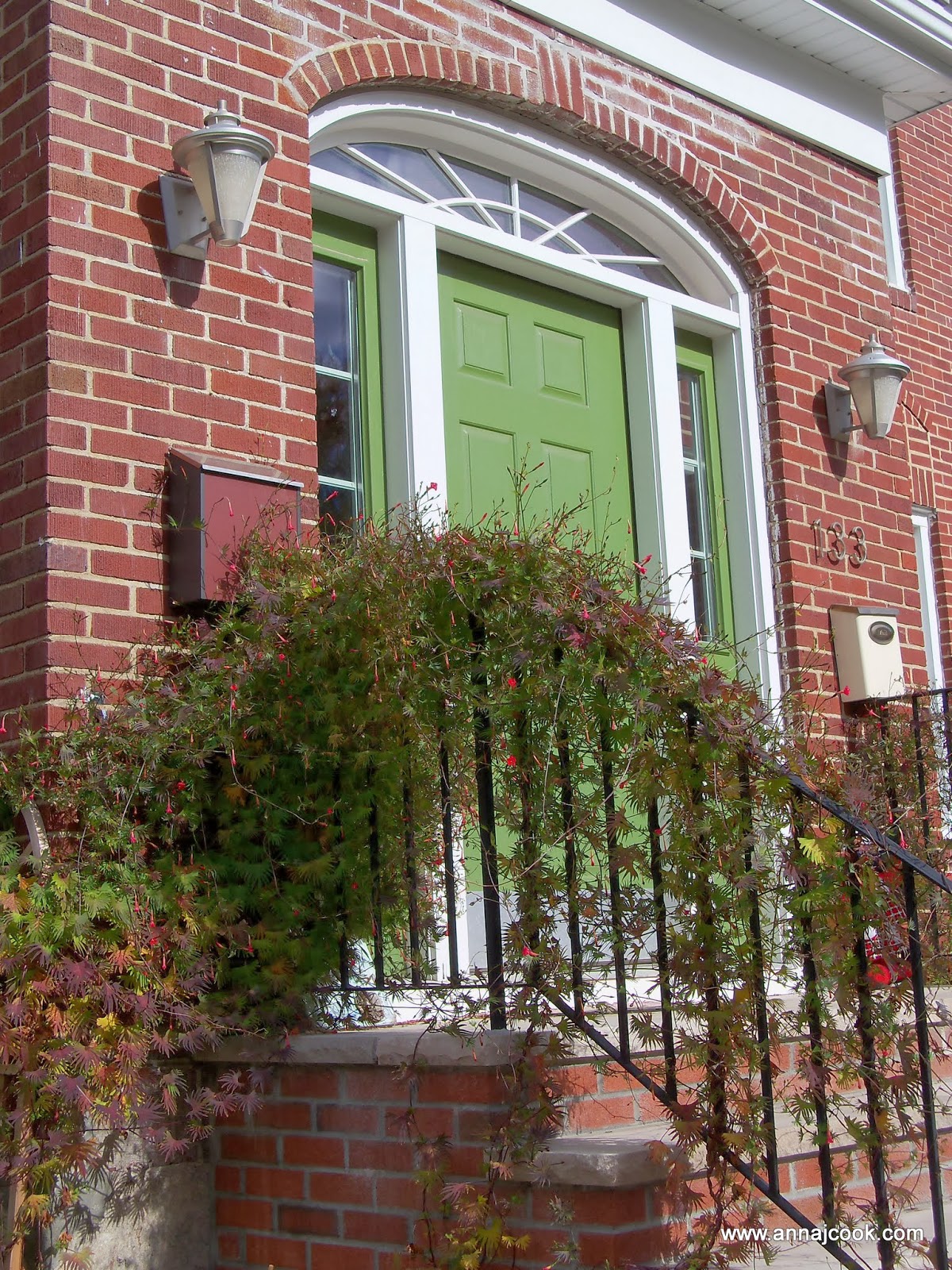
The house with the abundant garden on our walk to Coolidge Corner is settling in for the winter season.

The Hubway bikes will soon be put into storage to make way for snowplows and snowbanks, but for now they’re still available to take out for a spin!

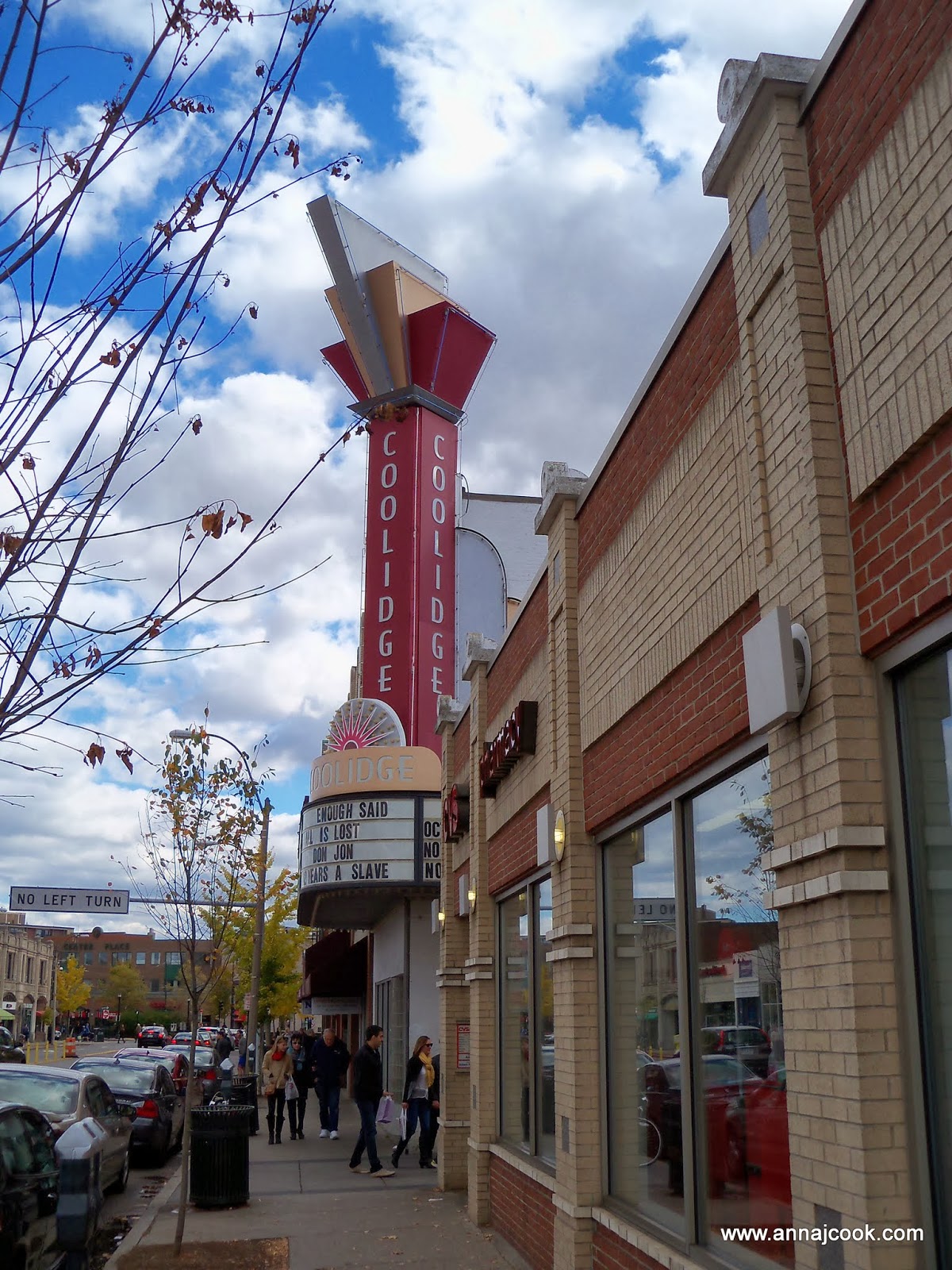
A couple of months ago, Hanna and I realized that the central marquee on the Coolidge Corner movie theater often makes amusing found poetry. This is the latest iteration.

Enough said.
All is lost,
Don Jon:
12 years a slave.

in praise of obamacare [because experience]

01 Tuesday Oct 2013

Posted by Anna Clutterbuck-Cook in think pieces

≈ Leave a comment

Tags

boston, politics

As we are all well aware by now (unless you’ve been living in a media blackout), the Affordable Care Act-mandated healthcare exchanges — the websites that will enable uninsured folks and people paying for individual plans to enroll in health insurance plans and gain access to government subsidies — open today.

Much has been written about the political right’s hysteria about the ACA, or Obamacare, and their effort to deter the eligible from using these exchanges to gain access to affordable medical services. For the past few weeks the freak-out has only gotten worse.

So I thought, on this auspicious day of an important piece of the Obamacare roll-out, I’d offer up a big “thank you!” for my own experience with Obamacare’s more local predecessor, Romneycare.

When I moved to Massachusetts in 2007, I had been paying independently for health insurance since graduating from college in 2005 and becoming ineligible for my parents’ workplace-sponsored healthcare coverage. I paid to extend that coverage for several months through COBRA at the price, if memory serves, over $300/month. As that cost was unsustainable, even living in my parents’ household, I switched to a catastrophic-coverage plan through Michigan’s Blue Cross, Blue Shield. The monthly payments weren’t too bad, about $50, but the deductibles were so high that I was paying out of pocket for all of the routine, preventative care that I actually needed: primary care, medications (I’m on several ongoing prescriptions), as well as dental and eye care. Actually, before moving to Massachusetts, I had never had coverage for dental, or eye care. I was used to paying $90-180 per appointment for regular dental cleanings.

Mental health care, too, was something that my family had never had coverage for — counseling appointments were strictly out of pocket, if we were lucky reimbursable through the flexible spending account (FSA) my parents paid into every year.

Between 2005-2007 I worked a number of part-time positions for between $7-10 per hour. My last pre-library school job was at Barnes & Noble where I worked 15-30 hours/week for minimum wage. I started there at $7.50/hour and when I quit the job to take a position at the Massachusetts Historical Society I was making around $9.00/hour.

At the MHS I earned $14.00/hour, which was more than I’d ever made in my life. But at 21 hours/week only came to roughly $15,300/year … before taxes. In order to buy into the Simmons-sponsored student health plan, I would have had to take out additional student loans to cover the premiums.

Thankfully, as a part-time graduate student I qualified for the Massachusetts state-subsidized healthcare program. After submitting an application, providing proof of income and lack of insurance options through work, and waiting for the bureaucracy to churn away I was approved for Commonwealth Care. Hanna was also approved as well, after many years of being uninsured during periods of low- and unemployment in states without comprehensive health insurance programs.

bDuring the rest of my part-time employment/graduate student days — until I transitioned to full-time professional employment with work-sponsored healthcare coverage — I had Commonwealth Care to thank for access to a primary care provider, to eye- and dental care (for which I paid only co-pays for the first time in my life) and, wonder of wonders and miracle of miracles mental health coverage.

Let me repeat this for you:

For the cost of between $0-$100/month in premiums, and $0-20/visit in co-payments, scaled as our income changed, Hanna and I had access to comprehensive medical care. Thanks to Romneycare. 

Between 2007-2011, while we pieced together part-time work for living expenses and shouldered the burden of student loans to cover tuition, we had the peace of mind that our medical needs wouldn’t go by the wayside due to our inability to pay.

our awesome health center

Romneycare paid for us to go for our annual physicals and our ladybit exams.

Romneycare paid for my thyroid medication and all of Hanna’s prescriptions, sometimes with no co-pay.

Romneycare gave Hanna access to psychiatric and counseling services when she needed them to combat depression.

Romneycare brought us eye exams and low-cost prescription lenses.

Romneycare funded dental cleanings, x-rays, and repair work.

There’s been a lot of talk about how young adults, supposedly healthy, have little incentive to engage in these health insurance marketplaces. Yet there are plenty of young adults out there who have chronic health conditions (or are working to prevent chronic health conditions toward which they would otherwise be trending). Apart from anything else, how many of us need glasses or contacts? Despite America’s love affair with youthful bodies, young bodies are not always healthier bodies. And the struggles of those bodies are not always within our powers to ameliorate or eliminate without access to health care professionals.

I can’t create the synthetic hormones that make up for my lack of a functioning thyroid.

I can’t grind the glass to create the lenses that allow me to work and drive safely.

I can’t manage my migraines without assistance from my primary care provider.

Hanna needs ongoing support to navigate her depression and anxiety.

We’ve both, in the past two years, needed diagnostic tests and physical therapy to prevent chronic injury.

In 2011 we both transitioned into professional positions that offered robust health plans as part of the benefits package. Today, we pay roughly $120/month (pre-tax) in premiums through our employers to continue our access to medical, mental, dental, and eye care. Most appointments come at a $15-20 co-pay; prescriptions are $5-20 per refill. We are able to utilize flex spending accounts, and thanks to a strong union, Hanna’s co-payments annually top out at $135 for her wage bracket.

Last year we were reimbursed about $800 by Harvard for prescriptions and co-payments.

I haven’t done the math for all our medical services, but without insurance our counseling appointments alone would cost $10,800 as billed … about 2/3 what we pay in rent annually.

While we’re lucky to have workplaces that offer these benefits, it’s also reassuring to know — in this age of uncertain employment — that if one or the other of us needs Commonwealth Care again, it will be there to access. I’ve referred friends the program. And I’m glad to know that many, many others in the state of Massachusetts have been able to access care like we did, supported by our tax dollars.

(According to one subsidy calculator, if Hanna and I needed to purchase
private insurance, even at our current income we’d get $900 annually
in federal subsidies to help make that more affordable.)

This coming year, I’m going to feel a little bit better about being an American citizen in a nation where people in Michigan, Texas, Oregon, and elsewhere can access care also.

Supported by our tax dollars.

I believe this is (the beginning of) government as it could and should be.

Thank you, Obamacare, for taking a step in the right direction.

six years ago today [obligatory Boston anniversary post]

29 Thursday Aug 2013

Posted by Anna Clutterbuck-Cook in a sense of place

≈ 1 Comment

Tags

boston, family, hanna, MHS, simmons

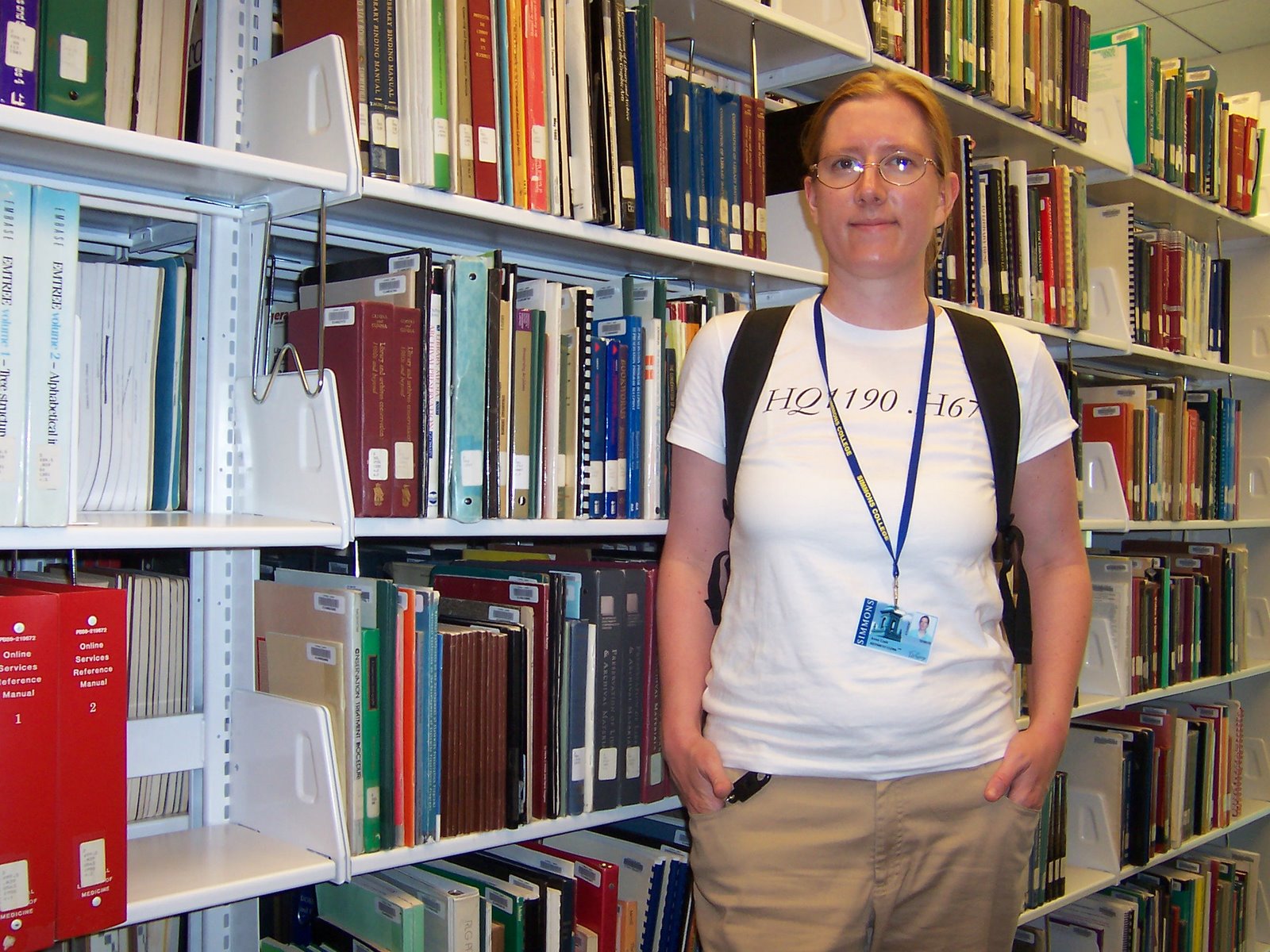
Simmons College Library, September 2007
self-portrait

Six years ago today, I arrived in Boston a bright-eyed youth of twenty-six, with a rental car full of worldly belongings and paperwork confirming my enrollment in Simmons’ dual-degree history/archives program.

Within a week of this self-portrait taken at the Simmons library, I had met my future wife, within a month I had remembered why I loved history and hated school, and within the first semester I’d resigned my position as a bookseller at Barnes & Noble to work as a library assistant at the Massachusetts Historical Society.

Arnold Arboretum, May 2013
photograph by Joseph Tychonievich

The world is so often an unexpected and adventuresome place.

Update: For the interested, here are my posts from 2007, 2008, 2009, 2010, 2011, and 2012.

← Older posts
Newer posts →
"the past is a wild party; check your preconceptions at the door." ~ Emma Donoghue

Recent Posts

  • medical update 11.11.22
  • medical update 6.4.22
  • medical update 1.16.2022
  • medical update 10.13.2021
  • medical update 8.17.2021

Archives

Categories

Creative Commons License

This work by Anna J. Clutterbuck-Cook is licensed under a Creative Commons Attribution 3.0 Unported License

Meta

  • Create account
  • Log in
  • Entries feed
  • Comments feed
  • WordPress.com

Blog at WordPress.com.

  • Subscribe Subscribed
    • the feminist librarian
    • Join 37 other subscribers
    • Already have a WordPress.com account? Log in now.
    • the feminist librarian
    • Subscribe Subscribed
    • Sign up
    • Log in
    • Report this content
    • View site in Reader
    • Manage subscriptions
    • Collapse this bar