• anna j. clutterbuck-cook
  • contact
  • curriculum vitae
  • find me elsewhere
  • marilyn ross memorial book prize

the feminist librarian

the feminist librarian

Tag Archives: children

Looking Back/Looking Forward: History

13 Tuesday Jan 2009

Posted by Anna Clutterbuck-Cook in my historian hat

≈ Leave a comment

Tags

children, history, simmons

As we enter 2009 — and before I get lost once again in the maze of a busy academic schedule — I thought I’d post a few items on the projects I completed this fall and the projects that are up for the spring semester.
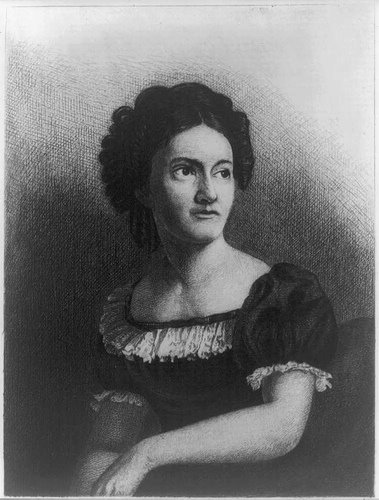
As I wrote at the beginning of last semester, this past fall I took a history seminar in the “American Renaissance,” the era of great political and social upheaval took place during the decades leading up to the Civil War. The paper that came out of that course was “Inspiring ‘Right Feelings’: Children and Childhood in Lydia Maria Child’s The Mother’s Book.” Child was an author and activist whose parenting manual, The Mother’s Book, published in 1831, incorporated many of the latest ideas about human nature, development, and education emerging from the Romantic movement and also the social justice movements she was involved in. I was principally interested in the way Child did, and did not, make connections between her political activism children’s rights. As I wrote in my introduction:

I am interested in the central role of education as a means of both self-improvement and social control plays in the parenting model Child puts forward. Belief in education as a means of self-improvement and liberation from dependence was a common thread in many antebellum reform movements. Access to education, and the role of education in ending the intellectual and material dependence of blacks and women, was, for example, a central tenet of both the women’s rights and abolitionist movements—both of which Lydia Maria Child ardently supported. Yet within The Mother’s Book Child shies away from any radical challenge to parental authority, proscribing children’s moral and intellectual independence by casting adults—particularly mothers—in the role of vigilant guardians of their children’s innate good nature.

While I hesitate to say, at this point, whether the specific topic of this paper will be relevant to my thesis, the themes of political activism, education, and the position of children and youth in American culture are definitely recurring themes in my research and writing.

Up for next semester: I’m not sure what it says about me that my heart thrilled when I got the book list for my spring course in intellectual history and saw that we would be reading complete works by Darwin, Nietzsche, Freud, and Foucault — as well as (I am sure) selections of many other influential thinkers from the 19th and 20th centuries. I’ve encountered all of these crazy guys before and always walked away with something fascinating to ponder . . . even if Nietzsche makes me want to slap him and Freud did cause me to throw a book across . Hanna thinks I’m touched in the head for enjoying Foucault, but I’ve had a fondness for the man ever since using Discipline and Punish for my very first history/philosophy paper on children’s rights.* And then there’s the way he throws around words like panopticon with wild abandon . . . Stay tuned for what project emerges in May!

*Fall 2001, at the Oregon Extension program: “The Radical Belief that Children Are People.” Did I mention something about a through-line in my research . . .?

Image of Lydia Maria Child borrowed from Flickr.
"No shit" headline of the week

29 Monday Dec 2008

Posted by Anna Clutterbuck-Cook in think pieces

≈ Leave a comment

Tags

children, feminism

The “no shit” headline of the week award goes to National Public Radio for this story:

Study: Tolerance Can Lower Gay Kids’ Suicide Risk

Gay, lesbian and bisexual teens and young adults have one of the highest rates of suicide attempts — and some other health and mental health problems, including substance abuse. A new study suggests that parental acceptance, and even neutrality, with regard to a child’s sexual orientation could have a big impact in reducing this rate.

The study, published in the journal Pediatrics, found that the gay, lesbian and bisexual young adults and teens at the highest risk of attempting suicide and having some other health problems are ones who reported a high level of rejection by their families as a result of their sexual orientation.

“A little bit of change in rejecting behavior, being a little bit more accepting,” says lead researcher Caitlin Ryan, “can make a significant difference in the child’s health and mental health.”

You think? I guess I’m glad that this study was done, and that it’s getting airtime on All Things Considered — but it’s amazing to me that this is noteworthy: that loving your kid unconditonally and accepting them regardless of their sexual identity could, you know, improve their health and well being.

Children Are People: Take Two

17 Wednesday Dec 2008

Posted by Anna Clutterbuck-Cook in think pieces

≈ 12 Comments

Tags

children, feminism

It’s been a few days since my last post on this subject, which seems to have struck a nerve with many readers who found their way to my blog. A big thank you to all of the readers who have engaged in thoughtful and detailed conversation (critique included). It does not seem like good blog policy to try and respond to each comment individually (nor do I have the time!). But there were a few themes – particularly issues raised in dissenting comments – that I want to reflect on with more depth. So here is “take two.”*

One of the oddest complaints, it seems to me, is the charge that calling attention to the dehumanizing language adults often use toward children as children is somehow indicative of white, elite, academic, heterosexual, privilege.

Um.

Last I checked, childhood is about as universal an experience as we human beings can claim. It is not as if children are only born to white, upper-class heterosexual adults with advanced degrees. The assumption that because I write about young people I belong to these categories says more, it seems to me, about the invisibility of the world’s children than it does about my own identity.** If “child” to a person who reads this blog automatically means white, rich, ivy-league-destined, non-queer child raised by white, rich, straight, ivy-league-educated parents, where does that leave the children who do not fit into that identity? Invisible? Irrelevant?

Children are a prime example of what feminist scholars sometimes refer to as intersectionality: they belong, as all of us do, to multiple human groupings, none of them mutually exclusive. Children are born into families of all income brackets and into families of all racial and ethnic backgrounds; children are born with all gender identities and sexual orientations. The argument that children are people, and deserve our respect as such, in no way implies that they are more marginalized because of their age than they (or an adult) may be marginalized by any other “ism.” That is not the point. Instead, being mindful of the ways children are marginalized because of their age can help us to be mindful of the many other forms of discrimination they contend with. Just because a child experiences hatred or dismissal because of their age, does not mean they do not also experience hatred or dismissal in other ways. Being aware of children’s rights, and challenging ourselves to think about children as part of the human community, means we should be paying more attention, not less, to all kinds of oppression.

Likewise, I am confused by the number of comments that suggest I am playing Oppression Olympics (a game of my-oppression-is-greater-than-your-oppression) or somehow belittling the experience of those who struggle with sexism, racism, or homophobia by using these examples as an analogy for the way I see children treated. By using these widely familiar types of othering, I am suggesting that the framework we use to understand those types of marginalization is also useful in understanding the experience of children as children, and childhood as a culturally-constructed space and set of social expectations. This is not a game of either/or but of both/and.

It is also important to remember that children are institutionally disenfranchised because of their age – there are many privileges of adulthood that we only grant to children when they reach a certain age (and, presumably, maturity), such as the right to vote. We also recognize the power differential between adults and children by writing protective legislation in areas such as child labor and sexual consent. Regardless of whether or not we believe these laws to be appropriate, their existence does mean we do treat children, legally, as a separate class of persons who have to earn many of the privileges adults take for granted.

Therefore, I don’t believe it is somehow wildly inappropriate to think about children as a group of people who are vulnerable to stereotype and marginalization based on their shared characteristic: age.

Finally, I would point out that my original post was not written in defense of particular parenting choices. I have my own very strong feelings about what children need from adults who care for them in order to thrive. From the examples given by many of you, I imagine we may disagree about what the best choices are. Yet regardless of the quality or kind of parenting they receive, children deserve – as do all human beings – our compassion and respect. Children have no control over what families they are born into, or what sort of adult modeling they see in the world around them. If they are on the receiving end of some of the anger expressed on this blog, I invite you to think about how that interaction will shape their idea of what it means to be a grown-up.

*Takes three, four, five, etc. may appear as invited or conceived of.

**Which, I would like to point out, most of you who posted are not in a position to make knowledgeable comments about. Like most of you, I am made up of a complex mix of insider/outsider identities and experience. Some of those are evident on this blog, some are not.

"Is There a Name For It?"

15 Monday Dec 2008

Posted by Anna Clutterbuck-Cook in think pieces

≈ 7 Comments

Tags

children, feminism

The following question was just posted on the Teaching Moment thread by theczech and I thought it was worth pulling out and highlighting:

Thanks for this post. It really put some pieces together for me… where do you think these child insults common in internet comments are coming from? It seems like there is a larger group of people on the web who discuss their hatred for children and exchange acidic insults that they all laugh at together. What is it that links these people together? Is there a name for it?

The closest I have come to in terms of finding a name for this type of rhetoric is “ageism,” which can apply equally to our elders as well as our youngers. In a broader sense, we could also think of it as misanthropy: hatred of people. But both concepts fail to get at the very specific issues people seem to have with children and young people. The fact that we don’t have a specific name for hatred of children and the perceived threat or inconvenience they cause to their elders is noteworthy. Whenever our language lacks a word to describe a phenomenon, that means the phenomenon itself is less visible.

Thoughts?

Teaching Moment: Children Are People Too

12 Friday Dec 2008

Posted by Anna Clutterbuck-Cook in think pieces

≈ 61 Comments

Tags

children, feminism, politics

Yesterday, the following comment was submitted on this post from November concerning fear of children in Britain [1]:

Someone obviously needs to re-read Lord of the Flies.

On a more prosaic level, I’d argue that people’s feral, shrieking little carpet apes — oh, excuse me, Precious Darling Children — are a great argument for doing as many errands online as possible.

My first impulse was to delete the comment. Then I realized that it is a perfect example of the sort of casual dehumanization of young people that the original article highlighted. I am therefore going to use this as a teaching moment: an opportunity to explain a few things about why I believe the hatefulness that adults like b.g. feel free to express toward children in our culture is not acceptable.

The casual dehumanization of children is one of my research interests as a master’s candidate in history; it is something I am both fascinated with as an historical and political phenomenon, and passionately opposed to in practice. Children are people. As someone who is opposed to hatred and fear of any group of people based on innate characteristics (skin color, ethnic background, sexual orientation, gender) it appalls me how acceptable adults find it to express hatred and fear of children based solely on their age, or for behaviors that can be traced back to their developmental abilities. I see this among a wide range of adult populations, from feminists to Christian fundamentalists — it’s a form of bigotry that is in evidence across the political spectrum.

In part, I believe that this intolerance of young people is one symptom of the way, in modern culture, we have ghettoized many people who make us uncomfortable, or whom we perceive as an inconvenience. Those who slow down our over-burdened lives with their complicated needs or awkward social behavior. People whom, by their very presence, raise uncomfortable questions about our own values and our competence in a complicated, competitive society. People who are mentally ill, physically disabled, people who are struggling with poverty and old age. People who are made vulnerable by circumstance make us uncomfortable. As historian Gerda Lerner writes, in her book of essays Why History Matters [2]: “All of us, ultimately, will join one of the most despised and abused groups in our society–the old and the sick” (17). We would do well to remember, as well, that we all began life as members of a similarly vulnerable and dependent group: children.

This is not to argue that children are innately better than adults. Children are human: ergo, they are capable of human cruelty [3]. That is not the question at issue here. The question here is why people such as b.g. feel perfectly free to refer sneeringly to young human beings as “feral . . . apes” in a public space (this blog) when presumably, they would not feel free to make a similar remark about a black person. Or if they did, they would be held accountable. I have seen on countless feminist blog threads, self-identified feminists who are outraged about hateful speech directed toward women and other groups turn around and use offensive language to speak about the children.* Feminists have long argued that ostensibly “positive” ideals about women and femininity are just as dehumanizing as outright misogyny. Both obscure the complex humanity of the individual person before us. Similarly, characterizations of children as “precious little darlings” or “shrieking little carpet apes” are two sides of the same coin: neither recognize children as persons worthy of our respect. Yet as a culture, we have been reluctant to recognize these parallels.

I have read Lord of the Flies, William Golding’s novel about marooned British schoolboys who resort to terror and violence in the absence of external social structure [4]. Lord of the Flies is a commentary on the nature of humanity more than it is about the innate character of children or the particular environment of childhood. Remember that the boys who have been shipwrecked in Golding’s book are not, in fact, free of socialization: they have already lived upwards of a dozen years in families, and in a British boarding school, in which adults have taught them quite thoroughly what is to be expected from them as human beings. I would argue that the book demonstrates quite well the violence that has been done to these children previous to the shipwreck, in addition to offering a chilling reminder of the sort of evil that all of us, regardless of age, are capable of.

Language matters. Language can affirm the humanity of each individual being on this planet, or language can create a climate in which individual people — or groups of people — become easy to discount or view as unworthy of love, kindness, respect, or understanding. I will not be deleting b.g.’s comment because I think it offers us a valuable example of exactly the kind of hatred children in our lives experience on a daily basis. But let me be absolutely clear: from now on, anyone who leaves a comment on this blog using language like “carpet apes” to describe people whose sole “offense” is their youth will have their comments deleted. You may disagree with me that children constitute a marginalized group in our society. You are welcome to argue your point in comments with pertinent examples and other evidence. You are welcome to use strong language to express your feelings. You may not resort to insults. If the language you use would not be acceptable as a way to describe racial or ethnic groups, women, or queer folks, I will consider it similarly unacceptable as a way to describe young people. Because children are people too.

*It is important to recognize that many feminists do not use this language of dehumanization when speaking of children and youth, and in fact there are countless feminist activists and organizations who have placed the well-being of children and adolescents (regardless of gender) at the heart of their work. My argument here is that alongside this work there still exists a consistent current of hatred and fear directed toward young people, and that feminists are not always willing or able to see the applicability of their critique of inequality in other arenas to a critique of discrimination based on age.

OED: "Crime" against Children’s Humanity?

11 Thursday Dec 2008

Posted by Anna Clutterbuck-Cook in think pieces

≈ Leave a comment

Tags

books, children, politics

Every abridged dictionary makes choices about what to include or exclude. Andrew Brown, in an op-ed column over at the Guardian online, questions the selections made for the latest edition of the Oxford Junior Dictionary:

Imagine a childhood without gerbils, goldfish, guinea pigs, hamsters, herons, larks, or leopards; where even the idea of these things had been replaced by practical modern concepts like celebrity, vandalism, negotiate, interdependent, and creep. This is the world of the Oxford Junior Dictionary.

. . .

Dictionaries should be many things, but even the smallest should be a gateway into wonder. The child who doesn’t even know of the possibility of larks and leopards has been robbed. To offer them instead the grey bureaucratic porridge of the new words is a crime against their humanity.

I’m not sure that I share Brown’s level of disquiet over these particular words, but I do like the idea that to rob children of language to speak about nature is a “crime against their humanity.”

Thanks to Hanna, my source for all UK-related news :).

Fear of Children

19 Wednesday Nov 2008

Posted by Anna Clutterbuck-Cook in think pieces

≈ 11 Comments

Tags

children, feminism

The British charity Barnardo’s, released a poll indicating that a substantial number of British adults fear children and characterize their behavior as animal-like.

Martin Narey, the charity’s chief executive, said: “It is appalling that words like ‘animal’, ‘feral’ and ‘vermin’ are used daily in reference to children. These are not references to a small minority of children, but represent the public view of all children.

As historical examples of the use of animalistic language an imagery to describe the poor, non-white races, enslaved peoples, women, and other marginalized groups shows, describing any group of human beings in non-human terms is a powerful rhetorical weapon that encourages bigotry and denial of basic human rights. This is an incredibly blatant example of prejudice against some of the most vulnerable members of our world community. And I don’t believe these sentiments are particular to the British alone. Hatred, neglect, and fear of children is equally common in the United States, despite all of the political talk about “family values.”

Thanks to Hanna for the link.

Booknotes: Harmful to Minors

23 Tuesday Sep 2008

Posted by Anna Clutterbuck-Cook in book reviews

≈ Leave a comment

Tags

children, feminism, gender and sexuality

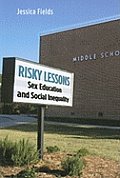
It isn’t exactly hot off the presses, but I was following citations in Jessica Fields’ book on sex education and discovered Judith Levine’s 2002 work Harmful to Minors: The Perils of Protecting Children from Sex. Levine is a feminist activist and journalist, and her analysis of the political, adult framework for both understanding and dealing with childhood sexuality is heavily weighted toward the legal-political framework. However, she does the deeper understanding of childhood and sexuality (separately and entwined together) that permeates our cultural narratives about situations such as sexual consent and sex education.

A common thread running through many books I read on human sexuality and American culture, from Ariel Levy’s Female Chauvinist Pigs (2005) to Heather Corinna’s s.e.x. (2007) and Fields’ Risky Lessons is the discomfort Americans have with sexual pleasure and joy, despite the proliferation of hyper-sexual imagery. We are told through educational and entertainment mediums that sex is both highly dangerous and highly compelling — but we’re not so good at (or are frightening of) articulating sexual joy. Levine considers what this cultural skittishness means for children and young adults, who are bombarded with message of self-defense against sexual activity, but provided with few resources or protected, private, spaces in which to develop their own bodily knowledge, and consider the way in which sexuality can be an expression of positive human connection and physical embodiment.

In her epilogue, she pulls back to place the specific concern about children’s sexual agency within a larger framework of children’s rights as human rights:

When we are ready to invite children into the community of fully participating citizens, I believe we will respect them as people not so different from ourselves. That will be the moment at which we respect their sexual autonomy and agency and realize that one way to help them cultivate the capacity to enjoy life is to educate their capacity for sexual joy.(224)

These connections between embodiment, pleasure, childhood, education, and human rights are some of the threads I’m hoping to tease out in my history research this term, as I explore the counter-cultural (and establishment) educational endeavors of early-19th century thinkers and activists such as Bronson Alcott and Horace Mann. Levine’s research is largely contemporary, but the themes she teases out are recurring tensions in attitudes toward children and the educational project.

Teen Sexuality & Agency

04 Thursday Sep 2008

Posted by Anna Clutterbuck-Cook in book reviews

≈ 2 Comments

Tags

children, election08, feminism, gender and sexuality, politics


This weekend, while Governor Palin’s nomination as Republican Vice-Presidential Candidate, her hard-line conservative positions on human sexuality, and her daughter’s pregnancy were making headlines, I was reading sociologist Jessica Fields’ insightful new book Risky Lessons: Sex Education and Social Inequality. As Courtney Martin posted over at Feministing (in a review that prompted me to run out and buy the book), Fields “basically lays out a liberation philosophy for sex education.” Reflecting on the fieldwork Fields conducted in sex education classes during the mid-1990s, Courtney writes:

Young women learn to see their bodies as ticking time bombs and young men to see theirs as the uncontrollable fire that could lead to explosion. Instead of promoting self-awareness, responsible exploration, respect for the diversity of sexualities, or compassionate communication, we teach them that their bodies are dangerous. Conservatives want that danger staved off until marriage, where it suddenly becomes holy, and liberals want it staved off along the way — through the use of accessible contraception.

While I obviously advocate safer sex, I also feel like progressives have let ourselves (as per the usual) be only reactive, instead of re-authoring the questions. We must not only ask how we can protect young Americans from unwanted pregnancy and STIs, but how we can encourage them to be self-aware, healthy, and happy. How can we inspire them to author their own questions?

As political commentators discussed teenage pregnancy, marriage, and parenthood, comprehensive vs. abstinence-only sex “education” (I offer a few examples here, here, here and here for those interested), Fields’ book offered a what I thought was a fascinating counterpoint to the conventional wisdom. What struck me most about the political coverage was that the majority of Americans — whether they identify as liberal, conservative or somewhere in between — assume teenage sexuality is something dangerous, unhealthy, morally wrong. To be a sexually aware and engaged teenager in America is to be held suspect by the majority of adults as irresponsible and the result of bad parenting. As previously noted on here at the FFLA, this isn’t the only attitude adults can take about teenage sexual expression, and (in my opinion) far from the ideal. In Risky Lessons, Fields prompts us to re-visit this common-sense assumption and ask ourselves how we might better support young peoples’ exploration of the physical, emotional, and political pleasures and perils of their emerging adult sexuality.

In the early 21st century, “Sex education” has been reduced to risk reduction (if you believe in “comprehensive” sex ed) or eradication (if you believe in the abstinence-only doctrine). Young people deserve sexuality education that provides them with intellectual and emotional resources for making sense of their adult bodies, relationships, and agency in the world as sexual beings. And I hope that (if anything good can possibly be said to come from a Republican ticket so deeply opposed to providing those resources to all of America’s teenagers) the Palin nomination and the resulting debates over teenage sexual expression can provide us a critical moment of reflection on these issues and a chance to consider the liberatory potential sexuality education.

The View from Childhood?

23 Saturday Aug 2008

Posted by Anna Clutterbuck-Cook in think pieces

≈ Leave a comment

Tags

children, education, politics

Yesterday, I ran across an atrocious opinion piece in the New York City Journal, written by physician Theodore Dalrymple about a UNICEF report published last year on the well-being of children in industrialised nations. Britain came in twenty-first in the rankings (just behind the United States at twenty. (The Netherlands topped the list as the best country to be a child, followed by Sweden, Denmark, Finland, and Spain). With my own strong criticisms of attitudes toward children in the United States, and my more limited exposure to the educational system in the U.K., I am definitely willing to entertain the idea that British and American societies are toxic for children and their families. I haven’t read the UNICEF report in full, but the researchers looked at a broad spectrum of indicators, including

  • Material well-being
  • Family and peer relationships
  • Health and safety
  • Behaviour and risks
  • Own sense of well-being

The BBC report (linked above) and their related page of comments from British children about their lives contains a lot worth considering when it comes to assessing how children experience life in the modern world, even in countries that are materially rich and politically stable.

However, Mr Dalrymple does the UNICEF report a profound disservice by using it to support his socially conservative views about the British social welfare state and what he sees as “a culture of undiscriminating materialism, where the main freedom is freedom from legal, financial, ethical, or social consequences.” He relates a series of tabloid-style anecdotes about neglectful parenting and although he explicitly denies he is doing so, implies that women who have children with multiple partners and outside of marriage are unfit parents.

In my opinion, the most appalling argument appears about two-thirds of the way through the article, when he really starts to editorialize on report’s implications. He highlights the fact that many children do not experience regular family or group meal-times, and then writes:

Let me speculate briefly on the implications of these startling facts. They mean that children never learn, from a sense of social obligation, to eat when not hungry, or not to eat when they are. Appetite is all they need consult in deciding whether to eat—a purely egotistical outlook. Hence anything that interferes with the satisfaction of appetite will seem oppressive.

I invite you to consider for a minute, apart from whether you believe in the value of shared meals, the view of young people — and of people in general — that Dalrymple betrays here. “Children never learn . . . to eat when not hungry, or not to eat when they are.” What: we should be teaching children to ignore the messages their bodies give them about hunger? There are profound consequences in championing this concept of healthy socialization, when it comes to our experience of embodiment, for example. We should be instructing children to put conforming to social convention above attending to their own intuition? I was struck by how many children put the problem of bullying at the top of their list of worries when asked by the BBC what would make their lives better. Being taught to discount their own hungers (more broadly speaking, their own needs and desires) in the interest of social obligation would only exacerbate this problem.

Children deserve protected, nurturing space to be children — and I agree with Dalrymple that even in the most privileged of nations they don’t often have it, or have it for long enough. The solution, however, is not to cut them off from their own intuitive selves, but rather to give them the tools to care for themselves and for others around them in responsible ways. The fatal misperception in Mr Dalrymple’s essay is the belief that social obligation and self-care are mutually exclusive activities, when in fact I would argue they are mutually dependent — we thrive as individuals best when in a web of supportive relationships, and our relationships with fellow human beings are at their strongest when we know and attend to who we are as individuals — as well as attending to those around us. Unlike many material resources, emotional and social resources are not in limited supply, but endlessly renewable.

← Older posts
Newer posts →
"the past is a wild party; check your preconceptions at the door." ~ Emma Donoghue

Recent Posts

  • medical update 11.11.22
  • medical update 6.4.22
  • medical update 1.16.2022
  • medical update 10.13.2021
  • medical update 8.17.2021

Archives

Categories

Creative Commons License

This work by Anna J. Clutterbuck-Cook is licensed under a Creative Commons Attribution 3.0 Unported License

Meta

  • Register
  • Log in
  • Entries feed
  • Comments feed
  • WordPress.com

Blog at WordPress.com.

  • Follow Following
    • the feminist librarian
    • Join 36 other followers
    • Already have a WordPress.com account? Log in now.
    • the feminist librarian
    • Customize
    • Follow Following
    • Sign up
    • Log in
    • Report this content
    • View site in Reader
    • Manage subscriptions
    • Collapse this bar