• anna j. clutterbuck-cook
  • contact
  • curriculum vitae
  • find me elsewhere
  • marilyn ross memorial book prize

the feminist librarian

the feminist librarian

Tag Archives: feminism

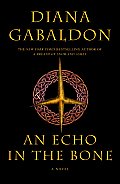
booknotes: echo in the bone

05 Tuesday Jan 2010

Posted by Anna Clutterbuck-Cook in book reviews

≈ 1 Comment

Tags

books, feminism, gender and sexuality, masculinity

It’s been a while since I wrote a proper “booknotes” post, but this weekend while Hanna was away in Maine I finally hunkered down and read Diana Gabaldon’s latest installment in the epic Outlander cycle (now clocking in at seven volumes each seven hundred to one thousand pages in hardcover), Echo in the Bone. (Warning: mild series spoilers ahead).

I was first introduced to Outlander under its British title, Cross Stitch in Aberdeen by my Glaswegian roommate, Vicki, who is (or at least was) an adoring fan. For those of you who aren’t familiar with the series, it centers on the relationship between Claire Beauchamp, a Second World War nurse, who accidentally time-travels back to eighteenth-century Jacobite Scotland and — also somewhat accidentally — marries a young Scottish fugitive named Jamie Fraser. The first book revolves around Claire’s attempts to return to her own time (1950s England) and the husband she left behind, while at the same time she finds herself falling passionately in love with Jamie. Without giving all the ins and outs of the romance and drama away, the saga weaves its way across Europe and America, the eighteenth and the twentieth century, and has expanded to encompass multiple generations of the Beauchamp-Fraser family and a sprawling cast of secondary characters. The science fiction / time-travel aspect of the narrative — while integral to the plot in many respects — also takes firm second-place to the political and personal dramas in which the characters get caught up as they move from one space/time context to the other.

An Echo in the Bone is a solid installment in the ongoing series, though Gabaladon’s expansive cast of characters has become increasingly difficult for her to manage — or at times hard for readers to follow, particularly if you don’t have the time to sit down and read the book in a marathon session (I tried the chapter-before-bed method during term-time and eventually gave up, setting it aside for vacation). There was speculation around the publication of A Breath of Snow and Ashes the sixth book would be the final volume, or be followed by a prequel or spin-off story, but she’s apparently decided to continue spinning the main narrative out, as Bone not only comprises of 800-plus pages of story but also ends with several cliff-hangers that I doubt will just be allowed to die. I have a slightly mixed feeling about this, since there was something bittersweet about reading Ashes as a final installment . . . but since Cross Stitch/Outlander was originally meant to be a one-off fantasy novel, Gabaldon fans have (I imagine, anyway) long since grown used to the idea that her sagas will inevitably be longer than originally predicted.

I’ve talked to a few friends who’ve had trouble with the sex and gender roles in the series — trouble enough that they’ve quit reading the books altogether. And as this is a blog with “feminist” in the title I figured I’d take a minute to reflect on how sex and gender (as well as sexual orientation) seems to play out in the series overall. Speaking for myself, I really had to make my peace with the series in this regard: I was really upset with the power dynamics between Claire and Jamie in the first book and by some of the sexual violence that went largely uncriticized within the stories. Gabaldon’s characters also have a really annoying habit of talking in gender essentialisms (i.e. “men are all X” and/or “women are all Y”). Most of the hetero relationships in the story (which is virtually all of them) are very male-as-protector and woman-as-nurturer. It’s explained away, in part, as historical accuracy (that is, Jamie as an eighteenth-century man has learned to think in certain ways about marriage, about sex, and so forth), and to be fair over the course of the series characters’ opinions are challenged and do change. However, certain behaviors continue to be explained away as grounded in innate characteristics based in sex, an explanation I find just as unsatisfactory in fiction as I do in real life. It seems to me a mark of lazy thinking on the part of the character and (by implication) their creator.

The violent sex and sexual violence are a bit more difficult to gloss over and/or explain away by historical context. I haven’t spoken to anyone who’s a survivor of sexual abuse or violence who’s tried the series, but I imagine that the graphic descriptions of rape and sexual violence could be unpleasant and/or impossible to read. One of the best parts of the series, at least in my mind, is Gabaldon’s penchant for writing erotic and and often light-hearted sex scenes (I was, in fact, disappointed that the most recent installment featured relatively few); the downside is that if you’re not into the kind of sex her characters are into, it can be difficult to make it through the graphic descriptions without feeling a bit icky about the relationship dynamics. Personally, though a few of the early scenes had me cursing and tossing the paperback edition of Cross Stitch across my dorm room, in the end I made the decision to let the characters have what is clearly a pleasurable and consensual sexual relationship without judgment from me.

Be warned, also, that the arch-villain in the first few books is a sadist with a taste for sexual violence, both hetero- and homosexual (he seems to fixate on individuals regardless of gender; both Jamie and Claire are assaulted by him in various contexts, with Jamie suffering the worst of the abuse). While Gabaldon (possibly in recompense?) has since written at least one gay male character who is one of the good guys — and actually features in his own series of stand-alone short stories — I was wary at first to have same-sex sex so closely associated with rape.

And as a final note, I’ve never been particularly irritated with historical fiction that plays lightly with the actual historical record, but those who care deeply about either eighteenth-century European or American history may be frustrated with the melange of historical detail and fiction that Gabaldon brings together for her time-traveling romps through the era.

My ultimate advice? Don’t take them too seriously, let the characters win you over, and have a great time.
Quick Hit: Transgender Basics (Video)

29 Tuesday Dec 2009

Posted by Anna Clutterbuck-Cook in media

≈ Leave a comment

Tags

feminism, gender and sexuality, web video

This video from the Gender Identity Project has been making the rounds on the blogs I read regularly; I finally had twenty minutes last night (and a computer with sound!) to sit down and watch it.

I’m fairly new to the subtleties of transgender identity, and while I enjoy reading feminist theory (can’t say often enough how much Julia Serano’s Whipping Girl helped me wrap my brain around trans issues) a lot of people I know just aren’t that into it, and trying to explain the current connotations of sex vs. gender — not to mention what people mean when they start talking “trans” — can leave me feeling inept. I really like how this video breaks it down without using too much insider language while at the same time not talking down to their audience. Definitely something to keep in the “resources” file.

Jos at Feministing reports that, as of yet, there is no transcript available, but tnat a volunteer is working on one. Hope it will soon be available through the GIP website, if you are interested in and/or need one.

friday fun: "sister suffragette"

04 Friday Dec 2009

Posted by Anna Clutterbuck-Cook in media

≈ 4 Comments

Tags

feminism, fun, web video

Today my research group in Collective Memory is presenting our project on collective memory and the passage of the 19th Amendment (ratified 18 August 1920). To celebrate both the end of the semester and women’s “political equality” I thought I’d bring you a little something that was my earliest introduction to the suffrage movement.

A lot of feminist ink has been spilled on the subject of Disney films and the myriad ways they reify gender, racial, and other stereotypes. Today, however, I’d like highlight the fact that Glynis Johns singing “Sister Suffragette” in the 1964 Mary Poppins musical was my introduction, if not to feminism, certainly to the militant suffragist movement.

Regardless of what Disney may or may not have wanted me to glean from the sequence (is Mrs. Banks a bad mother for neglecting her children in order to attend political rallies?), as a six-year-old child I knew where the action was at: it was unequivocally with Mrs. Banks marching about and singing with heartfelt enthusiasm.

Lyrics: (courtesy of allthelyrics.com):

We’re clearly soldiers in petticoats
And dauntless crusaders for woman’s votes
Though we adore men individually
We agree that as a group they’re rather stupid!

Cast off the shackles of yesterday!
Shoulder to shoulder into the fray!
Our daughters’ daughters will adore us
And they’ll sing in grateful chorus
‘Well done, Sister Suffragette!’

From Kensington to Billingsgate
One hears the restless cries!
From ev’ry corner of the land:
‘Womankind, arise!’
Political equality and equal rights with men!
Take heart! For Mrs. Pankhurst has been clapped in irons again!
No more the meek and mild subservients we!
We’re fighting for our rights, militantly!
Never you fear!

So, cast off the shackles of yesterday!
Shoulder to shoulder into the fray!
Our daughters’ daughters will adore us
And they’ll sing in grateful chorus
‘Well done! Well done!
Well done Sister Suffragette!’

wrong wrong wrong wrong wrong

03 Thursday Dec 2009

Posted by Anna Clutterbuck-Cook in think pieces

≈ Leave a comment

Tags

education, feminism, gender and sexuality, the body

This story is a little old (Inside Higher Ed carried the story on 20 November), but I can’t stop thinking about the levels of wrong involved, so I’m hauling it out in order to be pissed about them, and to enumerate them in public. Nothing like a blog to get things off your chest!

First up, here’s the low-down on what happened, according to Inside Higher Ed:

More than two dozen seniors at Lincoln University, in Oxford, Pa., are in danger of not being able to graduate this spring — not because they’re under disciplinary probation or haven’t fulfilled the requirements of their majors, but because they were obese as freshmen.

All had body mass index (BMI) scores above 30 — the U.S. Department of Health and Human Services’ threshold for obesity — when they arrived on campus in the fall of 2006, but none have taken college-sanctioned steps to show they’ve lost weight or at least tried. They’re in the historically black university’s first graduating class required to either have a BMI below 30 or to take “Fitness for Life,” a one semester class that mixes exercise, nutritional instruction and discussion of the risks of obesity.

Now, there is a long tradition of colleges having physical health and well-being requirements as part of students’ general course of study — my undergraduate college, for one, had such a requirement (more on this below). While I have opinions about what definition of “health and well-being” a given school promotes, I see nothing egregious about encouraging students to be physically active and health-conscious, and giving them the information they need to make decisions about self-care and health care (for example: a component on patient advocacy might not go amiss!)

Singling individual students out, based solely on their body mass index (BMI) is something wholly different and wholly fucked up. As Kate Harding over at Salon wrote in You Must be Thin to Graduate

Like most such debates, [the Lincoln University story is] being framed quite simplistically — as a matter of public health vs. individual freedoms — with a number of important questions going unasked. Such as: Does BMI actually give a clear indication of an individual’s fitness level? No, for a number of reasons — e.g., BMI is only meant to give a general idea of weight distribution across a population; a large amount of muscle mass can make a person with relatively little body fat technically obese (Lincoln also uses waist measurements in an effort to weed these people out); and above all, fitness and fatness are not mutually exclusive.

On that last point, consider that Lincoln students are given the option of testing out of the class. If a number of students with BMIs over 30 can demonstrate a level of fitness that would make the course redundant, that should tell you right there that targeting fat people for remedial phys ed is discriminatory bullshit. If Lincoln wants to make a certain fitness level a general requirement for graduation, then blatant ableism aside, I guess that’s its prerogative. But why not test people irrespective of weight, and offer the course to those who are demonstrably unfit, rather than starting with the deeply flawed assumption that fat people are ignorant about physical activity, while everyone who falls below the obesity threshold is already sufficiently active?

I would add to what Harding says here (which I think is pretty much right on target) by pointing out that not only is this policy targeting people seen by our culture as overweight, it is ignoring people whose health is in jeopardy because of disordered eating or other health issues that put them below a body weight that would help them optimally flourish. Not to mention people who look and weigh a “normal” weight according to our culturally-conditioned filters, but who may be struggling with life-threatening conditions, either diagnosed or un-. Or whose quality of life is chronically undercut by a disordered relationship with food, exercise, and/or their own physical embodiment. (I speak from the perspective of someone for whom what I ate on a given day often during undergrad often had more bearing on my mood than any academic performance).

A fellow Women’s Studies major in my undergraduate program did her senior-year project on our own health class requirement (one that was expected of all students, regardless of physical health or body type), showing how obsessed the supposedly holistic curriculum was with thinness, and how it often exacerbated the disordered eating and exercise patterns of students already prone to obsessive or self-destructive behaviors. While modifications were made in the course curriculum to include resources on eating disorders and the dangers of being undernourished, when I took the class as a senior in 2005 the in-class message was blatantly and repeatedly the following:

1) As a college student you are surrounded by opportunities and pressures to make bad decisions about what to eat, with “bad decisions” primarily meaning “deciding to eat fatty foods.

2) As a college student, you are also surrounded by opportunities and pressures not to exercise, and therefore,

3) Between the lack of exercise and the fatty foods, unless you maintain constant vigilance you will become fat and unhealthy.

4) Oh, and by the way it’s also not good to be too skinny and if you think you might have an eating disorder contact the counseling center.

I have a beloved sister and several close friends with diagnosed eating disorders. Most of the women I know (myself included) have chronic — though less-than-clinically-critical — disordered relationships with food and our bodies. I can name half a dozen women who put off, or simply refuse to meet with, health professionals because they know that the first thing the doctor will see — regardless of their overall health — is how much they weigh. All health recommendations will be filtered through the doctor’s personal perception of whether the woman (or man) standing in front of him (or her) meets our cultural standard of “thin.” (Yes, I mean “cultural standard” not “science-based”; go read Courtney Martin’s Perfect Girls, Starving Daughters.)

Beyond arguments about the relationship between physical health and body weight, I think it’s critically important to highlight, bold, capitalize and underline the following: WEIGHT IS NOT A SIGN OF MORAL AND PROFESSIONAL FITNESS. People who suffer from physical or mental illness and disability are fully capable of completing programs of higher education and finding work in which they excel. To screen college students by weight and place an extra academic burden upon students deemed physically unfit is NOT OKAY.

To reiterate what Harding said in her piece at Salon, this should not be framed as a a case of individual rights versus collective well-being: neither is being furthered here by this policy. Helping young people to grow into compassionate, self-aware individuals who will (hopefully) have the generosity of spirit to make the world a better place should never, at any time, involve publicly punishing them for their physical appearance, health, or athletic capacity. Goodness knows, if they fail to meet the narrow standards of physical perfection demanded by our culture students already know before they hit college exactly, precisely, where they have failed at unattainable goal of effortless perfection. The last thing in the world they need is one more voice — this time with the weight of institutional authority — telling them they are less-than-worthy. Ceasing to harass them achieves the double goal of protecting individual rights to personal privacy while simultaneously making the case for a vision of the common good that encompasses all of our imperfect humanity, not just those who magically mystically meet the current physical ideal.

On the Syllabus: The Great Crusade and After

24 Tuesday Nov 2009

Posted by Anna Clutterbuck-Cook in my historian hat

≈ Leave a comment

Tags

feminism, history, simmons

A few weeks ago, I posted an excerpt from Charles and Mary Beard’s The Rise of American Civilization on the women’s struggle for suffrage and the passage of the 19th amendment. Below is another version of this same story, offered in the twelfth volume of A History of American Life, a formidable accounting of American history edited by Arthur M. Schlesinger. This volume, The Great Crusade and After, 1914-1928, was written by Preston William Slosson and first appeared in 1930. In the section “Woman Wins Equality,” Slosson writes of female suffrage

The Nineteenth Amendment which extended the political franchise to American women, already emancipated in everything save politics, followed about half a year after the Eighteenth, prohibiting the sale of alcoholic liquors. The twin amendments–twin victories for feminism some would say–had much in common. Both prohibition and woman suffrage had roots deep in American history and represented a final triumph obtained after almost a century of continuous agitation. Both were attempted in many places on a state-wide scale before they forced their way to the front as national issues. Both were first mooted by Puritan reformed in Northeastern states, when actually carried into effect by their radical sons who had moved to the Western plains and mountains, and opposed almost to the last ditch by their conservative grandsons who had stayed in the East. (157)

Several things strike me about this framing of the 19th Amendment. Much like the Beards, Slosson writes of suffrage as the culmination of a century-long struggle of women for “equality,” possibly going even further than the Beards by explicitly describing enfranchisement as the last barrier to women who were “already emancipated in everything save politics.” Pairing the 19th Amendment with Prohibition places women’s suffrage rights in the context of nineteenth-century social reform movements. He is not wrong in making the case that Prohibition was seen, in many circles, as a victory for women generally and feminist activists particularly, since the evils of liquor were often characterized by prohibition activists as adversely affecting women and children by encouraging men to spend wages on drink and neglect their families in favor of the homosocial (largely-male) world of pubs and clubs where alcohol was served.

A few pages later, Slosson goes on to describe how the suffrage campaign was ultimately won, highlighting what he sees as “the almost complete absence of ‘militancy'” in the American campaign as opposed to the British.

In England a fairly large radical wing of the suffrage movement had tried to badger the government of the day into action by such means as broken windows, interrupting public meetings, destroying mailboxes, and other ‘nuisance tactics.’ Nothing so extreme occurred in the United States, the nearest approach to it perhaps being the picketing of the White House with banners denouncing President Wilson (himself already a convert to the cause) for not putting more pressure on Congress . . . Even this very mild form of militancy was frowned upon by the majority of American suffragists, who used no method except political organization and open discussion. Their speedy success seems to have been due in part to the skill of their political managers, in part to the chivalric tradition in American life which made it difficult to refuse any really sustained demand by women . . . and in part as a tribute to the indispensable services of American women during the World War. (160)

It is notable here that Slosson fails to mention that even the “very mild” tactic of picketing the White House led to the imprisonment of a number of suffrage activists, hunger strikes, and force feedings (see for example Doris Stevens’ account Jailed for Freedom). I also think it’s fascinating to see how he opposes militancy with “political organization and open discussion” in a way that not only favors the latter, but also implies that it was more feminine (appealing to the “chivalric tradition in American life”). I think a number of women activists would at the time have taken umbrage at the notion that one hundred years of agitation equaled “speedy success.” Many of the women who were among the first generation of modern women’s rights activists were no longer alive when the 19th Amendment became federal law. For them, the success was far from speedy: it was, in essence, non-existent.

links list: the mostly sex and gender edition

21 Saturday Nov 2009

Posted by Anna Clutterbuck-Cook in linkspam

≈ Leave a comment

Tags

feminism, gender and sexuality

I have a couple of short “on the syllabus” posts in the works, but somehow the books I’m writing up never seem to be the books I have with me when I sit down at a computer with some time to put together a blog post. So those’ll have to wait for tomorrow’s day of catching-up (fingers crossed they get the power in our apartment back on, or they’ll have to wait a little longer!)

In the meantime, here are some links from the week’s feeds.


Haute Macabre offers us silence in the library, a fashion spread set among cobweb-swathed bookshelves (and I was so proud of myself for getting the post title reference!)

The web comic sad pictures for children asks do you feel happy or insane?

I’m really hoping we get to see the Tim Burton retrospective at MOMA before it closes next April.

CarnalNation highlighted the results of a (totally unscientific) British sex survey done by London’s Time Out magazine which I found a strangely fascinating read. They questions and multiple-choice options are inherently flawed, but some of the comments were fun and the Time Out editors who pulled the results together clearly weren’t taking the endeavor that seriously.

In Common Claims, posted at the National Sexuality Research Center, historian Sharon Block suggests similarities between Early American discourses about sexual assault and the media coverage of Roman Polanski’s recent arrest.

Similarly, in “Gay Priests? No, Confused Priests” Marty Klein writes at Sexual Intelligence about researchers at New York’s John Jay College of Criminal Justice who are looking into the causes of sexual abuse in the catholic church.

Courtney at Feministing posted a round-up of responses to an earlier column she wrote about feminism and masculinity.

Hadley Freeman asks “do lesbians rule Hollywood?” (if so I never got the memo and I’m wondering where I sign up for my percent of the royalties!) Somewhat puzzling, but still a fun read.

In the same vein, Kelsey Wallace over at Bitch Magazine reports that acording to Marcus Buckingham of the Huffington Post the gender wars are over and women won! (it was a war? and we did? why does no one ever tell me these things??!?)

The shortlist for the bad sex awards has been announced (Philip Roth wins particular notice for claiming in the text of his sex scene that he is not writing “soft porn.” Dude. If you’re going to write a sex scene, don’t get all squamish about it in public! Although frustratingly enough he’s right: it’s not soft porn, it’s excruciatingly bad porn.)

The bad sex scene shortlist prompted Sarah Duncan at the Guardian to ask “where’s the good sex in fiction?“

While we’re on the subject of bad sex in fiction, Hanna forwarded me this I-choked-on-my-cocoa hilarious review of the second Twilight movie, which hit theaters this week. It’s tough picking my favorite passage, but I think it might just be:

Bella gets dumped by Edward (for her own safety, naturally), and spends thirty minutes grieving via night fits normally seen in three-year-olds. Edward’s spirit appears at random intervals to scold her like she actually is one. Jacob wants her to be his girlfriend—except it’s too dangerous—except she’d better not go back to Edward Cullen or else.

Can we all say Wuthering Heights 2.0? It’s only a matter of time before baby Renesme (yes, that really is the baby’s name) gets dangled from the second floor balcony of the Grange.

*image credit: iphone brushes life drawing by Quaxx @ Flickr.

On the Syllabus: The Rise of American Civilization

04 Wednesday Nov 2009

Posted by Anna Clutterbuck-Cook in book reviews

≈ Leave a comment

Tags

feminism, history, simmons

In my class on archives and collective memory this semester, our final project is a group presentation of one particular case study in how an event or person or activity survives in collective memories over time. My small group chose to focus on female suffrage and the passage of the 19th Amendment. For my portion of the presentation, I am looking at how the American suffragists situated themselves in the context of American history, and subsequently how they moved to consolidate the public memory of suffrage activism in the 1920s and early 1930s.

One of the examples I’ve looked at is the 1927 second volume of history of America, The Rise of American Civilization: The Industrial Era, written by the prolific husband and wife team Charles and Mary Ritter Beard. The Beards’ account of American history was a linear, progressive narrative (as the title suggests); it foregrounded the economic and political contributions of everyday people in contrast to histories that focused on political and social elites. Mary Beard had, herself, been active in the suffrage movement, although she later criticized mid-twentieth-century feminists for focusing too heavily on women’s oppression at the expense of female contributions to “civilization” over the long duree. In The Rise of American Civilization they had the following to say about the push for enfranchisement.

Amid the turbulence connected with this reconstruction in political machinery, woman suffrage was once more brought out of the parlor and the academy, reviving an agitation which, after giving great umbrage to the males of the fuming forties, had died down during the Civil War . . . With a relevancy that could hardly be denied the feminists now asked why the doctrine [of universal suffrage] did not apply to women, only to receive a curt answer from the politicians that sent them flying to the platform to make an appeal to the reasoning of the public at large (562).

This is followed by a description of the state-by-state campaign, the winning of the vote in Western states, and the political tactics of the National Woman Suffrage Association and the National Woman’s Party (go see Iron Jawed Angels). The three-page section ends on the following triumphal note:

In September, 1918, with a congressional election at hand, [President Wilson] went before a joint session of the Senate and the House in person to urge the passage of the national suffrage amendment, yellow with age, as a measure “vital to the winning of the [First World] war.” By June of the following year, the requisite two-thirds vote was assembled and the resolution was sent to the states for ratification. After three-fourths of the commonwealths had approved it, the Nineteenth Amendment was proclaimed in the summer of 1920 a part of the law of the land. The fruit of a hundred years of agitation and social development had finally been garnered.

For the Beards, female suffrage was a naturally-evolving extension of “social development,” a process that extended an ever-increasing body of rights and privileges to Americans. Their worldview seems flawed today, when we harbor deep skepticism about the progressive, linear nature of history and change over time, but I find it noteworthy that they chose to include female suffrage within that picture of social development, however antiquated it may be. I also think it is worth highlighting the Beards’ sense that the battle was won: “the fruit of a hundred years” was now ripe to be plucked by women who chose to exercise their elective franchise. There were activists at the time who challenged this narrow, single-issue concept of turn-of-the-twentieth-century feminist activism — the decision to turn the Nineteenth Amendment into a definitive end point was a deliberate one on the part of Charles and Mary Beard (and it fit well with Mary Beard’s very individualistic notions of women’s power and oppression).

It’s also worth pointing out that there are people today who would agree with the Beards that the right to vote wiped sexism away once and for all, sounding the death knell of feminism (those of use who’ve come after are, as folks so often feel free to inform us, just deluded in our belief that the need for feminist activism remains alive today, nearly a century later). Similarly, there are folks who persist in insinuating (if not outright arguing) that the world might be a better place if women still remained disenfranchised. The suffrage movement might well be the most iconic image of the modern feminist movement, but the ubiquity of its public historical memorializing has hardly brought us to consensus as to its meaning.

not cool, alma mater: a bit of a rant

30 Friday Oct 2009

Posted by Anna Clutterbuck-Cook in think pieces

≈ Leave a comment

Tags

education, family, feminism, gender and sexuality, hope college, michigan

My alma mater, Hope College, has been making minor waves in the news recently due to the administration’s unwillingness to approve an invitation by students to screenwriter Dustin Lance Black (who won an Oscar last year for Milk) to join in a roundtable discussion on human sexuality. Since Hope is a college with strong ties to the Reformed Church in America (RCA), and the denomination — like most Christian denominations — is currently split over the issue of homosexuality, this not really a surprise to anyone who knows the campus: the invitation was bound to be controversial.

Since the late 1990s (as I was starting to take classes on campus as a teenager), sexuality and gender in the context of Christianity have been a flash point at Hope, much like they are in the wider culture. During the 1998-1999 academic year, when I was taking first-year courses in English and Religion, the campus was rocked by explosive debates over feminism, sexuality, and the place of Christianity in higher education. My own adult political awareness — the decision to identify myself politically as a feminist, and my engagement with the politics of human sexuality — has its roots in that formative adolescent experience. Thankfully, as a seventeen-year-old, I saw faculty, staff (including my own father) and students speak out forcefully against bigotry at the same time that I was witnessing the intolerance that characterizes certain conservative Christian worldviews.

The exhilaration and pain I experienced that school year of 1998-99 profoundly shaped my relationship with Hope: from that point forward, I knew that however supportive and intellectually challenging my professors were (you were awesome, folks!), Hope College as an institution was not interested in championing an open and affirming vision of Christianity or of a broader human community. Because of that, the school has never truly earned my trust or my allegiance. In conversations I’ve had this week with my sister (a current student) and some of her friends, I can see a similar trajectory in the growth of a whole new generation of students.

I know first-hand how painful and personal the politics of these denominational and institutional conflicts can be, and I recognize the powerful sway of conservative donors and the strength of religious convictions — even when I believe those convictions to be theologically misguided and inhumane. It’s complicated, and I’m usually the first to admit that. But damn, Hope. You guys gotta learn. And you really need to quit hiding behind the waffling of the church and the fear of losing donors. ‘Cause you’re sure as hell losing future donors now. Not to mention doing a patently crap job of modeling civil discourse and educated, educative discussion.

How old are we — two? Is it impossible to imagine students having thoughtful conversations about issues they have deep personal convictions or questions about? If they can’t have those conversations on a fucking college campus where can they have them, exactly? Can we please exhibit some mature behavior here and demonstrate that thoughtful people can disagree without chewing each others’ arms off? And can we please, please pause for a moment to consider what sort of message non-conversation is sending? Possibly (shock! horror!) recognize that certain members of the Hope College community, past and present, have felt “hurt and marginalized” by the institutional reluctance to have open conversation? Not talking does not make the scary bad feelings go away. It just puts them (all too often) on the shoulders of people with less political and financial clout. Which is not an unexpected tactic, but still deserves to be called out and identified as the sort of immature abuse of institutional power it is.

I’ve been thinking a lot this week about the folks I know who continue to work and learn in that sort of environment, and I’m sending good vibes their way. I learned ten years ago that I, personally, have limited energy for front-line action in these sorts of political and educational battles. But I deeply respect the people — including many friends and family — who have the guts to keep on speaking up day after day after day in less-than-perfect situations, doing their best to make the next day a little bit better. So thank you all for being there for me, when I was a student, and to all of you — faculty, staff, and students alike — who are continuing to make Hope a place where marginalized folks who are there can, despite the odds, find emotional and intellectual support, and forge a worthwhile learning experience for themselves.

To the folks who didn’t, and aren’t, I realize this probably means little to you, but you are on my shit list and I will see to it in my own behind-the-scenes way that you have as little power to fuck with peoples’ well-being as possible. End of story.

Quick Hit: "Sexual Warfare: Rape and the American Civil War"

20 Tuesday Oct 2009

Posted by Anna Clutterbuck-Cook in linkspam

≈ Leave a comment

Tags

blogging, feminism, history, MHS

Research fellow Crystal Feimster gave a brown bag lunch talk at the Massachusetts Historical Society on October 9 about sexual violence in the American Civil War; I did a write-up of the conversation at The Beehive so if you’re interested, hop on over to check it out.

video wednesday: the home economics story

23 Wednesday Sep 2009

Posted by Anna Clutterbuck-Cook in media

≈ Leave a comment

Tags

education, feminism, history, web video

Hanna introduced me to this timely 1951 promotional video from Iowa State College just as I was reading Paul Goodman’s Growing Up Absurd last week. It is an incredible snapshot of the way college attendance was presented to young women in the postwar period; watch to be bitter end for the senior year requirement to play house in preparation for “real life” for the full creepy effect. Almost as good as the marriage preparedness video I posted back in March.

Running time: 25:02 minutes.

UPDATE: Hanna chastised me for not including the mystery science theater version of this short, which is available via YouTube, so here are the links (it comes in two parts): part one and part two. Better late than never?

← Older posts
Newer posts →
"the past is a wild party; check your preconceptions at the door." ~ Emma Donoghue

Recent Posts

  • medical update 11.11.22
  • medical update 6.4.22
  • medical update 1.16.2022
  • medical update 10.13.2021
  • medical update 8.17.2021

Archives

Categories

Creative Commons License

This work by Anna J. Clutterbuck-Cook is licensed under a Creative Commons Attribution 3.0 Unported License

Meta

  • Create account
  • Log in
  • Entries feed
  • Comments feed
  • WordPress.com

Blog at WordPress.com.

  • Subscribe Subscribed
    • the feminist librarian
    • Join 37 other subscribers
    • Already have a WordPress.com account? Log in now.
    • the feminist librarian
    • Subscribe Subscribed
    • Sign up
    • Log in
    • Report this content
    • View site in Reader
    • Manage subscriptions
    • Collapse this bar