• anna j. clutterbuck-cook
  • contact
  • curriculum vitae
  • find me elsewhere
  • marilyn ross memorial book prize

the feminist librarian

the feminist librarian

Tag Archives: feminism

booknotes: the end of sex

14 Thursday Mar 2013

Posted by Anna Clutterbuck-Cook in book reviews

≈ 2 Comments

Tags

education, feminism, gender and sexuality, moral panic

It’s always slightly embarrassing to admit you’ve requested an advance review copy of a book mostly to make fun of it and/or get angry at it — even more so when the book in question actually turns out to be much better than you suspected it was going to be at first glance. Sometimes you really can’t judge a book by its cover. Or, in this case, its title.

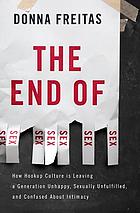
The book in question, this time, was Donna Freitas’ The End of Sex: How Hookup Culture is Leaving a Generation Unhappy, Sexually Unfulfilled, and Confused About Intimacy (Basic Books, 2013). Oh, god, no, I thought. Another hand-wringing book about how Kids These Days Are Doing It Wrong. Another book blaming feminism or men or pornography or youth or [insert favorite moral panic here]. Another book where an adult spends an inordinate amount of time focused on the sex lives of teenagers: how much they’re having sex, how they’re having it, with whom they’re having it, and how they are (or should) feel about it when they do.

Yet I was pleasantly surprised. Donna Freitas is a skillful critic who manages to avoid many of the standard pitfalls of such journalistic studies. A professor of religion and gender studies, who also has a background in student life, Freitas’ previous work, Sex and the Soul (2008), examined the role of religion and spirituality in adolescent sexual decision-making. This new work centers the voices of undergraduates themselves, letting them describe in their own words how they navigate the sexual culture(s) of residential college life. Although Freitas does not discuss her research methods in detail, it sounds from the text itself that she collected written surveys, conducted face-to-face individual interviews, and asked study participants to keep a written journal documenting their reflections about sexuality and selfhood. These primary sources inform Freitas’ narrative throughout and serve to make her argument stronger — though not unassailable. I’ll get to my outstanding questions and irritations below, but first let’s talk about what I appreciated about The End of Sex:

  • An insistence on both female and male voices. Too often, books and articles on so-called “hook up culture” (i.e. Sessions Stepp’s Unhooked) focus on women almost exclusively. They take for granted that the hook up is a situation designed by and for men (who, our narrative of masculinity goes, are always ready for no-strings-attached sexual encounters) while women are losing out. Freitas actually admits that this was a narrative she herself bought into before she began her research. But in listening to actual young men, she discovered what sociologists like Amy Schalet have pointed out to us: that young men, like young women, yearn for emotional connection and meaningful sex. Yet they have learned to bury those desires under the shell of masculine bravado.
  • Calling out the gender binary. Freitas does a good job of pointing out how the cultural expectations around male and female sexuality constrain students’ ability to act on their authentic desires. Men, straight and gay, feel pressured to want sex all the time and bury their emotional-relational desires deep; to the extent they acknowledge those feelings, they’re likely to feel isolated without anyone to discuss them with (because all the other men around them are similarly self-protective and silent on the subject). Women, meanwhile, are walking the tightrope of that old no-win situation, the virgin/slut double bind. They’re expected to be willing (but not too willing); sexually ” pure” (but not too pure). Much like the high school “slut” — who may or may not have ever had sex — female college students struggle to manage their reputations in a world where too much and too little are equally derided.
  • Listening to students thoughtfully, and encouraging sexual agency. Too often, books on young peoples’ sexual habits end up caught in a rescue narrative, calling on us to “save the children (from themselves).” Otherwise known as concern trolling. Freitas resists condescension, writing with confidence in young peoples’ ability to change hook up culture from within into something that better suits their needs. Freitas also tries, with middling success, to resist a one-size-fits-all solution to young peoples’ dissatisfaction with hook up culture. While I think she could have gone further with this, that she acknowledged difference at all (including the fact that some students might thrive on casual sexual interactions) deserves a nod.
  • Distinguishing between the cultural narrative and personal reality. She points out that her study participants consistently report that “everyone else” is engaging in casual sex, while they themselves are dissatisfied with the scene and are seeking alternatives. Freitas could have interrogated this dissonance a little more closely, but, again, points for acknowledging that not all (or even most?) students are throwing themselves into a life of no-strings-attached sexual experimentation.
  • Human sexual variety. Unlike many of the writers who have looked critically at the practice of hooking up, Freitas intentionally brings queer students and queer relationships into the picture. One of the students she profiles at length — as someone who successfully resisted engaging in sexual activities he didn’t feel ready for or comfortable with — is a young gay man now happily in a serious, sexually-active relationship. She also notes the way young people report moving in and out of the hook up scene, rather than imagining once they’ve fallen off the deep end there’s no going back.
  • Encourages us to help young people learn good sex. And by “good sex” she doesn’t mean “sex only within marriage” or simply “safer sex” practices — but sexual intimacy that is wanted and enjoyable. Too many of the students Freitas spoke with seemed to feel caught in a cycle of sexual behavior they hadn’t actively chosen to engage in, yet didn’t feel able to say no to. The landscape of sex appears, in their view, to be one of “on” or “off,” where once you’ve said yes one time you might as well keep saying yes again and again — whether you really desire to or not. If this is an accurate depiction, it’s heartbreaking — and points toward the need sexuality relationship education that refuses to reduce the message to “abstinence only,” or public health messages about STI prevention.
  • The problem of alcohol replacing communication. While I question the extent to which all students everywhere depend on alcohol to grease the sexual relationship wheels, where it does happen, I agree with Freitas that it’s a worrying trend. Not only for the usual alcohol-consumption reasons but also because it isn’t serving users’ sexual pleasure and sexual agency well. Students report using the “I was trashed” and/or “my partner was trashed” line to explain away all manner of sexual activities in which consent was dubious at best, and mutual pleasure a distant ideal rather than a lived reality. 

So those are the good parts: This is a thoughtful, evidence-based study that centers the voices of the population Freitas is studying (male and female students of all orientations in four-year residential colleges). It resists gender stereotyping and heterocentrism. It also, for the most part, resists reactionary solutions such as calling on students to “wait until marriage,” or suggesting a (female) “return to modesty.” Instead, Freitas encourages educators and adult mentors to give students the cognitive and emotional tools to critically engage with their own sexual cultures, evaluate their sexual values, resist sexual activities that make them unhappy, and create sexual relationships (whether fleeting or long-term) that will bring them physical and emotional pleasure and satisfaction. There is little in this agenda that I would argue with.

Still, there are some outstanding questions I have about the way Freitas frames the problem of hook up sex and some of the solutions she has offered. In brief:

  • Blaming the usual suspects. In trying to identify where “hook up culture” comes from, Freitas relies in part on a number of usual suspects: pornography (for teaching poor sexual scripts), online social networking (for supposedly robbing young people of interpersonal skills), the pervasive use of alcohol by college students (see above), and the changing “rules” of relationship formation (without a “dating” template, and without clear gender roles, how and when to make the first move?). I find all of these unsatisfying in their explanatory power, though I’d agree that some of them are concerning in their own right. 
  • If hook up culture is a story about other students, how many young people are actually participating? I was confused by the fact that Freitas repeatedly pointed toward the way the majority of her interviewees were unhappy with the dominant campus cultural narrative of hook up sex, yet a) pointed toward everyone but themselves engaging in it, and b) even when they did report participating it, were doing so to a limited and unhappy extent. I kept wondering: if hooking-up-as-a-way-of-life is always something that someone else does, how much of a reality is it, really? To what extent is it a story we tell ourselves about college culture because we fear/envy college students and — since at least the turn of the twentieth century — have continually imagined their lives were sexually hedonistic? If students themselves have inherited this cultural narrative of college promiscuity — and thus imagine everyone around them is leading a much more sexually wild life than they are themselves — that’s definitely a cause for concern. But not equivalent to students actually engaging in said behaviors.
  • If students are so unhappy, why don’t they get off the merry-go-round? I admit my blind spot here: I attended college between 1998-2005 as a part-time undergraduate who only spent three semesters in on-campus housing (when studying on, paradoxically, off-campus programs). I was never steeped in student culture, generally interacting with peers in class and limited extracurricular activities. So perhaps I had greater social independence than most undergraduates to pick and choose the aspects of college culture to engage in. Living in my hometown, I still had the social networks of long-term friendships, extended family, church, and workplace to fall back on when it came to “opting out” of aspects of student culture I didn’t like — whether it was opting out of conservative evangelical chapel services or drink-fueled parties! Still, if students are truly expressing unhappiness with the college scene in such great numbers as Freitas suggests, why oh why are they not revising it? Students are, after all, the primary creators and perpetuators of student culture. 
  • The “her hands caressed” problem. I was having a conversation with a couple of fellow erotica writers recently in which we were joking about the problem of limbs with volition. You’re proofing a piece and you realize you’ve got someone’s hands or lips acting independently of the person who, in fact, controls the action. I felt like Freitas often fell into this trap with regards to hook up culture, writing about it as of this culture were an entity with independent agency. Cultural discourses, it is true, can exert powerful pressure on individuals and populations … but, usually, they only exist because someone benefits, or thinks they benefit, from maintaining that particular cultural narrative. The discourse of gender difference, for example, has vocal proponents who believe that men and women are essentially different. They have something at stake (religiously, relationally, or otherwise) in a vision of gender difference. Who are the defenders of hook up culture? By Freitas’ account, not the students themselves! And school administrators, faculty, and parents seem shocked by accounts of its existence. So what accounts for the rise of “the hook up” as something which young people feel they must engage in or at least contend with? This question went unanswered in The End of Sex.
  • What about young people not living in dorms on four-year residential college campuses? This is not really a criticism, since any research investigation has its limitations, but I found myself wondering throughout this discussion of hook up culture how generalizable it might be. I pointed out above that my own non-residential status as an undergraduate insulated me somewhat from campus culture. Surely this is true for others as well. Is the hegemony of hook up culture, as reported by Freitas’ subjects, isolated to certain types of undergraduate campuses? (She acknowledges, for example, that it is not so present on evangelical Christian colleges.) What is it like at community colleges? In trade schools? Art schools? Not in college at all? Are there certain populations within large campuses more immune or resistant to hook up culture than others? (i.e. commuter students, international students, students involved in sports? drama? politically engaged? religious students? students who have previously experienced a serious relationship?) I feel like the differences among students is often lost in Freitas’ narrative, subsumed under her urgent sense that all students experience the relentless pressure of hook up culture’s (disembodied) demands.
  • She blames (in part) technology for young peoples’ bewilderment about how to get to know potential romantic partners outside of drunken make-out session. I feel this is a simplistic cop-out. I am, admittedly, biased: my wife and I were introduced via email and spent a lot of our get-to-know-you time via chat and email. We both hate the telephone; for the six months before we moved in together (initially as roommates), I would get up extra early on workdays to catch her online before she had to leave for work; I did my homework after she went to bed, so we could talk online until she shut her computer down for the night. All of this internet connectivity supplemented and facilitated the things we did together in person: walks, movies, lunch at the campus cafeteria, sitting next to one another in class, theater and concerts, shopping excursions. In non-romantic life, I have sustained key relationships, from childhood through into adulthood, by “virtual” means: through postal correspondence, email, blogging, and other social networking tools. Thus, it is difficult for me to take seriously the argument that virtual communication somehow impedes… communication.
  • Why is “dating” the main solution offered to the problems of “hooking up”? Toward the end of The End of Sex, Freitas suggests that students might benefit from relationship education (yes! I agree!) and points toward a professor at Boston College (a Catholic university) who teaches a popular 1-credit class on relationships in which one required assignment for all students (regardless of gender and sexual orientation) is to take a romantic interest out on a date during the semester. The date assignment was, according to the professor, a terrifying and bewildering one for her students — although they also expressed appreciation that they were forced outside their comfort zone in order to pass the class. Freitas’ suggestion is that the structure of the date, however terrifying it is to initiate, provides a safe framework for getting to know a potential sexual partner without being wasted and without the pressure for instant sexual contact. I appreciate her point, but I also wonder why she overlooks the fact that more informal friendships can evolve into sexual relationships in healthy ways — and the more problematic aspects of dating culture that we don’t necessarily want to resuscitate? When I ran a draft of this blog post by my writing group, several members recoiled at the date assignment, not only because it felt intrusive to them, but also because their experience with dating wasn’t so hot either. As one member observed, “My son just graduated a small residential college where going on a date was extremely normative. This not only did not stop hooking-up and/or drunken sex, it also didn’t seem to improve relationships. It also really strengthened rather restrictive gender norms (who asked who, who paid, etc).” Another concurred, pointing out that her “dating” relationships had suffered from many of the same problems as more casual encounters. Perhaps, we mused together, the problem is not the hook up, per se, but rather misogyny?
  • What about “hanging out”? My wife and I were friends and roommates first, an intense relationship that evolved into courtship over a two-year period, and eventually into a sexually-active, committed partnership. We never formally “dated,” yet we weren’t hooking up either. Instead, we were good friends who eventually acted on the sexual possibility we both felt in our relationship. A third member of my writing group suggested that between “the date” and “the hook up” there’s this thing called “hanging out” — where you connect in the student lounge over pizza and a Walking Dead marathon and discover you fit together really well, in more ways than one.  “Hanging out,” at least in my experience, also carries a lot less baggage in terms of gender-based expectations for behavior. In my informal friend survey, “hanging out” seems to be an option for straight as well as queer couples, so I wonder why it’s invisible in Freitas’ narrative. Particularly when it has the potential to offer the best of both worlds: getting-to-know-you time without excessive alcohol or the pressure for immediate sexual activity.

In the end, Freitas’ The End of Sex is an addition to the literature on hook up culture that is better than many, despite its limitations. I devoutly hope it signals the beginning of a (dare I hope?) sea-change in the way we talk about relationship culture in the twenty-first century. As I finished this review, Tracy Clark-Flory of Salon.com offered up a lengthy interview with author Leslie Bell, who has recently published (yet another!) book on hook up culture, Hard to Get: Twenty-Something Women and the Paradox of Sexual Freedom. Clark-Flory enthuses that Hard to Get is “a nuanced look at hook up culture” that refuses to either downplay its pitfalls or deny its pleasures. That one’s on order at my local public library, and I’m looking forward to reading (and reviewing) it soon.

cross-posted at the family scholars blog.
so, that happened [a new guest blogging gig]

26 Tuesday Feb 2013

Posted by Anna Clutterbuck-Cook in admin

≈ 2 Comments

Tags

blogging, family scholars blog, feminism, gender and sexuality, religion

Ah, the strange and wondrous things that happen when you go traipsing around The Internet.

As you know, I’ve been hanging around the comment threads at Family Scholars Blog for awhile now. In part because I’m interested in how the other half lives thinks.  In part because I like to argue.

And in part because, in the very selfish, immature corner of my brain-heart-body it irks me that there are people out there who really think that I’m “depraved on account I’m deprived” (or some variation thereof). I’m fascinated and appalled that people feel so threatened by my existence as a (gay) married, sexually-active bisexual that they try to pass laws to erase my (gay) married existence, and — when that fails — simply say that my marriage isn’t real.

It’s fascinating, as I say, and appalling.

And not a little frightening. To know that my life excites such fear, angst, anger, and loathing.

I like to keep all that in sight, watchfully.

Well, then a couple of weeks ago they invited me to blog with them, as a regular guest blogger. 

And my first reaction was absolutely not, no. But I said I’d think about the offer. Talk to some people. Sleep on it.

What could I possibly bring to that site, as a guest blogger, that I wasn’t already bringing in comments? And, more importantly, why did they want me? I admitted to myself fears that I might simply be being recruited as a Poster Lesbian: “See? She plays well with others!” they might say, and when accused of anti-gay bias the group could point to my guest blogger bio: “See?! We even have a Queer Feminist Gay-Married Bisexual writing for us!”

Wouldn’t I be risking, on some level, being their Queer Cover? The sexual-identity equivalent of the Black Friend?

But then I started to think about what I might be able to offer in such a space, to those who were truly open to listening (and, yes, though I complain about those who revile and erase me more, the more contemplative conservatives exist).

And this is what I thought. That much of the conversation about queerness, feminism, and other lefty-liberal modes of being at the Family Scholars Blog (FSB) takes place without reference to — let alone centering of — actual queer / feminist / lefty-liberal voices or experiences. Even when those voices are referenced, it’s generally in the form of a sound bite we’re all supposed to know is ridiculous or wrong-headed (“pfft, look at those hysterical feminists with their foolish notions about gender equality — what do they know”).

Well, I’d like to talk about what it is we do know, and what life looks like from where we stand.

So I’ve accepted the FSB offer, and I’m going to start a monthly series there (cross-posted here), “The Feminist Librarian’s Bookshelf,” with 3-to-5 titles per post as suggested reading on a theme (“gender and neuroscience,” “teenagers and sexuality,” “queer families”). My hope is that I can offer a glimpse into the literature that informs those of us who take a quite different view than many, if not most, at the FSB, with regards to family life. I’m not particularly aiming to convert, although obviously it would be nice if some of my favorite authors resonated with readers here and there. My goal is to encourage people to “walk a mile in someone else’s shoes,” and think about what it might be like if you were to look at the world through the eyes of a lefty lesbian teenage, a liberal Latina mama, a feminist trans* woman, an asexual anarchist, a socialist living in poverty, or hippie home-educators.

There’s talk over at the FSB about civility of discourse, about meeting people halfway and compromising, about being willing to doubt (one’s own truths) and being open to having one’s mind changed.

I’m not sure how I feel about these values. I sometimes feel there is a type of privilege at work here, in which  unexamined certitude is disproportionately a problem of those whose worldviews and values are reflected back at them from mainstream culture. Those on the margins not only have the value of self-doubt shoved in their faces 24/7, they must learn to see the world through the eyes of the privileged and powerful in order to survive. Indeed: part of my fascination with the religious right comes from growing up a liberal-progressive (dare I say radical!) minority within a conservative Christian culture. I had to learn how Christian conservatives understood the world in order to survive. They didn’t have to learn anything about me, if they didn’t care to.

So I’ll be walking a mindful line over there, at FSB, between recognizing the true values of civil conversation, of lovingkindness and compassion, of being open to new experiences and viewpoints, of being open to the change those experiences and viewpoints will wreak within me — and at the same time holding my own, in part by example demonstrating that it is possible for a diversity of individuals with very different lives to co-exist in a democracy without the world imploding. We don’t all have to be alike, and that’s okay. We don’t all have to fear others who are different from us and/or those who choose a different way of life. Their different choices don’t, for the most part, constrain our own freedom of choice unduly.

You can read my self-introduction over a FSB and I’ll be cross-posting Thursday’s bookshelf post (five novels that influenced my adolescent perspective on love and romance) here.

comment post: unfinished thoughts on non-consensual sexualization

07 Thursday Feb 2013

Posted by Anna Clutterbuck-Cook in think pieces

≈ 4 Comments

Tags

being the change, bigotry, comment post, feminism, gender and sexuality, moral panic

Regular readers of this blog may remember that over the past year or so I’ve been haunting the conservative Family Scholars Blog hosted by the Institute for American Values (IAV) think tank founded by David Blankenhorn, sometime high-profile opponent of same-sex marriage. In part, I follow the blog because my smart and funny friend Fannie is one of their guest bloggers. I am also deeply interested in the worldview of people whose understanding of how the world works, and what values will increase the well-being of humanity, are so different from my own.

Last week, I found myself sucked into a comment thread at the FSB wrestling with the subject of what I’ll call “non-consensual sexualization.” My working definition of non-consensual sexualization is public expressions which frame another person’s appearance, presence, or actions in a sexual light without their participation or consent. You might also call this plain old “sexual objectification.” I’m using my phrase here because I think it’s important to highlight the non-consensual part of what’s going on here. Continue reading →

booknotes: histories and cultures of sexuality

05 Tuesday Feb 2013

Posted by Anna Clutterbuck-Cook in book reviews

≈ Leave a comment

Tags

children, feminism, gender and sexuality, history, smut

As promised, here is my round-up of recently-read titles having to do with various aspects of human sexuality, politics and culture.

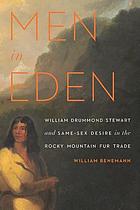
Men in Eden: William Drummond Stewart and Same-Sex Desire in the Rocky Mountain Fur Trade by William Benemann (University of Nebraska Press, 2012). Let’s begin with the book Hanna referred to as the book about “mountain men humping!” Benemann takes as his subject a 19th century Scottish aristocrat, William Drummond Stuart, and through Stuart’s colorful life explores the contours of same-sex desire on the borderlands of “civilized” society. Stewart, a younger son who later in life inherited the family title from his older brother, came of age during the Napoleonic wars and served in the 15th King’s Hussars where he rose to the rank of Captain. After retiring from the army, Stewart traveled widely in the Middle East and North America — and in North America found the homosociality of the American West particularly amenable. Throughout his life, Stewart’s most enduring relationships were with men, including one French-Cree trader who he traveled extensively with and even took with him back to Scotland after assuming responsibility for the family’s estate; the couple lived for a time in one of the secluded lodges on the land, where Stewart kept all the material evidence of his travels abroad. According to Benemann, previous treatments of Stewart have gone out of their way to ignore the evidence of same-sex relationships in the Scotsman’s life. Benemann’s work is a thoughtful and nuanced challenge to this previous “closeting” of Stewart’s sexual self, taking those same-sex relationships for granted as a meaningful part of Stewart’s experience. Anyone with an interest in nineteenth-century Anglo-American sexuality and gender should definitely add this one to their reading list.

Documenting Intimate Matters: Primary Sources for a History of Sexuality in America edited by Thomas A. Foster (University of Chicago Press, 2013). Published as a companion volume to John D’Emilio and Estelle Freedman’s seminal Intimate Matters (1988), this new primary source reader offers a thoughtful compilation of lightly annotated documents related to various aspects of sexuality in American culture from the colonial era to the present. A brief 225 pages, featuring selections from about seventy sources, this reader is best seen as a jumping-off point for further discussion and exploration rather than a source for full-text transcriptions. Each of the five chronologically-arranged sections are introduced with a brief preface on the sexual issues of the period in question, and each document likewise features a thoughtful introduction. While necessarily incomplete, given its length, Documenting Intimate Matters is admirably diverse in its socio-cultural and geographic scope as well as the genres of (textual) documents found therein. Some of my favorite include newspaper announcements from the 1780s-90s placed by men whose wives had deserted them to inform creditors the husbands would no longer take responsibility for their (ex?) wives debts; the angry diary entries of Frederick Ryman (1884)*, whose sentiments about women would not be out of place on anti-feminist blogs of today; and Susan Fitzmaurice’s 2002 reflections on the struggles of raising a child with Downs Syndrome in away that prepares them for a sexually active, sexually pleasurable, and sexually responsible adulthood. An excellent anthology for use in introductory classes.

*Full disclosure: Ryman’s diaries reside at the Massachusetts Historical Society.

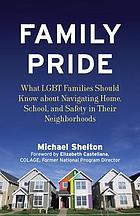
Family Pride: What LGBT Families Should Know about Navigating Home, School, and Safety in Their Neighborhood by Michael Shelton (Beacon Press, 2013). The latest addition to Beacon Press’s “queer ideas/queer actions” series, Shelton’s Family Pride is an accessible and nuanced snapshot of life in America for queer parents with children as we enter the 2010s. Centering the lived experiences of both LGBT parents and their children — through in-depth interviews Shelton conducted, as well as the growing body of relevant research literature — Shelton’s book should be on the bookshelf of every “family values” advocate (members of the Institute for American Values I’m looking at you!) as well as in the library of every queer activist and/or LGBT organization. While the title makes it sound like Family Pride is a handbook for queer families, in reality the volume is more of a status-quo assessment with some recommendations (from Shelton’s perspective as a therapist who has worked with queer families) for what queer families need in order to thrive. He does an excellent job of incorporating (I’d even argue prioritizing) the experiences of families who don’t often make “gay family” headlines: queer parents in straight marriages, parents who are in the closet, non-white families, families living with financial insecurity, families with uncertain immigration status, parents in prison or with a history of interaction with the law that makes calling the police for help an unthinkable solution to anti-gay speech or acts. My only quibble with Shelton’s framing is that he never explicitly defines an “LGBT family” as a unit made up of parents-plus-children in which at least one parent is queer — yet that is clearly his operational definition. I would have appreciated either a more explicit acknowledgement that this book focuses on parenting-while-gay OR an effort to include the voices of queer families that do not include children. We are, most assuredly, families too.

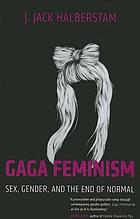
Gaga Feminism: Sex, Gender, and the End of Normal by J. Jack Halberstam (Beacon Press, 2012). While in Austin, I snagged a copy of yet another volume in the “queer actions/queer ideas” series — Halberstam’s meditation on the playful, anarchic queer feminism burbling up through the actions and expressions within youth culture. Taking pop culture references from Sponge Bob to Lady Gaga, Halberstam argues for the liberatory playfulness of more fluid sex and gender identities that — rather than requiring taxonomical fixity — provide a sandbox full of tools and opportunities for self-expression. I’m an easy sell on this score: while I am at times skeptical about the power of pop culture expression to effect political change, neither am I threatened by sex and gender anarchy. I am comfortable in my own gender (fairly conventional, by 21st century standards — though I’d likely have been a shockingly difficult daughter in many an earlier time and/or place) and sexuality (fluidly bisexual, married, monogamous). And I see no reason not to afford others the opportunity

Hard to Swallow: Hard Core Pornography on Screen edited by Claire Hines and Darren Kerr (Columbia University/Wallflower Press, 2012). This excellent anthology explores the pornographic genre of “hard core” films from a variety of perspectives: through the lens of history, film studies, sexual politics, and more. The majority of contributions focus on the United States and Britain (the editors are lecturers at Southampton Solent University, UK), and despite the negative connotations of “hard to swallow” virtually all of the authors take for granted that pornographic film as a genre deserves serious consideration. Pornography, it is assumed throughout, is simply explicit representation of human sexual activities; the messages of that representation can be positive or negative, depending upon execution and interpretation. My favorite pieces include: Linda Williams’  ‘”White Slavery,’ Or the Ethnography of ‘Sexworkers’: Women in Stag Films in the Kinsey Archive”; “The Progressive Potential of Behind the Green Door” by Darren Kerr; “Reel Intercourse: Doing Sex on Camera” by Clarissa Smith,” and “Interrogating Lesbian Pornography: Gender, Sexual Iconography, and Spectatoring,” by Rebecca Beirne. At their best, these essays go beyond commonplace assumptions about pornography as inherently degrading, as without cultural merit, as a male-only pursuit. Williams’ piece examines the subjectivity of women in early twentieth century stag films, wondering what light surviving films might shed on performers’ agency. Kerr, in “The Progressive Potential…” revisits a film that has been understood as misogynist and asks us to think, again, about the centrality of female sexual pleasure in the narrative. Clarissa Smith pushes back against the notion that performers in porn “just have sex on camera,” suggesting that engaging an audience in erotic fantasy is, in fact, a difficult role for which real skills are required (can we all say “duh?”). And finally, Beirne’s contribution explores the nuances of voyeurism, performance, and sexual subjectivity in the work of lesbian pornographers.

The entire anthology was absolutely worth reading, though I had quibbles with various assumptions along the way: one author, for example, claimed in passing that “the consumption of pornography … is an essentially private past time, indulged in as an accompaniment or prelude to masturbation.” Yes … but also, no. Reading/viewing erotica can happen in many contexts, only some of which are solitary, and doesn’t necessarily lead to masturbation for all consumers, every time. Likewise, the uncomplicated statement that pornography “began as a male-only pursuit,” even if the author acknowledges that “that male-ness has been diluted in recent years,” is to ignore the long history of female pornographers and women who have enjoyed erotic material. Women + sexual agency is not, contrary to popular opinion, a twenty-first century phenomenon.

I continue to be fascinated, too, by the assumption (apparently played out in the majority of pornographic film) that straight men don’t like to see male bodies centered in porn: from the descriptions of works and from the analysis of the authors it certainly sounds like in mainstream “hard core” (explicit) pornography, it’s women’s bodies on display for a presumed male audience. Granted I’m queer, so. But in general, what I find visually arousing is the depiction of people having sex. People having sex in ways I can then fantasize about enjoying like they’re enjoying it. Watching a woman orgasm on screen is hot (to me) because ohgodohgod I know what that feels like, and if I were in her situation I’d be coming too. So I’m curious what’s happening for men who watch porn in which the role of the male actor is basically a two-step process. Step one: Get it up. Step two: Ejaculate on screen. Like, isn’t that kinda disappointingly … thin on material that encourages imaginative projection of yourself into the scene? It’s just this thing I keep thinking about, as I’m reading these pieces that assume because women’s bodies are the bodies depicted, therefore the audience is supposed to imagine having sex with them (therefore be someone who likes having sex with women) rather than imagine being them (a person, male or female, experiencing sexual pleasure). How would we analyze pornography differently if we assumed the viewer’s involvement with those on-screen was a process of empathetic identification rather than (positive or negative) objectification?

Lots to think about … and I’m footnote mining Hard to Swallow for oft-cited authors and works so I’ve already got several other books on pornography on order at the library and look forward to reviewing them here!

why do I write (and read) fan fiction? [part three]

26 Saturday Jan 2013

Posted by Anna Clutterbuck-Cook in fandom

≈ 4 Comments

Tags

fanfic, feminism, gender and sexuality, genre fiction, smut, the body, the personal is political, why be judgy?, writing

See part one and part two for the context of this post.

So having explored fan fiction generally (and why I’m drawn to it) and erotic fan fiction as a sub-genre of fic, and why I think it’s important, I thought I’d round this little series out with some thoughts on what draws me to the particular fandoms and pairings (relationships) I write … and what I’m trying to do when I write them. Besides, you know, enjoy the smut. I’m also going to address, below, a couple of questions I’ve fielded lately about the ethics of fic-writing practice.

Donna Noble (Doctor Who)*

Why write the pairings I write?

Well, so, it’s tempting to say that I write the things I write because I find them compelling and I just do, okay? On a certain level, trying to explain why you find the the fiction you like compelling is like trying to explain why you love your partner. It’s not really reducible to a bullet point list.

But on the other hand, I’m me. So of course I have some Thoughts on the subject. And it starts with the fact that I consumed a lot of erotic fan fiction at a point where I was beginning to actively think about relational sexuality and how sexual identity and desire worked in peoples’ lives (see post two). And I really enjoyed a lot of fan fic I was reading, mostly gay male pairings ’cause those were the fandoms Hanna and I were reading, but I struggled to find sexually-explicit lesbian pairings. And the femslash I did come across was frustratingly in-explicit about sex, or written by people who didn’t seem to fully grasp the possibilities of what two female-bodied people might do together, sexual-intimacy wise. Hetero and gay male sex scenes in fic (and, to be fair, in a lot of regular porn) work on a fairly standard narrative arc that culminates in penetrative sex — penis-in-vagina or anal sex — as The Most Bestest Form of Sexual Intimacy. It’s pretty much always orgasm-producing for both partners and sometimes it’s clear the authors (and the characters they’re writing) don’t consider sex to have happened until there’s been a penis inside a vagina or an anus.

Without a penis, what do you do?! Okay, yes, there are dildos and vibrators, but honestly not a lot of fics wade into the territory of sex toys very skillfully, and dildos in a lesbian sex scene too often just cue the author to assume sex with a dildo is about role playing het sex. Which it can be, but certainly doesn’t have to be. In my opinion, it’s much more fun to start without that penetrative-sex-as-goal model in mind and think about all the ways two bodies might come together (double entendre very much intended).

So I developed a (Queer, Feminist) Agenda. Which was to inject the world with realistic smut about ladybits. Smut that was tactile, visceral, about real bodies coming together and people making meaning out of the sex they were engaged in. And I’m an historian, so I started out pilfering from Downton Abbey, writing an eight-story arc about Sybil Crawley and Gwen. And I went on from there to other female pairings and eventually stuck my toe into the waters of m/m slash. It was kind of terrifying at first, pushing out into writing about men having sex — something I don’t have hands-on experience with. But I discovered that, at least the way I go about it, the characters take hold of the narrative regardless of gender and help me feel my way through giving them positive (and I hope realistic) sexual experiences! And in part, I was motivated by the same (Queer, Feminist) Agenda as I had been with writing female-bodied sex scenes: the be-all and end-all of sex for guys doesn’t have to be penetration.

I’m hardly the first person to observe this, but for people who are queer in some way, writing slash fiction can be a way to revise the heteronormative narratives of mainstream media. And, I’d add as a feminist, it can be a way to revise sexism and other isms as well. Watching a television show with primarily straight relationships and re-writing or filling in those stories to imagine queer relationships injects our experience into the cultural discourse. Characters on television, in film, in books, are assumed straight until explicitly identified as queer; fan fiction more often assumes that everyone is a little bit queer unless they’re proven to be straight. It’s a re-visioning of the world in which sexual variety is the norm — one part reflection of our actual experiences in queer subcultures, and one part wishful “what if…” thinking. Looking at my small repertoire of fic pairings, I’d argue I tend to choose characters who have the potential to — when queered in some way — disrupt the normative expectations about sex and relationships that we see in a lot of porn, erotica, and mainstream media — television shows, movies, etc., the original material from which fan fiction is born. Perhaps starting out as a critique of the original material, I often find my acts of fanfic subversion increases my pleasure as a consumer of the original material.

I enjoy writing stories about women unabashedly enjoying sex and knowing their bodies. I enjoy writing stories about elder folk, late-in-life lesbianism, about people having sex when their bodies don’t always work the way they want them to. I like writing fic in which it’s taken for granted (by me, the author, at least) that men can, and do, enjoy a full range of emotional intimacy, body insecurities, carry baggage from damaging relationships, enjoy sex that isn’t always fucking. (In fact, I have yet to write a fic that includes men having anal sex.) I like writing the vulnerability of desire, about what it means to expose to another person just how much you want, and (often even more frightening) what you want. I like writing sex that includes awkward conversations and misunderstandings and bodies that frustrate and fears that overwhelm — but that all ultimately circle around that moment of knowing and being known that can come when people get naked together, in every sense of the word.

The ethics of slash: a few final thoughts.

Aside from the ethics of porn, which is a topic about which much ink (and internet bile) has been spilled, the ethics of fan fiction (or, more generally, “transformative works”) is itself a topic for discussion on the internet and beyond. Hanna and I belong to the Organization of Transformative Works, a non-profit organization that advocates for the practice of fan works and also runs the Archive of Our Own project, which seeks to collect and preserve fan works online. They publish a peer-reviewed journal, Transformative Works and Cultures, that explores fandom in its infinite varieties. So if you’re interest is piqued and you’d like to delve into the politics and culture of fan creation — or poke around and read some fic or whatever variety! — I really can’t recommend them highly enough.

What I wanted to do here is touch on a couple of ethical issues that have come up recently in conversation with friends — namely the ethics of “m/m erotica” written by women, and the practice of writing RPF or “real person” fic.

Can, or should, women write erotica about gay men?

Periodically, there are internet-based wrangles over whether or not “m/m erotica” — which in the world of published romance/erotica generally means “gay porn for girls,” or (usually) women-authored fiction about gay male relationships marketed to a (presumed straight) female readership — is ethical (see for example here and here). The question is whether the m/m genre is exploitative, a hetero appropriation of gay male culture. The practice of writing erotic fan fiction is overwhelmingly a female one, and male/male pairings — as I write above — generate an incredible amount of enthusiasm, from both writers and readers (who appear to be, again, overwhelmingly female).

As an aside: fan-fiction writing as a feminized activity is something that deserves attention, and I have no doubt someone somewhere is doing incredible work on it. I think there’s a lot to explore in that dynamic — and I’m looking forward to being a part of the conversation, along with people who’ve done way more research than I into the phenomenon.

But back to the ethics of being a woman writing/reading porn involving men having sex with other men. Which is something I, a cis woman, do on a near-daily basis (see above). I admit that, when the articles about m/m erotica appeared, I did some soul-searching about it. When people suggest an activity might be exploitative it’s pretty much always a good idea to take their position seriously and listen to what they have to say. But. Here’s my thing about the case against m/m erotica: it basically comes down to an argument that if people of sexual identity A create or consume erotica about (fictional) people of sexual identity B, particularly if there’s a dynamic of social privilege in the mix, that’s per se a problem.

But sexual identity isn’t some sort of siloed, static thing — or at least I don’t experience it that way. Our sexual identities, desires, practices — they’re messy and complicated and shift over time. Preferred sex and/or gender of one’s actual partners aside, we can have fantasies and enjoy porn about practices we would never want to actually engage in. And, I would argue, we can find porn about bodies and practices we don’t per se find arousing, arousing because so much of sex isn’t the geometry of bodies coming together but (see post two) the narrative surrounding that context. Recent research is beginning to support this notion, particularly for female-bodied persons. As J. Jack Halberstam points out in the recent book Gaga Feminism (Beacon Press, 2012):

People are not asking why it is that gay men do not, generally speaking, produce any [sexual] fantasies around femininity, while lesbians produce lots of fantasy environments that include men or masculinity. When, in The Kids Are All Right, the lesbian couple watches gay male pornography to spice up their sex life, the scene was met with incredulity, especially from gay men. Indeed, a gay magazine journalist called me and asked me to comment on this bizarre (to him) scene. I responded that lots of lesbians watch and like gay male porn, straight male porn, and everything in between … [According to sexual response studies] while men, gay and straight, tend to respond in inflexible ways to erotic images of men and women (straight men want to see female bodies, gay men want to see male bodies), women, gay and straight, tend to respond in flexible ways to images of men, women, and animals. (p. 87-88).

So my point is that what sounds like a fairly reasonable call for non-appropriation (“what do these straight women think they’re doing, fantasizing about gay men!”) becomes tangled really quickly.

To use my own example: I’m a bisexual woman in a same-sex relationship with another woman. Does that mean I’m only “allowed” to be involved in reading/writing porn featuring two women? Are threesomes okay — or not, because I’m not in an open or poly relationship? If I write about sex involving male bodies, is it okay because as a bi woman I’m sexually attracted to men? But then it would be okay for straight women to write gay porn also, so maybe I’m only allowed to write porn about hetero pairings? But I’ve never been in a straight relationship, and identify as part of the queer community — so maybe that’s off-limits as well. But if I’m part of the queer community then we’re back where we started: maybe I get to create and consume porn about same-sex couples because I’m part of a same-sex couple?

So you end up on this merry-go-round of factors that could be used to determine who is or isn’t “qualified” or ethically able to create certain types of sexual fictions. And I think that that sort of policing ultimately impoverishes us all. If we started saying that straight people could only write or enjoy porn about straight folks, and gay men and lesbians could only write or enjoy porn about gay men and lesbians … not only would we miss out exploring the sexual diversity of humanity through the imaginative act of writing and reading, but we’d also be ignoring that there are people who don’t fit into these neat and tidy categories of the self.

I’m not saying there isn’t a place for critique. Hell, in my book, there’s nothing in the world so sacrosanct as to be beyond critique. And I absolutely believe that there is porn out there that fetishizes queerness for the straight gaze. I mean, I wouldn’t be writing porn in the first place if I hadn’t gotten frustrated with the conventions and stereotypes I saw being recapitulated over and over in the porn I was reading. So I think anyone involved in writing erotica should be open to conversation about their work, open to hearing people say, “Hey, that thing you did there in that story rubbed me the wrong way, and here’s why.” It’s not a requirement to engage, but I would hope the resulting conversation could be an opportunity for growth for all involved.

What are my feelings on “real person” erotic fan fiction?

Yup, it’s a thing in the world, people writing (often erotic) fan fiction featuring real-life celebrities. Often, though not always, these celebrities are the actors portraying the characters that these same authors write other fan fiction pieces about. But there are also people who write erotic fan fiction about politicians, musicians, and other people in the public eye.

I had a follower on Twitter ask me last week what I think about the practice:

@feministlib Must ask: do you have thoughts on RPF/RPS in contrast to general fanfic or slash fiction? Ethical/Moral/Creative boundaries?
— Jen Jurgens (@capricurgens) January 19, 2013

I responded:

@capricurgens thanks for asking! short answer is that I’m squicked out by RPF because it feels non-consensual and intrusive to me (1/2)
— feministlibrarian (@feministlib) January 19, 2013


@capricurgens if person wants to write/film erotica starring themselves & partners & others enjoy it, ok. but RPF = non-con in my book (2/2)
— feministlibrarian (@feministlib) January 19, 2013

And I’m not sure I have a whole lot more to add to this “short answer” response. Characters (whether portrayed by actors or written about in a text) are characters not human beings. We joke about how they take over our brains and insist their own version of events, but at the end of the day they are human creations — not humans themselves. They have no independent bodily autonomy or agency. They have no legal or social standing as persons. Real people do.

Real people can create erotica or pornography that involves themselves and offer it to others (friends or strangers) to enjoy consuming — as long as everyone’s staying safe and is able to consent without coercion I’m down with that. I even think teenagers technically under the age of consent should have the protected right to create erotica materials involving themselves and share those materials with their peers as part of their own sexual exploration. Obviously this raises questions about how to give them a safe space to explore their sexuality without being exploited, and I agree that’s a conversation to be had. But the general principle is: we should all have the creative license to explore our sexuality in textual and visual ways and share it as we desire.

However: consent is key here. I imagine human beings have always developed fantasies around other actual people prior to full and enthusiastic consent being given — in the case of those we later become sexually intimate with — or in situations where those relationships will never flower, but we’re crushing hard anyway. This isn’t about policing personal imagination — have all the damn fantasies you want about whomever and whatever you find turns you on.

I’d argue, though, that in the case of fantasies about real live actual people who aren’t involved in the spinning out of those fantasies? Those stories or images are best left in private spaces: your computer hard-drive, your journal, whatever. I’m not thinking so much of regulation here — I’m not arguing we pull RPF from the Archive and ban people from publishing more — but I’m arguing that as a matter of common courtesy it’s kinda, well, rude, to put your fantasies about actual people who you have no relationship with and who aren’t consenting to have these sexualized stories or images created around them out into the world of the ‘net where those same people could presumably come across said stories by Googling their names.

If someone wrote an erotica story — even a really sweet hot one! — about me as me and posted it online and I stumbled across it, it would feel really stalkery and invasive to me. Like, my wife is the only one at this point in time who has my permission to spin out stories about my bits that way.

So yes, I do think there are boundaries and ethical considerations where fan-creation is concerned. And I appreciate that there are people within fandom who are willing and interested in engaging in ongoing conversations about those difficult aspects of the genre. What I do hope is that those outside of the genre will think twice before dismissing the practice wholesale as facile or perverted (in the not-cool way). Because I think fan engagement with (mainstream) creative works has a lot of potential to change and complicate the (mainstream) conversation about human sexuality.


*One of the pieces of fan fiction I’m most proud of is a Donna Noble/Idris fic completed for last year’s International Day of Femslash.

movienotes: les miserables

22 Tuesday Jan 2013

Posted by Anna Clutterbuck-Cook in media

≈ 2 Comments

Tags

fanfic, feminism, history, movies, politics

I have some book reviews I need to write for books I’ve read this month, and a third “why I write fic” post in the queue, but I just got back from a weekend with my sister in the beautiful Austin, Texas, and my brain can’t seem to form coherent-yet-complex thoughts. So instead, I’m going to offer up a few observations about the film version of Les Miserables that I saw in the theater the weekend before last.

Javert (Crowe) and Valjean (Jackman)

I saw the musical once before, live, when I was in London in January of 2004. My principle memories at the time involve enjoying the music (I’m a life-long musical theatre fan, so a good musical will always win me over in the end), being distracted by the book I’d picked up that day and brought with me to read during intermission (The Time-Traveler’s Wife), and my surprise at the fact that the emotional-relational through-line for the story is not the second act marriage-plot between Marius and Cosette but the connection forged between Jean Valjean and Inspector Javert. It is their dance of power, desperation, obsession, compassion, forgiveness, and despair that drive the plot from start to finish. Hugo’s novel is that 19th century classic the Social Problems Novel and, and is — I’m sure I am far from the first to remark upon this! — a queer choice for musical theatre.

Fantine (Hathaway) selling her hair.

A few thoughts in no particular order:

  • Women, work and society. The film version of Les Mis had some really interesting (largely visual) observations to make about women and work. There’s Fantine, Anne Hathaway’s character, who is working in a factory to pay for her daughter’s care. Rumored to be a slut, and punished by the foreman for being a single mother, she’s cast onto the streets and sells her hair, teeth, and sex before succumbing to consumption. Her daughter, Cosette, has been boarded out as a laborer herself, working for a couple running an inn (the buffoonish and cruel Thenardiers). While Cosette is rescued by Valjean and ascends to the middle class through marriage (one could argue a certain kind of “wage work” in its own right, certainly an economic decision), her age-mate Eponine Thenardier — abused by her parents and pining after Cosette’s lover — cross-dresses as a boy to join the revolution and ultimately dies on the barricade. On the periphery of the story drift prostitutes, beggars, and female religious who serve as nurses and also offer refuge for Jean Valjean at various points throughout the story. When the student revolutionaries are shot by French soldiers, the uprising put down, it is women who are left to scrub down the blood-filled streets. Overall, Les Mis hammers home in multiple ways the limited options for the vast majority of women in 19th century France. True, there were limited options for most people living in France at that time — but this film adaptation does a good job of highlighting the way women’s sex/gender limited them in particular ways.
  • Futility of revolutionary action? Throughout, the film/musical has a deeply ambivalent relationship to the politics of its student revolutionaries. Marius’s boyfriend Enjolras is a charismatic and idealistic young Parisian student who, with a group of peers, orchestrates a violent rebellion (based on a real historical incident) that ultimately fails and leaves everyone — save Marius, rescued by Jean Valjean for his adopted daughter’s sake — dead. In Hugo’s world, the violence of the state (personified by Javert; more below) is responsible for the wretchedness of virtually every character in the story, but political action is depicted as ultimately futile and deadly. Yet the film ends with a triumphant reprise of the rebels call to arms, with Fantine, Valjean, and all of the dead students waving tricolor flags high above the Parisian skyline. Have they … won? And if so, how? Is the film meant to suggest revolutionary action is ever-needed? If the next generation (Marius and Cosette) have retreated into bourgeois respectability — Marius’ father welcomes them in with open arms and throws a lavish party for their wedding — should this be considered a win? For whom? I have read some reviews that suggest Hugo’s narrative points toward interpersonal love triumphing over political action (again, more below) but if that is the thrust of the plot it is an unsatisfying one: many people, even many “deserving” poor, die or are left in desperate poverty despite benevolence (and occasionally actual care) extended to them by others. If I had to guess, I’d hazard that Hugo might imagine that all attempts to improve the human condition on a large scale are doomed to failure, and that one-to-one interactions are our only — and ultimately futile — recourse.
  • Letting go of the next generation. As I wrote above, my first impressions of Les Mis is that it is a story about parents and letting go. Fantine, first, must let go of Cosette in order to provide for her (by going to work and leaving her with the innkeepers), and then ultimately must let her go when she dies and entrusts her to Valjean, a man she barely knows. She cannot know what her daughter’s future holds — for good or ill — and yet must depart. And then in the second act Valjean must let go of Cosette when she falls in love with Marius. While at first this loss is painful to him, and he tries to leave  the country with Cosette in tow, when he intercepts a letter from Marius to Cosette he regrets his actions and rescues Marius from the barricades. After the two children are engaged to be married, Valjean — his duty to his daughter complete, now she is in another man’s care — he departs to a monastery to die. We also have, of course, all of the children who die: Eponine and the students, including a young street urchin named Gavroche who is the first casualty of the day. The adults may believe these young peoples’ actions are foolish and futile, dangerous even, but the young people ultimately must forge their own paths.
  • The central romance in the story is between Valjean and Javert. So, okay, you don’t have to read their relationship as one long exercise in Unresolved Sexual Tension – but I certainly found it much more satisfying than the Marius/Cosette situation, let me tell you. Inspector Javert spends decades in pursuit of Valjean, obsessed with the man and fascinated/repulsed by the notion that the “criminal” Valjean (imprisoned for stealing a loaf of bread) could ever be anything other than a criminal. Valjean, whose religious conversion shortly after he is paroled helps him rebuild his life, tries to model a more nuanced morality for Javert (while, you know, evading re-arrest!) — and in the penultimate scene he succeeds. Given the opportunity to kill or capture Valjean, whom he has tracked into the Parisian sewers, Javert lets Valjean go. And is so shattered by his decision to let the rule of law go in the interest of human compassion that he commits suicide.
  • Oh, and the acting. I was really impressed with everyone in this cast, all of whom seemed to really be throwing themselves into their work both musically and acting-wise. At times, Hugh Jackman and Russell Crowe really seemed to be struggling with the score which surprised me — since I know Jackman, at least, is a strong singer. But I think that might have been a function of recording the songs live on-set rather than in a recording studio before or after the shoot. And Helena Bonham Carter and Sacha Baron Cohen as the odious Thenardiers were delightfully campy, offering some of the only comic relief around — and even then, theirs is a story that has a pretty tragic side if you linger more than a moment or two). 
And that’s all I got, folks. If you’re musical theater fans or fans of the Victorian “social problem” novel, I’d highly recommend seeing the film — preferably in the theatre since it truly is a spectacle of a movie musical. I know some people were really frustrated by the filming — the tendency to frame actors in the corner of the screen, or incompletely, but I actually like that technique for the way it makes you notice the composition of the shot, makes you realize a visual image is being constructed for you, rather than allowing you to feel you’re simply immersed in the action. Artifice, in this instance I would argue, works well with the musical genre.

‘after pornified’ book giveaway! [free stuff]

15 Tuesday Jan 2013

Posted by Anna Clutterbuck-Cook in book reviews

≈ 1 Comment

Tags

blogging, feminism, free stuff, gender and sexuality, smut

My friend Anne Sabo has given me three signed copies of her recent book, After Pornified: How Women are Transforming Pornography and Why it Really Matters (see my review here). And I would love to pass them along to you!

The only requirement is that you read and review the book by March 1st, post the review to Amazon.com and whatever other blogging or book-themed social networking site (GoodReads, LibraryThing, etc.) you choose and send the link to me.

Psyched to start reading? Leave a comment by midnight this coming Friday (so 12:00am 1/19/2013) on this post including an email where I can reach you and sharing, via link or description, one of your favorite pieces of erotica (can be any medium). I’ll be taking all eligible entrants and randomly selecting three via the slip-of-paper-in-a-bowl method.
On Tuesday, January 22nd, I’ll contact the three winners by email for a mailing address and send out the books via first class mail.

Let the commenting begin!

booknotes: public vows

05 Saturday Jan 2013

Posted by Anna Clutterbuck-Cook in book reviews

≈ Leave a comment

Tags

feminism, gender and sexuality, history, politics

I thought I’d kick off my 2013 book reviews with a few thoughts about the last book I read in 2012. That would be Nancy F. Cott’s Public Vows: A History of Marriage and the Nation (Harvard U.P., 2000), which I picked up at the Montague Book Mill last week. A slim volume, Public Vows explores the ways in which local, state, and national culture and regulation have shaped the meaning and utility of marriage in the U.S. from the Revolution to the dawn of the 21st century.

Cott’s overall point is that while marriage in the United States has been considered a private zone — affectually and contractually — it is also constrained by public custom and legal regulation. As she writes in the introduction:

In the marriage ceremony the public recognizes and supports the couple’s reciprocal bond, and guarantees that this commitment (made in accord with the public’s requirements) will be honored as something valuable not only to the pair but to the community at large. Their bond will be honored even by public force … the public sets the terms of marriage (2).

Those terms have been paradoxically remarkably tenacious and constantly in flux. As Cott demonstrates, Americans have generally privileged the monogamous Christian marriage as the “common sense” of marriage relationships, despite the fact that at the time of the United States’ founding “the predominance of monogamy was by no means a foregone conclusion” (9).

In the years of the Early Republic, this relationship was one of coverture, in which the wife’s political identity was subsumed by that of her husband upon marriage; the husband was charged with representing his wife in the public realm much as a member of Congress (the founding generation of American political theorists drew this analogy) represented his constituents. As women and free blacks struggled for citizenship status throughout the 19th century, the terms of marriage (who could marry and the rights and duties marriage entailed) shifted to meet — or at times to combat — these new demands. Waves of immigration and anti-immigrant sentiment shaped laws around marriage as politicians determined what foreign marriage practices would be recognized as valid, and the changing economic landscape shaped and re-shaped understandings of how work and marriage inter-related.

Much of what Cott has to say will come as no surprise to historians of women’s and gender history, or even social and labor history: notions of citizenship and personhood are uniquely tied up, in United States law and social custom, with one’s status not only as an individual but also as the member of an acceptable family unit. Conformity to marriage norms can have real impact on one’s status as a citizen (as any first-generation immigrant can tell you), and while women’s political lives are no longer subsumed under their husband’s at the altar, the assumption that women will be (hetero)wives continues to endure in tax codes and other legacies of coverture in the legal-political realm.

Cott touches only lightly on same-sex marriage in the final chapter of Public Vows, underscoring how little “gay marriage” actually has to do with the revolution(s) in modern family organization that the last two centuries of American history have seen. Feminist agitation has, indeed, played a much bigger role in shifting marriage onto new ground. As Cott observes, “So far as it is a public institution, [marriage] is a vehicle through which the apparatus of the state can shape the gender order…. Turning men and women into husbands and wives, marriage has designated the ways both sexes act in the world and the reciprocal relationship between them” (3). These designations often reach beyond the actually married, constraining the lives of the non-married as well. As women gained more equal footing as citizens, the shape of marriage as an economic, political, and personal relationship was fundamentally changed. In the context of this long sweep of change, the extension of civil marriage rights to same-sex couples is but a small step in the direction of equal citizenship status for all, regardless of gender or affectional ties.

Conversely, the fact that same-sex marriage evokes such strong reactionary feelings points toward the centrality of the Christian monogamous marriage plot to the organization of American civic life: as a key aspect of our project to differentiate ourselves from European and other world governments. By governing who is let in (and who kept out) of marriage we — as a nation-state — are often simultaneously identifying who — both symbolically and literally — is allowed to be a citizen.

I’m following my reading of Public Vows with E.J. Graff’s contemporaneous What Is Marriage For? (Beacon Press, 1999). Like Cott, Graff explores the historical shape of marriage and discovers heterogeneity rather than some ur- form of “traditional” marriage … I’m looking forward to limning the similarities and differences between their arguments, so look for a review here soon!

booknotes: book of mormon girl

17 Saturday Nov 2012

Posted by Anna Clutterbuck-Cook in book reviews

≈ Leave a comment

Tags

feminism, gender and sexuality, memoir, politics, religion

I rarely have the time these days to invest in comment threads on blogs, though I skim hundreds of RSS-scraped posts every day via Google Reader. Yet over the past few months, I’ve spent quite a bit of time over at the Family Scholars blog, engaging with socially conservative bloggers and commenters about issues such marriage equality and queer family formation.

I actually find the practice almost … soothing.

Hanna, meanwhile, is mystified about my motivations, since just having me describe some of the interactions I have there ramps up her anxiety and stress levels to uncomfortable proportions. And I find I don’t have very articulate reasons for why I find arguing with the opposition — bearing witness, speaking up for my point of view — to be an almost meditative practice.

Except that, growing up and going to college where I did, it’s what I’ve had to do by default most of my life. So it’s what feels comfortable, feels familiar: standing on the edges knocking politely on the door to remind those on the inside (of the mainstream culture, church, school, whatever) that I’m still here.

I don’t necessarily want to be let in? It’s a nice world, in many ways, where I am out here. I’ve always been a fan of fresh air and expansive horizons.

But I don’t want them to forget that I’m out here.

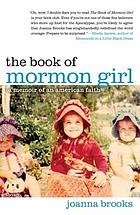
Another aspect of my insistence on being a complicating presence came home to me while I was reading Joanna Brooks’ Book of Mormon Girl (Free Press, 2012) this past week. It had been on my radar for awhile, but what prompted me to read it was an email from a friend of mine, a former member of the LDS church, who has walked away from the faith in his adulthood for a variety of reasons not the least of which is the fact that he’s gay and the Mormon church is not all that cool — at least at an institutional level — with queerness. He’d found the book a disorienting read, he reported to me, because while he’s quit the church entirely Brooks continues to struggle mightily with her inherited faith and childhood experience, and the betrayal of the community she once felt safe within when she stepped outside the bounds of orthodoxy (as an outspoken Mormon feminist, queer ally married to a Jewish man). Why did she continue to fight to belong in a church that clearly pushed her away, hard, with both hands?

It’s a stubbornness I recognize, though I wasn’t actually raised in the church (Mormon or otherwise). The faith of my heritage was loosely Protestant, my father the son of a New Testament theologian, my mother the mostly unchurched daughter of a Christian Scientist and disbelieving Scotch Presbyterian. In my adolescence, we attended a liberal Dutch protestant church (a denomination in the Reformed Church in America) for a handful of years where I argued passionately with Conservative youth leaders from my position as a nascent feminist and tried to envision the Church as a pathway to effectively channel my welling passion for social justice.

Then I went to college and discovered feminist theology which offered (though I didn’t have these words at the time) a way of thought and action that was both intersectional and spiritual: a faith of uncompromising social justice, nonviolent action, solidarity, and equality: each and every one of us is a child of God. Full worthy to be loved and capable of loving.

It’s a theology that I, unchurched though I am, continue to strive for in the spiritual practice of daily living.

And it felt like a theology that many religious folk around me were uninterested in pursuing.

I’ve said before, and I’ll repeat it here, that I found my Christianity and left the church in more or less the same breath.

I saw what Christianity could be and is, at its best and brightest, and in my adolescent impatience had no time for those preoccupied with orthodoxy at the expense of lovingkindness. Lacking the deep roots of religious history, community, family, and faith that ties women like Joanna Brooks to the church — and I know many of them, ardent feminist thinkers, queers, social justice workers, all fighting past the burnout to build a Church I would be proud to call mine — I up and quit and walked away.

But in part because of the women (and I know there are men, too, but it’s the women I think of in these moments, the ones who stand up and refuse not to be counted) I keep circling back. I keep tapping on the door, poking my head in, and reminding folks that my life, too, is relevant to the conversation: You’re talking about the welfare state? I might be financially secure right now, but I’ve had state-subsidized healthcare. You’re talking about male headship? Let me talk to you about sex, gender, and humanity. You’re talking about same-sex marriage? Let me introduce you to my wife, our two cats, and quotidian details of our lives.You’re talking about war? Let’s talk about the history of religious nonviolence.

My mother has always said that she won’t join any church that constructs an “us” from which a “them” is excluded, kept at arms length, on the outside. Which is why, to this day, she remains unbaptized (and why none of us children were baptized), and certainly informs my own decision not to seek church membership.

But I keep tapping at the door. I keep having the conversations. I want to bear witness (imperfect, broken, human, though I am) to the fact that we could do better and that I know there are those working mightily within the Church, as well as without, to make it so.

Hmm. The plan was to write a book review, but clearly I had other things to say. Still: Book of Mormon Girl is sweet, funny, heartbreaking, thoughtful, and passionate. As a queer American I found the chapter on Proposition 8 particularly painful to read; as a woman who came of age about 5-10 years after Brooks, I found her chapter on feminism and faith, and the trauma of the LDS purges in the 90s (when the hierarchy excommunicated a number of liberal intellectuals and activists, and declared feminists, gays, and lesbians the “enemy”) to be particularly resonant. As an historian with an interest in the personal journeys of those who grow up in fundamentalist, evangelical circles, Brooks’ narrative was of scholarly interest to me as well. I highly recommend it to anyone who wants to think more deeply about what it means to be a politically and socially progressive person in the context of a reactionary religion.

please exercise your right to vote

06 Tuesday Nov 2012

Posted by Anna Clutterbuck-Cook in think pieces

≈ 1 Comment

Tags

being the change, boston, feminism, politics

Ohio, 1912 (via)

Hanna and I went up to our local polling station around 7:15am this morning to cast our ballots. The lines were long, but moving quickly and we were in and out of the school cafeteria in about 30 minutes. Everyone was polite and efficient, and for some reason the signs offering translation services (Vietnamese, Russian, Spanish, and more) made me tear up. As brokenly human as our election process is, I’m grateful to have been born in a generation where my right to participate is taken for granted, rather than something I need to fight for. Queer folks who are same-sex marriage supporters have to experience their civil rights up for a vote, and often see those rights rejected by their fellow citizens … but at least we get to cast a vote for our own equal rights. Women during the suffrage campaigns could only batter on the door in righteous anger (or speak words of forceful persuasion) in a long, slow struggle to be let in. I am grateful that so many of them did.

Please vote today. Even if you’re voting for the other guy I sincerely want you to make your preference known. I know there are flaws in the system, and I have friends who are cynical about the process and abstain on principal – and I understand their reasons and respect that it’s their right to do so. But I’m going to encourage you to make your voice heard in a different way today: by making an affirmative decision about which direction you would like our nation — and each state within it — to move. If you don’t cast a ballot in the first place, if there are disputes over voter fraud or recounts there won’t be a ballot from you to re-count.

(via)

Regular readers of this blog will be unsurprised to know I voted a Democratic ticket. At four this morning, when the cats woke me up to demand breakfast, I lay in the dark and enumerated the reasons why — given the two-party system — Democratic candidates are really the only option for leftist me:

1. The social safety net. Welfare and “entitlements” may have become dirty words in contemporary American politics, but my vision for what government is good for actually starts (and largely ends) with provision of basic care for its citizenry, particularly the most vulnerable. I have friends currently surviving in part thanks to government support — food stamps, WIC, unemployment insurance, government-subsidized student loans, social security benefits. Both Hanna and I have benefited from state-subsidized health care and federal student loan programs (say what you will about the cost of higher education, federal loans made our advanced degrees and subsequent financial stability possible at a relatively sustainable price). In our elder years, we will hopefully benefit from whatever iteration of social security is available. As global climate change becomes a reality, disaster relief will be the difference between utter devastation and recovery and resilience for more and more of us. My ethics demand that I support a government that will continue to provide these to the best of its ability, and actively work to bring material security to us when we need it most.

2. Reproductive justice and bodily autonomy. I’m a person with female anatomy; my body these days is the subject of intense debate and scrutiny in the political realm, particularly due to its capacity to sustain a pregnancy. Despite the fact that I do not plan to procreate, I am still deeply affected by a world which sees persons with uteri as individuals whose bodily autonomy is not secure and subject to the political agendas of others. Self-interest demands, therefore, that I vote for politicians who — at least at the party level — recognize my humanity as a complex reality, not just something that exists in the absence of others’ trumping interests.

3. Civil rights and social justice for queer folk. Democratic politicians are not consistently supportive of equal civil rights for queer folks — and not all Republicans are anti-gay. But taken in aggregate, the Democratic party is the only viable political party that is actually making moves toward supporting my rights as a citizen with same-sex desires to not be discriminated against in law because of those desires.

Here in Massachusetts we also had the opportunity to vote on legalization of medical marijuana and physician-assisted suicide. I voted in favor of both. I have known enough people facing difficult end-of-life decisions, including my late grandfather who died in 2007 of aggressive lung cancer, to know that we should all have the right to choose when and how to die, when the opportunity to choose is available to us. Although my grandfather’s condition deteriorated too rapidly for him to reach the point where assisted suicide was actively on the table, he had that conversation with my family and the hospice care folks who helped our family through the process of his death. And when it comes to marijuana, I don’t actually think it should be criminalized at all but will take what I can get in terms of de-criminalization. Hopefully, as medical use becomes more widespread and aboveground the stigma against responsible use will lessen and regulation will move out of the criminal justice system and perhaps into the public health realm.

This is what same-sex marriage looks like

Same-sex marriage is on the ballot in four states today: Maine, Maryland, Minnesota and Washington. E.J. Graff has been writing about the history and prospect of each measure over at The American Prospect, and I encourage you to check out her thoughtful state-by-state analysis. I know two families in Minnesota whose wee ones (ages four and six) are passionately supportive of the same-sex marriage campaigns and I’ll be thinking of them today. I want them both to know – Noah and Lilly I’m talking to you! — that regardless of the political outcome, they’re growing into fine people who are being the change we want in the world. Even if our guys don’t win this time around, that you care about fairness and kindness matters and will still make a difference, now and every day we move forward together.

← Older posts
Newer posts →
"the past is a wild party; check your preconceptions at the door." ~ Emma Donoghue

Recent Posts

  • medical update 11.11.22
  • medical update 6.4.22
  • medical update 1.16.2022
  • medical update 10.13.2021
  • medical update 8.17.2021

Archives

Categories

Creative Commons License

This work by Anna J. Clutterbuck-Cook is licensed under a Creative Commons Attribution 3.0 Unported License

Meta

  • Create account
  • Log in
  • Entries feed
  • Comments feed
  • WordPress.com

Create a free website or blog at WordPress.com.

  • Subscribe Subscribed
    • the feminist librarian
    • Join 37 other subscribers
    • Already have a WordPress.com account? Log in now.
    • the feminist librarian
    • Subscribe Subscribed
    • Sign up
    • Log in
    • Report this content
    • View site in Reader
    • Manage subscriptions
    • Collapse this bar