• anna j. clutterbuck-cook
  • contact
  • curriculum vitae
  • find me elsewhere
  • marilyn ross memorial book prize

the feminist librarian

the feminist librarian

Tag Archives: history

more vintage video fun: "a date with your family"

29 Tuesday Sep 2009

Posted by Anna Clutterbuck-Cook in media

≈ 1 Comment

Tags

history, humor, movies, web video

Brought to you from mst3k, another educational short (about 10 minutes) demonstrating the proper attitude towards, and behavior at, nightly dinner with one’s family.

My favorite sequence:

Narrator: “First of all, Daughter has changed from school clothes to something more festive.

I know I certainly put on my Sunday best before Hanna and I sit down to supper. Also, it’s creepy that all the characters are referred to by their generic member-of-the-family label, not actual names.

“Dressing a little makes her feel — and consequently look — more charming.”

because it’s all about performance, girls! remember that!

“Mother too changes from her daytime clothes. The women of this family seem to feel that they owe it to the men of the family to look relaxed, rested, and attractive at dinner time.”

In the words of Mike & Co: “So they’re unsuspecting when they kill them!”

aside from the fact it’s about women performing for men, I love the way the emphasis is on appearance: it’s important to “look” relaxed, rested, and attractive . . . never mind that Mother and Daughter are the ones preparing and serving the entire meal!

The whole film, in fact, emphasized the performance of an ideal 1950s family, with the suppression of unpleasant news and discord in favor of harmony and surface-level conversation. The narrator’s script keeps emphasizing this point, as if he’s just begging for us to wonder what evils are lurking in the shadows, unspoken.

. . . “Everyone wants to flee this seething cauldron of angst!”

On the Syllabus: Man For Himself

25 Friday Sep 2009

Posted by Anna Clutterbuck-Cook in book reviews

≈ Leave a comment

Tags

history, politics, thesis

This week for my independent study, I finally sat down and finished Erich Fromm’s 1947 treatise on humanistic ethics: Man For Himself: An Inquiry into the Psychology of Ethics. Erich Fromm, a prolific writer on psychology, philosophy, politics, and ethics, clearly can’t be adequately represented by a small excerpt from one published work . . . but I thought I would, nevertheless, give you a flavor of his thinking by sharing a passage from Man for Himself in which he responds to one of the criticisms of his humanistic philosophy which foregrounds the capacity (“potentiality”) of human beings: that is, “what about the problem of evil?”

“The opponents of humanistic ethics,” he writes, “claim that man’s [1] nature is such as to make him inclined to be hostile to his fellow man, to be envious and jealous, and to be lazy, unless he is curbed by fear. Many representatives of humanistic ethics [have] met this challenge by insisting that man is inherently good and that destructiveness is not an integral part of his nature” (213). As Fromm points out, this leaves us with the problem of what destructiveness and where it comes from, if we reject it as an inherent part of human nature (since, self-evidently, human beings demonstrate a capacity for violence).

Our first step in approaching the problem of destructiveness is to differentiate between two kinds of hate: rational, “reactive” and irrational “character-conditioned” hate [2]. Reactive, rational hate is a person’s reaction to a threat to his own or another person’s freedom, life, or ideas. Its premise is a respect for life . Rational hate has an important biological function: it is the affective equivalent of action serving the protection of life; it comes into existence as a reaction to vital threats, and it ceases to exist when the threat has been removed; it is not the opposite but the concomitant of the striving for life [which Fromm believes is the most fundamental human drive].

Character-conditioned hate is different in quality. It is a character trait, a continuous readiness to hate, lingering within the person who is hostile rather than reacting to a stimulus from without . . . [a phenomenon] of such magnitude that the dualistic theory of love and hate as the two fundamental forces [of human life] seems to fit the facts. (216-17, emphasis in the original).

Fromm asks then (somewhat rhetorically) whether, given the evidence, he is forced to concede that theories maintaining destructiveness is a fundamental part of human nature (he uses Freud’s work as an example) are, indeed, correct. No, he responds to himself, he is not. He posits that both capacities (creativity and destruction) are present in human beings as potentialities which need certain conditions to manifest; furthermore, he argues that the capacity for productive, life-promoting creativity, is a primary capacity, whereas the capacity for destruction is secondary, realized only when the conditions for the primary are not met:

Both the primary and the secondary potentialities are part of the nature of an organism . . . the “secondary” potentiality comes into manifest existence only in the case of abnormal, pathogenic conditions. . . . man is not necessarily evil but becomes evil only if the proper conditions of his growth and development are lacking. The evil has no independent existence of its own, it is the absence of good, the result of the failure to realize life (219-20).

While I am skeptical about the division between rational/irrational used here, and find Fromm’s reliance on psychoanalytic language frustrating at times, his basic concept of human beings has a lot of (ahem) potential for re-imagining our most basic assumptions concerning human nature.

In the wake of the Second World War, many people — across diverse fields of inquiry — were wrestling with the question of what “human nature” was — and could be — with a sense of great urgency. Fromm offers us one such example; I’ll look forward to sharing more with you in the weeks to come.

~~~footnotes~~~

[1] after my post on Goodman last week, it is worth noting that Fromm specifically, in the introduction to Man for Himself, defines his use of the word “man” as a universal pronoun for “human being.”

[2] Fromm uses “character” in a very specific sense, elaborated on elsewhere in the book and in his other work, and here is indicating a basic orientation toward life versus a reaction to a specific incident.

video wednesday: the home economics story

23 Wednesday Sep 2009

Posted by Anna Clutterbuck-Cook in media

≈ Leave a comment

Tags

education, feminism, history, web video

Hanna introduced me to this timely 1951 promotional video from Iowa State College just as I was reading Paul Goodman’s Growing Up Absurd last week. It is an incredible snapshot of the way college attendance was presented to young women in the postwar period; watch to be bitter end for the senior year requirement to play house in preparation for “real life” for the full creepy effect. Almost as good as the marriage preparedness video I posted back in March.

Running time: 25:02 minutes.

UPDATE: Hanna chastised me for not including the mystery science theater version of this short, which is available via YouTube, so here are the links (it comes in two parts): part one and part two. Better late than never?

On the Syllabus: Growing Up Absurd

18 Friday Sep 2009

Posted by Anna Clutterbuck-Cook in book reviews

≈ 2 Comments

Tags

education, feminism, history, thesis

So I might not have a lot of time to post this year, but one thing it occured to me to do is post selections from some of my thesis-related reading for those of you who are interested in what I’m doing on the intellectual/history front. Since I’m enrolled in an independent study this semester, I have the luxury of designing my own schedule of reading in preparation for my oral history fieldwork. The reading I’ll be doing this semester is in part theoretical/methodological (how I’ll be doing my oral history collecting and thesis writing, and why I chose to do it that way) in part a review of the existing historical literature on the period and topics I am studying, and in part primary sources that help provide contemporary context for the beginnings of the Oregon Extension program.

One of the books I’ve been reading this week, Paul Goodman’s Growing Up Absurd: Problems of Youth in an Organized Society. The prolific Goodman wrote one of the earliest post-war critiques of 1950s American conformity, first published in 1957, which later became a “must read” for countercultural activists during the 1960s and 70s. The basic argument of Growing Up Absurd is that the post-war society is depriving youth (specifically boys, see below) of meaningful work opportunities — leaving them with the option of unfullfilling factory of office jobs that do not contribute (in Goodman’s view) to the betterment of society. While his argument has faults, he is also making key observations about the fault-lines in American society during the era of post-war conformity. The priceless bits, however, are the sections in which he defends his focus on “young men and boys” as a stand-in for “youth.” When I began reading, I figured he was using masculine pronouns as a stand-in for humanity in general (it’s the 1950s after all). Not so according to this parenthetical found at the end of his introduction:

(I say the “young men and boys” rather than “young people” because the problems I want to discuss in this book belong primarily, in our society, to the boys: how to be useful and make something of oneself. A girl does not have to, she is not expected to, “make something” of herself. Her career does not have to be self-justifying, for she will have children, which is absolutely self-justifying, like any other natural or creative act. With thie background, it is less important, for instance, what job an average young woman works at till she is married. The quest for the glamour job is given at least a little substance by its relation to a “better” marriage. Correspondingly, our “youth troubles” are boys’ troubles — female delinquency is sexual: “incorrigibility” and unmarried pregnancy. Yet as every woman knows, these problems [I am writing about] are intensely interesting to women, for if the boys do not grow to be men, where shall the women find men? If the husband is running the rat race of the organized system, there is not much father for the children.) [13]

I would love to write an entire essay at some point unpacking the layers of cultural “common sense” packed into this one single paragraph of Goodman’s polemic. He continues this way of raising the question of women in a tangential, completely un-analyzed way. In the section where he discusses the Beats, he critiques their cultural dissent at length and then eventually gets around to the question of “What is in it for the women who accompany the Beats?” (185)

There are several possible sexual bonds . . . Her relation to him is maternal: she devotes herself to helping him find himself and become a man, presumably so that he can then marry her. . . Another possible relation is Muse or Model: her Beat is her poet and artist and makes her feel important. This is a satisfaction of her feminine narcissism or penis envy.

So mother or virgin/whore: those are our options girls. But wait! There’s more (185-187).

One sometimes sees a pathetic scene in a bar. Some decent square young workingmen are there, lonely, looking for girls or even for a friendly word. They feel they are “nobodies”; they are not Beats, they are not artists. They have nothing to “contribute” to the conversation. The girls, meantime, give their attention only to the Beats, who are sounding off so interestingly. But these Beats will not make any life for the girls, whereas the others might make husbands and fathers.

Amazing what a long history the Nice Guy ™ vesus Bad Boy ™ mythology has, isn’t it? One might, of course, ask if there are any female Beats — in spirit if not in historic fact (there were very few women who were part of the core movement). Goodman does actually mention such women, at the tail end of his analysis:

Finally, of course, there are the young women who are themselves Beats, disaffected from status standards. Perhaps they have left an unlucky marriage, have had an illegitimate child, have fallen in love with a Negro, and found little support or charity “in” society. They then choose a life among those more tolerant, and find meaning in it by posing for them or typing their manuscripts.

So even the women “Beats,” who fit his earlier definition of “incorrigibility,” end up being not so much artist-activists themselves, but rather a sub-species of the Muse and Model he defines earlier. As women artists and activists pointed out at the time — most loudly and concertedly during the 1960s and 1970s — this was in fact far from the truth of their own lived experience.

That’s it for this week’s “on the syllabus” dispatch . . . look for more next weekend!

Quick Hit: "Riotous Flesh"

14 Monday Sep 2009

Posted by Anna Clutterbuck-Cook in linkspam

≈ Leave a comment

Tags

gender and sexuality, history, MHS

Last week I wrote up a brown bag lunch talk, “Riotous Flesh: Gender, Physiology, and the Solitary Vice, 1830-1860,” given at the Massachusetts Historical Society by one of our research fellows, April Haynes. The talk was about nineteenth-century reformer Sylvester Graham and his campaign against the “solitary vice” of masturbation. April is particularly interested in how is lectures appealed to female activists, and how they used his ideas for their own purposes. Click through to The Beehive for more.

last of the summer blog posts: gone cavorting, back in september

25 Saturday Jul 2009

Posted by Anna Clutterbuck-Cook in admin

≈ Leave a comment

Tags

blogging, domesticity, history, MHS


I stepped out of the last meeting of my summer session class into bright sunshine this afternoon and realized I was starting my second “summer holiday”: no classes until the first week of September! I’ll be working full-time, and preparing some paperwork for my fall projects, particularly thesis research, but with what time remains, I plan to enjoy a little rest and relaxation before the autumn schedule begins. With that in mind, I’m going to take a vacation from blogging. I plan to be back in the beginning of September.

In the meantime, if you’re looking for something to keep yourself occupied, check out the daily twitter feed of John Quincy Adams, who, via the fingers of MHS assistant reference librarian Jeremy Dibbell, will be “tweeting” his journal entries from a trip to Russia made exactly two hundred years ago, in 1809. (You don’t have to have a twitter account to read the posts).

Otherwise, turn off your computer and go out and enjoy the summer. See you back here in September!

*image via married to the sea.

Quick Hit: Guest Post @ the Beehive

10 Friday Jul 2009

Posted by Anna Clutterbuck-Cook in linkspam

≈ Leave a comment

Tags

blogging, history, MHS

The Beehive is the Massachusetts Historical Society blog, edited by my friend and colleague Jeremy Dibbell. This week, he asked me to write an entry reporting on a talk given by one of our researchers, Amber Moulton-Wiseman, who is writing her Ph.D. dissertation on interracial marriage in Massachusetts. You can check it out over at the MHS website.

Movienote & Quick Hit: Frost/Nixon & Nixon-Nixon

24 Wednesday Jun 2009

Posted by Anna Clutterbuck-Cook in media

≈ Leave a comment

Tags

history, movies, politics

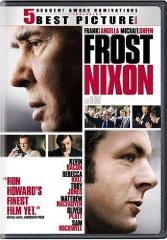
Yesterday, Hanna and I finally got around to watching the film adaptation of Peter Morgan’s 2006 stage play Frost/Nixon. Both the play and the film starred a perpetually startled-looking Michael Sheen as British talk show host David Frost and Frank Langella as a very sleepy-sounding Richard Nixon. The drama centers on an actual historical event: David Frost’s interviews with Nixon, broadcast in 1977, two years after Nixon resigned the presidency. It was a compelling film, paced very much as I imagine the original stage play ran, and aside from the two main actors sported several cameos by folks I enjoy, such as Oliver Platt and Matthew Macfadyen (disconcertingly blond). Since I know very little about the Nixon presidency or his political demise, beyond the broad brush strokes of our collective historical memory, the film has made me curious to check out the original interviews and compare the fictionalized version with the actual footage. Possibly more later if I (or Hanna) remain motivated enough to track them down.

Coincidentally, yesterday also saw the opening up of over 150 hours of tape and 30,000 pages of documents previously unavailable to the public by the Nixon Presidential Library. These new materials contain some choice sound bites concerning Nixon’s views on abortion and interracial relationships.

“There are times when an abortion is necessary. I know that. When you have a black and a white,” he told an aide, before adding, “Or a rape.”

As elle over at Shakesville points out (as do virtually all the feminist blogs I regularly read), interracial relationships are in no way shape or form analogous to rape . . . the first being, you know, a relationship and the other being a specific act of violence. The fact that this was the first circumstance that came to Nixon’s mind in 1973 as a situation warranting abortion — before he even thought to mention sexual violence, almost as an afterthought — is a fascinating example of the way he made sense of both race and abortion.

Anyway. May all the Nixon historians out there have fun and do good work with these new resources, many of which have been made available online.

"What do you mean by counterculture?"

12 Friday Jun 2009

Posted by Anna Clutterbuck-Cook in my historian hat

≈ Leave a comment

Tags

education, history, thesis

One of the first tasks on my list at the end of the spring semester was to draft a proposal for an independent study in the fall that is designed to lay the groundwork for my history thesis (gulp!). The thesis is an oral history-based project documenting the early years of the Oregon Extension program, from 1975-1980, and placing the learning environment that faculty and students created there in a broader cultural context. One of my goals for this project is to incorporate some of my work into the writing I do for this blog, so that y’all can get a sense of what I do in my day job (or at least one of them) as an historian-in-training. With that in mind, here’s a blog post to get the ball rolling: a personal reflection on the language I use to describe what I research, and why I’ve settled on the terms I have.

Since starting graduate school, I’ve been asked far more often than I used to be to define my scholarly interests in ten-second, sound-bite terms (a task which, as those of you who know me well can attest, has never come easily to me). As an undergraduate, I always chafed against trying to encapsulate what I do as a thinker and writer in terms of a single academic discipline or area of interest. I am a historian by training, a feminist by political persuasion, with background in women’s studies, and a passion for thinking about how people make sense of the world. In the past, I have variously described this focus as an interest in intentional community, feminist activism, experiments in living, radical pedagogy, unschooling, radical, progressive, experimental education, and a number of other phrases.

More recently, when asked to give a short-hand version of my thesis research, I’ve been using the phrase “countercultural education” as the broad, umbrella term for where my academic interests lie. I used it just this week in an email to a researcher who contacted the Massachusetts Historical Society interested in the [[papers of nineteenth-century education reformer Horace Mann]]. The researcher wrote back and asked me, out of personal interest, to clarify what I meant when I used this term “countercultural.” Her question forced me to back up and reflect on why “counterculture” feels like the most appropriate, useful shorthand to me — and whether it serves me well in conversations with my colleagues, mentors, and friends.

What appeals to me about the term “counterculture” is that, in a single compound word, it identifies my interest in radical worldviews — worldviews that are fundamentally different from those espoused by the dominant educational culture — while also not limiting my focus to a single movement or ideological persuasion. Historian Ron Miller, in Free Schools, Free People: Education and Democracy After the 1960s, describes countercultural pedagogy as educational practices that seek to “educate children and young adults according to a set of attitudes, values, and beliefs in direct opposition to those of the predominant culture” (3). That’s a definition that goes beyond concepts of “left” or “right” political views, or particular historically-situated movements or schools of thought, like mid-twentieth-century home education, the early-twentieth-century progressive educators, or (to use Miller’s example) the short-lived free school movement of the 1960s.

While some of these historical movements represent countercultural values I strongly identify with on a personal and political level, my interest in educational practice goes beyond interest in a particular set of countercultural values. I am fascinated with the way in which education as an activity and the spaces in which educational activities take place are used as tools for training young people in different ways of being in the world, and in different ways of making sense of that world and their place within it. I am particularly interested in the instances in which the activities and spaces that individuals or groups of people find useful for this making-sense activity are different from the mainstream values and practices of their own context. What prompts them to seek alternatives? What methods do they choose? What vision for human growth and community do they see their educational practices resulting in, and why does that vision make sense to them? As I have written before, these critiques of mainstream culture can come from any point on the political spectrum, and the diversity of both educational practice and the expected results of those practices are dizzying in their variety.

The one reservation I have with identifying my work as the study of “countercultural education” is that it defines my research subject in terms of what it is not: predominant educational norms. The trap of defining oneself (or one’s topic of research) as “not thing X,” and forgetting what the subject is standing for, rather than against, is one I do not wish to fall into. However, thinking of what I am embarking upon as one chapter in the history of countercultural education in American history is, for now, a useful starting point. A starting point out of which, I hope, I can begin to discern what it is the specific individuals I am studying valued and believed important to share with following generations.

*Photo of school children Library of Congress flickr stream.

From the Archives: Creating a digital collection

04 Thursday Jun 2009

Posted by Anna Clutterbuck-Cook in library life

≈ 1 Comment

Tags

archivists, history, northeastern, photos

Two weeks ago, I started my new part-time job at Northeastern’s Archives & Special Collections (where I interned this past academic year). The project I’ve been asked to complete is the creation of a digital collection that gives researchers virtual access to a series of scrapbooks put together at the turn of the twentieth century by Marjorie Bouve, a Boston University alumna and founder of Northeastern’s Bouve School of Physical Education. This involves scanning each page of the scrapbooks and then cropping each TIF image file so that we have both a full-page image and individual images of each photograph of item on the page. Thus, I spent seven hours Tuesday doing this:


Once all of the images have been created, we have to enter all of the “metadata” (library-speak for “information about information”) into our database and customize the interface Northeastern uses to show their digital collections, an open source software program called Greenstone. Hanna worked tirelessly on the last Northeastern project, the Freedom House Photographs, which you can view online to get a feel for what the end product may look like.

Since this is a scrapbook collection, and we are hoping to emulate the feeling of looking at individual scrapbook pages to a limited extent (sans fancy software like the British Library uses for their prize collections) we’re looking to do something similar to what Simmons College did with the scrapbooks of one of their own alumni, Ruth Mitchell Wunderly, also a fun collection to flip through.

Next time I do some scanning on Northeastern’s spiffy book scanner, I’ll take my digital camera and get some shots of the contraption in action — it’s pretty awesome, despite the fact it reminds me of the radial x-ray machine they use at my dentist’s office.

← Older posts
Newer posts →
"the past is a wild party; check your preconceptions at the door." ~ Emma Donoghue

Recent Posts

  • medical update 11.11.22
  • medical update 6.4.22
  • medical update 1.16.2022
  • medical update 10.13.2021
  • medical update 8.17.2021

Archives

Categories

Creative Commons License

This work by Anna J. Clutterbuck-Cook is licensed under a Creative Commons Attribution 3.0 Unported License

Meta

  • Create account
  • Log in
  • Entries feed
  • Comments feed
  • WordPress.com

Create a free website or blog at WordPress.com.

  • Subscribe Subscribed
    • the feminist librarian
    • Join 37 other subscribers
    • Already have a WordPress.com account? Log in now.
    • the feminist librarian
    • Subscribe Subscribed
    • Sign up
    • Log in
    • Report this content
    • View site in Reader
    • Manage subscriptions
    • Collapse this bar