• anna j. clutterbuck-cook
  • contact
  • curriculum vitae
  • find me elsewhere
  • marilyn ross memorial book prize

the feminist librarian

the feminist librarian

Tag Archives: history

First online finding aid!

05 Friday Sep 2008

Posted by Anna Clutterbuck-Cook in library life

≈ Leave a comment

Tags

archivists, history, northeastern, simmons


This morning I finished and published my first online archival finding aid as part of my internship at Northeastern Archives. It involved a lot of fancy footwork with Microsoft Word macros and Dreamweaver . . . but the important thing in the end was that it worked and the papers of one Albert Hale Waite (graduate of Northeastern’s School of Law, class of 1933) are now fully processed and accessible for research. You can view the finding aid for Mr. Waite here.

Votes for Women!

27 Wednesday Aug 2008

Posted by Anna Clutterbuck-Cook in my historian hat

≈ 1 Comment

Tags

feminism, history

Yesterday was the 88th anniversary of the passage of the 19th amendment (giving women in the United States the right to elective franchise). Aside from making my usual recommendation that everyone watch (and tear up over) Iron Jawed Angels, I offer a couple of blog posts that came across my RSS feed.

Jessica, at Feministing, opened a comment thread yesterday for readers to share the stories of the first time they voted. Lots of fun — and occasionally painful — reminiscences there!

Amanda Marcotte, over at Pandagon, covers the appearance of anti-choice protesters who turned up at a rally to celebrate women’s suffrage. “I mean,” she writes, “if you can buy that not getting pregnant in the first place is actually an abortion, then why not expand the definition even further to start chipping away at other feminist gains and ideas?”:

  • Votes for women are totally abortion. Look, the only reason that abortion is legal is because women became a voting bloc whose opinions mattered politically. There’s exactly no way we’d have Roe v Wade if we didn’t have the 19th amendment.
  • Equal pay for equal work? Abortion. If women have more money, they’re just going to buy abortions. It’s like giving a kid a bigger allowance—they’ll just buy more candy with it. Except for abortions.
  • Title IX? Of course it’s abortion. All that running and jumping around that female athletes do makes the womb inhospitable, which is abortion. Also, Title IX ensures equal funding for academics. Girls who think hard have less uterine lining. I read that somewhere, probably an 19th century “medical” textbook. Anyway, we know that teenage girls who participate in sports have a lower pregnancy rate. If a teenage womb goes empty, that’s abortion.

Check out the rest of the post, and then go curl up and watch Alice Paul & company stick it to the man. Or, if you’re in a literary frame of mind, read journalist Doris Stevens’ Jailed for Freedom, which is the first-person account of the latter years of the suffrage campaign on which the film drew heavily.

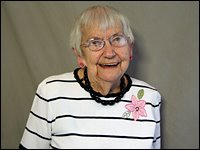
*and the photograph above is of my friend Edith, dressed as Alice Paul, at the 85th anniversary celebrations in Crawfordsville, Indiana (2005).

New Sarah Vowell coming soon!

21 Thursday Aug 2008

Posted by Anna Clutterbuck-Cook in library life

≈ Leave a comment

Tags

books, history, MHS

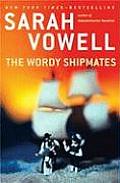
I (sadly! sadly!) wasn’t at work the day Sarah Vowell came to do research at the MHS last year, but we just recieved an advance review copy of the forthcoming book, The Wordy Shipmates, which is due out in October. My friend and colleague Jeremy makes a brief appearance.

the trouble with technical undergarments

27 Friday Jun 2008

Posted by Anna Clutterbuck-Cook in media

≈ 1 Comment

Tags

history, humor


Just heard this story from the StoryCorps oral history project on NPR this morning while riding to work on the T. It’s best listened to on the audio, but you can read a partial transcript at the site as well.

Just Back from the Berks

16 Monday Jun 2008

Posted by Anna Clutterbuck-Cook in my historian hat

≈ Leave a comment

Tags

history, simmons, travel


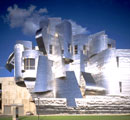
Hi all! I flew in to Boston’s Logan airport at 12:10 this morning, after long delays in the Chicago O’Hare airport on my way home from the 14th Annual Berkshire Conference on the History of Women. The conference was at the University of Minnesota (U of M to the locals although to this Michigander that abbreviation only means one thing). It was a beautiful weekend and the campus–which spans the Mississippi River in the twin cities of Minneapolis/St. Paul–was a stunning location, particularly coming as many of us did from the first sweltering heat wave of the East Coast summer. The building on the left is the Weisman Art Museum, designed by (who would have guessed?) architect Frank Gehry, and perched on the high Eastern bank of the river.

I attended a number of awesome roundtable discussions and seminars, including one on the history of childhood and youth (“Childhood as a Useful Category of Historical Analysis”), one on 1970s popular culture and gender, and one on the history of lesbian and gay families in the 20th century. I also got a chance to catch up with my undergraduate adviser, and enjoyed dinner in Dinkytown with my current program adviser. I even managed to wedge in a visit to the campus bookstore!

The conference gave me some good ideas about possible directions in which to take my thesis research–whichever body of primary sources I end up using, I will certainly be focusing on ideas of experimental education and educational theory (pedagogy) in the mid-twentieth century (1960s and 70s). I am interested in the relationship between new educational practices and political movements such as feminism, environmentalism, peace activism, and radicalism on both the left and the right. Home education is, of course, one form of this experimental education. There are some others–including early women’s studies programs and the Oregon Extension program I attended as an undergraduate–that might also provide fruitful material to explore.

As much as I am resistant to formal academic environments, I can’t deny that it is encouraging and exciting to be around such incredible group of (largely women) scholars who are all researching thought-provoking topics in women’s and gender history. I was honored to have the opportunity to absorb their conversations and look forward to a time when I might more actively participate in the same.

From the Archives: MHS YouTube Video

16 Friday May 2008

Posted by Anna Clutterbuck-Cook in media

≈ Leave a comment

Tags

history, MHS

The Massachusetts Historical Society (where I work, ahem) was involved in the HBO miniseries based on David McCullough’s biography of John Adams. In conjunction with the television show, we are hosting a small exhibition of correspondence from our extensive collection of Adams family papers. As an experiment, some of the staff put together this short YouTube video, hosted by our head librarian Peter Drummey.

Introducing Minerva

23 Saturday Feb 2008

Posted by Anna Clutterbuck-Cook in admin

≈ 1 Comment

Tags

blogging, feminism, fun, history, photos, simmons


Straight from the awesomely talented hands of my brother Brian comes the Future Feminist Librarian-Activist patron goddess, Minerva (or, as I affectionately call her, “Minnie”).

Minerva was, according to the Encyclopedia Britannica, the Roman goddess of “handicrafts, the professions, the arts, and . . . war.” I thought this was a good combination for those of us seeking to put scholarly interests to work in a real-world, politically aware, context.

Sartorially, she owes her style to the American suffragists, with a nod to the European bluestockings of a slightly earlier area. I like to imagine she will be watching me sharply from behind those spectacles, making sure I remember what I came here to school to learn, and briskly challenging me to do something meaningful with my education on the other end.

Please join me in giving her a warm and respectful welcome.

The Deadwood of the British Empire

17 Sunday Feb 2008

Posted by Anna Clutterbuck-Cook in book reviews

≈ Leave a comment

Tags

history, simmons

This week, in GCS410 (Gender, Race & Imperialism), we read and discussed the book Mastery, Tyranny, and Desire: Thomas Thistlewood and His Slaves in the Anglo-Jamaican World, by Trevor Burnard. Thomas Thistlewood was the younger son of a farming family back in England who ventured into Britain’s colonial territories in search of a better life. He ended up in Jamaica where he worked as an overseer on several plantations before eventually buying his own land and becoming a moderately successful planter and master of slaves. Over the course of his nearly forty years in Jamaica, he kept a minutely detailed (if emotionally opaque) diary, detailing in list form such things as the punishments meted out to his slaves, the books he read, money he owned, and each of his many sexual encounters.

What I thought of when reading the book was how similar 18th century Jamaica seemed in its system of violent domination to Deadwood, at least as portrayed in the HBO series which tells the story of (largely white) settlers in the Black Hills during the late 19th century. Jamaica was a dangerous proposition for European immigrants–people tended to live fast and die young. You really would have no incentive to move there unless you had nothing to lose. Thistlewood would have been right at home working for Swearengen or Cy.

Some of the students in class questioned the utility and ethics of spending so much time examining the life of a violent white imperialist. When does such scrutiny of such a person, they seemed to be asking, tip over into forgiveness? When does explanation pave the way for apologia? I don’t know what this says about me, but I believe it is often the examination of those historical characters whom we find the most abhorrent or the most inexplicable that prove the most valuable in understanding the past. Texts such as Thistlewood’s diary–precisely because they are problematic–require our attention as historians. If we limited our historical inquiry to those people with whom we sympathized entirely, we would probably find ourselves with a very short list of acceptable topics. And we would learn nothing we did not wish to know about the human condition.

Susan B. Anthony: Pro-life Icon?

07 Thursday Feb 2008

Posted by Anna Clutterbuck-Cook in linkspam

≈ 5 Comments

Tags

feminism, history, MHS

Today at the MHS I attending a brown-bag luncheon seminar with one of our current longterm fellows, Lisa Tetrault, who is researching the way that American feminist creation stories (particularly the centered on the Seneca Falls Convention) were created and contested in the late 19th century.

In the post-presentation discussion, we were talking about the current political implications of interpreting women’s and feminist history, when she happened to mention that an anti-choice group has purchased Susan B. Anthony’s birthplace in Adams, Massachusetts, and turned it into a house museum. Why? Apparently, Anthony–who was, indeed, against abortion in her own very different political and social context–has become a pro-life icon. Rochester, New York, the site of another of Anthony’s homes, is, Lisa tells me, peppered with anti-choice billboards targeting the women’s history pilgrims who travel to upstate New York to visit the site.

Susan B. Anthony’s birthday is February 15th. At the Susan B. Anthony house in Rochester, NY, guest speaker Susan Faludi, most recently the author of, The Terror Dream, an analysis of gender and the media post-9/11, will be featured at their annual celebration luncheon. The Birthplace of Susan B. Anthony asks us to ponder this question:

We’ve given up our bra burning and hating men, but how would Anthony and her colleagues react to one unpopular view, particularly among youth, that we support abortion on demand?

It’s easy to get pissy about advocates of anti-choice policies asserting their “ownership” of one of the historical icons of American feminist history–and believe me, I’m irritated. But the historian part of my brain is fascinated by this one local example of the very political struggle over who narrates history and what version of history gets told.

And I just have to repeat: Susan B. Anthony–Pro-life Icon? That’s frickin’ weird!

image from America’s Library.

When Abortion was Illegal

26 Saturday Jan 2008

Posted by Anna Clutterbuck-Cook in linkspam

≈ Leave a comment

Tags

blog for choice, feminism, history

As a follow up on Blog for Choice day . . .

I posted this (in a slightly different form) on a comments thread over at feministing yesterday, and thought perhaps some of you would be interested in it as well. Another reader wrote:

It wasn’t until I read Back Rooms : Stories from the Illegal Abortion Era that I truly understood the importance of being pro-choice. We have to share those horrific, graphic, terrifying stories and images with kids, because the pro-life movement has some pretty ghastly images that work in scaring kids into a pro-life stance. Why don’t we use the same tactics? Do we not want to stoop to their level?

I wrote in response:

Part of the success of the movement to legalize abortion in the mid-20th c. came from the fact that women were able to deploy those images . . . and many more people in that era (just after the advent of the pill, remember) had personal stories about women in their family who had attempted home- or back-alley abortions and been damaged or disfigured.

Since abortion has been legalized, the number of unsafe abortions has (thankfully) dropped significantly . . . though of course not been eliminated. But I think it’s more invisible than it used to be to those in the decision-making positions. White, middle-class women with money aren’t flying to Cuba for back-alley abortions, they’re able to drive to the next state to the clinic of their choice.

. . .I’m not necessarily for using the shock tactics of the anti-choice movement, since they often involve using misleading images and false information. But I do think we can do a better job of highlighting the bodily risks to women–and the impact on their families–if the country continues to strengthen anti-choice policies.

Here’s an amazing audio documentary that was honorable mention at the Third Coast Audio Festival this year:

BEST DOCUMENTARY: HONORABLE MENTION
The Search for Edna Lavilla (Australia)
by Sharon Davis and Eurydice Aroney with sound engineer
Russell Stapleton

In 1942 Edna Lavilla Haynes died from a backyard abortion. After her death Edna was never mentioned again. More than sixty years later Edna’s granddaughter looks for clues – a search that leads through police files and government records and down Sydney’s back alleys of the 1940’s, where one in four pregnancies ended in abortion and sometimes death.

The Search for Edna Lavilla first aired on ABC Radio National’s Radio Eye.

It can be found online at this website, currently sixth story from the top and it’s about fifty minutes long. Really amazing stuff.

← Older posts
Newer posts →
"the past is a wild party; check your preconceptions at the door." ~ Emma Donoghue

Recent Posts

  • medical update 11.11.22
  • medical update 6.4.22
  • medical update 1.16.2022
  • medical update 10.13.2021
  • medical update 8.17.2021

Archives

Categories

Creative Commons License

This work by Anna J. Clutterbuck-Cook is licensed under a Creative Commons Attribution 3.0 Unported License

Meta

  • Create account
  • Log in
  • Entries feed
  • Comments feed
  • WordPress.com

Blog at WordPress.com.

  • Subscribe Subscribed
    • the feminist librarian
    • Join 37 other subscribers
    • Already have a WordPress.com account? Log in now.
    • the feminist librarian
    • Subscribe Subscribed
    • Sign up
    • Log in
    • Report this content
    • View site in Reader
    • Manage subscriptions
    • Collapse this bar