• anna j. clutterbuck-cook
  • contact
  • curriculum vitae
  • find me elsewhere
  • marilyn ross memorial book prize

the feminist librarian

the feminist librarian

Tag Archives: history

booknotes: the sixties

27 Thursday Jan 2011

Posted by Anna Clutterbuck-Cook in book reviews

≈ 1 Comment

Tags

british isles, education, feminism, history

Jenny Diski’s slim contribution to the series BIG IDEAS // small books (Macmillan Press) is a historically-minded memoir of The Sixties, that period of social foment between, as she dates it, the mid-1960s and mid-1970s. Between “the rise of popular culture” and “all the open-ended possibilities … began to narrow” (3). Diski is English, so her Sixties were the British Sixties, kicking off with the Beatles and the fashions of Swinging Sixties London (picture Emma Peel in the Avengers) and ending with the rise of Tory, Thatcher-ite politics. In six brief chapters, she surveys consumer culture, drug culture, sexual liberation, and movements for social change: principally the feminist movement and the free school movement.

I’m not particularly sure what Diski was going for in this book. Granted I read it very quickly in a single sitting one night when I couldn’t fall asleep. But still. On the one hand, it attempts to survey cultural trends in an overview sort of fashion, to speak for more than just herself — she uses “we” throughout to speak of her cohort of youthful enthusiasts. Yet at the same time, Diski’s experience is a very personal one. An unhappy adolescent, she was kicked out of school for using ether in her early teens and soon thereafter left her parents’ care for good. She was heavily involved in the drug scene in London, checked herself in and out of mental health institutions throughout the 60s and 70s, had a lot of very unhappy sex, was involved in starting an alternative school, went back to rehab … despite the way her words cue nostalgia and a continued commitement to the values of her youth, the book manages to convey very little sense constructive joy.

Diski seems to have settled on wistful nostalgia lost opportunity — though opportunity for what exactly remains fairly nebulous — woven together a rather pessimistic interpretation of these countercultures as ultimately paving the way for the conservative revolution. Rather than interpreting the rise of neoliberal conservatism (Reagan on this side of the pond, Thatcher on that) as a backlash against the chaos of the Sixties, Diski sees it as a natural outgrowth: hard-right concepts of privitization and individualism dovetailing neatly with left-wing desires for decentralization and exploration of the self. “I’d resist the claim that the Sixties generation were responsible for the Tatcher years, as I would resist the notion that the Jewish community in Germany were responsible for the advent of the Nazis,” she writes (should her argument automatically lose according to Godwin’s law?). “But sometimes I can’t help but see how unwittingly we might have been sweeping the path in readiness for the radical Right, preparing, with the best of good intentions, the road to hell for paving” (110).

While as an historian of this period I am inclined to agree that the argument has merit — the radical Right employed and benefited from the theoretical frameworks developed on the radical Left much more than either side likely wants to admit — I am unsure what Diski wants us to do with this observation. She implies, though never develops the argument fully, that the desire for democratization, decentralization, diversity, and exploration of the self-in-relation-to-others somehow fits in with the far Right agenda. And that therefore the very foundations of the Sixties counterculture are suspect, tainted.

I’d argue this is a confusion of external appearances with deeper values. It is akin, in my book, to arguing that because the Religious Right has utilized Christian scriptures for power-hungry, poisonous ends, that the Bible is worthless as a spiritual text, and all Christians are somehow in (perhaps unwitting, yet still substantive) collusion with those forces inimical to life. I realize there are a lot of folks — particularly on the secular left these days — who do indeed argue the very perspective. Perhaps Diski is one of them, although I know nothing about her personal religious values. I find such wholesale dismissal of complex philosophies and traditions to be disheartening; imaginative “third way” options are often sacrificed as a result.

Which is kind of what I felt when I read Diski’s chapter on free schools. She focuses specifically — aside from recounting her own experience helping to found and run an experimental community school — on the pedagogical writings of Ivan Illich. Illich is known best for his influential critique of institutional schools, Deschooling Society (1971), which argued that institutional schools — designed to support the modern corporate and state interests — are antithetical to authentic learning. Illich argued that a much more human-centered, constructive approach to teaching and learning would be to establish community-based learning centers that would serve as a general clearing house for those with skills willing to teach and those with the desire to learn. As the title of his book indicates, Illich was interested in a whole-sale revisioning of society, as a re-tooling of learning would entail a re-tooling of the rest of the economic and socio-political culture in order to accommodate peoples’ freedom as individuals to learn according to their own design. Diski classifies him as a libertarian, which is perhaps fair, but also suggests that he would have found a home in Margaret Thatcher’s government, as one of her “theoretical advisors” (110).  While I don’t know enough about Illich’s overall political views to argue what he would or would not have done if given the chance.  However, as a radical Catholic priest who — as far as I’ve been given to understand — was deeply suspicious of institutions across the board — it is difficult to see him participating at such a high level in government. Let alone a government that was so heavily invested in maintaining the power of big business, the military, and so forth.

As Diski herself writes, the point was “to dispense completely with structure, to undercut the authority of hierarchy and the hierarchy of authority” (110). This, for some reason, appears to have surprised Diski when she revisited Illich in preparation for writing this book. She is appalled at the idea that no centralized system would be in place to advocate for certain bodies of knowledge, and sees in such a centralized, non-authoritarian vision the spectre of violent anarchy and increasing inequality. Of privatized interests and a voracious economic dominance. In short, Diski is conflating a vision of human liberation from cultural conformity, institutional tyranny, and systems of oppression, with a right-wing political liberatarianism that ignores (of, often, actively supports) the way in which power is used and abused by human beings to marginalize and control the vulnerable. She does not acknowledge the sister-discourse within the educational alternatives movement concerning common responsibility, reciprocity, social justice, and peace.

Which is, in the end, where I feel her analysis of “the Sixties” as a period of cultural and political foment falters. To say that the upheaval of the postwar era lay the foundations for the rise of conservatism in the late 1970s is a valid argument, but her failure to explore fully the way in which left-leaning calls for personal liberation were twinned (in both philosophy and practice) with collective responsibility for the well-being of humanity and the planet as an ecological whole. It is also to ignore the individuals and groups that have continued to advocate this vision, even as the conservative agenda has come do dominate mainstream discourse. Perhaps in a lengthier work Diski could have convinced me, but given that she offered her thesis with such brevity, I found myself still unconvinced.

how to evaluate our elders: some preliminary thoughts as an historian

25 Tuesday Jan 2011

Posted by Anna Clutterbuck-Cook in my historian hat

≈ 1 Comment

Tags

bigotry, feminism, gender and sexuality, history

Gloria Steinem and two other editors of Ms. Magazine
ca. 1970s

As an historian, I spend a not-inconsiderable amount of time thinking about how we (in the present) evaulate the actions and words of our elders. Whether the person in question is still alive, or whether they have been dead for generations, individual words and actions are inescapably bound by the historic time and place in which they happened. We are creatures of history, not outside of it. Which is not to say that human beings of the past should not be held accountable for the damage they have often — so very often — wrought. Acknowledging, for example, that the majority of citizens in the Colonies did not believe women should have the vote, or that slaves were entitled to be counted as citizens (or even, radical idea, freed from bondage) does not preclude us from judging disenfranchisement and slavery as morally wrong. Understanding that a certain belief was simply “common sense” at the time does not exculpate those who accepted that “common sense” understanding from the responsibility of answering for the pain said belief caused others.

But given that, how, exactly, are we to judge the beliefs and actions of the past? By what criteria do we evaluate historically-situated words and deeds?

These questions often come up in my fields of historical interest, since I focus on the history of feminist activism, the history of countercultures, and the history of sexual identities and sexual practice. All of these areas of human activity regularly challenge us to define “right” and “wrong,” think about issues of human rights and social justice, and to understand the personal consequences of bigotry and prejudice.

I was thinking about these questions last week because Cara of The Curvature wrote a post over at her Tumblr blog about Gloria Steinem and transphobia. Cara recently picked up a copy Steinem’s anthology of writings, Outrageous Acts and Everyday Rebellions (1995) and in her post is specifically responding to an essay on “transsexualism” (originally written in 1977) in which Steinem writes in extremely negative terms about transsexual identity in general and gender confirmation surgery in particular. She portrays trans women as men masquarading falsely as women, and supports policies — popular at the time — excluding trans women from “women only” spaces. In her post, Cara called the Steinem out for her bigotry.

When I left a comment querying about the historical context of the original piece and saying that I hoped Steinem had since changed her views on the subject (feminist and even mainstream understanding of trans* issues has altered significantly since 1977 and even 1995), Cara wrote in response:

Of course, 15-16 years have passed since [the anthology], so it is possible that her views have changed since then, and one would hope that they have. But at the same time, I really don’t think that her views changing really count for much? I mean, admittedly as a cis person my thoughts on the matter don’t really count for all that much, either, but. I’d say she not only owes an apology, but a lot of work to address the harm that those views have done to the trans community over the decades, including the harm that the feminist movement has specifically done to trans people, especially trans women. Like, you know, this. Which has resulted in deaths. Or cis feminists keeping trans women out of domestic violence shelters and rape crisis centers, which has caused deaths. Etc. Clearly, she was not only complicit in that, but an active promoter of it.

I should admit up-front that I haven’t read this particular essay of Steinem’s in years — if, indeed, I’ve read it at all.  As a teenager, I know I owned a copy of Outrageous Acts and read much of its contents. If I did read “Transsexualism” as a sixteen-year-old, I likely would have passively accepted Steinem’s characterization of gender confirmation surgery as “mutiliation.” It took me into my mid-twenties (helped by lots of reading and some trans-identified friends) for me to revisit my adolescent judgement that surgical body alterations were inherently physically and psychologically damaging. And I’m sure the fact that the 1970s-era feminist writings I read as a teenager (and throughout much of college) did little to challenge my prejudice and encourage me to critically examine my judgmental views. The transphobia within the feminist movement then and now is not okay and absolutely should be called out at every opportunity.

Yet while I agree with the fact that Steinem’s past views did, indeed, contribute to a hostile climate for trans* folks that continues to this day, I’m troubled by the idea that someone’s ability to change over time into a less bigoted person doesn’t “really count for much.”  Since I don’t know the specifics in this particular case, I won’t venture to comment on Steinem’s current beliefs concerning trans identities. Perhaps she continues to believe what she wrote in 1977 and it is for precisely this reason that she included the piece in her 1995 anthology. The thing is, this post isn’t really about Steinem’s transphobia, past or present, anyway. Instead, I am using it as a single example of the kind of dilemma that confronts those of us in social justice activism daily: How to make sense of, and judge, the quality and importance of change over time.

At the time Steinem wrote her 1977 essay, many (likely most) women who identified as feminists were not welcoming of trans women. Trans identity was misunderstood, feared, vilified; trans women were judged and found wanting as women.  Many feminists as well as non-feminists in the mid-twentieth century viewed sex and gender identity as innate, as fixed, and binary (you were either female or male, with no middle ground). Folks who transitioned from their assigned sex/gender identity to the sex/gender identity which they felt comfortable with were understood to be changing their sex, rather than confirmed outwardly the identity that they had had all along. There are still people who think this way, although during the past fifty years many people have challenged the correctness and helpfulness of those ideas — particularly for the trans* folks whose lives are most directly affected by such rigid and binary modes of thought. We now have new ways of understanding trans identities, and yet Steinem’s words from 1977 remain in stasis, on the printed page. So the question becomes: what do we do with them now? In the present?

As an historian and a feminist, here are some of the questions this particular case study (if you will) raises in my mind, in no particular order:

  • What is the responsibility of an author like Steinem to annotate her earlier writings (say, in an anthology such as Outrageous Acts) to distance her present self from her past views?
  • If Steinem did choose to annotate her earlier writings, what sort of annotation would be effective? Should she refuse to republish the piece? Write a critical introduction? Place it in historical context?
  • What would it mean to place the piece in historical context … do we need to understand it in the context of feminist writing? medical theories? queer activism? mainstream understandings of sex and gender identity? Steinem’s other work? What, in other words, are the relevent bodies of literature that contextualize this piece?
  • Does context matter from an ethical standpoint and if so, how?
  • Who is responsible for making that judgment call — feminists? trans folks? human rights activists? historians?
  • If Steinem’s views were not atypical for the time, at the time, what sort of responsibility does she bear today as an individual for holding them? (Clearly she does — we all have choices — but what sort of responsibility?) How do we understand a single voice in relation to a larger, collective, discourse?
  • Is it responsible for us, as critics, to take her work and judge it in isolation from her contemporaries?
  • If Steinem does bear individual responsibility, what would it look like for her to own up to that responsibility? (Cara suggests some avenues in her response above; there are likely many other approaches)
  • Does her position as a high-profile feminist activist alter the level of her responsibility for holding even typical views concerning gender identity?

This is just the list I put together on my commute home last week; I’m sure there are other questions to be asked.

This is the sort of challenge that ensures historians (as well as activists) will never be without work to do!

booknotes: the perfect summer

20 Thursday Jan 2011

Posted by Anna Clutterbuck-Cook in book reviews

≈ Leave a comment

Tags

british isles, history

The Perfect Summer: England 1911, Just Before the Storm, by Juliet Nicolson (New York: Grove, 2006) reads like a cross between a gossip column and a cache of family letters — with a dash of historical analysis thrown in here and there. Nicolson has chosen as her subject the Season (May to September) of 1911, the summer before the Titanic would sink and three years before the conflagration that came to be known as The Great War (“the storm” of the title) would engulf Europe. Drawing on memoirs from multiple social strata (a butler’s tell-all narratives; a débutante’s diaries) Nicolson manages to piece together a remarkably non-hagiographic portrait of a summer, despite the fact that Perfect Summer reads like one long anecdote pieced together out of a series of little gem-like stories.

For example, we learn that Lady Diana Manners, who “came out” into society in the summer of 1911, was not as alarmed as her peers about the prospect of mixed-sex socializing, since she had an older brother and also because “her elder sister Marjorie had held hair-brushing sessions during her first season to which Diana and the young men who admired Marjorie were invited.”

Hair-brushing sessions? Does anyone else’s mind go to places you have the feeling it should not go with that phrase?

Okay. Just checking.

But we also get stories about the heat-wave and drought that enveloped England during much of the late summer, causing so many heat-related deaths that the newspapers stopped reporting them (they ceased being “news”) and crops failed. Industrial workers and schoolchildren went on strike (for better wages and better meals, respectively) and nation-wide people hotly debated the merits of a proposed National Insurance Act. In other words, the “perfect summer” may not have been so perfect after all.

On the one hand, there are certainly more comprehensive scholarly analyses of the era available, as well as texts that focus more specifically on particular aspects (the suffrage movement barely gets a look-in!). Still, the book is a quick read and a nice companion history to Masterpiece Theater’s current costume drama “Downton Abbey” — which opens with the sinking of the Titanic and will (I anticipate) close with the outbreak of the war. And Nicolson has followed the book up with a history of Britain between the wars, The Great Silence (2009) that I’m looking forward to picking up.

$1 reviews: inheritance

06 Thursday Jan 2011

Posted by Anna Clutterbuck-Cook in book reviews

≈ Leave a comment

Tags

british isles, history

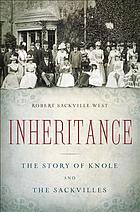
I picked up an advance review copy of Robert Sackville-West’s family history Inheritance: The Story of Knole and the Sackvilles (New York: Walker & Co., 2010) at Brattle last week. While I’m not particularly up on the history of the British aristocracy, I do have some background on Knole (the family home) and the Sackville-Wests having read Portrait of a Marriage and two fictional odes to Knole in the form of Vita Sackville-West’s The Edwardians and Virginia Woolf’s Orlando (a trippy love letter to both Vita and her ancestral home).

Inheritance is a quick read, each chapter chronicling the tenants of Knole from Thomas Sackville, 1st Earl of Dorset (who lived in Knole from 1604 to his death in 1608) to the National Trust, who bought the home from the family in 1946. Robert Sackville-West, the current custodian of the family’s interest in the home — and resident, along with his family, in the private quarters on the estate — draws on substantial family papers and documents of record as well as family memory to provide a light-hearted romp through history. Some of the best bits of the story are told in the words of the author’s ancestors who were thoughtful enough to leave behind diaries, daybooks, ledgers, and correspondence for future generations. Robert does not seem particularly anxious about protecting the family propriety in sharing anecdotes — if anything, he seems to enjoy highlighting the angst and drama of Knole’s inhabitants.  In the chapter on Richard Sackville, 5th Earl of Dorset, he writes

There is … a strange agreement countersigned by the countess on 30 July 1674 — although, beside her signature, she has crossed out the words “by my husband’s Command.” The document is titled an “Engagement from my Wife to me upon the dismissing of a servant of mine named Thomas Jones at her desire,” and relates how a certain Lady Charnoche had (or so Frances [the countess] had been “credibly informed”) wagered that Frances would die within the year. When a new servant previously employed by Lady Charnoche arrived at Knole, Frances was terrified that he would ‘in all lyklyhood have some Instructions” to poison or shoot her “upon this surmise.” In return for her husband dismissing this servant, Frances promised that she would never trouble him with such a request in the future. But his conditions went further: she would ‘never molestt disquiet or disturbe him again in this or in any other thing namely in medling with any business of his”; she would not hinder him from going or being where and “in whatt Company he pleases, without my running clamouring or hunting after him”; and she would not stir from Knole without his consent. (74)

Particularly charming are the documents which chronicle the family’s sexual history in surprisingly frank terms. In 1754, for example, Lionel Sackville (1st Lord of Dorset) received a letter from his good friend Robert Cunningham congratulating him on the event of his marriage. “Before you receive this Letter I do suppose your Nuptials are consummated … We [Cunningham and his wife] can both easily imagine how you will be employed next Tuesday night, and shall certainly do what we can to imitate your example. I shall persuade Betty that what you have in size I have in vigour, that our wives, when they meet, may not dispute who are best served” (121).  We can only hope a good time was had by all!

As with Victoria Sackville-West’s diaries, written during her early marriage, in which she provides “a sexual tour of the house, of where and how often the young couple made love” (181). Including, Robert conveys, such sites as the lawn, under a big tree, on a sofa in Victoria’s sitting room, in the library, in bed, in the bath, and so forth — up to four times a day such as on the 18th of September when Victoria notes “Stallion” approvingly.

I don’t really have more to say about this title, although it does provide (reading somewhat between the lines, although Robert does note the inequalities of gender when it comes to inheritance) a peep into a number of unhappy domestic scenes, suggesting far beyond the scope of the book the tensions of social expectations on private lives and sexual inclinations.

call to participate: a year of feminist classics

28 Tuesday Dec 2010

Posted by Anna Clutterbuck-Cook in book reviews

≈ 1 Comment

Tags

call to participate, feminism, history

two young women (unfinished)
by kobanashikaoru @ Flickr.com

As I posted earlier in December on tumblr, a group of women have established a blog / reading group called A Year of Feminist Classics, where they plan to read and blog for twelve months (beginning January 2011) about a series of feminist texts.

You can sign up as part of the reading group here, but drop-ins are welcome. Check out their final reading list here if you think you might be interested in dropping by for one or two specific months out of the twelve.

They’ll be kicking things off in January with Mary Wollstonecraft’s Vindication of the Rights of Woman (1792).  If you’re like me, you may well want an actual physical copy of the text in which to take notes in the margins and dog-ear (much to my girlfriend’s horror).  But for any of you who don’t have the money to purchase a copy, who can’t locate one through your local library, etc., here are a few places you can access the full text online:

Internet Archive (various formats to read online and download)

LibraVox (MP3 audio download)

Project Gutenberg (various formats to read online and download)

I’ve signed up and plan to participate in at least a handful of months — depending on my other obligations and the book scheduled. I look forward to chatting with at least some of you there!

booknotes: nonviolence

13 Monday Dec 2010

Posted by Anna Clutterbuck-Cook in book reviews

≈ Leave a comment

Tags

bigotry, history, politics, religion

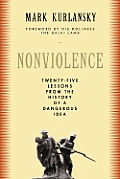
Mark Kurlansky’s book, Nonviolence: Twenty-Five Lessons from the History of a Dangerous Idea (New York: Modern Library, 2006) does not pretend to be a comprehensive history of the idea and/or practice of nonviolence.  Instead, it should be approached as an invitation to consider the myriad ways nonviolence, in theory and praxis, has manifested itself in different times and places around the globe.  Kurlanksy’s emphasis here, in terms of examples, is on U.S. history, though he includes a healthy smattering of other continents represented (for example nonviolent resistence to European colonialism in Oceania, medieval European monastics, and Ghandi’s well-known campaign in India). For those interested in a more in-depth analysis of any one of the particular cases he cites, a fairly healthy eight-page bibliography of sources is included that can be a departure point for further reading.

What Nonviolence really is, more than an scholarly historical analysis, is a well-written, historically-supported argument for the effectiveness of nonviolence as a political strategy — one that has a better track record than violence as a way of improving the human condition. And taken as such, I think it is worthy of note.

I should acknowledge up-front here that Kurlanksy is preaching to the converted here: while I am not a wholehearted pacifist in practice (“pacifism” being distinct from the strategy of nonviolence, as discussed below), I am already convinced of the necessity of pursuing nonviolent pathways to social and political change. In my mind, there are no “just” wars. And I believe violence always begats more violence. So I’m an easy sell, as it were.

That being said, I think Kurlansky brings up a number of interesting points about nonviolence that should provoke us to thoughtfulness, regardless of personal stance concerning the practicality of nonviolent action in a world saturated with violence.

Kurlanksy’s first point is that there is no word for the concept of nonviolence — we can only speak of it by referrring to what it is not: it is not violence. He suggests that the explanation for this absence might be found in the fact that established political, cultural and intellectual communities “have viewed nonviolence as a marginal point of view, a fanciful rejection of one of society’s key componants, a repudiation of something important but not a serious force in itself” (5).  This linguistic marginalization, he argues, signifies a cognitive marginalization, a resistence to accepting the concept and practice of nonviolence because it requires a profound reorientation toward the world. It is a “truly revolutionary” idea, a “threat to the established order,” and thus treated as “profoundly dangerous.”

Why is it a threat to the established order? Because nonviolence is effective as a political strategy and offers an alternative to violence. In contrast to pacifism, which is a personal orientation toward life — an individual “state of mind” that does not necessarily translate into political or social action, nonviolence is an explicitly political orientation.

The central belief [of nonviolence] is that forms of persusasion that do not use physical force, do not cause suffering, are more effective, and while there is often a moral argument for nonviolence, the core of the belief is political: that nonviolence is more effective than violence, that violence does not work (7).

The rest of the book offers examples — from the American Revolution to the Jewish Holocaust — in which nonviolent action was more successful than violent action in resolving the situation that as a culture we assert war was necessary to resolve.  For example,

The Nazis are often cited as an example of an enemy against whom nonviolence would be futile. This is said despite the success of several nonviolent campaigns. Amid some of the greatest violence the world has ever seen, it was little noted that more Jews were saved by nonviolence than violence (133).

He gives the example of Denmark, a government and citizenry which — through comprehensive, cooperative nonviolent action — that succeeded in saving all but fifty-one of its Jewish citizens (who died of sickness while being held by the Germans while Denmark negotiated for their release). In contrast, France lost 26% of their Jews, the Netherlands three-quarters and in Poland 90% — despite the fact that all three nations had a very active (and armed) resistence movement.

This example can obviously be interrogated, as can all of the others Kurlansky uses. But the point remains that nonviolent tactics have, historically, proved to be effectual — and we could perhaps learn from past success as well as failure.

Why, then, do we so often ignore, dismiss, scoff at, and otherwise marginalize the potential of nonviolence? Kurlanksy argues that much of the blame lies with the state (and those who represent the state), and with the fact that war — once begun — develops a momentum of its own that, popular or not, is extremely difficult to reverse.  We have also learned to accept the (perhaps false) assertion that there are times when violence is our only recourse, when violence is the only path to lasting peace, and the seldom-challenged notion that without violence we would be less safe, less free, less alive, somehow indefinably less than we are when violence is present. (For another sustained psycho-cultural exploration of violence and war as a way human beings make meaning for themselves, see Chris Hedges’ War is a Force That Gives Us Meaning )

Kurlanksy asserts that it is war and violence, not an unwillingness to resort to war and violence, which make us less free, less safe, less alive than we would otherwise be.  It is lack of imagination, lack of a willingness to imagine a world without violence — an unwillingness to imagine the wars we have endured were unnecessary and may even have made the situation worse than it otherwise would have been that are roadblocks to seeking alternative, nonviolent solutions.

For anyone who’s familiar with theories of personal trauma and recovery, this cycle of violence is going to sound familiar: you suffer the trauma of X and it is very, very difficult not to rationalize X as an experience that made you stronger, made you a better person. It can be horrifying, crippling, to even imagine that if not for experience X you would be more whole as a human being.  Kurlansky’s theory of the marginalization of nonviolence is, more or less, this personal rationalization of trauma writ large: we experience war (trauma) and seek to rationalize it because to acknowledge war serves no constructive purpose is so horrifying to concieve of that it is literally beyond language, beyond our collective imagining. Instead, we justify it as fundamental to human existence, and therefore inevitable and necessary, and therefore a part of the human condition in which we must find value.

Which, I think, is part of the reason I’m so fascinated by it. By the practice of nonviolence. Precisely because so many of us, so often, imagine it is beyond the realm of possibility. I spend much of my time studying (historically, culturally) the lives of people who live and work and think in ways that — to the majority — are literally outside of the possible. That are understood to be incompatible with a meaningful (or in some cases literal!) existence.  And yet, somehow, these folks persist in existing.

Reading a book like this is like having someone throw down a gauntlet: You think war is the only solution? Prove to me you’ve exhausted every other possibility. No, more than that: prove to me that violence will facilitate better outcomes than taking any other action or no action at all. Unless you can prove that to me, I’m not interested in hearing how nonviolence is fanciful, impractical, idealistic. Because war kills people. Violence harms people. And perhaps the most compelling (and revolutionary) idea of them all: violence doesn’t work. 

You disagree? Prove it. Until then? I’m not interested.

from the archives: making archival images accessible online

24 Wednesday Nov 2010

Posted by Anna Clutterbuck-Cook in library life

≈ Leave a comment

Tags

archivists, history, northeastern

Last week, I finally finished the scanning and metadata entry project I began over a year and a half ago at Northeastern: Two photo albums and a scrapbook compiled between the 1890s-1920s by Marjorie Bouvé, a young Boston woman who founded a school of physical education. The photographs and scrapbooks document her adolescence and college education (she attended Bradford Academy and Smith College), and her work as a teacher. Hopefully, hopefully, early in 2011, I’ll be able to link to the interactive database containing all the images and records I created.

Nearly 2,000 of them.

But for now, I thought I’d give you a taste of what it means to create what we in the archives world call “digital surrogates” of archival images. Partly ’cause I think it’s interesting. Partly ’cause I took a phone call from a gentleman this week at the Massachusetts Historical Society who didn’t understand why all our records weren’t just digitized and up online (as our Collections Services director would say: “if you see it online, it wasn’t elves that put it up there!”).

So what does it mean to enter metadata for each digital image we create? Well, here’s a sample record I pulled from the database, which is the metadata (the information about the creation and content of the image) associated with one page of a letter in Marjorie’s scrapbook.  You sill see from the file name that this is the ninth item cataloged from page one of volume four from the Marjorie Bouvé papers (collection M89).


m89_s4p001v009b\.jpg

Item separated from m89_s4p001v005. Item related to m89_s4p001v008.
Letter to members of the Rainy Day Club from M. Anagnos, 20 August 1892.
Aganos, M.
Perkins Institution and Massachusetts Asylum for the Blind
Marjorie Bouvé Papers (M89), Box 1
1892-08-20
2010-10-23
Copyright Northeastern University
Haidt, Marie
3215 x 4073 pixels
7.75 x 10.0 inches
Social Stationary
Boston (Mass.)
South Boston (Mass.)
Correspondence — Massachusetts — Boston
Correspondence — Massachusetts — South Boston
Scrapbooks
Social stationary
Aganos, M.
Bouvé, Marjorie, 1879-1970
Caverly, Edith L.
Eaton, Alice
Kelly, Edith A.
Smith, Lillian
Smith, Marion E.
Wilkins, Christel W. 
Perkins Institution and Massachusetts Asylum for the Blind 
BookEye 3 A1AJC
400dpi2010-07-21
B001927
m89_s4p001v009

This record is in XML (eXtensible Markup Language) and can be read by a variety of web-based display programs (at Northeastern, we use a content management system called Greenstone).The information I enter, and enclose in tags) allows the content management system to display the images and the information about them in a prettier, user-friendly format. See, for example, the images in the Freedom House Collectionwhich Hanna (and a team of others) worked on a few years ago.

Some of the information is generated automatically by Greenstone, but all of the data in the file set you see here was entered by me.  Fingers crossed it all pays off in the end, when y’all get to flip through a digitized version of some pretty cool turn-of-the-twentieth-century pictures and ephemera … all from the comfort of your very own personal computers.

movienotes: holiday (1938)

10 Wednesday Nov 2010

Posted by Anna Clutterbuck-Cook in media

≈ 2 Comments

Tags

feminism, history, movies

Doris Nolan (Julia Seton), Cary Grant (Johnny Case) and
Katherine Hepburn (Linda Seton) in a publicity shot for Holiday (1938).

On Monday, when Hanna and I were both home sick from work and self-medicating by streaming video through our Netflix account I suggested we watch a Katherine Hepburn film and Hanna found us the 1938 Cary Grant / Katherine Hepburn romantic comedy Holiday.

In a nutshell, this is a classic “man engaged to wrong woman eventually finds the right woman who’s been under his nose the whole time.”  Thirty-year-old self-made businessman Johnny Case (Grant) becomes hastily engaged to Julia Seton (Julia Nolan) the daughter of a wealthy banking magnate while on vacation at Lake Placid. When he turns up at his intended’s house mansion to meet the family of his future bride he finds Julia’s black sheep elder sister, Linda, with whom he experience an immediate rapport.  The remainder of the movie is spent waiting for Johnny to realize that Julia’s vision of their future life together (in which he will follow in her father’s footsteps) and his own dream of quitting business and traveling the world are incompatible. And that (surprise, surprise!) Linda’s rebellious desire to escape the family fortune and see the world might suit him much better.

If I ever end up, in a future life, becoming an historian of American cinema, I can imagine quite happily building my scholarly career with a close analysis of 1930s and 40s romantic comedies and dramas, particularly those written around the characters played by actors such as Bette Davis and Katherine Hepburn.  These films fascinate me with their willingness to ask, through plot and character exposition, what it means for men and women to form egalitarian relationships (see for example All About Eve and Woman of the Year). They also openly explore issues of money, work, and class in a way that modern romantic comedies and dramas mostly fail to do.  In most television and films today, characters’ lifestyles and purported wagework rarely match up in reality. In Holiday, we are looking at the lifestyles of the rich and famous, yes, but the question of money and values is front-and-center within the plot in what I thought were some fascinating ways.

In Jennifer Pozner’s book on reality television, Reality Bites Back, which I reviewed a couple of weeks ago, she observes that much of reality TV involves the double-edged sword of American culture’s obsession with wealth: we are encouraged to ridicule and despise the rich while simultaneously coveting what they have and the lives they lead.  In Holiday, the main character, Johnny Case, essentially spends the entire film deciding between two relationships with money and work life. He is on the verge of closing a business deal that could either secure him a job at his future father-in-law’s bank (where he could make even more money and be the type of businessman his fiancee desires him to be) OR he could take “early retirement” and use the money to travel and explore the world while he still has the energy (as he puts it) to do so, and to discover what he wants from life.  He’s been working, he tells Mr. Seton, since he was ten years old, and he wants a change.

While this fantasy of a Grand Tour is, essentially, the sort of life of leisure open to men of Mr. Seton’s wealth, Seton himself despises the idea as positively un-American, a childish attitude that his daughter needs to school out of the future son-in-law. When one is wealthy, it seems, the only acceptable way to use that wealth is to use it to create more. 

Linda, despite the fact she is also the daughter of Mr. Seton, has rejected this attitude toward money. Instead, she encourages Johnny (and, at first, her sister with whom she vicariously identifies) to escape the family and travel.  In a way, she plays a proto manic pixie dream girl (a common role for Hepburn, although seldom with as little independent agency as she has in Holiday). We see Linda almost entirely within the confines of the former children’s play room — the only place in the Seton mansion she says she feels at home. In the play room, she and her younger brother Ned (who has retreated into the helpless infancy of an alcoholic) invite Johnny and his middle-class friends to join them in reliving the antics of their youth: gymnastics, music, puppet theater. Linda’s separation from the adult world of her father and younger sister is in part self-imposed, but it also seems she has been typecast as a permanent dependent: there are frequent allusions to “doctor’s orders” and “headaches” and “rest.”  Elder sister, in this instance, has not become a parent in the absence of her mother (who has long since died) but has rather retreated to childhood.

Linda and Johnny finally do escape the Setons and (as the viewer anticipated from the opening moments of the film) run away together to see the world. We are left, at the end, to imagine for ourselves how their lives played out from there — one assumes in a very “un-American,” Bohemian fashion. Though Linda has promised to return one day to rescue, in turn, her brother from his stultifying fate.  Father and daughter (Julia), it seems, are left to enjoy their shallow, yet unimpeachably American (read: earned not inherited), riches.

saturday survey: librarians, archivists and historians as activists

06 Saturday Nov 2010

Posted by Anna Clutterbuck-Cook in linkspam

≈ Leave a comment

Tags

archivists, call to participate, history, librarians

My history adviser, Laura Prieto, alerted me to this survey being done on librarians, archivists and historians as activists in preparation for a conference paper to be delivered at a meeting at the University of Dundee, Scotland, in December. From the solicitation email:

If you are a historian or archivist, broadly defined, and you consider yourself an activist, we invite you to fill out a survey about your experiences. The definition of “activist” that we are using is “an especially active, vigorous advocate of a cause, esp. a political cause.” This survey is being collected for a study of historians and archivists as activists. The survey explores the ways in which people participate as activists and the consequences for their employers and themselves. We anticipate this survey will take approximately 20 minutes to complete.

Although the email only indicates archivists and historians, the actual questions about occupation include “librarian.”

The researchers doing the study are:

Bea Hardy, Interim Dean of University Libraries
College of William and Mary
Williamsburg, VA

Sonia Yaco, Special Collections Librarian and University Archivist
Old Dominion University
Norfolk, VA

If you feel you fit the bill and have twenty minutes to spare, help bolster their sample size!

UPDATE: Again, the survey can be found online here: https://forms.wm.edu/997. I neglected to put the link in earlier due to my lack of black tea and the earliness of the Saturday-morning hour :). Thanks to Hanna for alerting me!

quick hit: reality, spectacle, and medical museums

03 Wednesday Nov 2010

Posted by Anna Clutterbuck-Cook in linkspam

≈ Leave a comment

Tags

blogging, history, in love with new blogs

On Friday I posted a review of Jennifer Pozner’s new book on reality television which in turn inspired my friend Laura, at her newly-minted blog Oh, My Sainted Aunt, to muse on the relationship between reality television and our relationship to the objects in medical museums. Such is the incestuous power of the interwebs.

I’ve been thinking a lot about reality television, as it is a popular lunch topic at my new workplace and I generally listen rather than contribute, as I do not watch reality TV.  But here’s the context, ya’ll, and why I’ve been thinking about spectacle lately.

You see, I work in a medical museum, an historical collection of pathology material, which includes lots of medical oddities in jars.  The human tissue includes bits of tattooed skin, congenitally deformed fetuses, skulls, diseased tissue, and so forth.  These materials were collected over the past 150 years, some ethically, some not (and some have been repatriated, etc.), but the mission was medical and scientific advancement (insert ethics and human experimentation caveat here).  Historically, much of this material would have also made it’s way into side-shows and freak-shows, which were popular (and socially acceptable) forms of public entertainment.  Remember of course, that this was also done with real live people as well, such as in the “native” exhibits that the Colombian Exposition and World’s Fairs.  Suffice to say that we have a history of using human beings (the odd and unfamiliar) as a source of spectacle and speculation in ways that were and are profoundly dehumanizing.  (See where I’m going yet?)

Read the whole thing over at Oh, My Sainted Aunt (and then follow her blog on your reader of choice!)

← Older posts
Newer posts →
"the past is a wild party; check your preconceptions at the door." ~ Emma Donoghue

Recent Posts

  • medical update 11.11.22
  • medical update 6.4.22
  • medical update 1.16.2022
  • medical update 10.13.2021
  • medical update 8.17.2021

Archives

Categories

Creative Commons License

This work by Anna J. Clutterbuck-Cook is licensed under a Creative Commons Attribution 3.0 Unported License

Meta

  • Create account
  • Log in
  • Entries feed
  • Comments feed
  • WordPress.com

Create a free website or blog at WordPress.com.

  • Subscribe Subscribed
    • the feminist librarian
    • Join 37 other subscribers
    • Already have a WordPress.com account? Log in now.
    • the feminist librarian
    • Subscribe Subscribed
    • Sign up
    • Log in
    • Report this content
    • View site in Reader
    • Manage subscriptions
    • Collapse this bar