• anna j. clutterbuck-cook
  • contact
  • curriculum vitae
  • find me elsewhere
  • marilyn ross memorial book prize

the feminist librarian

the feminist librarian

Tag Archives: politics

Quick Hit: "Someone you raise" vs. "something you have"

06 Saturday Jun 2009

Posted by Anna Clutterbuck-Cook in linkspam

≈ Leave a comment

Tags

children, feminism, gender and sexuality, politics

In response to a blog post up at Feministe on radio shock jocks leveling insults at gender-nonconforming children, commenter preying mantis writes,

“I always have a hard time with stories like this one, because I just can’t understand why. What’s the point of terrorizing children?” [–Jill, in the original post]

I think it goes back to the “someone you raise” vs. “something you have” attitudes people have towards children. If you’re raising your kids with the idea that your job is to bring up a happy, healthy person capable of independent functioning and a successful life of their own with as little unnecessary baggage as possible, there’s pretty much zero point to engaging in abusive behavior toward them.

If you’re raising your kids with the idea that they exist for your benefit, they’re your property, and/or their primary function is to act as a status symbol for you, you’re probably going to feel entitled to act against their best interests to a much greater degree. If you see them as a reflection or extension of yourself, and you’re deeply invested in gender roles, you’re more likely to take it personally if your children fail to be sufficiently masculine or feminine, especially if they do it in public.

The question of adult attitudes toward young people — especially the children in their care — is obviously a complicated one, with lots of nuance and complexity dependent on particular situations. But I really like the way she articulates the distinction between these two attitudes and the quality of the interactions that follow from them.

In which I am completely baffled

01 Monday Jun 2009

Posted by Anna Clutterbuck-Cook in think pieces

≈ 1 Comment

Tags

children, education, gender and sexuality, politics

According to the New York Times, hugging is the new scourge of American teenage social conventions.

Now, okay, in my experience the NYT tends to blow its “life & style” reporting totally out of proportion: whether it’s women’s communities or sexuality, or the supposed life and times of the American Teenager, their discussion of current trends is heavily skewed toward creating a sensational story rather than accurately narrating peoples lives. I realize I should just expect this and blow it off, but sometimes it really gets under my skin, and this is one of those times.

I mean, last I checked, hugging — as long as it’s wanted, affectionate touch — was a relatively harmless way to spend one’s time. It’s usually indicative of positive, rather than negative, social interactions. But clearly, I was being naive.

A measure of how rapidly the ritual is spreading is that some students complain of peer pressure to hug to fit in. And schools from Hillsdale, N.J., to Bend, Ore., wary in a litigious era about sexual harassment or improper touching — or citing hallway clogging and late arrivals to class — have banned hugging or imposed a three-second rule.

Parents, who grew up in a generation more likely to use the handshake, the low-five or the high-five, are often baffled by the close physical contact. “It’s a wordless custom, from what I’ve observed,” wrote Beth J. Harpaz, the mother of two boys, 11 and 16, and a parenting columnist for The Associated Press, in a new book, “13 Is the New 18.”

“And there doesn’t seem to be any other overt way in which they acknowledge knowing each other,” she continued, describing the scene at her older son’s school in Manhattan. “No hi, no smile, no wave, no high-five — just the hug. Witnessing this interaction always makes me feel like I am a tourist in a country where I do not know the customs and cannot speak the language.”

. . .

Comforting as the hug may be, principals across the country have clamped down. “Touching and physical contact is very dangerous territory,” said Noreen Hajinlian, the principal of George G. White School, a junior high school in Hillsdale, N.J., who banned hugging two years ago. “It was needless hugging — they are in the hallways before they go to class. It wasn’t a greeting. It was happening all day.”

And just in case you thought (as I do, actually, despite protestations to the contrary) this was yet another instance of old fogies being unhealthily interested in, and hysterical about, the cultural expressions of youth,

There are, too, some young critics of hugging.

Amy Heaton, a freshman at Bethesda-Chevy Chase High School in Bethesda, Md., said casual social hugging seemed disingenuous to her. “Hugging is more common in my opinion in people who act like friends,” she said. “It’s like air-kissing. It’s really superficial.”

Read the entire article here.

There are many layers of wrong about the way this story is being narrated, one of which is the way it is being reported as a newsworthy phenomenon in the first place. Conventions of touch change over time and from culture to culture; as one letter to the editor pointed out, in Europe teenagers tend to show more casual physical affection with each other than American teenagers have, at least historically. People who work with immigrant and exchange students can tell you that young people who come to America from certain parts of the globe — Europe, Latin America — are surprised by what the perceive as the lack of physical affection between their American peers, while young people from other cultures — for example, Japan — have higher expectations of personal space, and find Americans to be physically intrusive.

While an international, historical perspective can understandably get lost in a fluffy news story, much more upsetting to me, in terms of media perceptions of young people, is the way adolescent physical contact is portrayed as problematic. There are three facets to this, all of which I find fascinating and extremely frustrating.

1. “Touching and physical contact is very dangerous territory.” I’m most floored by the way this article totally fails to meaningfully distinguish between erotic and non-erotic touch, and also by the way it implicitly equates erotic touch with “very dangerous territory.” This isn’t unexpected, given adult hysteria about teenage sexuality, but nevertheless it pisses me off. The students in this article, who have a complex understanding of different kinds of touch and what social and personal meanings they carry, come across as vastly more mature than the school officials who hint at promiscuity. Rather than respond by clamping down, I’d say this is a perfect opportunity to open conversations about how people can communicate about wanted and unwanted touch, and respect each others’ preferences for the same.

2. “If somebody were to not hug someone, to never hug anybody, people might be just a little wary of them and think they are weird or peculiar.” Closely related to the spectre of sexual harassment is the possibility of bullying (which is very real) that gets invoked as a reason to curtail physical contact. This is lazy thinking, lazy educating, and lazy supervising. If you’re worried about bullying, then get serious about reducing the abuse of power exercised by some students over others, and protecting the vulnerable students so that they don’t live their lives in fear. Imposing arbitrary limits on touch will not make the problem go away, it will just shift it elsewhere — possibly somewhere less visible than the school hallway.

3. “To maintain an atmosphere of academic seriousness.” This is the most laughably transparent exercise of adult power in the interest of social control. I realize I’m prone to seeing schools as sites of institutional power and violence but oh, please. Touch and positive relationships are antithetical to both intellectual endeavors and “seriousness”? Some of the adults in this story need to re-think their priorities a little. As one letter-writer suggests, “those principals need to lighten up and give kids a chance to work out for themselves what is “needless” and what is important.”

No one asked me what to make of this ‘trend’ but I’m going to offer my two cents anyway (isn’t that what blogs are for?): I think young folks today are pretty much the same creatures we human beings have always been. That is, creatures capable of inefficiency, frivolity, social ineptness, and cruelty — and also creatures who by and large crave meaningful relationships with one another that include physical affection. I’d argue that casual touch, both inside and outside spaces of education, is not a distraction from learning or a trivial meaningless fad — but rather a valuable pathway toward discovering what kinds of physical intimacy feel good and communicate effectively what we desire to communicate. Instead of cracking down on physical affection, help young people find language to effectively express their desires.

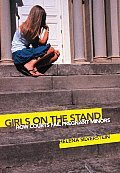
Booknotes: Girls on the Stand

31 Sunday May 2009

Posted by Anna Clutterbuck-Cook in book reviews

≈ Leave a comment

Tags

blog for choice, books, children, feminism, politics

As news was breaking about the murder of Dr. George Tiller, and abortion provider and pro-choice activist, I sat down to read Helena Silverstein’s Girls On the Stand: How Courts Fail Pregnant Minors.

A professor of government and law, Silverstein details the real-world effects of parental notification and consent laws have on the ability of minors to exercise their rights to abortion access as currently granted under U.S. law. Specifically, Sliverstein is interested in the viability of the “judicial bypass” option that the U.S. Supreme Court requires such parental involvement laws to contain: that is, if a pregnant minor does not wish to inform her parents of her pregnancy, she must have the ability to petition, confidentially and with the help of court-appointed counsel, for an exception. Focusing on the practical workings of the judicial bypass procedure in three states, Alabama, Pennsylvania, and Tennessee, Silverstein found that pregnant minors faced ignorance, bureaucracy and outright ideological obstruction in their pursuit of timely and medically-safe abortions.

For example, after systematically phoning courts in her three targeted states for information on how to initiate a judicial bypass, Silverstein and her research assistants faced a wide range of responses, from the adequate to the under-informed to the intentionally misleading. Whether malicious in intent, answers to an initial query that fail to clearly affirm the minor’s right to confidentiality, a timely hearing, and most importantly free assistance in navigating the court system, “portray the bypass as a road the minor must travel alone and risk sacrificing the minor’s right to her own vulnerability” (61). Even more egregiously, some anti-abortion judges, with the discretion granted to them under current law, have employed such intimidation tactics as requiring pro-life, Christian counseling for all minors seeking the bypass, or even appointing a guardian for the fetus who has the responsibility of challenging the petitioner at the hearing and attempting to persuade her against choosing an abortion.

“The argument of this book,” Silverstein writes, “is directed at those who have made a good-faith compromise on the parental involvement issue,” seeking to ensure that minors wishing to terminate pregnancies are given the information and support they need, both pre- and post-abortion, while still protecting their constitutional rights to privacy and bodily autonomy (157).

Those compromisers, a group to which I once belonged, have in mind a picture of what a world with such mandates would look like. Pregnant minors will be encouraged to seek guidance from parents, and courts will protect those who choose otherwise. We have seen, though [in this book], that many courts are not prepared to do their duty, whether due to ignorance, recalcitrance, or incompetence. We have seen judges who are willing to employ hardball tactics to get minors to bend to their will. Whatever the Supreme Court might decide about how much implementation failure is too much or what obstacles too burdensome, it is up to the good-faith compromiser to decide whether the reality of parental involvement mandates sufficiently approximates her picture [of reality] to warrant continued support. This is a personal decision. To my mind the case is clear. I invite the reader to be her own judge (157).

Sadly, Silverstein’s book is not as narratively compelling as I would have hoped, even to someone like myself whose heart usually quickens a the prospect of a book or an article dealing with the intersection of feminism and the law. Her prose feels clunky, and the reporting of her research — while providing the evidence necessary to make her case — nonetheless caused me eyes to begin glazing over, even at a brief 180 pages (excepting endnotes and bibliography). Given its narrow scope, a meaningful reading likely requires a fair amount of background knowledge in recent abortion politics and law.

Still, I’m glad to add it to my repertoire of resources on reproductive health and rights. The struggle over women’s right to bodily autonomy is not going to disappear any time soon, as Tiller’s murder today dramatically and tragically illustrates — and young women are among those particularly vulnerable to having their reproductive choices taken from them, given their relatively lack of experience and financial resources. Silverstein reminds us not to assume that what looks good on paper will likewise be sound in actual practice.

Wednesday Reflections on WAM!2009

08 Wednesday Apr 2009

Posted by Anna Clutterbuck-Cook in think pieces

≈ 1 Comment

Tags

feminism, gender and sexuality, politics

A week (plus) after WAM!2009, I’m finally getting around to blogging a few reflections. This was my second year attending WAM! Last year I went as a volunteer; this time I paid my way and wandered around the Stata center free of responsibility. It’s an awesome conference for feminist people-spotting and in general spending time talking about all that stuff I spend my time thinking about virtually 24/7 (in some form or another) with people who are as obsessed as I am. Either we aren’t as crazy as we likely all feel most of the time, or there are a lot of us crazies wandering free on the streets — frankly, I’m not sure which is the more appealing option!

I’ve learned over the years that my stamina for conference sessions is limited: I reach “critical mass” when it comes to new and stimulating ideas fairly rapidly. So I limited my participation to two panel discussions and an informal lunch caucus — and came away with lots to think about!  

The panels I attended on Saturday were “In/Out of Focus, Broadening a Feminist Lens: Gender, Non-Conformity and the Media” and “Feminist Blogging: From Journalism to Activism in Election Years and Beyond.” Between the two panels, I joined an informal group of conference-goers at a lunch caucus to discuss “feminist sex ed.” This lunchtime event, which I only found out about on the day of the conference, was both inspiring and dispiriting. On the one hand, it’s awesome to hear from those in the diverse world of sexuality education (from schoolteachers to community organizers to college professors and sisters looking for resources to pass on to their younger siblings) about the work they are doing. On the other, it’s frustrating to hear how much misinformation, legal restriction, community fear, and lack of resources and time limit possibilities.

One of the things that really struck me in the lunch caucus was folks’ resistance to “co-ed” (non-gender-exclusive) sexuality education. As I have argued previously, the problem with sex-segregation in educational spaces is that young people who do not identify as male or female, or do not feel comfortable in environments in which everyone is presumed to be the “same” in some way based on sex/gender, are marginalized. I think it is particularly problematic in sexuality education, since the ostensible reason for separation is so that (hetero) girls and (hetero) boys won’t be subject to scrutiny and embarrassment in front of other-sex folks. But this presumption of increased safety and comfort in single-sex environments breaks down for anyone who is not straight or gender-conforming.

As Jessica Fields has documented in her book Risky Lessons, women and girls do face a disproportionate amount of misogynist harassment in sexuality education settings that often goes unchallenged. Yet I’m hesitant to accept that sex-segregation is the way to go in addressing this problem. If nothing else, because it reinforces the sexist idea that men and boys are naturally disrespectful, misogynist pigs for whom containment is the best strategy. A far healthier (and feminist!) approach, it seems to me, would be to tackle the problem of sexism and respect head-on. It should be our collective responsibility to make sex education spaces safe and affirming for every person — regardless of sex, gender, or sexual orientation.

This question of gender-segregated space and who is included was also a major topic of discussion in the first panel I attended “In/Out of Focus,” since the topic was gender-nonconformity. This was the panel I was most excited about attending at the outset, since the line-up included one of my favorite feminist authors and one of my favorite feminist bloggers. And it did not disappoint! 

What the reality of gender-nonconformity means for “women-only” spaces is far from settled, even in feminist spheres (as a recent thread on gender-neutral restrooms at Feministing amply illustrated).  I thought both the panel and the audience members who participated in conversation gave a lot of nuanced and valuable perspectives on how conversations about sex and gender in feminism can take place without fear or bigotry.  Miriam Perez (see “favorite feminist blogger” above) talked about the need to be mindful of whom we are including when we use words like “women” or “female,” and who we are excluding with that same language.  While no one is asking feminism to expunge the word “woman” from its reasons for being, it is also important to remember (as one of the panelists — Julia Serano? — pointed out) that “feminism and women are strongly related but not analogous.”  Even among a group of folks who identify in the feminine spectrum, it’s important to remember that not all of us have identical experiences of womanhood.  
The Q&A portion of this session was particularly strong, some of which Jill live-blogged over at Feministe.   You can also see live tweets from the session at Twitter #wam09gnc (oh, the crazy things one can do on the ‘net!). 
My final panel of the day, “Feminist Blogging,” introduced me to more new bloggers to add to my feminist-themed iGoogle pages (yes pages), and was a lively, reflective session on the lessons learned from the 2008 election about the interaction between the blogosphere and corporate media, between blogging and activism.  The conversaion also highlighted, for me, the way so many bloggers are able, through their blogs, to integrate their various life-works (parenting, employment, personal projects and passions, hobbies) in a web presence that somehow encompasses — or at least touches upon — all aspects of their personhood.  
The “Feminist Blogging” session helped me think, in a new way, about why keeping this blog has been so important to me over the last two years: As I make my way through graduate school, I often feel overwhelmed trying to find a path that will bring together the things that I care about into some sort of meaningful life and life’s work.  This blog is one of the few public spaces where I can mix and match freely, shuffling and re-shuffling the various bits until the balance feels right and the relationships between thoughts and experiences are clarified.  It’s an awesome privilege, and one which I am hopeful is mirroring the (albeit) messier “real world” version.

  
See the WAM!2009 conference site for a links list to further conference coverage.

Classy, home state

06 Monday Apr 2009

Posted by Anna Clutterbuck-Cook in think pieces

≈ Leave a comment

Tags

gender and sexuality, michigan, politics

My old health insurance, Blue Cross Blue Shield of Michigan, has stopped providing coverage for sexual reassignment surgery for trans folks. This move was (sadly) part of larger cutbacks in coverage, due to a $133 million dollar loss in the past year. However, according to the Gale Encyclopedia of Surgery only 100 to 500 sexual reassignment surgeries are performed annually in the United States. Even with costs ranging from seven to fifty thousand dollars (depending on what medical procedures are done), I doubt this was a huge line-item in the BCBSM budget. Considering that the vast majority of health insurance companies already deny coverage to trans folks, it’s disappointing to see one more bite the dust. Not cool Michigan.

Quick Hit: Birthday Feminism

30 Monday Mar 2009

Posted by Anna Clutterbuck-Cook in linkspam

≈ 1 Comment

Tags

feminism, history, politics

My friend Linda sent me this article, The End of the Women’s Movement, by Courtney E. Martin, today with a query for my thoughts. Linda is herself of the “second wave” generation of feminist activists (although I try to avoid generational language as much as possible when talking and writing about women’s history), while Ms. Martin and I are in our twenties and of the “third” (or possibly forth?) wave era. Since intergenerational tension within feminist activism is an issue I care deeply about, and this article was published on my birthday, I thought it deserved it’s own post rather than being buried in my next links list.

Courtney Martin, whom I read regularly at the blog Feministing, is herself involved in ongoing activism in this area as part of a roadshow of intergenerational feminists. In this particular piece, she takes a gathering at the Elizabeth Sackler Center for Feminist Art as a jumping-off point to write about the process of feminist activism today, and specifically some of the differences between today’s political change and the activism of movements in the 1960s and 1970s:

People within feminist circles may recognize names like Jessica Valenti or Jennifer Baumgardner, but the general public doesn’t. This is largely due to what Wired editor Chris Anderson calls “the long tail” — the decreasing presence of a mainstream culture and the increasing influence of more diffuse communities organized around specific interests. In other words, we don’t have a leader because it’s hard to even pin down who “we” are. Leaders are useful for galvanizing movements, but they also rise to fame at a critical cost. Young feminists should count ourselves lucky that we don’t have one face representing our generation — which would mean one race, one socioeconomic class, one ideological bent. Nothing could be less representative, actually.

She also makes what I think is a fascinating observation that:

Members of the second-wave generation developed their feminist identity during the heyday of direct action. They had ecstatic, very physical experiences of feminism. . . . Now these women are older, many of them happily shifting into what Jane Fonda calls ‘the third act’ — a stage of life when they don’t give a shit what anyone else thinks, and they want to see the world live up to its God damn potential, once and for all. . . They’re prioritizing changing the world again. And as such, they seem to experience an old hankering for an unapologetic women’s movement that they can see, hear, and touch.

I had never before thought of situating women’s movement activism in sensory experience; in the body — and I think using embodiment as a framework to describe what is so compelling about the narrative and experience of that era is an intriguing new approach to understanding what the 1960s and ’70s counterculture might offer us in terms of wisdom for the future.

The essay as a whole is thoughtful, and I think balances fairly well the task of respecting the lessons to be gleaned from historical circumstances and the experiences of our elders — without losing sight of the fact that grafting past tactics onto present-day situations can often be counter-productive. Read the whole thing here.

UPDATE: Pursuit of Harpyness has a group post up discussing the article as well. Highly recommend checking it out.

Earth Hour 2009

29 Sunday Mar 2009

Posted by Anna Clutterbuck-Cook in a sense of place

≈ Leave a comment

Tags

domesticity, fun, photos, politics

Last night, the city of Boston participated in Earth Hour 2009, a one-hour worldwide event in which people were encouraged to turn out their lights for one hour (8:30-9:30) in support of combating global warming. Hanna and I spent our hour of ecological friendliness playing scrabble by candlelight.


Hanna won infinity points for spelling “Ianto” on the board and thus won the game hands down.

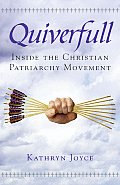
Booknotes: Quiverfull

22 Sunday Mar 2009

Posted by Anna Clutterbuck-Cook in book reviews

≈ 8 Comments

Tags

books, education, feminism, politics

A couple of weeks ago, my own personal copy of Kathryn Joyce’s new book Quiverfull: Inside the Christian Patriarchy Movement arrived in the mail — just when I was looking for one more way to put off doing school-related reading over Simmons’ spring break. Joyce’s book documents the theology, politics and daily life of families (especially women and girls) who follow the loose collection of conservative ideas that fall under the umbrella of “quiverfull” thinking: a patriarchal family structure that demands wifely submission, opposition to all kinds of family planning, fears of a “demographic winter” for Western nations, home education, and often political alignment with the Christian reconstructionist agenda. Hanna flipped through my copy and asked me how it is I can read books like this and not feel my blood pressure skyrocket. Which challenged me to reflect a little on my addiction to reading books about the intersections of gender, sexuality, politics, home education, and the Christian right. This booknote, therefore, is less of a review and more a motley collection of observations inspired by Joyce’s journalism.

I think what I find most absorbing about the Christian right and the way they think about gender, sexuality, and education, is not their strangeness but their familiarity. And I’m not talking about familiarity due to close proximity (although growing up in a very religiously conservative area means I’ve been exposed to my fair share of right wing bigotry and fear-mongering). No: what I’m talking about is the fact that Christian right’s critique of the American mainstream begins with with many of the same critiques of modernity that leftists put forward. Many of the families profiled in Quiverfull are deeply ambivalent about modernity — about the rise of scientific rationalism at the expense of the irrational and sacred. They critique the way that a capitalist economic system, with its separation work and home spaces (and the resulting age-segregation of children and the elderly — nonworkers — from wage-earners).

As a result, they have created a vibrant counter-culture of their own that, as Joyce rightly points out, shares many of the same characteristics of the radical left. Home birth and midwifery activism among Quiverfull families, for example, “overlaps with back-to-the-land hippie counterculture in some ways. It’s a deliciously amusing irony to some Quiverfull moms, who stake out their territory of natural pregnancy in the odd company of feminist doulas and naturopaths opposed, as they are, to high rates of hospital cesarean sections” (164). Likewise, the modern home education movement, which began as a form of leftist activism (see: unschooling) has since become an overwhelmingly right-wing phenomenon. So much so that — although she makes passing mention of this history — Joyce is comfortable conflating “homeschool” with Christian conservatism throughout most of Quiverfull without specifying that she is, in fact, writing about a very particular subset of the home education population.

In fact, it is precisely the outward similarity of these profiles of radical right and radical left that I find both fascinating and deeply disturbing. For while on the surface quiverfull families and “back-to-the-land hippies” and feminists may make similar lifestyle choices, their reasons for doing so are often diametrically opposed. Whereas leftist, feminist advocates of low-intervention childbirth and home education ground their critique of modernity and counterculture activism in notions of gender equality, democratic social structures, and a commitment to individual human rights, those on the radical right pursue the same forms of activism but root them in notions of gender difference, social structures that unapologetically support the kyriarchy, and the subordination of individual persons to tyrannical group dynamics.

As most of you know, I grew up in a family that was part of the leftist home education tradition. My sibs mixed public schooling with home-based learning, and all of us have gone on to college-level institutional education (and beyond). At the same time, I am firmly committed to the continued legality, and minimal governmental oversight, of home education. In this, like the feminist doulas of Joyce’s book, I find myself in the uncomfortable company of groups such as the Home School Legal Defense Association. Because of this, I believe it is my responsibility to take a long, hard look at the beliefs and practices of those whose political and social agenda I (however occasionally) share — and whose right to continue living as they do I, however abstractly, defend.

Though there was nothing startlingly new to be found in the pages of Quiverfull if you’ve read other work in this area, Joyce does a thorough survey of the disparate strands of religious and political thinking that inform the movement, and remains sensitive to the nuances of class, race, gender, and theological difference that shape individual experience within it. I also enjoyed discovering that by cultivating close relationships with other women, I am apparently in danger of committing the sin of “spiritual masturbation” (which, sadly, is not nearly as kinky as it sounds).

Now it’s back to Carl Rogers’ Freedom to Learn (for my seminar paper in Intellectual History) . . . not to mention keeping an eye out for Jessica Valenti’s latest, The Purity Myth, and Michelle Goldberg’s sure-to-be-absorbing The Means of Reproduction.

Graphic Art & Fair Use

27 Friday Feb 2009

Posted by Anna Clutterbuck-Cook in think pieces

≈ Leave a comment

Tags

art, election08, politics

Walking home from class last night, I happened to catch this set of interviews on Fresh Air with Terry Gross about a lawsuit currently in process over the now-iconic Obama Hope poster and artistic fair use. The poster artist, Shepard Fairey, used an AP photograph of Obama as the reference for his graphic, and people have raised questions about whether he was diligent enough in crediting his source — specifically his failure to track down the photographer, Mannie Garcia. The Associated Press approached Fairey for use fees and damages after the source of the image was identified, and Fairey has filed a pre-emptive lawsuit against the Associated Press arguing that his use of the original photograph image falls under the fair use protections of U.S. copyright law.

Coming, as I do, from a family of artists, mapmakers, academics, booksellers, and librarians, these issues are all intensely relevant to the work that the people in my life do on a daily basis. (Not to mention the part of my soul that moonlights as a legal junkie). I found Gross’s interviews with both artists involved fascinating. They gave me a lot to think about in terms of the nature of creative expression and what constitutes inspiration as opposed to plagiarism in visual mediums (most of my background is in text). My dad commented via email this morning, “I was thinking about how I would rule in such a case which is of couse now complicated by the lawsuits, etc. Personally, I thought the artist’s offer to pay the original liscense fee was fair but AP’s desire for ‘damages’ was too much given it was not a ‘for-profit’ undertaking.”

Anyway, check out the interviews and feel free to leave any thoughts comments.

Links to some stuff, various

15 Sunday Feb 2009

Posted by Anna Clutterbuck-Cook in linkspam

≈ Leave a comment

Tags

books, feminism, gender and sexuality, politics

Stuff I haven’t had a chance to blog about in detail:

Courtney E. Martin on Why Love is Our Most Powerful Form of Activism.

Tkingdoll, over at Skepchick, on the historical moment we’re living through and why, despite all news headlines to the contrary, we might be lucky to be alive in the midst of it.

Race and Gender in Coraline, over at FilthyGrandeur (via Feministe).

Ariel Levy’s review of the new edition of The Joy of Sex. Let it be noted I take issue with her characterization of both Our Bodies, Ourselves and the Moosewood Cookbook — both are just fine without the bacon, thank you very much!

Some thought-provoking coverage of Ruth Bader Ginsburg’s role on the U.S. Supreme Court as well an analysis of the court’s current composition.

“No one expects e-books to overtake printed books as rapidly as digital music overtook CDs and albums” . . . but will they ever?

Dancing Backwards in Heels offers some reflections upon reading Michael Kimmel’s Guyland (2008).

And finally, if you’re feeling strong, the wrongness that is Obama slash fanfic (commented on, with excerpts, at Bitch blogs), and Pilgrim Soul, at The Pursuit of Harpyness on the creepyness of America’s obsession with the Obama family’s “hotness.”

← Older posts
Newer posts →
"the past is a wild party; check your preconceptions at the door." ~ Emma Donoghue

Recent Posts

  • medical update 11.11.22
  • medical update 6.4.22
  • medical update 1.16.2022
  • medical update 10.13.2021
  • medical update 8.17.2021

Archives

Categories

Creative Commons License

This work by Anna J. Clutterbuck-Cook is licensed under a Creative Commons Attribution 3.0 Unported License

Meta

  • Create account
  • Log in
  • Entries feed
  • Comments feed
  • WordPress.com

Create a free website or blog at WordPress.com.

  • Subscribe Subscribed
    • the feminist librarian
    • Join 37 other subscribers
    • Already have a WordPress.com account? Log in now.
    • the feminist librarian
    • Subscribe Subscribed
    • Sign up
    • Log in
    • Report this content
    • View site in Reader
    • Manage subscriptions
    • Collapse this bar